Tag: Balanchine

  • Ballet Next: Choreographic Exhibition

    BalletNext_9288

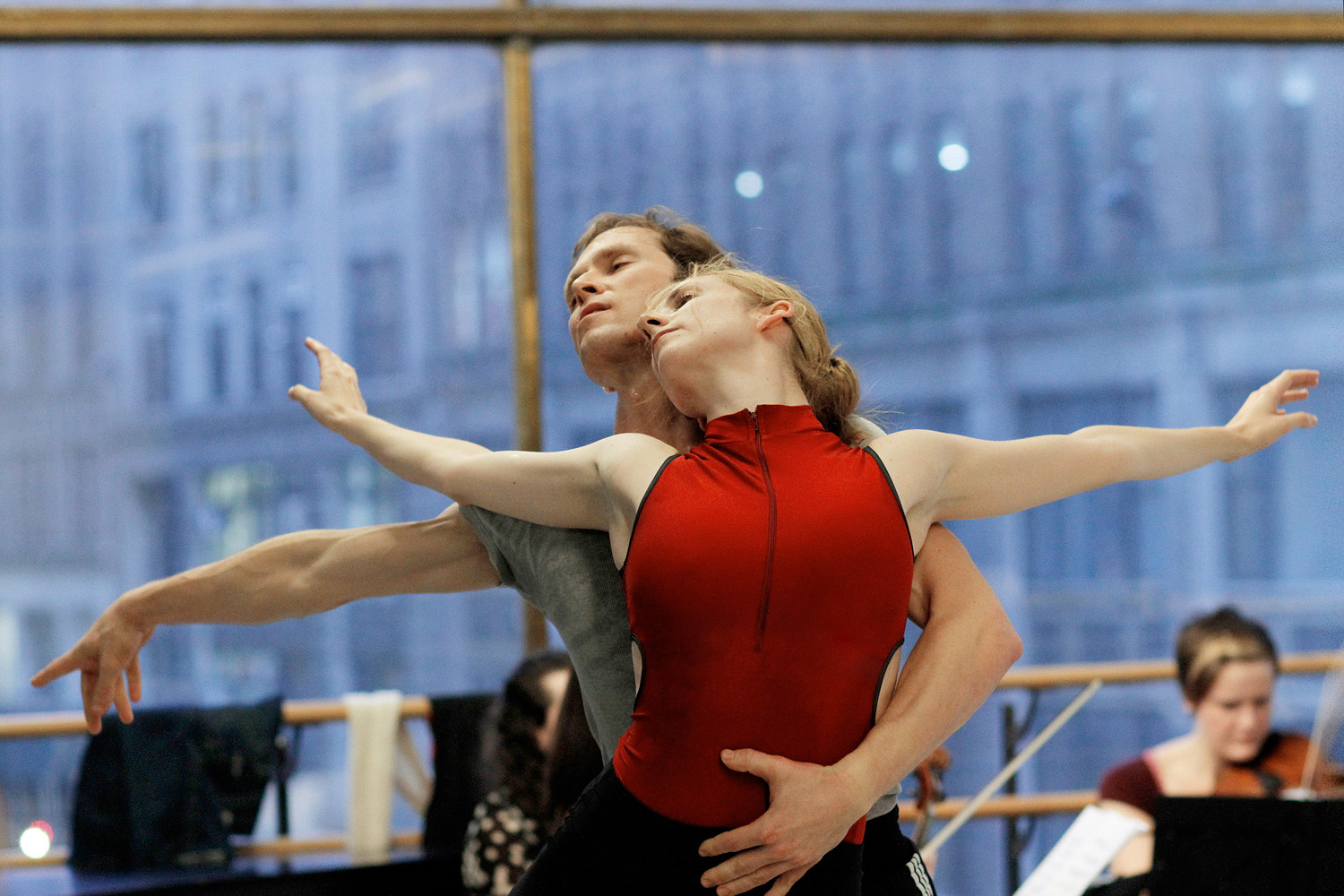
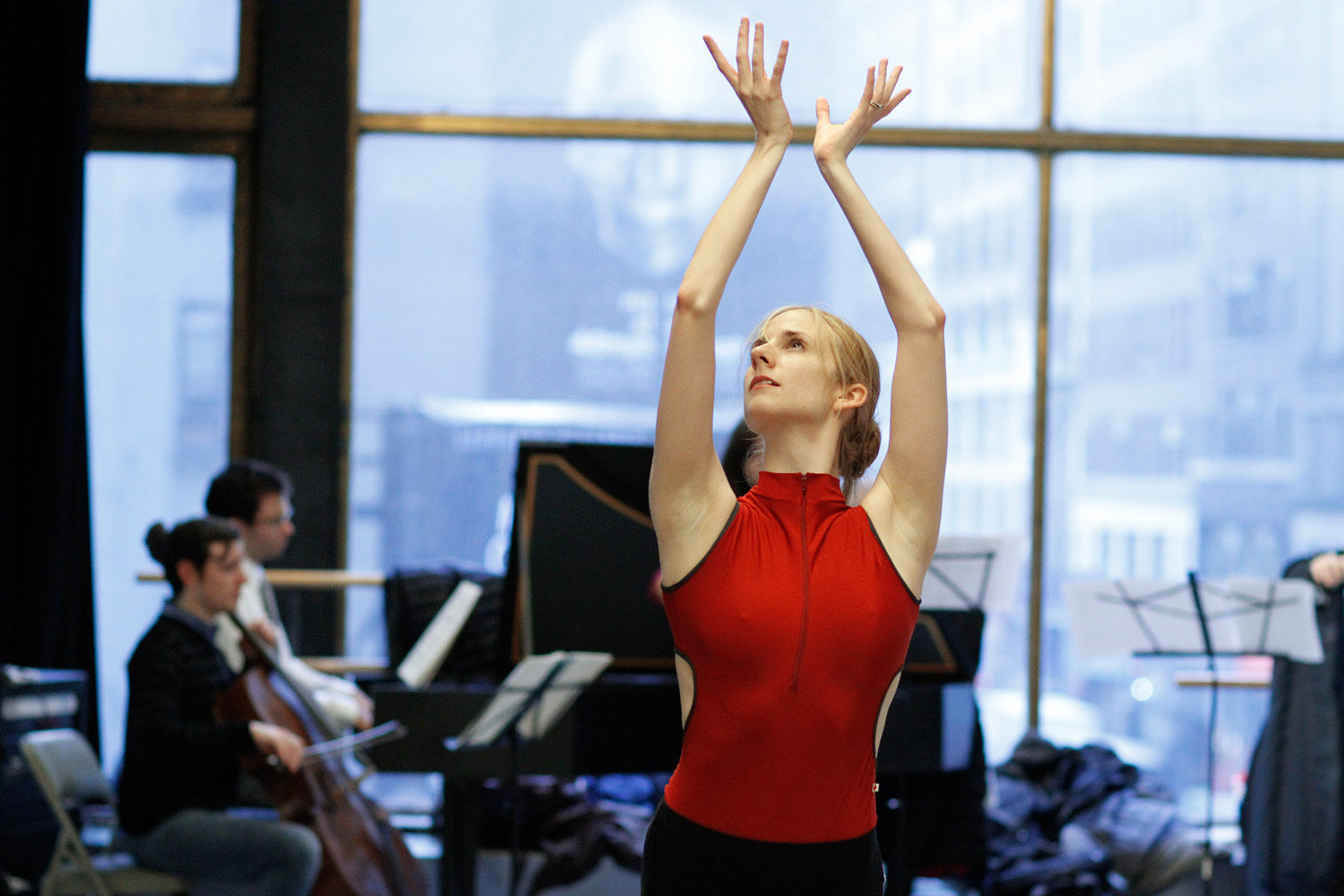
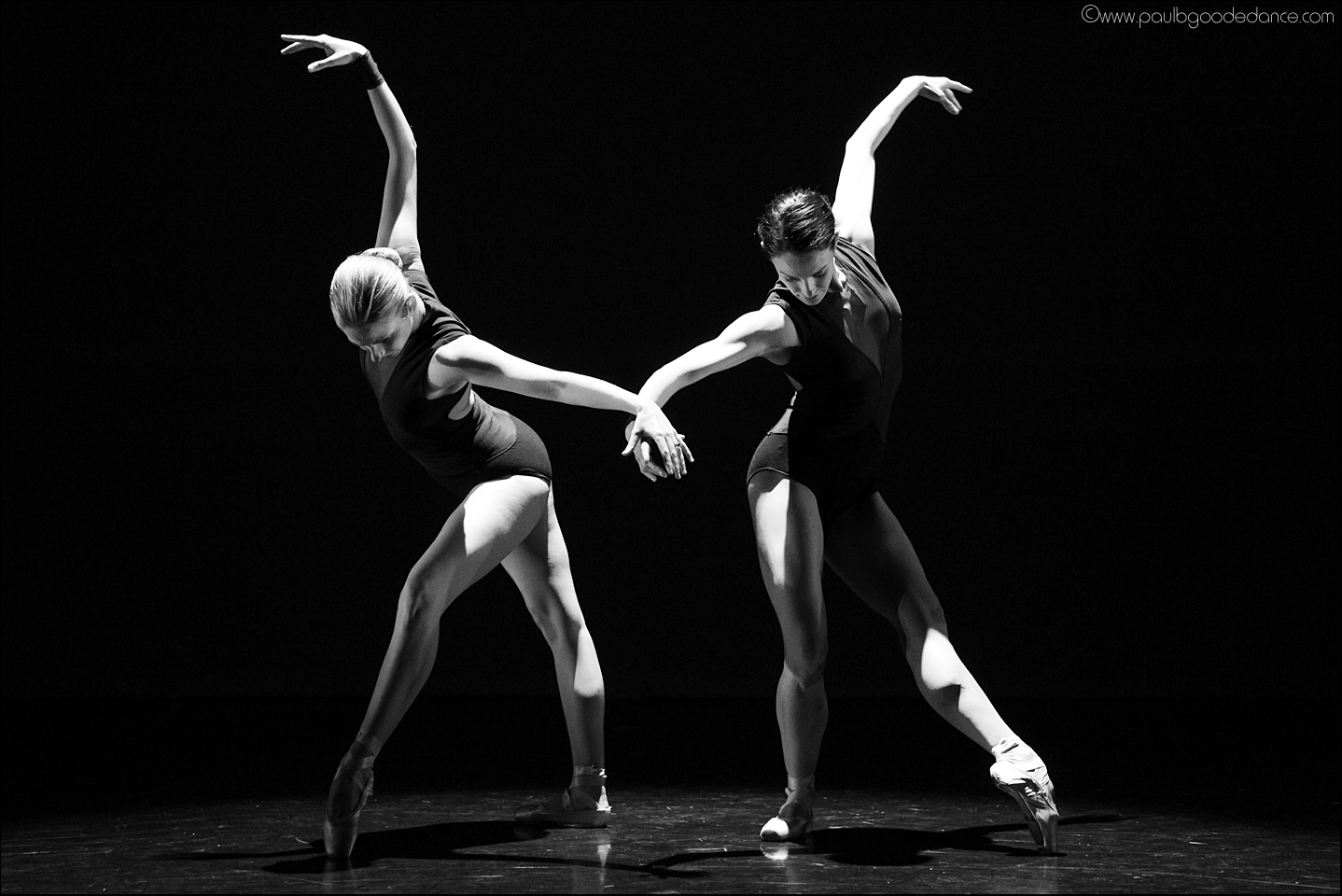
    Above: Michele Wiles and Kristi Boone in Mauro Bigonzetti’s LA FOLLIA, photo by Paul B Goode. Click on the image to enlarge.

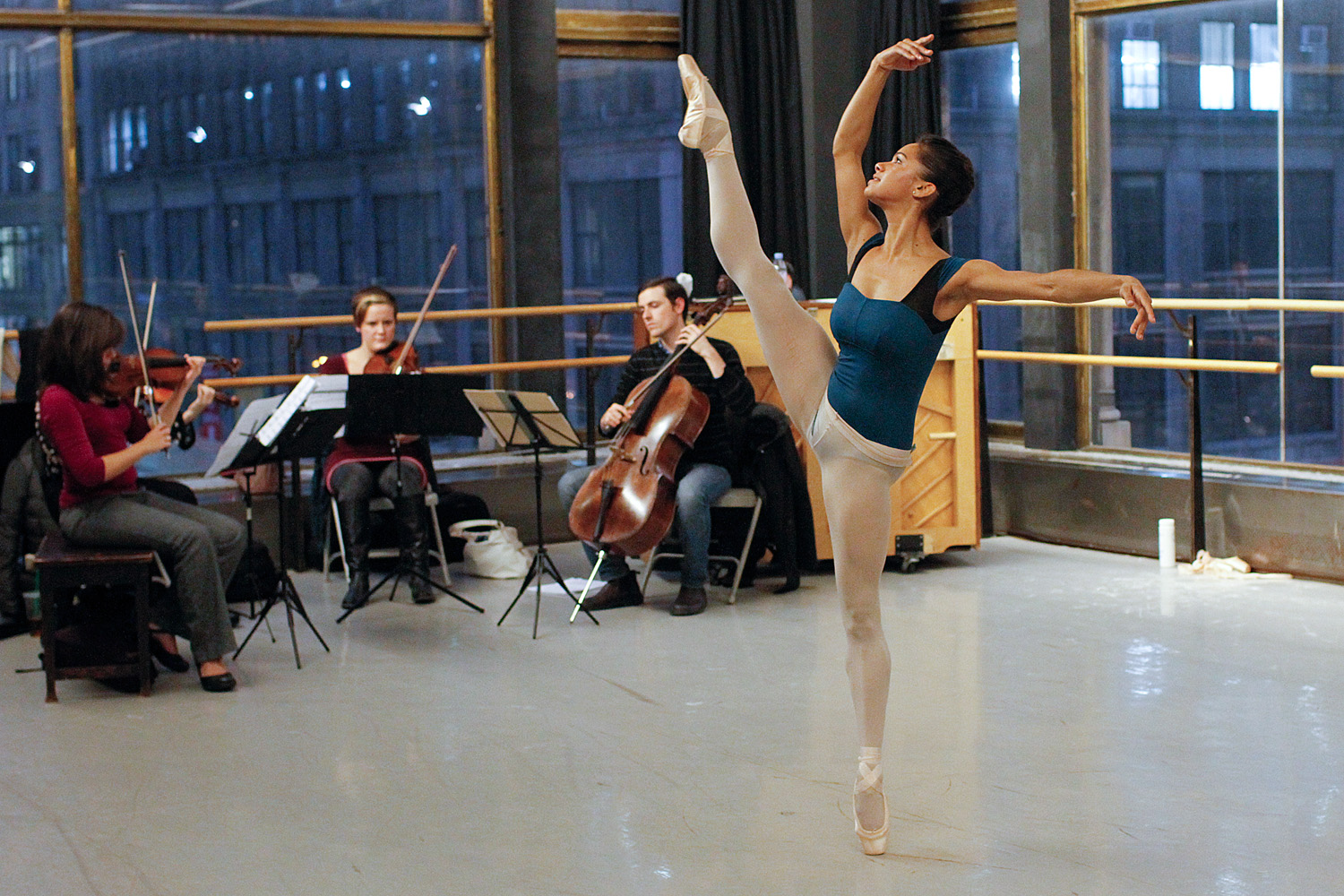
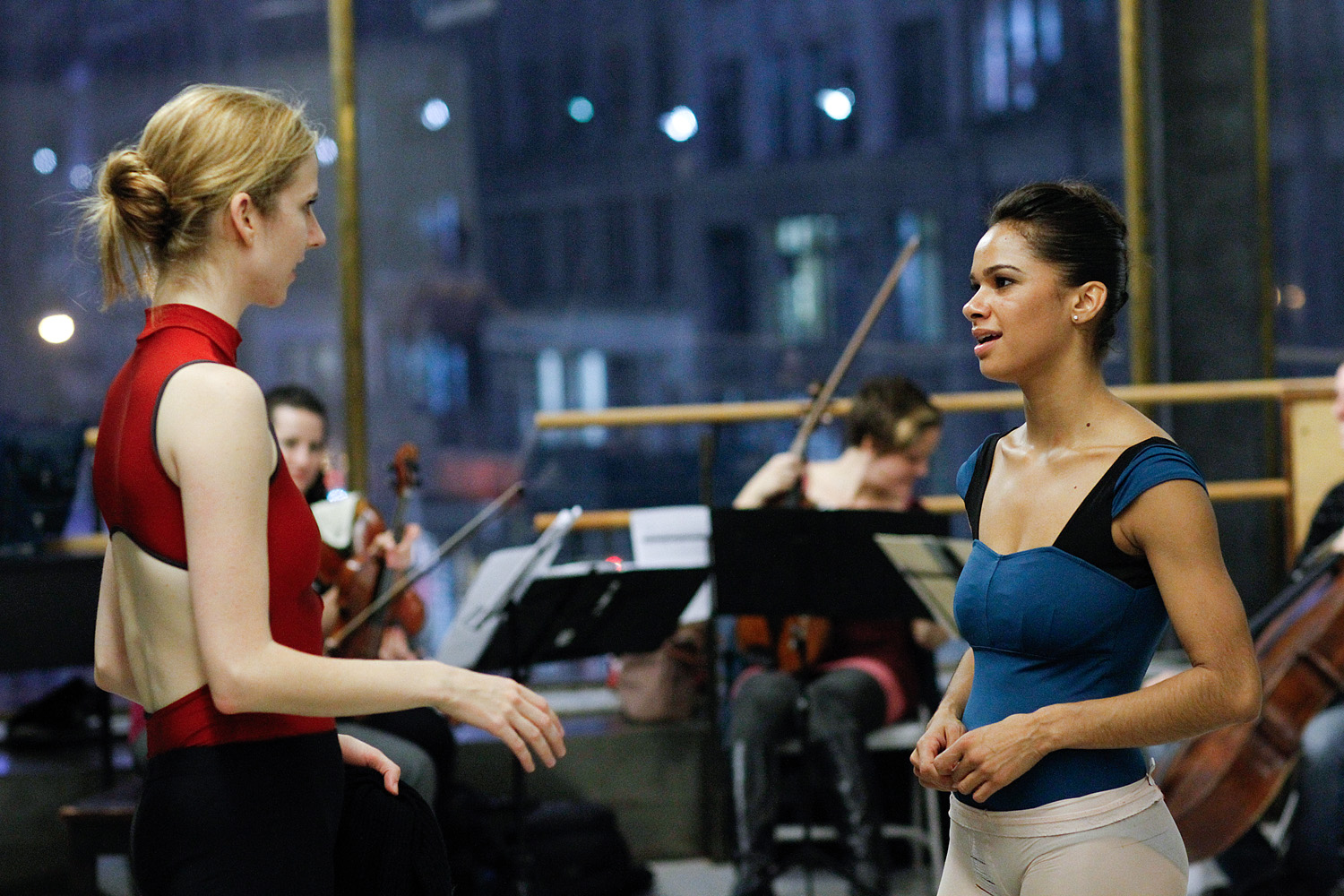
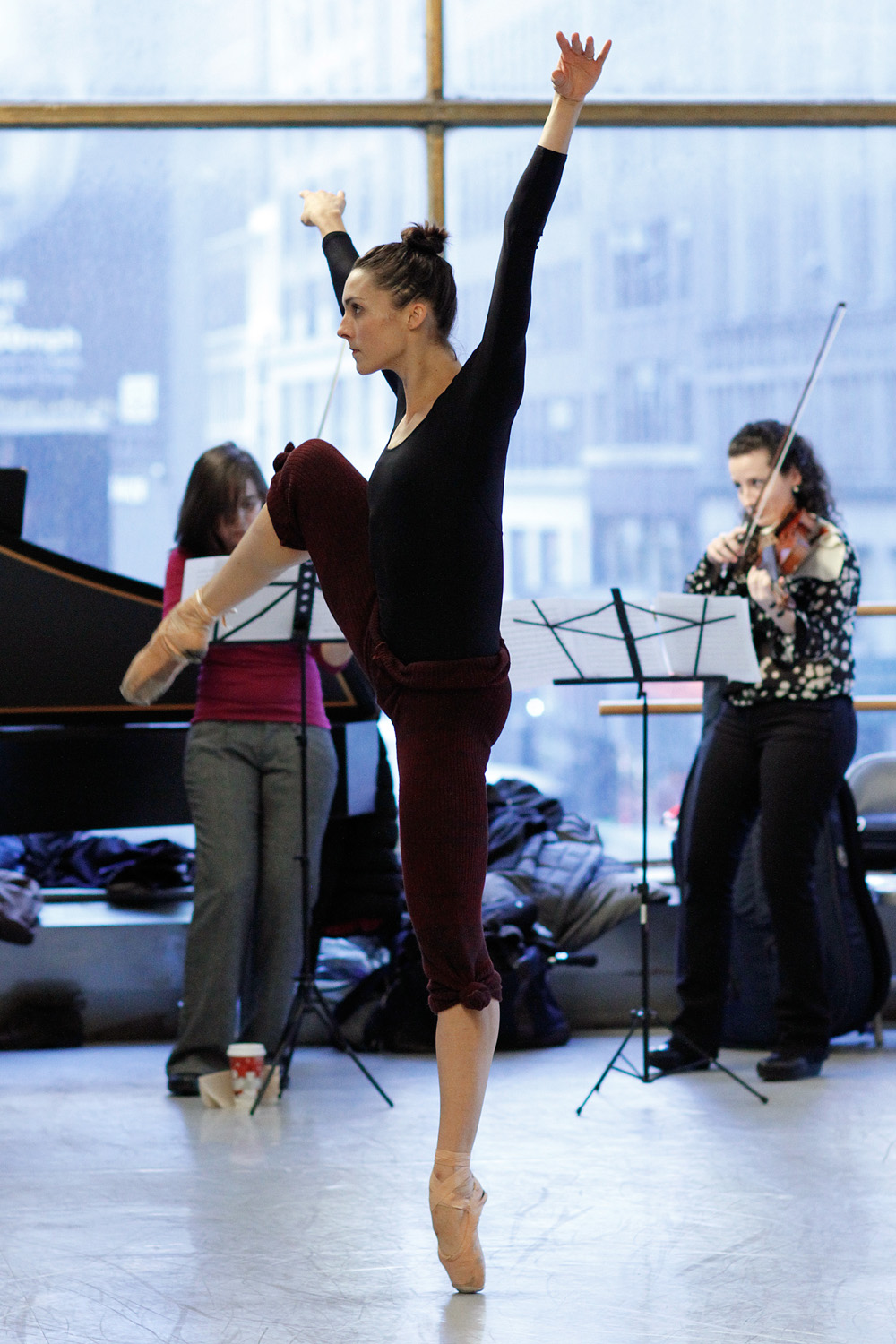
    Wednesday April 25, 2012 – “You’ll be close enough to see us sweat and breathe,” said ballerina Michele Wiles in a brief film shown at the start of this evening’s presentation by Ballet Next. She was right, and there’s nothing more beautiful – for me at least – than watching dancers dance, especially at close range. Some dance-goers want to see an effortless sheen of ‘artistry’ which masks the physicality of the dance; myself, I love to see the body working, the minute flickerings of facial expression as the dancer ‘edits’ herself, the sense of stretch as the muscles respond, and the mechanics of delivering a triple pirouette. In a large theatrical setting, you’re at a remove from all of this. Tonight at Manhattan Movement and Arts Center, the dancers exposed themselves to our keenest scrutiny. They looked superb.

    Michele Wiles and Charles Askegard created Ballet Next as a continuation of their top-flight dance careers after they ‘retired’ from ABT and New York City Ballet respectively. They certainly don’t look like any retirees I know; their vitality and their eagerness to share their excitement about Ballet Next with an ever-broadening audience are infectious. Michele and Charles have set forth to bring us classic and new choreography danced by ballet’s greatest talents to live music. So far they’ve been succeeding admirably.

    Tonight’s programme delivered four works, each created especially for Ballet Next. The Company’s music director Elad Kabilio and his troupe of gallant young musicians delivered inspired playing of works by Stravinsky, Shostakovich, Satie and Vivaldi. Setting their musical barre very high gives Ballet Next an added lustre in my view; the better music you use, the better your choreography and dancing will look. It’s that simple. 

    And so we started with Stravinsky, violinist Hajnal Karman Pivnick and pianist Ben Laude treating us to shimmering suite of music from Baiser de la Fee. I have a special love for this music since Balanchine’s gorgeous setting of the score was the first work I ever saw danced by New York City Ballet (by Patricia McBride and Helgi Tomasson, no less…)

    Charles Askegard entitles his duet to this music simply DIVERTIMENTO. Danced with teriffic flair by Charles and NYCB‘s Georgina Pazcoguin, his choreography is witty and wonderful with some very inventive partnering motifs threading thru the music. Physically demanding, the dance evoked genuine enthusiasm from the packed house. Ms Pazcoguin, always a dancer to lure the opera glasses when she’s on the big stage, is a fascinating technician and personality to experience in this more intimate setting. Charles, one of the ballet world’s most valuable partners, doesn’t give himself any easy breaks in his own choreography. DIVERTIMENTO is a pure pleasure in every regard.

    By way of contrast, Brian Reeder’s summer-shadowy PICNIC proved to be a small jewel of a narrative ballet. Drawing inspiration from the film PICNIC AT HANGING ROCK, the choreographer turns to Shostakovich’s Cello Sonata in D Minor with its alternating currents of pensive and slightly ominous feeling, and shows us three schoolgirls in white frocks setting out on that fatal picnic from which two of them never returned. Michele Wiles, Kristi Boone and Misty Copeland comprised a stellar trio, each (like the girls in the film) with her own unique little quirks. Kissing, chaste but inquisitive, delicately projects the Sapphic undercurrents found in the film. Meanwhile, Charles Askegard, perhaps drawing on his incredible portrayal of the death figure in Robbins’ IN MEMORY OF…seems silently to draw Misty and Kristi into his thrall, leaving Michele to awaken, alone and mystified. Cellist Elad Kabilio and pianist Ben Laude supported the dancers with a poetic rendering of the Shostakovitch.

    Following an intermission during which we were up-dated as to the success of the evening’s live- streaming (people tuning in worldwide), Margo Sappington spoke briefly about her creation of ENTWINED for Ballet Next. I’ve seen this ballet evolve from a single, sensuous duet thru the addition of a pas de trois and a solo (for Michele Wiles); Margo revealed she has one more idea up her sleeve, a duet for two women; then ENTWINED will be complete. Or, she might even go on from there.

    What she has crafted to date is an atmospheric piece set to Satie Gnossiennes (played by Ben Laude) which opens with a pas de trois danced by Charles Askegard, Georgina Pazcoguin and Ana Sophia Scheller. The choreography here flows thru a misty setting, as in a dream. Images of sleep and wakefulness drift by. The solo for Michele Wiles (beautifully danced, of course) evolves seamlessly from the pas de trois and this in turn floats into the pas de deux danced by Misty Copeland and Charles Askegard. By turns sculptural and steamy, this duet borders on the erotic, temptingly lush in its signature choreographic entwining of two bodies. Misty looked gorgeous.

    (My only tiny complaint about the evening was that we didn’t get to see more of Ana Sophia Scheller; a ballerina in my super-top echelon of favorites, she danced gloriously in ENTWINED…and we did have the delightful experience of watching her warm up before the performance. Major beauty.)

    Mauro Bigonzetti’s LA FOLLIA is a grand finale for a Ballet Next presentation. I’ve seen this duet now four times and it’s just incredible. The two women – Michele Wiles and ABT‘s fantastic Kristi Boone – nailed the complex in-sync steps and launched their complex solos with real bravado. This is dancing that’s taxing to the max, and the girls gave it a splendid energy. Meanwhile the excellent quartet of musicians (violinist Francesca Anderegg joining Ms. Pivnick and Mssers. Kabilio and Laude) played the dazzling Vivaldi theme and variations for all it was worth. This brought the evening to a truly exciting close.

    So glad I ran into my young dancer-friend Alejandro Herrera whose easy, outgoing personality helped me overcome my innate shyness for once. Chatting with Chuck Askegard,  Amanda Hankes, Rebecca Krohn, Adam Hendrickson, Sterling Hyltin, Gina Pazcoguin and Kristi Boone was a pleasure, while MMAC‘s Erin Fogarty let a couple of cats out of the bag for what is sure to be a grand night of Dancing Against Cancer at MMAC on May 7th (Matt Murphy will photograph that dress rehearsal for me). 

    As for Ballet Next, the future looks bright indeed with a season scheduled for The Joyce this Autumn and plans for growth and development running apace. Michele and Charles are not only great artists but great people who have a real passion for ballet and who have the connections in the dance world to make Ballet Next a truly dynamic force. I look forward to following their every step.

  • Stravinsky & Desyatnikov @ New York City Ballet

    February 23, 2012 – New York City Ballet has been my home away from home since I moved to New York City in 1998. In fact, NYCB was a major factor in my desire to move here in the first place. This season has seen the effects of changes in ticket pricing and seating availability, along with the marginalizing of the 4th Ring Society and the way long-time friends and supporters of the Company feel they have been treated by the powers that be. The official stance seems to be that the changes are working and that everything’s hunky-dory, but the gaping emptiness of the 4th Ring (ten people sitting up there tonight) is a sad commentary on the real situation.

    Increases in ticket prices are a necessary evil from time to time, but it’s the way it was done and the lack of sync between the website and the box office in terms of availability and pricing that is off-putting to say the least. The level of dancing is very high and the lure of Balanchine is as strong as ever, but the sheer joy of attending often and feeling you are part of a happy family of ballet-goers is greatly diminished these days. In this Winter season where I’d ear-marked 14 performances on my calendar, I ended up only going six times.

    At any rate, when the curtain rose on STRAVINSKY VIOLIN CONCERTO tonight and Janie Taylor was standing there with four handsome boys, I forgot my misgivings. On the podium, George Manahan brought out individual voices in the orchestra – as we might expect a seasoned opera conductor to do – and violinist Lydia Hong conveyed the angular beauty of the concerto in an overall very pleasing performance.

    Janie and her partner Ask LaCour gave an especially fine rendering of their duet; in the course of it I noticed things in the choreography that I’d somehow never picked up on before. The allure of the two dancers, and the Taylor mystique, seemed in a way to create a narrative where there isn’t one. I really enjoyed watching them.

    Maria Kowroski and Amar Ramasar are developing into a powerful and vastly appealing partnership. Their pas de deux was marvelous in its sense of nuanced dramatic detail and in the dancers’ technical strength and clarity which both underscored the complex choreography and made it seem inevitable.

    The corps danced beautifully, and it is wonderful to see Faye Arthurs onstage again after a hiatus. It was a performance of this classic work that re-affirmed its iconic standing in the Balanchine pantheon.

    Ratmansky’s RUSSIAN SEASONS is an unique ballet in many ways; drawing on aspects of Russian peasant life, the choreographer presents characters who are anonymous yet differentiated by finely detailed aspects of gesture and movement. The music, with it’s prominent violin (Arturo Delmoni) and soulful singing (Irina Rindzuner) all came back to me from the moment of Manahan’s downbeat. The score, and the rich colours of the dancers’ costumes, weaves a particular spell. I was very glad to see this piece again after a few seasons’ absence from the repertoire.

    The Playbill now denotes role debuts at NYCB, and only Georgina Pazcoguin had previously appeared in her role as the Woman in Red. Abi Stafford danced in the premiere of RUSSIAN SEASONS but has now switched to the role originally created by Jenifer Ringer. Beyond that, the cast drew together some of the Company’s most attractive personalities.

    Amanda Hankes, Marika Anderson and Lauren Lovette were each lovely and distinctive to watch, while the presence of Taylor Stanley, David Prottas, Andrew Veyette, Adrian Danchig-Waring and Christian Tworzyanski showed off the strengths of the Company’s male contingent.

    Abi Stafford’s performance had a nice sense of freshness to compliment her clarity of movement. As the central couple, Rebecca Krohn and Robert Fairchild used their personal magnetism to full advantage. Rebecca’s dancing was serene – and poignant in the passage where she seems to have been abandoned. Rob Fairchild seized the opportunity to make yet another ballet ‘sing’ to his charismatic approach. His dancing was technically impressive and dramatically vivid.

    In a glorious performance, Georgina Pazcoguin’s Woman in Red was suffused with her highly individual beauty and intensity; as she swirled with a restless spirit through the many swift pirouettes and space-filling combinations of this demanding role, Gina seemed like a woman possessed. Truly breath-taking at every moment.

    STRAVINSKY VIOLIN CONCERTO: Taylor, la Cour, Kowroski, Ramasar

    RUSSIAN SEASONS: Pazcoguin, *Krohn, *A. Stafford, *Lovette, *Hankes, *Anderson, *R. Fairchild, *Prottas, *Stanley, *Tworzyanski, *Danchig-Waring, *Veyette 

  • TWO BALANCHINE MASTERWORKS

    Maria

    Above: Maria Kowroski photographed by Matt Furman. Maria danced AGON this evening at New York City Ballet, winning a spectacular ovation after her pas de deux with Amar Ramasar.

    Saturday February 18, 2012 evening – I’ve been going to New York City Ballet less and less these days. The dancers and the ballets still excite and entice me but the way things are being run there is a real turn-off. I’ve had to pick and choose my programmes carefully, and I have missed some debuts that I’d love to have seen but simply couldn’t afford to attend. Meanwhile the presence of two recent disasters on the programming meant there were whole weeks when there was no cause to go.

    Tonight was my only chance to see AGON and Tchaikovsky SUITE #3 this season; it was unfortunate that the other work on the programme was INTERPLAY, one of my least-favorite ballets. Compounding the tedium of the Robbins work, we had to sit thru an ‘introduction’ to Morton Gould’s third-rate music before the ballet started. To say that it was well-danced is an under-statement but in a way the better it’s danced the sorrier I feel for the dancers strapped with this juvenile, gee-whiz drivel.

    INTERPLAY put me in a pissy mood. But the moment the curtain rose on the four men – Adrian Danchig-Waring, Amar Ramasar, Craig Hall and Sean Suozzi – at the start of AGON, the stars fell into perfect alignment and all seemed right with the world. This euphoric feeling continued through the evening’s concluding Tchaikovsky SUITE #3 as well. On the podium Clotilde Otranto (Stravinsky) and guest conductor Daniel Capps (Tchaikovsky) illuminated the music of these two geniuses, properly eradicating the insipidity of the opening Gould. 

    In AGON Maria Kowroski had one of those nights that great ballerinas sometimes have when their technique and artistry transcend the music and the steps and transport the audience to an exalted state. Magnificently partnered by Amar Ramasar, Maria was on fire from her first entrance. Moving through the sculptural poses of the pas de deux, her sensational legs and line were molded by the magnetic Amar into improbable designs that only a genius like Balanchine could have conceived. As the duet progressed the two dancers went beyond the physical into some cosmic otherworld. They slumped into their final pose and were engulfed in a tidal wave of applause and cheers; they had to step forward and bow three times and even then the audience were reluctant to let the ballet proceed. At the end of AGON, Maria and Amar were called out for an extra bow as the crowd went wild. So wonderful to hear this kind of enthusiasm. And they deserved every bit of it.

    But it was that kind of AGON…right from the start, actually. Sean Suozzi’s dynamic solo set the ballet on its marvelous trajectory; my hat is ever off to Sean for the edgy brilliance and unstinting personal commitment of his dancing. He was spectacular tonight. Amanda Hankes and Ashley Laracey remind us of how rich in ballerina treasures our corps de ballet is.  

    In a striking tour de force role debut, Megan LeCrone yet again served notice that she is one of New York City Ballet‘s most fascinating dancers. Her strength and clarity of movement underscore her distinctive look, giving her performances a compelling quality; I always feel an extra twinge of anticipation when I see her name on the casting list. Tonight she was especially impressive. Her two charismatic cavaliers were Adrian Danchig-Waring and Craig Hall; they danced their duet vividly, like young gods cavorting on Olympus. We are so lucky to have them. 

    AGON always seems like a big ballet but really there are only a dozen dancers involved; tonight’s quartet of supporting ballerinas was particularly attractive: Marika Anderson, Dana Jacobson, Gretchen Smith, and Lydia Wellington. These girls appeared again in various capacities in the concluding Tchaikovsky SUITE #3 where – in fact – the entire corps shone with individual and collective dazzle. 

    In the haunted ballroom, the pale dreamer (Ask LaCour) conjures up a luminous vision of feminine perfection (Sara Mearns). Backed by a sextette of long-haired beauties, the couple dance a hypnotic, dreamlike duet of pursuit and evasion. Sara Mearns was radiantly voluptuous and Ask LaCour questingly poetic as they moved to the heart-stopping theme of the Elegie; Ask can only fleetingly hold onto his ideal as she eludes him time and again. At the end, Sara sweeps into an iconically deep backbend as a farewell gesture before vanishing altogether from this vision of romantic rapture, leaving Ask alone in his reverie. The moment stabs me in the heart every time.

    Janie Taylor has only to step onto the stage to make my heart race; her captivating allure and mystery enslaved me yet again in the Valse Melancolique where her sylphlike figure and glorious hair were set afloat on Balanchine’s ethereal waltz. Jared Angle, ever the ideal cavalier, treated his ballerina like the treasure she is. This brief film, which I have watched a hundred times and will watch hundreds more, captures a bit of Janie Taylor’s unique magic.

    In an evening of ballerina splendors, Ana Sophia Scheller once again made me long for her Nikiya, Giselle and Aurora as she swirled thru the restless pirouettes and fouettes of the Scherzo. In a floaty, gauzy gown the Argentine beauty sailed on the music with a glamorous air: simply intoxicating. Antonio Carmena was her high-leaping cavalier; it is always a great pleasure to see Antonio onstage. Among the corps, Callie Bachman was particularly luscious. 

    After all this, something truly grand was needed to cap the evening and as the lights went up on Theme and Variations, the youthful royal couple Megan Fairchild and Joaquin de Luz stood ready. They danced superbly: who needs champagne when you have Megan and Joaquin to get you high?! Megan’s elegant pirouettes and her Aurora-like charm seemed absolutely perfect this evening while Joaquin gave a performance remarkable both in its execution and in his handsome, princely appearance. Such a pleasure to watch this celebrated partnership tonight.

    Outstanding THEME demi-solistes this evening: Gwyneth Muller, Amanda Hankes, Lauren King and Brittany Pollack – each a ballerina of unique qualities. Their cavaliers were Andrew Scordato, Christian Tworzyanski, Devin Alberda and Austin Laurent; Austin has been looking especially good ths season. The full bevy of corps beauties and handsome young danseurs filled the stage for the finale, moving in Mr. B’s gloriously structured patterns to bring the evening to a fantastic finish.    

    My special thanks to photographer Matt Furman for allowing me to use his portrait of Maria Kowroski.

  • Balanchine in Paris

    Ghislaine-Thesmar

    BALANCHINE IN PARIS, a film by Dominique Delouche, was shown at the Walter Reade Theater on Monday afternoon, January 30th. In the movie, we see footage of Ghislaine Thesmar (above), Alicia Markova, Nina Vyroubova and Violette Verdy coaching dancers of the Paris Opera Ballet and the Bayerische Staatsballett in Balanchine repertoire:

    • Le Palais de Cristal/Symphony in C
      Musique de Georges Bizet, chorégraphie Balanchine (1947/1949)
      Ghislaine Thesmar coaching Isabelle Ciaravola et Hervé Moreau, étoiles de l’Opéra de Paris
    • Le Rossignol
      Musique Igor Stravinsky, chorégraphie Balanchine (1929)
      Dame Alicia Markova coaching Myriam Ould Braham, première danseuse de l’Opéra de Paris
    • La Somnambula
      Musique Rieti, chorégraphie Balanchine (1960)
      Nina Vyroubova et Milorad Miskovitch coaching Muriel Hallé et Valery Colin, sujets à l’Opéra de Paris
    • Liebeslieder Walzer
      Musique Brahms, chorégraphie Balanchine (1960)
      Violette Verdy coaching Lucia Lacarra et Cyrille Pierre, étoiles au Bayerisches Staatsballett
    • Sonatine
      Musique Ravel, chorégraphie Balanchine (1975)
      Violette Verdy coaching Monique Loudières, étoile de l’Opéra de Paris

    The entire film is a delight for ballet fans, and for Balanchine’s admirers in particular. The most moving segment for me was Thesmar coaching Palais de Cristal. And the refinements of Liebeslieder Walzer as coached by Violette Verdy make me more appreciative than ever of that perfumed masterpiece. I certainly hope this film will be released on DVD in the USA.

    The showing was prefaced two films by Gabrielle Lamb:  En Dedans is a ten-minute reverie on dancers’ dreams which she created for Philaelphia’s Ballet X and which I like especially because my friend Colby Damon is in it. Gabrielle showed me a raw copy of this film on her computer one day last year down at Gibney Dance Center. The finished work is truly dreamlike, the dancers moving in a studio that seems to be drifting through the clouds.

    The jewel-like miniature Figment may be viewed on Gabrielle’s website here. Evolving from a dream that she had about a woman with a sword dancing in a tall, slender space this movie has an eerie charm. I also enjoyed hearing Gabrielle, a dancer with a powerful dramatic resonance, speaking about her filmworks.

    From Figment
    Gabrielle Lamb (2010)

  • NYCB NUTCRACKER 2011 #4

    6a00d8341c4e3853ef013487e41fdc970c-800wi

    Tuesday December 27, 2011 – Above, today’s Sugar Plum Fairy at New York City Ballet: Abi Stafford in a Henry Leutwyler photo. Thanks to the Company’s new pricing policy, I only got to see four NUTCRACKERs this season as opposed to my usual seven or eight. I simply can’t afford to go as often as I would have liked, and the notion of bringing a guest is pretty much a thing of the past.

    I’m sure by this point in the holiday season that the dancers and musicians are thoroughly sick of this ballet but they never gave any indication of their NUTZ-fatigue tonight. The house was substantially full despite some gaps of empty seats in the orchestra. To see Abi’s Sugar Plum, with Amar Ramasar as her Cavalier, was a big draw for me this evening. And I hadn’t see Janie Taylor’s Dewdrop in recent seasons so the lineup tonight was especially appealing.

    Vincent Paradiso’s Drosselmeyer is vigorous, and he looks dapper as a prematurely grey and still youthful ‘uncle’. Excellent rapport with the children and guests; Vincent brings some real dancing into his interpretation and animates the entire scene with his lively gestures. Marika Anderson’s Frau Stahlbaum has an interestingly high-strung quality; Christian Tworzyanski is her genial spouse. Conductor Ryan McAdams took the soldier’s solo at an unusually fast pace but Troy Schumacher nailed it with some virtuoso dancing; Sarah Villwock and Kristen Segin were charming in the commedia dell’arte kissing duet. In the Snow Scene I was smitten with Lauren Lovette’s radiant dancing.

    Abi Stafford’s Sugar Plum Fairy opened the second act with her finely-danced solo; she then greeted the procession of divertissement dancers, led off by Mary Elizabeth Sell and Zachary Catazaro who looked authentically Spanish and danced brightly, with Mary holding one balance to striking effect. She’s a dancer deserving of more and more opportunities. Georgina Pazcoguin’s sultry glamour as Arabian held the audience in the palm of her hand: “I like her best!” the little boy sitting behind me said aloud as Gina finished her solo; her fantastic combinations in the finale were the frosting on a delicious Pazcoguin cake. Giovanni Villalobos, another dancer we should see more of, was a sprighty Tea and Sean Suozzi’s space-filling, theatrically vivid Candy Cane energized the crowd. Ashley Laracey danced the tricky Marzipan solo with total command, polishing off her triple pirouettes to perfection. In the ensuing Waltz of the Flowers, Amanda Hankes and Brittany Pollack danced beautifully, leaving me to ponder which of them has the loveliest smile.

    Janie

    Janie Taylor (Leutwyler image, above) is the most ethereal Dewdrop I’ve seen; all different ballerina-types have been cast in this role over the years, from majestic goddesses to petite princesses. I love the variety of interpretations, and Janie’s stands out. With her high-flying extension and elegant jetes, the ballerina brings a touch of impetuosity to everything she does. The audience seemed very taken with her performance, showering her with applause as she flashed thru the brilliant fouette combination; later, in the finale her swift pirouette-to-arabesque sequence was beautifully timed, then she went flying off in a big, stretched-out leap.

    Abi and Amar kept the audience, full of youngsters, in a keenly attentive state with their dancing of the adagio, the grand climax of the Balanchine NUTCRACKER. Here the choreographer shows us the art of classical ballet partnering, echoing the lyric grandeur of the Tchaikovsky score. In this pas de deux, Abi and Amar combined youthful freshness and a sense of courtly manners. Building from one passage to the next, the dancers capitalized on the inherent drama of the duet with its final suspenseful promenade and Abi’s sustained balance; Amar then daringly tossed the ballerina into the air before sweeping her into the final dive. The audience ate it up. 

    TUESDAY EVENING, DECEMBER 27, 6 PM (Conductor: McAdams)

    SUGARPLUM: A. Stafford; CAVALIER: Ramasar; DEWDROP: Taylor; HERR DROSSELMEIER: Paradiso; MARZIPAN: Laracey; HOT CHOCOLATE: Sell, Catazaro; COFFEE: Pazcoguin; TEA: Villalobos; CANDY CANE: Suozzi; MOTHER GINGER: Thew; FLOWERS: Hankes, Pollack; DOLLS: Villwock, Segin; SOLDIER: Schumacher; MOUSE KING: Dieck; DR & FRAU STAHLBAUM: Anderson, Tworzyanski

    As we now head into the Winter season at New York City Ballet, many long-time fans of the Company are finding their loyalty tested as they remain fully supportive of the dancers but find the marketing practices of the current regime off-putting. How it will play out remains to be seen.

  • Ballet Next!

    Mcl2223

    Monday November 21, 2011 – In one of the most-anticipated dance events of recent seasons, BALLET NEXT have made their world debut with a single calling-card performance at The Joyce. The theater was filled to over-flowing and many luminaries from the Gotham dance scene were on hand, lending the evening a special air of excitement. Rehearsal photo of Michele Wiles and Charles Askegard at the top by Nir Arieli. Click on the images to enlarge.

    In the Summer of 2011, two of ballet’s premiere dancers made their farewell appearances with their respective resident companies: Charles Askegard had a full-scale grand gala as his last performance with New York City Ballet. But ABT‘s Michele Wiles simply slipped away without fanfare, leaving New York balletomanes wondering why.

    Not long afterward came the announcement that these two tall and tremendously talented artists would be launching their own ballet company: Ballet Next. Their plan: to present classic and new works with world-class dancers, calling upon top choreographers of the day and working with live music. Tonight their initial offering was an emphatic success.

    _MG_8729

    As the audience settled into expectant silence, the ensemble of musicians struck up the White Swan prelude and moments later Michele Wiles (above, in rehearsal) made Odette’s iconic entrance to a burst of applause. Then Charles Askegard stepped onstage; the audience greeted him affectionately. The two dancers look so very fine together, with Michele’s long limbs shaping the classic poses with finesse and Charles giving a textbook lesson in the art of partnering: ardent but never fussy. Their partnership immediately made me start making a list of works I want to see them dance together: the BAYADERE Shades pas de deux comes first.

    The first half of the evening was devoted to the classics and to Tchaikovsky; Ballet Next‘s musical director Elad Kabilio and his fellow musicians now introduced the Act III pas de deux from SLEEPING BEAUTY. San Francisco Ballet‘s delicious petite etoile Maria Kochetkova was exquisite as Aurora and New York City Ballet’s Joaquin de Luz was her blindingly handsome Prince. Their partnership had the youthful charm and elegance that makes the balletomane’s heart beat the faster; they held their finely-shaped final fish dive (of three) to the delight of the crowd. In their solos, the two dancers swept thru the demands with flair, re-uniting for a bravura coda. Their lovely performance extended to their gracious bows.

    _MG_8937

    From ABT, soloists Misty Copeland (rehearsal image, above) and Jared Matthews gave a joyous, space-filling performance of Balanchine’s Tchaikovsky Pas de Deux. The Joyce stage could barely contain their ebullient dancing; their easy rapport as partners and the speed and clarity of their solo dancing won the audience’s vociferous approval.

    Following the intermission, Ms. Kochetkova re-appeared in a whimsical costume: pink body tights, a head-wrap, and half a tutu. She danced a Jorma Elo solo entitled ONE OVERTURE set to music of Mozart and Biber. This solo calls for pure classical technique applied in off-kilter, witty combinations as the dancer occasionally whisks offstage only to re-appear. In the pit, Ben Laude switched from piano to harpsichord for an authentic Baroque texture. The choreography is clever and unusual but the piece is a trifle too long.

    _MG_7393

    For Satie, Mr. Laude reverts to the piano and the curtain rises on New York City Ballet principal Jennie Somogyi with Charles Askegard (rehearsal photo, above) to dance a Margo Sappington duet, ENTWINED. This work is stylized in its shaping but there are erotic undercurrents in play, as one might expect from the choreographer who gave us Oh! Calcutta! The two dancers, in sleek body tights, look fantastic together. I hope Ms. Somogyi is at the top of Ballet Next‘s list of dancers for future return engagements; there are so many things I would love to see her dance. It was fun to see Ms. Sappington joining the dancers onstage at the end.

    Misty Copeland then returned to dance a solo, ONE, choreographed by Robert Sher-Machherndl to music by Max Richter. In this solo, Misty showed off the power of both her technique and her ability to hold the audience in the palm of her hand. The choreography was not memorable, and the piece went on a bit longer than necessary, but as a vehicle for the dancer all was well.

    _MG_8961

    Above: Michele and Misty taking a break at rehearsal.

    The musicians then struck up Vivaldi’s beloved La Follia and the curtain rose on Michele Wiles and Drew Jacoby crouching in a pool of light. The two leggy ballerinas then took off in Mauro Bigonzetti’s demanding and fast-paced choreography, dancing in sync or in solo passages. Bigonzetti keeps throwing steps and gestures at the two girls; they take it all in stride and keep sailing on the music.

    _MG_8301

    “Faster!”, Drew Jacoby (above, in the studio) called out to the musicians at a rehearsal I attended, although she was already moving at high velocity. In her solo Michele spun some silky pirouettes; there’s some very quirky footwork in the finale which then seems to evaporate at the girls return to their opening pose.

    _MG_8265

    Above: Michele Wiles rehearsing the Bigonzetti.

    As all the dancers came out to bow, I was thinking of the endless possibilities for future Ballet Next programmes. With their extensive network of friends who are also great dancers, Michele and Charles can call upon stellar line-ups in the wink of an eye. There’s a vast store of established works that they can dance, both popular and forgotten, which will fare well in their live-music settings. And there are many choreographers I’d like to see them working with – Jessica Lang, Melissa Barak, Emery LeCrone, Edwaard Liang, Andonis Foniadakis, Pontus Lidberg, Justin Peck and Luca Veggetti come immediately to mind. Let’s see what’s next for Ballet Next.

    The rehearsal photos included here are by Nir Arieli.

  • UNION JACK @ NYC Ballet

    UnionJack

    Tuesday September 27, 2011 – When I think of my ‘top 25’ ballets by George Balanchine, UNION JACK is not on the list. I like to see it once in a while (mainly because you get to see so many dancers we love all in one fell swoop) but it doesn’t compare to things like SERENADE, FOUR TEMPERAMENTS or SYMPHONY IN C mainly because the musical score is just a melange of sea shanties, British naval themes and folk tunes strung together with filler by Hershy Kay. But it suits Balanchine’s purposes well for this ballet, inspired by the military tattoo he saw in Edinburgh, Scotland.

    Tonight, serving as the second half of a programme which opened with the new OCEAN’S KINGDOM, UNION JACK seemed like the most fantastic bloody masterpiece ever made. A lineup of superstar principal dancers led the various regiments onto the stage in Balanchine’s superbly crafted processional in which seemingly every available corps de ballet member and most of the soloists are pressed into kilts to fill the stage.

    One after another, beloved dancers marched into view: Joaquin de Luz, Charles Askegard, Abi Stafford, Jared Angle, Janie Taylor, Wendy Whelan and Maria Kowroski. Corny as it may sound, I simply loved seeing them all onstage together: these are people who have given me so many fantastic nights of dancing over the years. I love them both as artists and as personalities. As they stepped out in the ensuing solos and duets, the lingering gloom induced by OCEAN’S KINGDOM vanished. We were back with our Company and all seemed right with the world again.

    Later, Mr. and Mrs. Andrew Veyette appeared in the dance hall interlude as the Pearly King and his Queen. They were sweet, silly and sly…and meanwhile they both danced very well too.

    In the final segment, super-soloists Adam Hendrickson and Sean Suozzi joined Wendy Whelan for some loose-limbed high-jinx. Joaquin flirted with Abi and Janie and the three of them whisked about the stage with efffortless comic bravura. Jared and Chuck looked terrific, and then Mrs. Harvey (aka Maria K) came strutting along the quarterdeck as a high-kicking Wren.

    UNION JACK might not be the greatest Balanchine ballet but as an antidote to the evening’s earlier offering it was sheer perfection. Several people around me stood up to cheer at the end as the NYCB all-stars came before the curtain to bow.

  • Catching Up With Tom Gold

    IMG_1793a

    Above: Rachel Rutherford and Jared Angle, photo by Jaqi Medlock.

    On Saturday June 25th at City Center Studio, invited guests saw a preview of works by Tom Gold which will be performed during an upcoming tour to France and Israel, winding up at Bilbao where Balanchine’s AGON pas de trois will be specially added to the repertoire (danced by Amanda Hankes, Russell Janzen and Stephen Hanna) at the Guggenheim Bilbao for a performance in conjunction with the Museum’s Picasso exhibit, saluting the connection between Balanchine, Picasso and the Ballets Russes.

    “Remain calm!”, I said to myself as I walked into the studio ante-room to find several of my idols all in one place, stretching and chatting. Tom Gold has gathered together an impressive group of his friends from New York City Ballet for this tour: Abi Stafford, Sara Mearns, Rachel Rutherford, Gretchen Smith, Likolani Brown, Amanda Hankes, Jared Angle and Russell Janzen. Tom is also dancing himself (looking great, by the way) and Stephen Hanna will also be dancing though he wasn’t there today. I asked photographer Jaqi Medlock to meet me there so I’d have some photos to share.

    Today in the studio we saw Tom’s works Mozart Variations, Gershwin Preludes and Elemental. On the tour, his Astor Piazzolla ballet Tango Fantasie will also be revived. The repertoire will further include Balanchine’s WHO CARES?, Robbins’ IN THE NIGHT, and three classic pas de deux: SWAN LAKE (White Swan), NUTCRACKER and SLEEPING BEAUTY.

    IMG_1802a

    Tom said: “I have created a new pas de deux for Rachel Rutherford and Jared Angle (above) to the Gershwin Preludes. Rachel has been with my group since almost the beginning and I wanted to create something very special for her as she is retiring this year and as a thank you to her for always being a wonderful participant in my creative process.”

    IMG_1803a

    Rachel looks to be on peak form…

    IMG_1774a

    …and she and Jared have such a nice rapport.

    Here are some more of Jaqi Medlock’s images from the rehearsal:

    IMG_1655a

    Abi Stafford

    IMG_1708a

    Jared & Abi

    IMG_1867a

    Sara Mearns

    IMG_1887a

    Russell Janzen

    IMG_1695a

    Likolani Brown 

    IMG_1857a

    Likolani & Russell

    IMG_1891a

    Willy Burmann and former NYCB ballerina Stacy Caddell discussing fine points with Sara Mearns and Jared Angle.

    IMG_1878a

    The mood in the studio was light-hearted (Sara and Jared, above); the dancers head up to Saratoga for NYCB’s July 5th opening, playing at SPAC for two weeks before Tom’s tour begins.

    Tom Gold Dance plan to perform here in New York City in the coming months. Needless to say, it will be a red-letter occasion.

  • Four Stars from New York City Ballet

    C32169-6_Sonnam_JTaylorRFair_

    Paul Kolnik’s images from two recent performances at New York City Ballet: above and immediately below: Janie Taylor and Robert Fairchild in Balanchine’s LA SONNAMBULA. Read about their performance here.

    C32171-12_Sonnam_JTaylorRFair_

    This performance marked the debuts of Janie and Robert in LA SONNAMBULA

    C32075-12_Fearful_ReichRama

    Above: Teresa Reichlen and Amar Ramasar in a performance of the Peter Martins/John Adams ballet FEARFUL SYMMETRIES. I wrote about this revival here.

  • At the Noguchi Museum

    P1240267

    Sunday May 29, 2011 – Kokyat and I have been talking about going to the Noguchi Museum for months and today we finally made it there. 

    Noguchi’s Water Stone (1986) at the Met Museum is one of Kokyat’s favorite works of art. Every time we go to The Met we make a pilgrimage to sit and observe the stone. The best times are when there are no other museum visitors around. We usually fall silent when sitting there; it creates a peaceful atmosphere. There is a very similar work at the Noguchi Museum (top photo) but it’s outdoors, and the surface of the pool refects the sky and trees in every-changing patterns.

    P1240170

    The Noguchi Museum is not all that easy to get to from Manhattan. It’s a long walk from the nearest subway stop (though there is shuttlebus service from Manhattan) and so it is blessedly free of baby strollers, cellphones and tourist traffic. The atmosphere is wonderfully tranquil and there’s a deep connection with nature both in the wood and stone which Noguchi fashioned into masterpieces…

    P1240269

    …and in the garden’s trees and plants, some of them native to Japan and rarely seen in the States. The blending of art and nature is so calming.

    The museum is housed in what was once a run-of-the-mill industrial building. Noguchi saw something in the space and its ‘courtyard’ (then a run-down parking lot and storage area), transforming the mundane property into a spectacular sculpture garden while creating ten galleries within the building to house a large collection of his works. He also bought a small building across the street where he lived.

    P1240180

    Noguchi did not always sign and date his work, but his signature runes (above) can be found on many pieces. Most of the works are simply presented without the title cards and descriptive information one usually sees in a museum. Noguchi wanted the viewers to draw their own inferences from his work without being steered by his own concepts in creating them.

    P1240239

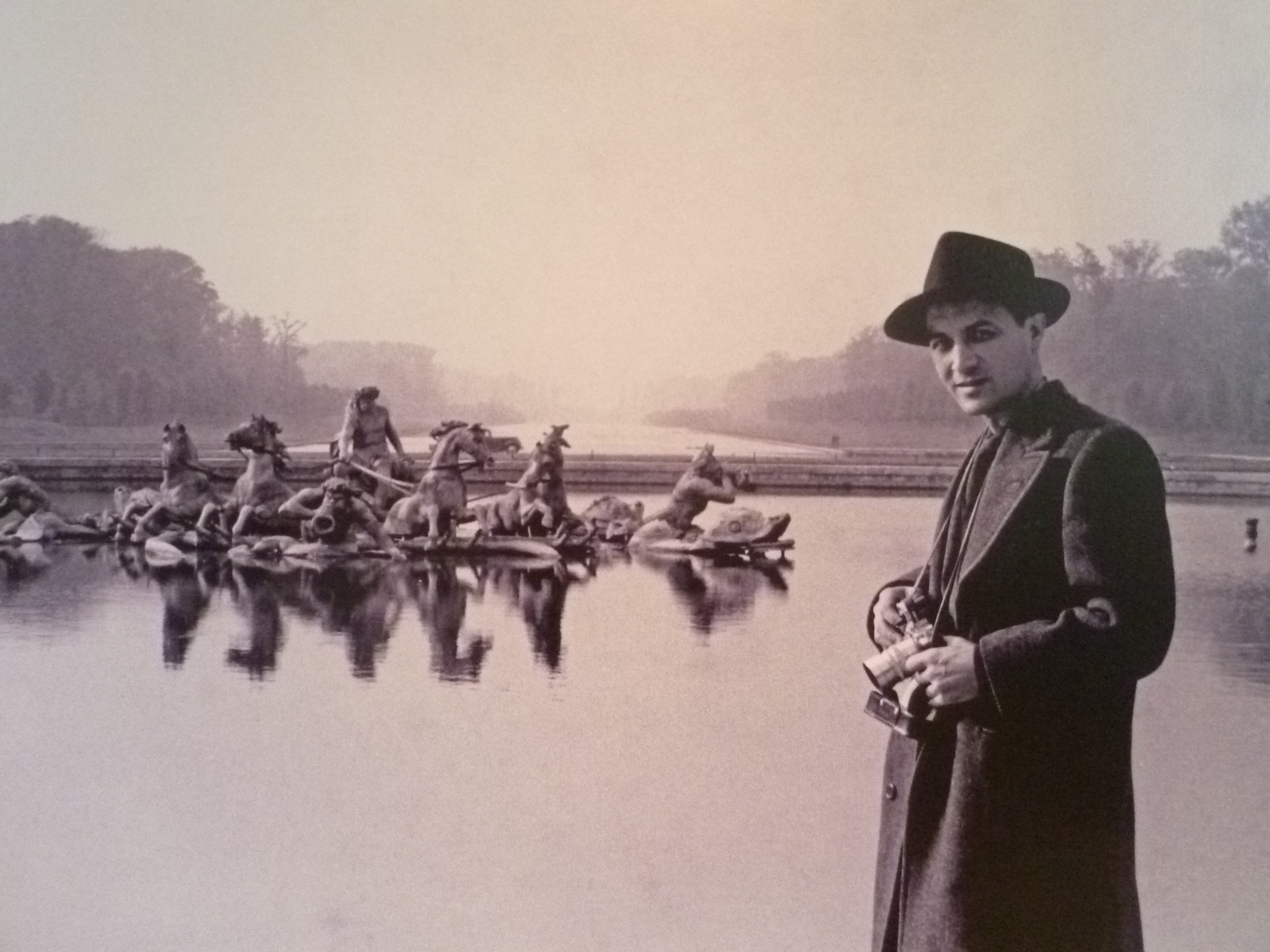
    Noguchi at Versailles in the 1950s.

    We spent a long time wandering the galleries…

    P1240361

    …then Kokyat fell asleep in the garden beneath a wall of bamboo. It is such a serene and restful place.

    Isamu Noguchi’s work with Martha Graham was recently celebrated in an evening of works on which they collaborated, performed at the Rose Theater. In another connection with dance, Noguchi designed ORPHEUS for George Balanchine and his stylized lyre from that production was for years the iconic logo of the New York City Ballet.

    I’ve posted some of my photos from our day at the museum on Facebook.