Tag: Ballet

  • Claudia Schreier’s SOLITAIRE @ Vail

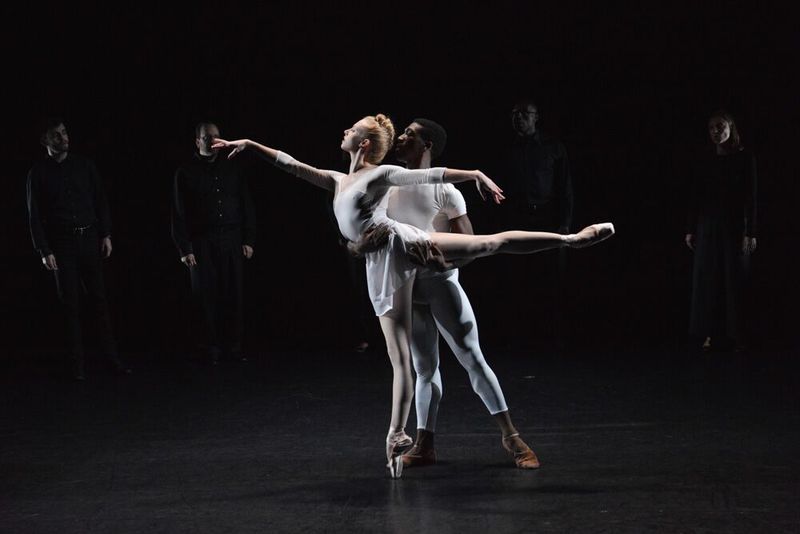
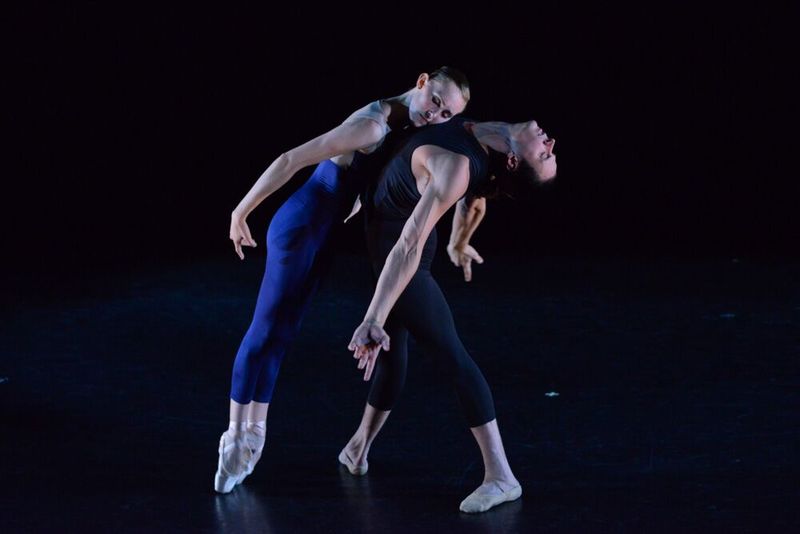
    Unity Phelan, Zachary Catazaro and the Catalyst Quartet in Claudia Schreier's Solitaire. Photo by Erin Baiano (3)

    Above: New York City Ballet’s Unity Phelan and Zachary Catazaro in the pas de deux from Claudia Schreier’s SOLITAIRE; photo by Erin Baiano for the Vail International Dance Festival

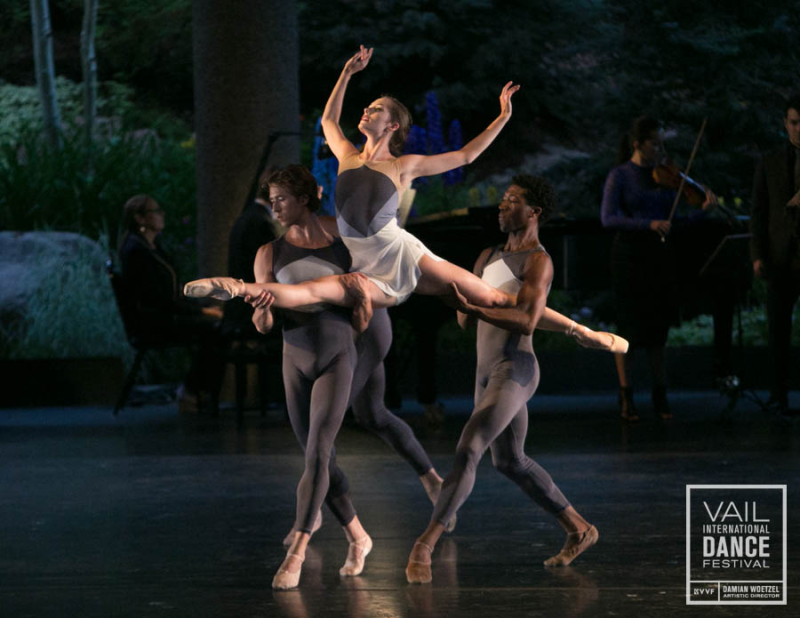
    SOLITAIRE, the newest ballet from choreographer Claudia Schreier, premiered at the Vail International Dance Festival on August 8th, 2016. The ballet was danced by Unity Phelan, Zachary Catazaro, Joseph Gordon (all of New York City Ballet) and Da’Von Doane (of Dance Theater of Harlem). The music, by Dmitri Shostakovich and Alfred Schnittke, was performed live by New York City Ballet‘s pianist deluxe Cameron Grant, and the Catalyst Quartet.

    I’m so pleased to share this video recording by Nel Shelby Productions of this new ballet’s world premiere performance: LINK

    Erin Baiano photographed the premiere of SOLITAIRE, and here are some of her wonderful images:

    Unity Phelan, Joseph Gordon, Da'Von Doane, pianist Cameron Grant and the Catalyst Quartet in Claudia Schreier's Solitaire. Photo by Erin Baiano

    Above: Unity Phelan, with Joseph Gordon and Da’Von Doane

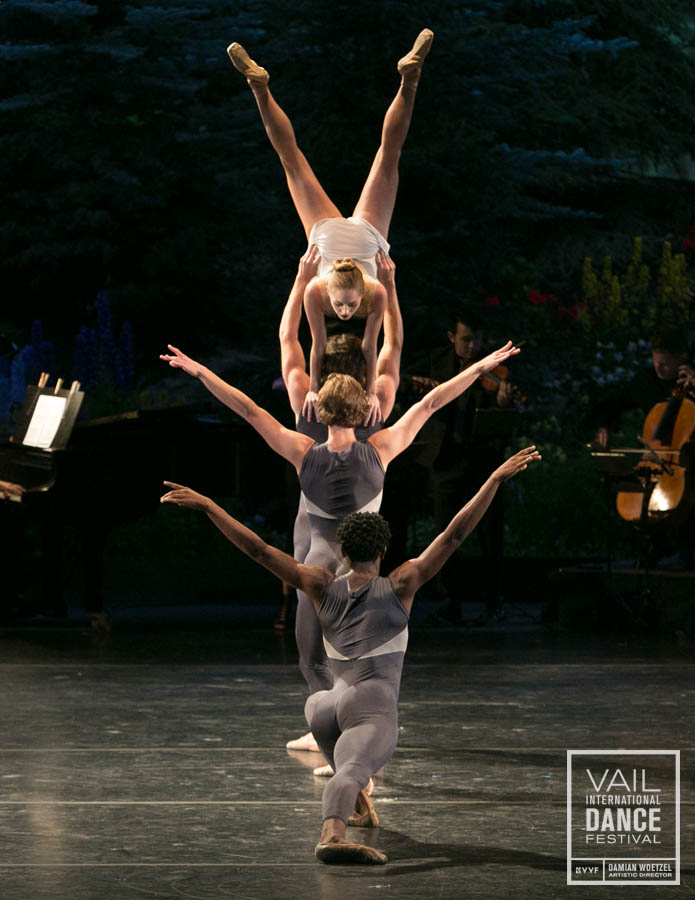
    Unity Phelan, Zachary Catazaro, Joseph Gordon and Da'Von Doane in Claudia Schreier's Solitaire. Photo by Erin Baiano

    Above: a pose from SOLITAIRE‘s first section

    Unity Phelan, Zachary Catazaro and the Catalyst Quartet. Photo by Erin Baiano

    Above: Unity Phelan and Zachary Catazaro in the pas de deux

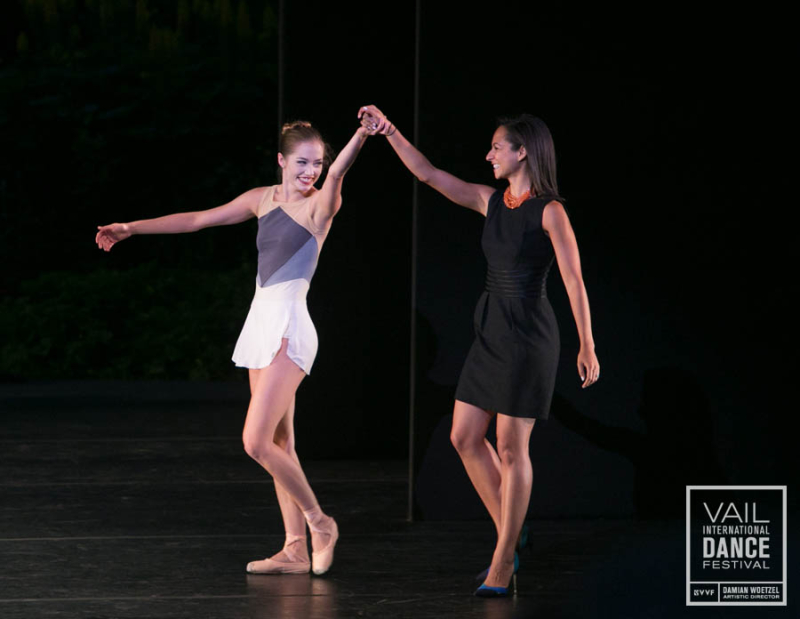
    Unity Phelan and Claudia Schreier bowing at the Vail International Dance Festival

    Above: ballerina Unity Phelan and choreographer Claudia Schreier take a bow following the premiere of SOLITAIRE, which drew a standing ovation from the Vail audience.

    All production photos by Erin Baiano.

  • Joshua Bell @ Mostly Mozart

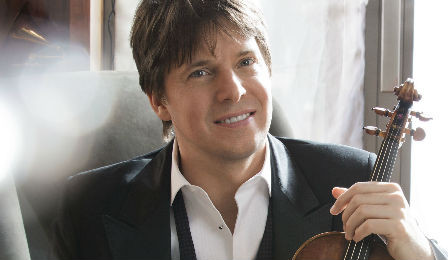
    Joshua-Bell

    Above: violinist Joshua Bell

    Wednesday August 17th, 2016 – Geffen Hall was packed to the rafters for Mostly Mozart tonight: all the stage seats were taken, and there was a line for ticket returns: could it have had something to do with Joshua Bell being the scheduled soloist?  Mr. Bell certainly impressed in his performance of Mozart’s 4th violin concerto, and the program overall was highly enjoyable.

    Any hearing of Felix Mendelssohn’s overture to A Midsummer Night’s Dream is bound to summon up visions of Balanchine’s enchanted forest – it’s quite amazing, in fact, when you think of the amount of narrative and dancing Mr. B was able to fit into this 12-minute overture, without ever for a moment seeming over-busy. The Mostly Mozart Orchestra coped well with the brisk tempi set by the youthful-looking conductor, Matthew Halls, and it was so much sheer fun to hear these familiar themes played live again. I must mention Jon Manasse’s lovingly-phrased clarinet solo.

    Joshua Bell then appeared to a warm greeting from the crowd. In this rendering of the Mozart violin concerto #4 in D-major, the violinist and the conductor formed a steady rapport. Unobtrusively using a score, Mr. Bell launched the solo line in the stratosphere and went on to play the Allegro vivace‘s capricious music with easy aplomb. There’s a lot of high-velocity coloratura in play here, and it culminates with a florid, witty cadenza of Mr. Bell’s own design.

    On a high, sweetly sustained note, Mr. Bell lures us into the Andante cantabile; the melody eventually dips into a lower range where his playing a balm to the ear. An elegant ‘interlude’ has a different sort of appeal; then the main theme recurs, before the violinist ascends to another high-lying cadenza. 

    After an elegant start, the Rondeau turns sprightly – a delicate mini-cadenza teases us and then there’s another more extended cadenza. The soloist joins the massed violins in a sort of chorale, and Mr. Bell continues to seize opportunities for yet two more cadenzas, the first having an ironic buzzing quality.

    As ever, Mr. Bell’s physically engaged playing is as enjoyable to watch as to hear. The random smudged note here or there was nothing to deter from the ongoing sweep of his music-making, and though I agreed with my companion that the cadenzas sometimes seemed rather too ‘modern’, they gave the performance an individuality that was refreshing in its own right.

    Beethoven’s overture to Coriolan, Op. 62, was the composer’s first opportunity to write for the stage, and his success has kept the overture in the repertory. Originally conceived as a prelude to the play of the same title by the composer’s friend Heinrich Joseph von Collin – a theatrical success in Vienna in 1802 – the overture didn’t appear until 1807, when the play’s popularity had waned. It seems that only one performance of the play with Beethoven’s overture took place: on April 17th, 1807. After that, the eight-minute overture went on to thrive as a concert number.

    This evening’s performance was finely-wrought by Maestro Halls, and most attractively played. The contrasting themes of anger and tenderness express the theme of the play: the betrayal of his duty as a Roman general by Coriolanus, and his mother’s entreaties to abandon his plan to lead the enemy forces in an attack on Rome. Her pleading is effective: Coriolanus abandons his scheme and faces his punishment.

    A warm and appealing performance of Beethoven’s “little” symphony – the 8th – concluded the evening on an optimistic note. The last time I heard this symphony performed live was in December 2013 when the Spanish conductor Rafael Frühbeck de Burgos, then in his 80th year, led the New York Philharmonic in the work and left my friend Dmitry and I with wonderful memories of the highly-respected Maestro, who passed away in June 2014. We still speak of that Philharmonic concert with special affection. 

    Timed at around twenty-five minutes, this four-movement symphony flies by: there’s no adagio to make us stop and ponder, but rather a charming and often witty flow of themes with the congeniality of dance rhythms ever-ready to buoy the spirit.

    A lively podium presence, Maestro Halls was well in his element here, and the musicians seemed fully engaged in this music which successfully blends elegance with folkish gaiety. The horns sounded plush, and again Mr. Manasse made his mark: an outstanding musician.

  • L.A. Dance Project @ The Joyce

    Helix2a

    Above: Stephanie Amurao and Aaron Carr of L.A. Dance Project in Justin Peck’s HELIX; photo by Rose Eichenbaum

    Wednesday July 27th, 2016 – First off, I must heap praise on the dancers of L.A. Dance Project: throughout this long, uneven program at The Joyce, their energy, commitment, sexiness, and spirit kept us engaged, even when the choreography lapsed. Some of these dancers are familiar to me: Stephanie Amurao (she danced briefly with TAKE Dance), Morgan Lugo (he danced in Luca Veggetti’s BACCHAE for Morphoses in 2011); and Aaron Carr (formerly of Keigwin & Co); then there’s Anthony Bryant, a lovely guy I’ve known via Facebook and who I have now met as both a dancer and friend.

    The Joyce was packed – so nice to run into Denise Vale of the Martha Graham Dance Company! – as works by Sidi Labri Cherkaoui, Martha Graham, Justin Peck, and The Project’s director Benjamin Millepied were offered up.

    Mr. Cherkaoui – whose ORBO NOVO for Cedar Lake Contemporary Ballet in 2009, and SUTRA, seen at the White Lights Festival in 2010, linger in the memory – gives us HARBOR ME, a darkish piece set to music by Park Woojae. This work may be danced by three men or three women: tonight, it was the female trio: Stephanie Amurao, Julia Eichten, and Lilja Rúriksdóttir. The music features poignant cello passages; each of the three women has a solo, then trios develop in which they form languid structures. The music pulses up, with a mid-Eastern feel. The women dance a trio in a pool of light, conversing in gestures. The ballet starts to feel overly drawn-out: the alternation of solos and trios becomes repetitive, and there’s a bit too much floorwork. In the end, it’s the compelling dancing that saves it. 

    After the first interval, MARTHA GRAHAM DUETS proved a welcome change of pace. The three pas de deux were culled from a 1957 Graham documentary, A Dancer’s World, and are performed to piano music by Cameron McCosh from the film’s soundtrack. White Duet is now familiar to Graham devotees in its incarnation as part of Diversion of Angels; Star Duet and Moon Duet have not been seen since the 1960s.

    Developing the Graham style takes years for a dancer, and so one could not expect tonight’s sextet of dancers to look like the members of the current Graham company – people who are deeply invested in the Graham technique. Instead, a beautiful fusion has been achieved, and it’s simply wonderful to be seeing these duets performed with such lustre: Rachelle Rafailedes and Nathan Makolandra looked divine in the stylized White Duet, here danced in Janie Taylor’s sleek costumes, recalling the Balanchine black-and-whites.

    The delights of Star Duet were served up by Stephanie Amurao and Anthony Bryant. There are kick-lifts and arabesque balances, and then things get playful: Stephanie stands on Anthony’s thighs as he revolves in a gentle plié. In Moon Duet, Morgan Lugo looks like a young god. He and Julia Eichten gorgeously conveyed a sense of wonderment and quiet ecstasy as their duet unfolds.

    Justin Peck’s HELIX was far and away the most impressive of the program’s three new works. In her costume designs for this ballet, Janie Taylor puts the dancers in grey but playfully adds powder-blue socks. Esa-Pekka Salonen’s score is eminently dance-worthy and Justin’s choreography evolves naturally from the music. But for the lack of toe shoes, this piece is brilliantly balletic…with a contemporary twinge.

    At curtain-rise, three couples stand back-to-back. Then movement bursts forth: tricky footwork and complex partnering mark the three duets that Justin has created, and the dancers dive right in, vibrant and assured. When the music gets big, the dancers go still and then strike poses. A series of exuberant solos follows. Urgent comings and goings engage the eye, and then: everyone collapses. The crowd went wild, showering the dancers with applause. Kudos to all: Laura Bachman, Anthony Bryant, Nathan Makolandra, Robbie Moore, Rachelle Rafailedes, and Lilja Rúriksdóttir.

    Following a second intermission, Benjamin Millepied’s ON THE OTHER SIDE brought the full Company on in a colour-filled dancework set to piano music by Philip Glass. The ballet was premiered about a month ago at Sadler’s Wells, and perhaps it was scheduled for its Joyce performances without sufficient thought as to how it would fit in the program. Basically, it’s fatally over-extended.  

    ON THE OTHER SIDE starts more than promisingly – and it’s danced superbly from start to finish – but it simply goes on and on. Each segment, and the music that supports it, is more than pleasing to watch and hear, but after a while one could sense the audience’s impatience and desire for an ending. The dancers labored valiantly and never for a moment let the choreographer down; eventually my companion and I were feeling numb. 

    When the curtain finally fell, the dancers were warmly applauded but the rabble-rousing ovation they so deserved was dampened by the fatigue that had set in watching this last ballet. With judicious cutting, ON THE OTHER SIDE could still be a viable work; as it stands now, it’s as exhausting to watch as some of Twyla Tharp’s over-extended creations.

  • Joffrey Ballet Concert Group @ NYLA

    2016 St. Saens 4th mvmt. fouette jump Lindsey Felix, Daniel White, Genaro Freire JBS_CONCERT GROUP_5-25-2016_by Lucas Chilczuk-1277

    Above: Lindsey Felix, Daniel White, and Genaro Friere of the Joffrey Ballet Concert Group in Gerald Arpino’s Suite St. Saens; photo by Lucas Chilczuk

    Friday May 27th, 2016 – The JOFFREY BALLET CONCERT GROUP, under the Artistic Direction of Davis Robertson, performing a mixed program of classics (Gerald Arpino’s Suite St. Saens, and Balanchine’s Valse Fantaisie) along with newly-created pieces by Gabrielle Lamb, Robert Jeffrey, and Dwight Rhoden plus an Asaf Messerer pas de deux à la Russe to music by Rachmaninoff which brought down the house. A very attractive company of dancers held the audience in an attentive, appreciative state; excellent lighting (David Moodey) enhanced each ballet as this highly enjoyable program of dance unfolded before us. 

    Valse Fantaisie - Shaina Wire & Sergio Arranz saute de chat

    Above: Shaina Wire and Sergio Arranz in Valse Fantasie; photo by Lucas Chilczuk

    To start a ballet evening with Balanchine is always a good thing, and Valse Fantaisie – to the intoxicating Glinka score – engaged us immediately. Stacey Caddell has staged the ballet on the young Joffrey dancers, and they did very nicely by it. Four lovely ballerinas sailed thru the lyrical (and sometimes tricky) Balanchine choreography with a sense of joy; in the principal roles, Shaina Wire and Sergio Arranz were appealing in both appearance and technique, displaying a fine mixture of nobility and charm.

    Mr. Arranz was back onstage moments later, in silhouette, for the opening of Robert Jeffrey’s Confianza. This intimate, moody pas de deux is set to a collage of music by Benjamin Brown, Steven Stern, Eric Satie, and Max Richter. The choreographer gives the dancers – Victoria Santaguida and Mr. Arranz – complex and demanding partnering motifs which the couple handled with persuasive aplomb, bringing tenderness tinged with sensuousness to their dancing.

    And So It Goes - Sierra French & Genaro Freire in ecarte pull

    Above: Sierra French and Genaro Friere in And So It Was…photo by Lucas Chilczuk

    Dwight Rhoden’s And So It Was… is danced to Bach’s Partita #2 in D-minor. As smoke wafts across the dramatically-lit stage, a sexy atmosphere is developed with the seven boys in silky briefs and the girls sleekly costumed. The choreographer’s sense of musicality serves up a succession of duets – sometimes with all seven couples duetting at the same time – with an endless flow of dancers coming and going. As is so often the case in using Bach’s music, the ballet eventually began to feel repetitive; the dancers were able to sustain this longish work thru their personal attractiveness and commitment.

    Tessellations - Shayla Hutton & Sergio Arranz arabesque

    Above: Shayla Hutton and Sergio Arranz in Tesselations; photo by Lucas Chilczuk

    Gabrielle Lamb’s Tessellations provided a wonderful change of pace; using a brilliant mix of music by The Amestoy Trio and Cat Power, Gabrielle’s ballet at first seems to be just another ‘loner vs community” narrative, but it is far more quirky – ironic, moving, and witty by turns – and was expressively danced by the Joffrey troupe. 

    The dancers wear dark clothing and socks. The Amestoy Trio’s fresh meshing of gypsy, Parisian, and Latino influences is a kick to hear, and Cat Power’s vocals for a pas de deux has its own slightly gritty appeal. Periods of silence allow us a bit of reverie before the dancing moves on. The dancers alternately dance and observe, forming fleeting cliques and chains, standing in ordered designs, communicating in gestures, and creating a world in which alternating currents of sentiment and low-key street savvy hold us under a spell. It’s been a while since I’ve seen any of Gabrielle’s work, and this was really refreshing to experience.

    Spring Waters - Mariana Perez and Jon-Paul Hills ecarteJBS_CONCERT GROUP_5-25-2016_by Lucas Chilczuk-813

    Above: Mariana Perez and Jon-Paul Hills in Spring Waters; photo by Lucas Chilczuk

    Asaf Messerer’s Spring Waters, the boyish and muscular Jon-Paul Hills wowed the audience with the fearless strength of his partnering, placing his ballerina – Mariana Perez – in improbable lifts with the assurance of an Olympic athlete, catching her as she rushes to his arms and sweeping her overhead. The duet ends with a spectacularly high lift as Mr. Hills rushes across the stage and into the wings, bearing Ms. Perez aloft like an exulted icon: the audience simply went nuts as they sped away.  

    Gerald Arpino’s Suite Saint-Saëns was the closing number this evening, a large-scale work filled with movement and alert to the music’s many fragrances. The dancers enter one by one, with brisk jetés and meeting up in fleeting partnerings. Lindsey Felix, a featured soloist in the first two movements (Caprice Valse and Serenade) was agile and lovely to watch.

    The Serenade has a dreamier quality; four couples to start, with other dancers joining. The simple act of walking takes on its own resonance. An intimate pas de trois for Ms. Felix, Maria Sol Maratin, and William Hall evolves beautifully as other dancers come and go.

    A march-like theme jolts us, but soon settles in to a Minuet with a ‘classic’ pas de deux – and another big lift – before hastening on to the concluding Pas Redoublé which features leaping boys and even a set of fouetté turns. The music is bouncy, the dancing exuberant.

    Amid all the bustle and swirl of this wonderful ballet, a dancer who had not appeared earlier in the evening – Haojun Xie – made a very fine impression with his lithe jump and sincere presence.

  • New Ravel @ New Chamber Ballet

    L1680670

    Saturday February 27th, 2016 – Miro Magloire’s New Chamber Ballet presenting five Magloire ballets, including a premiere, at City Center Studios. Exceptional music, played live, is always on offer at NCB; then there’s the bevy of ballerinas: five distinctive dancers who bring Miro’s classically-based but sometimes quirky – and always demanding – choreography to life.

    Tonight, the house was packed; extra chairs had to be set out, and some people were standing. The program was one of Miro’s finest to date – and he’s had an awful lot of fine evenings. Two classic French violin sonatas – Debussy’s and (part of) Ravel’s – were in the mix, along with some Schoenberg (the more Schoenberg I hear, the more I like), and works by Beat Furrer and Friedrich Cerha (who just celebrated his 90th birthday). 

    The opening (premiere) work, RAVEL’D, is still “in-progress”; tonight we saw the first movement, with Miro promising the rest of it for his April performances. Doori Na and Melody Fader played beautifully, and Sarah Thea’s fringed tunics added an unusual flair to the movement. Stylized motifs – eating, praying, biting – are woven into the dance. One girl’s toe-shoed foot rests upon another girl’s head: this is one of several unexpected balancing devices. A space-filling unison trio stands out, and the closing section finds Sarah Atkins in a reverential pose as Amber Neff and Shoshana Rosenfield ‘converse’ in a series of mutually dependent balances. 

    The space was again well-utilized in GRAVITY; we were seeing the finished version of this work that Miro had started on last year. Doori Na’s expert playing of the Cerha score was something to marvel at: great subtlety and control are called for, and Doori delivered. The three dancers – Elizabeth Brown, Traci Finch, and Amber Neff – are engaged in extended paragraphs of the partnering vocabulary Miro has been exploring of late. Extremely challenging and movingly intimate, the intense physicality of these passages push the boundaries of what we expect from women dancing together. Miro’s dancers have taken to these new demands with great commitment: watching some of their improbable feats of balance and elastic strength gives us a fresh awareness of possibility. Adding yet another dimension to the work: when not actively dancing, each ballerina curls up on the floor to sleep. 

    Pianist Melody Fader evoked an air of mystery with her superb playing of Arnold Schoenberg’s Six Little Piano Pieces for the ballet QUARTET. Here Mlles. Atkins, Brown, Finch, and Neff appear in elegant, backless black gowns. They take seats at the four corners of the playing area, facing outward. With her hair down, a waif-like Shoshana Rosenfield dances in the center with a feeling of halting insecurity; her character seems dazed, perhaps drugged. Periodically, the four seated women move their chairs towards the center, slowing encroaching on Shoshana’s space. The four become aware of the lone ballerina as a potential victim: they turn and observe her intently. In the end, the four women have Shoshana trapped; as she sinks down in surrender, they caress her and run their fingers thru her hair. Eerie, and leaving us full of questions, QUARTET is as intriguing to watch as to hear.

    In VOICELESSNESS, Beat Furrer’s mystical score was performed by Melody Fader; her playing had a fine air of somber quietude. Dancers Amber Neff and Shoshana Rosenfield, in Sarah Thea’s sleek body tights, become fervently entwined and mutually dependent in a duet that develops further elements of Miro’s intense and engrossing partnering technique.

    For a revival of TWO FRIENDS, Doori Na and Melody Fader had the lovely experience of playing Claude Debussy’s violin sonata, the composer’s last completed work. Wearing black gauzy tunics and black toe shoes, Elizabeth Brown and Sarah Atkins are the eponymous duo; they partner lyrically, and all seems right with the world. Then Traci Finch appears out of nowhere and the ballet’s dynamic shifts and splinters, with fleeting pair-ups as alliances form and vanish in a trice. The subtexts of attraction and jealousy are very subtly threaded into the movement; an in-sync duet for Elizabeth and Traci is one outstanding moment, and the sonata’s final movement calls for large-scale virtuosic dancing from all three. But then Sarah impetuously rushes off. 

    True to life, TWO FRIENDS often finds multiple narratives developing at the same time, and over-lapping. There is so much to watch and to savor: I especially relished a brief passage where Elizabeth Brown, suddenly finding herself standing alone, quietly runs her hands up and down her arms in a caressive gesture. Elizabeth, a dancer who always lures the eye with her confident technique and personal mystique, turned this fleeting moment into something of deeper resonance.  

    Having followed Miro’s New Chamber Ballet for several seasons now, what I’ve come to appreciate most about him is his musical integrity. His tastes are eclectic, but always sophisticated, and he’s able to win us over to some very unusual and not always ‘easy’ music thru his own personal enthusiasm for the works he presents. The benefits of having the music played live are numerous, and greatly enhance the atmosphere at NCB‘s performances. And Miro’s excellent dancers take up each new musical and choreographic challenge that he sets for them with a wonderful mixture of strength, musicality, willingness, and grace.

    The dancers tonight were Sarah Atkins, Elizabeth Brown, Traci Finch, Amber Neff, and Shoshana Rosenfield, with the music played by Doori Na (violin) and Melody Fader (piano) and costuming by Sarah Thea. Kudos to all, and to Miro for yet another fascinating evening of dance.

    During the intermission, I really enjoyed re-connecting with Melissa Barak, the former New York City Ballet ballerina who now runs her own Los Angeles-based company Barak Ballet. Melissa is currently here in New York City as the inaugural Virginia B. Toulmin Fellow for Women Choreographers at the Center for Ballet and the Arts at NYU. We shared an awful lots of news and ideas in our 15-minute chat. I love her energy!  

  • Ballet Academy East @ Ailey Citigroup

    12729135_10102663014065261_1219830271059168853_n

    Above: from Claudia Schreier’s ballet “Charge“, a Rosalie O’Connor photo

    Saturday February 20th, 2016 – Young dancers from Ballet Academy East appeared tonight in performance at Ailey Citgroup Theatre. Ballets choreographed by Ashley Bouder, Jenna Lavin, and Claudia Schreier were on offer, as well as George Balanchine’s classic “Raymonda Variations”, staged by Darla Hoover, BAE’s artistic director and a répétiteur for the Balanchine Trust.

    Though billed as a ‘studio showing’, the presentation was fully staged, with lighting and costumes. The house was packed, with some dance-world luminaries who teach at BAE among the crowd.

    Jenna Lavin’s “Barcarolle” opened the evening; set to the beloved music of the same title from Offenbach’s CONTES D’HOFFMANN, Lavin’s charmer of a ballet was danced by the youngest group of dancers on tonight’s programme: ages 10 to 12 years. The ballet’s three boys were showing early development of the courtly style which is an essential component to classical ballet, whilst the girls – in pretty pink tutus – danced with amiable grace.

    Ashley Bouder, principal ballerina with New York City Ballet, has choreographed “Mozart’s Little Nothings“, a ballet to the great composer’s “Les petits riens” for a cast of 13 BAE dancers ranging in age from 12 to 15. The choreography is elegant and well-structured – as perfectly befits the music. The girls wear white with violet ribbon trim, and the ballet has a classic hierarchy of principal couple, pas de trois, and corps de ballet. The dancing was accomplished, the young dancers successfully imparting a sense of both balletic decorum and the joy of performing, and celebrating in a wonderful ‘big circle’ moment. Ms. Bouder, with a beautiful baby bump, was greeted warmly when she took a bow at the end of her ballet. 

    Boldly and thrillingly choreographed for 22 of the school’s most technically advanced dancers, Claudia Schreier’s premiere, “Charge” calls upon her youthful cast for both strong traditional ballet technique and an unusually supple fluency of the upper body, with correspondingly fluid port de bras. “Charge” is set to the third movement of the contemporary Dutch composer Douwe Eisenga‘s piano concerto.

    Ms. Schreier showed a clear mastery of structure in deploying her large cast with consummate skill from start to finish in this exciting ballet. Opening with a single girl onstage, the choreographer commences to build her ballet with a duo, a trio, and a quartet of dancers arriving in succession, eager to dance. By the time the full cast are onstage, the choreography and Mr. Eisenga’s sparkling, dramatic score are whisking us along on an exhilarating ride.

    Charge” unfolds with a dynamic sense of the inevitable: the music propels Ms. Schreier’s choreography at every moment, and the dancers give it their all. So many highlights along the way: a passage for six boys is echoed by six girls; a stylized pacing motif; a grand circle that rushes to form and then vanishes just as quickly; an off-kilter pas de deux; four quartets in canon; fleeting solos; unusual lifts. Ms. Schreier miraculously managed her large cast – in a limited space – so compellingly that things never seemed over-crowded or chaotic.

    In sum, “Charge” writes another vivid page in Ms. Schreier’s dance diary: a perfect follow-up to the memorable works she presented on this very stage in August 2015. Kudos to the young dancers who illuminated “Charge” with their flair and commitment.

    After the interval, Ms. Lavin turned to Schubert’s piano trio # 2 in E- flat major, Opus 100, for the premiere of “(S)EVEN”. Three girls in blue and four is pale rose comprise the cast. Ensemble moments give way to a series of short solos performed on pointe, each tailored to the specific technical gifts and personality of the seven teen-aged dancers.

    Raymonda Variations”, one of George Balanchine’s signature ballets, offers the BAE dancers a showcase for their diverse lyrical and virtuosic gifts. Darla Hoover cast the Academy’s advanced students with a keen sense of showing them off to best advantage. The level of dancing was high, and was matched by the musicality and Romantic-era sensibilities of the performers.

    Alexander Glazunov’s music, exuding the perfumed elegance of a bygone era, is captivating – and surely inspired the young BAE dancers to put forth their charming and scintillating best. It must have been a thrill to dance Balanchine at a young age, and for a very receptive audience.

    Several individual dancers in tonight’s performance could be singled out for special praise, but I don’t feel it’s really beneficial to do so at a student performance. Everyone gave of his or her best, and these young talents seem to be in very good hands at Ballet Academy East.

  • At Year’s End

    6a00d8341c4e3853ef00e54f201b938834-800wi

    Above: Me and my friend Richard outside the Perry Street condo, shortly after I moved to New York City in 1998.

    Odd-numbered years are often unpleasant ones for me. Just after Thanksgiving, one of my oldest friends – Richard – was found dead in his apartment in Southington, CT. The news did not shock me, since he had been in declining health for months, and he had seemed unwilling to pursue medical treatment.

    Our friendship stretched back to 1976 when we were both working at the old Covenant Insurance Company in Hartford CT. We shared many adventures over the years, and we had a few fallings-out, though never anything that lasted more than a day or two.

    Up until the time of his death, we spoke twice a week by phone (he had never shown an interest in owning a computer) and when he failed to call me on the Saturday after Thanksgiving I knew something was wrong. I tried to call him but his voicemail was full. Then Suzanne contacted me with the news of his death.

    The fact that he’s no longer with us and that we’ll never again meet in New Haven for lunch or spend a day together here in the City has sunk in slowly. I continue to miss his slightly raspy voice on the phone, and the other day when the phone rang (it seldom does) I momentarily thought: “Ah…Richard’s calling… finally…” and then I remembered.

    During 2015, three people I am very close to lost people dear to them, all in sudden and unexpected circumstances. To Dmitry, Brix, and Ta-Wei go my sympathies…life will never be quite the same for us now, even though the deep initial sorrow will fade over the years to come.

    ~~~~~~~~~~~~~~~~~~~~~~~~~~~~~~~~~~~~~~~~~~~~~~~~~~~~~~~~~~~~~~~~~~~~~~~~~~~~~~~~~~~~~~~~~~~~~~~

    2015 also saw a major change in my blog which – as a retired person – occupies a great deal of my time. During their Winter season, I finally gave up on New York City Ballet. They had become increasingly random with their press tickets and since my calendar is so full and events planned weeks in advance, it became very frustrating to be told on a Monday that they couldn’t accommodate you that week, after you’d set aside the date just for them. 

    I withdrew from their press list and have only been back once since: for Jennie Somogyi’s farewell. I miss the dancers and the Balanchine rep terribly, but it became clear to me that the powers that be didn’t care if I came and wrote about their Company or not.  

    My plan now is to go to NYCB from time to time; I don’t mind in the least buying tickets though by the time casting is announced, affordable seats in parts of the house where I like to sit are usually unavailable.

    Of course, New York City Ballet was one of the main attractions for me in making the move to New York City. That I will now see them rarely is sad in a way, yet – like the Countess Olenska in THE AGE OF INNOCENCE – I must go where I’m invited. 

    Curiously, losing NYCB started to make me think about my blog’s dance coverage in general. I realized my interest had been flagging, in part because I simply saw too much dance and in a way a lot of it was starting to look (and sound) the same. Meanwhile I was finding The New York Philharmonic, Chamber Music Society of Lincoln Center, Young Concert Artists, and the American Symphony Orchestra were all offering truly exciting concerts, and were wonderfully welcoming and very appreciative of having their performances written about.

    Since these major classical music organizations – along with The Met (yes, I still go…often…but that’s a whole ‘nother story) – announce their programming months in advance, it makes it easy to fill up my calendar for the entire season…but leaves far less time for dance. 

    So…voilà…my dance blog has become a classical music blog. Dance will certainly not be written off entirely though: a handful of Companies whose work I have enjoyed over the last several seasons will continue to have their rehearsals and performances covered here.

    There is so much more I could say about this transition, but in fact I am simply following the natural flow of things and am finding myself deriving enormous pleasure and meaning in the eternal realm of great music.

    I cannot wait to flip my calendar to 2016, and I wish everyone a year full of music, hope, and love.   

  • At Year’s End

    6a00d8341c4e3853ef00e54f201b938834-800wi

    Above: Me and my friend Richard outside the Perry Street condo, shortly after I moved to New York City in 1998.

    Odd-numbered years are often unpleasant ones for me. Just after Thanksgiving, one of my oldest friends – Richard – was found dead in his apartment in Southington, CT. The news did not shock me, since he had been in declining health for months, and he had seemed unwilling to pursue medical treatment.

    Our friendship stretched back to 1976 when we were both working at the old Covenant Insurance Company in Hartford CT. We shared many adventures over the years, and we had a few fallings-out, though never anything that lasted more than a day or two.

    Up until the time of his death, we spoke twice a week by phone (he had never shown an interest in owning a computer) and when he failed to call me on the Saturday after Thanksgiving I knew something was wrong. I tried to call him but his voicemail was full. Then Suzanne contacted me with the news of his death.

    The fact that he’s no longer with us and that we’ll never again meet in New Haven for lunch or spend a day together here in the City has sunk in slowly. I continue to miss his slightly raspy voice on the phone, and the other day when the phone rang (it seldom does) I momentarily thought: “Ah…Richard’s calling… finally…” and then I remembered.

    During 2015, three people I am very close to lost people dear to them, all in sudden and unexpected circumstances. To Dmitry, Brix, and Ta-Wei go my sympathies…life will never be quite the same for us now, even though the deep initial sorrow will fade over the years to come.

    ~~~~~~~~~~~~~~~~~~~~~~~~~~~~~~~~~~~~~~~~~~~~~~~~~~~~~~~~~~~~~~~~~~~~~~~~~~~~~~~~~~~~~~~~~~~~~~~

    2015 also saw a major change in my blog which – as a retired person – occupies a great deal of my time. During their Winter season, I finally gave up on New York City Ballet. They had become increasingly random with their press tickets and since my calendar is so full and events planned weeks in advance, it became very frustrating to be told on a Monday that they couldn’t accommodate you that week, after you’d set aside the date just for them. 

    I withdrew from their press list and have only been back once since: for Jennie Somogyi’s farewell. I miss the dancers and the Balanchine rep terribly, but it became clear to me that the powers that be didn’t care if I came and wrote about their Company or not.  

    My plan now is to go to NYCB from time to time; I don’t mind in the least buying tickets though by the time casting is announced, affordable seats in parts of the house where I like to sit are usually unavailable.

    Of course, New York City Ballet was one of the main attractions for me in making the move to New York City. That I will now see them rarely is sad in a way, yet – like the Countess Olenska in THE AGE OF INNOCENCE – I must go where I’m invited. 

    Curiously, losing NYCB started to make me think about my blog’s dance coverage in general. I realized my interest had been flagging, in part because I simply saw too much dance and in a way a lot of it was starting to look (and sound) the same. Meanwhile I was finding The New York Philharmonic, Chamber Music Society of Lincoln Center, Young Concert Artists, and the American Symphony Orchestra were all offering truly exciting concerts, and were wonderfully welcoming and very appreciative of having their performances written about.

    Since these major classical music organizations – along with The Met (yes, I still go…often…but that’s a whole ‘nother story) – announce their programming months in advance, it makes it easy to fill up my calendar for the entire season…but leaves far less time for dance. 

    So…voilà…my dance blog has become a classical music blog. Dance will certainly not be written off entirely though: a handful of Companies whose work I have enjoyed over the last several seasons will continue to have their rehearsals and performances covered here.

    There is so much more I could say about this transition, but in fact I am simply following the natural flow of things and am finding myself deriving enormous pleasure and meaning in the eternal realm of great music.

    I cannot wait to flip my calendar to 2016, and I wish everyone a year full of music, hope, and love.   

  • Rachmaninoff Finale @ The NY Phil

    Trifonov

    Above: pianist Daniil Trifonov

    Tuesday November 24th, 2015 – The third and final programme of The New York Philharmonic‘s Rachmaninoff Festival brought us Daniil Trifonov’s triumphant performance of the composer’s 3rd piano concerto as well as the ever-popular Symphonic Dances.

    Mr. Trifonov had the audience in the palm of his hand from the moment he walked onstage. He gave a magnificent performance, with terrific support from the orchestra. The 3rd piano concerto is everything the 1st isn’t: both in terms of structure and as a display of the soloist’s technique and artistry, the 3rd readily eclipses the composer’s earlier effort.

    Mr. Trifonov’s fluent – indeed astonishing – command of the keyboard held the audience under a spell. Particularly marvelous was the cadenza (the longer of the two provided by the composer) where the young pianist spun out the music to scintillating effect. With cunning inventiveness, Rachmaninoff has the flute suddenly speak up in the midst of the piano’s long paragraph: this wind theme passes on to the oboe, clarinet, and horn before the focus returns to the piano, which ends on a lovely fade-out.

    The composer paints on a big orchestral canvas in this concerto: a deep ‘Russian’ theme in the first movement impresses, and later there’s a big dance theme. The Philharmonic’s horns were ablaze tonight, the cellos plush, and the various wind voices piped up expressively.

    As the concerto raced to its conclusion, Mr. Trifonov carried the audience along on his dazzling ride. A full-house standing ovation ensued as the young master bowed graciously both to the house and his fellow musicians. I didn’t recognize his encore – and neither did my pianist/friend Ta-Wei – but it was deliciously played.

    Morlot

    Above: conductor Ludovic Morlot

    The piano had hidden Maestro Morlot during the concerto, but after the interval we had sight of him as he led the orchestra in a colourful performance of Symphonic Dances. New York City Ballet-lovers will be familiar with this score from Peter Martins’ 1994 setting of it. It’s a grand piece, with slashing rhythms in the first movement and a wonderful waltz in the second. Rachmaninoff uses the alto saxophone – a sound I always love to hear – to evocative effect, though I could not find a credit for the soloist in the Playbill. The harp also makes some rhapsodic interjections. Overall the orchestra, with Sheryl Staples as concertmaster, sounded superb and they seemed to truly enjoy playing this piece.

    After their rapt attentiveness during the concerto, the audience seemed to lose a bit of focus during the second half of the program. One couple down the row from us feasted on chocolates and Pellegrino whilst texting literally throughout the Symphonic Dances, and the woman on Ta-Wei’s right decided to conduct her own version of the score.

    At the end of the concert I asked Ta-Wei if he thought Rachmaninoff was a great composer or just a very good one. He replied: “Well, he knew what he was doing.” True, amply true.

  • Claudia Schreier & Company @ Ailey Citigroup

    Y9sFFU7MHcPVPSPHekpAuI0a2psEiYGmG3xQfZxEJVw

    Above: Amber Neff and Drew Grant dancing with Claudia Schreier & Company at Ailey Citigroup Theatre; photo by Nir Arieli

    Saturday August 8th, 2015 – Exactly one year ago tonight, Claudia Schreier won the Breaking Glass Project’s competition for female choreographers with her brilliant ballet, HARMONIC. Her prize was to present a full evening of her own work at Ailey Citigroup Theatre, and that prize was claimed tonight as five of Claudia’s works were performed by an array dancers drawn together specially for the occasion.

    The evening was an unalloyed triumph for all concerned, including two contemporary composers whose works were choreographed by Claudia (Jeff Beal and Douwe Eisenga – both of them were present and took a bow at the end); the choral group Tapestry who performed live for the ballet VIGIL; a chamber quartet playing Jeff Beal’s score for ALMOST MORNING live, and – of course – the superb ensemble of dancers.

    K5E9rMw6UqO0VVtyJciW6UK4NPyQplBgLO9YtZmNWic

    Above: the chamber musicians, with dancers Amber Neff and Drew Grant, in ALMOST MORNING

    When we first started watching House of Cards, my partner and I were very much taken with Jeff Beal’s score: “…this music would make a great ballet!” And now it’s come to pass: ALMOST MORNING is set to an original score composed for Ms. Schreier by the multi-Emmy Award-winning Mr.Beal. Six dancers appear in a series of overlapping duets interspersed among ensemble passages. The music pulses and percolates, but can also turn moody or melodious along the way. The musicians – Kieran Ledwidge (violin), Tia Allen (viola), Kirin McElwain (cello) and Ta-Wei Yu (piano) – delivered the score with propulsive assurance.

    The choreographer responds to this music with movement that has a broad overall sweep but also features countless felicitous and original touches. Amber Neff is thrice tossed into the air, spiraling before being caught by her partner Drew Grant; the blondes – Kaitlyn Gilliland and Elizabeth Claire Walker – dance in tandem; and a sustained duo for Ms. Walker and Mr. Grant is particularly striking. A pas de trois for Ms. Neff, Francis Lawrence, and Da’Von Doane progresses to a pensive solo danced by the incomparable Kaitlyn Gilliland. There are stretches of visual polyphony; the dancers form a circle before sweeping into a triple pas de deux set to the score’s most lyrical theme. Then the dancers rush off in the end, leaving the stage to the musicians.

    The conclusion of the ballet triggered the first of the evening’s enthusiastic ovations: having observed ALMOST MORNING in a keen state of silence, the audience demonstrated their approval for both the music and the dancing in no uncertain terms. And this was only the beginning.

    The evening continued on its soaring trajectory with HARMONIC, the ballet to Douwe Eisenga’s stimulating score which clinched the prize for Claudia Schreier at last year’s Breaking Glass competition. HARMONIC was originally created by Ms. Schreier in 2013 for the Columbia Ballet Collaborative, and was subsequently re-staged for Craig Salstein’s Intermezzo Dance Company, who performed it at Vassar College in March 2014. Inspired by Mr. Eisenga’s magical score, HARMONIC is a contemporary ballet that seems built to last.

    Tonight HARMONIC received a mesmerizing performance, with ABT’s entrancing Stephanie Williams displaying marvelous technique and a particularly attractive presence. Earlier this month, Stephanie danced – splendidly – for Joshua Beamish at The Joyce. The principal male role here was taken by Dance Theatre of Harlem’s intrepid Da’Von Doane; Da’Von danced in four ballets tonight and, after a long day of tech/dress/performance, he seemed totally fresh at the end of the evening and looked ready to repeat the whole programme. Strength and stamina are essential, but when you add Da’Von’s stunning physique, impeccable partnering, generosity of spirit, and his intangible gift for making everything seem right with the world, you have a paragon.

    VrNHJfYYogm9siRJvr8UW4yNJwsOXitV7P3HNzXAtv8

    Da’Von’s dancing with Ms. Williams (above) was electrifying to behold, for they are well-matched in terms of both daring and allure.

    One could say there are no supporting roles in Claudia Schreier’s ballets: she puts demands on everyone involved in a given work and then rewards them with opportunities to shine. Thus tonight in HARMONIC, Amber Neff and Elinor Hitt were utterly essential; they danced their hearts out, and basked beautifully in those passages of being partnered by Da’Von. Again, the audience response was thunderous.

    More images from HARMONIC:

    1O0yCW6DIWcuNbi1kgkPvPGcePxqUPemQqgrPxdPvz4

    1KVDMItwF91iXMsAH0RJgcUAIUCf9rcaCuNakLLIelU

    Elinor Hitt

    DJGLT5k-HOM4CJA1j2KxvMdRDzTWJ5ORhvToe5qMktY

    P6ARkgQ5VYLSGcmYLnuZH8l1PchvvsZI0BMCKKlz7Co

    Stephanie Williams

    A new production of Ms. Schreier’s 2009 ballet ANOMIE is imbued with a striking atmosphere of lyricism and poetry. Set to the heartfelt beauty of César Franck’s Prelude, Fugue and Variation

    YhV7QelfH4upXWT4oiaD-78zKzAtRftqDr9iTDjJF9A

    ANOMIE opens (above) with New York City Ballet’s distinctive Lydia Wellington posed in Daniel Applebaum’s arms in a pool of light; Lydia slowly unfolds and the ballet begins its beautiful flight. In addition to the abounding artistry of this wonderfully simpatico City Ballet duo, we could also savor the ever-vivid clarity of Amber Neff’s dancing, the aristocratic face and silken line of Elizabeth Claire Walker, and the handsomely assured presence of Drew Grant.

    MTvRlLhuisXRhclACmQpP0zgIyStKb4ZHLIJVPn9NeA

    Elizabeth Claire Walker (above) with Drew Grant…

    Km16R_5Ghax9vRLyntasKf3rdlEOq9zhuVWZ9d66jJE

    Elizabeth Claire Walker and Daniel Applebaum

    All five dancers appear in a diagonal, with a canonic dramatic port de bras motif, before Lydia Wellington and Daniel Applebaum meet again to end the ballet as in a fading dream.

    I can’t resist sharing more of Nir Arieli’s images from ANOMIE:

    0SI--26VGCSLSQ1gDOxIEQ4xgNID-k3mdpnnDljo19Q

    Daniel Applebaum and Elizabeth Claire Walker
    FvlGBVqpyOqaUaW8zjRLkEJd-fZiidefP2BCSIXMC-c

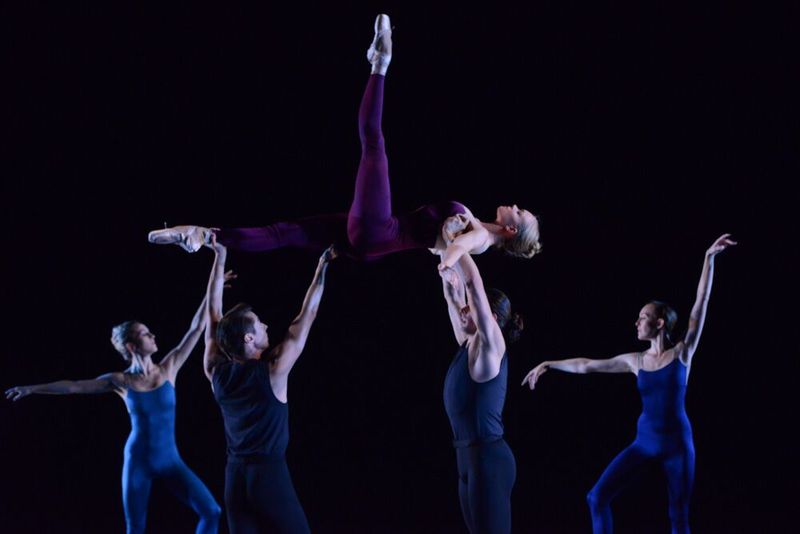
    Lydia Wellington, aloft

    WCtSTfFoPykM9C5iNf8-kojGyykv_vH4UVLRPgi0TO8

    Daniel Appebaum and Elizabeth Claire Walker: a most congenial partnership

    IA3Qcvp60nkoGJv_l9Cis0n4Ozy8gJ17Ln84d96OPnc

    Daniel Applebaum and Lydia Wellington

    RijS3j2j-Jpi87ApxZlCx2AGm4t0sNxnw_usIr_eYSU

    Lydia Wellington and Daniel Applebaum

    Following the interval, the atmosphere became spiritual as Vigil, a pas de deux danced by Elinor Hitt and Da’Von Doane to sacred choral music by Tomás Luis de Victoria and Sergei Rachmaninoff which was performed live onstage by the 20-member choir Tapestry. The singers, clad in black, arranged themselves in a semi-circle around the dance-space; they are a wonderful, physically diverse group of musicians and they harmonized with a kind of gentle intensity that created an atmosphere of both reverence and hope. 

    OMWIE-Czaw11xYyV6-Yp5ksiWQKagBj7OsbBC5lXRfk

    Above from VIGIL, danced by Elinor Hitt and Da’Von Doane

    Ms. Hitt was one of the revelations of the evening; her jazzy dancing in HARMONIC made us think of her as an extroverted allegro dancer, yet in VIGIL she displayed a poignantly expressive adagio style that put me in mind of Sara Mearns’ elegiac luminosity. It almost goes without saying that Da’Von Doane achieved another miracle of control, strength, and grace here; the partnership had a gorgeous flow and resonance, so finely attuned to the music. The dancers seemed angel-like in their white costumes, and their shaping of Ms. Schreier’s port de bras and the heavenly quality of the duet’s numerous lifts really cast a spell. The performance moved me to tears.

    More of Nir Arieli’s images from VIGIL: 

    49n005VJzsvCb1DSx1izV2GEyvS5GRJT2BntjAFD4Ws

    Q-zW7cFvJZoHyaykkqrjcfXBZ4hGjKNHsIcpnF_IquE

    VaQpT_k1TO1GAKh6316DP5wLFNXQoymriluYoN8f5K8

    VFHA0EntR26McD6nDkHZSs9sK94ep3yhkUTShl5V6O0

    PULSE, a driving full-company work, is set to Dutch composer Douwe Eisenga‘s marvelous Piano Concerto: I. With her customary flair for visualizing the music, Claudia Schreier molded the Eisenga score into another fascinating dancework: as exciting as HARMONIC, but bigger and splashier. In its dynamic thrust, PULSE reminded me at times of Robbins’s GLASS PIECES.

    CWHSP3A2JsVyFKX16Pv3HMRcTOaL9rzfcNk8A-Hg9EU

    Claudia’s full contingent of dancers took the stage for this impressively-structured ballet, and there were some dancers in the cast we hadn’t seen earlier in the evening, including New York City Ballet soloist Lauren King (above); always a welcome sight onstage, Lauren danced with her trademark mixture of lyricism and edge: a combination that always makes her so exciting to watch. Also appearing in PULSE were Nayara Lopes and Craig Wasserman, vivid dancers who I wish we could have seen more of over the course of the evening.

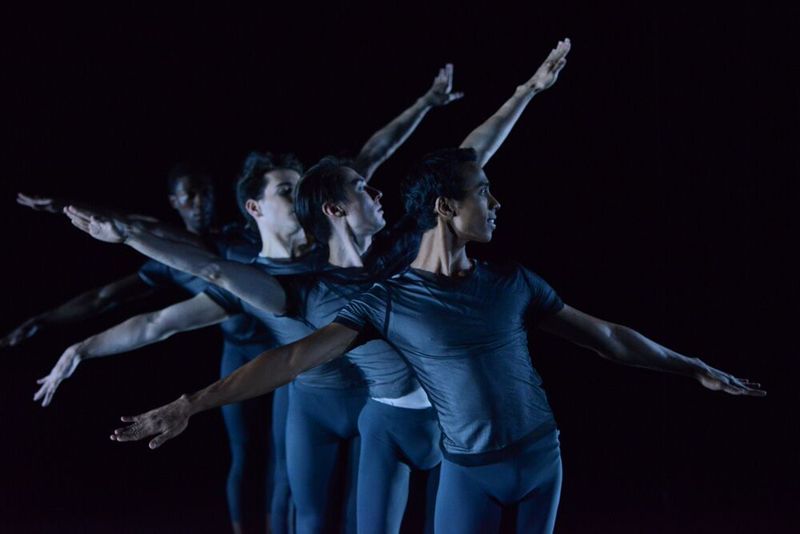
    Da’Von Doane’s opening solo in PULSE showed yet another facet of this dancer…a dancer to whom the word “amazing” can most truly be applied. The solo becomes an echo-duet for Da’Von and Craig Wasserman…
    TAfmoe5NcoVFqwZVPvC-J9V_zkqt3i68a-U0OkWrjHw

    …with motifs later taken up by the male ensemble (above): Da’Von, Craig, Daniel,and Francis.

    PULSE plunges forward, Claudia Schreier’s choreography ever-attentive to the nuances of the Eisenga score. At one moment, an air of mystery pervades only to surrender to the inevitable forward impetus of the music. There’s a buildup as waves of dancers enter…

    2ziWPMmcUodSe3Dt9DDlQiswd_cOeVh2NzDFOOW3RLo

    …and then suddenly we are lured into a solo passage for Kaitlyn Gilliland (above), dancing with goddess-like authority. Lines of dancers along a right-angle converge…

    UxOjxlMBczwmXTal7Fng6a1-szas2tTIKUoKcPRjIWo

    …and then Lauren King and Da’Von Doane (above) meet up for a duet, followed by other fleeting episodes. The women dance as a group, and then the men, and then everyone, as PULSE sprints to the finish line: a perfect finale for a grand evening of dance.    

    WZl3qKdcPsLlQ_y6I-HnVzT934N7DdbHhdc8fM-zGas

    Amber Neff and Da’Von Doane in PULSE: “We could have danced all night…in fact, we did!” To the dancers, one and all, heaps of roses and buckets of iced champagne.

    The performance ended with a colossal standing ovation and a din of cheers; the enthusiasm poured out into the lobby where the audience seemed reluctant to take leave after such an extraordinary evening. Although I have been following Claudia Schreier’s work for a few seasons, I must say that experiencing a full programme of her choreography surpassed my expectations, which were very high indeed. In addition to her enviable ability to choose just the right music and fill it with meaningful movement, her work is blessedly free of gimmicks or self-indulgence. Claudia knows the value of not over-extending her ideas, so that after each piece we are left wanting more.

    All photo by Nir Arieli, with my sincere thanks for his patience and his artistry.