Tag: Baryshnikov Arts Center

  • Halcyon @ The Di Menna Center

    L1180776

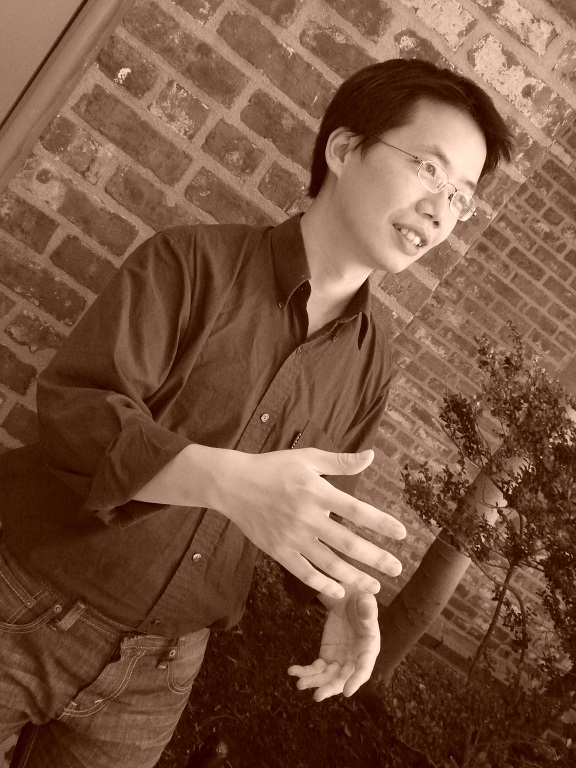
    Above: pianist Ta-Wei Yu of the ensemble Halcyon

    Monday August 26th, 2013 – Halcyon gave an evening of piano trios at the Di Menna Center, a high-ceilinged yet intimate space on the lower level of the Baryshnikov Arts Center building. The hall proved very felicitous for musical clarity, and an attentive and appreciative audience maintained a deep silence between the movements of each trio, rewarding the musicians with enthusiastic applause at the end of the evening.

    Opening with the Arensky piano trio No.1 in D minor, the players immediately established themselves as technically accomplished and vividly communicative musicians. The opening movement glows with Tchaikovksian beauty of melody, suffused with shades of quiet longing. Violinist Hilary Castle, in a gorgeous ruby-red gown, brought a feeling of poignant lyricism to the opening theme, with pianist Ta-Wei Yu matching her in a sense of rhythmic flow. Cellist Luke Krafka’s velvety sound – a consistent pleasure all evening – seemed very much at home in this music which veers from feelings of melancholy to hope. The playful second movement materailizes as an ‘Arensky waltz’; this gives way to the poetic Elegia-Adagio where the playing of the three musicians was passionate and inspired. In the concluding movement, earlier themes re-appear as the piece builds to a dramatic conclusion.   

    The second work, Haydn’s piano trio No.39 (“Gypsy”) in G major dates from 1795, during the composer’s time in London, and contains some of his most innovative
    keyboard writing. The work also features solo passages
    for the violin; if the cello is less prominent here, it does provide beautiful textures. Ta-Wei Yu’s nimble playing was very much to the fore here, with felicitous nuances of dynamic and colour. The three musicians attained a high level of expressiveness in the finely-moulded second movement: really impressive music-making. It’s the trio’s final ‘Hungarian’ rondo movement that has led to dubbing this piece the ‘Gypsy’ trio: here Ms. Castle went to town with her flourishes à la zingarese whilst the two gentlemen kept pace in a breath-taking rush to the finish. The musicians played with infectious joy.

    I have a special place in my heart for the two Mendelssohn piano trios: they are my favorite chamber works and in fact it was a chance hearing of the first trio on the radio lo! these many decades ago that made me realize there’s other music beyond opera that is rewarding to hear. This evening, Halcyon played the Mendelssohn piano trio No.2 in C minor as their final offering and it was a wonderfully personal experience for me to hear it played live. The three players showed a lovely affinity for the work’s almost painfully beautiful melodies. The performance left me deeply satisfied and feeling at peace with the world.
  • Labyrinth Within @ BAC

    1012002

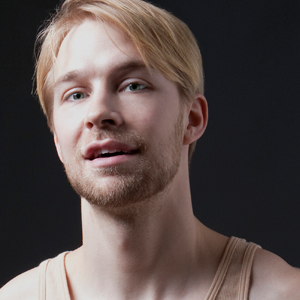
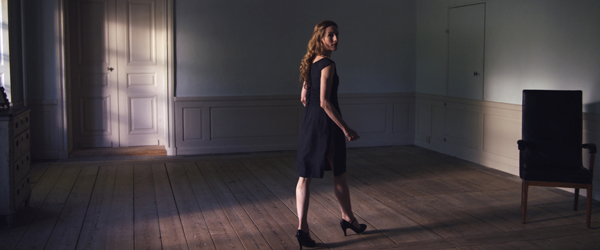
    Tuesday February 21, 2012 – Swedish dancer/choreographer/film-maker Pontus Lidberg (above) created his half-hour film LABYRINTH WITHIN over a four year period; as he revealed at tonight’s showing at Baryshnikov Arts Center, Wendy Whelan was his muse from the start – even before she got involved in the project.

    The movie is a fascinating experience on many levels: as a captivating visual work of art; as a choreographic melding of two contrasting pas de deux; as a poignant musical expression; and in its exploration of relationships where ideas about trust, jealousy, and passions real or imagined provide restless, suspenseful undercurrents right from the opening frame. The film also serves as a spine-tingling introduction of a great ballerina to a new medium: Wendy Whelan on-screen is as thoroughly riveting as Wendy Whelan onstage.

    The dreamlike atmosphere of the film leaves us to ponder whether the romantic triangle we are watching is real or imagined. LABYRINTH WITHIN wraps themes of infidelity, the allure of sexual enticement, and of escape from the everyday into a passionate dreamworld in a veil of mystery. The realms of reality and fantasy overlap; the viewer can only savour the elements of the film and draw his own conclusions.

    The three protagonists draw us into their respective worlds: Giovanni Bucchieri is the darkly handsome husband, Wendy Whelan the evasive and enigmatic wife, and Pontus Lidberg the blonde and beautiful lover. Giovanni seems like a pre-occupied workaholic who has neglected his marriage, yet his sensuous mouth indicates a voluptuous nature under the businessman facade. Wendy, the most intriguing person I have ever encountered, doesn’t need to act; by simply being on-screen her character lives and draws us deeply into the mysterious story and into the secret room where her fantasy becomes flesh. Pontus is the idealized lover, the embodiment of masculine grace and tenderness, his torso a landscape of muscle and fair skin.

    In the film’s opening moments, the two men appear to be wrestling with one another in fragmented dream sequences. But once the tale is underway, they meet only fleetingly on a staircase. Wendy dances with both of the men in sharply contrasted styles: with her husband the movement is angluar, cool and detached. Her beautifully-filmed scenes with her beloved are sensuous without being sexual; their passion is urgent yet somehow languid at the same time. Pontus strips down to his black briefs but Wendy keeps her black dress on; the glimpses of thigh, neck, streaming hair and entwined limbs are more evocative than any more blatant sexual scene that might have been crafted.

    At the end, Giovanni breaks into the forbidden room. What does he find there? Ah, you must see the film to find out!

    Pontus spoke of creating the entire work with composer David Lang’s music in mind but without having the actual pieces from the composer (some already written, some specially created for the film) to work with. Amazing how organic the final fusion of film, dance and music turned out. Maya Beiser’s ravishing cello playing gives an added texture of romance, longing and suspicion to the film.

    LABYRINTH WITHIN – both the film and the staged dancework inspired by it – may be seen this Summer at Jacob’s Pillow (details here), followed by a two-week, five-city tour of Sweden as part of Dancenet in October, and then at here in New York City in Autumn 2012.

    Tonight’s showing at BAC drew a packed house and many luminaries: NYCB‘s Janie Taylor and Sebastien Marcovici, the radiant Pauline Golbin, ballerina de luxe Alessandra Ferri, photographer/film-maker David Michalek (husband of Ms. Whelan), MORPHOSES‘s lovely Frances Chaverini, choreographer Laura Ward, and my dear friend writer/artist Monica Wellington.  NYC Ballet soloist Adrain Danchig-Waring makes a brief appearance in the film. 

    Labyrinth_within

    In 2010 as the film was being completed, both Pontus and Wendy generously contibuted to an article about the project for my blog, and Wendy loaned me her evocative images. You will find the story here.

  • Lar Lubovitch Dance Company @ BAC

    IMG

    Sunday November 21, 2010 evening – The culmination of one of my busiest fortnights since I started blogging: a truly enjoyable evening of works by Lar Lubovitch, beautifully danced by his beautiful dancers. This was the Company’s final performance of a sold-out run at the Baryshnikov Arts Center.

    Northstar_nov2010-560x300

    I suppose North Star would be considered early Philip Glass. He’d been composing for about ten years when he wrote this in 1977. (The ballet premiered in 1978). The music seems denser and less ethereal than many of Glass’s later works, but still very enjoyable to hear. The dancers swirl and flash about the stage individually or in quartets which join and then splinter as the music ebbs and flows. The restless energy of the score is visualized by the choreographer to perfect effect. Photo above: Todd Rosenberg.

    9018542-large

    Katarzyna Skarpetowska and Brian McGinnis (above, Christopher Duggan photo) performed the duet from MEADOW. Dating from 1999 and originally set on ABT, this work is set to an intrinsically luminous work by Gavin Bryars entitled Incipit Vita Nova.To the uneartly sounds of the counter-tenor voice, the dancers create sculptural shapes as one pose flows into another with silken smoothness. For the perfection of their performance, Skarpetowska and McGinnis were warmly cheered.

    Lar-lubovich

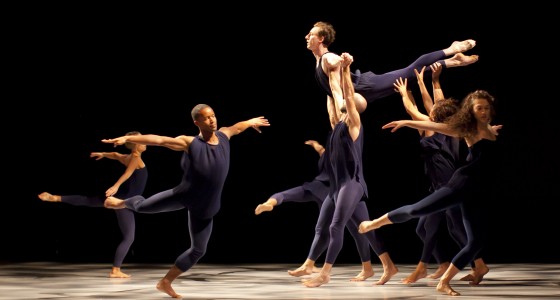
    THE LEGEND OF TEN is a tribute to the ten members of the Company and – all clad in somewhat ominous but elegant black – the dancers turned it into a tribute to Lubovitch who is surely the king of lyricism among current choreographers. With a central adagio couple (Jenna Fakhoury and Reid Bartelme) surrounded by a lively octet of dancers who often step in unison and sometimes bring gypsy flourishes to their movements, the piece is structurally propelled by the music of the Brahms piano quintet Opus 34. The Lubovitch dancers mesh into a cohesive ensemble but the individual personalities of the dancers also shine thru in this, the latest success in the choreographer’s long catalog of works. (Photo above: Sasha Fornani)

    All was going well as I saw the finish line of my 2-week dance marathon approaching, but on standing up for the second intermission tonight, my left knee finally rebelled in earnest. I realized that if I sat for another twenty minutes it would tighten further so I hobbled down to the street and after a few minutes of walking it loosened up enough to limp to the subway. I felt bad missing the last piece on the Lubovitch programme though it was one (Coltrane’s Favorite Things) I’d seen not long ago. My grandmother always told me: “It’s hell to grow old!”