Tag: Benjamin Britten

  • Britten’s WAR REQUIEM at the BBC Proms ~ 2024

    Pappano

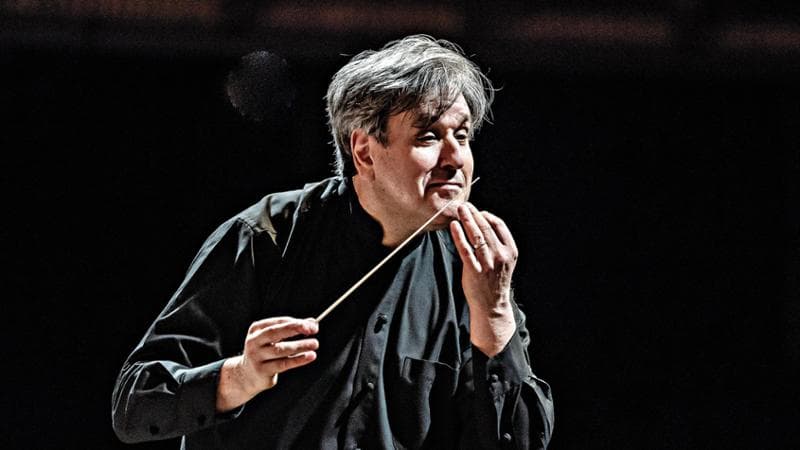
    Benjamin Britten’s WAR REQUIEM performed at the 2024 BBC Proms with soloists Natalya Romaniw, Allan Clayton, and Will Liverman and the London Symphony Chorus, BBC Symphony Chorus and Tiffin’ Boy’s Choir, under the baton of Sir Antonio Pappano (photo above).

    Watch and listen here.

  • Britten’s CEREMONY OF CAROLS

    Xmas

    Perfect music for the Yuletide: Benjamin Britten’s CEREMONY OF CAROLS performed by The Singers, Matthew Culloton, conductor. Soloists are Min Kim, Harp; Jessie Braaten, soprano; Susanna Mennicke; soprano, Diane Koschak; sorpano, Britta Fitzer, alto; and Jessica Bandelin, alto.

    Watch and listen here.

  • Britten’s CEREMONY OF CAROLS

    Xmas

    Perfect music for the Yuletide: Benjamin Britten’s CEREMONY OF CAROLS performed by The Singers, Matthew Culloton, conductor. Soloists are Min Kim, Harp; Jessie Braaten, soprano; Susanna Mennicke; soprano, Diane Koschak; sorpano, Britta Fitzer, alto; and Jessica Bandelin, alto.

    Watch and listen here.

  • Benjamin Britten ~ Rosa Mystica

    Rosa mystica

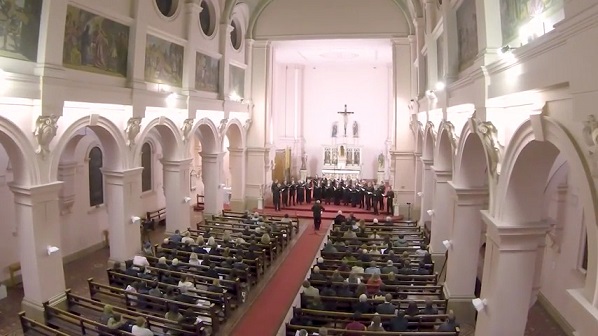
    The National Youth Choir of Australia, conducted by Noel Ancell, sing Benjamin Britten’s Rosa Mystica at the Sacred Heart Church, Carlton, Melbourne, on July 9, 2018.

    Watch and listen here.

  • Benjamin Britten ~ Rosa Mystica

    Rosa mystica

    The National Youth Choir of Australia, conducted by Noel Ancell, sing Benjamin Britten’s Rosa Mystica at the Sacred Heart Church, Carlton, Melbourne, on July 9, 2018.

    Watch and listen here.

  • Celebrating Britten @ The NY Philharmonic

    2926592313

    Thursday November 21, 2013 – The New York Philharmonic‘s celebration of the 100th anniversary of the birth of Benjamin Britten was a lovely fête which brought forth the composer’s familiar Serenade for Tenor, Horn and Strings and the less-frequently-performed Spring Symphony.

    The performance took on added drama when the scheduled tenor was forced to withdraw for health reasons literally on the eve of the concert. This caused the Philharmonic to launch a desparate search for tenors who could 1) sing this demanding music and 2) were available on such short notice. Things turned out very well indeed, with a disarmingly attractive performance of the Serenade by Michael Slattery and a thoroughly impressive rendering of the Spring Symphony by Dominic Armstrong who, as Maestro Alan Gilbert told us, had never so much as looked at the score til the morning of the performance.

    The richly emotional Serenade for Tenor, Horn and Strings opens and closes with solo passages for horn which are played without use of the valves that stabilize pitch. The instrument is difficult enough to play as it is – I know: I played horn in high school – but Britten throws in this extra complication to render the sound with a ‘hunting horn’ ambiance. Thus the Philharmonic’s formidable principal horn, Philip Myers, appeared onstage with two horns – one for the Prologue and Epilogue, and the second ‘normal’ horn for the remaining movements of the work.

    Britten sets the Serenade’s poems, which span five centuries of English verse, in the upper range of the tenor voice; this gives the music an air of rather eerie innocence, yet the singer must also show great maturity in terms of both technique and sensitivity to the texts. The vocal movements are: “Pastoral” (with text by Charles Cotton), a hymn to sunset which sounds like a lilting lullabye; “Nocturne” (to words by Alfred, Lord Tennyson), where the horn calls echo as evening falls over the land; William Blake’s “Elegy”, which addresses a dying rose and is tinged with plaintive melancholy. In the Serenade‘s most unsettling passage, to an anonymous 15th-century text, the “Dirge” is a fugue of relentless, creeping madness evoking the fires of Hell which will ‘burn thee to the bare bone…and Christ receive thy soul’ (this song haunts me for days everafter whenever I hear it). In sharp contrast, Ben Jonson’s “Hymn” is light-hearted and upbeat, bringing the singer’s task to an ‘excellently bright’ conclusion. As the voice falls silent, the offstage horn closes the Serenade on a benedictive note.

    M slattery

    I had heard tenor Michael Slattery (above) often during his time at Juilliard, and was pleased to be present at his impromptu Philharmonic debut tonight. Slender and boyish in his elegant tux, Michael took the high tessitura in stride, with many felicitous passages of vocal color and inflection: his diction was clear and touchingly expressive. Philip Myers played with gleaming, burnished tone and exceptional power in the phrases that serve as a counter-poise to the voice. Maestro Gilbert drew evocative playing from the string ensemble, and the entire performance had a nocturnal incandescence that was truly pleasing. Michael Slattery reacted with disarming sincerity to the audience’s warm applause, being called out with Mr. Myers and the conductor for extra bows.

    The Spring Symphony was commissioned by the Koussevitzky Music Foundation and is dedicated to Serge Koussevitzky and the Boston Symphony Orchestra though it was actually premiered at the Conncertgebouw in Amsterdam during July 1949 before its American premiere the following month at Tanglewood by Koussevitzky and the BSO. Britten calls for a huge orchestra, adult and children’s choruses, and three vocal soloists. The score is dazzling in its range of instrumental colours and textures, and the texts include both hymns of praise to the coming of Spring and some charming moments of levity in depicting day-to-day happenings. This work is quintessentially British: the poems invoke English pastoral imagery and the deftly ‘sudden’ ending – “And now, my friends, I cease” – is punctuated by a  plump C-major chord.

    Maestro Gilbert marshalled his forces for a thoroughly impressive and enjoyable performance: a special “hurrah” for the Brooklyn Youth Chorus who are called upon to both sing and whistle. The ‘save the day’ performance by tenor Dominic Armstrong revealed an attractive voice with mastery of dynamics and colours as well as of textual incisiveness that belied his unfamiliarity with the work. The slender and very pretty soprano Kate Royal has a feather-light lyric soprano and sang charmingly while the distinctive voice of Sasha Cooke – heard only two days earlier at Chamber Music Society – stood out for glowing tone and poetic resonance.

    This was my first time experiencing the Spring Symphony – I’d never even heard it on a recording – and it was a very good idea of Maetro Gilbert’s to choose it as a birthday salutation for the composer, for it is not often performed.

    I must register one tiny complaint – nothing to do with the music or the musicians – but I do wish that plastic water bottles could be banned from the concert stages. In the ‘old days’ small tables were set next to the soloists’ chairs with glasses of water which the singers could sip decorously between numbers. Now we have a distracting ritual of bending over, uncapping the bottle and gulping away like basketball players on the bench. The ‘old way’ of hydrating is much more elegant, and far less conspicuous.

  • Ian Spencer Bell’s PASTE-UP

    Paste-up (LJ, JT, CL, SO)

    Wednesday May 22, 2013 – Ian Spencer Bell’s PASTE-UP was performed at City Center Studios this evening. On entering the studio, the dancing area has been created: a square has been taped off on the floor, studded along its perimeter with large light bulbs. The viewers are seated along all four sides of the square; as the house lights dim, the self-illuminated space comes to life.

    There is no music for PASTE-UP though one of its sources of inspiration is Benjamin Britten’s Young Person’s Guide to the Orchestra. The only sounds we hear are the voices of the dancers calling out individual words.

    The ballet commences with the ten dancers leaping across the space one by one; they repeatedly execute flying jetés from one side of the square to the other, or on the diagonals. As each dancer’s jump reaches its apex, he/she calls out the word “Lift!”. Yes, I know: it sounds terribly simplistic – even naive – but in fact it weaves a particular spell.

    Paste-up (ISB, LJ, JT)

    A trio evolves, danced by Ian Spencer Bell, Lindsey Jones and Joshua Tuason (above), and the word being said now is “Left!”. The movement vocabulary expands cautiously, with straight-armed salutes and more variety of steps and self-expression.

    Switching to “Loft!”, the full company enter the space; they begin to touch one another, there are partnering elements and lifts along with seemingly improvisational self-contained solos. The work’s opening leaping patterns are repeated, now executed in trios.
    Paste-up (ISB)

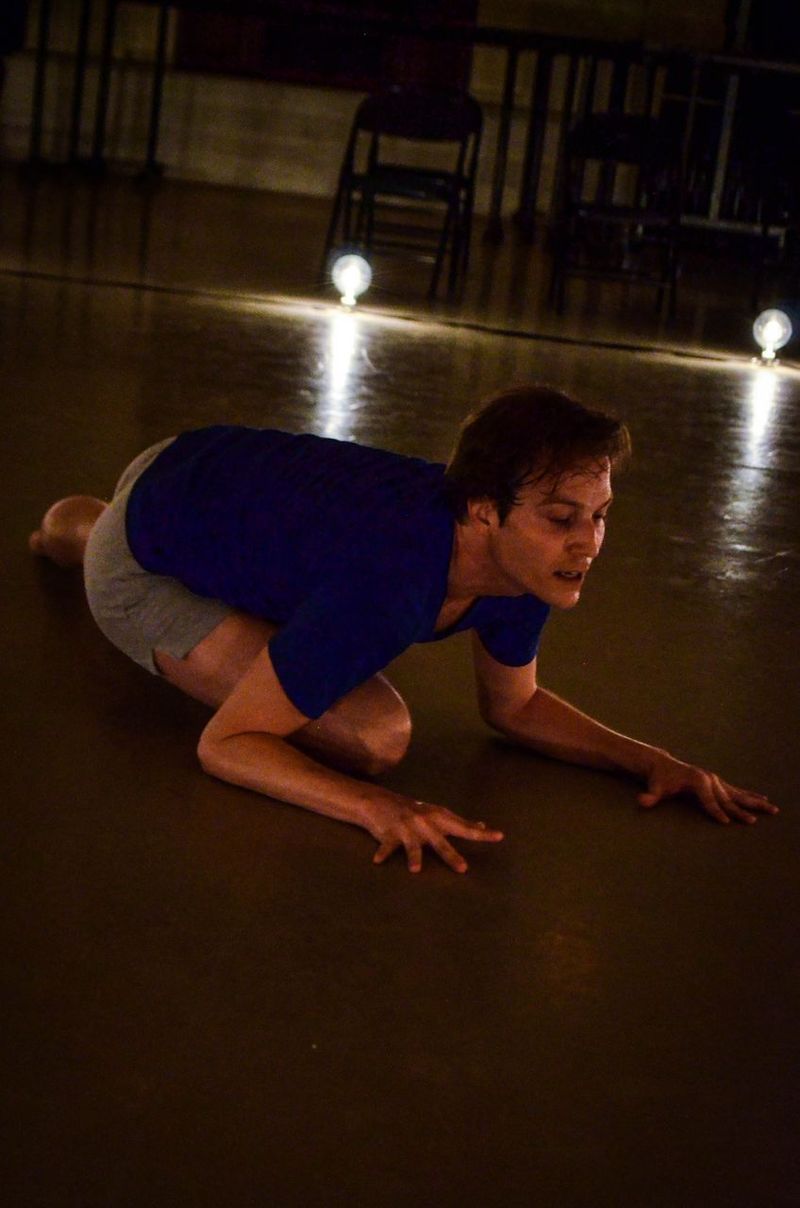
    Introspection comes in Ian’s solo; we seem to be eaves-dropping on the dancer as he works alone in the space. He’s talking to himself: musing on Britten and on the music only he can hear, quietly infatuated with the sound of his own voice. Other dancers intrude, calling out things like “a beautiful melody!” where there is none.
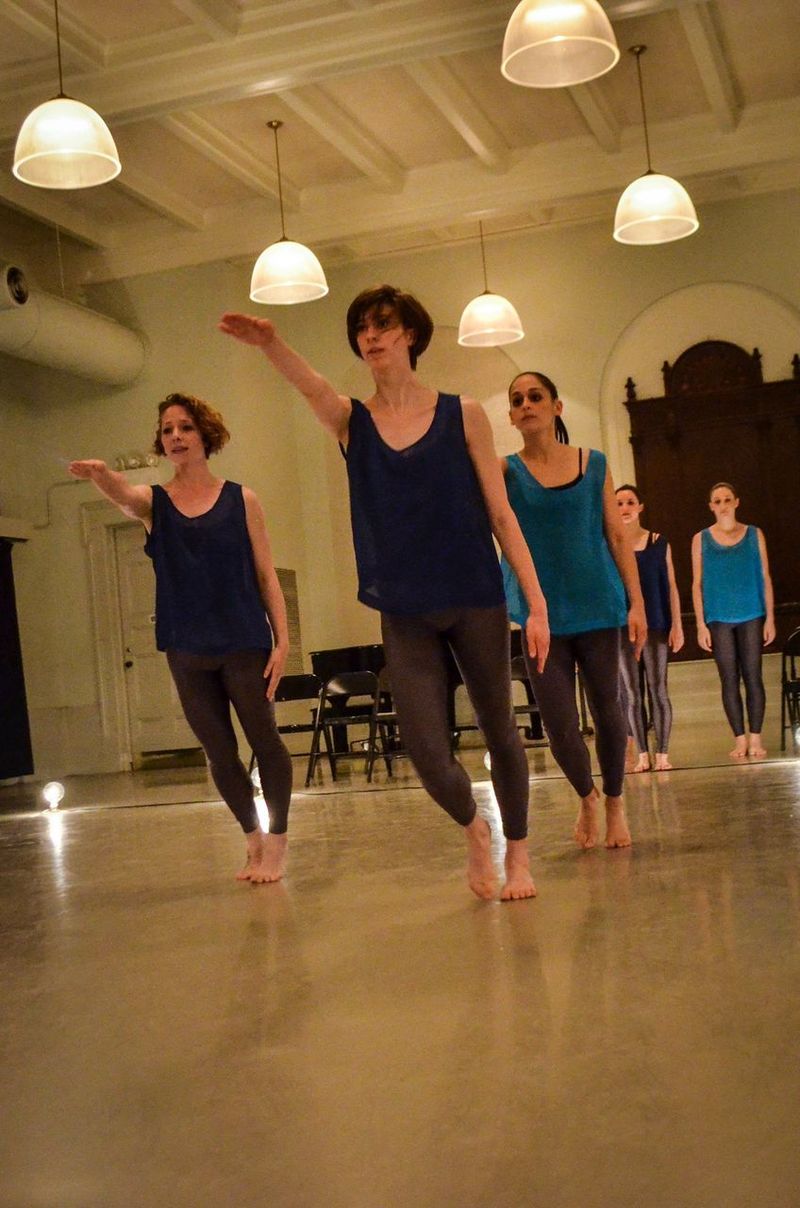
    Paste-up (SO, LJ, CL, MD, DB)

    Above: Stevie Oaks, Lindsey Jones and Courtney Lopes

    In an animated quartet – Lindsey, Joshua, Courtney Lopes and Stevie Oakes – the individual instruments of the orchestra are named along with descriptive words. The finale builds with the full ensemble, their voices becoming more urgent and their dancing more extroverted and complex. One by one the dancers exit, leaving Ian alone in the twilight, his voice fading to nothing. 

    I have described the facts of PASTE-UP but it’s rather more complicated to describe the atmosphere of the piece which has an odd intensity and a dreamlike quality. It evokes memories of innocence and of the simplicity of dancing alone, unobserved, discovering oneself with music that comes from within.

    Ian’s works are distinctive and seem to evolve from simple and highly personal musings, finding a connection to the viewer thru the movement and the expressive gifts of his individual dancers. He certainly has a unique place in the current NYC dance scene and I look forward to seeing more of his work. 

    Appearing in PASTE-UP are: Ian Spencer Bell, Lindsey Jones, Courtney Lopes, Stevie Oaks, Mara Driscoll, Debra Bona, Oceane Hooks-Camilleri, Sally Kreimendahl, Vani Ramaraj, Joshua Tuason, and Justin Rivera. The lighting design is by Nicholas Houfek.

    Photos by Taylor Crichton.
  • Oratorio Society: Britten’s WAR REQUIEM

    White_dove.23095031_std

    Monday April 22nd, 2013 – The Oratorio Society of New York presented a performance of Benjamin Britten’s WAR REQUIEM at Carnegie Hall this evening. 

    One of the greatest and most meaningful choral works ever created, the WAR REQUIEM was commissioned for the re-dedication of Coventry Cathedral in 1962; the church had been almost totally destroyed by German bombs in 1940. Britten, a life-long pacifist, drew on the poetry of Wilfred Owen
    – who had been killed in 1918 (one week before the Armistice ended the war) at the age of 25 while fighting in France
    – as well as the texts of the Latin mass for the dead in setting his
    masterpiece. Though deeply spiritual in atmosphere, Britten intended the
    WAR REQUIEM to be a secular work.

    The Oratorio Society, one of New York City’s oldest cultural treasures, traces its history back to 1873. Founded by Leopold Damrosch, the Society presented their first concert on December 3,
    1873. One year later, on Christmas night, the Society began what has become an unbroken
    tradition of annual performances of Handel’s Messiah. In 1891, the Oratorio Society participated in the opening concert of what is now Carnegie Hall.

    The chorus and musicians of the Society under Kent Tritle’s baton tonight unfurled the sonic tapestry of Britten’s creation in a performance which greatly satisfied both the ear and the soul. In the composer’s structuring of the REQUIEM, the large chorus and orchestra – supporting a soprano soloist – sing the Latin texts of the mass while a chamber orchestra (led by David Rosenmeyer) accompanies the tenor and baritone soloists whose words come from the poetry of Wilfred Owen. From high up in a side balcony, the voices of children from the choir of Saint John The Divine (directed by Malcolm Merriweather) provide an angelic sound, accompanied by a small organ.

    Britten’s score, richly textured, amazes in its rhythmic and instrumental variety. Marked by off-kilter harmonies and shifting tonalities, the music is grand and theatrical one moment and poignantly stark and personal the next. The juxtaposition of public mourning and private grief – and of the liturgical and poetic texts – give the REQUIEM its unique resonance.

    Of the three vocal soloists, soprano Emalie Savoy (currently a Met Young Artist) revealed a sizeable lyric instrument with a blooming high register and a capacity to dominate the massed choral and orchestral forces. Tenor John Matthew Myers sang with a plaintive, clear and warm timbre while baritone Jesse Blumberg gave a wonderfully expressive rendering of the texts, his voice hauntingly coloured in his long final solo.

    At the close of the piece, all the participants were warmly lauded by the audience.

    “My subject is War, and the pity of War.
    The Poetry is in the pity…
    All a poet can do today is warn.” ~ Wilfred Owen

    Now, nearly a century after the poet’s warning, mankind continues to use war as a means of settling religious and ideological differences. This evening’s concert fell on Earth Day, reminding us of the fragility of the planet on which we all live. Only by turning away from gods and politics – those great dividing forces – can we hope to find a path into a safe and meaningful future. Like the poet’s two soldiers from opposing armies who find themselves dying side by side in a ditch far from their homes as the REQUIEM draws to a close, we must learn to embrace our common humanity before it’s too late.

    The evening’s participating artists will were:

    Kent Tritle, conductor
    David Rosenmeyer, chamber orchestra conductor
    Emalie Savoy, soprano
    John Matthew Myers, tenor
    Jesse Blumberg, baritone
    Choristers of the Cathedral of St. John the Divine,
    Malcolm Merriweather, conductor
    Chorus and Orchestra of the Society