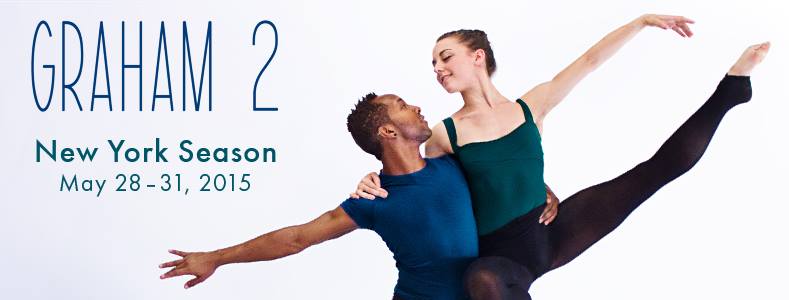
Friday May 29th, 2015 – The young dancers of Graham 2 in performance at the Martha Graham Dance Company’s home space at Westbeth on Bethune Street in the West Village. It was rather stuffy in the theatre, and there were distractions of latecomers wandering in during the dancing. But it was a very impressive performance overall, and several of the participating dancers seemed poised to emerge as successful Graham artists in the seasons ahead.
Beginning in a circle of light, Dani Stringer performed the elegant solo à l’espagnole, SERENATA MORISCA. In a billowy skirt, wearing ankle bells and with a peony in her hair, Dani seemed eminently at home in this liltingly lovely dance, to atmospheric music by Mario Tarenghi. Premiered in 1916 (!) the solo looks absolutely fresh and au courante today. Two photos of Dani dancing the Serenata were offered to me – each captures her so well that I decided to include both:
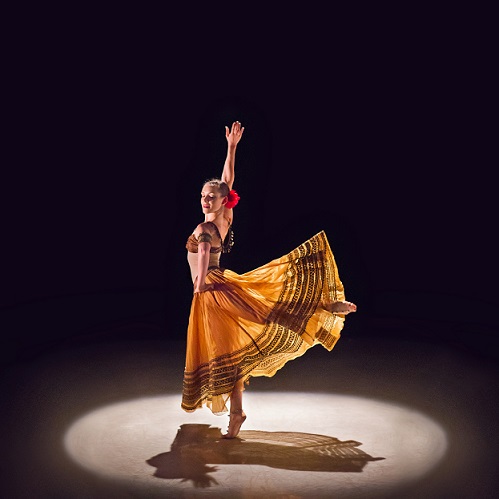
Above, photo by Brigid Pierce
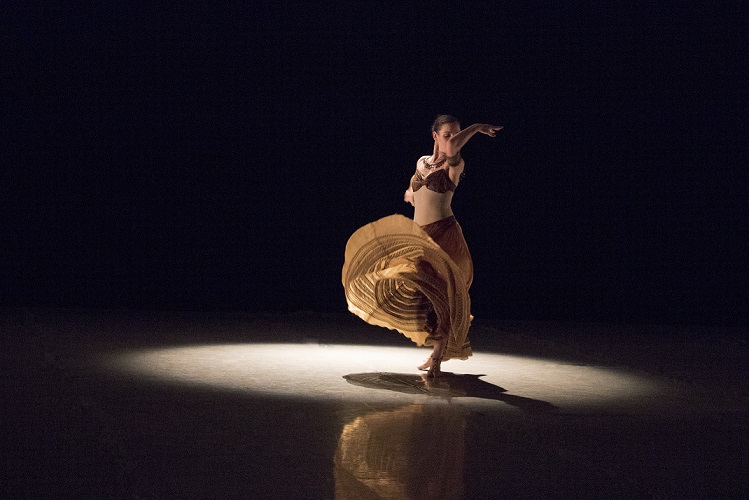
Above, photo by Antonia K Miranda
HERETIC dates from 1929 and is one of Graham’s most powerful works. It alludes to the outcasts that are found in every culture, race, and religious affiliation. I’ve now seen it a few times and it’s a resonant work, with a stop-and-start score arranged by Charles de Sivy from an old Breton chanson.

Above: from HERETIC, with Jessica Sgambelluri and the Graham 2 ensemble; photo by Antonia K Miranda
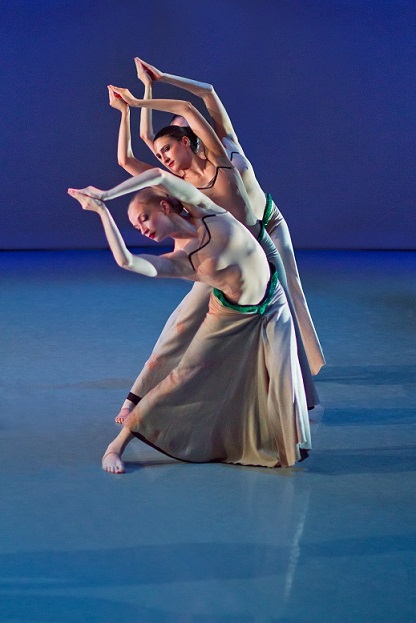
Jessica Sgambelluri gave a powerful performance as the scorned woman, constantly subjugated by the implacable sisterhood who move almost mechanically into positions of closing ranks around the hapless victim. At times they seem to be praying for the woman’s redemption, but they remain sternly rejecting, even threatening.

Above: Ms. Sgambelluri and the ensemble in HERETIC; photo by Antonia K Miranda
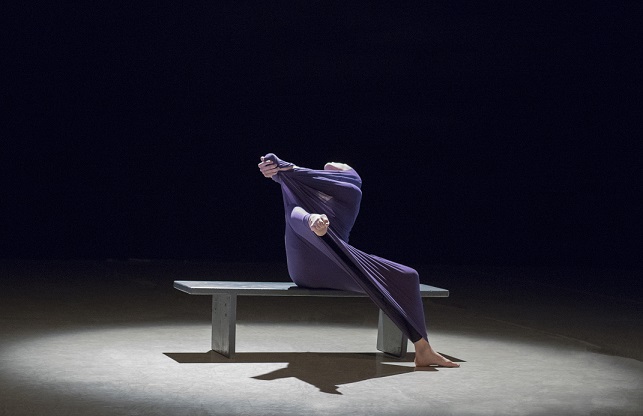
Anja Zwetti (above, in Antonia K Miranda’s photo) took on the iconic Graham solo LAMENTATION and made a strong impression as she performed this ‘dance of sorrows’ seated on a bench and wrapped in a shroud of purple jersey. The Kodaly piano score gives the dancer her movement cues, and the lighting provides a shadow-dance that gives the work an added ghostliness. Ms. Zwetti held the audience in a state of keen focus throughout the solo. I had the feeling that several in the crowd were seeing LAMENTATION for the first time, and were deeply moved by the experience.

Above: Anja Zwetti in LAMENTATION, photo by Antonia K Miranda.
A selection from NIGHT CHANT followed, re-staged by the inimitable Virginie Mécène. This late Graham work (1988) is set to an exotic score by R Carlos Nikai and features a large ensemble of both male and female dancers who move in signature Graham motifs; it is an homage to the culture of the Native Americans, depicting the rituals of their community.
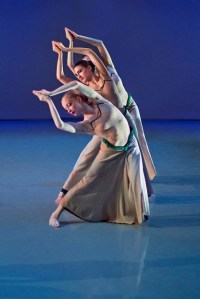
The women (above, photo by Brigid Pierce) appear variously in large or small movement units while the men, sexy in sleek tights, are given dynamic leaps and cartwheels. NIGHT CHANT features a central pas de deux couple: tonight we had the charismatic Dani Stinger and Alex Clayton giving a fluent performance.

Above: the ensemble in TURNING POINT, photo by Antonia K Miranda
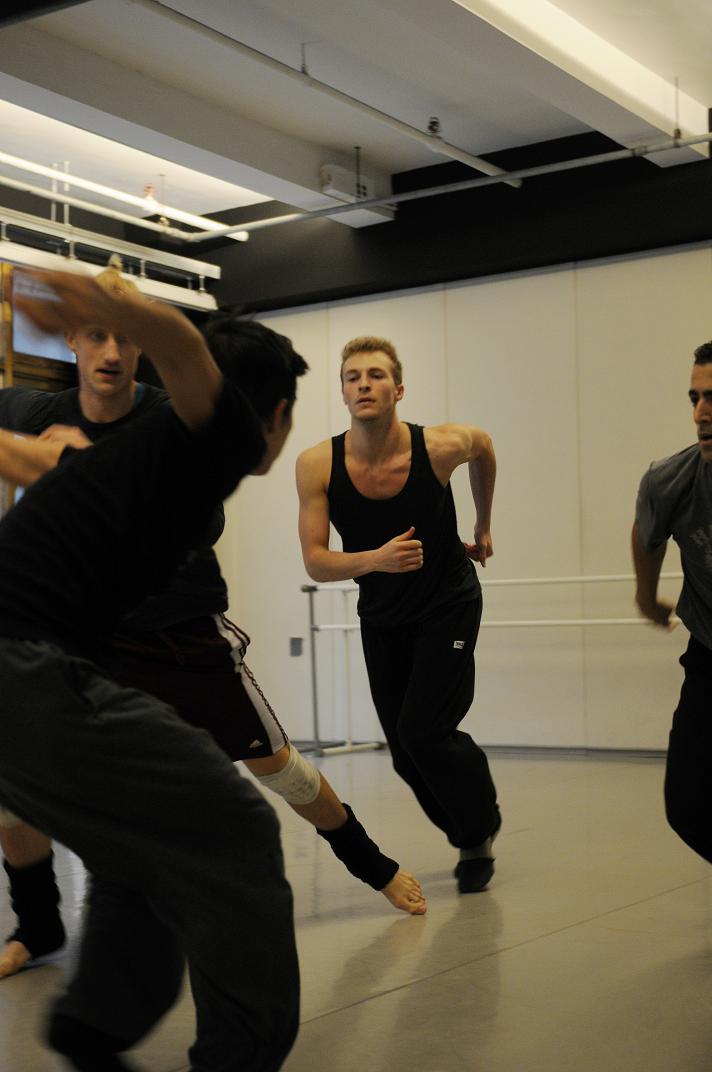
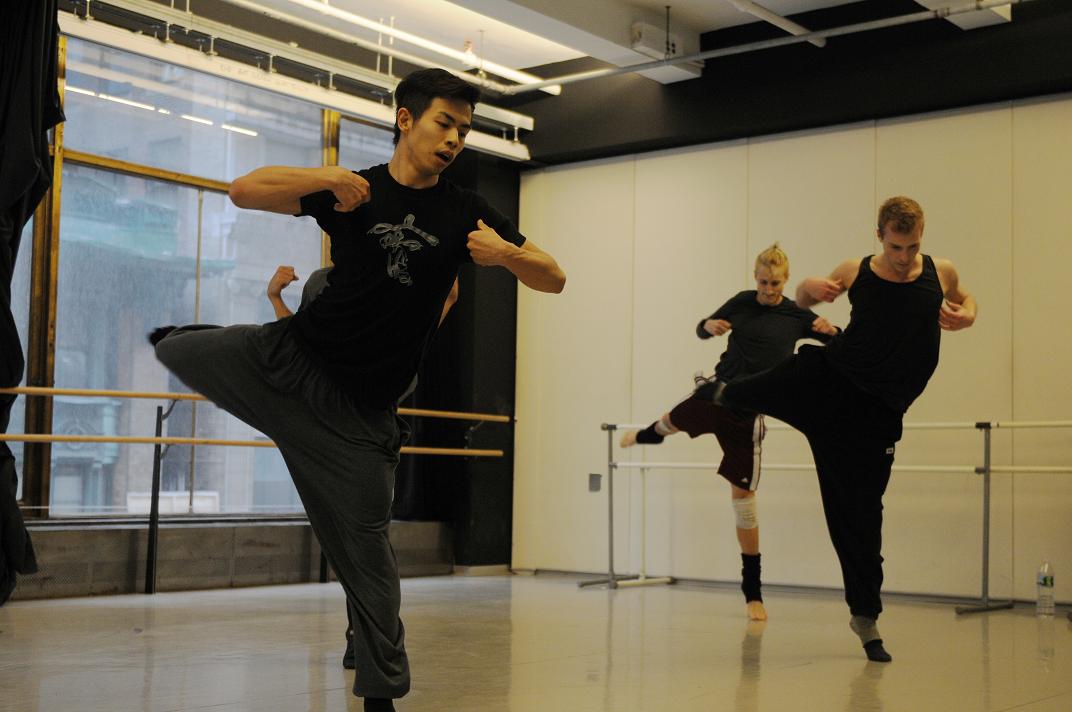
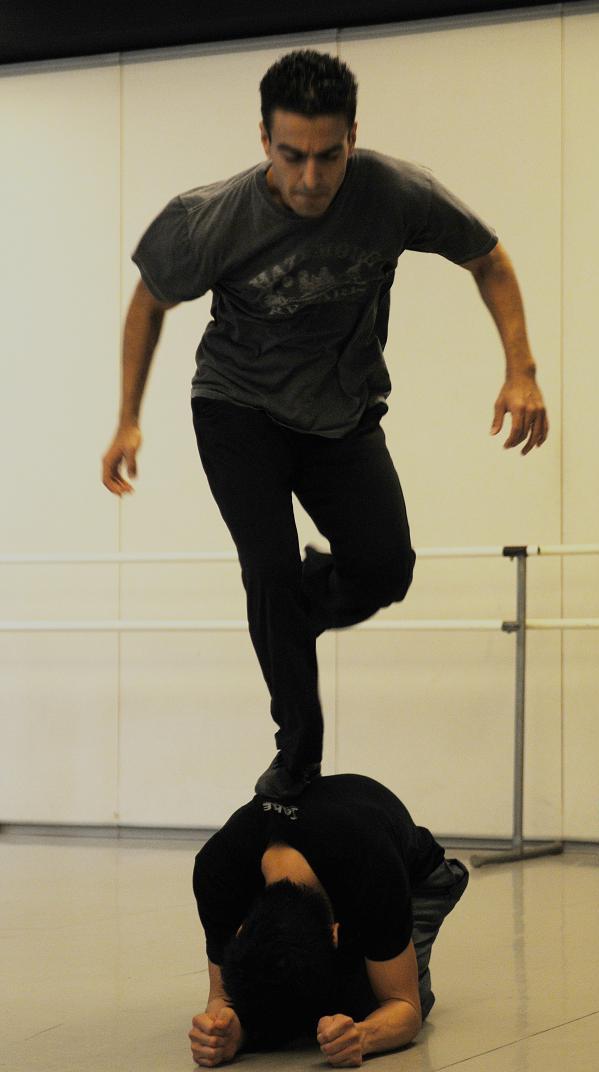
In its world premiere performances, TURNING POINT by Blanca Li was a striking addition to the Graham 2 repertory. Thirteen dancers, clad in black trousers, first appear standing in place; they remain on their marks as individual solos, disconnected duets, and mini ensembles spring up almost randomly. They fall and rise in various combinations, and then there’s a walkabout before they re-group. They disappear and re-enter in a diagonal, with more floor time and passages of gestural language. Suddenly the dancers rush about the space; a female duet ensues, and then a female trio takes up a counter-dance. Silence falls, and the full ensemble appear in a cluster swaying gently as the light fades.
Tao Guttierez’s wonderful score shows us a contemporary composer unafraid of melodic appeal; the dancers did a great job with this piece, which afforded many individual opportunities. I hope to have a chance to see TURNING POINT again.

Above: Jessica Sgambelluri in TURNING POINT; photo by Brigid Pierce.
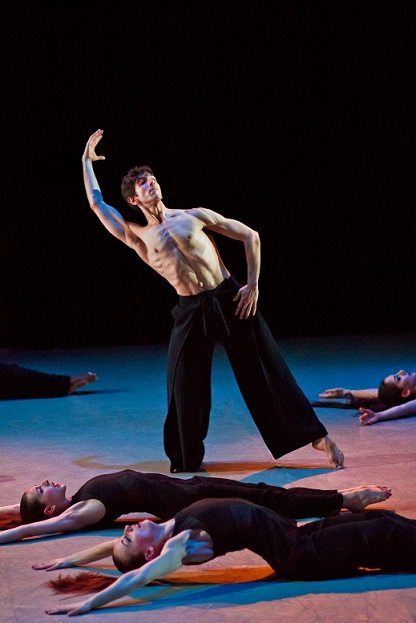
Above: Stylianos Kefalas in TURNING POINT; photo by Brigid Pierce
Following the interval, more Graham classics to be savoured, beginning with the 1936 all-female ensemble work STEPS IN THE STREET, the central section of Graham’s visionary anti-war trilogy CHRONICLE.

Dani Stinger (above, photo by Brigid Pierce) led the ensemble with an impressive sense of mission…

…while the ensemble (above, Brigid Pierce photo) moved compellingly thru the stylized demands the choreography places on them. My hope for these young dancers – both the women and the men – is that they will be instilled not only with Graham’s dance technique but also with her work ethic and philosophy of life.
Anne Souder appeared next in the signature green-black-white-yellow dress that says: SATYRIC FESTIVAL SONG. This is Graham at her most witty, and Ms. Souder did an excellent job of it, with her quirky leaps, wiggles, and sudden posed stops; her hair also became part of her performance. I unfortunately don’t have a photo of Anne Souder in this solo but moments later she was back onstage for DIVERSION OF ANGELS and here she shone ever-brighter.
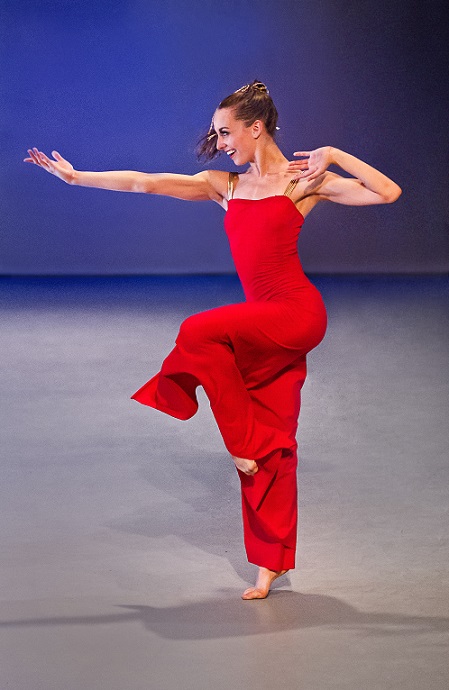
Above: Anne Souder in DIVERSION OF ANGELS; photo by Brigid Pierce
In the concluding DIVERSION OF ANGELS (1948, to a Norman Dello Joio score), Ms. Souder displayed a soaring extension and rock-steady balances, along with a stage-hungry aspect that gave each moment of her performance an inspiring glow. The dancing by everyone, in fact, was really impressive. The men gave their passages a high-energy verve – will they make the leap to the top Graham echelon? Let’s hope so, because the courage and conviction are there: in addition to Alex Clayton, we had Alessio Crognale, Antonio Cangiano, and Stylianos Kefalas all doing handsome work. Sharing the spotlight with Ms. Souder in the ballet’s principal female roles were Anja Zwetti (lyrical in White) and Vera Paganin (lively in Yellow). Sarita Apel and Linda Bombelli joined Jessica Sgambelluri and Dani Stinger for some fine dancing in the supporting female quartet.
Lovely to see Graham luminaries Natasha Diamond-Walker and Lorenzo Pagano among the crowd, and my special thanks to Janet Stapleton for arranging things and for sending me the production photos with perfect timing.





 Oberon's Glade