Tag: Beverly Sills

  • Singers: Gilda Cruz-Romo

    (This paean to the Mexican soprano Gilda Cruz-Romo first appeared on Oberon’s Grove in 2008.)

    gilda 1

    In the Autumn of 1969 I decided to move to New York City; I withdrew all my savings from the bank and reserved a room at the Empire Hotel at a monthly rate. The plan, as I sold it to my parents, was that I would find a job and then an apartment. In actuality, all I really wanted to do was go to the opera every night. And that is exactly what I did, forgetting about job-hunting til my cash gave out and I returned home after a few weeks.

    Unfortunately for me, that was the year of the Met orchestra’s strike. But I was not to be deterred: I went to every single performance of the New York City Opera’s Autumn season. Standing room cost next-to-nothing and I already had some favorite singers there – people like Beverly Sills, Maralin Niska, Patricia Brooks, Enrico di Giuseppe, Dominic Cossa and Norman Treigle. Treigle was in fact the focus of that Autumn season since NYCO was mounting a production of Boito’s MEFISTOFELE for him. Carol Neblett was singing the dual role of Margherita and Helen of Troy; but for the final performance of the run a debut was announced: a Mexican soprano named Gilda Cruz-Romo.

    One never knows what to expect from a debut, and that was especially true back then when there was no Internet buzz, YouTube or Facebook that might have provided an inkling or an outright sample of a new singer’s work. In the weeks prior to her debut, I’d actually seen Gilda and her husband Bob Romo several times around Lincoln Center and at the Footlights Cafe; I’d even said hello to her and as a young, unknown singer she seemed genuinely thrilled to be recognized. But what – I kept wondering – does she sound like?

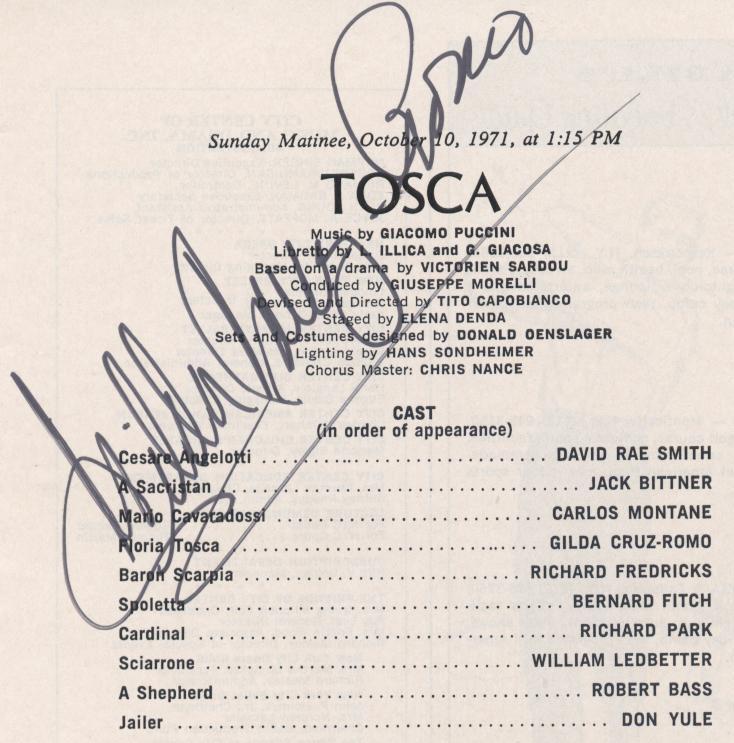
    Her performance was something of a revelation: it was a big, warm lyric voice bordering on spinto. Her tone had an unusual freshness and clarity, with a pliant technique and shining upper register, and the kind of vocal candor that one finds in a new singer who just sings without relying on artifice. The audience took to her at once – the fans sensing that here was an Italianate voice that had real potential in the Verdi & Puccini repertoire. After the great aria “L’altra notte”, Cruz-Romo was warmly applauded but it was in the Helen of Troy scene that she capped her success: in the great concertato “Amore mistero!” the voice sailed out over the ensemble with a gleaming quality and as the line soared up to its climatic top-B the sound seemed to blossom – and Cruz-Romo swept onwards to triumph. I met her after the performance; she and her co-stars Norman Treigle and Nicholas di Virgilio all signed my program:

    gilda 2

    The next afternoon at Footlights a small gathering of fans met and we played over and over again our house tapes of the performance; we must have listened to that ensemble about twenty times. People at neighboring tables were drawn to the sound of her voice. In those days, New York City Opera was a real Company: if you made a successful debut you were invited back and became part of the family and were cast in as much repertoire in your fach as was available. Obviously Julius Rudel knew a special voice when he heard it, so Gilda – as we were by now all calling her – sang there for the next 2 or 3 years until the Met snatched her away.

    And so I saw her in more performances of MEFISTOFELE, as a glowing-voiced Butterfly and a golden-toned Mimi (especially moving) and – in one of her first ventures into the heaviest rep – Amelia in BALLO IN MASCHERA. Of her City Opera performances, my very favorite was her Tosca in 1971:

    “…Gilda surpassed my highest expectations as Tosca. Rarely has this role had such a balanced combination of: a beautiful face, fine stage presence, sincere acting, fine diction and GORGEOUS spinto singing. In the first act, many phrases of great beauty. She looked lovely, young and excited. In Act II she sang superbly, her high Cs large and luminous. The dramatic utterances were all convincingly delivered. As she neared the end of her marvelously phrased “Vissi d’arte” tears welled up in her: one sob at the end, straight from the heart, was a perfect effect. She carried off the murder and the acting demands of the closing of Act II with excellent control. Maintaining her high level in Act III, Gilda ended the opera on a stentorian top-B and took a death-defying leap of ten feet! She was given a tumultuous ovation eminently deserved. Backstage she was literally mobbed – as big a crowd as I’ve seen at NYCO. After edging my way through the throng we hugged and she kissed me so many times. It took a few moments before either of us could speak…”
    gilda tosca

    When things calmed down and we got to discuss the performance, she told me how petrified she was of taking that final jump. The production was designed so that Tosca’s suicidal leap was visible to the audience as she fell about a dozen feet before a parapet blocked her landing-mattresses from view. She had not had a stage rehearsal and she said she got to the edge of the platform and realized in a split second how exposed her descent would be; she crossed herself and took the plunge.
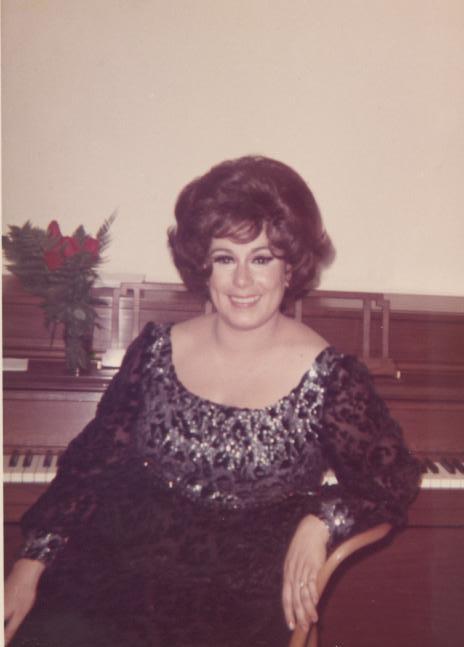
    gilda 4

    It was inevitable that a voice like Gilda’s would be both wanted and needed at the Met. In 1970 she entered the Met National Auditions and was a finalist, singing “La mamma morta” from ANDREA CHENIER. On May 8, 1970 she debuted with the Company on tour in Atlanta singing that same opera. In December of the same year she debuted at the Met proper as Butterfly, beginning a career there that stretched into the mid-1980s and encompassed over 160 performances.
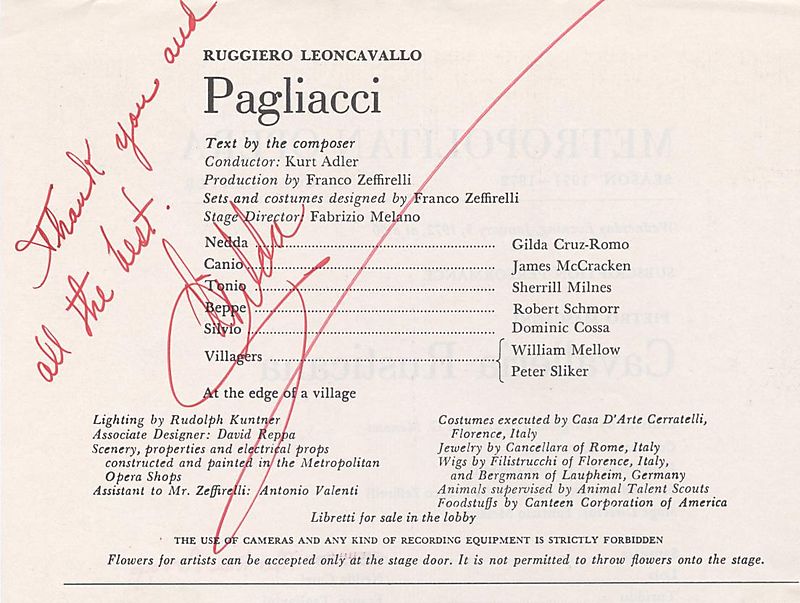
    gilda pag

    I saw her at the Met for the first time as Nedda in PAGLIACCCI opposite the frighteningly intense Canio of James McCracken. Gilda sang so beautifully, especially in the sensuous duet with Silvio (Dominic Cossa): “…great crescendos from tiny pianissimos...” It was after this performance that she and I were photographed together backstage. (OK, no comments about my tie…or my hair! Remember this was the 70s).
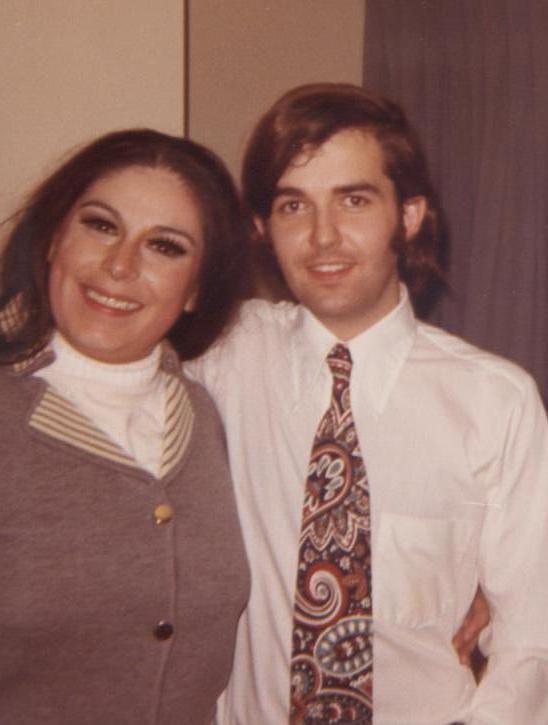
    gilda 3

    Then came a hiatus: I moved to Houston for a while and only kept tabs on her via the broadcasts. But after a while I was lured back to the Northwest and we had a beautiful reunion at a matinee of AIDA where she sang opposite Franco Corelli:

    …Gilda was in complete command of this arduous role every step of the way…there were phrases upon phrases of golden Verdi singing: her deeply-felt prayer at the end of ‘Ritorna vincitor’ and the miraculously spun high pianissimi in ‘O patria mia’ and even more incredibly on ‘Fuggiam, fuggiam…’ as she lured Corelli into her escape plan. She was able to healthily dominate the big ensembles and then turn around a float effortlessly in the tender ‘O terra addio…’  Really top-class Verdi singing!”

    Gilda also sang in a revival of MANON LESCAUT and sounded lovely despite being cast opposite a very mediocre tenor. Her ‘In quelle trine morbide’ was poignantly phrased, mirroring Manon’s longing for the simple, true love of her Chevalier des Grieux. (Photo: Bill Hendrickson).

    Gilda Cruz-Romo – In quelle trine morbide – MANON LESCAUT -Met dress rehearsal 1973

    Then several things happened which kept me from seeing her onstage at the Met; I moved to Hartford with TJ and for a couple years we were basically broke. Trips to New York were infrequent and most of the time ballet trumped opera.  Then too, Gilda’s international career was in full bloom; it seemed she sang everywhere and sang the most taxing repertoire – I think I once read that she ended up singing Aida five-hundred times! It seemed like whenever I was at the Met, she was somewhere else.

    gilda desdemona

    Thus it was a special pleasure when she came to Hartford and sang Desdemona in OTELLO (above), one of her most attractive roles. In 1979 she was Desdemona on a Met telecast opposite Placido Domingo and Sherrill Milnes.

    In 1987 I saw Gilda onstage for the final time, as Cherubini’s Medea at Bridgeport, Connecticut. The declamatory style of many of the character’s utterances didn’t suit her so well – she was always a melodic singer – but the voice was still powerful and expressive.

    I met her again a few years ago when she was honored by the Puccini Foundation. I handed her the photo of the two of us and it took her only a half-second to realize who I was…I have changed MUCH MORE than she has!  We keep in touch now; she lives in San Antonio and I was tickled to read recently that she keeps up her deep-sea fishing and is also active in a local Texas group which matches senior citizens with canine companions:

    gilda 5

    It’s been a long time since that day in Footlights soon after her NY debut that I pestered her with a million questions and she was unbelievably kind and patient. Once I wrote to her after she’d sung the title role in ANNA BOLENA in Dallas expressing my dismay that I couldn’t have been there; a few days later I was astounded to open the mailbox and find she had sent me a tape of the performance. That’s the generosity of spirit that Gilda always shows. So now, with love and gratitude, I’ve tried to put my admiration for her into words.


  • @ My Met Score Desk for LUCIA DI LAMMERMOOR

    Bloody_dagger_

    Saturday May 21, 2022 matinee – Having no interest in seeing the Met’s Rust-Belt setting of LUCIA DI LAMMERMOOR, I took a score desk for this afternoon’s performance. In the Playbill, there’s a long essay by the director of the production. I didn’t bother to read it. This succinct program note from Tito Capobianco’s production for Beverly Sills at New York City Opera in 1969 tells us all we to need to know:

    Lucia jpg
    I recently asked a longtime singer/friend of mine why singers who should know better agree to appear in these bizarre and unsuitable productions, and he said: “If you want to work in opera nowadays, this is what opera has become. Take it or leave it. If you start turning down productions that do not respect the composer or librettist, you will soon stop being asked.”

    So I sat with my score before me this afternoon, creating my own production in the theater of the mind. There were a lot of empty seats, more than usual for a matinee. And people laughed aloud at times: there is nothing very funny about LUCIA, really, but perhaps the libretto’s reference to Edgardo’s announced journey to the “friendly shores of France”, or Enrico telling Normanno to ride out “on the road to Scotland’s royal city” to greet Arturo, seemed out of place in the Rust Belt. It must always be a pesky thing to these cutting-edge directors to have to deal with references in librettos that deter them in their quest to make opera relevant to modern audiences.

    Maestro Riccardo Frizza conducted the opera as if it were early Verdi. He sometimes let the orchestra cover the singers. The harp solo that opens the opera’s second scene was sublimely played by Mariko Anraku, but she had to contend with stage noises caused by the moving set, and then – as the solo neared its end – a cellphone went off. 

    The vocal stars of the afternoon were Polish baritone Artur Ruciński – who scored a great personal success as Enrico – and Christian van Horn, stepping in for an ailing Matthew Rose and singing magnificently as Raimondo.

    In the opera’s opening scene, Mr. Ruciński’s voice showed its customary warmth and power; his extraordinary breath control allowed him to sail thru long phrases effortlessly, and he sustained the final note of his cabaletta throughout the musical postlude. In the duet where Enrico forcibly brings Lucia around to his was of thinking about her impending marriage, Ruciński sounded splendid, with an exciting mini-cadenza at “…insano amor!” And, as at the 2019 Richard Tucker Gala, he brought the baritone line in the sextet very much to the fore.

    Mr. van Horn made every word and note of Raimondo’s role count; his voice spans the music’s range comfortably, and has both strength and nuance. In the duet where the chaplain (do they have chaplains in the Rust Belt?) persuades Lucia to yield to her brother’s demand that she marry Arturo, Mr. van Horn’s sense of line had a wonderful rightness, and once he had secured Lucia’s agreement, he expressed the character’s joy and relief with some powerfully righteous vocalism. Another great moment in the van Horn Raimondo came as he stepped between the adversaries to prevent bloodshed at the wedding ceremony: 

    “Respect in me
    the awful majesty of God!
    In His name I command you
    to lay down your anger and your swords.
    Peace, peace!…
    He abhors
    murder, and it is written:
    He who harms another by the sword,
    shall perish by the sword.”

    This is one of the opera’s great moments, and Mr. van Horn sang it thrillingly.

    To hear this basso sing Raimondo’s announcement of the murder of Arturo almost persuaded me to stay to the end of the opera. If I say that Mr. van Horn was as thoroughly impressive and satisfying in this role as Robert Hale had been in the City Opera’s Sills production, that is very high praise.

    Had our Edgardo and Lucia attained the level as Mssrs. Ruciński and van Horn this afternoon, this would have been one of the great LUCIAs of my experience. But Javier Camarena’s voice, while clear and pleasing, seemed a size too small for this music in the big House. For the most part, the conductor did not push the tenor to extremes, but a bit more ring and vigor were wanting. Passing moments of flatting and throatiness could be forgiven at this, the final performance of the run. The popular tenor seemed to struggle at times in the Love Duet, which was spoilt anyway by the persistent cough of someone in the audience. But he did go for the high E-flat, despite the fact that he and Nadine Sierra sounded somewhat screamy at this tense moment.

    Ms. Sierra ‘s tone at first seemed to have a steady beat; this became less prominent as the afternoon wore on, though moments of slightly sharp singing came and went. It is a generic sound, and she does not put a personal stamp on the music as such memorable Lucias as Sutherland, Scotto, Sills, Gruberova, Devia, and Oropesa have done, but, for all that, she had some very exciting moments. For one thing, her top D-flat and D were spot on today, making for exciting ends to her Act I cabaletta, the sextet, and the Act II finale. However, I do not think the Sierra Lucia will be remembered for years to come as the ladies listed above have been and will continue to be. 

    As Normanno, tenor Alok Kumar was covered by the orchestra in the opening scene, but he was incisive later on. Deborah Nansteel fared very well as Alisa, and she handled the ‘high A’ moments in the Act II finale, which elude many mezzos, nicely. Eric Ferring sang the brief but demanding role of Arturo handsomely. 

    ~ Oberon

  • NYCO’s 1971 COQ D’OR ~ Restored

    Sills

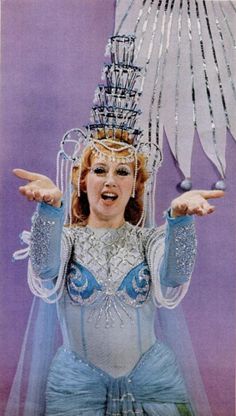
    Above: Beverly Sills as the Queen of Shemakhan

    The New York City Opera’s 1971 televised production of Rimsky-Korsakov’s LE COQ D’OR has been restored. Watch and listen to the freshened version here.

    Beverly Sills, Norman Treigle, and Enrico di Giuseppe have the principal roles, and Julius Rudel conducts.

  • NYCO’s 1971 COQ D’OR ~ Restored

    Sills

    Above: Beverly Sills as the Queen of Shemakhan

    The New York City Opera’s 1971 televised production of Rimsky-Korsakov’s LE COQ D’OR has been restored. Watch and listen to the freshened version here.

    Beverly Sills, Norman Treigle, and Enrico di Giuseppe have the principal roles, and Julius Rudel conducts.

  • TABARRO ~ Madrid 1979

    Ag

    I heard soprano Ángeles Gulín (above) as Valentine in a concert performance of LES HUGUENOTS at Carnegie Hall in 1969, singing Valentine opposite Beverly Sills and Tony Poncet. Ms. Gulín had one of the biggest voices I ever encountered.

    There are not many souvenirs of her career. This TABARRO, though not in great quality, is enjoyable.

    Watch and listen here.

    CAST: Luigi: Placido Domingo; Giorgietta: Ángeles Gulín; Michele: Sylvano Carrolli; Frugola: Isabel Rivas; Tinca: Jose Manzaneda; Talpa: Jose Luis Alcalde. Conductor: Olivero di Fabritiis

  • Nicholas di Virgilio: Two Fausts

    Nicholas_di_virgilio

    American tenor Nicholas di Virgilio (above) was a stalwart of the New York City Opera during the Company’s heady time in the late 1960s and early 1970s. Having moved from City Center to the New York State Theatre, and bolstered by the ‘overnight success’ of Beverly Sills, New York City Opera became a true  mecca for opera-lovers, providing serious competition for The Met next-door with a company of wonderful singing-actors and a more adventurous repertoire. I heard literally hundreds of really memorable performances there.

    In addition to his busy operatic career, Mr. di Virgilio was well-known as a concert artist. In 1963, he participated in a performance of Benjamin Britten’s WAR REQUIEM with the Boston Symphony at Tanglewood which has been preserved on DVD; Erich Leinsdorf conducts, and Phyllis Curtin and Tom Krause are the other vocal soloists.

    LeonardBernstein_SMK63152-1489517478-440x440

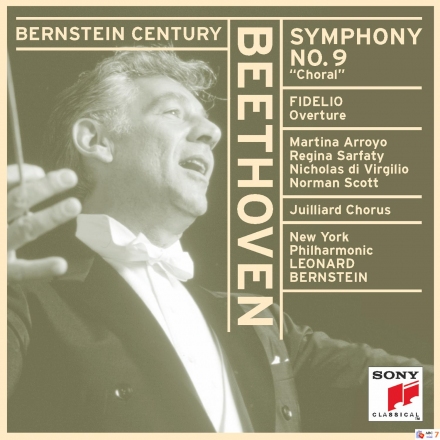
    Mr. di Virgilio is the tenor soloist in Leonard Bernstein’s 1964 recording of the Beethoven 9th, and the tenor also sang Mozart’s D-minor REQUIEM at a memorial service for President John F Kennedy in January of 1964, under Leinsdorf’s baton; the performance was televised. Composer Dominic Argento dedicated his Six Elizabethan Songs to Nicholas di Virgilio.

    In 1970, at New York City Opera, I chanced to hear Nicholas di Virgilio sing Faust in both the Gounod and Boito settings of the story of an aging philosopher who sells his soul to the devil. I was particularly amazed by his taking the high-C in “Salute demeure” in a lovely piano.

    Nicholas di Virgilio – FAUST aria – NYCO 3

    Nicholas di Virgilio – Da campi dai prati – MEFISTOFELE – NYCO 1970

    ~ Oberon

  • Safe in Beulah Land

    84F301FE-E65B-4CC7-9B8F-8F3FE85A6D84_w268

    On November 13th, 1969, Beverly Sills sang one of her signature roles, Baby Doe in Douglas Moore’s opera THE BALLAD OF BABY DOE, for what I believe was the last time in her career. It was the date of her mother’s birthday, and she had asked her mom what role she would like to have sung for her on her special day; “Baby Doe,” was the answer, and the performance was a sensation from start to finish.

    Sills Mania was in full flourish at that time, and as the members of the Snowstorm Crew gathered in the 5th Ring of the New York State Theatre on that November evening, the anticipation was palpable. Beverly’s first entrance drew a round of welcoming applause, and each of Baby Doe’s arias – and especially the the Willow Song – stopped the show.

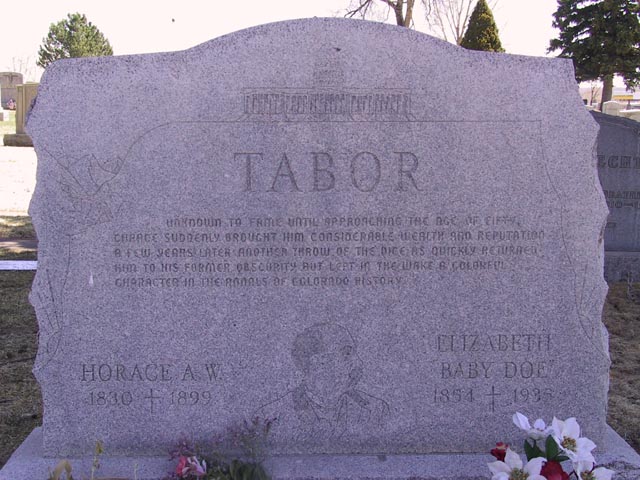
    The opera is based on the story of Horace Tabor, who made a fortune in silver mining in Colorado in the 1880s. Tabor owned the Matchless Mine in Leadville, and he and his wife Augusta were leading figures in the community. Horace met and became infatuated with Elizabeth “Baby” Doe, a young divorced woman who was twenty-five years his junior. Baby Doe was shunned by high society, being viewed as a fortune-huntress. Horace Tabor divorced Augusta in 1883 and married Baby Doe. They had two daughters.

    In 1893, Tabor lost everything when the United States adopted the gold standard. He was named postmaster of the city of Denver, but his spirit was broken and he died in 1899. On his deathbed, he made Baby Doe promise that she would “always hold on to the Matchless Mine.”

    True to her word, Baby Doe lived in a tiny cabin at the entrance to the mine until 1935, when, following a severe snowstorm, her body was found frozen to death on the cabin floor. She was buried next to Horace in the Mt. Olivet Cemetery in Jefferson County, Colorado.

    Douglas Moore’s operatic setting of the story (libretto by John Latouche) ends with Horace’s death; cradling his body, Baby Doe sings the gentle lullaby, “Always Thru The Changing of Sun and Shadow”. As the aria progresses, the scenery fades away and snow begins to fall, foreshadowing Baby’s eventual demise.

    On that November evening – now nearly a half-century ago – Beverly held the audience in the palm of her hand as she sang this song of dedication and undying love.

    The ovation was endless, and our ‘snowstorm’ of paper confetti was massive. After several minutes of applause, we all started singing “Happy birthday, Mrs. Silverman!” I wish I had let the tape run to include that.

  • Willow Song

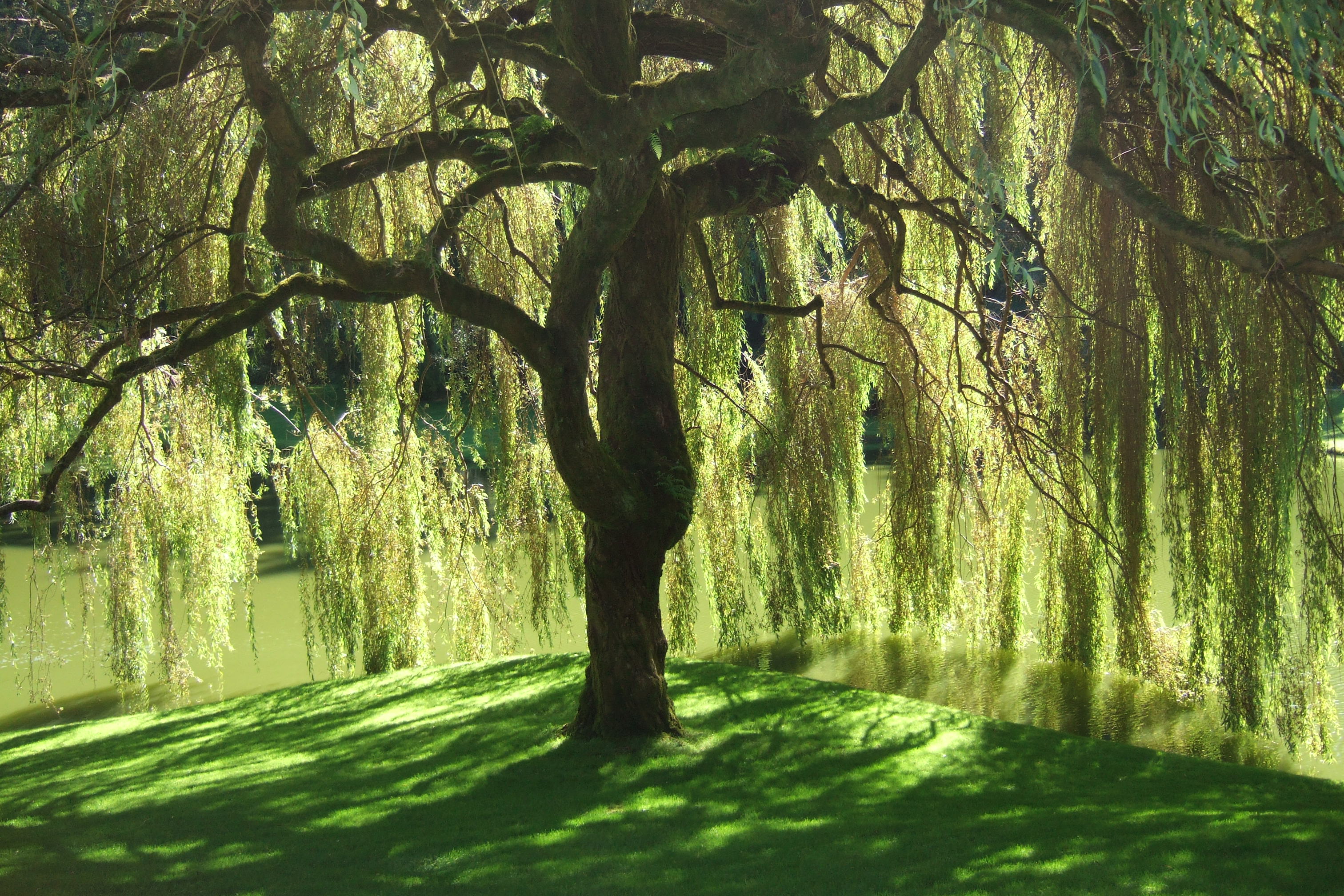
    Willow

    Beverly Sills sings the Willow Song from Douglas Moore’s BALLAD OF BABY DOE. The lyrics are so meaningful to me at this point in time.

    “Willow, where we met together…Willow, when our love was new…Willow, if he once should be returning pray tell him I am weeping too.

    So far from each other as the days pass in their emptiness away…O my love, must it be forever…never once again to meet as on that day…and never rediscover a way of telling all our hearts could say.

    Gone are the days of pleasure….gone are the friends I had of yore…only the recollection fatal of a word that was spoken: Nevermore…

    Willow, where we met together…Willow, when our love was new…Willow, if he once should be returning pray tell him I am weeping too…”

    2751_1018774880

    The grave of Baby Doe and Horace Tabor, Mount Olivet Cemetery, Wheat Ridge, Colorado.

  • Monodramas @ NYC Opera

    Monodramas0055

    Tuesday March 29, 2011 – Tonight was my first visit to New York City Opera as a member of the press. I’ve been going to NYCO since 1966; my first evening with them at Lincoln Center was the opening of GIULIO CESARE when Beverly Sills made her sensational splash as Cleopatra. But even before that I had seen the Company on tour up in Syracuse and Oswego NY – I even saw Beverly before she was Beverly, singing Rosalinda in FLEDERMAUS.

    Throughout the 1970s, 80s and 90s I went to NYCO as often as to the Met; I experienced several operas at the State Theater for the first time: CAPRICCIO, MEFISTOFELE, BALLAD OF BABY DOE, PRINCE IGOR, THE MAKROPOULOS CASE, the Donizetti/Tudor operas and many more. Singers from the Company became top favorites of mine: Maralin Niska, Patricia Brooks, Phyllis Curtin, Johanna Meier, Gilda Cruz-Romo, Beverly Sills, Susanne Marsee, Frances Bible, Beverly Wolff, Placido Domingo, Enrico di Giuseppe, Dominic Cossa, William Chapman, Richard Fredricks, Robert Hale, Norman Treigle.

    In recent seasons I have gone less and less to NYCO; of couse the Company have been thru exasperating times of late,  but let’s hope now that their future will be a bright one. Tonight’s triple bill of 20th/21st century works for solo female voice looked fascinating on paper, and I asked my longtime opera-companion Paul to join me.

    Aside from the three principal singers and an ensemble of dancers in MONODRAMAS, the key elements of this unusual evening were the direction of Michael Counts, the choreography of Ken Roht, and the conducting of NYCO’s stalwart maestro George Manahan. The visual aspects of the evening were the work of video artist Jennifer Steinkamp, motionographer Ada Whitney, and as an homage to laser artist Hiro Yamagata.

    There was one aspect of the production that I felt should be re-thought. About ten minutes before the curtain rose, a young man and woman dressed in tuxedos walked onstage before the curtain to pose and gaze about the house with in a somewhat bored manner. When the curtain rose on the Zorn the music didn’t start til these two had sauntered around the stage a while, removing the bhurkas of a couple members of the ensemble and then of the soprano. They continued rather pointlessly to participate in the action during the opening work.

    After the Zorn there was an interlude in which a digitized film of flowering tree branches (quite lovely) was shown as insects buzzed and chirped quietly. While this alluded to The Woman’s lines in the Schoenberg about the garden at evening and the sounds of crickets, it went on a bit too long and then The Couple returned and removed more bhurkas to expose the women of ERWARTUNG in white dresses. All this business seemed stagey and self-consciuous and too drawn out; yet it might have worked had the orchestra then gone directly into the Schoenberg. But instead when the pit lights came up, they took a tuning break. Whatever dramatic connection was being sought between the Zorn and Schoenberg was thus lost. The Couple appeared later in NEITHER but simply as members of the ensemble, thus diluting their (pointless) presence as a link between the three works. In general, the movement group added a shifting visual dynamic to the staging; it would have been more potent in my opinion to maintain this ‘choral’ effect rather than trying to interject them as individuals into the ‘plot’.

    Beyond this each work was uniquely and impessively staged, the orchestra dealt persuasively with all the demands placed on them, and the three sopranos did their utmost to assure the success of the evening. The audience were extremely attentive and focused; why can’t NYCB audiences behave like this? 

    Monodramas0026

    The evening opened with John Zorn’s LA MACHINE DE L’ETRE, having its staged premiere in these performances. In this rather brief wordless piece, the Finnish soprano Anu Komsi gave a truly impressive rendering of the demanding vocal line. Jagged coloratura roulades occupy the vocalist for most of the work’s duration; she also whispers, speaks and screams. There is no plot, no meaning, no message other than the music itself – colorfully orchestrated with piano, celesta and a variety of percussion effects. 

    Monodramas0021

    Backed by a ‘chorus’ of bhurka-clad dancers, Ms Komsi not only sang compellingly but moved with statuesque grace. I’d love see her again in a more familiar piece, the better to judge her capabilities.  

    Monodramas0032

    Above: Kara Shay Thompson as The Woman in Schoenberg’s ERWARTUNG, the only one of tonight’s three works with which I am somewhat familiar, having seen a peformance of it at the Met in 1989 with Jessye Norman, James Levine conducting. That production remains vividly in the mind – the stage setting consisted of a grand piano and hundreds of white candles – as does Ms. Norman’s powerful singing. Tonight at NYCO, The Woman was portrayed by Kara Shay Thompson whose voice at first seemed more lyrical in quality than one might expect to hear in this music. She proved however to be an accomplished vocalist, taking the demands of the piece in stride.

    Red rose petals fell gorgeously against the deep blue sky throughout this piece in which a deranged woman wanders thru the woods in the depths of night, seeking her lover. She stumbles upon him…literally; his corpse has been abandoned on the forest path. The Woman speaks of another Woman, a rival. Which of them is the murderer? Or are they one and the same?

    Schoenberg wrote of his work: “In Erwartung the aim is to represent in slow motion everything that occurs during a single second of maximum spiritual excitement, stretching it out to half an hour.” Based on a case study of Freud, The Woman’s multiple personalities are here evoked by six identically dressed woman who cunningly slip down a trap door as the opera draws to a close.

     Monodramas0052

    When I worked at Tower, Morton Feldman’s NEITHER was a much-sought-after item; the one existing recording at the time came and went from the distributor with maddening uncertainty. If a definitive recording were to be made today, it should most surely feature Cyndia Sieden who tonight turned the fiendish vocal writing of the work into a personal tour de force. The libretto of NEITHER is actually a poem by Samuel Beckett:

    “to and fro in shadow from inner to outer shadow

    from impenetrable self to impenetrable unself by way of neither

    as between two lit refuges whose doors once neared gently close, once away turned from gently part again

    beckoned back and forth and turned away

    heedless of the way, intent on the one gleam or the other

    unheard footfalls only sound

    till at last halt for good, absent for good from self and other

    then no sound

    then gently light unfading on that unheeded neither

    unspeakable home”

    Feldman met Beckett in Berlin in 1976 and asked the writer to provide a text for a vocal work commissioned by the Rome Opera. After replying that he didn’t like having his words set to music, Beckett finally agreed to style a brief libretto based on “the theme of my life”. He mailed Feldman the poem a few weeks later; the composer meanwhile had already started to write the music. The result, nearly an hour-long, is a unique and challenging work – challenging both the singer and the listener.   

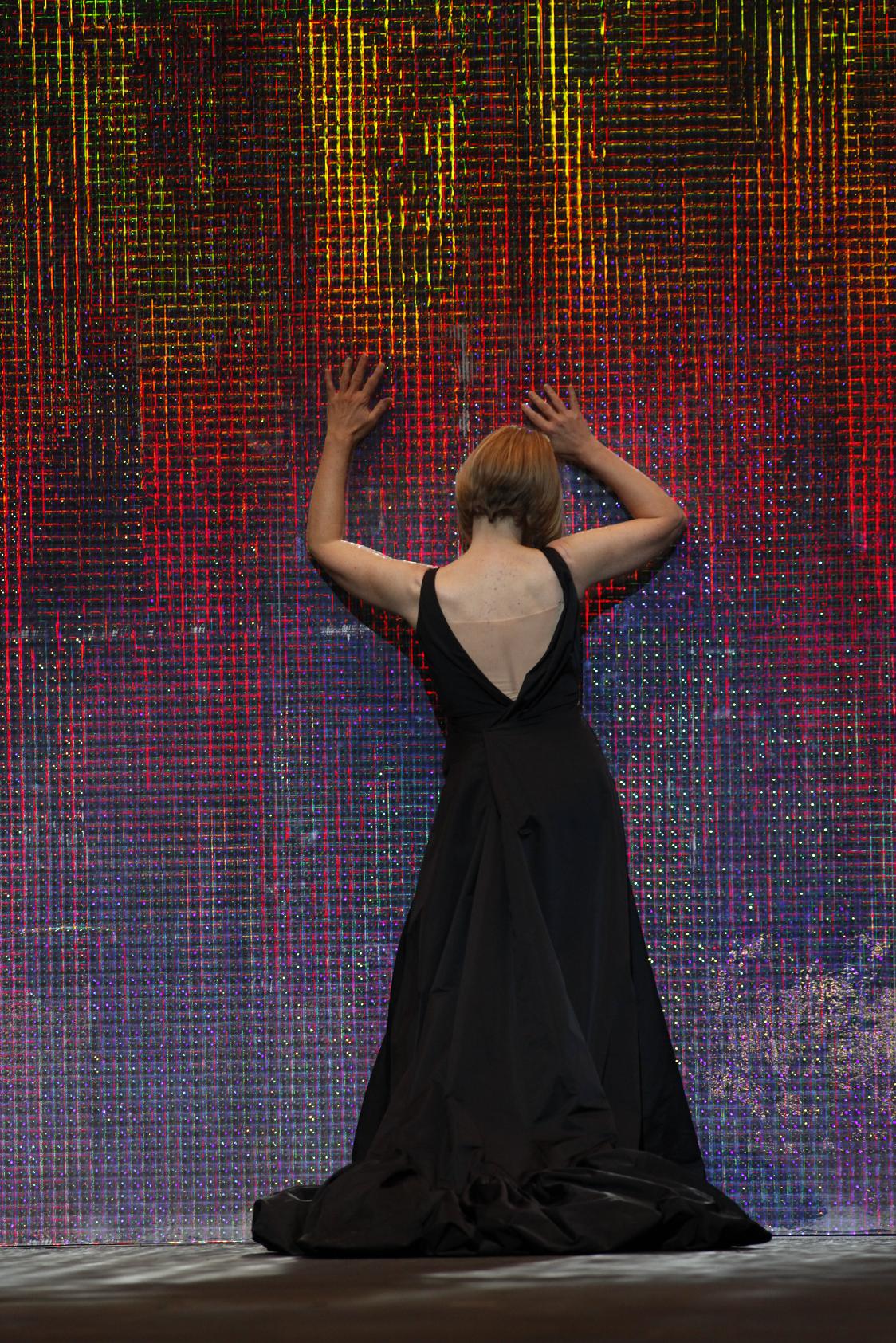
    New York City Opera‘s visually rich production sets the protagonist and ‘chorus’ surrounded by high walls of textured reflective material above which are suspended mirrored cubes which fall and rise above the action. The cubes reflect dazzling light into the auditorium while the walls are illuminated in rich hues: green, mauve, yellow, red, purple by turn. In this dreamlike space the tuxedoed choristers move with stylized gestures as Ms. Sieden, in a striking black gown with train, takes on the aspect of a priestess.

    Monodramas0016

    I first heard Ms. Sieden singing Mozart in the film ANDRE’S MOTHER; later she was a Met Lulu and Queen of Night. It was exciting to re-connect with her tonight and find her on such thrilling form. The vocal writing lingers in a very high tessitura – clarity of diction cannot thus be expected, and the super-titles here compensated – and Ms. Sieden proved not only a mistress of the heights but also produced tone of unusual beauty, almost sweetness, with some lovely taperings of dynamic.

    Watch a video featuring the three protagonists of the MONODRAMAS here. Three performances remain to catch this unusually powerful and rewarding triple-bill of music and theatre: March 31, April 2 matinee and April 8.

    Production photos by Carol Rosegg, courtesy of New York City Opera.