Tag: Birgit Nilsson

  • My 1st Time Hearing DIE WALKURE

    Nilsson

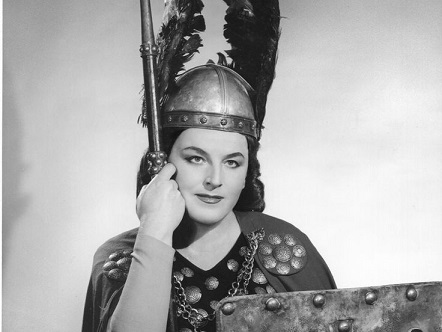
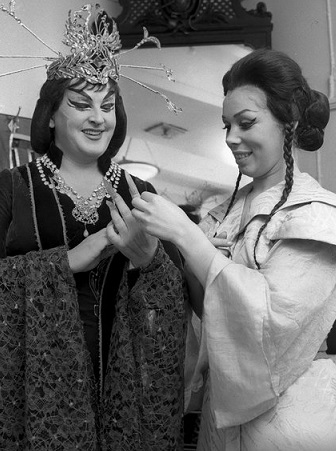
    Above: Birgit Nilsson as Brunnhilde

    The Met’s 1961 broadcast of Wagner’s DIE WALKURE marked the first time I ever heard this opera which became, over time, my favorite of the composer’s operas. A recording of the broadcast was recently posted on YouTube. Listen here.

    I remember that some scenes seemed endless to me, and that while the music was at times very exciting, it was the story that most intrigued me…especially the ending, where Brunnhilde was left sleeping in the middle of a ring of magic fire.

    We had had a substantial snowfall the night before, and I went out to the field behind our house with the sound of the feuerzauber alive in my head. I made a circle of all the empty packing boxes and other trash from my father’s drugstore and set it afire. It was then that I realized I was in the center of the circle and would have to wait until the flames died down before I could escape. At supper, my mother scolded me for bringing a smokey smell into the house. It took a few days for the odor to dissipate.

    Metropolitan Opera House ~ December 23,1961

    Cast: Brünnhilde: Birgit Nilsson; Siegmund: Jon Vickers; Sieglinde: Gladys Kuchta; Wotan: Otto Edelmannl Fricka: Irene Dalis; Hunding: Ernst Wiemann; Gerhilde: Carlotta Ordassy; Grimgerde: Mary MacKenzie; Helmwige: Heidi Krall; Ortlinde: Martina Arroyo; Rossweisse: Margaret Roggero; Schwertleite: Gladys Kriese; Siegrune: Helen Vanni; Waltraute: Mignon Dunn

    Conductor: Erich Leinsdorf

  • A Matti Salminen Rarity

    Matti S

    As with so many treasures, I came upon this by chance on YouTube: Matti Salminen, the great Hunding and Hagen, sings Wotan in the finale of DIE WALKURE opposite Birgit Nilsson’s Brunnhilde.

    Here in the link.

  • Second Twilight

    Nilsson brunnhilde

    Above: Birgit Nilsson as Brunnhilde

    On December 14th, 1963, I heard Wagner’s GOTTERDAMMERUNG (Twilight of the Gods) for the second time. I had been an ardent opera fan for almost 5 years, but delving into the Wagner repertoire was still somewhat daunting. I had first heard GOTTERDAMMERUNG 1962, finding parts of it thrilling and other sections less so. The 1963 broadcast felt more accessible musically, and details of the plot seemed clearer to me.

    I recently discovered that the 1963 GOTTERDAMMERUNG broadcast has been posted on YouTube. Listen here.

    Brünnhilde: Birgit Nilsson; Siegfried: Hans Hopf; Hagen: Ernst Wiemann; Alberich: Gerhard Pechner; Gunther: Norman Mittlemann; Gutrune: Mary Curtis-Verna; Waltraute: Mignon Dunn; Woglinde: Mary Ellen Pracht; Wellgunde: Rosalind Elias; Flossilde: Gladys Kriese; First Norn: Lili Chookasian; Second Norn: Mignon Dunn; Third Norn: Mary Curtis-Verna; Conductor: Joseph Rosenstock

    Actually seeing a RING opera was still i my future, but once I had attended the matinee of Karajan’s magnificent RHEINGOLD in 1969 (part of an unforgettable weekend), the Cycle became an obsession for me. Echoing Wotan: “Den Ring muss ich haben!”

  • 55 Years Ago ~ TURANDOT @ The Met

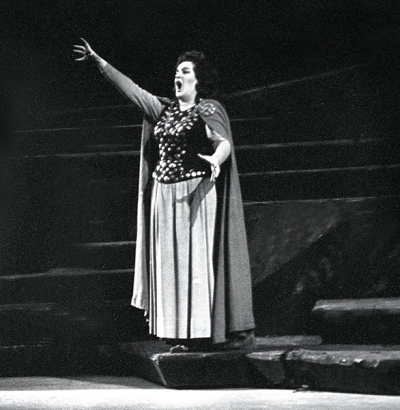
    Birgit (2)

    On September 26th, 1966, I attended my first opera at the New Met: a performance of Puccini’s TURANDOT starring Birgit Nilsson (above), Franco Corelli, Teresa Stratas, and Bonaldo Giaiotti, conducted by Zubin Mehta.

    A few weeks earlier, I had taken an over-night bus from Syracuse to New York City and joined the ticket line for the opening performances at the new opera house. Read about my adventure here.

    I had seen the Met’s Cecil Beaton production of TURANDOT previously, at the Old Met. It was considered quite lavish at the time, but within a couple decades it was wildly surpassed by the elaborate Franco Zeffirelli setting. Birgit and Franco seemed thoroughly at home on the Beaton sets, their by-play with Turandot’s all-day-lollipop/sceptre, was always commented upon by the fans, who gauged the scene to determine how well the two superstars were getting along on a given evening.

    Turandot-1 jpg
    My diary entry was very brief:

    “First performance at the New Met!! Magnificent evening, dazzling experience. After hearing Nilsson and Corelli on Saturday matinee broadcasts, it was electrifying to hear them “live“; you can’t really tell how immense and thrilling their voices are over the radio. They are great stars!

    Teresa Stratas was excellent as Liu, and my favorite bass, Bonaldo Giaiotti, sounded great. Uppman, Nagy, Anthony, and Goodloe – all singers know from the broadcasts – were fine. Mehta tremendous!

    There was huge applause after each act, and many curtain calls. The Corelli fans in particular went crazy.”

    After the ovation finally ceased, I went to the stage door where a huge crowd of people were waiting to meet the artists. They finally came out, and they were all very nice to me. Stratas signed my program, and Birgit signed the photo at the top of this article.

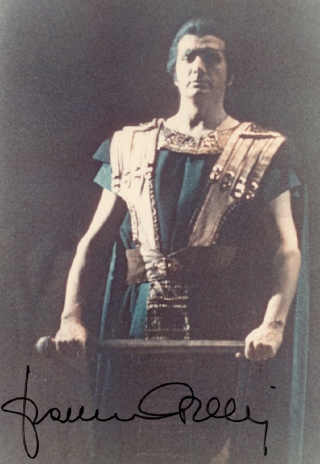
    Franco

    I’d brought along the above photo of Corelli as Radames for him to sign; he seemed genuinely pleased to see this picture of himself, and the fans gathered around him were gasping, “Where did you find this???” 

    I remember that I slept very little after getting back to The Henry Hudson Hotel that night. I was really wound-up: I had been going to the opera sporadically since 1962 – plus catching every Met broadcast and building a big record collection. But this evening marked the start of the next phase of my operatic career. I began coming down to New York for long weekends, taking the over-night bus from Syracuse and staying at the Henry Hudson; opera was everything to me.

    After spending the Summer of 1974 on Cape Cod with TJ, working for a small ballet company, I moved into his dorm room at Sarah Lawrence College where we spent the 1974-1975 academic year together. We went down to the opera (and also the ballet!) constantly, taking a bus from Bronxville to the A train station at 207th Street – the station that’s now a block from where I live.

    After he graduated, we moved to Hartford; we were poor, and trips to New York City were few and far between. But after we broke up, I got my own place place and began spending frequent long weekends in NYC again. My promiscuous phase – can 25 years be considered a phase? – started at this point.

    Finally, in 1998, shortly before my 50th birthday, I moved to New York City. This had been my plan since that first solo excursion to join the Met ticket line in late Summer 1966, but Hartford had been a 22-year detour.

    Now, at last, I was home.

    ~ Oberon

  • Mirella Freni as Liu

    Freninilsson

    Above: Birgit Nilsson and Mirella Freni backstage during a performance of TURANDOT

    Mirella Freni – Signore ascolta! ~ TURANDOT – Madrid 1972

  • Birgit Nilsson ~ Liebestod

    Snapshot

    In 1971, Birgit Nilsson was my first Isolde, in a new production at the Metropolitan Opera. For several years after seeing her in the role, I did not want to see the opera again. When I finally did  – in 2008 (!) – I realized what I’d been missing. TRISTAN UND ISOLDE now holds a high place in my list of favorite operatic works.

    Birgit Nilsson – Liebestod ~ TRISTAN UND ISOLDE – Knappertsbusch conducting

  • Irene Dalis as Fricka

    Walkure6465.05

    The great dramatic mezzo-soprano Irene Dalis in the scene of confrontation between Fricka and Wotan from Act II of Wagner’s DIE WALKURE:

    Irene Dalis as Fricka – WALKURE – w Birgit Nilsson & Otto Edelmann – Leinsdorf cond – Met bcast 1961

    From her 1957 debut there, Irene Dalis sang some 275 performances with the Metropolitan Opera Company – in New York City and on tour – during her twenty-year Met career. Her greatest roles were The Nurse in DIE FRAU OHNE SCHATTEN and Amneris in AIDA. In 1969, her electrifying performance of Verdi’s Egyptian princess at a concert performance at the Sheep Meadow, Central Park, drew an estimated  crowd of 50,000; Dalis’s super-charged singing in the Judgement Scene evoked a thunderous ovation.

    6a00d8341c4e3853ef00e54f20ad648833-800wi

    Following her retirement from singing, Irene Dalis founded Opera San Jose, which she ran with great success for over two decades.

    In August 2007, I wrote an appreciation of Irene Dalis, which she eventually found and read; she sent me a lovely message of thanks.

    ~ Oberon

  • Nilsson & Rysanek in WALKURE

    Nilsson Rysanek

    In their signature roles of Brunnhilde and Sieglinde, I believe this series of performances may have been the last time Birgit Nilsson and Leonie Rysanek sang in DIE WALKURE together. Otmar Suitner conducts.

    Nilsson & Rysanek – WALKURE – scene from Act III – San Francisco 1982

  • Nilsson & Rysanek in WALKURE

    Nilsson Rysanek

    In their signature roles of Brunnhilde and Sieglinde, I believe this series of performances may have been the last time Birgit Nilsson and Leonie Rysanek sang in DIE WALKURE together. Otmar Suitner conducts.

    Nilsson & Rysanek – WALKURE – scene from Act III – San Francisco 1982

  • At Home With Wagner IX

    Wagner

    What looked quite enticing on paper – a 1963 WALKURE from Stockholm – proved frustrating, not because the performance was sub-par in any way, but because it turned out to be mis-labled and incomplete.

    The recording starts mid-way thru Act I. Michael Gielen, a conductor I know little about, has the score well in hand although the orchestra isn’t always up to Wagner’s demands. Arne Tyrén is a less boisterous Hunding than some I have heard, and his voice can take on a wonderfully spooky quality. Birgit Nilsson’s ‘Ho-Jo-To-Ho’ is a marvel, her voice bright and fresh: she makes this daunting opening passage sound easy. Unfortunately, there’s not much more to be said of her performance here, since the Todesverkundigung is ruined by what seems to have been the wayward speed of the source machine used to tape the performance. The pitch rolls up and down with a seasick effect. Then, the third act is missing entirely!
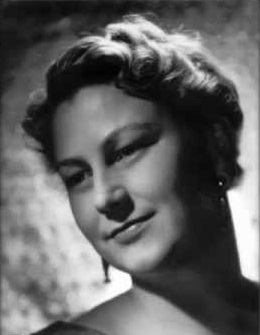
    Nordmo loevberg

    The Wälsung twins are appealingly sung by Aase Nordmo-Lövberg (above) and Kolbjörn Höiseth. Ms. Nordmo-Lövberg, a very fine Elsa in Nicolai Gedda’s only performances of Lohengrin, brings poised lyricism and a fine sense of the words to the role of Sieglinde. 
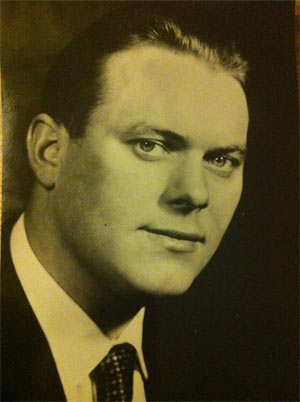
    Kolbjorn-Hoiseth-300px

    Mr. Höiseth (above) sang briefly at The Met in 1975: he debuted as Froh in RHEINGOLD and repeated that role once; then he stepped in once for an indisposed colleague as Loge and once for an ailing Jon Vickers as Siegmund. I saw him in both the RHEINGOLD roles and he made a favorable impression. Here, as Siegmund, he is a good match for Nordmo-Lövberg – their voices are lyrically compatible. The tenor does experience a couple of random pitch problems, and seems just a shade tired vocally at the end of Act I – understandable, after such a taxing sing. But he makes a good effect in both the Sword Monologue and in the Winterstürme and also in the Act II scene where he attempts to calm to delirious Sieglinde as they flee from her pursuing husband. It’s a pity that the Todesverkundigung is so garbled: I would like to have heard Nilsson and Höiseth in this scene which is my favorite part of the opera.

    20011018-094545

    The mezzo-soprano Kerstin Meyer (above) had a more extensive Met career than her tenor colleague: she sang the Composer in the Met premiere of ARIADNE AUF NAXOS and also appeared as Carmen and Gluck’s Orfeo at the Old House. Here, as Fricka, she is impressive indeed: she begins lyrically – subtle and sure – and soon works herself into a state of righteous indignation. Her victory over Wotan is a triumph of will. Meyer sings quite beautifully, with clear expressiveness.

    Bjoerling-portrait

    Beautiful vocalism also marks the Wotan of Sigurd Björling (above). The voice is not stentorian, though he can punch out some impressive notes; the monologue is internalized, sung with a sense of hopelessness that is quite haunting. Despite errant pitch at times, Björling’s performance is moving and makes me truly regret that the third act is missing.

    ~~~~~~~~~~~~~~~~~~~~~~~~~~~~~~~~~~~~~~~~~~~~~~~~~~~~~~~~~~~~~~~~~~~~~~~~~~~~~~~~~~~~~~~~~~~

    Emc66-002-MF

    Above: Wolfgang Sawallisch

    A tremendous performance of GÖTTERDÄMMERUNG from Munich 1977 gave me a great deal of listening pleasure. I spent several hours with this recording, listening to whole acts repeatedly and zeroing in on favorite scenes to savor the individual characterizations of the very fine cast. Maestro Wolfgang Sawallisch’s shaping of the glorious score had a great deal to do with sustaining the air of excitement around this performance.

    This GÖTTERDÄMMERUNG was clearly recorded in-house; the sound of the microphone being fumbled with sometimes intrudes, and there are passages where a singer is too far off-mike to make a vocal impact…and other times when the recordist seems to be sitting literally in the singers’ laps.

    The first voice we hear is – incredibly – that of Astrid Varnay; essaying the role of the First Norn, Varnay sounds a bit matronly at times, but she is so authoritative and dramatically alert that it hardly matters. Her diction and word-colourings are endlessly admirable, and her low notes have deep, natural power – most especially on her final “Hinab!” As the Second Norn, Hildegard Hillebrecht is a bit unsettled vocally at times (the role lays low for her). Ruth Falcon’s singing of the Third Norn is more lyrical than some who have essayed the role.

    Sawallisch’s forward flow provides a nice build-up to Brunnhilde’s first entry; off-mike at first, it soon becomes evident that Ingrid Bjoner is on peak form for this performance. The voice won’t be to all tastes, but its silvery power, impressive lower range, and sustained phrasing which Bjoner brings forth are thrilling to me, a long-time fan. Jean Cox as Siegfried doesn’t quite equal his 1975 Bayreuth performance of the role, but he’s so sure of himself and has both the heft and the vocal stamina that’s needed. As Sawallisch builds the Dawn Duet with passionate urgency, Bjoner spears a couple of splendid high B-flats before her brightly attacked, sustained climactic high-C. 

    At the Gibichung Hall we meet the excellent Gunther of Hans Günther Nöcker and the vocally less-impressive but involved Gutrune of Leonore Kirchstein (near the end of the opera, she emits a gruesome scream on discovering the truth about Siegfried’s death). The dominating vocal force of the opera from here on in – along with Bjoner – is the resplendently sung and theatrically vivid Hagen of Karl Ridderbusch. The basso’s rendering of ‘The Watch’ is simply incredible. 

    Ae3fa3b49cd1956fc73b780d984a5e39

    Another potent performance is the splendid Waltraute of Ortrun Wenkel, who attained international fame for her remarkable performance as Erda in Pierre Chéreau’s 1976 production of the RING Cycle for Bayreuth which was telecast in its entirety and is preserved on DVD. Wenkel’s abundant tone and vivid sense of the character make her scene with the equally thrilling Bjoner Brunnhilde an outstanding part of this performance. If Waltraute’s parting high-A – always a thorny note for a contralto essaying this role – is cut short, it scarcely distracts from the excitement the Bjoner/Wenkel sister-scene has generated. 

    Bjoner is staunch in her defense of the ring from the attacking Gunther-Siegfried; abetted by Sawallisch and Mr. Cox, the soprano brings the first act of this performance to an exciting close.

    But then things soar even higher, for in an Act II that borders on insanity, the maestro and his cast all seemed to be in the grip of madness. The act begins with the eerie scene where Alberich (creepy singing from Zoltan Kelemen) appears as a vision to the sleeping Hagen. The summoning of the vassals is massively impressive, and later, in the great scene of oath-swearing, Cox and Bjoner blaze away. Throughout the act, the ever-keen Sawallisch guides his forces with a masterful hand. Simply thrilling.

    A nicely-blended trio of Rhinemaidens (Lotte Schädle, Marianne Seibel, and Liliana Netschewa) give us a lyrical interlude at the start of Act III: all three vocal parts are clearly distinguishable and they are finely supported by the atmospheric playing of the orchestra, with the horn calls very well-managed. Jean Cox is very much on-mike as he encounters the girls: his big, leathery high-C is sustained…and then he chuckles to himself.

    Following Hagen’s betrayal, Cox’s farewell to life and to Brunnhilde is wonderfully supported by Sawallisch: the orchestra playing here is so impressive, the tenderness of the final greeting so lovingly conveyed. 

    Now Sawallish takes up a deep, glowering rendition of the prelude to the Funeral March; contrasts of weight and colour add to the sonic build-up until the great theme bursts forth in its full-blown grandeur. The spot-on trumpet fanfare and the solid assurance of the horns are a great asset here.

    Ridderbusch is terrifying in vocal power and cruelty as he seizes control of the scene, but the raising of the hand of the dead Siegfried when Hagen goes for the ring puts Alberich’s son in his place at last. The cleansing descending scale sets the scene for Brunnhilde, and even though Bjoner is off-mike for the opening of the Immolation Scene, she is vocally unassailable: by “Wie sonne laute…” the  mike has found her and she shows both great power and great subtlety in this music. Bjoner’s low notes are vivid, her sustained, lyrical thoughts of the ravens imaginatively expressed, and her noble “Ruhe…ruhe, du Gott!” has a benedictive quality and is very moving. Following her passionate disavowal of the ring, the soprano surges forward with a thrilling greeting of Grane and some exalting top notes to seal her great success in this arduous role. Then Sawallisch and the orchestra bring the opera to a mighty close.

    6a00d8341c4e3853ef0192ac79f9a2970d-800wi

    Above: Jean Cox and Ingrid Bjoner