
A stellar quartet – Gundula Janowitz, Christa Ludwig, Carlo Bergonzi, and Ruggiero Raimondi – sing the Hostias from the Verdi REQUIEM as performed at Salzburg in 1970 under the baton of Herbert von Karajan.
Listen here.
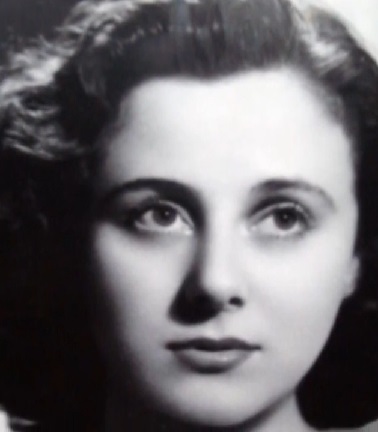
A 1963 audio-only recording of Verdi’s LA FORZA DEL DESTINO from the Teatro San Carlo, Naples, starring Antonietta Stella (photo above), Carlo Bergonzi, Dino Dondi, and Nicola Zaccaria, with Franco Capuana on the podium.
Listen here.

Ángeles Gulín and Carlo Bergonzi sing “Vicino a te“, the final duet from Giordano’s ANDREA CHENIER, from a performance given at London in 1970. Anton Guadagno conducts.
Listen here.

A scene from Act I of Puccini’s TOSCA with Renata Tebaldi (above) and Carlo Bergonzi from Buenos Aires 1953. This was Bergonzi’s role debut as Cavaradossi.
Listen here.
Raina Kabaivanska and Carlo Bergonzi sing the final duet from Umberto Giordano’s ANDREA CHENIER at a 1970 Munich Gala.
Listen to them here – accompanied by some fanciful artwork – and enjoy the audience’s enthusiastic response at the end.
In June of 1970, I had the pleasure of seeing Raina Kabaivanska’s only Met performance as Maddalena de Coigny. Sublime!
~ Oberon

On February 3rd, 1962, I tuned in to Texaco Metropolitan Opera Radio Network (as it was then called) and heard Puccini’s MADAMA BUTTERFLY sung live for the first time. Gabriella Tucci, who in my earliest years of opera mania was my favorite soprano, gave a magnificent performance. Carlo Bergonzi stepped in for the indisposed Sandor Konya, and this was a boon for me as Bergonzi was (and remains) my favorite tenor.
And so, the Tucci/Bergonzi rendering of the love duet from that matinee performance is very special to me:
Gabriella Tucci & Carlo Bergonzi – MADAMA BUTTERFLY ~ Love Duet – Met 1962
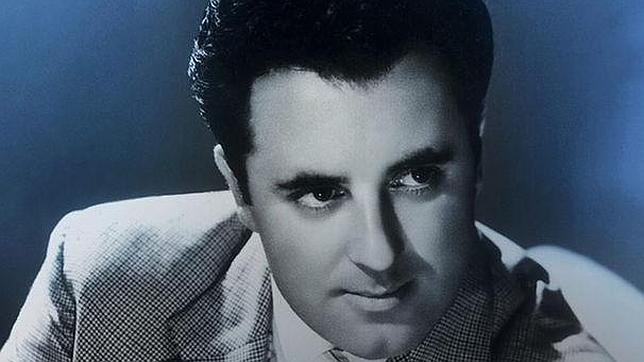
My all-time favorite tenor and one of the last surviving titans of the ‘last golden age’ of opera has passed away: Carlo Bergonzi.
Bergonzi sang over 320 performances at The Met, debuting in AIDA in 1956 opposite the also-debuting Antonietta Stella. He sang his final Met performance in 1988 in LUCIA DI LAMMERMOOR. Over the years, Bergonzi – who started his operatic career as a baritone – gradually lost the ease and surety of his upper register, but stylistically he remained a paragon throughout his long career.
When I started listening to opera at the age of 11, I had no idea of how long a singing career could last or how a voice would age. The first singers I fell in love with – Milanov, Tebaldi, Jan Peerce, Robert Merrill, Giorgio Tozzi : it seemed to me they were eternal, that they had always been singing and would always continue to sing, and that they would always sound exactly the same as they did on the first recordings I acquired. Imagine my despair when I discovered early on that two of my first idols, Jussi Bjorling and Leonard Warren, were already dead!
I last saw Bergonzi onstage in 1988 as Rodolfo in LUISA MILLER, one of his last Met performances. People were raving about the staying power of this 64-year-old primo tenore but to me the voice was sadly pallid. The style, however, was wonderfully intact: the generosity of line, the feeling for the language, the skillful mastery of dynamics. Despite his admirable ability to cope with the music technically, I was disheartened and left midway thru the evening. Twelve years later, I was living in New York City when Bergonzi announced he would sing Verdi’s Otello in a concert performance at Carnegie Hall. My friends, knowing of my great love for the tenor, assumed I would be there but I feared it would be an unhappy evening…and it was: beset by vocal problems, he was forced to withdraw after Act II.
No, I would rather remember the great years, though in fact he was already well along in his career when I first heard him live in a concert performance of Catalani’s LA WALLY at Carnegie Hall in 1968. Appearing opposite Renata Tebaldi, Bergonzi managed to steal the show: he brought down the house after Hagenbach’s Act IV aria.
At The Met I heard his superb Radames, once with Lucine Amara and once with Martina Arroyo. It was with Arroyo that he triumphed as Verdi’s ERNANI in a stellar performance that also featured Sherrill Milnes and Ruggero Raimondi. He was a generous-toned and poetic Andrea Chenier in a performance where Renata Tebaldi struggled vocally, only to cast off all reserve in the final duet where she and Bergonzi thrilled us with their passionate outpouring of sound. And the tenor managed to convey the youthful vigor and tenderness of Alfredo Germont opposite the moving Violetta of Jeannette Pilou.
Listening to a matinee broadcast of TOSCA in 1975, I was dismayed to hear Bergonzi struggling with the top notes and fighting a losing battle, though he sang on to the end. He took a year and a half off (at least from the Met) returning in November 1976 as Radames opposite Rita Hunter. After a somewhat cautious but still impressively handled “Celeste Aida” Bergonzi went on to give a spectacular performance with some of the most generous singing I ever heard.
And such generosity won him great acclaim in 1979 when he returned to a signature role, Riccardo in BALLO IN MASCHERA. His phenomenally sustained top notes, sometimes attained thru sheer will-power, and his matchless phrasing drew enormous ovations on both evenings that I attended: one performance with Teresa Zylis-Gara and another with Carol Neblett. In 1982 Bergonzi was still on impressive form in FORZA DEL DESTINO, and in 1985 he scored a grand success in a concert performance of Verdi’s GIOVANNA D’ARCO opposite Margaret Price and Sherrill Milnes. In every one of these performances, whatever slight misgivings one might have, his ever-persuasive style carried the day.
But there was a final small chapter in my Bergonzi story: eight years after the MILLER that I walked out on, he appeared at James Levine’s 25th Met Anniversary gala, singing the aria from LUISA MILLER and the trio from I LOMBARDI. Massive demonstrations of love rained down on him and people raved about his longevity but for me, despite admiring his courage, he was a shadow of his glorious self.
But, I have lots of recordings (both commercial and live) to keep my favorite tenor’s voice ever in my ear. His early Decca aria recital has never – in my opinion – been matched by any other tenor’s, though some have come very close. Both his commercial BALLO recordings are superb. His Duke in RIGOLETTO (opposite Scotto and Fisher-Dieskau) is a fine document of Verdi tenor singing. In TROVATORE, PAGLIACCI, BOHEME and DON CARLO, he is The King. I deeply love his BUTTERFLY with Tebaldi, his TOSCA with a voice-in-peril Callas (she still has some magical moments though); and his lovely TRAVIATA with Montserrat Caballe. And I am particularly fond of Bergonzi’s splendid performance as Edgardo in the RCA LUCIA with Anna Moffo.
Carlo Bergonzi sings Tosti’s ‘Ideale’ here.
Hail and farewell, Maestro. If there’s a heaven, you can teach the angels how to sing.
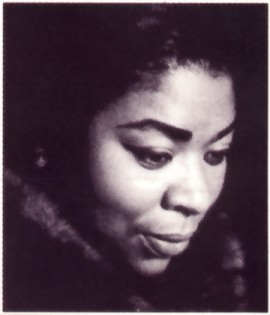
This 1968 performance of AIDA from the Teatro Colon, Buenos Aires, cropped up on the Opera Depot website and thought the combination of Martina Arroyo (above) and Carlo Bergonzi as Aida and Radames would be exciting to hear, since they are two of my all-time favorite Verdi singers. Both are in prodigious voice, providing phrase after phrase of wonderfully generous vocalism. My thanks to Dmitry for making me a copy.
Martina Arroyo never made a commercial recording of AIDA, and Bergonzi’s Radames on the Decca label (with Tebaldi) was recorded in an unusual acoustic which even later tampering-with could not make really enjoyable. So it’s wonderful to have this live recording from the Colon in perfectly good sound and with both singers on impressive vocal form.

The Teatro Colon (above) is a vast house (1,000 standees may be accommodated), and over the years has been rated high acoustically by singers and listeners alike. On this evening in 1968, the crowd surely senses that they are hearing teriffic vocalism from Arrroyo and Bergonzi and they repay the singers with generous ovations throughout the performance.
Bruno Bartoletti is on the podium; over the years I have heard performances conducted by this man that seem ideal and others that are less inspiring. For this AIDA he sets a generally fast pace (the ballet segments are wickedly speedy – I would not want to have been dancing in this performance!) but he certainly gives his singers a lot of leeway, and they enjoy lingering on high notes and having the opportunity to sustain favorite phrases.
There are some off-notes and a few unhappy bits from the pit musicians, and one jarring passage in the Tomb Scene where Bartoletti inexplicably rushes ahead of Bergonzi who is in the middle of some raptly poetic music-making; it takes a few bars to get things back in sync.

Carlo Bergonzi (above) has always been my personal king of tenors; yes, I know all his flaws and yes, he went on singing too long after he should have stopped. But in his heyday he was just so thoroughly pleasing to listen to, his marvelous turns of phrase and beautifully sustained vocalism always make me feel…happy. The beauty of hearing the Italian language wrapped in Bergonzi’s plangently expressive sound has always given me particular joy; even now, if I’m feeling blue, I’ll reach for that first Decca recital disc and soon I’m transported out of myself and basking in the music that has kept me – both spiritually and psychologically – on an even keel all these years. His singing in this AIDA is simply marvelous to experience: the unstinting generosity of both voice and style, the many small touches of sustained notes and his lovely colourings of the words in a rich emotional palette. It’s Verdi tenor singing at its best.
Martina Arroyo is in glorious voice also, rich and even throughout the role’s vast range. If she does not employ the ravishing piano effects that some sopranos have in this music, we are amply compensated with the velvety splendour of Arroyo’s sound and her plush phrasing, as well as her dramatic awareness which never carries her to excess. In this grand performance, the great Martina rises to the high-C of ‘O patria mia’ – a note which has defeated many a soprano – with blessed assurance and sustains it with glorious ease. In the opera’s concluding Tomb Scene, she and Bergonzi trade passages of soul-pleasing Verdi vocalism, and together they sustain their final joint phrase seemingly beyond the realm of human possibility.
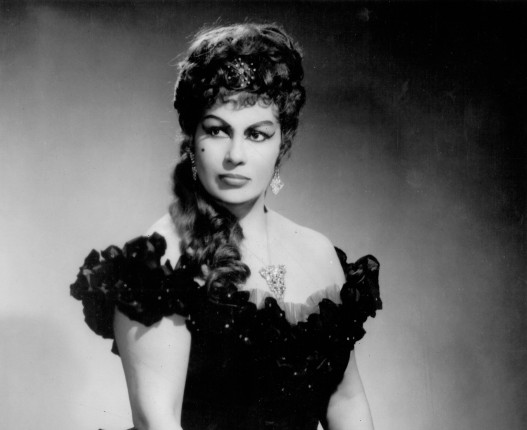
The Serbian mezzo-soprano Biserka Cvejic (above) is probably not on anyone’s list of top-ten mezzos; yet if she had been the Amneris in either of the last two AIDAs I heard at The Met, I would have been satisfied. It’s a crusty, Old-World sound with an ample and pleasing chest register and higher notes sometimes approached from below. Cvejic has the role well in hand and if her singing doesn’t rise to the level of the soprano and tenor, neither does she let down her side of the triangle.
Cornell MacNeil is a powerful, dramatic Amonasro and I was surprised to find Nicola Rossi-Lemeni listed as Ramfis: this basso – a famous stage-creature of the 1950s – is surely nearing the end of his singing career by 1968. If not vocally prime, he surprises with some very robust moments (‘Immenso Ptah!’) and makes an authoritative impression.

Nicolai Ghiaurov, Fiorenza Cossotto, Renata Tebaldi, Leontyne Price and Carlo Bergonzi backstage at Carnegie Hall following a performance of the Verdi REQUIEM in 1964. Price, Cossotto, Bergonzi and Ghiaurov were the soloists, and Tebaldi was visiting her colleagues in the green room after the performance. Herbert von Karajan conducted.

 Oberon's Glade