Tag: Chamber Music Society

  • CMS Summer Evenings 2025 ~ Concert V

    Anna Geniushene c

    ~ Author: Oberon

    Tuesday July 22nd, 2025 – I wasn’t feeling well but decided to go to this evening’s Chamber Music Society concert because I was especially keen to hear the Arensky quartet that was the closing work on the program. The prevailing heat and humidity had exhausted me, but now we had had a cooler day, and I was glad to get out of the house. In the event, I didn’t make it to the end of the evening.

    Mikhail Glinka’s Variations on a Theme of Mozart, as played by Anna Geniushene (photo above), got the evening off to a dazzling start. From its extraordinarily subtle opening bars,  the music soon turns fanciful. Ms. Geniushene’s technical command made for a fascinating aural experience as her mastery of piano/pianissimo colorations and touches of rubato constantly enticed the ear; her extraordinary delicacy of touch was a testament to her amazing control. Just as she was polishing off the final bar of music, someone sneezed loudly. Yes, I know these things can happen, but really spoiled the atmosphere in the hall. 

    During the ensuing performance of Beethoven’s Variations in G-major for Piano, Violin, and Cello, Op. 121a, “Kakadu”, my evening began to unravel. A couple sitting in front of me began sharing whispers, and even cuddled a bit, whilst two women next to me fanned themselves briskly with their Playbills. I managed to tune these distractions out – at least momentarily – as Ms. Geniushene was joined by violinist Francisco Fullana and cellist Sterling Elliott for the Beethoven.

    After a unison start, the pianist sets a gentle pace; the strings veer between intensity and lyricism, the violin tender, the cello deep. Moments of drama alternate with delicious subtleties as the music turns dancelike.

    Now the variations commence: the first for solo piano, the second for nimble violin & piano, the third for mellow cello & piano. Scale passages from the Steinway underscore themes traded between the string voices in the fourth, The fifth has a lyrical flow, the sixth is witty, with the strings making slashing attacks. Violin and cello are charming in the seventh variation, and Ms. Geniushene plays wistfully in the eighth, soon joined by the strings. Then a merry dance strikes up and the finale is quite grand. The three musicians were warmly cheered. 

    Schubert’s Adagio and rondo concertante in F-major for Piano, Violin, Viola, and Cello, D. 487, commenced with violist Lawrence Dutton and the gorgeous cellist Inbal Segev cellist joining Ms. Geniushene and Mr. Fullana for some sublime music-making. But the chatterboxes in front of me could not sit still, and now the man behind kept whispering to his companion, whilst the two women to my right had fallen asleep. As the Schubert reached its brilliant finish, to hearty applause, I decided to head home, not having heard the Arensky, which is why I was there in the first place.

    ~ Oberon

  • Mendelssohn Evening @ CMS

    F m

    Above: Felix Mendelssohn

    ~ Author: Oberon

    Tuesday February 25th, 2025 – Chamber Music Society of Lincoln Center offering an all-Mendelssohn evening featuring a de luxe ensemble of musicians: pianist Anne-Marie McDermott, violinist Arnaud Sussmann, cellist Nicholas Canellakis, and the Escher Quartet.

    This concert was a much-needed lift of my spirits after weeks of unbearably frigid weather and a weekend of unsettling health issues. Just setting foot in Alice Tully Hall made me feel better; and then the music – and the musicians – provided just the right antidote to my malaise. By the end of the program, I was thoroughly rejuvenated. 

    20250225_CMS_Mendelssohn_DressRehearsal__Preview_045

    Mr. Canellakis and Ms. McDermott (above photo by Da Ping Luo) opened the program with the Sonata No. 1 in B-flat major, Op. 45. The sonata’s Allegro vivace commences with a unison passage; a rolling melody emerges, in which he cello’s lower range is explored. Moving into minor mode, the music becomes insistent. Arpeggios from the Canellakis cello turn into long tones sustained over a roaming piano. The music turns passionate, then grand, leading to a brisk finish full of Ms. McDermott’s marvelous playing.

    The winsome piano introduction to the Andante signals the appearance of a familiar theme. Nick’s melodious cello sings over elegant passages from the Steinway; Ms. McDermott then plays a delicate dance accompanied by plucked cello figurations. An increase of passion lasts only moments; the piano resumes its lightness and the music fades away.

    The concluding Allegro assai brings a flow of melody; things get more animated, sweeping forward with lyrical, haunting passages. An energetic ending looms, but Mendelssohn instead provides a peace-filled finish. 

    20250225_CMS_Mendelssohn_DressRehearsal__Preview_063

    Above, the Escher Quartet: Adam Barnett-Hart, Brendan Speltz, Brook Speltz, Pierre Lapointe; photo by Da Ping Luo

    The Eschers then took the stage for the Quartet in F-minor for Strings, Op. 80.

    Fanny Mendelssohn, Felix Mendelssohn’s beloved older sister, had died unexpectedly at the age of 41 in May of 1847. Felix, devastated, was unable to attend the funeral; he went to Switzerland to recover. There, he hiked and painted, and forced himself to compose, managing to compete his F-minor quartet. It would be one of his last completed works; he died on  November 4th at the age of 38.

    The Allegro vivace assai has an agitated feel: fast, fantastical music with sentimental pauses woven in. The Eschers’ trademark blend is at its most persuasive, viola and cello emerging with darker hues. Classic harmonies abound, and then the foursome become speed demons.

    Unison passages open the familiar Scherzo; while energetic, the music abounds in subtleties that hint at deeper underlying thoughts. Viola and cello sing in unison before the scherzo reaches what seems like a delicate finish, only to be extended by a sort of coda.

    Anguish overtakes the mood in the Adagio as Brook Speltz’s velvety cello sings a poignant melody. This is music full of longing. Themes are passed about, each of the four voices distinctively expressive. The quartet’s dynamic range is lovingly in evidence. Almost unbearably beautiful harmonies are set forth, with violist Pierre Lapointe in a lamenting passage before before Adam Barnett-Hart’s violin makes a final, poignant ascent.

    The minor mode feels ominous as the finale commences. The insistent cello carries the musicians to fresh themes, with shifts from major to minor seeming to evoke Mendelssohn’s struggle with his emotions in his mourning state. Mr. Barnett-Hart’s marvelous artistry shines in the work’s concluding measures. The Eschers, ever immaculate in their music-making, were warmly hailed by the packed house.

    Following the interval, the Eschers re-appeared for an Andante and Scherzo culled from Four Pieces for String Quartet, Op. 81, opening with an Andante sostenuto filled with courtly elegance. Mr. Lapointe savors a solo viola melody, and then things speed up. Sweet violin phrases are met by animation from the cello. Mr. Barnett-Hart’s cadenza leads to a da capo, and the music comes to a pretty finish.

    Next on offer was more music from Opus 81: a Scherzo in Midsummer Night’s Dream mode which introduces duetting from Mr. Barnett-Hart and his fellow violinist, Brendan Speltz. This is witty and wonderful music, thoroughly captivating.

    20250225_CMS_Mendelssohn_DressRehearsal__Preview_006

    Above: Arnaud Sussmann, Anne-Marie McDermott, and Nick Canellakis; photo by Da Ping Luo

    To conclude the evening, the Trio No. 2 in C-minor for piano, violin, and cello, Op. 66, was given a thrilling rendering by Ms. McDermott, joined by violinist Arnaud Sussmann and Mr. Canellakis.

    Rolling piano motifs and restless strings open the main theme of the first movement, in which melodious themes are passed among the three musicians. Ms. McDermott, in some of the most amazing playing I have ever heard from her, set forth cascading keyboard passages – filled with both passion and subtlety – to dazzling effect. The Canellakis cello has a tender melody, taken up by the Sussmann violin, with magical support from Ms. McDermott; her playing was epic, and the trio swept onward with interwoven harmonies from the gentlemen. Bravi, bravi, bravi!!

    The gentle Andante espressivo, with its nostalgic piano introduction, becomes waltz-like as the strings join lovingly. Piano interludes enchant; Mr. Canellakis delights with his poetic playing, while the sheer perfection of Mr. Sussmann’s artistry creates a simply gorgeous atmosphere in which we can linger and dream. Passion rises, only to settle into bliss. 

    Next, music that shows us why Mendelssohn is the King of the Scherzo…it’s swift and sure, the playing dazzling. The musicians seemed to be having a blast here.

    The cello, and then violin, set the mood of the concluding Allegro appassionato…and passion is indeed the byword here. Bending minor-key themes are intriguing; Ms. McDemott is simply sensational at every moment. Crazy fun! But then a reverential interlude suddenly emerges, Mr. Sussmann’s violin singing sweetly over the piano accompaniment. This introspection gives way to thrilling build-up of emotion, with Ms. McDemott’s keyboard on the verge of bursting into flame.

    As the last note sounded, the audience rose to salute the players with a roaring ovation that brought them forth for a second bow, much to everyone’s delight. I literally felt reborn. 

    ~ Oberon

  • Three Masterpieces @ Chamber Music Society

    Cms

    ~ Author: Oberon

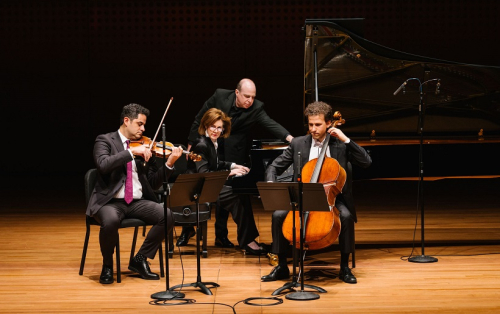
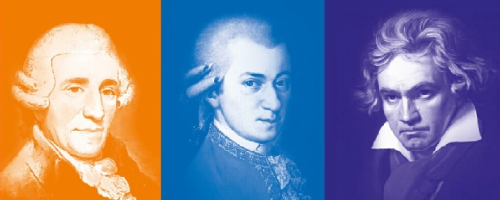
    Sunday February 26th, 2025 – A packed house at Alice Tully Hall for this evening’s concert of works by Haydn, Mozart, and Beethoven presented by Chamber Music Society of Lincoln Center. For me, it was a revelatory experience since I was hearing – for the first time – the Viano Quartet. Founded in 2015, the group soared to prominence after winning first prize at the 2019 Banff International String Quartet Competition.

    Viano jpg 2

    Above, the artists of the Viano Quartet: Tate Zawadiuk, Aiden Kane, Lucy Wang, and Hao Zhou. They opened this evening’s program with Haydn’s Quartet in F-major. Op. 77, No. 2, which dates from 1799. This was the last quartet the composer wrote.

    The opening Allegro moderato has a gracious start; this is music that’s full of charm. It speeds up, with delightful swift passages alternating with more lyrical ones. Each voice of the Viano Quartet has its say, and each is distinctive; but the magic is in the way they are blended. An excursion into minor mode brings new emotional responses before resuming the opening mood; the movement finds a brisk finish.

    The Menuetto, placed second, has a swift, witty start. Mood swings between major and minor are gorgeously negotiated by the players, whilst ironic pauses and cunning rhythmic figurations are added delights. An interlude, filled with sweet harmonies, leads on – with more clever hesitations – to a sudden finish: all so deftly played..

    The Andante opens with violinist Hao Zhou and cellist Tate Zawadiuk engaged in a courtly duo; they are such wonderfully attentive and expressive artists, as pleasing to watch as to hear. The other voices join, with Mr. Zhou and Ms. Wang offering harmonized violin passages. The playing from all is detailed, but never fussy. Hao Zhou plays a decorative theme over a melodious blend from Mlles. Wang and Kane (the quartet’s excellent violist) and Mr. Zawadiuk; the latter then takes up the melody, sounding supremely lovely. Zhou then plays an exquisite ‘accompanied’ cadenza, bringing the Andante to a serene finish.

    An emphatic chord kicks off the scampering Vivace assai; Zhou’s virtuosity here is so impressive, inspiring vivid animation from his colleagues. A whimsical section – like a rhythmic game – leads on to the uninhibited finale of what was destined to be Haydn’s last completed quartet. Simply terrific music-making from the Viano players, who were called back for a second bow; in the 25-minute span of the Haydn, they had soared into my upper echelon of favorite quartets.

    Maintaining their high standards, the Viano Quartet then offered magnificent Mozart: the Quintet in E-flat major, K. 614, was the Master’s final chamber work, composed in April 1791, the year of his death.

    Joining the quartet, one of the Society’s best-loved artists, Arnaud Sussmann, brought his viola into the scheme of things; for the program’s concluding Beethoven, he would return in his more customary role as violinist.

    Mozart commences his quintet with an Allegro di molto, launched by the two violas; Mr. Sussmann and Ms. Kane immediately formed a most congenial duo, communicating artfully, and harmonizing to perfection. As this indescribably delicious movement continued, Hao Zhou displayed his silken tone and impeccable technique to striking effect.

    The Andante has a prim and proper start; a theme with four variations ensues. Mr. Zawadiuk’s cello playing is particularly fine here, his tone the basis for alluring harmonies; Ms. Kane’s  likewise has a special glow. The music’s enticing little pauses tempt the imagination.

    The Menuetto breezes along, with repetitive descending phrases lending a playful air. A waltz-like passage ensues, with Mssrs. Sussmann and Zawadiuk setting the pace and communicating amiably.

    Mozart’s finale feels like an hommage to Haydn. It has a sprightly start, and offers some perfect opportunities to savour Hao Zhou’s sweet and subtle tone. With playful pauses along the way, this Allegro leaves us pondering – as so often – what wonders Mozart might have wrought had he lived as long as Haydn did.

    Following the interval, Mr. Sussmann joined cellist Paul Watkins and pianist Gilles Vonsattel for a perfect rendering of Beethoven next-to-last trio: his Opus 70, No, 2. The piece has a poignant start, with cello, violin, and piano introduced in turn. The timbres of the Sussmann violin and the Watkins cello compliment one another ideally in a duetting flow and in phrases passed back and forth. Meanwhile, from the Steinway, Mr. Vonsattel’s shimmering sounds provide a luminous contrast to the blendings of the strings. The movement has a curious finish.

    With the second movement, an Allegretto, Beethoven seems to honor both Mozart and Haydn; it opens with a rather sentimental melody; then animated string passages waft over a tinkling piano accompaniment. Amusing as this was, it went on a bit longer than my interest span could sustain; yet the playing was pristine.

    Another Allegretto opens with Mr. Sussmann in a violin melody played over lulling piano motifs; the Watkins cello joins the blend as sheer beauty prevails. The music gets quite quiet.

    The finale gets off to a fun start with all three musicians on top form, Mr. Vonsattel especially impressive in the music Beethoven has given him; for here, after the strings have been slightly dominant in the first three movements, the piano part offers us stunning passages in which to savour the virtuosity and grandeur of the Vonsattel artistry.

    As sometimes happens to me, even in the music of the greatest masters, a sense of detours and culs-de-sacs began to creep in. An ending seems to loom, only to recede as the music soldiers on.

    But it was all so wonderfully played, as – in fact – was the entire program.

    ~ Oberon

  • The Beethoven Quartets @ CMS

    Cms

    Above: the Calidore String Quartet at Alice Tully Hall; photo by Da Ping Luo

    ~ Author: Ben Weaver

    October 22nd & 27th, 2024 – Throughout the 2024-25 season, the Chamber Music Society of Lincoln Center is hosting a traversal of the complete Beethoven String Quartets at Alice Tully Hall, performed by a single ensemble: New York-based Calidore String Quartet. The ensemble is Jeffrey Meyers and Ryan Meehan on violins, Jeremy Berry on the viola, and Estelle Choi on the cello. The first two evenings of the cycle – October 22nd and 27th – included three quartets on each night.

    The 27-year-old Ludwig van Beethoven was commissioned to compose six String Quartets, alongside his former teacher Franz Joseph Haydn, who was considered the father of the string quartet. Haydn was ultimately only able to finish 2 of the 6 quartets he was supposed to compose, but Beethoven dove head-first into his first string quartets which became his Op. 18. By the time Beethoven reached the end of his life, he composed 16 string quartets, which have become the Mount Everest of the genre, arguably only equaled by Dmitri Shostakovich’s 15 String Quartets composed more than a century later.

    Commonly the Op. 18 String Quartets are called the Early String Quartets. Even though Beethoven was already exploring his more explosive and adventurous musical nature in other musical genres, most notably his piano sonatas, with these first forays into the string quartet, he harkened back to his predecessor masters of the genre, Haydn and Mozart. The Calidore Quartet are performing the works in the order they were composed, not numbered in the published score. The sequence is Nos. 3, 1, 2, 5, 4 and 6.

    By and large, these early six quartets are light in nature, with the first violin dominating the procedures. Happily, first violin Jeffrey Myers is an exceptional musician, the sweet sound of his instrument effortlessly filling the concert hall. Quartet No. 3 in D major opens with a charming melody, lovingly shaped by the Calidores, the lush and warm sound of their ensemble emphasizing the Classical and early Romantic nature of the works. (By contrast, for example, when the Danish String Quartet performed a full cycle of the Quartets at CMS in 2020, they leaned into their more modern sound, closer to Beethoven’s last quartets.) 

    Quartet No. 1 in F major also opens with a graceful, contagious melody – an obvious common thread running through all six of these works. Here, but especially in the second movement, cellist Estelle Choi, gets several key moments to stand out with a dark, glowing sound. There’s a depth to this movement that foreshadows Beethoven’s Romantic nature, one he would unleash in later compositions. He said this sorrowful movement was inspired by the ending of Shakespeare’s “Romeo and Juliet.” 

    The Calidores took most of the faster movements at a wonderfully quick pace: delirious, never chaotic. The beautiful coordination between the four partners kept them in perfect sync. This was most evident in the Quartet No. 2 in G major, the most humorous and closest in spirit to Haydn from the bunch.

    Quartet No. 5 in A major is thoughtful in its first two movements, with unexpected dramatic outbursts that bring surprising drama. Violist Jeremy Berry’s lovely solos shine in the second movement, as jagged stabs from the violins interrupt him. Second violin Ryan Meehan’s slightly sharper tone (not pitch) being a great contrast to Meyers’ sweeter sound. The third movement is a set of variations, the last of which is a tune that you can’t help but tap your toes to.

    Quartets No. 4 in C minor and No. 6 in B-flat major come closest to the Beethoven who would redefine Romanticism. Both of full drama and unexpected turns. No. 4 omits a traditional slow movement altogether, instead containing a Scherzo and Minuet in the middle. The Calidores darkened their sound for the dramatic outbursts, but kept their sense of humor for the quartet’s surprising and unexpected pizzicato close. 

    Quartet No. 6 in B-flat major, which closes this series of the Early Quartets, gives greater voice to the second violin and cello, with Meehan and Choi balancing Beethoven’s growing darkness, while the first violin soars above them. The final movement is an extraordinary piece by itself, with an extended grave “introduction” Beethoven titled “La Malinconia” (Melancholy.) It’s movement that lets us look into the future of Beethoven’s progress. The Calidores’ performance brought the full house to its feet.It should be noted that, especially on the 27th, the audience was remarkably quiet, hypnotized by these wonderful performances that made us all eagerly await the continuation of the cycle.

    The Calidore String Quartet will perform the Middle Quartets at Alice Tully Hall on January 28 and February 4, 2025. The Late Quartets, including the somewhat demented Große Fugue, will be performed on May 9 and 18, 2025. I recommend that anyone who missed these performances make sure to not miss rest of what is already an excellent cycle. 

    ~ Ben Weaver

  • Chamber Music Society ~ Summer Finale 2024

    Alice-Tully-Hall-at-The-Juliard-School-Photo-14

    ~ Author: Oberon

    Saturday July 27th, 2024 – The final offering of Chamber Music Society of Lincoln Center’s 2024 Summer Evenings series took place tonight at Alice Tully Hall. After a long lunch with friends, where some very serious topics were discussed, I was in a pensive mood when we arrived at the hall. The light, decorative music of Ludwig van Beethoven’s Serenade in D-major for Flute, Violin, and Viola, Op. 25, written in 1801, was not a good match for me today, feeling a need for something darker and more soulful.

    Nevertheless, the playing was charming and, as the piece progressed, there was much to admire. It kicks off with a reveille, only it’s Tara Helen O’Connor’s flute that’s sending out a wake-up call rather than a bugle. Ms. O’Connor’s playing was at its most limpid throughout the suite. ln the songlike second movement, a minuet, her playing was elegant, whilst violinist Aaron Boyd and violist James Thompson provided echo effects. The Allegro molto  shifts between major and minor modes.

    Sweet harmonies fill the Andante, with its contrasting animated interlude, following by a scurrying Allegro scherzando. The final movement begins as an Adagio but soon transforms into an Allegro vivace, with lively playing from the three artists.

    Franz Schubert’s Rondo in A-major for Violin and String Quartet, D. 438, dating from 1816, did not provide a contrast to the pleasantness of the Beethoven, though again it was beautifully played by soloist Sean Lee and a quartet made up of Cho-Liang Lin, Aaron Boyd, James Thompson, and Nicholas Canellakis.

    Sean Lee’s playing was spot-on, with touches of rubato, and the ensemble cushioned his playing perfectly, grounded by Nick Canellakis’s ever-velvety tone.

    Following the interval, Heinrich Wilhelm Ernst‘s demanding Grand Caprice on Schubert’s “Erlkönig” for Violin, Op. 26, was given a spirited rendering by Sean Lee, though perfect clarity was sometimes missing.

    The concert ended with Wolfgang Amadeus Mozart’s Quintet in C- major for Two Violins, Two Violas, and Cello, K. 515, dating from 1787; it was here that I found my center with music more weighted and suitable to my mood. Cho-Liang Lin’s silvery, shining tone was exquisite, his phrasing thoughtful and so polished. Nick Canellakis savoured every phrase of the cello part, as the opening Allegro progressed with a rich blend of voices in the melodic flow, over a rhythmic pulse.

    In the Minuetto, Mssrs. Thompson and Boyd engaged in a friendly duel with their violas, and the music at times had a curiously brooding feeling. The cello patterns bring a restless feeling into play, enhanced by the heartfelt Canellakis timbre.

    The Andante is classic Mozart: achingly lovely, with James Thompson’s viola prominent and Mr. Lin spinning out a sweet theme, and  – later – a mini-cadenza. This music is so engaging. The final Allegro, with Mr. Lin’s playing in high relief, brought the evening to a spirited ending, thanks to the enduring grace of Mozart.

    So ended an unusual experience for me, wherein I strove to adjust my own state of mind to the program on offer; this had only happened to me a few times over the years – and mainly at the opera – where you have a ticket for ELISIR D’AMORE but are really in the mood for WOZZECK…or vice versa.

    ~ Oberon

  • String Resonance @ Chamber Music Society

    Bella 2

    Above: Bella Hristova

    ~ Author: Oberon

    Sunday April 21st, 2024 – A quintet of exceptional string players gathered this evening at Alice Tully Hall where Chamber Music Society of Lincoln Center was presenting works by Beethoven, Françaix, Bridge, and Mendelssohn.

    Beethoven’s Trio in E-flat major, Op 3, was superbly played by Bella Hristova (violin), Timothy Ridout (viola), and Sihao He (cello). In this early work, the composer gives us six movements instead of the usual four. Each movement seemed a bit drawn out, and – beautiful as the music is – various motifs recur until their originality wears thin.

    String

    Above: Bella Hristova, Sinhao He, and Timothy Ridout at the end of the Beethoven

    The opening Allegro con brio has a witty start; along the way, pauses will charmingly crop up. The violin part is quite florid, and Ms. Hristova played it vividly, The music veers from agitated to lyrical until – In a mood swing –  Mr. He’s cello suddenly digs in dramatically. The music fades, then rebounds with some lively bowing from all. After another lull, we move on to a brisk finale.

    The Andante has gentle start, with violin trills set over a graceful dance rhythm. Lovely subtleties emerge from the ideal blend of the three voices, and how lovely to observe the communication between the musicians. The movement ends with a brief plucked motif.

    The opening bars of the first Minuet have a hesitant quality; then a sense of irony develops. Sweet melodies entwine, laced with touches of humor. Mr. Ridout’s velvety viola opens the Adagio in a gently swaying mode. Mr. Hristova brings perfect clarity to a solo violin passage, then joins in the swaying feeling  as viola and cello take up the melodic line. The roles of melodist and accompanist shift graciously. A cadenza from Ms. Hristova is heard. Violin and viola echo one another, then the viola and cello commune. Near the end, a strange droning sound emerges.

    The second Minuet, marked Moderato, is light and lively at first, then the sound grow denser. A high, fanciful violin passage again shows off the Hristova magic. The Finale/Allegro begins with bright, virtuosic passages before sailing thru a variety of moods and rhythms. After some false endings, the final cadence is reached.

    String 2

    Above: Chad Hoopes, Sinhao He, and Matt Lipman playing the Françaix

    Nothing could have provided a more vibrant contrast to the Beethoven than Jean Françaix’s Trio for violin, viola, and cello, which was composed in 1933. Chad Hoopes (violin), Matthew Lipman (viola) and Mr. He (cello) took the stage for this delightful fifteen-minute piece which is alive with contrasts and gleaming tone colours. The opening Allegretto vivo is sprightly, with a jazzy feel; the Scherzo is a fast, waltzy dance.

    In the Andante, the individual timbres of the three players can be delightfully savored. Mr. Hoopes opens the movement with a sweet/sad violin theme; then Mr. He’s cello sets a slow rhythm before taking up the melody with his deep-violet sound. The theme then passes to Mr. Lipman’s distinctive viola. The zestful final Rondo is rapid and rhythmical, with the violin sailing to airy heights before the mood turns whimsical with the viola interjecting some cunning trills. Then, out of the blue, the music turns into a march. The three musicians seemed to be having so much fun with this refreshing piece.

    String 3

    Above: violists Timothy Ridout and Matthew Lipman after the Bridge

    Following the interval, I experienced Frank Bridge’s Lament for two violas for the first time. Composed in 1912, this eight-minute work is a real treasure for folks like me who love the viola sound. The two dapper young players, Timothy Ridout and Matthew Lipman, immediately drew us into the mood of the music. Mr. Lipman starts with a sorrowful theme, richly intoned. Mr. Ridout joins, playing poignantly in a higher range. In passages of close harmony, the music gets more passionate. A dialogue emerges: Matt in a lyrical mode as Tim plucks a rhythm: then they switch roles. In a passage of double-stops, we sense the aural illusion of a quartet. They two then play in unison, and Tim then sustains a long tone over Matt’s gentle plucking beat. The final chord fades. There was a big audience reaction to this rarely-heard work, and the players were enthusiastically applauded.

    Mendelssohn

    At last we come to Mendelssohn (above), who composed his Quintet #2, Op. 87, in 1845. The composer’s Piano Trio #1 is the piece that turned me on to chamber music…and his MIDSUMMER NIGHT’S DREAM is the perfect ballet score.

    In this evening’s Quintet performance, Mr. Hoopes was 1st violin, and Ms. Hristova 2nd, while Mr. Lipman was 1st viola and Mr. Ridout 2nd; anchoring the work with his opulent cello tones was Mr. He. The lively start of the Allegro vivace heralded a thrilling performance, the rich blend these players achieved had the effect of an orchestra playing. Tremolos spring up, adding to the vivacious atmosphere. A big theme sounds, Mr. Hoopes’ violin shines in high-lying passages…it’s all very grand. Suddenly things soften, only to surge up again to a glorious finish.

    The Andante scherzando has a sly start, later developing into a courtly waltz with cello pizzicati setting the pace. Minor-key harmonies emerge, and Mr. Ridout plays descending tremolos, opening an exchange of melodies between Mr. Lipman and Mr. Hoopes. The movement flows on to a wispy conclusion.

    A somber – almost tragic – atmosphere pervades the Adagio e lento, with achingly beautiful harmonies evolving over the tones of the cello rising step by step. A proud rhythm is taken up, almost like a noble Spanish dance, and the music grows more lyrical, with a reassuring violin solo. The doleful atmosphere returns, with Mr. Hoopes, and then Mr. Lipman, taking the melodic lead. Mr. Hoopes has a cadenza, and then shines in a high passage over shimmering tremolos. Passion rises to a sense of grandeur, with the violin soaring over all. The music calms to a wisftul end. 

    The final Allegro molto vivace is a bustling affair, with each player having a chance to shine. The violas, and then the violins, harmonize. After a lull, there is a final dash, further lifting the audience’s spirits and igniting a standing ovation wherein the players were recalled for a second bow while shouts of bravo! rang thru the hall.

    (Performance photos from the Chamber Music Society’s Facebook page)

    ~ Oberon

  • An Evening with David Finckel and Wu Han

    Wu han - finckel

    ~ Author: Oberon

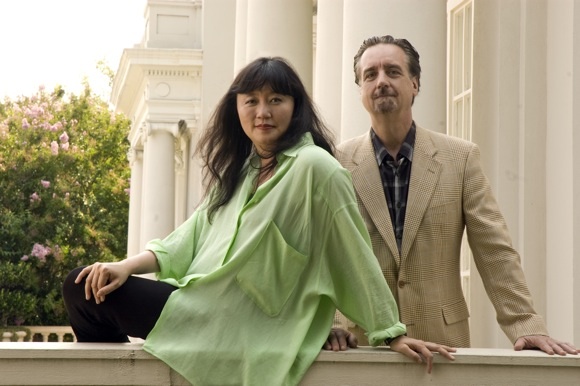
    Sunday January 28th, 2024 – Pianist Wu Han and her husband, cellist David Finckel (photo above), are the co-Artistic Directors of Chamber Music Society of Lincoln Center. This evening at Alice Tully Hall, they shared the stage to present a well-devised program of works by Debussy, Bruce Adolphe, Shostakovich, and Dvořák.

    Claude Debussy’s Sonata for Cello and Piano, composed in 1915, was initially subtitled “Pierrot is angry at the moon“. It is a charming piece in three brief movements. The opening Prologue calls for very subtle piano playing, which Wu Han is always so good at. Skittering music is heard, followed by an awakening of tenderness. The music then goes deep. Plucking cello and staccato notes from the piano decorate the Serenade, which has a jazzy feel. For the Final, swirls of notes from the keyboard and appealing melodic fragments carry the players to a fast finish.

    In 1998, Bruce Adolphe wrote Couple for Cello and Piano for Wu Han and David Finckel. The four movements suggest different aspects of an evolving relationship: the first begins dreamily, then accelerates before fading away. A warm, nostalgic feeling arises in the second movement, with the cello digging in. The slow third movement has a sentimental air, and the final section is animated and light-hearted. The composer joined the artists for a bow at the end.

    Dmitri Shostakovich’s Sonata in D-minor for Cello and Piano, Op. 40 dates from 1934. A beautiful feeling of restlessness runs thru the opening Allegro moderato; the piano glitters on high, and a lovely cello theme is heard. Plucked notes and staccati spring up, and then the music slows. The following Allegro is a kind of scherzo: a swirling dance with music that slips and slides into an insistent rhythm. The songful Largo commences with a wistful cello theme that sinks to the depths; the piano sounds a steady heartbeat. The music turns dreamy, with the piano evoking feelings of peace. The cello carries us into the minor mode, seeking a quiet ending. At last we reach the final Allegro: a big, folksy dance, full of animation. There is a grand piano ‘cadenza’ which develops a sense of irony. The sprightly cello joins, and all seems well with the world. Wu Han and David Finckel basked in a sustained standing ovation, called back for a second bow as the packed hall resounded with shouts of approval.

    In 1889, Antonín Dvořák wrote his Quartet in E-flat major for Piano, Violin, Viola, and Cello, Op. 87. For this finale to the evening’s program, pianist and cellist were joined by Richard Lin (violin) and Timothy Ridout (viola). These two young gentlemen looked very dapper, and they played superbly.

    The opening Allegro con fuoco has an urgent start. The piano takes over, leading to an anxious passage before a joyous melody arrives. We hear colorful playing from the violin and viola as they exchange phrases or harmonize, The Finckel cello adds depth to the textures. Mr Lin’s violin sings on high, and Wu Han offers luminous piano phrases. A buzzy tremelo exchange between violin and viola is a delightful touch. Brilliant playing from all!

    With a simply gorgeous cello motif, David Finckel opens the Lento, and there is magical duetting here from Mssrs. Lin and Ridout. The music turns passionate…and then charming. Achingly beautiful harmonies tug at our souls; Mr. Finckel then resumes his poignant melody, amiably supported by pizzicati from the violin and viola. There is a marvelous sheen to the sound as a progression of modulations leads us onward and Wu Han’s hypnotic playing casts a heavenly spell.

    Now comes the waltz-like opening of the Allegro moderato, grazioso with its gypsy tinge. This movement contains and endless supply of marvels, including sizzling tremelos and rhythmic tapping of the strings. Melodious, dancing phrases carry us onward.

    The gypsy spirit prevails into the final Allegro ma non troppo: a veritable celebration of Czech folk dance. Mssrs. Lin and Ridout were simply incredible here, for their beauty of tone and of expression. Together with Wu Han and David Finckel, they made this Dvořák masterpiece an exuberant statement about the power of music to inspire and reassure us in dark times. Tonight, these four artists gave us one of the outstanding musical experiences of recent seasons, reaffirming yet again the invaluable role Chamber Music Society of Lincoln Center plays in the life of the City.

    ~ Oberon

  • More Schubert @ Chamber Music Society

    Ben beilman

    Above: violinist Benjamin Beilman

    Sunday January 29th, 2023 – Continuing their Schubert-centric Winter Festival, Chamber Music Society of Lincoln Center today offered a full evening of the master’s works, performed by an elite sextet of artists.

    Schubert’s Adagio and Rondo concertante in F-major for Piano, Violin, Viola, and Cello, was composed in 1816. It is essentially a miniature piano concerto. At the Steinway, Gloria Chien was joined by Benjamin Beilman (violin), Paul Neubauer (viola), and David Requiro (cello).

    Extraordinary richness of tone as the players struck up the introductory phrases; Mr. Beilman then set forth with a dreamy melody. Ms. Chein’s crystal-clear technique offered a counter-song to the dense string harmonies as the music turned dramatic and then sprightly. Things get quite merry, with dancing rhythms propelled by vivid bowing. The music turns delicate before accelerating to a lively finish.

    For the composer’s Allegro in A -minor (“Lebensstürme”), dating from 1828, the pianists were Wu Han, taking the lower octaves, and Alessio Bax, taking the upper. From its dramatic start, the music has a restless quality. Passages of extroverted energy mingle with wonderfully subtle moments: huge crashing chords give way to a haunting misterioso passage, and sharp attacks are becalmed by a poignant, pensive theme. Suddenly, silence falls. And then the pianists play on to a swift finish. 

    Ben Beilman, looking very dapper in his velvet jacket, and pianist Gloria Chien then blew the roof off Alice Tully Hall with their sensational playing of the long and demanding Fantasy in C-major for Violin and Piano, composed in 1827. To Ms. Chein’s lovely, rippling piano modulations, Mr. Beilmen embarked on an achingly gorgeous violin theme, his playing so hushed and tender as he spun out magically pure sustained tones at super-pianissimo. The audience seemed to hold its collective breath, overcome by the sheer beauty of the playing.  

    Now a charming allegro springs up. The music – lilting, light, and dazzling – calls for festoons of fiorature from both players. After a dramatic outburst, with searing violin phrases, a piano cadenza restores peace. Then, in a moment of total silence, a cellphone sounded; I momentarily thought Mr. Beilman was going to stop playing, but instead he countered the intrusion with playing of ineffable sweetness.

    The music turns dancelike, with the violinist alternating edgy plucking with sweeping upward phrases. Virtuoso playing from both artists leads to an interlude, and to a gossamer violin cadenza. Then we return to the beginning: to the enchantment of the work’s first measures. Now commences an onward flight towards the finish, with Mr. Beilman’s incredible tremelos on succeeding notes taking on the air of a demented fiddler. As their astounding performance reached its end, the crowd’s pent up excitement burst forth in a tidal wave of applause and cheers; Ms. Chein and Mr. Beilman faced a full-house standing ovation as a great feeling of joy filled the hall.

    CMS_100721_Gloria_Chien

    Above: pianist Gloria Chien

    Following the interval, Wu Han strode onto the stage in her ruby-red shoes to tell us about some of the programs CMS will be offering in their 2023-2024; we picked up brochures in the lobby after the concert, and immediately marked off several dates to put on our calendars.

    The evening’s concluding work, also composed in 1827, was the Trio No.1 in B-flat major for Piano, Violin, and Cello. For this, Mr. Bax joined Mssrs. Beilman and Requiro.

    The trio’s movement, marked Allegro Moderato, begins in a celebratory mood. It’s lovely to welcome Mr. Requiro back to Alice Tully Hall: he is a cellist of noble tone, capable of great subtlety; here, he takes up a serene melody, to be joined soon after by Mr. Beilman. As the movement flows on, the two string players are heard in unison or with their timbres entwining. Mr. Bax’s playing is so fluent, and with a keen sense of timing.

    In the ensuing Andante un poco mosso, Mr. Bax leads off with a lullabye-like theme; the cello then commences a familiar melody, which is later passed on to the violin and piano. Mr Beilman’s flawless dynamic control is again something to relish, whilst the sound of Mr. Requiro’s cello tore at my heart. Counter-melodies and elegant tonal blends illuminate the music, which has a heavenly conclusion.

    The light and lively Scherzo Allegro draws on dance rhythms. It comes to a full stop, then rebounds, with fresh themes being passed from player to player. The concluding Rondo, with its sprightly start, is full of witty dotted motifs, arpeggios, and trills. The music dances on to a merry finish, leaving the players to savor the audience’s grateful applause and shouts of bravo!

    ~ Oberon

  • CMS Winter Festival: All-Schubert Evening

    Gilbert-kalish-header

    Tuesday January 24th, 2023 – This year, Chamber Music Society of Lincoln Center‘s annual Winter Festival is centered on the works of Franz Schubert. Tonight’s program featured the eminent pianist Gilbert Kalish and my beloved Escher String Quartet in three masterworks from the composer’s brilliant – but all too brief – career.

    The single-movement Quartettsatz in C-minor for Strings, D. 703, was composed in 1820. It seems to have been intended to be the first movement of a full quartet, but the composer never composed additional movements.

    From its scurrying start, the Escher Quartet’s performance of the Quartettsatz was a complete delight; their rhythmic attentiveness and tonal appeal were amply on display, their playing full of both vitality and nuance. The silken sheen of Adam Barnett-Hart’s violin made its distinctive mark in solo passages, the music flowing onward to a sudden tempest. This is soon calmed, but Brook Speltz’s restless cello figurations keep things lively. There is a da capo, a sort of coda, which draws on to a full-toned chordal passage; here, the classic Escher blend could be deeply savoured.

    Gilbert Kalish then took the stage for Schubert’s Sonata in B-flat major for Piano, D. 960, composed in 1828. This long and demanding work begins with an Allegro Moderato. Mr. Kalish delivers the theme with a sense of serenity; then a low trill sounds, seeming rather ominous – a trill which later brings music of great tenderness. As things become more intense, so does the playing: modulations are beautifully handled by the pianist. The low trill returns before a final recapitulation.

    Mr. Kalish brought forth the austere calm – and the poignant colours – of the ensuing Andante sostenuto; the music’s steady rhythmic pulse puts us in a trance. The movement’s ending feels like a benediction.

    In a striking volte face, the pianist takes up the boundless animation of the Scherzo. The music breezes along, pausing only for a courtly interlude. The sonata’s concluding Allegro ma non troppo is filled with an uplifting sense of buoyancy and good humor. Passing shadowy clouds momentarily blot out the sun, but by the end, all is bright and fair.

    Mr. Kalish was hugely applauded by the packed house at Alice Tully Hall. If Wikipedia is correct, the pianist is 88 years young…simply remarkable! 

    Escher qt

    Above, the players of the Escher String Quartet: Adam Barnett-Hart, violin; Brendan Speltz, violin; Brook Speltz, cello; and Pierre Lapointe, viola.

    The gentlemen of the Escher Quartet returned after the interval for the G-major quartet, Opus 161, dating from 1826. From the work’s striking beginning, this music – which I first heard ions ago in the Woody Allen film CRIMES AND MISDEMEANORS – always casts a deep spell over me. Incredibly rich and vividly detailed, the opening movement features tremelo effects – introduced  by the Escher’s stellar violist Pierre Lapointe – and achingly beautiful, ethereal themes for Mr. Bernett-Hart’s violin. The music becomes triumphant, reaching a passionate end.

    As the sonata moves on, cellist Brook Speltz’s role takes on increasing prominence. In the Andante, his sublime cello melody sets the tone, with his colleagues providing gorgeous harmonies. The music becomes intensely poignant, and Mr. Speltz’s playing has me thoroughly engrossed…hypnotized, really.

    But suddenly the music stopped; at first, I thought someone had broken a string, but apparently it was a tuning issue; corrections were made, and, after a few moments, the players resumed. It took a while to re-establish the mood; the music becomes hushed, with 2nd violinist Brendan Speltz and Mr. Lapointe sharing a duet passage. Then tremelos again are heard, and the music draws us on to an elegant finish.

    Things had been set to rights following the interruption, and the final Allegro assai should have been the frosting on this delicious cake: a deftly Mendelssohnian affair wherein the cellist has more opportunities to enchant us…which he did. But, a jingling cellphone began to sound. The musicians played on, the music so reminiscent of Mendelssohn’s Italian Symphony. The phone ceased for a bit, then rang again. Could the timing have been any worse?

    The players persevered, and the audience hailed them with a boisterous standing ovation at the end. While the intense connection to the music I was experiencing prior to the unexpected lull was never re-established, it was still a wonderful evening.

    ~ Oberon

  • CMS Brandenburgs ~ 2022

    Bach

    Tuesday December 20th, 2022 – Chamber Music Society of Lincoln Center‘s annual presentation of Bach’s Brandenburg Concertos is always a highlight of the New York concert season, and this year these immortal works maintained their ‘masterpiece’ status as the Society rounded up a spectacularly talented team of players. As is the CMS custom, the concertos are presented in a different order each year, and the program is given three times in order to accommodate all the music lovers who are craving a holiday alternative to the Messiah and the Nutcracker.

    This evening, a packed house enthusiastically responded to music-making of the highest level. As a special treat, the gentlemen of the Escher Quartet joined the lineup; I love these guys, both as musicians and as personalities. 

    The program opened with the 5th Brandenburg, which belongs to the harpsichordist. Shai Wosner played the long cadenza with striking clarity and elegance. Violinist Daniel Phillips and cellist Sihao He then joined Mr. Wosner for a gorgeous  rendering of the Affetuoso, Clad in a royal purple gown, flautist Sooyun Kim dazzled with her luminous tone and deft technique. The complimentary string trio of violinist Aaron Boyd, violist Paul Neubauer, and bassist Lizzie Burns were excellent. Ms. Burns and Mr, Wosner went on to be pillars of musical perfection as the evening flowed onward.

    Next up was the 2nd Brandenburg, with trumpet virtuoso Brandon Ridenour sailing superbly thru the music. Mssrs. He and Wosner were joined by violinist Brendan Speltz, flautist Demarre McGill, and oboist James Austin Smith in weaving a lovely tapestry of sound in the Andante. Adam Barnett-Hart, Aaron Boyd, and Pierre Lapointe formed an admirable string trio, and it is always wonderful to hear Peter Kolkay offering his mellow bassoon tone to the music. In the concluding Presto, Mr. Ridenour and Mr. Smith vied with one another as they traded phrases, much to our delight.

    In the 4th concerto (in G-major), violinist Adam Barnett-Hart was very much in his element, alternating sustained tones of gentle lustre and with passages of high-speed coloratura. Duetting flautists Demarre McGill and Sooyun Kim dazzled the ear with the swift surety of their playing in the outer movements, and tugged at the heartstrings with the poignant harmonies of the central Andante. Ms. Burns and cellist Brook Speltz brought just the right weightiness of sound to counter-balance the high voices of the flutes and violin. In the final Presto, Mr. Barnett-Hart displayed incredible virtuosity.

    Following the interval, the 1st concerto, brought forth two horn players, Michelle Reed Baker and Julia Pilant, festively gowned (respectively) in red and green. They sounded as fine as the looked, and their duetting harmonies drew plushy responses from a trio of oboists: Stephen Taylor, James Austin Smith, and Randall Ellis. Mr. Kolkay’s dulcet bassoon playing has a prominent role here. The horns are silent during the poignant Adagio, where Aaron Boyd and the oboe trio spun pleasing harmonies over velvety unison phrases from Mihai Marica’s cello and Ms. Burns’ bass. The high horns swing into the jaunty Allegro, after which a wave of applause greeted the players. But there’s still a fourth movement – a mix of minuet and polonaise – in which separate choirs of winds and strings alternated, keeping the musical textures fresh til the end.

    The 6th concerto features pulsing cello and bass figurations, and duetting violas (Mssrs. Neubauer and Phillips). Mr. Neubauer and cellist Sihao He (graciously accompanied by Ms. Burns’ bass) drew us in to the moving tenderness of the Adagio, Mr. He concluding with a brief cadenza. Then without pause, the sneaky start of the closing Allegro begins to sweep us along. Mr. He dazzled us with his swift, fluent playing, whilst the two violists had a field day with the fast-paced music. This Allegro induced fervent applause from the crowd.

    The evening’s finale, the 3rd concerto, is a particular favorite of mine; it calls for three violins (Mssrs, Boyd, Brendan Speltz, and Barnett-Hart), three violas (Mssrs. Lapointe, Phillips, and Neubauer) and three cellos (Mssrs. Marica, He, and Brook Speltz), whilst the dedicated Wosner/Burns duo kept everything merry and bright. This concerto is unusual in that its “phantom” Adagio movement consists only of a brief passage from Mr. Wosner’s keyboard. Bach immediately sends the players back into a swirling Allegro. The evening’s performance drew to an end, the audience rising to hail the players with great – and much-deserved – enthusiasm. A second bow was called for, and then we headed out into the chilly night air, our spirits fortified by glorious music of Bach.

    ~ Oberon