Tag: Chamber Music Society

  • Romantic Perspectives @ Chamber Music Society

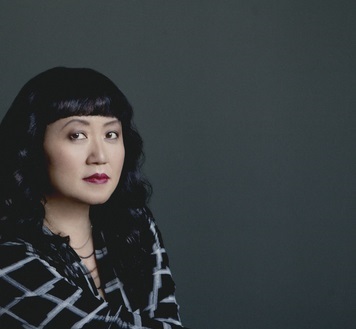
    Wu Han

    Above: pianist Wu Han

    Sunday January 39th, 2022 – This evening’s program at Chamber Music Society of Lincoln Center, entitled Romantic Perspectives, was truly a soul-warming experience, following a week of cold weather and a gusty snowstorm the previous day.

    The program got off to an exciting start with a performance of the Scherzo from Johannes Brahms’s “F-A-E” Sonata for Violin and Piano, dating from 1853. With Wu Han at the piano, violinist Chad Hoopes brought real flair to his playing. From the buzzy opening, the two musicians were in perfect sync. This Scherzo has a lyrical interlude, wherein the players’ dynamics meshed ideally; then, back to a lively allegro. What an exhilarating way to start a concert!

    Next came a spectacular performance of Gustav Mahler’s sole work in the chamber music genre: the Quartet in A-minor for Piano, Violin, Viola, and Cello, composed in 1876. Violinist Danbi Um, elegant in a ruffled ultramarine tulle gown, led her colleagues onstage. Before taking her place at the Steinway, Wu Han stepped forward to introduce us to two young musicians making their CMS debuts this evening: violist Timothy Ridout, and cellist Sihao He

    No pianist can establish a musical mood quite like like Wu Han does; with the deep, brooding opening measures of the Mahler, she immediately drew us in. The fabulous sound Sihao He summons from his cello was soon blending with Mr. Ridout’s handsome viola tone and the silken magic of Ms. Um’s violin. As the single movement progressed, the four musicians took us deeper and deeper into the music, their playing resplendently full-bodied and thrillingly intense. Passions ebb and flow, and then a darkish calm settles over us. Ms. Um’s exquisite playing, and the extraordinarily poetic phrasing of Mssrs. Ridout and He, were all underscored by Wu Han’s captivating dynamic mastery. It seemed impossible to think that only four players could produce such an ‘orchestral’ sound; their performance moved me deeply.

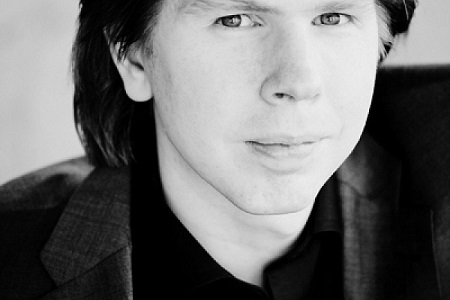
    Ridout

    Above: violist Timothy Ridout

    Composed in 1861, Antonín Dvořák‘s Quintet in A-minor for Two Violins, Two Violas, and Cello, Op.1, brought together the evening’s full string contingent: violinists Danbi Um and Chad Hoopes, violists Paul Neubauer and Timothy Ridout, and cellist Sihao He.

    Written when Dvořák was twenty years old, this quintet was the first of his works to be ascribed an opus number. In the opening Adagio — Allegro ma non troppo, the unison slow introduction gives way to a dancing, animated feeling. The tone qualities of the five musicians were perfectly integrated, with Mr. Hoopes excelling in the numerous melodic flights for violin, nimbly seconded by Ms. Um; and Sihao He amplified the beautiful impression he had made in the Mahler. This movement has an unusual ending.

    The ensuing Lento brings forth cantabile melodies; the main theme is taken up by Mr. Ridout’s viola (Dvořák’s own instrument) playing over a rhythmical accompaniment provided by the other players. The middle section of the movement provides a fresh theme, after which we hear a reprise of the introductory melody. The composer gives both violists ample opportunity here, and the contrasting timbres of Mssrs. Neubauer and Ridout were savourable indeed. The violins play in unison, then Mr. Hoopes again moved me with a high-lying passage. A swaying mood develops, and a rising violin motif leads us to the movement’s finish

    The quartet’s Finale – Allegro con brio involves three primary themes. The marvelous sound of Sihao He’s cello was continually alluring to the ear, and Mr. Ridout again shone in a songful passage. The superb blend these five artists achieved carried us on to the work’s ending, hailed by the crowd with warm applause.

    It is interesting to note that Dvořák seemingly never heard his opus 1; its first public performance came seventeen years after his death, and it was not published until 1943.

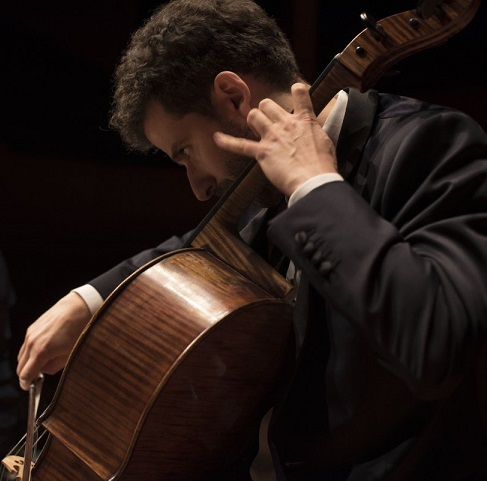
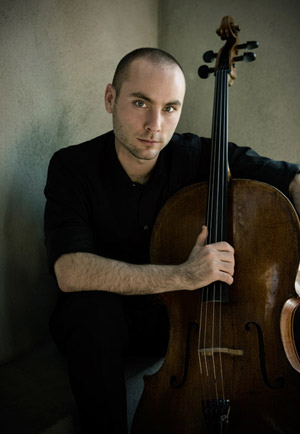
    Sihao he

    Above: cellist Sihao He

    Having recently enjoyed Maxim Vengerov’s stunning performance of César Franck‘s Violin Concerto at Carnegie Hall, I was definitely in the mood for more of Franck’s music. This evening’s CMS program ended with the composer’s Quintet in F-minor for Piano, Two Violins, Viola, and Cello, dating from 1879.

    With a descending phrase from Danbi Um, the passionate slow introduction to the first movement is underway. Wu Han’s gorgeous entry has a hesitant feeling, as if the composer is not quite sure where he wants to take us; a rather fitful acceleration finally achieves Allegro status. Now all five players begin to pass the melodies from one to another. Mr. Neubauer’s dusky viola, Wu Han’s magical piano, the lovely sense of longing from Danbi Um’s violin, the poignant sound of Sihao He’s cello…all combined as the music turns huge. In this movement, a melody of chromatic half-steps is heard, creating a musical tension which  our players today clearly relished.

    The second movement, marked Lento, con molto sentimento, begins with a haunting theme from Wu Han’s keyboard, and sublime lyricism from Danbi Um. The chromaticism which awoke in the opening movement becomes more pervasive now, with Ms. Um and Mr. He trading phrases. Wu Han’s playing is heavenly, and the cellist is simply stunning. The music builds in grandeur and then dissipates, becoming celestial. Mr. Neubauer’s lovely viola passage, ethereal sounds from the piano, and Danbi Um’s haunting violin draw the movement to a tender finish.

    Chad Hoopes opens the final movement with a bustling motif, joined by Ms. Um in an agitato mode. The strings play the work’s main melody in unison, with a vibrant crescendo. A brief, sweet song from Danbi Um leads to a big build-up of sound and emotion as the quintet sails onward to an epic finale.

    A full-house standing ovation greeted the players, who were called back for a second bow, much to everyone’s delight.

    ~ Oberon

  • Strings Only @ Chamber Music Society

    K lee

    Above: violinist Kristin Lee

    Tuesday January 18th, 2022 – Chamber Music Society of Lincoln Center brought together six virtuoso string players from their stellar roster for a program of music by Beethoven, Schulhoff, and Dvořák at Alice Tully Hall.

    Beethoven’s Quintet in C-minor for Two Violins, Two Violas, and Cello, Op. 104, started life as a piano trio composed in 1794–95; the composer arranged the work for string quintet in 1817.

    An almost waltzy feeling springs up for the opening of the Allegro con brio. The music spills forth with contrasting passages of animation and lyricism, which tonight’s five musicians graced with delicious harmonies and finely-judged dynamics. Violist Matthew Lipman’s playing (all evening) was of particular note.

    A gentle flow of melody opens the Andante cantabile. Ensuing variations include a sad interlude and some boisterous passages; Mr. Lipman and cellist Keith Robinson seize on their opportunities. The irresistible magic of Beethoven abounds here. The Menuetto has a courtly feeling, but fabulous flourishes from Kristin Lee’s violin add a spicy touch. Later, some charming echo effects are heard.

    Ms. Lee takes the lead in the quintet’s Finale: Prestissimo. Here I found myself deriving great joy from watching the five musicians reveling in the pleasure of playing such marvelous music. After all that has gone before, Beethoven pulls off a final magic trick: the quintet ends quietly.   

    Erwin-Schulhoff

    Above: composer Erwin Schulhoff

    The centerpiece if this evening’s program was Czech composer Erwin Schulhoff‘s Sextet for Two Violins, Two Violas, and Two Cellos, composed in the early 1920s. This evening was my first hearing of this work, and it was an engrossing, revelatory experience. My only other Schulhoff encounter was a powerful performance of the composer’s 5th symphony by the American Symphony orchestra in 2017.

    Schuhoff’s Sextet opens with an Allegro risoluto, the musicians digging in and then trudging along with numerous dramatic effects. The music calms, with wisps of melody woven in; our two violists (Mssrs. Lipman and Neubauer) have much to do here, with plucking and tremolo passages. The music has hauntingly somber harmonics and brusque accents.

    In the eerie Tranquillo: Andante which follows, the music is spine-tingling: unsettling yet beautiful. Mr. Neubauer and cellist Keith Robinson share an evocative exchange, and Kristin Lee spins a silky violin theme over a rocking motif. A solo from Mr. Robinson sustains the mood, and then a creepy, insectuous theme yields to a hushed atmosphere. The cello sings low, and then, with fantastic control, a final passage for viola and cello. “Wow!” I scrawled in my notes.  

    An agitato movement, marked Burlesca. Allegro molto con spirito brought forth fun, lively rhythms and some fiery playing from Matthew Lipman. The tempo speeds up for a propulsive unison passage at the finish.

    Inbal Segev’s deep, dolorous cello sound opens the concluding Molto adagio; the music has a dense, plaintive quality. Mr. Sussmann and Ms. Lee exchange lamenting themes; and while the violas sustain a tremolo effect, Mr. Robinson joins: his cello imitates the sound of a pendulum clock. An uneasy quietude settles over the hall as the music takes a long fade, and Mr. Robinson’s cello has a last utterance.
     
    This magnificent rendering of the Schulhoff will linger long in my memory.

    Arnaud-Sussmann-Photo-V-Photo-Credit-Carlin-Ma jpg

    Above: violinist Arnaud Sussmann, photographed by Carlin Ma

    To close the evening, Antonin Dvořák’s Sextet in A-major for Two Violins, Two Violas, and Two Cellos, Op. 48 (1878) was gorgeously played by our six artists.

    From the start, this sextet is a veritable font of melody. And the dance rhythms are indeed toe-tappingly appealing. But after a while, it all becomes so very pleasant, and I began to think back to the jarring fascination of the Schulhoff. As time goes by, I find that Dvořák’s music seldom draws a deep response from me.

    Despite such quibbles, I was so glad to stand up and cheer at the end of the concert, joining my fellow music-lovers in a heartfelt homage to these six great musicians. 

    ~ Oberon

  • CMS Brandenburgs ~ 2021

    Bach

    Sunday December 19th, 2021 – Chamber Music Society of Lincoln Center‘s annual Yuletide performances of Bach’s immortal Brandenburg Concertos are always a highlight of the New York musical season. Music lovers turn out on droves for each of the program’s three presentations, giving themselves an early Christmas gift.

    One tradition at the CMS Brandenburgs is the annual reshuffling of the order in which the six concetros are played. This year, the odd-numbered concertos were played first, with the even-numbered ones coming after the interval.

    The 1st Brandenburg (in F-major) briought together the program’s largest ensemble of players, which produced a wonderful fullness of sound. The wind instrument lineup tonight was impressive indeed: there are three oboes, led by Stephen Taylor with Randall Ellis and Mr. Smith, two mellow horns (David Byrd-Marrow and Stewart Rose); and Marc Goldberg’s rich-toned bassoon. On the string team, led by violinist Daniel Philllips (excellent in the Adagio), Arnaud Sussmann and Sean Lee (violins) were joined by Che-Yen Chen (viola) and Dimitri Atapine (cello). The outstanding continuo duo – Kenneth Weiss (harpsichord) and Joseph Conyers (double bass)- made marvelous music all evening. Mr. Phillips made a lovely thing of the Adagio, where he and Mr. Taylor duetted cordially. The bustling Allegro drew a warm round of applause, but then comes a built-in ‘encore’, in which the wind players outdid themselves.

    The 3rd concerto, in G-major, is unique in that the anticipated central slow movement is replaced by a mere couple of chords and a violin flourish before going immediately on to the exhilarating Allegro. Bach calls for three trios of strings: violinists Sean Lee, Arnaud Sussmann, and Alexander Sitkovetsky gave us lively playing in the opening movement, whilst Mr. Phillips traded his violin for his viola to join Mr. Chen and Yura Lee. Add the cello trio of Timothy Eddy, Mr. Atapine, and Inbal Segev, and you have a veritable string-fest. My companion, Cherylyn Lavagnino and I were much taken with Mr. Conyers’ rich and nimble bass playing. The final Allegro sailed blithely onward: so many notes! 

    In the 5th concerto (in D-major), harpsichordist Kenneth Weiss mesmerized the crowd with his fantastic playing of the long cadenza; people stood up and cheered when he stepped forward for a bow at the end of the evening’s first half. From its familiar opening theme, the 5th concerto puts the violin (Sean Lee) and the flute (Ransom Wilson) in the spotlight; these two gentlemen played the central Affetuoso divinely, whilst Mr. Weiss’s harpsichord cunningly etched a filigree around their melodies. In the concerto’s light and lively final Allegro, Mssrs. Sitkovetsky, Phillips, Eddy, and Conyers were a top-class ensemble. 

    Following the interval, flautist Tara Helen O’Connor drew a warm welcome as she walked out onto the Tully Hall stage, goddess-like in a glimmering red gown. Yura Lee and Inbal Segev had also chosen red frocks for the evening, giving the scene a festive Yuletide glow.  In the 2nd concerto (in F-major), dazzling trumpet virtuosity from David Washburn set the hall alight, whilst Ms. O’Connor’s timbre had its familiar crystalline clarity.

    In the Andante, the quartet of Ms. O’Connor, James Austin Smith (oboe), Arnaud Sussmann (violin), and Timothy Eddy (cello) wove a tapestry of sound that warmed the soul: simply perfect. Then Mr. Washburn’s trumpet calls rang out, summoning us to revel in the concerto’s festive finale. A rock-star ovation saluted these extraordinary musicians as they returned for a bow.

    Yura Lee and Che-Yen Chen put us under a viola spell with their playing of the 6th concerto (B-flat major) – the one in which no violins are heard: a trio of cellists (Mr. Atapine, Ms. Segev, and Mr Eddy) and the continuo players are all Bach needed here. The Adagio – one of Bach’s most moving and melodious inventions – was entrancing as Ms. Lee and Mr. Chen exchanged phrases. This could have gone on and on – such a balm to the ear – but the closing Allegro sweeps us inexorably forward with its thrice familiar theme..

    The evening ended with the fourth concerto (in G-major), in which Alexander Sitkovetsky dazzled us with his silky tone and incredible dexterity. Duetting flautists Ransom Wilson and Tara Helen O’Connor displayed jewel-like qualities in their playing of the animated phrases of the outer movements, whilst bringing a sweet sadness to the harmonies of the central Andante. Mr. Conyers’ double bass and Ms. Segev’s cello provided a resonant counterpoise to the high voices of the flutes and violin. Then we are down to the final Presto: a fugue-like race in which Mr. Sitkovetsky’s fabulous virtuosity led his colleagues in a final sprint to a victorious finish. The audience saluted the musicians with a vociferous standing ovation, recalling them for a second bow.

    Leaving Alice Tully Hall, which has become dear to me over these past few years as a refuge of peace and beauty in an increasingly perilous world, we stepped out into the brisk evening air, feeling on top of the world. How wonderful to experience this concert with my friend Ms. Lavagnino, who is truly a kindred spirit.

    ~ Oberon

  • Danish String Quartet ~ CMS Beethoven Cycle – Part 2

    Beethoven 250

    Author: Ben Weaver

    February 2020 – The Danish String Quartet continuing their Beethoven marathon at Chamber Music Society of Lincoln Center. Ben Weaver wrote about earlier concerts here, and he completes the story below:

    I suspect that the Danish String Quartet’s cycle of all 16 Beethoven String Quartets for Chamber Music Society of Lincoln Center in 2020 will long be remembered as one of this great organization’s finest moments. The raggedy long-time friends who make up the quartet (its two violinists and violist have been friends since childhood), with their casual wear, messy hair and reserved physical presence, may not at first glance strike one as deeply probing and philosophical musicians. But they are that, and more. The clean, beautiful lines they produce as part of the ensemble, with a full grasp of structure and context, could hardly be improved upon by another quartet. They truly are one of the finest chamber ensembles performing today.

    The cycle’s final concert featured Beethoven’s final two quartets: String Quartets Nos. 15 & 16. No. 16 being notable for being the very last piece of music Beethoven ever composed. (The only other thing he is known to have written is the alternative final movement to Quartet No. 13, replacing the Große Fugue.)


    With Quartet No. 15, Op. 131, composed in 1825-26, Beethoven created something unique in the canon: an extended, played-without-pause composition that is still divided into multiple (seven!) movements that are all connected to one another. The opening fugue morphs into a set of variations leading into a demented scherzo – so on and so forth. Almost as if recapping his life’s achievements and all the musical forms he has perfected, this may well be Beethoven’s version of “This is my life.” The Danish Quartet’s performance of this was ravishing, with stunningly sustained slow tempi over long periods, without ever losing focus or tension or structure. Violinists Frederik Øland and Rune Tonsgaard Sørensen, violist Asbjørn Nørgaard, and cellist Fredrik Schøyen Sjölin made time stop.


    The last Quartet No. 16, Op. 135, composed in 1826, would become Beethoven’s last completed composition. How does a musical giant, who has shaken the world, say goodbye? With another outburst, a challenge to the world? Hardly. Like the final Piano Sonata No. 32 – and so unlike the last Symphony No. 9 – Beethoven’s last will and testament is actually a thing of lyricism and beauty, not defiance (ok, with an occasional outburst of crankiness, like the opening pages of the last movement where anger quickly dissipates.) In all, perhaps knowing that is health was failing and that he may not have the strength to complete another piece of music, Beethoven seems to reminisce about his younger self and the music that he composed as a student of Haydn and when Mozart had only just died.


    The first movement opens with Viola leading a playful tune, like something Beethoven rescued from an early sketchbook: but with an old man’s wisdom tempering the enthusiasm. It’s like an echo of youth, playful but with a denser sound than a younger Beethoven would have employed, the viola and especially the cello better integrated into the ensemble instead of accompanying the violins. 


    The slow movement, Lento assai, tantalite e tranquillo, is one of those works of art shared with us by the gods. Rune Tonsgaard Sørensen on first violin in this performance (the two violinists alternated), as the more lyrical player, was the perfect musician to lead this magical piece. (I’d watched a performance of this movement on YouTube that was recorded in an airplane hangar. Someone wisely commented that even an airplane hangar could not contain everything this movement has to say.)


    And then the final movement – Allegro – pulls in ideas from the previous ones and then turns them into dance. It is the perfect ending, like Verdi’s “Falstaff” (still to come) or Shakespeare’s “The Tempest” (long past): to finish laughing and free would be the greatest gift of all.


    ~ Ben Weaver

  • All-French Program @ Chamber Music Society

    Paulhuang

    Above: violinist Paul Huang

    ~ Author: Oberon

    Sunday January 26th, 2020 – As darkness continues to settle over the world at an alarming rate, the reassurance of great music, poetry, and art becomes increasingly essential in keeping our spirits from being battered down beyond repair. Tonight’s program of music by three French masters, played with elegance and passion by a quartet of extraordinary artists, was an uplifting experience such as Chamber Music Society of Lincoln Center are wont to offer us.

    In her enlivening and reassuring speech of welcome, the Society’s co-Artistic Director (and tonight’s pianist) Wu Han spoke of the connection between the program’s three composers: Camille Saint-Saëns was the teacher of Gabriel Fauré, who in turn taught Maurice Ravel. Though the perfume of each work is distinctive, the feeling of a continuum was a key element as the evening progressed.

    Saint-Saëns’ Trio No. 1 in F-major for Piano, Violin, and Cello, Op. 18 (1864) opened the program, played to perfection by Wu Han (piano), Paul Huang (violin), and Clive Greensmith (cello). It is a work full of mood swings. The work’s opening Allegro vivace has a playful, exhilarating, dance-like feeling. Briefly rhapsodic, the music mostly maintains a lightness which the three players seemed to revel in. At the Steinway, the virtuosic keyboard passages were given a quicksilver feeling by Wu Han. The silent communication between the musicians was charming to behold as the work unfurled with a lively sense of optimism. 

    A sustained tone from Mr. Huang’s 1742 “ex-Wieniawski” Guarneri del Gesù is heard over Wu Han’s mysterious pacing motif as the Andante commences. The violin’s wistful song leads the music to a darker, more dramatic place. Clive Greensmith’s rich cello tone is heard in an exchange of phrases with the Huang violin, building to arching, gorgeous harmonies. Twinkling sounds from the piano underscore an à la Russe passage from the cellist which is taken up by the violin, Mr. Huang’s tone at its most alluring and silken. Fascinating subtle sounds shine from the keyboard; the violin has a sweetly rambling paragraph which morphs into a cello cadenza. In a da capo, the movement’s feeling of mystery returns, but is even more pronounced. The music, played with captivating nuance, moves to a fading end. As silence fell, my companion and I sighed from the sheer beauty of it all.

    The plucking, prancing Scherzo – alive with syncopated staccati – transforms into a swaying dance. The music romps along, witty and exuberant, with a da capo that leads to a false ending – the applause charmingly vetoed as the players hastily resumed in a dash to the actual finish line.

    The trio’s final Allegro opens with the violin and cello trading very brief phrases over a sparkling piano accompaniment. A unique series of slides up-and-down the scale becomes emblematic here: first played by violin and cello, and later by the piano, they create a slightly woozy effect. With a sense of hustle and flow, this Saint-Saëns masterpiece concluded, igniting the first of the evening’s enthusiastic ovations.  

    Mssrs. Huang and Greensmith returned for Maurice Ravel’s Sonata for Violin and Cello. In 1920, Ravel was asked by his publisher Durand to contribute to an issue of “La Revue Musicale“, dedicated to Claude Debussy. Included were the first movement of Ravel’s Sonata for Violin and Cello, as well as works contributed by Debussy’s friends Stravinsky, Satie, Dukas, Bartok and de Falla. This first movement of Ravel’s Sonata, of which the autograph is lost, was later expanded upon by the composer into a four-movement work which includes some tantalizing modernities in the writing.

    This Ravel work is rarely heard, and it seemed so fresh and contemporary in the hands of our two outstanding players this evening. Clocking in at twenty minutes, the sonata is in four brief movements. A touch of jazz can be felt in the opening Allegro, wherein the two impeccable musicians treated us to music with a feel of perpetual motion. Très vif describes the second movement, a pluck-fest that evolves into swift bowing. A bit of slashing is heard, followed by an almost boogie-woogie cello line and some delicious trills from the violin. After a slight lull, things pulse up again for a jazzy finish.

    Marked Lent, the third movement opening with a deep, searching cello passage. Following this is a pensive duet that has an oddly liturgical feel, and gets quite eerie. A rise in passion is temporary, for the movement ends with a air of quiet sadness; Mssrs. Huang and Greensmith displayed consummate control in sustaining the atmosphere here. The final movement, established by the rhythmic cello, is dancelike and fun; at its end, the two players were heartily cheered as they bowed to the house, and to one another. Excellent! 

    Following the interval, violist Matthew Lipman joined his colleagues in a gorgeous performance of Gabriel Fauré’s Quartet No. 1 in C-minor for Piano, Violin, Viola, and Cello, Op. 15 (1876-79).

    The rich opening of this piano quartet has a dramatic feeling, with the strings in unison. Mr. Lipman’s viola takes up a dipping motif, which is passed about as melodic strands develop. From the pianist, a solo is heard over sustained strings. Mr. Huang pursues the melody, so persuasively, as the movement flows along lyrically. Plucking sprightliness and brief disputes of rhythm mark the Scherzo, with its trio section offering a change of pace.

    Wu Han’s magical mastery of the softest dynamics becomes a key element in the Adagio. Cello, viola, and violin in turn are each heard in a rising passage before meshing in somber harmonies. An interlude, tinged with regret, is finely rendered. Again Wu Han’s exquisitely delicate lyricism can be savoured, drawing us into the poignant sadness that permeates this movement: the composer’s reaction to having been rejected in his romantic pursuit of Pauline Viardot’s daughter. 

    The energetic Allegro molto is not the music that concluded this work when it was premiered in 1880. Fauré replaced the movement in 1883, prior to the piano quartet’s publication in 1884. The replacement offers a rising motif which the string players constantly return to, and makes for an enjoyable finale. Still, we are left wondering what the original final movement was like.

    A packed Alice Tully Hall reverberated with applause and cheers as the musicians took their bows to a full-house standing ovation. The players responded to our acclaim by offering a lovely Schumann encore before sending us forth to face the realities of life with a renewed sense of hope.

    ~ Oberon

  • The Soldier’s Tale @ Chamber Music Society

    McDermott_1600x660

    Above: pianist Anne Marie McDermott

    ~ Author: Oberon

    Sunday November 24th, 2019 – A thoughtfully-devised program this evening at Chamber Music Society of Lincoln Center gave prominence to the inspired – and inspiring – pianist Anne-Marie McDermott. Ms. McDermott has given me some of my happiest times at CMS, most memorably with her playing of Mozart’s K. 466 in May 2018: a performance which drew a vociferous ovation.

    Tonight, the pianist played in every work on the program, commencing with Beethoven’s Trio in B-flat major for Clarinet, Cello, and Piano, Op. 11 (1797) for which she was joined by the Spanish clarinetist Jose Franch-Ballester, and cellist Gary Hoffman, whose leap to prominence followed his 1986 win of the Rostropovich International Competition in Paris. Together, the three musicians filled Beethoven’s score with vibrant musicality.

    The timbres of the three ‘voices’ aligned perfectly, and rhythmic clarity was a hallmark of their performance. Dramatic accents cropped up in the opening Allegro con brio, to which a pensive interlude brings contrast.

    A waltz-like motif for the cello is taken up by the clarinet in the Adagio: a fine opportunity to savor the coloristic gifts of Mssrs. Franch-Ballester and Hoffman. Ms. McDermott brought gentley nuances to the mix, and, after a slightly darker passage, her delicacy of touch underscored Mr. Hoffman’s graciously expressive softness of melody.

    The trio’s finale is a theme-and-variations affair which gets off to a perky start. The first variation brings some elaborate piano passages, the second a cello/clarinet duo, and the third is fast and fun. After veering into minor mode for the fourth variation, the music proceeds to a passing about of the theme, a petite marche, some tickling trills from the keyboard, and a witty finish. 

    The concert’s centerpiece was a vivid performance of Igor Stravinsky’s L’Histoire du soldat (The Soldier’s Tale), in the trio version for violin, clarinet, and piano (1918, arranged 1919), Mr. Franch-Ballester brought two clarinets to the stage for this work, which commences with The Soldier’s March, filled with jaunty swagger and relentless piano. A bouncing piano figuration introduces The Soldier’s Violin, wherein Ida Kavafian’s bow dances across the strings, and the clarinet provides a sense of jollity. The music seems about to fade away until it hits a punctuating chord.

    A Little Concert brings swirls of notes, the piano rhythm pulsing along. The music has an ironic feeling, and turns insistent before its sudden end. A dance triptych (Tango, Waltz, Ragtime) finds Ms. Kavafian’s violin in waltzing mode, with rhythmic piano and commenting clarinet. The final movement of his colourful suite, The Devil’s Dance, has a wild streak. The three musicians seemed truly to enjoy playing this miniature masterpiece, which clocks in at a mere fifteen minutes but covers a lot of musical territory in its course.

    Following the interval, Ms. McDermott had the stage all to herself with some marvelous Mendelssohn: selections from Lieder ohne Worte (Songs Without Words). She chose numbers 1, 2, and 3 from the cycle which made for a nicely contrasted segment of the program. Her playing was both elegant and passionate, and her mastery of dynamics was very much to the fore.

    Bedřich Smetana’s Trio in G-minor for Piano, Violin, and Cello, Op. 15 (1855, revised in 1857) was written in memory of the composer’s four-year-old daughter Gabriela, who succumbed to scarlet fever in 1854.

    Thus, the work begins with Ida Kavafian’s playing of a violin solo of yearning tenderness, with a rise in passion which subsides to a cello theme and an ascending phrase for the violin. Suddenly, a forward impetus springs up, and the music gathers steam to a grand outburst. Following a brief violin cadenza, the string players introduce a buzzy agitato, over which Ms. McDermott plays some sparkling piano passages. The music grows rhapsodic, and grand passions burst forth before Mr. Hoffman’s lyrical cello and Ms. Kavafian’s shining violin conspire to play on our emotions. The Moderato assai comes to an emphatic, passionate conclusion.

    Bustling, almost furtive strings lend a scherzo-like feeling to the start of the second movement. Melodic motifs sing forth, building to grandeur before finding a quiet place to conclude. The three musicians dig in for the final Presto, for which Ms. McDermott sets a fast pace. In a reflective mood, Ms. Kavafian and Mr. Hoffman have appealing solo passages, and the pianist a thoughtful interlude.

    Now some fast plucking takes over, and the music dances along for a bit. But a calmer mood returns, with the music going deep. The trio ends grandly, with an affirmative air of hope springing from the ashes of tragedy.

    ~ Oberon

  • 2nd Summer Evening @ CMS ~ 2019

    Artist_2237

    Above: pianist Juho Pohjonen

    ~ Author: Oberon

    Sunday July 14th, 2019 – The second of three concerts in Chamber Music Society of Lincoln Center‘s annual Summer Evenings series brought together a trio of esteemed CMS artists joined by The New York Philharmonic’s beloved principal clarinetist Anthony McGill. No French music on this Bastille Day program; Austria, Germany, and Russia were represented. The playing was superb.

    Bella-Hristova-FI

    Above: violinist Bella Hristova, photo by Lisa-Marie Mazzucco

    With Mr. Pohjonen at the Steinway, Ms. Hristova opened the concert with Mozart’s Sonata in B-flat major for Violin and Piano, K. 454, which dates from 1784. Fittingly enough, this sonata was composed for a female violinist: Mozart wrote it for the Viennese debut of Regina Strinasacchi, and he himself was the pianist on that occasion. Female violinists were quite rare in those days. Signorina Strinasacchi had studied at the famous Ospedale della Pietà in Venice where Antonio Vivaldi had once served as music director. She was 21 years old at the time of her Vienna debut, and was said to be a dazzling violin virtuoso who had also trained as an opera singer.

    Ms. Hristova, who in March of this year gave a dazzling recital at Merkin Hall, looked fetching in a dusty rose à la Grecque frock. After a courtly – almost regal – introduction, Ms. Hristova’s playing of the affecting first melody set the mood. She and Mr. Pohjonen traded melodic statements, making it clear from the start that they are ideal colleagues. The music gets lively, with little hesitations and subtleties woven in; abundant charm and sweet lyricism prevail.

    A tender theme commences the Andante; the musicians take turns playing melody and rhythmic figurations. Ms. Hristova’s phrasing is so appealing here. The music turns a bit melancholy, with a sense of passion restrained. A sustained note from the violinist leads on to a sort of coda and a gentle finish.

    The sonata’s concluding Allegretto is a lot of fun; violinist and pianist sometimes play in unison and sometimes harmonize. The pacing and dynamics offer pleasing contrasts along the way to a virtuosic finale.

    IMG_7629-e1350511246980-1024x748

    Anthony McGill (above) then joined Nicholas Canellakis and Mr. Pohjonen for Johannes Brahms Trio in A-minor for Clarinet, Cello, and Piano, Op. 114. This was composed in 1891, after Brahms had heard the great clarinetist Richard Mühlfeld and was much taken with the sound of the instrument.

    Mr. Canellakis has the trio’s opening statement – a rich melodic passage – and soon Mr. McGill’s clarinet makes its sublime entrance. From the Steinway, Mr. Pohjonen pulses up and the music takes off, calming for a cello solo in which Mr. Canellakis’s depth of tone makes a marvelous impression. Cello and clarinet bring incredible subtlety to a scale passage, and there’s a trace of gypsy lilt in the music. Following more scalework, the Allegro fades away.

    At the start of the Andante, Mr McGill’s lambent tone is beautifully matched to Mr. Canellakis’s, producing a spellbinding blend: ‘phrasing is all’ here as the voices entwine. To their mix, Mr. Pohjonen adds his poetic playing. The Andantino grazioso begins like a serenade: the clarinet sings while the cello provides a plucked accompaniment. This lighthearted movement transforms itself into a waltz, which proceeds lyrically.

    Mr. Canellakis’s cello digs into the final Allegro, with the piano urgent and the clarinet vibrant. The music is broad, with a folkish feel. Descending phrases are heard, and the trio finds a brisk ending.   

    N C

    Following the interval, Nick Canellakis (above) along with Ms. Hristova and Mr. Pohjonen, offered Anton Arensky’s Trio No. 1 in D-minor for Piano, Violin, and Cello, Op. 32. Whenever I hear Mr. Canellakis playing, I find myself thinking back to his magnificent performance of Leon Kirchner’s Music for Cello and Orchestra at Carnegie Hall in 2015.

    Images

    Arensky (above) is something of a forgotten composer – unfairly, in my view. You can read about him, and hear some of his music, here. Listening to his music, you can see where Scriabin and Rachmaninoff profited from having been Arensky’s students.

    Bella Hristova’s gorgeous violin solo plays over restless patterns from the Steinway; the cello then takes up the melody. Mr. Pohjonen relishes the con moto sweep of the virtuoso writing for piano.  “This is fabulous music!”, I scrawled across my notes.  The string players exchange bits of melody, the pianist deftly dispatches phrase after lovely phrase. A soft, sustained violin note ends the Allegro moderato.

    The second movement is a sprightly Scherzo, with plucked strings and high trills from the piano: at times the instruments sound almost like toys. Mr. Pohjonen’s tone shimmers throughout. An engaging waltz gets quite grand, and, after some wry hesitations, the Scherzo‘s end is lighthearted.

    A tender, reflective cello solo opens the Elegia; the music seems to recall happier times that have been left behind. Ms. Hristova’s violin climbs poignantly higher and higher, whilst Mr. Canellakis’s cello again sounds from the depths. 

    From a turbulent start, the cello and then the violin carry the melody of the concluding Allegro non troppo: this music is very much à la Russe. As passion ebbs and flows thru the melodies, the shining piano and soft strings lend an ethereal air. The composer then crafts a lively finale for his trio.

    Ms. Hristova and Mssrs. Canellakis and Pohjonen were greeted with great enthusiasm at the program’s end, and insistent applause brought them out for a second bow.

    ~ Oberon

  • From Mendelssohn @ Chamber Music Society

    Barnatan-8-gallery

    Above: pianist Inon Barnatan, photographed by Marco Borggreve

    ~ Author: Oberon

    Sunday April 28th, 2019 – Music by Felix Mendelssohn, and by three composers he inspired, was on offer by Chamber Music Society of Lincoln Center at Alice Tully Hall this evening. The Society drew together an international ensemble of extraordinary musicians for a program of mostly familiar works, with a Schumann gem – a piece I’d never heard, nor even heard of – thrown into the mix for good measure. 

    5ae1bc9352939

    The Swedish cellist Jakob Koranyi (above in a Lisa-Marie Mazzucco photo) and Israeli pianist Inon Barnatan opened the concert with Mendelssohn’s Lied ohne Worte in D-major, Op. 109. The musicians proved to be an ideal pairing: they both play from the heart. This is a song sung by the cello, with a bittersweet melody, and an interlude that is passionate and then animated, before leading back to theme. The cellist ranges from a ravishingly sustained and tapered high note to – soon after – a plunge to the depths; the music ends with a rising phrase. A packed house called the two gentlemen back for a bow. The evening was off to a wonderful start.

    Robert Schumann’s Märchenerzählungen (‘Fairy Tales‘) for Clarinet, Viola, and Piano, Op. 132, was one of the composer’s last completed works. It was written in 1853, just five months before his attempted suicide and his subsequent confinement in a mental institution, where he died in 1856 at the age of 46. 

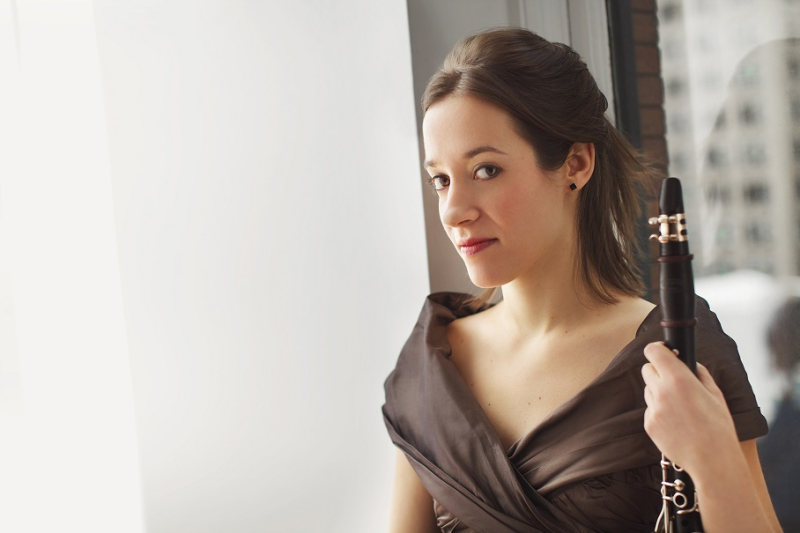
    Romie_Formal_2

    Märchenerzählungen brought forth the excellent Canadian clarinetist Romie DeGuise-Langlois (above); living as we do in a time when a number of superb clarinetists have thriving careers, it’s always a special pleasure for me to hear Romie, with her colorful tone and abundant technique. She was joined by violist Paul Neubauer and Mr. Barnatan for the four miniatures that comprise Märchenerzählungen

    The entwining of the mezzo-soprano-ranged voices of clarinet and viola was intriguing to hear: in the first movement, the music veers from playful to songful with lightness of mood, and Romie’s dynamic range – and her very pretty trill – were beautifully evident.

    An almost march-like pace commences the second movement, with blithely harmonized duetting from the clarinet and viola. An ensuing darkish mood felt a bit tongue-in-cheek: was Schumann toying with us?

    Mssrs. Neubauer and Barnatan open the third movement with sublime softness, joined soon by the clarinet. A wistfully exquisite blend of the three instruments – with immaculate turns of phrase – became achingly beautiful in its freely flowing lyricism. The movement’s sustained ending was very touching.

    In the final movement, clarinet and viola converse, then are heard as a duo. A charming interlude, with lightly etched motifs from Mr. Barnatan at the Steinway, shifts onward to a gallant finish. The only fault I could find with this Schumann work was that it’s too short: I wanted to hear more from Ms. DeGuise-Langlois.

    Paul-neubauer-by-tristan-cook

    Paul Neubauer (above, in a Tristan Cook photo) returned immediately with Mr. Barnatan for a lustrous performance of Johannes Brahms’ Sonata in E-flat major for Viola and Piano, Op. 120, No. 2, composed in 1894. The opening Allegro amabile brings us a sweet and subtle song, followed by a passionate passage from the pianist. Things then settle into a rather pensive state, both players delighting us with their dynamic palette and their feeling for the ebb and flow of the themes. A Romantic atmosphere, with the music soft and lovely, carries us thru a change of mood.

    In the second movement, Appassionato, the urgent passion of the opening statement subsides, but an underlying restlessness lingers. A hymn-like theme for solo piano lets us savour Mr. Barnatan’s artistry; joining in, Mr. Neubauer’s viola carries the melody to the instrument’s depths. In a sudden upswing, the music turns waltzy…and then finds a cool, darkish ending.

    The sonata’s final movement has a simple theme; the music is slow, with an air of Bach about it. A charming dance variation crops up, playful in its quirky swiftness, which is eventually becalmed. The work ends with a multi-faceted coda. Mssrs. Neubauer and Barnatan were rightly hailed for their warm-hearted performance. 

    Following the interval, Mr. Barnatan had the stage to himself for “Juin – Barcarolle” from Tchaikovsky’s Les saisons for Piano, Op. 37b.  This is echt-Tchaikovsky, with Mr. Barnatan relishing each note of the theme, which is thoughtful, and almost somber. Following a brief animation, descending notes bring us back to the melody. The music takes on a sort of shimmer, and then goes deep before rising to a soft, fading finish.

    Cho-Liang Lin

    Above: violinist Cho-Liang Lin, photo by K C Alfred

    The evening ended with a glorious performance of the Mendelssohn Trio No. 2 in C-minor for Piano, Violin, and Cello, Op. 66, in which Mssrs. Koranyi and Barnatan were joined by master violinist Cho-Liang Lin. The two Mendelssohn piano trios were the first chamber works to seize my attention, back at a time when I listened almost exclusively to opera.

    The passion – and the abundant lyric detail – of the music was served to perfection by Mssrs. Lin, Koranyi, and Barnatan. Their performance had a polish and glow that somehow made the music sound even more gorgeous to me than it ever has. It would be hard to imagine anything more moving – and thrilling – to me on a personal level than experiencing this music (which essentially opened up a new world for me when I heard it by chance on the radio…oh!, so many years ago) played with such lustre and vitality as it was tonight. A sublime, poignant experience; all my emotions were in play.

    It meant so much to me to be hearing this performance, as offered by the Chamber Music Society where – in the past few years, thanks to their generous welcome – I have had the opportunity to explore the vast chamber music repertoire, played by the great artists of our time. I became quite emotional as the trio of musicians produced one glorious passage after another tonight. And, in fact, the entire audience seemed to have fallen under a spell of enchantment. 

    The bows were not even off the strings when the applause commenced, the audience expressing their fervent delight with the performance – and their admiration for the musicians – in a spontaneous, full-house standing ovation. The players took a second bow as shouts of ‘bravo!‘ rang thru the hall. 

     ~ Oberon

  • CMS: New Music @ The Rose Studio

    Commissions_pintscher_1024px

    Above: composer Matthias Pintscher

    ~ Author: Brad S. Ross

    Thursday March 21st, 2019 – Thursday was a unique night of sounds with the Chamber Music Society of Lincoln Center in the organization’s cozy and intimate Daniel & Joanna S. Rose Studio.  The all-contemporary music program, featuring four works written between 1983 and 2013, ran the gamut of cutting-edge of sonorities, offering its refreshingly engaged audience a small cornucopia of contemporary classical music.  It was also a heavily American program, featuring only a single piece by a European composer—something that can seldom be said of most music programmed at Carnegie Hall or the New York Philharmonic.  Performing that night of the CMS players were the pianist Micheal Brown, violinist Bella Hristova, violist Richard O’Neill, and cellist Mihai Marica.  Their playing was at such a high level of proficiency that one could be forgiven for scarily noticing the ease with which they navigated such technically demanding music.

    The evening began with some academic and mercifully brief opening remarks by the CMS Director of Artistic Planning and Administration Elizabeth Helgeson about the composition of the first two pieces.  Once finished, the players wasted no time diving into the first work of the evening:  Alexandra du Bois’s L’apothéose d’un rêve for Piano, Violin, and Cello.  L’apothéose d’un rêve, translated in English as “The Apotheosis of a Dream,” was originally commissioned by the pianist Menahem Pressler for the Beaux Arts Trio for the trio’s semicentennial in 2005.  The work is cast in five movements played without pause and features a musical voice much befitting its decidedly ambiguous title.

    Its tone is often longing and somber, lingering and dramatic—a stark contrast to the ferocity for which so many contemporary compositions have been known.  Light on extended technique, but rife with developed thematic material, du Bois achieved an almost tragic beauty in L’apothéose d’un rêve, evoking the dreamlike imagery of its name.  The third movement Molto vivo, with its arpeggiating piano lines, seemed almost to harken the swells of some discontented ocean.  The closing movement Misterioso ended with haunting and almost funereal bell tones on the piano as the strings suspended an eternal minor third above them.  Its beauty set a lofty standard for the works to come.

    Next was the revered octogenarian Charles Wuorinen’s Trio for Piano Violin, and Cello.  Composed in the summer of 1983, the piece was originally commissioned and performed by the Arden Trio.  It is cast in a single movement over approximately ten minutes, making it handily the most concise work of the evening.  Compared with the previous piece by du Bois, Wuorinen’s Trio was volatile and ferocious—rich with exquisite colors and textures that brought the most out of the ensemble.  The players had their best work out here and effortlessly demonstrated their expert musicianship on its numerous intricate runs, tightly dissonant intervals, and relentless difficult counterpoint.  It all culminated in an unsettling and richly dramatic ending that, in the best possible sense, left me wanting more.

    Helgeson returned to the stage for a few more brief words about the program and the performers soon launched into the third work of the evening: Matthias Pintscher’s Janusgesicht for Viola and Cello.  The German-born Pintscher, the sole aforementioned non-American on the program, composed Janusgesicht in 2001.  Its title refers to the god of Roman mythology Janus, whose two faces stair simultaneously in opposing directions.  Janusgesicht, as the composer writes, is “less about correspondence or communication among the two voices, but about the dissolution of one’s voice into the other.”  For this piece, the players thus faced away from each other as the lights in the hall were near-completely darkened, minus some ambient blue lighting cast upon the back wall.  Gimmicky as this setup may seem (I indeed had my doubts), it turned out to be one of the more interesting performances of the evening.

    Janusgesicht was understandably the most dissonant and atonal work of the night—no tone center was to be found amidst its eerie scratchings and unholy strikes as these two string players weathered some of the most discordant sonorities of the evening.  The work is characterized by myriad unnerving atmospheres, haunting silences, and arresting sonic textures, none of which ever outstayed their welcome.  Following a lugubrious and tantalizing final decrescendo, the performers froze in place for what must’ve been half a minute before finally lowering their bows to receive a well-earned applause.  Though it required patience and a mind considerably open to challenging music, Janusgesicht was well-worth the effort—the audience knew it, too.

    The fourth and final piece of the night was David Serkin Ludwig’s Aria Fantasy for Piano, Violin, Viola, and Cello.  Written in 2013, this quartet was the most recent composition of the program, though its roots stretched the furthest back of all. It was inspired, as the program indicated, by the opening and closing arias of Johann Sebastian Bach’s Goldberg Variations from 1741, but was pleasantly light on direct quotations.  Ludwig, who was present for the night’s proceedings, was humorously short-winded in a pre-performance talk about the work, quipping that “a composer should never speak for longer than the duration of the piece.”  What unfolded over the next sixteen minutes turned out to be a wild and adventurous combination of musical idea.

    Aria Fantasy began on a lullaby-like piano line accompanied by almost science fiction-like glissandi in the strings.  This unusual combination of pleasantly tonal melodies contrasted with obstinately discordant harmonies and modern musical techniques played like a dream that was equal parts pleasant and frightening.  After this eerie opening came a dramatic and eventful middle section (andanteadagio), followed by a growing momentum that built to a grand final section (con moto).  When the final diminuendo played the piece to its close (tempo di aria), the audience—including yours truly—was left wanting it to continue long after the piano’s final harmonic resolution.

    This was a resounding finale to a night of superb contemporary music—music that should be performed as often and as widely as anything by the late masters.  Other ensembles would do well to take their example and program more works by living composers.  If Thursday night’s enthusiasm was any indication, audiences are itching to hear it.

    ~ Brad S. Ross  

  • Esteemed Ensemble @ Chamber Music Society

    51295376_23843411079570734_7199686573439320064_n.png

    Above: the artists of today’s esteemed ensemble – Wu Han, Daniel Hope, Paul Neubauer, and David Finckel – at Chamber Music Society of Lincoln Center

    ~ Author: Oberon

    Sunday January 27th, 2019 – Four great musicians joined forces this evening at Alice Tully Hall as Chamber Music Society of Lincoln Center continued their season with a program of works by Josef Suk, Johannes Brahms, and Antonín Dvořák.

    A-1120029-1275043084.jpeg

    Josef Suk (above), the least-known of the three composers, was a prominent violinist and Dvořák’s son-in-law. Suk’s Quartet in A minor, Op. 1, dates from 1891; it was his first published work.

    From its passionate start, with the strings playing a unison theme from which David Finckel’s cello and Daniel Hope’s violin emerge in prominent solo lines, this vivid music abounds in gorgeousness . Wu Han at the Steinway brings the tempo down a bit and a flow of melodies commences. Paul Neubauer’s viola heralds a brief drama – a tempest that soon subsides, though a subtle agitation lingers. Cellist David Finckel’s darkish timbre contrasts with the high silkiness of Mr. Hope’s violin. The strings united provide a rich texture that gives the impression of a full string orchestra in play, whilst Wu Han relishes Suk’s appealing writing for the piano. A passage of soul-filling passion brings the first movement to a glorious end.

    The extraordinary softness of Wu Han’s touch at the Steinway lures us into the central Adagio. Then a cello theme of great richness is brought forth by Mr. Finckel, taken up by Mr. Hope’s violin singing sweetly on high, echoed by the Neubauer viola. The strings have a beautifully blended passage: luminous playing from all. With the rippling piano and gleaming violin, a feeling of rapture rises up. The music stops, then the cello and piano lead us into a new dream. Violin and viola harmonize as the cello offers a plucked accompaniment. The Adagio – in which the magical essence of chamber music seems to be sublimely enshrined – reaches its heavenly end, fading into bliss.

    But there’s no time for reverie: Wu Han launches the concluding Allegro con fuoco at once, the strings offering sharp accents along the way. Later the pianist produces a high shimmer – a sparkling delicacy over which the strings harmonize. Things turn folkish, with a gypsy dance getting quite expansive before a lull of calm; then on to a grand finish. 

    This was my second hearing of Josef Suk’s Opus 1 and the second time it has had the same magical effect on my. Why is this composer’s music not heard more often?  

    Next on the program was Johannes Brahms’ Quartet No. 3, Op. 60 which was written in 1855-56 and revised in 1874. The period in which Brahms began sketching this work was a very difficult time, for his friend Robert Schumann had been confined in a mental hospital; Brahms was in a highly emotional state.

    The dramatic, sorrowing phrases that open the Allegro con fuoco attest to Brahms’s troubled spirit. But the music swirls forward on the wings of a piano theme; it becomes almost celebratory but then retreats to a doleful conclusion.

    The piano is the motivating force of the ensuing Scherzo; the music is agitated, almost angry. The Andante commences with a long cello solo, expressively played by Mr. Finckel. Mr. Hope then duets with the cello; Mr. Neubauer joins in an entwining string trio; the piano has a lovely part to play. A sense of longing builds.

    The concluding Allegro, which begins with a restless motif played by Wu han and Mr. Hope. Far from the traditional upbeat finale, this one by Brahms lingers in a serious, rather pensive mood, ending with an abrupt chord.

    After the interval, Dvořák’s Quartet in E-flat major, Op. 87 (1889) was splendidly played. This quartet has its folksong aspects, especially in the outer movements. The opening Allegro con fuoco is thematically abundant, with trade-offs among the string voices and lovely piano passages. After a big, thrilling buildup, the music simmers down; there’s a very effective tremolo motif exchanged by the violin and viola before the first movement comes to its finish.

    David Finckel opened the Lento with a poetic cello melody, which is carried onward by Mr. Hope’s violin. The piano has a lyrical part to play here – charmingly rendered by Wu Han – as the themes pass thru sublime modulations. A slow dance commences, with plucked strings, and the movement finds its resolution.

    The third movement, Allegro moderato, has the feel of a waltz. From its exciting start, the music presses forward with rustic elements: the piano takes on the aspect of a hammer dulcimer. Mssrs. Hope and Neubauer match subtleties, and the violist has a final say as the movement concludes.

    The zesty Finale is a real crowd-pleaser, and, when played as it was tonight, assures itself of a vociferous reaction from an appreciative audience.

    For all the excellence of the Brahms and Dvořák, it was the opening Suk that lingered in my mind.

    ~ Oberon