Tag: Chamber Music Society

  • The Romantic Viola @ Chamber Music Society

    042416_TRV

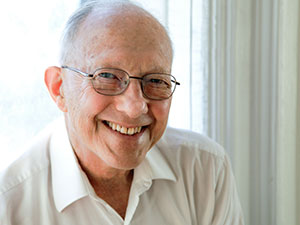
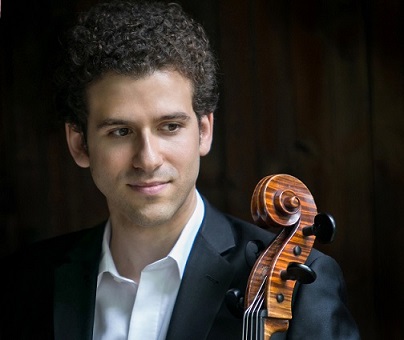
    Sunday April 14th, 2016 – No fewer than eight violas were in play on the Adrienne Arsht Stage at Alice Tully Hall this evening as Chamber Music Society of Lincoln Center offered an exceptional program, curated and head-lined by Paul Neubauer (above), in which the viola was heard in music by seven different composers (plus one anonymous composition). The program ranged from mid-19th century works to a world premiere by Joan Tower, who was present and took a bow…and got a kiss from Mr. Neubauer.

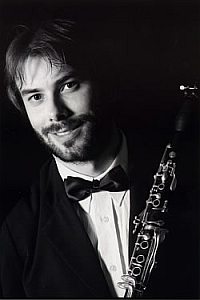
    A Robert Schumann rarity and a fantasy-suite by August Klughardt were the first two works on the program; written about twenty years apart, the two pieces each call for violist, pianist, and a woodwind collaborator. It was our good fortune this evening to have clarinetist Romie de Guise-Langlois and oboist James Austin Smith joining Mr. Neubauer and pianist Alessio Bax. Both Mlle. de Guise-Langlois and the dapper Mr. Smith are elegant players, and both are blessed with astonishing breath control.

    Romie-de-guise-langlois-155x232

    Above: Romie de Guise-Langlois

    The Schumann opens like a breath of Springtime. Clarinet and viola pass melodies back and forth, eventually honed down to a dialogue where they finish one another’s sentences. Underscored by Mr. Bax’s immaculate playing, Mlle. de-Guise-Langlois’ and Mr. Neubauer’s blend of timbres was most appealing. The second movement veers from march-like to moments of ironic deftness to a free flow of song, which the pianist takes up. Poignant and pensive, the third movement has a touch of mystery; here Mlle. de Guise-Langlois was able to sustain long lines with total control, tapering the tone into a sweet blend with the Neubauer viola. The animated fourth movement – which pauses midway thru for a gently-paced passage – was as pleasant to watch as to hear, as the eye-to-eye contact of Romie and Paul was keenly focused; Mr. Bax’s piano provided added joy.

    James-sq

    Above: James Austin Smith

    The slender frame and expressive face of James Austin Smith might have graced the salons at Kellynch Hall or Pendersleigh Park: a youthful, romantic figure. His playing also has an Olde World geniality: dulcet of tone and (as with Mlle. de Guise-Langlois) blessed with an uncanny ability to spin out long lines. In August Klughardt’s Schilflieder, Mr. Smith established at once an ideal rapport with Paul Neubauer.

    The first of the five “fantasies” opens with solo piano, soon joined by the plaintive oboe and the soulful viola; the second brings the restless viola into harmonizing with the oboe. Mr. Bax’s dreamy playing leads off the third movement, with the viola and then the oboe singing sadly and tenderly; the pianist’s sense of delicacy was a lovely asset here. The fourth movement begins dramatically, with viola and oboe sounding forth over a rippling piano motif.

    Mr. Smith’s formidable breath control was much admired in the closing movement; the atmosphere is poetic and sustained, the viola wistful. A nicely-turned cadenza for oboe led to the end of the work with a very sustained joint oboe/viola note. 

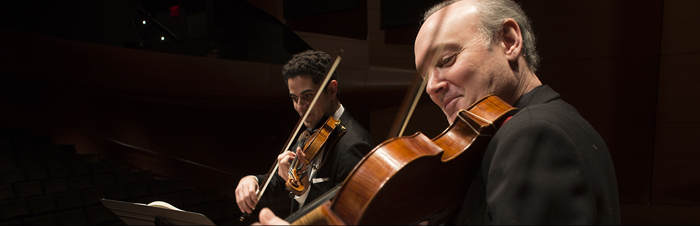
    Both the Schumann and Klughardt were brand new to me, and both made me wonder why we don’t hear them played more often. Of course, the Gordon Jacob piece for eight violas will always be a rarity, simply because the logistics of getting eight first-rate violists together to rehearse and perform it would take some doing. Mr. Neubauer was able to call upon his viola-playing colleagues to assemble a classy octet – including Cynthia Phelps, the NY Phil’s principal violist. Ida Kavafian and Daniel Phillips, more usually seen with their violins, took up violas to join in the fun tonight. Along with Mr. Neubauer, Hsin-Yun Huang, Richard O’Neill, Lawrence Dutton, and Pierre Lapointe formed a very impressive ensemble.

    This Suite for Eight Violas, composed in 1976, created quite a buzz. It opens with a unison “Russian” theme, the eight voices blended in song. The second movement, Scherzo and Drone, is a sprightly romp: a folk-dance with a sly finish. Sweet sadness prevails in the Chorale: Lento. Richard O’Neill then kicked off the closing Tarantella with swirling rushes of notes alternating with gentler interludes. A broad melody sweeps us thru to the end. The audience, clearly relishing the combined talents of these eight artists, sent up an enthusiastic ovation. 

    Following the interval, Paul Neubauer appeared alone onstage. 

    I love Joan Tower’s music, and I really enjoyed hearing tonight the two solo works she wrote expressly for Mr. Neubauer, the second of which was having its world premiere. Simply Purple is deceptively simple; a slowly rising scale, with a deep sense of mystery pervading, must be delivered with consummate control and subtle dynamic variants. The premiere, Purple Rush, is a scurrying downward swirl; it goes low and dusky, with cascades of notes and shimmering, slippery slides. Mr. Neubauer’s mastery held the audience throughout; and it was so nice to see Ms. Tower there, sharing the applause with the violist.

    Jennifer_Johnson_Cano

    Stepping across the Plaza from The Met, where she has been appearing as Emilia in Verdi’s OTELLO, mezzo-soprano Jennifer Johnson Cano (above, in a Fay Fox photo) sang the two Brahms viola songs, the only music on the program that I was familiar with. A comely young woman with a voice to match, Ms. Cano’s warm, even tone and her natural feeling for the words – and for finding beautiful hues to express them – provided a most appealing rendering of these two familiar and beloved melodies. She formed an immediate rapport with Mr. Neubauer as they faced one another across their music stands; their blend of timbres was a pleasure to hear, and Mr. Bax, at the Steinway, continued to take a major role in the proceedings with his lustrous playing. May we have Ms. Cano back please – and soon! – perhaps for the Wesendonck Lieder?

    Photo_abax

    Above: Alessio Bax, a superb pianist who played in six of the works on offer this evening

    A flash of Spanish light and colour is welcome on any concert program; tonight, Joaquín Turina’s Escena andaluza proved yet another notable discovery. An opening cascade from the piano becomes a caress. Ms. Kavafian and Mr. Phillips are back with their violins now, and together with Richard O’Neill (viola),  Paul Watkins (cello), and Mr. Bax at the piano they catch the music’s sensuous moodiness and underline Mr. Neubauer’s tonal affluence ideally. Outstanding playing from Romie de Guise-Langlois put the final flourish on this miniature Andalusian tone poem.

    A lilting and passionate violin solo (Ms. Kavafian) is answered by Mr. Watkins’ velvety cello; Mr. Bax’s keyboard shifts between the insinuating and the rhapsodic, and there’s a flurry of string instruments being plucked.

    Ms. Kavafian opens the second section of the Turina playing in the high range. The music glides from sly seduction to rising desire and on to a shimmering glow before the pianist – abetted by the clarinet – urges us to surrender to our passions.

    The same ensemble from the Turina remained onstage for Hermann Schulenberg’s Puszta-Märchen; they were already seated and raring to go. But where was Paul Neubauer? The ensemble struck up – a gypsy romance – and Mr. Neubauer stepped from the wings, already playing, and strolled down the steps and into the audience. He stopped next to me and my friend Claudia Schreier and – fixing me with an intense gaze – played a dusky, wine-drenched melody with great passion; I could actually feel the resonance of the music rising from the viola. He then locked eyes with Claudia and continued to play, totally by instinct. Momentarily he walked away, but then came back to us to continue his serenade. After a few moments he turned his attention to the usherette and played to her on intimate terms.

    Onstage, his colleagues were continuing to play while keeping one eye on the wandering minstrel. Suddenly they switched to a brilliant czardas; Mr. Neubauer returned to center-stage, playing on with virtuoso élan, and evoking swirling roulades from Romie’s clarinet. The music halted as all the players stomped their feet, and the audience burst into applause.

    Mr. Neubauer’s arrangement of Rumanian Canary, with its bird-song ‘cadenza’, was the concluding delight of the program. This led to a joyous standing ovation, and the players being called out twice.

    Being serenaded by Paul Neubauer is something I’ll always remember: an unexpected and charming episode in my life – a life that remains full of surprises. 

    The Repertory:

    The Participating Artists:

  • American Visions @ CMS

    Randall-Scarlata

    Above: baritone Randall Scarlata

    Tuesday May 19th, 2016 –  Chamber Music Society of Lincoln Center offering a diverse program of ‘Americana’. On entering the auditorium at Alice Tully Hall tonight, we found the stage filled with a vast array of percussion instruments; these were set up in four “territories”, each to be managed by a specific musician in the program’s second half: a spectacular performance of a fascinating work by George Crumb. 

    In the midst of all the chimes, gongs, and other percussive paraphernalia, the sleek Steinway was parked. Pianist Michael Brown took the driver’s seat and set the evening on its way with Louis Moreau Gottschalk’s The Union, Concert Paraphrase on National Airs for Piano. Composed in 1862 by the wildly popular Gottschalk, this 9-minute fantasia weaves together arrangements of Hail Columbia, Yankee Doodle Dandy, and The Star-Spangled Banner. The work’s virtuoso demands were a stroll in the park for Mr. Brown, who simply rippled off the composer’s flourishing flights and furbelows with sprightly brilliance. This patriotic little gem sparkled on New York’s Primary Day.

    Mr. Brown returned immediately to perform Antonin Dvorak’s Sonatina in G-major with violinist Chad Hoopes. Written (swiftly) in New York City in 1893, this attractive piece was the composer’s opus 100, and he chose to mark that milestone by writing a work for his two children: Otilie (a 15-year-old pianist) and young Antonin (aged 10, and already a capable violinist); the sonatina was first performed at Dvorak’s home on East 17th Street, right here in Gotham.

    Mssrs. Hoopes and Brown found this Dvorak work most congenial; their performance was finely coordinated and together they gave us a savorable rendering of the folkish elements which are so typically Dvorakian. In the work’s four movements, both lyricism and dexterity are called for, and the two musicians polished off the music with style and flair.

    A group of songs by Charles Ives were then performed by baritoneRandall Scarlata and Gilbert Kalish. These two expert artists have worked together frequently and their rapport is a delight to witness. Randy Scarlata’s wide-ranging voice, his fluency of language, and his natural gift for making it seem like he is singing just to you have always given his performances a special appeal – starting back in his Juilliard days, when I first met him and we began a friendship that has been sustained over the years.

    The six Ives songs Randy programmed tonight showed the many felicities of his vocal and interpretive style, and Mr. Kalish was the ideal collaborator. The soft ending of “The Things Our Father’s Loved” was haunting; the ironic sense of triumph of “In Flanders Field” showed vocal expressiveness at its finest. A music hall feeling is evoked in the narrative “Charlie Rutlage” which covers many moods and at one point erupts in a huge tumult; “The Indians” veers from the dramatic to the pensive. A particularly masterful rendering of “The Housatonic at Stockbridge” opened with Mr. Kalish’s atmospheric piano introduction; the music is then taken up by Randy with finely-inflected phrasing and spine-tingling dynamic control. “The Circus Band”, a jolly tongue-in-cheek affair, calls for a baritone who is also an actor, and it ended the evening’s first half vividly.

    So lovely and pleasant to simply sit in the hall during the interval, watching the percussionists as they made sure everything was in place for the work about to be performed: George Crumb’s American Songbook II: A Journey Beyond Time.

    I can hardly begin to describe the effect of this ingenious and truly splendid work. The composer, with his ever-rich musical imagination, has taken some of the best-beloved spirituals and spun them into a sound tapestry that is nothing less than magical. The work calls for four top-flight percussionists, a pianist of consummate skill who is willing to extend his range beyond the keyboard, and a great communicator as vocal soloist. CMS brought together just such a remarkable ensemble tonight, and the result was both aurally dazzling and rich in spiritual reward.

    Each of the four percussion players – Christopher Froh, Ayano Kataoka, Eduardo Leandro, and Ian David Rosenbaum – had his or her own island kingdom of instruments to preside over. An open-topped piano awaited Gil Kalish, with a pair of small mallets and an odd conch-like horn set out for him: things most pianists have no use for. At the center of it all, Randy Scarlata, ready to pour his heart and soul into the eight timeslessly powerful songs that Mr. Crumb had arranged for this epic work.

    Otherworldly sounds transport us immediately; as the work progresses, the textures developed by the percussion orchestra will chill, delight, and fascinate us. The baritone voice emerges from this soundscape in the haunting melody of “Swing Low, Sweet Chariot” – Randy Scarlata at his expressive best. Mr. Kalish must reach into the piano to pluck the strings, and meanwhile the percussionists are setting up echo effects and rich reverberations. The chimes of midnight sound, uncanny deep resonances glow and fade, ghostly shimmers hang in the air. Randy’s control of finely-honed piano demi-tints gave me goosebumps as the ‘sweet chariot’ vanished into the mists.

    Bizarre rhythms and noisy cacophony signal ‘the walls come tumbling down’ in “Joshua Fit de Battle ob Jerico”; Mr. Kalish’s horn bleats desperately, Randy Scarlata’s voice rages and exhorts. Things fade away before a big bang of an ending. Tremendous!

    Soft chimes lend an air of mystery to Randy’s poignant singing of “Steal Away”. This is followed by the impulsive rhythms of “Rock My Soul” in which Randy sings, speaks, and whispers in turn. An instrumental interlude (“The pregnant earth : a Psalm for Noontide”) brings forth delicate effects. Here Mr. Kalish alternately plays and plucks the strings of the Steinway while the four percussionists seem to vie in a contest to see who can play most quietly. Kozmic softness!

    Marimba and rattles set the rhythmics of “Sit down, Sister!”, in which the pianist also has a say. Randy sings “I just got to heaven and I want to look around!”; the song then teases forward until he shouts “Sit down!” This is punctuated by a sonic boom.

    Soggy chimes make us think of weeping; “Nobody Knows the Trouble I See” laments, with Randy’s voice low and mournful. The stage lights inexplicably dimmed to darkness by mistake midway thru this song; the music halted but light was soon restored and the musicians picked up where they’d left off. Eerie echoes are heard.

    A deep growl…a thudding drum…a welter of gongs and chimes: “Let My people Go!” This is “Go Down, Moses”, robustly declaimed by Randy Scarlata, and it is big singing indeed. The music is ominous but fades to a long, reverberant end.

    Gongs and chimes, chirps, and the sound of tinkling broken glass create a halo of mystery around Randy’s plaintive singing of “Sometimes I feel like a Motherless Child”. After a last percussive power burst, Mr. Kalish brings forth some extremely delicate playing, and some eerie tapping. The singer turns to parlando with “Motherless children have a hard time…a long way from home”: eventually Randy hums wordlessly as the music fades sway into thin air.

    The audience seemed spellbound by the Crumb work; it is not easy music, but instead unsettling, thought-provoking, and richly rewarding in its own way. I was so grateful for this opportunity to experience it, and in such a thoroughly impressive and moving performance.

    The Repertory: 

    The Participating Artists:

  • CMS Beethoven Cycle: The Danish!

    Danish string quartet

    Above: the Danish String Quartet, photo by Caroline Bitten

    Sunday February 21st, 2016 – Chamber Music Society of Lincoln Center‘s festival performances of the Beethoven string quartets drew to its close today with the Danish String Quartet playing the last music Beethoven ever wrote.

    This was my first encounter with The Danish. Their story is probably unique among music-making ensembles, for three of them met as kids and fellow foot-ballers: so they literally grew up together. This may account for their wonderfully integrated sound. Along the way, a Norwegian cellist joined the family, fitting in perfectly.

    This evening, as each voice was introduced to us at the start of the C-sharp minor quartet, I felt transfixed. I suddenly didn’t want to take notes, but rather to immerse myself in the music that was casting a spell over the wonderfully hushed, packed-to-the rafters Tully Hall.

    The C-sharp minor quartet evidently seemed incomprehensible when it was first heard publicly in 1835, after the composer had already passed away. Certainly a first glance at the Playbill listing strikes one as very odd: seven movements?  But Beethoven had been experimenting with structure over the years, and so she set this Opus 131 in seven sections, to be played without pause.

    Richard Wagner, reflecting on the first of these seven movements, said that it “reveals the most melancholy sentiment expressed in music”. Today it perhaps seems more pensive than sorrowful. The second movement, marked Allegro molto vivace, is lively and extroverted. Following a brief ensemble recitative, we come to the slow movement, so expressive of yearning and tenderness.

    In the Presto that follows – a whirlwind scherzo really – wit prevails in a lively, scurrying mode: here the Danes were at their most charming, and as this merry movement raced to its conclusion, the audience, thinking an end had been reached, were on the verge of unleashing a gust of applause. Then, with tongue-in-cheek irony, the players go on to a brooding Adagio and then a brilliant finale.

    Upon finishing, the members of the Danish String Quartet were engulfed in a flood of applause and cheers. They were called out three times, a rather unprecedented happening.

    During the intermission, I sat thinking about how – from my eleventh year until rather recently – so much of my musical focus has been on opera. Beethoven’s FIDELIO has never really attracted me – aside from Leonore’s glorious “Abscheulicher!” – and so the composer’s other works, iconic as they might be, have never really lured me. In fact, it’s only in the past three or four years – since I started attending Chamber Music Society and The New York Philharmonic regularly – that Beethoven’s music has begun to attract me. Better late than never!

    Earlier in this CMS Beethoven cycle, the Miró Quartet’s playing of the “Razumovsky” quartets was a revelation. Of the symphonies, I’m most enamored of the 4th at present…something other music-lovers will find odd, I’m sure. But: enough rambling. Back to the matter at hand!

    Of his final completed full work – the F-major quartet, Opus 135 – Beethoven reportedly stated that it was short because the commissioning fee was ‘short’; the sponsor would get what he paid for. And it was here, in the third movement marked Lento assai, cantante and tranquillo, that I found the Beethoven I’ve been searching for all these years – without knowing it. This music, which The Danish played so lovingly, really spoke to me. The entire piece, more traditional in both its structure and style than Opus 131, held the Tully audience in a state of rapt attentiveness: and the playing was marvelous throughout.

    The concert concluded with the last music Beethoven ever completed: a ‘Finale: Allegro‘ which would serve as an alternate ending for the B-flat major quartet Opus 130. Here the players of The Danish were at full sail, clearly savouring both the music and the audience’s delight in listening to them. 

    The triple curtain call after Opus 131 was not a fluke, for the four blonde members of the Danish String Quartet reaped a full-house standing ovation at the close of this grand evening.

    As so often happens nowadays, this great music – and the Quartet’s playing of it – turned gloomy thoughts of a world full of strife and woe into an optimistic notion that there’s still hope for humanity. 

    Meet The Danish String Quartet here.

    The Artists:

    Violin: Frederik Øland and Rune Tonsgaard Sørensen

    Viola: Asbjørn Nørgaard

    Cello: Fredrik Schøyen Sjölin

    The Repertory:


  • Chamber Music Society: Nights in Vienna

    043015-GK

    Sunday November 22nd, 2015 – Pianist Gilbert Kalish (above) and a septet of his top-notch colleagues met on the stage of Alice Tully Hall this evening for a programme of works by three composers whose lives were linked to the city of Vienna. On a day when we are still trying to comprehend the recent terror attacks in Paris – and also remembering the death of John F Kennedy on this date 52 years ago – Chamber Music Society of Lincoln Center‘s offered music that was by turns heartening and thought-provoking, and all of it impeccably played.

    When New York’s great musical organizations – Chamber Music Society, the NY Phil, Carnegie Hall, The Met, Young Concert Artists – announce their upcoming seasons each year, I love to pore over the listings, searching for certain works or artists and putting the dates immediately on my calendar. Thus for many weeks I’ve been looking forward to today’s Chamber Music Society concert as an opportunity to experience first-hand Arnold Schoenberg’s Kammersymphonie; I discovered this piece years ago – it was actually my introduction to Schoenberg – and have always wanted to hear it played live. Today’s performance of the Webern arrangement was incredibly vivid.

    But, to start at the beginning, this musical celebration of Vienna opened with music of Haydn: the E-minor piano trio. Gilbert Kalish, who played in all three works this evening, is at that marvelous point in his career where his playing retains youthful vitality while his artistry – developed over a long career – is at its peak. His playing was marked by effortless technique, an assured rightness of style in each of the three contrasting works, and an Olde World feeling of grace without theatricality.

    Seeming taller and slimmer than the last time I saw him, violinist Nicolas Dautricourt strode onstage and for a moment I mistook him for ABT’s Marcelo Gomes. Mr. Dautricourt is a particular favorite of mine, both to watch and to hear; his stage presence is paradoxically relaxed and intense, and his playing is beautifully nuanced with especial attention to dynamic gradations. Cellist Torleif Thedéen was an ideal colleague for M. Dautricourt today: their rapport was inspiring to watch, aligning the harmonies and relishing the melodic opportunities Haydn has given them. Their affection and respect for Mr. Kalish was clearly evident both here and – later – in the concluding Brahms.

    Schoenberg’s Chamber Symphony spans a single movement, though the composer has identified five distinct sub-divisions: Sonata (Allegro), Scherzo, Development, Adagio, and Recapitulation and Finale. Originally written for ten wind and five string players, the composer asked his student Anton Webern to re-cast the piece for a smaller ensemble, the better to take it out on tour. The result: twenty-two minutes of sheer musical brilliance.

    The Kammersymphonie tonight was given a captivating performance: the quintet of musicians played with such richness of tone, such stimulating sense of colour, and such depth of feeling that one had the impression of a much larger ensemble playing. Gilbert Kalish’s sent waves of plush sound from the Steinway, giving the music an undercurrent of Late-Romantic lyricism; this same feeling was embraced by violinist Kristin Lee who seized upon the composer’s every melodic gesture with her pearly tone. Whenever the music turned more prickly, both Kalish and Lee were up for the adventure.

    Tara Helen O’Connor, one of the Society’s elite, sent her flute roulades wafting brightly overall whilst the gorgeous (no other word suffices) tone of Nicholas Canellakis’s cello seems always to achieve a direct hot-wire to the heart-strings.

    TommasoLonquich_bio2

    New to me this evening was clarinetist Tomasso Lonquich (above) who made a spectacular impression both with his sumptuous tone and the passion of his playing. Whether at full cry or honing the sound down to a thread, Mr. Lonquich displayed his mastery at every moment; meanwhile his deep commitment to the music sometimes nearly drew him out of his chair as he polished off Schoenberg’s demanding phrases with compelling sincerity. 

    This staggeringly opulent ensemble drew a din of applause from the Alice Tully audience; as they took a second bow, my companion Adi – who had professed indifference to Schoenberg’s music before the concert began – found his opinion of the composer transformed. That’s what a great performance can accomplish.

    As so often at Chamber Music Society’s concert, I found myself at the interval wondering how this level of music-making could possibly be sustained into the second half. Needless to say, as violist Paul Neubauer joined Mssrs. Kalish, Dautricourt and Thedéen for the Brahms Third Piano Quartet, any thoughts of a letdown were immediately dismissed.

    Nearly twenty years were to pass between the time Brahms began working on this quartet (in 1855, at the time of his friend Robert Schumann’s last illness, when Brahms was torn between sorrow for his friend and desperate love for his friend’s wife, Clara) and its publication. His romantic inclinations toward Frau Schumann seem to perfume the music, especially in the third movement.

    Tonight, Mr. Kalish’s opening octave set the tone for a performance of beautifully blended voices and outstanding solo passages (Mr. Neubauer’s expressiveness so congenial) which achieved a level of  surpassing excellence in the Andante. Here Mr. Thedéen’s opening solo was poignantly set forth, with Mssrs. Dautricourt and Neubauer joining in turn: ravishing…a deep delight. The Andante ends magically, and then Nicolas Dautricourt launched the finale with a finely-turned solo. The audience’s enthusiasm at the end called the players back twice.

    There was an odd sensation at times tonight that someone was humming along with the music. At first I thought it might have been some acoustical oddity, but Adi noticed it as well.

    Prior to the start of the concert, co-artistic Director Wu Han announced the death of the venerable violinist on teacher Joseph Silverstein. This first movement from the Barber violin concerto shows Silverstein’s poetic qualities and persuasive tone to perfection.

    The Repertory:

    The Participating Artists:


  • Golden Age of the Violin @ CMS

    Violin

    Following the senseless horror of the terrorist attacks in Paris this past Friday, we turn yet again to music as a source of consolation. These words from Leonard Bernstein have echoed thru my mind over this weekend since the appalling news from France reached us: “This will be our reply to violence: to make music more intensely, more beautifully, more devotedly than ever before.”

    Sunday November 15, 2015 – A trio of superb young violinists were featured at this evening’s concert given by at Chamber Music Society of Lincoln Center at Alice Tully Hall. Paul Neubauer and David Finckel – masters of the viola and cello respectively – joined their young colleagues in celebrating the expressive violin style epitomized by the legendary Fritz Kreisler.

    Kreisler was in fact the first violinist I ever heard; my parents had some of his recordings and by the age or eight or nine I was already preferring these – and Horowitz, Flagstad, and Toscanini – to my mom’s favorites: Lawrence Welk and the McGuire Sisters.

    The first music we heard this evening was also oldest music on the programme: a sonata for two violins by Jean-Marie Leclair. Leclair may be the only violinist/composer in history to have had a highly successful career as a ballet dancer prior to turning to composing full-time around 1723. Today’s sonata dates from 1730 and was played with lively charm by Danbi Um and Sean Lee. Passing the melodies back and forth, the duo were well-matched, nuance for nuance. The tender sadness of the sonata’s Andante graziosa maintained a forward momentum, and then our two violinists sailed confidently thru the swirls of notes than make up the concluding Presto.

    Mr. Lee returned to the stage immediately with Benjamin Beilman and Paul Neubauer for Anton Dvorak’s C-major terzetto, composed in 1887. It opens with a tranquil theme, becomes more animated, then gently shifts between moods. After a passage of hesitations, as if unsure where to go next, the composer gives us a warm lullabye-like melody with a genial ending. A feeling of propulsive dance – and a touch of Mendelssohnian sparkle – fills the Scherzo; a central song with the flavour of a country waltz is most attractive, followed by a da capo which sweeps forward in alternating currents of lyrical breadth and teasing delicacy. In the final movement, Mr. Neubauer’s viola had a shivering motif, followed by an impassioned theme from Mr. Beilman; then there’s a brisk rush to the finish. 

    David Finckel’s name in my Playbill is now triple-underlined and festooned with exclamations marks for his marvelous playing in the Alexander Borodin 1881 D-major quartet. The cello sets the pace for the opening Allegro moderato and is given some heartfelt melodies in the later movements; these were relished by Mr. Finckel whose tone has an intimate, romantic glow.

    A Spring-like feeling pervades the opening of the Scherzo: Allegro, and then a familiar tune is heard: my mother would have recognized it as the melody of the 1950s pop song Baubles, Bangles & Beads(from the musical KISMET) which was recorded – seemingly – by everyone, including Marlene Dietrich and Frank Sinatra. For all the tune’s appeal, it still sounds best in its original Borodin setting. The second movement then rushes ahead, only to withdraw to a pizzicato fadeout at the end.

    Borodin sets the third movement as a Nocturne and Mr. Finckel sets the mood to perfection. Danbi Um, in the first violin chair, then takes up a sweet, high theme. Mssrs. Lee and Neubauer make the middle voices sing, the latter in a lovely melodic exchange with Mr. Finckel’s cello (“Gorgeous blends!” I scrawled in my Playbill.) Ms. Um takes up a shining theme, passing it to Mr. Finckel who descends with it into the cello’s depths. This Nocturne, with all four players deeply immersed in the music, made a particularly satisfying impression. In the concluding movement, the quartet summarized the work in recurrent themes, playing with such conviction that the audience were swept along and responded with especially warm applause, summoning the musicians out for a second bow. 

    After the interval, Ben Beilman stood alone on the stage and delivered a stunning performance of Eugene Ysaÿe’s E-minor sonata (1924). The work is a virtuosic test piece for which Mr. Beilman gets top marks. This young artist displays thorough technical assurance as well as a masterful control of dynamics. He took the strenuous demands Ysaÿe places on the player in stride, and an appealing aspect of modesty in his delivery endeared him to the crowd. This is a serious musician with something to say to us. The applause that enveloped Mr. Beilman at the end of his dazzling performance was amply deserved, bringing him out for a double curtain call. 

    No one could blame Fritz Kreisler for featuring the violin in his A-minor quartet: it was, after all, his instrument. Mr. Beilman, fresh from the demands of the Ysaÿe, was at his most lyrically persuasive here, regaling us with the melodic treats Kreisler has laid out for him. Danbi Um seconded Ben’s beautiful playing with many graceful turns of phrase, while Mssrs. Neubauer and Finckel brought Olde World warmth and expressiveness to their playing.

    Though rife with melodic felicities, including a waltz tune “mit schlag” and a gorgeously-sustained Ben Beilman high fade-away at the conclusion of the Romanze, the Kreisler quartet is one of those perfectly pleasant works that falls short of being truly memorable. But I can’t imagine it being better-played than it was this evening.

    In her welcoming remarks tonight, Chamber Music Society co-artistic director Wu Han had spoken of the distress we have all been feeling after the horrible events in Paris. She said that from Friday night til Sunday morning she had been so consumed with sadness that she couldn’t play the piano, but that at last she sat down to practice and found solace at the keyboard. She promised us that the evening’s programme would be uplifting, and she was right. 

    The Repertory:

     The Participating Artists:

  • Prevailing Winds @ Chamber Music Society

    Romie

    Above: clarinetist Romie de Guise-Langlois 

    Sunday October 25th, 2015 – Kudos, yet again, to the folks at Chamber Music Society of Lincoln Center for putting together this imaginative program for which some of the outstanding wind players of the day gathered together to form a first-rate ensemble. The genial pianist Jean-Efflam Bavouzet brought his own magic to three of the four works presented.

    During the week leading up to this concert, some wonderful news came from the Society – I am sharing this directly from their press release: “Chamber Music Society of Lincoln Center has announced a $4 million unrestricted gift, the largest in its history, from long-time patron and devoted chamber music lover Jane Kitselman, who passed away on March 18, 2015, at the age of 87.  The formal announcement was made at a reception following the October 20th Chamber Music Society concert at Alice Tully Hall, which was performed in her memory.  Ms. Kitselman, a cellist, was especially fond of string quartet literature, and CMS is dedicating its forthcoming performances of the Beethoven String Quartet Cycle to her.  In addition, there will be an annual concert dedicated to Jane Kitselman, to be performed in perpetuity.”

    I couldn’t help but feel that this news, which people around us were discussing prior to the start of this evening’s concert, set the atmosphere in Tully Hall at an even higher degree of anticipation that usual.

    Ligeti’s Six Bagatelles, as performed this evening, are transcriptions by the composer from twelve piano bagatelles; these pieces are very short, lasting two to three minutes each. In the first bagatelle, Allegro con spirito, a playful, percolating rhythm charmingly peters out. The second bagatelle commences with a sad chorale which evolves with a variety textures and harmonies and ends on an ironic “beep”. In the third, Allegro grazioso, the flute sings over bubbling clarinet and bassoon and there’s a gorgeous horn passage. Bagatelle number four is an exuberant Presto ruvidi, vividly dance-like. The following Adagio, dedicated to the memory of Bela Bartok, begins as a somber dirge but is then enlivened when the flute speaks up; a repeated two note theme underlines an exchange of trills between flute and clarinet, and the piece ends on a benedictive chord. The last bagatelle, marked Allegro vivace, has a quirky start and then pulses along as the horn goes high and the piccolo pipes up. Things turn rather frenetic but in the end, a muted horn solo provides an unexpected finish. In these six Ligeti gems, we have met our five wind soloists and they have displayed their outstanding gifts of technique and artistry; they were called back for a bow.

    The least-known composer on the program today was surely Albéric Magnard; his life story ended tragically in 1914 when he stood his ground against the invading Germans and perished when they set fire to his house in Baron, France.

    In a program note, pianist Jean-Efflam Bavouzet spoke lovingly of the evening’s Magnard work: “I hope you will leave the concert with lasting memories of having discovered the captivating music of a hitherto lesser-known composer.” My hope, having heard this revelatory quintet, is that the Society will pursue and present other works from the Magnard catalog, which is sadly limited – by his tragic death – to only thirty compositions.

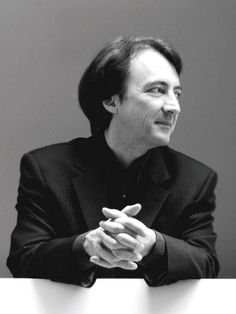
    Bavouzet

    Above: Jean-Efflam Bavouzet

    Knowing nought of Magnard’s music, I was thoroughly captivated this evening by his D-minor quintet for which the terrific pianist Jean-Efflam Bavouzet joined Mlles. O’Connor and de Guise-Langlois, Stephen Taylor, and Peter Kolkay. The music is intrinsically “French”, loaded with marvelous melodies, and Mr. Bavouzet proved the ideal maître of the keyboard to lead us on this magical journey.

    After an opening piano solo, the wind instruments trade themes over a rippling keyboard motif. Individual voices tantalize, such as in a plaintive passage for Mr. Taylor’s oboe and some delicious trills from Ms. O’Connor’s flute. An unexpected fugue is an intriguing highlight.

    In the ensuing slow movement, marked Tendre, Romie de Guise-Langlois stole my heart yet again with her deeply expressive playing of a poignant melody entwined in M. Bavouzet’s poetic piano sounds. This theme becomes passionate and then pensive; I found myself with tears running down my face from the sheer beauty of Romie’s playing. M. Bavouzet draws us on, though, with a solo passage which continues to ripple under a serene chorale from the winds. 

    Ms. O’Connor’s flute takes on a waltz-like air as she opens the third movement in tandem with M. Bavouzet; the pianist has another vivacious solo before the wind voices enter, evoking Springtime cheer. Mr. Taylor’s oboe seized upon an oddly Mid-Eastern-sounding theme, playing with great control. 

    By now I was thoroughly engrossed in this Magnard work, only to discover fresh vistas in the final movement, charmingly marked Joyeux. A jaunty oboe solo leads off, the other voices passing the idea around. Peter Kolkay’s amiable sustaining of single tones had an ironic quality, and Ms. O’Connor’s flute wafts over us. A mini-fugue is a fleeting delight, and a two-note theme somehow develops into a march. In a mellowing out, Mr. Kolkay’s bassoon glows in a superb passage with M. Bavouzet. The pianist then takes a dynamic lead thru a few small detours before all join in a final tutti melody. 

    Have I rambled on too long, sometimes shifting from past to present tense? It’s because, in remembering, I am still there. Does that make any sense? 

    Following the interval, the only work on the program somewhat familiar to me: the Rimsky-Korsakov B-flat major quintet. This piece was composed in 1876 for a chamber music competition held by the Russian Music Society, but its premiere was spoilt by some indifferent playing. Fortunately, the piece survived this fiasco, for it is – like the Magnard – a thorough delight.

    Following a speedy start, the bassoon draws us in. All the wind voices have their say, including a lovely dialogue between flute and bassoon. There’s a rush to the finish, and then the astoundingly plush sound of Radovan Vlatković’s horn intones a serene theme over M. Bavouzet’s piano.

    (I must pause here to say, as a frustrated high-school horn player, that Mr. Vlatković’s tone quality has the ideal Autumnal richness that always eluded me; his gorgeous playing here – all evening, in fact – made me envious. I even scrawled “I am jealous!” next to his name in my playbill.)

    But – moving on with the Rimsky-Korsakov – clarinet and flute trade dreamy phrases before the piano introduces a new theme, echoed by the ensemble. And then Mr.Vlatković chimed in again – spectacular sound – before the bassoon and clarinet meshed voices leading to a mellow end.

    The final Rondo: allegretto starts with a joy-filled skipping rhythm; there is bassoon irony as the voices swirl about before returning to the theme. Romie de Guise-Langlois brought forth a redolent, deeply ‘Russian’ theme which was passed to the horn. A sparkling flute cadenza and another clarinet passage carry the players to a final sprint. 

    Poulenc’s Sextet for Piano and Winds is a different kind of treasure: including elements of jazz, ragtime, pop songs of the interbellum era, high wit, and gentle sarcasm, there are also stretches of pure lyricism (a bassoon theme, for one) along the way. The players had a grand time of it, and the final Prestissimo felt like a transfusion, an antidote to the world-weariness that’s been creeping up on me of late. Great music, played as it was tonight, does one a world of good.  

    The Repertory:

    The Participating Artists:

  • 2015-2016 Season Opens at CMS

    N C

    Above: cellist Nicholas Canellakis

    Sunday October 18th, 2015 – Chamber Music Society of Lincoln Center opening their new season at Alice Tully Hall with a sold-out concert that played to a crowd of music lovers as attentive as they were appreciative.

    As is their wont, Chamber Music Society put together an impressive ensemble of musicians this evening; it was especially gratifying to hear cellist Nicholas Canellakis again after he had bowled me over with his playing of Leon Kirchner’s Music for Cello and Orchestra with the American Symphony Orchestra this past April. Mr. Canellakis played in all three works this evening – a triple treat.

    Over the course of the evening, three pianists took turns at the Steinway. After greeting the audience  tonight in her capacity as co-artistic director of the Society, Wu Han took her place at the keyboard and dazzled us yet again with her subtle, evocative artistry. She was joined for the opening Haydn trio by Ani Kavafian – in her 44th year (!) of participating in the Society’s concerts and playing with her characteristic super-fine style – and Mr. Canellakis, whose deep-burgundy cello resonance was amply pleasing.

    The blended timbres of these three ‘voices’ and the gracious communicative rapport they established immediately drew the audience into the music, setting the tone for the whole evening. Their deeply-felt playing of the central Andante gave way to the foot-tapping dance rhythm of the final Allegro, which they set forth with joyous vigor.

    The Mendelssohn D-major sextet sounded remarkably fresh this evening in a glowing performance of such dazzling clarity that the audience could barely suppress their delight, erupting in a gale of applause the moment the final chord was released. The players basked in a lively ovation, deservedly called out for a second bow.

    And what players! The velvety bass of Joseph Conyers set the groundwork for the piece, with Mr. Canellakis and violists Paul Neubauer and Matthew Lipman summoning up some exceptionally tender harmonies in the Adagio, where Chad Hoopes interjected some sweet violin solo moments. In his first concert with CMS, pianist Michael Brown’s rippling enticements and poised lyricism in the earlier movements gave way to thrilling virtuosity in the concluding Allegro vivace.

    This final movement, taken at an exhilaratingly speedy pace, found all the players reveling in the dancing spirit of the work. A sudden change of pace and mood brought out some of Mr. Brown’s most fabulous playing, and then the work sailed on to its invigorating end. The audience’s spontaneous reaction and their embrace of the players during the ensuing applause was both joyous and heartfelt.

    A tough act to follow, indeed; yet as pianist Anne-Marie McDermott led her colleagues out for the concluding Schumann, I felt certain we were in for yet another revelatory experience. And I was right.

    Here we could more extensively savour Mr. Lipman’s viola skills: this young musician, who made an impromptu CMS debut last season when he stepped in for another artist, displayed handsome tone and a smile that seemed to signal his delight in playing such great music for such an engaged audience. Ms. Kavafian, unspooling silken melodies, was amiably seconded by Mr. Hoopes, whilst Nicholas Canellakis polished off his evening with engaging, expressive playing. Ms. McDermott’s luxuriantly dexterous playing fell ever-so-pleasingly on the ear.

    In the first movement, cellist and violist participate in rise-and-fall scale motif, Mr. Lipman seeming to finish Mr. Canellakis’s sentences.The second movement begins hesitantly; the viola becomes prominent, and Ms. Kavafian plays high and sweet. A rising scale theme is passed from voice to voice. In the concluding movement, we are dancing again; but there’s a sudden volte-face, a slowdown where Ms. McDermott’s piano rumbles in some lower range scalework before the engines are revved up again and the piece dances on to the end.

    Another warm ovation, another double curtain call; and then out into the first chill of early Autumn.

    The Repertory:

    The Participating Artists:


  • CMS: Summer Evenings III

    Sitkovesky WuQian

    Above: violinist Alexander Sitkovetsky and pianist Wu Qian, featured performers at tonight’s Chamber Music Society of Lincoln Center concert

    Wednesday July 22nd, 2015 – Chamber Music Society of Lincoln Center‘s inaugural Summer Series wrapped up this evening with a most impressive and enjoyable programme. The formula for these Summer concerts (as for all of the Society’s concerts, really) was a simple one: great music played in a wonderful space by first-rate musicians. That the series was a genuine success came as no surprise to me; and the best news is, planning for a Summer Series 2016 at CMS seems already to be in the works as I write this.

    The Society draws from an A-list roster of musical artists, sometimes featuring established ensembles – such as the Amphion String Quartet who headlined the second concert in the Summer Series – and sometimes gathering together players from diverse musical backgrounds to illuminate a particular convergence of works. For tonight’s programme, pianist Wu Qian and violinist Alexander Sitkovetsky were the central figures; this husband-and-wife team (who make up two-thirds of The Sitkovetsky Trio) played in all three works. Joining them were the delightful young violinist Danbi Um, viola paragon Richard O’Neill, and the distinguished veteran cellist Laurence Lesser.

    Antonín Dvořák’s Bagatelles for Two Violins, Cello, and Keyboard, Op. 47, opened the evening; this series of miniatures alternates spirited dance rhythms with soulful slower movements, all drawing upon the folk music which so often inspired the composer. Plucking cello, rhapsodic violins, and flowing piano motifs are among the attractions of these five small wonders. Wu Qian was at the keyboard, with the two violinists and Mr. Lesser’s amiable cello assuring a most appealing exploration of the unfolding thematic material which abounds in these charming, deftly scored bagatelles. 

    Robert Schumann’s Sonata in D minor for Violin and Piano, Op. 121 was given a remarkable performance by Mr. Sitkovetsky and Wu Qian. Although stationed in a way that seemed to preclude eye contact, the two developed an extraordinary telepathic rapport. Mr. Sitkovetsky had removed his white dinner jacket and, all in black, he proved as fascinating to watch as to hear, with expressive body English and moving in an almost choreographic response to the music.

    Following a passionate, slashing start, Mr. Sitkovetsky intoned a heartfelt solo passage before the eruption of energy that propels the sonata’s first movement. The violinist’s playing is wonderfully rich, plumbing the depths of feeling with his resonant tone. For the energetic opening of the second movement, the violin/piano collaboration was rhythmically driven, though lapsing at one point into a melodious interlude.

    A mandolin-like plucking motif opens the third movement, which evolves into a haunting theme: here Mr. Sitkovetsky’s Olde World sound and his ability to transform melody into poetry was at its most moving. In the final movement’s expansive variety of themes and energies, violinist and pianist were simply thrilling, causing the audience to celebrate their joint artistry with prolonged applause and calling the duo out for a second bow. 

    Danbi Um, in a glamorous deep emerald gown with a diamond clasp, looks as elegant as she plays. She took the first chair for the evening’s concluding Brahms (the Quintet in F minor for Piano, Two Violins, Viola, and Cello, Op. 34) and, with her ravishing ascents to the upper range, graced the music at every moment. The big singing themes of this work were delivered with striking lushness by the players – Mr. Sitkovetsky and Wu Qian, violist Richard O’Neill, and cellist Laurence Lesser joining Ms. Um; they sometimes created the sonic illusion of a much larger ensemble with their plush tone. 

    The performance was brimming with marvelous moments, including (in the first movement) a lovely violin/viola ‘conversation’ and a luminous moment when Ms. Um, with her refined tone, passed the melody to Mr. Lesser who took it up with achingly beautiful expressiveness.

    The somewhat hesitant opening of the second movement – with Mr. Lesser’s subtle plucking motif – took a few moments to bloom into melody. Mr. O’Neill, a player we can admire as much for his artistry as for his humanitarian and charitable work, had a deeply moving theme with which to entice; then Mr. Lesser’s cello took a series of ever-deepening plunges. At the piano Wu Qian’s gently lilting playing underscored the ensuing rise of the string voices. In a moment of sheer perfection, Ms. Um and Mr. O’Neill jointly tapered the movement’s final note til it vanished into the air. 

    After some treading in a minor key, the third movement bursts forth; the pianist continually sounds a heraldry of march-like calls to action. Later, Wu Qian’s piano segues into a more lyrical passage where she is met by the Mr. Lesser’s genial cello…but their encounter is fleeting before another onrush of almost military vigor. Things calm down again momentarily, only to surge forward again with a triumphant feeling.

    A pensive – almost eerie – feeling pervades the opening of the quintet’s finale. In music that is passionate and harmonically rich, we experience a mixture of vivid dance themes and passages of almost tragic-sounding lyricism. 

    As our estimable ensemble of players drew the evening to its close, the audience hailed them with sincere appreciation and affection. The evening was perhaps best summarized by a remark the man seated behind me made to his wife just as the house lights went down for the Brahms: “This is the place to be!”

    The Repertory: 

    The Participating Artists: 


  • CMS: Summer Evenings I

    54f4d4450aeee1.82526134

    Above: violinist Erin Keefe, photographed by Lisa-Marie Mazzucco

    Wednesday July 15th, 2015 – Chamber Music Society of Lincoln Center are presenting their inaugural Summer Series: three concerts at Alice Tully Hall. The scheduled programs feature works by the greatest composers played by some of the finest musicians of our time: a surefire recipe for success.

    Tonight’s opening concert was sold out, with music lovers outside Tully Hall pleading with anyone who might have a spare ticket. Onstage, as the house lights dimmed, the Society’s co-artistic director Wu Han welcomed us with her usual warmth and enthusiasm, ending her speech by wishing us all “…happy summer fishing…I hope you catch some trout!” – a reference to the program’s closing work, Schubert’s beloved “Trout” quintet.

    Erin Keefe and Juho Pohjonen then appeared for Mozart’s B-flat major violin sonata, K. 378. Ms. Keefe’s gown, in rich shades of tourquoise and purple, evoked Klimt: it appeared someone had thrown handfuls of gold dust onto the frock, giving it a shimmering sheen. Ms. Keefe plays as handsomely as she looks and – joined by Mr. Pohjonen, who was at the keyboard for all three works tonight – they set the evening on its way with their gracious rendering of the Mozart. 

    In the opening movement, Allegro moderato, the two players trade off cascading motifs. The heart of the sonata, the Andante sostenuto e cantabile, has a touching song-like quality which the violin introduces almost hesitatingly, the pianist seemingly completing each ‘sentence’. Later, the violin takes up a more sustained theme, the opening bars of which seem to have been drawn from the old Jesuit hymn ‘Schönster Herr Jesu’; we used to sing this tune in church under the title ‘Fairest Lord Jesus’, and hearing it again this evening gave the sonata a personal appeal.

    The concluding Rondo: Allegro had a joyous lilt and the players showed especial affinity for the sprightly, deftly driven final section. They linger momentarily as if thinking of going off on a different tangent, but instead they resume the original trajectory and there’s a charming rush to the finish line.

    Tonight’s performance of Beethoven’s piano trio in E-flat major (Op. 70, #2) kept me enthralled, both by the intrinsic beauty of the music itself and by the exquisite details brought forth by the three players: Mr. Pohjonen (piano), Paul Huang (violin) and Jakob Koranyi (cello).

    Juho Pohjonen is a poet of the keyboard; he seems both a wonderfully attentive colleague and a player whose musicality reaches us from his own personal dreamworld. Treading this line between keen awareness and a deep spirituality, this enigmatic pianist is always fascinating to encounter. Violinist Paul Huang, the youthful-looking but already superbly accomplished current holder of a prestigious Lincoln Center Career Grant, proved his capacity for keeping an audience of serious music aficionados under his spell at his Morgan Library recital earlier this year. Depth of expressiveness and poignant lustre of tone have set cellist Jakob Koranyi among the most admirable musicians of the day; his mastery of dynamic control, so often encountered in the Beethoven trio tonight, is a particular joy.

    Dressed in white dinner jackets, the three young men reveled in the slow melodic unfolding of the Poco sostenuto in the opening movement of the trio which had begun with an almost melancholy phrase from the solo cello which is taken up by the violin then the piano in turn. Beethoven’s heritage, as successor to Mozart and Haydn, illuminates the second movement; then the third seems to herald Mendelssohn with its lyricism and grace. In the Finale: Allegro, the three players produced a wealth of nuanced detail which was wonderfully fresh and luminous, and never for a moment seemed fussy or merely ornate. 

    In their revelatory performance, Messrs. Pohjonen, Huang, and Koranyi were truly inspiring; their generous playing and impressive artistry set this Beethoven firmly in the top echelon of memorable musical experiences of recent seasons.

    Schubert’s “Trout” quintet was sumptuously played by Ms. Keefe with Roberto Diaz (viola), Mr. Koranyi (cello), Timothy Cobb (double bass) and the luxuriant pianism of Mr. Pohjonen. Making their mark in the ensemble, Mr. Diaz’s caramel richness of tone and Mr. Cobb’s genial tread (and his amiable seizing of every melodic moment) meshed with Mr. Keefe’s arching lyricism, Mr. Koranyi’s striking opulence of expression, and the combination of delicacy and power in Mr. Pohjonen’s playing, to hold the audience in a state of receptive eagerness.

    The inclusion of a variations movement, where Schubert’s popular song “Die forelle” is heard in a variety of rhythms and textures, was part of the composer’s agreement with Herr Paumgartner, the wealthy amateur cellist who commissioned the quintet. Schubert then has the last word; after a false ending which – as usual – fooled the audience into premature applause, the composer tacks on an Allegro giusto which is both short and deliciously sweet.

    The Society’s remaining two Summer Series performances (July 19th and 22nd) are reportedly nearly sold out, but it’s worth a try by going on-line here, or by calling the Alice Tully box office (212-875-5788), or by going there in person. 

    The Repertory:

    The Participating Artists:

  • All-Brahms @ Chamber Music Society

    Cho-liang lin

    Above: violinist Cho-Liang Lin

    Friday April 24th, 2015 – With their customary flair for matching great music with great musicians, Chamber Music Society of Lincoln Center put together an inviting all-Brahms programme and gathered a world-class ensemble to perform it. It would be fair to say this concert was a highlight of the season to date, but then that seems to be true of each of the Society’s offerings.

    Cho-Liang Lin has always been a particular favorite of mine; he boasts a wonderful discography, with his Stravinsky/Prokofiev disc one I especially like. Tonight he joined pianist Wu Qian for the opening Brahms work: the Violin Sonata in A major Op. 100.  The piece opens with brief, hesitant violin interjections before sailing forth into melody. The second movement – an unusual setting in which Brahms seems to combine an andante and a scherzo (and it works!) – opens with a theme of tenderness and longing, so expressively played by Lin and Qian. Later, when more animated passages arise, their clarity of articulation was most welcome. The serene melody recurs, with major/minor shifts giving an affecting quality. A plucky little dance makes for a sprightly interlude before returning to the andante where the violin now lingers on high. An unexpected little coda gives the movement a brisk finish.

    The sonata’s final movement opens with a poignant theme, lovingly ‘voiced’ by Mr. Lin while Ms. Qian’s piano ripples gently. The music becomes more animated – each player alternately carries the melody by turns – but retains its lyrical heart and eschews virtuosity in favor of something more heartfelt. A friend of the composer said: “The whole sonata is one caress,” and that’s how it seemed this evening in such a beautifully dovetailed rendering from our two artists.

    The Trio in C minor for Piano, Violin, and Cello dates from the same year as the sonata, and follows it immediately in the composer’s catalog of works. Both pieces were written while Brahms was on vacation (a ‘working vacation’, obviously) at Lake Thun, Switzerland; he is thought to have been inspired by the scenery, which is understandable: 

    Lake thun
    The Piano Trio No. 3 was a favorite of Brahms’ dear friend Clara Schumann; she is said to have turned pages for Brahms when he played the work with his two friends – the cellist Robert Hausmann and violinist Joseph Joachim.
     
    This evening’s performance marked the Chamber Music Society debut of the Sitkovetsky Trio. Although  violinist Alexander Sitkovetsky has appeared with the Society before, tonight marked his first performance there with his established chamber music colleagues Richard Harwood (cello) and Wu Qian (piano). Their playing of the C-minor trio drew a well-deserved, vociferous reception from the Tully crowd.
    Concert_pic
     
    Above: The Sitkovetsky Trio
     
    In the Trio’s opening Allegro energico the three musicians got off to a grand start, the melodies pouring generously from the Brahmsian font. The blend of violin and cello was particularly enriching whilst at the Steinway, Wu Qian brought the same lyrical glow to the music that had made her performance in the sonata so impressive. A unison passage for violin and cello had a richly burnished quality, and all three players displayed both technical precision and real passion for the music.
     
    The charming and subtle second movement – Presto non assai finds the violin and cello plucking delicately; but beneath the lightness of touch there’s an inescapable quality of sadness. Then a feeling of gentle nostalgia develops in the Andante grazioso that follows, and the strings and piano trade expressive passages. This leads directly into the dynamic opening of the Allegro molto in which reflective phrases mingle with more extroverted ones; the trio concludes with in a rockingly positive mood.
     
    After the interval, we jumped back 20+ years in Brahms’ compositional career for the Sextet #2 in G Major (Opus 36); Mssrs Sitkovetsky and Harwood were joined by Cho-Liang Lin, violists Paul Neubauer and Richard O’Neill, and – fresh from his marvelous Carnegie Hall concerto debut – cellist Nicholas Canellakis. As the musicians settled in and did a bit of tuning, my level of anticipation shot up: we were in for something special.  

    When Brahms started work on his second sextet, it seems he was in a highly emotional state, having been secretly engaged to a young singer named Agathe von Siebold. Realizing that marriage was not for him, the composer sent her a brusque message terminating the engagement. But he managed to preserve the memory of his brief love in this second Sextet: the letters of Agathe’s name ‘spell’ a theme in the work’s first movement; he later wrote: “Here is where I tore myself free from my last love.”

    Paul Neubauer launched the performance with a gently rocking two-note motif in continuous repetition; this motif is later passed from one player to another, giving a continuity to the music. Outstanding beauty of tone from Nicholas Canellakis and plenty of viola magic from both Mr. Neubauer and the passionate Richard O’Neill as the melodies make the rounds of the ensemble, passing from artist to artist.

    The scherzo (rather restrained and thoughtful, actually) opens on high and features delicate plucking and curling drifts of melody. Halfway thru there’s a joyous dance which subsides into into rolling waves before its boisterous conclusion.

    Cho-Liang Lin’s playing had a searching quality in the opening of the Andante which wends its way at a stately pace thru rather doleful minor-key passages until there’s an unexpected lively outburst. Calm is restored, and now major and minor phrases alternate to lovely effect; Mr. Lin’s melodic arcs sailed sublimely over the finely-blended lower voices; the music becomes almost unbearably beautiful, leading to a peaceful coda. 

    In the final movement, a brief agitato introduction settles into a lilting flow with some lively interjections. The music cascades on: bold and sunny, its energy carries us forward with inescapable optimism. A perfect finale, and the Tully audience could scarcely wait til the bows were off the strings give the six superb players the standing ovation they so surely merited.

    The Repertory:

    The Participating Artists: