Tag: Choreography

  • NYCB Flashback ~ Wendy Whelan’s Farewell

    (Bringing this 2014 article forward from the Grove to celebrate the one-and-only Wendy Whelan.)
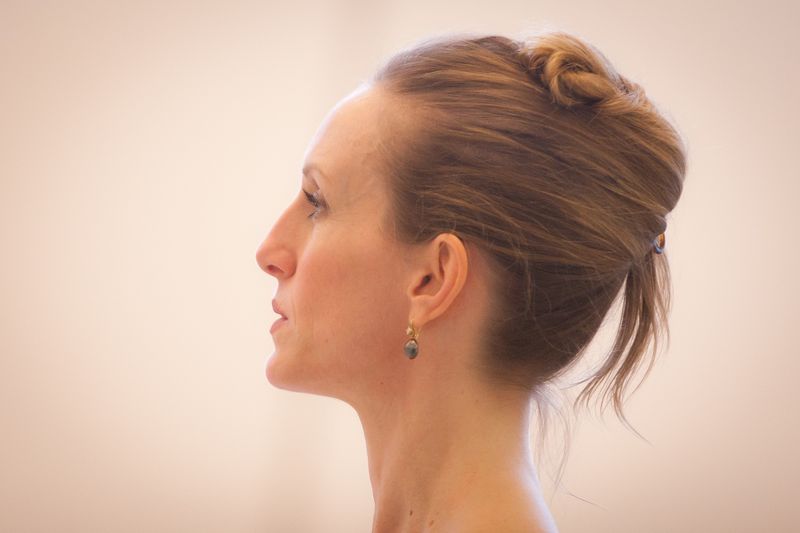
    ww by matt murphy

    Above: Wendy Whelan, photographed by Matt Murphy

    Saturday October 18th, 2014 – No two ballerina farewells are ever alike. Darci Kistler’s farewell marked the end of an era, as she was considered “the last Balanchine ballerina”. At Heléne Alexopoulos’ gala we celebrated one of the greatest beauties ever to grace the stage. Yvonne Borree’s farewell was the most touching, Kyra Nichols’ the most moving. I missed the farewells of Jenifer Ringer and Janie Taylor, saying ‘goodbye’ to them in the days prior to their final bows, simply because I couldn’t imagine NYCB without them. Miranda Weese wasn’t given the full farewell treatment as she wasn’t retiring, just changing companies. I missed her even before she was gone, and I still miss her.

    Tonight, Wendy Whelan’s farewell summoned up an enormous range of emotions, just as her dancing has always done. The programme was well-chosen to underscore her association with four great choreographers, including a complete performance of one of her signature ballets, Balanchine’s LA SONNAMBULA, excerpts from works by Jerome Robbins, Alexei Ratmansky, and Christopher Wheeldon, plus a special pièce d’occasion: a new pas de trois devised for Wendy, Tyler Angle, and Craig Hall in a choreographic collaboration of Chris Wheeldon and Alexei Ratmansky.

    Daniel Capps was on the podium for the opening SONNAMBULA and the concluding Vivaldi/Richter setting for the premiere of BY 2 WITH & FROM; Andrews Sill led the Shostakovich score for CONCERTO DSCH. Throughout the evening, Company musicians were featured: pianist Cameron Grant playing the Chopin for GATHERING; Susan Walters at the keyboard for CONCERTO DSCH; violinist Arturo Delmoni with Cameron Grant for AFTER THE RAIN; and violinist Kurt Nikkanen for the Vivaldi/Richter. For each of them, Wendy had a very cordial greeting, and at the end of the evening she stepped to the edge of the stage and swept into a deep curtsey to thank the NYCB orchestra for their invaluable support throughout her career. That was a particularly lovely moment.

    The emotional temperature ran high all evening; in fact several people I talked to spoke of how they had experienced unusual mood swings from giddiness to despair throughout the day, anticipating Wendy’s dancing whilst regretting that it would be her last time on this stage. 

    Following LA SONNAMBULA‘s opening scene and divertissements, Wendy appeared to the first ovation of the night. She conveyed the mystery of the sleepwalker with her pin-pointe bourrées; in a trance, she managed to totally ignore Robert Fairchild’s endless attempts to intrude on her private world. Earlier in the work, Sara Mearns, Amar Ramasar, Likolani Brown, Megan Mann, Devin Alberda, David Prottas, Lauren King, Antonio Carmena, and Daniel Ulbricht were all vividly present, and they joined in the applause for Wendy during the bows.

    In the DANCES AT A GATHERING excerpt, Wendy joined Abi Stafford and Rebecca Krohn in dances of sisterly joy; Jared Angle, Adrian Danchig-Waring and Zachary Catazaro were the handsome cavaliers. In the passage where the girls are flung from one boy to the next, Zachary made an amazing catch of Wendy as she hurtled thru the air into his arms.

    It was that poignant piano theme in Shostakovich’s concerto #2 – played with great clarity by Susan Walters – that really put me over the edge. Wendy and Tyler Angle danced the adagio from CONCERTO DSCH luminously, with such expressive lyricism. A beautiful sextette of supporting dancers conveyed the quiet intensity of the little vignette Ratmansky has created for them here: Alina Dronova, Gretchen Smith, Lydia Wellington, Joshua Thew, Justin Peck, and our newly-promoted-to-soloist Russell Janzen. How thrilled they all must have been to share these moments with Wendy one last time.

    Wendy and Craig Hall then danced the pas de deux from Wheeldon’s AFTER THE RAIN, holding the audience in an enraptured state as the crystalline purity of the Arvo Pärt’s ‘Spiegel im Spiegel’ stole thru the silent hall in all its poignant grace. It seemed that time stood still here, allowing us to immerse ourselves in the spell-binding artistry of these immaculate dancers.

    In between the three above-listed shorter works, brief films were shown while Wendy changed costumes. In these films, the ballerina I have had the honor to know revealed so many facets of her personality. In one utterly Wendy moment, she played up the mock-jealousy of finding Craig Hall emerging from a rehearsal with ‘another woman’: Rebecca Krohn. That made me laugh out loud. 

    And all to soon, we had reached the end. The Ratmansky/Wheeldon collaboration provided an excellent setting for Wendy’s last dance on Mr. B’s stage. With her two princes – Tyler Angle and Craig Hall – she conveyed the supple strength, tenderness, gentle wit, and sheer overwhelming beauty that have made her one of the great dance icons of our time. The ballet ends with Wendy reaching for the stars.

    At a farewell, the actual dancing often takes a back-seat to the event. The ballerina appears in selections from her cherished roles and as we savor her artistry one last time while secretly we are looking forward to the downpour of rose petals, the flinging of bouquets, the embraces of colleagues, the inevitable “last bow”, and the opportunity to express our admiration in unbridled clapping and shouting.
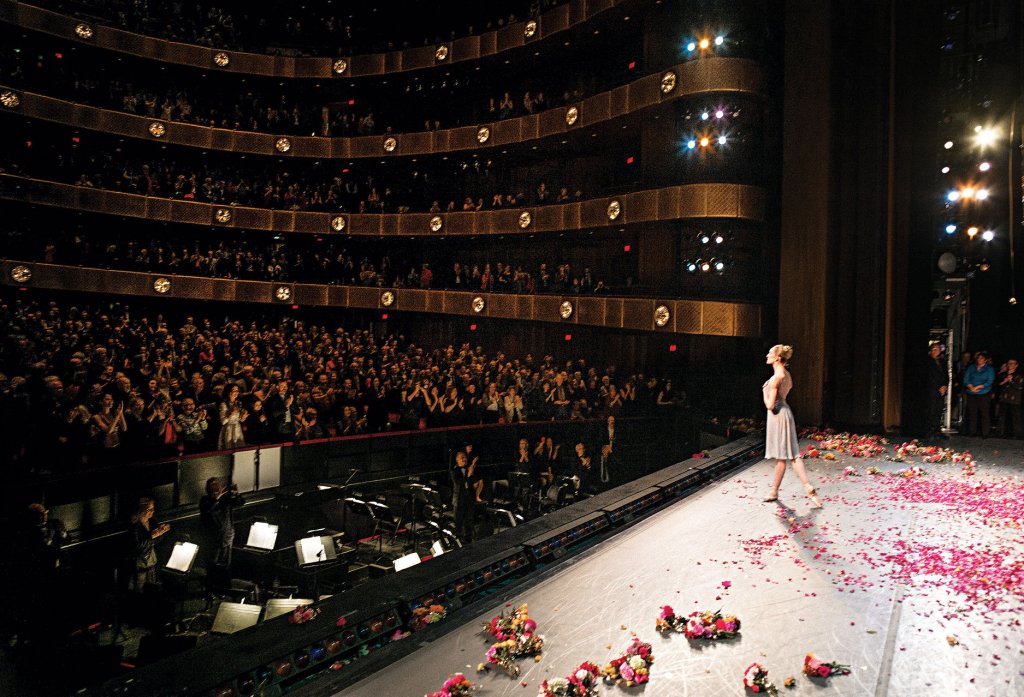
    ww farewell

    For Wendy, the huge ovation at the end signified not only our appreciation for all she has accomplished in her magical career to date, but also our plain unvarnished love for her as a human being.

    As the applause at long last echoed away, I started walking up Broadway, planning to attend the after-party. But then I just felt a need for solitude and reverie, so I jumped on the train at 72nd Street and came home. I was thinking yet again that it has been my great good fortune to have been in this City at the same time as Wendy Whelan.

    LA SONNAMBULA: Whelan, R. Fairchild, Mearns, Ramasar, Mann, Brown, Alberda, Prottas, King, Carmena, Ulbricht

    DANCES AT A GATHERING (Excerpt): A. Stafford, Whelan, Krohn, Danchig-Waring, Catazaro, J. Angle [Solo Piano: Grant]

    CONCERTO DSCH (Second Movement): Whelan, T. Angle [Solo Piano: Walters]

    AFTER THE RAIN Pas de Deux: Whelan, Hall [Solo Piano: Grant; Solo Violin: Delmoni]

    NEW WHEELDON/RATMANSKY (World Premiere): *Whelan, *T. Angle, *Hall [Solo Violin: Kurt Nikkanen]

    (It took me a long time to settle on a portrait of Wendy to headline this article. Matt Murphy took the picture at the top when Wendy guest-taught a class at Manhattan Movement and Arts Center a couple of years ago. To me, the photo is her…I love the wispy strands of hair at the nape of her neck, and her utterly unique beauty.)

    Bringing this story up to date, Wendy is currently the Associate Artistic Director of the New York City Ballet.

  • My First – and Only – Public Appearance

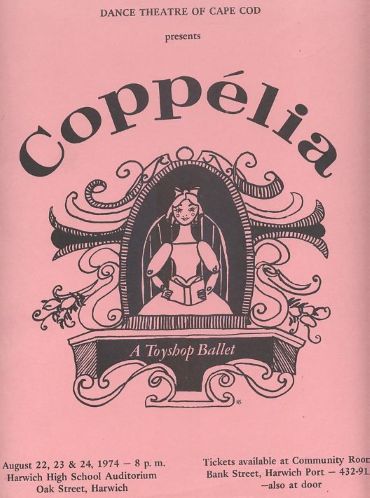
    coppelia size

    (This article originally appeared on Oberon’s Grove in 2008. I’ve brought it forward to the Glade as it’s about an especially meaningful period of my life.)

    When I was twenty-five I fell in love with a 17-year-old kid who spent his summers working for a small ballet company, Dance Theatre of Cape Cod. He invited me to spend a summer with him there; we would live in a room in a big house in Harwichport across the street from the studio.

    Within a week after we got there, he was totally immersed in the ballet. They were mounting COPPELIA at the end of the summer; he was dancing Franz and also was the business manager for the school. He and Helen, the woman who ran the program, were very close. I could see that I was going to be playing second fiddle to COPPELIA all summer.

    At this point in my life, I had never seen a ballet performance; just tidbits on TV. I was a big opera fan, but whenever there was a ballet in an opera performance I was bored to death.

    coppelia 2

    The studio was located behind (and connected to) the Harwichport Town Library, directly across the street from the house where we were staying. So, the music of COPPELIA wafted over from the studio, and that drew me there. When I first walked into the studio I was much intrigued by the musty smell of old costumes that were hung out to air, and the girls (ages 8-16) were dazzled to have a man watching them. They became giggly and adorable.

    The teacher eyed me with the sort of interest that small-time ballet mistresses have eyed young men for decades: could she transform me into a “dancer”?  She had TJ to play Franz, she had a local actor to play Doctor Coppelius, and the boyfriend of one of the girls to play the Mayor. She wanted very much to have another male in her production, especially to pique the jealousy of the rival ballet school a few miles away.

    “I’m planning to stage a little folk dance in the third act,” she said to me. “Would you think about it? I’ll make it easy for you…” TJ was poking me in the ribs, “Say yes!” She played the piece for me: it would be myself and one of the girls; the music (which Balanchine uses for the Jesterettes) was bouncy and the piece was short.  Realizing that if I didn’t join in I would be seeing very little of TJ all summer, I said OK.

    Then came the clincher: I had to take class. This gave me pause, but only for a minute. I was slender then, and in reasonably good shape. We drove to a small dance supply shop in Hyannis where TJ helped me get a dance belt, tights and slippers.

    My first class was a riot. The beginners class, 8- and 9-year-olds, were thrilled to have a man in their class. They all wanted to stand next to me at the barre. When we began tendus, the teacher waltzed up to me and said: ” Point your foot!” to which I replied “Point my foot…at what?”

    The studio had a ghost, Ada, who we contacted nightly using a Ouija board. She was a nurse who told us she had cared for soldiers returning home after World War I. How she ended up in a dance studio was never revealed. (I have since found out that the building did indeed house recuperating soldiers upon their return from Europe!)

    I found that I had a natural affinity for ballet, not that I would have guessed. I began rehearsing my dance; my partner was a beautiful black-haired 14-year-old named Elaine. We got on perfectly. We played a betrothed couple who danced at Swanhilda’s wedding fete. Elaine was light and springy so the lifts were easy.In the dance, she did most of the work. Lots of stomping and romping. The piece ended with me on one knee; I reeled her in from some turns she was doing, she sat on my other knee and we smooched.

    coppelia 3

    Above: only known photo of me wearing tights…with my partner Elaine Aronson, a talented 14-year old.

    Costumes…I wore a blue satin vest, white tights and shirt, and blue suede boots. Elaine wore a white “peasant” dress with red character shoes and flowers in her hair. One of the mothers did my makeup. We had 3 performances, and our dance was a hit. One night one of Elaine’s friends tossed her a bouquet when we were bowing. Little kids asked us for our autographs.

    After that summer TJ and I moved to Hartford; eventually we split up. I continued taking class for about 3 years. Whenever I hear the music of COPPELIA I’m transported back to that sweltering studio and that care-free time.

    Beth Taylor had danced Swanhilda in our performances; the following winter she danced the Sugar Plum Fairy in another company’s NUTCRACKER. TJ and I drove down to the Cape in wintry weather to see her; aside from Beth several of the kids who had been in COPPELIA were dancing in the NUTCRACKER.

    coppelia 4c

    TJ took this picture of me & Beth after the show; it was the last time I ever saw her, or any of the other people I’d spent my memorable summer with.  

  • Shanghai Grand Theatre ~ LADY WHITE SNAKE

    White snake

    ~ Author: Oberon

    Saturday July 26th, 2025 – Wei was with me tonight for The Shanghai Grand Theatre’s production of LADY WHITE SNAKE, playing a brief run at Lincoln Center. The program note provides this outline of the story: “The legend of the White Snake is a classic Chinese folk tale about Bai Suzhen, a snake spirit who transforms into a beautiful woman in order to experience life and love as a human. She falls in love with and marries a mortal named Xu Xian, but their relationship is threatened by a Buddhist monk named Fahaj, who recognizes Bai Suzhen’s true identity. The story explores themes of love, sacrifice, and the conflict between the mortal and supernatural worlds.”

    There’s much more to the story than that, but I chose to focus more on the choreography and the music rather than on the narrative. The Shanghai company, under the direction of the marvelous Yuanyuan Tan, a longtime star of San Francisco Ballet who I once had the opportunity to meet, is full of beauteous dancers of both sexes. 

    I guess I was expecting a more mythic approach to the story; much of the time the look and feel were quite contemporary. Most of the visuals were stunning. The musical score, by Xu Zhou, which featured passing nods to Chinese folk music, was – in general – more redolent of Rachmaninoff and Borodin: grand, cinematic, and a bit glossy. The choreography, by Wang Peixian, is mainly rooted in classical ballet, with some acrobatic passages for the men woven in. Sets, lighting, and video designs were all strikingly impressive, especially the presence of an enormous bell hovering over the scene.  

    It’s been a while since I took notes in the House of Balanchine; I’d forgotten that it’s nearly as pitch-black as The Joyce. I soon found that I’d over-written existing comments with newer ones. 

    The storytelling was quite clear in Act I; Act II was less compelling, with some scenes feeling over-extended. The choreography lost some of its potency as the ballet progressed, though the level of dancing never faltered. The principals in the cast danced and acted to perfection: Liu Sirui as the White Snake and Wang Nianci as the Green Snake are beauties: my husband referred to them as sisters. Both women danced and acted with finesse and deep commitment. Sun Jiayong as Xu Xian, husband of the White Snake, was poetic, elegant of movement, and an attentive partner. As the rather sinister Psychologist, Fa Hai, Su Hailu gave a stunning performance, his acrobatic feats dazzling to behold. 

    Though losing some momentum after the interval, the production continued to be visually engrossing. The audience seemed thoroughly tuned in to the story-telling, though I began to think the tale of Lady White Snake might be more persuasively told as an opera rather than a ballet. A bit of research revealed that there is indeed an operatic setting of the story: Madame White Snake, composed by Zhou Long and premiered in Boston in 2010; two friends of mine – Ying Huang and Michael Maniaci – were in the cast. 

    The evening ended with a tumultuous ovation and a set of staged curtain calls that sustained the applause for several minutes. One delightful aspect of the performance for me was running into my long-time fellow NYC Ballet fan, Lynne Goldberg, and two of my beloved Graham divas: Xin Ying and Natasha Diamond-Walker.

    ~ Oberon

  • Hubbard Street @ The Joyce

    Shota

    Above: Shota Myoshi of Hubbard Street Dance Chicago

    ~ Author: Oberon

    Wednesday March 20, 2024 – So great to see Hubbard Street Dance Chicago again! When I lived in Hartford, we’d go up to see them each Summer when they came to Jacob’s Pillow. Tonight at The Joyce, they offered a finely-devised program which was musically and stylistically varied, and superbly danced.

    Coltrane choate burnett foto michelle reid

    Above: dancers Jacqueline Burnett and Aaron Choate in Coltrane’s Favorite Things; photo by Michelle Reid

    Lar Lubovitch’s Coltrane’s Favorite Things was created in 2010 and was taken into the Hubbard Street rep in 2023. I confess that I’ve had a lifelong allergy to jazz, and while I admire John Coltrane’s inventive take on the Rogers and Hammerstein hit from The Sound of Music, I must admit that there were times when the music seemed endless. But: no worries! Mr. Lubovitch’s flowing, fleet-footed choreography filled the stage with movement, and the dancers seemed to be having a blast dancing it. 

    There may have been some cast changes from the listing in the Playbill, but one distinctive dancer stood out: Shota Myoshi (photo at the top) is a petite young man who dances large. His sheer joy at executing the technical feats of the choreography seemed to set the tone for his colleagues. Everyone danced their hearts out, winning a vociferous ovation at the end of the piece.

    On leaving the hall at the end of the show, I ran into the irrepressible JJ (aka Jonathan E Alsberry), an iconic Lubovitch dancer who is now Senior Rehearsal Director at Hubbard Street. And with him was the great man himself: Lar Lubovitch. So wonderful to see them again!

    Rena butler

    Hubbard Street’s giving the New York premiere performances of Rena Butler’s Aguas Que Van, Quieren Volver during this run; production photo above. It is a captivating work in every regard. And the first acclaim goes to lighting designer Julie E Ballard; her settings seemed to create a narrative of their own in the work, which details the shifting emotions of a ménage à trois. From some performance photos I found, it looks like this piece is sometimes danced (as tonight) by a man and two women, and other times by a woman and two men. 

    This evening, the dancers were Jacqueline Burnett, Simone Stevens, and Eliot Hammons. They were technically perfect, and emotionally powerful. Each has solos to dance – Ms. Burnett’s being particularly well-choreographed, and beautifully danced – and the partnering ranges from sexy to quirky. Ms. Stevens brought a nervous energy to her dancing, and a personal intensity, whilst the tall Mr. Hammons moved and partnered with a distinctive personal grace; he seemed to be holding the triangle together by sheer force of will and desire. The music, which often has a sexy sway, was sublime, especially the ‘title song’.

    At the end, order is restored – at least for the moment: beautiful final image of the threesome standing together. The work captivated me on a personal level, as I recalled the difficulties we faced in our own ménage à trois back in the early 1990s. Jealousy undid us.  

    Barton

    The program ended with a masterpiece: return to patience by Aszure Barton, sent to a score by Caroline Shaw that may have been inspired by Satie.  To me, this seemed to be a contemporary renewal of the tradition of ‘the white ballet’: everything is purely and wondrously white as the lights slowly come up on the entire company standing in place. Balanchine’s Serenade is cunningly given a graceful nod as the dancers in unison shift their feet into first position. Thereafter, thoughts of Swans, Wilis, Shades, and Sylphs constantiy dance thru the mind. Solos (again Ms. Burnett and Mr. Hammons stood out) are woven into passages for groups and fleeting partnering motifs. Mr. Myoshi was again entrancing.

    The group dances in sync, with lyrical arabesques and slow ‘leaning’ passages.The tempo speeds up, but only a bit, for another solo from Mr. Hammons, joined by a sextet. The movement becomes more animated, with a male quartet and a female solo observed by all in a semi-circle. There is a reverential bow, but that is not quite the end.

    Ms. Barton’s work held the audience under a spell, and then the dance seemed to recede as if we had experienced a dream that fades away. There was a moment of silence, before the audience responded with fervent applause.    

    ~ Oberon

  • Farewells: Amar Ramasar

    Amar

    Above: New York City Ballet principal Amar Ramasar

    Author: Oberon

    Sunday May 29th, 2022 matinee – This afternoon, we bade farewell to one of New York City Ballet‘s most popular stars: Amar Ramasar. I remember so clearly seeing the handsome young man with the engaging smile for the first time on Mr. B’s stage during the 2000-2001 season. His ascent thru the ranks came quite soon and seemed inevitable: a soloist by 2006 and a principal in 2009.

    Thru the ensuing seasons, I enjoyed seeing Amar countless times. Among the ballets in which he made a vibrant impression were Balanchine’s AGON, BRAHMS-SCHOENBERG QUARTET, FOUR TEMPERAMENTS, LIEBESLIEDER WALTZES, STRAVINSKY VIOLIN CONCERTO, SYMPHONY IN C, SYMPHONY IN THREE MOVEMENTS, UNION JACK, and WHO CARES?; Jerome Robbins’ DANCES AT A GATHERING, FANCY FREE, FOUR SEASONS, GLASS PIECES, IN THE NIGHT, and WEST SIDE STORY; Bigonzetti’s OLTREMARE, LUCE NASCOSTA, and AMARIA; Peter Martins’ CHICHESTER PSALMS and FEARFUL SYMMETRIERS; Jorma Elo’s SLICE TO SHARP; and Ratmansky’s RUSSIAN SEASONS and PICTURES AT AN EXHIBITION.

    Amar has also appeared on Broadway in CAROUSEL and WEST SIDE STORY.

    Amar discusses Ratmansky’s PICTURES AT AN EXHIBITION here.

    Here’s some photos of Amar with his renowned partners:

    Amar & becky russian seasons john ross

    With Rebecca Krohn in RUSSIAN SEASONS; photo by John Ross

    Amar starling symph in 3 moves kolnik

    With Sterling Hyltin in SYMPHONY IN THREE MOVEMENTS; photo by Paul Kolnik

    Amar tess fearful symetries kolnik

    With Teresa Reichlen in FEARFUL SYMMETRIES; photo by Paul Kolnik

    Amar tess polyphonia kolnik

    Again with Tess, in POLYPHONIA; photo by Paul Kolnik

    Amar tiler divert 15 kolnik

    With Tiler Peck in DIVERTIMENTO #15; photo by Paul Kolnik

    Tess amar  C Duggan in the night jpg

    With Teresa Reichlen in IN THE NIGHT; photo by Christopher Duggan

    AMARIA jpg

    With Maria Kowroski in Mauro Bigonzetti’s AMARIA, danced at Maria’s farewell performance

    Twirl sara amanda amar

    Above: in 2010. Amar appeared with Sara Mearns and Amanda Hankes in Kristin Sloan’s brief film, TWIRL; I was planning to post a link to the film here, but it’s no longer available. Sara was to have danced Titania in Amar’s farewell performance this afternoon, but she was out with an injury.

    I met Amar in passing several times, and once at one of Emery LeCrone’s rehearsals. He was always extremely friendly and upbeat, and always ready with an infectious laugh.

    ~~~~~~~~~~~~~~~~~~~~~~~~~~~~~~~~~~~~~~~~~~~~~~~~~~~~~~~~~~~~~~~~~~~~~~~~~~~~~~~~~~~~~~~~~~~~

    I’ve loved Mr. B’s MIDSUMMER NIGHT’S DREAM ever since I first saw it in May of 1977 with a fantastic cast headed by Karin von Aroldingen and Robert Weiss as the fairy queen and king, Patricia McBride and Helgi Tomasson in the second act pas de deux,and Jean-Pierre Frohlich (no less!) as Puck. You can see how I became spoiled rotten from my early days of ballet-going.

    Amar sterling

    For his farewell, unfortunately, Amar did not have an evening of ballets of his own choosing, but rather he was scheduled to dance the divertissement pas de deux in Act II of MIDSUMMER NIGHT’S DREAM with Sterling Hyltin (photo above by Paul Kolnik). In the days running up to the farewell matinee, there were numerous cast changes due to illness and injury; then Amar himself sustained an injury, and it was arranged that he would dance only the adagio in today’s performance; sportingly, Andrew Veyette took over the allegro sections, squiring Sterling handsomely. When Amar finally appeared, the crowd went absolutely berserk, with a roaring flood of applause that obliterated several bars of music.

    Amar looked very serious throughout the adagio, partnering Sterling with tender loving care. They won a tumultuous, extended ovation, embracing frequently as the applause rolled on. In the ballet’s grand finale, Amar finally began to smile – that dazzling smile that has won the hearts of so many ballet fans over the years. 

    The entire performance had a special glow. The orchestra, under Clothilde Otranto’s genial baton, sounded wonderful in this magical score to which Balanchine tells the tale so very clearly, without a wasted note or gesture. Unity Phelan, my first dark-haired Titania since Karin, was lovely, and Daniel Ulbricht’s Oberon was simply delightful both in his virtuosity and his acting. Harrison Ball was a spectacular Puck, his characterization tinged with just a hint of darkness. 

    As the mortals Helena and Hermia, Isabella LaFreniere and Ashley Laracey were finely-contrasted: Isabella the more lyrical and wistful, Ashley the more dramatic. Ashley’s solo, alone in the woods at night, was a masterpiece all its own. Their suitors, Aaron Sanz and Peter Walker, were lively and played their parts engagingly. Gil Bolden was a terrific Bottom, the recently-promoted Chun Wai Chan looked dashing as Titania’s Cavalier, and Alexa Maxwell was a brilliant Butterfly, having her own personal triumph. Dazzling me – and the entire House – with her vivid beauty, spacious dancing, and fabulous fouettés, Emily Kikta displayed full-fledged star-power as Hippolyta, causing the noble Preston Chamblee, as the Duke of Athens, to fall to his knees and ask her to marry him.

    With Puck drifting skyward in the ballet’s final moments, the audience burst into applause; after some bows before the curtain, Amar finally stood alone on the big stage and the audience unleashed a deafening hurricane of cheers. Amar leapt off the stage to embrace Peter Martins, then resumed his place center-stage as a procession of well-wishers came forward to greet him. How wonderful to see the gorgeous Lourdes Lopez and her husband carrying bouquets to Amar; and moments later, Gonzalo Garcia surprised Amar by bringing forth the beloved Joaquin de Luz. The ovation went on and on and on, Amar clearly moved by the outpouring of love. He pounded his heart and seemed on the verge of tears.

    Outside the stage door, a huge crowd gathered to wish Amar well. But after an hour, he still had not emerged, and people began drifting away. If he’d come out sooner, he would have been there til nightfall, signing autographs and being photographed. 

    Amar-Ramasar igor burlak

    Above: Amar Ramastar, photo by Igor Burlak

    Hail and farewell, Amar! Thank you for brightening our lives. I hope I’ll see you around town from time to time in the years ahead.

    ~ Oberon

  • Limón Dance Company @ The Joyce

    José+Limón+-++Photo+by++Paul+Draper

    Above: choreographer José Limón, photo by Paul Draper

    Tuesday April 19th, 2022 – The Limón Dance Company celebrating their 75th Anniversary Season with performances at The Joyce Theatre. This evening marked my third experience watching the Limón troupe: the first was in 2008, and more recently in 2019. There have been quite a few changes in the Company’s roster since my last viewing, including the departures of such entrancing dancers as Jacqueline Bulnés and Jesse Obremski. But the current ensemble is a staggeringly beautiful assemblage of forms and faces.

    Each work was prefaced by commentary from an unseen narrator…spoken by my longtime friend, actor Dion Mucciaito. These brief speeches provided us with interesting background material for the works being performed. But I wish Dion had appeared onstage to impart this information, because…he’s such a great-looking guy!

    Doris Humphrey was José Limón‘s inspiration and mentor. Watching Humphrey’s achingly gorgeous AIR FOR THE G-STRING, created in 1928, gives us a sense of the timeless resonance – and the great necessity – of dance in our lives. Bringing to mind the iconic female danced-rituals of Isadora Duncan, AIR FOR THE G-STRING shows us the value of great music as the inspirational springboard for creating danceworks that will endure.

    Limonphotochristopherjonesairforthegstring2022

    Above: from Humphrey’s AIR FOR THE G-STRING; photo by Christopher Jones

    From the curtain-rise – on the dancers in silhouette against a rose-coloured back-panel – to final pose, AIR FOR THE G-STRING held us under its spell. Five women, clad in simple gowns of varied hues and long Renaissance-style golden cloaks with trains, move slowly in processions and circling motifs. Though not in any way religious in feeling, it conveys a depth of spirituality that speaks to me poignantly.

    This evening, Frances Lorraine Samson, a petite woman with a space-filling presence, led the ensemble: Mariah Gravelin, Deepa Liegel, Jessica Sgambelluri, and Lauren Twomley…distinctive beauties all. This Humphrey work is part of that long continuum of dances of sisterhood that spans the centuries from the swans, slyphs, shades, and Wilis of classical ballet, through the more intimate Duncan, to Graham’s epic CHRONICLE, Balanchine’s SERENADE, Robbins’ ANTIQUE EPIGRAPHS, and Lydia Johnson’s CROSSINGS BY RIVER. Watching this spell-binding work tonight gave me an incredible lift of spirit – something so desperately needed in these bleak days as the world sometimes seems to be crumbling around us.

    Two Limón masterpieces were central to this evening’s program. The first of these, PSALM, dates from 1967. The choreographer drew inspiration from the French author Andre Schwarz-Bart’s semi-historical novel, “The Last of the Just,” which traces the martyrdom of the Jews through thirty-six generations of the Levy family, ending at Auschwitz.

    Limonpsalmphotobychristopherjones infrontnicholasruscica

    Above: Nicholas Ruscica in Limón’s PSALM; photo by Christopher Jones

    For PSALM, Limón was unable to obtain the music he wanted to use – Stravinsky’s “Symphony of Psalms” – so he created the work in silence. Nearing the date of the premiere, the choreographer asked composer Eugene Lester to provide a score, based on his “million counts”. Later, Limón disciple Carla Maxwell, feeling the choreography called for something grander, commissioned a score from Jon Magnussen which included a full chorus, ten instruments, and a baritone soloist; it was to the Magnussen score that I saw PSALM performed in 2019. This evening, the Lester score – more intimate and highly personal – was back in place. Lester’s score is percussion-based, features a male singer/speaker, and somehow feels right.

    Superbly lit Al Crawford, PSALM is a story of the triumph of the human spirit over death, created by Limón at a time when his own untimely death from pancreatic cancer loomed before him. The Lester score, while quite spare in contrast to the Magnussen, provides vividly contrasted rhythms which give the dancers an aural roadmap for the movement. 

    Eight dancers appear, seemingly searching for someone…or something. The whole Company then takes the stage, moving in finely-wrought patterns. In one passage, they kneel in a row, reminding me yet again of Robbins’ ANTIQUE EPIGRAPHS. Dancer Nicholas Ruscica was the central figure in tonight’s performance, commencing with a solo to the sound of a baritone voice. We hear the word “Adonai” (Hebrew for ‘God’) which put me in mind of Krzysztof Penderecki‘s monumental SEVEN GATES OF JERUSALEM; with such references, PSALM became more and more meaningful to me as it progressed.

    Mr. Ruscica’s dancing was very subtle and expressively detailed. As the comings and goings of the populace surged around him, the danseur‘s movement took on a hypnotic, other-worldly feeling. He collapses; to delicate music, the women tend to him. He then awakens and begins to dance, first on his knees, and then – gathering strength – he rises. The group swarm about him in a celebratory dance. Circling in a dazzling passage, they lift him aloft. 

    PSALM thrilled me tonight, even more than it did in 2019. To me, it seems a dance very much for our time. All of the dancers are captivating to watch, and each has a distinctive personality. Mariah Gravelin, Savannah Spratt, and Lauren Twomley had featured roles among the women, with the ladies from the opening Bach work all dancing divinely here. Terrence D. M. Diable, B. Woods, Joey Columbus, MJ Edwards, and Johnson Guo are the Company’s wonder-men, and it was great to see Robert M. (‘Buddy’) Valdez again, very tall and handsome, with eyes that dazzle. In this large-scale scale work, dancers from Limón 2 – Erin Hollaman, Nicole Miera, and Sabrina Olivieri – joined the full Company.

    José Limón created the solo CHACONNE in 1942 to the familiar music from Bach’s violin Partita #2. Onstage tonight, standing in separate pools of light, were violinist Johnny Gandelsman and guest-artist dancer Shayla-Vie Jenkins. Ms. Jenkins, a poised beauty with the gift of lyrical grace, wore trousers and a soft, loose-fitted blouse. When Mr. Gandelsman struck up the familiar Bach piece, the dancer began to move in place, her expressive arms and hands speaking to us in dance’s silent language. Later her movement becomes almost balletic, her dancing at once supple and courtly. With the violinist’s subtle nuances tempting the ear, the two made this Limón gem a sheer delight.

    Limononlyonewillrise.photochristopherjones.dancersSavannahSpratt MJEdwards BWoods(jumping)

    Above: Samantha Spratt, MJ Edwards, and B Woods in Tarpaga’s ONLY ONE WILL RISE; photo by Christopher Jones

    In line with the current quest for choreographer-based companies to find new works to provide fresh opportunities for their dancers once the founding choreographer has passed away, tonight we saw ONLY ONE WILL RISE, choreographed by Olivier Tarpaga. This work tells of the ‘dark horse’, the person who unexpectedly triumphs in the end: in this case, it was the the youthful-looking MJ Edwards, who made a very fine impression both in movement and presence, with a poetic face. The choreographer provides brief solos for the other dancers, too, as well as well-constructed ensemble passages. The work is quite dark, and the final illumination of the dancers, with Mr. Edwards having risen in their midst, was a beautiful moment.

    LimononlyonewillrisedancersJohnsonGuo  Nicholas Ruscica  Lauren Twomley

    Above: Johnson Guo, Nicholas Ruscica, and Lauren Twomley in ONLY ONE WILL RISE; photo by Christopher Jones

    What gave ONLY ONE WILL RISE its appeal was the music, composed by the choreographer and guitarist Tim Motzer, and played live onstage by Mr. Motzer, with his fellow musicians Daniel Johnson and Saidou Sangare. They were fantastic.

    It’s not easy to find danceworks that can appear on programs alongside the masterworks of some of the world’s all-time greatest choreographers without being eclipsed. The Balanchine, Graham, and Taylor companies have to work in this current situation, as does Limón. Perhaps though, it’s true that – as Miki Orihara once said – “To find the future of dance, we must look to the past.”

    ~ Oberon

  • Farewells: Gonzalo Garcia

    Apollo-Garcia jpg

    Above: Gonzalo Garcia in George Balanchine’s immortal APOLLO

    Sunday February 27th, 2022 matinee – Gonzalo Garcia, one of the handsomest men ever to grace the ballet stages of the world, bade farewell to the New York City Ballet this afternoon.

    Gonzalo, a native of Zaragoza, Spain, won the Prix de Lausanne in 1995 at the age of 15 – the youngest dancer to win that coveted prize. He joined San Francisco Ballet in 1998 at the age of 18, and at 22 he became a principal dancer there.

    In 2007, Gonzalo made a great leap from one coast to the other, leaving San Francisco Ballet to join New York City Ballet. Since then, he has performed many roles for us here; among them, I have especially loved his Apollo, Oberon in MIDSUMMER NIGHT’S DREAM, the Princes in the Peter Martins productions of SWAN LAKE and SLEEPING BEAUTY, Franz in COPPELIA, the principal male roles in BALLO DELLA REGINA, RUBIES, and BAISER DE LA FEE, the leads in Jerome Robbins’ OPUS 19/THE DREAMER, DANCES AT A GATHERING, and GLASS PIECES, in Christopher Wheeldon’s POLYPHONIA and LES CARILLONS, and Alexei Ratmansky’s CONCERTO DSCH. Most recently, I greatly enjoyed seeing Gonzalo in Justin Peck’s ROTUNDA, an excerpt from which he danced at his farewell gala.

    Some wonderful Gonzalo Garcia partnerships:

    Gonzalo scheller beauty

    Above: Gonzalo Garcia and Ana Sophia Scheller in SLEEPING BEAUTY; photo by Paul Kolnik

    Gg & starling rubies kolnik

    Above: Gonzalo with Sterling Hyltin in RUBIES; photo by Paul Kolnik

    Other dances tiler baiano

    Above: Gonzalo with Tiler Peck in OTHER DANCES; photo by Erin Baiano

    Megan f gg nutcracker

    Above: with Megan Fairchild in NUTCRACKER

    When time has allowed, Gonzalo has danced as a guest artist:

    Gg guesting strs &stripes

    …in STARS AND STRIPES at a gala in Italy

    Gg guesting giselle madrid

    …and, in Madrid, as Albrecht in GISELLE

    Gg morphoses kokyat

    Closer to home: dancing with MORPHOSES in Central Park 2009; photo by Kokyat

    Gg

    And in this charming film, Gonzalo shows us how he kept in shape at home during the pandemic.

    ““““““““““““““““““““““““““““““““““““““““““““““

    For his farewell performance at New York City Ballet, Gonzalo danced works by Balanchine, Robbins, and Justin Peck. The program was book-ended by ballets set to two of Sergei Prokofiev’s most fascinating scores: the Violin Sonata #1 in D-major sets the stage for my favorite Jerome Robbins ballet – OPUS 19/THE DREAMER – and PRODIGAL SON, which marked the only time George Balanchine used Prokofiev’s music. In between, a studio film of Gonzalo working on a solo from Justin Peck’s ROTUNDA (to a fine Nico Muhly score) was followed by a live performance of part of the ballet, with its cast of twelve. Andrews Sill was on the podium, and Kurt Nikkanen’s playing of the violin concerto was simply spectacular. How meaningful it was today to hear the scores of Prokofiev, a son of the Ukraine.

    During the interval, I loved running into Carlos Lopez, Charles Askegard, David Fernandez, and Wendy Whelan.

    Gonzalo was alone onstage as the curtain rose on OPUS 19, and the audience greeted him with a warm round of applause. His opening solo as the restless dreamer was hypnotically beautiful…his arms and hands are so expressive. For this occasion, two ballerinas took turns dancing with Gonzalo: first, Sterling Hyltin skimmed about the space with an airy lightness before their sublime pas de deux. Tiler Peck then appeared for the allegro passages, and then Sterling returned; it was Tiler who ended the ballet, resting her head on Gonzalo’s palm. The corps danced splendidly, and the three principals exchanged embraces of mutual affection during the curtain calls.  

    The filmed excerpt from ROTUNDA gave us an up-close view of the danseur at work, whilst the soundtrack included accolades from Gonzalo’s colleagues and his own words about what it means to be a dancer. The live performance went brilliantly, Gonzalo sharing some moments with another of his frequent partners, the spirited Megan Fairchild. The ballet ends with Gonzalo rushing forward into a sudden blackout.

    The distinctive setting for PRODIGAL SON was created in 1929 by painter Georges Rouault. This poignant ballet tells of a young man who leaves his home and his gentle family to find excitement in the wide world; seduced, beaten, and abandoned, he returns home in shame and abject misery only to be enfolded in his father’s loving arms. Gonzalo, looking youthfully handsome, danced the role with the verve and commitment of a spirited teenager. His degradation and downfall were poignantly portrayed, and the moment where he creeps into his father’s forgiving embrace was extraordinarily moving.

    Sara Mearns was the deceitful Siren. Harrison Coll and Lars Nelson excelled in their dancing “duel”, and Mary Elizabeth Sell and Jenelle Manzi were lovely as the sisters. Arron Sanz made a profound impression as the father.

    The gala ended with a massive ovation which Gonzalo accepted with humility and great joy, pounding his heart with his hand to express his love for us. His colleagues came out one by one, presenting flowers and hugs: they all seemed genuinely sincere. Then Gonzalo’s husband came out, and they shared a kiss, to the audience’s great delight. And so, Gonzalo finished his dancing career while still at peak form, truly one of the finest – and best-loved – dancers I’ve had the pleasure to watch.

    ~ Oberon

  • YCA Presents Martin James Bartlett

    Bartlett_martin_james

    Above: British pianist Martin James Bartlett

    Author: Oberon

    Thursday February 24th, 2022 – Young Concert Artists presenting pianist Martin James Bartlett in recital at Merkin Hall.

    Opening his refreshing and unique program with two Bach transcriptions, Mr. Bartlett immediately established himself as an engaging artist with his performance of the Busoni arrangement of Ich ruf du dir, Jesu Christ, BWV 639, wherein an air of mystery was created and the sustained to spellbinding effect. This was followed by Dame Myra Hess’s arrangement of Jesu, Joy of Man’s Desiring in which the lyrical flow of the music was enhanced by Mr. Bartlett’s mastery of dynamics.

    The lively animation of Rameau’s Suite in A-Minor, RCT 5/VII. Gavotte et six doubles, was played as a gallant invitation to the dance, with virtuosic spirit in the changing dance rhythms, and a grand finish. 

    Haydn’s Sonata No. 31 in A-flat Major; HOB. XVI:46 began life as a divertimento. Mr. Bartlett’s marvelous agility and sense of fun made the opening Allegro moderato a delight. The Adagio, commencing with a left-handed opening passage, is quite gentle, with some elegant little trills etched in. In the concluding Presto, Mr. Bartlett dazzled us with his virtuosity, whilst introducing sly subtleties along the way. By this point, the engaging young pianist had the audience in the palm of his hand.

    Following the interval, Franz Liszt’s solo piano arrangement of the Liebestod from Wagner’s TRISTAN UND ISOLDE was a wonderful treat, starved as I am for live performances of the music of the Master of Bayreuth. Mr. Bartlett played with great passion, and also great tenderness; again, his dynamic range put a personal mark on this sublime music.

    Contemporary British composer Julian Anderson wrote She Hears to honor the memory of Imogen Holst. Ms. Holst was the daughter of Gustav Holst, and was a composer herself as well as an educator and writer; she was known for her uncanny gift for hearing music on a transcendental level. The Anderson work, and Mr. Bartlett’s playing of it, had a fascinating sense of introspection that seemed to captivate the audience.

    Three Rachmaninoff gems came next. The first two were transcriptions by Earl Wild: both the melodious flow of Where Beauty Dwells and the rhapsodic qualities of the Vocalise, Op. 34, No.14, displayed Mr. Bartlett’s true affinity for the music of the Russian composer. The third Rachmaninoff work, Polka de W.R. was jaunty, and spiced with wry hesitations: music that played to the young pianist’s sense of humor…and his brilliant technique.

    My ballet-loving companion and I were so pleased to hear Ravel’s La Valse as the concert’s closing work, our thoughts drifting back to the many performances of Balanchine’s haunting ballet of the same title that we have witnessed. From its rumbling start, and thru the moods of mystery and drama in which Ravel’s score abounds, we were drawn deeper and deeper into the music. By the final madness, Mr. Bartlett seemed possessed, his fingers sweeping the keyboard with fiery passion to summon the vision of dancing on the edge of a volcano.

    The audience had clearly taken this personable and vastly talented young pianist to their hearts, and he responded to our avid applause with a silken rendition of Gershwin’s Embraceable You.

    ~ Oberon

  • Sara Leland Has Passed Away

    Scanned Section 1-1

    Above: former New York City Ballet principal dancer Sara Leland has passed away.

    In the Autumn of 1974, I had moved into TJ’s dorm room at Sarah Lawrence College, pretending to be a student; he and I were making frequent trips into Manhattan for the opera. We’d spent the Summer on Cape Cod, performing with a small ballet company. I had never liked ballet until I got caught up in it by dancing in COPPELIA. Now that we were living within range of Lincoln Center, TJ began taking me to see The New York City Ballet.
    It was a heady time at NYCB, with Kay Mazzo, Patricia McBride, Karin von Aroldingen, and Violette Verdy as reigning ballerinas. And on our third visit to the House of Mr. B that season, Suzanne Farrell returned to the Company after five years in exile following her falling out with Balanchine…yes, we were there that night.

    Whilst these lovely ladies were giving one spectacular performance after another, both TJ and I had a special affection for Sara Leland, a truly unique ballerina. I first saw Sara in the Valse Mélanconique of TCHAIKOVSKY SUITE #3; a few days later, she danced the third movement of SYMPHONY IN C in Farrell’s return performance. 

    In May of 1975, I saw my first JEWELS, and it was RUBIES that most dazzled me, with Ms. Leland and Marnee Morris, another favorite, in the leading roles. Robert Weiss stepped in on very short notice for Edward Villella that night. Read about it here.

    Helgi and sara

    We went on to see Sara Leland in Balanchine’s UNION JACK (above, with Helgi Tomasson), SYMPHONY IN THREE MOVEMENTS, and VIENNA WALTZES, and in Robbins’ DANCES AT A GATHERING (in Apricot), SCHERZO FANTASTIQUE, GOLDBERG VARIATIONS, AN EVENING’S WALTZES, and THE CONCERT.

    Both TJ and I were especially fascinated whenever Sara danced with Bart Cook. They had a kind of offbeat sexiness, and they somehow could be both edgy and poetic at the same time:

    C2-1

    Another of Sara’s frequent partners, John Clifford, posted a film of SYMPHONY IN C, third movement; watch it here.

    Iwm weslow sara leland

    Sara Leland’s romantic side shines thru in this lovely photo of her with William Weslow in Balanchine’s LA VALSE.

  • Emanuel Ax|Stéphane Denève @ The NY Phil

    Emanuel-ax

    Above: pianist Emanuel Ax

    ~ Author: Oberon

    Saturday October 26th, 2019 – How wonderful to encounter Emanuel Ax again so soon after his lovely performance of the Schumann piano quintet with the Dover Quartet last week at Zankel Hall. Tonight the great pianist joined The New York Philharmonic for Beethoven’s Piano Concerto #1.

    The announced program looked long on paper, and indeed – after an engrossing first half – there was something of a slump with Albert Roussel’s 3rd symphony. It’s understandable that Maestro Stéphane Denève would want to include it, but somehow it did not quite fit in with the other works: it didn’t hold hold up well in the company of Beethoven and Ravel.

    Jennifer+Higdon

    Above: composer Jennifer Higdon

    Jennifer Higdon’s blue cathedral, composed in 2000 in memory of her brother, opened the evening. Read the composer’s eloquent program note on this work here.

    blue cathedral opens with most ethereal of sounds: barely audible at first, the music slowly seeps into our consciousness. Cello, the plaintive flute, clarinet, piano, and harp bring their colours to bear; the strings are lush and grand, with the high violins set against the deep celli and basses. A massive wave of drums and low brass hits like a tsunami. The marimba, oboe, and Cynthia Phelps’ dusky viola are heard: each solo voice seems to evoke a particular memory of the departed.

    The music then becomes cinematic, with a back-beat dynamic. Brass fanfares lead to epic grandeur before calm sets in. Now the solo voices are heard again – flute, clarinet, oboe – and an especially fine passage for a cello/viola quartet as the music fades to the gentle chiming of a solitary bell.

    In her program note, Ms. Higdon wrote about her use of the clarinet, which was her brother’s instrument. It was in the passages for that instrument, sublimely played by the inimitable Pascual Martínez-Forteza, that Ms. Higdon’s moving tribute to her sibling found its most poignant voice.

    Emanuel Ax, ever a welcome guest at the Philharmonic, was warmly greeted as he took his place at the Steinway. The pianist sat quietly as the musical introduction – at first courtly, then stately – sets the mood. Mr. Ax then began his enchanting performance: crystal-clear arpeggios, subtly modulated, drew us in. Beethoven’s font of melody – both for the pianist and the orchestra – is filled to overflowing. In a long paragraph, the pianist displayed his gifts with nimble downhill scales played pianissimo, and cascades of notes of great delicacy, clarity, and warmth.

    Following a majestic orchestral passage, the long cadenza – which seems almost like a sonata in itself – was impeccably delivered, the audience in a state of rapt attentiveness. One sensed that an ovation might erupt at this point, but Maestro Denève was able to forestall an intrusion by keeping a cautionary hand raised.

    Now came the Largo, featuring one of Beethoven’s most gorgeous themes. For the next several minutes, my companion and I were transfixed by the ongoing dialog between Mr. Ax’s keyboard and Pascual Martínez-Forteza’s clarinet. Two great musicians, trading subtleties: mesmerizing! 

    Mr. Ax immediately commenced the concerto’s concluding Rondo: Allegro, bringing to mind – with its jaunty interjections – the ballet Prism which Helgi Tomasson choreographed to this score for New York City Ballet in 2000. The esteemed pianist continued to dazzle us right to the last note, causing the audience to leap to their collective feet as he took his bows; Mr. Martínez-Forteza was also asked to rise, deservedly so.

    An encore was demanded, and Mr. Ax sustained the ballet connection for me with his Chopin, used by Jerome Robbins in his ballet Dances at a Gathering.

    Stephane_Deneve_01_811x486

    Following the interval, Maestro Stéphane Denève (above) brought us two works by his fellow Frenchmen: Albert Roussel’s Symphony #3 (composed 1929-1930) and Maurice Ravel’s immortal La Valse, which premiered in 1930. 

    The Roussel at first seemed wonderfully refreshing: its jazzy, driven, bustling opening augured well for thorough enjoyment. Yet as the work unfolded, it seemed full of ideas but lacking in coherence. The first, second, and fourth movements each felt overly long, and there was a sense of increased audience restlessness. The piece features a lot of ‘big’ music; rhythmic variety and enticing instrumentation are never lacking. Though poignant, witty, and ebullient by turns, the music slips in one ear and out the other, leaving little lasting impression. Some wonderful solo passages for violin, played beautifully by Frank Huang, were appealing.

    Image

    Above: New York City Ballet’s Marika Anderson in George Balanchine’s La Valse

    “We are dancing on the edge of a volcano…” wrote Maurice Ravel’s in his notes for La Valse. Such a timely concept, as our world these days often seems to be rushing toward its doom. This music, which George Balanchine choreographed for his evocative “death and the maiden” ballet of the same title, has been with me for decades.

    Tonight’s performance, under Maestro Denève’s ardent baton, was everything one can hope for in this marvelous music. The musicians made the most of every opportunity, whether by solo or by section. La Valse again entranced with its dark allure and inevitability. Resistance is futile.

    As we were walking down to the subway, my friend Cherylyn Lavagnino and I both spoke of the effect that the playing of Mssrs Ax and Martínez-Forteza in the Beethoven adagio had on us, and of the consolation of such musical experiences in these dark days. Thank you, gentlemen.

    ~ Oberon