Tag: Choreography

  • Lydia Johnson Dance: Returning to Newport

    L1430931

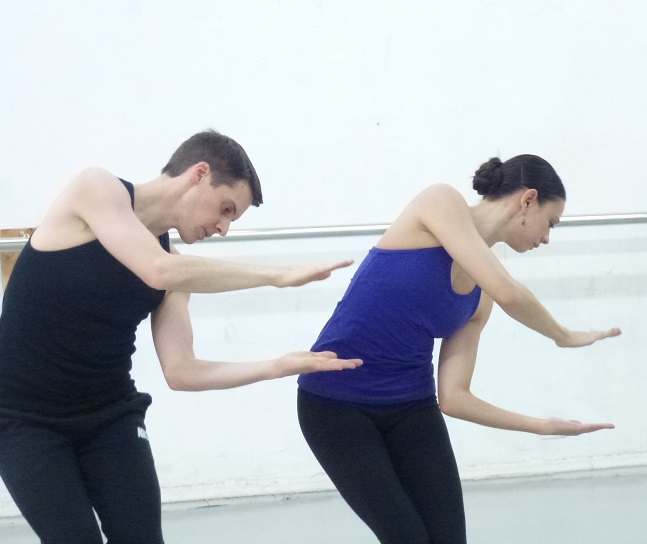
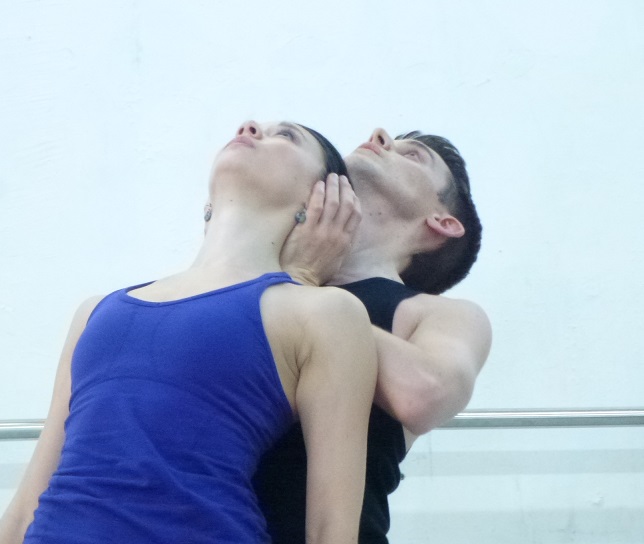
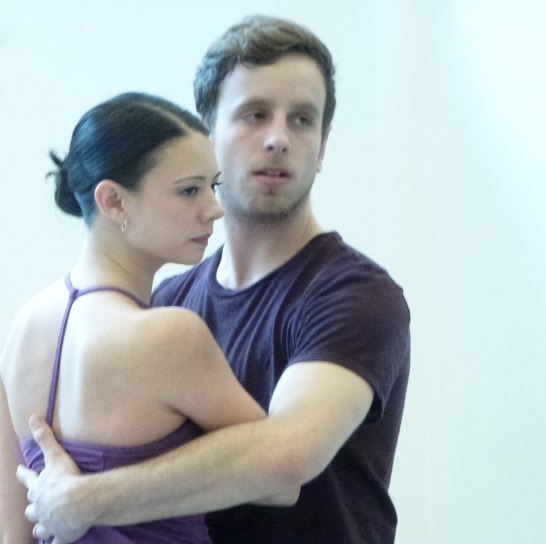
    Above: Sarah Pon and Blake Hennessy-York of Lydia Johnson Dance

    Sunday July 13th, 2014 – Lydia Johnson Dance will have a return engagement at the Great Friends Dance Festival in Newport, RI performing on July 18th, 19th, and 20th, 2014. Details of the festival here.

    For these performances, Lydia has created a new work entitled WHAT COUNTS set to two songs by The Bad Plus: ‘Seven Minute Mind‘ (danced by a trio of women) and ‘For My Eyes Only‘ (a pas de deux). Today I stopped in at Lydia’s studio where she was putting the finishing touches on what is still a work-in-progress; in fact, she is considering adding a third section…but for now, it’s a two-movement dancework that will travel to Newport.

    The music is jazz-oriented and really appealing, and Lydia has set it in her unique balletic style with a particularly pleasing stylized quality. More than anything, the ballet reminded me of Balanchine’s classic APOLLO, in part because it features a single man and three women and also because the music has a Stravinskyian tinge to it.

    L1440215

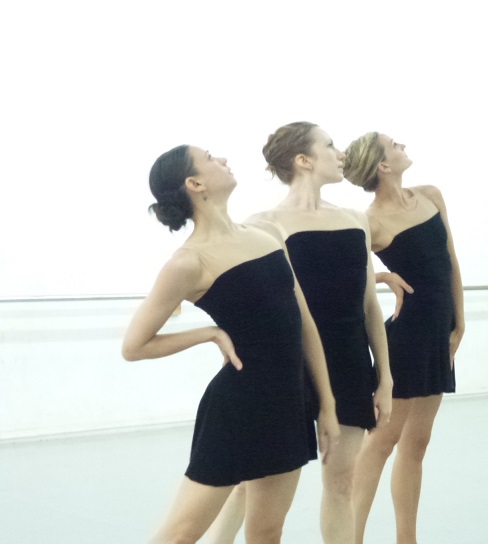
    Sarah Pon, Laura DiOrio and Katie Martin Lohiya

    L1440224

    Trio

    L1430945

    Blake and Sarah: duet

    L1430992

    L1440074

    Final pose

  • Tom Gold Dance: Images from Sofia

    10366055_10152566065832755_6100055162900197831_n

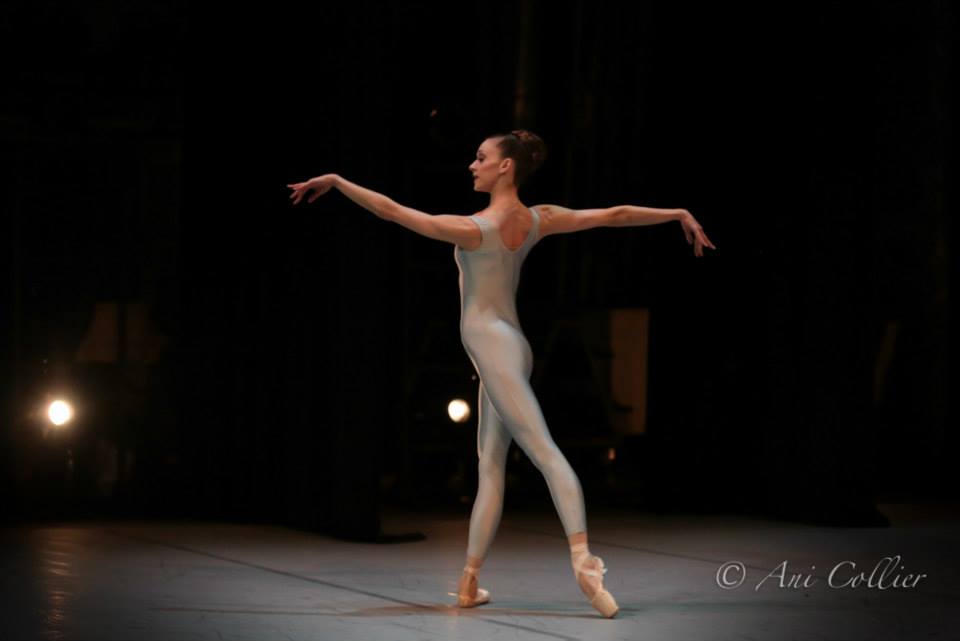
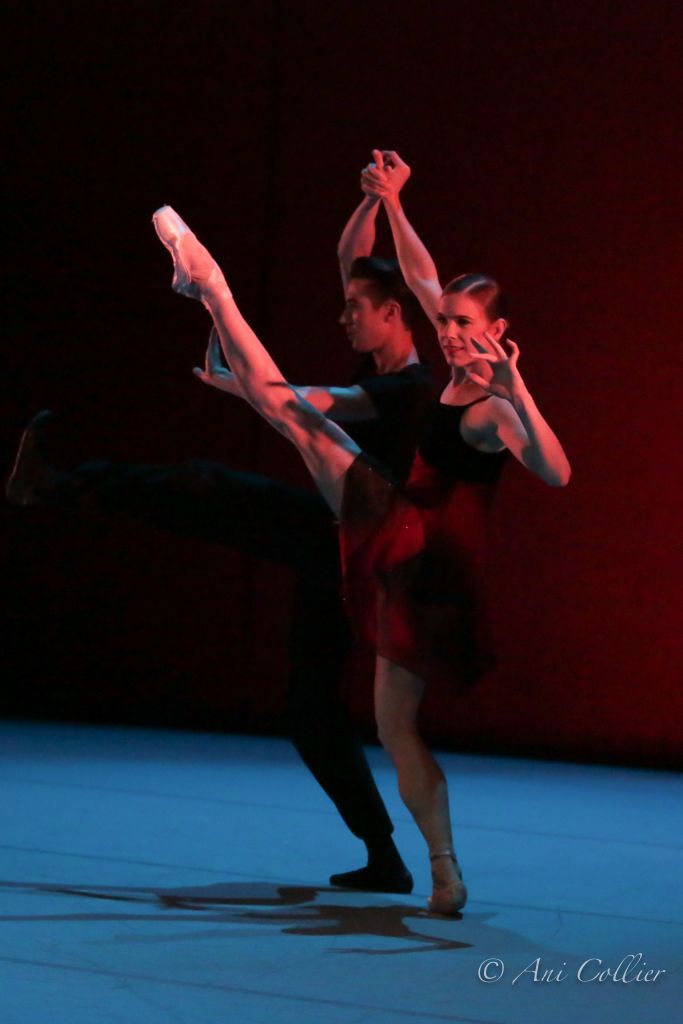
    Above: Pacific Northwest Ballet principal Seth Orza and New York City Ballet principal ballerina Maria Kowroski performing Balanchine’s APOLLO with Tom Gold Dance on their June 2014 tour to Bulgaria; photo by Ani Collier. 

    Tom Gold has sent me some of Ani Collier’s photos from his Company’s recent performances at Sofia, Bulgaria: 

    10304429_10152562878547755_3474847024320160015_n

    Seth Orza in APOLLO

    10475933_10152556875692755_6276963205773144048_n

    Maria Kowroski in Robbins’ CONCERTINO

    PZNOv3fQLxZUJB2weXRxx6extnvCOCoiSI7Q1x-mOlI

    New York City Ballet‘s Daniel Applebaum and Savannah Lowery in Twyla Tharp’s JUNK DUET

    SbNJYkN8ZcPM9aPbYP3dKjNN16Rgo_eA_H3DO9ImQBE

    The ensemble in Tom Gold’s LA PLAGE

    10449964_10152566965962755_2817086933432883500_n

    Pacific Northwest Ballet principal ballerina Carla Korbes with New York City Ballet‘s Andrew Scordato and Devin Alberda in LA PLAGE

    10430868_10152566930407755_6802768218685379841_n

    Carla Kotrbes and Seth Orza in Tom Gold’s GERSHWIN PRELUDES 

    While in Sofia with Tom’s troupe, our beloved Maria Kowroski was the subject of a photoshoot.

    In the week leading up to the tour, photographer Nir Arieli and I had stopped in at one of Tom’s rehearsals: read about it here.

  • Boston Ballet @ Lincoln Center

    10492224_10152189404857607_7335500118768821092_n

    Friday June 27th, 2014 – Boston Ballet have been celebrating their 50th season with performances at Lincoln Center this week. Tonight’s programme looked so tantalizing on paper, and it turned out to be a magnificent evening overall: Vaslav Nijinsky’s Afternoon of a Faun, George Balanchine’s Symphony in Three Movements, Jorma Elo’s Plan to B and Jiří Kylián’s Bella Figura were all superbly danced by the Boston troupe.

    When visiting companies bring Balanchine to New York, I sometimes wonder if it’s a good idea. Can’t you bring us something we don’t see all the time? But understandably, other companies are proud of their Balanchine and want to show off their abilities. Boston Ballet did a great job with The Master’s Symphony in Three Movements, even bringing their own orchestra to play the score. And Boston Ballet has strong Balanchine ties: he became Artistic Advisor to the Company in 1963, gifting them with more than seventeen of his ballets as a gesture of support.

    Curtain up, and I immediately found Shelby Elsbree in the diagonal. The ballet surges forward, with delightful performances by Misa Kuranaga and Jeffrey Curio – the high-bouncing couple – and Rie Ichikawa and Bradley Schlagheck. In the ballet’s central pas de deux, Lia Curio and Lasha Khozashvili excelled. The audience, fortified by a contigent of Bostonians, gave liberal and much-deserved applause to the dancers.

    Boston Ballet had brought their production of Vaslav Nijinsky’s Afternoon of a Faun to Fall for Dance in 2009 and I was mesmerized by it. Seeing the Leon Bakst backdrop and costumes again this evening provided a tangible link to the history of ballet and to that scandalous night over a century ago when Faun set Paris on its collective ear. Tonight, Altan Dugaraa embodied the exotic beauty of the Faun, his mystique and his longings, and Erica Cornejo was the Nymph, miming with stylized perfection. So grateful to have had another opportunity to see this production.

    In 2006, I experienced Jorma Elo’s work for the first time at the New York City Ballet’s premiere of Slice to Sharp. Slice received the longest ovation of any new work I’ve encountered at the ballet over the years: endless curtain calls and a state of euphoria among the crowd. Boston Ballet‘s performance of Mr. Elo’s Plan to B had something of the same a dynamic pungency about it. Illuminated by a large glowing screen stage right, six dancers reveled in fantastical choreographic patterns, flinging themselves into off-kilter leaps and flying across the stage, arms whirling like windmills in a tornado. Dusty Button, Whitney Jensen, Bo Busby, Jeffrey Cirio, John Law, and Sabi Varga danced thrillingly and were deservedly cheered for their jaw-dropping virtuosity.

    Alas, I am afraid Jiří Kylián’s Bella Figura was not really to my liking. Returning from the intermission, we find the dancers already onstage…warming up? Or is it a choreographed passage to start the ballet? Either way, it’s pretentious. Purgatorial and several minutes too long, the Bella Figura seemed to be more about the staging than anything else: black curtains endlessly re-arranged, a complex lighting scheme, flaming braziers bringing a taste of Hell to the stage, dancers coming and going almost randomly. The dancing was of course remarkable, and there are some very attractive passages, most especially when the topless dancers in long red skirts dance in unison. But it seemed to go on and on.

  • A Novel: ASTONISH ME by Maggie Shipstead

    Astonish-Me

    Maggie Shipstead’s ballet-based novel ASTONISH ME draws its title from something Serge Diaghilev reportedly used to say to his dancers: “”Etonnez-moi!” The novel will make a good Summer read for balletomanes who will likely enjoy getting to know book’s characters who are based (loosely or otherwise) on Gelsey Kirkland, Mikhail Baryshnikov, Natalia Makarova, George Balanchine and Suzanne Farrell, among others.

    In the novel, a young American ballerina named Joan is rather mysteriously tapped to assist the great Russian dancer Arslan Rusakov in defecting to the West in 1975. A romance between the two follows, but Arslan eventually ends up with Ludmilla, his Russian lover who has also defected. Joan gives up her dancing career and settles into a solid but conventional marriage. But as her son Harry grows up, he displays a remarkable natural affinity for ballet and he plunges headlong into that world, meeting and being mentored by his idol, Arslan Rusakov.

    The novel is at its most convincing when dealing with the world of ballet and with the devotion, disappointments, amours, addictions and quirks of the various dancers who people the story. Chapters dealing with Joan’s life away from ballet are a bit tedious, but as Harry’s career seems poised to take off, she is drawn back into the center of things. What might be considered the ‘big revelation’ of the story will in fact be rather obvious to alert readers way before it occurs to the characters involved.

    One interesting aspect of the story is that the ‘Balanchine’ character, here called “Mr. K”, succumbs to AIDS.

    The ending of the novel is somewhat under-mined by the convention of having the various interactions of the characters and the inter-twinings of their lives danced out in a ballet; I kept wishing that Shipstead could have found a more vivid way of drawing the threads of the story together, providing us with a less predictable denouement.

    Despite some reservations, the book is very well-written and definitely worth checking out.

  • RIOULT: Martha, May and Me @ The Joyce

    Rioult_4181

    Above: Charis Haines of RIOULT; photo by Paul B Goode

    Saturday June 21st, 2014 matinee – Celebrating twenty years of dance, RIOULT– named for their founder/choreographer Pascal Rioult – offered two programmes at The Joyce. My over-stuffed, end-of-season calendar only showed space for a single performance, and it was a great afternoon of dance.

    May O’Donnell was only a name to me, and one that I honestly had heard only in passing. I knew nothing of her work beyond the fact that she had danced for Martha Graham. RIOULT have revived O’Donnell’s 1943 work, SUSPENSION, set to a score by Ray Green. This ‘blue ballet’ made an absolutely stunning effect as the opening work on today’s programme at The Joyce – a programme in which Pascal Rioult honored the creative influence of two women for whom he danced: Ms. O’Donnell and Martha Graham. In a brief film shown before the O’Donnell was performed, Pascal Rioult spoke of the deep impression made on him when he first saw SUSPENSION; the piece had the same powerful effect on me today. 

    SUSPENSION opens with a marvelous solo danced today by Sara E. Seger. In deep blue body tights, her hair in a ponytail, Ms. Seger is perched upon a pair of powder-blue boxes set stage left. This solo has the feel of an Olympic balance-beam ‘routine’ and was performed with a combination of athleticism and grace by the dancer. Her colleagues, in vari-hued blue body tights then assemble: Jane Sato, Anastasia Soroczynski, Catherine Cooch, Jere Hunt, Holt Walborn, and Sabatino A Verlezza. In stylized movement, they display deep arabesques and open wingspans, striking sustained poses with great control. Their communal rituals are at once stripped-down and ornate; SUSPENSION is as clear as a pristine Summer sky.

    Pascal Rioult’s BLACK DIAMOND (2003) shows O’Donnell’s influence in the gestural language. This duet for two women is set to Igor Stravinsky’s ‘Duo Concertant‘, a work familiar to ballet-goers thru George Balanchine’s ballet of the same name. The curtain rises on a black space pierced by David Finley’s shafts of light. In a smoky atmosphere, dancers Charis Haines and Jane Sato – each atop a large black box – begin to move in parallel solos, sometimes in-sync and sometimes echoing one another. Later they descend to stage level and the dancing becomes more spacious. They return to the heights for the final moments of the ballet, with a breath-taking lighting coup as the curtain falls.

    Earlier this month, photographer Matt Murphy and I watched Charis and Jane rehearsing BLACK DIAMOND – a memorable hour in Pascal’s studio. Read about that experience here, with Matt’s striking images.

    Martha Graham’s 1940 work EL PENITENTE employs a specially-written score by Graham’s ‘dear  indispensability’ Louis Horst. Inspired by the simple penitential morality plays presented by traveling players in the American Southwest, we see the self-inflicted torture of flagellation, the temptation of Adam by Eve, repentance, crucifixtion, and redemption all played out with naive simplicity. Michael S Phillips is the Christ figure and Charis Haines plays all the female roles, from virgin to temptress. With his god-like physique and powerful dancing, Jere Hunt’s Penitent was a perfect portrayal.

    For the afternoon’s closing work, VIEWS OF THE FLEETING WORLD, master-choreographer Pascal Rioult turns to the music of Bach – from ‘The Art of the Fugue‘ – for this seven-part dancework interpersed with empty-stage interludes which create a pensive atmosphere. The ensemble passages, with the dancers sometimes clad in long red skirts, give way to three duets in which the couples appear in evocative vignettes: Marianna Tsartolia and Michael S Phillips in Dusk, Charis Haines and Jere Hunt in Summer Wind, and Sara E Seger and Brian Flynn in Moonlight. Here – and throughout the afternoon – the technical prowess and personal allure of the RIOULT dancers set the choreography in high relief; their commitment and artistry are wonderfully satsfying to behold.

  • Viktoria Tereshkina in ABT’s BAYADERE

    Tereshkina

    Thursday May 29th, 2014 – This red-letter date had finally arrived: the guest appearance of ballerina Viktoria Tereshkina (above) in ABT‘s production of LA BAYADERE. I fell in love with Tereshkina when I saw her dancing Balanchine’s BALLET IMPERIAL with the Kirov at City Center in 2008. Vladimir Shklyarov was this evening’s Solor while ABT‘s beautiful Isabella Boylston portrayed Gamzatti.

    ABT‘s BAYADERE is old-fashioned looking, but that’s fine…it’s an old-fashioned ballet. The Lanchberry arrangement of Ludwig Minkus’s melodious score often takes on a cheapish, ‘music hall’ feeling, yet nothing can destroy the perfection of the Kingdom of the Shades, in which the ABT corps danced so well tonight; they very much deserved the sustained applause they received after their entrée.

    There was lots of excellent dancing to be seen all evening, starting with Aaron Scott’s energetic and commanding Head Fakir: very clever of him to slip the antidote to the High Brahmin just before Nikiya finds an asp at her bosom. One distracting element of attending ballet performances at The Met is the noise the toe-shoes make on the opera house’s stage. Somehow the lovely Stella Abrera overcame this problem in her Shade solo, lyrically and silently danced; her sister Shades were Skylar Brandt (very impressive as she crossed the stage in a series of arabesque hops on pointe) and Melanie Hamrick, always a pleasure to watch.

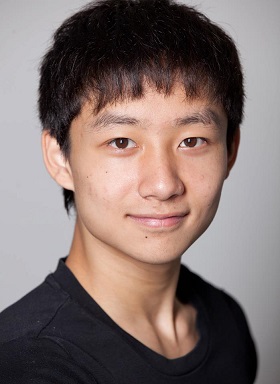
    Zhiyao-zhang

    Zhiyao Zhang (above) stepped out from the corps to dance the demanding solo of the Bronze Idol and did a very neat and precise job of it; he is a young dancer to keep an eye on.

    6a00d8341c4e3853ef017d3d08210a970c-800wi

    Casting about for a photo of Isabella Boylston, I recalled the day Jade Young and I watched Bella (above) rehearsing with Pontus Lidberg for MORPHOSES.  She was on particularly radiant form tonight as Gamzatti, a more complex character than she at first seems. Though vengeful, she is merely acting as her position dictates: a princess can’t be trumped by a mere temple dancer. Gamzatti accepts and embraces her arranged marriage; it’s Solor who has thrown a monkey wrench into things by failing to observe the accepted etiquette and giving his heart elsewhere. Thus for all her spitefulness in Act I, Gamzatti does engage our sympathies when her wedding ceremony crumbles before her very eyes in the ballet’s final scene: Isabella was particularly lovely in the solo here, expressing a bride’s hope and quiet joy, shadowed by the knowledge that her husband’s heart is elsewhere. Earlier, at the betrothal fete, she showed her technical command with some elegant and very grand dancing. The audience loved her.

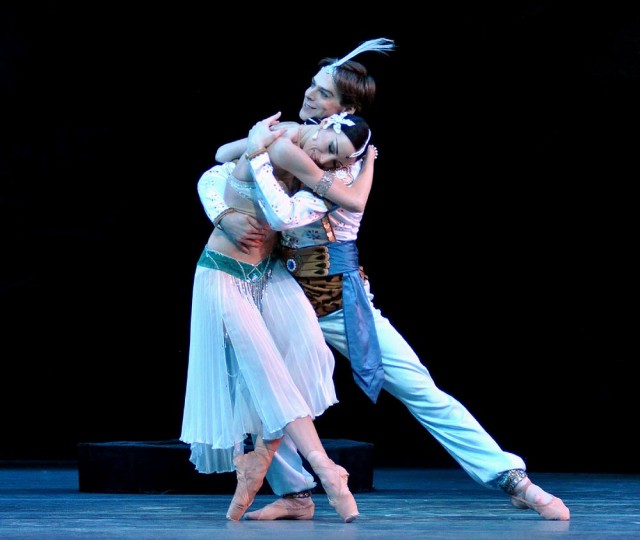
    Jr_bayadere_tereshkina_shklyarov_014_1000.sized

    Above: Tereshkina and Shklyarov in the Mariinsky production of BAYADERE; photo by John Ross.

    Vladimir Shklyarov completely won the Met audience’s collective heart tonight; enthusiastic applause greeted his solo passages and his partnering of Ms. Tereshkina was simply exquisite. Shklyarov’s dancing was marked by big virtuosity, his jumps sublimely floated and grandly elevated, his turns rapid and sure. His portrayal was marked by great tenderness for Nikiya and the despair of helplessly watching his beloved expire, forced by decorum to turn his back on her anguish. Remorse and guilt, and then the elation of finding Nikiya again among the Shades, were finely depicted by the danseur; by the time he stands before the Brahmin to be married, Solor is nearly mad, haunted by visions of his love. 

    Ms. Tereshkina was everything one can hope for in a Nikiya; her dancing – all rooted in a stupendously strong technique – was refined, spiritual, and deeply musical. Forming a particularly resonant relationship with her partner, the ballerina reveled in the tenderness and ecstacy of their mutual love. In the solo danced before the betrothed Gamzatti and Solor, Tereshkina’s lithe and fluid body revealed the temple dancer’s sense of both duty and humiliation in a finely nuanced performance. In the Kingdom of the Shades, the ballerina attained a remarkable level of technique and artistry, re-affirming the great admiration I had felt when I first saw her dancing with the Kirov. She made a stunning spirit in the final scene as she drove the bridal couple asunder.

    When the final curtain fell on Nikiya and Solor ascending the stairway to heaven, the audience commenced an appreciative ovation that lasted longer than anything I’ve heard at the opera or the ballet in recent seasons. Tereshkina and Shklyarov bowed together several times, and even after the house lights were up and the gold curtain definitively closed, they were called out yet again. The audience clearly wanted solo bows, but the two stars remained resolutely a couple throughout the ovation.

    One especially lovely moment during the bows: Tereshkina came to the very edge of the stage and gave a deep curtsey to the musicians in the pit, thanking them with a sweeping gesture. 

    I must remember in future not to spend the extra money for a balcony seat at ABT; there’s a massive invasion of the Balcony level from Family Circle: people who have paid less but want more clambering over me, marking seats with jackets and scarves, inquiring ‘Is that seat taken?’  The Met’s depleted ushering staff aren’t able to police the area, so this practice is virtually unimpeded. I myself retreated to the near-empty Family Circle once these eager, pushy people descended. I mean, if you are half-a-block from the stage, a few more yards either way hardly matters. But then, even during Shades, people continue playing musical chairs, much to the disadvantage of the performance. Had it been anyone other than Tereshkina, I probably would have left.

  • At NYC Ballet: Jonathan Stafford’s Farewell

    FY11 J.Stafford 10081JS_019

    Above: Jonathan Stafford, photo by Henry Leutwyler

    Sunday May 25th, 2014 matinee – Jonathan Stafford’s farewell performance at New York City Ballet turned out to be not only a royal send-off for this all-American prince, but one of the finest performances that I’ve seen the Company give in recent seasons. Everyone – musicians and dancers alike – were really on their game and the affectionate tributes at the final curtain showed the sincere esteem and friendship in which his dancing colleagues hold Jonathan. It was a very emotional but also a truly happy farewell: the fact that Jon’s not going anywhere – he stays on with us as ballet master and also continues to teach at SAB – reassures us that we’ll continue to see him around Lincoln Center from time to time. It also would not surprise me if he pops up onstage again in an acting role some day.

    When I think of Jon Stafford’s dancing, two images immediately come to mind: his beautiful air turns – in several diifferent ballets – where he could effortlessly change from left turn to right in the blink of an eye; and a truly mirthful moment in the first-season performances of Ratmansky’s CONCERTO DSCH where Jon stood in place, simply jumping up and down endlessly, keeping a straight face the whole time. These two elements – technical finesse plus an ability to transform the simplest of movements into something vivid – have always made Jon’s performances so highly enjoyable to watch.
    6a00d8341c4e3853ef0120a7fc6fe3970b

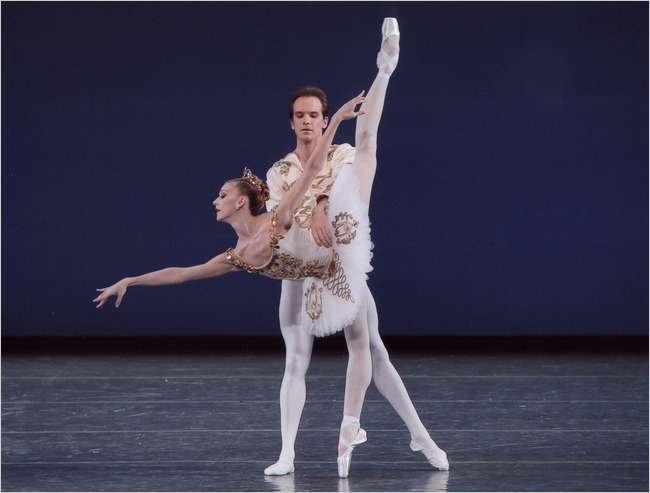
    And then there’s the partnering: Jon is a prince of a partner (above, in CORTEGE HONGROIS with Maria Kowroski in a Paul Kolnik photo). At the end of this afternoon’s performance, the principal ballerinas and then the female soloists all came out to present Jon with bouquets; their hugs seemed particularly sincere because over the years he’s helped them all to look their best onstage.
    Symphony-in-C-AStaffordJStafford

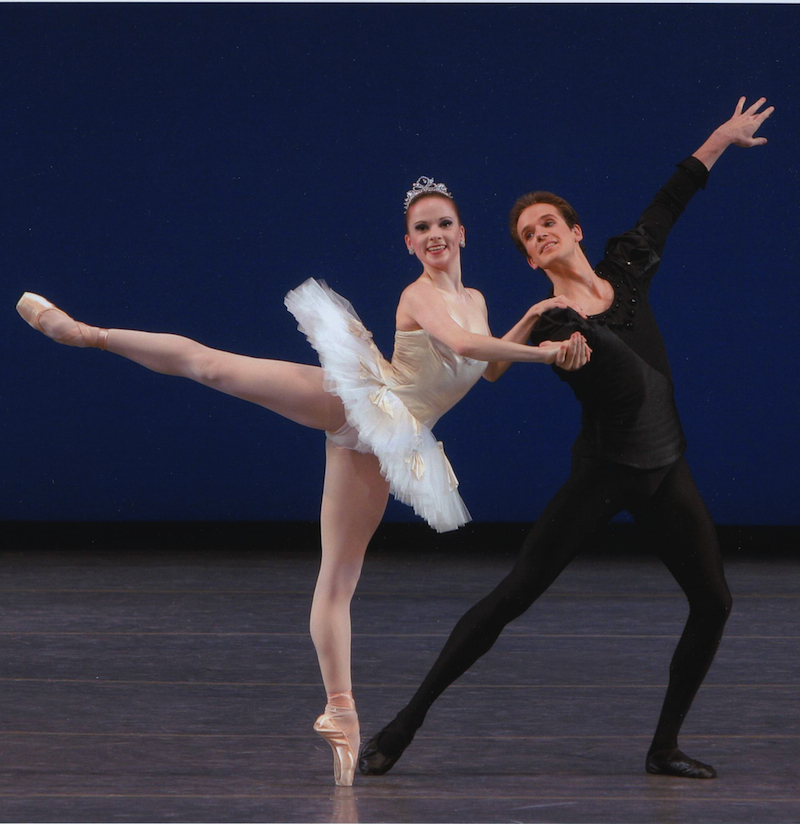
    Siblings: Jon and his sister, NYCB principal ballerina Abi Stafford, in Balanchine’s SYMPHONY IN C, photo by Paul Kolnik. Jon and Abi danced together in EMERALDS this afternoon.

    2013_01_16_01_35_1742_09_ballet

    A special memory: Jon’s performances in Balanchine’s setting of Tchaikovsky Piano Concerto #2 during the 2008 season moved me to tears in the ballet’s second movement. I saw it several times that year, when Jon danced with Ashley Bouder (Paul Kolnik photos, above and below).

    Pk_tschaikovsky_piano_concerto_2_jonathan_stafford_ashley_bouder_ppd_1000

    Today Ashley danced the ‘other’ girl in EMERALDS and gave a remarkable performance. 

    10261998_10154135166880529_3211500853438514229_n

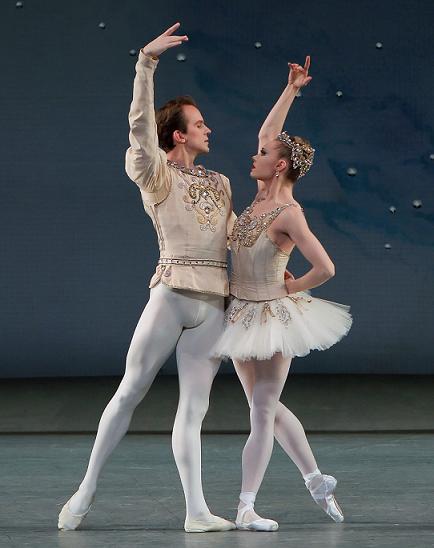
    Above and below: Jon in DIAMONDS with Sara Mearns
    C29896-8_MearJstafDiam

    Sara danced this role with Jon this afternoon, celebrating a grand finale to his NYCB career in high style.

    Of course, ‘retirement’ performances always summon up a vast array of memories of the dancer being celebrated. Of the many evenings I have watched Jon Stafford onstage, I especially recall his perfect characterizations of several “Prince” roles: in FIREBIRD, in SLEEPING BEAUTY and in SWAN LAKE. From Balanchine, we enjoyed his LIEBESLIEDER, WESTERN SYMPHONY and NUTCRACKER cavalier, and from Robbins his IN THE NIGHT and DANCES AT A GATHERING (where he played “catch-the-ballerina” so memorably). Jon also made his mark in such diverse contemporary ballets as RUSSIAN SEASONS, VESPRO, LUCE NASCOSTA, OLTREMARE, and RIVER OF LIGHT; in the last-named Peter Martins ballet, Jon pulled off some thrilling one-armed lifts of Erica Pereira. His height and noble bearing made an outstanding impression as the venearble Father in PRODIGAL SON.

    Aside from dancing, Jon showed his organizational skills when he put together the 2008 Dancers’ Choice event, a performance I recall clearly to this day.
    6a00d8341c4e3853ef01310f1e4f4c970c

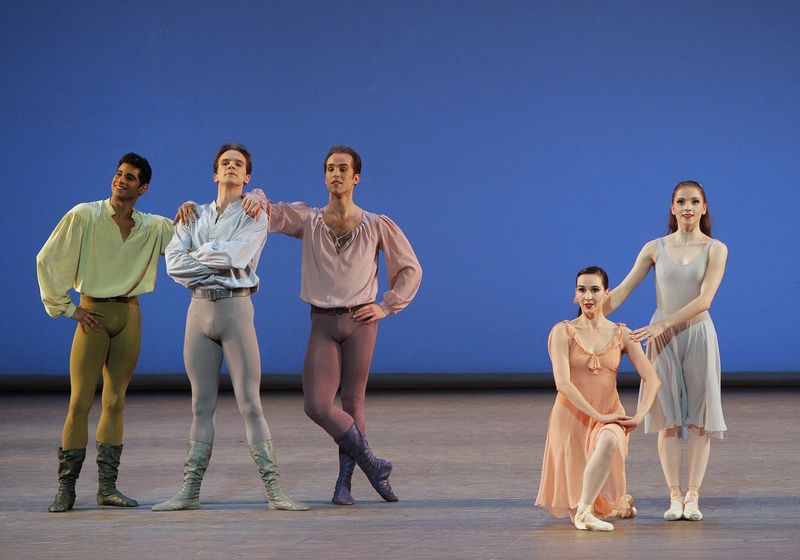
    Above: Jon with colleagues Amar Ramasar, Jared Angle, Jenifer Ringer and Abi Stafford in Robbins’ DANCES AT A GATHERING, a Paul Kolnik photo. Amar partnered Ashley Bouder in EMERALDS this afternoon and together they launched the afternoon with their elegant and truly inspired dancing.

    And so, now to the details of today’s performance. Guest conductor Koen Kessels was on the podium and as always the under-sung musicians of the NYCB orchestra played beautifully, especially in the Faure which was so moving today.

    Sometimes at a farewell, the actual performance is eclipsed by the event. Ashley Bouder and Amar Ramasar assured us immediately on curtain-rise that we were in for a super-JEWELS: save the confetti and flowers for later, we’re going to do some serious dancing! What a poetic atmosphere these two dancers created immediately, summoning up a quiet yet somehow electrifying bond between two charismatic personalities. Amar’s courtliness and Ashley’s lyric wistfulness played beautifully off one another. Complete enchantment.

    The iconic and perfumed solos which Balanchine created for the two principal ballerinas in EMERALDS were so expressively danced today by Ms. Bouder and Abi Stafford. And the gracious pas de trois was danced with lovely, refined virtuosity by Erica Pereira, Ashley Laracey, and Antonio Carmena.

    And then at last Jonathan appeared: the music here is too delicate to allow for applause for his entrance, but a murmur of excitement passed thru the House. Ever the dedicated cavalier, Jon devoted all his poetic energy to presenting his ballerina as if she were a precious jewel. Abi’s dancing, so light-filled and polished, had a calm radiance that ideally embodied the music. Together they were perfect.

    As EMERALDS moves towards its conclusion, the dancers walk slowly about the stage as the women begin to exit. In a beautiful moment, as Jon passed in front of Ashley Bouder, a subtle smile illuminated her face – a beautiful, personal homage from one dancer to another. 

    A sizzling performance of RUBIES followed: Sterling Hyltin was absolutely stunning in her virtuosity, toying with the music whilst reeling off pirouettes at improbable speed and creating a character at once elegant, provocative, and playful. She met her match in Andrew Veyette who, fresh from a triumphant guest appearance in THEME AND VARIATIONS at ABT, cut loose with some vibrantly jazzy moves to Stravinsky today. The imperial Teresa Reichlen danced a signature role in today’s RUBIES, wowing the audience with her extension and dazzling sexiness. At the close of the passage where she’s manipulated by four men into uncanny poses, Tess plunges into a deep Arabesque Pencée, eye-to-eye with Giovanni Villalobos; she holds his gaze with remarkable intensity: does she want to kiss him or kill him?  Huge applause today for the RUBIES principals and corps.

    And finally, DIAMONDS: Jon and Sara Mearns have created a special magic with their partnership in this ballet and the obvious shared joy of dancing beautifully together to beautiful music was tinged today by the knowledge that this would be the last time. Looking a bit forlorn at first, Sara was soon swept along by the gorgeous Tchaikovsky themes and the ardent support of her prince: her smile became luminous, her dancing grand and glorious.

    DIAMONDS was somewhat truncated today; eliminating the Scherzo meant that the demi-soliste women had less chance to dazzle us, but in the opening movement Gwyneth Muller and Gretchen Smith gave us some excellent dancing, their contrasting personalities drawing us in to the music.

    And so, inevitably, the stage is filled with dancers in white and gold, the opera glasses momentarily zeroing in on the individual dancers of the corps de ballet who make this Company what it is, with Sara and Jonathan at the helm of Balanchine’s jewel-encrusted masterpiece.

    What an extraordinary send-off for Jon: the respect and affection of his colleagues was shown in innumerable ways during the long ovation, streamers shooting down and bouquets being flung to the stage. The afternoon ended with Jon standing by a massive heap of flowers while the Company applauded him with sincere admiration.

    Jon kept us waiting a long time at the stage door (I think secretly he just wanted to sneak out after everyone had left!); Wei met me there after his work day and we were especially happy to catch up with Faye Arthurs, and to greet so many of the dancers we admire so deeply. I’m sure they were all exhausted and just wanting to have supper, or a beer, and rest their weary bones. But they all took the time to chat us up, reflect on their association with Jon, discuss the highlights of their season, and tell us their summer plans. They are such incredible, dedicated, passionate, and amusing people and I’m so grateful to all of them, both for their dancing and just for being themselves.

    At last Jon appeared and with a lovely mix of elation and exhaustion he thanked the intrepid fans who had stayed on to greet him. I mainly wanted to wish him a happy golf game!

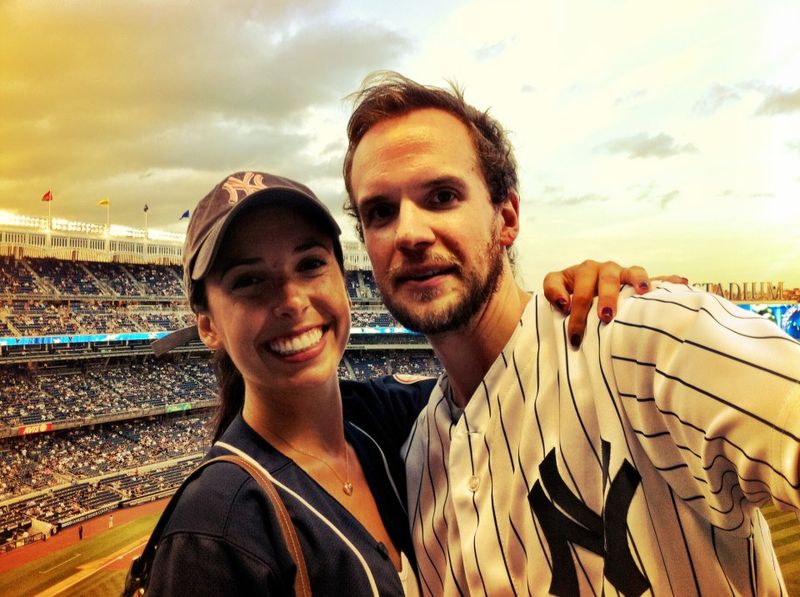
    On a personal note, Jon has his wedding to look forward to: in August he’ll be marrying New York City Ballet soloist Brittany Pollack. And here they are, at a Yankees game:
    253817_3683865459771_1041692134_n

    Best wishes, Brittany & Jon!

    703e0a8c201913cc7ebab0c7bcc60267

    And one more image of Jon, dressed by Valentino (above)…a class act if ever there was one. I’m sure to be seeing Jonathan around the Plaza in the months ahead, so there’s no real need to say ‘farewell’.

  • Balanchine’s “Davidsbündlertänze” @ NYCB

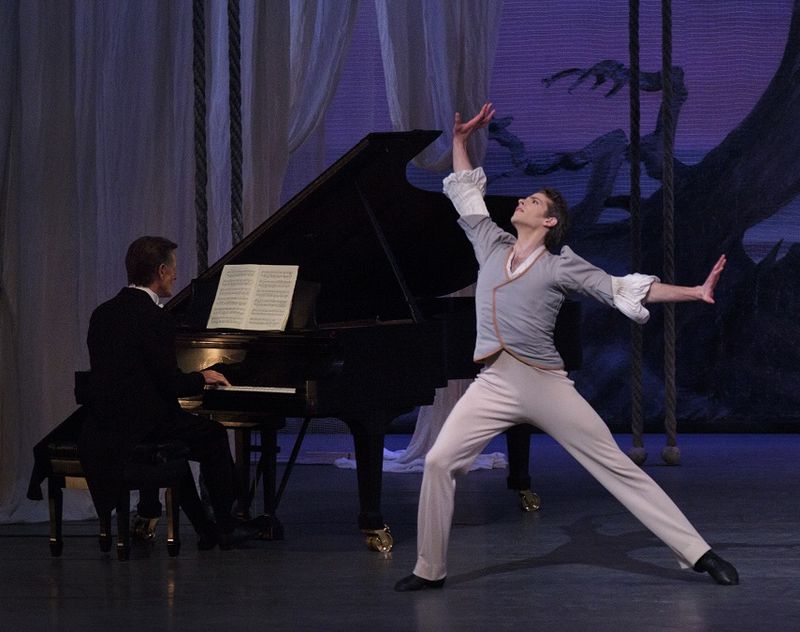
    C37708-3_Davidsb_LaraceySuozzi

    Above: Ashley Laracey and Sean Suozzi in Robert Schumann’s Davidsbündlertänze, photo by Paul Kolnik

    Tuesday May 20, 2014 – Created in 1980, George Balanchine’s setting of Robert Schumann’s Davidsbündlertänze was one of the choreographer’s last works. It’s a unique ballet, deeply moving in its depiction of the composer Robert Schumann’s descent into madness. 

    During the winter of 1854, Schumann’s developing insanity took a dramatic turn: he began hearing “angelic” voices which evolved into the bestial cries of wild animals. One February morning he walked to a bridge over the Rhine and threw himself in; he was rescued by fishermen. Schumann himself asked to be institutionalized, to prevent his becoming a burden on his wife, Clara. He was placed in a sanatorium. His doctors prevented Clara from seeing him for more than two years, until days before his death.

    The Rouben Ter-Arutunian setting for this ballet, which has an antique look, surrounds the dancing area with gauzy curtains. The backdrop shows a body of water – perhaps alluding to Schumann’s attempt to drown hmself – and a far-shining cathedral hovering in the sky, the source perhaps of the “angelic” voices summoning the composer. At one point, mysterious figues all in black and holding large quill pens appear: these represent the Philistines, whose admonishing writings were poised to oppose art or innovation in the arts and against who the Davidsbündler (the League of Davidthe composer’s imaginary society of artists) took a firm stance.

    The ballet, danced by four couples, seems to depict various phases of the relationship between Schumann and Clara; it may also hint as certain aspects of Balanchine’s many romances. In Suzanne Farrell’s book, Holding Onto The Air, the great ballerina says that Balanchine never told her what Davidsbündlertänze was “about” during the course of the ballet’s creation. It wasn’t until later that she made the connection to Schumann’s own life.

    Suzanne Farrell came very much to mind tonight in the ballet’s opening duet, for Rebecca Krohn reminded me more than ever of Farrell, who was of course Balanchine’s longtime muse. Partnered by the dashing Zachary Catazaro, Rebecca’s sweeping lyricism and the communicative range of her expressions and gestures kept me riveted to her throughout the ballet. This was Farrell’s role (the girl in blue) at the ballet’s premiere and – like Suzanne – Rebecca may eventually take on the “Clara” role (the woman in white). Tonight her dancing was spell-binding.

    C37699-15_Davidsb_Krohn

    Above: Rebecca Krohn in Robert Schumann’s Davidsbündlertänze, photo by Paul Kolnik

    This evening’s entire cast in fact were new to this ballet, having all debuted in it together the previous week. Continuing to make a vibrant effect in each new assignment, Ashley Laracey was at her most delightful here…impetuous, charming, and dancing so very well. Sean Suozzi, who always brings his own distinctive energy to each role he undetakes, was her excellent cavalier. Tyler Angle, dancing with space-filling generosity and fineness of line, courted Tiler Peck with gentle urgency. Tiler, who to my mind seems to move from one pinnacle to another in the progress of her career, was just spectacular, her lush swirls of pirouettes radiating confidence and grace.

    In her portrait of Clara, Teresa Reichlen, so elegant in her presence and so refined in her line and port de bras, strove poignantly to comprehend the changes that were overtaking her beloved. Her attempts to draw him back to her embracing tenderness became increasingly desperate, and Tess at the end must finally accept their parting: in an exquisite moment, she bows her head in silent grief as the light fades.

    In a major career leap, the tall and poetic Russell Janzen’s portrayal developed a melancholy acceptance of Schumann’s tragic destiny. At the end of his very first duet with Tess, Russell’s visage showed an early indication of madness with a far-away look. These momentary drifts away from reality eventually overtake him, and at the end of the ballet he withdraws with an expression mingling fear and resignation. Earlier, Russell’s solo – set to the score’s most haunting melody – was beautifully danced.

    C37701-8_Davidsb_Janzen_Crop1

    Above: Russell Janzen, with Cameron Grant at the piano, in Robert Schumann’s Davidsbündlertänze, photo by Paul Kolnik

    Cameron Grant, seated at the onstage grand piano, played the Schumann score with clarity and with tempos that seemed to propel the dancers while allowing them opportuniy for nuance. 

    Just as singers have sometimes told me they can’t sing anything after performing Franz Schubert’s “An die Musik”, it’s difficult to imagine watching (or dancing in) another ballet after Davidsbündlertänze, such is the haunting atmosphere it creates. And so I didn’t stay beyond the intermission: even going out to the Promenade seemed too hasty a return to reality. I was in a very subdued mood, and glad of a peaceful train ride home to reflect on the beauty of Schumann and touching artistry of tonight’s dancers.     

    ROBERT SCHUMANN’S “DAVIDSBÜNDLERTÄNZE”: Reichlen, Krohn, Laracey, T.Peck; Janzen, Catazaro, Suozzi, T. Angle [Solo Pianist: Grant]

  • Deborah Wingert/Lydia Johnson Dance Salon

    L1340657

    Above: Deborah Wingert

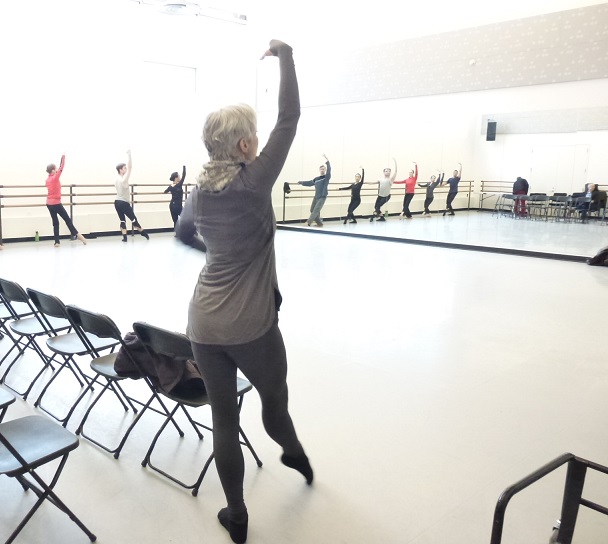
    Sunday March 23, 2014 – Friends – long-time and new – of Lydia Johnson Dance gathered at Manhattan Movement and Arts Center this afternoon for a salon/studio presentation of Lydia’s latest work-in-progress, set to the Mozart Fantasy in C-minor, K. 475. Wearing one of her many hats, the extraordinary Deborah Wingert – teacher, choreographer, stager for the Balanchine Trust, and ballet mistress for Lydia Johnson Dance – gave a pre-salon class, demonstrated her inspirational coaching abilities, and spoke of her life as a dancer whose career took wing with Balanchine’s blessing.

    L1340608

    First, a class. The dancers of Lydia’s company come from varied backgrounds. Deborah, who teaches Company class weekly for LJD, has been imbuing a feeling of stylistic unity in the dancers. Lydia’s choreographic vision is an unusual fusion of ballet and contemporary; Deborah’s class work places an emphasis on ballet while at the same time encouraging the individuality of expression of each dancer. It seems like a paradox, but it’s happening.

    The Mozart-in-progress opens with a lyrical solo danced by Katie Martin; throughout this work, Lydia provides each of her dancers with prominent passages allowing their singular qualities to shine thru.

    L1340648

    One extended segment is a duet for Sarah Pon and Anthony Bocconi (above), dancing in a realm of tenderness and trust.

    L1340633

    A duet for Blake Hennessy-York and Chazz Fenner-McBride (above), which the boys have just started working on, was coached by Deborah and in the span of a few moments took on a more vivid quality, having made slight adjustments in placement and support. Chazz, the newest dancer in Lydia’s company, brings the same sincerity to his dancing here that made his performances in Robin Becker’s INTO SUNLIGHT so meaningful.

    Kerry Shea, Laura DiOrio, Lisa Borres and Min Kim along with Katie and Sarah create beautiful shapes and a sense of quiet urgency as they come and go with dream-like unpredictability – all of this to Mozart’s peerless melodies.

    L1340686 - Copy

    LJD‘s Steve Cramer interviewed Deborah (above); she spoke of the affinity that has developed between Lydia Johnson and herself, and of their shared belief in the communicative power of music. Deborah further regaled us with stories of working for Mr. B, sharing anecdotes which were moving and witty by turns.

    L1340692

    As a savory ‘dessert’, Kerry Shea and Eric Williams (above) performed a duet from Lydia’s ballet NIGHT OF THE FLYING HORSES, to a score by Osvaldo Golijov. My friend Lisette Oropesa and I shared a secret smile as the haunting melody of “Je crois entendre encore” from Bizet’s PECHEURS DES PERLES suddenly materializes in a Golijovian incarnation. I was so glad to have my friends Lisette, Steven and Joe at the studio today; this was Lisette’s first opportunity to witness dance at close range, and I think it really moved her, especially since her beloved Mozart was an integral element of the afternoon.

    The new Mozart, along with the Golijov and Lydia’s ravishing Schubert ballet NIGHT AND DREAMS, will all be part of her upcoming season at Ailey Citigroup in June; details will be forthcoming.

  • Preljocaj & Martins @ NYC Ballet

    Stravaganza-key

    Above: from LA STRAVAGANZA

    February 25th, 2014 – Angelin Preljocaj’s unusual 1997 ballet LA STRAVAGANZA and Peter Martins’ tango extravaganza TODO BUENOS AIRES (dating from 2000) were on the bill at New York City Ballet tonight, along with a Wheeldon pas de deux A PLACE FOR US.

    To date I’ve admired everything I’ve seen by Mr. Preljocaj, most especially his L’ANNONCIATION which has been perfomed in New York City by Cedar Lake Contemporary Ballet. I was at the NYCB premiere of LA STRAVAGANZA over a decade ago and was very taken with this dancework which revolves around a warp in the time continuum.

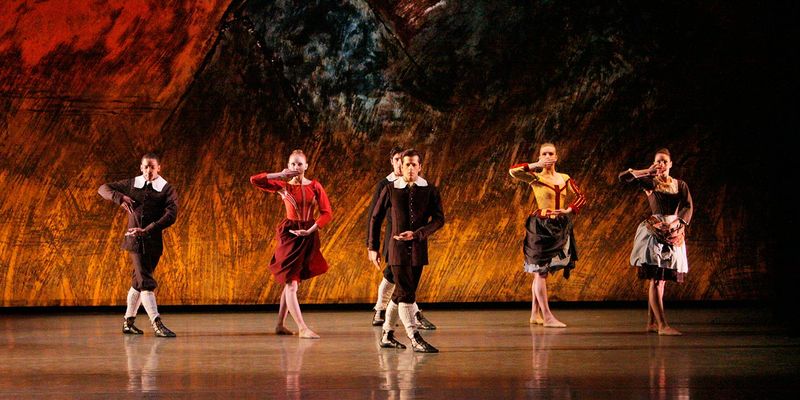
    In LA STRAVAGANZA, a sextet of young people in contemporary dress are dancing quietly in the twilight to the music of Vivaldi. At the intrusion of mechanical sounds, a black panel at the rear of the stage rises to review another sextet: three men in Puritan garb and three colourfully-dressed peasant girls. The contemporary group warily explore these aliens from another era who dance in stiff patterns with a stylized gestural language. A pas de deux ensues for one of the contemporary girls and one of he Puritans; in the end the girl is abducted and taken off to the other world. The contemporary dancers return to their original formation and the lost girl magically reappears: the story seems poised to repeat itself, endlessly. 

    In this rather odd ballet, which as I recall tended to baffle people at its premiere, Mr. Preljocaj has successfully merged the heavenly Baroque music with works of 20th century composers Evelyn Ficarra, Robert Normandeau, Serge Morand, and Ake Parmerud. Dance highlights are a duet for two of the Puritan men – Sean Suozzi and Craig Hall – moving in-sync with fast-paced gestures, and the time-spanning pas de deux danced by the ever-intriguing Gretchen Smith and Sean Suozzi.

    The contemporary boys – Devin Alberda, Joseph Gordon and Allen Peiffer – have some demanding combinations and later they stand stock still in a field of light as the girls – Ms. Smith, Brittany Pollack and Sara Adams – tentatively examine their bodies. Daniel Applebaum was the third Puritan, and a very attractive female trio – Emilie Gerrity, Claire Kretzschmar and Lydia Wellington – worked beautifully together and seemed to have stepped out of a Vermeer painting. 

    The title A PLACE FOR US made me think we were in for that cloyingly sentimental song from WEST SIDE STORY; but mercifully Chris Wheeldon turned to far more interesting – and rare – works from Andre Previn and Leonard Bernstein for this duet, the music being performed live onstage by Steven Hartman (clarinet) and Nancy McDill (piano).

    The duet, danced by NYCB‘s beloved couple Tiler Peck and Robert Fairchild, is performed in squares of light gleaming onstage. The piece has a dedication: ‘For Jerome Robbins. A thank you.’ and that choreographer’s work is indeed recalled while watching this pas de deux with its combination of romance and wit. Oddly enough, though – perhaps because of Robbie’s white tights and soft tunic – this pas de deux made me think of Balanchine’s APOLLO more than once. Needless to say, the dancers and musicians did very well by it.

    TODO BUENOS AIRES premiered in 2000 with Darci Kistler and Wendy Whelan in the principal female roles. In 2005, Peter Martins re-worked the ballet to incorporate a featured role for Julio Bocca. It’s the 2005 version we saw tonight, with our own primo bailarín Joaquin de Luz in a virtuoso performance.

    The musicians, led by concertmaster Kurt Nikkanen and featuring JP Jofre on bandoneon, are seated onstage, and two large soft drapes mark out the dance floor of a spacious after-hours club. Five Piazzolla tangos, arranged by Ron Wasserman, provide the setting for a series of duets and ensembles. Maria Kowroski – could her extension be any more heavenly? – danced with cool allure surrounded by a quartet of sexy boys: Jared Angle, Robert Fairchild, Adrian Danchig-Waring and Amar Ramasar. In a performance marked by radiant star-power, Ashley Laracey took on the role created on Wendy Whelan and made it her own. Right from her first duet with the sensuous Amar Ramasar, Ashley was thoroughly captivating; it seems to me that she is a dancer who could take on a huge variety of roles and make them all shine.

    Joaquin had the audience in the palm of his hand from the start: his speed-of-light pirouettes and spacious leaps caused the people around me to gasp in disbelief. The character’s moods range from aloof to seductive, and Joaquin seemed to be having a blast as he covered the stage with his daredevil feats, in the end basking in the adulation of the crowd and flashing his award-winning smile.