Tag: Choreography

  • Violin Concertos @ NYC Ballet

    318356_2232197878477_977158597_n

    Above: Russell Janzen of New York City Ballet

    Wednesday February 19th, 2014 – Ballets by Jerome Robbins, Peter Martins, and George Balanchine – each set to a great 20th century violin concerto – were on the bill at New York City Ballet this evening. To an already-great line-up of dancers there was a late addition: Russell Janzen made his debut in BARBER VIOLIN CONCERTO; Tiler Peck and Amar Ramasar were also making role debuts tonight.

    Three conductors passed the baton one to another as the evening progressed; the Company’s two concertmasters – Kurt Nikkanen and Arturo Delmoni – shared the soloist spotlight, Kurt playing the Prokofiev and Arturo playing Barber and Stravinsky. It was a programme during which really missed my beautiful seat in Fourth Ring AA where I used to watch the orchestra from on high.

    The evening opened on a high note: the curtain rose on Robert Fairchild, all in white, as the restless dreamer of Jerome Robbins’ OPUS 19/THE DREAMER – my favorite Robbins ballet. Robert danced the ballet’s opening solo with deep musicality and supple fluidity of movement. Out of the blue, his muse materializes: Tiler Peck, in this role for the first time, found a perfect balance between the classical vocabulary and the sometimes jagged expressionism the ballet requires. In the more lyrical passages, her lush pirouettes had remarkable clarity; to a role that has been gorgeously danced in recent seasons by Wendy Whelan, Jenifer Ringer, and Janie Taylor, Tiler brought her own distinctive touches. Robbins gives the corps some dreamy moves – and also some athletic ones – in OPUS 19; I very much enjoyed tonight’s collective which was made up of some of my favorite dancers.

    It took me a few hearings to figure out exactly what it is about the opening measures of the Barber violin concerto that sings to me so clearly: it’s the use of the piano, especially the opening chord. It gave me a little frisson again tonight; while I love so many violin concertos I think sometimes the Barber is my actual favorite. I remember one summer driving very fast out Route 6 with Kenny to the end of the world – Provincetown – with the Barber blasting on the car stereo. Music and memory are so often indelibly linked.

    In tonight’s performance of the Barber, Teresa Reichlen and Russell Janzen looked great together – not just because they are long-limbed and attractive, but because they share a sense of elegance that manifests itself in their bearing and the grace of their line. A chill passed thru me as Amar Ramasar entered, a fallen angel with a dangerous ‘loner’ appeal who will eventually draw Tess to the dark side. Megan Fairchild excels in the barefooted role created by Kate Johnson: it’s a far cry from the charming, pristine pointe-work that is Megan’s specialty, but she jumps right in and makes it happen.

    After their classical parterning passages in the first movement, Tess and Russell will each experience a transformation. At first seeming to console Amar, Tess falls under his spell and is borne away to an unknown fate; their duet is a psychological conflict which reaches its turning point when the subjugated woman lets her hair down. Amar’s character is not so much seductive as simply a force that cannot be withstood; Tess in her vulnerability looks ravshingly ravished. Random thought: I’d love to see Amar in the Martha Graham rep.

    In the final allegro, Russell strives to withstand the endless torment of Megan’s advances: she’s playing one of the most annoying characters in all dance. She ends up writhing on the floor as Russell backs away, covering his eyes to blot out the vision of her over-sexed frenzy. In a final attempt to get what she wants, Megan literally climbs up Russell’s back to perch on shoulder; in a last defense, he flips her over and sends her crashing to the floor. The two dancers handled this tricky finale with aplomb and in fact danced the whole third movement to perfection.

    6a00d8341c4e3853ef014e887730ac970d-800wi

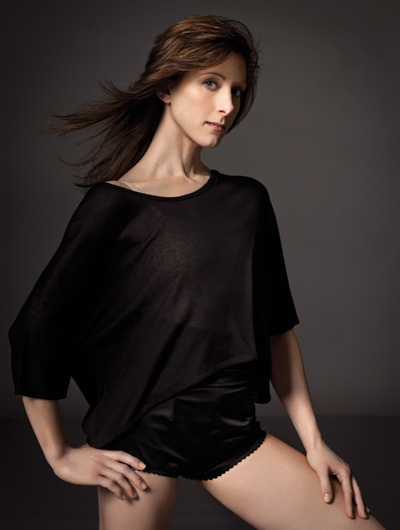
    Above: Janie Taylor, in a Henry Leutwyler portrait

    Tonight’s Stravinsky had a special energy; it was in fact one of the finest performances of this ballet I’ve seen. Part of the singular excitement in the atmosphere tonight may have stemmed from the presence of Janie Taylor, the Company’s enigmatic/charismatic principal ballerina who is soon to retire. I’ve been crazy about Janie since she first stepped out, a mere slip of a girl just over from SAB, to dance the lead in LA VALSE. After building a reputation as a dancer at once fragile and fearless, a long hiatus due to a complicated injury took her away from the stage for months…years, even. Her ‘second career’ has been a real source of joy for me and so tonight it was bittersweet to think that in a few days she will be vanishing from this stage, leaving only perfumed memories. But what memories they are!

    Tonight’s performance showed off of Janie’s balletic split personality: a palpable vulnerability alinged to a steely technical resiliance: she’s simply extraordinary…and irreplacable. Ask LaCour’s partnering of this blonde enigma developed a wonderful simpatico, a sense of tenderness in what is after all an abstract and ’emotionless’ ballet. In that marvelous moment where the ballerina stands against her partner as he shows her a view of the world with a sweeping gesture of the arm, I thought I’d never seen anything so beautiful.

    Janie and Ask seemed poised to walk off with the gold tonight, but the other Stravinsky couple – Rebecca Krohn and Adrian Danchig-Waring – were so potent technically and so vivid in their presentation that the entire ballet took on a grand dynamic, abetted by the excellent corps (the quartet of leaping boys won a ‘bravo’ all their own). Rebecca Krohn has really done wonders in the leotard ballets; she looks phenomenally confident and polished, and for me she’s the equal of any ballerina I’ve seen in this rep, going way back to Suzanne and Karin. Her generous dancing found a fine match in Adrian Danchig-Waring’s vibrant physicality; together these two dancers crafted amazing shapes as they moved thru the ballet’s demanding partnering motifs, ending their pas de deux with Adrian in a finely-timed fall to the floor and Rebecca in a sweeping back-bend.

    Extra delight: Faye Arthurs in a brief partnered segment with Adrian; she danced in both the Prokofiev and the Stravinsky tonight. So nice to run into Erica Pereira and Caitlin Dieck…and Tess, after the show.

    OPUS 19/THE DREAMER: *T. Peck, R. Fairchild [Conductor: Sill, Solo Violin: Nikkanen]

    BARBER VIOLIN CONCERTO: Reichlen, *Ramasar, M. Fairchild, *Janzen [Conductor: Otranto, Solo Violin: Delmoni]

    STRAVINSKY VIOLIN CONCERTO: Taylor, la Cour, Krohn, Danchig-Waring [Conductor: Capps, Solo Violin: Delmoni]
  • Gautier Capuçon @ The NY Philharmonic

    Gc

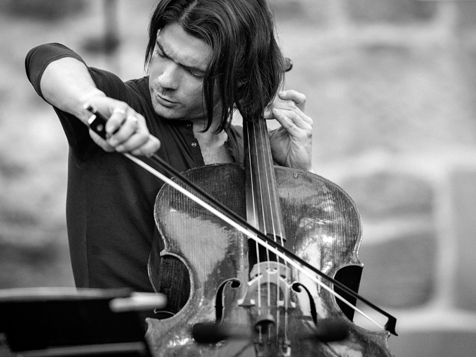
    Friday January 24th, 2014 matinee – Cellist Gautier Capuçon (above) gave an inspired rendering of the Shostakovich cello concerto #1 at this afternoon’s New York Philharmonic concert. Conducted by Andrey Boreyko, the programme was book-ended by works of two Russian composers with close ties to the world of classical ballet.

    The name Nikolai Tcherepnin immediately conjures visions of the Ballets Russes, for it was he who not only conducted the first performance of Diaghilev’s troupe in the West (on May 19th, 1909, at the Chatelet) but also composed the score of that evening’s opening ballet – Le Pavillon d’Armide – which swept the Parisians into a fever as they beheld Karsavina and Nijinsky onstage.

    Today the Philharmonic opened their concert with Tcherepnin’s tone poem The Enchanted Kingdom which dates from 1909-1910. The “kingdom” referred to in the work’s title is that of Katschei the Immortal – yes, the same sorcerer who was soon to appear in the Fokine/Stravinsky Firebird. In seems fact, Tchrepnin’s score may have been under consideration by Diaghilev as a setting for Fokine’s ballet. That didn’t transpire, but the score Tchrepnin left us is quite magical in its own right.

    The huge orchestra under Maestro Boreyko gave a richly-coloured performance: right from its sombre opening, this music reveals a vibrant sound-palette: celesta, piano and harp produce magical effects while solo wind voices add characterful touches. The cinematic central melody is simply gorgeous.

    Gautier Capuçon then took the stage for the Shostakovich; this charismatic artist took all the demands that the composer sets before the cellist in his stride. M. Capuçon’s playing of the central theme of the moderato literally gave me the chills, such was the spell he was able to cast; and as he played he sometimes seemed to be gazing off into some distant horizon: truly poetic. In the very long and technically demanding cadenza, the cellist’s clarity and his mastery of dynamics was most impressive – and a great smile illuminated his face when this sustained solo passage came to an end and the orchestra began to play again. Capuçon’s playing won the audience’s unstinting praise, and after the customary bows with the conductor the soloist was called out yet again for a solo bow, evoking a standing ovation.

    The Shostakovich was excellently played by the artists of the Philharmonic, with the prominent horn solos finding Philip Myers at his finest: amazingly plush sound, a real treat for the ear.

    Boreyko

    Above: conductor Andrey Boreyko

    The Philharmonic’s final offering today was the Tchaikovsky Suite #3, immortalized for dance lovers in Balanchine’s marvelous ballet of the same name. Of course throughout this performance the Balanchine choreography unfolded in the mind’s eye. Is there any music so romantically overpowering as the Élégie, especially when played as sumptuously as it was today? Throughout the forty-minute piece (it seems much shorter when there’s dancing to be watched), Maestro Boreyko kept a precise pulse: he was especially adept in the subtle rhythmic shifts of the Valse, and the final polonaise was regally done. The playing was stellar.

  • Martha Graham’s ‘Hérodiade’

    Miki herodiade

    Above: Miki Orihara in Graham’s Hérodiade

    Wednesday November 20, 2013 – Two of today’s foremost interpreters of the works of Martha Graham – Miki Orihara and Katherine Crockett – appeared tonight in a studio showing of the great choreographer’s 1944 work Hérodiade. As a splendid prelude, Ms. Crockett also danced Spectre-1914. It was an evening that resonated for me in so many different ways.

    Martha Graham Dance Company‘s artistic director Janet Eilber welcomed an overflow crowd to this second of three presentations of this programme. The Company’s spacious studio/theater on the eleventh floor of the Westbeth complex had been hung with black drapes, and after Ms. Eilber’s brief remarks, the majestic Katherine Crockett appeared to dance Spectre-1914, the opening solo from Martha Graham’s Chronicle.

    6a00d8341c4e3853ef0168eb764f31970c-800wi

    Above: Katherine Crockett, photographed by Matt Murphy

    Chronicle, dating from 1936, is Graham’s powerful statement on the devastation and futility of war; it is a great masterwork for female ensemble and it opens with a magnificent solo in which the dancer manipulates a voluminous skirt lined in red fabric to evoke both the bloodshed and the flames of war.

    Spectre-1914 had all but passed from memory until 1994 when it was researched and reconstructed by Terese Capucilli and Carol Fried, using film clips and still photos by Barbara Morgan. May Terpsichore bless these women for their efforts, for Spectre-1914 is as powerful a dancework as may be found, and it was danced tonight with marvelous amplitude and a deep sense of consecration by the marvelous Katherine Crockett. The audience beheld the dance in an awed state of pin-drop silence.

    Noguchi herodiade set

    Above: the Isamu Noguchi set pieces for Martha Graham’s Hérodiade

    After the Noguchi setting had been swiftly installed in the space, we watched a full performance of Graham’s ballet Hérodiade. Set to music by Paul Hindemith and commissioned by Elizabeth Sprague Coolidge for the Library of Congress, the ballet was originally called Mirror Before Me, and was first seen on October 30, 1944, at the Elizabeth Sprague Coolidge Auditorium, Library of Congress, Washington, D.C. Writing of that performance for the New York Times (November 1, 1944), critic John Martin said: “Miss Graham has created a powerful study of a woman awaiting a ‘mysterious destiny’ of which she has no knowledge…into it she has poured a somber tension that is relentless and altogether gripping. The music is rich and dark in color and the action on the stage meets it magnificently on its own terms.”

    That music, scored for chamber orchestra, was written by Paul Hindemith, a composer perhaps best-loved in the dance world for his superb Four Temperaments, choreographed by Balanchine.

    When I received the announcement that Hérodiade would be performed this evening, I suppose my natural reaction as an opera-lover was that it would be a dance about the Biblical princess Herodias and her daughter Salome and their conspiracy to have the prophet John the Baptist executed. But that is not the case: there are no allusions to either the Strauss or Massenet operas, nor to the Bible, nor to Oscar Wilde who penned the famous play Salome – Salome does not figure in the Graham work at all.

    Martha Graham had been interested in the poem Hérodiade by Stephane Mallarmé and in creating her ballet, the choreographer eschewed a specific narrative and instead turned to an abstraction of the character. Herodias is never named; she is simply referred to as ‘A Woman’. In Graham’s description, we see “a glimpse into the mirror of one’s being,” and she refers to this Woman as ‘doom-eager’, going forth with resolve to embrace her destiny.

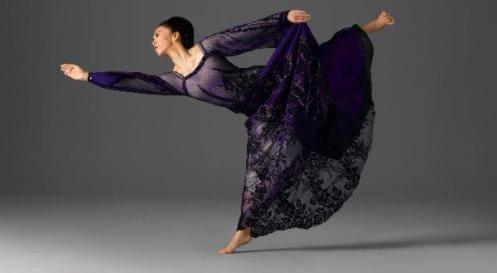
    The Hindemith score is in eleven short movements, and we watch with intense interest as the radiant Miki Orihara, as the Woman in a deep violet gown, and the more austere Ms. Cockett, her Attendant in simple grey, move about the space. The choreography is restless and urgent, the Woman clearly obsessed with whatever fate awaits her while the Attendant seeks to comfort or forestall her mistress. The two dancers were simply engrossing to behold: Miki often in rapid, complex combinations moving swiftly about the stage while Katherine deployed her uncanny extension with mind-boggling expressiveness.

    In the end, Miki steps out of her rich gown and is revealed in virginal white; the Attendant withdraws and the Woman, taking up a black veil, contemplates her destiny. Mysterious, and all the more powerful for the unanswered questions it raises, Hérodiade is breath-taking.

  • A Balanchine Evening @ NYC Ballet

    Mourka & mr b

    Above: Mr. B with Mourka

    Wednesday September 25th, 2013 – This evening’s all-Balanchine programme at New York City Ballet was a veritable parade of favorite dancers. The audience, at least in my immediate vicinity, seemed comprised of long-time NYCBers; in fact I seemed to be at the lower end of the age spectrum. It was an attentive crowd, though rather subdued in terms of expressing enthusiasm.

    Any evening that begins with Faye Arthurs onstage is off to a beautiful start; the ballerina – partnered by Zachary Catazaro – danced the opening theme of Balanchine FOUR TEMPERAMENTS. This ballet is for me the most spectacular of the Balanchine black-and-whites, not only because of its marvelous steps and structuring, but the Hindemith score seems to me a true 20th century masterpiece. 

    Lauren King and Allen Peiffer (who literally danced all night) took the second theme, crossing the stage with semaphoric gestures; the melodic sway of the third theme brought forth yet another impressive partnership: Ashley Laracey and Justin Peck. All three couples danced to perfection.

    Robert Fairchild’s Melancholic had a restless grandeur about it: what a compelling stage presence! Meagan Mann and Georgina Pazcoguin circled the handsome danseur, deploying their extensions to dramatic effect. Tyler Angle replaced his brother Jared in the Sanguinic pas de deux; I do not recall having previously seen Tyler paired with Savannah Lowery but it turned out to be an interesting match-up, with Tyler bringing a touch of classic nobility which dovetailed with Savannah’s authoritative contemporary style. In Phlegmatic, Adrian Danchig-Waring seemed to have descended from Mount Olympus: his striking physique and intense focus were engrossing. Ashley Bouder gave a stunning Choleric, her dancing – vivid and grandly secure – was marked by sustained balances and a rich feeling of commitment. In the pit, guest conductor Carolyn Kuan led this splendid score with passionate élan, and pianist Cameron Grant made a significant contrbution to the ballet’s atmosphere.

    EPISODES is basically a series of four duets, three of them performed with attendant corps dancers. Clothilde Otranto and the NYCB musicians gave clarity to the quirky Webern pieces which comprise the ballet’s score, ending with the composer’s imaginative tribute to Bach in a setting from Musical Offering.

    Abi Stafford and Sean Suozzi were finely-matched in the ballet’s opening Symphony; their articulation of the steps and their fluent work as partners made me wish to see them together in other ballets. Three couples echo the principal pair: Marika Anderson with Russell Janzen, Gwyneth Muller with Allen Peiffer and Gretchen Smith with Andrew Scordato. This entire opening movement, with the stage bathed in an unusual verdigris hue, was absorbing to watch.

    Things then take a darker turn as Teresa Reichlen and Ask LaCour appear in pools of light and dance a mysterious succession of five brief duets, their relationship physical but unfathomable. The ballet’s sense of mystery extends to the ethereal Janie Taylor’s appearance in Concerto; dancing with Sebastien Marcovici (who is just back from a hiatus), Janie retains the allure of being the Company’s most enigmatic ballerina.

    EPISODES ends with a gorgeous ritual: a corps of fourteen female acolytes weave patterns around the central couple: Maria Kowroski-  looking supremely divine – and her noble consort Jonathan Stafford. The two principal dancers, so well matched both in physique and in their ability to make expressive nuances count in these abstract ballets, were superb.   

    Principal ballerina Megan Fairchild talks about Balanchine’s DUO CONCERTANT here. When Chase Finlay sustained an injury onstage last week, forcing him to withdraw from his immediate-future performances, I wondered who might partner Ms. Fairchild in this evening’s performance. My thoughts ran to Jared Angle, who had danced DUO so perfectly at Yvonne Borree’s farewell. And sure enough: Jared it was, stepping into the ballet tonight with his signature nobility of style and peerless partnering abilities.

    Kurt Nikkanen and Cameron Grant performed this panoramic Stravinsky score – it veers from playful to deeply expressive – with impressive musicianship. The ballet is an ideal vehicle for Megan Fairchild, sweeping her from girlish impetuosity to womanly tenderness on the brilliant changing modes of the rhythms and harmonies of the instrumental voices. Jared was by turns playful, protective and poignant as he interacted with his ballerina; their partnership was a rewarding one to experience, and the audience – heretofore rather reserved in their reactions to the evening – greeted the dancers and musicians with warm applause. Now I’m wanting to see the Megan/Jared duo in other ballets.

    From its iconic opening diagonal of sleekly white-clad, pony-tailed ballerinas to the final ritualistic tableau as the dancers kneel or raise their arms (in homage to Balanchine and Stravinsky, I imagine) SYMPHONY IN THREE MOVEMENTS is one of NYCB‘s treasures. Excellent demi- and corps work in tonight’s performance, which opened with the vitality of Daniel Ulbricht’s remarkable high leaps; Ana Sophia Scheller, letting her hair down, shows us that a first-class tutu-and-tiara ballerina can also be a dynamic contemporary stylist. Rebecca Krohn looked stunning in her deep-rose leotard and danced with abandon, matched by Andrew Veyette’s speed and clarity. In the central pas de deux, one of Balanchine’s more effective, Sterling Hyltin and Amar Ramasar were at their finest. Earlier, Sterling had made a swift trajectory, circling the stagetwice in pique turns at ever-increasing speed. Amar’s charismatic presence, his commancing partnering and his generosity as a dancer make him an invaluable member of this troupe.

    As the work soared forward to its energetic conclusion, propelled by Carolyn Kuan’s baton, one felt yet again the great genius of Balanchine, and the continuing pleasure of experiencing his works, year after year.

    THE FOUR TEMPERAMENTS: Arthurs, Catazaro, King, Peiffer, Laracey, J.Peck, R. Fairchild, Lowery, T. Angle, Danchig-Waring, Bouder

    EPISODES: A. Stafford, Suozzi, Reichlen, laCour, Taylor, Marcovici, Kowroski, J.Stafford
     
    DUO CONCERTANT: M. Fairchild, J Angle
    SYMPHONY IN THREE MOVEMENTS: Hyltin, Scheller, Krohn, Ramasar, Ulbricht, Veyette

  • Images from NYC Ballet’s Balanchine Evening

    C36439-15_Duo_MFairJAng_1

    A series of Paul Kolnik’s photographs from last night’s Balanchine programme at New York City Ballet. Above: Jared Angle and Megan Fairchild in DUO CONCERTANT.

    C34660-9_Sym3_HyltinRama

    Amar Ramasar & Sterling Hyltin in SYMPHONY IN THREE MOVEMENTS.

    C36436-12_Episodes

    Janie Taylor & Sebastien Marcovici with the corps de ballet in EPISODES.

    C36429-16_4Temp

    Tyler Angle & Ashley Bouder in THE FOUR TEMPERAMENTS.

    My thanks to Mr. Kolnik and the NYCB press office for providing these photos

  • Tom Gold Dance @ Bilbao

    TOM GOLD DANCE  Apollo with   Sara Mearns,  Adrian Danchig Waring, Abi Stafford

    On August 21st and 22nd, 2013 Tom Gold Dance performed at the Guggenheim Museum at Bilbao, Spain. The programme consisted of Tom’s ballet LA PLAGE, Balanchine’s APOLLO, Jerome Robbins’ CONCERTINO, and the pas de deux from FLOWER FESTIVAL AT GENZANO. In the top photo, Sara Mearns, Likolani Brown, Adrian Danchig-Waring and Abi Stafford in APOLLO.

    Click on each photo to enlarge.

    TOM GOLD DANCE   Flower Festival at Genzano  with  Devin Alberda and Abi Stafford

    Above: Devin Alberda and Abi Stafford in the FLOWER FESTIVAL pas de deux.

    TOM GOLD DANCE  Concertino, with  Stephen Hanna, Sara Mearns, Andrew Scordato

    Above: Stephen Hanna, Sara Mearns and Andrew Scordato in CONCERTINO.

    These images from the performance are courtesy of The Guggenheim Museum, Bilbao.

  • Bountiful Balanchine @ New York City Ballet

    6a00e3982574bd8833013487f8adad970c-800wi

    Above: New York City Ballet principal ballerina Ashley Bouder in a Matt Murphy portrait

    Friday May 24th, 2013 – A panoramic vision of George Balanchine’s choreographic artistry was on display this evening at New York City Ballet: an iconic classic, a quirky and mysterious series of danced vignettes, a spirited showpiece pas de deux, and a masterwork set in a luminous Chagall decor.

    It must be a memorable landmark in a NYCB ballerina’s career to be cast in one of the principal roles in SERENADE. Sterling Hyltin, who recently took on the Russian Girl, was tonight making her debut as the Waltz Girl. Sterling has her own brand of youthful elegance and sophistication as well as the mature depth of artistry to bring something very personal to this role. As the inherent drama of the ballet evolved, Sterling’s sure sense of the music and her nuanced conveyance of its romantic beauty made a poetic impression, enhanced by the angelic fall of her hair. 

    Jared Angle was a perfect cavalier for Sterling in their Waltz, and his airy solo passage was beautifully crafted. Megan LeCrone’s unique persona and wonderfully fluid movement continually found inspiration in the Tchaikovsky score, and Adrian Danchig-Waring was again a marvel of physique and presence.

    I’ve seen Megan Fairchild as the Russian Girl many times and I felt that tonight she surpassed her own high standards in the role; every phrase had a serene quality and in matters of expressiveness she found the exact hues in her dancing to enhance the lyrical glow of the music. It was a very pleasing interpretation in terms of both technique and artistry.    

    C35663-8_Ivesiana_Laraceyrr

    Above: newly-promoted to soloist, Ashley Laracey – one of the Company’s most distinctive dancers – in IVESIANA; photo by Paul Kolnik. The opening section of this ballet, entitled In Central Park, commences with a convergence of almost zombie-like women wandering the park at night. Ms. Laracey, in virginal white, moves among them – a blind girl feeling her way in the darkness. She encounters the broodingly handsome Zachary Catazaro and falls prey to his sexual desire, but it’s all very subtly manifested.

    6a00d8341c4e3853ef017eeafd0416970d-800wi

    Above: Anthony Huxley and Janie Taylor in The Unanswered Question from IVESIANA; photo by Paul Kolnik. In this duet, the barefoot ballerina is borne aloft by unseen carriers while the desperate young man pursues her in vain. I’m reminded of a similar Balanchine duet, PORTE ET SOUPIR, in which the female character appears ever beyond reach. The two ballets end differently, but the mystery and allure evoked are provocative in both works. Anthony Huxley, beautifully vulnerable, gives a charismatic youthfulness to the questing boy and his thwarted desires, while the divine Janie Taylor, wrapped in an enigma, entrances with her pale skin and iconic hair. 

    In a sudden snap-out-of-it burst of reality, Teresa Reichlen and Amar Ramasar appear in a vaudeville-like duet. Playful and unromantic, they trade solo passages before shaking hands and going their separate ways. Confident and super-attractive, Tess and Amar give IVESIANA its only bright spot, for the ballet ends in deep twilight with the corps now walking about on their knees, downcast and anonymous.

    The programme then did a volte face and gave us Balanchine at his most witty and entertaining with TARANTELLA, a virtuoso courting duet with a Neopolitan flair. Daniel Ulbricht gave a dynamic and high-flying performance, the crowd with him every step of the way as he leapt and swirled about the stage in uncanny combinations. Not to be outdone, the charming Erica Pereira brought a delicate but spicy air to her performance: her fancy footwork matched Daniel’s, and she showed off some very pretty attitude turns. As the pas de deux sails forward, the zils started to fly off from Daniel’s tambourine causing much mirth in the audience. The two dancers swept offstage after Daniel’s victorious kiss, then returned to an avalanche of applause. They were called out four times by the delighted crowd.

    It’s not often we see a fourth curtain call after a ballet at NYCB, but it happened a second time tonight as Ashley Bouder delivered a brilliant Firebird to end the evening. Ashley’s boundless technique is matched by her insightful dramatic interpretation, filled with subtle detail and highly personal musicality. She created a vibrant and magical atmosphere, topped off by a striking manege of full-stretched jetes. But then she also summoned up the gentle rapture needed in the whispering bourees of the Berceuse. Fortunate ballet-goers to have experienced two superb Firebirds – Ashley’s and Maria Kowroski’s – in a single week. They are as different as two birds of a feather could be, yet each seems perfect.

    Justin Peck was the wide-eyed and courtly Prince and Gwyneth Muller the willowy, enchanting Princess. Blessings on my lovely girls in the Dance of the Captive Maidens. Conductor Leif Bjaland and the NYCB players gave a jewel-like rendering of this fascinating Stravinsky score.  

    SERENADE: Hyltin, M. Fairchild, LeCrone, J. Angle, Danchig-Waring  [Guest Conductor: Bjaland]
    IVESIANA: Laracey, Catazaro, Taylor, Huxley, Reichlen, Ramasar  [Conductor: Sill]
    TARANTELLA: Pereira, Ulbricht  [Conductor: Sill, Solo Piano: Chelton]
    FIREBIRD: Bouder, J. Peck, Muller, Scordato  [Guest Conductor: Bjaland]

  • Somogyi’s Back! @ NYC Ballet

    6a00d8341c4e3853ef0153941ab8d8970b-800wi

    Above: NYCB‘s Jennie Somogyi in a Henry Leutwyler portrait

    Tuesday May 21st, 2013 – Principal dancer Jennie Somogyi has returned to New York City Ballet after being sidelined with an injury for several months. Tonight was my first chance to see her since her return and she gave a super-charged performance in Ulysses Dove’s RED ANGELS. NYCB cognoscenti scatttered throughout the house gave her a hearty cheer when she stepped out for her bows. It’s wonderful to have her back.

    The house was fairly full tonight – including about half of the Fourth Ring – though I know there were people outside who really wanted to come in but who could not afford the available tickets. I’m going far less often myself, because it’s just out of comfortable reach financially.

    Guest conductor Leif Bjaland opened and closed the evening conducting two great scores: Tchaikovsky’s Serenade for Strings and Stravinsky’s Firebird. In the Tchaikovsky, he gave a somewhat more spacious feeling to the music than we’ve heard here in recent seasons: the fast passages were lively but not frantic, and he was adept at bringing out the inner voices that intertwine in the serenade’s melodic arcs.

    Curtain-rise for SERENADE still puts a lump in my throat; despite a couple of tiny faux pas tonight the ballet was beautifully danced, and of course it’s a corps watcher’s paradise. The recent promotion of some of the Company’s loveliest ballerinas to soloist means that we’ll see these girls less frequently onstage; but tonight three of them – Ashley Laracey, Lauren King and Georgina Pazcoguin – retained their familiar places in this Balanchine masterpiece.  The entire ballet was a feast for my opera glasses as one appealing vision after another moved across the stage in their swirling pale plue tulle.

    Sara Mearns danced with silken beauty, handsomely partnered by Jonathan Stafford. Ashley Bouder’s marvelous sense of the music allows her to sail on the score’s melodic ebb and flow, pausing here and rushing forward impetuously there; her peerless technique and expressive face invest the role with many felicitous details. Rebecca Krohn gave a radiant performance, her lyricism at full-flight and so attractive to behold. It seems to me that both Ashley and Rebecca would be ideal in the ‘waltz girl’ role, and I’m hoping they’ll each have the opportunity soon. Adrian Danchig-Waring made a striking impression both in physique and face; his deep immersion in the ballet’s unspoken drama was spell-binding.

    So exciting to see RED ANGELS again; it’s a favorite ballet of my friend Arlene Cooper, and I was glad to spot her from above this evening. Mary Rowell has played every performance of this ballet that I have ever experienced and she’s phenomenal, turning her electric violin into both a percussive and melodic vessel. In sleek physique-defining red body tights, the four dancers appear in introductory solos, then in duets, second solos, and a brief coda for all.

    Amar Ramasar gave a magnificent, stellar performance of expansive and space-filling dance wedded to undeniable sex appeal. Jared Angle has followed in the footsteps of Peter Boal as the Company’s most poetic male dancer; in this case it’s poetry with an edge and Jared reads it with power and clarity. Teresa Reichlen’s long-limbed amplitude and cool allure are perfect here, dancing with sharp attack and soaring extension. Ms. Somogyi, her body in Olympian condition, was intense and keenly aware of the sensual energy that pulses thru the Einhorn score. Throughout, the four dancers communicate in a rich gestural dialect. Mark Stanley’s lighting is a major factor. The audience whooped it up for these exciting dancers and their vivid one-woman rock band.

    Clothilde Otranto took up the baton for a definitive change of pace with the Tchaikovsky Pas de Deux. Andrew Veyette stepped in for Joaquin de Luz and won continuous rounds of applause for his swift and scintillating turns and leaps while the charm and delicacy of Megan Fairchild’s dancing exuded lyric grace, reaching an apex in a set of delicious fouette turns in the coda. The audience loved them, and rightly so.

    Maria Kowroski’s imperial Firebird was the perfect finale for this parade of super-dancers. The elegant ballerina shaped the elusive avian creature into a poetic statement, creating a compelling reverie in the haunting Berceuse. Earlier, her fluttery evasions and eventual taming were finely wrought in gesture and expression and – needless to say – her long legs are an exceptional asset. I love Jon Stafford in this ballet (he replaced Ask LaCour tonight) for his sense of wonderment and almost naive heroism. He and Savannah Lowery as the captive princess gave a charming account of their courtship, surrounded by a bevy of maidens consisting of some of my favorite ballerinas. The girls – I know – take this scene with a tongue-in-cheek quality. For me it’s quite beautiful, as is the Stravinsky score – his finest in my view, and wonderfully played tonight under Mr. Bjaland’s baton.

    SERENADE: Mearns, Bouder, Krohn, J. Stafford, Danchig-Waring [Guest Conductor: Bjaland]
    RED ANGELS: Reichlen, Ramasar, Somogyi, J. Angle  [Solo Violin: Rowell]
    TSCHAIKOVSKY PAS DE DEUX: M. Fairchild, Veyette   [Conductor: Otranto]
    FIREBIRD: Kowroski, J. Stafford, Lowery, Catazaro [Guest Conductor: Bjaland]

  • Deborah Wingert @ Lydia Johnson Dance

    IMG_2986 copy

    Above: dancers Sarah Pon and Anthony Bocconi of Lydia Johnson Dance being coached by Deborah Wingert; photo by Melissa Bartucci

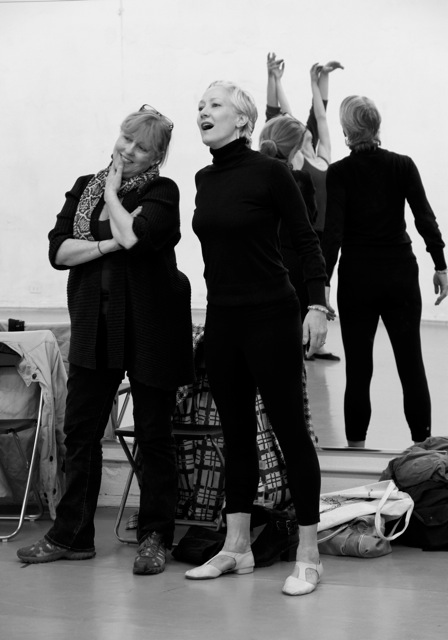
    Deborah Wingert, one of New York City’s foremost ballet teachers, has been working in the studio with the dancers of Lydia Johnson Dance, coaching them particularly in the nuances of partnering in the works that Lydia is preparing to show in her June 2013 performances.

    Deborah Wingert, a former New York City Ballet dancer and presently one of an elite group of stagers of Balanchine repertoire for the Balanchine Trust, is deeply involved as an instructor, choreographer and mentor for the young dancers of Manhattan Youth Ballet. Her depth of knowledge and her understanding of dance from both a technical and an emotional point of view make her a priceless treasure. 

    I asked photographer Melissa Bartucci to document Deborah’s first day in the studio with Lydia Johnson Dance; then, a week later, I was able to get to the studio myself and observe the process first- hand. It didn’t surprise me to find that Lydia and Deborah were very much on the same wave-length, since for both of them their work in dance stems from a spiritual connection with music and movement.

    It was hard to imagine that someone could make Lydia’s beautiful troupe of dancers look even better, but in the most subtle ways – and often in an expressive rather than a technical context – that is what Deborah was able to accomplish.

    Here are some of Melissa Bartucci’s images:

    IMG_2835 copy

    Lydia Johnson, Deborah Wingert

    IMG_2702 copy

    Dancers Kerry Shea and Eric Williams

    IMG_2908 copy

    Anthony Bocconi and Sarah Pon

    IMG_3007 copy

    Lydia observing Sarah and Anthony

    IMG_2957 copy

    Anthony Bocconi

    IMG_3048 copy

    The dance is in the details

    IMG_3057 copy

    Lydia, Kerry, Eric and Deborah

    IMG_3056 copy

    Eric and Kerry watched by Deborah and Lydia

    Lydia Johnson Dance will have their New York season on June 6th, 7th and 8th, 2013 at the Ailey Citigroup Theater. Works set to music of Gorecki, Golijov, Schubert and Bach will be performed. Details will be forthcoming.

  • Paul Taylor @ Lincoln Center 2013 #4

    SpeakinginTonguesRobert

    Above: Robert Kleinendorst of Paul Taylor Dance Company in SPEAKING IN TONGUES. Photo by Paul B Goode. Click on the image to enlarge.

    Thursday March 21st, 2013 – Paul Taylor Dance Company have been celebrating Johann Sebastian Bach throughout their current Lincoln Center season: there’s been a Bach ballet on every programme and today – the actual birthdate of the peerless composer – the dancers gave a glorious performance of ESPLANADE, seeming to up their ‘normal’ level of energy, musicality, passion and sheer daring to a breathtaking point.

    The programme opened with SPEAKING IN TONGUES, a complex work which always leaves me with mixed feelings. Matthew Patton’s score does not seem strong enough to sustain a ballet which lasts almost an hour, and to my aging ears the interjections of spoken word no longer have the clarity needed to make a dramatic impact. The work stretches long, but there is no part of it that seems expendable: it is what it is, and perhaps best viewed with a focus on individual dancers.

    Surely there are few dance experiences today to equal the thrill of watching Michael Trusnovec onstage. This dancer with his taut, slender muscularity and singular artistry gave a transfixing rendering of the preacher-man’s opening solo and then moved thru the rest of the ballet with compelling dramatic intensity. Likewise Robert Kleinendorst as the Odd Man Out struck a vibrant note as his open, innocent personality is slowly dismantled by the holier-than-thou congregation; he’s literally beaten into submission, and at last taken into the cult. Also making a strong impact in this work were Amy Young, Laura Halzack, James Samson, Sean Mahoney, Jamie Rae Walker, Aileen Roehl, Heather McGinley, Michael Novak and Michael Apuzzo. Those sumptuous beauties Parisa Khobdeh and Michelle Fleet were outstanding in their prominent solo passages.

    My companion for the evening, choreographer Lydia Johnson, helped me to see this work in a somewhat different light than I had previously, and to understand why the dancers love dancing SPEAKING IN TONGUES.

    Seeing Taylor’s ESPLANADE on Balanchine’s stage made for a joyful experience: the two great masters of modern and ballet choreography each turned to the same Bach music and thus ESPLANADE reminds us of CONCERTO BAROCCO, as different as they are in style and setting. And one of my favorite BAROCCO ballerinas, Teresa Reichlen, was sitting a few rows behind us.

    In ESPLANADE the sense of dynamism and physical risk play high, and the superb collective of Taylor dancers went at it with unfettered vitality: Amy Young, Laura Halzack, Eran Bugge, Parisa Khobdeh, Jamie Rae Walker, Robert Kleinendorst, Francisco Graciano and George Smallwood all looked smashingly beautiful and grand, and if it was Michelle Fleet who ended up stealing our collective hearts, that too was part of Taylor’s plan. The audience, psyched by the fantastic performance, erupted in a massive ovation when the choreographer appeared onstage for a bow.