Tag: Choreography

  • Millepied/Balanchine/Robbins @ NYCB

    64328_10150289075680529_112319735528_15072609_7664235_n

    Wednesday February 23, 2011 – A really nice evening at New York City Ballet tonight with two beautiful Balanchine masterworks as the centerpiece, opening with a recent work by Benjamin Millipied and ending with a Jerome Robbins classic that still feels quite contemporary even though it’s a quarter-century old. Top photo: Sterling Hyltin & Tyler Angle in Benjamin Millepied’s PLAINSPOKEN, photographed by Paul Kolnik. 

    PLAINSPOKEN: Hyltin, Taylor, Reichlen, Somogyi, T. Angle, Marcovici, Ramasar, J. Peck
        
    VALSE-FANTAISIE: T. Peck, De Luz
        
    SQUARE DANCE: M. Fairchild, *Huxley
         
    GLASS PIECES: Laracey, Hankes, Lowery, Whelan, Finlay, Thew, Tworzyanski, Hall

    The curtain rose on the Millepied and I felt certain I was going to like it much better than I did the last time I saw it. The music is very good (especially the ‘Sterling Hyltin’ section), and the eight dancers looked great. But as the work progressed I found my interest fading, despite the high level of dancing and the individual personalities of some of the Company’s best and brightest stars. The audience applauded dutifully at the end but failed to muster a call for the dancers before the curtain. My feeling is that we won’t see PLAINSPOKEN again; as well-danced as it is, there is nothing in the ballet that really grabs the viewer either musically, emotionally or technically.

    Thereafter the performance soared steadily upward with superb dancing from Tiler Peck and Joaquin de Luz in VALSE-FANTAISIE. Backed by a lovely quartet of ballerinas – Amanda Hankes, Ashley Laracey, Gretchen Smith and Lydia Wellington – Tiler gave a stellar performance where her musicality, technical wizardry, personal beauty and her elegant joy in dancing Balanchine’s steps combined in perfect measure to delight the audience. Joaquin tossed off the virtuoso passages with his accustomed brilliance. Watching Tiler and Joaquin is one of the great pleasures of ballet-going these days and they were at their finest tonight.

    In SQUARE DANCE, Megan Fairchild has one of her most appealing roles. Whether wafting into balances or embroidering the stage with her fancy footwork, she gave a wonderful performance. Her partner was Anthony Huxley, debuting in his role with impressively precise technique. His quiet lyricism in the expressive slow solo kept the audience engaged, and he and Megan swept thru the allegro passages with easy charm. The audience responded enthusiastically to their dancing, calling them out three times before the curtain: a well-deserved success. The ensemble of twelve was comprised of excellent dancers from the NYCB corps and they all deserve mention: the ladies – Likolani Brown, Alina Dronova, Lauren King, Meagan Mann, Kristen Segin, Mary Elizabeth Sell – and the gentlemen: Devin Alberda, Cameron Dieck, Ralph Ippolito, Austin Laurent, Troy Schumacher and Giovanni Villalobos. They added so much to the pleasure of watching this beautiful Balanchine creation.

    Wendy Whelan and Craig Hall danced the adagio of the concluding GLASS PIECES with cool intensity; the audience scarcely breathed as these two gorgeous dancers cast their spell, abetted by the mystery of the Philip Glass score. An excellent sextet of demi-solistes – Ashley Laracey with Chase Finlay, Amanda Hankes with Joshua Thew, and Savannah Lowery with Christian Tworzyanski – made a vivid impression in the first movement, and of course the finale of this ballet is a treat for corps watchers.

    It was nice to see the house packed to the rafters tonight. Perhaps the sold-out SWAN LAKES this season have generated a desire among newcomers to the ballet to see more of the Company’s rep and more of this great troupe of dancers. I hope the management are planning a couple weeks of SWAN LAKE in the Autumn: strike while the iron is hot! In addition to generating good box office and buzz, there are some potential Swan Queens and Siegfrieds in the Company who I’d like to see have an opportunity.

  • Sara Mearns in CORTEGE HONGROIS

    Sara

    Paul Kolnik’s photograph of New York City Ballet principal dancer Sara Mearns in Balanchine’s CORTEGE HONGROIS. Read about the performance here.

    Click on the image to enlarge.

  • Scheller’s CORTEGE/Revival of OUTLIER

    Copy of 4

    Saturday January 29, 2011 – Ana Sophia Scheller’s debut in the prima ballerina role of Balanchine’s CORTEGE HONGROIS was a big attraction for me this afternoon at New York City Ballet. Kokyat photographed the Argentine ballerina last November when she appeared with Avi Scher & Dancers.

    CORTÈGE HONGROIS: *Scheller, Askegard, Laracey, *Hankes, Lowery, Suozzi
         intermission 
    OUTLIER: Bouder, Kowroski, T. Peck, Hyltin, Whelan, Ramasar, R. Fairchild, *Alberda, De Luz, *Tworzyanski, Hall [Solo violin: Nikkanen]

    The two ballets are so well-contrasted in every regard, making for a really satisfying visit to the ballet this afternoon. Andrews Sill was on the podium and gave the Glazunov a lush romantic treatment; along with the excellent violinist Kurt Nikkanen, the orchestra made the OUTLIER score so darkly radiant.

    Ana Sophia Scheller’s Raymonda is a gorgeous princess, regal but not haughty. With her classic poise, technique and beauty, the ballerina gave her dancing a special sense of allure and mystery. One especially lovely moment came near the end of the adagio when she swirled through a series of pirouettes which seemed almost to be in slow-motion: really dreamy. I’ve always loved watching Scheller and would give anything to see her as Kitri, Gamzatti, Juliet, Giselle, Aurora or Swanhilda. Her originally-announced partner, Jonathan Stafford, was replaced by Charles Askegard whose fluent partnering I think we tend to take for granted, but we shouldn’t.

    Savannah Lowery and Sean Suozzi were a grand gypsy couple. They rightly conveyed an underlying sexual tension during the slow opening of the czardas, then burst into joyous swirling dance when the tempo quickens. (Sean’s upcoming debut as the Prodigal Son is circled in red on my calendar: February 8th). The solo variations were danced tonight by Ashley Laracey and Amanda Hankes, much to my delight, and the pas de quatre danced by Mlles. Adams, Brown, Dronova and King was extremely fine. The big corps look superb in the green-white-gold costuming and the whole ballet is such a pleasure to watch…and to hear.      

    2010-05-17-dancered

    I really liked Wayne McGregor’s OUTLIER at its premiere last May and thoroughly enjoyed seeing it again this afternoon. It’s vastly dfferent from anything else in the repertoire; there are some production photos here. In the above Paul Kolnik photo, Tiler Peck in the ballet’s opening moments.

    The ballet begins in silence: a vivid circle of red illuminates the stage floor as the orchestra starts to sound the very quiet opening phrases of the Thomas Ades score. Then Tiler Peck and Craig Hall begin to move slowly, almost warily at first. The work proceeds, highlighted by a series of duets: Maria Kowroski and Robert Fairchild, Robert with Amar Ramasar, Wendy Whelan with Craig Hall (to an especially gorgeous theme in the score). Debuting Devin Alberda has a duet with Sterling Hyltin, both dancers so light and luminous in their movement. An ensemble passage is danced to an intriguing tom-tom rhythm with strings and woodwinds. Meanwhile, the lighting is really striking throughout the ballet – it’s good to see it from ‘above’. Ashley Bouder looks great with her hair in bangs and with her stellar dancing taking on an restless element. Christian Tworzyanski and Joaquin de Luz are wonderful to watch although – along with Wendy Whelan – I wish they had more to do. In fact OUTLIER is one of those rare works that I wish was longer! I’ll catch it two or three more times this Winter because who knows when we might see it again.

  • Fantastic POLYPHONIA @ NYC Ballet

    Wheeldon071022_4_560

    Wednesday January 26, 2011 – Christopher Wheeldon’s POLYPHONIA returned to the New York City Ballet repertoire tonight in a striking performance with a cast led by Wheeldon muse Wendy Whelan. Photo of Christopher above is by Peter Hapak.

    573_4100

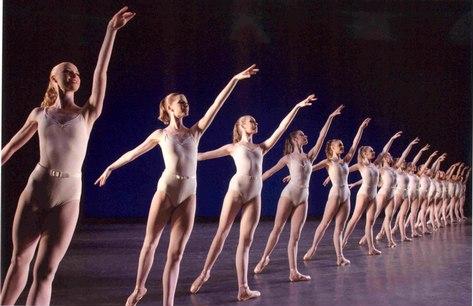
    Opening the evening was the stunning image of the NYCB corps women, pony-tailed and is white leotards, in the iconic diagonal which heralds the start of Balanchine’s SYMPHONY IN THREE MOVEMENTS. Moments after curtain-rise, Daniel Ulbricht came bounding into view; he was soon joined by the vibrant Sterling Hyltin in a high-jump contest: so great to see these two very accomplished dancers giving such vitality to their every move. Savannah Lowery has been out for a while but she came roaring back with a grand performance where she pulled off a triple series of pirouettes climaxing each set with a wonderful Balanchine-off-kilter moment. Sean Suozzi’s energy stood out. In the pas de deux, which starts with that whimsical tune, Abi Stafford and Sebastien Marcovici looked great together; I cannot recall having seen this partnership before and it’s a good one. The ten demi-solistes kept my opera glasses on high alert and the corps girls – including some of the newest Company faces – did well. Faycal Karoui and the orchestra gave the Stravinsky score a fine flourish.

    Wheeldon’s POLYPHONIA premiered at NYCB in 2001; for me it’s the work that put the choreographer on the map. I was at the first night and was bowled over by it. And I had the same reaction to tonight’s performance. The Ligeti piano music, by turns quirky and mysterious, was played by Cameron Grant and Alan Moverman. Mark Stanley’s lighting sets the dancing off with some marvelous shadowplay, and the deep-purple Holly Hynes costumes are an added asset.

    Polyphonia_08_WW_and_TA_Big_storyslide_image_storyslide_image

    No one speaks Wheeldon with such clarity and expressiveness as Wendy Whelan; returning to this role that was crafted on her body, the great and enigmatic ballerina astonished once again with her supple movement, daringly stretched poses and her flair for creating drama from the abstract. Everyone who recalls Jock Soto in this ballet will have kept a mental gallery of images of the great Whelan/Soto partnership: they were unforgettable together. But Tyler Angle has put his own stamp on this work with his cool, magnificent partnering and his dancing, which in the past couple of years has taken on a unique lustre. He’s now among the most riveting danseurs I’ve encountered over the past four decades. Photo of Wendy and Tyler above by Erin Baiano.

    Power and beauty seem to have been the watchwords in casting this revival, encapsulating in the 30-minute work the current state of NYCB’s roster: an embarassment of riches. Teresa Reichlen and Amar Ramasar are spell-binding not only in physical allure but in the way they channel their personal magnetism into the movement. They are just so great to watch together. Tiler Peck continues to show us in every performance what an astonishing and versatile dancer she is: her technique amazes, her ever-deeping artistry is a true pleasure to behold. In their enchanting waltz, Tiler and the equally impressive Andrew Veyette made me smile in admiration. Andrew has really got the knack for being a contemporary cavalier, and he and Amar turned their duet into a highlight of the ballet. 

    Sara Mearns danced with quiet radiance in her solo (created originally on Alexandra Ansanelli) and added another compelling performance to her catalog. Her Raymonda in CORTEGE HONGROIS last week was equally fascinating, these two ballets testifying to her expressive range. In the company of these stars, Chase Finlay looked wonderfully at home, his dancing and partnering not only impressive in the moment but also as a promise of things to come.

    Im-old-fashioned-photo-by-paul-kolnik

    Normally I don’t stay when I’M OLD FASHIONED (Paul Kolnik photo, above) is the closing work on the programme due to my general aversion to Hollywood or Broadway-style ballets. But Maria Kowroski is having such a glorious season that I felt like I really wanted to see her dancing tonight. She was just splendid of course, dancing with Tyler Angle (who subbed for his brother Jared). And Rebecca Krohn and Jenifer Ringer looked and danced divinely as well, partnered by those handsome dudes Justin Peck and Robert Fairchild respectively. The corps looked spiffy and the choreography is actually pretty good.

    But tonight I realized what’s always really killed this piece for me. No, it’s not the comparison people always make between how Fred and Rita move in the film to how the NYCB dancers move onstage. No, that doesn’t irk me: Fred and Rita are in their element and the ‘live’ dancers are working in a hybrid style for all that it’s grounded in classic technique.

    No, it’s the music that ultimately makes this ballet unappealing to me. Of course the actual Jerome Kern song I’m Old Fashioned is a gem. But Morton Gould’s arrangement of it is lackslustre, and it’s sad to see great dancers dancing to third-rate music.

    The ballet also suffers from cliches: “You bumped into me!”, “That guy cut in on me and stole my girl!” “Let me gaze at the skyline for a moment.”  After a while, despite the excellence of the dancing, the piece makes me restless. But it was good to see Maria, Becky and Jeni.

  • NYCB NUTCRACKER 2010 #6

    Hot_chocolate

    Thursday December 30, 2010 @ 2:00 PM – Today’s treat: Hot Chocolate!

    This was one of those difficult days at the ballet – nothing to do with the dancing, which was super all afternoon. But my usual safe-haven in the 5th Ring was full of chatty, cell-phone prone, camera clicking and food-consuming persons (a group, so it seems – they all knew each other). They were pretty quiet during the overture and then there was some commotion and they started going in and out and there was lots of whispering. Apparently they did not like the 5th Ring view and went to complain or find other seats. I gave up and went to standing room, But there was a kid up in the gallery who talked all the way thru the party scene with no attempt from his parents to shut him up. Other people were shushing and one woman said: “Take him out!” but the parents didn’t budge.

    So, all I remember about Act I today was that Vincent Paradiso seemed to be doing twice as many flat-footed entrechats as usual in the Soldier doll solo. I love it when the dancers improvise like that. The snow scene was very pretty and perhaps that music finally lulled the blabbering brat in the Fourth Ring to sleep.

    The main reason I went to the performance today was to see Rebecca Krohn’s Sugar Plum Fairy. Anyone who has been reading my blog for a while knows that Rebecca is one of my ballerinas of choice: I singled her out soon after she joined the Company and I’ve been very pleased with her progress – most especially in the last two or three years where she seemed to really take things to another level in terms of presence and presentation. She has the look, the technique and the artistry and she showed them all off to perfection today with a very impressive performance of this difficult role.

    Right from her first entry, everything looked so polished and clear. The solo was attractively danced in the lyric style with just a trace of prima ballerina hauteur here and there to keep things fascinating. Her cavalier in the pas de deux was Zachary Catazaro, one of the handsomest guys in the Company. I’d mostly only ever seen him in the large corps works so I had no idea how he would fare in this testing adagio or how he would register as a stage presence beyond his good looks. He did really well; he and Rebecca had clearly worked hard to develop a strong partnership and things went smoothly, they looked great together and they had a flair for finishing things off with just the right flourish. The audience seemed very taken with them and gave them a big cheer at the curtain calls. After this, I would look for Zachary’s partnering stock for go way up; as for Rebecca, one might say ‘a star is born’ but she’s been a star in my book for a while now.

    Zachary_catazaro  Krohn

    Zachary Catazaro and Rebecca Krohn; headshots by Paul Kolnik.

    Tiler Peck’s Dewdrop was spectacular, full of sustained balances and brilliant pirouettes. She varied the pacing of certain phrases, such as her spins en attitude which seemed to linger on the music to delightful effect. A phenomenal dancer in every respect.

    Marika Anderson and Gwyneth Muller were poised and gracious as the demi-flowers. Mary Elizabeth Sell repeated her excellent Spanish senorita from yesterday; today she danced with Devin Alberda, one of the corps de ballet‘s most accomplished young men. Both Mary and Devin seem ready for more and bigger assignments. Megan LeCrone’s Arabian is all mysterious allure, and superbly danced. Antonio Carmena (Tea) and Giovanni Villolobos (Candy Cane) were on fine form.

    As the Marzipan’s back-up quartet Likolani Brown, Alina Dronova, Callie Bachman and Meagan Mann danced charmingly and remained unperturbed when the fire alarm started going off during their piece. Brittany Pollack was the main Shepherdess, adding another sparkling performance to her list. In the finale, Brittany treated us to three beautifully elongated grand jetes: no signs of NUTCRACKER fatigue from this rising star.

    Brittany’s vibrant performance was one more reason to celebrate the perfection of the Balanchine staging of this ballet. There’s been a lot of controversy about the new ABT/Ratmansky production, but one thing is clear: the set pieces of the Act II divertissement in the Balanchine version are surely more rewarding to dance than their Ratmansky counterparts. Spanish, Arabian, Marzipan, Dewdrop – these Balanchine roles give young up-and-coming dancers great opportunities to step out and show what they can do. Ratmansky’s Spanish and Marzipan are nothing-special ensemble pieces, his Arabian is a bare-chested guy doing a walk-about, and there’s no Dewdrop at all. 

    It was interesting today to listen to the Battle of the Mice music while leaning against the back wall of the gallery, not watching the action. You don’t even need to see the stage to know exactly what’s happening because Balanchine uses every militaristic ruffle and flourish in the music – right down to the smallest instrumental nuance – to depict the conflict in theatrical detail.

  • NYCB NUTCRACKER 2010 #5

    Leftover-candy-canes-by-SpacePotato

    Wednesday December 29, 2010 @ 2:00 PM – Today’s treat: candy canes!

    In the final week of New York City Ballet‘s annual NUTCRACKER season I decided to brave two matinee shows – knowing they’d be packed with tiny tots – in order to see some of my favorite dancers who have taken on new roles in this ballet this Winter. This afternoon I saw Lauren King as the Dewdrop and Vincent Paradiso as Drosselmeyer. Both of these dancers had made their debuts in these roles earlier in the month. Tomorrow I will see our newest Sugar Plum Fairy, Rebecca Krohn who just debuted in this role opposite Zachary Catazaro (another first-timer).

    In the week between Christmas and New Year attendance sometimes falls off a bit at the NYCB NUTCRACKER but today the House seemed pretty well packed. Aside from one terribly loud cellphone ringing, the audience was pretty well-behaved.

    154648_471502694933_504139933_5780163_6419669_n

    Vincent Paradiso’s Drosselmeyer (seen in a backstage photo, above) is dance-oriented in its movement and his characterization is detailed and fully-formed. It seems that, aside from some basic blocking, the NYCB Drosselmeyers can develop the character each in his own way. Vincent leaves off the arthritic old-man stuff; just having white hair doesn’t automatically make you a senior citizen: my hair was completely white by the time I was 30.  Vincent plays Drosselmeyer as a vigorous gentlemen, young and strong enough to lift Austin Laurent’s soldier doll and carry him back to his gift box after his solo. Using his arms and hands beautifully, Vincent’s is clearly a dance-based portrayal, and in fact he broke into a jig at one point and even added a touch of flamenco footwork. His rapport with the individual children and with the party guests was easy and natural. As the party was winding down, Vincent began sizing up the room and planning his magic spells for the upcoming scene where he will make everything grow. It’s good to see such a polished and well-thought-out portrayal – the latest in a long line of Drosselmeyers at NYCB that stretches back to Jerome Robbins and to Balanchine himself.

    The party scene seemed especially pleasant today, perhaps as an antidote to Ramtamsky’s unfortunate concept as presented in the new ABT version. Amanda Hankes as the graceful Frau Stahlbaum and Henry Seth as her spouse welcomed their guests elegantly and worked hard to keep their naughty son under control. Aside from Austin Laurent’s tall soldier, Sara Adams and Callie Bachman were sweet and charming as Harlequin and Columbine. In the snow scene I very much enjoyed watching Lauren Lovette while in the meantime trying to figure out who some of these new faces in the corps belong to.

    Teresa Reichlen’s Sugar Plum Fairy is so dreamy to watch: her beautiful floating-on-air quality in the solo is matched by the gentle radiance of her facial expressions. Her two big jetees just before she leaves the stage to the Spanish dancers were so remarkably stretched out and silky. In the pas de deux, Tess and her cavalier Ask LaCour use their height to exude a regal feeling; they moved securely thru all the many dangers that Mr. B has set in their path and reached a climax with an exciting balance from the ballerina.  If Tess was an opera singer instead of a ballet dancer, she would be one of the great lyric sopranos of all time. I’m looking forward to what the coming Winter repertory season might have in store for her.

    Mary Elizabeth Sell and Daniel Applebaum danced Spanish; Mary looks superb and – speaking of balances – she had one phenomenal one. She reminds me more and more of Alexandra Ansanelli, quite a high compliment in my book. She and Daniel were going great guns with some wonderfully spacious dancing; Daniel had to put a hand-down in the final pose but it really didn’t spoil the effect of their flavorful dancing.

    The long-limbed Gwyneth Muller danced Arabian with evocative fluidity of movement; when viewed from above the dancer in this piece casts a triple shadow. Giovanni Villalobos was a musical and technically precise Tea, and Adam Hendrickson spiced up his Candy Cane by increasing the speed of his hoop-leaps as he came down the center line. Later in the finale Adam added an extra jump thru the hoop as he made his exit. Erica Pereira’s Marzipan reminds us how difficult this solo is – and how easy she makes it look. Cameron Dieck’s Mother Ginger has become a more detailed characterization in the course of the season; I expect we’ll soon see Cameron as lead dancer in Spanish and eventually as the Sugar Plum cavalier. He’s too princely of a dancer to keep him in a hoopskirt for very long.   

    Copy of 15

    Kokyat photographed Lauren King (above) when she appeared in a Zalman Grinberg pas de deux (with Vincent Paradiso partnering her) at the Young Choreographers Showcase at MMAC earlier this year. This fetching young ballerina caught my eye right from her first appearances on this stage and it was simply a great pleasure to watch her Dewdrop today. She was wonderfully quicksilver in her movement and with a smile that so clearly shows her pleasure in being able to dance as she does. After seeing her in the Grinberg duet, I feel certain she will be dancing Sugar Plum – and several other major roles – very soon. Georgina Pazcoguin and Rebecca Krohn were the demi-flowers, both thoroughly lovely.  

    Although the Balanchine NUTCRACKER has had a bit of friendly competition this Winter from the new ABT/Ratmansky setting at BAM, today’s performance at New York City Ballet – coming at a point in time when the dancers, musicians and stage crew are probably suffering keenly from NUTZ-exhaustion – served as a reminder that this timelessly classy version with which Mr. B brought the Tchaikovsky score back to prominence is the one that will endure. Its old-world charm may seem dated to some people, but its perfect fusion of music and choreography makes it indispensable.

    From spotting the cat in the Stahlbaum’s window (who has been sitting there for a half-century) to that stunning moment at the end of the Sugar Plum Fairy pas de deux when the ballerina lets go of her partner’s hand in a sustained balance, the Balanchine NUTCRACKER continues to cast its spell, however often I see it.

  • Ratmansky’s NUTCRACKER for ABT

    Copy of AV4

    Sunday December 26, 2010 at 5:30 PM – Ever since he photographed Veronika Part when she was dancing for Avi Scher, Kokyat has been smitten with the ballerina. He had a second opportunity to photograph her when she repeated her role in Avi’s ballet TOUCH. He and I went to see her in ABT’s SWAN LAKE and he was really excited at the prospect of seeing her in Alexei Ratmansky’s new version of THE NUTCRACKER. Kokyat’s image of the ballerina, above.

    I have always liked ABT’s ‘Baryshnikov’ NUTCRACKER though I must say I think the filmed version falls short of experiencing it in the theatre. I especially like what Baryshnikov did with some of the divertissement pieces, most notably Spanish (danced in this filmed clip by Jolinda Menendez and Clark Tippett) and Marzipan (Aurea Hammerli and Warren Connover in the filmed excerpt).   I also have a soft spot for the way Baryshinikov made the pas de deux a ‘psychological’ pas de trois for Clara, the Prince and Drosselmeyer. I once saw three consecutive performances of the Baryshnikov production on a single weekend: my Claras were Leslie Browne, Mariana Tcherkassky and Natalia Markarova. Much as I admire Gelsey Kirkland in the film, each of these ballerinas was quite wonderful in the role.

    Aside from the Balanchine NUTCRACKER which I have seen close to a hundred times (not counting the filmed version), the Baryshnikov setting is the only version of this ballet I’m really familiar with. But it’s been years since it was presented ‘live’ and now ABT have put on a new version at BAM and so we braved the snowy trek to Brooklyn and the restless audience full of kids to see what Ratmansky has devised.

    2010-b-nutcracker

    The Ratmansky NUTCRACKER opens in the Stahlbaum kitchen. Mice (beautifully costumed in in grey tailcoats) play a big role in this production, especially one little mouse who quickly became tiresome. The kitchen scene was an unnecessary addition since it had nothing to do with anything.

    One immediate realization about this production is how much better the NYCB orchestra play this score than their ABT counterparts. Of course, the NYCB musicians have had much more experience playing it. (The interpolated violin intermezzo which links the two scenes of Act I of the Balanchine is not done at ABT).

    The party scene is played in a large, flat-tourquoise room. The children in this scene are too old to still be enchanted by Christmas, so they are spoiled and snotty instead. There’s hardly any dancing aside from the Harlequin/Columbine duo and a couple known as The Recruit and the Canteen Keeper. These mechanical dolls appear from large wrapped Xmas boxes just as the dolls in Balanchine’s version do. But their choreography isn’t nearly as lovely. They also reappear randomly later in the production.

    There is no sense of mystery or magic about Ratmansky’s Drosselmeyer who looks – in his plaid pants and spangled cloak-liner – like a 19th century dandy/pimp. Isaac Stappas, handsome as ever, did what he could with the role.

    Nutrehearse

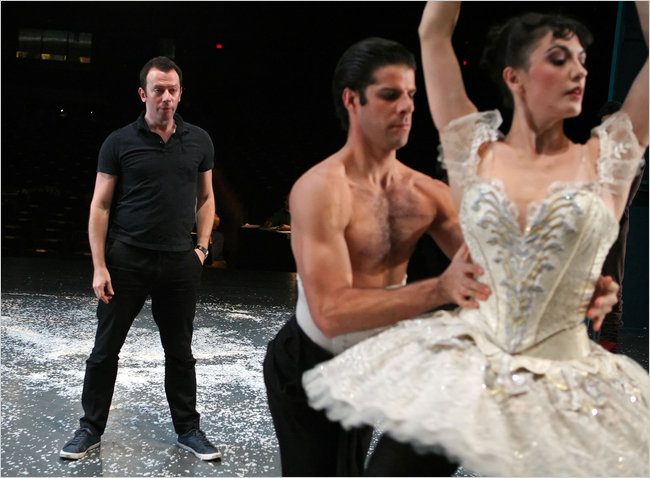
    Rehearsal photo: Ratmansky, Gomes, Part.

    The Battle of the Mice is a rather helter-skelter affair. Then we’re off to the Snow scene where Clara and her boy-prince encounter their older selves in the persons of Veronika Part and Marcelo Gomes. The younger and older couple have a sort of parallel pas de deux; there’s lots of hugging and excitement over being with someone you love but the choreography for Part & Gomes seems hellbent on making them look their worst for the most part. You have two of the greatest dancers in the world at your disposal and this is all you could think of to do? Meanwhile the snowflakes are doing some dancing but it isn’t cohesive; in fact it’s rather random….and they sometimes lay down on the floor. Their petite leaps in place make lots of toe-shoe racket on the stage, causing me to yearn for Balanchine’s swift, magical and winter-quiet snowflakes. Where are Mary Sell and Sarah Villwock when you need them? Well, anyway, all the ABT snowflakes appear to die at the end of the scene. Drosselmeyer pushes on a large sleigh but its runners have not been oiled and there’s a loud screeching sound. He manages to run over the tutu of one of the recumbent snowflakes before her gets Clara and her boy-prince into the sleigh to head for Sugar Plum Land. 

    Ratmansky’s divertissement ‘national dances’ lack the charm of the Balanchine versions – the music is charming, so the choreography should be also. Aside from a conventional and pleasing Spanish dance for three couples, most of the choreography in ABT’s Act II went in for cuteness and cleverness rather than vivacity or anything vaguely poetic.

    Who knew, for example, that the Nutcracker has five sisters? Dressed in pink top hats, five excellent ABT ballerinas danced very nicely but the choreography just seemed so pointless (they had the Marzipan music). I could swear I saw Maria Riccetto among them though she was not listed.

    In Arabian, all I could think was “Sascha Radetsky came back to ABT for this?”  The conductor chose a molasses-in-January tempo, making the already-long piece stretch out interminably. The handsome Sascha, in harem pants, bare-chested and beautifully tattooed, simply walked around the stage while four women teased, cajoled and scolded him. At the very end of the piece he did a very quick phrase of real dancing and then swept off.

    Marian Butler and Joseph Gorak were fine in Chinese though they had more interesting things to do in the finale than in the set piece. Three men danced a slapstick Russian trepak; the dancers were replacing the announced trio and I am not sure I got the names right but they seemed to be Luis Ribagorda, Roman Zhurbin and Julio Bragado-Young.

    Ever since Balanchine put a male dancer on stilts and created a drag Mother Ginger, several productions have done the same in this number. Ratmansky tries it again but what undermines his version is having the ‘polichinelles’ dressed as Red Hot Chili Peppers. Cuteness prevailed yet again and by this point things were getting pretty stale. (Baryshnikov’s pleasing solution to this set piece was to have it danced by four Jesters with tinkling bells sewn to their costumes).

    The Waltz of the Flowers featured anonymously pretty choreography; there’s no Dewdrop but there are four male Bees who buzz around the bouquet of ballerinas. My heart bled for the four excellent danseurs who were forced to carry on with much coy prancing about. Baryshnikov’s version had also omitted the Dewdrop role, and he too used men in the Waltz but they were elegantly dressed cavaliers, not silly and superfluous bugs.

    Part and Gomes danced splendidly in the grand pas de deux, given in standard performance order (adagio/male solo/female solo/coda) as opposed to Balanchine’s version which rearranges it, putting the Sugar Plum variation at the start of Act II. There were some exciting partnering feats in the duet but even here Ratmansky seemed to feel a need to be different just for the sake of being different; the choreography wasn’t memorable enough for me to recall specifics. At times, though, it seemed to me that the choreography was working against the natural grace of the dancers by making them do odd things.

    As the finale draws to a close, Gomes asks Part to marry him. He places a ring on her finger while attendants place a veil on her head. They elope.

    At the end, in a bizarre scene, Clara is seen in her bed with Gomes standing to one side and the boy-prince at the other. She awakes and goes first to one, then the other. Does she want them to get in bed with her? They recoil and withdraw. Clara settles down with her Nutcracker doll as the voyeuristic Drosselmeyer peeks in thru the window.

    Copy of 1

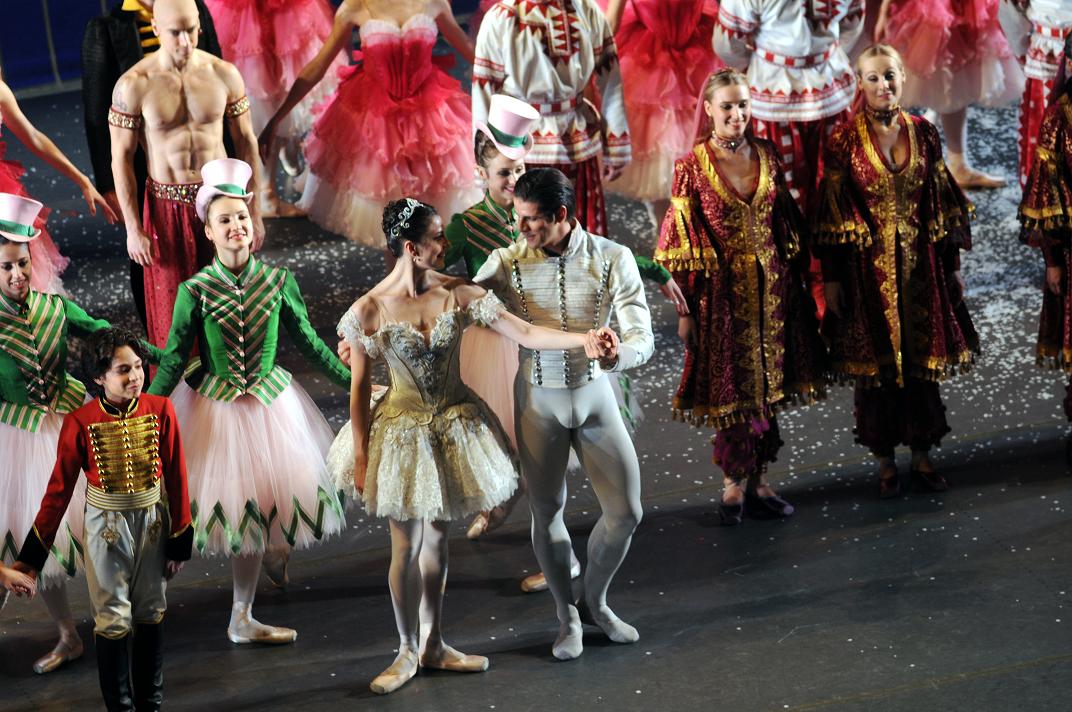
    Curtain call photos by K. Click to enlarge.

    Copy of 5

    There were lots of empty seats though it’s possible the weather was to blame for some of them, The production seems to have been built for touring; it looks nice enough at BAM but I think it would be really dwarfed at the Met.

    My guideline for the success or failure of a ballet production is simple: is it something I want to see again or – failing that – would I be willing to see again despite misgivings just to see other dancers in the leading roles? This production fails on both counts. Kokyat liked some of it simply because it was so visually different from anything else. I kept wishing they’d simply refurbished the Baryshinikov.

    My friend and fellow blogger Tonya Plank takes a different view of the production here; she saw a different cast and I believe she plans to see additional performances.

    So many superb dancers in each roster rank: I wish ABT would make more of an effort to mount productions which are truly worthy of their talents. 

    Thinking about current choreographers who might offer an interesting take on NUTCRACKER, the names Christopher Wheeldon, Edwaard Liang and Melissa Barak came to mind.

  • Roman Baca’s NUTCRACKER Rehearsal

    Copy of 62

    Saturday October 23, 2010 – Kokyat and I went to watch choreographer Roman Baca working on his upcoming new production of THE NUTCRACKER for Ballet Theatre Company’s annual performances at St. Joseph’s College in West Hartford, Connecticut. A USMC veteran of the Iraq war, Roman presents the ballet as A Soldier’s Nutcracker. Above, Paige Grimard leading the Waltz of the Flowers.

    Copy of 6

    Taylor Gordon would normally be dancing in this NUTCRACKER but following surgery (from which she’s well on her way to recovery) she is serving as ballet mistress for the production. Most of the divertissement pieces are double-cast giving the dancers expanded opportunities.

    Copy of 45

    How many dozens of times have choreographers tackled the NUTCRACKER since Balanchine put it on the map? I really like what Roman is doing with it: very classical in feel but steering clear of the ideas we’ve seen in other settings. For example, his Harlequin (Michael Wright, above)…

    Copy of 47

    …and Columbine (Hope Kroog) do not dance together: they each have a solo in turn.

    Copy of 25

    Roman’s Arabian is probably my favorite from among the set pieces I’ve seen so far for this production: Roman creates a very sensuous and demanding pas de deux. Above: Kimberly Gianelli and Kendahl Ferguson.

    Copy of 51

    Arabian (and many other roles in the production) are double-cast. Above: Michael Wright, Jessica Freitas.

    Copy of 12

    Spanish is a trio: a man and two women. Above: Adrienne Cousineau, Michael Wright and Crystal Danzer ready to start. Marzipan is another trio, all girls in this case. And there are two alternating Dewdrops for the Waltz of the Flowers...

    Copy of 38

    …Mayo Kurokawa…

    Copy of 56

    …and Paige Grimard.

    Thru being over-played 24/7 from Thanksgiving til New Year, the music of the NUTCRACKER makes some people nauseous. Me? I love it still and most especially the Waltz of the Flowers – melodies that tug at the heartstrings try as we may to withstand their charms.

    The pure dance numbers are being rehearsed here in NYC and the party scene and all the story work are being done up in Connecticut meaning that Roman is trekking back and forth.

    Here are a few more of Kokyat’s images from today’s rehearsal:

    Copy of 9

    Jessica Freitas

    Copy of 16

    Michael Wright, Crystal Danzer

    Copy of 20

    Kimberly Gianelli, Kendahl Ferguson

    Copy of 27

    Maddie James

    Copy of 49

    Jessica Freitas, Michael Wright

    Copy of 64

    Adrienne Cousineau

    Copy of 57

    Paige Grimard

    Copy of 53

    Mayo Kurokawa

    All photos by Kokyat.