Tag: Christmas Eve

  • Christmas Eve 2024 @ Carnegie Hall

    Mozart

    ~ Author: Oberon

    Tuesday December 24, 2024 – I spent Chrstmas Eve with a dear, long-time friend at Carnegie Hall, where the The New York String Orchestra were offering their customary Christmas Eve concert. The all-Mozart program brought us an overture, a concerto, and a symphony – all by the Master, and all beautifully played by the young musicians of this large and unique orchestra.

    Maestro Jaime Laredo opened the evening with the overture to The Impresario, a comic singspiel which Mozart composed in 1786. This overture is short…I might even say too short!
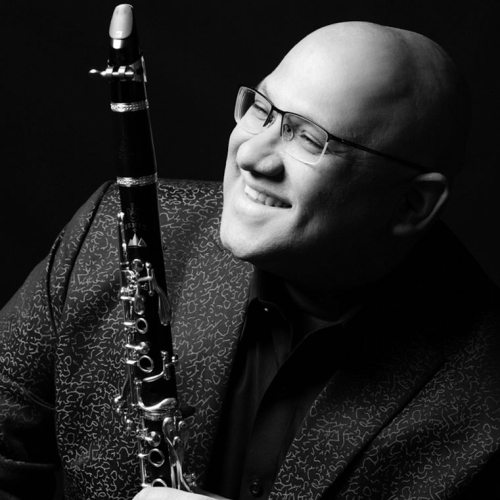
    Morales

    Ricardo Morales (above) then took the stage as soloist in Mozart’s heavenly Clarinet Concerto. I’ve never forgotten hearing music from this celebrated piece for the first time: in the film Out of Africa, Baroness Blixen (Meryl Streep) and Denys Finch Hatton (Robert Redford) are on safari; Finch Hatton has brought along a gramophone, and he puts on an old 78 rpm of the concerto, which attracts a pair of curious monkeys who – after listening raptly for a few moments – attack the gramophone.

    The first movement, Allegro, has a pulsing, melodious start. Dulcet clarinet roulades immediately introduce us to Mr. Morales’ mastery of dynamics, and his gift for incredible subtlety in his playing. His silky-smooth sound is captivating, and his agility astounds, with  fabulously clear scale-work and a charming passage where he deftly bounces from low to high notes. A mini-cadenza leads to the movement’s finale, where the Morales clarinet warbles like a magical bird over the orchestra’s plush playing.

    The Adagio – the heart of the concerto, and perhaps of Mozart’s entire oeuvre – introduces the clarinet’s simple but heartfelt melody, soon taken up by the orchestra. A fresh, wide-ranging theme evolves, in which Mr. Morales’ control and breath support are mind-boggling to experience. Following a brief cadenza, the main theme returns, hauntingly lovely; a heavenly trill from the clarinet draws the movement to a close.

    The concerto’s final Rondo has a sprightly start; Mr. Morales commences a flow of fantastical fiorature. The orchestra has an exotic, minor-mode passage, and then the clarinet’s wide range – from gleaming highs to velvety low notes – is explored in colorful playing. A magical performance, full of wonders. Bravissimo, Mr. Morales! 

    Symphony No. 36, “Linz”, closed the evening. Mozart was en route to Vienna when he stopped at Linz to visit an old friend, Count Thun-Hohenstein. On learning that a concert was scheduled just 5 days after his arrival at Linz, Mozart worked feverishly to compose a new work for the occasion: the result was a symphony in C-major, which soon earned the nickname the “Linz” Symphony.

    The first movement has a regal start. In the ensuing melody, bassoon and oboe stand out. A wistful mood sets in for a bit, then more joyous music sounds…with an odd rhythmic echo of Handel’s Hallelujah chorus. The music flows on, by turns thoughtful and grand.

    The ensuing Poco adagio begins elegantly. The music darkens, but only slightly, with the timpani evoking a sound of distant thunder. Somber moments alternate with courtly ones. The third movement – Menuetto – feels stately and grand at first, then becomes a conventional minuet, with some outstanding playing by bassoonist Laressa Winters.

    Mozart’s chose a Presto rather than a Rondo for the symphony’s finale, wherein swift and gracious themes alternate with lyrical lulls.

    Heading to the train home, I asked my companion if he felt that Mozart sometimes went on and on in his symphonies – something one rarely feels in his operas. He replied: “I was just thinking the same thing!” 

    ~ Oberon

  • Joshua Bell|NY String Orchestra

    JoshuaBell-696x329

    Above: Joshua Bell

    ~ Author: Oberon

    Friday December 28th, 2018 – Holding forth at Carnegie Hall over the holidays, the New York String Orchestra presented a Christmas Eve concert (which Ben Weaver wrote about here) and then followed up with this evening’s program which brought us Joshua Bell as soloist for the Brahms Violin Concerto, book-ended by George Walker’s Lyric and Tchaikovsky’s Pathétique Symphony.

    George Walker‘s Lyric for Strings opened the program. From its very soft opening, this music was drawing us in and clearing our minds of the worries and woes that abound in these troubled times. Guest conductor Karina Canellakis and the young musicians savoured the rich themes, the Romantic Era yet still contemporary-sounding harmonies, the beautiful layering of arching violins and darkish basses. The music quietens, then a new melodic journey commences. After some thoughtful hesitations, the work finds a gentle ending: we are in a tranquil place. 

    Joshua Bell gave a knockout performance of the Brahms Violin Concerto in D-Major, Op. 77. The concerto’s first movement (Allegro non troppo) is especially rich in themes; following a unison opening passage, the music becomes quite grand. An excellent contingent of wind players joined the ensemble. Joshua Bell’s intense playing – and his feel for the dramatic – found a counterpoise in the ravishing sheen of his highest range, his pinpoint dynamic control, and his pliantly persuasive phrasing.
     
    A recurring theme, which make us think of springtime, found the violinist at his most lyrical, while in the demanding cadenza, Mr. Bell’s masterful dispatching of flurries of notes covering a vast range reached its end with a shimmering trill. The movement’s final measures were sublime.
     
    The winds set the mood of the Adagio. A marvelous oboe solo and – later – an impressive passage of bassoon playing – fell sweetly on the ear. Mr. Bell’s silken sounds in the upper register cast a spell over the hall, his exquisite control giving me chills of delight. In his mixture of passion and refinement, the music seemed so alive. Without pause, Maestro Jaime Laredo took us directly into the final movement; here, in the familiar theme, the rhythmic vitality of the orchestra and Mr. Bell’s bravura playing combined to winning effect.
     
    A full-house standing ovation greeted Joshua Bell’s stunning performance; hopes for an encore had the audience calling him back for repeated bows. But perhaps he felt that nothing really could follow the Brahms, especially after such a thrilling rendition.
     
    Following the interval, several alumni of the New York String Orchestra joined the current ensemble for a tonally lush rendering of Tchaikovsky’s Symphony No. 6, Pathétique. Among these alumni were several of today’s finest artists – people like violinist Pamela Frank, violist Steven Tennenbom, cellists Peter Wiley and Nicholas Canellakis, bass player Timothy Cobb, and clarinetist Anthony McGill. These musicians did not take over the principal chairs from the current players, but simply joined the ranks of the orchestra, seated interspersed among their young colleagues. I can only imagine how inspiring it must be for these emerging musicians to be playing alongside David Kim or Kurt Muroki.

    Maestro Laredo crafted a rich-hued, passionate performance, and the musicians played their hearts out. As the symphony unfolded – really impressively played – I found the first two movements to be magnificent in every regard. The Allegro molto vivace – which Tchaikovsky seems to have referred to as a ‘scherzo‘ and which one writer described as “a waltz with a limp” – seemed to go on too long. And as affecting as the final Adagio lamentoso is, there are themes in SWAN LAKE, SLEEPING BEAUTY and the Serenade for Strings that I find far more moving.

    Over time, people have sometimes felt that the Adagio lamentoso, with its faltering heartbeat at the end, presages the composer’s death. Within nine days after conducting the first performance of his the epic Sixth, Tchaikovsky would in fact be dead. There are various theories about the cause of the composer’s sudden demise: cholera from drinking tainted water, suicide induced by depression, or a sentence of death imposed on him by a ‘Court of Honor’ when his affair/infatuation with a young nobleman, Prince Vladimir Argutinsky (whose father was a high-placed official in the tsar’s court) came to light. In this third scenario, Tchaikovsky took poison after the Court’s verdict was handed down.

    Tchaikovsky & argutinsky
     
    Above: Tchaikovsky with Prince Vladimir Argutinsky
     
    Applause between movements somewhat spoiled the atmosphere tonight, even though after the Allegro non troppo of the Brahms it was understandable that the full house wanted to to applaud Mr. Bell. But premature applause at the end of the Tchaikovsky was a more serious mood breaker.
     
    ~ Oberon