Tag: Claire Westby

  • Cherylyn Lavagnino’s TALES OF HOPPER

    Hopper

    Above: dancers Justin Faircloth, Corinne Hart, and Claire Westby in Cherylyn Lavagnino’s TALES OF HOPPER; photo by Charles Roussel

    ~ Author: Oberon

    {Note: this article has been updated with production photos by Charles Roussel}

    Tuesday February 25th, 2020 (dress rehearsal) – Today, choreographer Cherylyn Lavagnino kindly invited me to attend the dress rehearsal of her newest creation: TALES OF HOPPER. It’s a collaboration between Ms. Lavagnino and composer Martin Bresnick, inspired by the works of the American painter Edward Hopper. Two earlier works from Ms. Lavagnino’s treasure chest were also on the bill: Triptych and Veiled.  

    Hoping to get the clearest possible vision of the Hopper piece, I had asked the choreographer if I might attend the dress rehearsal rather than a performance so that my concentration would be unbroken. As a further enhancement, I had earlier watched a studio rehearsal of one of the ballet’s solos danced by Sharon Milanese; Ms. Milanese’s dancing that afternoon really moved me, and made me eager to see the entire piece. Although a dress rehearsal, the participating dancers and musicians were all at performance level.
    IVhBGl8g

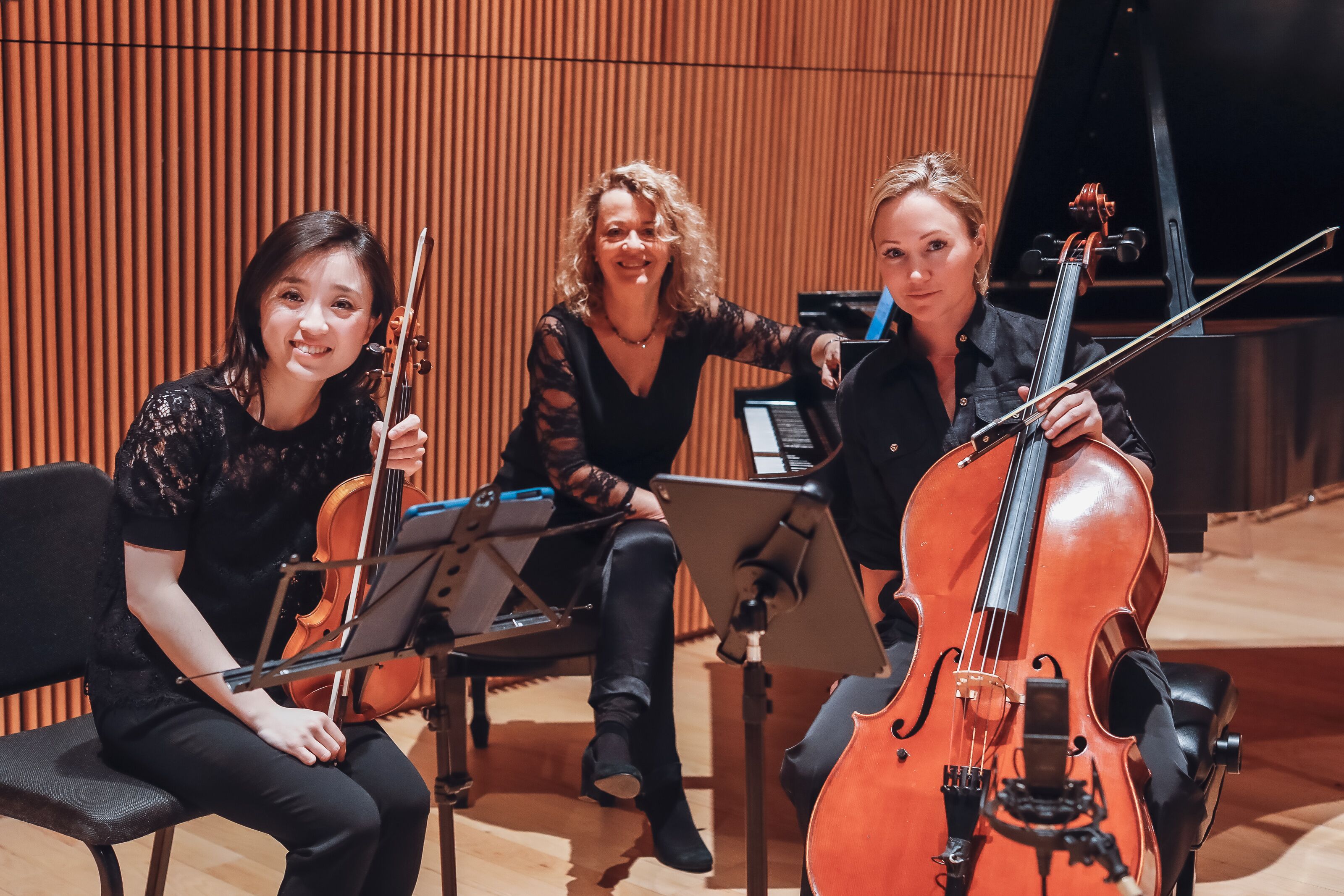
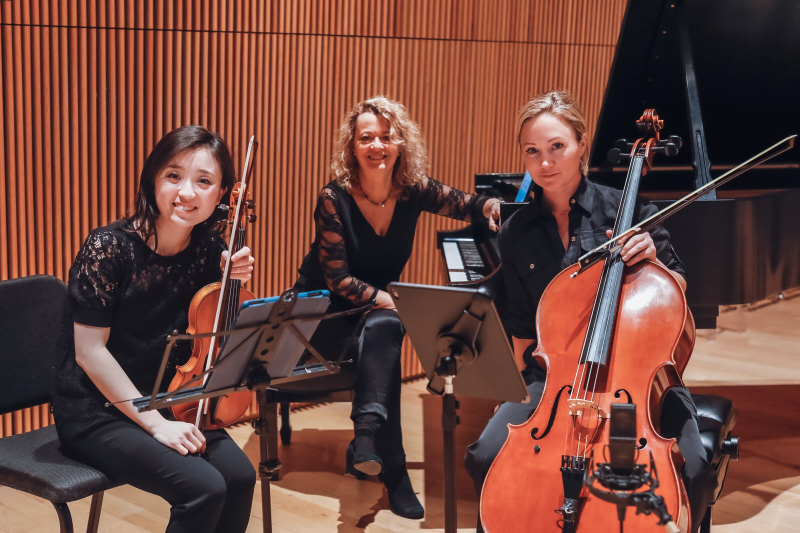
    This evening’s musicians: Elly Toyoda, Lisa Moore, and Ashley Bathgate; photo by Charles Roussel

    TALES OF HOPPER is a dance-theater work in which eight of Edward Hopper’s Americana masterpieces are brought to life. Mr. Bresnick’s original score is performed live – and excellently – by Lisa Moore (piano), Elly Toyoda (violin), and Ashley Bathgate (cello). Transparent set pieces, designed by Jesse Seegers, are re-configured to suggest the locale and mood of each of the Hopper paintings. The set changes are carried out by the dancers during blackouts between the vignettes. Frank DenDanto III created the lighting designs, and Christopher Metzger designed the ‘period’ costumes (the Hopper period, that is: the 30s thru the 60s); both gentlemen get top marks for their work, which were key elements in the evening’s success.

    A Prologue opens TALES OF HOPPER; violin and piano are heard in music with a nostalgic air; the cello soon joins in. All of the Company’s dancers take part, costumed as the ‘characters’ they will eventually play.

    TpDidpjg

    Sharon Milanese (above) appears as the woman in Hopper’s 1952 painting Morning Star. As the lights come up, the dancer is slowly awakening. The music is thoughtful, and Ms. Milanese – a compelling dancer with a strong theatrical sensibility – is perfect as this restless and vulnerable creature. The music becomes quite passionate; as the lights fades, the dancer is left to her thoughts.
    -AZX4CWQ

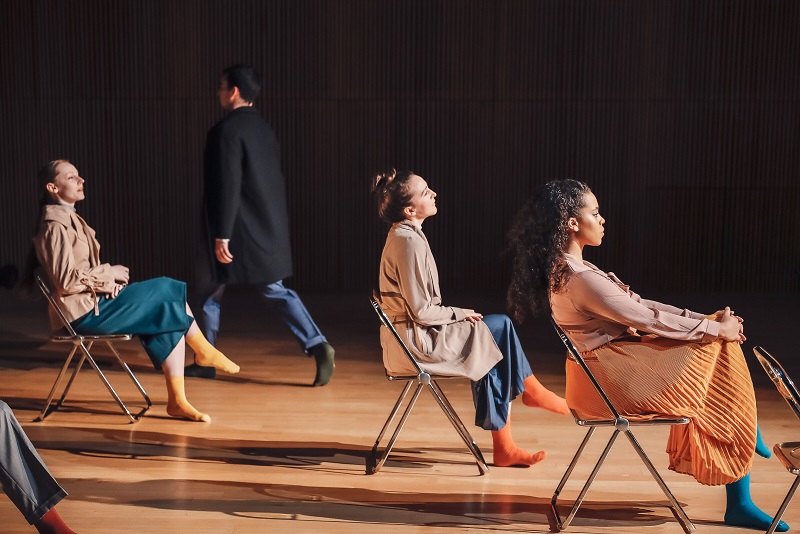
    Above: Emma Pajewski, Phil Strom, Gwendolyn Gussman, and Dervia Carey-Jones in People of the Sun

    Five dancers bring folding chairs to the stage for People of the Sun, Hopper’s 1960 painting showing a group of people enjoying the sunshine on a patio as they gaze out over an open field. The silence is broken by brief commentary from the violin, and by quiet laughter from Gwendolyn Gussman; she, Dervia Carey-Jones, Emma Pajewski, Malcolm Miles Young (reading a book), and Philip Strom constantly re-align their chairs so as to get the full benefit of the sunshine.
    XgjN_dIA

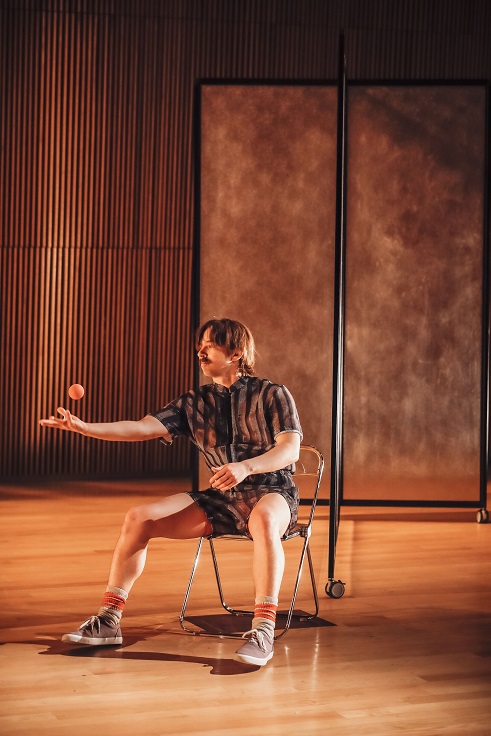
    Justin Faircloth (above) has a solo vignette in the 1940 painting Gas, wherein a young service station attendant fritters away his time between customers by bouncing a ball. The piano offers jagged chords, the cello rocks gently, the violin stammers. The attendant pumps gas, gives a car wash, tinkers with an under-body. Then he hits the floor for some pushups. 
    MaSbaASg

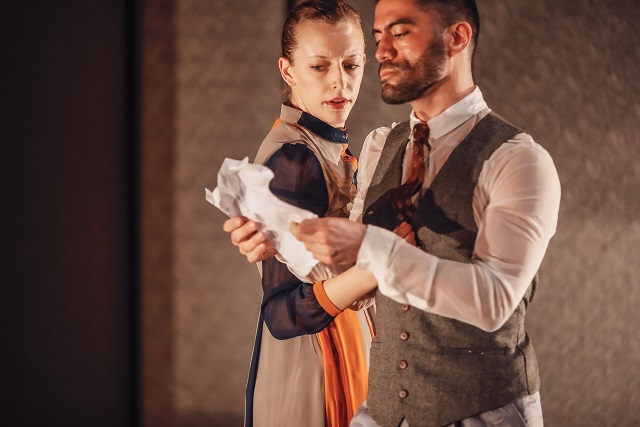
    Above: Lila Simmons and Oscar Rodriguez in The Office at Night

    A plucking cello interlude takes us to the Office at Night (1940) where a secretary (Lila Simmons) and her boss (Oscar Rodriguez) are carrying on an after-hours affair. A mysterious dropped document is a bone of contention between them; they are alternately amorous and antagonistic. They embrace, have a steamy duet, and find tenderness at the end.

    AHbsHTwg

    The magnetic Kristen Foote (above) is a cinema usherette in NY Movie (1940). Aside from some latecomers, the audience is already enjoying the film, and the usherette is biding her time by occasionally breaking into dance steps or miming lines from the movie.

    EM9SglDg

    Above: the duet from NY Movie, with Ms. Foote and Malcolm Miles Young

    Pensive music heralds the appearance of a handsome man (Malcolm Miles Young) who is perhaps real or perhaps a silver-screen illusion. They dance a romantic/passionate duet; a brooding atmosphere develops musically, and the usherette resumes her solitary post. This might have been my favorite “Hopper tale” tonight, but I think if I were to see the piece repeatedly, I would probably favor a different episode every time.

    PKO_I6AQ

    Above: Justin Faircloth and Claire Westby in Sunlight in a Cafeteria

    Sunlight in a Cafeteria (1958) commences with shimmering piano sounds. Justin Faircloth is nursing a cup of coffee when Claire Westby saunters past, intentionally dropping a glove. Justin is captivated. Then the openly provocative woman passes her admirer a note…and wanders off.
    6RgUooZQ

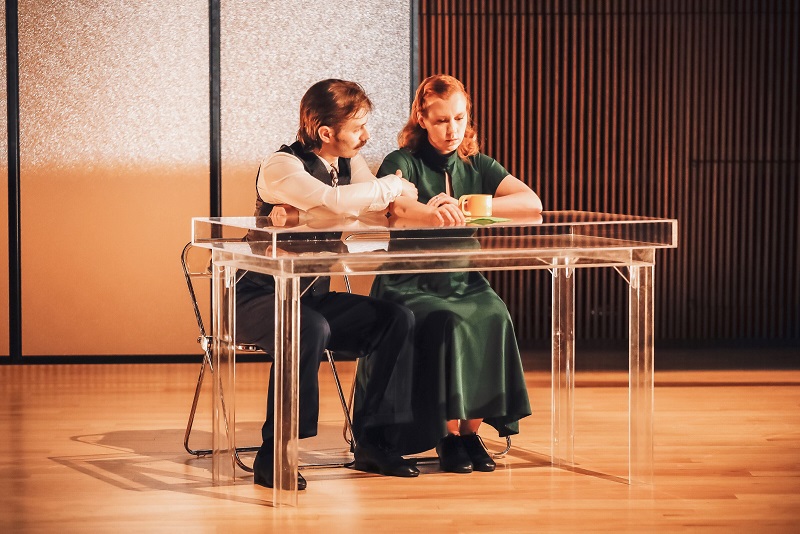
    Above: Justin Faircloth and Corinne Hart in Nighthawks

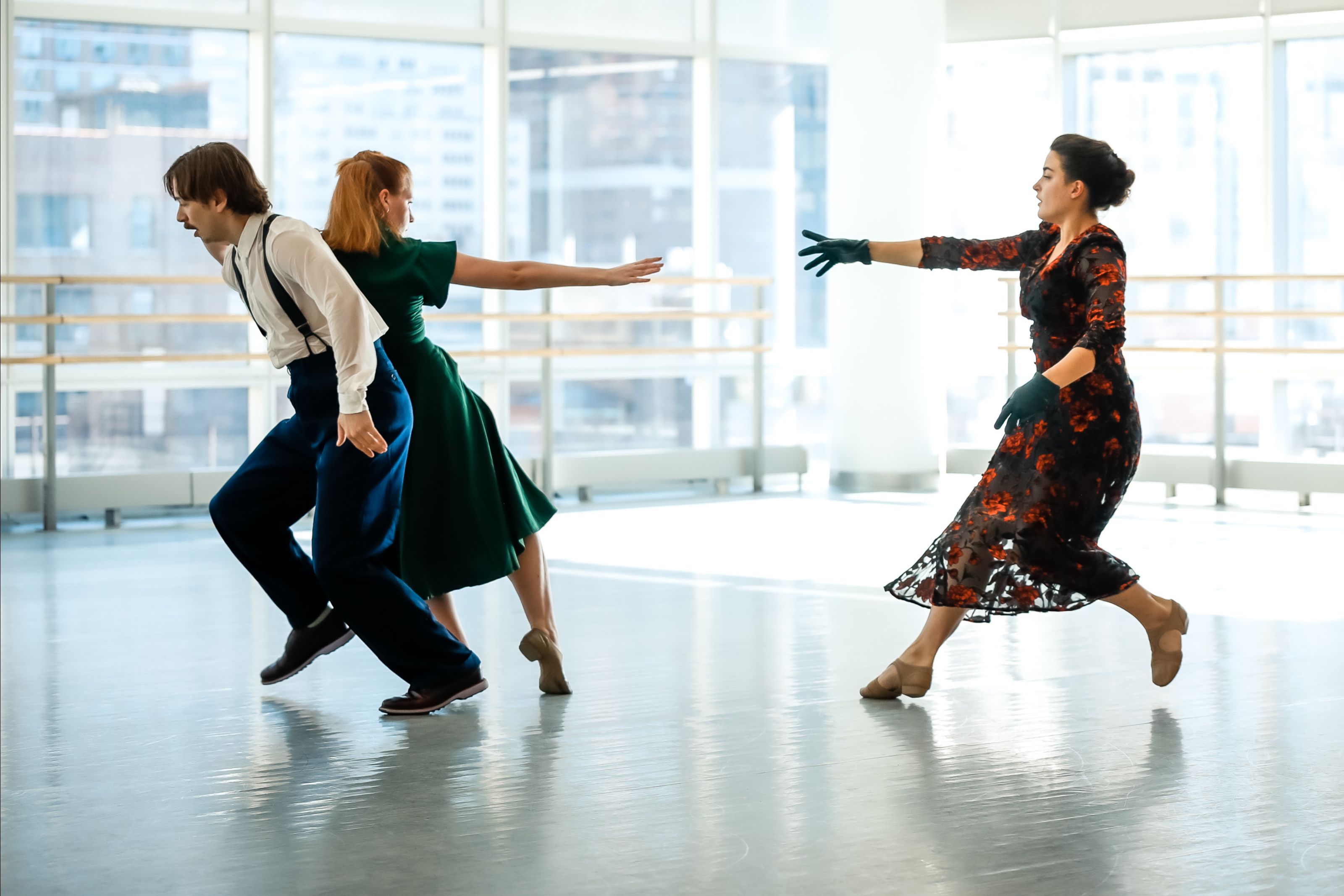
    With Nighthawks (1942), Ms. Lavagnino continues the ‘story’ of Sunlight. As Justin’s wife (or girlfriend), Corinne Hart (fetching in a deep green frock, which sets off her auburn hair) has found Claire’s note; the music (cello and piano) has a searching quality. Feeling betrayed, Ms. Hart confronts Mr. Faircloth: their romance breaks down. Claire Westby returns, and, after a tense trio, Justin chooses Claire over Corinne.

    HILHHPCw

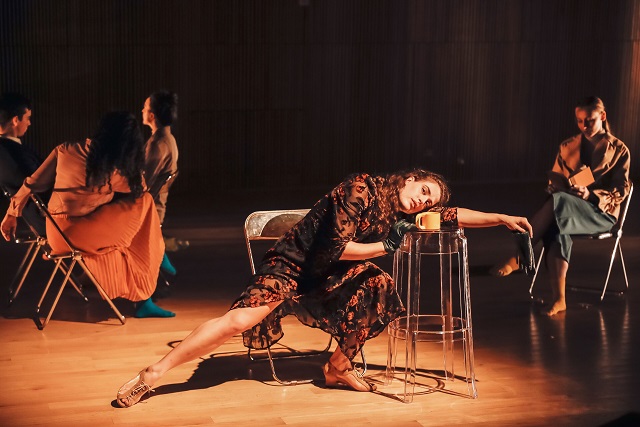
    Above: Claire Westby in Automat

    Automat (1927) extends the story line of the two previous movements to its finish. Ms. Westby, disheveled and run down, is alone with a cup of coffee. What’s transpired in the interim, we don’t know. Claire’s gorgeous flower-flecked dress – now rumpled – reveals her legs as she rolls about on the floor in a sensual frenzy. She finally composes herself and again sits alone. The dancers now all return to the stage for a final tableau which unites the characters of all the eight tales of Hopper. 

    Following the interval, the stage has been cleared for Cherylyn’s ballets Triptych (excerpt – 2012) and the 2016 Veiled. Both works explore spirituality in different contexts, and they looked wonderful in this open and finely-lit space…and both were beautifully danced.

    4kD3TdoQ

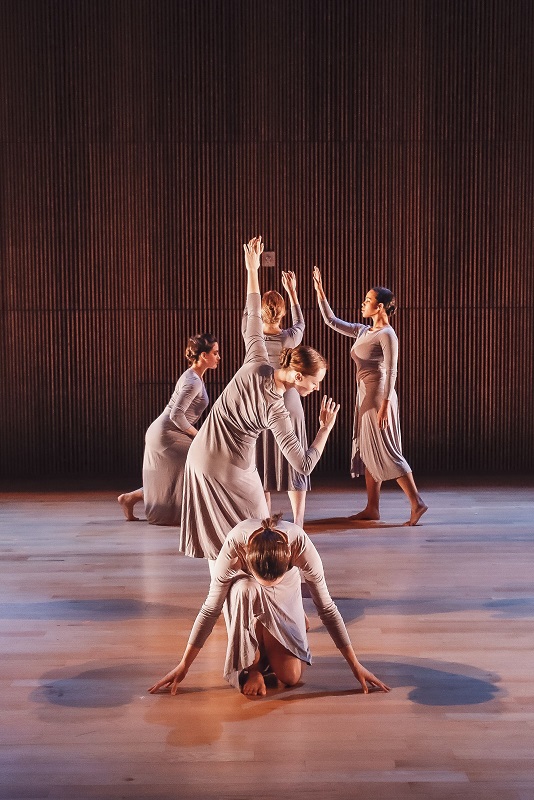
    Above: from Triptych

    Triptych is performed to the music of François Couperin: his Troisième Leçon à deux voix). With the men of the Company aligned upstage, Claire Westby performs a quiet solo with expressive port de bras; Claire prepares us for the entrance of the women – Dervia Carey-Jones, Gwendolyn Gussman, Emma Pajewski, and Lila Simmons – each a unique beauty and personality. The men – Mssrs. Faircloth, Strom, Young, and Rodriguez – come forward now, and Ms. Carey-Jones distinctively leads off a series of dances.

    A duet for Malcolm Miles Young and Gwendolyn Gussman has a rapturous quality, whilst Emma Pajewski and Justin Faircloth’s lyrical partnering is poignantly musical. A pas de quatre for Mlles. Carey-Jones, Gussman, Westby, and Pajewski follows: they are dancing in a state of grace. A pas de trois joins Lila Simmons, a dancer whose wide-ranging emotional palette always captures my attention, with Phil Strom and Justin Faircloth. Ms. Carey-Jones joins this trio, leading on to a finale for the full cast. Of Triptych tonight, I wrote in my notes: “…a slice of Heaven.” 

    1RjKq6Mw

    Above: from Veiled

    The notion of Heaven was sustained as the evening concluded with Veiled, a dance for female ensemble set to Martin Bresnick’s Josephine the Singer, performed by violinist Elly Toyoda. Danceworks that speak of sisterhood always end up fascinating me, and I found Veiled to be a particularly engrossing experience: one of those ballets I could watch over and over.

    The women are prostrated as Veiled ballet commences, with Ms. Todaya’s violin sounding in its highest range. As the piece unfolds, rituals of prayer, supplication, and consolation pass before our eyes; the atmosphere is paradoxically intense and calming. 

    I can’t find words to sufficiently praise the six women who danced Veiled tonight: Mlles. Carey-Jones, Gussman, Hart, Pajewski, Simmons, and Westby each had an inner glow that made them captivating to watch. Two duets passages – one for Claire Westby and Corinne Hart and another for Lila Simmons and Emma Pajewski – particularly moved me, but in fact everything about this ballet resonated richly.

    After a series of brief, fleeting solos, the women form a circle; then they dance in a stylized chain, holding hands. The violin shivers, a prelude to hesitant lyricism that finally reaches unearthly high notes. As the light fades, the women huddle; they seem wary, but also safe in the community of sisters.

    Vq8Ct2Yw

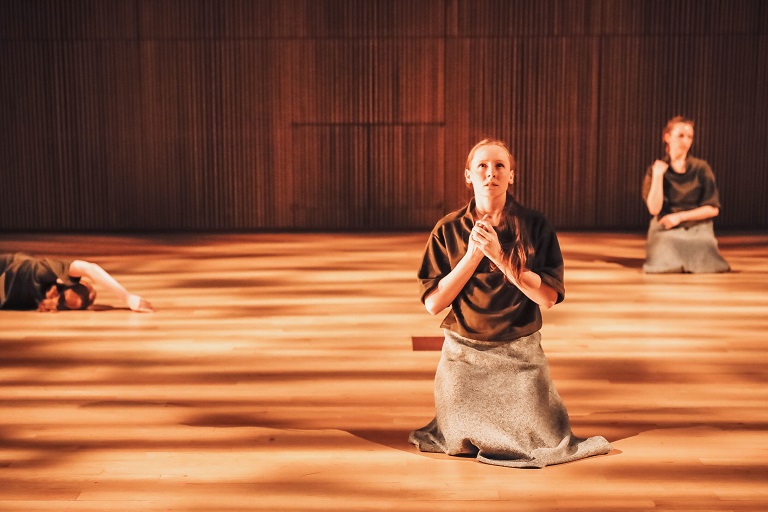
    Near the end of Veiled, Emma Pajewski (above), kneeling in prayer with an expression of hope on her lovely face, became an iconic image for me. In this Year of the Women, Ms. Lavagnino’s Veiled is truly something to behold.

    All photos in this article are by Charles Roussel. A gallery of additional production images from Mr. Roussel may be viewed here.

    ~ Oberon

  • Cherylyn Lavagnino’s TALES OF HOPPER

    Hopper

    Above: dancers Justin Faircloth, Corinne Hart, and Claire Westby in Cherylyn Lavagnino’s TALES OF HOPPER; photo by Charles Roussel

    ~ Author: Oberon

    {Note: this article has been updated with production photos by Charles Roussel}

    Tuesday February 25th, 2020 (dress rehearsal) – Today, choreographer Cherylyn Lavagnino kindly invited me to attend the dress rehearsal of her newest creation: TALES OF HOPPER. It’s a collaboration between Ms. Lavagnino and composer Martin Bresnick, inspired by the works of the American painter Edward Hopper. Two earlier works from Ms. Lavagnino’s treasure chest were also on the bill: Triptych and Veiled.  

    Hoping to get the clearest possible vision of the Hopper piece, I had asked the choreographer if I might attend the dress rehearsal rather than a performance so that my concentration would be unbroken. As a further enhancement, I had earlier watched a studio rehearsal of one of the ballet’s solos danced by Sharon Milanese; Ms. Milanese’s dancing that afternoon really moved me, and made me eager to see the entire piece. Although a dress rehearsal, the participating dancers and musicians were all at performance level.

    IVhBGl8g

    This evening’s musicians: Elly Toyoda, Lisa Moore, and Ashley Bathgate; photo by Charles Roussel

    TALES OF HOPPER is a dance-theater work in which eight of Edward Hopper’s Americana masterpieces are brought to life. Mr. Bresnick’s original score is performed live – and excellently – by Lisa Moore (piano), Elly Toyoda (violin), and Ashley Bathgate (cello). Transparent set pieces, designed by Jesse Seegers, are re-configured to suggest the locale and mood of each of the Hopper paintings. The set changes are carried out by the dancers during blackouts between the vignettes. Frank DenDanto III created the lighting designs, and Christopher Metzger designed the ‘period’ costumes (the Hopper period, that is: the 30s thru the 60s); both gentlemen get top marks for their work, which were key elements in the evening’s success.

    A Prologue opens TALES OF HOPPER; violin and piano are heard in music with a nostalgic air; the cello soon joins in. All of the Company’s dancers take part, costumed as the ‘characters’ they will eventually play.

    TpDidpjg

    Sharon Milanese (above) appears as the woman in Hopper’s 1952 painting Morning Star. As the lights come up, the dancer is slowly awakening. The music is thoughtful, and Ms. Milanese – a compelling dancer with a strong theatrical sensibility – is perfect as this restless and vulnerable creature. The music becomes quite passionate; as the lights fades, the dancer is left to her thoughts.

    -AZX4CWQ

    Above: Emma Pajewski, Phil Strom, Gwendolyn Gussman, and Dervia Carey-Jones in People of the Sun

    Five dancers bring folding chairs to the stage for People of the Sun, Hopper’s 1960 painting showing a group of people enjoying the sunshine on a patio as they gaze out over an open field. The silence is broken by brief commentary from the violin, and by quiet laughter from Gwendolyn Gussman; she, Dervia Carey-Jones, Emma Pajewski, Malcolm Miles Young (reading a book), and Philip Strom constantly re-align their chairs so as to get the full benefit of the sunshine.

    XgjN_dIA

    Justin Faircloth (above) has a solo vignette in the 1940 painting Gas, wherein a young service station attendant fritters away his time between customers by bouncing a ball. The piano offers jagged chords, the cello rocks gently, the violin stammers. The attendant pumps gas, gives a car wash, tinkers with an under-body. Then he hits the floor for some pushups. 

    MaSbaASg

    Above: Lila Simmons and Oscar Rodriguez in The Office at Night

    A plucking cello interlude takes us to the Office at Night (1940) where a secretary (Lila Simmons) and her boss (Oscar Rodriguez) are carrying on an after-hours affair. A mysterious dropped document is a bone of contention between them; they are alternately amorous and antagonistic. They embrace, have a steamy duet, and find tenderness at the end.

    AHbsHTwg

    The magnetic Kristen Foote (above) is a cinema usherette in NY Movie (1940). Aside from some latecomers, the audience is already enjoying the film, and the usherette is biding her time by occasionally breaking into dance steps or miming lines from the movie.

    EM9SglDg

    Above: the duet from NY Movie, with Ms. Foote and Malcolm Miles Young

    Pensive music heralds the appearance of a handsome man (Malcolm Miles Young) who is perhaps real or perhaps a silver-screen illusion. They dance a romantic/passionate duet; a brooding atmosphere develops musically, and the usherette resumes her solitary post. This might have been my favorite “Hopper tale” tonight, but I think if I were to see the piece repeatedly, I would probably favor a different episode every time.

    PKO_I6AQ

    Above: Justin Faircloth and Claire Westby in Sunlight in a Cafeteria

    Sunlight in a Cafeteria (1958) commences with shimmering piano sounds. Justin Faircloth is nursing a cup of coffee when Claire Westby saunters past, intentionally dropping a glove. Justin is captivated. Then the openly provocative woman passes her admirer a note…and wanders off.

    6RgUooZQ

    Above: Justin Faircloth and Corinne Hart in Nighthawks

    With Nighthawks (1942), Ms. Lavagnino continues the ‘story’ of Sunlight. As Justin’s wife (or girlfriend), Corinne Hart (fetching in a deep green frock, which sets off her auburn hair) has found Claire’s note; the music (cello and piano) has a searching quality. Feeling betrayed, Ms. Hart confronts Mr. Faircloth: their romance breaks down. Claire Westby returns, and, after a tense trio, Justin chooses Claire over Corinne.

    HILHHPCw

    Above: Claire Westby in Automat

    Automat (1927) extends the story line of the two previous movements to its finish. Ms. Westby, disheveled and run down, is alone with a cup of coffee. What’s transpired in the interim, we don’t know. Claire’s gorgeous flower-flecked dress – now rumpled – reveals her legs as she rolls about on the floor in a sensual frenzy. She finally composes herself and again sits alone. The dancers now all return to the stage for a final tableau which unites the characters of all the eight tales of Hopper. 

    Following the interval, the stage has been cleared for Cherylyn’s ballets Triptych (excerpt – 2012) and the 2016 Veiled. Both works explore spirituality in different contexts, and they looked wonderful in this open and finely-lit space…and both were beautifully danced.

    4kD3TdoQ

    Above: from Triptych

    Triptych is performed to the music of François Couperin: his Troisième Leçon à deux voix). With the men of the Company aligned upstage, Claire Westby performs a quiet solo with expressive port de bras; Claire prepares us for the entrance of the women – Dervia Carey-Jones, Gwendolyn Gussman, Emma Pajewski, and Lila Simmons – each a unique beauty and personality. The men – Mssrs. Faircloth, Strom, Young, and Rodriguez – come forward now, and Ms. Carey-Jones distinctively leads off a series of dances.

    A duet for Malcolm Miles Young and Gwendolyn Gussman has a rapturous quality, whilst Emma Pajewski and Justin Faircloth’s lyrical partnering is poignantly musical. A pas de quatre for Mlles. Carey-Jones, Gussman, Westby, and Pajewski follows: they are dancing in a state of grace. A pas de trois joins Lila Simmons, a dancer whose wide-ranging emotional palette always captures my attention, with Phil Strom and Justin Faircloth. Ms. Carey-Jones joins this trio, leading on to a finale for the full cast. Of Triptych tonight, I wrote in my notes: “…a slice of Heaven.” 

    1RjKq6Mw

    Above: from Veiled

    The notion of Heaven was sustained as the evening concluded with Veiled, a dance for female ensemble set to Martin Bresnick’s Josephine the Singer, performed by violinist Elly Toyoda. Danceworks that speak of sisterhood always end up fascinating me, and I found Veiled to be a particularly engrossing experience: one of those ballets I could watch over and over.

    The women are prostrated as Veiled ballet commences, with Ms. Todaya’s violin sounding in its highest range. As the piece unfolds, rituals of prayer, supplication, and consolation pass before our eyes; the atmosphere is paradoxically intense and calming. 

    I can’t find words to sufficiently praise the six women who danced Veiled tonight: Mlles. Carey-Jones, Gussman, Hart, Pajewski, Simmons, and Westby each had an inner glow that made them captivating to watch. Two duets passages – one for Claire Westby and Corinne Hart and another for Lila Simmons and Emma Pajewski – particularly moved me, but in fact everything about this ballet resonated richly.

    After a series of brief, fleeting solos, the women form a circle; then they dance in a stylized chain, holding hands. The violin shivers, a prelude to hesitant lyricism that finally reaches unearthly high notes. As the light fades, the women huddle; they seem wary, but also safe in the community of sisters.

    Vq8Ct2Yw

    Near the end of Veiled, Emma Pajewski (above), kneeling in prayer with an expression of hope on her lovely face, became an iconic image for me. In this Year of the Women, Ms. Lavagnino’s Veiled is truly something to behold.

    All photos in this article are by Charles Roussel. A gallery of additional production images from Mr. Roussel may be viewed here.

    ~ Oberon
  • Cherylyn Lavagnino’s Salon

    L1520411

    Above: dancers are Claire Westby, Adrian Silver, and Selina Chau of Cherylyn Lavagnino Dance in a salon-showing of Naděje, a work-in-progress by Ms. Lavagnino

    Sunday December 14th, 2014 – On this cold, clear afternoon, friends of Cherylyn Lavagnino Dance gathered for a studio showing of works (and works-in-progress) by Cherylyn and by Christine McMillan, a dancer/choreographer with enduring ties to Cherylyn’s company.

    The programme opened with Naděje (‘Hope’) a piece Cheylyn is in the midst of creating. Drawing inspiration from the life of Václav Havel, the great Czech writer, philosopher, dissident, and statesman, Cherylyn turns to music of Havel’s fellow countryman Leoš Janáček: the composer’s violin sonata, composed in 1914 (and later revised). The ballet calls for a large cast and the choreography displays Cherylyn’s characteristic flow of movement and her spot-on sense of structure. I look forward to following the development of this new work.

    Here are a few more images from Naděje:

    L1520394

    Giovanna Gamna, Travis Magee

    L1520425

    Selina Chau

    L1520403

    Justin Faircloth

    L1520391

    Giovanna Gamna, Travis Magee in Naděje

    L1520434

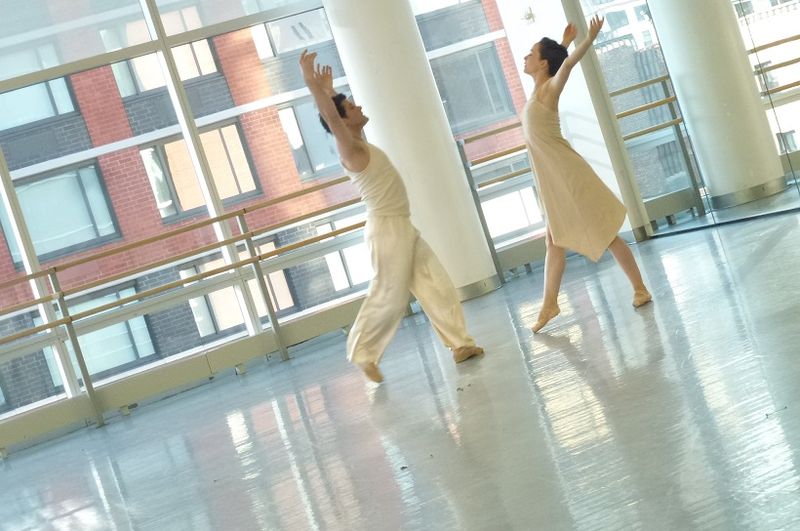
    Above: Assaf Benchetrit and Laura Mead, dancing to Rachmaninoff

    A portion of an as-yet-untitled duet which Cherylyn is creating for Indianapolis City Ballet is set to piano music of Sergei Rachmaninoff. Clad in creamy white, dancers Laura Mead and Assaf Benchetrit move with impetuous lyricism thru combinations drawn from the classic ballet vocabulary but with a fresh accent.

    L1520430

    Above: Assaf Benchetrit and Laura Mead

    Cherylyn’s 2010 dancework Snap Shots is an ensemble work danced to an original score by Kyle Olson. Set in four movements, the work features a double pas de deux, a male soloist with a quartet of ballerinas, a duet for two men, and a full-cast finale. The work is spacious and animated, including a passage where two men race about the space as if pursued.

    Images from Snap Shots:

    L1520444

    Adrian Silver, Selina Chau

    L1520463

    Adrian and Selina

    L1520485

    Christine Luciano, Lila Simmons, Giorgia Bovo, Claire Westby

    L1520566

    Above: Christine McMillan in her solo Woman in Dress

    Christine McMillan’s self-choreographed solo, Woman in Dress, unfolds to music by Hildur Gudnadóttir and Ólafur Arnalds. The dancer, who presents an interesting mixture of feminine strength and delicacy, uses her expressive arms and hands to poetic effect. In the course of the dance she moves from ecstatic heavenward reach to elements of self-examination, a self-portrait with an intrinsic emotional quality.

    Images of Christine McMillan in Woman in Dress:

    L1520529

    L1520532

    L1520554

    L1520547

    Christine McMillan: Woman in Dress

    The presentation ended with a performance of Cherylyn’s Ru, which premiered last season and is set to a score by Scott Killian. Inspired by the Saigon-born writer Kim Thúy’s novel of the same title, Ru, which means ‘lullabye’ in Vietnamese, depicts the flight of a young girl’s family from the Communists who have seized their home, first to Malaysia and eventually to Canada. Furtive and desperate, the women in this dancework bond together in quiet rituals; the men – in sexy costumes – alternately seem like oppressors and protectors. Scott Killian’s music provides the atmospheric setting for some of Ms. Lavagnino’s most expressive choreography.

    Some of the dancers in Ru are:

    L1520601

    Giovanna Gamna

    L1520613

    Travis Magee, Selina Chau

    L1520622

    Justin Faircloth

    L1520659

    Christine Luciano

    L1520637

    Adrian Silver

    L1520656

    Lila Simmons and Selina Chau in Ru

  • Cherylyn Lavagnino Dance @ St. Mark’s

    5941803_orig

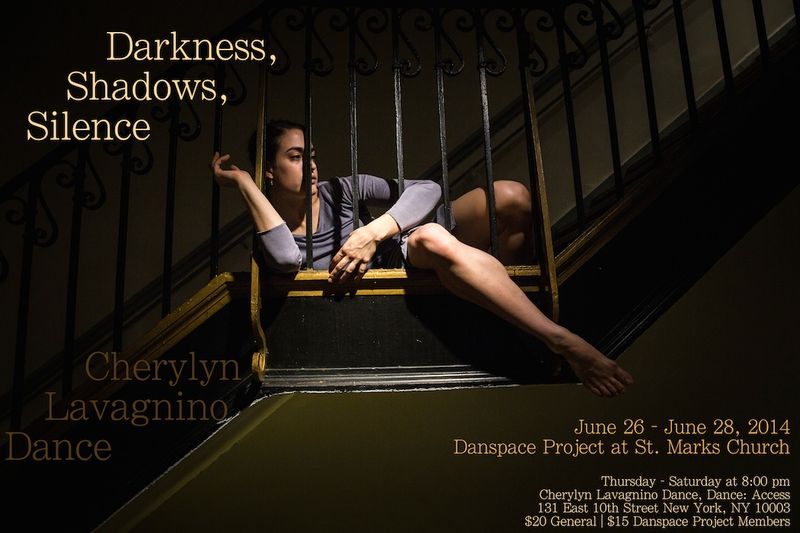
    Thursday June 26th, 2014 – Cherylyn Lavagnino Dance presenting a programme entitled Darkness, Shadows, Silence as part of the Danspace Project at St. Mark’s Church. It was rather stuffy inside the church on this summer evening, but the music and the dancing soon took my mind off any such concerns.

    Tonight’s first ballet is perhaps my favorite of Cherylyn’s works that I have experienced to date: TRYPTYCH is set to music by Francois Couperin and danced in bare feet. It opens with Claire Westby, invoking the dance from the mezzanine above. The four couples enter and commence a series of ensemble dances meshed with fleeting solo, duet or trio passages, the women wearing soft grey frocks and the men clad in simple dark costumes. Some of the phrases for the four women draw to mind the sisterly ensembles of Isadora Duncan. TRYPTYCH is spiritual though not heavy-handed: ritualistic yet human.

    I very much enjoyed the expressive interaction between Cherylyn’s beautiful dancers in this work: Giorgia Bovo, Selina Chau, Giovanna Gamna and Christine Luciano seemed deeply immersed in the music, and their partners – Michael D Gonzalez, Elliot Hammans, Travis Magee and Adrian Silver – came and went with a sense of quiet urgency. The ballet seems to draw to a lovely closing, but there is a pendant still to come.

    Scott Killian’s score for the final movement of TRYPTYCH alludes to Couperin yet is distinctly contemporary. An excellent duet for two men – Travis Magee and Elliot Hammans – gives way to another duet danced by Selina Chau (now on pointe) and Adrian Silver. The work ends with Ms. Westby in a benedictive phrase. This appended final movement at first seems somewhat unrelated to what’s gone on before, but Ms. Lavagnino and her dancers draw it convincingly full-circle in the end.

    Two movements of Cherylyn Lavagnino’s Schubert ballet TREIZE EN JEU were presented: this is a ballet for large ensemble wherein the dancers from TRYPTYCH are joined by Kristen Stevens, Eliza Sherlock-Lewis, Lila Simmons, and Justin Faircloth. Set to Schubert’s E-flat major trio, opus 929, the work displays the choreographer’s sense of structure, with a particularly memorable ‘pacing’ motif at the opening of the second movement as two phalanxes of dancers approach from opposite sides of the stage. Once again the individual personalities of the dancers played a vital element in the success of the piece. My only reservation was that the women’s costumes seemed too sporty and contemporary for the musical atmosphere: I would have addded long, gossamer black skirts. 

    Back in April, I visited Cherylyn’s studio where the works presented this evening were in rehearsal. And in the ensuing weeks I have read Kim Thúy’s novel, RU, from which Cherylyn’s newest work draws its inspiration. RU is a contemporary-style ballet set to a commissioned score by Scott Killian.

    The novel by Kim Thúy, which describes a young woman’s life as a post-Vietnam War political refugee, revolves around cultural dislocation and the struggle for identity. T’ai Chi’s passive resistance serves as gestural influence for the choreographer, and Christopher Metzger’s costumes for the women are reminiscent of the traditional Vietnamese áo dài dress: they are clad in white, with red accents indicating the bloodshed of war.

    Ms. Thúy’s novel is more like a book of poetry: each page contains only a few sentences (or, at most, a few paragraphs) describing in no specific order the details of escape from Asia to Canada, the cultural shock of this transplantation, and the writer’s emeging personality as a wife and mother. The choreography moves the female ensemble across a darkening landscape, suggesting their furtive escape from war and the formation of new bonds as their former lives are left behind. The men, bare-chested, can seem threatening or protective by turns. 

    In RU, Cherylyn Lavagnino and Scott Killian have summoned up the atmosphere of the novelist’s poetic vignettes yet the ballet also takes a wider view of displaced peoples, their exposure to abuse and treachery, and their assimilation into new cultures. I look forward to seeing this piece again in the future.