Tag: Classical Music

  • Bringing Down the House

    Tucker

    Richard Tucker elicits an ovation after singing “Cielo e mar!” in a performance of LA GIOCONDA at the Teatro Colon in Buenos Aires in 1966. Tucker was one of the most generous singers I ever encountered, as his singing here attests.

    Richard Tucker – Cielo e mar! – GIOCONDA – Buenos Aires 1966

    And, speaking of Richard Tucker, the annual Tucker Gala will be held on Sunday, October 21st, 2018, at 6:00 PM at Carnegie Hall. Information and tickets here.

  • Immortal Longings

    A + C

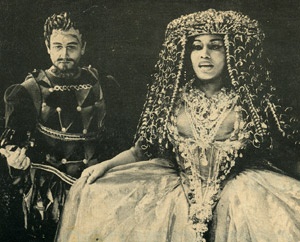
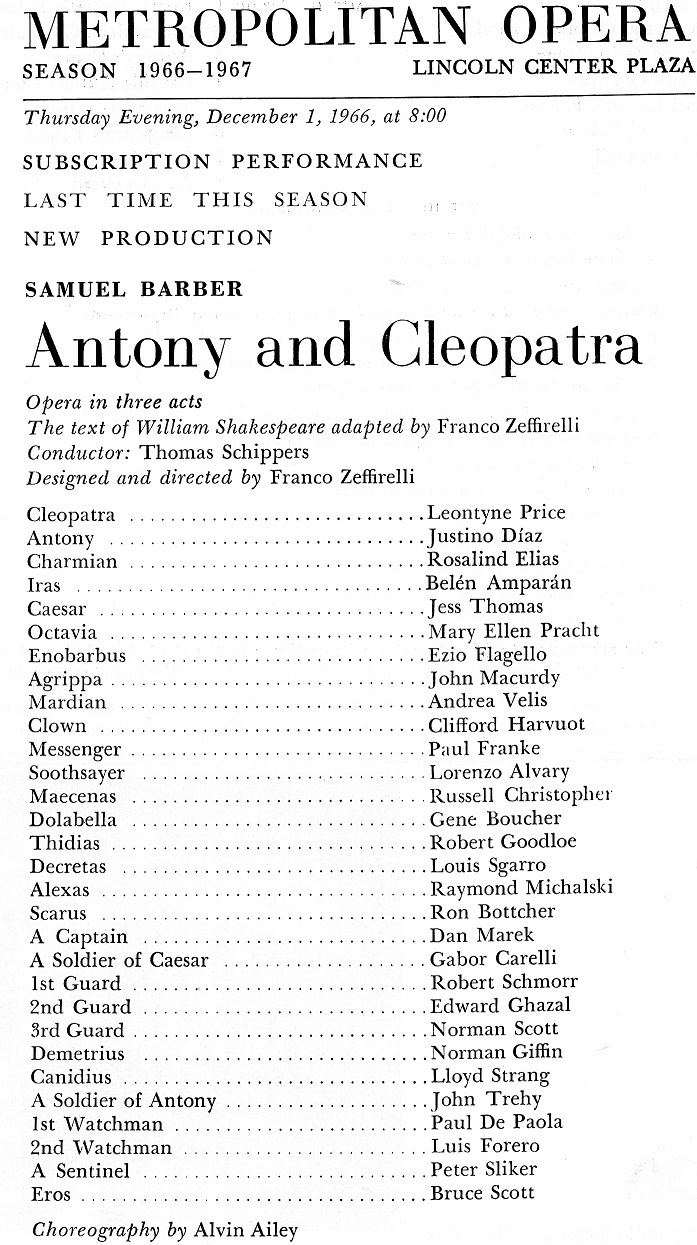
    Above: Justino Diaz and Leontyne Price in Samuel Barber’s ANTONY & CLEOPATRA at The Met, 1966

    ~ Author: Oberon

    By chance, I came upon this film of Leontyne Price singing Cleopatra’s final aria from Barber’s ANTONY & CLEOPATRA at a 1984 concert at Juilliard, conducted by Jorge Mester. Ms. Price’s singing here shows some of the vocal idiosyncrasies that crept into her performances as the 1970s progressed into the 1980s. But the sheer sound is glorious, the upper notes sustained, steady, and thrilling. What I love most about her in this brief video is her stillness – she doesn’t flail her arms about melodramatically; it’s all contained in the music – and her great sense of personal dignity.

    Scanned Section 18-1

    Barber wrote Cleopatra’s music specifically with Leontyne Price’s voice in mind. After the run of performances that opened the New Met in 1966 – of which I attended the last – the opera vanished from the Met repertoire. The composer devised a concert ending for the great final aria so that Ms. Price, and others to follow, might include it in their appearances with symphony orchestras. 

    A revised version of ANTONY & CLEOPATRA was given at Juilliard in 1975, a performance of which I attended:

    Scanned Section 8-1

    The European premiere of the opera (in concert form) took place at the Théâtre des Champs Elysées, Paris, in 1980. Chicago Lyric Opera gave the opera in 1991 with Richard Cowan and Catherine Malfitano in the title-roles. There was a telecast, which I watched – really impressive – and which you can watch here and here!

    In 2009, New York City Opera gave the opera in concert form at Carnegie Hall with Teddy Tahu Rhodes and Lauren Flanigan as Antony and Cleopatra. I was there, and the cumulative effect of the opera was powerful.

    Writing about this opera gives me an opportunity to bring forth one of the great rarities from my collection: a performance of the final aria of Cleopatra by mezzo-soprano Beverly Wolff from a concert at Cincinnati in 1971. Martina Arroyo was to have been the vocal soloist that evening, but she was taken ill and Ms. Wolff stepped in on very short notice; musical revisions were made to accommodate the switch from soprano to mezzo-soprano.

    Beverly Wolff ANTONY & CLEOPATRA aria Cincinnati 1971

    ~ Oberon

  • Wang @ Carnegie

    ~ Author: Scoresby

    Thursday May 17th, 2018 – It is truly a rare occasion to see Carnegie Hall‘s Stern Auditorium completely sold out. It is even rarer to see this happen with stage seating too as was the case with pianist Yuja Wang‘s recital last week. Only Ms. Wang could do so with an unrelenting program like the one she played, with dark, not necessarily crowd pleasing works by Rachmaninoff, Scriabin, Ligeti, and Prokofiev. I haven’t enjoyed Ms. Wang’s solo performances as much in the past, but this felt like a completely different atmosphere than her usual fair. For one, the repertoire was much more intellectual and music lover oriented than her usual programs. For another, this program really seemed to be a statement. If it was any indication of how Ms. Wang’s Perspectives series will be at Carnegie Hall next season, I look forward to being able to attend the many events. 

    Capture
    Above: Pianist Yuja Wang; Photo Credit: Kirk Edwards

    Ms. Wang began the performance with a series of seven Rachmaninoff’s smaller works, all in minor keys and repeated keys back to back (except for the opening g minor prelude). Despite clapping from the audience in-between the works, it was obvious Ms. Wang wanted to play them as one giant set. These set up the rest of the concert incredibly well – she drew in the crowd with a sense of mystery, making Rachmaninoff’s writing sound much more modern than it typically is treated. Emphasizing dissonances and unstable textures, Ms. Wang’s Étude-tableau in C minor, Op. 39 No. 1 sounded like a torrent in the right hand with crisply articulated left hand percussion. But here the blurs and ripples took control – while the notes were clear, Ms. Wang managed to make the voicing fade behind the accompaniment making the piece more modernist.

    In the Prelude in B Minor, Op. 32 No. 10, Ms. Wang’s sensitive dynamic range and languid playing made the romantic climax seem less important than the surrounding, Debussy-like material. The best part of the evening was the Étude-tableau in E-flat Minor, Op. 39 No. 5 which ended the set. Here Ms. Wang had an unparalleled light touch which managed to let the melody sing through the storm of darker undercurrent. This was the opposite of virtuoso playing – many pianists hammer this etude out without much subtlety. Instead, Ms. Wang let the music’s storminess speak for itself, which led perfectly into the Scriabin that came next.

    The next work on the program was Scriabin Sonata No. 10, Op. 70. This is one of Scriabin last five pieces written for piano and has his characteristic mystical sound world in the extreme. While work is in much stricter sonata form than the other late piano sonatas, it still has a mysterious, almost ghostly atmosphere. Ms. Wang wove through the dense textures with ease, making both the structure clear and letting the ambiguous atmosphere seem full of color. Her notes never sounded crisp or grounded; they instead were washed with an ethereal sheen. Just as the magical trills that appear before the work launches into its second theme began to be played, someone’s cellphone ringer featuring a trilling bird went off.

    Capture
    From the Archive: Alexander Scriabin

    While admirably Ms. Wang continued to play, it was a funny indication of the music. The trills begin to take over the more melodic portions of the piece before the climactic recapitulation where tremolos and trills rule in all registers – as Scriabin put it “a blinding light”. Ms. Wang’s glossy playing made this piece seem remote in the best way possible – someone taking you into their isolated world. Adding to this effect was the stage seating. In order to accommodate everyone on the stage without disrupting the performance, Carnegie lowered the lights so there was just a small circle of light around Ms. Wang – making her seem in that same realm as Scriabin.

    ​To finish the first half of the program, Ms. Wang performed three short, but difficult Ligeti Etudes: No. 3 Touches bloquées, No. 9 Vertige, and No. 1 Désordre. To be clear, the Ligeti Etudes are some of the hardest pieces for piano ever written, but each one is also a musical world into itself. After the otherworldly Scriabin piece, Touches bloquées offered a different kind of isolation: that of machinery. The work sounds like a giant machine jerking around – Ligeti gets this odd rhythmic effect by having the pianist strike some keys silently in order to build in a particular rhythm to the piece.

    Ms. Wang gave a committed performance that captured all of this convulsive sound. Vertige is modeled after a falling Shepard’s Tone with many chromatic notes lined up and falling forever. Ms. Wang player her way through this exhausting etude with verve – plucking out each of punchy chords in-between the falling. Finally, the first half ended with the jazzy and punchy disorder, a funny musical joke by Ms. Wang after such a dark/intellectual first half. 
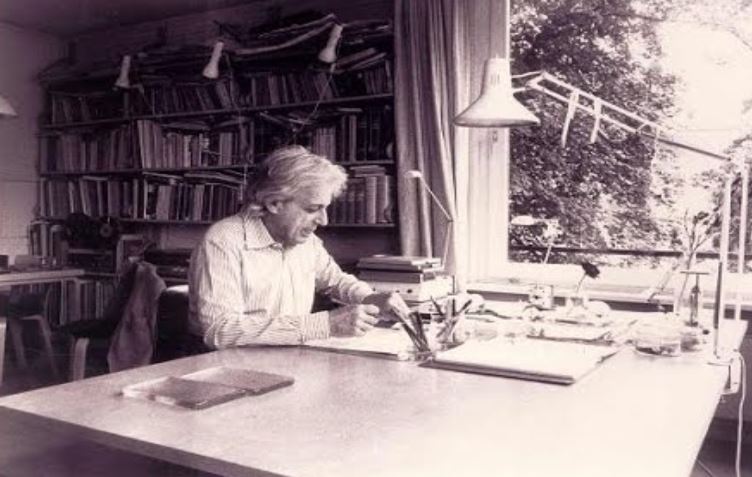
    Capture

    From the Archives: Composer Györg Ligeti

    After what seemed more like a 30 or so minute intermission, the final work on the program was Piano Sonata No. 8 in B-flat Major, Op. 84. Despite the program notes saying that this was Prokofiev’s most optimistic of the war-time sonatas – the sprawling first movement of this piece a moody, wandering work. Ms. Wang’s performance captured the eccentric melody lines and temperamental well. She used a similar remote style of playing that she used in the Rachmaninoff and Scriabin here, but with well timed percussive outbursts in the bass that gave a contrasting mood.

    In the Allegro moderato sections of the first movement Ms. Wang’s rapid fire style of playing was thrilling to watch, bringing the movement to a climax. More impressive though was Ms. Wang’s sense of space and silence at the end of the movement. In the romantic second movement, Ms. Wang seemed at her warmest of the night in the lighthearted theme before plunging into the electric final movement. Here, Ms. Wang plucked out precise articulation with a lithe sound, speeding through the virtuosic sections. The highlight was the mysterious coda-esque moment before the last outburst. Here Ms. Wang seemed relish in the atmosphere before the crashing ending (which had all the tight control of the rest of the performance).

    While a thrilling recital from start to finish, I do wonder if her diverse crowd found it as satisfying. In many ways this was her at her most introspective – no crowd pleasing works like her usual programs and while certainly virtuosic playing, emphasizing the ephemeral instead of flash. Ms. Wang has a history of extensive encores, as such the crowd didn’t seem surprised when she brought out five of her favorite show-stopper type pieces. The crowd seemed enthused with these – much more so than the pieces on the actual program. While Ms. Wang wasn’t indifferent to her crowd, she certainly seemed all-business this evening with brusque bows and a sense of pushing forward. As a final gesture she played Liszt’s transcription of Schubert’s Gretchen am Spinnrade, going back to that dark place of the rest of the concert and seemingly shunning the audience there to hear her – it was like magic.

    ~ Scoresby
  • Gražinytė-Tyla|Rachvelishvili|MET Orchestra

    AR

    Above: Anita Rachvelishvili, the stellar soloist at Carnegie Hall tonight

    ~ Author: Oberon

    Friday May 18th, 2018 – Mirga Gražinytė-Tyla conducting The MET Orchestra with mezzo-soprano soloist Anita Rachvelishvili at Carnegie Hall. Works by Debussy, Mussorgsky, and Tchaikovsky were on the bill.

    Claude Debussy’s Prélude à l’après-midi d’un faune opened the evening; this score, now beloved of ballet fans worldwide, was the setting for the controversial ballet by Vaslav Nijinsky who – at its 1912 premiere in Paris – caused a scandal with his portrayal of the exotic faun. It has since been performed in various choreographic versions, most notably that of Jerome Robbins for New York City Ballet (1953) where it remains a mainstay of the repertoire.
     
    Tonight, The MET Orchestra brought just the right glow of mystery and languid sensuality to this music.  Beautifully atmospheric playing from flautist Seth Morris was an outstanding feature of the performance; his solo bow rightfully drew bravos. Throughout, the numerous wind and harp solo passages were poetically played. At times, the pacing seemed just a shade too fast; but the overall effect was sublime. So nice to see the Met’s peerless concertmaster, David Chan, getting out of the pit and out onto the stage where his musicianship could shine the brighter.  
     
    CH1384284
     
    Ms. Rachvelishvili (above, in a Chris Lee photo from the performance) then appeared for Modest Mussorgsky’s Songs and Dances of Death (performed in the Shostakovich orchestration). The Georgian mezzo, who is making quite a name for herself these days, looked and sounded splendid, with her softer singing carrying superbly in the Hall, and producing a thrilling effect when she unleashed her full power.  

    Songs and Dances of Death, composed in the mid-1870s, is a set of four songs. In Lullabye, a mother cradles her sick child, who grows increasingly feverish. Death appears, disguised as a babysitter, and rocks the infant to eternal sleep. Here Ms. Rachvelishvili displayed a haunting use of almost straight-tone, employed as a means of lyrical expression. Her timbre is darkish, wine-coloured, with a haunting quality.

    Serenade depicts the figure of Death waiting outside the window of a dying woman, serenading her like a wooing lover. Ms. Rachvelishvili was simply magnificent here, the lushness and house-filling strength of her voice making a vivid impression. The music rises to a passionate conclusion. 

    In Trepak, a drunken peasant stumbles outside into the snow and becomes caught in a blizzard. The figure of Death invites him to dance the Trepak with him. The drunken man freezes to death, dreaming of summer fields and doves. The song starts softly, then a rhythmic figuration springs up; the bass-clarinet is prominent. Ms. Rachvelishvili’s vocal power, unleashed, was something to hear; and she brought forth some simply massive chest tones. For all the thrill of her voluminous, rich sound, she can also be extraordinarily subtle. 

    The Field Marshal is the final song, wherein the figure of Death is depicted as an officer summoning the dead troops of opposing armies after a horrific battle. As the ghostly soldiers parade before him, the Field Marshall speaks of them in remembrance. A bit of tension on some of the singer’s upper notes was swept aside by the visceral impact of her singing; in a calmer interlude, the straight-tone was again brought forth to extraordinary effect.

    Ms. Rachvelishvili received rapturous applause and was called back twice for additional bows. Someone handed flowers up to her, always nice to see. The crowd clearly wanted an encore, but perhaps the singer knew best; she left us with the echoes of the powerful Mussorgsky songs.   

    Following the interval, Ms. Gražinytė-Tyla led Tchaikovsky’s Symphony No. 4 in which the orchestra shone. Written in 1877-1878, the symphony is dedicated to the composer’s patroness and ‘dear friend,’ Nadezhda von Meck.

    Following his catastrophic marriage to his former student, Antonina Miliukova, which lasted all of two months, Tchaikovsky began writing his fourth symphony. Struggling with his sexuality and battling depression, he produced a symphony which, he is quoted as saying, is about Fate: “the fatal power which prevents one from attaining the goal of happiness”.

    The 4th is vastly pleasing in so many respects, with its titanic fanfares, its plaintive oboe solo in the Andantino, its originality in a Scherzo full of plucking strings, and the rush and plush of the final Allegro con fuoco. What is doesn’t do – for me, at any rate – is reach the depths of feeling that the composer so often evoked in other works.

    Mirga Gražinytė-Tyla’s extremely animated podium style became wearying to watch after a while. This orchestra plays so well on their own; the musicians hardly need a conductor at all. Constantly in motion, Ms.  Gražinytė-Tyla rose on her toes, hopped up and down, waved her baton overhead, and energetically gave cues. I ended up closing my eyes, to avoid this visual distraction.

    Though the 4th does not seem to me to be peak Tchaikovsky – though the composer himself thought highly of it, apparently – it did make me long to see EUGENE ONEGIN, SWAN LAKE, SLEEPING BEAUTY, and Balanchine’s SERENADE.

    There were empty seats around me, and the couple behind me remarked that the MET Orchestra series no longer seems to be the sell-out it has always been in seasons past. I wonder if the absence of James Levine has anything to do with it?

    ~ Oberon

  • Pierrot Lunaire @ Carnegie Hall

    ~Author: Scoresby

    Thursday April 19 2018 – On a rather chilly Spring day, Carnegie Hall’s Ensemble Connect had one of its last Weill Hall performances of the season. Every two years the ensemble changes over its fellows and this particular set of musicians will move on in June. As this is the last Ensemble Connect concert I was attending this season, it was interesting to see the contrast between when these players first joined and how they play now.

    The program began with Mozart’s incredibly difficult six movement Divertimento for Violin, Viola, and Cello in E-flat Major, K. 563. The program book seemed to have a typo, listing this work as only 15 minutes long (instead of 45) – perhaps thinking of one of the far shorter and earlier Divertimento for String Quartet. This is a virtuosic tour-de-force piece for all involved because it has incredible exposure for all the instruments, here Rebecca Anderson on Violin, Andrew Gonzalez on viola, and Julia Yang on cello. Ms. Yang’s warm, robust sound stood out immediately – she managed to blend well with Ms. Gonzalez and Ms. Anderson matching vibrato perfectly. 

    Screen Shot 2018-05-04 at 12.55.23 PM
    Above: Ensemble Connect

    Stylistically, the group kept the Allegro light and bouncing. During the Adagio Ms. Anderson’s solo passages were played with a touch of sweetness while Ms. Yang’s ascending cello motifs brought a touch of nostalgia. The Andante (the fourth movement) is a charming set of variations – while every instrument gets its line to shine most impressive were the blending between Mr. Gonzalez and Ms. Yang during the active violin variation. They created a supple backdrop for Ms. Anderson to play the sweet melody. In the fifth movement, the group let the music seemed to have fun with the light bouncy textures and brought the music’s humor out by letting the phrases breathe. The duet between Ms. Anderson and Mr. Gonzalez was fully of energy and light-hearted spirit. While there were a few technical glitches – it was a fun performance of a difficult work. 

    The after-intermission performance demonstrated how much the players in ensemble have grown – it was not only a successful performance of Schoenberg’s Pierrot Lunaire – but one of the best performances I’ve heard this year. The instrumentalists were Rosie Gallagher on flute, Bixby Kennedy, on clarinet, Mari Lee on violin, Madeline Fayette on cello, and Mika Sasaki on piano. As is tradition in Ensemble Connect, before the work began there was a short talk about the music – only here Mari Lee interviewed ‘Schoenberg’s Ghost’, who was wearing a Pierrot-like mask. It was a fun and creative way to introduce the music that a more traditional group wouldn’t have dared to do and Ms. Lee’s earnest questions gave both humor and seriousness to it. It seems Ms. Lee adapted some of the material from her own project Salon Séance for the interview.

    Pierrot is one of the landmark works of the twentieth century. Not quite theatre, not quite music – it lies somewhere in-between in a chamber setting. It was Schoenberg’s first major work using free atonality and is before he came up with his twelve-tone system. Musically it is a piece at the height of German Expressionism, set to the brooding poems of Albert Giraud to paint different fragments of the psyche. It feels at once dream-like and nightmarish with extremes of emotion. In order to enhance this feeling, the group used simple lighting to heighten the drama –  they turned off the regular house lights and replaced them with white spotlights during the first section, blood red lights during the second, and back to white spotlights for third. In this darker atmosphere with the glittering Viennese style chandeliers, one really felt immersed into Schoenberg’s world.

    Unfortunately soprano Mellissa Hughes who was originally supposed to sing the soprano part withdrew due to illness. Luckily, Ensemble Connect managed to get one of the most venerable Pierrot singers alive today: Lucy Shelton.  She was simply spellbinding and elevated the level of the young players to match her. In Columbine the Ms. Lee and Ms. Sasaki’s violin and piano duo gave heft to match Ms. Shelton’s Meine banges Leid (my pain) and immediately changed dynamics to match the zu lindern (soothing). Such precise dynamics from moments like that were the hallmark of this performance – but at the same time the players swelled to match the more crazed sections of the piece.  Ms. Shelton for her part, embodied the music taking a no-holds-barred style. Using hand gestures to and acting to portray the different facets of the characters, from the wisps of nostalgia in the last movement to the crazed laughter and anxiety in the Rote Messe to the cackling gossip in the Gallows Song, Ms. Shelton seemed like she was a witch reciting an incantation and with the dream-like lighting she was spellbinding. In the small hall, her voice filled the entire space and one felt completely immersed – it felt like she was telling you a story and drawing you into her world complete with horrors, traumas, sweetness, and nostalgia for the past. Rather than just a “crazy” approach as many singers bring to this piece, Ms. Shelton captured all the nuance of emotions embedded in both the text and music. Her yearning for the past in the end sounded sweet and  wistful as she whispered “And dream beyond for blissful stretches, O old perfume–from fabled times!”

    Screen Shot 2018-05-04 at 12.54.11 PM
    Above: Soprano Lucy Shelton

    The instrumentalists were no less into the music. While perhaps the could have captured some of the softer tones and romanticism in the third book, they were all precise and together.  A powerful moment at the end of the third movement, Ms. Gallagher’s impressive fluttering as Ms. Shelton sung “With a ghostly moonbeam” – Ms. Gallagher capturing the timbres with precise but soft tones. Ms. Fayette during her nervous outburst in Rote Messe mimicked Ms. Shelton’s crazed line. In the interlude before the last song of the second book, Mr. Bixby deep clarinet melded with Ms. Gallagher’s playing. In that last song, Ms. Lee captured the same timbre as Ms. Shelton’s singing – sounding like a dreamed echo. Ms. Sasaki let the piano. During Gemeinheit Ms. Fayette and Ms. Gallagher matched their vibrato perfectly, creating an ethereal dream-like texture. 

    In the Barcarole, Ms. Lee, Ms. Sasaki, and Ms. Gallagher created a disorienting backdrop of what sounded like a drunken boat ride. All in all, this group of musicians worked hard to create an excellent performance – a great end to the last Ensemble Connect performance in Weill.

  • Petrenko|Bayerisches Staatsorchester @ Carnegie Hall

    CH1375937

    Above: Kirill Petrenko on the Carnegie Hall podium; photo by Chris Lee

    ~ Author: Ben Weaver

    Wednesday March 28th, 2018 – Kirill Petrenko is finishing his term as the Generalmusikdirector of the Bavarian State Opera and in the 2019-20 season will take over as the chief conductor of the world’s most prestigious orchestra, Berlin Philharmonic. It is with the Bavarian State Opera forces (in the concert hall dubbed Bayerisches Staatsorchester) that Petrenko is making his Carnegie Hall debut this season. His only previous NYC appearances were at the Metropolitan Opera where he led a very memorable revival of Ariadne auf Naxos in 2005 and Khovanschina in 2012. For this Carnegie debut concert, Petrenko programmed two oft-forgotten works by two very famous composers: Johannes Brahms’ Double Concerto and Pyotr Tchaikovsky’s Manfred Symphony.

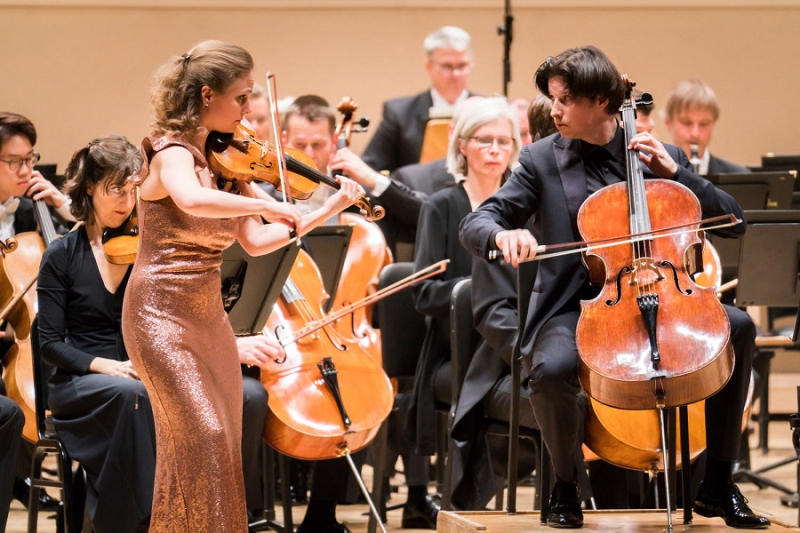
    Brahms composed the Concerto for Violin, Cello and Orchestra, Op. 102, in 1887. It was his last orchestral composition and it was greeted coolly even by ardent supporters like Eduard Hanslick. Soon Brahms himself was dismissing it as “folly” in letters to Clara Schumann. Neglected for many years, it certainly deserves to be heard more often; it surrenders nothing to his famed violin concerto in inspiration, melody and excitement. The writing may not seem as virtuosic as the violin concerto perhaps because Brahms composed a truly double concerto. The two instruments don’t have the kind of virtuosic writing that concertos often do. The music is more of a dialogue for violin and cello – and orchestra, too. It takes a great deal of camaraderie between the two soloists and conductor to bring the pieces together. Maybe it’s the lack of true star turns for the soloists that keeps some musicians away. But when played as superbly as it was by Julia Fischer and Daniel Müller-Schott, with Maestro Petrenko on the podium, the results are breathtaking.

    CH1375954

    Above: Julia Fischer and Daniel Müller-Schott playing the Brahms Double Concerto, with Maestro Petrenko; a Chris Lee photo

    The work begins with a dramatic and brief orchestral opening and immediately the cello launches into an extended solo. One of the few passages of this kind in the work, Müller-Schott immediately established himself as an artist. Rich and velvety notes poured from the instrument. Julia Fischer, a former child prodigy who has grown into a true artist of the violin, soon joined in for one of the concerto’s many extended conversations between the two instruments. Ms. Fischer’s sound is delicate and sweet, the notes rolling effortlessly from her bow. Fischer and Müller-Schott have collaborated many times over the years. Their discography together includes a lot of chamber music, as well as the Brahms concerto. Their musical partnership came across beautifully in the performance, whether playing in unison or handing off music back and forth, it’s the sort of relationship that takes time to develop. The hushed, pastoral-ish second movement was wondrous and the Bohemian inspired dances of the Finale were perfect. Maestro Petrenko and the superb Bayerisches Staatsorchester forces were excellent partners.

    Ms. Fischer and Mr. Müller-Schott gave an encore: an extended virtuoso piece: Passacaglia by Johann Halvorsen. It was really great!

    CH1375936

    Above: Julia Fischer and Daniel Müller-Schott, photo by Chris Lee

    Tchaikovsky’s largest orchestral work, the Manfred Symphony was composed in 1885, between his more famous 4th and 5th Symphonies. Inspired by Byron’s poem (Schumann composed a famous overture based on it as well), Tchaikovsky – already master of the large orchestral forces – outdid himself with sheer size of forces needed, including a harmonium (typically replaced by an organ in performances and recordings.) Initially Tchaikovsky considered it to be his finest composition, but after a mixed reception from critics and the public, in what was a common refrain of his life, turned on it and declared it awful; even considered destroying everything but the first movement. Fortunately his instinct to burn it did not come to pass because it is certainly one of his greatest works. And I often think it may be his greatest symphony.

    What I find astonishing about the Manfred Symphony is the sheer amount of invention – melodic and orchestration. In some ways it reminds me of Verdi’s Falstaff. Some complain that Verdi’s last opera is lacking in melody, but it might actually contain more melodies than all of his other works combined. They simply fly by and disappear so quickly that one can fail to notice. That’s my view of Tchaikovsky’s Manfred. The melodies and brilliant orchestration can be so sudden, so novel and so brief that it’s all gone and moved on to something else entirely before you realize what you just heard. It is truly a work that demands repeated hearings.

    The dark first movement depicts Manfred’s anguished wanderings in the Alps; “His life shattered…”, as the program note (by Mily Balakirev) describes. With halting phrases, Tchaikovsky depicts a peaceful pastoral one moment, Manfred’s pain the next. The explosive climax – one of Tchaikovsky’s most beautiful melodies – is hair-raising. I often hear it as a perfect musical accompaniment to the moment in Wuthering Heights where Heathcliff is found dead in Catherine’s room, thunder and lightning blaring outside. The two middle movements are, by contrast, blasts of light. The light fairy music of the Scherzo (in the program a fairy of the Alps appears to Manfred splashing in a waterfall) would have pleased Mendelssohn, I think. The slow third movement presents a portrait of a peaceful nature, something Beethoven would have recognized perhaps. And in the final movement, again a darkness descends. The music swirls and growls as Manfred visits the caves of Arimanes. And the anguished love theme from the first movement returns to signal Manfred’s death – greeted with an organ playing a hymn.

    The forces of the Bayerisches Staatsorchester played the work superbly. Kirill Petrenko led an all-around thrilling performance, goading the players to play bigger and louder (I was reminded of the famous story of Richard Strauss rehearsing Elektra and yelling to the players: “Louder, louder! I can still hear Madam Schumann-Heink!”) But effortlessly bringing volume and emotion down to a whisper when needed as well. Though Manfred has long been neglected (many complete recorded cycles of Tchaikovsky’s symphonies do not include it), over the past few years it has been heard in NYC several times. New York Philharmonic played it with Semyon Bychkov (one of Petrenko’s mentors) and Vienna Philharmonic played it at Carnegie with Valery Gergiev. Perhaps Maestro Bychkov’s performance was bigger. The NY Philharmonic’s heavier sound might account for the bigger bombast. Bayerisches Staatsorchester has a leaner, more pointed sound overall. It provided greater transparency in the more heavily orchestrated parts (and there are many.) Personal tastes will vary on the preferred sound. But no doubt Kirill Petrenko led a superb night of music-making. His future with the Berlin Philharmonic is very exciting.

    CH1375935

    Above: Kirill Petrenko and the musicians of the Bayerisches Staatsorchester acknowledge the applause at the close of this evening’s concert; photo by Chris Lee

    ~ Ben Weaver

  • Lifits @ Weill Hall

    ~ Author: Scoresby

    Friday March 23rd, 2018 – It is always a pleasure going to Carnegie Hall’s Distinctive Debuts series to hear new young musicians. This evening had the Uzbeckistani-German pianist Michail Lifits performing a short and somewhat eclectic program. The evening began with the last piano sonata that Schubert published in his lifetime: Piano Sonata in G major, D 894. Interestingly, this work was Schumann’s favorite Schubert piece. It is an unusual for younger musicians to program this work as it is one of Schubert’s most understated. Typically I am wary of hearing this piece played, as it can sound utterly repetitive in the wrong hands. Mr. Lifits proved otherwise, providing one of the most probing performances I’ve heard of the piece.

    The work commences with a serene chord pattern that serves as the base for the entire first movement. Mr. Lifits used a quiet and refined style of playing. There wasn’t much pedal; however, all of the voices were even. His tempo was quicker than some, but this only emphasized the song like quality of the music. After each restatement of this main theme, Mr. Lifits would slightly alter his voicing, throwing a different shade of color to this chord pattern. Over the course of the few minutes leading up to the dramatic downward scale that launches the piece forward, Mr. Lifits hand began to focus on clarifying the lower notes and murky inner-voices. Thus, with the tension set, he launched into that fateful downward scale creating one of the most dramatic moments of the evening. His sensitivity in dynamics let that moment feel like an awakening of sorts, after all the quiet lead up.  

    Screenshot 2018-03-25 at 2.35.22 PM

    Above: Pianist Michail Lifits, Photo Credit: Felix Broede

    After finally moving into this broader dynamic range, Mr. Lifits took full advantage. Through the first movement there are beautiful lieder-like sections. Here the piano had a softer sound, the melody in the right hand sounding like a singer playfully skirting atop a charming accompaniment. Each time the downward motif was repeated, Mr. Lifits increased the drama by adding slightly louder dynamics propelling the music forward.  

    In the main repeated chords, the lower basses gradually came into its own melancholy identity. Mr. Lifits wistful playing made this tinge become apparent through all the gracefulness above it. Finally, after transforming the almost repetitious theme for the last time the first movement came to delicate close. The audience was so enthused that they gave him a loud clap before letting him begin the second movement. I’ve never heard such a creative performance of that movement, that let each chord shine while at the same time pushing the music forward.  

    Mr. Lifits took a slightly faster approach for the second movement than one typically hears, which just increased the song-like quality inherent in this music. In the second minor theme that takes over this was particularly present. Despite some smudges in some of the scales and some technical issues, as a whole the second and third movements were still lovely.  

    Not pausing between any of the movements (perhaps out of fear that the audience would clap again, a good problem to have), he took a naïve jolly tempo for the last movement. Enjoying each ornamentation in the right hand and letting the music pop. I couldn’t but think that Schumann must have been inspired by this in his own Carnival. Regardless, I look forward to listening to Mr. Lifits’ Schubert CD (which includes this sonata). According to his biography he is recording an entire cycle of Schubert’s music and I look forward to hearing it all. 

    In the second half of the concert, there was a transition from the serene to the circus. First was the Shostakovich 24 Preludes, Op. 34 performed in succession without a break with Shostakovich Prelude and Fugue in D minor, Op. 87, No. 24. The Preludes are an earlier set of pieces which are classic Shostakovich joke-type pieces. While there are some serious moments, they are a study in comical miniatures for the most part. While I enjoy hearing a few of these, hearing all of them in succession was a little much for my taste (even as a devout Shostakovich lover).  

    Nonetheless, Mr. Lifits gave as good of a performance as one can expect, emphasizing the humorous sections of these pieces. In the second movement which is a burlesque sort of waltz, Mr. Lifits indulged in its off-kilter quality. He played up the various extreme dynamic changes in the wild moments. In the eighth movements riffs on jazzy themes, the piano here sounded like in a cabaret. The best part of the second half was the organ-like prelude and fugue. Mr. Lifits managed to coax all of the difficult voicing out of the fugue to create an intricate web of layers.  

    After such a well-played concert, Mr. Lifits offered Rachmaninoff’s showy arrangement of Kreisler’s Liebesleidwhich seemed inappropriate after all that came before. As a panacea to the Rachmaninoff, Mr. Lifits finished the concert with a second encore of Chopin’s posthumous Nocturne in C-sharp Minor which he played as well as the Schubert.

    ~ Scoresby

  • Lisa Batiashvili|ORPHEUS @ Carnegie Hall

    P1010052_preview

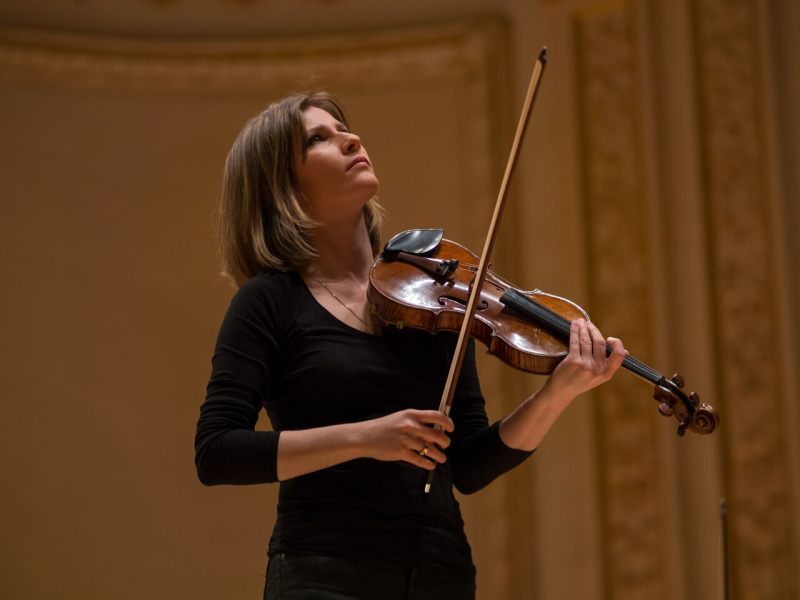
    Above: violinist Lisa Batiashvili, rehearsing for this evening’s concert with ORPHEUS; photo by Matt Dine

    ~ Author: Oberon

    Saturday March 24th, 2018 – My friend Dmitry and I are big fans of Lisa Batiashvili, so we were excited by this opportunity to hear her play the Prokofiev second concerto with ORPHEUS at Carnegie Hall. The program successfully blended works by Schubert and Prokofiev, and the comely violinist basked in a rock-star ovation after her dazzling performance.

    In 1823, Franz Schubert composed incidental music for Helmina von Chézy’s play, Rosamunde. The play was a failure, but Schubert’s music has come down to us across nearly two centuries. ORPHEUS opened their concert tonight with the play’s Entr’acte No. 1, commencing with a big, resonant sound that gave the illusion of a full symphony orchestra. The music has an air of theatrical drama, and there’s some lovely writing for clarinet. 

    Paul Chihara’s persuasive arrangement of Prokofiev’s Schubert Waltzes Suite, created specially for ORPHEUS, was highly enjoyable, and attractively played. Solo passages for oboe, flute, clarinet, and trumpet stood out. Mr. Chihara was present, and took a bow from the audience.

    P1010100_preview

    Above: ORPHEUS onstage at Carnegie Hall, a Matt Dine photo

    The two existing movements of Franz Schubert’s Symphony No. 8 in B Minor, D. 759 (Unfinished) were given plush treatment by the ORPHEUS forces, and again the clarinet, oboe, and flute soloists seized on their opportunities to delight us with melodious gems. The ensemble sound overall was vividly textured, with notable sonic warmth from the cellos, and the frequent repeats of the familiar theme of the Allegro moderato were so cordially played. A cellphone interrupted the Andante – twice! – spoiling the atmosphere; and no sooner had that distraction faded, than some poor bloke had a terrible coughing fit. It took all my powers of concentration to endure.

    After the interval, Ms. Batiashvili strolled onto the Carnegie Hall stage along with the ORPHEUS musicians – eschewing a star’s entrance – and proceeded to enthrall us with her commanding and emotionally vivid performance of the second Prokofiev violin concerto, Op. 63.

    P3240077_preview

    Above: Lisa Batasthvili playing the Prokofiev 2nd this evening; photo by Matt Dine.

    From her opening solo passage, Ms. Batiashvili’s playing seemed wonderfully at home, both in the embracing acoustic of the venerable hall and in the decidedly à la Russe qualities of the music. Her luminous tone in the sustained melodic passages and the clarity and deftness of her coloratura flourishes were captivating. A spidery motif over plucked accompaniment was subtly delivered, and – after a lamenting theme from the cellos and a march-like intrusion – she produced lively swirls of notes over a descending orchestral figure. As the violinist returned to the sweet, poignant melody heard earlier, we were on a Batiashvili high when the mood was broken by a moaning baby somewhere in the upper tiers. At moments like this, I seriously think about giving up concert-going.

    But Ms. Batiashvili drew us back into her world with her simply gorgeous playing in the Andante assai; the theme has a nostalgic glow and it sings over a plucked accompaniment. Sailing higher and higher, with spine-tingling glamour of tone, the violinist provided for us a transfusion of tranquility in a world going mad. The ensemble then take up the melodic passage as the violin plays pizzicati.

    The final movement, Allegro, ben marcato, brings us elements of the wit that Prokofiev can so magically integrate into his music: yet another reason he’s one of my top favorite composers. The castanets here always make me smile. Throughout this dance-like movement, it was as much fun watching the pretty violinist as listening to her. As this concerto reaches its lively finish, I always wish it had been longer.

    Ms. Batiashvili, looking lovely as ever in her wine-coloured gown, won an enraptured ovation from the crowd. She treated us to a delightful encore: the March from Prokofiev’s LOVE OR THREE ORANGES.

    P3240344_preview

    Above, mutual admiration: Lisa Batiashvili and the players of ORPHEUS. Photo by Matt Dine.

    ~ Oberon

  • Mitsuko Uchida @ Carnegie Hall

    4929_6093_Uchida-Mitsuko_Decca_Marco

    Above: Mitsuko Uchida, photographed by Marco Borggreve

    ~ Author: Oberon

    Monday February 26th, 2018 – Mitsuko Uchida in an all-Schubert recital at Carnegie Hall. I had only heard Ms. Uchida performing live once before, on Bastille Day, 1989, at Tanglewood; that evening, she played the Ravel G-major concerto, with Seiji Ozawa conducting. In 2009, some twenty years after that Tanglewood encounter, Mitsuko Uchida was named Dame Commander of the British Empire by Queen Elizabeth II.

    This evening, Dame Mitsuko walked onto the Carnegie Hall stage to an affectionate round of applause. Clad in a black trouser outfit with a golden sash and gold shoes, she bowed formally to the crowd, put on her eyeglasses, and sat down at the Steinway. For the next two hours, the pianist filled the hall – and our hearts – with her renderings of three Schubert sonatas. Her playing was by turns dramatic and poetic, and there was a wonderful feeling that her interpretations were very much at home in the venerable space: we were literally enveloped in the music.

    Mitsuko Uchida is a true artist. She isn’t here to dazzle us with theatrics or with her own personality, but to bring us great music in all its clarity and richness.

    The ongoing discussion in the realm of classical music as to whether Schubert’s piano sonatas belong in the same echelon as Beethoven’s was continued in tonight’s Playbill and in remarks overheard in intermission  conversations around us. My feeling, based on limited experiences to date, is that Beethoven’s sonatas more often reach a spiritual depth which Schubert’s – for all their beauty and fine structuring – never quite attain.

    The evening opened with the C-minor sonata, D. 958. Ms. Uchida immediately commanded the hall with the sonata’s crisp, dramatic start. As she moved forward, I initially felt she was giving too much pedal; but this notion was soon dispelled. Flurries of scales were exhilarating, and dancing themes ideally paced. The movement ends quietly.

    The Adagio brings us the first of many melodies heard throughout the evening that remind us of Schubert’s stature as a lieder composer. From its melancholy, soft start, one can imagine a voice taking up the melody; Ms. Uchida’s songful playing underscored this vocal connection throughout the concert. Some unfortunate coughing infringed on the quietest moments, but the pianist held steady and the atmosphere was preserved.

    Following a Menuetto – its unusually somber air perked up by the Allegro marking – the sonata’s dancelike final movement feels almost like a tarantella. A marvelous lightness moves forward into alternating currents of passion and playfulness. Ms. Uchida’s tossing off of several flourishing scales was particularly pleasing. 

    The A-Major sonata, D. 664, published posthumously in 1829, has variously been dated between 1819-1825. Referred to as “the little A-major” it was the shortest of the three sonatas on offer tonight, and it’s a real gem.

    This sonata’s opening Allegro moderato commences with another ‘song without words’. The pianist moves from high shimmers to dusky depths of turbulence and back again. A hesitant, sighing start to the Andante soon develops gently into minor-key passages. Ms. Uchida’s playing has a rapt, dreamlike quality and a lovely sense of mystery here; this evolves to a heavenly finish. The final Allegro commences with rippling motifs; emphatic downward scales lend drama, while waltz-like themes entice us. Throughout, the pianist’s feeling for nuance continually intrigued.
     
    Following the interval, we had the longest of the program’s three sonatas: the G-Major, D. 894 (often referred to as the Fantasie-Sonata‘), which was composed in the Autumn of 1826.

    The ultra-soft opening of this sonata found Ms. Uchida at her most compelling. As the Molto moderato e cantabile unfolds, there are high, decorative passages interspersed with big, rumbling downhill scales and waltzy motifs. Again the pianist’s scrupulous attention to detail and her control of dynamics kept the hall mesmerized. In the Andante, Ms. Uchida savoured the calm of the opening measures. Then grand passions spring up, alternating with lyrical flows from minor to major. The soft ending of this Andante was magical.

     
    Heraldry sets off the Menuetto, Allegro moderato, which later lures us with a waltz. Ms. Uchida’s caressing of the notes as the music softens was sublime. The Allegretto, full of repeats, again reminded us of how marvelous this music sounded in the hall.
     
    Greeted with an exceptionally warm standing ovation, Ms. Uchida delighted us with a miniature encore – one of Arnold Schoenberg’s “Six Little Piano Pieces” Op. 19 – which took a about a minute to play. This witty gesture was a perfect ending to a great evening of music-making.  

    ~ Oberon

  • WALKURE: Act I @ The New York Philharmonic

    Simon _oneill

    Above: tenor Simon O’Neill

    ~ Author: Oberon

    Thursday February 15th, 2018 – We’ve been starved for Wagner of late, but now – in the course of a single week – we’ve had Dorothea Röschmann singing the Wesendonck Lieder, The New York Philharmonic offering Act I of DIE WALKURE (tonight), and, coming up: a matinee of PARSIFAL at The Met.

    This evening’s Philharmonic program opened with Pulitzer Prize-winner John Luther Adams’s Dark Waves, music which readily brings to mind the opening of Wagner’s DAS RHEINGOLD. Long, deep notes are the sustaining quality throughout the piece’s twelve-minute span. Beyond that, horn calls on fifths and the brief tweeting of the piccolo emerge thru the murky, at times almost mechanical, layers of sound. The volume ebbs and flows, at times becoming massive. This is music that surely casts a spell, though one patron was apparently not pleased and expressed himself with high, hooting boos that became comical after a bit.

    The Philharmonic’s new music director, Jaap van Zweden, yet again proved himself a Wagnerian of great skill and commitment. His presentation of the WALKURE Act I tonight was so alive – right from the rather fast tempo he chose for the score’s opening pages depicting Siegmund being tracked by his enemies – and the orchestra played superbly.

    Six harps are onstage, and, as the Act progressed, we had marvelous solo moments from Carter Brey (cello), Anthony McGill (clarinet), Amy Zoloto (bass clarinet), and Liang Wang (oboe) as well as some noble calls from the horns.

    As Hunding, John Relyea’s dark, menacing tone poured forth, full of irony and vitriol: this courteous host will likely stick a knife in your ribs given the opportunity. As with his magnificent Bartok Bluebeard at Carnegie Hall a year ago, Mr. Relyea proved himself yet again to be a singer of great vocal and physical command. One moment summarized the brilliance of Mr. Relyea’s portrayal: after Siegmund has told his history to Sieglinde, ending tenderly with “Nun weißt du, fragende Frau,warum ich Friedmund nicht heiße!” (‘Now you know, gentle wife, why I can never be called Peaceful.’), Hunding/Relyea interrupts the twins’ mutual attraction, singing venomously: “Ich weiß ein wildes Geschlecht!” (‘I know of your riotous race!’). Hunding’s denunciation of his guest, and his promise to slay him at dawn, drew black-toned vocalism from the basso.

    Ten years have passed since I first heard Simon O’Neill’s Siegmund at a matinee performance at The Met. Both in voice and interpretation, Simon has kept things fresh in this arduous role: his singing – by turns helden or lyrical – is wonderfully present, and his diction and colourings are impressively utilized in the long narrative passages. For Siegmund’s story is a sad tale indeed, and although on this night – when he’s stumbled into Hunding’s hut as a hunted man – he will experience happiness ever so briefly, within hours  he will be betrayed to his death by his own father.

    Mr. O’Neill makes these stories of loneliness and woe truly poignant; both here and in those passages when heroic tones are called for, he shows himself the equal of any Siegmund of my experience. His cries of “Wälse! Wälse!” in the Sword monolog were excitingly sustained. The cresting, poetic beauty of Simon’s “Winterstürme” and his powerful summoning of Nothung from the tree were highlights of the evening. And then, with van Zweden’s orchestra pulsing away with relentless vitality towards the finish line, Simon latched onto a clarion, hall-filling top-A at “Wälsungen blut!…” to cap the evening.

    In 2012, Heidi Melton’s singing of the 3rd Norn in GOTTERDAMMERUNG at The Met gave me reason to believe she could be the next great Wagnerian soprano. But since then, in subsequent encounters, I have found her disappointing. This evening, her physical presence and the voice’s limitations in the upper range drew a blank with me.

    So tonight, it was the excellence of the male singers, the thrilling playing of the orchestra, and Maestro van Zweden’s feel for this music that gave Wagner his due.  

    ~ Oberon