Tag: Classical Music

  • Barenboim @ Carnegie: Mozart & Bruckner

    217101-D_340-R

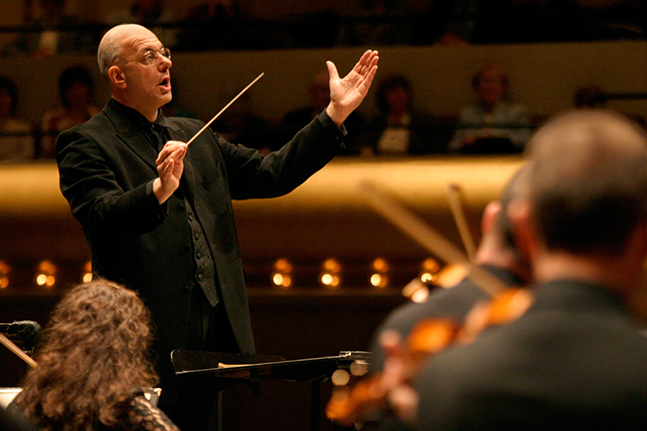
    Above: Daniel Barenboim and the Staatskapelle Berlin at Carnegie Hall; performance photo by Steve J Sherman

    Thursday January 19th, 2017 – The Staatskapalle Berlin in the first of a series of concerts at Carnegie Hall in which Daniel Barenboim appears both as piano soloist and conductor. Each program in the series pairs a Mozart concerto with a Bruckner symphony. Tonight’s was the only performance in the series that I was able to attend, and it proved most valuable as an opportunity to hear not only a great conductor/pianist and orchestra, but also a rare chance to experience Bruckner’s first symphony live.

    The evening marked, almost to the day, the 60th anniversary of Daniel Barenboim’s Carnegie Hall debut; on January 20, 1957, he was the piano soloist on a program conducted by Leopold Stokowski. Over the six decades since that momentous night, Maestro Barenboim has maintained his status as a premiere pianist, and has become one of the great conductors of our time.

    My personal memories of Barenboim as pianist and as conductor are especially meaningful to me: in November 2008, he and James Levine were the de luxe pianists for a performance of Brahms’ Liebeslieder Waltzes at Weill Hall; the singers were members of the Met Young Artists Program. It was a superbly intimate performance. Shortly after this Liebeslieder evening, Barenboim made his long-awaited debut on the podium at The Met in a splendid series of performances of TRISTAN UND ISOLDE: we went twice, returning for a repeat when Waltraud Meier flew in to rescue one performance and made a striking impression as Isolde

    217101-D_216-R

    Above: performance photo by Steve J Sherman

    This evening, Maestro Barenboim appeared first as piano soloist for the Mozart Piano Concerto No. 27 in B-flat Major. From the opening bars, my friend Dmitry and I were struck by how absolutely lovely the orchestra sounded in the Carnegie setting. After the interval, when the much larger contingent of players required by the Bruckner took the stage, the sonic effect remained particularly cordial. It’s a stellar orchestra, and within moments I was regretting that I hadn’t made arrangements to hear them in more concerts from this impressive series.

    In 1791, the final year of Mozart’s life, the composer was at a low point. Poor health (his own, and his wife’s) and financial worries bore down on him, and he felt the Viennese musical public had somewhat lost interest in him.  At the time he was composing his last piano concerto, #27, he wrote to his wife: “I can’t explain to you how I feel…there’s a kind of emptiness which just hurts me: a kind of longing that is never stilled…” His despair shows thru in the 27th concerto, although light still manages to pierce the clouds often enough. First performed on March 4, 1791, it marked Mozart’s last public appearance as a piano soloist.

    With a smallish ensemble – no trumpets, drums, or clarinets – this concerto feels intimate, even in the spaciousness of Carnegie Hall. This impression was sustained by the marvelous subtlety of Maestro Barenboim’s playing, particularly in the cadenzas, where he could fine the tone down to a silken whisper.

    In the melody-rich first movement, the orchestra cushioned the piano line to gorgeous effect, with the solo flute and bassoon displaying great finesse. The flautist continued to impress in the Larghetto which follows. Maestro Barenboim’s playing here was beautifully sustained and thoughtful, and an atmosphere of tranquility laced with gentle melancholy settled over the Hall. Barenboim’s exquisite tapering of the final phrase hung on the air, but an enormous, ill-timed sneeze from an audience member destroyed this magical moment.

    Pianist and orchestra bounced back from this unfortunate intrusion for a perfect rendering of the concerto’s concluding Allegro; Barenboim’s playing here had ample spirit and polish, and the musicians did him proud. This is a somewhat darker finale than Mozart’s usually wrote for his concerti, but it does feature the melody of a little song Mozart was working on: “Sehnsucht nach dem Frühling” (“Longing for Spring“). By late 1791, the composer was fighting for his life; he never saw another Spring, dying on December 5th and thus sadly depriving the world of three or four more decades-worth of magnificent music.

    217101-D_441

    Above: performance photo by Steve J Sherman

    Anton Bruckner’s 1st symphony languished in obscurity for over twenty years. Following a single performance in Linz, Austria, in 1868, it was not heard again until 1891 when it was given in a heavily revised version. Its Carnegie Hall premiere didn’t take place – incredibly enough – until 1985, and performances of it remain comparatively rare. After hearing tonight’s excellent performance, I feel its neglect is unjustified; in fact, I look forward to hearing it again…the sooner, the better.

    Maestro Barenboim’s fondness for this music was evident from start to finish, and the Staatskapelle Berlin gave it a performance by turns lush, subtle, and vigorous. How thrilling to hear (and watch) the orchestra’s eight double-basses playing in unison; and the timpanist was having a field day – I was mesmerized by him throughout the third and fourth movements.

    A march-like cadence sets the opening Allegro on its way; starting almost whimsically, this soon becomes more emphatic. A lull comes as the woodwinds gently introduce a free-flowing violin melody. Suddenly the trombones take control with a mighty fanfare. Distant thunder from the timpani, and the march motif resumes; the movement carries on with an ebb and flow of what feel like climaxes but which subside just short of peaking. Then, after a final rush, we come to an abrupt end. The players’ keen response to Barenboim’s often understated gestures spoke of the natural affinity the maestro and the musicians have established over the years.

    The orchestra’s playing of the Adagio was especially moving. This music builds cinematically to a glorious climax, then evaporates into the heavens in an inspired and inspiring coda. Maintaining a perfect balance between the layered voices, Barenboim again showed that this music is in his very blood.

    The lively Scherzo is particularly engaging: it has the feel of a tribal dance – by turns throbbing and evocative – reminding me a bit of the well-known Scherzo from the Dvořák 6th. The whirlwind subsides for a gentle interlude before the dance springs up again, stomping on to a quick stop.

    Only in the final movement did I feel Bruckner might have been losing his grip somewhat. The music here did not have a cohesive feeling; the structure felt somewhat lacking in tautness, with a couple of walkabouts stemming the flow of the piece. Nevertheless, it was played with utter commitment and a sense of triumph at the close.

    Aside from the sneeze, a late seating after the piano concerto’s first movement caused an unfortunate  break in my concentration. The spectacular performance of the Bruckner helped to set these distractions aside, with Maestro Barenboim and his orchestra basking in a grand ovation at the end of a wonderful evening of music-making.

  • Leonidas Kavakos: Double Duty @ The NY Philharmonic

    Kavakos

    Thursday October 20th, 2016 – Leonidas Kavakos (above) was both soloist and conductor for this evening’s program at The New York Philharmonic. Mr. Kavakos is the Philharmonic’s current Mary and James G. Wallach Artist-in-Residence, and in this capacity will blessedly be with us frequently in the current season. Tonight, the prodigiously talented violinist played Bach and then moved to the podium to conduct works by Busoni and Schumann.

    With the mystique of a Tolkien wizard, Mr. Kavakos worked his magic in a brilliant rendering of J.S. Bach’s Violin Concerto in D minor (reconstructed), BWV 1052; surrounded by an ensemble of the orchestra’s elite string players, and with Paolo Bordignon at the harpsichord, he cast a spell over the hall with his playing. Following a sizzling cadenza midway thru the first movement, the violinist and his colleagues drew us in with the lamenting beauty of the adagio. An unfortunate cellphone intrusion in the very last moments of the movement was brushed aside as Mr. Kavakos sailed forward with stunning virtuoso playing in the allegro, where he summoned up visions of the legendary “mad fiddlers” who played as if possessed by demons.

    The whole ensemble went merrily along on the soloist’s swift ride, and I must mention Timothy Cobb’s plush tone and amiable agility on bass. Shouts of ‘bravo‘ rang thru the hall as the concerto ended. Mr. Kavakos and Sheryl Staples, this evening’s concertmaster, clearly form a mutual-admiration-society; after bowing to the audience’s enthusiasm, the soloist signaled Ms. Staples to rise but instead she and all her colleagues remained seated, vigorously applauding Mr. Kavakos. When he finally got the players to stand, the applause re-doubled.

    The Geffen Hall stage crew swiftly re-set the space for the next work: I had discovered Ferruccio Busoni’s Berceuse élégiaque earlier this season when the Curtis Symphony Orchestra performed it at Carnegie Hall, and was very glad of an opportunity to experience it again tonight.

    This is music wrapped in a somber mystery. The composer wrote these lines as a brief ‘prologue’ to the piece:

    “The child’s cradle rocks, the hazard of his fate reels; life’s path fades, fades away into the eternal distance.”

    During the ten-minute course of this eerie lullaby, the music rises very slowly from the depths; the subtle interjections from the harp add a dreamlike quality, as does the celesta which joins the darkling ensemble near the end. As a chillingly marvelous finish, a gong sounds and its reverberations fade to nothingness.

    The Philharmonic’s Playbills are always loaded with fascinating articles and information; I read them on the train trip homeward after the concerts. One passage in the notes on the Busoni struck a tragic note: Gustav Mahler conducted the Philharmonic premiere of the Berceuse élégiaque on February 21st, 2011. Suffering from heart disease, Mahler was forced to withdraw from a second performance of the work; he sailed back to Europe and died in Vienna in May. The February 21st Philharmonic concert thus marked the last time he ever conducted. 

    Robert Schumann’s Symphony No. 2 was the evening’s concluding work. Here my companion and I were at a loss: the music is absolutely lovely from start to finish, and it was conducted and played with both steadfastness and genuine affection by Mr. Kavakos and the artists of the Philharmonic. But somehow it is simply too much of a good thing. We were trying to figure out the reasons why this music, so congenial, seems to go in one ear and out the other; there’s no edge to it anywhere, and nothing that reaches the heart. Also, for me, part of the problem is all the tutti playing: there’s a shortage of those passages where solos might lure us in or smaller components of the orchestra might bedevil one another. Only in the adagio, where the oboe, clarinet and horns had chances to step forward, did my interest perk up. For the rest, the music simply washed over us to beautiful but unmemorable effect.

  • In Troubled Days of Peace @ ASO

    Donnie-Ray-Albert

    Above: baritone Donnie Ray Albert

    Wednesday October 19th, 2016 = The American Symphony Orchestra presenting concert settings of operas by Ernst Krenek and Richard Strauss in their season-opening program. The timely theme of dictatorships and the eternally evasive concept of peace hung in the air at Carnegie Hall, where appreciative music lovers had gathered, skipping a pointless presidential ‘debate’ in favor of hearing some rarely-performed works. 

    Ernst Krenek’s Der Diktator was completed in August 1926. You can read a synopsis of the opera and find background material here, since I’m going to concentrate on the evening’s presentation.

    Leon Botstein and his intrepid players gave a fine rendering of the very palatable score. The performance was dominated by Donnie Ray Albert as the Dictator. A stalwart force in the realms of opera and concert since 1976, Mr. Albert is now 66 years of age, and boasts a voice that has retained its power, along with interpretive skills that are truly impressive. Whether in bold declamation or in the music’s more lyrical passages, Mr. Albert gave a masterful performance. Another impressive voice was that of Karen Chia-Ling Ho as Maria: displaying a large, spinto sound and hall-filling top notes, the soprano also invested her singing with dramatic urgency. Ilana Davidson, a petite woman with a baby-dollish timbre, piped up boldly as Charlotte, and Mark Duffin was able to combine the power of a helden- and the verbal edge of a character-tenor. Portraying an officer blinded by poison gas while in the Dictator’s service, Mr. Duffin wore sunglasses and managed, for all his gritty vocal power, to create a moving figure.

    Richard Strauss’s Friedenstag (Peace Day) was premiered at Munich in 1938, with Adolf Hitler among the audience. Set during the Thirty Years War, the story is unfolds in a city under siege; after many twists and turns of plot, the wife of the city’s Commandant intercedes with the head of the besieging force and brings about a reconciliation. With music includes many reminders of DIE FRAU OHNE SCHATTEN, FRIEDENSTAG is a good experience for an old Strauss-lover like me; however, it is somewhat weakened by an endless series of “finales”, as though Strauss did not know when to stop.

    Continuing his highly successful evening, Donnie Ray Albert made a grand impression as the Commandant with his generous singing and imposing stature. I had very much been anticipating hearing Tamara Wilson as Maria, the Commandant’s wife, but when we arrived at Carnegie Hall, we found that she had canceled and was being replaced by Kirsten Chambers. A program-insert bio lists Ms. Chambers as the cover for both Isolde and Salome at The Met this season. Blonde, and clad in a bright red gown, the soprano unsparingly hurled herself into the demanding music of Maria, showing a voice of considerable thrust. If one top note was just shy of the mark, overall she managed well in a fiendish role, and saved the evening.

    R Lugo

    Bass Ricardo Lugo (above), as the opposing general, made a vibrant impression with his imposing voice and intrinsic sense of the drama. He was an excellent foil for Mr. Albert, and, between these two powerhouse voices, they kept our focus on the work keenly secured. Mr. Duffin, amplifying the forceful impression he had made in the Krenek, was back as the Burgomaster: one of his upper notes was sustained for an incredibly long time…I really don’t know how he did it!

    FRIEDENSTAG has a number of small roles in which savvy interpreters are able to make their mark. I especially liked the clear sweetness of Scott Joiner’s tenor as a Piedontese soldier (he sang in Italian) and Carsten Wittmoser’s sturdy vocalism as a Musketeer. Tenor Doug Jones and baritone Steven Eddy (in a dual role) seized their chances and did very well, with baritones Steven Moore, Daniel Collins, and Benjamin Cohen contributing strongly. 

    In small vignettes, a number of chorus members stepped forward from time to time. One of these had a special meaning for me: Rachel Rosales, as a Woman of the People, is a soprano I heard lo! these many seasons ago as an exquisite Leila in LES PECHEURS DES PERLES at New York City Opera. I have seen her name listed among choral rosters before, and was feeling nostalgic when she intoned her brief, dramatic solo, a solo which made me think of Strauss’s writing for Die Amme in FRAU OHNE SCHATTEN. In the finale tonight (the final finale), Ms. Rosales and other chorus sopranos sent some high notes sailing into the hall.  

    The Participating Artists:

    American Symphony Orchestra
    Leon Botstein, conductor
    Bard Festival Chorale/James Bagwell, director
    Ilana Davidson, Karen Chia-ling Ho and Kirsten Chambers, sopranos
    Donnie Ray Albert and Steven Eddy, baritones
    Mark Duffin, Scott Joiner and Doug Jones, tenors
    Carsten Wittmoser, bass-baritone
    Ricardo Lugo, bass

  • Sibelius & Mahler @ The NY Philharmonic

    Hampson

    Above: baritone Thomas Hampson

    Friday April 22nd, 2016 matinee – A matinee performance by The New York Philharmonic pairing the Sibelius seventh symphony with Mahler’s Das Lied von der Erde. Alan Gilbert was on the podium, with soloists Stefan Vinke and Thomas Hampson singing the solo parts in the Mahler.

    The two works made an ideal pairing; the Sibelius 7th (first performed in 1925 under the title Fantasia Sinfonica) lasts only about 20 minutes and is written as a single-movement. From its opening rising scale which blooms into regal theme, the symphony compensates for its relative brevity with music of almost cinematic breadth. Abundant in melody, the piece has an Autumnal quality; though Sibelius would live until 1957, he wrote very little music after 1926. This last symphony is both serene and passionate; it leaves us wondering ‘what might have been’ if he had continued writing.

    The Sibelius was played with savourable richness by the Philharmonic artists today, and Maestro Alan Gilbert was very much in his element here; following the interval, players and conductor were joined by the two vocal soloists and a thrilling performance of Mahler’s Das Lied von der Erde commenced. 

    Still recovering from the sorrow of his daughter’s death, Mahler learned in 1907 that he was suffering from a heart condition that would, within four years, prove fatal. In The Song of the Earth, the composer’s awareness of the possibility of an approaching end prompted the composition of a great hymn to Nature and to the sheer ecstasy of living. Drawn from The Chinese Flute, a collection of ancient Chinese poems translated by Hans Bethge, the six ‘songs of the Earth’ speak of drunken defiance of impending death, of the solitary life, of the transience of youth and beauty, and of a friendship which endures beyond parting and into eternity.

    The tenor is allotted the more extroverted songs; the first, third, and fifth. Stefan Vinke’s formidable power and stamina proved equal to the fierce demands Mahler’s vocal writing places on the singer: high in tessitura and including exposed, sustained notes in the topmost range, the tenor’s muscular singing was just what’s needed. An occasional trace of pitchiness didn’t detract from Mr. Vinke’s generous singing. And I must note the lovely violin theme from Frank Huang in the fifth song, “The Drunkard in Spring“.

    (Note: it’s just been announced that Stefan Vinke will be replacing Johan Botha when James Levine and The Met Orchestra perform excerpts from Wagner’s RING Cycle at Carnegie Hall on May 26th. Christine Goerke is the soprano soloist.)

    Both mezzo-sopranos and baritones have performed the ‘other’ solo role in Das Lied von der Erde the formidable Margarete Matzenauer sang it at the NY Philharmonic premiere in 1929. Today, it was baritone Thomas Hampson whose strikingly expressive singing moved me and my companion to a tearful state as the work came to an end.

    I have admired Thomas Hampson since his Met Auditions win in 1981; among his many Met roles that have particularly impressed me have been: Count Almaviva, Billy Budd, Posa in DON CARLO, Werther, Eugene Onegin, Wolfram in TANNHAUSER, Amfortas, Iago, and – most surprisingly and most recently – Wozzeck. He walked onstage today – tall, handsome, and elegant in a tux – with an amiable self-assurance that made me think we were in for something special; Hampson delivered an intensely satisfying performance. 

    Liang Wang’s oboe solo at the start of “The Solitary One in Autumn” signaled a turn of mood from the boisterous drinking song with which Mr. Vinke had launched the cycle. As Mr. Hampson began to sing of his loneliness and weariness of spirit, his marvelous gift for poetic expression as well as the inherent beauty of his vocal timbre drew me into the music; the external world faded, and the music became the reality.

    Midway thru the fourth song, “Of Beauty“, a big dance-like theme erupts, and the baritone seemed ready to dance himself. His singing was characterful and, as the music simmers down, he did some lovely heady effects as well an plunging into basso territory briefly.

    It was in the final song, “Farewell”, that Mr. Hampson’s performance put me over the edge. Liang Wang’s oboe and Robert Langevin’s flute establish a wistful mood. The baritone’s thoughtful and sustained singing is beautifully enmeshed in some wonderful playing from the winds; oboe and harp unite; horn, cello, bassoon, and bass clarinet add poignant colours to the canvas. “All longing has become a dream,” sings the poet.

    In a spine-tingling moment, Mr. Hampson’s tone adopts a ‘dead’ emptiness, matched by plaintive flute. “I wanted to bid my friend a last farewell!” – how many of us have sadly been deprived of just such an opportunity! Mandolin and celeste are heard, as if from out of a dream of past happiness. “Where are you going, and why must it be?” asks the forlorn friend as the parting draws nigh, and they share the stirrup cup. The song ends with an affirmation of faith in life’s renewal, but even here there’s an illusive feeling. Nature holds sway with the “…luminous blue of distant space…everywhere, forever… forever and ever….”

    Alan Gilbert’s baton was suspended in air as the music faded to silence. An ovation of particular warmth ensued, with the maestro, the singers, and the musicians basking in the joy of having shared in a magnificent collaboration.

  • Dmitri Hvorostovsky @ Carnegie Hall

    20110128_dmitri-hvorostovsky-3

    Wednesday February 17th, 2016 – No one in the realm of classical music needs to be told the background of tonight’s Carnegie Hall recital by the great baritone Dmitri Hvorostovsky. He has, since his 1989 winning of the Cardiff Competition, become one of the most admired and beloved of artists; his current personal health battle has his devotees worldwide praying for him and pulling for him. Now, for the second time since his diagnosis, he has come to New York City to honor his commitments to sing for us.

    Carnegie Hall was completely sold out, and the applause greeting Dima and his pianist, the excellent Ivari Ilja, was particularly warm. The program was a taxing one for the voice – songs by Glinka, Rimsky-Korsakov, Tchaikovsky, and Richard Strauss – and Hvorostovsky sang with his characteristic generosity, tenderness, and passion. It is – and always has been – a uniquely beautiful voice, one of the very very few today that gives such constant and pleasing rewards. 

    A bit of sharpness in the first Glinka song soon vanished as the voice warmed to the hall. As the Glinka set continued, the caressive warmth of the voice came to the fore. Always a singer possessed of a vast dynamic range, Dima tonight moved impressively from haunting soft passages to thrillingly sustained, powerful top notes, and everything was coloured with emotional hues from longing to tranquility to regret.

    Rimsky-Korsakov’s “Not the wind, blowing from the heights” was an especially marvelous rendering in the evening’s first half, and – after the interval – Hvorostovsky gave us some of the Tchaikovsky romances that have been among his signature pieces: songs that he has helped to popularize throughout the world. These were beautifully voiced.

    In the evening’s concluding group of Strauss songs, so familiar yet so welcome in these hauntingly sung interpretations, Hvorostovsky expressiveness was at full flourish. 

    One audience distraction after another intruded on the evening, but these complaints we will set aside for now, and feel instead a sense of gladness just to have been there.

  • The Orchestra Now (TŌN): Carnegie Debut

    Piers Lane 08_Keith Saunders photo

    Above: pianist Piers Lane, in a Keith Saunders photo; Mr. Lane was the guest soloist in this evening’s concert at Carnegie Hall

    Friday January 29th, 2016 – The Orchestra Now (TŌN) in their Carnegie Hall debut, playing works by Beethoven and his contemporaries, under the baton of Leon Botstein. Piers Lane was the soloist in Ferdinand Ries’ piano concerto #8, having its New York premiere tonight – some 190 years after it was written.

    The Orchestra Now is a new orchestra, comprised of young musicians who are transitioning from conservatory to career. With the women of the orchestra all wearing dresses in shades of blue, yet each one unique, the ensemble is as appealing to the eye as to the ear. 

    The program was perhaps more interesting as a concept than as a musical experience: the Cherubini overture was a good choice, and the Ries piano concerto was a pleasant surprise. But the longish Reicha symphony, having its US premiere tonight, meandered forward amiably enough but seemed something of a waste of preparation time for the young musicians since it’s unlikely they’ll ever be called on to play it again.

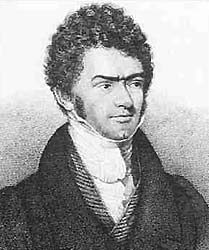
    278109.501

    Luigi Cherubini (above), best known for his opera Medea, was a composer greatly admired by Beethoven. Thus tonight’s program, subtitled Beethoven’s “Likes”, opened with the overture to another Cherubini opera, Les Deux Journées. This dramatic piece takes a while to gain traction, but it was well-played by the young musicians. 

    220px-Reicha

    Anton Reicha (above),
    an exact contemporary and good friend of Beethoven, left us a large catalog of chamber music as well as eight symphonies, eight operas, and some large-scale choral works. As professor of counterpoint and fugue at the Paris Conservatory, Reicha numbered among his pupils Berlioz, Liszt, Gounod, and Franck.
     
    Reicha’s 3rd symphony in F-major dates from the same year as Beethoven’s famous 5th, but that’s about the only thing they have in common. Aside from a rather nice clarinet solo in the Adagio, nothing in the Reicha really grabbed my attention. It’s an elegant work, and perfectly pleasant, but lacking in the peaks and valleys that make for a memorable symphonic experience. As Maestro Botstein remarked before he took up the baton for this work: “You’ll never hear it again!”
     
    EleveRies01
     
    Ferdinand Ries’ piano concerto No. 8 on the other hand was a lovely discovery. In his brief remarks prior to playing the concerto, pianist Piers Lane said the music would remind us of works by several other composers but that Ries (above) has crafted it in a way very much his own. He was right!
     
    The concerto’s manuscript  bears the inscription ‘Gruss an den Rhein‘ (‘Greetings From The Rhine’) – a tribute to the river Ries he grew up near – and indeed the first movement does evoke the gentle flow of the river along its broad banks. In the Larghetto that follows, there seems to be a heralding of the Romantic age in some of Ries’ very appealing melodic and harmonic writing. The concluding Allegro molto, its mega-abundance of rapid notes brilliantly tossed off by Mr. Lane, had the infectious and vivacious charm of an opera buffa cabaletta.  Throughout, the genial pianist made the strongest possible case for the concerto, winning the audience’s  joyous appreciation at the end.
     
    Sad to say, our enjoyment in experiencing this “new/old” concerto was compromised by a trio of young people who took seats in front of us as the houselights went down following intermission. They obviously had friends onstage – or perhaps they were members of the orchestra who were off-duty for the second half of the program –  and they spent the entire time-span of the concerto whispering and nudging one another while the girls shared a bottle of water. We decided to leave after the concerto, our evening having been spoilt by their thoughtlessness.

  • Russian Jewish Composers @ ASO

    Leon-Botstein

    Thursday December 17th, 2015 – Tonight at Carnegie Hall, Leon Botstein (above) was on the podium for a program of music written by Russian Jewish composers between 1874 and 1921. Performed by the American Symphony Orchestra, the concert featured two U.S. premieres and one New York premiere, as well as Anton Rubinstein’s 2nd cello concerto with soloist István Várdai.

    Aleksandr Krein’s The Rose and The Cross (‘Symphonic Fragments after Aleksandr Blok’) was composed between 1917-1920, making it the newest work on tonight’s program. Blok was a great Symbolist poet and his mystical drama The Rose and The Cross went thru more than 200 rehearsals at the Moscow Art Theater but was never performed in public. The composer Krein was inspired by Blok’s writing and composed this suite to honor the poet. Tonight’s performance marked the suite’s New York premiere.

    The music, which shows traces of harmonic advancement over the other three – older – works played this evening, opens with a somber, rather creepy atmosphere. Later it will take on an almost cinematic feeling, with effects such as trumpet fanfares and shades of exotica from the harp. A songful melody becomes a recurring theme, and the suite rises to a triumphant conclusion depicting the “boundless energy of the heart that sings.” 

    Várdai István nagyfelbontású fotó

    The Hungarian cellist István Várdai (above) then took the stage for the evening’s one (somewhat) familiar work: the second cello concerto of Anton Rubinstein. The oldest and most conservative piece on tonight’s bill, it marks the pianist-composer as a pioneer, since he was the first major Russian composer to work in the concerto genre (Tchaikovsky’s violin concerto still lay four years in the future). Rubinstein draws upon a very ‘Russian’ sense of melody; the concerto is a vastly pleasing work, and one which places great demands on the soloist.

    Mr. Várdai, tall and youthful-looking, is an extraordinarily gifted musician and seemed to win the hearts of the Carnegie Hall audience this evening within moments of starting to play. His timbre has a lovely, deep-violet colour and his technique is refined in both agility and dynamic control. From his opening soulful song, the cellist moved thru a scampering passage and on to a strikingly brisk downhill scale that ended on a delicious trill. A second theme plumbs the most pungent depths before turning into a rapid dance.

    The concerto’s movements flow into one another, with a wind chorale signaling the start of the Andante; Mr. Várdai embarks on an optimistic melody but the composer cannot resist a desire to let the music dance. After a mini-cadenza, a jogging Allegro carries us along. The orchestral texture lightens, with cello filigree, then lapses into an interlude and grows quiet. Things slow down beautifully for another injection of melody and the cellist then serves up a more sustained cadenza before a final surge to the end.

    Mr. Várdai’s superb performance elicited a very enthusiastic response from the audience; I very much hope to have further opportunities to experience his artistry.

    Following the interval, Mikhail Gnesin’s From Shelley (‘Symphonic Fragment after Percy Bysshe Shelley’s Prometheus Unbound‘) had its U.S. premiere. Written between 1906 and 1908 this short (8 minutes) work was composed while Gnesin was studying with Rimsky-Korsakov. Its brevity precludes any real development of ideas, yet there is a fine sense of the theme blossoming, and some very nice writing for the horns and harp. The ending is, in a word, beautiful. 

    The U.S. premiere of Maximilian Steinberg’s first symphony raised the question: why did it take nearly one hundred and ten years for this symphony to reach us? It’s as exciting and finely-crafted as many other well-known symphonies; the composer appears to have drawn inspiration from such symphonists as Beethoven and Schumann, eschewing the Russian-nationalist influence of his teacher Rimsky-Korsakov. 

    Steinberg’s 1st has an animated, congenial opening with the immediate establishing of a rich theme that that put me in mind of – of all things – Humperdinck’s HANSEL UND GRETEL (“Der Wind! Der Wind!”); this theme will re-sound throughout the symphony. This is big, pleasing music with a variety of rhythmic patterns. The timpani lend a stately quality.

    In an exuberant Allegro vivace, the composer lightens things to a scherzo quality, later taking on a waltzy air. This second movement ends with Mendelssohnian charm.

    After a darkish start, the Andante features a clarinet theme which develops into a tutti passage. In a gentle acceleration, horns and oboe play a part, and then in a richer build-up the horns grow passionate. Horn and clarinet voices entwine; oboe and flute pipe up. The music becomes cinematic in sweep before receding to solo clarinet.

    “Der Wind! Der Wind!” is again evoked by horns and trumpets as the finale commences. The oboe speaks out, then the horns launch a fugue. As the Allegro moderato continues on, the music meanders somewhat, as though Steinberg was unsure how best to end the piece: but end it does – strongly. 

    Kudos to Maestro Botstein for assembling a rewarding program of relative rarities, for including the Rubinstein cello concerto (and Mr. Várdai’s excellent playing of it), and for bringing the Steinberg symphony to these shores.

    This evening’s repertory – click on each composer’s name for biographical information:

    Aleksandr Krein – The Rose and the Cross (N.Y. Premiere)
    Anton Rubinstein– Cello Concerto No. 2
    Mikhail GnesinFrom Shelley (U.S. Premiere)
    Maximilian Steinberg– Symphony No. 1 (U.S. Premiere)

  • Chamber Music Society: Nights in Vienna

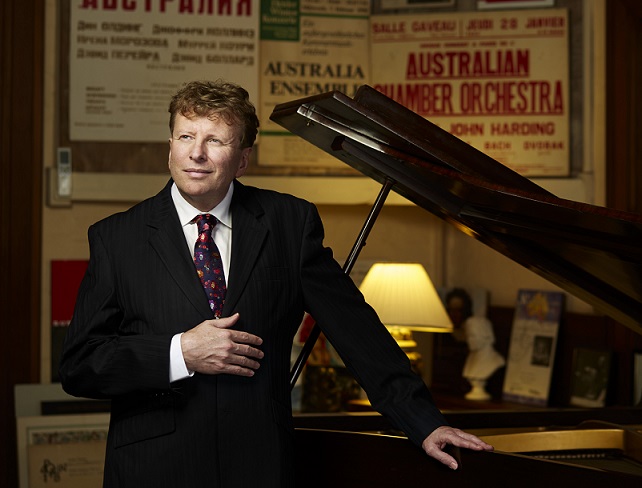
    043015-GK

    Sunday November 22nd, 2015 – Pianist Gilbert Kalish (above) and a septet of his top-notch colleagues met on the stage of Alice Tully Hall this evening for a programme of works by three composers whose lives were linked to the city of Vienna. On a day when we are still trying to comprehend the recent terror attacks in Paris – and also remembering the death of John F Kennedy on this date 52 years ago – Chamber Music Society of Lincoln Center‘s offered music that was by turns heartening and thought-provoking, and all of it impeccably played.

    When New York’s great musical organizations – Chamber Music Society, the NY Phil, Carnegie Hall, The Met, Young Concert Artists – announce their upcoming seasons each year, I love to pore over the listings, searching for certain works or artists and putting the dates immediately on my calendar. Thus for many weeks I’ve been looking forward to today’s Chamber Music Society concert as an opportunity to experience first-hand Arnold Schoenberg’s Kammersymphonie; I discovered this piece years ago – it was actually my introduction to Schoenberg – and have always wanted to hear it played live. Today’s performance of the Webern arrangement was incredibly vivid.

    But, to start at the beginning, this musical celebration of Vienna opened with music of Haydn: the E-minor piano trio. Gilbert Kalish, who played in all three works this evening, is at that marvelous point in his career where his playing retains youthful vitality while his artistry – developed over a long career – is at its peak. His playing was marked by effortless technique, an assured rightness of style in each of the three contrasting works, and an Olde World feeling of grace without theatricality.

    Seeming taller and slimmer than the last time I saw him, violinist Nicolas Dautricourt strode onstage and for a moment I mistook him for ABT’s Marcelo Gomes. Mr. Dautricourt is a particular favorite of mine, both to watch and to hear; his stage presence is paradoxically relaxed and intense, and his playing is beautifully nuanced with especial attention to dynamic gradations. Cellist Torleif Thedéen was an ideal colleague for M. Dautricourt today: their rapport was inspiring to watch, aligning the harmonies and relishing the melodic opportunities Haydn has given them. Their affection and respect for Mr. Kalish was clearly evident both here and – later – in the concluding Brahms.

    Schoenberg’s Chamber Symphony spans a single movement, though the composer has identified five distinct sub-divisions: Sonata (Allegro), Scherzo, Development, Adagio, and Recapitulation and Finale. Originally written for ten wind and five string players, the composer asked his student Anton Webern to re-cast the piece for a smaller ensemble, the better to take it out on tour. The result: twenty-two minutes of sheer musical brilliance.

    The Kammersymphonie tonight was given a captivating performance: the quintet of musicians played with such richness of tone, such stimulating sense of colour, and such depth of feeling that one had the impression of a much larger ensemble playing. Gilbert Kalish’s sent waves of plush sound from the Steinway, giving the music an undercurrent of Late-Romantic lyricism; this same feeling was embraced by violinist Kristin Lee who seized upon the composer’s every melodic gesture with her pearly tone. Whenever the music turned more prickly, both Kalish and Lee were up for the adventure.

    Tara Helen O’Connor, one of the Society’s elite, sent her flute roulades wafting brightly overall whilst the gorgeous (no other word suffices) tone of Nicholas Canellakis’s cello seems always to achieve a direct hot-wire to the heart-strings.

    TommasoLonquich_bio2

    New to me this evening was clarinetist Tomasso Lonquich (above) who made a spectacular impression both with his sumptuous tone and the passion of his playing. Whether at full cry or honing the sound down to a thread, Mr. Lonquich displayed his mastery at every moment; meanwhile his deep commitment to the music sometimes nearly drew him out of his chair as he polished off Schoenberg’s demanding phrases with compelling sincerity. 

    This staggeringly opulent ensemble drew a din of applause from the Alice Tully audience; as they took a second bow, my companion Adi – who had professed indifference to Schoenberg’s music before the concert began – found his opinion of the composer transformed. That’s what a great performance can accomplish.

    As so often at Chamber Music Society’s concert, I found myself at the interval wondering how this level of music-making could possibly be sustained into the second half. Needless to say, as violist Paul Neubauer joined Mssrs. Kalish, Dautricourt and Thedéen for the Brahms Third Piano Quartet, any thoughts of a letdown were immediately dismissed.

    Nearly twenty years were to pass between the time Brahms began working on this quartet (in 1855, at the time of his friend Robert Schumann’s last illness, when Brahms was torn between sorrow for his friend and desperate love for his friend’s wife, Clara) and its publication. His romantic inclinations toward Frau Schumann seem to perfume the music, especially in the third movement.

    Tonight, Mr. Kalish’s opening octave set the tone for a performance of beautifully blended voices and outstanding solo passages (Mr. Neubauer’s expressiveness so congenial) which achieved a level of  surpassing excellence in the Andante. Here Mr. Thedéen’s opening solo was poignantly set forth, with Mssrs. Dautricourt and Neubauer joining in turn: ravishing…a deep delight. The Andante ends magically, and then Nicolas Dautricourt launched the finale with a finely-turned solo. The audience’s enthusiasm at the end called the players back twice.

    There was an odd sensation at times tonight that someone was humming along with the music. At first I thought it might have been some acoustical oddity, but Adi noticed it as well.

    Prior to the start of the concert, co-artistic Director Wu Han announced the death of the venerable violinist on teacher Joseph Silverstein. This first movement from the Barber violin concerto shows Silverstein’s poetic qualities and persuasive tone to perfection.

    The Repertory:

    The Participating Artists:


  • BSO: ELEKTRA @ Carnegie Hall

    Andris-Nelsons-Conductor-007

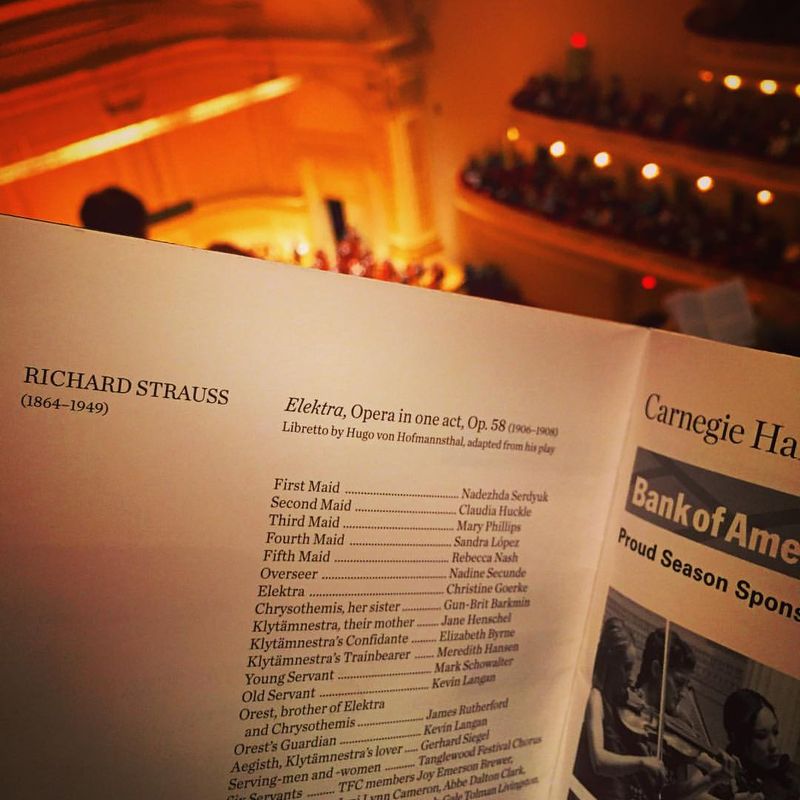
    Wednesday October 21st, 2015 – Conductor Andris Nelsons (above) leading a powerful concert performance of Richard Strauss’s ELEKTRA given by the Boston Symphony Orchestra at Carnegie Hall. The evening was a great personal triumph for soprano Christine Goerke, who gave a vocally and physically super-charged rendering of one of opera’s most demanding roles.

    Strauss calls for a massive orchestra for this, his most demented work; the Boston players were sprawled across the entire space of the Carnegie stage, with the chorus at the end singing from an upper tier of the hall. The musicians played their hearts out and, under Nelsons’ authoritative baton, they delivered the music with tremendous flair in all its glistening glory. There were also superbly refined stretches, notably in the Klytaemnestra scene where the maestro and musicians painted a neurotic sound setting for an amazingly nuanced performance of the role by Jane Henschel.

    The large cast included some names to reckon with in the smaller roles: Nadine Secunde (Overseer), Elizabeth Byrne (Confidante), the Met’s Mark Schowalter (Young Servant) and stalwart basso Kevin Langan (Old Servant/Orestes’ Guardian).

    In the opening scene, the psychopathic maids were a raucous lot; as they carried on their vile gossip session about Elektra – the royal princess reduced to the status of a caged animal in her own home – Ms. Goerke, in a striking blood-red gown, strode among the violins in a state of fevered anxiousness. At last the maids hauled off the fifth of their number to be beaten for defending Elektra, and Ms. Goerke took center stage.

    She began the great monolog with sounds of deep, guttural anguish. As in her recent Met Turandot, Goerke’s voice narrowed as she ventured higher and some of the upper notes were covered by the orchestra. This necessitated an adjustment for those of us inured to the likes of Nilsson, Behrens, and Dame Gwyneth Jones in this music. Yet Goerke knew what she was doing and she went about the music on her own terms; by the scene with Klytaemnestra, the Goerke voice was firing on all cylinders and she delivered a performance on a par with her career-defining portrayal of the Dyer’s Wife at The Met in 2013.

    Cg

    Above: Christine Goerke

    The soprano’s portrayal of Elektra was so committed and intense: she entered into the physicality of the role as if in a staged performance, interacting brilliantly with her colleagues and even including a frantic, manic dance at the end. Vocally she sailed forth undaunted by the orchestra’s volume and hurling out the character’s dramatic punch lines (“Triff noch einmal!”) with force. Summoning up a colossal effort for the last sprint, Goerke packed a final punch with her ecstatic “Schweig, und tanze!” before collapsing into her chair. The ensuing ovation for the intrepid soprano was epic, and very much well-deserved.

    As the hapless Chrysothemis, Gun-Brit Barkmin made a far better impression than she had as Salome in this same hall in 2014. Slender of frame and of voice, she nevertheless finds a way of projecting over the orchestra and her shining top notes made me think she might be a good SIEGFRIED Brunnhilde. Errant pitch was sometimes evident, but overall Ms. Barkmin did well and was a good foil for Ms. Goerke. 

    Henschel

    Jane Henschel (above), though the top of her voice must now be handled with care, gave such a illuminatingly subtle and detailed performance as the demented Klytaemnestra – playing off the words and using a kozmic array of vocal colours – that a few random strained notes were only of passing worry. She and Goerke made their encounter crackle with verbal vibrancy: the most dramatically engrossing passage of the evening.

    James Rutherford was a sturdy-voiced but not especially imaginative Orestes. The great Recognition Scene was not persuasively staged, though Goerke’s singing after the revelation was wonderful….and deeply felt; and here the orchestra playing was sublime. Gerhard Siegel was a capital Aegisth, vividly neurotic and strongly sung: his final “Weh mir!”, voiced onstage, was a lightning bolt rather than a last gasp.

    Auth.aspx

  • ASO Season Opens @ Carnegie Hall

    Strauss

    Above: Richard Strauss, the composer of Also sprach Zarathustra

    Friday October 16th, 2015 – The American Symphony Orchestra opened their 2015-2016 season at Carnegie Hall with a program entitled Mimesis: Musical Representations.

    Gunther Schuller’s 7 Studies on Themes of Paul Klee opened the program, and what a brilliant and highly imaginative piece it is. The seven songs are vividly differentiated in instrumentation and rhythm, becoming aural counterparts for seven paintings by the Swiss modernist Paul Klee (1879-1940). “Each of the seven pieces bears a slightly different relationship to the original Klee picture from which it stems,” Schuller wrote. “Some relate to the actual design, shape, or color scheme of the painting, while others take the general mode of the picture or its title as a point of departure.”

    In “Antique Harmonies” Schuller’s music is sombre and dense. An immediate contract comes in “Abstract Trio” with whimsical winds and a single pluck of the strings. “Little Blue Devil” is captivatingly jazzy, with thrumming bass, muted trumpet, xylophone. Insectuous sounds pervade “The Twittering Machine” with edgy woodwinds and a wood-on-wood tone block marking time. “Arab Village” is an absolute delight, with a flautist playing from offstage; her ‘voice’ inspires a magical dance for harp, viola and, as the full orchestra plays very softly. They play even softer for the opening of “An Eerie Moment” which eventually rumbles grandly before fading away. For the final “Pastorale”, the violins play a repetitive two-note figure while the winds sigh, rather mournfully.

    The Schuller really is a great piece; I’ve only encountered his music rarely over the years…I need to seek it out.

    1869781

    Henri Dutilleux’s Correspondances brought forth the beauteous soprano Sophia Burgos (above). In this cycle of five songs, the composer draws on a variety of texts: poems by Rilke and Mukherjee, and letters written by Solzhenitsyn to the Rostropovichs and by Vincent van Gogh to his brother Theo.

    The singer’s agile, silvery timbre is shot thru with gem-like flecks of colour; she has an extensive range and her voice was beautifully set off by the marvelous instrumental combinations Dutilleux has employed. Countless entrancing passages for various instrumental combinations keep the ear pricked up: an especially appealing tuba outing in the Interlude, and the cunning use of accordion.

    Ms. Burgos moved with thorough vocal command from urgency to passion to evocation; the audience, very taken with her, broke in with applause during the cycle, and Maestro Botstein took it in stride, nodding approvingly. In the final song, the soprano was at her most poignantly expressive: an affecting descending vocalise is heard over the shimmering strings before things take a dramatic turn and she soars to an ecstatic concluding high note. Brava! And bravi to the players as well. 

    Following the interval, Nico Muhly’s Seeing is Believing seemed to me – and to my pianist-companion – the least interesting work on the program. A sort of tone poem for electric violin (played by virtuoso Tracy Silverman) and orchestra, the work stretched out over 25 minutes of rather ‘same-y’ sounds and repetitive motifs.

    According to the program notes, Muhly’s inspiration for the work was the practice of mapping the stars in the sky; yet I could detect no sense of the wonderment one would expect to experience is questing the heavens. Instead the music seemed earth-bound and tended to wallow in its own density. Mr. Silverman was in total command of his electrified instrument, producing some striking effects in the layered, echoing passages. Having been impressed by Muhly’s orchestrational skills in his opera. The Dark Sisters, I was disappointed with tonight’s offering. The composer was present and took a bow from his box. To me, the audience seemed to embrace the violinist without embracing the music he had just played.

    Richard Strauss’s Also Sprach Zarathustra closed the evening on an epic note. Beyond its super-familiar but always impressive opening statement, the work is a rich and royal sonic tapestry into which Strauss has woven one appealing thread after another. Abounding in solo opportunities for individual instruments, this thrilling work further features a gorgeous tutti theme for celli and violins, and some interjections for organ to Westernize its spiritual aspects; an entrancing Viennese waltz looks forward to ROSENKAVALIER in no uncertain terms.

    Overall, a grand finale for an impressively-played concert. And the American Symphony Orchestra‘s next concert, on December 17th, looks fascinating to me.