Tag: Classical Music

  • CMS: Brahms the Master

    Shifrin_david04RGB

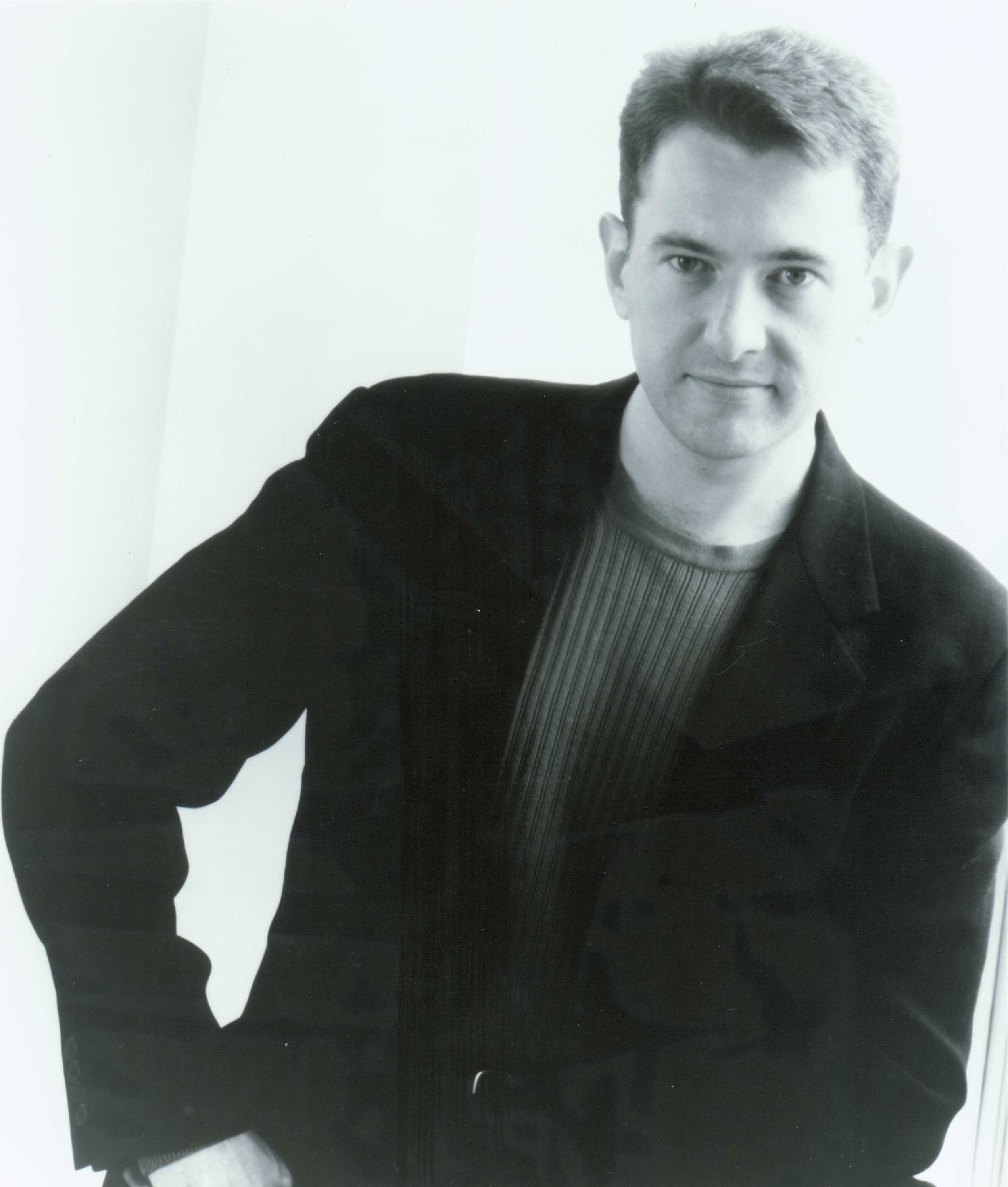
    Above: clarinetist David Shifrin

    Tuesday October 21st, 2014 – The music of Johannes Brahms is well-represented at the great classical music venues of New York City this season. At the Philharmonic, Lisa Batiashvili just finished a series of concerts where she gave a resplendant reading of the composer’s violin concerto. Upcoming Brahms events on my calendar include Yefim Bronfman playing the piano concerto #2 with Riccardo Muti and the Chicago Symphony at Carnegie Hall (January 31st, 2015); a performance of the GERMAN REQUIEM at Carnegie with Daniele Gatti leading the Vienna Philharmonic (March 1st, 2015); an All-Brahms evening at Chamber Music Society on April 24th, 2015; and Jonathan Biss playing the piano concerto #1 with the New York Phiharmonic (May 21st – 23rd, 2015).

    Tonight at Alice Tully Hall, the artists of Chamber Music Society of Lincoln Center carried the Brahms banner high in an evening devoted to some of the composer’s most endearing, intimate works, all of which were composed during the final decade of his life. 

    My ability to concentrate was somewhat taxed this evening by small but pesky audience distractions, and an unfortunate late seating after the first movement of the opening work really broke the mood. But eventually the excellent music-making prevailed.

    Timothy Eddy launched the Trio in A minor for Clarinet, Cello and Piano, Op. 114, with the warmth and richness of his tone immediately evoking the sensations of tenderness and regret that will colour the entire evening. David Shifrin, in his 26th year of performing with the Society, called forth the plum-coloured resonance of his clarinet, and Shai Wosner – a pianist new to me – played with elegance and impressive dynamic control. The blending of the three instruments in the adagio was particularly heartfelt.

    Mr. Wosner returned for the Sonata in D minor for Violin and Piano, Op. 108, with violinist Erin Keefe who looked lovely in a midnight-hued pleated chiffon gown. The two musicians immediately established a fine rapport and together they poured forth the melodic themes in an unending stream of poignant lyricism. Ms. Keefe, in the sonata’s gently romantic adagio, moved compellingly from the delicacies of the initial passages to the more passionate expressions as the music flows forward. In the sentimental intermezzo that follows, both players ideally sustained the mood, carrying us into the finale where the two musicians spurred one another on with playing that managed to be both eloquent and lively.

    Shai_wosner

    After the interval, pianist Shai Wosner (above) took the stage alone for two brief solo keyboard works: the Intermezzo in E-flat major, Op. 117, No. 1, and the Rhapsody in E-flat major, Op. 119, No. 4. The Intermezzo’s melody is drawn from a lullabye associated with Lady Anne Bothwell, a young 16th century Scotswoman who was classically seduced and abandoned, singing to her infant son. Mr. Wosner’s refined playing here held the hall in a rapt silence before giving way to the grand flow of the Rhapsody. The two pieces, so contrasted yet linked by a common key, made for an intimate interlude before the concert’s closing work: the Quintet in B-minor for Clarinet, two Violins, Viola and Cello, Op. 115.

    Alexander Sitkovetsky (violin 1) and Mark Holloway (viola) joined Ms. Keefe, and Mssrs. Wosner and Shifrin for this richly melodic musical feast, the voices trading themes in this quintet with its somewhat unusual structure: it closes not with a vivid presto but with a set of variations – Mr. Shifrin’s clarinet in high relief – which end in an unexpectedly thoughtful state. Earlier, it was in the quintet’s adagio that the five players created some of the most luminous resonances of the entire evening. I wanted it to go on and on.

    Tonight’s Repertory:

    Participating Artists:

  • Carlo Bergonzi Has Passed Away

    Carlo-Bergonzi--644x362

    My all-time favorite tenor and one of the last surviving titans of the ‘last golden age’ of opera has passed away: Carlo Bergonzi.

    Bergonzi sang over 320 performances at The Met, debuting in AIDA in 1956 opposite the also-debuting Antonietta Stella. He sang his final Met performance in 1988 in LUCIA DI LAMMERMOOR. Over the years, Bergonzi – who started his operatic career as a baritone – gradually lost the ease and surety of his upper register, but stylistically he remained a paragon throughout his long career.

    When I started listening to opera at the age of 11, I had no idea of how long a singing career could last or how a voice would age. The first singers I fell in love with – Milanov, Tebaldi, Jan Peerce, Robert Merrill, Giorgio Tozzi : it seemed to me they were eternal, that they had always been singing and would always continue to sing, and that they would always sound exactly the same as they did on the first recordings I acquired. Imagine my despair when I discovered early on that two of my first idols, Jussi Bjorling and Leonard Warren, were already dead! 

    I last saw Bergonzi onstage in 1988 as Rodolfo in LUISA MILLER, one of his last Met performances. People were raving about the staying power of this 64-year-old primo tenore but to me the voice was sadly pallid. The style, however, was wonderfully intact: the generosity of line, the feeling for the language, the skillful mastery of dynamics. Despite his admirable ability to cope with the music technically, I was disheartened and left midway thru the evening. Twelve years later, I was living in New York City when Bergonzi announced he would sing Verdi’s Otello in a concert performance at Carnegie Hall. My friends, knowing of my great love for the tenor, assumed I would be there but I feared it would be an unhappy evening…and it was: beset by vocal problems, he was forced to withdraw after Act II.

    No, I would rather remember the great years, though in fact he was already well along in his career when I first heard him live in a concert performance of Catalani’s LA WALLY at Carnegie Hall in 1968. Appearing opposite Renata Tebaldi, Bergonzi managed to steal the show: he brought down the house after Hagenbach’s Act IV aria.

    At The Met I heard his superb Radames, once with Lucine Amara and once with Martina Arroyo. It was with Arroyo that he triumphed as Verdi’s ERNANI in a stellar performance that also featured Sherrill Milnes and Ruggero Raimondi. He was a generous-toned and poetic Andrea Chenier in a performance where Renata Tebaldi struggled vocally, only to cast off all reserve in the final duet where she and Bergonzi thrilled us with their passionate outpouring of sound. And the tenor managed to convey the youthful vigor and tenderness of Alfredo Germont opposite the moving Violetta of Jeannette Pilou.

    Listening to a matinee broadcast of TOSCA in 1975, I was dismayed to hear Bergonzi struggling with the top notes and fighting a losing battle, though he sang on to the end. He took a year and a half off (at least from the Met) returning in November 1976 as Radames opposite Rita Hunter. After a somewhat cautious but still impressively handled “Celeste Aida” Bergonzi went on to give a spectacular performance with some of the most generous singing I ever heard.

    And such generosity won him great acclaim in 1979 when he returned to a signature role, Riccardo in BALLO IN MASCHERA. His phenomenally sustained top notes, sometimes attained thru sheer will-power, and his matchless phrasing drew enormous ovations on both evenings that I attended: one performance with Teresa Zylis-Gara and another with Carol Neblett. In 1982 Bergonzi was still on impressive form in FORZA DEL DESTINO, and in 1985 he scored a grand success in a concert performance of Verdi’s GIOVANNA D’ARCO opposite Margaret Price and Sherrill Milnes. In every one of these performances, whatever slight misgivings one might have, his ever-persuasive style carried the day.

    But there was a final small chapter in my Bergonzi story: eight years after the MILLER that I walked out on, he appeared at James Levine’s 25th Met Anniversary gala, singing the aria from LUISA MILLER and the trio from I LOMBARDI. Massive demonstrations of love rained down on him and people raved about his longevity but for me, despite admiring his courage, he was a shadow of his glorious self. 

    But, I have lots of recordings (both commercial and live) to keep my favorite tenor’s voice ever in my ear. His early Decca aria recital has never – in my opinion – been matched by any other tenor’s, though some have come very close. Both his commercial BALLO recordings are superb. His Duke in RIGOLETTO (opposite Scotto and Fisher-Dieskau) is a fine document of Verdi tenor singing. In TROVATORE, PAGLIACCI, BOHEME and DON CARLO, he is The King. I deeply love his BUTTERFLY with Tebaldi, his TOSCA with a voice-in-peril Callas (she still has some magical moments though); and his lovely TRAVIATA with Montserrat Caballe. And I am particularly fond of Bergonzi’s splendid performance as Edgardo in the RCA LUCIA with Anna Moffo.   

    Carlo Bergonzi sings Tosti’s ‘Ideale’ here.

    Hail and farewell, Maestro. If there’s a heaven, you can teach the angels how to sing.

  • At Home With Wagner V

    Richard Wagner

    These days I hardly listen to anything but Wagner at home, and invariably it’s one of the RING Cycle operas. Thanks to my friend Dmitry I have a stack of CDs as yet un-listened-to. Today I’ve set out on a 1963 Bayreuth WALKURE, led with distinction by Rudolf Kempe, which starts with a truly urgent rendering of the ‘chase’ music that serves as the opera’s prelude. Although the sound quality is erratic, with some over-load and distortion, it’s certainly more than tolerable.

    Jutta_Mayfarth_Gutrune

    Pictured above, soprano Jutta Meyfarth – yet another ‘forgotten’ voice – may not have an ideally warm or expansive voice for Sieglinde’s music: her timbre is a bit hard. But she has a great way with words and she constantly is alert to the dramatic nuances of the music and words. I listened to the last scene of Act I, starting with Meyfarth’s whispered “Schläfst du Gast?”, several times, liking her more and more with each hearing. 

    Anita_iso

    The Finnish soprano Anita Välkki (above) tosses off one of the most brilliant renderings of “Ho-Jo-To-Ho!” that I ever heard. This under-rated soprano, her career overshadowed by the more famous Nilsson, Rysanek, Bjoner and Lindholm, has a bright and at times girlish vocal quality. In the Todesverkündigung” – the great scene in which Brunnhilde announces to Siegmund his imminent death – Välkki shows clarity of expression and considerable beauty of tone.
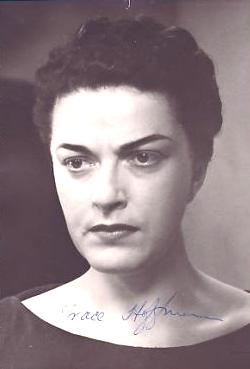
    Hoffman-Grace-08

    Mezzo-soprano Grace Hoffman (above) rounds out a strong trio of female leads in this WALKURE.  Her wide-ranging voice, her intense sense of Fricka’s wronged dignity, and her verbal and dynamic alertness make a capital effect.

    Hans Hotter was in his mid-fifties at the time of this performance, and he had been singing Wotan for a quarter-century. If vocally he is a bit less fresh than in the 1953 Keilberth/Bayreuth performance, he is remarkably authoritative and relishes both the powerful and subtle moments of this great role.  

    Hans Hotter was vehemently anti-Hitler and when he was queried during the de-Nazification interviews following the end of the war as to why Hitler would have kept his recordings in his private collection, Hotter replied that the Pope had some of them, too.

    Gottlob Frick again fills me with admiration here, singing Hunding. A somewhat less-than-stellar Siegmund – Fritz Uhl – still has his moments, but though I don’t pretend to speak German, some of his diction seemed rather odd.

    The third act is strong, with Meyfarth convincing in Sieglinde’s distress and Välkki doing some warm, espressive singing from “War es so schmälich…” to her final plea with her father to ring the Valkyrie Rock with fire. Hotter is Wotan – yet again – with the power of his wrath slowly subsiding into the tenderness of a father bidding farewell to his beloved child. Perhaps no other singer has such an innate quality of heartbreak in the voice.

    ~~~~~~~~~~~~~~~~~~~~~~~~~~~~~~~~~~~~~~~~~~~~~~~~~~~~~~~~~~~~~~~~~~~~~~~~~~~~~~~~~~~~~~~~~~~~~~~~~

    KONIECZNY_web Lang_Petra

    Above:
    Tomasz Konieczny and Petra Lang

    The Polish bass-baritone Tomasz Konieczny made a magnificent vocal impression when he sang Jochanaan in Strauss’s SALOME in a concert performance by the Vienna State Opera at Carnegie Hall in March 2014. Konieczny is the Wotan in the recently released WALKURE on the Penta Tone label, part of a complete RING Cycle conducted by Marek Janowski and recorded in a series of live concert performances in Berlin starting in 2012.

    Very curious to hear Konieczny’s voice again, but not wanting to delve into the full WALKURE until I’d first had a chance to hear the RHEINGOLD, I listened to the final scene of the WALKURE as a free-standing excerpt. The bass-baritone sings powerfully and is a vibrant, dramatic presence especially as he takes his errant daughter Brunnhilde to task for having disobeyed his direct orders. Konieczny is quite splendid while letting off steam, though the poetry of the later scene where his bids farewell to Brunnhilde and puts her to sleep on the Valkyrie Rock is not quite yet in the singer’s expressive realm. He will doubtless attain that depth of understanding and an ability to communicate it as he sings the role in coming years. Marek Janowski’s conducting is alert and vivid, and Petra Lang – who has given some striking performances as a mezzo-soprano – now sings Brunnhilde. And if she does not seem destined to achieve the exalted echelon occupied by such great Wangeriennes as Nilsson, Behrens and Dame Gwyneth, Lang nonetheless makes a wonderful impression is her moving rendering of “War es so schmählich…” and is perfectly satisfying in the rest of the act.

    **********************************************************************************************************************************

    I acquired the first two acts of a Stockholm WALKURE from 1975 mainly to hear Barbro Ericson’s Fricka and to have a sampling of another voice that had eluded me til now: soprano  Siv Wennberg. Rudolf Kempe’s conducting again seems ideal. 

    Kempe has this music in his blood and gives yet another great reading of the score. Ms. Ericson, one errant top note aside, is a passionate and exciting Fricka. Neither Ms. Wennberg nor her Siegmund, Helge Brilioth, are likely to displace other favorite interpreters of these roles in the Völsungen sweepstakes, but both are very good story-tellers. Thru dynamic and verbal shadings, the soprano gives us quite an intriguing “Der Männer Sippe“, and – earlier – the tenor does likewise as he tells the story of how he came to be under Hunding’s roof. Mr. Brilioth will later have some pitch issues, and his cries of “Wälse!’ Wälse!’” suffer from very bad audio overload. Ms. Wennberg holds steady throughout the first two acts.

    As Brunnhilde, Berit Lindholm lauches a pert, eager “Ho-Jo-To-Ho“, and she makes a good impression in the Todesverkundigung: the very heart of the opera. David Ward, whose Wotan I so thoroughly enjoyed in the 1965 Covent Garden performance conducted by Solti, is understandably a bit less fresh vocally here in Stockholm ten years on, but he is still very impressive and expressive in his long monolog (so well-supportedby Kempe) and he gives a violently dismissive “Geh!” as he dispatches Hunding to his fate at the very end of Act II.

    R_Cederlof_Hunding

    The most surprising aspect of this performance is a superbly sung Hunding from basso Rolf Cederlöf (above). This is a voice I’d never heard before, and even as a name he was unknown to me. It’s a beautiful, deep, voluminous sound, and from his entrance the vocal ‘temperature’ of the first act rises: he seems to inspire Wennberg and Brilioth in their narratives…and in turn they are all inspired by Kempe.

    ~~~~~~~~~~~~~~~~~~~~~~~~~~~~~~~~~~~~~~~~~~~~~~~~~~~~~~~~~~~~~~~~~~~~~~~~~~~~~~~~~~~~~~~~~~~

    Bampton-glam-701475

    Continuing in WALKURE mode, I recently took from the library the 1947 discs of Toscanini rehearsing the first act of the opera for a concert perfomance. This issue is a favorite among collectors as it gives an aural portrait of the fiery conductor at work. The Sieglinde is Rose Bampton (above) and I was very much taken with her interpretation. Wanting to hear more of Bampton, I turned to a 1944 Met broadcast of WALKURE conducted by George Szell. This seventy-year-old performance begins with a breathlessly-paced prelude depicting Siegmund’s rush thru the forest; Szell brings the first act full circle with an equally speedy burst of energy in the postlude as brother and sister rush off to their unknown fate. 

    Lauritz Melchior, that tireless Wagner-machine, is Siegmund. The paragon of heldentenors, Melchior sang over 500 performances at The Met alone; his career there lasted nearly a quarter-century (debut in 1926). Like Toscanini – who keeps admonishing the orchestra players “piano! piano!” during the rehearsal – Szell draws out some remarkably intimate passages from both musicians and singers in Act I. Melchior is able to sing some beautifully supported piano passages, and also to cut loose with sustained powerhouse cries of “Wälse! Wälse!“. Alexander Kipnis growls darkly as an authoritative Hunding.

    Ms. Bampton’s singing sets her firmly alongside my favorite Sieglinde of all time: Johanna Meier. Bampton shares with Ms. Meier a deeply feminine sensibility as well as a feeling of great dignity, despite the hardships she has endured: married off against her will, and ill-treated by her abusive husband. Bampton’s wonderfully vivid diction, her ability to move the voice from subtle inflection to generous outpouring in the twinkling of an eye, and the overall appeal of her sound make for a winning combination in this role.

    One added sonic element is the subtle use of a wind machine during the prelude; and it cunningly is heard again when the doors to Hunding’s hut blow open just before the “Winterstürme”.

    K-Szell-w-manuscript-LR1

    I found myself being drawn deeper and deeper into this performance as Act II unfolded. Szell (above) seems, perhaps more than any other conductor I’ve experienced in the opera, to summon forth the various leitfmotifs and weave them ideally into the sonic tapestry. Thus the introduction to Act II presents the brass heralding the impending presence of Wotan and Brunnhilde whilst the strings yearningly deliver the theme of Sieglinde’s “Du bist der Lenz” (in a minor key) forecasting the theme of the entire act: the fate of the Völsung and his sister/bride; later, as Wotan and Fricka heatedly debate the issue, Szell brilliantly manages to support both sides of their argument thru orchestral underlining.
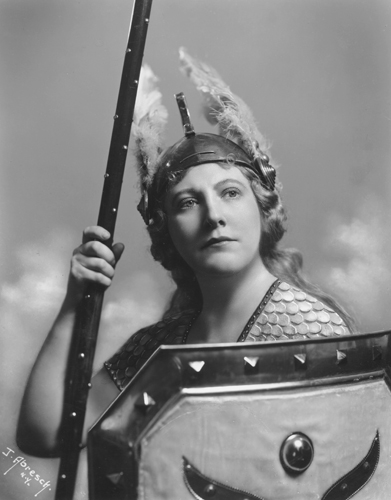
    07 Traubel in Walkure 1941

    Helen Traubel’s Brunnhilde (above) rings true with rich, warm tone: a lone clapper greets her appearance – a few other audience members gingerly join in (applause during a Wagner opera is pretty much frowned upon) – and she has a fine success with “Ho-Jo-To-Ho” despite a hint of shortness at the top of the range. The sound of her voice at times reminds me, curiously, of Eleanor Steber’s.

    Herbert Janssen’s Wotan is of the baritonal rather than basso persuasion: some of the roles lower notes are a bit of stretch for him. But he’s so completely at home in the role both verbally and vocally that it doesn’t matter. It’s not one of those grandiose Wagnerian voices, but has instead a dimension of the humanity that will eventually be the god’s undoing. Wotan’s monolog has some internal cuts, but Janssen sings it impressively and Traubel’s interjections are beautifully rendered.

    Thorborgfricka

    Kerstin Thorborg’s imperial Fricka (above) is vocally opulent, and she deals from strength in her confrontation with Wotan, thoroughly dismantling his every argument as their scene progresses; a wonderfully sung Wagnerian exchange by two seasoned interpreters. Melchior and Bampton arrive at the mountain pass, fleeing from Hunding. Their scene is vividly urgent and again Szell and his orchestra continually project the dramatic situation; Melchior’s Siegmund is finally able to calm his desparate sister-bride, setting the stage for the heart of the opera: the ‘Todesverkündigung’ (the Annunciation of Death).

    The Todesverkündigung is my favorite scene of WALKURE and my initial reaction on listening to the scene in this performance was of a slight letdown from all that had gone before. Szell and his orchestra did not seem to evoke the dreamlike quality needed (and there are a few bad notes among the brass players) and Melchior’s singing seemed factual and lacking in reverence to the demi-goddess who has appeared before him. I played the scene again a few hours later and found it far more impressive, especially as Traubel is so tonally secure and noble-sounding – at least until her cold façade begins to crumble in the face of Siegmund’s queries and his growing bitterness towards the deception he has been dealt. When the warrior tells Brunnhilde that he carries an invincible sword – Nothung – the Valkyrie replies: “He who bestowed it sends thee now death: for the spell he now takes from the sword!” her warning ricochets back at her when Siegmund cries: “This sword, given by a false man to a true one…!” The atmosphere is palpable, the scene as heart-breakingly beautiful as ever.

    The end of the second act in this performance is somewhat undermined by the voices of Hunding, Brunnhilde and Wotan being too far off-mike to make the needed impact.

    The third act opens with an exciting Ride of the Valkyries and an emotional rendering of the scene where Brunnhilde tells Sieglinde that Siegmund’s death was not in vain: she presents the unhappy widow with the pieces of the shattered Nothung and declares that Sieglinde, miraculously pregnant after only meeting her husband one day earlier, will give birth to the greatest of heroes: Siegfried. Mmes. Traubel and Bampton are very dramatically involved here, and both sing very well. 

    Traubel remains steady and impressive throughout the final scene with Herbert Janssen; the baritone’s voice has a steady beat to the tone – a kind of slow tremelo – that gives his singing of the opera’s heart-rending farewell of Wotan to his favorite daughter a wonderfully human dimension.
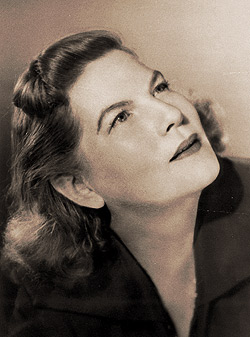
    Harshaw

    Among  the Valkyries, the name Margaret Harshaw (above) stands out. She is Schwertleite here, as she was on many a Met evening over the years. In 1949 she moved on to Fricka and in 1954 she took on Sieglinde for the first time. And later in 1954 she assumed the role of Brunnhilde. It was in this last-named role that Harshaw sang in a Met WALKURE for the last time, in 1962. She took over the opera’s title-role that night in place of an ailing Birgit Nilsson. It was quite a night, as this descriptive review attests:

    Soprano Birgit Nilsson, scheduled to sing the role of Brünnhilde, had to bow out the evening before the performance. General Manager Rudolf Bing gave the role to soprano Margaret Harshaw, who was to have sung Sieglinde; into the Sieglinde role went soprano Gladys Kuchta. One of the Valkyries, mezzo Gladys Kriese, was ill with tracheitis: her part went to mezzo Ethel Greene, regularly a member of the chorus.
    Somehow, the opera got started on time. But in Act II, just when baritone Otto Edelmann seemed to be booming along comfortably in the role of Wotan, his voice began to fail. Edelmann withdrew at the end of Act II. He was replaced by baritone Randolph Symonette, who lasted on stage for only four minutes. 'It seemed to me like four hours,' said shaken conductor Erich Leinsdorf, later. It was apparent to Leinsdorf that Symonette 'could not get any music out of his throat.' When Symonette finally croaked out the line 'Aus meinem Angesicht bist du verbannt'('From my presence you are banished'), Leinsdorf ordered the curtain rung down.

    Conductor Leinsdorf started again after a jump of ten pages in the score to cut out some of the more tortuous vocal passages, and baritone Edelmann came on again as Wotan, in brighter voice after his rest. Happily, they all made it to the final curtain.

    "I felt like the pilot who decides on a crash landing," said Leinsdorf. "We made it without the plane going up in flames."
  • Score Desk for ARABELLA

    Glass_of_water_350

    Thursday April 24th, 2014 – Of Richard Strauss’s three well-known romantic-style masterpieces, ARABELLA is probably the most difficult to love. ROSENKAVALIER has its marvelous progession of waltzes to lilt the listener along, and CAPRICCIO boasts its gorgeous Moonlight Music and the Countess Madeleine’s radiant final scene. In ARABELLA the memorable music seems to come in fits and starts, and although the final scene is really appealing, it doesn’t quite match the sweep of either of the other two operas’ closing passages. 

    In ROSENKAVALIER there’s the double-feature of love (the May-September affair of Octavian and the Marschallin followed by the thrill of new, impetuous love discovered by Octavian and Sophie); in CAPRICCIO, the Countess’s choice between her two lovers is symbolic of the operatic dilemma of ‘which is of greater import in an opera: the words or the music?’  For Arabella and Mandryka, it’s love at first sight and it comes along just when the Waldner family most needs it to happen. The misunderstanding between the newly-pledged couple is quickly resolved and they can go forward without impediment. It’s a neat little plot but somehow it fails to touch the heart the way ROSENKAVALIER does; and ARABELLA‘s musical denouement doesn’t quite thrill us like CAPRICCIO‘s does.

    Despite these thoughts about ARABELLA‘s appeal, I was keen to experience the opera live again and it was a good performance overall, thanks largely to Philippe Auguin’s excellence on the podium. The orchestra of course played remarkably well and – unlike the three most recent conductors whose Met performances I have attended (Mssers. Armiliato, Noseda and Mariotti), Auguin knows how to scale the score’s dynamics so his singers are always audible and never seem pressured to over-sing.

    Though perhaps lacking the last bit of vocal glamour that makes for a truly memorable Arabella (Della Casa, Te Kanawa and Fleming each had it…and how!), Erin Wall sang the title-role quite beautifully: the voice is clear with a nice sheen to it. Her performance was slightly compromised in Act I by having to sing the opera’s most beloved passage – the duet for Arabella and Zdenka – with Juliane Banse who is simply not up to the role of Zdenka/Zdenko at this point in her career. But in her narrative to end the first act, Wall was really lovely and expressive, and she was equally impressive in Act II where the passionate duet for the just-met Arabella and Mandryka was the evening’s vocal high point. Later, as Arabella bids farewell to each of her suitors in turn, Wall made the most of each phrase. 

    Michael Volle, who I first heard on a tape from his appearance at Cardiff Singer of the World in 1993, has arrived at The Met. His voice is Met-sized and unimpeded throughout the range, and it’s got a nice, rather gritty edge to it when needed. His Mandryka was impressive, and hopefully he’ll be back in other repertory.

    Ms. Banse, who we heard earlier this season in the Mahler 4th at Carnegie Hall, has lovely instincts but she now sounds too mature and quavery for such a youthful assignment as Zdenka. Her vibrato rather spoiled the Act I duet with Arabella tonight and overall she just seemed mis-cast. Banse made some very fine recordings earlier in her career; this belated Met debut seemed a miscalculation by both the singer and the House. When the originally-scheduled Genia Kühmeier withdrew from this revival, The Met could have seized the opportunity to give the role to one of their blooming lyric-coloraturas – maybe Lisette Oropesa, Erin Morley, or Ashley Emerson: any of them would have been more vocally apt than Ms. Banse. They didn’t know the role? Callas learned Elvira in PURITANI in seven days, whilst singing Brunnhilde in WALKURE in the same time-frame. Surely any of these young Met girls – helped by The Met’s musical staff – could have whipped up a delectable Zdenka in even less time. Oh well, water over the dam…or under the bridge.

    The rest of the cast did well, notably Garrett Sorenson (Matteo) and Brian Jagde (Elemer); Martin Winkler was a loud Waldner. Audrey Luna successfully negotiated the high-flying roulades of the Fiakermilli, winning the audience’s acclaim. I was recalling my favorite Fiakermilli, Rita Shane, who sang it at La Scala in 1970, conducted by Wolfgang Sawallisch. I received a copy of it on reel-to-reel and incredibly, Ms. Shane had been permitted to interpolate a final high-D to end ARABELLA‘s second act (Fiakermilli’s coloratura normally just dwindles to nought). That’s the kind of thing you don’t hear every day.

    Although there were many empty seats this evening at The Met, ARABELLA – not usually a major box office draw – was better-attended than some recent performances. It was already 10:00 PM when the second intermission started and I had to weigh the idea of staying to the end or of getting home by midnight. Though I would like to have heard Ms. Wall in the opera’s final scene, the idea of another extended and droopy intermission turned me off. As I was leaving, it seemed several other audience members had the same idea.

    Metropolitan Opera House
    April 24, 2014

    ARABELLA
    Richard Strauss

    Arabella................Erin Wall
    Mandryka................Michael Volle
    Zdenka..................Juliane Banse
    Matteo..................Garrett Sorenson
    Adelaide................Catherine Wyn-Rogers
    Count Waldner...........Martin Winkler
    Fortuneteller...........Victoria Livengood
    Count Elemer............Brian Jagde
    Count Dominik.......... Alexey Lavrov
    Count Lamoral...........Keith Miller
    Fiakermilli.............Audrey Luna
    Welko...................Mark Persing
    Djura...................Jeffrey Mosher
    Jankel..................Timothy Breese Miller
    Waiter..................Mark Schowalter
    Card Player.............Scott Dispensa
    Card Player.............Seth Malkin
    Card Player.............Earle Patriarco

    Conductor...............Philippe Auguin

  • Max Bruch’s MOSES @ Carnegie Hall

    Moses

    Thursday March 27th, 2014 – The American Symphony Orchestra and The Collegiate Chorale joined forces for a presentation of Max Bruch’s 1895 oratorio MOSES at Carnegie Hall tonight.

    Oratorios – basically operas without sets, costumes and with little or no dramatic inter-action between participants – became extremely popular in early 17th-century Italy; opera-lovers embraced the genre because of the Catholic Church’s prohibition of spectacles during Lent. Oratorio reached its apex during the time of Handel. In the late 19th century, Bruch was one of a handful of composers to continue working in this field and though it now seems a bit passé, oratorio remained viable throughout the 20th century, with works by such diverse composers as Stravinsky, Honegger, Penderecki, Golijov, and Sir Paul McCartney coming to fruition. In the 21st century, to date, Einhorn and Satoh have written oratorios.

    Bruch’s MOSES seems in part to have been written – with the encouragement of Johannes Brahms – as a rallying cry against the flood-tide of Wagnerism. Although Wagner had been dead for twelve years (and thus the music of the future was already in the past) when MOSES had its premiere (in 1895), music was already veering off in exciting new directions. To put Bruch’s work in a bit of context, Mahler’s 2nd symphony also premiered in 1895, and Claude Debussy had already written L‘après-midi dun faune (1894) and was at work on PELLEAS ET MELISANDE.

    That oratorio still appeals to audiences today was testified by the large, attentive and enthusiastic crowd at Carnegie Hall tonight. Bruch’s ‘conservative’ music shone beautifully in a finely-paced performance led by Leon Botstein. The American Symphony Orchestra and Collegiate Chorale lovingly embraced the work, and the three vocal soloists seized on the many opportunities for expressive singing which Bruch provided for them.

    Bruch draws upon four chronological events from the life of Moses to form the four parts of the oratorio. In the first, Moses is seen as the spiritual leader of his people receiving the Ten Commandments (which are nowadays considered the Ten Suggestions) on Mount Sinai. The second part revolves around the worship of the golden calf by Aaron, with the angry Moses lashing out at his brother and his renegade people.

    Following an intermission, we have the particularly impressive ‘Return of the Scouts from Canaan’ where the chorus and the male soloists did some truly impressive work. In the final part, commencing with a long funereal address by the Angel of the Lord, we witness the death of Moses who, having brought his people to the Promised Land, gives a final blessing to his followers; the oratorio ends with a choral lament.

    There are three soloists: Moses (bass-baritone), Aaron (tenor), and the Angel of the Lord (soprano). The libretto (in German, natürlich) is a mixture of paraphrase from the Old Testament and quotations from the Psalms. The chorus, in the role of the people of Israel, hold forth in much the same style developed in Mendelssohn’s great oratorio ELIJAH. The organ plays a prominent role, both as a solo instrument for recitatives or woven into the orchestral tapestry. The overall effect is rich, soul-stirring, and falls ever-so-pleasantly on the ear.

    Sidney Outlaw as Moses sang with dignity and increasing emotional power as the evening progressed; his baritone voice was able to successfully encompass the music which spans a wide range, including some resonant low notes. As the Angel of the Lord, soprano Tamara Wilson’s strong, vibrant soprano proved also capable of some shining piano notes in the upper range. She was especially moving in the solo which opens the oratorio’s final movement where she tells Moses of his impending death. Ms. Wilson’s performance made me think she might be a wonderful Ariadne in the Strauss opera.

    Tenor Kirk Dougherty made a particularly appealing vocal impression as Aaron; his voice is clear, warm and steady, filling the hall with expressive lyricism. He is able to generate considerable power without forcing and to develop a nice ping to the tone as the music rises higher. His big aria (“I go to the gates of Hell”) in the oratorio’s third part was the vocal highlight of the evening; as the text turns to pleading with Moses for forgiveness, Mr. Dougherty found a wonderful melancholy colour in his tonal palette, making me think what a very fine Lenski he might be. The aria even has a little ‘cabaletta‘ which the tenor dispatched with élan.

    Overall this was a very impressive evening: an opportunity to experience a rare work from out of the pages of musical history and to find its heart still beating and its drama still meaningful. In one ironic touch, despite the alleged ‘antidote-to-Wagner’ intent of the composer, I unmistakably heard a glimmer of a theme from – of all things – the Venusberg music from TANNHAUSERtwice. This little ambiguity somehow gave me a secret smile.

  • Score Desk for NORMA @ The Met

    Mistletoe

    “Il sacro vischio a mietere Norma verrà?”

    Monday October 28th, 2012 – Angela Meade is one of the most talked-about sopranos in New York City these days. Having not – to date – been really impressed by the performances of her’s that I have seen, I was still curious to hear (though not to see) her Norma, so a score desk was the place for me tonight.

    In a Met ERNANI, I felt Meade’s voice un-sorted and a bit shy of the needed power (she had no help from the conductor in that regard); in Rossini’s MOISE ER PHARAON at Carnegie Hall she sang quite beautifully. As Leonora in a Met TROVATORE, the soprano had some lovely turns of phrase and vocal effects, but was dramatically nil, especially when she got down on the floor in the duet with di Luna and floundered around, provoking titters from those around me. Her Bellini Beatrice di Tenda at Carnegie was mostly attractively sung – though somewhat tremulous of tone and a bit under-powered in places – but a breach of stage etiquette near the end of the first half dissolved any atmosphere that had been created, and we headed for the exit as soon as the act ended, while a woman seated behind us hauled out her cellphone to tell someone: “This Angela Meade is sensational, she’s so much better than Joan Sutherland!”

    So we come to Norma, a daunting role under any circumstances; having just seen Sondra Radvanovsky give a very impressive performance of the role, I approached this evening with mixed expectations, hoping Ms. Meade would come thru with flying colours. 

    Meade commenced with an authoritative rendering of Norma’s opening recitative “Sediziose voci…”; the voice was ample, and her pacing and use of words marked a fine start to this arduous role. But in the “Casta diva” the innate flutter in Meade’s tone began to intrude on my enjoyment of her singing. This is simply the nature of her voice, not really a technical flaw, and you are either going to like it or not. For me, it became increasingly irritating as the first act of the opera progressed.

    Aside from some smudgy fiorature here and there, Meade had all the notes well in hand. Her use of pianissimo in the high register is so frequent that it’s predictable, however attractive the effect might be. In the scene and duet with Adalgisa, Meade had many lovely passages but the flutter (there is no other word for it) in her voice undid any pleasure I was deriving from the evening. As the act surged towards its conclusion, the cognoscenti were expecting a high-D from the soprano; when it didn’t materilaize, at least one famous fan showed his disappointment by gesticulating wildly. I could almost hear him saying ‘Phooey!’

    Jamie Barton’s been in the news lately as winner of both the opera and lieder prizes at this year’s Cardiff Singer of the World competition. It’s a fine instrument, clear and warm and even, though as yet not a truly individual sound; one might be tempted to say it’s a baby-Horne voice. She sang very well and was clearly the audience favorite tonight; we’ll see how she develops in terms of distinctiveness. I sense a bit of tension in her upper register but otherwise the instrument seems very well-placed. The news that she’s going to sing Fricka feels a bit premature (RHEINGOLD, fine; WALKURE, probably not a great idea at this point) but hopefully she’ll stay on a steady course: it should be a long and interesting career.

    Aleksandrs Antonenko seemed in better voice than in the earlier performance I saw (with Radvanovsky) and he tackled and sustained the written high-C in his aria, not prettily but emphatically. James Morris was a bit below his current best form but still held up his corner of the vocal quartet well enough. The orchestra and chorus seemed to thrive under Maestro Frizza, who was very supportive of his principal singers.

    I left at intermission, knowing now that there’s no real need for me to attend future Angela Meade performances, unless she just happens to be singing on a night I am going. She has plenty of admirers to sustain her, come what may.   

    Metropolitan Opera
    October 28, 2013

    NORMA
    Vincenzo Bellini

    Norma...................Angela Meade
    Pollione................Aleksandrs Antonenko
    Adalgisa................Jamie Barton
    Oroveso.................James Morris
    Flavio..................Eduardo Valdes
    Clotilde................Siân Davies

    Conductor...............Riccardo Frizza

  • James Levine’s Return to The Met

    J LEVINE

    Tuesday September 24th, 2013 – James Levine’s return to the podium of the Metropolitan Opera House was the main reason I attended the season’s prima of Mozart’s COSI FAN TUTTE. The maestro last conducted at The Met on May 14, 2011 (WALKURE) and in months that followed numerous rumors circulated as to his health troubles and his posisble return to conducting. One usually reliable source indicated it was unlikely we’d ever see him in The Met pit again.

    But then the the outlook began to brighten: Levine was spotted riding his motorized wheelchair thru Central Park. And then came the best news: on May 19th, 2013, Levine led The Met Orchestra in a concert at Carnegie Hall. Tonight he was back in The House where I first heard him conduct at his debut (and exciting but uneven TOSCA in June 1971) and where I have experienced dozens of his performances over the ensuing decades.

    About a week prior to tonight’s performance, I heard that COSI was not selling well at the box office. When I relayed this information to a friend, she said: “Well, COSI is not a popular opera.” But I beg to differ: I think it’s always been well-attended in the past; but the current cast – aside from Matthew Polenzani – is not filled with particularly luminous names. In the past when singers like Steber, Stich-Randall, Leontyne Price, Dame Kiri, Carol Vaness, or Renee Fleming headed the cast, audiences were substantial and enthusiastic.

    Although this evening’s performance was a red-letter date in the recent history of The Met (thanks to Levine’s presence), as a performance of COSI FAN TUTTE it was not particularly memorable. In general, the men in the cast tended to outshine the women.

    An announcement was made as the houselights dimmed: Matthew Polenzani was suffering from a cold, but would sing anyway and asked our indulgence. There were only passing signs of indisposition in Matthew’s singing, and his technique and artistry carried him thru the great aria “Un’aura amorosa” with success: it was the vocal highlight of the evening. Rodion Pogossov was a characterful Guglielmo and Maurizio Muraro a fine Don Alfonso in the Italian buffo tradition.

    Susanna Phillips kicked off her big Met season (she is to be Rosalinda in the new FLEDERMAUS and Musetta in BOHEME in the coming months) singing the notoriously difficult role of Fiordiligi with a warm timbre and an even range, meeting the technical challenges of “Come scoglio” successfully. Without effort, she dominated the duets with her smaller-voiced sister, sung by Isabel Leonard. Danielle de Niese was Despina: her voice does not really fall pleasantly on the ear, but her vocal characterization was flavorful.

    The House – full in the upper tier but spottier lower down – gave Levine a big ovation when he materialized in the pit, though as Dmitry pointed out, if he’d been conducting for a ‘Wagner audience’, the reception would have been like a tsunami. Levine’s handling of the score and the playing of his musicians was everything one expected and desired. It’s wonderful to have him back, though curiously the two men next to me – who seemed like seasoned opera-goers – kept referring to him as “James Le-VEEN”.

    I would have liked to have heard Phillips and Polenzani in their Act II arias and their big duet, but faced with a Gelb-intermission and the less stimulating singing of the other cast members, we headed out, missing the chance to join in what I am sure was a big celebration for the Maestro at the end.

    Conductor: James Levine

    Fiordiligi: Susanna Phillips

    Dorabella: Isabel Leonard

    Despina: Danielle de Niese

    Ferrando: Matthew Polenzani

    Gugliemo: Rodion Pogossov

    Don Alfonso: Maurizio Muraro

  • A Memorable Concert From Tanglewood

    Vickers

    Above: tenor Jon Vickers

    It seems everything is on YouTube these days; I was especially glad to come upon this concert which I was fortunate enough to have attended. The performance of Act I of Wagner’s DIE WALKURE took place at Tanglewood in 1979; Jessye Norman was Sieglinde, Jon Vickers sang Siegmund and Gwynne Howell was Hunding. Seiji Ozawa conducted the Boston Symphony Orchestra. It seems to have been the only time that Norman and Vickers sang this music together.

    The concert has held its prominent place in my memory mainly because of Jon Vickers’ singing as Siegmund. While listening to the YouTube recording, I decided to dig out my opera diary write-up of the concert and see if the impressions I registered in the diary the morning after the concert held true upon listening to it again, almost 35 years later.

    Of course any broadcast in going to create a very different sonic impression from when you are sitting in the concert space, and that’s especially true in a vast setting such as Tanglewood.

    My diary entry reflects my admiration for Ozawa’s conducting and for Gwynne Howell’s singing as Hunding, and that holds true on listening to the recording. Jon Vickers is as sensational as I remember him being.

    At the time of the concert, my Sieglinde was Leonie Rysanek. I thought she was the only one and so I had compared the impact of Jessye Norman’s performance to Leonie’s and found it wanting. This was my first time experiencing Jessye live and depite so many admirable aspects in her singing, I did not think she was as thrilling in the role as Leonie was. Of course, they are totally different types of singers and listening to Jessye on the recording there is just so much to enjoy. At the time, I praised her lower register especially, and her dynamics and her persuasive way with the text; but I found her a bit too restrained and lady-like overall, and also noted that her top register did not really bloom (the top was Leonie’s glory at the time). And to me it seems on the recording a couple of Jessye’s highest notes are just a hair’s breadth below pitch.

    Norman went on to become a great favorite of mine, though I always thought she was really a mezzo-soprano. (By far the grandest singing I ever heard from her came in a concert performance of Act II of SAMSON ET DALILA at Carnegie Hall in 1983 where I thought to myself… ‘this is Jessye!’)

    Listening now to the Tanglewood recording makes me think more highly of Norman’s performance; of course over the ensuing years I have enjoyed many types of Sieglindes since those incredible Rysanek-evenings. My perspective has broadened and Norman’s interpretation seems pretty grand to me now.

    Vickers bowled me over at Tanglewood and he does so again on the recording. In his white sport coat  he reminded me of “…a wrestler dressed for the prom.” Siegmund’s music was “…offered with unstinting vocal generosity (as well as unbelievable subtlety!). Vickers, with that rough-beautiful timbre, gave his all. His command and artistry were dazzling. The great moments – the whole Sword monolog with its unearthly cries of ‘Wälse! Wälse!’;…his gorgeous ‘Winterstürme’; the enthralling build-up to pulling out the sword; his impassioned presentation of Notung to Sieglinde, and his stentorian final lines – were just the pinnacles of a truly magnificent performance.”

    “As Ozawa and the orchestra crashed thru the heart-stopping pages and drove the act to its glorious conclusion, the whole audience leapt up with a massive shout. The soloists and conductor were called out many times, to frantic ovations…”

    So nice to have this souvenir of a wonderful memory.

  • New York Choral Society: A SEA SYMPHONY

    Ship at sea

    Thursday April 25, 2013 – “Behold the sea!” is the ecstatic phrase intoned by the chorus at the start of Ralph Vaughan Williams’ epic A SEA SYMPHONY. This evening the New York Choral Society offered this masterpiece at Carnegie Hall, along with Beethoven’s CALM SEA AND PROSPEROUS VOYAGE.

    The Beethoven unfortunately went for naught this evening because the people seated behind us could not settle themselves during the marvelous hush of the work’s opening section; they continued to squirm and whisper throughout the 8-minute duration of the piece. Fortunately we were able to move further down our row to a quieter place for the Symphony.

    A SEA SYMPHONY, which premiered in 1910 (on Vaughan
    Williams’ 38th birthday; and he conducted the premiere himself),
    established the composer as a legitimate successor to Edward Elgar in
    the pantheon of British musical giants.

    There are four movements:

    I. A Song for All Seas, All Ships – Moderato maestoso
    II. On the Beach at Night, Alone – Largo sostenuto
    III. Scherzo: The Waves – Allegro brillante
    IV. The Explorers – Grave e molto adagio – Andante con moto

    In A Sea Symphony, Vaughan Williams evokes the days when Britain ruled the waves and her Empire spanned the planet. It is a sweepingly heroic pæan to the world’s oceans and sailors, the Walt Whitman texts summoning up visions of billowing sails and flags flying aloft: …”of dashing spray
    and the winds piping and blowing”.

    Tonight’s performance unfurled splendidly under David Hayes’ baton; the shining qualities of the Vaughan Williams score emerged through the finely-textured playing of the musicians and the rich harmonies of the choral writing. Chorus and orchestra have the symphony’s Scherzo all to themselves and delivered optimum music-making in this evocative passage.

    Actress Kathleen Turner, with her signature huskiness of voice, read the Whitman poems before each of the symphony’s four movements. Clad all in black and taking on a professorial aspect as she donned her eyeglasses, she was a lecturer whose stance and gestures took on a seasoned and theatrical expansiveness as the evening progressed.

    The raven-haired soprano Jennifer Forni appropriately chose a very pretty aquamarine gown for tonight’s concert; the singer, who recently debuted at The Met as the First Esquire in the new production of PARSIFAL, displayed an unusually rich quality in her lyric-soprano voice. She sang with clarity, warmth and an attractive upper register. Undoubtedly she’ll be asked for spinto roles thanks to the unexpected and appealing density of her timbre; I hope wisdom will prevail and that she will move carefully into the repertory, assuring herself of a sustained career. The soprano’s singing was well-matched by the baritone Jordan Shanahan; his performance managed to tread a fine line between boyish eagerness and a more mature sense of vocal dignity. His poetic rendering of “On the beach at night, alone” was a highlight of the evening. Mr. Shanahan’s vocal power and clarity were in ample evidence, and when the two singers joined in unison during the symphony’s final movement, the combined effect of their voices was particularly pleasing.

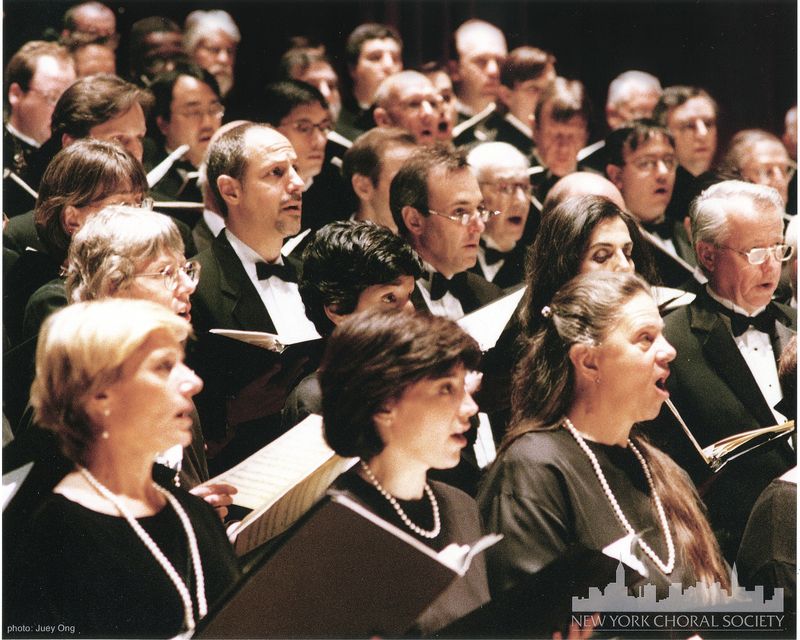
    NYCSchorus

    Founded in 1958, the New York Choral Society have presented many of the masterworks in the choral genre, as well as offering eleven world premieres; and they have commissioned works by Paul
    Alan Levi, Morton Gould, Stephen Paulus, and Robert De Cormier. I love these lines from the Society’s mission statement:

    “Our passion is music.

    Our belief is that choral music lifts the human spirit. It is a language that spans borders and cultures.

    Our goal is inspiring and excellent performance.

    Our great hope is that future generations will share our passion for choral singing.”

    Dance-lovers who follow my blog will note with pleasure that the long listing of choral artists of the Society includes the name of the great ballerina Martine van Hamel. I’ll never forget a conversation I had with her one day when I was working at Tower; she was seeking some choral music on CD and explained to me that she’d been taking voice lessons and had joined the Society, pursuing a fresh aspect in her artistic career. I had to smile when I saw her name listed in the Playbill this evening, bringing back memories of that lovely encounter.

    The concert’s participating artists were:

    David Hayes, Music Director and Conductor

    Kathleen Turner, speaker

    Jennifer Forni, soprano
    Jordan Shanahan, baritone

    Chorus and orchestra of the Society

  • Oratorio Society: Britten’s WAR REQUIEM

    White_dove.23095031_std

    Monday April 22nd, 2013 – The Oratorio Society of New York presented a performance of Benjamin Britten’s WAR REQUIEM at Carnegie Hall this evening. 

    One of the greatest and most meaningful choral works ever created, the WAR REQUIEM was commissioned for the re-dedication of Coventry Cathedral in 1962; the church had been almost totally destroyed by German bombs in 1940. Britten, a life-long pacifist, drew on the poetry of Wilfred Owen
    – who had been killed in 1918 (one week before the Armistice ended the war) at the age of 25 while fighting in France
    – as well as the texts of the Latin mass for the dead in setting his
    masterpiece. Though deeply spiritual in atmosphere, Britten intended the
    WAR REQUIEM to be a secular work.

    The Oratorio Society, one of New York City’s oldest cultural treasures, traces its history back to 1873. Founded by Leopold Damrosch, the Society presented their first concert on December 3,
    1873. One year later, on Christmas night, the Society began what has become an unbroken
    tradition of annual performances of Handel’s Messiah. In 1891, the Oratorio Society participated in the opening concert of what is now Carnegie Hall.

    The chorus and musicians of the Society under Kent Tritle’s baton tonight unfurled the sonic tapestry of Britten’s creation in a performance which greatly satisfied both the ear and the soul. In the composer’s structuring of the REQUIEM, the large chorus and orchestra – supporting a soprano soloist – sing the Latin texts of the mass while a chamber orchestra (led by David Rosenmeyer) accompanies the tenor and baritone soloists whose words come from the poetry of Wilfred Owen. From high up in a side balcony, the voices of children from the choir of Saint John The Divine (directed by Malcolm Merriweather) provide an angelic sound, accompanied by a small organ.

    Britten’s score, richly textured, amazes in its rhythmic and instrumental variety. Marked by off-kilter harmonies and shifting tonalities, the music is grand and theatrical one moment and poignantly stark and personal the next. The juxtaposition of public mourning and private grief – and of the liturgical and poetic texts – give the REQUIEM its unique resonance.

    Of the three vocal soloists, soprano Emalie Savoy (currently a Met Young Artist) revealed a sizeable lyric instrument with a blooming high register and a capacity to dominate the massed choral and orchestral forces. Tenor John Matthew Myers sang with a plaintive, clear and warm timbre while baritone Jesse Blumberg gave a wonderfully expressive rendering of the texts, his voice hauntingly coloured in his long final solo.

    At the close of the piece, all the participants were warmly lauded by the audience.

    “My subject is War, and the pity of War.
    The Poetry is in the pity…
    All a poet can do today is warn.” ~ Wilfred Owen

    Now, nearly a century after the poet’s warning, mankind continues to use war as a means of settling religious and ideological differences. This evening’s concert fell on Earth Day, reminding us of the fragility of the planet on which we all live. Only by turning away from gods and politics – those great dividing forces – can we hope to find a path into a safe and meaningful future. Like the poet’s two soldiers from opposing armies who find themselves dying side by side in a ditch far from their homes as the REQUIEM draws to a close, we must learn to embrace our common humanity before it’s too late.

    The evening’s participating artists will were:

    Kent Tritle, conductor
    David Rosenmeyer, chamber orchestra conductor
    Emalie Savoy, soprano
    John Matthew Myers, tenor
    Jesse Blumberg, baritone
    Choristers of the Cathedral of St. John the Divine,
    Malcolm Merriweather, conductor
    Chorus and Orchestra of the Society