Tag: Classical Music

  • Atlanta Symphony @ Carnegie Hall

    Polegato-Brett-Headshot

    Above: baritone Brett Polegato, one of tonight’s soloists at Carnegie Hall

    Saturday October 27th, 2012 -The Atlanta Symphony Orchestra brought three 20th century works to Carnegie Hall in a wonderfully crafted evening under the baton of Robert Spano. My front row seat put me right at the heart of things, beneath a row of lovely cellists that I could have reached out and touched. This was my third evening at Carnegie in a week’s time, and I felt so at home there.

    I chose this programme because I wanted to hear the Canadian baritone Brett Polegato; his voice intrigued me when I first heard him singing on a tape of the 1995 Cardiff Competition which my friend Mollie had so kindly sent me. It’s taken me all this time to hear him ‘in person’ and it was well worth the wait; my impressions of him from that tape proved totally valid: he’s a first-rate singer.

    But to start at the beginning, Mr. Spano opened the programme with Copland’s APPALACHIAN SPRING, by far the best-known of the evening’s three weeks. In classical music, familiarity can breed not so much contempt as a taking for granted of certain works. If you say ‘NUTCRACKER‘ or “Eine kleine nachtmusik‘, people will shrug and smirk and say “Again?” But these pieces are popular for a reason.

    Listening to the Atlanta players in the Copland, I realized again how really original and purely enjoyable this score is. And it put me so much in mind of my recent links with the Martha Graham Dance Comany and with the Japanese artist Isamu Noguchi who designed the sets for Graham’s iconic ballet. Tonight APPALACHIAN SPRING felt like the masterpiece that it is, so lovingly played.

    CHICHESTER PSALMS is one of the few Leonard Bernstein works that I admire, and possibly the only one that truly enjoy. I actually came to know this music thru Peter Martins’ ritualistc setting at New York City Ballet. Its rhythmic freshness and its heartfelt melodic strands make it so appealing, and tonight we had an adult male soprano rather than a boy treble; John Holiday’s gorgeous tone stole gleamingly into the huge Hall. His voice gave the music an erotic/exotic throb that a boy singer could never produce. The audience gave Mr. Holiday a rousing cheer as he bowed, and he very much deserved it.

    William Walton’s BELSHAZZAR’S FEAST was an early success for the composer and it sounded magnificent last night as played and sung by the musicians and chorus of the Atlanta Symphony. The work tells the story of the proverbial writing on the wall, and of Belshazzar’s demise and the triumph of godliness. It plays out strikingly, though it does seem to me that Walton became just a shade long-winded in the final pages of the score: he doesn’t seem to know when to stop. Be that as it may, it was an inspired performance all round.

    Brett Polegato’s noble tone sailed out into the Hall with warmth, focus and power, his exemplary clarity of diction making reference to the printed texts unnecessary. In the unaccompanied passage ‘Babylon was a great city…’ the singer forged a direct link with the audience, his voice speaking to us with remarkable directness and emotional force.

    The evening posed the question, why isn’t Brett Polegato at The Met? And why, for that matter, isn’t Mr. Spano there as well?  They are both masters of their respective crafts.

    1f318148667991b369f2f610fbbb8cfd

    You can experience their work on the Grammy Award-winning recording of Vaughan-Williams SEA SYMPHONY

    Tonight’s concert:

    Performers

    • Atlanta Symphony Orchestra
      Robert Spano, Music Director and Conductor
    • John Holiday, Countertenor
    • Brett Polegato, Baritone
    • Atlanta Symphony Orchestra Chorus
      Norman Mackenzie, Director of Choruses

    Program

    • COPLAND
      Appalachian Spring
    • BERNSTEIN
      Chichester Psalms
    • WALTON
      Belshazzar’s Feast
  • Ives 4th + Mahler 8th @ Carnegie Hall

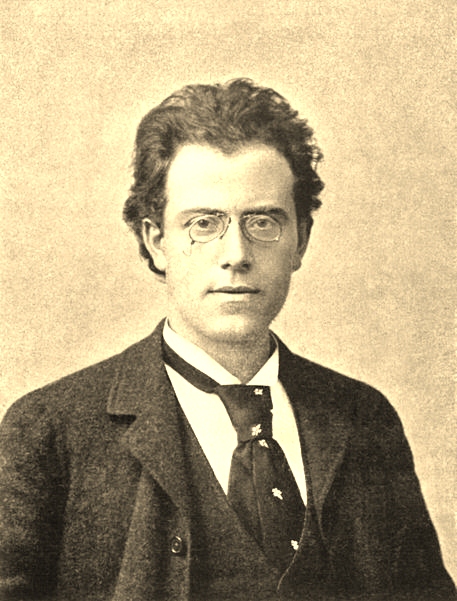
    Mahler 2

    Above: Gustav Mahler

    Friday October 26, 2012 – The  Collegiate Chorale and the American Symphony Orchestra teamed up at Carnegie Hall tonight for a symphonic double-bill, with a delightful ‘prelude’ in the form of Leopold Stokowski’s arrangement of The Star-Spangled Banner. I rarely have the opportunity to work symphonic concerts into my calendar of dance and operatic events (and I continue to suffer from a lack of chamber music in my diet). So I am grateful to the Collegiate Chorale and publicist Michelle Brandon Tabnick for this evening’s invitation.

    The evening marked the 50th anniversary of the American Symphony Orchestra and in celebration, tickets were sold at 1962 prices, with a $7.00 top. There was a nice atmosphere in the house and a warm reception for all the musicians involved.

    Maestro Leon Botstein swept his forces thru the ‘Stokowski’ Star-Spangled Banner with its wonderful deeper sonorities near the end.  Players and audience alike stood for the anthem, and I personally felt a pang of sadness at the state of our country today. But we won’t go into that here.

    The players then settled in and the Ives began. This is a fabulous score and I found myself smiling and even chuckling softly to myself as the work progressed: it takes itself so seriously, yet to me it abounds with wit and irony. It seemed clear that some in the audience had not previously encountered Ives’ work: they didn’t know what to make of it. But for me, this was 30-minutes of pure sonic pleasure.

    Ives

    Above: Charles Ives

    The wondrous layering of sound, the floating cacophonies wafting over the dense militaristic undercurrents, the dazzling individual instrumental voices shining forth: the ear is constantly titillated. In a stunning volte face, Ives gives us straightforward melody in the 3rd movement which must have felt like a sonic oasis to the uninitiated. Throughout, the piano (expert playing from Blair McMillen) gives the symphony the unexpected feel of a concerto trying to make itself heard thru the waves of sound. A terrific performances, and the players have my admiration for what must be a nightmare of counting.

    After intermission, the vast tapestry of the Mahler 8th unfurled itself in the venerable hall. Relentless in its cresting waves of vocal sound flooding over the massive orchestral forces, this is a work like no other. The two choruses simply pour it on all evening, whilst an octet of principal voices – the sopranos often kept in the upper reaches of their range – trade off solo passages of melodic intensity.

    Duncan-Tyler-01[Colin-Mills]

    Of the vocal soloists, three stood out: baritone Tyler Duncan (above, in a Colin Mills portrait) brought a welcome sense of lyric beauty to his solo. Basso Denis Sedov was equally fine, using his expressive hands to shape the music. In the taxing top soprano line, Rebecca Daviss’ voice gleamed beautifully all evening.

    Maestro Botstein was a few minutes into the symphony’s second half when he suddenly stopped; I could not hear his over-the-shoulder remark, but with a tap of the baton he started over. The performance then surged onward, and the audience stayed on at the end to cheer.

    • Blair McMillen, piano
    • Rebecca Davis, soprano
    • Abbie Furmansky, soprano
    • Katherine Whyte, soprano
    • Fredrika Brillembourg, mezzo-soprano
    • Susan Platts, mezzo-soprano
    • Clay Hilley, tenor
    • Tyler Duncan, baritone
    • Denis Sedov, bass
    • Brooklyn Youth Chorus
    • The Collegiate Chorale
  • Gathering of Stars

    Requiem + renata

    Nicolai Ghiaurov, Fiorenza Cossotto, Renata Tebaldi, Leontyne Price and Carlo Bergonzi backstage at Carnegie Hall following a performance of the Verdi REQUIEM in 1964. Price, Cossotto, Bergonzi and Ghiaurov were the soloists, and Tebaldi was visiting her colleagues in the green room after the performance. Herbert von Karajan conducted.

  • Gertrude Grob-Prandl

    Gertrude grob-prandl

    While I was working at Tower, I got into a discussion one day with my boss and a couple of the other ‘opera people’ who worked there. We were naming favorite singers and in one breath I mentioned Nilsson, Rysanek, Behrens and Dame Gwyneth Jones. “Oh, so you’re a size queen!”, Bryan laughed. Well, not really…since I also loved people like Reri Grist, Patricia Brooks, Lucia Popp and Kathleen Battle. But if you want to stereotype me, go right ahead: because I do love big voices.

    The four ‘loud ladies’ I mentioned above were among the largest voices I ever heard live. I guess Dame Gwyneth’s was the biggest of all though I’d also have to mention Angeles Gulin who, in a concert performance of LES HUGUENOTS at Carnegie Hall (1969) unleashed an enormous voice in Valentine’s music. But there was one voice, often described as the largest of all operatic voices in living memory, that for some reason I had never heard: that of the soprano Gertrude Grob-Prandl.

    Of course I’d heard people talking about her, and I read the article about her in Lanfranco Rasponi’s excellent book The Last Prima Donnas. But I’d never heard her sing a note until about a week ago when I was sampling different versions of Ortrud’s Invocation from LOHENGRIN on YouTube. Grob-Prandl’s rendition blew me away both in terms of the dimensions of the voice and the easy top.

    So I ordered a Myto recital disc by the soprano on which she sings music of Weber, Halevy, Meyerbeer, Wagner and Strauss and it’s all pretty glorious. Now I’m trying to locate her complete recording of TURANDOT. The voice does tend to go off-pitch slightly here and there, and a few notes take a split second to tonalize after she hits them – an endearing quality she shared with Leonie Rysanek.

    Grob-Prandl sings Isolde’s Narrative and Curse here.