Tag: Classical Music

  • Junetta Jones

    J jones

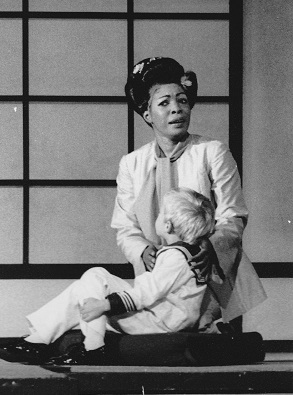
    Above: soprano Junetta Jones performing with the Goldman Band in Central Park in the early 1960s.

    Born in Baltimore, Maryland in 1936, Junetta Jones studied at the Peabody Conservatory and later at the New England Conservatory and the Tanglewood Music Center.

    In 1963, Ms. Jones was a winner in the Metropolitan Opera National Auditions (Jane Marsh and Justino Diaz were also winners that year); she made her Met debut as the Celestial Voice in Verdi’s DON CARLO a few months after her Auditions win. Her other Met roles were a Genie in THE MAGIC FLUTE, the Page in RIGOLETTO, and Barbarina in NOZZE DI FIGARO. She last appeared at The Met in 1965.

    Like so many young American singers at that time, Junetta Jones then re-located to Europe where she sang at Dusseldorf, Wuppertal, Regensburg, Munster, Trier, and Lucerne. She returned to the USA from time to time, singing with the Baltimore Symphony Orchestra and with Arthur Fiedler and the Boston Pops. When she appeared in Handel’s SAMSON at Carnegie Hall in 1965, the New York Times called her singing “beguiling”.

    J j butterfly

    Above: Junetta Jones in MADAMA BUTTERFLY; date and venue not specified

    Following her retirement from performing, Ms. Jones worked for 20 years on the advisory committee for art and culture for the city of Baltimore. She passed away in 2015.

    Listen to Junetta Jones in her Met debut role, the Celestial Voice, here.

  • Giorgio Tadeo as Seneca

    Tadeo

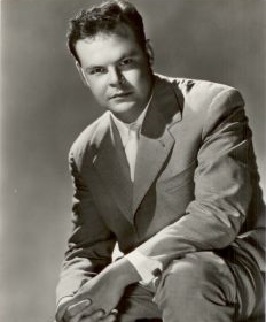
    Though Verona-born basso Giorgio Tadeo (above) was sometimes cast in buffo roles, this film clip of him as Seneca in Monteverdi’s INCORNAZIONE DI POPPEA shows another aspect of his artistry. The performance is from Aix-en-Provence, 1961, and the mezzo-soprano is Teresa Berganza.

    Giorgio Tadeo made his operatic debut in 1953 singing Mephistopheles in an RAI performance of FAUST. He went on to an extensive career, singing at Palermo, at both the Teatro alla Scala and the Piccola Scala, and at theatres throughout Italy until 1996. Internationally, he sang at Vienna, Hamburg, Monte Carlo, L’Opéra de Paris, Covent Garden, the Royal Albert Hall, Carnegie Hall, Lyric Opera in Chicago,Dallas, Aix-en-Provence, Edinburgh, Tel Aviv, and Athens.

    Giorgio Tadeo has worked with the such conductors as Gui, Giulini, Serafin, Celibidache, Dorati, de Fabritiis, Gavazzeni, Sanzogno, Maag, von Karaja, Abbado, and Boulez, as well as directors Giorgio Strehler and Franco Zeffirelli. He distinguished himself in the operas of Mozart, Rossini, and Donizetti, as well as 20th century works. He was married to the soprano Mariella Adani.

    Mr. Tadeo passed away in 2008.

  • Verdi REQUIEM ~ Warsaw National Philharmonic

    Giuseppe-Verdi

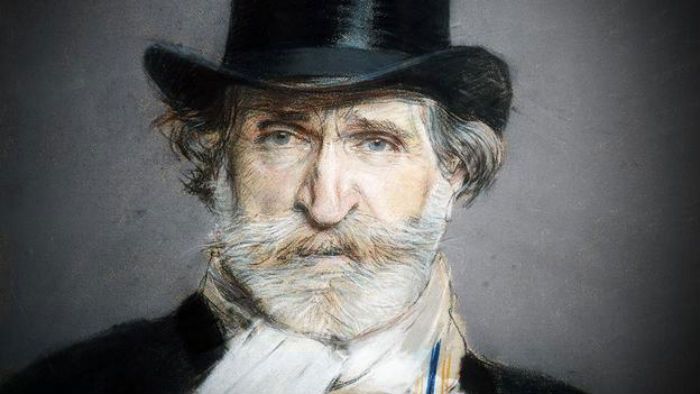
    The Verdi REQUIEM, as recorded by the Warsaw National Philharmonic.

    Kazimierz Kord conducts an all-Polish quartet of soloists: Teresa Żylis-Gara, Krystyna Szostek-Radkowa, Wiesław Ochman,and Leonard Andrzej Mróz.

    Listen here.

    Leonard_Andrzej_Mroz

    As I mentioned in yesterday’s post, I found this performance of the Verdi masterwork by happy chance while looking for recordings by basso Leonard Andrzej Mróz (above). It instantly became one of my favorite recordings of the REQUIEM.

    Mr. Mróz, as it turns out, passed away recently – in December 2020 at the age of 73. He was a native of Warsaw who began his career by winning voice competitions at Wroclaw, Munich, Geneva, and Amsterdam. He joined the Grand Theatre, Warsaw, in 1972 and sang there for many seasons.

    The basso’s international career took him to Glyndebourne, New York’s Carnegie Hall, Vienna, Budapest, Prague, Moscow, Paris, Parma, Mexico, Sofia, Philadelphia, London, Lisbon, Cleveland, Leipzing, Dresden, Paris, Berlin, and Moscow, as well as opera centers in Great Britain, Switzerland, Austria, the Netherlands, and Italy.

    After retiring from the stage, Mr. Mróz  taught at the State Music School Fryderyk Chopin in Warsaw and at the Academy of Music in Poznan.

    Leonard Andrzej Mróz sings Rachmaninov’s Zdes’ khorosho here, the Death Scene from BORIS GODUNOV here, and Banquo’s aria (and murder) from Verdi’s MACBETH here.

  • Ángeles Gulín as Gioconda

    Snapshot gulin aparici - Copy

    Above: Ángeles Gulín as Gioconda and Montserrat Aparici as Cieca

    A slam-bang performance of one of my favorite Italian operas, LA GIOCONDA, from the Liceu, Barcelona, in 1978. The singers simply go at it.

    Watch and listen here.

    Gioconda: Ángeles Gulín; Laura: Bruna Baglioni; Cieca: Montserrat Aparici;  Enzo: Nunzio Todesco; Barnaba: Sabin Markov; Alvise: Ivo Vinco.

    I only heard Ángeles Gulín live once: she sang Valentine in HUGUENOTS at Carnegie Hall in 1969; Beverly Sills was Marguerite de Valois and Tony Poncet was Raoul. Ms. Gulín had an enormous voice and she
    used it unsparingly.

    This GIOCONDA has the right knives-out, heart-on-sleeve passion. It’s that kind of all-or-nothing opera. As Gioconda sings of her love for Enzo in Act I: “My destiny is this: to love him, or to die!”

    ~ Oberon

  • The Beethoven Symphonies on Record

    Beethoven-

    My friend Ben Weaver has devoted a great deal of time over the years listening to the music of Ludwig van Beethoven. Here he writes about recordings of the nine symphonies that have particularly captured his interest:

    “With the 250th anniversary since Ludwig van Beethoven’s birth celebrations curtailed by a worldwide pandemic, what’s a Beethoven lover to do but try to make the best of semi-voluntary home imprisonment by turning to recordings of Beethoven. I have previously taken a stroll through recordings of Wagner’s Tristan und Isolde; why not go back to some of my favorite recordings of Beethoven’s Nine. THE Nine that started the count and turned the world of music on its head. (Mahler and Bruckner both feared the number 9 and that they would not be able to out-do Beethoven and compose a symphony beyond that number – and both turned out to be correct: Bruckner never finished his Ninth and Mahler only completed one movement of his Tenth.) I will only go through some of the finest sets of the complete Symphonies – this is not intended to be a study of every recorded cycle and I’m only looking at complete sets of the Symphonies. (I will honorably mention some stand-alone recordings at the end.)

    So where does one begin a traversal of Beethoven’s recorded Symphonies? Naturally, with Herbert von Karajan – the Dean of recorded sound who left behind 4 complete studio sets: one from the 1950s with the Philharmonia Orchestra of London on EMI and three with the Berlin Philharmonic, one for each subsequent decade. (There are also at least two complete sets recorded by Japanese radio during Karajan’s concert tours with the Berliners.) 

    Karajan’s Philharmonia set (in mono) is unjustly neglected: produced by Walter Legge it captures the great vintage Philharmonia (arguably a better orchestra in the 1950s than even the Berliners were) in all its warm virtuosic glory and the young(er) Karajan, still not the domineering force he would become later, in a more playful mood than he would be in his Berlin recordings. This is especially noticeable in the “non-heroic” symphonies: One and Two sizzle with excitement and Seven, which Wagner called “the apotheosis of dance,” zooms out of the speakers and around the room. Of course the fact that it’s in mono will deter many listeners. The current issue of the EMI (now Warner) set includes two versions of the Ninth Symphony, one in mono and one in Legge’s experimental stereo (Legge preferred mono); the stereo version has never been available before.

    Of Karajan’s three Berlin sets – recorded 1961-62, 1975-76, and finally 1982-84 – interpretively there was not a great change in Karajan’s approach over the years. Since the London days he would become a more “serious” musician, maybe wiser, with what one would call a Germanic (he was actually Austrian) sense of humor. And for all his stürm und drang, Beethoven was certainly a man of humor. Karajan’s firmer grasp of the music and structure grew, and he now had complete control over his Berlin Philharmonic, wrestled from Wilhelm Furtwängler’s cold, dead hands and remade in his own image. The teutonic sound of Karajan’s Berliners would become firmer over the years, its granite-like wall of sound could level buildings, its virtuosity would be second-to-none. (The roster of principals over the years has given birth to more star soloists than perhaps any other band, including the likes of flautist Sir James Galway who played for Karajan from 1969 to 1975 and clarinetist Sabine Meyer’s very unhappy stint as the Orchestra’s first female principal in 1982. The orchestra voted her out after her “trial period” over Karajan’s objections, angering the maestro who insisted the male-dominated orchestra objected to Meyer’s gender, not musicianship; the incident caused a serious rift in their relationship and saw Karajan perform with the Vienna Philharmonic more in his final years. Berlin’s star soloists today include flautist Emanuel Pahud, oboist Albrecht Meyer, and clarinetist/model Andreas Ottensamer. But I digress…)

    So what sets all that Karajan Beethoven apart from one another? The 1961-62 set is one of the most famous classical recordings ever made; it has never been out of the catalog and has been reissued a bazillion times. (There is a new 2020 remastering being issued on SACD in Japan only and it does sound spectacular.) But there is a separatist group of listeners, which includes myself, that consider the 1970s cycle to be superior. There’s something a little rough in the 1960s set; maybe it’s Karajan still fighting the ghost of Furtwängler, or the orchestra still resisting Karajan’s attempts to possess them, but for me the cycle doesn’t register as extraordinary and the Ninth is a disappointment: the over-large and poorly recorded choir is an aural mess and sounds like they were singing in an empty subway station. By the late 1970s recording techniques had been improved and Karajan’s takeover of the orchestra was complete: they were now an extension of himself, with no ensemble lapses, no hesitations. And the recorded sound is gorgeous: warm, from the softest to the loudest moments. Listen to the Storm of the Pastoral Symphony: it’s all encompassing in sound and terror, as if we are hearing God’s flood for Noah. But then the romantic sweep of the Shepherd’s Call is overwhelming too in its depth of feeling and beauty of sound.

    Claudio Abbado took the reins of the Berlin Philharmonic after Karajan’s death and though Abbado recorded the Symphonies with the Vienna Philharmonic in the 1980s, he took another stab with his new orchestra in the 1990s. The results were electrifying. Paring down Berliners’ big and saturated sound favored by Karajan and echoed by many others over the years, Abbado brought Beethoven down from Mount Olympus and gave the symphonies a fresh, more Classical sound, reducing the number of players and exploiting Berliners’ newfound energy without gratuitous rushing. Deutsche Grammophon released Abbado’s recordings in two different versions: first came a cycle recorded at the Philharmonie in 1999-2000 and then a cycle recorded in concert in Rome in 2001. (Except the Ninth, which exists only from its Philharmonie performance, but re-edited in 2001 from original recordings according to Abbado’s new wishes.) DG says the Rome cycle is intended to replace the earlier Berlin one. Many argue that the Rome performances are the real jewels: I don’t know if I personally hear a huge difference in Abbado’s take or the orchestra’s performances, but I’m glad to have both. (To add to the confusion, the Rome cycle was also issued on DVD, but with a different Berlin recording of the Ninth, this one with bass Eike Wilm Schulte replacing Quasthoff, who remains the bass on the audio-only recording.) 


    With Abbado’s many years of experience with these works and having had time to cleanse the orchestra of Karajan’s late-career excesses, everything sizzles. The Fifth reminds us why the first movement has had the world ta-ta-ta-taming for centuries and the rest reminds us why this is an extraordinary, world-changing work and is more than just 4 chords. The Eroica is exceptional in its nobility and the Fourth makes you wonder why it’s not as famous as the two Symphonies bracketing it. The Pastoral is a gorgeous, gentle giant and the Seventh an exuberant dance. A superb quartet of soloists in the Ninth (Mattila, Urmana, Moser and Quasthoff) dominate the grand finale.

    Perhaps no orchestra has recorded Beethoven’s symphonies more frequently than the Vienna Philharmonic over the years. Leonard Bernstein’s Vienna cycle from the late 1970s not only leaves his 1960s New York recordings in the dust, but it leaves almost everyone else in the dust too. The playing is stupendous and Bernstein finds threads and sounds that nobody else has unearthed. The is nothing gratuitous about the interpretations, no odd Bernsteinisms, nothing willful. Bernstein doesn’t pull the music in any perverse direction, like his New York Fifth’s preposterous tempos: and yet he and the orchestra create sounds and discover ideas that nobody has before or since. Inspired by Lenny’s fertile imagination the Viennese play like gods. From beginning to end it feels like you hearing these works for the first time. No matter what others have done with these works or will do, these lovingly shaped performances will always belong near the top of recommendations. 

    The late 1980s/early 1990s brought two exceptional sets: Nikolaus Harnoncourt’s and John Eliot Gardiner’s. Harnoncourt – with the Chamber Orchestra of Europe – brought his decades of period instruments experience to a modern instruments orchestra (except natural horns) and the results were electrifying, except a disappointing, shapeless Ninth. The rest of the cycle – a surprisingly big boned Eroica, cheerful Pastoral, delirious Seventh – can stand proudly along with the best. The blaring, natural horns, over smooth modern strings, is an inspired and attention-grabbing touch.

    John Eliot Gardiner’s cycle with the newly created Orchestre Révolutionnaire et Romantique (an expanded English Baroque Soloists, specifically created to perform music of the Romantics) was not the first period instruments cycle of the Symphonies. Roger Norrington and Christopher Hogwood, among others, preceded him. But nothing could have prepared the world for the barnstorming, hair-raising Gardiner set. For reasons unclear to me the earlier period instrument sets can often sound anemic and unsteady. For years people seem to have accepted that as the nature of period instruments. Sir John turned all that on its head: the Orchestre Révolutionnaire et Romantique comes at you like a category 5 hurricane. Suddenly the terror, confusion and wonder people felt at hearing Beethoven in his own time started to make sense. Yes the tempos are fast, but never feel rushed. Gardiner makes it all feel completely organic: from the opening chords of the First Symphony – no longer just a fluffy Mozart tribute, but a foreshadowing of something never heard before – all the way to the awe-inspiring choral conclusion of the Ninth, no one has done more to show the truly revolutionary Beethoven than John Eliot Gardiner. The Eroica is truly worthy of Napoleon and the Fifth is like a bat out of hell. The Pastoral transitions perfectly from sunshine to a storm of epic proportions, and Seven and Eight are dizzying. The Ninth is a crowning glory of the set: you can see how and why this work, above all else, changed the course of music. The extraordinary Monteverdi Choir levels all competition in its path and four exceptional soloists (Luba Orgonasova, Anne Sofie von Otter, Anthony Rolfe Johnson and Gilles Cachemaille) cover themselves in glory. This is essential listening.


    With the celebrations in full swing, everybody and their mother is issuing a new Beethoven Symphonies cycle. What is there left to say that hasn’t been said yet? Well, turns out a good conductor can still send a tingle up your leg.


    Among the highlights of the new cycles are Philippe Jordan’s exhilarating recordings with the Vienna Symphony Orchestra (an orchestra that lives in the shadow of the Vienna Philharmonic and unjustly so.) Jordan’s tight rhythms and mostly quick tempos – along with the orchestra’s virtuosity and beautiful sound – create numerous thrilling moments: the early symphonies are full of exuberance. With the Eroica Jordan manages to create something remarkable: a balance that melds the unmistakable early, Mozartian, youthful Beethoven with the forward-looking revolutionary. The Pastoral, a symphony that can be tedious in the wrong hands, is truly one of the most perfect performances of this work I’ve ever heard. There’s not a note or feeling out of place. These are carefully thought out and prepared performances, well recorded by Vienna Symphony’s home label.


    THE TOP CHOICES:


    Herbert von Karajan – Philharmonia Orchestra – EMI – Elisabeth Schwarzkopf, Marga Höffgen, Ernst Haefliger, Otto Edelmann


    Herbert von Karajan – Berlin Philharmonic – DG – Anna Tomowa-Sintow, Agnes Baltsa, Peter Schreier, José van Dam.


    Leonard Bernstein – Vienna Philharmonic – DG – Dame Gwyneth Jones, Hanna Schwarz, René Kollo, Kurt Moll.


    Claudio Abbado – Berlin Philharmonic – DG – Karita Mattila, Violeta Urmana, Thomas Moser, Thomas Quasthoff.


    Nikolaus Harnoncourt – Chamber Orchestra of Europe – Teldec – Charlotte Margiono, Birgit Remmert, Rudolf Schasching, Robert Holl.


    Sir John Eliot Gardiner – Orchestre Révolutionnaire et Romantique – Archiv – Luba Orgonasova, Anne Sofie von Otter, Anthony Rolfe Johnson, Gilles Cachemaille.


    Philippe Jordan – Vienna Symphony Orchestra – VS – Anja Kampe, Daniela Sindram, Burkhard Fritz, René Pape


    HONORABLE MENTIONS:


    André Cluytens’ 1959 Berlin Philharmonic cycle (in stereo for EMI) predates Karajan’s and has Furtwängler’s orchestra at his disposal. These are very noble readings from the old school. With Gré Brouwenstijn, Kerstin Meyer, Nicolai Gedda, Frederick Guthrie.


    Another terrific old-school set with a vintage Vienna Philharmonic can be heard under Hans Schmidt-Isserstedt on Decca in the late 1960s. And his quartet of soloists is an unbeatable all-star: Joan Sutherland, Marilyn Horne, James King, Martti Talvela.


    A glowing Staatskapelle Berlin can be heard under Daniel Barenboim from 1999 for Teldec. With Soile Isokoski, Rosemarie Lang, Robert Gambill, René Pape.


    A warm, ravishing Gewandhausorchester Leipzig plays for Herbert Blomstedt’s in a terrific set from Accentus Music. This recording shows off Blomstedt’s wonderful Beethoven to better effect than his Staatskapelle Dresden set from 40 years earlier. With Simona Šaturová, Mihoko Fujimura, Christian Elsner, Christian Gerhaher.


    Early music specialist Jan Willem de Vriend’s often surprising period instruments approach with modern instruments galvanizes the Netherlands Symphony Orchestra for Challenge Records. With Annemarie Kremer, Wilke te Brummelstroete, Geert Smits, Marcel Reijans.


    Paavo Järvi and the Deutsche Kammerphilharmonie Bremen set the music world buzzing with their fleet-footed, exciting cycle on RCA. With Christiane Oelze, Petra Lang, Klaus Florian Vogt, Matthias Goerne.


    Sir Simon Rattle’s exciting Berlin Philharmonic set – after he took over from Abbado, also having recorded a mediocre cycle in Vienna earlier – is great, old-school fun, released by Berlin’s own in-house label. With Annette Dasch, Eva Vogel, Christian Elsner, Dimitry Ivashchenko.


    Sir Bernard Haitink’s autumnal London Symphony Orchestra recordings from 2005-06 on the LSO Live label are old-fashioned, yet full of surprising touches and warmth. With Twyla Robinson, Karen Cargill, John Mac Master, Gerald Finley.


    Kent Nagano’s big, Romantic set with the Orchestre Symphonique de Montréal features beautiful, warm playing. With Erin Wall, Mihoko Fujimura, Simon O’Neill, Mikhail Petrenko. (Also includes excerpts from “Egmont” sung by Adrianne Pieczonka.)


    Period instrument specialist Jos van Immerseel presents a warm, sunny cycle with the Anima Eterna ensemble. With Anna-Kristiina Kaapola, Marianne Beate Kielland, Markus Schäfer, Thomas Bauer.


    George Szell’s vintage recordings on Sony with the Cleveland Orchestra are brilliant and brash. With Adele Addison, Jane Hobson, Richard Lewis, Donald Bell.


    Ádám Fischer’s recent strange, idiosyncratic set with the Danish Chamber Orchestra is full of surprises – some of which you may enjoy, some not so much – is worth exploring. With Sara Switlicki, male alto Morten Grove Frandsen, Ilker Arcayürek, Lars Møller.


    Japanese composer and conductor Joe Hisaishi’s new recording with a Japanese youth orchestra, Future Orchestra Classics, bring an exuberance only young people who have never played these works before can bring. A too-resonant acoustic takes getting used to, but the performances are fresh and engrossing. On the Exton label. With Yoko Yasui, Makiko Yamashita, Kei Fukui, Koji Yamashita.


    RECOMMENDED INDIVIDUAL SYMPHONIES:


    Ferenc Fricsay’s stereo recordings with the Berlin Philharmonic from the 1950s and 60’s is among the glories of the gramophone. Tight, thrilling, driven, insightful. A must own for any collector. Symphonies Nos. 3, 5, 7 and 9 (with Irmgard Seefried, Maureen Forrester, Ernst Haefliger, Dietrich Fischer-Dieskau) on DG.


    Carlos Kleiber’s legendary recordings of Symphonies Nos. 5 & 7 with the Vienna Philharmonic on DG are among the most beloved of all recordings. But also don’t miss his exhilarating live performances of Symphonies Nos. 4, 6 and 7 with the Bayerisches Staatsorchester on the Orfeo label.


    István Kertész died too young and left behind exciting recordings of Symphonies Nos. 2 and 4, plus some Overtures with the Bamberg Symphony Orchestra. (Plus a stunning Piano Concerto No. 3 with Conrad Hanson.)


    Sir John Eliot Gardiner, in addition to his complete cycle, more recently recorded Symphonies Nos. 2 & 8 (live at Cadogan Hall) and Nos. 5 & 7 (live at Carnegie Hall) with the Orchestre Révolutionnaire et Romantique and these are, if anything, even more exhilarating than his original recordings. On his own Soli Deo Gloria label.


    Kurt Masur’s NY Philharmonic recordings of Symphony No. 5 and the complete “Egmont” from the 1990s (with soprano Sylvia McNair and narrator Will Quadflieg) are first rate.


    Seiji Ozawa 1970 Symphony No. 5 (with Chicago Symphony Orchestra) and 1976 Symphony No. 3 (with San Francisco Symphony) are wonderfully old fashioned and exciting.


    Enfant terrible Teodor Currentzis – a modern agent of chaos – twists a lot of music into unrecognizable shapes. But sometimes the result are electrifying, even if they would send the composer spinning in his grave. Currentzis’ recent Symphony No. 5 for Sony with his Russian-based MusicAeterna orchestra is one of those performances. You may like it. Or you may want to throw your stereo out the window.


    Masaaki Suzuki, having completed his Bach Cantatas project, turns his gaze to Beethoven with an exciting Symphony No. 9 on period instruments. On Bis with Ann-Helen Moen, Marianne Beate Kielland, Allan Clayton, Neal Davies.


    Wilhelm Furtwängler recorded the Ninth Symphony a number of times. Famously in Bayreuth (twice) and in Lucerne just three months before his death in 1954 with the Philharmonia Orchestra (many consider this to be his best version.) But I don’t think anything quite comes close to the infamous March 1942 performance in Berlin recorded for German radio. (A few minutes of the finale were also filmed.) Consider the time and the place, consider who is in the audience and what is happening in the world. This performance – all fire, brimstone, rage bordering on hysteria and the most wrenching slow movement of this Symphony ever recorded – will put you through the wringer. Nobody will walk away unscathed. If you are not shell-shocked when it’s over, you are not human. With Tilla Briem, Elisabeth Höngen, Peter Anders, Rudolf Waltzke.


    ~ Ben Weaver

  • TABARRO ~ Madrid 1979

    Ag

    I heard soprano Ángeles Gulín (above) as Valentine in a concert performance of LES HUGUENOTS at Carnegie Hall in 1969, singing Valentine opposite Beverly Sills and Tony Poncet. Ms. Gulín had one of the biggest voices I ever encountered.

    There are not many souvenirs of her career. This TABARRO, though not in great quality, is enjoyable.

    Watch and listen here.

    CAST: Luigi: Placido Domingo; Giorgietta: Ángeles Gulín; Michele: Sylvano Carrolli; Frugola: Isabel Rivas; Tinca: Jose Manzaneda; Talpa: Jose Luis Alcalde. Conductor: Olivero di Fabritiis

  • Anne-Sophie Mutter ~ Beethoven Evening

    CH1766263_Medium_res_comp

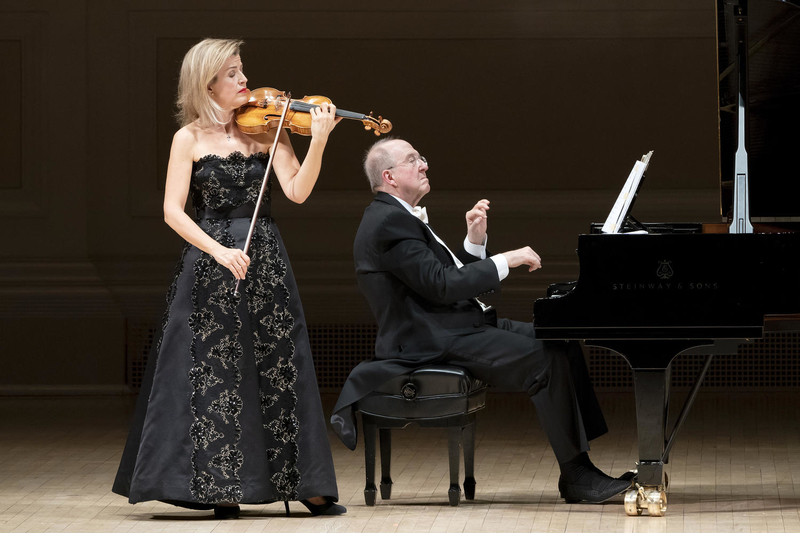
    Above: Anne-Sophie Mutter, photographed during the performance by © Jennifer Taylor.

    ~ Author: Oberon

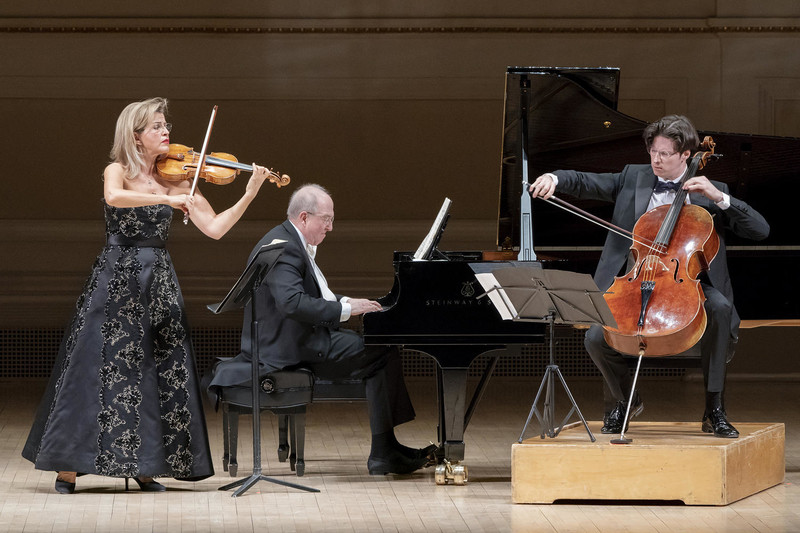
    Thursday January 30th, 2020 – As the Beethoven Celebration year kicks off, only a handful of the announced “all-Beethoven” programs that are scheduled here in Gotham are of interest to me. But I would not have missed Anne-Sophie Mutter’s performance at Carnegie Hall tonight for anything. The esteemed violinist offered a pair of sonatas book-ending the “Ghost” trio. Ms. Mutter’s longtime collaborator, Lambert Orkis, was at the Steinway, and cellist Daniel Müller-Schott joined them for the trio.

    The comely violinist, now in the 40th year of her professional career, was warmly welcomed by a packed house as she walked onto the Carnegie Hall stage in a black gown bedecked with silver appliqué. She and Mr. Orkis immediately commenced the violin sonata No. 5 in F-Major, Op. 24, fondly known as “Spring”: the blithe opening passages were played softly, at once settling the audience and drawing them in.

    This opening Allegro continues thru a series of lyrical themes in which the two players alternate roles: melodist and accompanist. Minor key intrusions sometimes imply that clouds are passing overhead, but the sunshine always returns. A unison section shows the advantages of a longtime musical partnership: simply perfect.

    In the ensuing Adagio molto espressivo, Ms. Mutter and Mr. Orkis sustained a heavenly, pensive atmosphere with playing of exquisite delicacy and spun-out legato: they seemed to cast a spell over the venerable Hall. With a charming light touch, the Scherzo is over before it starts, and we are plunged into the Rondo – Allegro ma non troppo, in which almost Mozartean pleasantries are sometimes interrupted by jolts of fast and furious playing. But all’s well as ends well, and the Springtime sun illuminates the sonata’s optimistic ending.

    CH1766260_Medium_res_comp

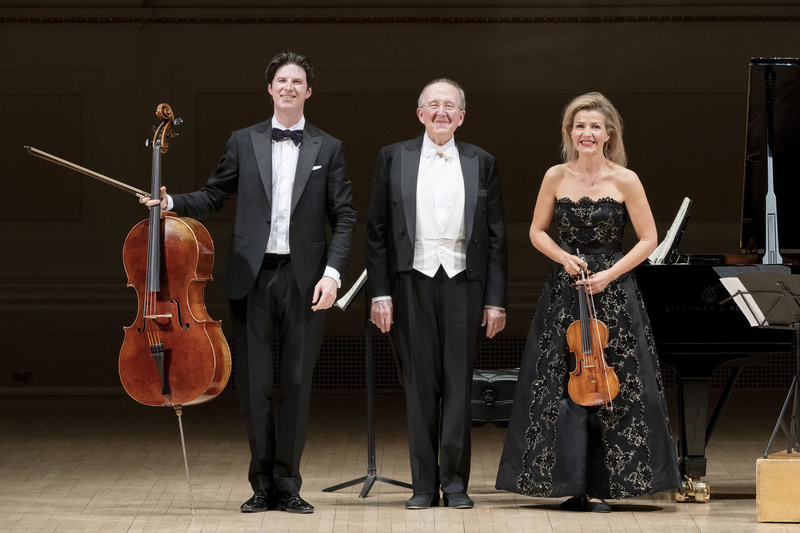
    Above: Ms. Mutter and Mssrs. Orkis and Müller-Schott, photo © Jennifer Taylor.

    The Piano Trio in D Major, Op. 70, No. 1, “Ghost” brought cellist Daniel Müller-Schott to the stage, joining Ms. Mutter and Mr. Orkis. 

    The energetic start of this popular trio, in which the cello quickly establishes a prominent place, leads on to a flowing lyricism with deftly rolling piano motifs which Mr. Orkis delivered with gracious sweep.

    The eerie start of the Largo heralds the movement which gives this trio its sobriquet: “Ghost.” A mournful theme from Mr. Müller-Schott’s cello is soon mingling with Ms. Muller’s bittersweet violin colorations. Again Mr. Orkis’s mastery of the piano’s softest dynamics is mesmerizing. Passion waxes and wanes as the movement approaches its finish, and Mr. Orkis plays a long and spell-binding downward scale in which every note has a quiet luminescence.

    Melancholy is swiftly dispelled by the opening of the concluding Presto. Mr. Orkis interjects flourishes of filigree as the music wends its way forward with alternating currents of vitality and delicacy. There were fleeting moments in the Trio this evening that made me feel that intonation was slightly off, but only by a hair’s breadth.

    CH1766262_Medium_res_comp

    Above: taking a bow after the “Ghost” trio, photo © Jennifer Taylor.

    During the interval, DK and I were anticipating our second “live” encounter with the Kreutzer sonata, Beethoven’s Op. 47, in the span of a month’s time. This epic work, which places so many demands on the two musicians, found the Mutter/Orkis partnership at its inimitable best.

    An intrusion at the very start almost destroyed the performance: just as the first notes were sounding, a very loud cellphone with a chiming ring tone-blared from one of the boxes. The culprit hastily fled, and for a moment I thought the musicians might pause and start over. But they moved on, leaving me to re-connect with the music as best I could. The playing was simply magnificent, with both players reveling in the bravura demands of the first movement’s Presto section. Together they brought a great sense of structure and musical coherence to the entire work.

    The “theme” of the ensuing Andante is a descending phrase which Arrigo Boito may have subconsciously lifted for the aria “Dai campi, dai prati” in his opera MEFISTOFELE. A ‘theme and variations’ setting develops, in which Ms. Mutter’s high-flying coloratura and enchanting trills ravished the ear. 

    The sonata’s Finale is exhilarating, with the irresistible impetus of a tarantella. A feeling of joy seemed to fill the house as the music sped on its way, Ms. Mutter and Mr. Orkis musically to urginge us to cast off our woes and – at least for the moment – savour the genius of Beethoven as played by two incredible artists.

    A massively enthusiastic full-house standing ovation commenced the moment the music ended. Ms. Mutter announced an encore: Beethoven’s Allegro in G-major, for mechanical clock, as arranged by Willy Hess. This little gem was delivered with tongue-in-cheek charm.

    Re-called by further waves of applause and cheers, Ms. Mutter charmingly introduced her second encore: an arrangement of ‘Nice To Be Around’ from the film Cinderella Liberty, part of her recent collaboration with composer John Williams. This beautiful tune was beautifully shaped by violinist and pianist.

    CH1766261_Medium_res_comp

    Above: Ms. Mutter and Mr. Orkis, photo © Jennifer Taylor.

    All performance photos are © Jennifer Taylor, courtesy of Carnegie Hall.

    ~ Oberon

  • MANON @ The Met

    72203039_2587859277931352_7352510735420751872_o

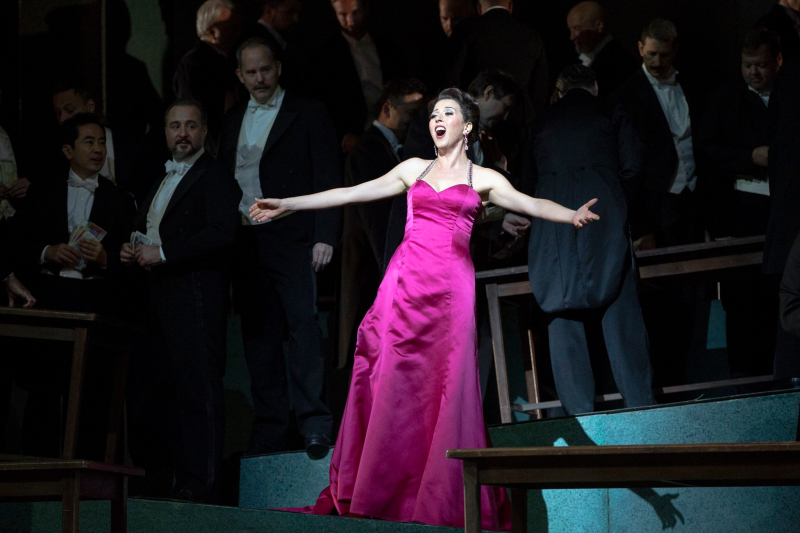
    Above: Lisette Oropesa as Manon in The Met’s production; a Marty Sohl/Met Opera photo

    Saturday matinee September 28th, 2019 – After a rather scrappy dress rehearsal on Friday September 20th, the Metropolitan Opera’s revival of their tedious Laurent Pelly production of Massenet’s MANON opened this past Tuesday. For today’s matinee, a group of friends who are admirers of Lisette Oropesa met up in the Family Circle boxes to see and hear the Cuban-American soprano in her latest new role. 

    Vocally, there are basically two types of Manons: the lyric-coloraturas and the full-fledged (and even slightly…beyond…) lyrics. The role was created by Marie Heilbronn, whose repertory included the coloratura roles of Marie (FILLE DU REGIMENT), Ophélie (HAMLET), Gounod’s Juliette, and Catherine in Meyerbeer’s ETOILE DU NORD. Massenet’s preferred Manon was Sibyl Sanderson, who created the high-flying title-role in his opera ESCLARMONDE. The light-voiced Brazilian soprano Bidu Sayão became a beloved Manon at The Met starting in 1937, and the tradition of coloratura-oriented Manons continued with Beverly Sills (perhaps her greatest role), Patricia Brooks, and Reri Grist.

    Sopranos with larger, richer voices have also taken on the role: Lucrezia Bori, Geraldine Farrar, Claudia Muzio (!), Victoria de los Angeles, Eleanor Steber, Anna Moffo, Virginia Zeani, Raina Kabaivanska, Jeannette Pilou, Catherine Malfitano, Carol Vaness, Renee Fleming, and Anna Netrebko. Some of these sopranos had to make adjustments in Manon’s coloratura set-pieces, and in dealing with (or omitting) the score’s high-Ds. And at times, the opera has seemed to take on a verismo tinge in these interpretations, as listening to their various recordings will show. 

    Lisette Oropesa’s Manon is in the lyric-coloratura vein, and it’s so enchanting to hear her intriguingly perfumed timbre in this music. This is a voice that draws us into the music, covering the wide range with that distinctive sound, rejoicing in the fiorature of the Cours la Reine arias, pinpointing those top-Ds, and seducing both the tenor and the audience with the serpentine vocal line of “N’est-ce plus ma main”: that passage which Beverly Sills knew was the key to the whole character. 

    To accomplish her success in the music of Manon, Lisette had to overcome a hideous production and an interpretation of the score by an out-of-touch conductor. As the opera progressed, we moved scenically from a dreary grey courtyard – surrounded by perched toy-town houses and cuckoo-clock windows that periodically opened and closed – to an ugly wheeled-out ‘garret’ for the lovers wherein the ‘petite table‘ seemed like an afterthought.

    The ridiculous ramps and metal dog-run fencing of the Cours la Reine deprived the setting of its glamour and left the bevy of ballerinas that Guillot had brought to cheer Manon up little space to execute some rather pointless choreography (the girls deserved better!) With the gaslights, Manon clad in a enormous feathered hat, boa, and ruffled gown, and the top-hatted men courting her in-sync, the scene recalled bad productions of HELLO DOLLY.

    Seeking out des Grieux at Saint Sulpice, Manon arrives in what looks like a long white slip. There’s a lot of stage business to this seduction, as compared to the Sills Manon who just stood there, enticing her lover with vocal allure until – at the right moment – she let her cape fall to reveal the diva’s legendary décolletage, to which her tenor immediately succumbed. In the Pelly production, a convenient bed (for the altar boys?) is where Lisette and Michael Fabiano end up in a bodice-ripping finale. It’s the tenor’s bodice that gets ripped.

    The gambling den in a drab basement room with more ramps, and with card tables wheeled busily on and off; the tension of the game between des Grieux and Guillot is minimized. The scene’s redeeming feature is the vision of Lisette in a stunning magenta gown.

    The opera’s final scene is misty and appropriately foreboding. Manon is beaten by the guards who are escorting her to the ship for deportation. She seems to die from this beating rather than from some infection she picked up in prison.

    Manon is one of the least appealing characters in all opera: selfish, willful, faithless, conniving. And those are her good qualities. But somehow, Lisette managed to be one of the very few Manons to make us feel sorry for her as the life ebbs out of her.

    Maurizio Benini on the podium seemed to have no feeling for the distinctive atmosphere of the score, redolent of a time and place that the production has simply glossed over; the large orchestra frequently unleashed Puccinian waves of passion. But the musicians did what they could, bringing forth the desired poetry: of particular appeal was the clarinet solo in the prelude, played with captivating tenderness and nuance by Inn-Hyuck Cho.  Mr. Cho also stayed in the pit thru much of the intermission, practicing various themes, much to my delight.

    The pairing of Lisette Oropesa and Michael Fabiano as the doomed lovers was not felicitous. They are a vocal mismatch, and though they went thru the motions of romance and seduction, it was only in a theatrical sense that they made it work. The tenor, who would seem better suited to the Puccini rather than the Massenet des Grieux, lacked the heady vocal elegance that Alfredo Kraus, Vinson Cole, and Enrico di Giuseppe have brought to this music. Mr. Fabiano managed his Dream aria nicely enough, seemingly employing falsetto, but a flattish start to “Ah, fuyez, douce image” led to what felt like a struggle thru this demanding aria. 

    Two excellent baritones enhanced the afternoon: Artur Ruciński as Lescaut and Brett Polegato as de Brétigny. Mr. Ruciński, who sang Enrico to Lisette’s Lucia at the Teatro Real in 2018, Madrid, and who is a very impressive Onegin in a DVD of the Tchaikovsky opera from Valencia, has sung Sharpless and Germont at The Met. He transforms Lescaut into a leading role, making his arias – which can in lesser hands devolve into character pieces – real vocal gems thru the beauty and colour of his timbre, whilst also creating a lively (and – eventually – moving) character. His curtain calls drew enthusiastic and well-deserved bravos.

    I first heard Canadian baritone Brett Polegato’s voice on a tape from the Cardiff Competition in 1995. He made a very fine impression, which was subsequently amplified by his wonderful 2001 recording (with Christine Goerke, conducted by Robert Spano) of Vaughan Williams’ A Sea Symphony for Telarc. Hailed upon its release as “…a Sea Symphony for the new century…”, this recording won a Grammy.

    It wasn’t until 2012 that I got to hear Mr. Polegato live: he sang Walton’s Belshazzar’s Feast with the Atlanta Symphony at Carnegie Hall. I sat in the front row and enjoyed his performance immensely, and I questioned at the time why he was not at The Met. And now here he is in his debut performances at The House, the voice very much at home in the big hall. As de Brétigny today, the baritone made the most of every line, especially in the garret scene quartet, and proved a wonderful support (literally) to Lisette’s Manon at the Cours la Reine. Had Manon only stuck with this well-to-do and dapper gentleman, she might have lived long…and prospered.

    Basso Kwangchul Youn brought warm, house-filling sound to the Comte de Grieux’s aria, in which he urges his son to forget about the priesthood and find a nice girl to marry, one worthy of himself and of the family. The Comte, his visit to Saint Sulpice having proved in vain, departs with the wistful farewell to his son – “Adieu … reste à prier!” – which was touchingly spoken by Mr. Youn.

    Carlo Bosi, a sensational Nick in FANCIULLA DEL WEST when it was last done at The Met, was equally high-profile this afternoon as Guillot, the man who destroys Manon and, consequently, des Grieux.

    In another example of how to make a smallish role resonate, Paul Corona as the Innkeeper was outstanding. He took a bow at the dress rehearsal, and I wish he had done so this afternoon so I could have given him a “bravo!“.

    Bidu_Sayao

    As a tease, the Met has installed Bidu Sayão’s Cours la Reine costume (above) in a glass display case on the Dress Circle level. This cloth-of-gold creation, incredibly detailed, served as a reminder of what MANON is all about. I hope one day that Lisette will have a production of this opera worthy of both herself and of the opera’s long traditions, with charming costumes, with a swing for Manon to sit on in the garden at Amiens for “Voyons, Manon“…and with de Brétigny bringing her an emerald necklace to dazzle her right after the kidnapping of her beloved chevalier.

    ~ Oberon

  • Vilda Frang @ Mostly Mozart

    Thumbnail_vilde-frang-2012

    Above: violinist Vilda Frang/photo from EMI Classics

    ~ Author: Ben Weaver

    Wednesday July 24th, 2019 – Beethoven’s two warhorses were on the program of the Mostly Mozart Festival tonight: the Violin Concerto and the Eroica Symphony, with Andrew Manze presiding over the proceedings.

    For the Mostly Mozart Festival, the main auditorium of David Geffen Hall has been transformed into a night-club-like atmosphere (for a couple of years now), with the stage moved up and seating created on the sides and behind the orchestra. Amphitheater-like concert halls have been all the rage in Europe (and to a lesser extent in the US) since the Berlin Philharmonie was built; seemingly every new concert hall replicates that structure. (In the US, Walt Disney Hall, home of the LA Philharmonic, is built the same way). I’ve never been to one of these concert halls, so maybe the acoustics really are ideal 360° around the orchestra in these halls.


    I am, however, not convinced that the arrangement being used for the Mostly Mozart concerts improves the sound for anyone inside David Geffen, where the acoustics have been notoriously bad since the theater’s construction in the 1960s and no amount of fiddling has changed that. (It seems that plans to gut the theater and rebuild with a superior interior are permanently shelved again. Apparently NYC and NY Philharmonic do not deserve a world-class concert hall…) Generally, when a large orchestra plays in David Geffen Hall, the sound in the orchestra section is fine, if a bit dense. However, the further up you go, the more the sound disappears. In the highest sections I find that the sound seems to be coming from across the plaza.


    I bring up my issues with the acoustics of David Geffen Hall because in these Mostly Mozart Festival performances the size of the orchestra is cut drastically; Andrew Manze, a famed violinist and conductor specializing in early music and period instrument practices, has a unique take on the sound of the orchestra. Even tough the chamber-sized ensemble plays on modern instruments, Maestro Manze’s orchestral balance brought to mind a small period-instrument ensemble. This would have been wonderful if the hall’s acoustics were not mediocre to begin with and as I mentioned above, I’m not convinced the rearrangement of seating in the hall enhances the sound in any way.


    It so happens that for Beethoven’s Violin Concerto the light sound of the orchestra was mostly very effective: that’s because Norwegian violinist Vilde Frang, making her MMF debut, delivered a truly unique performance. Beethoven’s demands on the violinist are intense; the concerto shocked the public upon its 1806 premiere. They were not prepared for a long and serious concerto like this: the revolutionary side of Beethoven was definitely part of this work. Ms. Frang, however, did the almost unthinkable: she played one of the most popular works of music in a way I’ve never heard anyone attempt: while abdicating nothing of Beethoven’s power, she delivered a gentle, dreamy performance. If most violinists compete with the orchestra for volume and heft, Frang and Manze joined forces to make the audience lean in: Frang’s frequent pianissimi – quieter than this concerto is used to – floated through the hall like gentle breezes. She never forced the instrument to fight or compete for attention, and Manze never forced the MMF Orchestra either. This was a perfect union of minds and musicians delivering a deeply felt and carefully thought out and fascinating performance. I hope Ms. Frang returns to NYC soon; she is a violinist to watch.


    Andrew-Manze-1920x1280


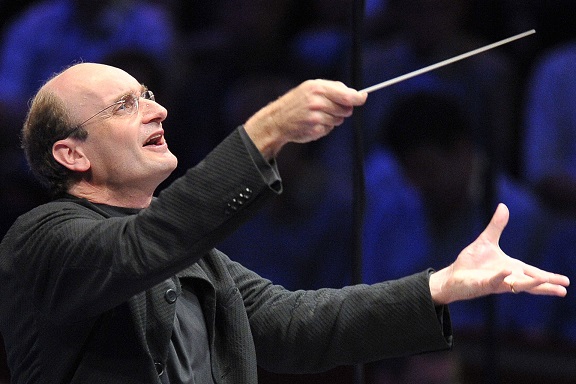
    Above: conductor Andrew Manze


    Things felt more familiar with the performance of Beethoven’s 3rd Symphony, the famed Eroica. The 1803 work changed the course of music and what a symphony was thought to be; there are now only 2 steps from Beethoven to, say, Mahler (No. 3 to No. 9 to everything that followed.) The opening chords of the Allegro con brio were bright and forceful. The movement unfolded with energy and verve. Marcia funebre was dark and brooding, but seemed closer in spirit to the earlier Violin Concerto than “Beethoven the revolutionary.”  To me, the Scherzo is always the most difficult movement to pull off: it seems to not belong to this symphony. Its jollity and energy are closer to Beethoven’s previous two symphonies, not the granitic Eroica. I’m afraid tonight that feeling remained, though the movement was played well. And the final Allegro molto was a perfectly executed march from darkness to triumph. 


    Except…back to the cursed acoustics of the hall. What was missing was the sound surrounding you, going behind you and coming back to hit the back of your head. The fact that Maestro Manze was using greatly reduced forces isn’t the reason for that; I’ve heard soloists and chamber ensembles at Carnegie Hall deliver ear-shattering sounds. At David Geffen Hall and in MMF’s seating configuration, no matter how much they tried, the sound simply gets lost.


    An orchestra like the NY Philharmonic can make the rafters shake through sheer will and size of the ensemble. It truly is a disgrace that a city like New York is incapable of building a hall for its home band and Festival. Maybe MMF should consider moving some of their performances to Carnegie Hall, which seems to be vacant during the summer. Tonight’s wonderful concert by Andrew Manze, Vilde Frang, and Mostly Mozart Festival Orchestra deserved to be heard.


    ~ Ben Weaver

  • 2nd Summer Evening @ CMS ~ 2019

    Artist_2237

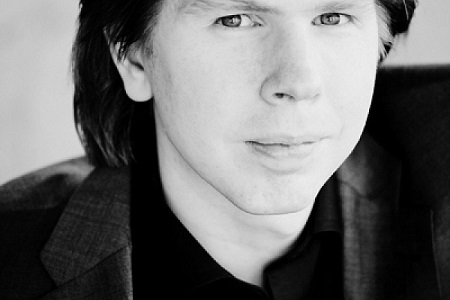
    Above: pianist Juho Pohjonen

    ~ Author: Oberon

    Sunday July 14th, 2019 – The second of three concerts in Chamber Music Society of Lincoln Center‘s annual Summer Evenings series brought together a trio of esteemed CMS artists joined by The New York Philharmonic’s beloved principal clarinetist Anthony McGill. No French music on this Bastille Day program; Austria, Germany, and Russia were represented. The playing was superb.

    Bella-Hristova-FI

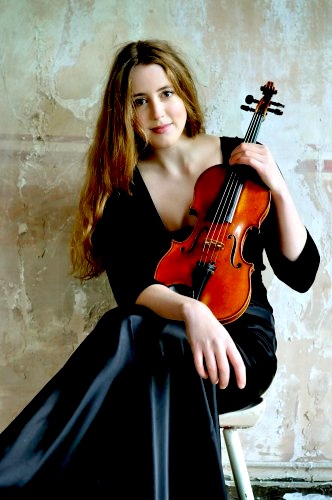
    Above: violinist Bella Hristova, photo by Lisa-Marie Mazzucco

    With Mr. Pohjonen at the Steinway, Ms. Hristova opened the concert with Mozart’s Sonata in B-flat major for Violin and Piano, K. 454, which dates from 1784. Fittingly enough, this sonata was composed for a female violinist: Mozart wrote it for the Viennese debut of Regina Strinasacchi, and he himself was the pianist on that occasion. Female violinists were quite rare in those days. Signorina Strinasacchi had studied at the famous Ospedale della Pietà in Venice where Antonio Vivaldi had once served as music director. She was 21 years old at the time of her Vienna debut, and was said to be a dazzling violin virtuoso who had also trained as an opera singer.

    Ms. Hristova, who in March of this year gave a dazzling recital at Merkin Hall, looked fetching in a dusty rose à la Grecque frock. After a courtly – almost regal – introduction, Ms. Hristova’s playing of the affecting first melody set the mood. She and Mr. Pohjonen traded melodic statements, making it clear from the start that they are ideal colleagues. The music gets lively, with little hesitations and subtleties woven in; abundant charm and sweet lyricism prevail.

    A tender theme commences the Andante; the musicians take turns playing melody and rhythmic figurations. Ms. Hristova’s phrasing is so appealing here. The music turns a bit melancholy, with a sense of passion restrained. A sustained note from the violinist leads on to a sort of coda and a gentle finish.

    The sonata’s concluding Allegretto is a lot of fun; violinist and pianist sometimes play in unison and sometimes harmonize. The pacing and dynamics offer pleasing contrasts along the way to a virtuosic finale.

    IMG_7629-e1350511246980-1024x748

    Anthony McGill (above) then joined Nicholas Canellakis and Mr. Pohjonen for Johannes Brahms Trio in A-minor for Clarinet, Cello, and Piano, Op. 114. This was composed in 1891, after Brahms had heard the great clarinetist Richard Mühlfeld and was much taken with the sound of the instrument.

    Mr. Canellakis has the trio’s opening statement – a rich melodic passage – and soon Mr. McGill’s clarinet makes its sublime entrance. From the Steinway, Mr. Pohjonen pulses up and the music takes off, calming for a cello solo in which Mr. Canellakis’s depth of tone makes a marvelous impression. Cello and clarinet bring incredible subtlety to a scale passage, and there’s a trace of gypsy lilt in the music. Following more scalework, the Allegro fades away.

    At the start of the Andante, Mr McGill’s lambent tone is beautifully matched to Mr. Canellakis’s, producing a spellbinding blend: ‘phrasing is all’ here as the voices entwine. To their mix, Mr. Pohjonen adds his poetic playing. The Andantino grazioso begins like a serenade: the clarinet sings while the cello provides a plucked accompaniment. This lighthearted movement transforms itself into a waltz, which proceeds lyrically.

    Mr. Canellakis’s cello digs into the final Allegro, with the piano urgent and the clarinet vibrant. The music is broad, with a folkish feel. Descending phrases are heard, and the trio finds a brisk ending.   

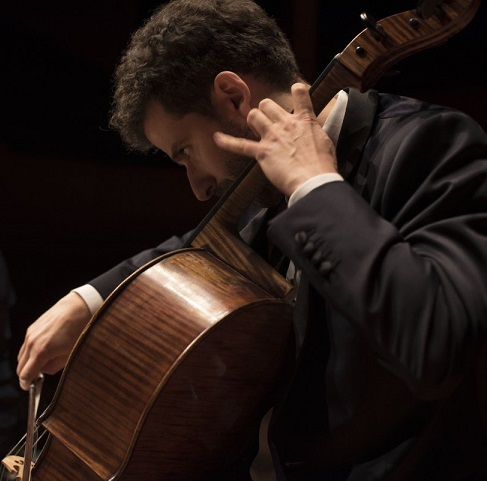
    N C

    Following the interval, Nick Canellakis (above) along with Ms. Hristova and Mr. Pohjonen, offered Anton Arensky’s Trio No. 1 in D-minor for Piano, Violin, and Cello, Op. 32. Whenever I hear Mr. Canellakis playing, I find myself thinking back to his magnificent performance of Leon Kirchner’s Music for Cello and Orchestra at Carnegie Hall in 2015.

    Images

    Arensky (above) is something of a forgotten composer – unfairly, in my view. You can read about him, and hear some of his music, here. Listening to his music, you can see where Scriabin and Rachmaninoff profited from having been Arensky’s students.

    Bella Hristova’s gorgeous violin solo plays over restless patterns from the Steinway; the cello then takes up the melody. Mr. Pohjonen relishes the con moto sweep of the virtuoso writing for piano.  “This is fabulous music!”, I scrawled across my notes.  The string players exchange bits of melody, the pianist deftly dispatches phrase after lovely phrase. A soft, sustained violin note ends the Allegro moderato.

    The second movement is a sprightly Scherzo, with plucked strings and high trills from the piano: at times the instruments sound almost like toys. Mr. Pohjonen’s tone shimmers throughout. An engaging waltz gets quite grand, and, after some wry hesitations, the Scherzo‘s end is lighthearted.

    A tender, reflective cello solo opens the Elegia; the music seems to recall happier times that have been left behind. Ms. Hristova’s violin climbs poignantly higher and higher, whilst Mr. Canellakis’s cello again sounds from the depths. 

    From a turbulent start, the cello and then the violin carry the melody of the concluding Allegro non troppo: this music is very much à la Russe. As passion ebbs and flows thru the melodies, the shining piano and soft strings lend an ethereal air. The composer then crafts a lively finale for his trio.

    Ms. Hristova and Mssrs. Canellakis and Pohjonen were greeted with great enthusiasm at the program’s end, and insistent applause brought them out for a second bow.

    ~ Oberon