Tag: Claudia Schreier

  • Claudia Schreier’s PLACES

    Snapshot places

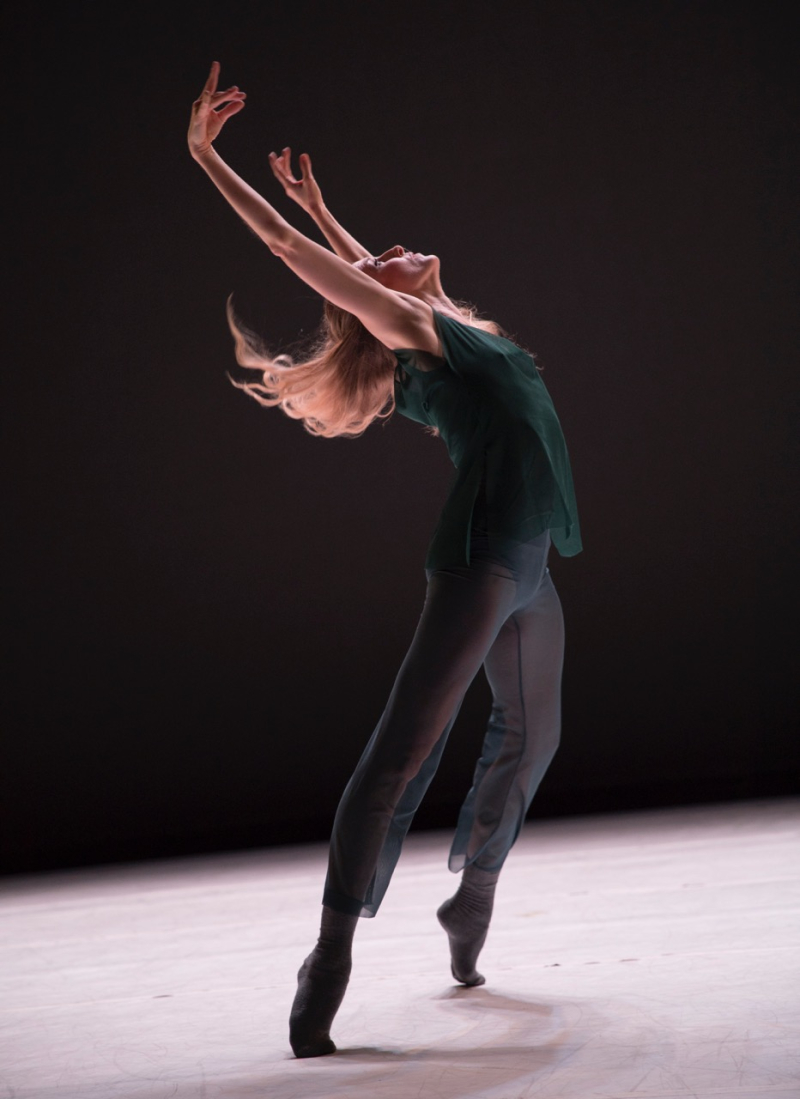
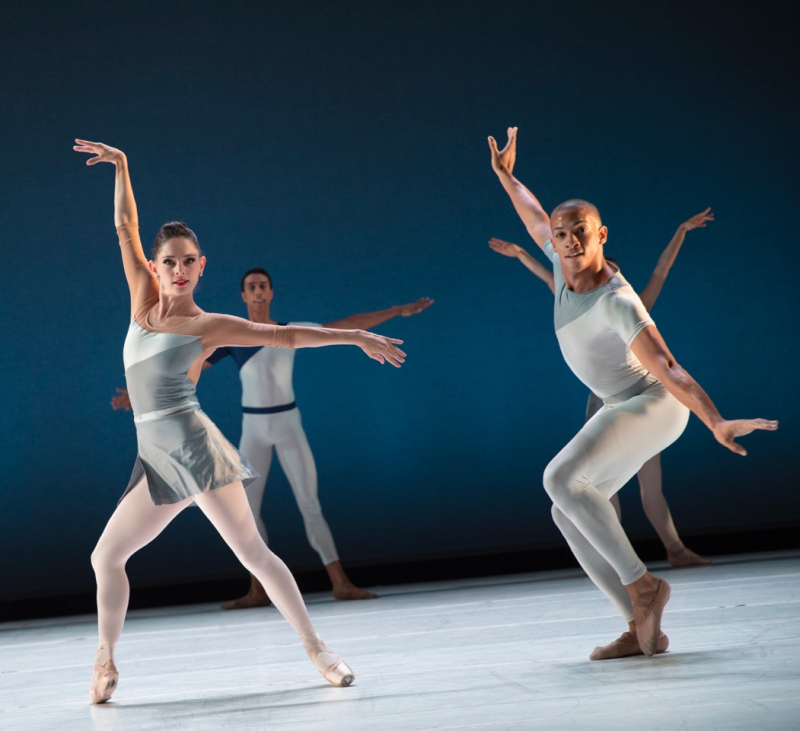
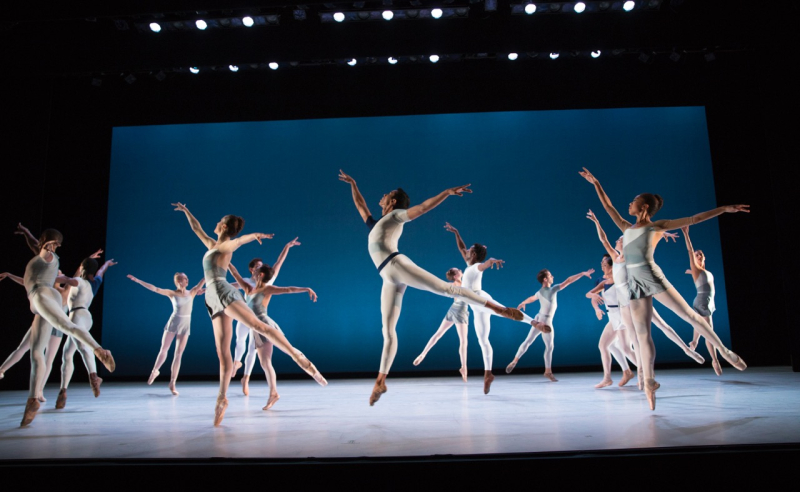
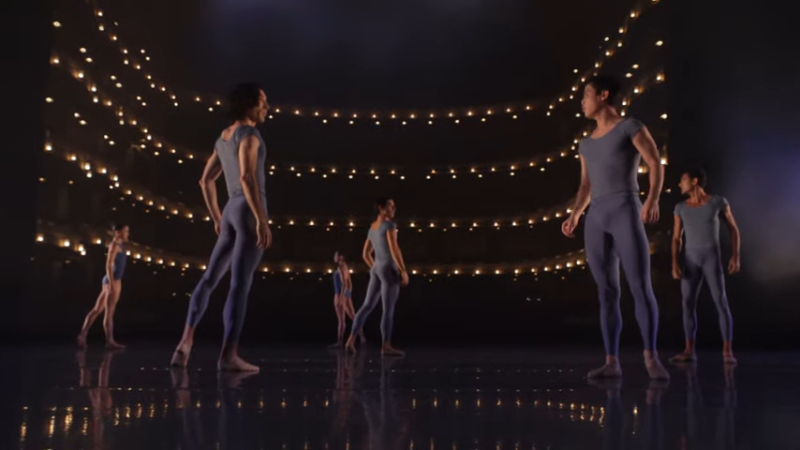
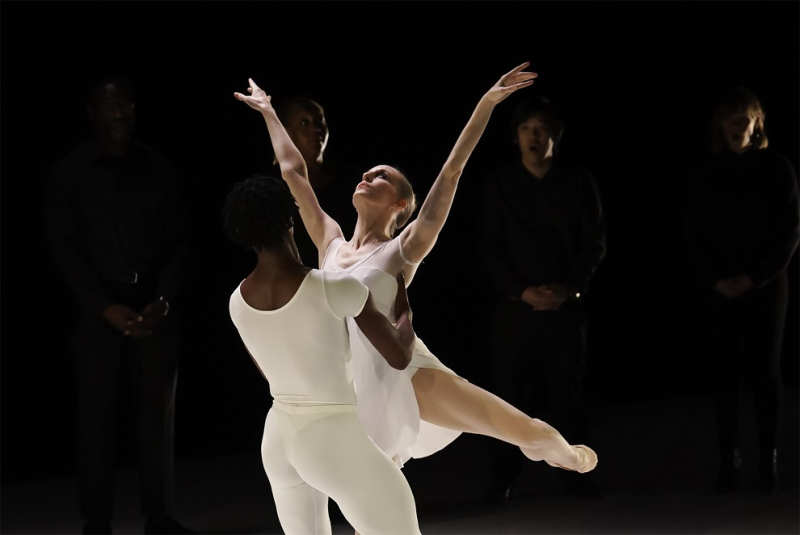
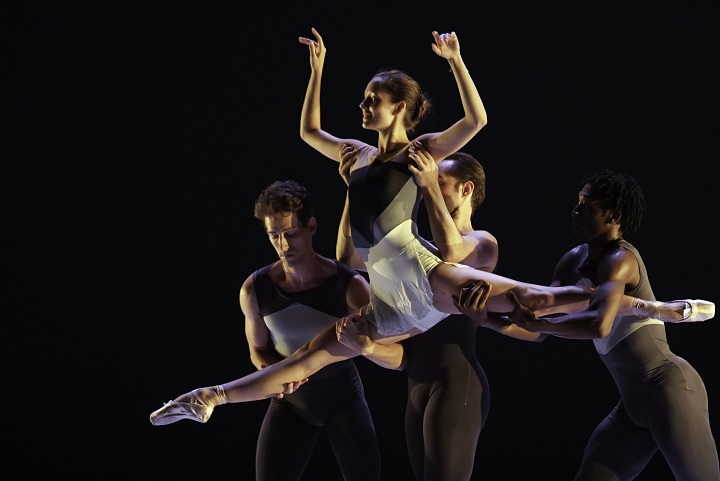
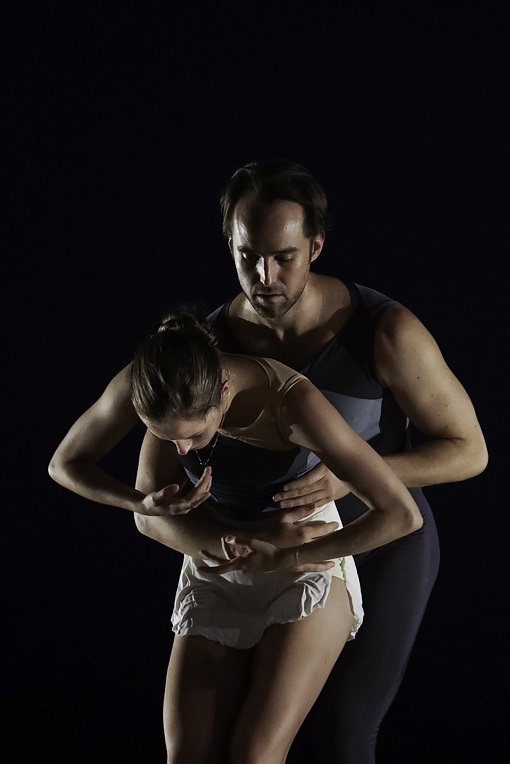
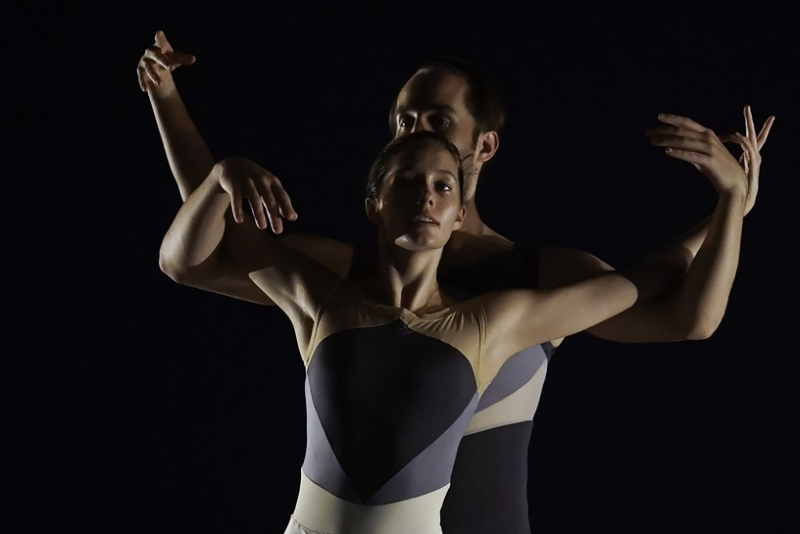
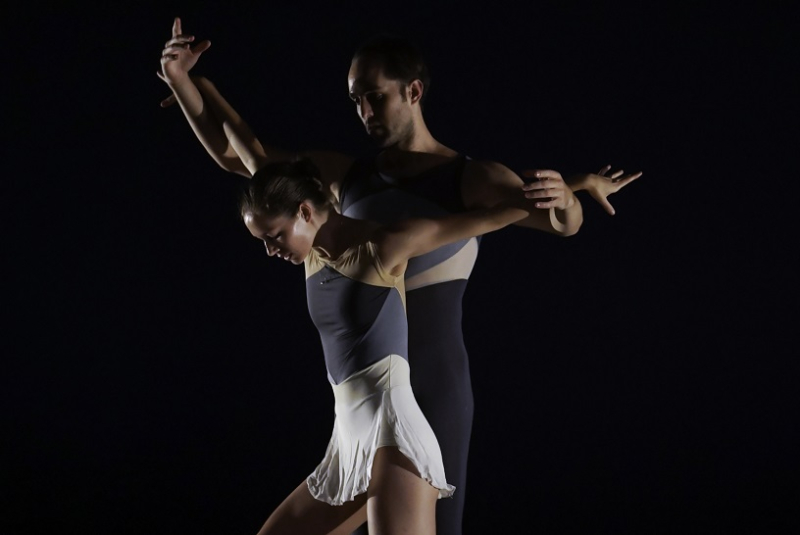
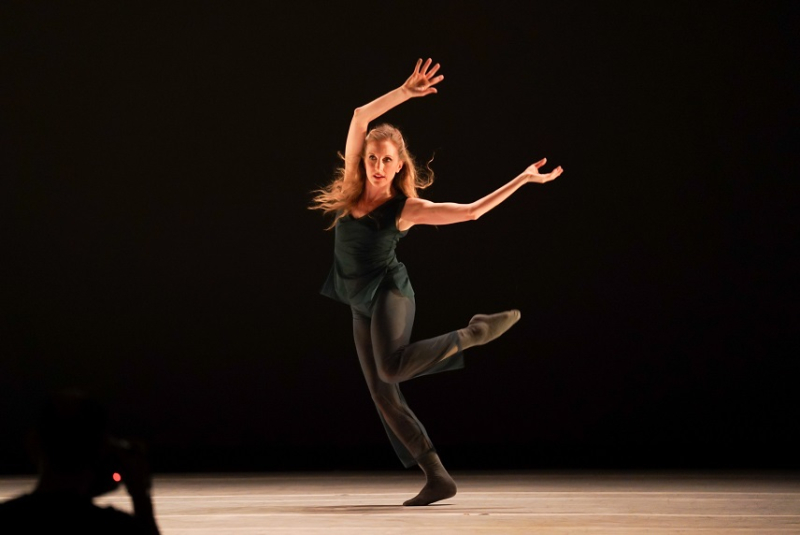
    Miami City Ballet‘s Artistic Director Lourdes Lopez introduces Claudia Schreier’s PLACES, created at the time of the pandemic. The piece premiered digitally on November 19th, 2020.

    Watch and listen here.

    CHOREOGRAPHY Claudia Schreier
    MUSIC Jorge Mejia
    CINEMATOGRAPHY Alexander Iziliaev
    LIGHTING DESIGN John Hall and Alexander Iziliaev
    COSTUME DESIGN Eleanor Wolfe
    BALLET MASTER Joan Latham

    DANCERS Nathalia Arja, Emily Bromberg, Renan Cerdeiro, Satoki Habuchi, Kleber Rebello, Damian Zamorano

    MUSICIANS Jorge Mejia, Piano; Daniel Andai, Violin I; Sheena Gutierrez, Violin II; Modesto Marcano, Viola; Shea Kole, Cello; Antonio Escobedo, Double Bass

  • Rehearsal: Claudia Schreier for Vail

    DSCF4541

    Above: Claudia Schreier with dancers Chris Bloom and Dandara Veiga of Ballet Hispanico; photo by Dmitry Beryozkin 

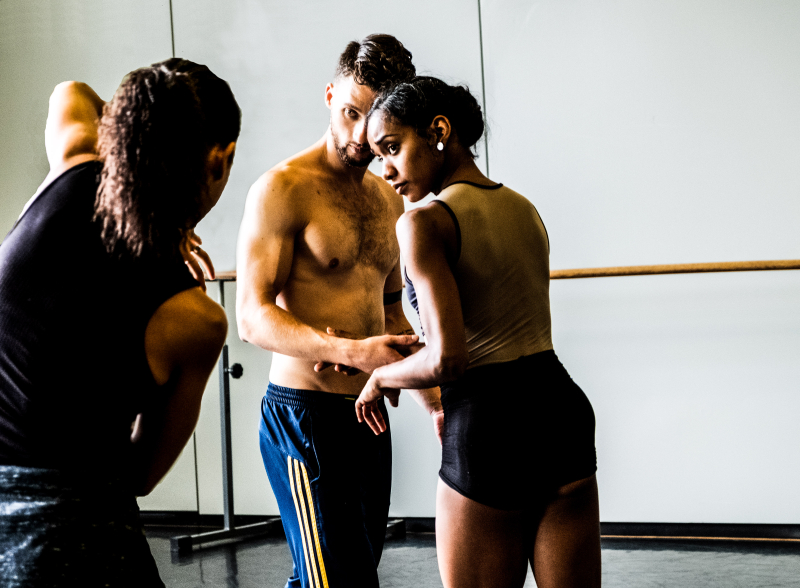
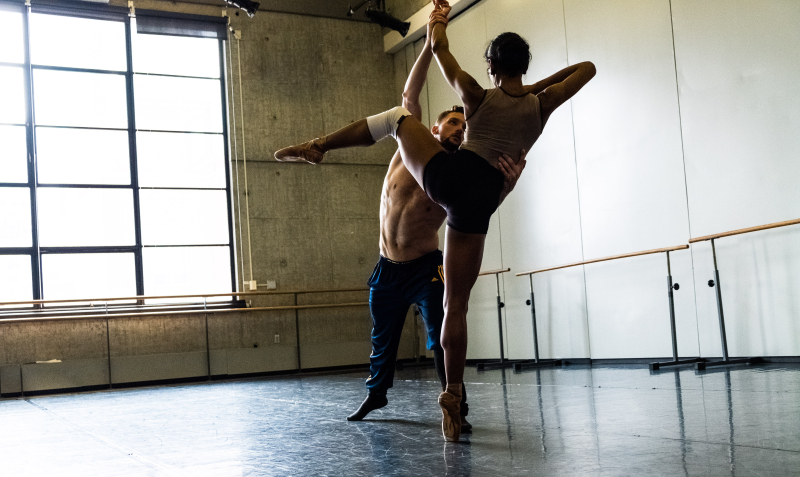
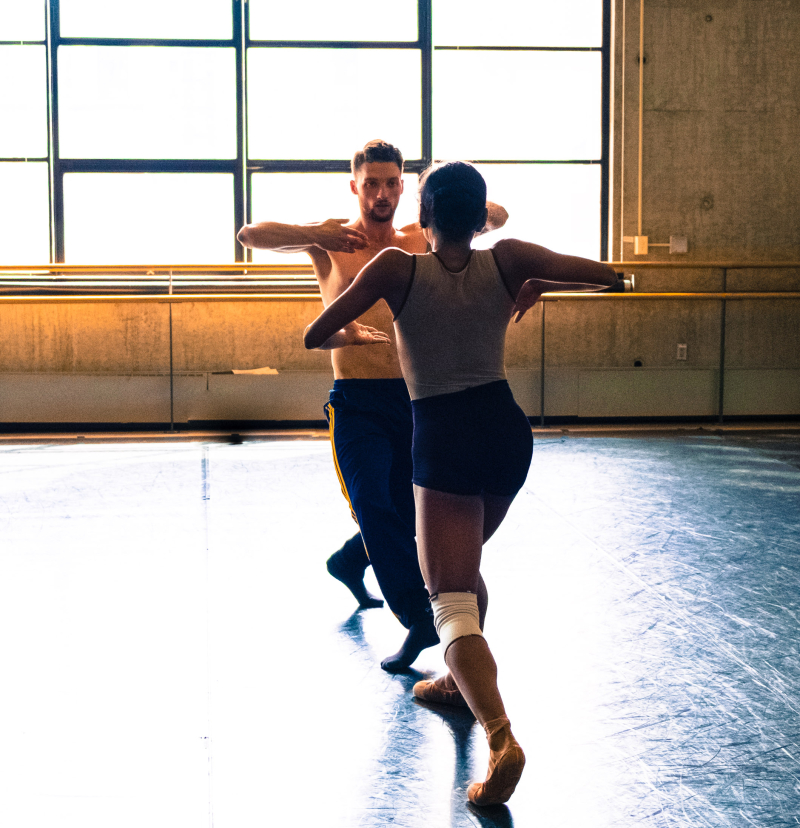
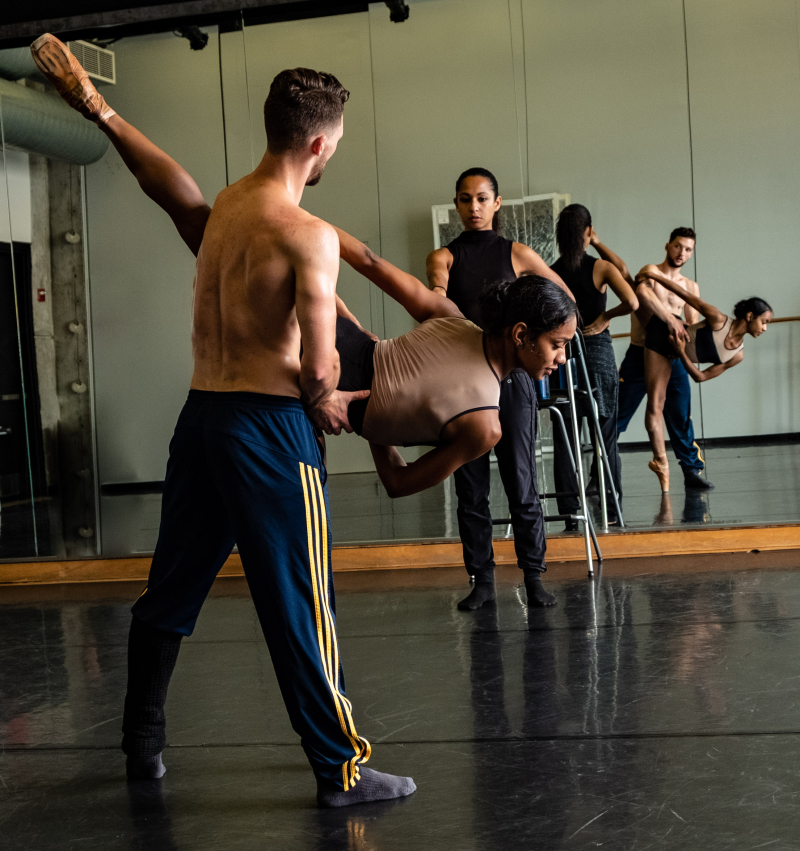
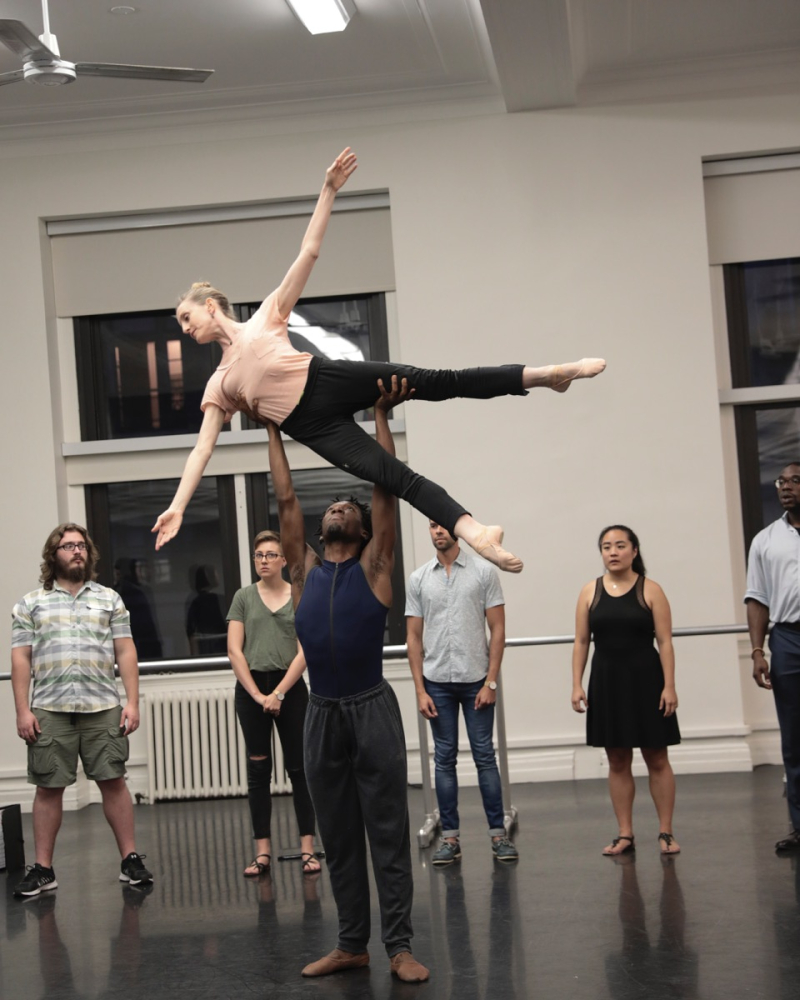
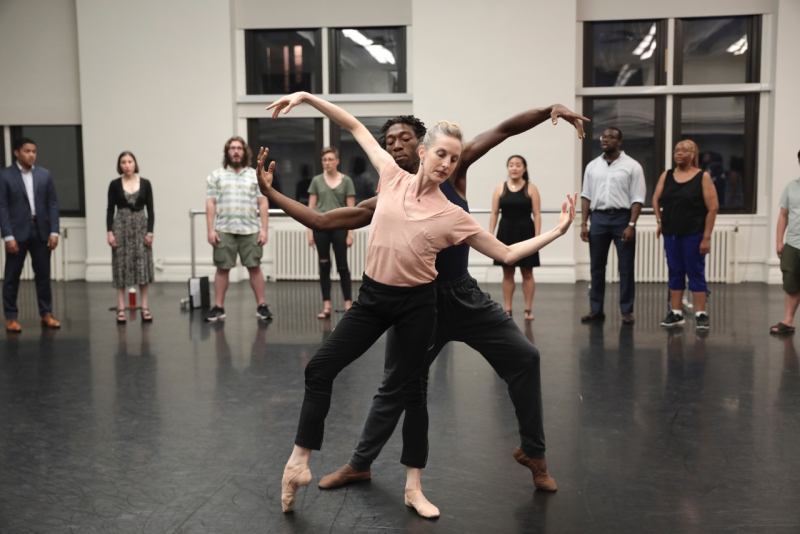
    Tuesday July 24th – Photographer Dmitry Beryozkin and I stopped in at the Baryshinikov Arts Center this afternoon where choreographer Claudia Schreier’s newest creation was in rehearsal. The pas de deux is Claudia’s third commission from the world-renowned Vail Dance Festival: in 2016 she debuted there with SOLITAIRE, and last Summer, TRANQUIL NIGHT, BRIGHT AND INFINITE was presented on the Vail stage.

    Claudia’s new ballet, as yet untitled, it set to a score by Gabriela Lena Frank which is a joint commission by the Vail Festival and Brooklyn Rider. Two charismatic dancers from Ballet Hispanico, Dandara Veiga and Chris Bloom, are performing Claudia’s pas de deux, while the full company of Ballet Hispanico will also be dancing at the Vail Festival in a program that includes their brilliant rendering of CARMEN.maquia, choreographed by Gustavo Ramírez Sansano.

    Dmitry Beryozkin’s images from today’s rehearsal:

    DSCF4322

    DSCF4378

    DSCF4416

    DSCF4464

    DSCF4505

    DSCF4634

    DSCF4682

    DSCF4698

    DSCF4810

    DSCF4822

    DSCF5004

    All photographs by Dmitry Beryozkin.

    ~ Oberon

  • Upcoming: Barnard/Columbia Dances @ NYLA

    23622175_1575201285874852_874849280968044420_n

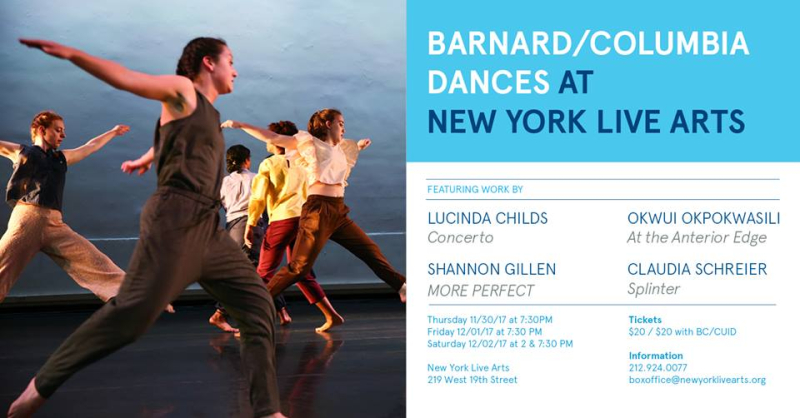
    The premiere of Claudia Schreier’s ballet SPLINTER is one of the works featured on a program at New York Live Arts by Barnard/Columbia Dances. The performance dates are November 30th, December 1st, and two shows on December 2nd. Tickets and more information here.

    Claudia’s SPLINTER gets its name from the Marc Mellits score from which she draws six of eight movements for her dancework. Each movement is named after a type of tree. It’s quite dynamic music, with passing moments of reverie. 

    L1900691

    Above: Claudia Schreier and dancers in rehearsal

  • TURANDOT @ The Met

    Turandot0607.07

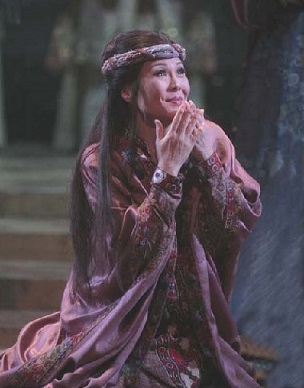
    Above: Hei-Kyung Hong as Liu in a Beatriz Schiller/Met Opera photo

    ~ Author: Oberon

    Thursday November 16th, 2017 – I invited my friend Claudia Schreier to this evening’s performance of TURANDOT at The Met; I wanted her to experience one of last truly grand opera productions in the Met’s repertory. The presence in the cast of Hei-Kyung Hong as Liu was a major factor in choosing this particular evening.

    As at every performance of TURANDOT I’ve attended in the past 30 years, the house was packed. And, as at every Hei-Kyung Hong performance I have attended at The Met, the soprano’s presence in the cast drew large numbers of Asian opera fans. It turned out to be – yet again – Ms. Hong’s night. 

    The evening got off to a sluggish start: Carlo Rizzi’s pacing of the Mandarin’s opening address was slower than the MTA and caused baritone Jeongcheol Cha to dig deep for sufficient breath to sustain the phrases of his proclamation. Later, Rizzi thoughtlessly allowed too much orchestral volume at times, undermining expressive opportunities for his singers.

    23658727_10156216374773690_1557430116954388631_n

    The towering figure of Bulgarian basso Giorgi Kirof as Timur (above, taking a curtain call) came onto the scene; in his Met debut, Mr. Kirof’s looming stature gave Ms. Hong’s petite figure as Liu an almost childlike aspect. The basso – a stalwart of the Sofia National Opera – gave a vocally moving performance, reaching emotional heights in the heartbreak of “Liù…Liù…sorgi! È l’ora chiara d’ogni risveglio!” which literally choked me up.

    Alexey Lavrov was a terrific Ping, with a big, warm sound; his “Ho una casa nell’Honan…” was superbly sung. As his sidekicks Pang and Pong, Tony Stevenson and Eduardo Valdes gave characterful singing. I actually love the scene of the three ministers, which Puccini orchestrated so precisely. As the Emperor Altoum, Ronald Naldi’s voice ‘spoke’ clearly – all the way from Amsterdam Avenue.

    Aleksandrs Antonenko had a fine evening as Calaf. He measures out the voice thoughtfully in Act I, saving up for the arduous singing ahead. But his “Non piangere, Liu” was finely judged, revealing veins of beauty in his powerhouse voice. Throughout the Riddle Scene, the tenor scored with dramatically-lit singing, and joined Oksana Dyka’s Turandot on a firm and sustained high-C at the end of “In questa reggia“. Mr. Antonenko also took – and held – a strong high-C at “No, no, Principessa altera! ti voglio ardente d’amor!

    Mr. Antonenko’s “Nessun dorma” was persuasively sung, reveling in the music’s inherent lyricism; he pulled off the climactic phrase impressively and managed to both acknowledge and forestall a wave of ‘bravos!’ by holding up his hand, letting the opera flow forward. The tenor’s singing in the final duet was first-rate, with some lovely expressions of tenderness as Turandot succumbed to him.

    Oksana Dyka’s voice is slender of tone yet strong of projection. The top range doesn’t blossom but the notes are there; it took a few phrases for the sound to shake loose. As she moved downstage in the course of “In questa reggia” the voice began to speak into the house with increasing effect. Her Riddle Scene was filled with characterful expression: fire and ice. Following her collapse and her desperate plea to her father, the scene turned dramatically absorbing.

    Ms. Dyka, her hair down and nearly prone with despair, is literally overcome with wonderment when Calaf/Antonenko offers her a way out of the bargain. She simply stares at him, realizing that this is a different kind of man than she’s accustomed to dealing with. Then he gently helps her to her feet. The chemistry between the two singers here was genuine; I’ve never seen that moment done quite that way.

    Ms. Dyka’s voice seemed freer in Act III, and she was sustaining the phrases more and reveling in the upper range notes, holding them to generate increased excitement. Her “Del primo pianto” was movingly sung, opening up her humanity which has been bound in ice for so long. In the final moments of the opera, the soprano’s “Padre augusto…Conosco il nome dello straniero! Il suo nome è…Amor!” had a silvery gleam and a prolonged top-B.

    Hei-Kyung Hong’s Liu has captivated audiences time and again in her long Met career. As someone who has seen and heard so many splendid sopranos essay the role of Liu – people like Moffo, Freni and Caballe – I feel Hei-Kyung’s stands at the pinnacle both for her physical perfection and her deeply moving singing.

    If her Wikipedia page is accurate, Hei-Kyung is now 58 years old. Her voice has retained its freshness thanks to her wisdom in choosing repertoire. Tonight both the beauty of her sound and the instinctive rightness of her phrasing gave the music a deeply feminine quality; she also has a feeling for the Italianate style that escapes many non-Italian-born singers. Both her arias were as finely sung as I’ve ever heard them, and her death scene was truly heart-rending. She received a vociferous ovation, very much deserved.  

    All evening, the Met Orchestra made marvelous music, with particular magic from the violin of concertmaster David Chan who made so many of his phrases shine. Likewise, the chorus were at their most fervent and full-voiced.

    Turandot0910.06 sohl

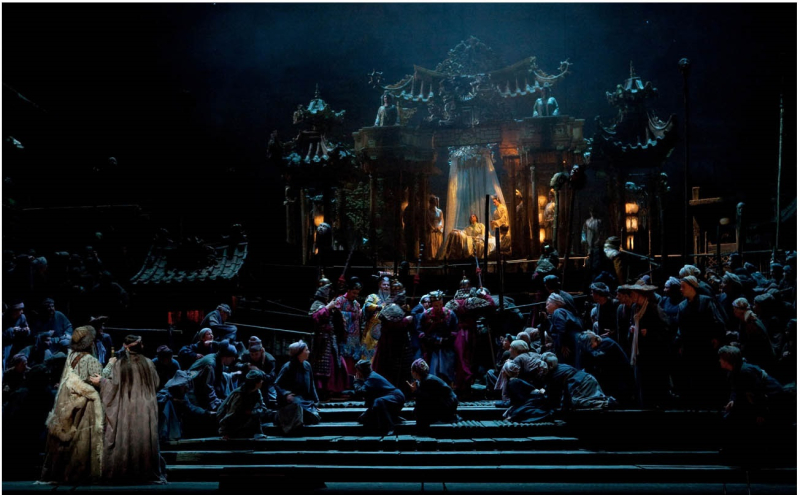
    Above: Act I production photo by Marty Sohl/Met Opera

    Some of the original staging has been altered and to me this weakens the overall effect of the opera. And the crowd scenes seem less crowded than in the past. The 45-minute intermission after the 35-minute first act would have been unbearable had I not had the one-and-only Claudia Schreier to keep me company.

    Catch the curtain calls here, with the charming episode of the “missed bouquet”.

    ~ Oberon

  • Claudia Schreier & Company: Gallery

    AniCollier_DSC04839

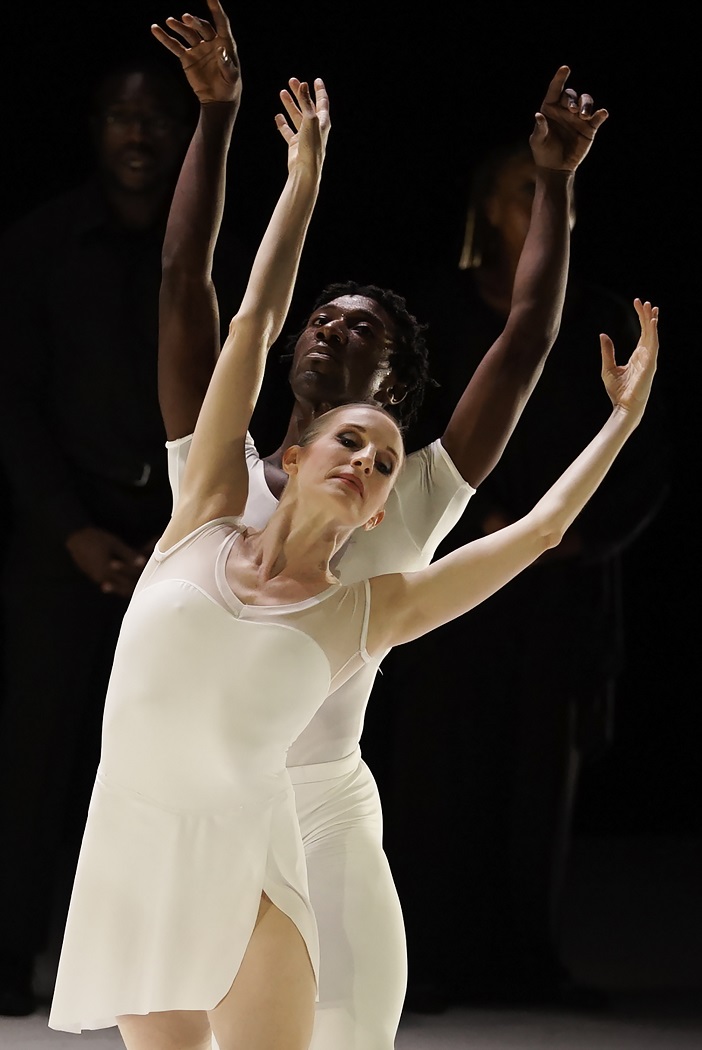
    Above: Wendy Whelan and Da’Von Doane in Claudia Schreier’s VIGIL; photo by Ani Collier. VIGIL is danced to a cappella choral music, performed onstage by Tapestry

    Here are some images from photographer Ani Collier of Claudia Schreier & Company‘s recent program at The Joyce. Read about the performance here.

    AniCollier_DSC04761

    Wendy Whelan with Da’Von Doane (of Dance Theatre of Harlem) in VIGIL

    AniCollier_DSC04954

    Wendy and Da’Von: VIGIL

    AniCollier_DSC04987

    New York City Ballet’s Cameron Dieck and Jared Angle, with Da’Von Doane and NYCB soloist Unity Phelan in SOLITAIRE

    AniCollier_DSC05017

    Unity Phelan and Da’Von Doane: SOLITAIRE

    AniCollier_DSC05055

    New York City Ballet stars Unity Phelan and Jared Angle: SOLITAIRE

    AniCollier_DSC05060

    Unity & Jared in SOLITAIRE

    AniCollier_DSC05062

    Unity & Jared in SOLITAIRE

    AniCollier_DSC05243

    Elizabeth Claire Walker (soloist, Los Angeles Ballet) and Jared Angle in TRANQUIL NIGHT, BRIGHT AND INFINITE

    AniCollier_DSC05329

    Elizabeth Claire Walker and Jared Angle in TRANQUIL NIGHT, BRIGHT AND INFINITE

    AniCollier-DSC05825

    Elizabeth Claire Walker in CHARGE; Ms. Walker was recently (and aptly) described by the L.A. Times as “impossibly glamorous” when she danced the Siren in Balanchine’s PRODIGAL SON at Los Angeles Ballet.

    AniCollier-DSC05868

    Tiffany Mangulabnan with Elizabeth Claire Walker in CHARGE.

    And finally, a series of Ani Collier’s images of Wendy Whelan in the mysterious and marvel-filled solo created on her by Claudia Schreier, and danced to music by Marc Mellits: THE TRILLING WIRE.

    AniCollier_DSC05508

    AniCollier_DSC05525

    AniCollier_DSC05560

    AniCollier_DSC05587

    AniCollier-DSC05593

    AniCollier_DSC05650

    All choreography by Claudia Schreier; all photography by Ani Collier.

  • Claudia Schreier & Company @ The Joyce

    6Q5A0441

    Above: Da’Von Doane (of Dance Theater of Harlem) and Elizabeth Claire Walker (from Los Angeles Ballet) in Claudia Schreier’s TRANQUIL NIGHT, BRIGHT AND INFINITE @ The Joyce; photo by Travis Magee

    Author: Oberon

    Friday July 21st, 2017 – Tonight’s performance by Claudia Schreier & Company at The Joyce was something I had been looking forward to ever since the choreographer confided to me last Fall the news that she had been invited to show a full evening of her work at the iconic dance venue. Having put together an impressive program of her ballets which explore a range of moods and musical styles, Ms. Schreier assembled a simply gorgeous troupe of dancers and also summoned a choir, a pianist, a clarinet virtuoso, and a string quartet to make the performance one of the most impressive and satisfying in many a Gotham moon.

    I first became aware of Claudia Schreier’s choreography thru her creations for Columbia Ballet Collaborative; those elements in dance-making that should be fundamentals (but so often aren’t) – musicality, structural integrity, showing off dancers in the best possible light, and an underlying sense of passionate commitment – are givens when it comes to Ms. Schreier’s work. 

    It was one particular piece – her 2013 ballet HARMONIC set to a dazzling score by the Dutch composer Douwe Eisenga – that heralded a great leap to prominence for the choreographer. After its premiere at Columbia, the ballet was taken up by Craig Salstein’s Intermezzo Dance Company for performances at Vassar.

    And then, in 2014, HARMONIC won Claudia Schreier the top prize in the Breaking Glass Competition for Female Choreographers. The shouts of joy from the crowd as HARMONIC ended that night signaled the emergence of a major force in the dance world, and things have rolled on with a sense of inevitability since then. A year after winning their Competition, Breaking Glass presented a full evening of Schreier choreography at the Ailey Citigroup Theatre which was a smashing success. Claudia then became the second woman to hold the Virginia B Toulmin Fellowship for Female Choreographers at New York University’s Center for Ballet and Arts. A ‘big ballet’ (CHARGE) for Ballet Academy East, and an intimate quartet (SOLITAIRE) for the Vail International Dance Festival (2016) have shown Ms. Schreier’s range. Commissions and future projects will keep her busy for months to come.

    And so this evening’s Joyce program provided a welcome vision of what Claudia Schreier has accomplished to date, where she stands at the moment, and where it all may lead her in the future.

    ~~~~~~~~~~~~~~~~~~~~~~~~~~~~~~~~~~~~~~~~~~~~~~~~~~~~~~~~~~~~~~~~~~~~~~~~~~~~~~~~~~~~~~~~~~~~

    On Valentine’s Day, 2016, Claudia and I attended a concert which was part of the New York Philharmonic Ensembles series at Merkin Hall. A stellar group of NY Phil players opened their program with the Piano Quintet – composed in 2010 – of Ellen Taafe Zwilich. After the quintet’s striking first movement, I whispered to Claudia: “That’s your next ballet!” and she whispered back, “I was thinking the exact same thing!” And…voilà!…a year and a half later, we have WORDPLAY.

    6Q5A0170

    WORDPLAY is an impeccably-crafted duet, danced by New York City Ballet’s Unity Phelan and Jared Angle (above, photo by Travis Magee). Clad in sleek red-and-black body tights from designer Martha Chamberlain, the dancers mirror the changing moods of the Zwilich score in a pairing that shifts from intimate to gently ironic. Jared Angle, always my ideal as a danseur noble, looked thoroughly at home in the supple Schreier choreography, and his partnering skills are to die for. Ms. Phelan’s technical authority is vivid, yet I can’t quite get a sense of the woman inside the dancer.

    6Q5A0193

    Above: Wendy Whelan, Da’Von Doane, and members of Tapestry in Claudia Schreier’s VIGIL; photo by Travis Magee 

    VIGIL is set to choral works by Tomás Luis de Victoria and Sergei Rachmaninoff which were performed live tonight by the choral group Tapestry. Their achingly beautiful harmonies evoked such feelings of peace: an escape to a realm of purity and truth from an ever-darkening world. Danceworks which can move us to the very depths of our souls come along but rarely; VIGIL is in that rarefied echelon. 

    6Q5A0240

    With the singers of Tapestry, clad in black, ranged in a semi-circle onstage, the stage lights came up on the heavenly sight of Wendy Whelan poised aloft, borne up on the strong arms of Da’Von Doane. Together they moved thru the choreography, which somehow manages to be both elegant and soulful, in a state of grace. As Da’Von manipulated his gossamer-light ballerina with consummate skill thru lifts and sustained poses, they seemed like angels on Earth. Wendy’s other-worldly beauty and serenity as she floated weightlessly in her partner’s hands was something to behold.   

    6Q5A0300

    As the lights began to fade on the final moments of VIGIL, I wanted so desperately to remain in that beautiful place with Wendy, Da’Von , and the singers of Tapestry. I was put in mind of the ecstatic words of the Dyer’s Wife in Act II of Richard Strauss’s DIE FRAU OHNE SCHATTEN; upon being shown a vision of the life she has always desired, she cries out: “O Welt in der Welt! O Traum im Wachen!” (“O world within the world! O waking dream!”)… 

    But if we cannot linger long in paradise, then let it be Shostakovich who calls to us: the gentle opening of his Piano Quintet, Opus 57, played by pianist Emily Wong, opens Claudia Schreier’s SOLITAIRE, which was first seen at last summer’s Vail Festival. Unity Phelan leads off the ballet alone to that pensive piano solo; she is soon joined by three men: Jared Angle, Da’Von Doane, and Cameron Dieck, as the strings take up a chorale-like passage.

    The Shostakovich section ends with the first of two sensational lifts of Ms. Phelan by Jared Angle. The moderato pastorale from Alfred Schnittke’s Piano Quintet is the setting for their ensuing duet, which reaches a striking climax with a powerful, very exposed overhead lift. 

    6Q5A0356

    Let us now praise the superb musicians (above) who so beautifully played the Shostakovich/Schnittke scores used in SOLITAIRE: Emily Wong (piano), Lily Holgate and Kenneth Trotter (violins), Drew Ford (viola), and Julia Henderson (cello).

    Here are some of Travis Magee’s images from SOLITAIRE:

    6Q5A0366

    Da’Von Dane and Unity Phelan

    6Q5A0374

    Unity Phelan and Jared Angle

    6Q5A0389

    Unity Phelan and Jared Angle

    During the intermission, everyone was abuzz about the choreography, the music, and the dancing. It was wonderful to find so many dance-world luminaries among the crowd: Deborah Wingert Arkin and her daughter Ava; Christina Lynch Markham and Madelyn Ho from Paul Taylor; Miro Magloire, Brian Brooks, Vincent Paradiso, Richard Isaac, Jere Hunt…

    6Q5A0409

    Live music set the evening’s second half on its way with a brilliant performance of Leonard Bernstein’s Sonata for Clarinet and Piano (1942). Above: Ms. Wong was again delightfully at the keyboard with Weixiong Wang delivering a performance of the clarinet part with delicious tone, fluent technique, vastly appealing subtle moments, and a lively personality to boot. This ballet, with the intriguing title TRANQUIL NIGHT, BRIGHT AND INFINITE, opens with the five dancers in silhouette.
    6Q5A0453

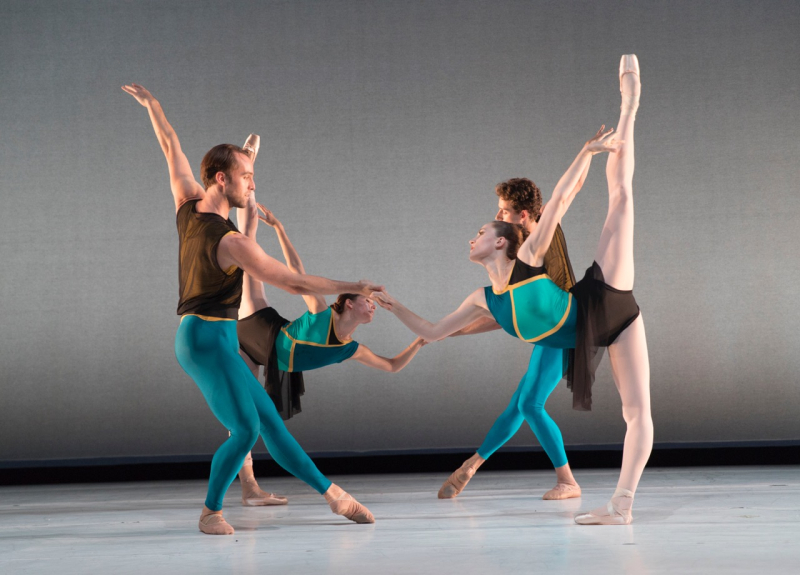
    As the lights come up, Martha Chamberlain’s tourquoise/sea-green/black costumes catch the eye – above, Jared Angle, Unity Phelan, Elizabeth Claire Walker, and Dameron Dieck; photo by Travis Magee. The choreography is agile, sometimes stylized, with comings and going and brisk partnering trade-offs. Joined by Da’Von Doane, the dancers follow the music into a lyrical state…

    6Q5A0522

    …as Ms. Walker and Mr. Angle dance a pas de deux while their colleagues eavesdrop. The ballet ends with an upbeat feeling.

    More images from TRANQUIL NIGHT, BRIGHT AND INFINITE courtesy of Travis Magee:  

    6Q5A0545

    Unity Phelan and Da’Von Doane

    6Q5A0565

    Unity Phelan and Cameron Dieck

    Solo danceworks for women loom large in my memory-book: seeing Peggy Lyman dance The Incense at Jacob’s Pillow; Kaitlyn Gilliland debuting at New York City Ballet in Eliot Feld’s Étoile Polaire; Ioanna Toumpakari enrapturing me with Andonis Foniadakis’ Rite of Spring; a whole evening of solos from the magical Miki Orihara at La MaMa…the list goes on and on. Tonight, Claudia Schreier’s THE TRILLING WIRE, danced by Wendy Whelan, wrote a whole new chapter in my dance diary: an unforgettable piece performed by Terpsichore’s favoured handmaiden.

    The choreography for THE TRILLING WIRE is different from all other Schreier choreography I have seen. And I’m sure it posed challenges for the dancer; but Wendy Whelan has risen to every challenge that’s ever come her way and thus she turned this unusual work into a full-fledged triumph.

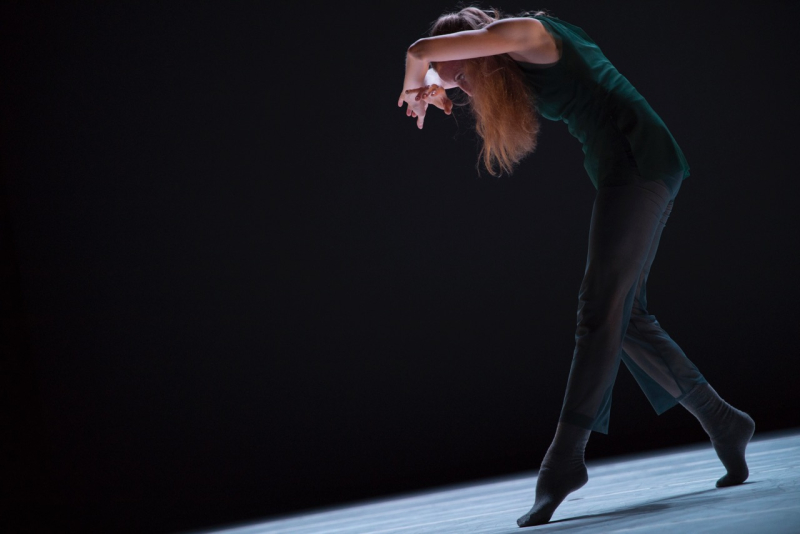
    With the string players back in the pit to play movements of three Marc Mellits string quartets, the ballet opens with Wendy – hair down, in a casual outfit and wearing socks – facing upstage. She begins to move, and within about three seconds we are totally under her spell: her most subtle gestures lure the viewer in. A flow of dance commences, with a searching air and marked by pauses as if she was examining the terrain along which her quest carries her. Mesmerizing at every single moment, Wendy transforms a prayerful gesture into an act of wonderment. 

    As the musical pace steps up, the gorgeous movement quality becomes light and airy. Wendy’s arms and hands are hypnotic, and even her hair is dancing. As the strings stutter, the classic notion of “dancing like no one is watching” comes to mind.

    Then out of the blue comes a walkabout: Wendy simply circles the stage. But even this simple act has such resonance. To pulsing music, fabulous movement ensues; veering from lyrical to stylized, turns and gentle leaps propel the dancer as the pace quickens. A sort of coda seems to indicate the solo is about to end, but suddenly Wendy stops, only to embark on a slowish passage with animated gestures. She has made the music, the choreography, and the very space itself her own. The audience erupted in a tumult of cheers and applause after having savoured this unparalleled dance experience. Graciously sharing the acclaim with the musicians, Wendy was engulfed in a flood of love.

    Here’s a gallery of Travis Magee’s images of Wendy Whelan in Claudia Schreier’s THE TRILLING WIRE:
    6Q5A0594

    6Q5A0603

    6Q5A0633

    6Q5A0678

    6Q5A0682

    6Q5A0706

    6Q5A0720

    I simply cannot get over the power and the glory of Wendy’s performance!
    6Q5A0951

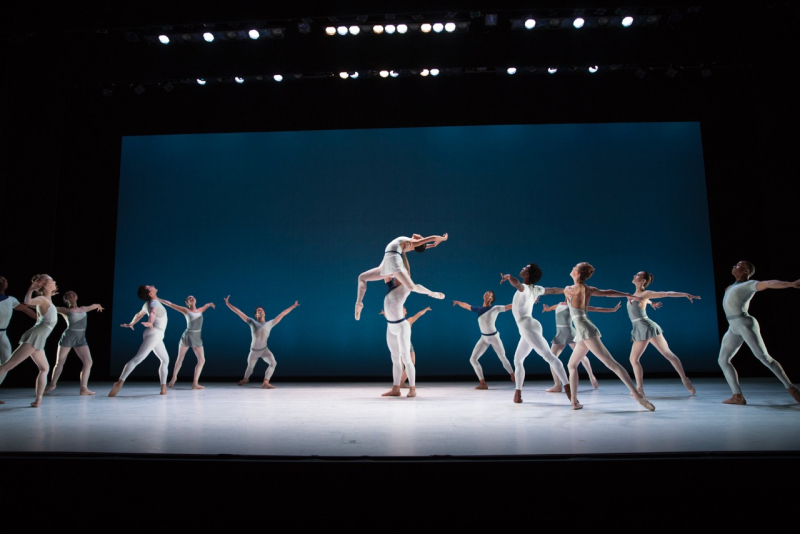
    Above: the final moment of CHARGE with Tiffany Mangulabnan is a spectacular lift by Gilbert Bolden III    

    The evening ended thrillingly with CHARGE. Douwe Eisenga’s Piano Concerto, Movement III is the musical font from which this choreographed blessing flows. It is a work for large ensemble, and every dancer in that ensemble matters. There’s no standing about or idle promenading: this is a ballet that is meticulously structured yet seemingly bursting with spontaneity. The eye is constantly allured from one heavenly body to another as Claudia’s bevy of ballerinas and their handsome cavaliers flash thru the combinations and partnering motifs with élan.

    The driven pace of the music – with fleeting moments of sparkle – propels various smaller ensemble sub-divisions into a vast tapestry of dance. Visual polyphony has seldom been so appealing: with endless comings and goings, one hardly knows where to settle one’s gaze next.

    Travis Magee caught these moments from CHARGE:
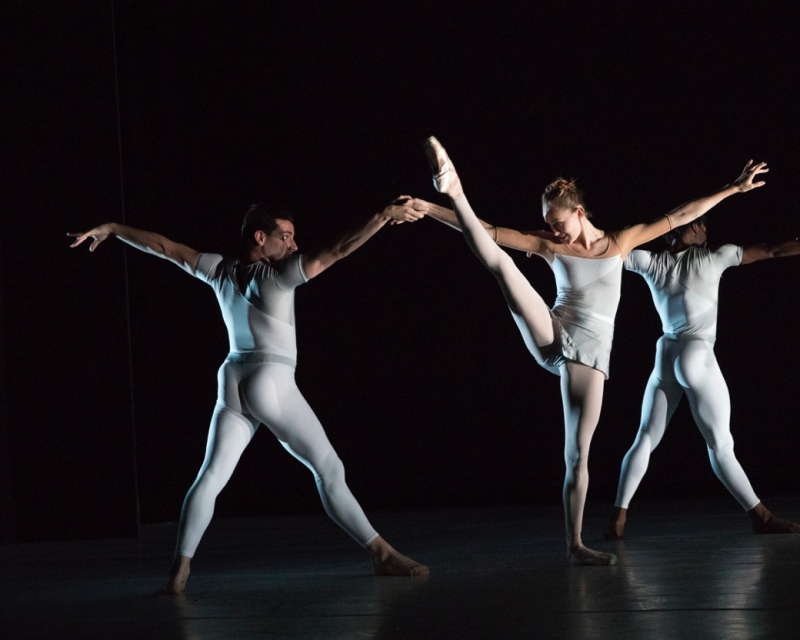
    6Q5A0757

    Craig Wasserman and Holly Curran

    6Q5A0816

    Ramona Kelley and Gabriel Hyman

    6Q5A0940

    For me, this ballet was especially gratifying to watch thanks to the presence in the cast of a number of ballerinas who I count as wonderful friends: thus, thru every moment of CHARGE, I was feeling a very personal connection to what was happening onstage: thanks…and roses…to Holly Curran (who opens CHARGE alone onstage, luminous in the light), Amber Neff, Elinor Hitt, Ramona Kelley, Cassidy Hall, and Tiffany Mangulabnan. New to me were Evelyn Kocak, Jasmine Perry, and Jordan Miller. Beauties, all!

    Da’Von Doane, having danced passionately all evening, looked wonderfully fresh and vital here: he and the other men have so much to do in CHARGE, from whirlwind combinations to tricky partnering motifs. Great work from all: Samuel Akins, Michael Breeden, Gabriel Hyman, Francis Lawrence, Craig Wasserman, and Gilbert Bolden III. Mr. Bolden, who I believe is about to join NYC Ballet, is a tall and powerful presence: he effortlessly put Tiffany Mangulabnan into an overhead lift to mark the end of this spectacular ballet.
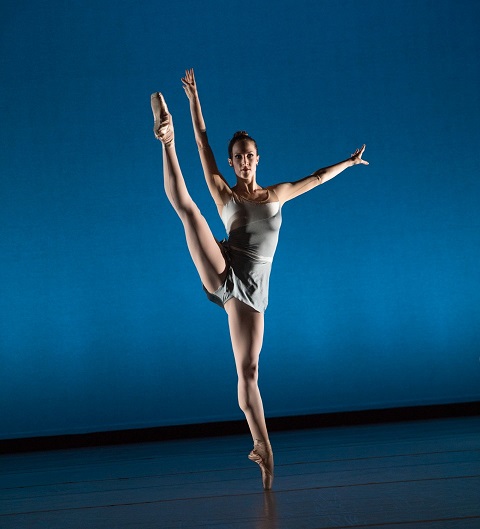
    6Q5A0897

    As if we had not had enough thrills all evening, watching Elizabeth Claire Walker (above) toss off a series of demi-turns while sending her extension skyward was the frosting on the cake. This combination, which made me think of Gamzatti’s coda in Bayadere, just delighted me thoroughly. We don’t get to see Liz nearly often enough here in New York City.

    The curtain fell, then rose again as the packed house went wild for the dancers. Wendy, Unity, Jared, and Cameron – already in street clothes – joined the cast of CHARGE onstage. Finally, Cameron brought Claudia Schreier out onto the stage; the entire audience stood up and literally screamed at the top of their lungs. It seemed actually that the roof might cave it. Such delirium, and so well-deserved.

    Many thanks to Travis Magee for producing the images for this article.

    Oberon

  • Prelude: Claudia Schreier & Co

    6Q5A0113

    Claudia Schreier & Co will be at The Joyce on July 21st and 22nd, 2017, as part of the theatre’s two-week ballet festival. The performances are sold out.

    On Wednesday evening, July 19th, photographer Travis Magee and I stopped in at the Barnard College studios where rehearsals have been taking place. The dancers were running thru CHARGE, Claudia’s large-scale ballet set to a vibrant score by the Dutch composer Douwe Eisenga. For this ensemble work, Claudia has gathered together an outstanding group of dancers; although it’s an ad hoc ensemble, they’ve already developed the feeling of a Company.

    Here are more of Travis’s images from CHARGE:

    6Q5A0203

    Elinor Hitt and Craig Wasserman

    6Q5A0319

    Elizabeth Claire Walker

    6Q5A0396

    Claudia & Company

    While the dancers caught their breath after two runs of CHARGE, members of the choral group Tapestry filed into the studio and arranged themselves in a semi-circle to sing the music of Tomás Luis de Victoria and Sergei Rachmaninoff which comprise the setting of Claudia’s breathtaking pas de deux, VIGIL.

    6Q5A0482

    VIGIL is danced by guest artist Wendy Whelan and Dance Theater of Harlem’s Da’Von Doane. Working together for the first time, Wendy and Da’Von have formed a partnership based on resonant technique and spiritual affinity. Their dancing is borne up by the heartfelt, resplendent harmonies of Tapestry, making this is a dance experience sans pareil.

    More of Travis Magee’s photos from VIGIL

    6Q5A0506

    6Q5A0523

    6Q5A0558

    The Joyce performances by Claudia Schreier & Co will further feature ballets set to music of Leonard Bernstein, Marc Mellits, Dmitri Shostakovich, Alfred Schnittke, and Ellen Taafe Zwilich. Unity Phelan, Jared Angle, and Cameron Dieck – all from New York City Ballet – will appear in prominent roles.

    All photos by Travis Magee.

  • Duo Gagnant: French Music for Two Pianos

    Maxresdefault

    Wednesday September 21st, 2016 – Dan K Kurland invited me to this concert of French music – from the familiar to the relatively obscure – for two pianos at Juilliard’s Paul Hall. The program looked very inviting, and since dance themes prevailed throughout the hour-long presentation, it was especially agreeable to have choreographer Claudia Schreier sitting next to me.

    We arrived just moments before the house lights dimmed; Paul Hall was nearly full, and we found seats in the front row, in the aisle. The balance of sound may have been slightly off, but it was a very interesting perspective visually.

    ~ POULENC L’embarquement pour Cynthère
    Pianists: Dan K Kurland and Jonathan Feldman

    Opening with this 1951 Poulenc gem – music that is so quintessentially French – the tone for the entire evening was set. Described as a Valse-Musette, this piece delights from its vivacious start to its ironic finish. Though Dan Kurland was not originally schedule to play tonight, he did…and wore red socks into the bargain, a subtle nod to a beloved French pianist. Joining Dan was Jonathan Feldman, chairman of Juilliard’s Collaborative Piano Department, making for a brilliant performance. 

    ~ DEBUSSY Prélude à l’après-midi d’une faune
    Pianists: Michał Biel and Brian Zeger

    Shifting moods, we are plunged into the erotic mystery of Claude Debussy’s Prélude à l’après-midi d’une faune in a splendid performance by Michal Biel and Brian Zeger. The composer completed his symphonic poem Afternoon of a Faun in 1894, and published a version for two pianos the following year. In a rapture-inducing performance of perfumed sonorities, the two pianists beautifully summoned up the music’s alternating currents of delicacy and turbulent passion. I so enjoyed seeing Brian Zeger again, here in the hall where I first heard him play many moons ago. 

    ~ FRANÇAIX Huit Dances Exotiques
    Pianists: Cherie Roe and Arthur Williford

    Dating from 1957, these eight miniatures represent the “newest” music on the program. Pianists Cherie Roe and Arthur Williford jumped right into the music hall swing-and-sway of the opening Pambiche. Sprightly syncopation and etched-in miniature glissandi delighted us in Baiao, and more syncopation followed in Nube gris; both here and in the lively Merengue that follows, sudden endings took us by surprise. The rolling rhythm of the Mambo was further enhanced by a mid-song change of key. Both the urbane, casually shrugging Samba and the bouncy swirl of the Malambeano caught us off-guard by ending in mid air. The final Rock ‘n’ Roll, wryly jazzy, would have caused my old friend Franky to exclaim, “This is so jive!” The two pianists seemed to be having a blast with this music.   

    ~ CHAMINADE Duo Symphonique
    Pianists: Dror Baitel and Nathan Raskin

    Cécile Chaminade, the sole female composer to be included on this evening’s program, wrote her Duo Symphonique in 1905. Of all the music heard this evening, this was the most traditionally “classical” in feeling. It opens operatically, runs on to swirls of notes and later to fanfare-like motifs. The highest and lowest registers of the piano are explored, the vast range adding to the truly symphonic quality of the piece: “…lyrical grandeur…” was one of my descriptive scrawls. A more delicate theme heralds a song-like interlude, followed by a build-up and an a grandiose finale. I loved every minute of it, and was very impressed by the expert playing of Dror Baitel and Nathan Raskin. 

    ~ SAINT-SAËNS Danse Macabre
    Pianists: Jinhee Park and Ho Jae Lee

    Saint-Saëns’ Danse Macabre is a musical setting of a poem by the French poet Henri Cazalis, based on the allegory of the ‘dance of death’. Pianists Ho Jae Lee and Jinhee Park maintained communication across the pianos, which in their sleek blackness took on a coffin-like aspect. The music rises from the depths to jangling heights, descending passages seem to point to the grave (or to hell), and at one point the very lowest notes of the keyboard resound. Becoming wildly dramatic, the music speeds up before turning more pensive and ending in sudden death. The audience took special delight in this piece, and in the two players. 

    ~ DEBUSSY Petite Suite
    Pianists: Katelan Terrell and Michał Biel

    Debussy’s Petite Suite was published in its original four-hands version in 1889; transcriptions for solo piano and for violin and piano followed in 1906. The work found great popularity in a 1907 adaptation for chamber orchestra by Henri Büsser. Tonight the four-hands version was played by Katelan Terrell and Michal Biel, seated together at a single keyboard. Commencing in dreamy softness, the suite continues with evocations of Spring, very slight tinges of gypsy allure, contrasts of rhythm and lull, and bursts of joyous rippling in the higher range which maintain brightness. The final movement seems very ‘Parisian’, and, after an interlude, we are carried back to the boulevards by our two sophisticated pianists.

    ~ RAVEL La Valse
    Pianists: Sora Jung and Adam Rothenberg

    Best known (especially to Balanchine admirers) in its orchestral version, Ravel’s La Valse was transcribed by the composer twice, once for solo piano and again for two pianos. The first performance of the piano duo version was given at the home of Misia Sert, with Ravel himself one of the pianists. Misia, one of my favorite characters in the history of music and dance, was the work’s dedicatee. Among those present at Misia’s salon for the premiere performance were Serge Diaghilev, Igor Stravinsky, Francis Poulenc, and Léonide Massine: how I wish I could have been there! 

    The mystery of the opening of La Valse loomed up from the depths as pianists Sora Jung and Adam Rothenberg launched their intense and remarkable performance. At last the waltz struggles to the surface, and the two pianists delight in flinging myriad colours onto the sonic canvas. Thunderous intrusions alternate with madly ironic swirls of dance. This is music on the verge of madness. 

    Throughout the Ravel, images of two beloved dancers – Janie Taylor and Sébastien Marcovici – overtook my imagination: they danced this Balanchine masterwork at their New York City Ballet farewell performance in 2014.

    Tonight, as all the pianists appeared for a bow on the stage of Paul Hall at the end of the concert, an exuberant standing ovation greeted them. A really wonderful evening!

  • Claudia Schreier’s SOLITAIRE @ Vail

    Unity Phelan, Zachary Catazaro and the Catalyst Quartet in Claudia Schreier's Solitaire. Photo by Erin Baiano (3)

    Above: New York City Ballet’s Unity Phelan and Zachary Catazaro in the pas de deux from Claudia Schreier’s SOLITAIRE; photo by Erin Baiano for the Vail International Dance Festival

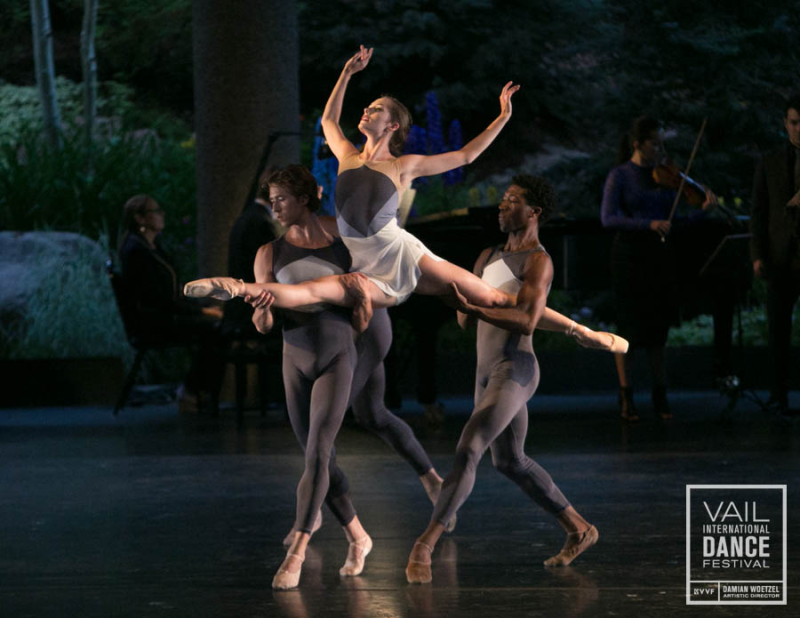
    SOLITAIRE, the newest ballet from choreographer Claudia Schreier, premiered at the Vail International Dance Festival on August 8th, 2016. The ballet was danced by Unity Phelan, Zachary Catazaro, Joseph Gordon (all of New York City Ballet) and Da’Von Doane (of Dance Theater of Harlem). The music, by Dmitri Shostakovich and Alfred Schnittke, was performed live by New York City Ballet‘s pianist deluxe Cameron Grant, and the Catalyst Quartet.

    I’m so pleased to share this video recording by Nel Shelby Productions of this new ballet’s world premiere performance: LINK

    Erin Baiano photographed the premiere of SOLITAIRE, and here are some of her wonderful images:

    Unity Phelan, Joseph Gordon, Da'Von Doane, pianist Cameron Grant and the Catalyst Quartet in Claudia Schreier's Solitaire. Photo by Erin Baiano
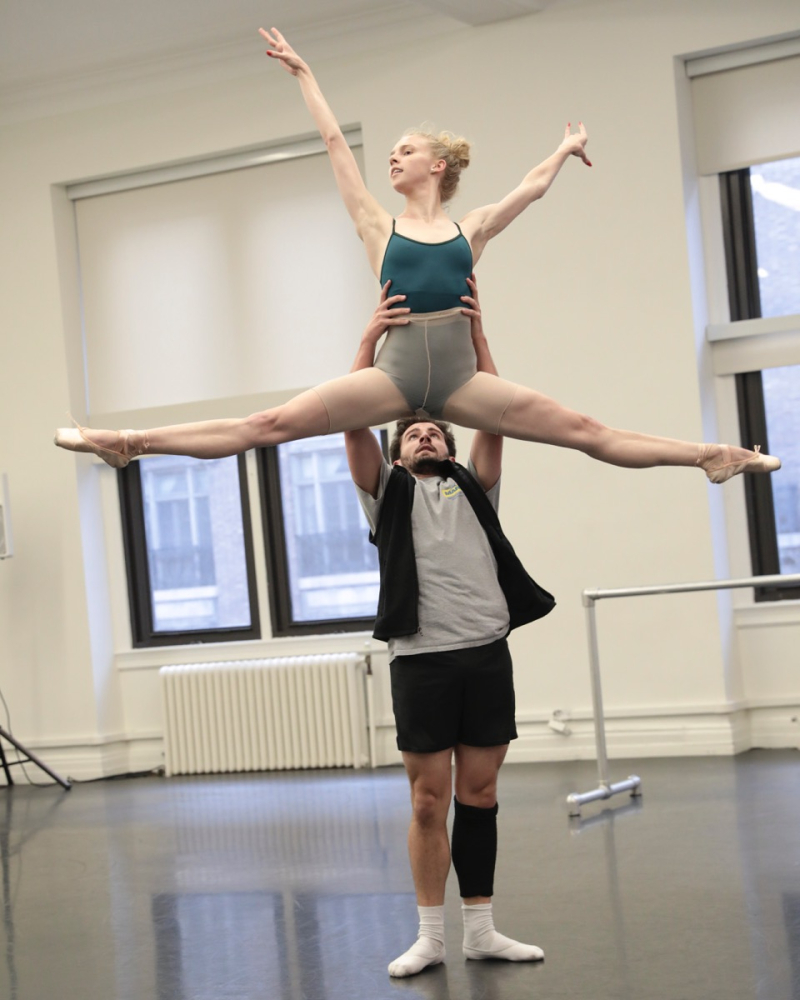
    Above: Unity Phelan, with Joseph Gordon and Da’Von Doane

    Unity Phelan, Zachary Catazaro, Joseph Gordon and Da'Von Doane in Claudia Schreier's Solitaire. Photo by Erin Baiano

    Above: a pose from SOLITAIRE‘s first section

    Unity Phelan, Zachary Catazaro and the Catalyst Quartet. Photo by Erin Baiano

    Above: Unity Phelan and Zachary Catazaro in the pas de deux

    Unity Phelan and Claudia Schreier bowing at the Vail International Dance Festival

    Above: ballerina Unity Phelan and choreographer Claudia Schreier take a bow following the premiere of SOLITAIRE, which drew a standing ovation from the Vail audience.

    All production photos by Erin Baiano.

  • Ballet Academy East @ Ailey Citigroup

    12729135_10102663014065261_1219830271059168853_n

    Above: from Claudia Schreier’s ballet “Charge“, a Rosalie O’Connor photo

    Saturday February 20th, 2016 – Young dancers from Ballet Academy East appeared tonight in performance at Ailey Citgroup Theatre. Ballets choreographed by Ashley Bouder, Jenna Lavin, and Claudia Schreier were on offer, as well as George Balanchine’s classic “Raymonda Variations”, staged by Darla Hoover, BAE’s artistic director and a répétiteur for the Balanchine Trust.

    Though billed as a ‘studio showing’, the presentation was fully staged, with lighting and costumes. The house was packed, with some dance-world luminaries who teach at BAE among the crowd.

    Jenna Lavin’s “Barcarolle” opened the evening; set to the beloved music of the same title from Offenbach’s CONTES D’HOFFMANN, Lavin’s charmer of a ballet was danced by the youngest group of dancers on tonight’s programme: ages 10 to 12 years. The ballet’s three boys were showing early development of the courtly style which is an essential component to classical ballet, whilst the girls – in pretty pink tutus – danced with amiable grace.

    Ashley Bouder, principal ballerina with New York City Ballet, has choreographed “Mozart’s Little Nothings“, a ballet to the great composer’s “Les petits riens” for a cast of 13 BAE dancers ranging in age from 12 to 15. The choreography is elegant and well-structured – as perfectly befits the music. The girls wear white with violet ribbon trim, and the ballet has a classic hierarchy of principal couple, pas de trois, and corps de ballet. The dancing was accomplished, the young dancers successfully imparting a sense of both balletic decorum and the joy of performing, and celebrating in a wonderful ‘big circle’ moment. Ms. Bouder, with a beautiful baby bump, was greeted warmly when she took a bow at the end of her ballet. 

    Boldly and thrillingly choreographed for 22 of the school’s most technically advanced dancers, Claudia Schreier’s premiere, “Charge” calls upon her youthful cast for both strong traditional ballet technique and an unusually supple fluency of the upper body, with correspondingly fluid port de bras. “Charge” is set to the third movement of the contemporary Dutch composer Douwe Eisenga‘s piano concerto.

    Ms. Schreier showed a clear mastery of structure in deploying her large cast with consummate skill from start to finish in this exciting ballet. Opening with a single girl onstage, the choreographer commences to build her ballet with a duo, a trio, and a quartet of dancers arriving in succession, eager to dance. By the time the full cast are onstage, the choreography and Mr. Eisenga’s sparkling, dramatic score are whisking us along on an exhilarating ride.

    Charge” unfolds with a dynamic sense of the inevitable: the music propels Ms. Schreier’s choreography at every moment, and the dancers give it their all. So many highlights along the way: a passage for six boys is echoed by six girls; a stylized pacing motif; a grand circle that rushes to form and then vanishes just as quickly; an off-kilter pas de deux; four quartets in canon; fleeting solos; unusual lifts. Ms. Schreier miraculously managed her large cast – in a limited space – so compellingly that things never seemed over-crowded or chaotic.

    In sum, “Charge” writes another vivid page in Ms. Schreier’s dance diary: a perfect follow-up to the memorable works she presented on this very stage in August 2015. Kudos to the young dancers who illuminated “Charge” with their flair and commitment.

    After the interval, Ms. Lavin turned to Schubert’s piano trio # 2 in E- flat major, Opus 100, for the premiere of “(S)EVEN”. Three girls in blue and four is pale rose comprise the cast. Ensemble moments give way to a series of short solos performed on pointe, each tailored to the specific technical gifts and personality of the seven teen-aged dancers.

    Raymonda Variations”, one of George Balanchine’s signature ballets, offers the BAE dancers a showcase for their diverse lyrical and virtuosic gifts. Darla Hoover cast the Academy’s advanced students with a keen sense of showing them off to best advantage. The level of dancing was high, and was matched by the musicality and Romantic-era sensibilities of the performers.

    Alexander Glazunov’s music, exuding the perfumed elegance of a bygone era, is captivating – and surely inspired the young BAE dancers to put forth their charming and scintillating best. It must have been a thrill to dance Balanchine at a young age, and for a very receptive audience.

    Several individual dancers in tonight’s performance could be singled out for special praise, but I don’t feel it’s really beneficial to do so at a student performance. Everyone gave of his or her best, and these young talents seem to be in very good hands at Ballet Academy East.