Tag: Concert

  • Singers: Maralin Niska

    (This article about the great singing-actress first appeared on Oberon’s Grove in 2008; it included many more photos, but for this revival, I’ve chosen a few special favorites.)

    maralin fave

    Back in 1968, I was at a performance of CAV/PAG at NYCO and the soprano singing Nedda caught my fancy, not just because she was slender and sexy and moved with a natural command of the stage, but also that at one point she stamped out a cigarette with her bare foot. I could not think of many divas who would do that.

    I could write a book about Maralin Niska; her performances are among the most potent memories I have of that heady time in the 1960s-1980s when so many great singers played nightly at both of New York’s opera houses.

    Her voice was unconventional; an enigma, really. I would not call it beautiful though she could convince you that it was utterly gorgeous in certain phrases. Her technique was based very much on a chest resonance which gave her unusual power; while the timbre of her voice was dark, the thrust of it was very bright. When I think of other great singing-actresses I have seen – Rysanek, Silja, Behrens – Niska stands firmly in their company and she was the most versatile of them all. She was a striking woman; I remember her being referred to as the Rita Hayworth of opera.

    In 1969, while the Met was closed due to a strike, Maralin was alternating Mozart’s Countess Almaviva with the role of Yaroslavna at NYCO. Two more dissimilar roles would be hard to imagine but she was utterly at home in both. Her Countess had an almost tragic dimension as she suffered the indignations her husband heaped on her; she used her perfectly supported piano technique to great effect in Mozart’s music. As Yaroslava, left by Prince Igor to run the unruly kingdom while he is off fighting Khan Kontchak, Niska sang a hauntingly hushed lament for his absence. But when the rebels set fire to the palace, Maralin, surrounded by the thundering chorus of boyars, let fly with an unscripted high-D which was as thrilling as any note I’ve ever heard in an opera house.

    As Marguerite in FAUST, Niska was anything but a shrinking violet. Faust was the key to her sexual awakening and when he bade her adieu in the Garden Scene, Niska broke into sobs of frustrated passion. Her overwhelming power in the final trio, and her devastating rejection of Faust at the end literally ring in my ears even today.

    The vocal and dramatic strokes Niska used in her canvas remain vividly alive for me all these years later. In BUTTERFLY, kneeling with Suzuki and Trouble with backs to the audience as the Humming Chorus is intoned and evening falls, Niska slowly looked over her shoulder to the audience with an expression of quiet fear: Butterfly’s unshakable faith would not pass the test. In TRAVIATA, having been asked by Germont pere to give up his son, Niska sustained the opening of “O, dite alla giovine” with a remarkable hushed tone and drew no breath before continuing. With that phrase, Violetta’s fragile world comes undone. No other soprano has done it quite the same way. But I went backstage afterwards and said, “Maralin! That NOTE!” “Which note?” “The note before “Dite alla giovine!” “Um…yes?”  “You held it so long and so quietly and then went into the phrase without breathing!” “I did?”

    She sang Tosca, her contempt for Scarpia expressed with icy power. After she had murdered him, she knelt by his corpse and sang “E morto…or gli perdono!’ and with a swift stroke buried the blade of the knife into the stage about an inch from the baritone’s head. Then she sang Mimi, and I thought she’d be way too cold for that. But she told an interviewer: “I put on the costume and I became Mimi.” Using portamenti and her miraculous piano, Niska did indeed become the pathetic seamstress.

    Niska was also singing at the Met by now, in VESPRI and TOSCA among other operas. She was wonderful and wove her own magic into the existing stagings.
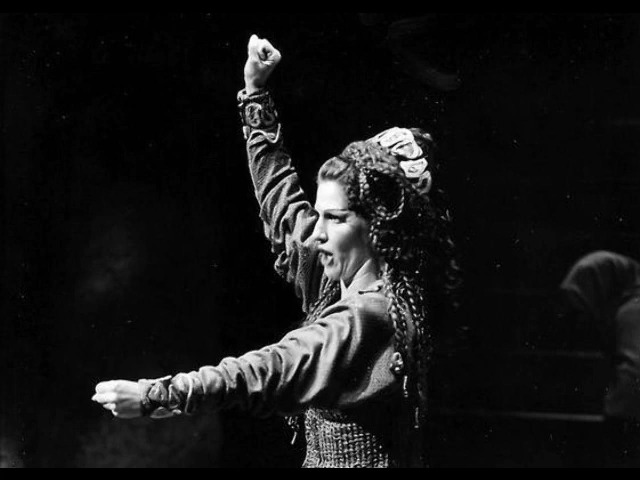
    niska medea

    Above: Maralin as Medea

    NYCO mounted Cherubini’s MEDEA for her. This complex role, sometimes sung as a verismo shrew, was more classically structured by Niska who seemed to realize that vocally Medea is more akin to Donna Anna than anything else. Moreover, she convinced me that Medea was “right” and that her horrific murders of Glauce and of her children were perfectly natural. I never saw Callas in opera, but it would be hard to imagine she was any more potent a Medea than Niska.

    At NYCO she continued in her Mimi mode with a beautifully expressive Manon Lescaut.  Then she took on Salome, having just the ideal combination of silver & blood in the voice. I was dazed by the mesmerizing, obsessive power of both her singing and her portrayal. The art deco sets were superb, and Niska ended her dance in a shimmering body stocking. In the end, as the soldiers crushed her, Maralin let out a chesty groan and writhed for a moment before death took her.

    Then came one of her most delightful and unexpected triumphs: the Composer in ARIADNE AUF NAXOS. This is my favorite opera and I just loved NYCO’s production which seemed to capture the two colliding worlds to perfection. Maralin sang the idealistic Composer, who is finally forced to deal with the realities of life in the theatre, with a flood of dark, soaring tone and vivid dynamic control. The Composer disappears at the end of the Prologue, but in this production, Niska entered the pit and “conducted” the opening of the opera; then Julius Rudel, already seated next to the podium, took over after several measures.

    TJ and I had moved to Hartford and were stunned one night when we went to see TRAVIATA at the Bushnell to find that Maria Chiara had cancelled and Maralin was replacing her. “Let’s go leave her a note!” suggested TJ. Rushing to the stage door, we came upon Maralin pounding on the “wrong” door, trying to get into the theatre where she’d never performed before. She was thrilled to see us, not least because we were able to show her the right door.

    FANCIULLA DEL WEST was another perfect Niska creation; she seemed just to “become” this unpretentious, good-hearted Wild West woman…not above cheating at cards to win her man.

    TURANDOT was a role we never got to see her do; apparently NYCO asked Maralin to learn it for the LA tour, promising her performances in NYC afterwards. The promise was broken. But I have a tape of the LA performance and it’s pretty impressive.

    Maralin sang the unlikely role of Rosalinda in FLEDERMAUS and, at Carnegie Hall, the Latvian national opera BANUTA in which her steely top notes and powerful chest voice were thrillingly on display.

    maralin em

    Above: Maralin as Emilia Marty

    Niska’s greatest triumph, though, was in the Frank Corsaro production of Janacek’s MAKROPOULOS AFFAIR. This fascinating story of a 342-year-old woman who has spanned the decades under various names (always using the initials E.M.) thanks to her alchemist father’s potion for eternal life has been fashioned by Janacek into a vivid drama which centers on Elina’s need to find the lost prescription: she needs a dose to extend her life another 300 years. Ruthlessly manipulative, she manages by seduction to attain the formula only to decide in the end that she is weary of life. Corsaro told the story of the opera onstage while overhead, films of episodes from EM’s past are shown on multiple screens. Maralin appears in the films in various period costumes, using and abusing her sexual fascination to get what she wants from her various lovers. Onstage there is a nude scene where EM removes her dressing gown to show Baron Prus the scars inflicted by one of her sadistic lovers; few divas besides Niska have the body to appear nude onstage. It seemed entirely natural. In the end, Elina offers the magic formula to the young Christa who burns it; spontaneously all the screens burst into flame and out of the darkness, EM’s enigmatic chauffeur comes to bear her away into the smoke. The ovations Maralin received for these performances rivalled any I have encountered in the theatre.

    I saw her onstage for the last time as Elisabetta in MARIA STUARDA; she was still singing with amazing force but NYCO had decided they didn’t need her – even though the latest revival of the Janacek had been even more powerful than the original run. But she threw herself into the Donizetti, brazenly sailing in and out of registers and treating Maria (Ashley Putnam) with palpable disdain. After signing Maria’s death warrant, Elizabetta turns on the hapless Leicester and orders him to be witness to Maria’s execution. Launching her final stretta with almost gleeful vengeance, Niska propelled the scene to its climax and struck a brazen high E-flat which rang into the house (and onto my tape recorder!)

    She moved to Santa Fe and we kept in touch. Then one year my Christmas card came back marked “No such number”. I wrote again: same thing. I feared we had lost contact.

    I thought about her all the time; and the power of thought worked. Shortly after I moved to NYC, I was working one morning and down the aisle Maralin came walking. She was in town with her husband Bill Mullen for a NYCO “family reunion”. We had the most amazing conversation and established why my letters hadn’t reached her. Three years later she was in town again and came in expressly to say hello.

    Now I’m re-reading what I’ve written. How feeble it sounds; I don’t think l’ve begun to express the impact of her performances. My diaries have much more detail, but even they seem very pallid. It’s the impressions she made on my mind or my…soul…that can’t be defined. The diaries, the old tapes, the photos, the programmes, notes she sent me. No one could grasp from any of this what Maralin Niska really meant to me. But I wanted to try to express it anyway.

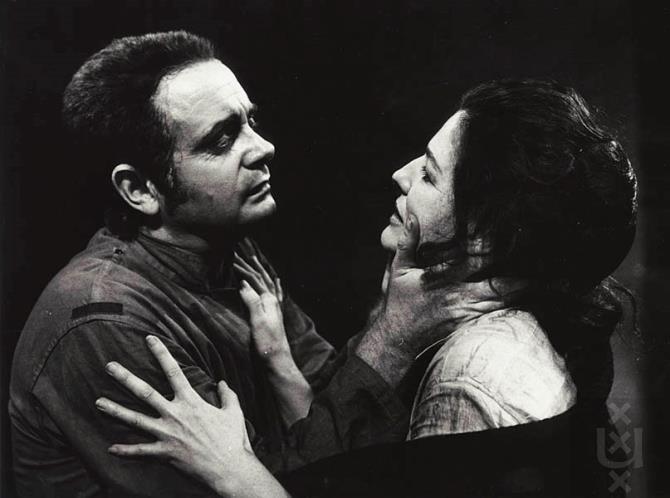
    niska
    niska derksen wozzeck

    Above: with baritone Jan Derksen in WOZZECK, one of Maralin’s European triumphs
    niska button
  • Remembering Hildegard Behrens

    behrens c

    (This article appeared on Oberon’s Grove in 2009, following Ms. Behrens’ death at the age of 72.)

    “It is so difficult for me to comprehend that Hildegard Behrens has died. She was only 72 and it seems not all that long ago that my friend Bryan and I visited her in her dressing room after what was to be her penultimate Met performance: as Marie in Berg’s WOZZECK.

    Hildegard Behrens was one of a half-dozen singers who, in the nearly half-century that I’ve been immersed in the world of opera, made an impression that transcended mere vocalism and acting. Her voice was utterly her own: a ravaged, astringent quality often beset her timbre – the price of having given so unsparingly of her instrument in some of opera’s most taxing roles. And yet she could produce phrases of stupendously haunting beauty, and she could suddenly pull a piano phrase out of mid-air. Her unique mixture of raw steely power, unmatched personal intensity and a deep vein of feminine vulnerability made her performances unforgettable even when the actual sound of the voice was less than ingratiating.

    So many memories are flooding back this morning while I am thinking about her: the Wesendonck Lieder she sang at Tanglewood during my ‘Wagner summer’…a rare chance to hear her miscast but oddly moving singing of the Verdi REQUIEM…her televised RING Cycle from the Met…her wildly extravagant ‘mad scene’ in Mozart’s IDOMENEO…her passionate Tosca and Santuzza, cast against the vocal norm…a solo recital at Carnegie Hall…the dress rehearsal of the Met revival of her ELEKTRA  where she made up (and how!) for an off-night at the premiere. Hildegard Behrens was also the holder of the Lotte Lehmann Ring, which was left to her by her great colleague Leonie Rysanek upon Rysanek’s untimely death in 1998.

    behrens 2

    It was in fact the Behrens Elektra, sung in concert at Tanglewood with the Boston Symphony Orchestra under Seiji Ozawa in August 1988 that has always seemed to me the very epitome of what an operatic portrayal can be. In a black gown and violently teased hair, the soprano (announced as being indisposed by allergies) transformed a stand-and-deliver setting into a full-scale assault on the emotions. I’ll never forget that performance and I was fortunate a week later to record it from a delayed broadcast.

    In the great scene in which Elektra recognizes her long-lost brother, Behrens transported me right out of this mortal world. Here it is, from her 1994 Met performance with Donald McIntyre.

    It’s going to be hard for me now to listen to Hildegard – her Berlioz Nuits d’Ete is my favorite recording of those beloved songs, unconventional as her voice sounds in that music – or to watch her on film as Brunnhilde or Elektra. For a while I will just let the memories play.”

    behrens tosca

    Above: Ms. Behrens as Tosca

    behrens 4

    Above: the soprano in concert with Daniel Barenboim

  • Teatro Nuovo’s MACBETH @ City Center

    Teatro Nuovo 2025 Macbeth - Chorus of Scottish Exiles (Act Four)_Photo by Steven Pisano

    Above: the chorus of Scottish exiles; photo by Steven Pisano

    (Note: click on each image to enlarge)

    ~ Author: Ryan Vasquez

    Wednesday July 23rd, 2025 – This year, Teatro Nuovo staged both Verdi’s Macbeth (the 1874 edition) and Donizetti’s La Sonnambula. Verdi’s Macbeth is a relatively faithful adaptation of Shakespeare’s classic, but the opera could just as well have been titled Lady Macbeth, both because of the impressive music Verdi wrote for the character and because of Alexandra Loutsion’s commanding performance as the (almost) titular villain. The entire principal cast sang beautifully, but the night undoubtedly belonged to Loutsion.

    Teatro Nuovo is a summer festival where young singers and budding professionals spend the season working on two bel canto operas. Although Verdi is not typically categorized as a bel canto composer, his early works, Macbeth among them,clearly sit at the tail end of that stylistic era.

    The performance took place at New York City Center, just a block from Carnegie Hall. It was my first time attending a show at the venue, and it was fantastic, beautiful and acoustically quite pleasing. I was also glad to see a diverse audience that truly reflected the breadth of NYC’s population and age demographics.

    The full orchestra was positioned directly in front of the stage and served as a formidable counterpoint to the otherwise completely bare stage. I was surprised to find there were no set pieces at all, but I chose to be patient and see how things would unfold.

    Teatro Nuovo 2025 Macbeth_Jakob Lehmann conducting the Teatro Nuovo Orchestra_Photo by Steven Pisano

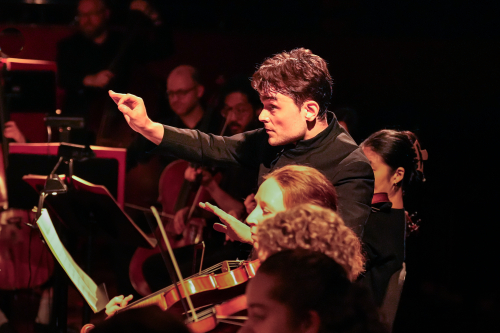
    Conductor Jakob Lehmann (photo above by Steven Pisano) walked out and began the overture. The orchestra displayed masterful control, delivering Verdi’s score with both power and delicacy. Their ability to handle the softer passages was especially noteworthy: opera orchestras aren’t always known for subtlety, but this one maintained finesse throughout the entire evening.

    I noticed the overture featured prominent use of brass, which I loved for its tone-painting quality. Brass instruments have long been associated with death, and Verdi’s thick brass textures effectively foreshadowed the bloodshed to come.

    Teatro Nuovo 2025 Macbeth_witchs chorus_Photo by Steven Pisano

    Above: the chorus of witches; photo by Steven Pisano

    The back wall of the stage lit up with a beautiful projection of Scotland, setting the scene for the witches’ chorus. Shakespeare’s version begins with three witches who famously chant, “Double, double, toil and trouble,” but this adaptation featured three groups of singing witches. All dressed in black, these choristers were young artists covering the main roles and performing comprimario parts.

    They sang well, and several performers fully embraced their witchy characters. However, a number of them seemed to lack fully developed characterizations. Overall, it was an effective, if slightly static, opening.

    Shortly after the choral number concluded, Macbeth, played by Ricardo José Rivera, and Banco, played by Cumhur Görgün, entered. Both were dressed in formal black attire, a costume choice shared by the rest of the male cast.

    They sang the duet “Due vaticini compiuti or sono” beautifully. I was particularly struck by Rivera’s smooth legato line. Görgün’s voice had a rich color, and I noted that the upper part of his range had more heft, making me wonder if he might actually be a bass-baritone. Regardless, the duet was a strong introduction to both characters and their voices.

    Teatro Nuovo 2025 Macbeth_Alexandra Loutsion as Lady Macbeth_Sleepwalking_2_Photo by Steven Pisano

    Above: Alexandra Loutsion as Lady Macbeth; photo by Steven Pisano

    After the stage cleared, a new projection depicted Macbeth’s castle. Lady Macbeth, portrayed by Ms. Loutsion, entered and delivered lines in wonderful Italian. I was surprised the passage wasn’t sung in recitative form, but soon she transitioned into the recitative section of her aria, “Nel dì della vittoria.

    Ms. Loutsion’s voice initially sounded like a mezzo’s, but given the heights her voice achieved, she was clearly a soprano. She commanded the stage and fully embodied the ambitious Lady Macbeth. The crowd adored her. Her coloratura rang with crystal-clear pitch, an impressive technical feat, and her intonation was impeccable. When she finished her aria, the audience erupted into applause. Well deserved cries of “Brava!” rang out. Loutsion stood in place until the cheers subsided, then exited the stage.

    Teatro Nuovo 2025 Macbeth_Ricardo José Rivera and Alexandra Loutsion as the Macbeths 3_Photo by Steven Pisano

    Above, the Macbeths: Mr. Rivera and Ms. Loutsion, photo by Steven Pisano

    Rivera’s characterization of Macbeth in the first scene leaned heavily into “anxious,” which worked initially but grew somewhat one-note. Fortunately, more nuance emerged during his duet with Lady Macbeth. The two had excellent chemistry, and Ms. Loutsion appeared more relaxed. If the shift in tone was an intentional choice to reflect Macbeth’s comfort in his wife’s presence, it was an effective one.

    They sang well, but I realized midway through their duet that I didn’t fully understand what had just happened to prompt the number. This moment highlighted the production’s biggest weakness: the acting and staging were secondary to the music.

    The motivation behind the duet was that Macbeth had just murdered the king and was now panicking over the bloodied dagger. However, the murder itself wasn’t shown. While the libretto indeed places the murder offstage, the production did little to make that event clear. The action often felt like an inconvenient hurdle rather than a driving force for the music.

    This lack of clarity recurred throughout the show. Events that should have been staged were either skipped entirely or summarized in supertitles. The most jarring example came at the end, when Macbeth and Macduff left the stage to fight. A supertitle then informed us that “Macbeth was fatally wounded.” After which the two returned. Macbeth proceeded to lie on the floor. And then die. 

    Returning to the earlier moment: after the Macbeth/Lady Macbeth duet, the chorus launched into a rousing Verdi finale. It had all the signature hallmarks of Verdi’s brilliance, even in this early work. I was particularly impressed by Martin Luther Clark, who sang the role of Macduff. Though Macduff doesn’t do much until the final act, Clark’s sterling tenor soared clearly above the orchestra.

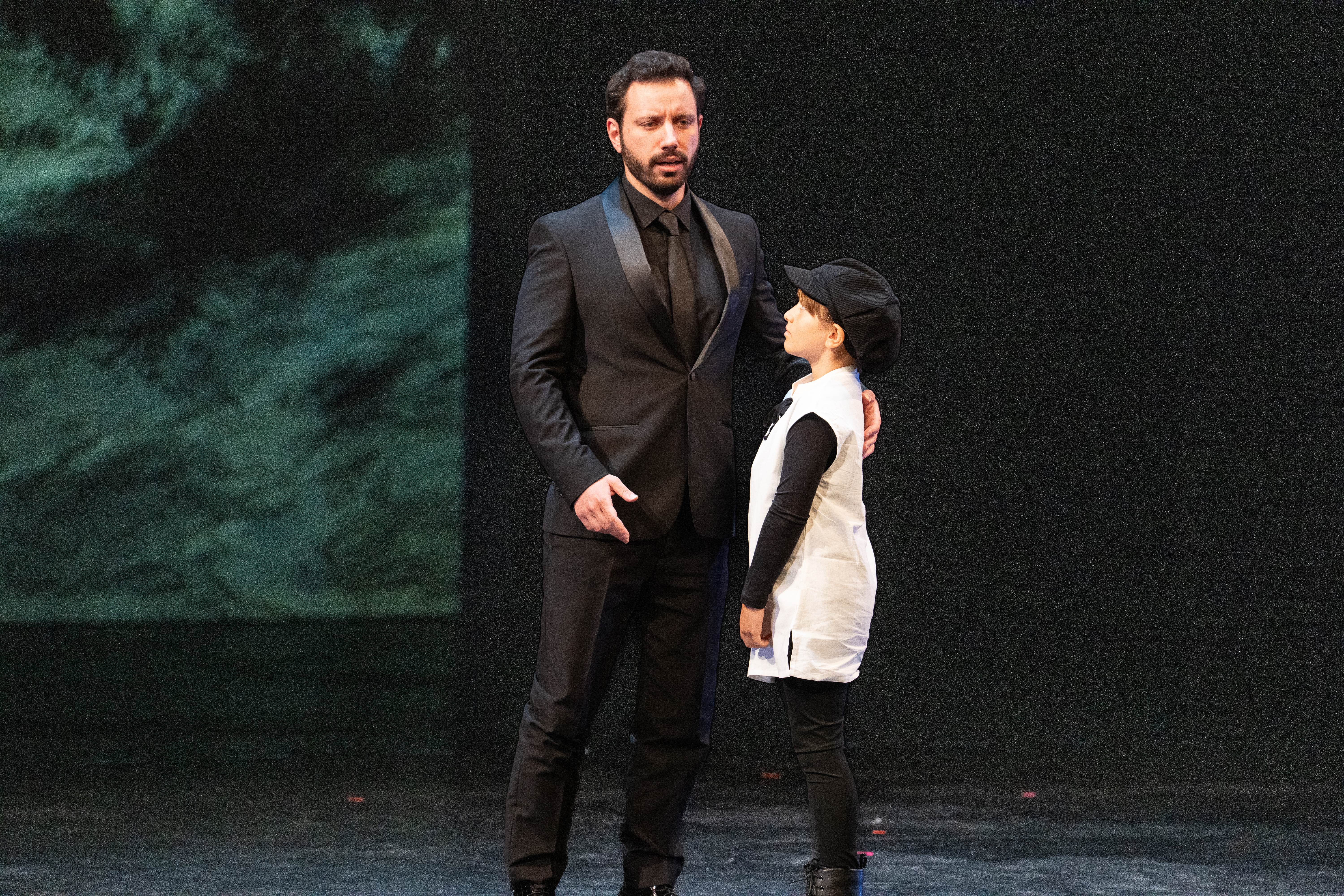
    Teatro Nuovo 2025 Macbeth_Cumhur Görgün as Banco  Olivia Trinchera Citterio as Fleanzio_Photo by Steven Pisano

    Above: Cumhur Görgün as Banquo and Olivia Trinchera Citterio as Fleance; photo by Steven Pisano

    In the next act, Banco and his child were outside the palace, unaware of the events unfolding within. Görgün sang Banco’s aria beautifully, again showing off his warm tone. Banco then exited the stage and was murdered (again offstage), and the scene shifted back to Macbeth’s castle.

    Teatro Nuovo 2025 Macbeth_Ricardo José Rivera as Macbeth_6_Photo by Steven Pisano

    Above: Ricardo José Rivera as Macbeth is haunted by Banquo’s ghost; photo by Steven Pisano

    Act II featured more beautiful singing, and Rivera seemed more animated and confident. During the finale, Banco’s ghost appears, visible only to Macbeth, but the staging failed to indicate he was a ghost. Since we never actually saw Banco die, the moment felt muddled. Simple makeup or lighting could have clarified things. Still, the ghost was soon forgotten as the act closed.

    Once again, the orchestra impressed. Their dynamic sensitivity, likely thanks to Lehmann’s direction, was a rare treat in opera.

    I thoroughly enjoyed the sprite scene in Act 3, where the female chorus returned as witches. The choral numbers throughout were well executed. The staging in this act was more dynamic, with some choreographed movement that added interest.

    Macbeth’s aria following the sprites was Rivera’s best of the night. His soft passages were beautifully rendered, showcasing his technique. He ended with a rousing cabaletta and held an extended final note that had the audience in raptures, particularly in the balcony, where the applause outlasted that of the orchestra level.

    The scene turned back to Macbeth’s castle. Although I had never seen this opera in person, I knew about the most famous scene that was Verdi’s take on Shakespeare’s famous lines for Lady Macbeth, “Out, damned spot! Out, I say!” Lady Macbeth’s attendants stood on stage giving the background details on why Lady Macbeth had seemed to have lost her mind. Once the preamble was finished, Ms.  Loutsion walked out as if in a trance and started to sing the famous aria Una macchia è qui tuttora.”  As the soprano mimed out washing her hands the audience was transfixed, for the entire scene, waiting with bated breath for the next moment to happen. And as Ms. Loutsion finished she walked off the stage with applause.

    Next came a scene featuring Macduff and Malcolm, the prince destined to take the throne Macbeth killed (offstage) to acquire. Romeo Lopez, who sang Malcolm, had a sweet voice but was overpowered by the orchestra. As a young artist, he has time to develop his voice, but for now, he struggled to be heard.

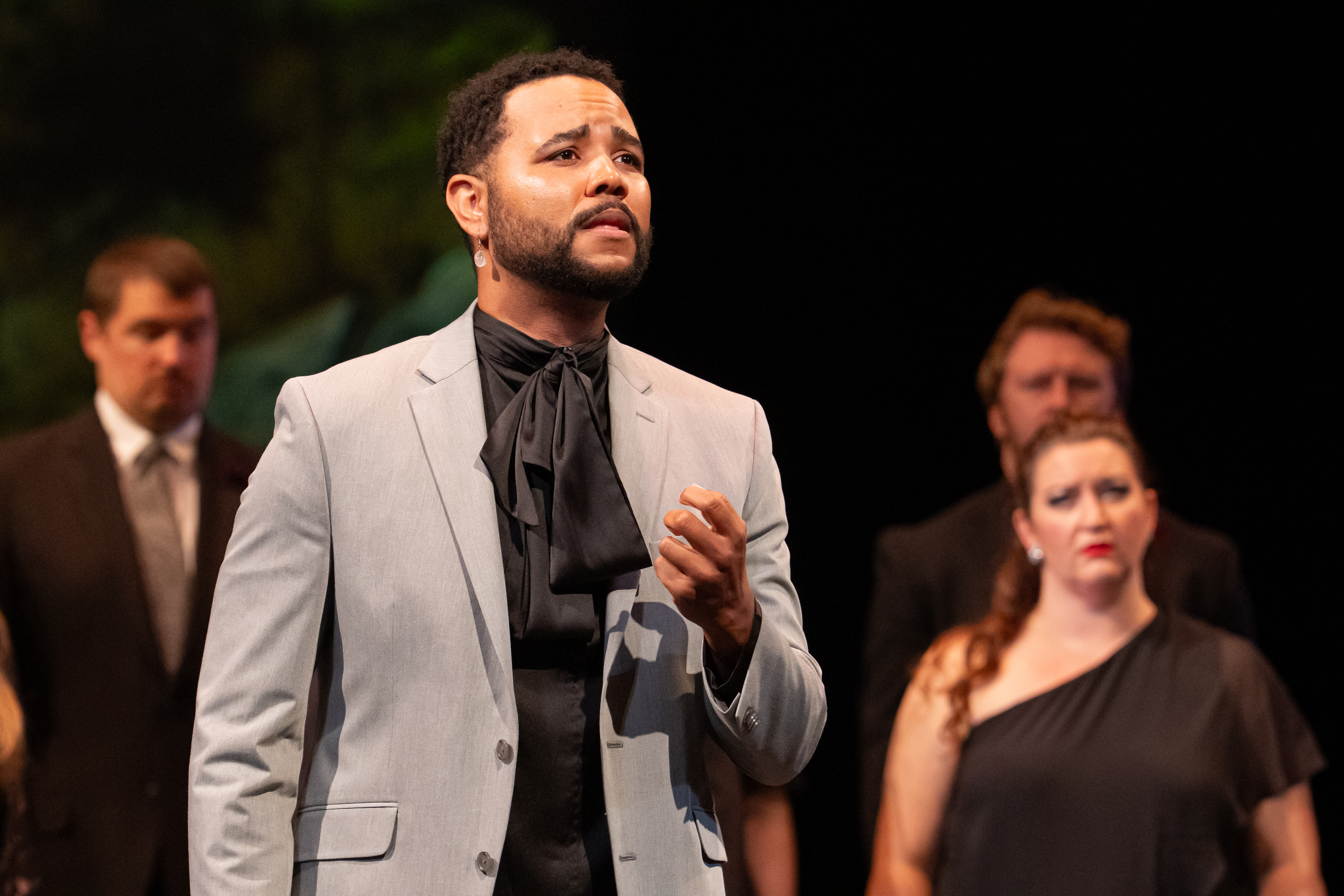
    Teatro Nuovo 2025 Macbeth_Martin Luther Clark as Macduff_2_Photo by Steven Pisano

    Above: Martin Luther Clark as Macduff; photo by Steven Pisano

    Clark’s rendition of Macduff’s aria “Ah, la paterna mano” was a standout moment. Macduff is one of those roles where you don’t have too much to do and learn, but you get a wonderful song that everyone remembers after the show. Clark performed it with tenderness and grief rather than anger, revealing the piece’s emotional depth. His pianissimi were particularly moving, making me appreciate the aria in a new light. The ovation was well earned.

    In the final scene, Macbeth and Macduff faced off. Macbeth, emboldened by the witches’ prophecy that no man born of woman could kill him, is shocked when Macduff reveals he was born via cesarean section. They leave the stage, Macbeth is mortally wounded, they walk back onstage, and the show ends.

    Musically, this Macbeth was executed beautifully. The orchestra was superb, and the singers brought Verdi’s music to life with skill and passion, thankfully, onstage.

    ~ Ryan Vasquez

    (Performance photos by Steven Pisano)

  • LA GIOCONDA ~ Barcelona 1978

    gulin gioconda

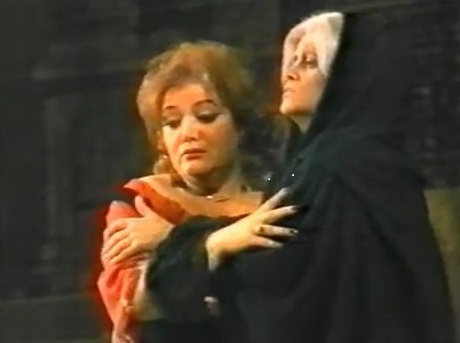
    Above: Ángeles Gulín as Gioconda and Montserrat Aparici as Cieca

    A slam-bang performance of one of my favorite Italian operas, LA GIOCONDA, from the Liceu, Barcelona, in 1978. The singers simply go at it.

    Watch and listen here.

    Gioconda: Ángeles Gulín; Laura: Bruna Baglioni; Cieca: Montserrat Aparici;  Enzo: Nunzio Todesco; Barnaba: Sabin Markov; Alvise: Ivo Vinco.

    I only heard Ángeles Gulín live once: she sang Valentine in HUGUENOTS at Carnegie Hall in 1969; Beverly Sills was Marguerite de Valois and Tony Poncet was Raoul. Ms. Gulín had an enormous voice and she used it unsparingly.

    This GIOCONDA has the right knives-out, heart-on-sleeve passion. It’s that kind of all-or-nothing opera. As Gioconda sings of her love for Enzo in Act I: “My destiny is this: to love him, or to die!”

    ~ Oberon

  • Shostakovich Sonatas @ Carnegie Hall

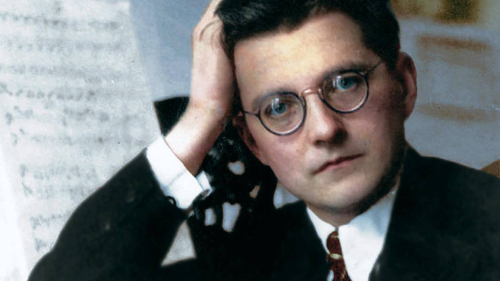
    Shostakovich

    ~ Author: Oberon

    Wednesday May 28th, 2025 – Evgeny Kissin was joined by three renowned string soloists for a program of Shostakovich sonatas this evening at Carnegie Hall. It was one of the most thrilling concerts I have ever attended. The atmosphere in the Hall was palpable; aside from some cellphones going off at the the wrong moments, silence reigned. The musicians seemed bent on preventing applause between movements, keeping their bows poised over the strings in order to sustain the atmosphere. The three sonatas were presented in order of their composition: cello first (1934), followed by the violin (1968), with the viola (1975) played following the interval.

    Gautier Capuçon and Mr. Kissin strode onto the Carnegie Hall stage to a warm greeting. Dmitri Shostakovich’s Cello Sonata in D-minor, Op. 40, was composed composed during a period of political and social upheaval in the Soviet Union, and the music reflects the unsettled atmosphere of the time…and of ours, now. The cellist sometimes allowed a touch of grittiness into his tone, which was truly evocative.

    The opening Allegro non troppo is gently introduced by Mr. Kissin at the Steinway. A lovely theme gives way to vivid animation from both players. The mood gets dreamy, with M. Capuçon taking up a gorgeous cello melody that turns passionate. A super-pianissimo moment briefly interrupts the music’s flow, and then a sense of longing grows from repeated cello tones, displaying Mr. Capuçon’s marvelous control. Plucking introduces a dance, and mood swings continue – one such bringing a haunting theme: quiet and mysterious. Single notes from the piano invite deep cello playing; Kissin’s tone takes on an almost grumpy sound. Fantastic!

    Staying in an Allegro mode, scintillating piano and dancing cello illuminate the second movement. Cello glissandi and insistent keyboard rhythms pop up as the dance sails onward. A sudden stop, and then the Largo commences with incredibly hushed music from M. Capuçon’s cello. The players’ quiet intensity creates a mysterious atmosphere. The cello tears at my heart, rising from its lowest range in music filled with longing and then bursting with passion before returning to the depths. A remarkable quietude fills the Hall, then a crescendo before a fade-out, with the piano on high longing for peace. Things darken; spellbinding control from both musicians casts a spell over us.

    With dancing motifs played as if compelled by an unseen force, the final Allegro lets us savour Mr. Kissin’s glorious virtuosity, whilst M. Capuçon produces an amazing stuttering effect with his cello as these two paragons delight us with their magical partnership, bringing the first of the concert’s enthusiastic ovations.

    Gidon Kremer walked out onto the Carnegie stage cautiously, to an welcome. Now 78 (two years older than myself!), the legendary violinist responded to Menthisiastic r. Kissin’s straightforward piano introduction of the Shostakovich opus 134 with a sinuous theme. For a while, simple musical lines are exchanged, and then a sprightly dance emerges. The music is subtly playful until there’s a rise of passion. The buzzy tone of the violin then resumes the dance, somewhat hesitantly. The high-register violin filigree creates an insectuous sound before a slow fade-away.

    The ensuing Allegretto opens with a nervous dance; this movement is lively, witty, and ironic. It’s music that veers high and dips low, with some sparkly effects from the violin. A sense of urgency takes over as the music presses forward, Kissin playing high and bright as Mr. Kremer handles the music with with amazing dexterity. The violin whines, the piano swirls onward: high, fast, phenomenal music-making!

    The sonata concludes with a Largo, the pianist striking single, dotty notes as the violinist plucks away. Mr. Kremer’s playing turns ethereal, poised on high with amazing control. A keyboard dance rhythm draws restless playing from the violin. Now Mr. Kissin introduces a sense of grandeur into the music, leading to an angular violin cadenza. A rocking motif from both players carries them into a series of tremelos as the sonata ends. The Kremer/Kissin duo elicited a fervent ovation from the crowd.  

    After the interval, an artist new to me – the Ukrainian-British violist/conductor Maxim Rysanov – joined Mr. Kissin for a revelatory performance of the Shostakovich Viola Sonata, opus 147. This fascinating work, which I have only heard played live two or three times previously, really got to my soul tonight: the kind of deeply immersive musical experience that happens so rarely. 

    The opening Moderato begins very quietly, with soft viola plucking – slow and pensive – as the piano joins, dark and rather ominous. A dirge-like sense of foreboding develops leading to a burst of power. Restlessness overtakes the music; a piano solo and eerie, shivering resonances from the viola develop into a flash of grandeur before an extraordinarily subtle viola passage is heard, ending with staccati, and a sustained fading away.

    Now comes the Allegretto, commencing with a dance à la Russe. Mr. Rysanov’s playing is so suave and assured. Boldness from the Kissin keyboard and plucking from the violist lead to a heartfelt unison song, which gets quite grand.

    After a pause, the Adagio commences with a sorrowing viola theme which gains poignant support from the piano. Every note from both players seemed like a thing of value, something to treasure…such incredible playing. The spirit of Beethoven hovers on the air as the rhythmic signature of the Moonlight Sonata casts its spell overall. A viola cadenza – lovingly fashioned by Mr. Rysanov – draws us on to the sonata’s magnificent finish. Throughout this movement, I had been in another time and place, far from the chaotic madness of the world. A massive, roaring standing ovation filled the Hall, and it was still resounding as we emerged into the downpour…

    ~ Oberon

  • John Adams: ANTONY & CLEOPATRA @ The Met

    Antony-and-cleopatra

    ~ Author: Oberon

    Saturday May 24th, 2025 matinee – I hadn’t originally planned to go to a performance of John Adams’ Antony & Cleopatra, but some singers I especially like were in the cast, so I got a score desk – even though I was scoreless – for today’s matinee. My previous experiences with the composer’s operas have both disappointed (though the second was enthralling for the first 40 minutes); you can read about my reaction to The Death of Klinghoffer here and to El Niño here.

    The Met’s first incarnation of the Shakespearean tale of Antony and Cleopatra was the opera by Samuel Barber which opened the New Met in 1966. In the late summer of that year, I had made my first solo trip to New York City in order to buy tickets to some of the performances in the first few weeks of the season, and Antony & Cleopatra was on my list. 

    On the evening of September 16th, 1966, in my little room in the little town, I was tuned in for the live broadcast of the new opera. I was on pins and needles because the Met Orchestra had announced an impending strike; they’d agreed to play the opening night as it was drawing international attention in the music world. Luminaries had flown in from other nations, and Lady Bird Johnson was to be the guest of honor. For two acts, I was feeling more and more certain that the performances I’d bought tickets for would never take place: rumors indicated that the standoff could not be resolved, and that both sides were standing firm. Then, before the start of Act III, Sir Rudolf Bing appeared before the gold curtain to announce that a settlement had been reached and to welcome the musicians back “as friends”. I ran screaming thru the house; my mother thought – not for the first time – that I was deranged. 

    On December 1st, 1966, I saw the last Met performance of the Barber Antony & Cleopatra to date. I’d learned a lot of the music from repeated playings of the reel-to-reel tape I had made of the opening night broadcast, and I was thrilled to experience the voices of Leontyne Price, Justino Diaz, Jess Thomas, Ezio Flagello, and Rosalind Elias in this music ‘live‘; I was able to silently sing along with them much of the time. 

    Though the Met never revived the opera, a production given at the Juilliard School, staged by Gian Carlo Menotti and conducted by James Conlon, kept much of the music intact, whilst introducing a love duet for the title-characters. Then, in 2009, the New York City Opera presented a concert performance of the Barber opera at Carnegie Hall, with Lauren Flanigan and Teddy Tahu Rhodes in the leading roles. Read about it here

    In the ensuing years, I’ve kept favorite passages of the opera in my mind: not just the big themes and the weighty arias, but the delicious (and later cut) scene for the eunuch slave Mardian and Cleopatra’s handmaidens, full of one-liners; the haunting, poetic beauty of Antony’s young attendant Eros’s suicide (“Thus do I escape the sorrow of Antony’s death...”), and most especially the opera’s original ending, with Charmian finishing Cleopatra’s last line, “What? Should I stay…?” “…in this vile world?  Now boast ye, Death, for in thy bosom lies a lass unparalleled…your crown’s awry! I’ll mend it, then play til Doomsday...” as intoned by the sumptuous voice of Rosalind Elias. And of course, the glorious sound of Leontyne Price is forever bound to the music of Cleopatra.

    Enough nostalgia, and forgive me for rambling on. 

    So this afternoon, I am sitting alone in the great darkened hall that had reverberated to the Barber score some sixty years ago, hoping to be similarly captivated by the new Adams opera. As it turned out, I was far more fascinated with the orchestral writing than with the vocal. The composer had written a very long program note, but the print was so small I could not read it. Even while the players were tuning and warming up in the pit, the sounds of such instruments as celeste, harmonium, harpsichord, mandolin, glockenspiel, vibraphone, tam-tam, flexatone (which creates glissando effects), and numberless bells, chimes, and drums, teased my ear. Adams put all of these to cunning use, creating textures that sustained my interest throughout the 90-minute first act.

    The composer reportedly stipulates that amplification of the singing be used when his operas are presented. It’s OK by me, but the mixing board (taking up one of the parterre boxes) sometimes allowed the voices to be covered by the orchestra despite the singers being miked. A few times, the lower range of Julia Bullock (Cleopatra) took on a reverb feeling from over-amplification. I also noted that the cast’s diction was not always clear.

    A restless orchestral prelude opens the opera, wherein Antony (Gerald Finley, the superb baritone) ignites Cleopatra’s fury when he tells her he must return to Rome due to the death of this wife, Fulvia. Between un-interesting vocal writing and patches where the singers were covered by orchestral volume, this scene was basically expendable. 

    A noisy interlude takes us to Rome, where Antony is greeted coolly by his ‘boss’, Caesar (the clear, lyrical tenor Paul Appleby). To patch things up between the two men, it is suggested that Antony marry Caesar’s sister, Octavia. Agrippa, the match-maker (sung by Jarrett Ott, whose clear diction was a joy) gives way to Enobarbus (that superb basso Alfred Walker) whose description of Cleopatra sailing on the Cydnus is more a sung narrative than a melodious “aria”. 

    Back in Alexandria, Cleopatra’s voicing of “O happy horse, to bear the weight of Antony!” is no match for Samuel Barber’s setting of the text, which Leontyne Price savoured so smoulderingly. Told by Eros (Brenton Ryan) of Antony’s marriage to Octavia sets off a wild reaction from Cleopatra, though it is expressed more by the orchestra than by Ms. Bullock’s parlando and her furious song, which goes on too long…though finely rendered by the soprano.

    After an orchestral interlude, a big, beaty, turbulent theme is launched as Octavia (the plush-toned mezzo Elizabeth DeShong) cannot decide between loyalty to her brother Caesar and the appeal of Antony. Tired of her vacillating, Antony divorces her on the spot and rushes back Cleopatra. Ms DeShong brings vocal glamour to her singing, though at times the orchestra covered her. Caesar’s fury at Antony’s treatment of his sister is another case of the fascinating orchestration trumping the vocal line. When Octavia/deShong reveals (with some gorgeous measures of vocalism) that she is pregnant, her brother declares war on Antony. 

    A wondrously wrought orchestral interlude leads to a musical depiction of a disastrous sea battle, in which Antony miscalculates and Cleopatra erroneously calls off her own fleet of ships; there is a brief vocal highlight wherein Mr. Finley’s lament blends with a soaring phrase from Ms. Bullock; but it’s over almost as soon as it begins. Lights flash thru the hall as the orchestra pounds away at themes of battle in an endless ending to the opera’s first act. 

    In the 90-minute span of this opening act, memorable vocal moments have been few and far-between, whilst the orchestra has shone brilliantly. The voices were there, ready to make much of the music, but the composer’s lack of “lyric musing” (program note) deprives them of opportunities.     

    ~ Oberon

  • Beth Taylor @ Carnegie Hall

    The English Concert

    The Scottish mezzo-soprano Beth Taylor enjoyed a great success at her Carnegie Hall debut, singing Cornelia in Handel’s GIULIO CESARE with The English Concert.

  • BSO x 2 ~ Mostly Shostakovich

    Dimitri-Shostakovich

    Above: Dimitri Shostakovich

    ~ Author: Ben Weaver

    Wednesday April 23rd and Thursday April 24th, 2025 – Dmitri Shostakovich was the focus of Boston Symphony Orchestra’s two-concert visit to Carnegie Hall this week, under the leadership of its music director Andris Nelsons. Shostakovich’s son Maxim, dedicatee and first performer of the Second Piano Concerto, was in attendance on the second evening.

    Shostakovich died 50 years ago, and his famous struggles living and composing in a totalitarian regime, always one offense away from the gulag, sadly remain relevant today – not just in Russia, but in the United States as well. Cellist Yo-Yo Ma made a brief statement from the stage, quoting Josef Stalin’s famous line: “A single death is a tragedy, a million deaths are a statistic.” Ma pleaded that no death should ever be a statistic, and he wanted to honor anyone suffering loss of life or dignity. Ma did not name any names, but the meaning is loud and clear as our own US government is disappearing human beings into foreign gulags. For anyone who argues that artists should stay out of politics, people like Shostakovich remain an important reminder that art has launched revolutions, and if art was not political, it would never be banned.

    Ma Cello-Concerto-No.-1-Robert-Torres

    Above: Yo-Yo Ma, photo by Robert Torres

    Cello Concerto No. 1 in E-flat major, Op. 107, composed in 1959, was dedicated to Mstislav Rostropovich (as was, incidentally, the 2nd.) Yo-Yo Ma has been performing it for much of his career and his deep affection for it is clear. His warning about tyranny just before the performance was reflected in his approach to the jolly opening tune, which Ma played with a rawness that made it darker and more sinister. Irony and the grotesque are deeply ingrained in Soviet art, a tool for plausible deniability which anyone who wished to survive purges needed to master. The Playbill notes by Harlow Robinson point out that Shostakovich buried in the score a small, distorted fragment from Josef Stalin’s favorite Georgian folk song, “Suliko” – something even Rostropovich did not spot until Shostakovich finally pointed it out. (Stalin died in 1953, six years before the Concerto was composed.) As an encore Ma joined Boston Symphony’s entire cello section and they delivered a jaunty version of a traditional Yiddish tune “Moyshele,” arranged for a cello ensemble by BSO’s principal cellist Blaise Déjardin, who also contributed magnificent solo playing.

    Two late symphonies by Shostakovich received searing performances under Andris Nelson’s leadership. Over the last few years maestro Nelsons performed and recorded all of Shostakovich’s symphonies with the Boston Symphony Orchestra for Deutsche Grammophon. It is an excellent cycle (which also includes the Piano Concertos with Yuja Wang, Violin Concertos with Baiba Skride, Cello Concertos with Mr. Ma, and the opera Lady Macbeth of Mtsensk District. I have found much of these performances excellent.)

    Shosty

    Above: Maestro Nelsons, photo by Chris Lee

    Symphony No. 11 in G minor, Op. 103 (composed in 1956-57) carries the subtitle “The Year 1905.” The work depicts the failed revolution against the Russian monarchy and earned Shostakovich the Lenin prize.

    The opening movement Adagio, subtitled “The Palace Square,” is dark and gloomy, with dull strikes from the timpani foreshadowing events to come. Nelsons’s deliberate tempo set the mood well, building tension to the bloodshed to come. (I also noticed there is a section here John Williams “borrowed” for T-Rex in the score for “Jurassic Park.”) The brutal second movement (Allegro, “The 9th of January”) depicts the “Bloody Sunday” at the Winter Palace where peaceful protesters were massacred by the guard. The pounding march depicting the assault was led by BSO’s excellent percussion section. A mournful “Memory Eternal” and defiant “Tocsin” movements (a celesta taking the place of a tocsin bell) were emotionally shattering under maestro Nelson’s leadership.

    Shostakovich’s last Symphony, No. 15 in A major, Op. 141 (composed in 1970-71) was originally intended to celebrate his own 65th birthday. Several medical emergencies, including a heart attack, delayed its composition and premiere, which finally took place under his son Maxim’s direction in 1972. It’s most unusual aspect is presence of extensive unaltered quotations from Rossini’s William Tell Overture and Wagner’s Götterdämmerung and Tristan und Isolde, composers and works not immediately identified with Shostakovich. The full mystery of why he included these specific quotations remains a matter of speculation. I’ve always found the “Lone Ranger” theme to be especially jarring, but it’s important to note that Shostakovich is highly unlikely to have been familiar with that American TV series, so his point of reference to that music would have been very different from ours. Musically the choices do fit into the fabric of the symphony. The raucous opening movement – which Shostakovich ones called a “toy shop” – is a perfect place for the galloping Rossini tune. And Wagner’s music is a perfect fit for the stillness of the symphony’s latter movements. Shostakovich also quotes some of his own music. The closing percussion – like tickings of a clock – immediately remind one of the ending of the second movement of his Symphony No. 4. Andris Nelsons and his Boston forces delivered a largely superb performance, although I think maestro Nelsons’ lethargic take on the Adagio (second and fourth movements) was a misstep. They dragged and lost focus, no matter how beautifully the orchestra played. But special mention to concertmaster Nathan Cole, principal cellist Blaise Déjardin, and flautist Lorna McGhee for superb solo contributions.

    Bso uchida


    Above: Maestro Nelsons and Mitsuko Uchida take a bow; photo by Chris Lee


    Ludwig van Beethoven’s Piano Concerto No. 4 in G major, Op. 58 opened BSO’s two-night residence at Carnegie, with the always brilliant Mitsuko Uchida as soloist. The concerto has often been interpreted as Orfeo calming the furies (particularly in the magical second movement, where calmness by the soloist is interrupted by angry strings) – and so Ms. Uchida bravely faced a consumptive audience member who began proudly coughing as Ms. Uchida began to play. After a few calming chords, Ms. Uchida stopped and held up her hands in the direction of the patient. The offender took her time exiting the auditorium, coughing non-stop. We could still hear her coughing up a lung from the hallway, but that’s the most we could hope for.


    Finally the performance resumed with Ms. Uchida delivering an deeply moving performance. The work is full of conflict, but – somewhat unusual for Beethoven – if his voice its the soloist, he calms the other side instead of fighting it. Such dignified understatements were presented by Ms. Uchida with unaffected dignity and charm. That stunning second movement, with angry strings being repeatedly silenced by the soothing soloist, is among Beethoven’s most powerful and beautiful statements, and Ms. Uchida is simply second-to-none with sincerity and beauty. The rollicking Rondo: Vivace that closes the concerto is Beethoven’s victory over adversity dance, but one filled with humor. Here, too, Ms. Uchida played with unabashed, contagious joy.


    Uchida 2


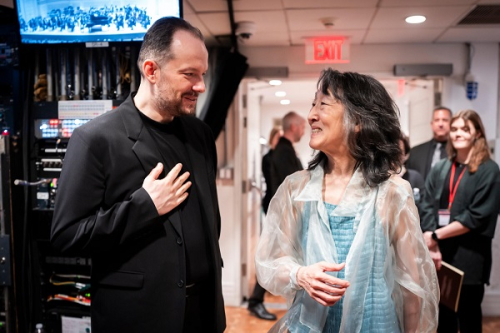
    Backstage: Maestro Nelsons and Ms. Uchida; photo by Chris Lee


    Andris Nelsons is an excellent accompanist, which I’ve had a chance to note many times. His respect for his soloists, keeping the orchestra from burying them, is an admirable trait – one I wish a few other notable conductors would also acquire.

    ~ Ben Weaver

    (Chris Lee’s performance photos courtesy of Carnegie Hall)

  • Franz Welser-Möst and the Cleveland Orchestra Make a Statement @ Carnegie Hall

    CH11527596

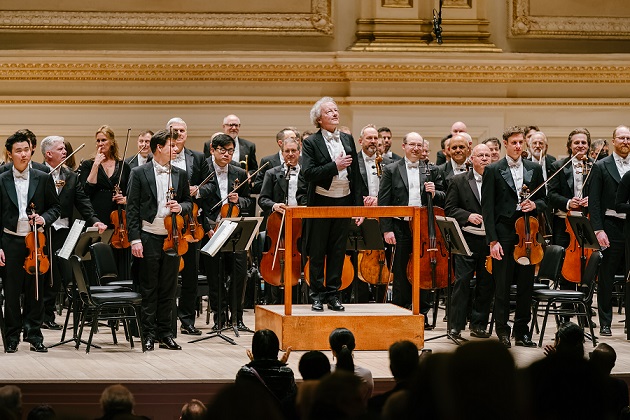
    Above: Maestro Welser-Möst and the Cleveland Orchestra onstage at Carnegie Hall; photo by Fadi Kheir

    ~ Author: Lane Raffaldini Rubin

    Tuesday March 18th, 2025 – Tuesday March 18th, 2025 – Franz Welser-Möst led The Cleveland Orchestra tonight in the first of two back-to-back Carnegie Hall performances. The second concert will feature music of Stravinsky and Tchaikovsky, but the Orchestra was forced to make a major change in the program of tonight’s concert after Asmik Grigorian announced her withdrawal for personal reasons. Ms. Grigorian, the Lithuanian soprano, was set to sing Richard Strauss’s Four Last Songs and the final scene from Puccini’s Suor Angelica with the Clevelanders.


    Missing a chance to hear the Four Last Songs is a real shame, but Welser-Möst took this opportunity instead to make a timely political statement in what might be one of his last Carnegie Hall appearances before his retirement in 2027:

    “This program change has given us a chance to say something important about our world today. As people fight for freedom everywhere, these pieces tell that same human story. Beethoven’s Fifth shows us the journey from darkness to light. Janáček’s From the House of the Dead reveals how human dignity survives even in the most desolate of circumstances. And the Leonore Overture is, to me, simply the greatest music about freedom ever written. These works together create a profound statement that I believe will resonate deeply with our audiences in both Cleveland and New York.”

    The first notes of the performance were the V-for-victory theme of Beethoven’s Fifth Symphony. Besides being perhaps the world’s most famous four notes, this music represents Allied Europe’s victory over the Axis in World War II. (Russia, are you listening?)

    CH11527621

    Maestro Welser-Möst (above, photo by Fadi Kheir) mobilized the full forces of the Cleveland Orchestra for the Fifth, making it an orchestra more than twice the size of that envisioned by Beethoven. The result was an impressive, explosive sonority at the expense of contrast and transparency. In the first movement the Clevelanders’ sound was burnished and energetic as it traversed Beethoven’s volatile landscape of darkness and light.

    The second movement was beautifully elegant, with notable vibrato-less hushed passages and flawless string crossings throughout the later variations of the theme. The finale was brisk without being breathless and avoided the Indiana Jones clichés that this movement often receives.

    The second half of the program featured the suite (arranged by František Jílek) from Leoš Janáček’s final opera From the House of the Dead as well as Beethoven’s Leonore Overture No. 3. These pieces both come from larger dramas about imprisonment and the liberation of the steadfast human body and spirit. If Beethoven’s Fifth Symphony lays out a hero’s abstract journey through conflict toward triumph, the latter two pieces give a much more visceral view into their protagonists’ struggles against adversity and fate.

    Janáček’s suite is wonderfully off-kilter and begins with a herculean violin solo—a free-associating kind of playing that involves an almost desperate sawing away at the top of the instrument’s register. Chaotic passages of music played by smaller sections of instruments are interspersed between bursts of the full orchestra with towering clusters of sound, always grounded by the low strings and brass. Inventive sounds made by rachet noisemakers, wood clappers, percussively plucked strings, and relentless repetitive figures all have the effect of boring a hole into one’s skull, slipping toward madness.

    Passages drawn from a scene in the opera in which the prisoners stage a play feature macabre oom-pah-pahs, vaudeville fragments, and whiffs of a klezmer band. The final movement of the suite is a fauvist palette of blurry chords, a luxuriously strange and gorgeously dissonant tableau that concludes too optimistically considering all that came before.

    It seems odd, then, to conclude the concert with an overture. Rare, too, is the chance to hear Beethoven after Janáček. But the Leonore Overture—from the opera that would become Fidelio—is a concise encapsulation of Welser-Möst’s message for the evening.

    This piece was better suited than the Fifth to the large orchestra, which was able to achieve subtle shades ranging from the bright fanfare of the full orchestra (in C-major, like the final movement of the Fifth) to the eerie distance in the flute after the portentous off-stage trumpet call.

    Fidelio is ultimately about the triumph of enlightenment values over despotism. Although Welser-Möst’s program had the potential to come off as trite and facile, his linking of these two Beethoven scores to Janáček’s and his reversal of the obvious order of their performance charted an intelligent, moving, and novel course that he hopes—despite our current administration’s unenlightened displays of power—might be followed in Europe.

    ~ Lane Raffaldini Rubin

    Performance photos by Fadi Kheir, courtesy of Carnegie Hall

  • Orchestra of St. Luke’s ~ Bernstein’s ‘Kaddish’

    Samuel-pisar

    Above: Samuel Pisar

    ~ Author: Oberon

    Wednesday January 29th, 2025 – Carnegie Hall marked the 80th anniversary of the liberation of Auschwitz with a performance of Leonard Bernstein’s Symphony No. 3, “Kaddish.” A setting of ‘A Dialogue with God’ by the late Samuel Pisar – who had himself been a survivor of Auschwitz – was spoken tonight by Pisar’s wife, Judith Pisar, and their daughter Leah Pisar, with James Conlon leading the Orchestra of St. Luke’s. The Bard Festival Chorus, directed by James Bagwell, and the Brooklyn Youth Chorus, led by Dianne Berkun Menaker, made the choral passages an integral part of the evening’s performance.

    The reviews were quite harsh when the Boston Symphony Orchestra, conducted by Charles Munch, premiered this symphony on January 10, 1964; it is dedicated to the memory of President John F. Kennedy, who had been assassinated on November 22, 1963.

    Tonight was my first time hearing this work. In preparation, I read some articles and reviews of the piece; these seemed mostly to center on the narrative rather than on the musical setting. My idea was to focus on the music and let the narration flow, but that proved impossible: such is the power of Mr. Pisar’s writing.

    Former Secretary of State Antony Blinken, stepson of Samuel Pisar, made an eloquent introductory speech in which he drew a connection between the substance of Bernstein’s Kaddish and the current situation here in the USA. This of course was surely weighing on the minds of most everyone in the audience.

    Judith and Leah Pisar had taken their places next to the podium, and Maestro Conlon entered to a warm greeting. Most of my experiences with Mr. Conlon’s conducting have been at the Metropolitan Opera, where he debuted in 1976  and went on to preside over nearly 300 performances, the latest having been Shostakovich’s LADY MACBETH OF MTSENSK, more than ten years ago. I’d love to see him on the Met podium again.

    Low humming from the chorus opens the Kaddish, and then Judith Pisar, a petite woman, began to speak. Her voice is deep and profound as she talks of the Age of Anxiety, which seems to be having its second dawning. Leah Pisar’s speaking voice has a sense of passion and urgency which contrasted with Mme. Pisar’s more solemn tones.

    A high violin tone is sustained by concertmaster Krista Bennion Feeney until the xylophone sounds an alarm. A melancholy theme of unison celli turns anxious as the basses join. Following a resounding crash, the music gets wild and fast, with the crack of a horsewhip. The chorus’s rhythmic clapping gets a bit jazzy; their song is accented by the xylophone, and it moves to a big finish.

    Over quiet percussion and choral humming, Judith Pisar speaks long…and movingly; the essence of the work now becomes evident: where was god when these horrible things were happening to his people? What wrongs had they committed to merit such torment and anguish? Was god angry or simply indifferent?

    As questions are raised – “How did the Holocaust, the genocides, and the ethnic cleansings become acceptable?” – and as the spoken words become more haunting and horrifying, the actual music tends to feel less engrossing.

    But then, soprano Diana Newman’s high, sweet voice floats over an accompanying harp: clear and reassuring. The female choristers join, and the music turns grand, only to fade with the xylophone sounding. Ms. Newman resumes, supported by high, spun-out sounds of the violins. Angelic voices hum, whilst scurrying music underscores Leah Pisar’s speaking of “incendiary demagogues”.  

    The music turns delicate; Mme. Pisar speaks until a crescendo obliterates her voice; her daughter speaks of “chaos on Earth”. Aching celli and basses play deep and rich; the music swells with both choruses joining. Stabbing accents turn into an oddly merry passage for clarinet, flute, and bassoon. The Youth Chorus sings; the spoken description of “the warm embrace of democracy” seems ironic now.

    A postlude of strings and brass becomes a lament, with muted trumpet and oboe. The music hesitates; Leah Pisar speaks again, with Ms. Feeney’s violin as solo accompaniment. Now Mme. Pisar issues a plea for peace as horn and trumpet sound. There is a fast and jazzy chorus, which Ms. Newman joins. The finale feels a bit extended, but then a dramatic pause leads to a final Amen.

    Throughout the work, the eternal question hovers overall: why does god allow these things to happen? And why did he abandon the faithful in their hour of direst need? Another such test seems to loom before us now. Perhaps there are no gods, and we’re simply going to have to make it on our own.

    ~ Oberon