Tag: Concert

  • Gatti/Royal Concertgebouw: Wagner & Bruckner

    Daniele Gatti

    Above: conductor Daniele Gatti

    Author: Oberon

    Wednesday January 17th, 2018 – This long-awaited Carnegie Hall concert by the Royal Concertgebouw under the baton of Daniele Gatti paired two of my favorite composers – Wagner and Bruckner – and my expectations for the performance were very high indeed. Wagner-starved as my friend Dmitry and I have been in recent seasons, hearing the Prelude to Act III and Good Friday Spell from PARSIFAL was alone reason to anticipate this concert for months in advance. That Bruckner’s 9th Symphony would complete the program gave reason to feel this was destined to be a thrilling evening. Both works were played magnificently by this great orchestra, and Maestro Gatti again upheld our esteem for him as one of the greatest conductors of our time.

    But in practice – as opposed to in theory – I felt, as the evening progressed, that putting these two masterpieces on the same program didn’t work out nearly as well as I’d expected. About midway thru the Bruckner, I felt my interest waning. In attempting to reason it out, I came to this conclusion: Wagner is a great composer, and Bruckner is a very good one. This certainly does not mean that Bruckner’s music isn’t wonderful, and meaningful. But there’s a depth of feeling in Wagner’s writing that – for me – eludes Bruckner.   

    Wagner’s two ‘Grail’ operas – one about the father (PARSIFAL) and the other about the son (LOHENGRIN) – both contain music of other-worldly beauty. The composer wrote: “It is reserved for Art to save the spirit of religion.” [“Religion and Art” (1880)]. In these two operas, Wagner’s music expresses the inexpressible in ways that make non-believers like myself wonder if we’ve got it right…or not.

    Maestro Gatti’s gift for evoking mythic times and places (his Metropolitan Opera AIDAs in 2009 were fascinating in this regard) meant that the music from PARSIFAL performed tonight was truly transportive. As with his Met performances of the Wagner opera in 2013, Gatti’s pacing seemed ideal. The gorgeously integrated sound of the Concertgebouw, with its velvety-resonant basses, leads us to Monsalvat, where – with Parsifal’s return – the long Winter gives way to Spring. For a blessèd time, we are far from the dismal present, watching the flowers bloom is that legendary realm, as Kundry weeps. Poetry without words.  

    Bruckner’s unfinished 9th symphony impressed me deeply when I first heard it performed live in 2014, and I expected the same reaction tonight. For much of the first movement, I was thoroughly engaged and experiencing the tingles of appreciation that Bruckner’s music usually produces. I confess that I like the ‘purple’ parts of Bruckner’s music best, and perhaps my eventual zone-out began with the Scherzo.

    In the Adagio, I grew restless; the repetitions became tiresome. A few people got up and left, and others had fallen asleep. I continued to attempt to re-engage with the superb playing and Maestro Gatti’s interpretation, but honestly I could not wait for the symphony to end; and I made a mental note to skip an upcoming performance of it.

    The irony of tonight’s situation struck me as I was pondering the experience on the train going home. How is it that Wagner, a non-believer, is able to put us in touch with the divine whereas the pious Bruckner, a devout Catholic who dedicated the 9th symphony “To God”, seems only to be knocking on heaven’s door?

    Now, more than ever, I look forward to the upcoming PARSIFAL performances at The Met.

    ~ Oberon

  • Gatti/Royal Concertgebouw: Wagner & Bruckner

    Daniele Gatti

    Above: conductor Daniele Gatti

    Author: Oberon

    Wednesday January 17th, 2018 – This long-awaited Carnegie Hall concert by the Royal Concertgebouw under the baton of Daniele Gatti paired two of my favorite composers – Wagner and Bruckner – and my expectations for the performance were very high indeed. Wagner-starved as my friend Dmitry and I have been in recent seasons, hearing the Prelude to Act III and Good Friday Spell from PARSIFAL was alone reason to anticipate this concert for months in advance. That Bruckner’s 9th Symphony would complete the program gave reason to feel this was destined to be a thrilling evening. Both works were played magnificently by this great orchestra, and Maestro Gatti again upheld our esteem for him as one of the greatest conductors of our time.

    But in practice – as opposed to in theory – I felt, as the evening progressed, that putting these two masterpieces on the same program didn’t work out nearly as well as I’d expected. About midway thru the Bruckner, I felt my interest waning. In attempting to reason it out, I came to this conclusion: Wagner is a great composer, and Bruckner is a very good one. This certainly does not mean that Bruckner’s music isn’t wonderful, and meaningful. But there’s a depth of feeling in Wagner’s writing that – for me – eludes Bruckner.   

    Wagner’s two ‘Grail’ operas – one about the father (PARSIFAL) and the other about the son (LOHENGRIN) – both contain music of other-worldly beauty. The composer wrote: “It is reserved for Art to save the spirit of religion.” [“Religion and Art” (1880)]. In these two operas, Wagner’s music expresses the inexpressible in ways that make non-believers like myself wonder if we’ve got it right…or not.

    Maestro Gatti’s gift for evoking mythic times and places (his Metropolitan Opera AIDAs in 2009 were fascinating in this regard) meant that the music from PARSIFAL performed tonight was truly transportive. As with his Met performances of the Wagner opera in 2013, Gatti’s pacing seemed ideal. The gorgeously integrated sound of the Concertgebouw, with its velvety-resonant basses, leads us to Monsalvat, where – with Parsifal’s return – the long Winter gives way to Spring. For a blessèd time, we are far from the dismal present, watching the flowers bloom is that legendary realm, as Kundry weeps. Poetry without words.  

    Bruckner’s unfinished 9th symphony impressed me deeply when I first heard it performed live in 2014, and I expected the same reaction tonight. For much of the first movement, I was thoroughly engaged and experiencing the tingles of appreciation that Bruckner’s music usually produces. I confess that I like the ‘purple’ parts of Bruckner’s music best, and perhaps my eventual zone-out began with the Scherzo.

    In the Adagio, I grew restless; the repetitions became tiresome. A few people got up and left, and others had fallen asleep. I continued to attempt to re-engage with the superb playing and Maestro Gatti’s interpretation, but honestly I could not wait for the symphony to end; and I made a mental note to skip an upcoming performance of it.

    The irony of tonight’s situation struck me as I was pondering the experience on the train going home. How is it that Wagner, a non-believer, is able to put us in touch with the divine whereas the pious Bruckner, a devout Catholic who dedicated the 9th symphony “To God”, seems only to be knocking on heaven’s door?

    Now, more than ever, I look forward to the upcoming PARSIFAL performances at The Met.

    ~ Oberon

  • Jerome Hines

    Jerome hines as wotan

    Above: Jerome Hines as Wotan in DIE WALKURE at Bayreuth.

    Jerome Hines, the tall American basso, holds the record for the longest career of a principal artist at The Metropolitan Opera: between 1946 and 1987, Hines sang 875 performances with the Company in New York City and on tour. I saw him for the first time in 1963 as Mephistopheles in FAUST, one of eight performances I saw at The Old Met before it was demolished.

    In the ensuing seasons, I saw Hines as Alvise in GIOCONDA and Colline in BOHEME, as well as in a concert performance of scenes from BORIS GODUNOV at Carnegie Hall. The basso’s career took him to La Scala, the Bolshoi, Buenos Aires, and to the festivals at Glyndebourne, Edinburgh, and Bayreuth.

    At the Bayreuth Festival, Jerome Hines appeared as Gurnemanz, King Marke, and as Wotan, from which role the following excerpt is drawn:

    Jerome Hines – WALKURE finale – Kempe cond – Bayreuth 1960

    Jerome Hines passed away in 2003, having sung in public for the last time two years earlier as the Grand Inquisitor in concert at Boston.

  • Janine Jansen and Friends @ Zankel

      Screen Shot 2017-12-19 at 12.47.01 PM

    Above: violinist Janine Jansen

    ~ Author: Scoresby

    Thursday December 7 2017 – This evening had one of the best chamber performances I’ve heard of the year in Carnegie Hall’s Zankel Hall. This commenced violinist Janine Jansen’s six performances as a part of Carnegie Hall’s Perspectives series; where artists of certain acclaim curate concerts in a given season. Ms. Jansen’s will include three chamber music performance (this being one of them), two orchestral performances, and a recital with Jean-Yves Thibaudet. This was the first time I had heard Ms. Jansen in recording or performance, so it was thrilling to hear such a well-programmed concert – though I had heard all the pieces on the program in concert before.

    The performance began with a performance of Bartok’s Contrasts for Violin, Clarinet, and Piano (this recording has Bartok playing along with Benny Goodman, who the piece was written for). Ms. Jansen was on violin, the esteemed Martin Fröst was on clarinet, and Lucas Debargue was on piano. In the first movement’s “recruiting dance”, Ms. Jansen and Mr. Fröst seemed to almost be dancing with each other on stage while playing. Mr. Fröst in particular captured all the jazzy timbres and fun improvisatory sounds – sounding free and loose. Mr. Debargue kept the stormy piano part quiet and atmospheric, never overwhelming the group.

    Capture

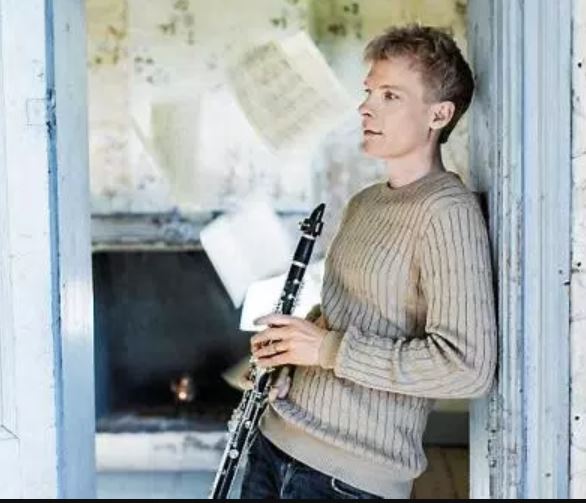
    Above: Clarinetist Martin Fröst, photo by Mats Bäcker

    Ms. Jansen provided a rough gritty sound with perfect technique. The second movement brought a different sound world, languid and mysterious. They took a looser approach, letting each line sing. Mr. Debargue captured the folksiness and jazzy rhythms well. The last movement was played with stunning speed and accuracy. While fun through all the various riffs, it sounded a little too rushed. Nonetheless, with big personalities like Ms. Jansen and Mr. Fröst, the fun parts of the piece were giving distinct timbres. Mr. Debargue’s relaxed downward scales sounded contrasted the rougher timbres of Ms. Jansen and Mr. Fröst.

    The second piece on the program was a bit of rarity. Ms. Jansen and Mr. Debargue returned to play Szymanowski’s Mythes for Violin and Piano, Op. 30. For those that don’t know, Szymanowski’s music has a few distinct periods, but his most famous middle period sounds almost like a more radical Debussy with motion. Mr. Debargue played the opening of La Fontaine d’Aréthuse with a delicate color palette and impressionistic quality without making the piano sound too blurry. Ms. Jansen embraced the almost crass strangeness of the violins opening line. For a piece that has this late Debussy sound, one has to embrace all the effects in both instruments for the music to work, and here one couldn’t ask for better interpreters. As the first movement went on to its passionate climax Ms. Jansen seemed to let loose in a way that was missing in the Bartok.

    Screen Shot 2017-12-19 at 12.49.33 PM

    Above: Pianist Lucas Debargue

    The whirr of sound and color was thrilling, followed by a ghostly harmonic sections. Mr. Debargue was equally enjoyable, changing textures every few phrases. I look forward to hearing Mr. Debargue’s newly released Syzmanowski/Schubert album. The third movement, Dyrads and Pan has the violin imitating Pan’s flute for a good portion of the pieces. Through trills, quarter tones, muted sections, natural harmonics and a host of other methods that Syzmanowski dictates Ms. Jansen made the music sound like much more than just a violin. 

    The last piece on the program was The Quartet for the End of Time by Oliver Messiaen. In addition to Mr. Debargue and Ms. Jansen, Martin Fröst returned for the difficult clarinet part and cellist Torleif Thedéen joined on the cello. This is the sort of music that can really only heard live as recordings can’t capture its both apocalyptic and meditative mood in the same way. It also requires utmost coordination between each musician. Of the dozen or so performances I’ve heard in the past three years this was perhaps the best. During the first of eight movements, Mr. Fröst began almost as if he was conducting. His tone small, but his style emphasizing the bird trills. Mr. Debargue made his way softly through the 29 chord cycle that makeup the piano part. The play between Ms. Jansen and Mr. Fröst was again evident here – each seeming to get energy from the other. Nonetheless, they kept the strange mood somber and the atmosphere stagnant. Almost as if one were to walk into a large space and hear some birds chirping and people talking, getting enveloped in it. 

    The second movement brought an entire different style of playing, here letting the apocalyptic element of the piece shine. Mr. Debargue had a rough, almost crass sound explodes out of the quiet atmosphere, announcing the end of time. Mr. Thedéen and Ms. Jansen’s languid duet after maintained the eerie quality of the first movement, meandering through seemingly without direction. To capture these contradictory elements of the music is impressive; the group sounds like it has played together for years and I look forward to hearing their recording of it released earlier this month. One of the more striking aspects of this performance is that all the performers seemed comfortable with Messiaen’s lengthy silences. 

    The third movement is for solo clarinet and the emotional center of the piece. It truly is one of my favorite moments in all of music, so to hear such an excellent clarinet player perform it was moving. Mr. Fröst’s performance was perhaps the quickest I’ve heard in terms of tempo, but it allowed him to make each phrase have more energy and breath. It also made each rest and silence all the more apparent. During the famous long sustained screeches that crescendo from silence to the maximum sound a clarinet can make (only a clarinet can start from complete silence that way), Mr. Fröst’s body seemed to quiver as he approached the maximum sound of his instrument, but that convulsing was perfect for the physicality of the music. During the more active sections in-between each shriek, Mr. Fröst’s fast tempo let the bird-like melodies shine. While all performances sound bird-like, Mr. Fröst’s light tone and nimble trills seemed particularly well suited. 

    The fourth movement is a light interlude and it felt like being sucked out of a trance after the severity of solo clarinet movement. Here, Ms. Jansen, Mr. Fröst, and Mr. Thedéen sounded joyful and played well together. During the passages in unison it felt like they fused into one large instrument. Mr. Thedéen’s low pizzicatos were a delight. Turning back to the meditative mood, the fifth movement is a stunning meandering melody on the cello with a simple piano accompaniment. Mr. Thedéen’s had a drier sound at first, but then settled into a more romantic style by the end. Mr. Debargue played is murmurs on the piano softly, without ever eclipsing the cello. 

    Screen Shot 2017-12-19 at 12.52.25 PM

    Above: Cellist Tortleif Thedéen, photo by Nikolaj Lund

    The sixth and seven movements had the best chamber music playing of the night; each member of the quartet seemed fully invested in the music. During the dark sixth which has an extended section with all the instruments playing in unison with the same dynamic markings, not one instrument seemed eclipse another, an incredibly difficult feat. They played up all of the accents and gave a quick, fierce account. After the long introduction, there is a section where the clarinet and piano pound out longer rhythms that eventually take over the piece. Mr. Fröst and Mr. Debargue played this with verve, making each punctuation sound final until another fast break with all the instruments in unison sputtering a drawn out phrase. This contrast made the movement even more dramatic than it typically is. This led into the dissonant seventh movement, where the group seemed to be both aggressive and colorful in their sound. They managed to make it sound darker and more stormy than I’ve heard before.

    The last movement is an extended passage for violin and piano, similar to the cello section. Here though, Ms. Jansen had a slow ringing sound. Mr. Debargue provided a sublime accompaniment. Again, it was easy to slip into a trance with the slow slide up both the violin and piano. After landing in the highest registers of both, Ms. Jansen sounded the last note – but kept her posture as if there was more. This held the audience from applause and everyone sat in the silence of eternity for a full minute before a hearty applause. I wish more musicians captured those sublime moments of quiet after a performance, it felt just as important as the music itself. I look forward to hearing her next performances apart of her Perspectives series on January 18 and January 21.

  • Dmitri Hvorostovsky Has Passed Away

    004a2691

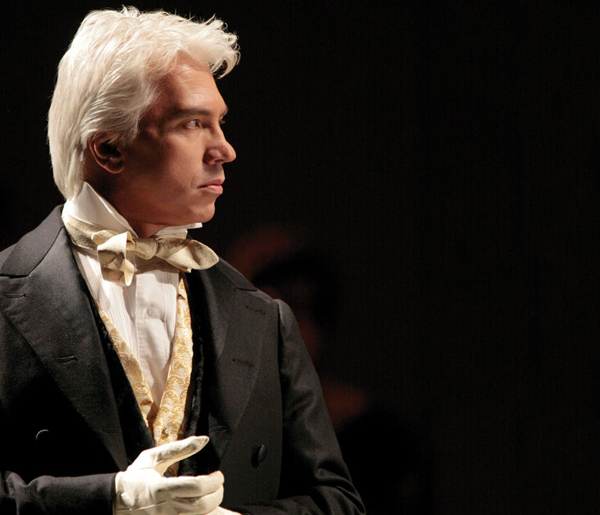
    One of the era’s few true titans of the opera world, Dmitri Hvorostovsky, has passed away at the age of 55. 

    It’s possible I was the first person in the Americas to hear the voice of Dmitri Hvorostovsky. Within a week of his historic Cardiff Singer of the World win in 1989, my dear friend Mollie sent me tapes of the competition – which had produced the famous ‘Battle of the Baritones’ as Dima and Bryn Terfel vied for the top prize. They both won: Hvorostovsky the main title and Bryn took the Lieder Prize; they both went on to spectacular careers.

    His Cardiff win sent the charismatic Russian singer on a career trajectory that took him to the great opera houses and concert stages of the world. He was beloved by audiences everywhere.

    At The Met, Hvorostovsky made his debut in 1995 as Prince Yeletsky in PIQUE-DAME. He went on to sing nearly 200 performances with the Company. I had the good fortune of seeing him often in such roles as Belcore in ELISIR, Germont, Posa, Andrei in WAR & PEACE, Onegin, Renato in BALLO IN MASCHERA, Count di Luna, Simon Boccanegra, Carlo in ERNANI, and Rigoletto.

    In 2015, already in treatment for a brain tumor, Hvorostovsky made a heroic effort to come to New York City to sing three performances as Count di Luna in TROVATORE; the audience greeted him with fervent affection, and he sang beautifully.

    Dima

    Above: fantastic moment as Dima greets fans after his 2015 Count di Luna at The Met.

    In February 2016, I saw Hvorostovsky for what was to be the final time: in recital at Carnegie Hall. On May 7th, 2017, he appeared on The Met stage for the last time: at a gala marking The Met’s 50th season at Lincoln Center, Dima made an unannounced appearance, singing the “Cortigiani!” from RIGOLETTO.

    Scanned Section 2-1

    Three times prior to that last Carnegie recital, I heard Hvorostovsky in concert settings. The first was at Symphony Hall in Boston where, in 1995, he gave an all-Russian program with chorus; as an encore, he sang “America the Beautiful” – gorgeously – and took a high A (or was it a B-flat?) at the climax that was simply thrilling. The entire afternoon was a feast of splendid singing.

    Scanned Section 4-1

    In 1998, soon after I’d moved to New York City, Hvorostovsky sang Mahler’s Kindertotenlieder with the New York Philharmonic. The music suited him to perfection. And in April 2010, he joined soprano Sondra Radvanovsky in a program of arias and duets at Carnegie Hall: two of the truly distinctive artists of our time.

    Looking back:

    6a00d8341c4e3853ef01b8d21a7d3b970c-800wi

    Dmitri Hvorostovsky – BALLO aria – Cardiff 1989

    Dmitri Hvorostovsky – In The Stillness of the Silent Night~Rachmaninoff – Cardiff 1989

    More of The Voice:

    PECHEURS DES PERLES – duet – Paul Groves & Dmitri Hvorostovsky – Tucker Gala 1995

    Hvorostovsky – TROVATORE aria – Tucker Gala 1995

    Dmitri Hvorostovsky & Rene Pape – DON CARLO scene – Met 2006

    Hvorostovsky – arias from PRINCE IGOR and ERNANI – BBC Proms 2006

    As Eugene Onegin:

    Onegin

    Dmitri Hvorostovsky – ONEGIN aria

    Portrait of the artist as a young man:

    1987

    I met Dmitri Hvorostovsky only once, very briefly. I was leaving work at Tower Records as he and his wife were coming in. I spontaneously held out my hand and he grasped it firmly and gave me a smile. Neither of us said a word.

    Dmitri Hvorostovsky – Tchaikovsky ~ None But The Lonely Heart

  • André Watts|ORPHEUS @ Carnegie Hall

    Watts11_high - david bazemore

    Above: pianist André Watts, photo by David Bazemore

    ~ Author: Oberon

    Thursday October 26th, 2016 – Pianist André Watts joined ORPHEUS this evening as the beloved chamber orchestra kicked off their 2017-2018 Carnegie Hall season with a New York premiere and classics by Mozart and Beethoven. We learned that 600 school-children were in attendance – up in the balcony – having been provided with tickets free of charge. A subtitle for the program might have been “Pianists Who Compose”, as Mozart, Beethoven, and Iyer each first won renown at the keyboard. 

    Vijay-Iyer

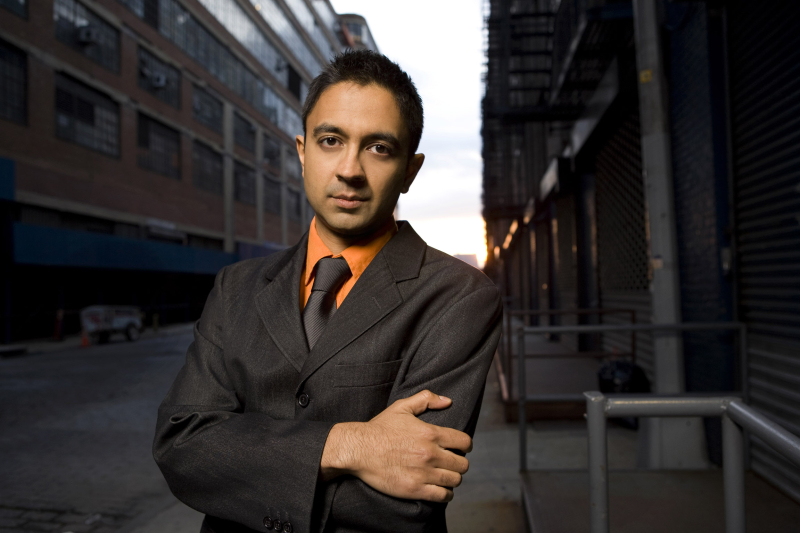
    American composer Vijay Iyer (above) is a jazz pianist, bandleader, producer, electronic musician, and writer. Tonight ORPHEUS offered the New York premiere of Mr. Iyer’s Asunder, an eclectic and vastly pleasing work that suits the ORPHEUS players to perfection.

    In his program note, Mr. Iyer said that, on first receiving the ORPHEUS commission, he thought of writing a piece that would reflect the current deep divisions in our country and “…how it feels to be an American today: pulled apart, broken, anxious, untethered…” He thought of writing big, violent music but then he chose instead to write a piece that “…imagines unity anew…” Bravo! for taking such a stance, Mr. Iyer.

    Asunder is presented in four movements; it opens with pacing horns and an oddly noble feeling. Pulsing rhythms and a somewhat ominous timpani carry us thru to a passage for strident winds. Swirls of notes from both strings and winds allude to the movement’s title: Agitated. It ends with dour, deep sounds.

    Marked Patient and mysterious, the second movement begins with plucking and a jazzy piccolo solo over bass and cello. A Mid-Eastern flavour permeates; following a build-up to an almost militant passage, a Glassian repetitive motif takes over and we settle into a slow sway.

    Calm and precise, like clockwork begins with a gorgeous flute solo; bell tones and other percussive effects designate the effect of time. A repeated downward passage is repeated just a few too many times (my sole reservation about the work).

    Solo oboe over bass accompaniment opens the concluding Lush movement; then a rather drowsy clarinet takes over. The Mid-East is evoked again as the music assumes the feeling of a desert journey, then pulses up over deep bass notes. The glockenspiel sounds again, and after a plucked passage the finale turns cinematic.

    Percussionist Maya Gunji did a great job in the Iyer, as did several of her woodwind colleagues, though I couldn’t see them clearly enough to name names. And the strings sounded superb…all evening, in fact. Mr. Iyer was called to the stage and was enthusiastically applauded by audience and musicians alike.

    The Steinway was then rolled out, and André Watts appeared to a warm welcome from the Carnegie audience.

    André Watts came to public prominence at the age of 16 when Leonard Bernstein chose him as a soloist, making his New York Philharmonic debut on one of the orchestra’s Young People’s Concerts – a concert which was broadcast nationwide on CBS-TV. Two weeks later, Bernstein again called upon the young and charismatic Mr. Watts to substitute at the last minute for the ailing Glenn Gould in performances of Liszt’s E-flat Concerto with the New York Philharmonic. In 1976, André Watts’ recital for the Live From Lincoln Center series was the first full-length recital broadcast in the history of television.

    The Watts career has spanned over half a century, interrupted at times by health issues. Now 70 years old, he plays with the energy and distinction that have endeared him to audiences worldwide over the decades; he played, in fact, like a very jeune homme.

    Mozart’s Piano Concerto No. 9, composed in January 1777, picked up the appellation “Jeunehomme” “young man”) by mistake when Mozart’s mention (in a letter) of the name of the young pianist who inspired the work –  Victoire Jenamy (1749-1812) – somehow got scrambled from Jenamy to Jeunehomme. Victoire was the daughter of the famous 18th-century ballet master Noverre, and she was apparently in Salzburg during the winter of 1776-77 where she met Mozart. This was the first of the composer’s piano concertos to appear in print, published in Paris around 1780.

    My first impression of Mr. Watts as he began to play (I’d never heard him live before) was: “He makes the piano sing!” This concerto is very demanding, and – as the pianist remarks in his program note – shows such  maturity of writing from a 21-year-old that we could easily be convinced it comes from a later time in the Mozart’s career. It is, overall, music that brings genuine comfort and joy.

    In the opening Allegro, Mr. Watts displayed a light touch in a series of delicious trills, with much charming filigree; yet there was also warm power and rhythmic vitality to be enjoyed. An elaborate cadenza held the audience in silent thrall. The following Andantino begins in a somber mood, and the pianist’s sad song (again with some sweet trills) was expressively played. As a more hopeful feeling rises, the orchestra has a really lovely passage: the music has an unusual sense of containment, of assurance and grace. A downward-flowing cadenza, with yet more intriguing trills, showed Mr. Watts’ control and artistic depth.

    The finale, a Rondo, commences with virtuosic feats from the pianist. A fine flow develops, with cascades of piano notes. In the middle of the movement, Mozart injects a courtly Minuet interlude, introduced by the soloist who unfurls the melody gently over a pizzicato accompaniment. Another cadenza, now with a rising aspect, again gives us savourable trills.

    The audience abundantly hailed Mr. Watts and the ORPHEUS players: a full standing-ovation ensued. We hoped for an encore, but the pianist – perhaps wisely – left us to our Mozartean reveries.

    Following a longish intermission, the Beethoven 1st symphony provided a perfect finale to the evening. We’d just heard this work a couple of weeks ago, played by the Orchestra of St. Luke’s in this very hall. It’s such a cordial piece, and I’ve grown really fond of it. It was nice to hear it again so soon. 

    The Beethoven 1st is the symphony that seems to start mid-phrase. The ORPHEUS players gave a marvelous performance, with a breadth and richness of sound that filled the venerable space. Rhythmic acuity and some lovely solo bits from the winds players engaged us from first note to last, and made for an impressive end to a thoroughly satisfying evening of music-making.

    The Program:

    VIJAY IYER: Asunder (New York Premiere)

    MOZART: Piano Concerto No. 9, K. 271 “Jeunehomme

    BEETHOVEN: Symphony No. 1

    ~ Oberon

  • Ensemble Connect @ Weill Hall

    EnsembleConnectBanner

    ~ Author: Scoresby

    Monday October 23rd, 2017 – In Carnegie Hall’s intimate Weill Hall, I attended an eclectic concert of American music performed by Ensemble Connect (formerly Ensemble ACJW). For those that do not know, Ensemble Connect is according to the Carnegie Hall website “a program of Carnegie Hall, The Juilliard School, and the Weill Music Institute in partnership with the New York City Department of Education.”  Each member is a two-year fellow who performs, teaches, and educates mainly (but not exclusively) in NYC. The Carnegie Hall and Paul Hall (at Juilliard) series of performances are always interesting, as the ensemble typically plays adventurous mixes of chamber music repertoire. 

    I was excited to see the program began with the wonderful clarinetist Yonnah Kim and the colorful pianist Lee Dione performing the Bernstein Sonata for Clarinet and Piano. While I had never heard the sonata before, I remembered Ms. Kim from her excellent performance last year in Golijov’s The Dreams and Prayers of Isaac the Blind. The sonata is divided into two movements, the first being having a relatively dissonant skittering melody reminiscent of Hindemith. The second is more in the mode of Bernstein’s popular style, with jazzy sections. I couldn’t help but wonder if Bernstein had been listening to the Rite of Spring when composing the piece, there are a few allusions throughout the sonata. 

    Ms. Kim captured the oscillating clarinet in the first movement part well with a clear, mysterious sound – managing to shade the lower register parts of the work with a dusty timbre. In the second movement, she added flair to the jazzy sections making them come to life. Mr. Lee managed to capture the mood well with subtle dynamic phrasing and finesse in the rhythmic sections. While I can’t say I was fond of the sonata musically, both players sounded as if they had playing together for years.

    After the sonata, Mr. Dione gave a short speech tying together the wide-ranging program; highlighting the need for distinct American voices to be heard. The second piece on the program was Missy Mazzoli’s Still Life with Avalanche, which is for flute (Rosie Gallagher), clarinet doubling as bass clarinet (Yoonah Kim), violin (Adelya Nartadjieva), viola (Andrew Gonzalez), cello (Madeline Fayette), piano (Lee Dione), percussion (Brandon Ilaw), and 3 harmonicas. The work begins with the harmonicas and strings creating an atmospheric drone that is then interrupted by the bass clarinet and piano. These interruptions build and become more frequent until the piece takes shape. It sounds like a mix of a few genres ranging from rock to contemporary classical. The players all gave a committed performance, embracing each different style of music and coordinating well. 

    The last piece on the brief first half of the program was Copland’s Sextet for clarinet (Yoonah Kim), violins (Rebecca Anderson and Adelya Nartadjieva), viola (Andrew Gonzalez), cello (Julia Yang), and piano (Mika Sasaki). The piece is a reduction of Copland’s Short Symphony, though I hadn’t heard either before. The writing is densely packed with complex rhythms, jazzy riffs, and lyrical melodies. It is an excellent piece, though there is almost too much to listen to in the first movement. Despite the difficulty of getting the timing correct on this piece, the ensemble seemed very together capturing the nervous trudging quality of the opening. Balance-wise, it was a pleasure to hear Ms. Yang’s resonant voice, she seemed to capture the bouncing character of the piece well. It keeps its momentum all the way until the first chords of the second movement. There is a dramatic shift to a quiet chorale-like second movement, which slowly builds in intensity. The strings did a good job of providing a resonant sound, contrasting the first movement well. The finale is a more calculated cacophony that really emphasizes jazzy rhythms and slides. Duets between Ms. Kim and the various strings provided a light and entertaining sound.

    The second half of the program was devoted to one of Steve Reich’s most important works: Different Trains. The piece is for a quartet and tape (sound engineer Benjamin Furiga assisting in this performance); the quartet consisting of Adelya Nartadjieva on first violin, Rebecca Anderson on second violin, Andrew Gonzalez on viola, and Madeline Fayette on cello. The tape has tracks of trains, the speech of holocaust survivors from interviews with Mr. Reich, and a taped quartet. The music and the speech imitate each other creating a hybrid between speech and music through the three movements of the piece. While certainly an important milestone in 20th century classical music and a well-crafted composition, I’ve never had an affinity for this piece. It seemed particularly strange to hear such an emotional work about the holocaust and the aftermath of World War II in Weill Hall’s intimate grandiloquent setting with gold trimming and a beautiful chandelier. 

    Nonetheless, the musicians executed the performance well, keeping their place despite the fact that there seemed to be technical issues with the spoken part of the tape (while audible some of the time, it seemed to cut in and out at times making it hard to follow). They all seemed invested in the music and it showed: many audience members around me were bobbing their heads to the hypnotic speech/rhythms. I appreciate that Ensemble Connect goes after diverse sets of repertoire that typically wouldn’t be programmed together, especially when the playing is as high caliber as it was this evening.

    ~ Scoresby

  • Weilerstein|Barnatan @ Zankel Hall

    Barnatan and Weilerstein Photo by Paul Stewart

    Above: Inon Barnatan and Alisa Weilerstein, photo by Paul Stewart

    ~ Author: Scoresby

    Tuesday October 17th,  2017 – In Carnegie’s Zankel Hall, cellist Alisa Weilerstein and pianist Inon Barnatan gave a probing recital exploring a variety of repertoire. I noticed on my way into the building that the performance sold out, the crowd was buzzing with energy before the performance. While I have heard both of these instrumentals as soloists with orchestras before, I had never heard either in recital. Recently the duo has been touring and recording together, so it was easy to see their fluency with each other’s playing.

    The performance began with Mendelssohn Cello Sonata No. 2 in D Major, Op. 58. Immediately striking about the jubilant opening was the amount of restraint that both artists have. Instead, they focused on creating color, mood, and structure rather than the usual busty opening. Particularly satisfying was the clear, crisp phrasing during the recapitulation. Clearly both musicians have technical mastery of their instruments. The second movement begins with an impish scherzo that mixes cello pizzicato with staccato notes on the piano. Here, they both managed to capture the darker coloring well, particularly with Ms. Weilerstein’s dry sound. The music then has a contrasting romantic second theme. 

    Rolling choral-like arpeggios at the start of the third movement were the highlight of this piece. Mr. Barnatan took his time savoring each of these chords, capturing the happiness tinged with nostalgia. It is a pleasure to hear a duo where the instrumentalists have equal command of their instruments. In the fast-paced final movement the interplay between the two musicians was fun to hear, one picking up a scale the other had just finished zipping back and forth. They gave a fast, structured account through the chords.

    Rostropovich_Britten

    Above, from the archives: Rostropovich and Britten

    One of the reasons I was interested in this particular performance was to hear Britten Cello Sonata in C Major, Op. 65. While I know the cello suites, I hadn’t heard this particular piece before. This was the first of a few pieces written for Rostropovich (all within Britten’s later period). It was a pleasure to hear this for the first time, especially with Ms. Weilerstein’s edgier sound. The first movement, “Dialogo: Allegro” is aptly named. It beings almost like an argument between the two instruments, each cutting each other off with jazzy syncopated rhythms. The theme seems both anxious and wistful at the same time. Ms. Weilerstein seemed to emphasize a drier scratchy sound over lyricism, which worked well to contrast Mr. Barnatan’s softer staccato chords. 

    The second movement is a sinewy display of pizzicato for the cello. It is quiet, fast, and virtuosic for both instruments. Both players performed with verve, it was particularly satisfying hearing the quiet bite they both added. The third movement fully flushes out the misty nostalgia of the first movement, bringing the piece to its emotional climax. Ms. Weilerstein captures the dark colours of this movement well, really letting the lower registers shine and letting her sound expand. Her playing is striking because unlike many cellists, she has a pin-point sound that usually feels dry and craggy – it was fabulous hearing her let the cello resonate in this movement. The fourth movement contains many delicious cello shrieks and other effects, the players making the mood restless again. The final fifth movement is a relentless trudge to the end and had the audience give an enthusiastic ovation. I must say that after hearing this very convincing performance, the piece has become one of my favorites for cello and piano.

    S Mackey - Copy

    Above: composer Steven Mackey

    Steven Mackey’s compositions are always a pleasure to hear, he has a creative way of using instruments that makes listening to his works live particularly enjoyable. There are always effects that recordings can’t quite capture, and it is fun to be able to see how they are produced. Through Your Fingers, which had its world premiere with this performance and was co-commissioned by Carnegie Hall, is a one-movement piece that is divided into four distinct sections. I wonder if Mr. Mackey was aware that this piece would be paired with the Britten because stylistically they worked quite well with one before the intermission and one directly after. Mr. Mackey’s piece seems to wander between a few different moods/themes – none of them reach their conclusion, instead continuously switching and developing.

    The first section is slow and lyrical, while the second becomes more agitated with interesting shifting rhythms. I couldn’t help but picture a primordial environment when listening, particularly with the high harmonic theme with the cello. Some of Mr. Mackey’s scales in the piano part reminded me of Ginastera. I can’t imagine a more committed performance of this piece, Mr. Barnatan letting the piano oscillate between a more percussive bass and sweet melodic scales with Ms. Weilerstein embracing all of the extended cello techniques. Both led the piece into its passionate climax, capturing both the wild side of the music while still feeling grounded and precise. 

    While I wouldn’t remove any of the pieces on the program, the second half felt very long coming in at over an hour. The final piece on the program was the classic Rachmaninoff Cello Sonata in G Minor, Op. 19. It was finely played, Mr. Barnatan having a colorful palette and Ms. Weilerstein with her clarity and transparent sound. Mr. Barnatan played the piano part with a Chopin-esque lyricism, never letting the many large chords becoming overwrought. As an encore, they offered the third movement of the Chopin Cello Sonata. Both artists seemed more relaxed after the large program, letting the music flow and letting themselves get swept up a little. The crowd seemed deservedly enthusiastic at the close. 

    ~ Scoresby

  • John Stewart

    John Stewart

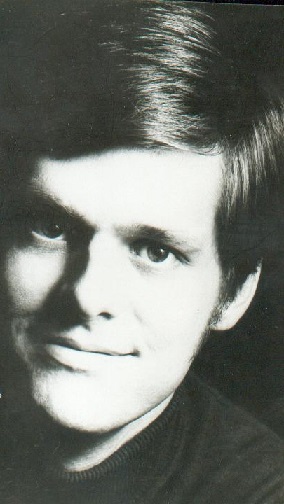
    The American tenor John Stewart made his professional debut at Santa Fe in 1964. Over the ensuing years, he returned often to Santa Fe in a wide-ranging repertory. He made his New York City Opera debut in 1968 and sang many roles there, including Albert Herring, Tamino, and Nanki-Poo. At the Metropolitan Opera, he appeared as Don Ottavio and as Alfred in FLEDERMAUS.

    It was at the New York City Opera that I had the pleasure of hearing John Stewart as Pinkerton, Alfredo in TRAVIATA, Sali in A VILLAGE ROMEO AND JULIET, and Mozart’s Tito.

    In 1972, he sang Mathan in Handel’s ATHALIA with the Handel Society at Carnegie Hall. The cast further featured Elinor Ross, Maureen Forrester, and Ara Berberian. Mr. Stewart’s singing of the aria “Gentle airs, melodious strains” that evening remains a cherished memory of mine.

    In 1974, John Stewart joined the Frankfurt Opera where he sang until his retirement in 1990. He currently teaches voice in New York City.

    John Stewart – ROI D’YS aria – Lexington KY 1970

  • My Only Meyerbeer

    15780720_10209660094513178_5114976865812364173_n

    To date, this concert performance of LES HUGUENOTS presented at Carnegie Hall in 1969 is the only Meyerbeer opera I have experienced live. Listening to Lisette Oropesa’s recent performance of the aria “Robert, toi que j’aime” from ROBERT LE DIABLE put me in mind of that Carnegie HUGUENOTS which marked one of many high points in the era of Beverly Sills Mania.

    Die-hard Meyerbeer admirers continually clamor for more productions of his operas, yet to me they always seems like musically sprawling works wherein a few stimulating arias or ensembles are to be found amidst much that is merely workaday. Here is New York City, Meyerbeer fared quite well during the first 50 or so years at the Old Met, where productions of ROBERT LE DIABLE, LE PROPHETE, L’AFRICAINE and especially LES HUGUENOTS (the fabled ‘nights of the seven stars’) were given fairly regularly; but by the mid-1930s they all seem to have faded away. A production of PROPHETE – starring Marilyn Horne, Renata Scotto, and James McCracken – was given at the New Met in 1977 and repeated in 1979 before vanishing. 

    Over the years, I have made numerous attempts to connect with these antique operas: a recording of ROBERTO IL DIAVOLO from the Maggio Musicale 1968 with Scotto and Boris Christoff held by attention for a while, as did a video from San Francisco of L’AFRICAINE with Placido Domingo and the sultry-voiced Shirley Verrett. I bought the commercial recording of LE PROPHETE but never made it past the first LP before turning it over to the library.

    Sutherland had her HUGUENOTS at La Scala (with Corelli and Simionato driving audiences to distraction), and ROBERT LE DIABLE has been revived for Samuel Ramey and, more recently, for Bryan Hymel. 

    But, getting back to that 1969 HUGUENOTS at Carnegie Hall, my opera diary (volume 1) reveals that Licia Albanese, Régine Crespin, Bidu Sayão, and Dame Alicia Markova were among the audience.

    The evening essentially was a Sills triumph. She wore a queenly white and gold gown and sang all of Marguerite de Valois’ fanciful coloratura brilliantly, tossing off strikingly clear notes in alt and driving her fans to distraction. Here is a sample of Sills in this music:

    Beverly Sills – O beau Pays ~ LES HUGUENOTS

    There was also excellent singing from Justino Diaz as Marcel (who intones the old Lutheran hymn ‘A Mighty Fortress is Our God‘), and fine work from Thomas Jamerson (de Nevers) and Joshua Hecht (St Bris). As the desperate lovers, Angeles Gulin (Valentine) and Tony Poncet (Raoul) were less impressive. Despite some attractive passages, Gulin’s “almost painfully huge” voice was beset by pitch problems. Poncet, who had had an estimable career singing demanding roles from the French and Italian repertoire starting in 1957, had been in vocal decline. This performance was viewed as something of a comeback, but it was not very successful.

    Kay_Creed

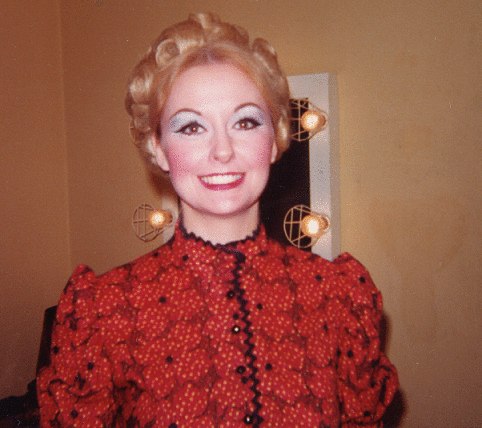
    The queen’s page Urbain was beautifully sung by mezzo-soprano Kay Creed (above, after singing Angelina in LA CENERENTOLA at NYC Opera). At the time, I had a huge crush on Ms. Creed, who in 1960 had been named Miss Oklahoma. I saw her many times at NYC Opera: as Suzuki, and as Maddalena, Siebel, Mlle. Clairon in CAPRICCIO, Cherubino, Annina in ROSENKAVALIER, and as Nancy in a delightfully-cast performance of ALBERT HERRING.