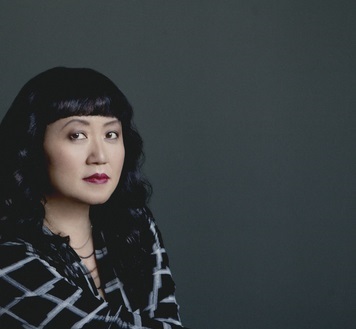
Tag: Concert

  • Christmas Eve 2022 @ Carnegie Hall

    R rengel

    Above: violinist Rubén Rengel

    Saturday December 24th, 2022 – Spending Christmas Eve at Carnegie Hall with my longtime friend Rob Scott, we enjoyed the New York String Orchestra‘s annual holiday concert which brought us music by Elgar, Mozart, Bach, and Tchaikovsky. Jaime Laredo was on the podium, and the Venezuelan violinist Rubén Rengel was the soloist in a Bach violin concerto. The venerable Hall was packed to the rafters with music-lovers who ventured out on an extremely frigid, windy night to hear great music in the most perfect setting. 

    The New York String Orchestra is a young orchestra: as the players in this pre-professional ensemble took the Carnegie Hall stage, we were struck by their youthful energy and by their sense of dignity. Moments later, we were thrilled by the sheer richness and beauty of the sound they produced.

    Edward Elgar’s Introduction and Allegro, Op. 47, opened the concert. Composed in 1905 for performance in an all-Elgar concert by the newly-formed London Symphony Orchestra, the score calls for a string quartet and string orchestra. The NYSO’s concertmaster, Steven Song, led the quartet which further featured Minji Lee (Principal violinist), Raphael Masters (Principal violist), and Camden Michael Archambeau (Principal cellist).

    From note one of the Elgar, the players filled the Hall with music of abundant warmth, played with passion and poise. Among the quartet, violist Raphael Masters’ playing of a solo passage early on exemplified the high level of musicianship and tonal polish these young people have already achieved. The Elgar flowed on, with the agitated Allegro sections alternating with stretches of big lyricism that had the feeling of a classic film score. A fugue highlighted the sonic allure of each of the orchestra’s sections, and  – all evening, actually – the basses were extremely pleasing to hear.

    Mozart’s Divertimento in D-Major, K. 136, was luxuriantly played; the opening Allegro, with its familiar theme, was taken at a perfect tempo by Maestro Laredo. The Andante was noble and gracious, highlighted by silken sustained tones from Mr. Song’s violin. The steady pulse of the concluding Presto was finely sustained, whilst the music winks at us with sly touches of wit.

    Mr. Rengel now joined the orchestra for J. S. Bach’s Violin Concerto in A-Minor, BWV 1041. We had heard – and greatly enjoyed  – Mr. Rengel’s playing earlier this season with Ensemble Connect at Weill Hall. Tall and slender, the handsome Venezuelan caught the dancing spirit of the concerto’s lilting Allegro. In the Andante, his sweet tone and technical finesse produced enticing subtleties, his control of dynamics drawing us in to the music. The concluding Allegro assai again had a dance-like feeling, and Mr. Rengel’s fluency in rapid passages was a delight to the ear. The violinist, who had held the Hall in a palpable state of silence during this performance, was warmly cheered by the audience at the end, his colleagues onstage joining in the applause.

    Jaime laredo

    Above: Maestro Jaime Laredo

    Very high on my list of favorite musical works is Tchaikovsky’s Serenade for Strings. Like so many other people, I fell in love with this moving and melodious work through performances of Balanchine’s ballet Serenade at New York City Ballet. Tonight, hearing it in concert form, with the movements in their original order (Mr. B had placed the fourth movement before the third) was an immersive experience for me. The music was played with such heartfelt tenderness by these young people, the celli and basses constantly sending waves of poignant nostalgia thru me as memories – both sad and lovely – of past loves filled my mind.

    The love of music has, from a very early age, meant so much to me…most especially thru the dark years of my teens. Music is a constant lover: always there for me with its timeless, saving grace.  

    ~ Oberon
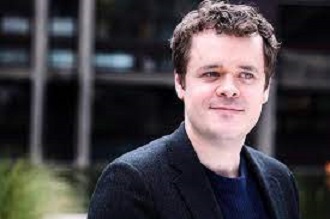
  • Orchestra of St. Luke’s: All-Mendelssohn Program

    Benjamin Grosvenor

    Above: pianist Benjamin Grosvenor

    Author: Ben Weaver

    Thursday November 17th, 2022 – The Orchestra of St. Luke’s and conductor Harry Bicket continued their multi-season traversal of the works of Felix Mendelssohn on Thursday evening at Carnegie Hall.

    British pianist Benjamin Grosvenor was the soloist in Mendelssohn’s Piano Concerto No. 1 in G-minor, Op. 25, composed in 1831. The 22-year-old composer’s Piano Concerto is not a standard piece in the concerto repertoire and that’s rather inexplicable. It’s a well-crafted work, with wonderful melodies, wide range of moods, and plenty for a soloist to dig into. A stormy opening from the orchestra and a quick, dramatic entry for the soloist set the tone for a wild ride. Grosvenor is an accomplished pianist and his dazzling playing was never lacking in beauty and excitement. The concerto is written without a pause between movements, effortlessly flowing from the tumultuous first to the lyrical second movement. One thing that stands out is the lack of sentimentality from Mendelssohn: he is earnest without cheap effects, and Grosvenor reflected that wonderfully. An especially lovely passage in the Andante movement passes the melody from the piano to lower strings, and here Grosvenor and the string players of the orchestra were spellbinding. A seamless transition into a quirky final movement was nicely handled, and Grosvenor continued his dazzling playing. Perhaps only a bit of humor was lacking in the whole proceeding, but I’ll place the blame for his on Maestro Bicket because this also marred an otherwise wonderful performance of Mendelssohn’s most famous work, incidental music to A Midsummer Night’s Dream.

    Mendelssohn composed the famous Concert Overture when he was 18 years old and it became a staple of the concert repertoire quickly: a magnificent work filled with whimsy, drama, and endlessly hummable tunes, it conquered the world. 15 years later Mendelssohn was commissioned to write additional music for Shakespeare’s play and – remarkably – the now mature composer managed to time-travel to his youth and compose a score as magical as the Overture had been. After a shimmering playing of the Overture, Bicket and the Orchestra of St. Luke’s launched into the Scherzo – a lively wind section driven ode to fairies (excellent playing by the flutes especially).

    Hiding among the players all along was actor David Hyde Pierce, appearing seemingly from nowhere as Puck: which is, obviously, the best way for Puck to appear. Hyde Pierce’s performance of selected sections of the text were delightful: by turns dramatic (Titania shocked to discover her husband’s tricks), a wryly delightful Puck, and gravely pompous Oberon, the real ass of the play. The veteran actor and comedian of TV, film, and stage, moved effortlessly from one mood to the next, sometimes without taking a breath. A marvelous performance! I have always enjoyed Mendelssohn’s music for these melodramas in the work, and so many recordings omit them, alas. So it was a pleasure to hear this music, especially as sensitively played as it was. 

    Soprano Elena Villalón and mezzo-soprano Cecelia Hall were most excellent Fairies, one wishes Mendelssohn had written more music for the singers. Members of the The Choir of the Trinity Wall Street were also excellent in their music; I especially appreciated their very clear diction.

    The Orchestra of St. Luke’s played extremely well all night. The only difficulties came in the beautiful Notturno. Featuring extensive writing for the horns, perhaps the players got tired. The only thing missing in the whole – as I mentioned above – was a sense of humor in the proceedings. The dramatic and lyrical passages were magnificent, but a somewhat lighter touch would have been welcome. Since this afflicted both the Piano Concerto and A Midsummer Night’s Dream, I’ll place this squarely on the shoulders of Maestro Bicket. Maybe he was just having one of those days; let’s blame it on a spell.

    ~ Ben Weaver

  • Orchestra of St. Luke’s: All-Mendelssohn Program

    Benjamin Grosvenor

    Above: pianist Benjamin Grosvenor

    Author: Ben Weaver

    Thursday November 17th, 2022 – The Orchestra of St. Luke’s and conductor Harry Bicket continued their multi-season traversal of the works of Felix Mendelssohn on Thursday evening at Carnegie Hall.

    British pianist Benjamin Grosvenor was the soloist in Mendelssohn’s Piano Concerto No. 1 in G-minor, Op. 25, composed in 1831. The 22-year-old composer’s Piano Concerto is not a standard piece in the concerto repertoire and that’s rather inexplicable. It’s a well-crafted work, with wonderful melodies, wide range of moods, and plenty for a soloist to dig into. A stormy opening from the orchestra and a quick, dramatic entry for the soloist set the tone for a wild ride. Grosvenor is an accomplished pianist and his dazzling playing was never lacking in beauty and excitement. The concerto is written without a pause between movements, effortlessly flowing from the tumultuous first to the lyrical second movement. One thing that stands out is the lack of sentimentality from Mendelssohn: he is earnest without cheap effects, and Grosvenor reflected that wonderfully. An especially lovely passage in the Andante movement passes the melody from the piano to lower strings, and here Grosvenor and the string players of the orchestra were spellbinding. A seamless transition into a quirky final movement was nicely handled, and Grosvenor continued his dazzling playing. Perhaps only a bit of humor was lacking in the whole proceeding, but I’ll place the blame for his on Maestro Bicket because this also marred an otherwise wonderful performance of Mendelssohn’s most famous work, incidental music to A Midsummer Night’s Dream.

    Mendelssohn composed the famous Concert Overture when he was 18 years old and it became a staple of the concert repertoire quickly: a magnificent work filled with whimsy, drama, and endlessly hummable tunes, it conquered the world. 15 years later Mendelssohn was commissioned to write additional music for Shakespeare’s play and – remarkably – the now mature composer managed to time-travel to his youth and compose a score as magical as the Overture had been. After a shimmering playing of the Overture, Bicket and the Orchestra of St. Luke’s launched into the Scherzo – a lively wind section driven ode to fairies (excellent playing by the flutes especially).

    Hiding among the players all along was actor David Hyde Pierce, appearing seemingly from nowhere as Puck: which is, obviously, the best way for Puck to appear. Hyde Pierce’s performance of selected sections of the text were delightful: by turns dramatic (Titania shocked to discover her husband’s tricks), a wryly delightful Puck, and gravely pompous Oberon, the real ass of the play. The veteran actor and comedian of TV, film, and stage, moved effortlessly from one mood to the next, sometimes without taking a breath. A marvelous performance! I have always enjoyed Mendelssohn’s music for these melodramas in the work, and so many recordings omit them, alas. So it was a pleasure to hear this music, especially as sensitively played as it was. 

    Soprano Elena Villalón and mezzo-soprano Cecelia Hall were most excellent Fairies, one wishes Mendelssohn had written more music for the singers. Members of the The Choir of the Trinity Wall Street were also excellent in their music; I especially appreciated their very clear diction.

    The Orchestra of St. Luke’s played extremely well all night. The only difficulties came in the beautiful Notturno. Featuring extensive writing for the horns, perhaps the players got tired. The only thing missing in the whole – as I mentioned above – was a sense of humor in the proceedings. The dramatic and lyrical passages were magnificent, but a somewhat lighter touch would have been welcome. Since this afflicted both the Piano Concerto and A Midsummer Night’s Dream, I’ll place this squarely on the shoulders of Maestro Bicket. Maybe he was just having one of those days; let’s blame it on a spell.

    ~ Ben Weaver

  • Ensemble Connect Delights @ Weill Hall

    Screenshot 2022-10-25 at 07-45-30 Ensemble Connect

    Monday October 24th, 2022 – When I saw the announced program for this evening’s concert by Ensemble Connect at Weill Hall, I knew I had to be there: what an enticing line-up of composers…and, in the event,  it was all so dazzlingly played!

    The young musicians of Ensemble Connect are exceptionally talented; all the music tonight sounded fresh and vibrant. They are also appealing to watch. The works on this well-contrasted program spanned the years from 1717 to 1994, and it was a sonic feast from first note to last. 

    CH11266821

    Above, playing the Martinů: Yasmina Spiegelberg, Garrett Arney, Laura Andrade, and Cort Roberts; photo by Fadi Khier

    Bohuslav Jan Martinů’s rarely heard Quartet for Clarinet, Horn, Cello, and Side/Snare Drum, H. 139, dates from 1924. This rather quirky mix of instruments does – as hornist Cort Roberts pointed out in his introductory remarks – represent the four ‘families’ of the symphony orchestra: strings, winds, brass, and percussion. What delightful sounds we heard from Mr. Roberts and his colleagues: Yasmina Spiegelberg (clarinet), Laura Andrade (cello), and Garrett Arney (snare drum).

    The work is full of wit and irony, yet in the central Poco Andante comes a poignant lament that is extraordinarily moving. Snare drum and cello lead off the opening Allegro moderato, which becomes march-like as the clarinet and horn join in. A trudging feeling develops, with a horn solo which later shifts to the clarinet. The music seems about to fade away, but there’s a big bang ending.

    As the Andante commences, my companion and I were simply blown away by the depth and beauty of tone that cellist Laura Andrade produced. Ms. Andrade played in all four works this evening, and maintained her beautiful sound and sterling musicality at every moment. Ms. Spiegelberg joins the cellist with a rather mysterious air; Mr. Arney’s snare drum comments on the women’s duet, and then Mr. Roberts’ mellow horn sounded a somber theme. The cello solo returns to the touching opening passages, played with heart-rending beauty.

    At the jaunty start of the concluding Allegretto, the voices enter one by one: drum, cello, clarinet, horn. The music jogs along, with the horn ringing forth. After the instruments have exchanged lively, wry phrases, there is a little unison coda to round things off. Such a wonderful way to open the evening, and what a stroke of genius on Martinů’s part to center the work on that profound lament.

    The petite but hugely talented pianist Joanne Kang now joined the impressive Venezuelan violinist Rubén Rengel and Ms. Andrade for a simply glorious performance of Clara Schumann’s Piano Trio in G-Minor, Op. 17. Their playing was tremendously beautiful and moving, and they are as attractive to watch as to hear; their performance of this masterwork seem so vital and immediate, making it an outstanding musical experience of recent seasons

    Clara Schumann’s writing shows a mastery of counterpoint and a heartfelt gift for melody. It’s music alive with romantic ardor. The opening Allegro moderato begins in a melancholy mood, and soon develops a passionate flow of lyricism, with dramatic outbursts along the way adding a sense of urgency. Ms. Kang kept the momentum going with her perfect timing, whilst Mr. Rengel and Ms. Andrade displayed rich, abundant tone as one lustrous theme after another sprang up.  The Scherzo – “in the tempo of a minuet” – commences with an elegant passage for violin and piano; it is gentle, pensive music, and again Ms. Andrade’s plush sound warmed the soul.

    Ms. Kang lovingly played the Andante‘s waltz-like opening, soon joined by the hushed, poetic sound of Mr. Rengel’s violin; their blend carries them thru captivating harmonies. The music gets a bit wild, only to be calmed by more gorgeousness from the Andrade cello. Achingly beautiful playing from these young artists, with the cellist rounding everything of with a simple descending scale that brought tears to my eyes. 

    The trio’s final Allegretto brought forth more dazzling playing from the three musicians; Ms. Kang in particular shown here with sumptuous, large-scale playing and – later – passages of glistening arpeggios. Following a mini-fugue, the music gets grand, only to simmer down to a melody of longing, then moving onward to its epic finish. My companion and I were so thrilled by this rapturous performance.

    Eleanor+Alberga

    Following the interval, music by the Jamaican-born composer Eleanor Alberga (photo above): her String Quartet No. 2. As violist Halam Kim remarked before the playing started, the entire 18-minute single movement develops from a very brief descending phrase that opens the piece; this Mr. Rengel dashed off for us as an introductory demo: it lasts less than a second.

    From its active start, dance-like with dazzling dissonances, the piece moves on with complex harmonies and rhythmic shifts as well as witty touches, such as a repetitive figuration for the 2nd violin (Brian Hong) that made me smile. Mellowing to an andante section laced with enticing harmonies, we arrive at an intriguing passage where tremolo shivers from Mlles. Kim and Andrade underscore an eerily harmonized theme for Mssrs. Rengel and Hong. Ms. Andrade’s knockout cello playing continues to fascinate us, whilst plucked notes from Ms. Kim and Mr. Hong support a high-flying passage for Mr. Rengel’s violin.

    CH11266889

    Above, playing the Alberga quartet: Rubén Rengel, Brian Hong, Laura Andrade, and Halam Kim; photo by Fadi Kheir

    The music dances on, getting dense and with a big buildup until it turns heartfelt and lush; we seem to be headed to the finish line, but…no: a delightful return of the tremolo viola/cello combo with woozy violins pops up before the music’s energetic final measures. The piece was enthusiastically received; I was hoping Ms. Alberga might be among the audience so we could hail her for her colorful, marvelous score.

    There was a slight delay before the evening’s concluding piece as a technical glitch with the tablets took some straightening out. Ah, for the simple beauty of a paper score!

    CH11266818

    Above: the ensemble playing Bach; photo by Fadi Kheir

    It was with J. S. Bach’s Brandenburg Concerto No. 5 that the evening closed. The large ensemble featured all the players from earlier in the evening, plus bassoonist Nik Hooks – a player with rich, amiable tone and agile technique – and the proverbially “tall, dark, and handsome” Iranian/Pakistani/American flautist, Amir Farsi: limpid of tone, with a personable presence as he bends and sways to the music. Mr. Hooks and Ms. Andrade provided a very high-class continuo, with Ms. Kim and Mr. Hong the supporting strings. Mr. Rengel and Mr. Farsi played magnificently, and there was truly a sense of magic in the hall as the performance unfolded.

    CH11266826

    Above, Joanne Kang at the harpsichord for the Bach; photo by Fadi Kheir

    Of course, this is “the Brandenburg with the harpsichord”, and Mr. Kang gave us a fleet-fingered and fabulous rendition of the long cadenza. The audience, and her colleagues, could not resist breaking in with applause for her stunning playing, one of the highlights of the evening. Other treats in the Bach were the poignant blending of Mr. Rengel’s violin with Mr. Farsi’s flute in the Affetuoso, and the light and lively finale wherein Ms. Andrade and Mr. Hooks put the continuo in the spotlight.

    CH11266799

    Above, the principal players for the Bach: Rubén Rengel, Joanne Kang, and Amir Farsi; photo by Fadi Kheir

    Such a pleasing and deeply satisfying evening! For two hours, the woes of the world and the cares of daily life were forgotten. A thousand thanks to these dedicated musicians, and to the music that makes life worth living.

    All photos by Fadi Kheir, courtesy of Carnegie Hall.

  • Vengerov/Osetinskaya @ Carnegie Hall ~ 2022

    Maxim_vengerov-

    Above: Maxim Vengerov

    Thursday October 20, 2022 – In February 2020, just days before life-altering pandemic commenced, Maxim Vengerov and Polina Osetinskaya gave a memorable recital at Carnegie Hall. This evening, they were back on the Carnegie stage with another enticing program.

    But our evening did not quite go as planned. First, a 20-minute delay of the start of the concert caused the audience to become restless. Then, during the music, the women behind me chatted whilst a woman next to me fell asleep and snored lightly. Then, about 90 seconds before the end of the Kreutzer sonata, a woman stood up and struggled over the people in her row to get to the aisle. My friend Dima, who is Russian, always says ‘Russian audiences are the worst’; we decided to have a late supper rather than endure more distractions. It was kind of sad to leave, because Mr. Vengerov and Ms. Osetinskaya really were playing divinely.

    The artists finally took the stage, Mr. Vengerov rather oddly clad in what appeared to be a bulky blue sweater and matching trousers. Ms. Osetinskaya on the other had was a vision of elegance in a black frock which perfectly showed off her lithe figure. 

    J. S. Bach Violin Sonata No. 1 in B-Minor, BWV 1014, is different from many other works for violin and harpsichord from this era, because the right hand of the harpsichord is fully written out by Bach. Up to this point in time, it had been customary for only the left hand and the chords for the keyboard to be specified. But BWV 1014 changed the relationship of the instruments: the harpsichord would now be equal to the violin, not merely an accompaniment. The harpsichord thus became a second melodic voice, changing the art of the violin sonata forever.

    Of course, Ms. Osetinskaya was at the Steinway rather than a harpsichord; her playing of the Bach was simply exquisite,  though – in fact – she surpassed herself in the ensuing Beethoven. It is the piano that opens the Bach sonata with a really gorgeous passage, and then the violin enters on a long, soft-suspended tone. Throughout the sonata, the two artists’ dynamic modulations were perfectly in sync.

    The first Allegro is lively and charming, and the Andante – with its hushed, sustained start – has a fine, dignified feeling. The minor-key finale is fast and fun, with the two players keenly tuned into one another as the music hastens along.

    Polina-Osetinskaya

    The artists took only a momentary break – not leaving the stage – before commencing their luminous rendering of Beethoven’s immortal Violin Sonata No. 9 in A-Major, Op. 47, “Kreutzer“.

    The sonata begins with a slow introduction played by the solo violin. The piano then responds, Ms. Osetinskaya displaying a gracious subtlety. Mood swings now come into play: passages of animation alternate with more pensive phrases. The music gets almost angry before the composer reverts to the calm of the sonata’s opening.

    Ms. Osetinskaya launches the familiar theme of the Andante with a softly rippling motif. Now comes a delicious set of variations in which the ravishing sound of the piano sustains each mood and meshes with Mr. Vengerov’s sweetly turned phrases, his whisper-light top notes, and fabulous trills.

    From its sprightly start, the third movement, a tarantella based on another familiar theme, calls for great virtuosity from both players: “Tons of notes!!”, I scrawled on my Playbill. The sonata ends with a celebratory final rush. The audience gave the musicians a resounding ovation though, in fact, they deserved even more.

    Mr. Vengerov is scheduled to return to Carnegie Hall on Sunday May 21st, 2023, for a Concert in Honor of Andrei Sakharov. Gidon Kremer, Steve Isserlis, Evgeny Kissin, Lera Auerbach, and the Emerson String Quartet willm also take part.

    Now if we could just get Ms. Osetinskaya here for a concerto evening, or – better still – a solo recital…!

    We headed out, sorry to miss the arrangements of six songs from Dmitri Shostakovich’s marvelous song cycle, From Jewish Folk Poetry; these songs are so dear to me.

    ~ Oberon

  • NYO-USA at Carnegie Hall

    Aw

    Above: cellist Alisa Weilerstein

    Author: Ben Weaver

    Friday July 29th, 2022 – Elgar’s Cello Concerto and Mahler’ Fifth Symphony made up the very ambitious program by the National Youth Orchestra of the United States of America at Carnegie Hall. The young American musicians – aged 16 to 19 – are embarking on a world tour with these works and will perform at the Concertgebouw in Amsterdam, as well as in Berlin, Ravello, and Lucerne in the upcoming weeks. Leading the orchestra in all these concerts is the British conductor Daniel Harding, with American cellist Alisa Weilerstein the soloist in the Elgar.

    Elgar’s Cello Concerto, composed in 1919, was mildly popular before Jacqueline du Pré gave it immortality with Sir John Barbirolli in the 1960s. There are few mainstream works as identified with one performer as Elgar’s concerto is with du Pré. For any cellist to take on this work must be intimidating. Alisa Weilerstein is a cellist who needs not fear anything from comparison. A consummate artist of genuine depth, gravitas, and beauty, Ms. Weilerstein’s performance glowed with humanity and grace. From the first passionate notes of the work – no orchestral introduction here – Elgar’s  writing for the cello is intricate and deeply emotional. Even the Scherzo has little frivolity. Ms. Weilerstein’s warm and powerful playing, the rich sound of her cello effortlessly filling the hall, was a true joy. Elgar’s ability to compose for a large orchestra, yet keep the orchestration translucent so it never buries the solo instrument, is perhaps rather unique among cello concertos. And Maestro Harding also kept the young players of the orchestra at bay, letting loose when necessary, but allowing Ms. Weilerstein to always be heard. Everything in this performance was perfectly balanced. An all-around marvelous performance of a very special work.

    Harding

    With Mahler’s Fifth Symphony things got a bit more complicated. Maestro Harding (above) is an excellent Mahlerian, having began his career as an assistant first to Simon Rattle in Birmingham and then to Claudio Abbado in Berlin. And his decision to include such a difficult work for a young orchestra was certainly brave, but it did not pay off on this evening. There’s no need to mention any specific mistakes made by specific musicians – I’ve heard the same mistakes made by professional and very experienced musicians of the New York Philharmonic. And there were many wonderful moments too: the horns were warm and fruity, the concertmaster’s solo was lovely, the percussion section was on peak form (I especially enjoyed the grin on the face of one of the percussionists every time he played something loud – his enthusiasm and joy were wonderful, charming, and infectious.) But the totality of the work just did not come together. There were wonderful moments scattered throughout. Perhaps it was Maestro Harding who failed to bring it all together. Perhaps the orchestra’s future performances, as they face more audiences and play the work more, will come together. But, with its faults, I’m glad these young musicians played Mahler. They are the future members of our great American orchestras.

    ~ Ben Weaver

  • Violinist Richard Lin ~ Carnegie Hall Recital

    Richard_lin

    Friday June 24th, 2022 – Richard Lin (above), Gold Medalist at the 2018 International Violin Competition of Indianapolis, in recital at Carnegie Hall, with Thomas Hoppe at the Steinway.

    Earlier this season I heard Mr. Lin in his debut performance with Chamber Music Society of Lincoln Center and was very impressed with his playing. I met Thomas Hoppe many years ago while he was at Juilliard; he has since developed a stellar reputation as a collaborative pianist and teacher.

    The concert fell on a day when a life-altering ruling by the Supreme Court cast a pall over everything…a ruling that bodes ill for my humble desire to live out my remaining days in peace. How did it come to this? My companion for the evening and I were extremely depressed and angry, and we debated skipping the concert; but in the end we found peace – at least for a couple of hours – in the sanctuary of Carnegie Hall and in the timeless beauty of the music, so marvelously played by Mssrs. Lin and Hoppe.

    T.A. Vitali’s Chaconne in G-Minor opened the program; this captivating piece opens with ghostly music from the piano; the violinist then takes up a yearning melody. As the music become  more animated, the combined artistry of the two players makes for a very pleasing sonic experience; they share a gift for dynamic variety and for great clarity, especially in some delicate fiorature. And there is a gorgeous sheen on Mr. Lin’s timbre.

    Richard Strauss’ Violin Sonata in E-flat Major, Op. 18, a chamber work by the composer of my two favorite operas, was an engrossing experience as played by Mssrs. Lin and Hoppe tonight. From its joyous start, the opening Allegro, ma non troppo, was filled with wonderful and subtle passages: with rippling keyboard figurations, exquisite themes in the violin’s high range, moments of dreamy softness…and the occasional touch of drama.

    The central movement brings us a Viennese-style cantabile, possibly a bow to the composer’s ardent love for the soprano Pauline de Ahna, who he had met in the year of the sonata’s composition (1888) and who he would later marry. In fact, Strauss eventually allowed this movement to be published separately. Mr. Hoppe’s perfect playing here entwined with the sweet song of the violin, creating an enchantment of piano/pianissimo music-making of great poetic appeal.  A flurry of agitato may presage the storminess that sometimes developed in the Strauss/de Ahna marriage. The extreme delicacy achieved by the players as the music moved on was a display of their amazing control.

    The sonata’s finale begins with a hushed, almost sombre prelude for the piano; then the music bursts forth in the energetic main theme, which is audibly related to the opening (and closing) passages of the first movement. The music is both emotionally and technically demanding; a sort of downhill piano cadenza leads to the sonata’s thrilling finish. The audience, wonderfully attentive throughout the evening’s first half, called the players back for a bow with persistent applause.

    Thomas+hoppe

    Above: pianist Thomas Hoppe

    The second half of the program was less interesting musically, though impeccably played. Pairing Corigliano with a Igor Frolov’s arrangement of tunes from Gershwin’s Porgy and Bess had the feeling of a pops concert. Both of these pieces place high demands on the players, but the music – while entertaining – is not engaging on a deeper level.

    John Corigliano’s Violin Sonata, written during 1962-63, is a long piece in four movements. Originally entitled Duo, it treats the two instruments as co-partners. Virtuosity is called for, but it seems lacquered on rather than an integral part of the piece. There’s some quirky technical stuff to be dealt with, and traces of blues influence. The third movement, Lento, feels overly long, despite being superbly played, and with a remarkable final sustained note from the violinist. The sonata’s final Allegro is exuberant, full of light and dazzle, but it later calms and overstays its welcome.

    To end his recital, Mr. Lin gave us Igor Frolov’s “Concert Fantasy on Themes from Gershwin’s Porgy and Bess”;  here, one by one, the celebrated Gershwin tunes are rolled out in sterling renditions by Mssrs. Lin and Hoppe: “Bess, You Is My Woman Now”; “My Man’s Gone Now”; “I Got Plenty of Nuthin’”; “Summertime”, and “It Ain’t Necessarily So”. Mr. Lin’s violin soared with distinction it it highest range, and the two players seemed to urge one another on to feats of virtuosity.

    To eager applause, the players returned for two encores:  Debussy’s “Beau soir” was luminously played, and they followed this with the demanding Kreisler showpiece, “Tambourin Chinois“. It seemed a third encore was in the offing as we left the Hall.

    Mr. Lin will be back with Chamber Music Society of Lincoln Center next season, and I look forward to hearing him again.

    ~ Oberon
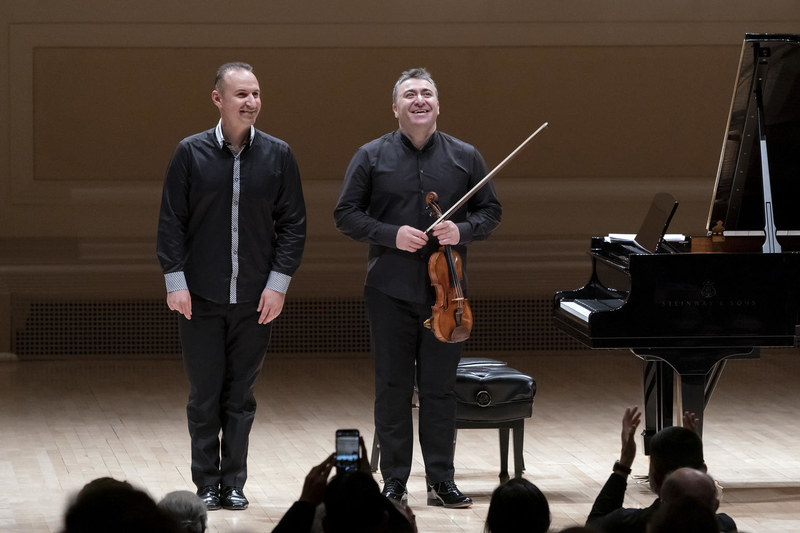
  • Remembering Makiko Narumi

    With eve shapiro 2000

    Above: Makiko Narumi with director Eve Shapiro

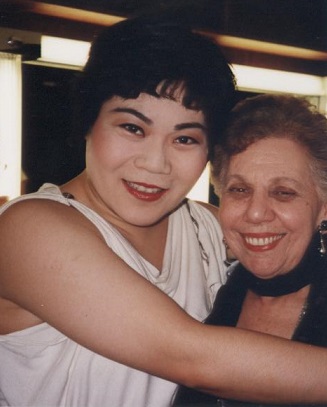
    April 30th, 2022 – Twenty years ago on this date, my friend the Japanese contralto Makiko Narumi passed away at the age of 33. I first met Makiko soon after I moved to New York City in 1998; I had heard her singing Schumann’s Frauenliebe und -leben at a Juilliard liederabend and was simply blown away by the sound of her voice, and a few days later she came into the opera room at Tower Records where I was working; she was stunned when I addressed her by name.

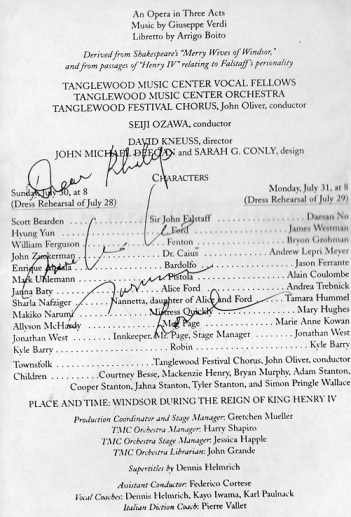
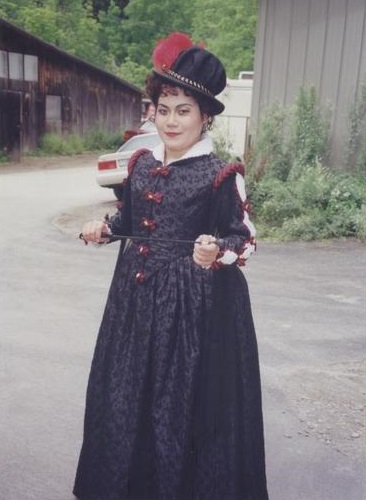
    We struck up a friendship and over the next 3 years I heard her many times at Juilliard (both in opera and lieder), in the semi-final and final rounds of the Met Auditions, at a Licia Albanese Foundation gala, at private concerts, singing the Rückert Lieder with the Juilliard Orchestra, and – in 2000 – at Tanglewood as Dame Quickly in FALSTAFF, conducted by Seiji Ozawa. Her last public appearance was singing the Mahler 2nd at Carnegie Hall just a few weeks before she passed away…a very emotional evening for both of us.

    I have some recordings of Makiko’s voice, but it’s always difficult for me to listen to them. Here she is singing at a house party at Aspen in 2000…

    Makiko Narumi – SAMSON ET DALILA ~ aria – Aspen 2000 – private recording

    …singing Brahms…

    Makiko Narumi – Von ewiger Liebe ~ Brahms

    …and singing Mahler at a Juilliard recital…

    Makiko Narumi – Mahler ~ Rückert Lieder – HoJeong Jeong piano

    …more Mahler: the Urlicht

    Mahler – Urlicht – Makiko Narumi – M Baitzer – 1999(1)

    One of the happiest days of our friendship: the Tanglewood FALSTAFF:

    1175885WOOzbiA

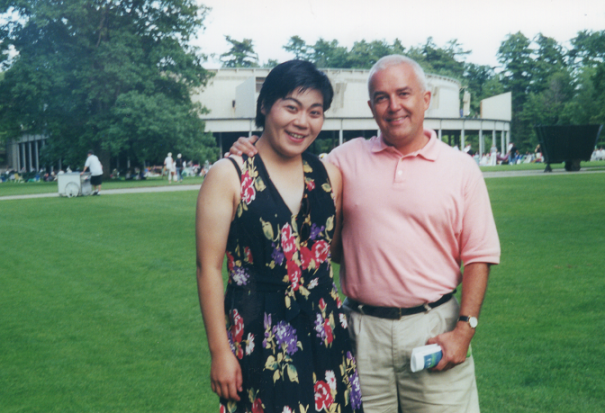
    Here we are on the lawn at Tanglewood after the performance in the Summer of 2000…

    118111jC9ldEDF

    …I even asked for her autograph!

    Makiko tanglewood falstaff

    Above: Makiko costumed as Dame Quickly…

    1185364kaB3O31

    …and here’s the entire cast of the Tanglewood FALSTAFF with Maestro Ozawa.

    I love to think of her now, bolstering the contralto section in the heavenly choir. 

    Makiko’s memorial:

    Makiko's memorial 2002-1 jpg

    A message from Makiko’s parents:

    Message from makiko's parents-1jpg

  • Romantic Perspectives @ Chamber Music Society

    Wu Han

    Above: pianist Wu Han

    Sunday January 39th, 2022 – This evening’s program at Chamber Music Society of Lincoln Center, entitled Romantic Perspectives, was truly a soul-warming experience, following a week of cold weather and a gusty snowstorm the previous day.

    The program got off to an exciting start with a performance of the Scherzo from Johannes Brahms’s “F-A-E” Sonata for Violin and Piano, dating from 1853. With Wu Han at the piano, violinist Chad Hoopes brought real flair to his playing. From the buzzy opening, the two musicians were in perfect sync. This Scherzo has a lyrical interlude, wherein the players’ dynamics meshed ideally; then, back to a lively allegro. What an exhilarating way to start a concert!

    Next came a spectacular performance of Gustav Mahler’s sole work in the chamber music genre: the Quartet in A-minor for Piano, Violin, Viola, and Cello, composed in 1876. Violinist Danbi Um, elegant in a ruffled ultramarine tulle gown, led her colleagues onstage. Before taking her place at the Steinway, Wu Han stepped forward to introduce us to two young musicians making their CMS debuts this evening: violist Timothy Ridout, and cellist Sihao He

    No pianist can establish a musical mood quite like like Wu Han does; with the deep, brooding opening measures of the Mahler, she immediately drew us in. The fabulous sound Sihao He summons from his cello was soon blending with Mr. Ridout’s handsome viola tone and the silken magic of Ms. Um’s violin. As the single movement progressed, the four musicians took us deeper and deeper into the music, their playing resplendently full-bodied and thrillingly intense. Passions ebb and flow, and then a darkish calm settles over us. Ms. Um’s exquisite playing, and the extraordinarily poetic phrasing of Mssrs. Ridout and He, were all underscored by Wu Han’s captivating dynamic mastery. It seemed impossible to think that only four players could produce such an ‘orchestral’ sound; their performance moved me deeply.

    Ridout

    Above: violist Timothy Ridout

    Composed in 1861, Antonín Dvořák‘s Quintet in A-minor for Two Violins, Two Violas, and Cello, Op.1, brought together the evening’s full string contingent: violinists Danbi Um and Chad Hoopes, violists Paul Neubauer and Timothy Ridout, and cellist Sihao He.

    Written when Dvořák was twenty years old, this quintet was the first of his works to be ascribed an opus number. In the opening Adagio — Allegro ma non troppo, the unison slow introduction gives way to a dancing, animated feeling. The tone qualities of the five musicians were perfectly integrated, with Mr. Hoopes excelling in the numerous melodic flights for violin, nimbly seconded by Ms. Um; and Sihao He amplified the beautiful impression he had made in the Mahler. This movement has an unusual ending.

    The ensuing Lento brings forth cantabile melodies; the main theme is taken up by Mr. Ridout’s viola (Dvořák’s own instrument) playing over a rhythmical accompaniment provided by the other players. The middle section of the movement provides a fresh theme, after which we hear a reprise of the introductory melody. The composer gives both violists ample opportunity here, and the contrasting timbres of Mssrs. Neubauer and Ridout were savourable indeed. The violins play in unison, then Mr. Hoopes again moved me with a high-lying passage. A swaying mood develops, and a rising violin motif leads us to the movement’s finish

    The quartet’s Finale – Allegro con brio involves three primary themes. The marvelous sound of Sihao He’s cello was continually alluring to the ear, and Mr. Ridout again shone in a songful passage. The superb blend these five artists achieved carried us on to the work’s ending, hailed by the crowd with warm applause.

    It is interesting to note that Dvořák seemingly never heard his opus 1; its first public performance came seventeen years after his death, and it was not published until 1943.

    Sihao he

    Above: cellist Sihao He

    Having recently enjoyed Maxim Vengerov’s stunning performance of César Franck‘s Violin Concerto at Carnegie Hall, I was definitely in the mood for more of Franck’s music. This evening’s CMS program ended with the composer’s Quintet in F-minor for Piano, Two Violins, Viola, and Cello, dating from 1879.

    With a descending phrase from Danbi Um, the passionate slow introduction to the first movement is underway. Wu Han’s gorgeous entry has a hesitant feeling, as if the composer is not quite sure where he wants to take us; a rather fitful acceleration finally achieves Allegro status. Now all five players begin to pass the melodies from one to another. Mr. Neubauer’s dusky viola, Wu Han’s magical piano, the lovely sense of longing from Danbi Um’s violin, the poignant sound of Sihao He’s cello…all combined as the music turns huge. In this movement, a melody of chromatic half-steps is heard, creating a musical tension which  our players today clearly relished.

    The second movement, marked Lento, con molto sentimento, begins with a haunting theme from Wu Han’s keyboard, and sublime lyricism from Danbi Um. The chromaticism which awoke in the opening movement becomes more pervasive now, with Ms. Um and Mr. He trading phrases. Wu Han’s playing is heavenly, and the cellist is simply stunning. The music builds in grandeur and then dissipates, becoming celestial. Mr. Neubauer’s lovely viola passage, ethereal sounds from the piano, and Danbi Um’s haunting violin draw the movement to a tender finish.

    Chad Hoopes opens the final movement with a bustling motif, joined by Ms. Um in an agitato mode. The strings play the work’s main melody in unison, with a vibrant crescendo. A brief, sweet song from Danbi Um leads to a big build-up of sound and emotion as the quintet sails onward to an epic finale.

    A full-house standing ovation greeted the players, who were called back for a second bow, much to everyone’s delight.

    ~ Oberon

  • Vengerov/Trpčeski @ Carnegie Hall

    CH11152281_Medium_res_comp

    Above: violinist Maxim Vengerov and pianist Simon Trpčeski onstage at Carnegie Hall; photo by Jennifer Taylor, courtesy of Carnegie Hall

    Thursday January 20th, 2022 – My first concert at the Stern Auditorium at Carnegie Hall since March of 2020. I was very happy to bring my friend DK to see one of his favorite artists, Maxim Vengerov, in recital. The Macedonian pianist Simon Trpčeski was at the Steinway for a wonderful program.

    The audience gave the musicians a hearty welcome as they walked out onto the stage. People are simply aching to hear great music played live again after the the long months of uncertainty. And so the opening Mozart seemed like a transfusion of peace and hope, though still tinged with darkness.

    CH11152497_Medium_res_comp

    Above: Maxim Vengerov, photo by Jennifer Taylor

    Mozart’s Violin Sonata in E-Minor, K. 304 was composed in 1778; this is the only one of Mozart’s violin sonatas written in a minor key; its underlying wistfulness might be connected to the fact that the composer’s mother had passed away while he was working on it.

    Departing from the norm, this sonata is in only two movements. The Allegro takes its character from the poignant opening theme, played in unison by violin and piano. The piano brings forth a second, more animated theme, though the mood remains restrained. A lovely dovetailing of dynamics marked the Vengerov/Trpčeski partnership’s playing, the violinist’s repeated insistent notes met by the pianist’s wonderful subtleties. 

    Mozart marks the second movement Tempo di Minuetto, but it has a forlorn quality not usually heard in a minuet. Solo piano introduces the grave yet graceful opening melody, and soon the two instruments take turns with it, their voices entwining. A major-key interlude gives us an unexpected ray of light, with sublimely soft playing from Mr. Trpčeski. The minor mode resumes, the melody flowing on to a rather sudden stop.

    CH11152391_Medium_res_comp

    Photo by Jennifer Taylor

    In direct contrast to the Mozart, Mssrs. Vengerov and Trpčeski next offered the Prokofiev Violin Sonata No.1. Prokofiev is one of my A-list composers, and this sonata encapsulates everything I love about his works: the rough-edged drama, the heartfelt lyricism, the chiaroscuro dynamics, and the subtle wit of his music always fascinates me.

    Following the four-movement structure (slow-fast-slow-fast) of the Baroque church sonatas, Prokofiev opens this sonata with a somber passage from the piano. The violin joins, edgy and buzzy, and then the two instruments blend in a unison lament. The piano’s dolorous notes draw the violin into a yearning, dramatic passage. Then the violin skitters softly on high as the pianist intones soft chords; it sounds “like the wind in a graveyard” as Prokofiev told David Oistrakh, who played the sonata’s premiere performance.

    The second movement, Allegro brusco, begins vigorously, lapses into a songful state, then turns fast and furious. Things subside briefly, but accents soon propel the piano forward again as the violin makes agitated remarks. Calming to lyricism, the music then gets grand – with a soaring melody leading to a wild finish.

    In the third movement, Andante, the Vengerov/Trpčeski transported us with their spectacular playing. An opening passage of piano filigree is taken up by the violin. A gorgeous violin melody is heard, whilst the piano sustains a magical atmosphere. This ethereal music puts us in a blissful state, with Mr. Vengerov finishing his reverie with a miraculously sustained pianissimo trill. Heavenly!

    Brilliant playing from both artists drove the sonata’s concluding Allegrissimo forward in spectacular fashion. A melodious interlude lets us again savour the warmth and serenity of Prokofian lyricism, and then some biting staccati dazzle us yet again. Another whiff of the “wind in a graveyard” motif leads on to work’s quiet closing. 

    CH11152496_Medium_res_comp

    Photo by Jennifer Taylor

    Following the interval, César Franck’s ever-popular Violin Sonata was given a thrilling performance by the Vengerov/Trpčeski duo. This sonata was inspired by the marriage of the great violinist Eugène Ysaÿe to Louise Bourdeau in 1886.  Franck’s initial idea for the sonata was to commence with a a slow and reflective opening movement, but Ysaÿe persuaded him that it worked best at a quicker tempo, so Franck marked it Allegretto, ben moderato. This movement juxtaposes rather than develops two themes, the first given almost exclusively to the violin, the second to the piano. These themes, particularly the violin’s, will return in the following movements. From note one, I fell under the spell of this music, which seemed so fresh and vivid as performed tonight. Mr. Trpčeski’s playing was positively rhapsodic, whilst Mr. Vengerov poured so much passion into the thrilling melodies the composer has given him.  

    The agitated, dramatic second movement casts its own spell, with the players again displaying their intriguing dynamic range and their peerless legato. The music is at once propulsive and poetic. Then comes the pensive Recitativo-Fantasia, wherein Mr. Vengerov’s rapturous playing in the high range is heard over the piano’s gently rolling misterioso figurations.

    The familiar and beloved themes reappear in the sonata’s final movement, which builds to a glorious finish. The inevitable reaction of the audience to the playing of Mssrs. Vengerov and Trpčeski was a fervent ovation, richly deserved. 

    Ravel’s Tzigane was a late addition to the program. Familiar to me mainly from the ballet that George Balanchine created for his muse, Suzanne Farrell, to this music, it’s a Vengerov specialty: he played it here at his February 2020 concert, just days before the pandemic shut everything down. 

    In July 1922, Maurice Ravel met the young Hungarian violinist, Jelly d’Aranyi, who was the grand-niece of famed 19th-century violinist Joseph Joachim. The composer was intrigued when he heard the violinist playing gypsy melodies at a party. Inspired, he fashioned a gypsy rhapsody, working on it over a period of two years. Ravel completed it just a few days before the premiere: on April 26, 1924, in London, Mlle. d’Aranyi and pianist Henri Gil-Marchex gave the premiere of Tzigane.

    Tzigane is a legendary showpiece, and tonight the amazing dexterity of the violinist (later joined by the pianist) kept the audience on the proverbial edge of their seats. After a giant “pre-cadenza”, the music starts to dance, by turns high and shimmering, then wildly earthy.

    CH11152444_Medium_res_comp

    At the concert’s end, Trpčeski and Vengerov were greeted with a lively ovation. They returned for three encores: two delicious Fritz Kreisler treats, and then Gabriel Fauré’s sublime Après un rêve, which was sublimely played. Bravo, gentlemen!  Bravissimo!!

    All photos by Jennifer Taylor, courtesy of Carnegie Hall.

    ~ Oberon