Tag: Covent Garden

  • Giuseppe Giacomini Has Passed Away

    Gg

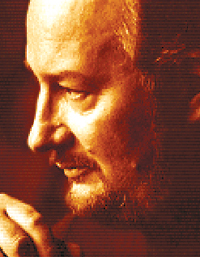
    The great Italian tenor Giuseppe Giacomini has passed away at the age of 80.

    Giacomini made his operatic debut in 1966 at Vercelli as Pinkerton. and was soon singing throughout Italy. His international career commenced at Berlin in 1970, which led to engagements at Lisbon, Barcelona, Munich, and in Vienna, where he received the title Kammersänger.

    He triumphed at La Scala, in Turin, and in Rome, and made his Metropolitan Opera debut in 1976, with debuts at Paris and Covent Garden following soon after.

    Giacomini is featured on the Metropolitan Opera’s DVD of LA FORZA DEL DESTINO with Leontyne Price, and on commercial recordings as Turiddu (opposite Jessye Norman), Pollione (with Renata Scotto), Otello (with Dame Margaret Price), and he is Cavaradossi on the Muti TOSCA with Carol Vaness.

    The tenor celebrated his 60th birthday singing in TOSCA at Covent Garden, and in 2010 he toured China with the Shanghai Philharmonic Orchestra.

    I first saw Giuseppe Giacomini onstage (his US debut) at The Bushnell in Hartford, where he appeared in an exciting FANCIULLA DEL WEST opposite Radmila Bakočević in 1975. At the 1987 Richard Tucker Gala, Giacomini brought down the house twice with his singing of the final scene of ANDREA CHENIER with Eva Marton, and with his powerhouse performance as Otello in the Act II duet with Sherrill Milnes; during the applause that followed, Mr. Milnes bestowed a comradely kiss on the tenor’s cheek. Watch and listen here.

    On December 10th, 1988, Giacomini gave a thrilling performance as Canio in PAGLIACCI at a Met matinee. The tenor – along with Diana Soviero (Nedda) and Juan Pons (Tonio) – was simply on fire, his top notes blazing into the hall. During the bows, a crowd gathered at the orchestra railing – like in the old days – to scream their heads off for the singers. I was so elated to be part of it. 

    As it turned out, that PAGLIACCI was Giuseppe Giacomini’s last Met performance.

    Giuseppe Giacomini – Un tal gioco – PAGLIACCI – Met bcast 1988

    There’s lots of Giacomini to be found on YouTube; here are a few of my favorite things:

    Giuseppe Giacomini sings Calaf’s aria “Non piangere Liu” from TURANDOT from a Paris Opera production in 1981. Watch and listen here.

    The tenor sings the Improviso from ANDREA CHENIER here

    …and Calaf’s “Nessun dorma” from a 1989 Moscow concert here…with an encore!

    And here’s Giacomini as Radames…

    Giuseppe Giacomini ~ Celeste Aida ~ Chicago 1988

    …and in the final duet from ANDREA CHENIER, with Ghena Dimitrova:

    ANDREA CHENIER ~ final duet – Ghena Dimitrova & Giuseppe Giacomini

  • Cheryl Studer & Luciana D’Intino ~ AIDA Duet

    Snapshot aida

    Cheryl Studer and Luciana D’Intino sing the confrontation duet from Act II of Verdi’s AIDA from a 1994 performance at London’s Covent Garden.

    Watch and listen here.

  • Cheryl Studer & Luciana D’Intino ~ AIDA Duet

    Snapshot aida

    Cheryl Studer and Luciana D’Intino sing the confrontation duet from Act II of Verdi’s AIDA from a 1994 performance at London’s Covent Garden.

    Watch and listen here.

  • Liane Synek as Brünnhilde

    Synek

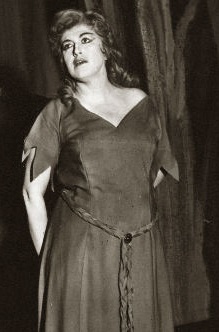
    Liane Synek (above) was an Austrian dramatic operatic soprano. She based her career in Germany, at such opera centers as Wiesbaden, Cologne, and the Staatsoper Berlin and the Cologne Opera, She appeared at international major opera houses and festivals, including Covent Garden, La Scala, and as the Bayreuth Festival.

    A somewhat erratic singer, Synek took on opera’s most demanding roles – including Turandot, Elektra, Isolde, and the Brünnhildes – and threw herself into the music with abandon: her top notes could thrill.

    Over time, collectors have taken an interest in Synek’s “live” recordings; quite a few have surfaced, and can be found at Opera Depot.

    Here is Liane Synek in the great scene from Act III of DIE WALKURE wherein Brünnhilde attempts to explain to her father Wotan why she disobeyed his expressed command that Hunding should prevail in his fight against Siegmund. The performance, in surprisingly good sound, is from Montevideo 1959; Wilhelm Schirp sings Wotan.

    Liane Synek – War es so schmählich ~ WALKURE – with Wilhelm Schirp – Montevideo 1959

  • Ernst Kozub

    Kozub

    Above: Ernst Kozub as Lohengrin

    The German tenor Ernst Kozub’s career is not well-documented. Born at Duisburg in 1924, he developed a thriving career, singing mainly Wagnerian roles. He performed extensively throughout Germany, and also at Covent Garden and Barcelona. 

    John Culshaw wanted Kozub to be the Siegfried on Sir Georg Solti’s recording of the complete RING Cycle for Decca. It’s believed that ill health prevented the tenor from learning the arduous role, and he was replaced as Siegfried by the veteran heldentenor Wolfgang Windgassen.

    Ernst Kozub died on December 27, 1971, aged 47, at Bad Soden, Germany. Three weeks prior to his passing, he had sung Tannhauser in Italy. The cause of his early death is uncertain; it has been attributed to leukemia by some sources, and to a chronic heart disorder by others.

    Here are some samples of Mr. Kozub’s singing:

    Ernst Kozub – Die Zauberflöte ~ Dies Bildnis ist bezaubernd schön

    Melitta Muszely & Ernst Kozub – Nun In Der Nächt’gen Stille ~ OTHELLO

    Claire Watson & Ernst Kozub – WALKURE ~ Act I finale – London 1964 – Solti

    ~ Oberon

  • “Lydia Sokolova Triumph!”

    IMG

    “Lydia Sokolova Triumph – Famous Dancer’s Ovation at Covent Garden!”  Thus ran the headline in London’s Daily Express following a 1929 performance of LE SACRE DU PRINTEMPS by Diaghilev’s troupe at the venerable London opera house. The ballerina, having recently recovered from a horrendous illness, had taken a chance and re-created her role of the Chosen One in the Massine setting of the Stravinsky ballet. It was reported that her ovation equaled that of the great operatic soprano Rosa Ponselle, two months earlier in the same theatre.

    Born Hilda Munnings in suburban London in 1896, Lydia Sokolova was to become one of Diaghilev’s principal artists; it was the impresario’s idea to Russianize her name. She wrote a memoir, DANCING FOR DIAGHILEV which I recently very much enjoyed reading. In this 100th anniversary celebration year of Diaghilev’s first saison Russe (at Paris 1909) her stories left an especially touching impression.

    The book tells of her formative years as a dancer and of the many personalities who played a part in the Ballets Russes story, from Massine to Dolin, from Karsavina to Danilova. She gives details of the creation of several of the ballets in the Company repertoire and of her participation in their premieres.

    Sokolova’s life as a member of Diaghilev’s nomadic troupe was a rich one, crammed with incidents which she relates with modest charm. She was, for example, aboard the ship headed for South America where Romola de Pulszky and Vaslav Nijinsky shocked the entire Company (and the dance world at large) by falling in love. Their wedding in Buenos Aires, which Sokolova attended, caused a monumental rift between Nijinsky and Diaghilev and eventually contributed to Nijinsky’s decline into madness.

    Trapped with the Company in Lisbon during the war, Sokolova watched helplessly as her baby daughter’s health declined from lack of food and medicine to a point where she gave the child up for dead. Diaghilev, nearly penniless himself, came to her one night and gave her a few of his last coins to obtain a doctor’s treatment. Sokolova relates how on those long, hopeless days Diaghilev would sit in the park with her baby on his lap, allowing the girl to play with his monocle. The dancer had seen the human side of the great impresario and felt that their mutual despair had created a personal bond between them. After much trouble, the ballerina and the director escaped separately to London. Meeting again on the stage of the Coliseum, Sokolova was shocked to find Diaghilev back entirely in his cool, detached impresario mode. She realized that their brief closeness in dire circumstances was not to have any effect on their professional relationship.  

    Mw69606

    Lydia Sokolova and Leon Woizikovsky in LE TRAIN BLEU. The story of Lydia’s love life gave me special pleasure. Since in her photos she looks rather staid, I was delighted to read that she was a passionate woman; her affair with Woizikovsky began while both of them were married to others in the Company. There was a big scene when Leon’s wife found out the truth, and Lydia and Leon were forced to cool it. But things continued to smoulder and eventually their mutual passion won out. Freeing themselves from their spouses, they wed and – despite Leon’s penchant for gambling – their marriage was long-lasting.

    A terrible bout of illness and injury led Sokolova to curtail her activities in the late 1920s. For months she was unable to dance or even to be mobile at all. She tried everything – from freakish medical treatments to prayer – but nothing helped. Slowly, slowly she rejoined the world of the living and the story of her 1929 triumph in RITE OF SPRING in London was in a way a triumph of her will to dance again.

    Diaghilev_sergei

    Above: Serge de Diaghilev. Sokolova’s book ends abruptly with the death of Diaghilev; she and Leon were on a beach on the French coast when the newspaper was brought down to them bearing the tidings of the impresario’s death in Venice. Their lives were altered in that moment; Sokolova went on to teach and coach and even to perform on occasion: she danced for the very last time in London in 1962 and died in 1974.

    My favorite story from the book revolves around flowers. Sokolova, by then a well-established principal dancer, was incensed one day to find herself cast as one of the twelve maidens in FIREBIRD. She went to Diaghilev to protest; his reply was that it was an honor to dance in his corps de ballet. Sokolova stewed and fumed helplessly in the days leading up to the performance and even considered leaving the Company. Warming up backstage on the dreaded night, Sokolova stopped by the large table in the wings where bouquets to be handed the artists during the performance were laid out. She saw a magnificent spray with a card that said “Lydia Sokolova…after FIREBIRD” Since she had a lead role in one of the other ballets that night, she went to the stage manager and asked that she be given the flowers after that piece rather than FIREBIRD; she did not want to be singled out of a group of twelve with a floral offering. “Diaghilev’s order!” the stage manager told her. Her pleading fell on deaf ears.

    And so, during the FIREBIRD curtain calls, Lydia Sokolova was called forward from the corps to receive the enormous bouquet. Diaghilev knew how to make amends.

    {Reviving this article from 2009 as I am re-reading the book for the eighth or ninth time. It’s great!}

    ~ Oberon

  • “Lydia Sokolova Triumph!”

    IMG

    “Lydia Sokolova Triumph – Famous Dancer’s Ovation at Covent Garden!”  Thus ran the headline in London’s Daily Express following a 1929 performance of LE SACRE DU PRINTEMPS by Diaghilev’s troupe at the venerable London opera house. The ballerina, having recently recovered from a horrendous illness, had taken a chance and re-created her role of the Chosen One in the Massine setting of the Stravinsky ballet. It was reported that her ovation equaled that of the great operatic soprano Rosa Ponselle, two months earlier in the same theatre.

    Born Hilda Munnings in suburban London in 1896, Lydia Sokolova was to become one of Diaghilev’s principal artists; it was the impresario’s idea to Russianize her name. She wrote a memoir, DANCING FOR DIAGHILEV which I recently very much enjoyed reading. In this 100th anniversary celebration year of Diaghilev’s first saison Russe (at Paris 1909) her stories left an especially touching impression.

    The book tells of her formative years as a dancer and of the many personalities who played a part in the Ballets Russes story, from Massine to Dolin, from Karsavina to Danilova. She gives details of the creation of several of the ballets in the Company repertoire and of her participation in their premieres.

    Sokolova’s life as a member of Diaghilev’s nomadic troupe was a rich one, crammed with incidents which she relates with modest charm. She was, for example, aboard the ship headed for South America where Romola de Pulszky and Vaslav Nijinsky shocked the entire Company (and the dance world at large) by falling in love. Their wedding in Buenos Aires, which Sokolova attended, caused a monumental rift between Nijinsky and Diaghilev and eventually contributed to Nijinsky’s decline into madness.

    Trapped with the Company in Lisbon during the war, Sokolova watched helplessly as her baby daughter’s health declined from lack of food and medicine to a point where she gave the child up for dead. Diaghilev, nearly penniless himself, came to her one night and gave her a few of his last coins to obtain a doctor’s treatment. Sokolova relates how on those long, hopeless days Diaghilev would sit in the park with her baby on his lap, allowing the girl to play with his monocle. The dancer had seen the human side of the great impresario and felt that their mutual despair had created a personal bond between them. After much trouble, the ballerina and the director escaped separately to London. Meeting again on the stage of the Coliseum, Sokolova was shocked to find Diaghilev back entirely in his cool, detached impresario mode. She realized that their brief closeness in dire circumstances was not to have any effect on their professional relationship.  

    Mw69606

    Lydia Sokolova and Leon Woizikovsky in LE TRAIN BLEU. The story of Lydia’s love life gave me special pleasure. Since in her photos she looks rather staid, I was delighted to read that she was a passionate woman; her affair with Woizikovsky began while both of them were married to others in the Company. There was a big scene when Leon’s wife found out the truth, and Lydia and Leon were forced to cool it. But things continued to smoulder and eventually their mutual passion won out. Freeing themselves from their spouses, they wed and – despite Leon’s penchant for gambling – their marriage was long-lasting.

    A terrible bout of illness and injury led Sokolova to curtail her activities in the late 1920s. For months she was unable to dance or even to be mobile at all. She tried everything – from freakish medical treatments to prayer – but nothing helped. Slowly, slowly she rejoined the world of the living and the story of her 1929 triumph in RITE OF SPRING in London was in a way a triumph of her will to dance again.

    Diaghilev_sergei

    Above: Serge de Diaghilev. Sokolova’s book ends abruptly with the death of Diaghilev; she and Leon were on a beach on the French coast when the newspaper was brought down to them bearing the tidings of the impresario’s death in Venice. Their lives were altered in that moment; Sokolova went on to teach and coach and even to perform on occasion: she danced for the very last time in London in 1962 and died in 1974.

    My favorite story from the book revolves around flowers. Sokolova, by then a well-established principal dancer, was incensed one day to find herself cast as one of the twelve maidens in FIREBIRD. She went to Diaghilev to protest; his reply was that it was an honor to dance in his corps de ballet. Sokolova stewed and fumed helplessly in the days leading up to the performance and even considered leaving the Company. Warming up backstage on the dreaded night, Sokolova stopped by the large table in the wings where bouquets to be handed the artists during the performance were laid out. She saw a magnificent spray with a card that said “Lydia Sokolova…after FIREBIRD” Since she had a lead role in one of the other ballets that night, she went to the stage manager and asked that she be given the flowers after that piece rather than FIREBIRD; she did not want to be singled out of a group of twelve with a floral offering. “Diaghilev’s order!” the stage manager told her. Her pleading fell on deaf ears.

    And so, during the FIREBIRD curtain calls, Lydia Sokolova was called forward from the corps to receive the enormous bouquet. Diaghilev knew how to make amends.

    {Reviving this article from 2009 as I am re-reading the book for the eighth or ninth time. It’s great!}

    ~ Oberon

  • Lisette in London

    Main_36362

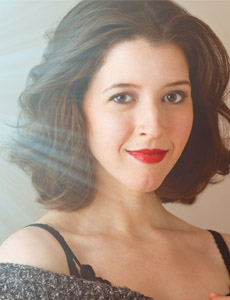
    Lisette Oropesa (above) made her debut at The Royal Opera House, Covent Garden, on October 30th, 2017 in a controversial production of Donizetti’s LUCIA DI LAMMERMOOR.

    Directed by Katie Jenkins, the production was largely savaged by critics and operagoers alike when it premiered in 2016 (“…’too leaden even for the hecklers…” said The Telegraph). But Lisette and her fellow cast members seem to have rescued it in this revival, with the help of some judicious toning-down by the director.

    The reviews are coming in, and they are raves. Here’s a sample:

    “The cast is outstanding, especially the Lucia of Cuban-American soprano Lisette Oropesa. A consummate actor with a fresh, pearly sound and exquisite top notes, Oropesa creates a flesh-and-blood character out of Donizetti’s sketchy heroine. Her mad scene is beautifully judged, full of nuance and changes of pace – deeply disturbing rather than tragic – and her tender relationship with Alisa (superbly acted by Rachel Lloyd) is the most honest in this ghastly story.” ~ The Stage

  • Kristine Jepson Has Passed Away

    Roh-ariadne-2

    Above: Kristine Jepson as the Composer in ARIADNE AUF NAXOS at Covent Garden in 2008. Photo by Clive Barda.

    It is very sad to note the passing of Kristine Jepson, a wonderful singer and stage presence, after a long battle with cancer. The mezzo-soprano made her Met debut in Britten’s DEATH IN VENICE is 1994 and subsequently sang over 100 performances at The Met, where her roles included Cherubino and Octavian.

    It was as the Composer in Strauss’s ARIADNE AUF NAXOS that Kristine Jepson first intrigued me with the youthful glow of her voice and her wonderfully natural portrayal when she sang the role at Boston in 1991 – the very production that marked the ascendancy of Deborah Voigt, who sang the title-role. In 2003, Ms. Jepson again excelled in this role at The Met in a splendid performance that featured the Met debut of Christine Brewer.

    In 2006, Kristine Jepson sang Idamante in Mozart’s IDOMENEO at The Met; her performance was truly impressive, but sadly these were to be her last appearances on that stage.

  • At Home With Wagner III

    Wagner

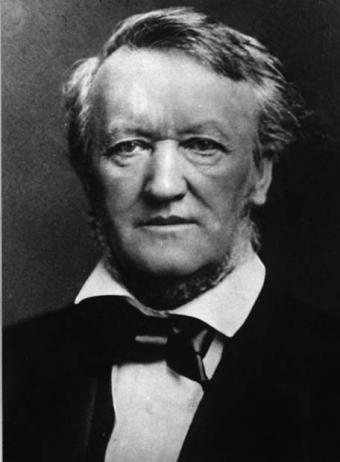
    Above: Richard Wagner

    Having taken a break from listening to Wagner at home while I was wrapped up with attending the RING operas at The Met, I picked up where I’d left off in playing CDs that my friend Dmitry has graciously made for me. These live recordings all come from a valuable source, Opera Depot, and this latest round of Wagnerian adventures kicks off with a 1966 performance of FLIEGENDE HOLLANDER from Covent Garden.

    HOLLANDER was not the first Wagner opera I ever experienced in the theatre, but my first encounter with it (in 1968) was a memorable event with Leonie Rysanek (singing despite a high fever) magnificent as Senta, and Walter Cassel, James King and Giorgio Tozzi as the male principals.

    Jones

    Above: Dame Gwyneth Jones

    For this 1966 performance from London, Sir Georg Solti is on the podium, stirring up a vivid performance that comes across excitingly in this recording which is in pretty good broadcast sound, with the voices prominent.

    David Ward is a bass-oriented Dutchman and his singing is moving in its passion and despair, fierce in anger and with a touching human quality in the more reflective passages. He and his Senta, Dame Gwyneth Jones, manage the strenuous demands of their long duet very well: both the tessitura and the emotional weight of this duet test the greatest of singers and if there are slight signs of effort here and there in this recording, the overall effect is powerful.

    Dame Gwyneth, just two years after her break-through performance at The Garden in TROVATORE casts out the powerful top notes before her final sacrificial leap thrillingly; earlier, in the Ballad she is engrossing in her use of piano singing and creates a haunting picture of the obsessed girl. The soprano’s well-known tendency to approach notes with a rather woozy attack before stabilizing the tone is sometimes in evidence; I find it endearing.

    The great basso Gottlob Frick is a wonderful Daland, and tenor Vilem Pribyl holds up well in the demanding role of Erik; his third act aria – which recalls Bellini in its melodic flow – is passionately sung. Elizabeth Bainbridge and Kenneth MacDonald give sturdy performances as Mary and the Steersman.

    ~~~~~~~~~~~~~~~~~~~~~~~~~~~~~~~~~~~~~~~~~~~~~~~~~~~~~~~~~~~~~~~~~~~~~~~~~~~~~~~~~~~~~~~~~~~~
    1024px-Horst_Stein

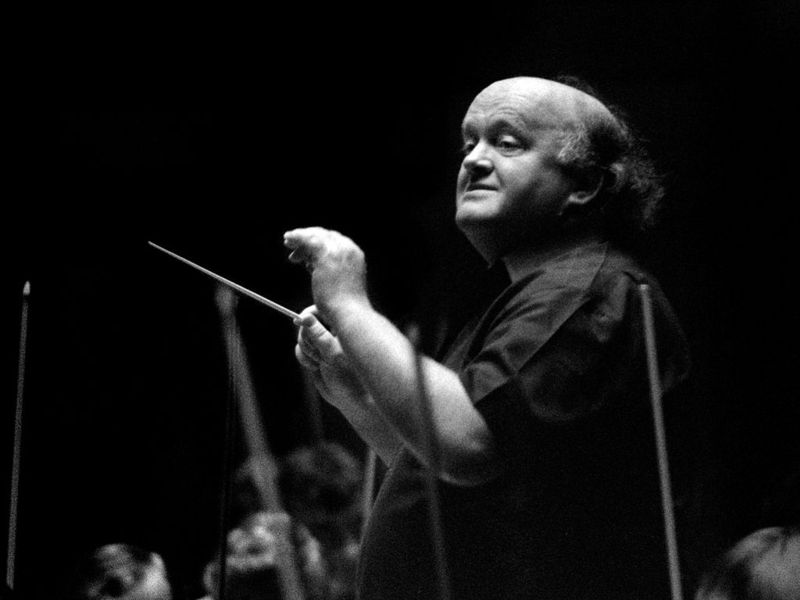
    A WALKURE Act I from Bayreuth 1971 finds conductor Horst Stein (above) giving a great sense of urgency to the opening ‘chase’ music. Helge Brilioth, probably better known for his Tristan and Siegfried, sounds a bit rough-hewn at first as Siegmund but summons up some poetry later in the act. Dame Gwyneth Jones as Sieglinde shows both contemplative lyricism and the power of a future Brunnhilde; her singing is emotional without breaking the musical frame. Karl Ridderbusch is a darkly voluminous Hunding; despite a few moments of sharpness here and there, he makes a strong impression.

    ~~~~~~~~~~~~~~~~~~~~~~~~~~~~~~~~~~~~~~~~~~~~~~~~~~~~~~~~~~~~~~~~~~~~~~~~~~~~~~~~~~~~~~~~~“
    540752_10151474196683142_112317311_n

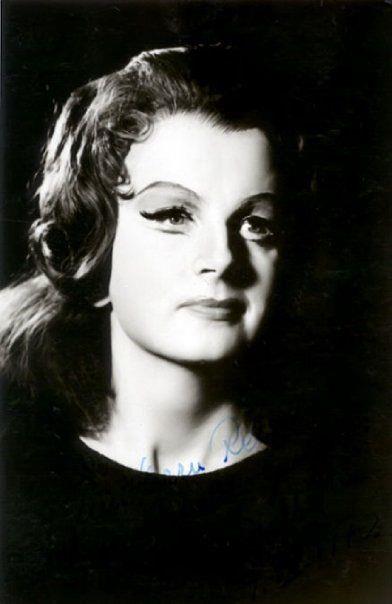
    The Swedish singer Berit Lindholm (above) was one of a group of sopranos – Rita Hunter, Ingrid Bjoner, Caterina Ligendza and Dame Gwyneth Jones were some of the others – who increasingly tackled the great Wagnerian roles as Birgit Nilsson’s career wound down. In 1976 Lindholm sang Brunnhilde in a performance of GOTTERDAMMERUNG at Covent Garden conducted by Sir Colin Davis, and she does quite well by the role, bringing a more feminine and vulnerable quality to her interpretation than Nilsson did. Lindholm reaches a fine peak as Act I moves toward its inexorable climax with the meeting between Brunnhilde and Waltraute, followed by the false Gunther’s rape of the ring.

    Interestingly, though both the recording and the Covent Garden website list Yvonne Minton as Waltraute in this performance, there is some question that she might have been replaced last-minute by Gillian Knight; in fact, some listings for this recording on other releases do show Knight singing Waltraute. A delicious mystery, since whichever mezzo it is is impressive indeed. (I’ve left an inquiry on the Opera Depot listing, perhaps someone can shed further light…)

    Jean Cox certainly has an authentic Wagnerian voice though at times in Act I his singing falls a shade below pitch. The wonderful basso Bengt Rundgren sounds fine as Hagen in Act I, and his half-siblings are Siegmund Nimsgern – later a Bayreuth Wotan – as Gunther, and Hanna Lisowska as Gutrune, a role she repeated at the Met when the ‘Levine’ Cycle was filmed for posterity.

    As an admirer of the Norn scene, I’m very pleased with the three women who sing this fantastic music here: Patricia Payne, Elizabeth Connell and Pauline Tinsley. Ms. Payne is steady and sure of voice and what a delight to hear a future Isolde (Ms. Connell) and Kundry (Ms. Tinsley) in these roles; Ms. Tinsley dips impressively into her chest voice at one point, an unusual and exciting effect.

    Sir Colin Davis builds the great span of the prologue/Act I persuasively; a few minor orchestral blips here and there are barely worth mentioning. Once Waltraute arrives at Brunnhilde’s Rock the conductor attains a heightened level of dramatic intensity and the act ends excitingly.

    Act II opens with the mysterious conversation between Alberich and his slumbering son, Hagen. Zoltán Kelemen, who was Karajan’s Alberich when the conductor inaugurated his RING Cycle at The Met (a project from which the maestro withdrew after the first two operas) makes a fine effect, and Mr. Rundgren maintains his sturdily sung Hagen throughout this act. Jean Cox is very authoritative as he declaims his oath on Hagen’s spear; any misgivings about him from Act I are swept away here. Berit Lindholm may lack the trumpeting, fearlessly sustained high notes of the more famous Nilsson, but her Brunnhilde is exciting in its own right, with her anguished cries of ‘Verrat! Verrat!’ (“Betrayed!”) a particularly strong moment.   

    Whether she is the Waltraute or not, Gillian Knight is definitely one of the Rhinemaidens, joined in melodious harmonies by Valerie Masterson and Eiddwen Harrhy for the opening scene of Act III. There’s some vividly silly giggling from this trio, and Ms. Masterson in particular sounds lovely – an augury of her eventual status as a fabulous Cleopatra.

    Mr. Cox has impressive reserves to carry him thru Siegfried’s taxing narrative – he’s at his best here – and if Ms. Lindholm’s voice doesn’t totally dominate the Immolation Scene, she’s very persuasive in the more reflective passages of Brunnhilde’s great concluding aria. Sir Colin Davis had built the opera steadily and with a sure sense of the music’s architecture; he saves a brilliant stroke for the end of the opera when he does not take the ‘traditional’ pause before the reprise of the ‘redemption thru love’ theme but instead sails forth into it with impetuous fervor.

    There were times while listening to this performance when I wondered if this was a broadcast performance or was recorded in-house. The voices do not always have the prominence we associate with broadcast sound, but perhaps the micorphones were oddly placed. At any rate, GOTTERDAMMERUNG has again made its mark as the culmination of the great drama of The RING.