Tag: Dance Company

  • Limón Dance Company @ The Joyce

    José+Limón+-++Photo+by++Paul+Draper

    Above: choreographer José Limón, photo by Paul Draper

    Tuesday April 19th, 2022 – The Limón Dance Company celebrating their 75th Anniversary Season with performances at The Joyce Theatre. This evening marked my third experience watching the Limón troupe: the first was in 2008, and more recently in 2019. There have been quite a few changes in the Company’s roster since my last viewing, including the departures of such entrancing dancers as Jacqueline Bulnés and Jesse Obremski. But the current ensemble is a staggeringly beautiful assemblage of forms and faces.

    Each work was prefaced by commentary from an unseen narrator…spoken by my longtime friend, actor Dion Mucciaito. These brief speeches provided us with interesting background material for the works being performed. But I wish Dion had appeared onstage to impart this information, because…he’s such a great-looking guy!

    Doris Humphrey was José Limón‘s inspiration and mentor. Watching Humphrey’s achingly gorgeous AIR FOR THE G-STRING, created in 1928, gives us a sense of the timeless resonance – and the great necessity – of dance in our lives. Bringing to mind the iconic female danced-rituals of Isadora Duncan, AIR FOR THE G-STRING shows us the value of great music as the inspirational springboard for creating danceworks that will endure.

    Limonphotochristopherjonesairforthegstring2022

    Above: from Humphrey’s AIR FOR THE G-STRING; photo by Christopher Jones

    From the curtain-rise – on the dancers in silhouette against a rose-coloured back-panel – to final pose, AIR FOR THE G-STRING held us under its spell. Five women, clad in simple gowns of varied hues and long Renaissance-style golden cloaks with trains, move slowly in processions and circling motifs. Though not in any way religious in feeling, it conveys a depth of spirituality that speaks to me poignantly.

    This evening, Frances Lorraine Samson, a petite woman with a space-filling presence, led the ensemble: Mariah Gravelin, Deepa Liegel, Jessica Sgambelluri, and Lauren Twomley…distinctive beauties all. This Humphrey work is part of that long continuum of dances of sisterhood that spans the centuries from the swans, slyphs, shades, and Wilis of classical ballet, through the more intimate Duncan, to Graham’s epic CHRONICLE, Balanchine’s SERENADE, Robbins’ ANTIQUE EPIGRAPHS, and Lydia Johnson’s CROSSINGS BY RIVER. Watching this spell-binding work tonight gave me an incredible lift of spirit – something so desperately needed in these bleak days as the world sometimes seems to be crumbling around us.

    Two Limón masterpieces were central to this evening’s program. The first of these, PSALM, dates from 1967. The choreographer drew inspiration from the French author Andre Schwarz-Bart’s semi-historical novel, “The Last of the Just,” which traces the martyrdom of the Jews through thirty-six generations of the Levy family, ending at Auschwitz.
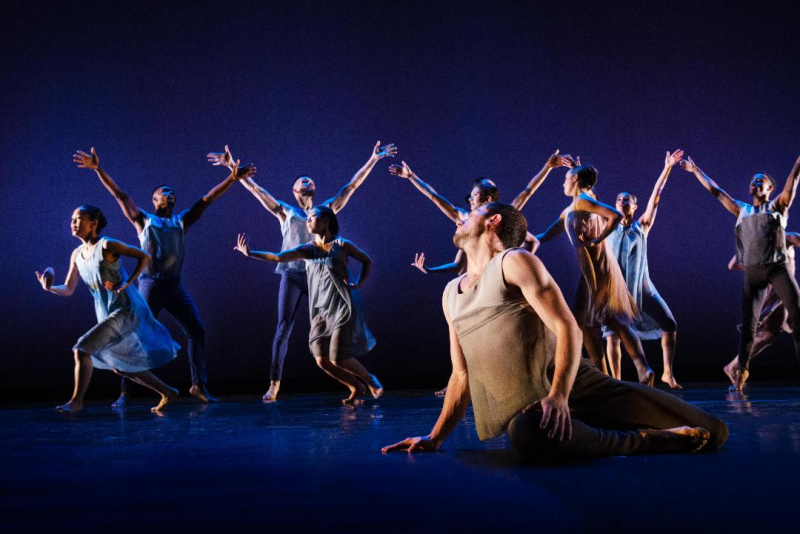
    Limonpsalmphotobychristopherjones infrontnicholasruscica

    Above: Nicholas Ruscica in Limón’s PSALM; photo by Christopher Jones

    For PSALM, Limón was unable to obtain the music he wanted to use – Stravinsky’s “Symphony of Psalms” – so he created the work in silence. Nearing the date of the premiere, the choreographer asked composer Eugene Lester to provide a score, based on his “million counts”. Later, Limón disciple Carla Maxwell, feeling the choreography called for something grander, commissioned a score from Jon Magnussen which included a full chorus, ten instruments, and a baritone soloist; it was to the Magnussen score that I saw PSALM performed in 2019. This evening, the Lester score – more intimate and highly personal – was back in place. Lester’s score is percussion-based, features a male singer/speaker, and somehow feels right.

    Superbly lit Al Crawford, PSALM is a story of the triumph of the human spirit over death, created by Limón at a time when his own untimely death from pancreatic cancer loomed before him. The Lester score, while quite spare in contrast to the Magnussen, provides vividly contrasted rhythms which give the dancers an aural roadmap for the movement. 

    Eight dancers appear, seemingly searching for someone…or something. The whole Company then takes the stage, moving in finely-wrought patterns. In one passage, they kneel in a row, reminding me yet again of Robbins’ ANTIQUE EPIGRAPHS. Dancer Nicholas Ruscica was the central figure in tonight’s performance, commencing with a solo to the sound of a baritone voice. We hear the word “Adonai” (Hebrew for ‘God’) which put me in mind of Krzysztof Penderecki‘s monumental SEVEN GATES OF JERUSALEM; with such references, PSALM became more and more meaningful to me as it progressed.

    Mr. Ruscica’s dancing was very subtle and expressively detailed. As the comings and goings of the populace surged around him, the danseur‘s movement took on a hypnotic, other-worldly feeling. He collapses; to delicate music, the women tend to him. He then awakens and begins to dance, first on his knees, and then – gathering strength – he rises. The group swarm about him in a celebratory dance. Circling in a dazzling passage, they lift him aloft. 

    PSALM thrilled me tonight, even more than it did in 2019. To me, it seems a dance very much for our time. All of the dancers are captivating to watch, and each has a distinctive personality. Mariah Gravelin, Savannah Spratt, and Lauren Twomley had featured roles among the women, with the ladies from the opening Bach work all dancing divinely here. Terrence D. M. Diable, B. Woods, Joey Columbus, MJ Edwards, and Johnson Guo are the Company’s wonder-men, and it was great to see Robert M. (‘Buddy’) Valdez again, very tall and handsome, with eyes that dazzle. In this large-scale scale work, dancers from Limón 2 – Erin Hollaman, Nicole Miera, and Sabrina Olivieri – joined the full Company.

    José Limón created the solo CHACONNE in 1942 to the familiar music from Bach’s violin Partita #2. Onstage tonight, standing in separate pools of light, were violinist Johnny Gandelsman and guest-artist dancer Shayla-Vie Jenkins. Ms. Jenkins, a poised beauty with the gift of lyrical grace, wore trousers and a soft, loose-fitted blouse. When Mr. Gandelsman struck up the familiar Bach piece, the dancer began to move in place, her expressive arms and hands speaking to us in dance’s silent language. Later her movement becomes almost balletic, her dancing at once supple and courtly. With the violinist’s subtle nuances tempting the ear, the two made this Limón gem a sheer delight.

    Limononlyonewillrise.photochristopherjones.dancersSavannahSpratt MJEdwards BWoods(jumping)

    Above: Samantha Spratt, MJ Edwards, and B Woods in Tarpaga’s ONLY ONE WILL RISE; photo by Christopher Jones

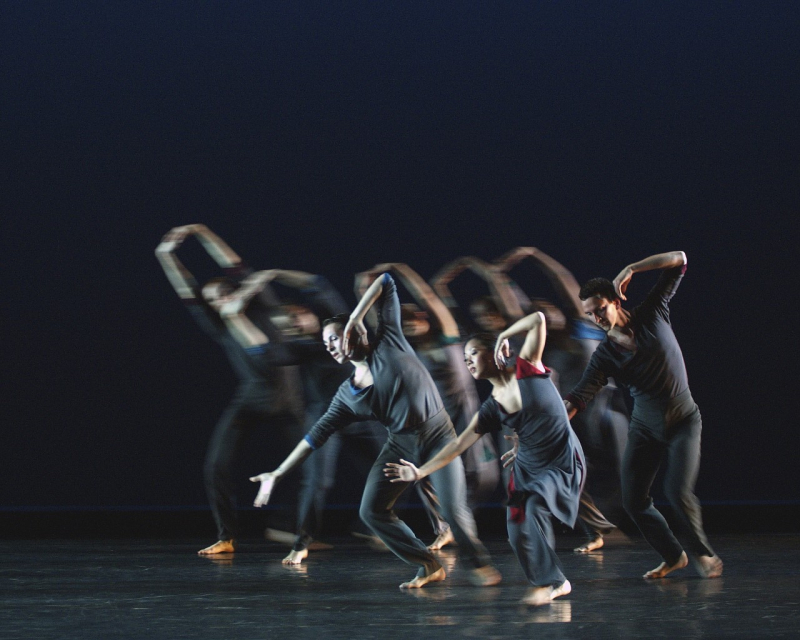
    In line with the current quest for choreographer-based companies to find new works to provide fresh opportunities for their dancers once the founding choreographer has passed away, tonight we saw ONLY ONE WILL RISE, choreographed by Olivier Tarpaga. This work tells of the ‘dark horse’, the person who unexpectedly triumphs in the end: in this case, it was the the youthful-looking MJ Edwards, who made a very fine impression both in movement and presence, with a poetic face. The choreographer provides brief solos for the other dancers, too, as well as well-constructed ensemble passages. The work is quite dark, and the final illumination of the dancers, with Mr. Edwards having risen in their midst, was a beautiful moment.

    LimononlyonewillrisedancersJohnsonGuo  Nicholas Ruscica  Lauren Twomley

    Above: Johnson Guo, Nicholas Ruscica, and Lauren Twomley in ONLY ONE WILL RISE; photo by Christopher Jones

    What gave ONLY ONE WILL RISE its appeal was the music, composed by the choreographer and guitarist Tim Motzer, and played live onstage by Mr. Motzer, with his fellow musicians Daniel Johnson and Saidou Sangare. They were fantastic.

    It’s not easy to find danceworks that can appear on programs alongside the masterworks of some of the world’s all-time greatest choreographers without being eclipsed. The Balanchine, Graham, and Taylor companies have to work in this current situation, as does Limón. Perhaps though, it’s true that – as Miki Orihara once said – “To find the future of dance, we must look to the past.”

    ~ Oberon

  • Limón Dance Company @ The Joyce

    Jose_limon

    Above: José Limón

    ~ Author: Oberon

    Wednesday May 29th, 2019 – The Limón Dance Company‘s program at The Joyce this evening brought us José Limón’s classic masterwork The Moor’s Pavane and his fascinating ensemble piece Psalm, along with Colin Connor’s The Weather in the Room, danced by guest artists Stephen Pier and Miki Orihara, and Radical Beasts in the Forest of Possibilities from choreographer Francesca Harper, in collaboration with composer/performer Nona Hendryx.

    Thumbnail_limonEt2DYiXo

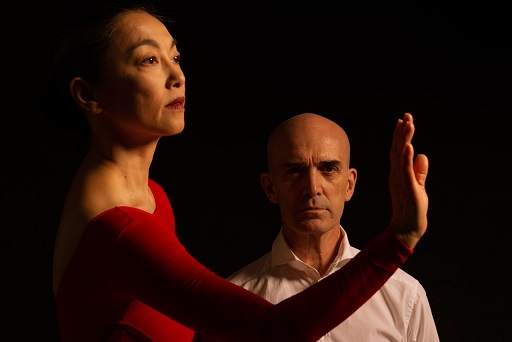
    How wonderful to see dance icons Miki Orihara and Stephen Pier (above) onstage together tonight; the husband-and-wife duo gave a vivid, touching performance in the New York premiere of Colin Connor’s The Weather In The Room, an intimate narrative work which tells us of a long-lasting domestic relationship and shows us what it takes to keep it alive thru the years.

    A couple return home from a formal party; a chair, a stool, and a rug comprise the setting. Shoes come off, and his jacket; they get comfy as what sounds like a scratchy old ’78 record begins to play. Sarah Shugarman’s score is so evocative, and soon memories are in play. Miki’s gestural language is poetry made visible, whilst Stephen looms over his petite soulmate, alternately solicitous and slightly impatient.

    As their danced conversation unfolds, six dancers in white appear, moving restlessly in the background, and running about. A chime sounds, and to a pulsing motif, an argument between the husband and wife springs up. Eventually they withdraw to opposing corners and the space becomes a small theatre where, in a series of duets, the six dancers present dances of memory: chapters from the biography of a marriage. Impetuous youthful gladness, tender moments, and passing anxiousness are depicted to expressive music.

    Thumbnail_limon2019frances  samson&terrencediableinweatherphotobychristopherjones

    Above: Terrence D.M. Diable and Frances Samson in The Weather in the Room; photo by Christopher Jones.

    Gradually, Miki and Stephen have moved closer to one another from their distant corners, and in the end, they are reconciled. But…it’s not quite the end. For the piece has a happy-music coda; the setting reverts to the quiet living room. As the music fades, Miki laughs softly. 

    There are times in an enduring relationship when you will question whether you are in the right place with the right person; it’s happened to me from time to time in recent years. At such moments, drawing from the well of memory reminds us of what we loved about our mate at the start, and makes us ask: what would life be like without him?  Mr. Connor’s thoughtful, sobering dancework resonates with meaning for me and – I am sure – for many who will watch this work. The depth of Miki and Stephen’s performance was so gratifying to experience, and the ensemble of dancers – Terence D.M. Diable, Mariah Gravelin, Gregory Hamilton, Eric Parra, Frances Samson, and Lauren Twomley – sustained the atmosphere with their articulate, committed dancing.

    José Limón’s best-known work, The Moor’s Pavane, is always as meaningful to hear as to see; the choreographer’s choice of Henry Purcell’s music underscores what I have long believed: this music is made to be danced to. Drawing on Shakespeare’s story of The Moor whose love for his faithful wife Desdemona is destroyed thru jealousy sparked by innuendo, the choreographer creates a ballet at once elegant and brutal. This evening it was splendidly danced by Mark Willis (The Moor), Savannah Spratt (His Wife), Jess Obremski (His Friend), and Jacqueline Bulnés (The Friend’s Wife), their dancing alive with nuance and musicality. 

    Over tiime, I have seen many danceworks similar to Francesca Harper’s Radical Beasts in the Forest of Possibilities wherein the dancers dwell in a desolate landscape, with drifting fog. Nora Hendryx has created a collage of electronic sounds ranging from static to sonic pulsars. Among the eight dancers, who move with vivid athleticism in choreography that has an improvisational quality, there seem to be alternating currents of connection or isolation.

    Jacqueline Bulnés (who emerges first from the darkness, as if lighting the way), Terrence Diable, Mariah Gravelin, David Glista, Jesse Obremski, Frances Samson, Lauren Twomley, and Mark Willis all showed the strength and suppleness of their dancing. The work might have ended on a rather desolate note, but then Ms. Hendryx turned from her laptop to the piano keyboard and began to play a lyrical theme. Dancers Lauren Twomley and Jesse Obremski joined in a duet that brought a sense of humanity to the proceedings; both dancers are beautiful movers. The piece ends on a question mark, as Ms. Bulnés returns with her flashlight as if seeking the couple out. Have they done something wrong? 

    Thumbnail_limonPsalmphoto_by_Douglas_Cody

    Above: from Psalm; photo by Douglas Cody

    The evening ended with a re-staging of José Limón’s 1967 ritualistic work, Psalm. Carla Maxwell had commissioned a new score for this large-scale dramatic work from composer Jon Magnussen in 2002. I had the opportunity of watching a studio rehearsal of Psalm a week prior to the Joyce performances, and was thrilled and moved by it.

    Without the program note explaining the traditional Jewish belief that all the sorrows of the world rest in thirty-six Just Men, we might have thought of the ballet’s protagonist as an Outcast, a Penitent, or a Christ Figure. In this role, dancer David Glista gave a striking performance, abounding in physical energy and passion, living out the torment of the character with unswerving commitment. Two women, Savannah Spratt and Frances Samson, had prominent roles, and the entire Company filled the space with leaps, turns, and ecstatic gestures as the music ranged from harp and chant to pounding drums, solos for male voice, syncopated Alleluias, and summoning tambourines. Throughout the work, thoughts of Martha Graham’s epic ceremonials continually came to mind.

    Psalm is perhaps a bit over-long, and parts of it are repetitive. But it is as impressive to behold as to hear, and it provides a portal to an ancient world where such rites were an essential element in the life of the community.

    ~ Oberon

  • Aboard the USS Intrepid: HOMECOMING

    8

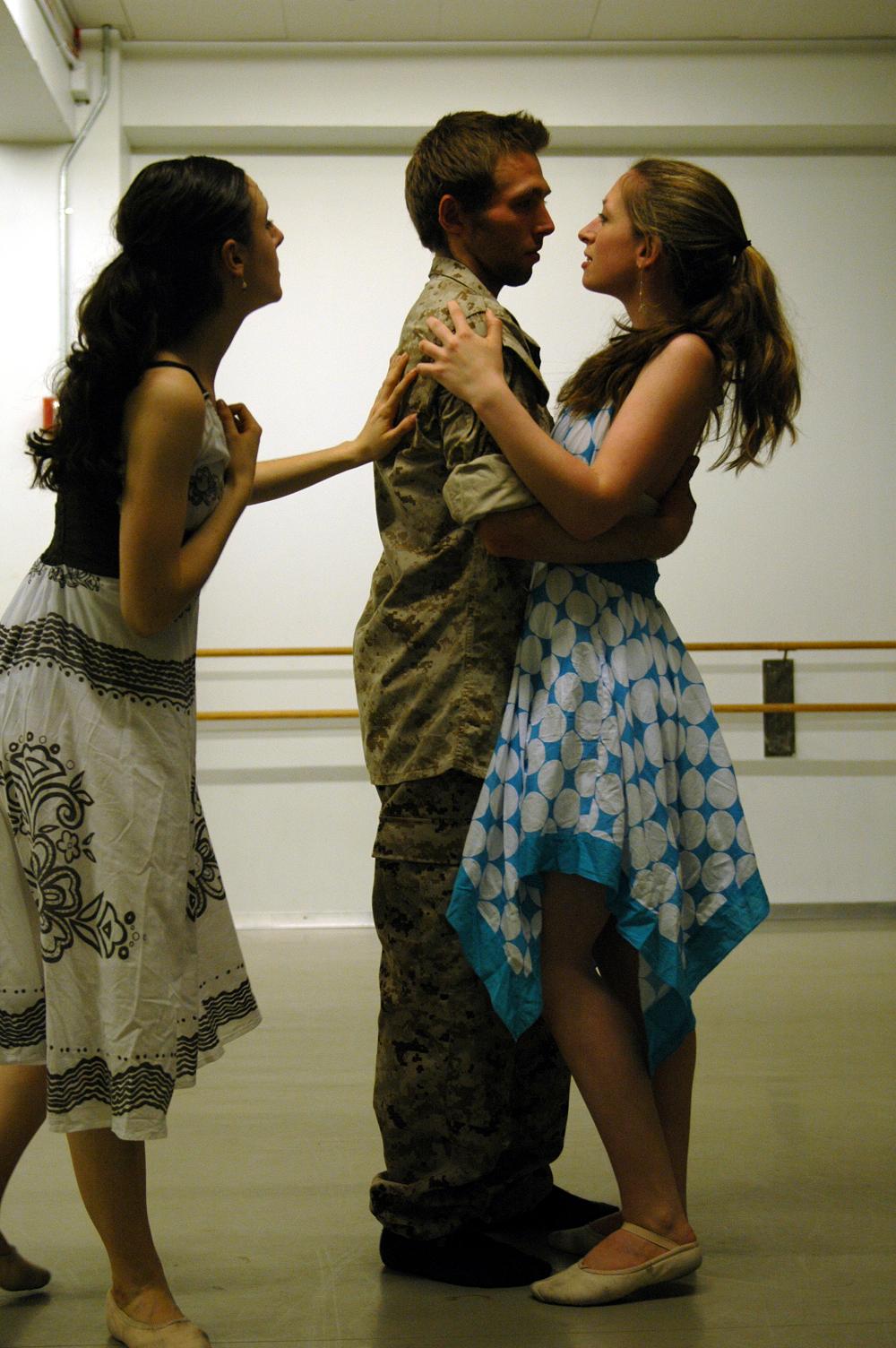
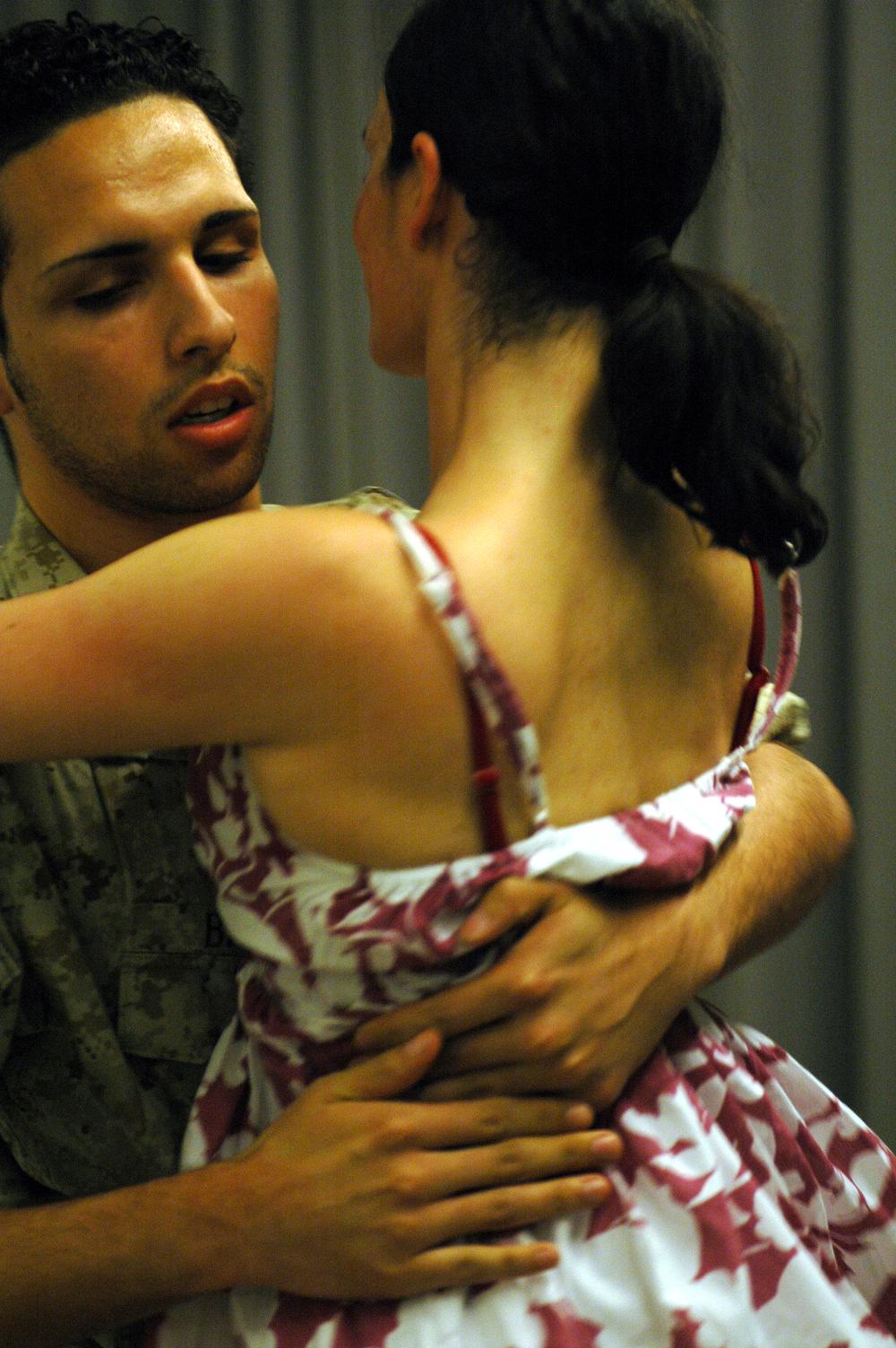
    On Saturday May 28 at 11:30 AM, Roman Baca’s HOMECOMING will be performed aboard the USS Intrepid. This brief but extraordinarily moving work is performed to a haunting John Corigliano score (from the film THE RED VIOLIN) over-laid by the reading of letters sent from home to US servicemen on duty in Iraq and Afghanistan. Earlier in the week, Kokyat and I stopped by the DANY Studios where Roman and his dancers were brushing up the work for its Intrepid premiere. They will dance HOMECOMING twice in succession aboard the ship. Kokyat’s photo at the top: dancers Taylor Gordon, Michael Wright and Lisa Fitzgerald.

    Copy of 19

    Waiting at home: Adrienne Cousineau clings to the shirt of her husband. Mundane items like articles of clothing…

    Copy of 25

    …or photographs of the servicemen keep a connection for spouses, mothers and girlfriends.

    10

    Above: dancers Aaron Atkins and Adrienne Cousineau. The joy of reunited couples is offset by the emptiness of those whose loved ones do not return from the war, or return with life-shattering injuries.

    9

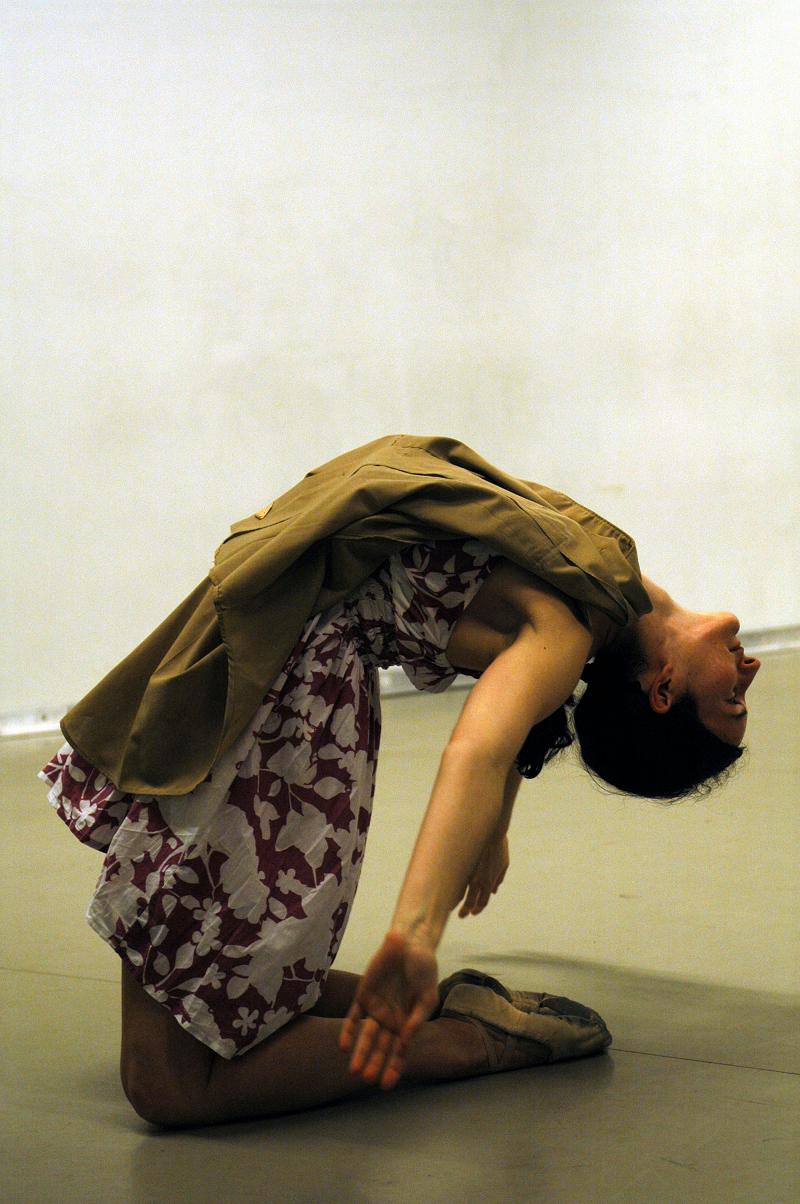
    Taylor Gordon searches among the returning troops for her missing soldier.

    Roman Baca enlisted in the US Marine Corps in 2000 and served in Fallujah, Iraq. Returning home, he picked up his dance career where it had left off. The resonances of his wartime experience prompted him to start work on HOMECOMING; he formed Exit 12 Dance Company to pursue his choreographic vision.

    250415_10150261269431223_700811222_9311786_5067841_n

    Sgt Baca has a deep personal interest in and commitment to US servicemen and -women returning from the mid-East wars who suffer from the psychological effects of their experience. His primary focus is on homelessness and suicidal tendencies among the veterans, stemming from  frustration with the government’s increasing unwillingness to fittingly honor their service with care and compassion. Sadly, our troops are still abroad and at risk every day while being largely forgotten here at home.

    A recent development in the situation shows some promise.    

    The USS Intrepid is docked at 150 12th Avenue, near West 23rd Street. A ticket to the Intrepid museum gets you aboard for the performance and you can stay on all day for Fleet Week activities.

    These images are from the rehearsal; Kokyat also plans to shoot on the Intrepid where we spent a memorable evening last Autumn.

    The dancers in HOMECOMING are: Taylor Gordon, Adrienne Cousineau, Lisa Fitzgerald, Jackie Koehler, Joanna Priwieziencew, Michael Wright, Aaron Atkins and Preston Bradley. More of Kokyat’s images from this rehearsal will follow shortly.

    No matter what your stance on the war and the USA’s involvement in these far away lands, HOMECOMING is something everyone should experience.