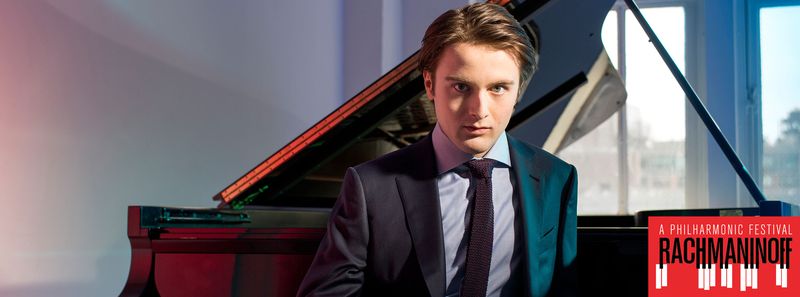
Tag: Daniil Trifonov

  • Trifonov’s Scriabin @ The NY Philharmonic

    14c1e62d63f40ab53a8f7836fb151aeb.jpg.w=262

    Above: pianist Daniil Trifonov

    ~ Author: Oberon

    Friday November 29th, 2019 – The New York Philharmonic‘s Artist-in-Residence, Daniil Trifonov, performing the Scriabin piano concerto on a program with Tchaikovsky’s 5th symphony. The Philharmonic’s Music Director, Jaap van Zweden, was on the podium.

    This long-awaited performance was somewhat compromised for me due to a health issue my spouse was experiencing. I at first decided to skip the concert and let my friend Ben Weaver write about it, but after much discussion, I went to Geffen Hall for the Scriabin and left at intermission, asking Ben to let me know how the Tchaikovsky went.

    This was my first experience of the Scriabin concerto live, and Mr. Trifonov was absolutely spectacular from first note to last. After a brief elegiac orchestral statement, a pensive solo introduces the pianist. The music offers contrasting moods, which Mr. Trifonov and the Philharmonic artists savoured. Playing rippling figurations, Mr. Trifonov evoked a feeling of ecstatic glow; the music then turned cinematic.

    Splendid solo moments from Richard Deane (horn) and Pascual Martínez-Forteza (clarinet) added to the radiance of the performance. Playing in the Steinway’s very highest register, Mr. Trifonov gave the music “toy piano” feeling, which soon found a counter-balance in the Philharmonic’s plush-toned basses. The movement ends grandly.

    The quiet opening of the poetic Andante was marred by the inevitable cellphone ringing. There’s quite a long, lovely passage for strings before the pianist joins in. A solo from Mr. Forteza finds Mr. Trifonov adding a descant-like, bejeweled line. The mood shifts from lively to doleful, the basses and celli in a tutti passage of velvety depth.

    At times, the solo piano line seems to meander (over caressive strings) before finding focus in a wistful theme, to which Mr. Trifinov brought his trademark expressive feel for nuance. A pristine, sustained trill – a Trifonov delight – marked the Andante’s calm finish.

    The pianist then immediately launched the final Allegro moderato, wherein a romantic piano theme as well as phrases for horn and clarinet at times created a feeling of tender longing. 

    Suddenly there’s a full stop. The music then resumes, with piano, clarinet, and horn all actively engaged. Now there’s a bit of a letdown: the composer seems to be searching for the right ending. He finds it in an unexpected drumroll, and a sustained chord from the piano.

    Basking in an enormous flood of applause, the tall pianist made us wait for his reappearance, and then wait still longer for his dreamy, introspective encore.
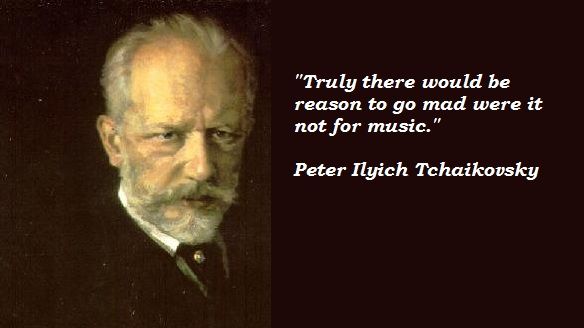
    Quote
     
    Tchaikovsky’s 5th symphony won the enthusiasm of audiences right from its premiere performance in 1888. But the critics were less impressed, and this caused Tchaikovsky – upon hearing the piece in Prague a bit later – to question whether the 5th was as fine as he’d originally hoped it was. He eventually managed to banish his misgivings.
     
    The symphony’s second movement – steeped in Romanticism – shares its melodic birthright with the Vision Scene from the composer’s SLEEPING BEAUTY. I had been really looking forward to hearing this in the theater again, but that will have to wait until another time.
     
    Meanwhile, Ben Weaver has sent me a brief note, stating that “…the 5th was really good. The horn solo (I assume it was played by Richard Deane) was one of the best I’ve ever heard. And Anthony McGill impressed in the clarinet solo. Maestro van Zweden took the music at a nice clip, but never rushed it. Big, exciting climaxes! The orchestra played it as well as anyone I’ve heard.” [Coming from Ben, that’s high praise indeed!]
     
    Ben ended his message with: “The audience went nuts.” That made me really sorry to have missed it.

    ~ Oberon

  • Trifonov’s Scriabin @ The NY Philharmonic

    14c1e62d63f40ab53a8f7836fb151aeb.jpg.w=262

    Above: pianist Daniil Trifonov

    ~ Author: Oberon

    Friday November 29th, 2019 – The New York Philharmonic‘s Artist-in-Residence, Daniil Trifonov, performing the Scriabin piano concerto on a program with Tchaikovsky’s 5th symphony. The Philharmonic’s Music Director, Jaap van Zweden, was on the podium.

    This long-awaited performance was somewhat compromised for me due to a health issue my spouse was experiencing. I at first decided to skip the concert and let my friend Ben Weaver write about it, but after much discussion, I went to Geffen Hall for the Scriabin and left at intermission, asking Ben to let me know how the Tchaikovsky went.

    This was my first experience of the Scriabin concerto live, and Mr. Trifonov was absolutely spectacular from first note to last. After a brief elegiac orchestral statement, a pensive solo introduces the pianist. The music offers contrasting moods, which Mr. Trifonov and the Philharmonic artists savoured. Playing rippling figurations, Mr. Trifonov evoked a feeling of ecstatic glow; the music then turned cinematic.

    Splendid solo moments from Richard Deane (horn) and Pascual Martínez-Forteza (clarinet) added to the radiance of the performance. Playing in the Steinway’s very highest register, Mr. Trifonov gave the music “toy piano” feeling, which soon found a counter-balance in the Philharmonic’s plush-toned basses. The movement ends grandly.

    The quiet opening of the poetic Andante was marred by the inevitable cellphone ringing. There’s quite a long, lovely passage for strings before the pianist joins in. A solo from Mr. Forteza finds Mr. Trifonov adding a descant-like, bejeweled line. The mood shifts from lively to doleful, the basses and celli in a tutti passage of velvety depth.

    At times, the solo piano line seems to meander (over caressive strings) before finding focus in a wistful theme, to which Mr. Trifinov brought his trademark expressive feel for nuance. A pristine, sustained trill – a Trifonov delight – marked the Andante’s calm finish.

    The pianist then immediately launched the final Allegro moderato, wherein a romantic piano theme as well as phrases for horn and clarinet at times created a feeling of tender longing. 

    Suddenly there’s a full stop. The music then resumes, with piano, clarinet, and horn all actively engaged. Now there’s a bit of a letdown: the composer seems to be searching for the right ending. He finds it in an unexpected drumroll, and a sustained chord from the piano.

    Basking in an enormous flood of applause, the tall pianist made us wait for his reappearance, and then wait still longer for his dreamy, introspective encore.

    Quote
     
    Tchaikovsky’s 5th symphony won the enthusiasm of audiences right from its premiere performance in 1888. But the critics were less impressed, and this caused Tchaikovsky – upon hearing the piece in Prague a bit later – to question whether the 5th was as fine as he’d originally hoped it was. He eventually managed to banish his misgivings.
     
    The symphony’s second movement – steeped in Romanticism – shares its melodic birthright with the Vision Scene from the composer’s SLEEPING BEAUTY. I had been really looking forward to hearing this in the theater again, but that will have to wait until another time.
     
    Meanwhile, Ben Weaver has sent me a brief note, stating that “…the 5th was really good. The horn solo (I assume it was played by Richard Deane) was one of the best I’ve ever heard. And Anthony McGill impressed in the clarinet solo. Maestro van Zweden took the music at a nice clip, but never rushed it. Big, exciting climaxes! The orchestra played it as well as anyone I’ve heard.” [Coming from Ben, that’s high praise indeed!]
     
    Ben ended his message with: “The audience went nuts.” That made me really sorry to have missed it.

    ~ Oberon

  • Rachmaninoff Finale @ The NY Phil

    Trifonov

    Above: pianist Daniil Trifonov

    Tuesday November 24th, 2015 – The third and final programme of The New York Philharmonic‘s Rachmaninoff Festival brought us Daniil Trifonov’s triumphant performance of the composer’s 3rd piano concerto as well as the ever-popular Symphonic Dances.

    Mr. Trifonov had the audience in the palm of his hand from the moment he walked onstage. He gave a magnificent performance, with terrific support from the orchestra. The 3rd piano concerto is everything the 1st isn’t: both in terms of structure and as a display of the soloist’s technique and artistry, the 3rd readily eclipses the composer’s earlier effort.

    Mr. Trifonov’s fluent – indeed astonishing – command of the keyboard held the audience under a spell. Particularly marvelous was the cadenza (the longer of the two provided by the composer) where the young pianist spun out the music to scintillating effect. With cunning inventiveness, Rachmaninoff has the flute suddenly speak up in the midst of the piano’s long paragraph: this wind theme passes on to the oboe, clarinet, and horn before the focus returns to the piano, which ends on a lovely fade-out.

    The composer paints on a big orchestral canvas in this concerto: a deep ‘Russian’ theme in the first movement impresses, and later there’s a big dance theme. The Philharmonic’s horns were ablaze tonight, the cellos plush, and the various wind voices piped up expressively.

    As the concerto raced to its conclusion, Mr. Trifonov carried the audience along on his dazzling ride. A full-house standing ovation ensued as the young master bowed graciously both to the house and his fellow musicians. I didn’t recognize his encore – and neither did my pianist/friend Ta-Wei – but it was deliciously played.

    Morlot

    Above: conductor Ludovic Morlot

    The piano had hidden Maestro Morlot during the concerto, but after the interval we had sight of him as he led the orchestra in a colourful performance of Symphonic Dances. New York City Ballet-lovers will be familiar with this score from Peter Martins’ 1994 setting of it. It’s a grand piece, with slashing rhythms in the first movement and a wonderful waltz in the second. Rachmaninoff uses the alto saxophone – a sound I always love to hear – to evocative effect, though I could not find a credit for the soloist in the Playbill. The harp also makes some rhapsodic interjections. Overall the orchestra, with Sheryl Staples as concertmaster, sounded superb and they seemed to truly enjoy playing this piece.

    After their rapt attentiveness during the concerto, the audience seemed to lose a bit of focus during the second half of the program. One couple down the row from us feasted on chocolates and Pellegrino whilst texting literally throughout the Symphonic Dances, and the woman on Ta-Wei’s right decided to conduct her own version of the score.

    At the end of the concert I asked Ta-Wei if he thought Rachmaninoff was a great composer or just a very good one. He replied: “Well, he knew what he was doing.” True, amply true.

  • More Rachmaninoff @ The NY Phil

    Daniil-trifonov-4-rach-logo-w

    Saturday November 21st, 2015 – The New York Philharmonic‘s Rachmaninoff Festival continued tonight, bringing together pianist Daniil Trifonov (above) and conductor Neeme Järvi for the composer’s 4th piano concerto. The evening opened with Arkady Leytush’s orchestration of Rachmaninoff’s Russian Song, Op. 11, No. 3 and ended with Maestro Järvi and the orchestra on peak form for the Rachmaninoff 1st symphony. Incredibly, the symphony was having its NY Philharmonic premiere performances in this series of concerts.

    The Russian Song is a deep, soulful song; lasting all of five minutes, it was a beautifully-played prelude for the concerto which followed. The basic theme goes thru moody rhythmic and harmonic shifts, with the sound of chimes and hammered bells giving a liturgical feeling. Just as we are getting immersed in these sounds, the piece is over. 

    Daniil Trifonov scored another hit with the Philharmonic audience in this, his second program in the orchestra’s Rachmaninoff series. The piano concerto No. 4 took Rachmaninoff nearly two years to complete and the result was unusually long as concertos go. At its premiere in 1927 – with the composer at the keyboard and Leopold Stokowski conducting the Philadelphia Orchestra – the critics bashed the piece and the composer set about editing it; it has come down to us in a relatively compact form of 25 minutes duration.

    Mr. Trifonov filled these minutes with luxuriant playing. From its sweeping start thru the pensive opening of the ensuing Largo, the third movement’s vivid cadenza, and on to the uninterrupted and varied demands the composer makes on the pianist in the final Allegro Vivace, Trifonov displayed an ideal blend of lyricism and the virtuosity. Finishing in triumph, the pianist basked in a prolonged standing ovation, and responded to the audience’s cheers with a briskly delicate rendering of the ‘Silver’ Fairy’s variation from SLEEPING BEAUTY. A magical moment.

    N jarvi

    Neeme Järvi (above)

    For all the felicities of Trifonov’s playing, I have to say that the piano concerto #4 didn’t really seize my imagination as a musical experience; but the Symphony No.1 absolutely did.

    This symphony was composed in 1895, and its 1897 premiere, conducted by an allegedly drunk Alexander Glazunov, was nothing less than a disaster and sent Rachmaninoff into a deep depression. The work was withdrawn, the score – in a two-piano draft – languishing in the archives of the Glinka Museum in Moscow. It wasn’t until after the composer’s death that the orchestra parts were found in the archives of the Leningrad Conservatory. The symphony was reconstructed in full and given a ‘second premiere’ in Moscow in 1945, where it was at last accorded a warm welcome. It now recognized as a exemplar of the Rachmaninoff style.

    The only mystery is why it has taken so long for the Philharmonic to present it, for these performances mark the orchestra’s first of this work. It was an unalloyed pleasure to encounter this symphony live, and thanks to Maestro Järvi and the artists of this great orchestra, the performance was truly engrossing.

    A veritable treasure chest of melodic and rhythmic delights, the 1st symphony provides numerous opportunities for the principal players to ‘sing’: Anthony McGill (clarinet), Liang Wang (oboe), and Robert Langevin (flute) all outstandingly clear and true, and tonight’s concertmaster Michelle Kim in a lovely violin solo. A grand passage for massed horns and violins was especially gratifying for me, a one-time horn player.

    I gave up trying to take notes (*) midway thru the symphony: I simply wanted to take it all in and savor the live experience. I’ll search the symphony out on YouTube and delve into it more deeply next week, but I do want to mention the particular inventiveness of the concluding Allegro con fuoco which starts with military drum rolls and eventually develops into a true Rachmaninoff ‘big melody’. Liang Wang’s dulcet oboe sounds yet again, then some wonderful rhythmic patterns develop. Things build, and then – out of the blue – there’s a tremendous, walloping bang on the gong: the sound is allowed to evaporate into thin air as the other musicians sit silently. Then they take up a last melodic passage, building to a big finale.

    My hope is that this symphony will soon be programmed for additional Philharmonic performances…hopefully under Maestro Järvi’s baton.

    * (The main reason I stopped taking notes was the distraction of a cellphone ringing in our immediate vicinity; a minor annoyance during the concerto, it became a full-blown nuisance during the symphony.  The ushers came twice to attempt to isolate the source without disrupting the music, but the irritant continued. For a few moments I lost the thread of my concentration, and then I decided just to surrender to the music for the rest of the evening.)