Tag: David Geffen Hall

  • The Composers are Present at the New York Philharmonic

    Geffen-Hall-1

    ~ Author: Lane Raffaldini Rubin

    Saturday March 29th, 2025 – Not one but two composers were present at David Geffen Hall tonight to receive enthusiastic ovations for their music performed by Leonard Slatkin and the New York Philharmonic. It was, in a sense, a family affair. The composer John Corigliano has been a friend of Slatkin’s and the Philharmonic for half a century, while the other composer, Cindy McTee, is Slatkin’s wife. While the third composer of the evening—Dmitri Shostakovich—was not on hand, this evening’s concert was a testament to the vitality of music of the present era.

    Cindy McTee’s 2010 piece Double Play is a two-movement fantasia on Charles Ives’s 1908 composition The Unanswered Question. More than just an exercise in Ivesian orchestral writing, the piece is a sonic lava lamp of shifting ambiguities and cinematic episodes. A low drone in the double basses unifies the fragmentary material in the woodwinds while hushed string chords oscillate between gorgeous dissonance and consonance.

    The second movement, entitled “Tempus Fugit”, begins with the ingenious tick-tocking of an ensemble of mallets, sounding like a cupboardful of disagreeing clocks and metronomes. The Ivesian writing of the first movement returns under this misaligned timekeeping, establishing an fascinating non-relationship between the disparate concepts of the two movements.

    This juxtaposition is muddied in the second movement by the inclusion of passages of chase-scene-style music and Gershwin-like big-band flourishes (although played brilliantly crisply by the Philharmonic brass). McTee’s piece was intricately orchestrated and finely crafted but went on a bit longer than it needed to and wouldn’t have suffered from cuts in the second movement.

    A1A06759

    Above: Cindy McTee and Leonard Slatkin take a bow; photo by Chris Lee. 

    For John Corigliano’s 2020 piece Triathlon the soloist Timothy McAllister brought three saxophones to the stage. In writing the piece, Corigliano asked himself “what would happen if I wrote a concerto for saxophonist and orchestra, not saxophone and orchestra.” McAllister, the preeminent classical saxophonist for whom the concerto was written, is, after all, a skilled player of the soprano, alto, and baritone saxophones. Corigliano exploits the unique qualities of all three in Triathlon.

    The first movement, “Leaps” for soprano saxophone, bursts right out of the gate with slinking high and low figures, bustling orchestral sounds, and swaggering bravura material for the soloist. McAllister’s playing is assured and confident while maintaining a chamber music sensibility, which suits well the elaborate dialogues that Corigliano writes between the soloist and various voices in the woodwinds and brass. One notable section of this movement appears to quote Ravel’s children’s opera L’enfant et les sortilèges with ravishingly mysterious textures in the woodwinds, providing a fluttering backdrop for lyrical solos in the soprano saxophone.

    The second movement, entitled “Lines”, hews close to its name by eschewing rhythmic figuration in favor of “linear” melodic material. This movement for alto saxophone occupies a hybrid sound-world somewhere between the hazy atmosphere of Coltrane and the broad horizons of Copland’s A Lincoln Portrait.

    Things get wilder in the third movement, which begins with a baritone saxophone cadenza of key clicks, slap tonguing, and other extended techniques up and down the range of the instrument. “Licks”, the title of this movement, has multiple meanings as the soloist seems to riff and improvise and produce very physical sounds from the tongue itself. The entire movement is a rollicking pseudo-improvisatory accompanied recitative. In a fun plot twist at the very end of the piece, McAllister picks up the soprano sax for one last picaresque lick.

    A1A07046

    Above: Timothy McAllster and Maestro Slatkin playing the Corigliano; photo by Chris Lee

    In the second half of the program, Slatkin led the Philharmonic in Shostakovich’s Symphony No. 5 of 1937. It’s a piece that is, as Slatkin writes, “a bit more familiar for both musicians and audience”. Indeed, it was an admirable if conventional performance, with thrilling—booming—climaxes, flawless details across the woodwinds, and propulsive treatment of dramatic transitions.

    A1A08985

    Throughout the concert, Slatkin (above, photo by Chris Lee) frequently put down his baton to conduct with his hands, only to pick the baton back up within the same movement. Slatkin holds the baton from the end of its long handle, rather than gripping it, which means that he relies on his left hand to communicate finer-grain detail to the players. His conducting was at its best when he put down the baton (as in the first movement of McTee’s piece and the sublime Largo of Shostakovich), allowing him to be expressively geometric—an impressively effective semaphore for the musicians. During the Shostakovich Largo, which he conducted from memory, I wondered where his baton had gone, since there was no music stand on the podium for him to rest it on. When the movement was over, he reached behind the folder on the first desk of the violas to retrieve his baton from where he had stashed it. Meant to be invisible, it was just one of the many clever details that added up to this superbly crafted concert.

    ~ Lane Raffaldini Rubin 

    Performance photos by Chris Lee, courtesy of the New York Philharmonic

  • Ben Weaver @ The “New” Geffen Hall

    Geffen hall

    ~ Author: Ben Weaver

    Saturday November 19th, 2022 – It is wonderful to be back at David Geffen Hall to hear the New York Philharmonic. I love the new space, which is far more attractive than the previous relic of 1960s hideousness. Bringing the stage forward to make room for seating  behind the orchestra – something practically every European concert hall has been doing for decades – shrinks the auditorium and creates an intimate space. I thought I’d be distracted by the people behind the orchestra, but the design of the stage – with its horizontal lines and wood trims – creates a nice frame for the eye to focus, so my gaze was always on the players, rarely above them. (Except when someone turned on their phone flashlight to find something they dropped…that’s when one wishes one had a cannon to shoot the audience member right into the sun.) But otherwise, the hall is gorgeous.

    And the sound is spectacular. For decades NY Philharmonic audiences had to listen to music land with a thud and the glorious sound of this orchestra never bloomed. No more. This was the reason these renovations were essential and long overdue. We can finally hear this great orchestra in all its sonic glory! Tonight’s concert gave us a wide range of musical styles to appreciate the varied nuances of the new acoustic.

    The announced program for this concert was supposed to begin with Jean Sibelius’ glorious tone poem Oceanides. Alas, it was replaced with an Igor Stravinsky piece I’ve always found to be rather a waste of time: Symphonies of Wind Instruments. Composed in 1920 and revised in 1945-47, it is a shapeless, senseless series of tedious honking. Occasionally echoes of Le Sacre du printemps do not save it. Its premiere was not a success (“hisses and laughter”) and with good reason. Fortunately it only lasts 10 minutes. One can’t fault the wonderful Philharmonic wind section here because they played wonderfully and it is good to hear them play in isolation. I wish more music was programmed generally to showcase specific sections of the orchestra.

    Béla Bartók’s Concerto for Two Pianos, Percussion, and Orchestra, composed in 1937 as a sonata for two pianos and transformed into its current concerto form in 1940, is a virtuosic tour-de-force. One can easily see that the work was conceived as a sonata for two pianos because the orchestral contribution is rather spare throughout. The two pianists dominate, but the percussionists get a fair workout as well. The caustic, rhythmic Bartók is on full display here, the pianists and percussionists taking turns trading blows. The first and second movements are particularly aggressive, though the second movement in a more creepy way. The strings are struck with bows, adding to the percussive nature of the piece. Pianists Daniil Trifonov and his former teacher Sergei Babayan were spectacular. Playing – and occasionally swaying – in perfect sync, their ability to bring beauty and lyricism into Bartók’s most caustic music was magical. The three Philharmonic percussionists – Christopher Lamb, Daniel Druckman  and Markus Rhoten – were in perfect sync with the two star pianists. The lighter and almost humorous final movement was a lively conclusion to this difficult work. Conductor Hannu Lintu coordinated everyone spectacularly.

    Hannu lintu

    Finland – home of Maestro Lintu (above) – dominated the second half of the program. Kaija Saariaho’s Ciel d’hiver – lifted from her larger 2003 composition Orion – was a gorgeous sensory experience. Saariaho has a highly unique sound palette, her ability to create otherworldly sounds are extraordinary. There’s a timelessness and weightlessness to her music; it’s as if it has always been there, like primordial space – it is all around us. The transparency of the sound can now be appreciated in the new acoustics.

    Jean Sibelius’ Symphony No. 7 – composed in 1924 – finally allowed us to hear the Philharmonic in its combined glory, and to appreciate the acoustics of the new Hall. If Saariajo’s music is like a frozen lake, Sibelius is a surging river and ocean of sound. His ability to make you feel the cold wind of a Finnish winter has always been a distinct feature of his extraordinary music. A relatively brief single-movement work, the Seventh realized Sibelius’ desire to pare down his music to the barest essentials. (Sadly he seems to have pared himself down to nothing just two years later. Only two major works followed the Seventh, and then Sibelius stopped composing – though he lived another 30 years!)

    The symphony is made of 11 interconnected sections, some highly lyrical (recalling the more Romantic Sibelius of yore), and some far more abstract. The symphony’s final note, held by the strings, raising in volume and intensity – by turns sinister and unfinished – always reminds me of the harrowing Interlude in Berg’s Wozzeck, after Wozzeck has murdered Marie. A sustained note full of terror and hysteria. How can a single note contain so much emotion? And yet it can. Here Sibelius, like Berg before – although more subtle than Berg – shows us how.

    Hannu Lintu has this music in his bones and brought out the most extraordinary performance from the Philharmonic. The climaxes were shattering, and because of the clear acoustic in the new Hall, they were shattering in volume and clarity, as well as emotion. The music simply glowed.

    ~ Ben Weaver

  • Schultz/Rouvali @ The NY Philharmonic

    Composer

    Above: composer Žibouklė Martinaitytė, photo by Romas Jurgaitis

    Author: Ben Weaver

    Saturday February 19th, 2022 – As we all anxiously await the reopening of David Geffen Hall (née Philharmonic Hall, then re-christened Avery Fisher Hall) at Lincoln Center in Autumn 2022 (two years ahead of schedule!), the orchestra returned to the Rose Theater at Jazz at Lincoln Center for a concert featuring Richard Strauss, Tchaikovsky and a US Premiere of a recent work by Žibouklė Martinaitytė.

    Born in St. Petersburg (then Leningrad), USSR, but raised in Lithuania and now based in NYC, Ms. Martinaitytė’s gripping 2019 work Saudade received its US Premiere in these NY Philharmonic performances. The word “saudade” is Portuguese and has no direct English equivalent, but it comes close with “longing,” (or as Madonna described it when covering Césaria Evora’s great ballad “Saudade” during her Madame X Tour: “yearning.”) To be honest, I’m not entirely certain what Ms. Martinaitytė is longing for in her Saudade, which is rather dark and ominous. But that’s not important when the music is this hypnotic. Much of the composition is played at a steady, slow pace, with strings providing the canvas on which the rest of the orchestra makes its contributions. There is something of Arvo Pärt here, though more varied in orchestration. Martinaitytė’s orchestra is huge, with numerous brass and percussion instruments (including, three trombones, tubular bells, and vibraphone), but unlike the lazy “throw in the kitchen sink ” noise of a composer like Christopher Rouse (who Albert Gilbert subjected us to for several seasons), Ms. Martinaitytė’s use of every instrument on stage is always economical and perfectly woven into the tapestry of sound, not just smashing a gong to cover up inadequate musical transitions – something numerous contemporary composers do with abandon. As she slowly builds Sodade to its climaxes and retreats, the work most reminded me of the freezing winds of Sibelius and crashing waves of John Luther Adams. Although unlike John Luther Adams (not to be confused with John Adams), Ms. Martinaitytė believes in brevity. She tells the whole story in about 15 minutes of Saudade. This is a beautiful and gripping piece. Maestro Santtu-Matias Rouvali, currently artistic director of the Philharmonia Orchestra in London, shaped it superbly, and the orchestra seemed to enjoy its challenges. They applauded Ms. Martinaitytė warmly when she came up on stage for a bow: the crowd seemed truly impressed.

    The work Saudade has been recorded by the Lithuanian State Symphony Orchestra conducted by Giedrė Šlekytė, and is available on the Ondine label. It is highly recommended.

    Richard Strauss’ Brentano-Lieder, Op. 68, were composed in 1918 following a lengthy break from lieder composition, and on the heels of completing ROSENKAVALIER, both versions of ARIADNE AUF NAXOS, and DIE FRAU OHNE SCHATTEN. This is relevant because you can hear all three of these operas in these Brentano songs, and that is perhaps the reason they are infrequently performed as a set: the style of composition is so different from song to song that it’s difficult to find as singer who can cover the full spectrum of Straussian styles in less than 25 minutes. Over the years, some of these songs have been performed at the Philharmonic, by Beverly Sills, Kathleen Battle, Barbara Bonney, and Deborah Voigt, but they did not sing the same songs.

    Golda

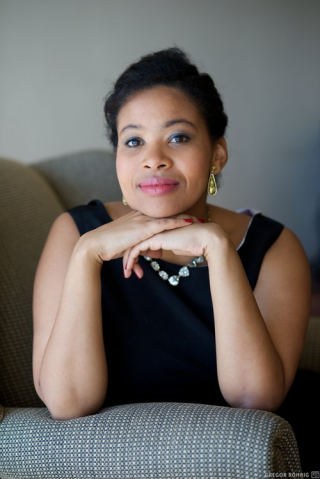
    Above: Golda Schultz, photo by Gregor Röhrig

    Fortunately the orchestra found an interpreter who managed to not only survive the challenge, but do so with flying colors. Young South African soprano Golda Schultz, who now resides in Bavaria, made a stunning Philharmonic debut with these performances. She has a silky, beautiful voice, even throughout the range, from a secure bottom (which she wisely does not force) to a ringing and full top. “Säus’le, liebe Myrtle!” and “Amor” could be outtakes from Zerbinetta, the more thoughtful in the former and coquettish in the latter, and Ms. Schutlz managed the runs and playful coloratura with aplomb. The lyrical yearning of “An die Nacht” could be Sophie’s wedding night jitters, and wildly passionate “Als mir din Lied erklang” a desperate outburst of the Composer. Ms. Schultz already sings Sophie and I think she’d make a marvelous Composer too. (Originated by Lotte Lehmann, it’s not really supposed to be sung by mezzo-sopranos.) And finally DIE FRAU OHNE SCHATTEN comes blaring in with an Empress-inspired “Ich wolf ein Sträußlein binden” – lyrical and passionate, with some light coloratura, Ms. Schultz never pushed her voice, but showed a simple pleasure of passion and signing. The final song of the cycle, “Lied Der Frauen,” is something the Dyer’s Wife could have sung. Perhaps here Ms. Schultz was reaching the limits of her current vocal comfort, but she did not become desperate and Maestro Rouvali did not allow the orchestra (massive, echt-Strauss sound) to cover her. If the Dyer’s Wife – a vocally brutal role – would be beyond Ms. Schultz’ natural capabilities, I think the Empress is a role she should seriously consider taking on. Ms. Schultz is an exciting young singer and was greeted appreciably by the audience. (…which did applaud after each song…but what can you do?)

    Rouvali

    Santtu-Matias Rouvali (above, photo by Chris Lee) concluded the concert with Tchaikovsky’s familiar Symphony No. 5. It is a long favorite of the public, even though after the premiere Tchaikovsky – in his typical manner – declared it his worst composition and that the public only pretended to like it. Perhaps Maestro Rouvali took the slow parts a bit too slow, they began dragging from the opening pages of the score. But anything above Adagio took on a playful pep and interesting rhythms. The Valse was perhaps the most successful of the movements, a warm and well judged pacing, lovingly shaped by the orchestra. The finale, too, was thrilling. This is music the orchestra has played many times and they seem to relish it once again.

    Since NY Philharmonic music director Jaap van Zweden is leaving the Philharmonic, people are speculating that every conductor who steps on the podium is auditioning for the post. This is certainly true of Maestro Rouvali. New York could certainly do much worse. I’d argue it has.  Worth noting currently Rouvali is principal conductor of the Philharmonia Orchestra, chief conductor of the Gothenburg Symphony, and chief conductor and artistic director of the Tampere Philharmonic Orchestra.

    Another interesting note on the state of the current Covid-19 pandemic and wearing of masks. One thing that has historically been difficult not to notice is how noisy NYC audiences frequently are. Many nights – and not only in the cold season – it sounds like a consumption ward with someone hacking up a lung every moment of a concert. This was not the case at this concert. One thing the CDC has noted is that, no doubt due to wearing of masks, very few people have gotten sick with the common cold. I don’t think I heard a single cough at this concert. I think perhaps we should make the wearing of masks mandatory at all times going forward.

    ~ Ben Weaver

  • Larcher and Brahms @ The NY Philharmonic

    07_Banner_WDW__Vorlage

    Above: composer Thomas Larcher

    ~ Author: Brad S. Ross

    Thursday April 25th, 2019 – This evening at David Geffen Hall saw the performance of two imposing, if wildly dissimilar, symphonies—one old, the other new—as The New York Philharmonic made their best effort of this decidedly peculiar concert pairing.  Guest conducting the program was the Russian-born Semyon Bychkov, whose steady command brought typically formidable results from our city’s prized orchestra.  

    The first half of the concert was given over to the United States premiere of the Austrian composer Thomas Larcher’s visceral Symphony No. 2: Kenotaph.  It was prefaced with opening remarks by Larcher, who offered concise and mercifully brief pre-performance context for the work. The title (German for “cenotaph”) refers to an empty grave or monument to those buried elsewhere. It was composed between 2015 and 2016 amid the peak of the Syrian refugee crisis, which saw hundreds of thousands of migrants fleeing from their homeland towards a less-than-welcoming central Europe. This tragedy was foremost on Larcher’s mind as he wrote Kenotaph, which, as he put it, is not so much programmatic music as it is “music with empathy.”  Its form is cast, quite traditionally, in four movements over a duration of roughly 37 minutes.

    It opened with a bang on a furious, colorful Allegro, marked by numerous volatile bursts.  This momentum retreated briefly into a somber elegy, before returning with ferocious energy—an energy marked with shrieking strings, discordant brass bursts, and unrelenting percussion that led it to a frightening close.  Although occasionally on the discursive side, the movement was characterized by a gripping sense of musical drama that would set the tone for the rest of the work.

    It was followed by a mournful, string-heavy Adagio that opened on repeating glissandi in the high strings as warm brass chords and descending mallet lines swelled and trickled underneath—the effect was almost like something out of science fiction.  A voluminous march then launched the music into fearful new atmospheres as a lone violin line, performed by the concertmaster Frank Huang, faded the movement into a haunting silence.

    Next up was plucky and energetic Scherzo, molto allegro, driven by excitingly colorful percussion.  Accelerating tutti bell tones led the piece to a series of fortissimo bursts before an almost Baroque and, by comparison, shockingly tonal phrase brought the movement to a pleasant, bittersweet end.

    The final movement, Introduzione, was a somber and almost elegiac affair.  It began with a number of featured soli—trumpet, violin, viola—which, once again, were surprisingly tonal in sound.  The movement soon became violent and triumphant, as though the gates of hell had been thrust open and the devil himself was leading the charge.  The composition here was not unlike Camille Saint-Saëns’s Danse macabre, Malcolm Arnold’s Tam O’Shanter Overture, or some other ghastly jaunt of classical music history.  Larcher delightfully milked this for all it was worth and brought the movement to a number false codas before its final climax—always finding ways to say more without ever overstuffing the piece.  A quiet postlude followed that featured a ghostly violin solo—again performed by Huang.  Finally, as if burying the dead, a tasteful, yet haunting funeral march brought the symphony to its final and, appropriately, unresolved cadence.

    The audience’s response was kind, if not totally enthusiastic.  A modest number of curtain calls gave Larcher, Bychkov, and the work’s soloists much-deserved chances to take their bows, which, given the strangely contrasted pairing, is perhaps the best for which one could hope.  Nevertheless, musically Kenotaph should be regarded as one of the New York Philharmonic’s most exciting premieres of recent memory, alongside Esa-Pekka Salonen’s Cello Concerto, Anna Thorvaldsdottir’s Metacosmos, or Julia Wolfe’s Fire in my mouth.

    Had the evening had ended here—and it probably should have—this might have been one of the best concerts of the season.  Ticket-holders tend to require more than forty minutes of music to feel satiated, however, so after intermission the audience returned for an enjoyable, if unremarkable, performance of Johannes Brahms’s Fourth Symphony.

    Composed between the summers of 1884 and 1885, this would be the last of the Romantic composer’s symphonies before his death in 1897.  Cast in four movements over approximately 45 minutes, it comprises a lush and stately Allegro non troppo, a warm and overlong Andante moderato, a fairly dainty Allegro giocoso, and a lively Allegro energico e passionato, which finally injected some much-needed energy to the second half of the program.

    After the riveting first half of the concert, this listening experience was almost soporific by comparison.  Perhaps it’s simply unfair to judge such an antiquated work against the rigorous complexities of one so new, but it’s one this odd pairing begged to be made.  Nevertheless, one could not possibly walk away from this concert feeling anything less than satisfied.  All in all, it was another splendid night at the New York Philharmonic—the gem of this great city.

    ~ Brad S. Ross

  • Stravinsky’s FIREBIRD @ The NY Philharmonic

    Pintscher_matthias_1819

    Above: composer and conductor Matthias Pintscher

    ~ Author: Brad S. Ross

    Thursday February 21st, 2019 – It was an evening of exquisite sounds Thursday night at David Geffen Hall as the guest conductor Matthias Pintscher led the New York Philharmonic in music by two early 20th-century greats sandwiching one of his own, composed almost exactly a century years later.  Pintscher, a German-born composer and conductor now residing in New York City, has quickly built a reputation as one of the finest younger composer–conductors of recent memory to emerge on the world stage.  On this night, he brought with him a much-welcomed performance of his recent violin concerto, featuring the talents of the renowned French violinist Renaud Capuçon.

    The evening began with Maurice Ravel’s “Alborada del gracioso” (“Dawn Song of the Jester”) from his 1905 piano suite Miroirs, which he had transcribed for orchestra in 1918.  Ravel, a master of orchestration above all, peppered this score with myriad and most enjoyable colors, including numerous pizzicato phrases, muted brass, and varied percussive bursts.  Pintscher brought the best out of the Philharmonic, which performed here with precision and grace.  It made for a lively and dynamic opening piece.

    Violinist-Renaud-Capucon-

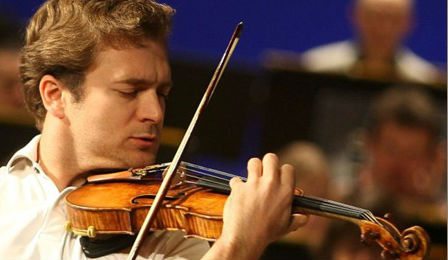
    Above: Renaud Capuçon

    Next up was Pintscher’s own mar’eh, a concerto for violin and orchestra composed in 2011 on a commission from the Lucerne Festival, Alte Opera Frankfurt, and the London Philharmonic Orchestra, which was here receiving its New York premiere.  Its title comes from a Hebrew word meaning “face sign” or, as the composer’s note indicates, “the aura of a face, a beautiful vision, something wonderful which suddenly appears before you.”  Why he chose to write it in lower case is as mystifying to me as any other inexplicably ungrammatical contemporary music title.

    The piece began quite eerily on a single suspended note played high on Capuçon’s violin, joined only by an ominous rumble in the percussion.  A languid melody soon entered, trading between Capuçon and various brass soloists, as dark colors began to emerge throughout the orchestra.  Following this menacingly silent introduction, a series of tantalizing full-ensemble swells seemed to indicate a change of direction for mar’eh before the work fell back into another series of quietly shifting timbres.  This carried on for some time until the same solitary high note and percussive rumble returned to bookend the concerto.

    Extended technique abounded throughout mar’eh and the players, including Capuçon, were at their absolute finest, but it was nevertheless hard to shake a sense of dissatisfaction when it was all over.  What the piece lacked was a sense of direction—momentum.  Its tempo always leaned toward the adagio, if that, and its dynamics, aside from the occasional fortissimo burst, rarely seemed to escape mezzopiano.  For a duration of roughly 23 minutes, this made for a hard-going listening experience.  The audience was politely receptive to it, however, even if their enthusiasm seemed more directed at its soloist than the composer.

    After intermission was the third and final piece of the night: Igor Stravinsky’s mighty Firebird.  Written in 1910, The Firebird marked the first of the composer’s many fruitful collaborations with the ballet impresario Sergei Diaghilev—a relationship that would also produce the likes of Petrushka and The Rite of Spring.  Premiering only eight days after his 28th birthday, it was also Stravinsky’s breakout piece and one that placed him on the world stage as one of the finest composers of his time and beyond.

    The audience knew it was in for a treat from the moment it began, as those memorable and ominous opening bars in the cello and bass harbingered the danger ahead.  The First Tableau was equal parts beautiful and menacing leading up to its volatile climax (the unforgettable “Infernal Dance of All Koschei’s Subjects”) and the haunting lullaby that follows.  The Second Tableau redeemed this carnage and misery with its exuberant and triumphant finale—one of the grandest in all classical music.

    The experience of hearing these magnificent bars played live by an orchestra as fine as the New York Philharmonic is one I wish every person on Earth could experience for himself.  The ethnomusicologist John Blacking once defined music as “humanly organized sounds…” if this be so, then these are no doubt some of the finest sonorities ever compiled by a single person.

    The crowd was quick to its feat upon conclusion with many shouts of “Bravo!”  This was easily one of the most animated displays of approval I’ve witnessed all season.  Pintscher and company received several curtain calls and every section of the ensemble was given a chance to take their bows.  The adulation was much-deserved for Pintscher and this stupendous orchestra, the gem of New York City.  Bravo, indeed.

    ~ Brad S. Ross

  • Pappano & Andsnes @ NY Philharmonic

    Antonio-Pappano-conde-nast-traveller-28nov16-pr
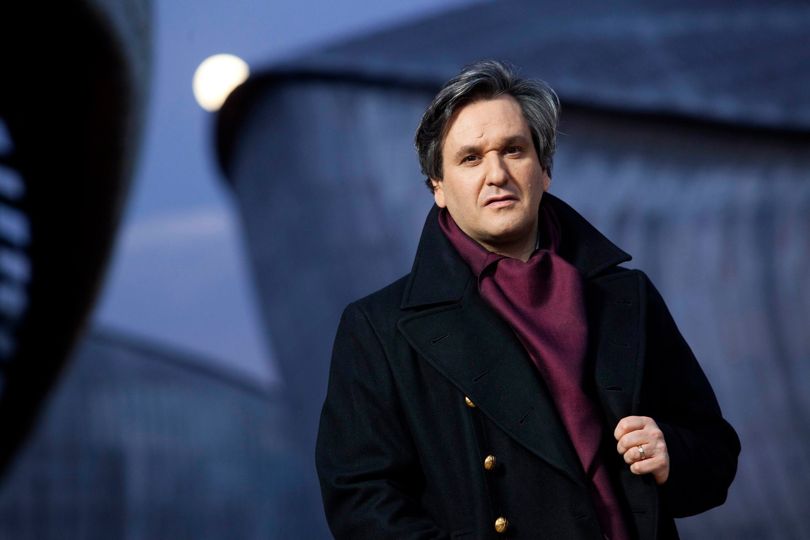
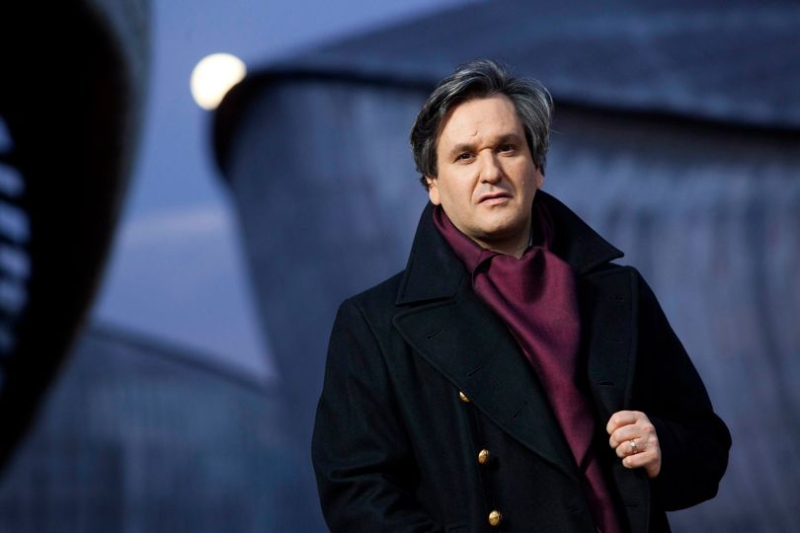
    Above: Conductor Antonio Pappano; Photo Credit: Musacchio & Ianniello

    ~Author: Scoresby

    Thursday February 8th,  2018 – The New York Philharmonic seemed in good form at David Geffen Hall. They were led by the wonderful Antonio Pappano, who I had never had the opportunity to hear before. I also hadn’t heard any of the works on the program live, though I have heard them all via recording. Pianist Leif Ove Andsnes and resident NY Philharmonic organist Kent Tritle rounded out the program. It is interesting to have heard the Philharmonic after a long break, as both this time and last time I heard the playing seemed higher quality than I recalled. It will be interesting to see how the sound changes again next year when Jaap Van Zweden assumes his full music directorship.

    Ralph Vaughan Williams’s Fantasia on a Theme by Thomas Tallis opened the program. I was surprised to learn in the program notes that the last time this famous piece was performed was 20 years before – it seems unusual for a piece that is perhaps Vaughan Williams’s most well-known. The all string orchestra is divided into three distinct groups during this work, the normal string orchestra, a separate orchestra that acts as the melody center, and a string quartet consisting of the principal players. Here, Mr. Pappano put the melodic orchestra in a row behind the strings that played the background counterpoint.

    I’ve never been particularly fond of this work, while stunningly beautiful I don’t feel the music goes anywhere. Mr. Pappano convinced me of its beauty though – the slow moving textures almost sounded like a minimalist organ work. The basses and cellos truly sounded like the pedals of an organ while the other strings managed to capture the full nuances of the Phrygian scale that the Tallis themed is based on. All the strings sounded quite clean. Perhaps the most convincing moment was when Cynthia Phelps entered with her melancholic viola melody (6:05 in the video above) – she managed to make the entire room sing. The other quartet members did a good job blending with her, but that lonely call after the richness of what precedes it will remain with me for a long time.

    The second work on the program was the Britten Piano Concerto, Op. 13. It is a bit of an odd piece, structured in four movements and lasting about thirty-five minutes. While interesting to hear, it didn’t sound to me nearly as original as other Britten works. Sort of like a medley of Stravinsky, Shostakovich, and Prokofiev with some of Britten’s classic colorful instrumentation. Nonetheless, it is a fun virtuosic piece of music that really shows off an orchestra – even if not the most worthwhile music.

    Capture

    Above: Pianist Leif Ove Andsnes; Photo credit: Gregor Hohenberg

    Mr. Andsnes milked the virtuosic first movement for all that it had, ripping through opening lines and making it sound gritty. Mr. Pappano’s accompaniment was spot on with the percussion cued perfectly for the piano’s percussive chords. Nonetheless, the movement is almost clown-esque and this interpretation seemed a little subdued for the material. Mr. Andsnes did seem to revel in the Rite of Spring-like chords (or perhaps I am thinking that because I’ve been listening to his new recording with Marc-André Hamelin).

    The second movement is a little less chaotic than the first, the first few lines make it sound like one is in a jazz bar with people who are smoking. The bass is plucking away, while someone is lightly tapping on tambourine. The viola and clarinet exchange jazzy sounding lines. Ms. Phelps again did a fabulous job, here embracing that smoky texture as did Mr. Andsnes when the piano finally comes in to some music that sounds straight out of Prokofiev.

    Eventually this setting yields to another virtuosic theme that recapitulates parts of the first movement. The third movement is a theme and variations that grows progressively denser – while interesting, it doesn’t quite feel like it belongs. Britten wrote many years later to replace a different version and it is easy to tell. The finale is exciting and showy, both Mr. Pappano and Andsnes making the most of it.

    The second half of the concert was devoted to Saint-Saëns Symphony No. 3 in C minor, Op. 78 with Kent Tritle performing the organ. While a popular piece, it hasn’t been done at the NY Phil in 8 years and so I haven’t gotten the chance to hear it live before. In some ways though, I feel like I still haven’t heard the piece properly. Because Mr. Tritle was playing an electronic organ, some of the grandness of the work didn’t seem to be present – indeed my friend and I chuckled a bit when the electronic organ entered as it just didn’t sound right for such a delicately composed piece. That is no fault of the organist, however, it would be lovely if Lincoln Center built an organ in David Geffen Hall.

    Mr. Pappano programmed the Vaughan Williams well, it mirrors both the sound of the organ and structure of the Saint-Saëns making for a satisfying second half. Mr. Pappano brought an incisive and almost frenzied energy to the Allegro moderato in the first movement. The famous theme sounded buzzing with energy. Most impressive though were the clear textures in the massive fugue in the second movement, not a note was out of place, being both transparent and energetic. One effect that I had never noticed was Saint-Saëns dazzling use of pianos in the second movement’s presto. They are light and just a tinkle above the orchestra, but give it this glistening sonority that sounded to me like stained glass in sunlight. It was delightful to hear and I look forward to hearing Mr. Pappano again. He manages to choral the orchestra into action and get the best of its players.

    ~ Scoresby

  • Pappano & Andsnes @ NY Philharmonic

    Antonio-Pappano-conde-nast-traveller-28nov16-pr
    Above: Conductor Antonio Pappano; Photo Credit: Musacchio & Ianniello

    ~Author: Scoresby

    Thursday February 8th,  2018 – The New York Philharmonic seemed in good form at David Geffen Hall. They were led by the wonderful Antonio Pappano, who I had never had the opportunity to hear before. I also hadn’t heard any of the works on the program live, though I have heard them all via recording. Pianist Leif Ove Andsnes and resident NY Philharmonic organist Kent Tritle rounded out the program. It is interesting to have heard the Philharmonic after a long break, as both this time and last time I heard the playing seemed higher quality than I recalled. It will be interesting to see how the sound changes again next year when Jaap Van Zweden assumes his full music directorship.
    Ralph Vaughan Williams’s Fantasia on a Theme by Thomas Tallis opened the program. I was surprised to learn in the program notes that the last time this famous piece was performed was 20 years before – it seems unusual for a piece that is perhaps Vaughan Williams’s most well-known. The all string orchestra is divided into three distinct groups during this work, the normal string orchestra, a separate orchestra that acts as the melody center, and a string quartet consisting of the principal players. Here, Mr. Pappano put the melodic orchestra in a row behind the strings that played the background counterpoint.

    I’ve never been particularly fond of this work, while stunningly beautiful I don’t feel the music goes anywhere. Mr. Pappano convinced me of its beauty though – the slow moving textures almost sounded like a minimalist organ work. The basses and cellos truly sounded like the pedals of an organ while the other strings managed to capture the full nuances of the Phrygian scale that the Tallis themed is based on. All the strings sounded quite clean. Perhaps the most convincing moment was when Cynthia Phelps entered with her melancholic viola melody (6:05 in the video above) – she managed to make the entire room sing. The other quartet members did a good job blending with her, but that lonely call after the richness of what precedes it will remain with me for a long time.

    The second work on the program was the Britten Piano Concerto, Op. 13. It is a bit of an odd piece, structured in four movements and lasting about thirty-five minutes. While interesting to hear, it didn’t sound to me nearly as original as other Britten works. Sort of like a medley of Stravinsky, Shostakovich, and Prokofiev with some of Britten’s classic colorful instrumentation. Nonetheless, it is a fun virtuosic piece of music that really shows off an orchestra – even if not the most worthwhile music.

    Capture

    Above: Pianist Leif Ove Andsnes; Photo credit: Gregor Hohenberg

    Mr. Andsnes milked the virtuosic first movement for all that it had, ripping through opening lines and making it sound gritty. Mr. Pappano’s accompaniment was spot on with the percussion cued perfectly for the piano’s percussive chords. Nonetheless, the movement is almost clown-esque and this interpretation seemed a little subdued for the material. Mr. Andsnes did seem to revel in the Rite of Spring-like chords (or perhaps I am thinking that because I’ve been listening to his new recording with Marc-André Hamelin).

    The second movement is a little less chaotic than the first, the first few lines make it sound like one is in a jazz bar with people who are smoking. The bass is plucking away, while someone is lightly tapping on tambourine. The viola and clarinet exchange jazzy sounding lines. Ms. Phelps again did a fabulous job, here embracing that smoky texture as did Mr. Andsnes when the piano finally comes in to some music that sounds straight out of Prokofiev.

    Eventually this setting yields to another virtuosic theme that recapitulates parts of the first movement. The third movement is a theme and variations that grows progressively denser – while interesting, it doesn’t quite feel like it belongs. Britten wrote many years later to replace a different version and it is easy to tell. The finale is exciting and showy, both Mr. Pappano and Andsnes making the most of it.

    The second half of the concert was devoted to Saint-Saëns Symphony No. 3 in C minor, Op. 78 with Kent Tritle performing the organ. While a popular piece, it hasn’t been done at the NY Phil in 8 years and so I haven’t gotten the chance to hear it live before. In some ways though, I feel like I still haven’t heard the piece properly. Because Mr. Tritle was playing an electronic organ, some of the grandness of the work didn’t seem to be present – indeed my friend and I chuckled a bit when the electronic organ entered as it just didn’t sound right for such a delicately composed piece. That is no fault of the organist, however, it would be lovely if Lincoln Center built an organ in David Geffen Hall.

    Mr. Pappano programmed the Vaughan Williams well, it mirrors both the sound of the organ and structure of the Saint-Saëns making for a satisfying second half. Mr. Pappano brought an incisive and almost frenzied energy to the Allegro moderato in the first movement. The famous theme sounded buzzing with energy. Most impressive though were the clear textures in the massive fugue in the second movement, not a note was out of place, being both transparent and energetic. One effect that I had never noticed was Saint-Saëns dazzling use of pianos in the second movement’s presto. They are light and just a tinkle above the orchestra, but give it this glistening sonority that sounded to me like stained glass in sunlight. It was delightful to hear and I look forward to hearing Mr. Pappano again. He manages to choral the orchestra into action and get the best of its players.

    ~ Scoresby

  • Shaham|Langrée @ Mostly Mozart

    Gil-left-1

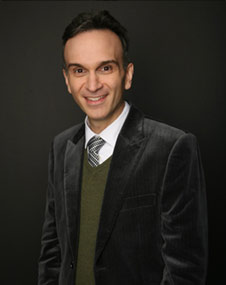
    Above: Violinist Gil Shaham

    ~ Author: Scoresby

    Friday August 18th, 2017 – After a month of recovering from an illness, I was happy to be able hear live music performed by the Mostly Mozart Festival Orchestra in David Geffen Hall led by its music director Louis Langrée with guest violinist Gil Shaham. A month is the longest I’ve gone without hearing live music in years, so it felt like the ultimate psychological panacea to attend. While I have regularly attended the chamber music performances, A Little Night Music, and contemporary music concerts, I hadn’t heard the Festival Orchestra since 2014.  I was glad to be able to attend the penultimate Festival Orchestra concert of the season.

    Louis-Langrée

    Above: Louis Langrée 

    The first piece on the program was the bubbly Prokofiev Symphony No. 1 in D major (“Classical”). The only other time I have heard this piece played live was, coincidentally, also the last time I heard the Festival Orchestra. This evening Mr. Langrée led a taut, lean performance. During the dance-like opening movement, the strings sounded bouncy and light. The low woodwinds provided a warm sheen, even in the most ominous undercurrents of the piece. Mr. Langrée’s sense of balance allowed the bassoon’s counterpoint to easily pop. While certainly an energetic account, none of the structural detailing was missed.

    During the Larghetto, the bassoons and clarinets took the spotlight, providing entertainment combined with artistry. For those who haven’t been to Mostly Mozart before, the stage of David Geffen is modified to allow riser seating in the back of the orchestra by moving up the stage to what would be the first few rows of the hall. This pushes the orchestra significantly closer to audience and creates a much more intimate environment.

    Mr. Langrée takes full advantage of this intimacy by using far quieter dynamics than could ever be used during the normal season’s setup – it feels as if the orchestra is thrust into the audience. The orchestral detailing in the second movement was superb through even the quietest of moments. While this makes the music sound more nuanced and detailed, it feels as if the noises from the crowd are too. Throughout the performance I heard many more pings of hearing aids, coughs, and wrappers of food than I hear during the regular season. However, I am happy to take that trade-off if it makes the music-making substantially more interesting as it did here. In the third and fourth movements, the orchestra kept its momentum and finished to a crowd that roared, obviously excited over the energy of the musicians.

    The second piece on the program was Mozart Symphony No. 25 G minor, K. 183 (one of few Mozart symphonies in the minor key). I’ve never been the biggest fan of the piece, but it was still a pleasure to hear it live in such an intimate space. While at times I felt the orchestra sounded a little muddy through the first movement, every time there was a canonic section Mr. Langrée confidently led transparent and thoughtful introductions for each instrument.

    These structured sections sounded just as buoyant as the Prokofiev. While a welcome change in dynamics, some of the rhythms and accents in the Andante felt over-accentuated to my ear.  Nonetheless, one could hear every instrument clearly singing its line. The trio of the third movement brought another warm passage with the bright woodwinds followed by an incisive final movement.

    After the intermission, the crowd seemed to be buzzing to hear the final piece on the program: the Tchaikovsky Violin Concerto in D major played by violinist Gil Shaham. I’ve never been a fan of this piece, but here it was played in a refreshing way that would make want to listen again. Mr. Shaham took an understated approach to the first movement (at least as much as is possible for a virtuosic warhorse), languishing in the phrasing of lines.

    Again, because of the setup of the lean orchestra and intimacy of the venue, there was no need to play loud. Thus he was able to bring a supple legato phrasing that never sounded harsh. After a measured performance of the cadenza by Mr. Shaham, the principal flautist Jasmine Choi gave one of the clearest and mellowest solos I’ve heard for that section of the piece. Mr. Shaham seemed more effective in the second movement, managing to illicit a rounder, ghostly tone during the introduction. The orchestra responded, with the clarinet’s extensive accompaniment matching the misty mood.

    Throughout the piece Mr. Shaham seemed to play for the musicians rather than for the audience – the whole experience seemed have more of a chamber music feel than that of a virtuosic concerto. The orchestral musicians and Mr. Langrée were smiling from start to finish and it was a joy to watch them exchange phrases with Mr. Shaham. While perhaps not the most technical or dazzling performance of this piece, witnessing and feeling that rare warmth between the artists is something that can only be experienced in a live performance.

    During the final movement, Mr. Shaham dispatched the technical sections with ease and the crowd gave him a roaring ovation. He played as an encore the third movement of the third E-major Bach Partita. While charming, to me the highlight of the concert was witnessing intimate collaborative music-making that is rare to see in an orchestra.

    ~ Scoresby

  • Augustin Hadelich @ The NY Philharmonic

    0920_augustin-hadelich02

    Above: Augustin Hadelich; photo Jesse Costa/WBUR.

    Author: Scoresby

    Thursday May 25th 2017 – In a flavorful all-Czech program, the young conductor Jakub Hrůša made his New York Philharmonic debut at David Geffen Hall. The violinist Augustin Hadelich was featured on the program, returning to the New York Philharmonic. While I had never heard Mr. Hrůša before, I have been a fan of Mr. Hadelich’s for some time.
    The first piece on the program was the enigmatic Dvorak Violin Concerto in A minor, Op. 53. This is a virtuosic showpiece from early on in Dvorak’s career and has never been a favorite of mine. Mr. Hadelich gave an astoundingly clean, dexterous, and lyrical account once again proving he is a superb interpreter. In the first movement he managed to structure the wandering sections and yet still find time to pause to savor the lyrical sections. The orchestra had a warm sound, but the orchestral writing for this piece is too large for a solo violin. Nonetheless, the musicians blended well with Mr. Hadelich’s tone, creating a very satisfying performance. There was a moment at the end of the first movement in which the horn and violin seemed to fuse timbres creating a beautiful effect evoking a warmer version of a woods call. These sensual movements made the piece much more exciting than I had expected.

    Another was the way the woodwinds played the searing melody during the first movement – it felt like the one could feel the energy from that section of the orchestra. During the virtuosic final movement, Mr. Hadelich managed to playfully entertain with the many Czech dances – the orchestra following his lead well under Mr. Hrůša. Right before launching into the fast pace finish, Mr. Hadelich took one dramatic pause as if to breathe. It was perfectly timed and made the rush to the finish even more alert. As an encore, he gave a technically perfect and surprisingly lyrical account of Paganini’s Caprice No. 1. Mr. Hadelich managed to squeeze all the color that one can out of a showpiece like that.

    2016_09_Herzau_Jakub_Hrusa-9568_72dpi

    Above, conductor Jakub Hrůša photographed by Andreas Herzau

    The evening’s second half started with three of Dvroak’s Slavonic Dances: Op. 46, No. 1; Op. 72, No.2; and Op. 72, No. 7. The first one is a loud colorful fanfare that sounds nationalistic. Mr. Hrůša led a clear account that let the instruments breathe – the crowd burst into applause at the finish of this dance. The second is a much more tragic/lyrical piece which was deftly handled. While indulging for some of the thick textures, Mr. Hrůša made sure to keep the orchestra at bay to build into the third piece in the set – which sounded similar to the opening fanfare. These were crowd-pleasers certainly, but played well and with a sense of purpose.

    After having read about it and listened to it on recording for many years, I finally got the chance to hear Janacek’s Taras Bulba, Rhapsody for Orchestra. This imaginative piece is loosely based on Gogol’s eponymous novella – but Janacek picks three particular scenes to set into music. The first depicts the son of Taras Bulba falling in love with a Polish woman, which eventually ends when Taras executes him for treason. The music itself alternates between sweeping sections depicting the tryst and intense war sounds. In the background of both sections the organ and bells are a constant reminder of his fate.

    Mr. Hrůša drew a colorful and dramatic account, creating extremes in the alternate sections while having enough charisma to push through the piece. The orchestra emphasized the special sound effects well. The ending chord with the organ and bells created an almost vacuum-like effect, throwing the hall into silence. During the second movement, Taras Bulba’s other son is captured by the Polish and is watching them dance as his death draws nearer and nearer. Eventually after meeting Taras Bulba he is executed.

    Here the orchestra sounded much lighter than in the first movement. The harps in the introduction lifted up the entire orchestra, playing both passionately and lyrically. The players managed to produce pulsing dance rhythms well, making the dance seem stuttering and intense. I noticed many similarities between the structure of this movement and Janacek’s second string quartet. He uses the violins in many of the same ways and the opening chords of the quartet appear through the entirety of second movement of the orchestral piece. I also noticed that Janacek manages to create sweeping opera-like sections. Mr. Hrůša managed to get deep anxious playing from the orchestra leading into the final bars. As if to add to the musical drama some audience member shouted a defiant “Nooo!” just as the movement was ending.

    While the last movement depicts Taras Bulba dying, he also sees his own soldiers escaping capture. Thus the music Janacek compose during this movement is mighty and proud. While well played, Mr. Hrůša had the orchestra climax in volume too early, making the other large dynamics less powerful.

    Nonetheless, one of my favorite parts of the piece is when the percussion strikes silencing all of the other instruments. The horns then slowly come in out of sync with each other, creating a call and response echoing effect. The orchestra pulled this off perfectly – building to a dramatic ending with the organ and bells being used to maximum effect. The result was both terrifying and uplifting, transporting the audience to the idealist vision of Janacek’s fantasy.

    ~ Scoresby

  • Brahms|Thorvaldsdottir|Salonen @ NY Phil

    A gilbert foto michael j lutch

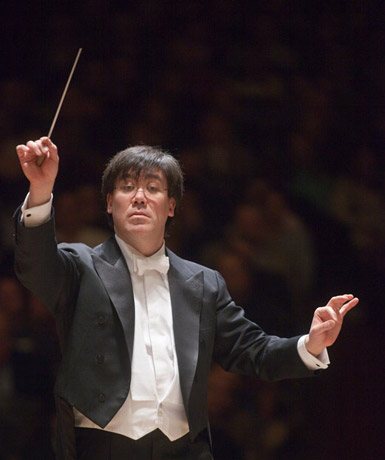
    Above: Alan Gilbert, in a Michael J Lutch photo

    Author: Scoresby

    Tuesday May 23rd 2017 – Now in the final weeks of his tenure as music director, Alan Gilbert led the New York Philharmonic at David Geffen Hall in the last of four concerts of a diverse program. Guest soloists included the respected violinist Leonidas Kavakos, soprano Anu Komsi, and soprano Piia Komsi (both sopranos in their NY Philharmonic Subscription debuts). It also happened to be a night devoted to the retiring members of the NY Philharmonic and such there was a ceremony right after intermission.

    Leonidas-kavakos

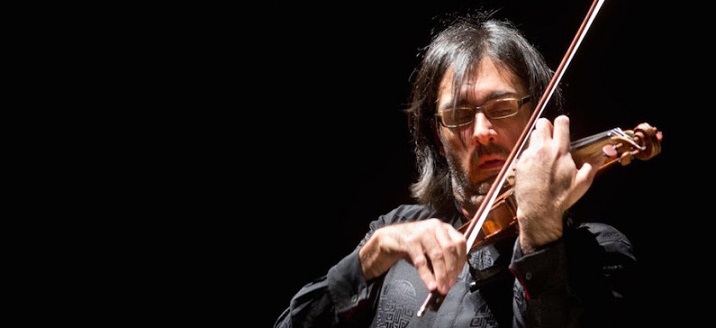
    The program started out with the classic Brahms’s Concerto in D major for Violin and Orchestra, Op. 77. I have heard Mr. Kavakos (above)  a few times before and have always enjoyed his performances. This Brahms was taken at a slow pace in the first movement. Mr. Kavakos seemed to use a style of playing with very light bow pressure and many staccato notes, which emphasized the more modernist elements of the work (particularly in the cadenza). While most players make this into a flashy piece, both the orchestra and Mr. Kavakos seemed to be tempered, bordering on torpid. They did bring transparency and structure, emphasizing each phrase.

    Opening with a sensual organ-like chorale, the second movement seemed more effective at this tempo. It allowed the orchestra to breathe through some of the more beautiful tutti sections and Mr. Kavakos time to care for each line. The finale was Mr. Kavakos at his best, finally managing to fully synchronize with the orchestra and lunging through difficult technical demands.

    After the intermission was the annual New York Philharmonic ceremony honoring both the retiring and retired musicians. This is a time-honored tradition in which retiring musicians give a speech – it is also a nice time for former musicians to come back to the orchestra.

    Dawn_hannay

    As the violist and Chairperson of the Musician’s Orchestra Committee Dawn Hannay (above) pointed out in her memorable speech, the musicians and history of an organization are vital in creating a particular sound. “Without the musicians, the conductor is just waiving their arms around.”

    Photo by Kristinn Ingvarsson

    Above: Anna Thorvaldsdottir; photo by Kristinn Ingvarsson

    The second piece on the program was the New York premiere of Aeriality by the young Icelandic composer Anna Thorvaldsdottir. While this was my first time hearing any of her work live, I have been relishing two recent discs of her music  for the past few years – one released by Deutsche Grammophon and the other recorded by International Contemporary Ensemble. It was a pleasure to hear this rich music live, which is a completely different experience than listening to an album. As with many of Ms. Thorvaldsdottir’s pieces, the sound is huge and immersive.

    In some ways, one might consider this piece as much an ambient soundscape as it is a structured musical piece. The percussion seems the only thing grounding about the music; it otherwise shifts through a variety of textures and colors – almost like moving through space. It is a evokes strong visuals of a primordial landscape in my mind. The clusters, density, and waves of sound all increase until a climactic moment when the music turns into light, feathery texturing. It really felt like the orchestra arrived somewhere it fell silent. The performers drew a big sound and played well. Mr. Gilbert led a slower account that accentuated the many textures, but also felt a little less structured.

    The program closed with the New York premiere of a work by the esteemed composer and conductor Esa-Pekka Salonen. The piece was an older one from his output entitled Wing on Wing, inspired by the completion of Frank Gehry’s Walt Disney Concert Hall. It includes two sopranos who move to different parts of the hall, percussionists who also play from different parts of the hall, the electronic sounds of a fish, and the voice of Frank Gehry himself.

    The sopranos Anna and Pii Komsi did an excellent job through difficult descending and ascending passages that evoked the sounds of a siren. While the orchestra played rivetingly throughout the work, the electronics sounded a little kitschy. The piece has classic Salonen sound of colorful open sounding chords with interesting textures from a variety of instruments. It evoked both Ligeti’s Atmosphères and Debussy’s Jeux, melded with Salonen’s creative rhythms.

    The moment that grabbed the most was the final purely orchestral section, in which the orchestra bursts into a frenetic dance anchored by the percussion. It was lovely to hear the New York Philharmonic present important contemporary composers and a nice reminder of the importance of the musicians in the orchestra.

    ~ Scoresby