Tag: DIE FRAU OHNE SCHATTEN

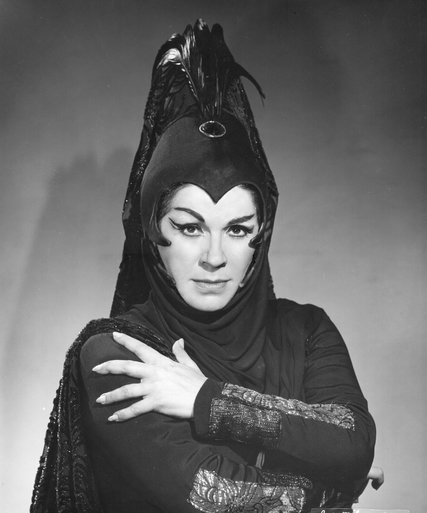
  • Irene Dalis as The Nurse

    Dalisobit-blog427

    The great mezzo-soprano Irene Dalis (above) found her most memorable role as The Nurse in Richard Strauss’s DIE FRAU OHNE SCHATTEN; I was fortunate enough to have seen her in this opera twice at The Met, and both times she simply dazzled in the fiendishly difficult vocal writing whilst creating a vivid theatrical portrait of this mercurial creature.

    The Nurse above all is devoted – to the point of obsession – to her charge: the half-human/half-spirit Empress, daughter of the mysterious and omniscient Keikobad. In the opera’s opening scene, the Nurse is visited by Keikobad’s messenger. The Empress has been married to the Emperor, a mere mortal, for one year, but as she still does not cast a shadow – the sign of her ability to bear children – Keikobad plans to re-claim her for the spirit world in three days. The Nurse is delighted, as she very much hates the Emperor; she longs to return to Keikobad’s realm.

    The Nurse asks what will become of the Emperor after the Empress is taken by her father; “Er wird zu Stein!” says the Messenger: “He will be turned to stone!” This prospect gives the Nurse even greater satisfaction: “He will be turned to stone!” she repeats. “There do I recognize Keikobad, and bow before him!”

    FRAU ~ opening scene – Irene Dalis & William Dooley – Bohm cond – Met bcast 1966

    January 23, 2017 | Permalink

  • Übermächte sind im Spiel!

    312px-Amme_van_Alfred_Rollerkopie

    Above: Alfred Roller design for Die Amme (the Nurse) in DIE FRAU OHNE SCHATTEN

    DIE FRAU OHNE SCHATTEN (The Woman Without a Shadow) is Richard Strauss’s massive fairy tale of an opera. The “schatten” (shadow) of the opera’s title symbolizes a woman’s ability to bear children. The Empress, a half-human half-spirit creature, is shadowless; thus her marriage to the human Emperor is childless. As the opera opens, the Empress’s nurse receives word that Keikobad, the spirit-king and father of the Empress, will re-claim his daughter for the spirit world if she cannot cast a shadow within three days; and in addition, her husband will be turned to stone.

    Die Amme, the Nurse, is the Empress’s faithful companion. She grudgingly agrees to help her mistress obtain a shadow from the human world; their quest settles on the wife of the lowly dyer, Barak. Promising the unhappily-married Dyer’s Wife untold riches and a handsome youth to be her lover, The Nurse arranges that the shadow of the Wife will be transferred to the Empress.

    After bitterly renouncing Barak, the Wife submits to the Nurse’s magic spell of transference. Suddenly a magic sword flies into Barak’s hands; his brothers urge him to kill the deranged, possessed Wife. Overwhelmed by the situation, the Wife relents at the last moment and begs her husband to slay her; Barak raises the sword, but Keikobad intervenes: the sword is shattered, the house begins to crumble. Crying out “Higher powers are in play! Hither, to me!”, the Nurse leads the Empress away from the destruction.

    The brief scene of the Wife’s change of heart is excitingly sung here by Marilyn Zschau, and the Nurse’s spectacular cry of “Übermächte sind im Spiel! Her zu mir!” climaxes on a sustained high B-flat from Mignon Dunn in this, one of the most thrilling “curtains” in all opera.

    Marilyn Zschau & Mignon Dunn – FRAU OHNE SCHATTEN ~ finale Act II – Chicago 1984

  • Irene Dalis: “Er wird zu Stein!”

    Dalisobit-blog427

    The great mezzo-soprano Irene Dalis (above) found her most memorable role as The Nurse in Richard Strauss’s DIE FRAU OHNE SCHATTEN; I was fortunate enough to have seen her in this opera twice at The Met, and both times she simply dazzled in the fiendishly difficult vocal writing whilst creating a vivid theatrical portrait of this mercurial creature.

    The Nurse above all is devoted – to the point of obsession – to her charge: the half-human/half-spirit Empress, daughter of the mysterious and omniscient Keikobad. In the opera’s opening scene, the Nurse is visited by Keikobad’s messenger. The Empress has been married to the Emperor, a mere mortal, for one year, but as she still does not cast a shadow – the sign of her ability to bear children – Keikobad plans to re-claim her for the spirit world in three days. The Nurse is delighted, as she very much hates living among humans and longs to return to Keikobad’s realm.

    The Nurse asks what will become of the Emperor after the Empress is taken by her father; “Er wird zu Stein!” says the Messenger: “He will be turned to stone!” This prospect gives the Nurse even greater satisfaction: “He will be turned to stone!” she repeats. “There do I recognize Keikobad, and bow before him!”

    FRAU ~ opening scene – Irene Dalis & William Dooley – Bohm cond – Met bcast 1966

  • Irene Dalis: “Er wird zu Stein!”

    Dalisobit-blog427

    The great mezzo-soprano Irene Dalis (above) found her most memorable role as The Nurse in Richard Strauss’s DIE FRAU OHNE SCHATTEN; I was fortunate enough to have seen her in this opera twice at The Met, and both times she simply dazzled in the fiendishly difficult vocal writing whilst creating a vivid theatrical portrait of this mercurial creature.

    The Nurse above all is devoted – to the point of obsession – to her charge: the half-human/half-spirit Empress, daughter of the mysterious and omniscient Keikobad. In the opera’s opening scene, the Nurse is visited by Keikobad’s messenger. The Empress has been married to the Emperor, a mere mortal, for one year, but as she still does not cast a shadow – the sign of her ability to bear children – Keikobad plans to re-claim her for the spirit world in three days. The Nurse is delighted, as she very much hates living among humans and longs to return to Keikobad’s realm.

    The Nurse asks what will become of the Emperor after the Empress is taken by her father; “Er wird zu Stein!” says the Messenger: “He will be turned to stone!” This prospect gives the Nurse even greater satisfaction: “He will be turned to stone!” she repeats. “There do I recognize Keikobad, and bow before him!”

    FRAU ~ opening scene – Irene Dalis & William Dooley – Bohm cond – Met bcast 1966

  • Benedetti/Jurowski @ The NY Phil

    Vladimir_Jurowski

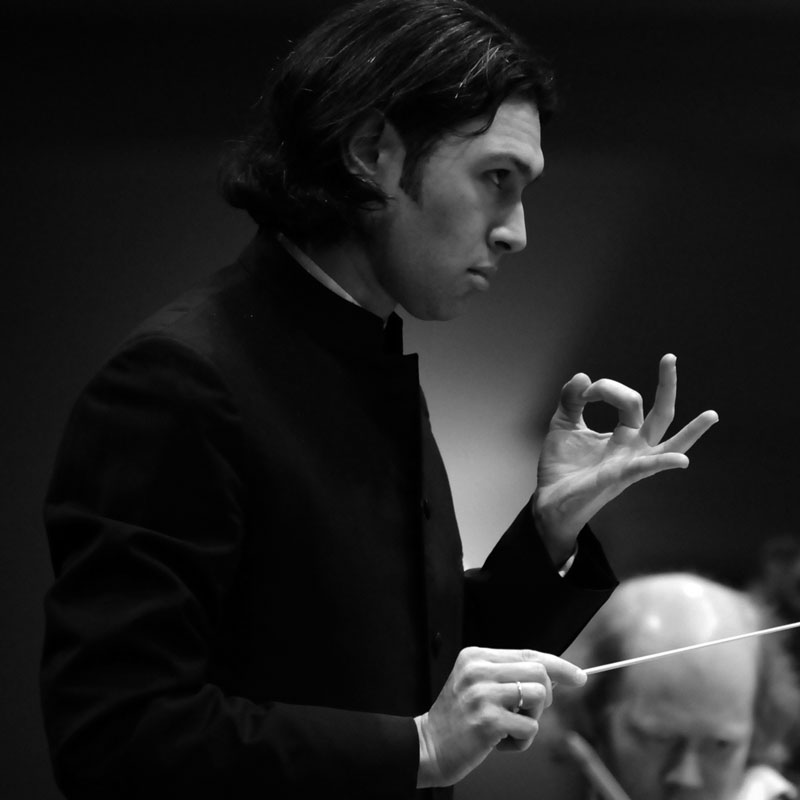
    Wednesday May 21, 2014 – Vladimir Jurowski (above, in a Matthias Creutziger photo), who led a series of very impressive performances of Strauss’ DIE FRAU OHNE SCHATTEN at The Met earlier this season, was on the podium at Avery Fisher Hall tonight for his New York Philharmonic debut. The programme featured works by Szymanowski and Prokofiev. In the days just prior to tonight’s concert it was announced that the scheduled violin soloist, Janine Jansen, was indisposed and would be replaced by Nicola Benedetti.

    Arts_ents_benedetti__33199b

    Ms. Benedetti (above) hails from Scotland, of an Italian family. She trained at the Yehudi Menuhin School in Surrey and she maintains a full calendar of orchestra, chamber music, and recital engagements worldwide. A Decca recording artists, Ms. Benedetti takes an active role in music education and outreach. Tall and strikingly attractive, she was welcomed warmly by the NY Phil audience tonight following her excellent playing of the Szymanowski violin concerto #1. This was her Philharmonic subscription debut.

    Karol Szymanowski wrote this concerto #1 in 1916. In the course of his musical career, this Ukraine-born but definitively Polish composer progressed from a Late Romantic style of writing thru an embrace of Impressionism (and a flirtation with atonality) to a later period when folk/national music became a strong influence.

    Szymanowski’s violin concerto #1, often referred to as the “first modern violin concerto”  leaves aside the customary three-movement concerto structure and instead unfolds as a tone poem with the violin ever-prominent. Tonight’s performance was entrancing from start to finish, Ms. Benedetti showing great control in the sustained upper-range motifs that permeate the violin part: here she was able – at need – to draw the tone down to a silken whisper. The composer further calls for some jagged, buzzing effects as well as flights of lyricism from the soloist; a long cadenza requires total technical mastery. Ms. Benedetti delivered all of this with thoroughly poised musicality. Meanwhile the orchestra, under Maestro Jurowski’s baton, paints in a brilliant range of colours, periodically breaking into big melodic themes that have an almost Hollywood feel. Both the piece and tonight’s performance of it were thrilling to experience, and Ms. Benedetti truly merited her solo bow and the enthusiastic acclaim of both the audience and the artists of the Philharmonic.

    Following the intermission during which my friend Monica and I were enjoyably chatted up by a young reporter from the Times of London, Maestro Jurowski led a one-hour suite of selections from Prokofiev’s ballet CINDERELLA. This is a ballet I’ve never seen in live performance, though the music’s familiarity comes as no surprise. Tonight’s sonic tapestry of excerpts allowed us to easily follow the narrative, and the Philharmonic musicians gave full glory to the rhapsodic waltzes while individual players took advantage of the ballet’s numerous colorful, characterful solo vignettes. The marvelous, ominous tick-tock leading up to the stroke of midnight and the ensuing mad dash were all terrific fun. The score, full of romance, humour, and irony – and the charming introduction of maracas – provided a superb debut vehicle for Maestro Jurowski. Let’s hope he’ll be back at Avery Fisher Hall soon. And Ms. Benedetti as well.