Tag: Dmitri Hvorostovsky

  • Mother and Child Reunion

    (A re-post from Oberon’s Grove, dating from 2007)

    My friend Mollie, who lives in Fareham, England, sent me this story about meeting her mother after 71 years! Mollie and I have known each other for over 3 decades, since the time I answered her small ad in the British magazine OPERA. She was looking for tapes of Frederica von Stade and I happened to have a real rarity: a recital Flicka gave in Syracuse, NY on her first tour as a professional singer.

    Mollie came to the USA several times over the years and once she had the good fortune to have Flicka invite her to a working rehearsal of IDOMENEO at the Met. Mollie and Flicka have stayed in touch to this day.

    Each summer Mollie sends me the tapes of the Cardiff Singer of the World Competition and so it was that I was one of the first people on these shores to hear the voices of Dmitri Hvorostovsky and Bryn Terfel within a week of the famous ‘battle of the baritones’ in 1989.

    The last time Mollie was here, she met my late friend the Japanese contralto Makiko Narumi  who was at that time on the brink of the big career that never happened. 

    I knew that Mollie had not been raised by her real parents but I had no idea of the story behind it, or that she had located her mother who is now 93 years old. I’ll let Mollie tell the story; Jeremy is Mollie’s son and Syd is Jeremy’s daughter.

    mollie and her mom

    Tuesday, November 27, 2007

    “HI dears…just to send on this fantastic photo of me and MY REAL MOTHER!!! After 71 years!!! A  sad story and we did not stay long. Jeremy was great and knocked on the door and when she answered he said she was not to be upset at what he had to say, but that he was her grandson. She went to say ‘go away’ [nicely] but he said, “Before you say anything I have to say we just would like to put a face to a name and have waited a long time to do so but we will go away after that”. She was explaining that she lives alone and was RAPED by my drunken Irish father..that accounted for her never wanting to know about me.

    I then got out of the car and went over and said it was so kind of her to see us and we would not stay but may we just have a photo? She said that since 1920 she had lived here in the family home. She had a little smile and twinkle in her eye and said, “He is very handsome isn’t he?”…meaning Jeremy, who was charm himself…glad he took me!!!

    Anyway, she made us promise not to come again and said it is too much for her…at 93!! Very sprightly!!! She said she had driven until she was 80 but has severe athritis in her hands and knees. When we were leaving she called me back and gave me two photos of herself…and she gladly took the latest school photo of Syd which Jeremy happened to have in the car…so…we were all exhausted but exhilarated…especially as although it took 2.4 hrs to get to Ash it took another hour or more along single lanes to find the house..and only then because a lady drew us a map!!!!!

    Home exhausted…Jeremy had driven for 7 hours…so was kindness itself..he was as excited at me at finding his grandmother as he has none and hasn’t since he was 4!! That’s all folks but just wanted to share my good news…”

  • Gihoon Kim: Cardiff Singer of the World 2021

    Gihoon kim

    Korean baritone Gihoon Kim has won the title of BBC Cardiff Singer of the World for 2021. The competition, which was first held in 1983, takes place every other year at Saint David’s Hall in Cardiff. Past winners have included Karita Mattila, Dmitri Hvorostovsky, Katarina Karnéus, Anja Harteros, Shenyang, and Nicole Cabell.

    This year, due to the pandemic, the number of entrants (and the number of judges) was reduced; there was no live audience in the hall. Despite this change in atmosphere (Welsh audiences tend to go mad for singers they like), there was much to enjoy.

    Mr. Kim impressed me immediately in the first round with his poignant rendering of Pierrot’s Tanzlied from Korngold’s DIE TOTE STADT; the judges (including soprano Roberta Alexander and baritone Neal Davies) were seen wiping tears from their eyes as he finished the aria. Gihoon followed up with a wonderful performance of the PAGLIACCI Prologo. When he was announced as the winner of the round, he was literally speechless.

    A brief bio/rehearsal clip showed him to be a good-natured guy with a ready laugh.

    Enjoy his singing of the Korngold here. And watch Gihoon Kim in his performance for the final round here.

    Bravo Gihoon!!

  • Sumi & Dima

    Snapshot

    Sumi Jo and Dmitri Hvorostovsky in the great father-daughter duet from Verdi’s RIGOLETTO, from a concert at Seoul in 2005. Watch and listen here.

  • Souvenirs from Cardiff ~ Part II

    6a00d8341c4e3853ef01bb09d9801f970d-800wi

    ~ Author: Oberon

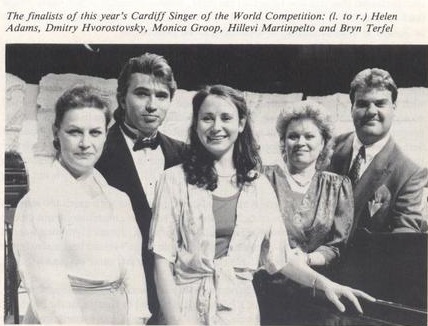
    1989 was a banner year for the Cardiff Singer of the World Competition: the “Battle of the Baritones” put the competition on every opera lover’s map. Dmitri Hvorostovsky and Bryn Terfel vied for the top prize; in the end, Dima was named Singer of the Year and Sir Bryn captured the Lieder Prize. Both men went on to hugely successful international careers.

    Of course, at the time, there was no internet to speak of. You could not instantly follow the competition from afar, and even news of it was slow to reach us from the other side of The Pond. But my wonderful friend Mollie Warren diligently taped much of the proceedings directly off the BBC; then she made copies of the cassettes to send to me. So within a couple of weeks, I was listening – in Hartford CT – to the sounds of Mssrs. Hvorostovsky and Terfel: I like to think I was one of the very first people in the Western Hemisphere to hear these voices.

    The three other finalists in the 1989 competition were Finnish mezzo-soprano Monica Groop, Swedish soprano Hillevi Martinpelto, and the Australian soprano Helen Adams. I cannot seem to find much information regarding Helen Adams in the years following her appearance at Cardiff; she is heard here in “Depuis le jour” from LOUISE.  

    Monica Groop

    Above: Monica Groop

    Monica Groop’s extensive international career in opera, concert, and song has included a memorable portrayal of Lucretia in Britten’s RAPE OF LUCRETIA in 2003 at New York City Opera; it marked the only time I saw this wonderful singer live onstage. Her other operatic roles have ranged from Melisande to Zerlina, and she has sung and recorded a great deal of Baroque music – in which she excels – as well as lieder of Schubert and Brahms, and the complete songs of Edvard Grieg.

    Some samples of Ms. Groop’s artistry, singing in Italian, French, and German:

    Monica Groop – Stà nell’Ircana ~ ALCINA

    Monica Groop – D’amour l’ardente flamme ~ DAMNATION DE FAUST

    Monica Groop sings Schubert’s Du bist die Ruh

    Monica Groop at Cardiff, 1989:

    Monica Groop – Cardiff 1989 – CLEMENZA~WERTHER

    Hillevi Martinpelto went on from Cardiff to a very successful career, performing and recording with prominent orchestras and conductors.

    Here she is singing Weber…

    Hillevi Martinpelto – Ocean! Thou mighty monster ~ OBERON

    …and in a true rarity:

    Hillevi Martinpelto – from Karl-Magnus Fredriksson’s The Disguised God ~ Soprano & Chorus

    Here is Hillevi Martinpelto at Cardiff, 1989:

    Hillevi Martinpelto – FORZA aria – Cardiff 1989

    And finally, the winners:

    Dmitri-Hvorostovsky

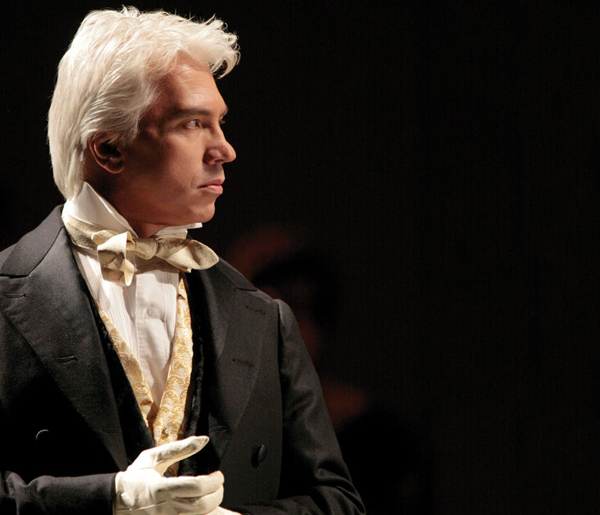
    …Dima… 

    Dmitri Hvorostovsky – BALLO aria – Cardiff 1989

    Hqdefault

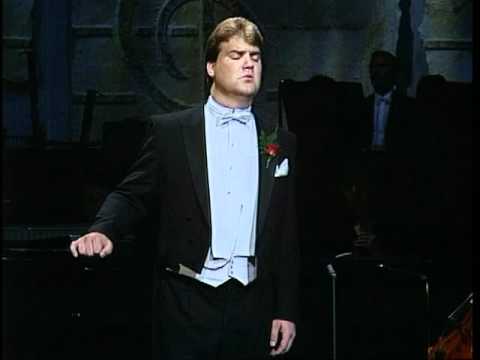
    …and Bryn…my original cassette of Bryn from the competition would not play, but here he is, onstage, singing Schumann…

    …and here’s a bit of Wagner, from a commercial recording:

    Bryn Terfel – Song to the Evening Star – TANNHAUSER

    ~ Oberon

  • Huang|Noseda|New York Philharmonic

    Frank_huang_1684x936

    Above: The New York Philharmonic’s concertmaster Frank Huang

    ~ Author: Oberon

    Wednesday November 22nd, 2017 – The announcement of the death of the great Russian baritone Dmitri Hvorostovsky coloured my entire day. It came, by unhappy coincidence, on the anniversary of the assassination of John F Kennedy which took place in 1963: the most disturbing world-event of my youth. That brutal murder – and its aftermath – I still remember so clearly.

    This evening, I went as planned to  The New York Philharmonic‘s program of Russian and French works. Though I was in the mood for darker, more soul-reaching music, the program – magnificently played – did lift my spirits, if only temporarily.

    As far as I know, Mr. Hvorostovsky appeared with The New York Philharmonic for only one program: in 1998, he sang Mahler’s Kindertotenlieder with the orchestra. I was there, and was swept away by the peerless beauty of his voice and by his deeply poetic interpretation. How I wished he could have been with us again tonight. But the program did commence with music from Hvorostovsky’s homeland: a suite from Nicolai Rimsky-Korsakov’s opera The Legend of the Invisible City of Kitezh. It ended up being my best-loved work of the evening and it was brilliantly delivered by the Philharmonic players, under Gianandrea Noseda’s baton.

    Hearing music from The Legend of the Invisible City of Kitezh brought back memories of a day in 1983 when I stepped off a bus in Boston on a Sunday afternoon and began walking towards the opera house where the Rimsky-Korsakov opera was being performed at a matinee. Suddenly the sky opened up; no store that was open sold umbrellas. I made a run for it, but was literally drenched from head to toe by the time I got to the theatre. Needless to say, I did not enjoy the performance at all, and left at intermission…still soaking wet.

    The suite from The Legend of the Invisible City of Kitezh is in four movements, depicting episodes from the opera: a Hymn to Nature, Fevronia’s wedding procession, the invasion of the Tatars and the subsequent battle, and Fevronia’s Ascension to the Invisible. It begins on a sombre note, with harps adding a touch of magic. Throughout the suite, solo wind passages abound; Maestro Noseda brought out these colouristic facets, and the Philharmonic artists played them delightfully.

    A broad viola theme stands out, and the percussionists are kept on their toes with bells, chimes,and glockenspiel in addition to the timpani, bass, and snare drums that come to attention for the battle scenes. The suite was an excellent program-opener.  

    It’s always a great pleasure when principals from the Philharmonic step into the concerto spotlight. Tonight, concertmaster Frank Huang performed Camille Saint-Saëns’ Violin Concerto No. 3 – my first time hearing it live. The concerto begins without an orchestral introduction; instead, only quiet, darkish chords  provide a background for the rather harsh opening phrases of the violin. Mr. Huang’s playing here seemed a little unsettled, with traces of sharpness of pitch. But within seconds, the violinist had settled into the music and gave a really impressive, technically assured performance.

    As the concerto’s first movement develops, there are dramatic contrasts between full-bodied, passionate themes and more sedate passages. There is a sense of yearning in the music which Mr. Huang conveyed to perfection. In the Andantino which follows, the composer meshes the solo violin with winds in music with an elegant air. 

    The concluding movement begins with a slow introduction and some almost jagged interjections from the  violin. The Allegro non troppo itself is launched with an up-sweeping motif for the solo violin. Passages of coloratura for the soloist alternate with more lyrical elements; then commences a surprising cantabile, where Mr. Huang’s beauty of tone was ravishingly engaging. Pages of virtuosic writing show off the soloist’s fluent technique, and hints of gypsy passion are thrown in. The leaping violin theme returns and is most welcome. An orchestral chorale is an innovative detour before the concerto sails on to a bravura finish. Mr. Huang was rightly accorded a prolonged ovation from the audience whilst his onstage colleagues tapped their bows and stamped their feet in acclaim.

    Noseda

    Above: Gianandrea Noseda

    Rachmaninoff’s Symphony No. 3, under Maestro Noseda’s baton, followed the interval. Like so many symphonic works, its a piece I’m not really familiar with, and I must say, I felt slightly disappointed with it musically. It’s all terribly impressive and enjoyable to hear, but the emotions are rarely engaged. Perhaps it was just my mood, but I kept longing for a deeper experience.

    That said, the artists of the Philharmonic played it most impressively. And it is to them that I owe thanks for moving or thrilling me on this evening: to Mr. Huang of course, but also to other players who had prominent passages tonight: Sheryl Staples (violin), Yoobin Son and Mindy Kaufman (flute/piccolo), Sherry Sylar (oboe), Pascual Martinez Forteza (clarinet), Kim Laskowski (bassoon), and Amy Zaloto (bass clarinet).

    Encouraged by the great success of his Rhapsody on a Theme of Paganini (1934), Rachmaninoff started  work on his third symphony in the summer of 1935. Leopold Stokowski and the Philadelphia Orchestra gave the premiere on November 6, 1936. It was not well-received by the audience, nor by the press. Perhaps, as with those early auditors, I need to hear it a few more times to cultivate a more positive reaction. 

    There are countless appealing passages – a cello tutti was especially beautiful – and the final movement’s journey from optimism thru a vale of doubt and the onward via a meditative passage to a ringing conclusion evoked a big response from the Geffen Hall audience.

    ~ Oberon

  • Dmitri Hvorostovsky Has Passed Away

    004a2691

    One of the era’s few true titans of the opera world, Dmitri Hvorostovsky, has passed away at the age of 55. 

    It’s possible I was the first person in the Americas to hear the voice of Dmitri Hvorostovsky. Within a week of his historic Cardiff Singer of the World win in 1989, my dear friend Mollie sent me tapes of the competition – which had produced the famous ‘Battle of the Baritones’ as Dima and Bryn Terfel vied for the top prize. They both won: Hvorostovsky the main title and Bryn took the Lieder Prize; they both went on to spectacular careers.

    His Cardiff win sent the charismatic Russian singer on a career trajectory that took him to the great opera houses and concert stages of the world. He was beloved by audiences everywhere.

    At The Met, Hvorostovsky made his debut in 1995 as Prince Yeletsky in PIQUE-DAME. He went on to sing nearly 200 performances with the Company. I had the good fortune of seeing him often in such roles as Belcore in ELISIR, Germont, Posa, Andrei in WAR & PEACE, Onegin, Renato in BALLO IN MASCHERA, Count di Luna, Simon Boccanegra, Carlo in ERNANI, and Rigoletto.

    In 2015, already in treatment for a brain tumor, Hvorostovsky made a heroic effort to come to New York City to sing three performances as Count di Luna in TROVATORE; the audience greeted him with fervent affection, and he sang beautifully.

    Dima

    Above: fantastic moment as Dima greets fans after his 2015 Count di Luna at The Met.

    In February 2016, I saw Hvorostovsky for what was to be the final time: in recital at Carnegie Hall. On May 7th, 2017, he appeared on The Met stage for the last time: at a gala marking The Met’s 50th season at Lincoln Center, Dima made an unannounced appearance, singing the “Cortigiani!” from RIGOLETTO.

    Scanned Section 2-1

    Three times prior to that last Carnegie recital, I heard Hvorostovsky in concert settings. The first was at Symphony Hall in Boston where, in 1995, he gave an all-Russian program with chorus; as an encore, he sang “America the Beautiful” – gorgeously – and took a high A (or was it a B-flat?) at the climax that was simply thrilling. The entire afternoon was a feast of splendid singing.

    Scanned Section 4-1

    In 1998, soon after I’d moved to New York City, Hvorostovsky sang Mahler’s Kindertotenlieder with the New York Philharmonic. The music suited him to perfection. And in April 2010, he joined soprano Sondra Radvanovsky in a program of arias and duets at Carnegie Hall: two of the truly distinctive artists of our time.

    Looking back:

    6a00d8341c4e3853ef01b8d21a7d3b970c-800wi

    Dmitri Hvorostovsky – BALLO aria – Cardiff 1989

    Dmitri Hvorostovsky – In The Stillness of the Silent Night~Rachmaninoff – Cardiff 1989

    More of The Voice:

    PECHEURS DES PERLES – duet – Paul Groves & Dmitri Hvorostovsky – Tucker Gala 1995

    Hvorostovsky – TROVATORE aria – Tucker Gala 1995

    Dmitri Hvorostovsky & Rene Pape – DON CARLO scene – Met 2006

    Hvorostovsky – arias from PRINCE IGOR and ERNANI – BBC Proms 2006

    As Eugene Onegin:

    Onegin

    Dmitri Hvorostovsky – ONEGIN aria

    Portrait of the artist as a young man:

    1987

    I met Dmitri Hvorostovsky only once, very briefly. I was leaving work at Tower Records as he and his wife were coming in. I spontaneously held out my hand and he grasped it firmly and gave me a smile. Neither of us said a word.

    Dmitri Hvorostovsky – Tchaikovsky ~ None But The Lonely Heart

  • Dmitri Hvorostovsky @ Carnegie Hall

    20110128_dmitri-hvorostovsky-3

    Wednesday February 17th, 2016 – No one in the realm of classical music needs to be told the background of tonight’s Carnegie Hall recital by the great baritone Dmitri Hvorostovsky. He has, since his 1989 winning of the Cardiff Competition, become one of the most admired and beloved of artists; his current personal health battle has his devotees worldwide praying for him and pulling for him. Now, for the second time since his diagnosis, he has come to New York City to honor his commitments to sing for us.

    Carnegie Hall was completely sold out, and the applause greeting Dima and his pianist, the excellent Ivari Ilja, was particularly warm. The program was a taxing one for the voice – songs by Glinka, Rimsky-Korsakov, Tchaikovsky, and Richard Strauss – and Hvorostovsky sang with his characteristic generosity, tenderness, and passion. It is – and always has been – a uniquely beautiful voice, one of the very very few today that gives such constant and pleasing rewards. 

    A bit of sharpness in the first Glinka song soon vanished as the voice warmed to the hall. As the Glinka set continued, the caressive warmth of the voice came to the fore. Always a singer possessed of a vast dynamic range, Dima tonight moved impressively from haunting soft passages to thrillingly sustained, powerful top notes, and everything was coloured with emotional hues from longing to tranquility to regret.

    Rimsky-Korsakov’s “Not the wind, blowing from the heights” was an especially marvelous rendering in the evening’s first half, and – after the interval – Hvorostovsky gave us some of the Tchaikovsky romances that have been among his signature pieces: songs that he has helped to popularize throughout the world. These were beautifully voiced.

    In the evening’s concluding group of Strauss songs, so familiar yet so welcome in these hauntingly sung interpretations, Hvorostovsky expressiveness was at full flourish. 

    One audience distraction after another intruded on the evening, but these complaints we will set aside for now, and feel instead a sense of gladness just to have been there.

  • TROVATORE @ The Met

    D H

    Above: Dmitri Hvorostovsky

    Tuesday September 29th, 2015 – Having cancelled most of his Summer engagements to commence treatment following the diagnosis of a brain tumor, the great Russian baritone Dmitri Hvorostovsky valiantly came to New York City to sing for us at The Metropolitan Opera. The necessity of returning to London to continue his treatment regimen meant that the baritone would only sing the first three of his scheduled Met performances as Count di Luna in IL TROVATORE, but to me it spoke highly of his dedication that he made the effort to come in for these high-profile performances which also feature the first Met Leonoras of Anna Netrebko.

    At the season prima, on September 25th, the audience greeted Hvorostovsky’s entrance with a show-stopping ovation. The evening ended with a tumult of cheers and applause as he took his bows, and the members of The Met orchestra flung flowers up onto the stage, signalling their affectionate regard for the great singer.

    And a great singer he is…truly. Tonight – the second of the three performances in which he’ll appear – Hvorostovsky was again given a prolonged round of applause at his entrance. To me, his voice sounded, amazingly, more beautiful than ever. “Il balen” was the vocal high-point of the evening: superbly phrased and deeply felt, sustaining the poetic musings of a character often described as “evil” but who is, essentially, a real romantic. 

    Hvorostovsky’s Count di Luna in fact manages to engage our empathy when he is cruelly beaten by Manrico’s men in the convent scene; Manrico slashes his rival’s face, and Hvorostovsky’s acting here was wonderfully committed. All evening, the baritone kept the character very much in the forefront of both the music and the drama, from with his snarling “Io fremo!” as he listens to Manrico serenading Leonora in Act I right to the end where – if my ears didn’t deceive me – Dima chimed in on Azucena’s final high B-flat with one of his own. 

    Dolora Zajick’s Azucena was thrilling from start to finish; the esteemed mezzo-soprano flung her fiery high notes and cavernous chest tones into the house with resplendent authority, her monologue  “Condotta ell’era in ceppi” a veritable whirlwind of emotion as she displayed an uncanny dynamic range from haunting near-whispers to thunderous outbursts. This evening she didn’t take the high-C in  “Perigliarti ancor languente” that had been one of her trademarks in this role, but instead swept onward like an force of nature. Her expressive singing of “Giorni poveri vivea…” was counter-balanced moments later with the sweeping anguish of “Deh! rallentate, o barbari!” which commenced on a lightning-bolt top note and plunged into vivid chest notes. In the opera’s final scene, Zajick displayed marvelous control in “Ai nostri monti” and in the trio where she seems to be singing in her sleep, only to awaken to the horror of Manrico’s execution. Her triumphant B-flat was a glorious cry of revenge achieved. 

    The Korean tenor Yonghoon Lee made a positive impression as Manrico, despite the fact that his voice is rather lighter than we are accustomed to in this music. In fact, Lee’s entire repertoire seems geared to roles which call for more vocal heft than he seems capable of: I wonder if he might not be better employed – at least for now – as Alfredo, the Duke of Mantua, and Tamino.

    But there’s no going back, and Lee’s impassioned commitment to both the music and the character of Manrico had the audience well engaged. Lee’s slender figure and intense acting gave the rebel leader a romantic, swashbuckling appeal; and his mixture of unbridled vocal passion with moments of hushed piano reflectiveness kept the music aurally stimulating. Oddly, he sometimes reminded me of Franco Corelli – not in terms of the voice itself, but with the smouldering ardor of his delivery. 

    Lee sang a beautifully modulated, emotional “Ah si, ben mio” and – if I am not mistaken – took “Di quella pira” in C with an endlessly sustained final note which was ever-so-slightly below pitch. The audience took the tenor to heart, and Mr. Lee was very warmly applauded at the curtain calls.

    Anna Netrebko seemed to be forcing her voice in some of Leonora’s music; in pushing for a larger, darker sound, some of the inherent lyric beauty of her tone is drained away. Her over-leaning into the chest register was a detriment: this isn’t Santuzza. There were many fine passages along the way, but also some errant pitch and some glare on the louder high notes (she skipped the D-flat at the end of the Act I trio). The audience, needless to say, adored her.

    Stefan Kocan was a powerfully-sung and dramatically commanding Ferrando, with Maria Zifchak a big-voiced Inez and my friend Edward Albert in the brief role of A Gypsy. Marco Armiliato’s conducting was ‘good routine’ – and better than that after the interval – and the orchestra played very well.   

    A program note explained that Ms. Netrebko’s costumes had been specially created for her. Her breasts were amply on display in the opening scene’s burgundy outfit, then at the convent she was all buttoned up, a prim and proper young ‘widow’ in black. She went in for a gypsy look for the scene prior to her (thwarted) marriage, with a nifty head-wrap.

    For all the passing “ifs, ands, or buts”, this was overall a pretty exciting night at the opera: there was involvement, passion, and some very impressive vocalism along the way.

    Metropolitan Opera House
    September 29th, 2015

    IL TROVATORE
    Giuseppe Verdi

    Manrico.................Yonghoon Lee
    Leonora.................Anna Netrebko
    Count Di Luna...........Dmitri Hvorostovsky
    Azucena.................Dolora Zajick
    Ferrando................Stefan Kocán
    Ines....................Maria Zifchak
    Ruiz....................Raúl Melo
    Messenger...............David Lowe
    Gypsy...................Edward Albert

    Conductor...............Marco Armiliato