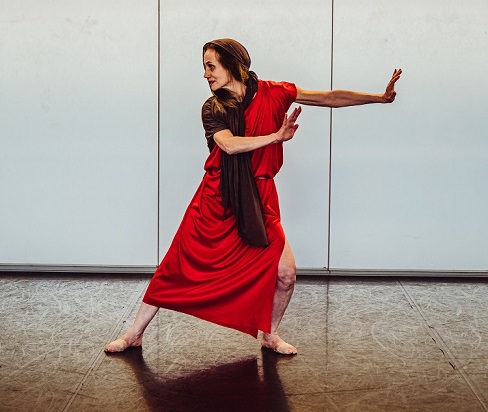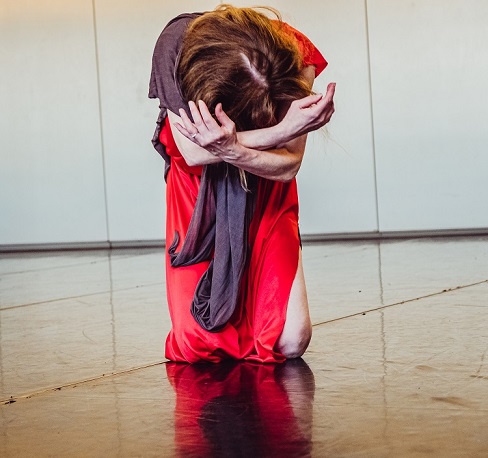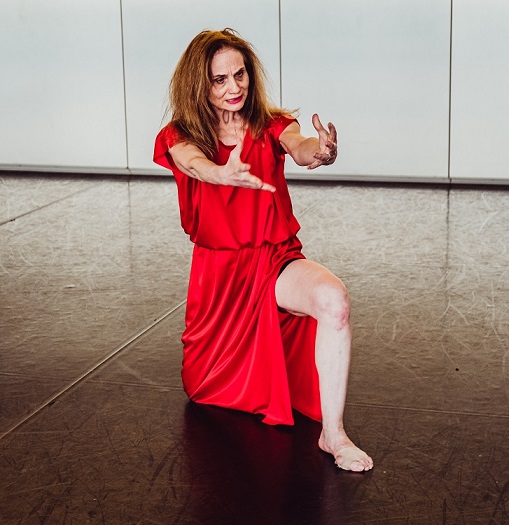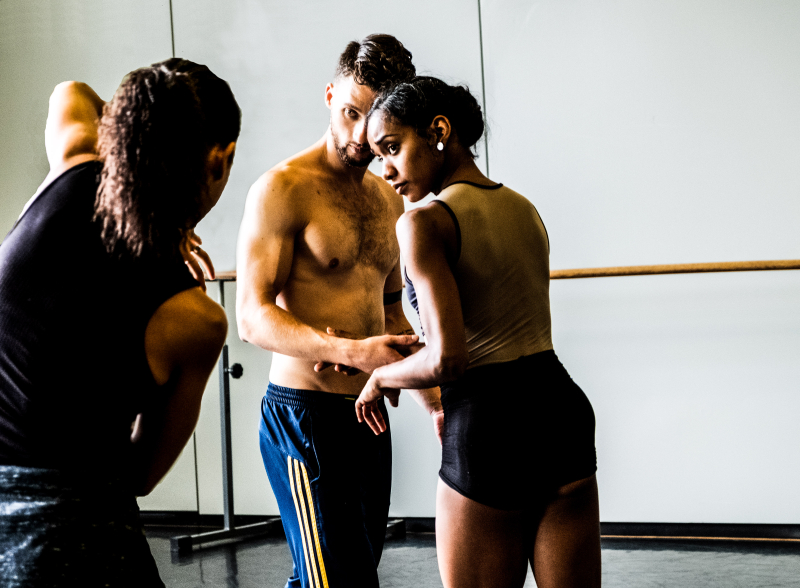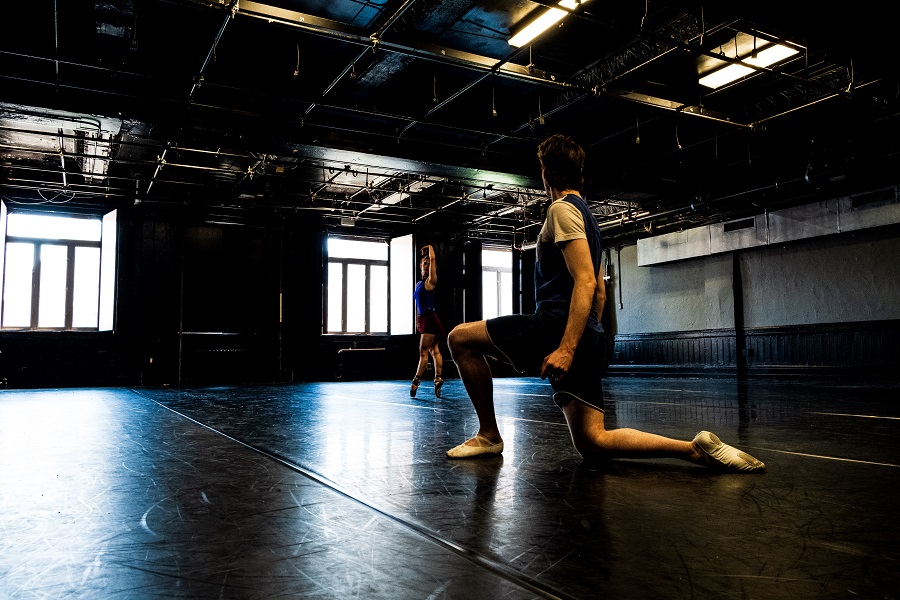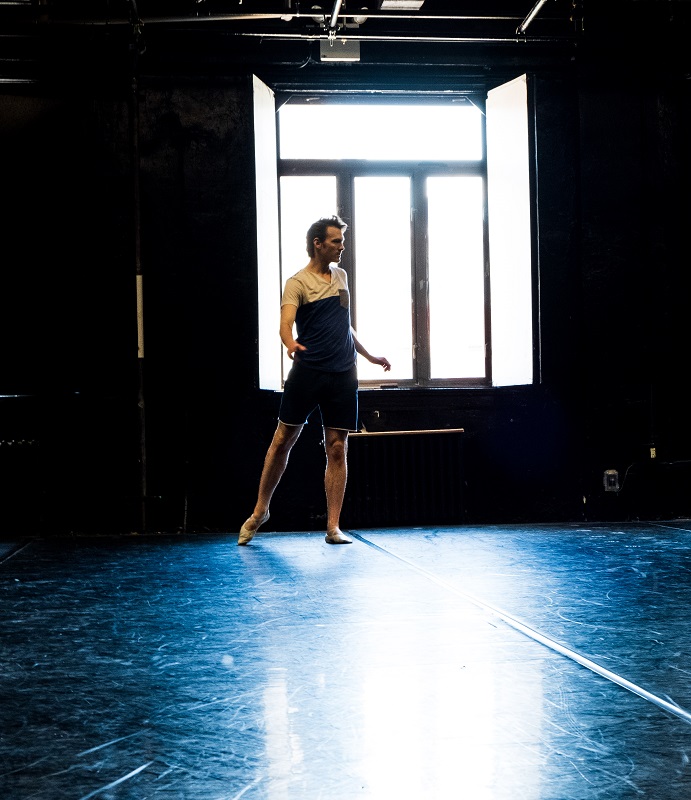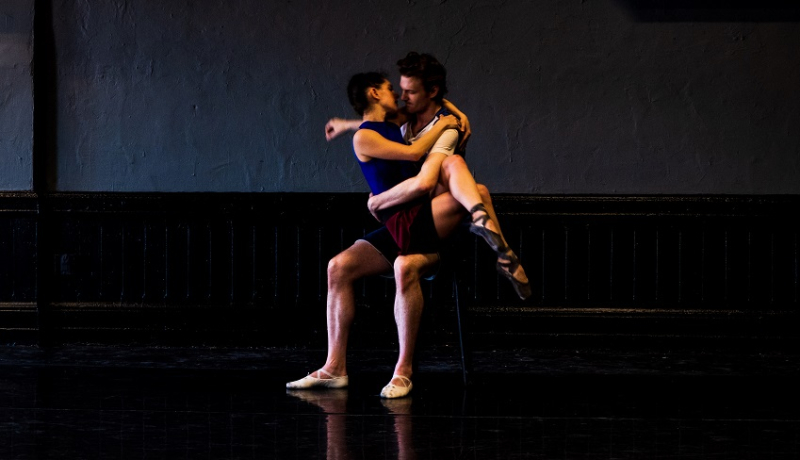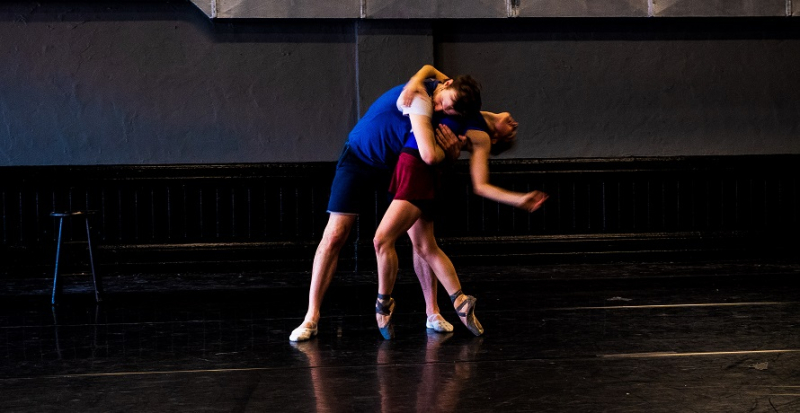
Tag: Dmitry Beryozkin

  • Guangzhou Ballet @ Lincoln Center

    DSCF1949

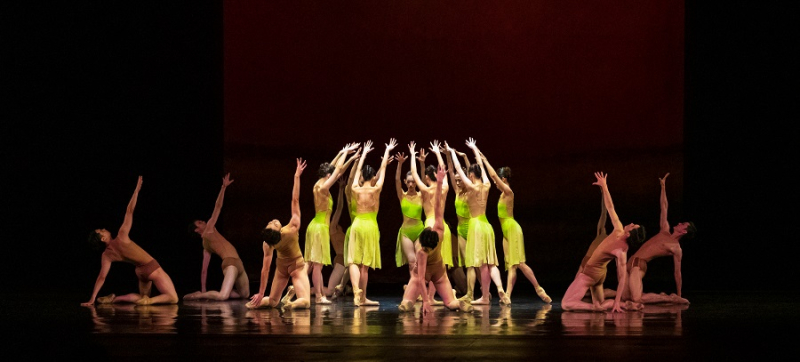
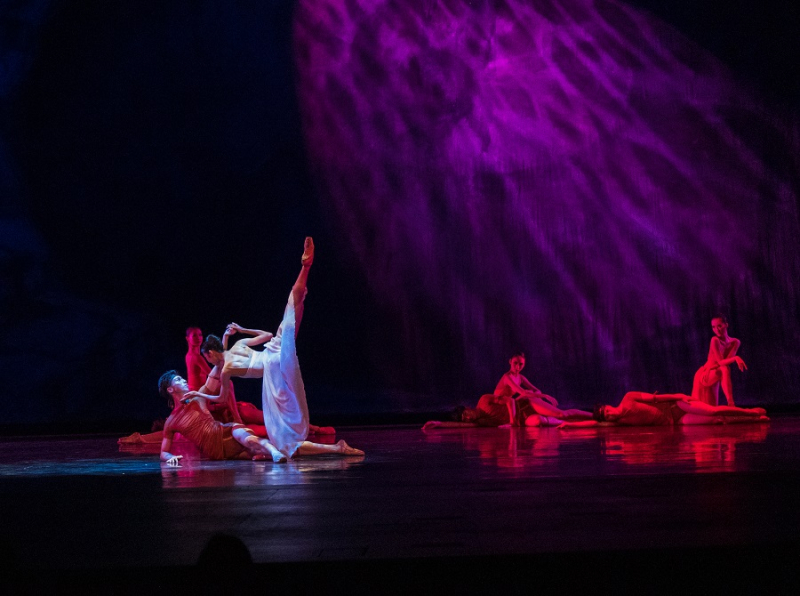
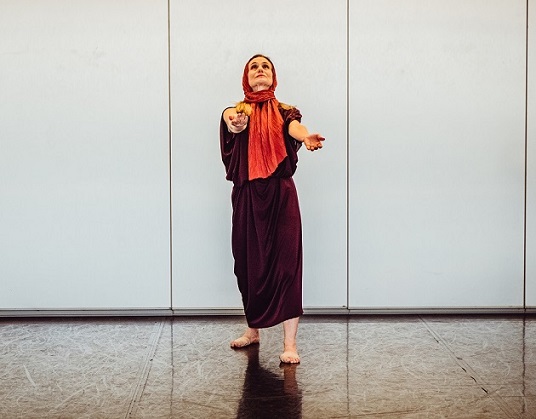
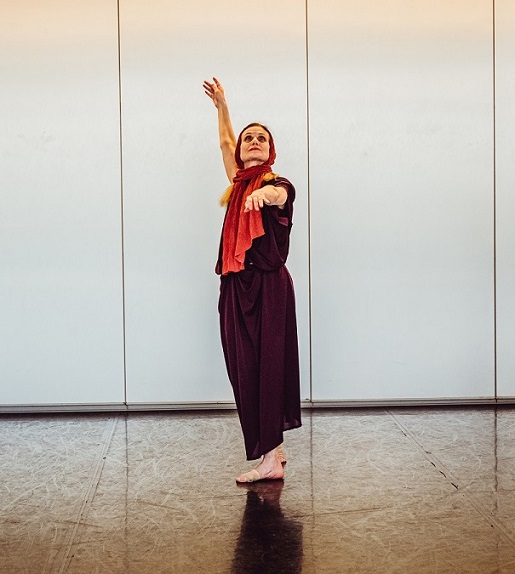
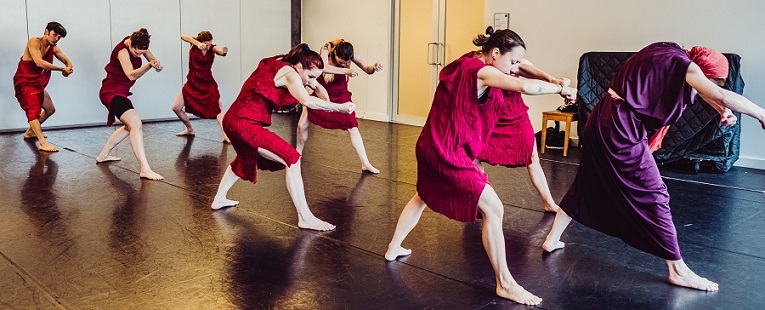
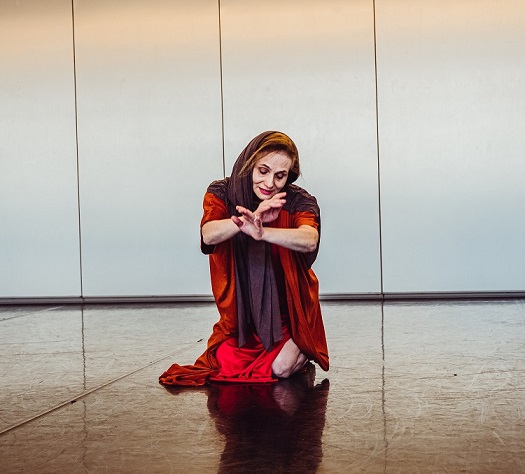
    Above: from Guangzhou Ballet‘s production of Carmina Burana as performed at Lincoln Center; photo by Dmitry Beryozkin

    ~ Author: Oberon

    Saturday August 17th, 2019 – Guangzhou, China, is the birthplace of my beloved Wei, so I arranged tickets for us to Guangzhou Ballet’s performance at Lincoln Center tonight. Earlier in the day, my friend Dmitry Beryozkin photographed the dress rehearsal of the production.

    Although tested by numerous audience distractions, we stayed to the end because of the impressive work of the Guangzhou Ballet‘s dancers, who are beautifully trained and who excel in both virtuosity and artistry.
    DSCF1527

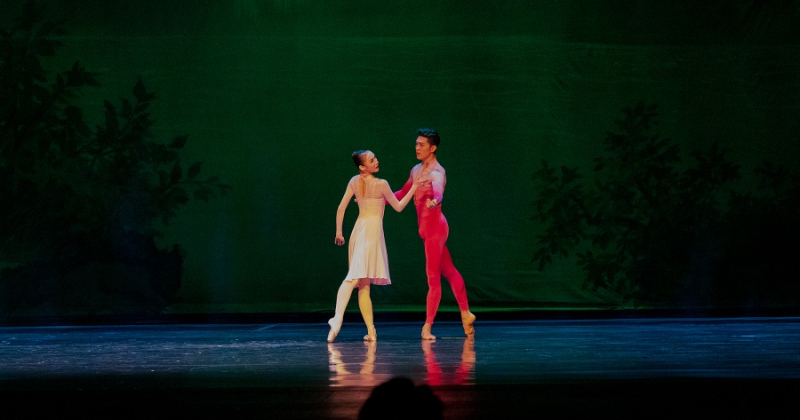
    Above: from Goddess of the Luo River; photo by Dmitry Beryozkin

    Goddess of the Luo River is set to a violin concerto by the venerated Chinese composer Du Mingxin, who is now in his 90th year. The music has both rhythmic and lyrical appeal, though the Adagio begins to feel overly sweet after a while.

    The program note for Goddess of the Luo River was basically incomprehensible to me, but the ballet seems to tell of a pair of young lovers yearning to be together, and of the goddess who helps make their dream come true.

    Peter Quanz, a Canadian choreographer beloved by my friend Arlene Cooper, has re-staged the Du Mingxin concerto to beautiful effect. Mr. Quanz is a master of classical styling who has a gift for structure and for creating pleasing and musically-inspired combinations. The opening segment of Goddess of the Luo River, danced by an ensemble of women, was emblematic of Mr. Quanz’s work, which sustained our interest for the 30-minute duration of this atmospheric piece.

    Against a backdrop of a misty forest river-glade, Goddess of the Luo River unfolds like a blooming flower. If I have read the Playbill correctly, the principal dancers tonight were Fang Afang, Ma Minghao, and Huang Bairnao, and they were all simply entrancing to watch. But in fact, everyone onstage danced gorgeously, with musicality and grace.

    At the end, the bow lights cam up and we looked forward to hailing the dancers in their curtain calls, but the applause dwindled away and there were no bows.
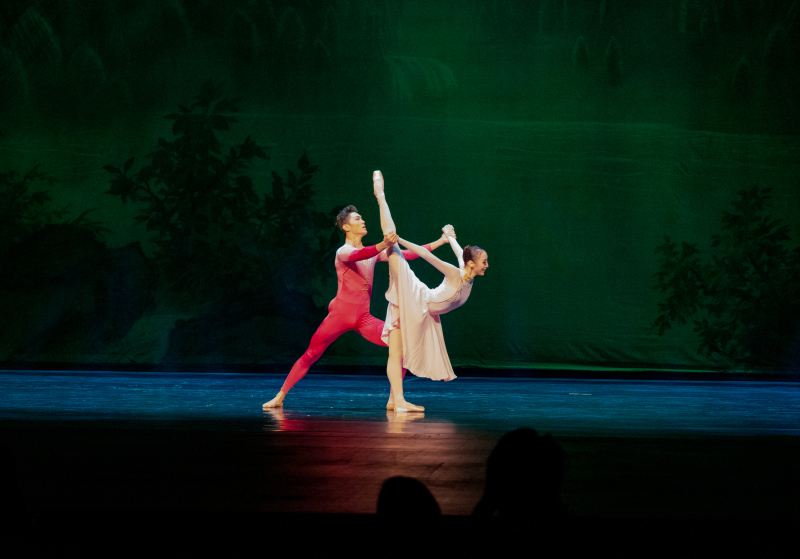
    DSCF1510

    Above: from Goddess of the Luo River; Dmitry tells me they only did a brief excerpt from this ballet at the dress rehearsal. Too bad, because there were some lovely passages for the corps and the other featured dancer that I would like to have had photos of.

    Following the interval, a three-act choreographic rendering by Qi Jiang of Carl Orff’s Carmina Burana was presentedThe score was first performed on June 8, 1937, at Frankfurt, and is a setting of Medieval poems for three solo voices, chorus, and orchestra. This work was Orff’s “greatest hit” (though he wrote some truly fascinating operas) and it became one of the best-known musical works of the 20th century thru its use in film and commercials. Carmina Burana greatly appealed to the Nazi regime, to whom its rhythms were reminders of the “stamping columns of the Third Reich”.

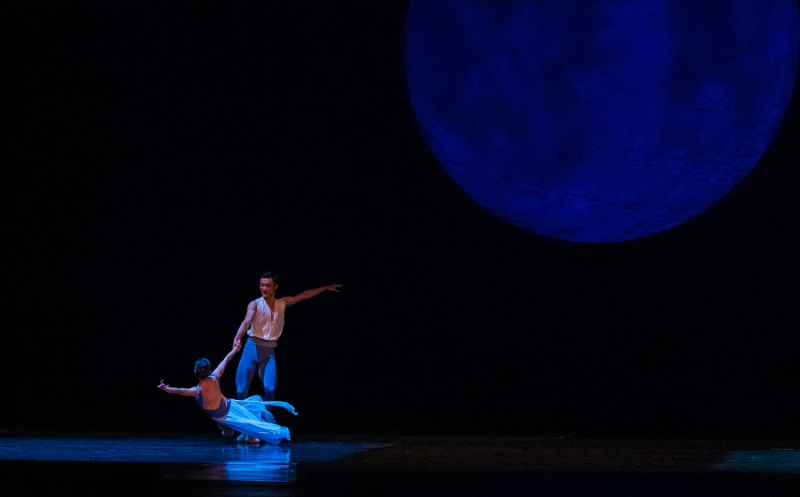
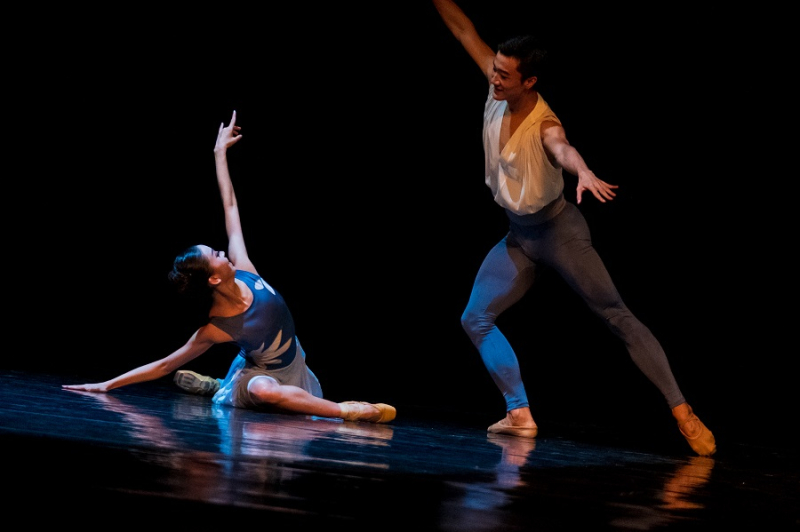
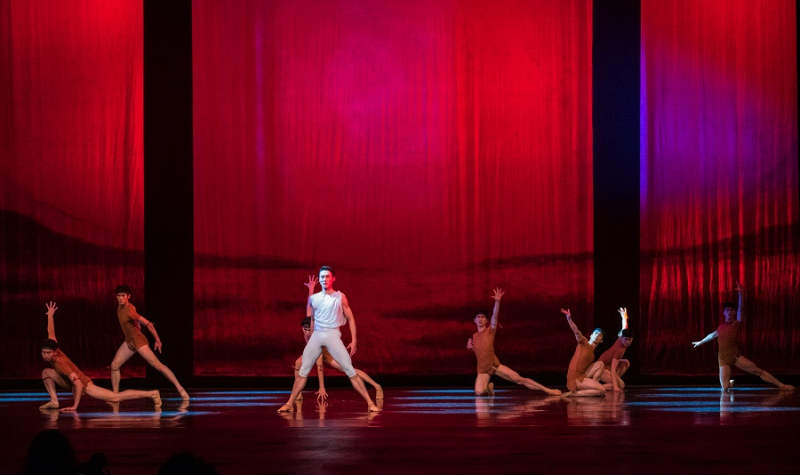
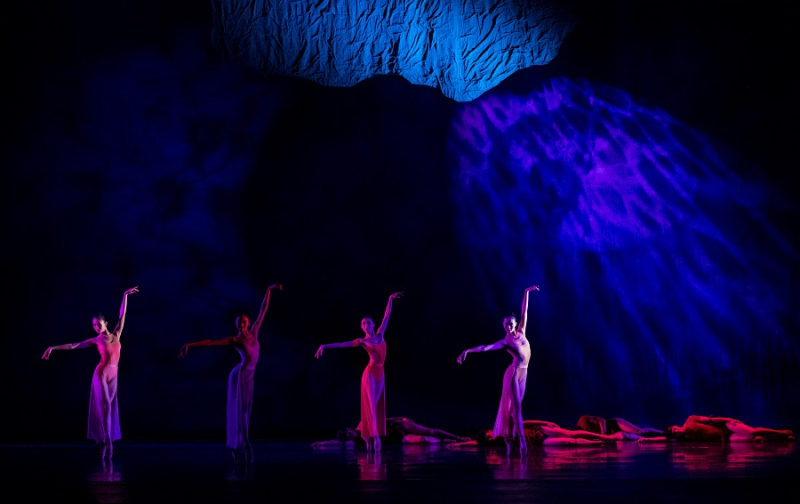
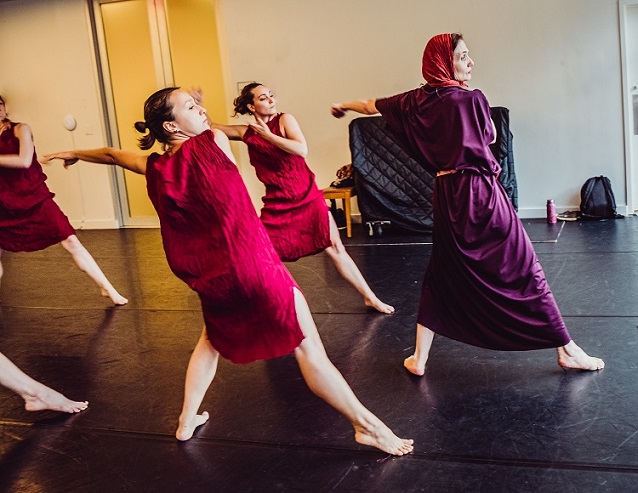
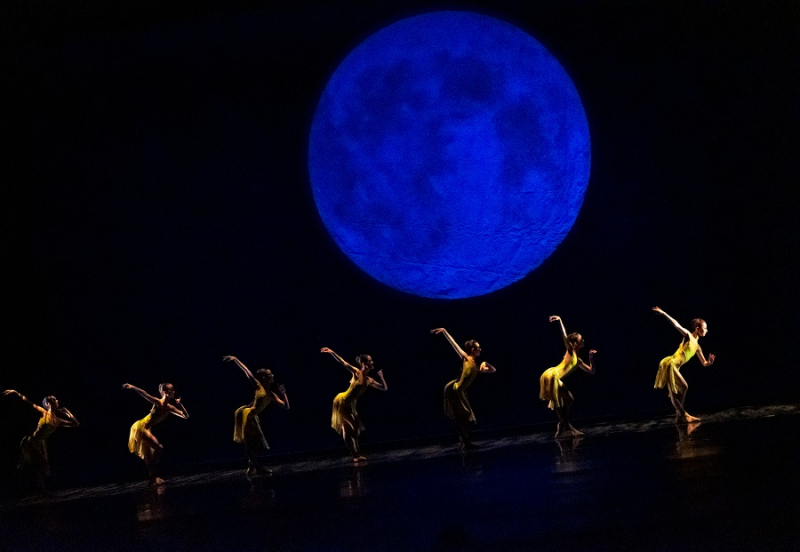
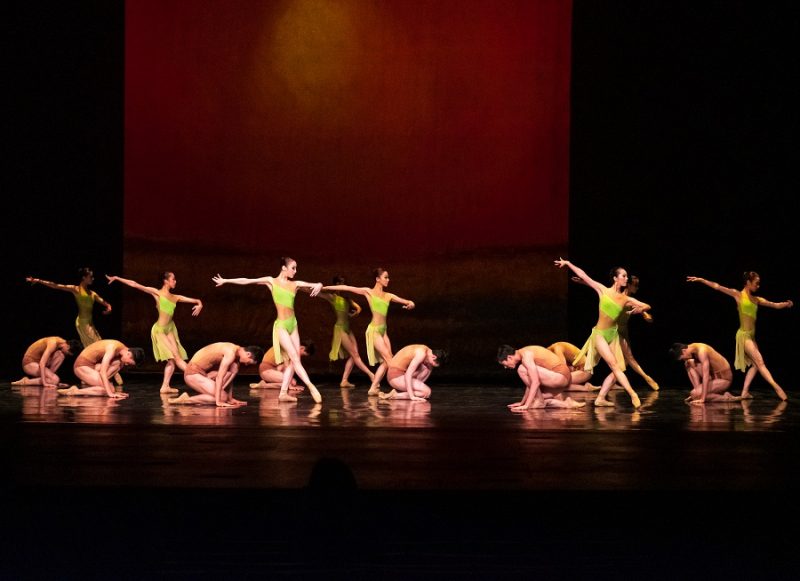
    Guangzhou Ballet did not choose one of the many top-notch recordings of the piece for their ballet production but it was very well reproduced over the theater’s sound system. The music has an irresistible emotional force. Han Jiang (scenic designer) and Chen Xiaji (lighting designer) have created a production full of impressive visuals, as you can see from Dmitry Beryozkin’s photos, below.

    The Company’s Carmina Burana, however, did not reach the same level of involvement for either Wei or I as the evening’s opening work. It’s nearly an hour long, and there were stretches when the choreography seemed uninspired and repetitive. Perhaps some judicious pruning of the music would have helped make it more coherent: there are stories being told, but they become rambling after a bit.

    Such striking moments as the powerful, smoky opening segment with dancers emerging from under a large blanket of fabric, and – especially – the gigantic moon that looms over some scenes kept us focused. But the constant whispering and checking of cellphones by people around us, the amorous boy in front of us who wanted to cuddle his girlfriend, and the continuous undercurrent of a whimpering child somewhere to our left (eventually taken out, with 5 minutes of music left to go) became so aggravating as the ballet progressed. If we could have made a graceful exit (some people did), we would have left midway thru.

    But it was nice to see the dancers taking their bows at the end, though these were staged Broadway-style, with a reprise of music from the Orff score.

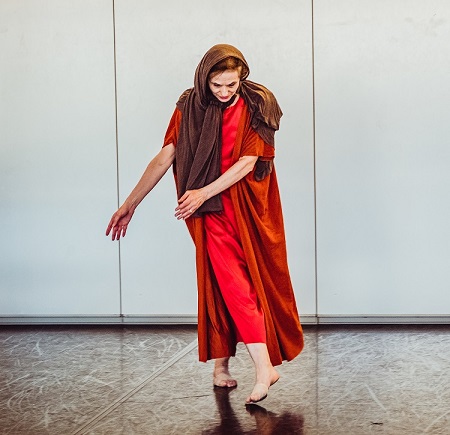
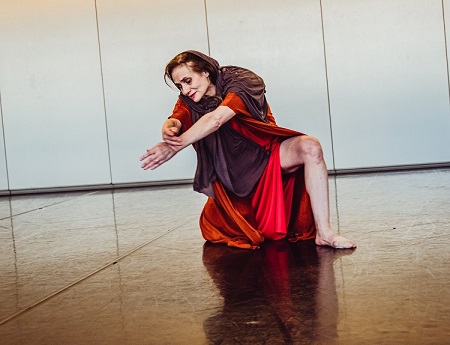
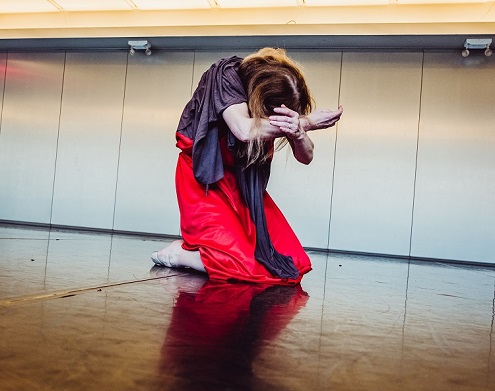
    Here is a gallery of Dmitry Beryozkin’s images from Carmina Burana:
    DSCF1677

    DSCF1850

    DSCF2041

    DSCF2030

    DSCF2270

    DSCF2326

    DSCF2297

    DSCF2273

    ~ Oberon
  • Beth Jucovy/Dance Visions NY: Isadora’s Russian Repertory

    DSCF7652

    Above: I-Nam Jiemvitayanukoon and Beth Jucovy in Isadora Duncan’s Varshavianka; photo by Dmitry Beryozkin

    ~ Author: Oberon

    Monday May 27th, 2019 – Since I had a prior commitment on the evening of their appearance at Sans Limites Movement 2019, Beth Jucovy very kindly arranged for me and photographer Dmitry Beryozkin to watch a rehearsal of her Company, Dance Visions NY, who are presenting the Company’s staging of Isadora Duncan’s Russian Workers Songs and Scriabin Etudes at the festival.

    These works were transmitted to Ms. Jucovy directly by 2nd generation Duncan exponent, Julia Levien, with the exception of The Crossing, which was passed on to Ms. Jucovy by Adrienne Ramm. Isadora Duncan’s Scriabin Etudes consist of Mother, The Crossing, and Revolutionary. The Russian Workers Songs are entitled Dubinushka and Varshavianka.

    These danceworks were created by Isadora Duncan circa 1923; they were all revived by Irma Duncan and re-staged by Julia Levien, who had danced with Irma’s company. The dances reflect Isadora’s experiences while she lived in Revolutionary Russia; among their themes are struggle, awakening, protest, revolution, and – ultimately – victory.

    Dance Visions NY dancers who perform in the Russian Workers Songs are Beth Jucovy, Anastasia Benedetti, Louisa Cathcart, Cathleen Deutscher, Ligia Gaissionok, I-Nam Jiemvitayanukoon, Shannon McMullan, and Rebekah Mulkey. The Scriabin Etudes – three solos – are danced by Ms. Jucovy.
     
    After running thru the Russian Workers Songs a couple of times in practice clothes, the dancers donned the red-hued costumes and danced both pieces full-out.
     
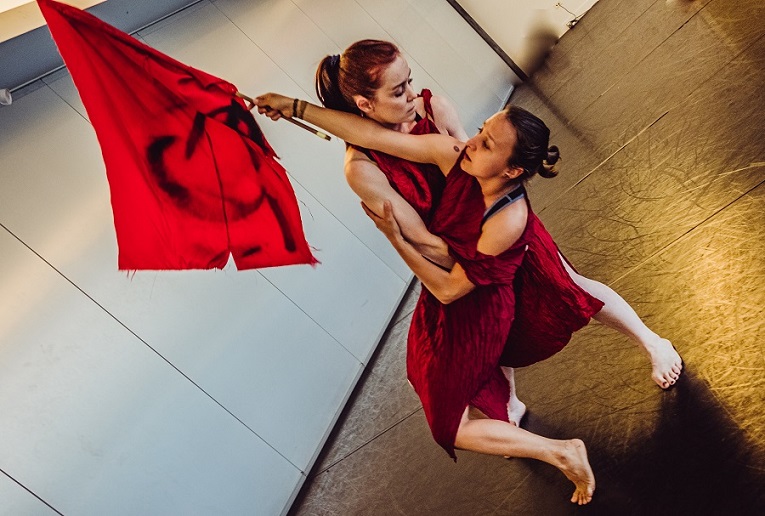
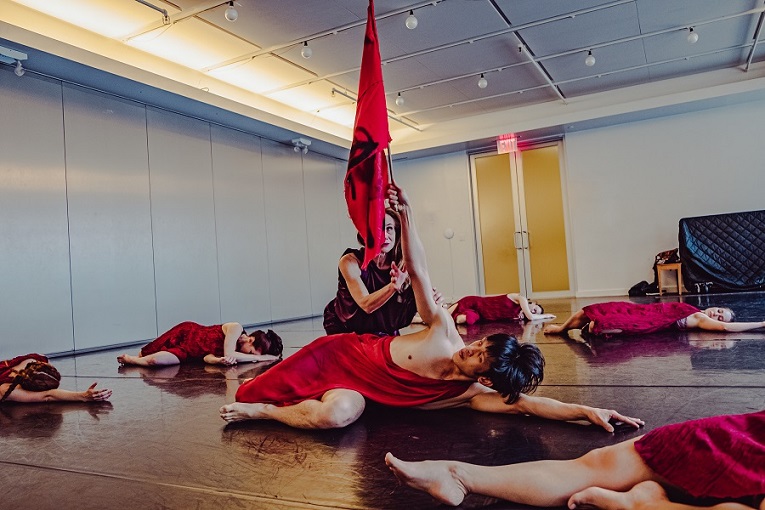
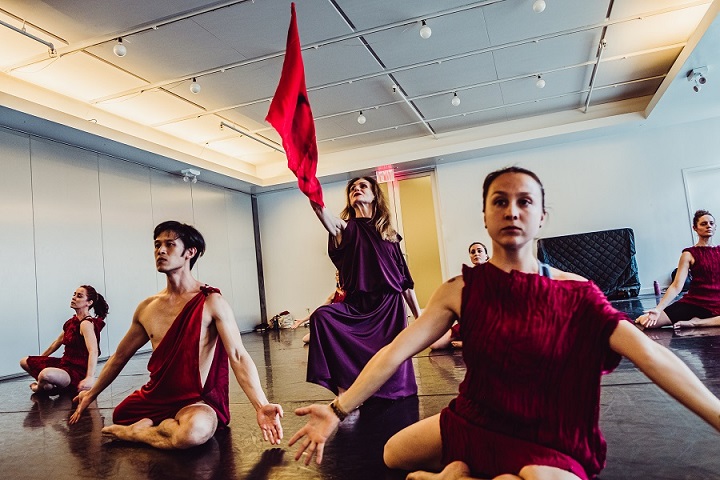
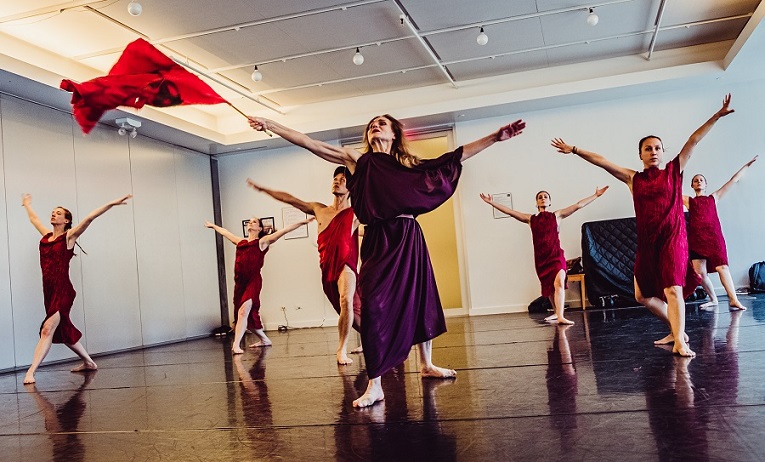
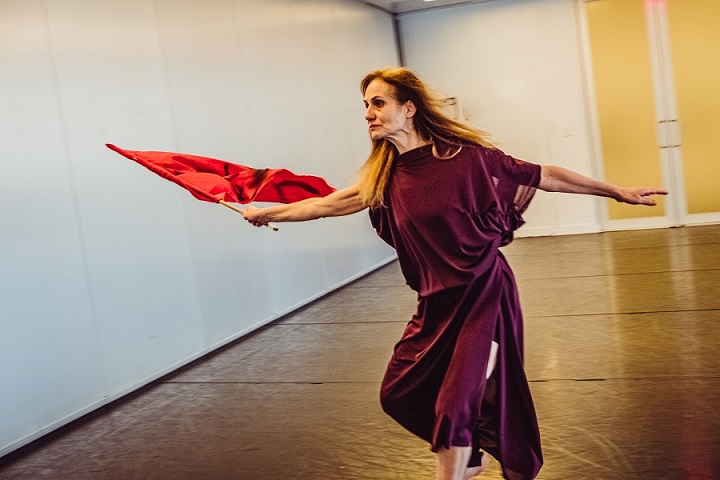
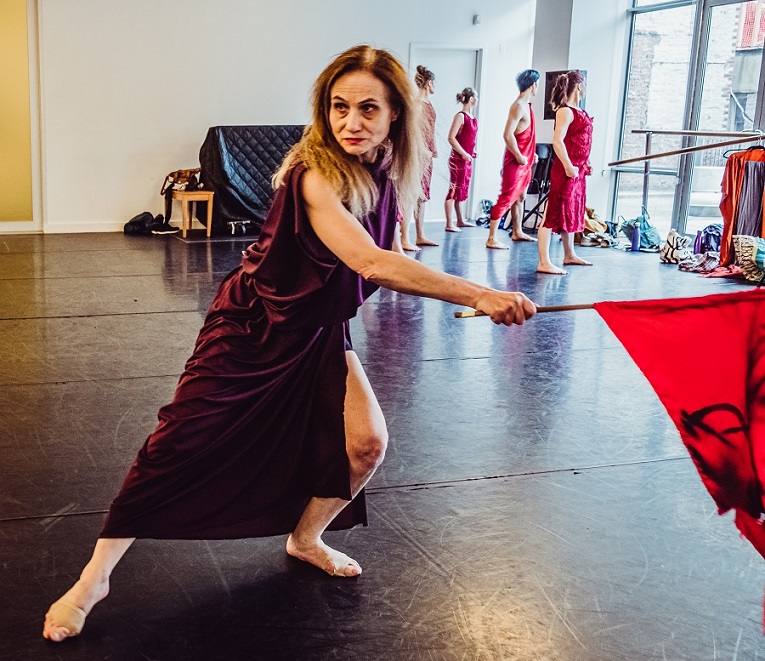
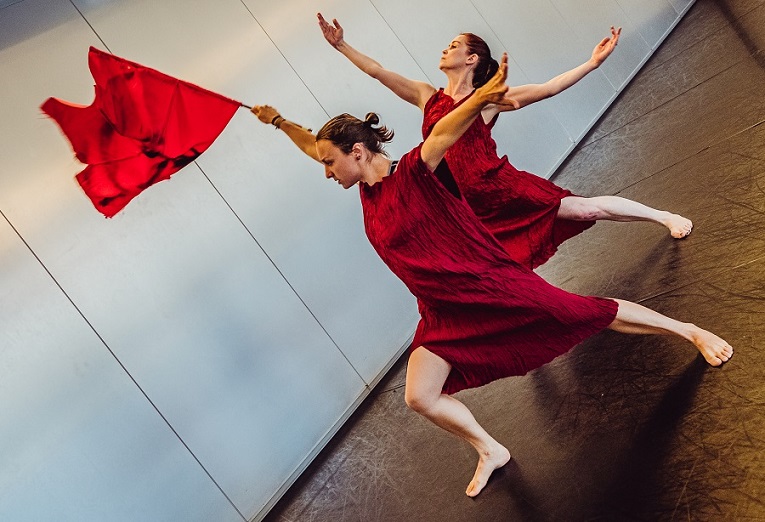
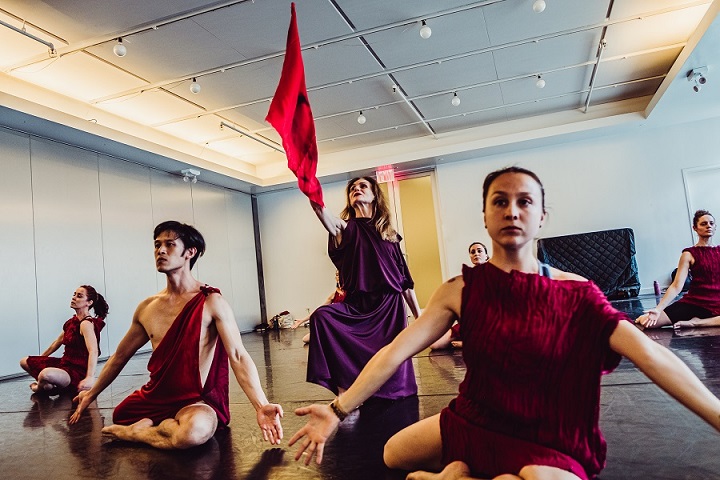
    The Varshavianka sings of the struggle of the workers to throw off the yoke of oppression. Marching under the red flag of Liberty, one by one the valiant fighters are shot down; but with each casualty, another brave worker takes up the banner. In the end, the fallen are transfigured; they rise again to carry on the struggle.
     
    Photos from Varshavianka:
     
    DSCF7575
     
    Beth Jucovy
     
    DSCF7577
     
    DSCF7603
     
    Louisa Cathcart and Ligia Gaissionok
     
    DSCF7606
    Ligia Gaissionok and Cathleen Deutscher
     
    DSCF7609
     
    Cathleen Deutscher and Ligia Gaissionbok
     
    DSCF7627
     
    I-Nam Jiemvitayanukoon and Shannon McMullan
    DSCF7637
     
    I-Nam Jiemvitayanukoon, Shannon McMullan
     
    DSCF7650
     
    DSCF7656
     
    DSCF7660
     
    DSCF7667
     
    DSCF7670
     
    Above: the finale of the Varshavianka
     
    The Dubinushka was sung by dock workers, hauling the heavy ropes in the shipyard; they sang this song to maintain the rhythm of their work.
     
    Photos from Dubinushka:
     
    DSCF7515
     
    Beth Jucovy
     
    DSCF7522
     
    DSCF7535
     
    DSCF7543
     
    DSCF7556
     
    DSCF7565
     
    Above: in the foreground are Shannon McMullan and Rebekah Mulkey
     
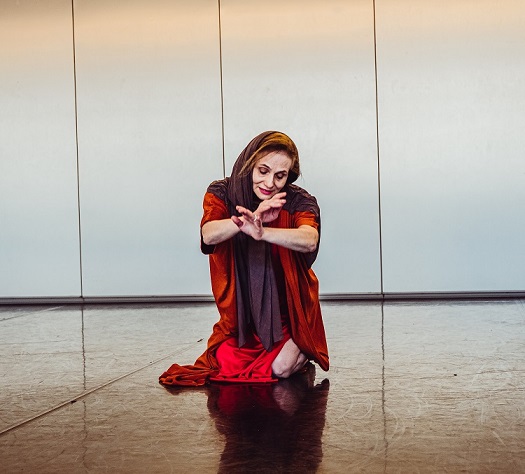
    After dancing the Workers Songs, the dancers began packing up to leave. We talked with them briefly: some have been dancing with Ms. Jucovy for many years, so the Company definitely has the feel of family. Beth began tidying up the studio, and I asked her a question about the Scriabin Etudes. “Shall I dance them for you?”, she asked. And in the twinkling of an eye, she donned the Isadorian scarves and began to dance the three solos.
     
    Mother:
     
    DSCF7698
     
    DSCF7730
     
    DSCF7752
     
    DSCF7765
     
    DSCF7795
     
    The Crossing:
     
    DSCF7808
     
    DSCF7828
     
    DSCF7848
     
    DSCF7863
     
    Revolutionary:
     
    DSCF7928
     
    DSCF7945
     
    DSCF7971
     
    DSCF8009
     
    Beth danced these solos in full performance mode, deeply involved and vibrantly expressive; it was so generous of her to share these unique works with us.
     
    ~ Oberon
     
    Photos: Dmitry Beryozkin  
  • Beth Jucovy/Dance Visions NY: Isadora’s Russian Repertory

    DSCF7652

    Above: I-Nam Jiemvitayanukoon and Beth Jucovy in Isadora Duncan’s Varshavianka; photo by Dmitry Beryozkin

    ~ Author: Oberon

    Monday May 27th, 2019 – Since I had a prior commitment on the evening of their appearance at Sans Limites Movement 2019, Beth Jucovy very kindly arranged for me and photographer Dmitry Beryozkin to watch a rehearsal of her Company, Dance Visions NY, who are presenting the Company’s staging of Isadora Duncan’s Russian Workers Songs and Scriabin Etudes at the festival.

    These works were transmitted to Ms. Jucovy directly by 2nd generation Duncan exponent, Julia Levien, with the exception of The Crossing, which was passed on to Ms. Jucovy by Adrienne Ramm. Isadora Duncan’s Scriabin Etudes consist of Mother, The Crossing, and Revolutionary. The Russian Workers Songs are entitled Dubinushka and Varshavianka.

    These danceworks were created by Isadora Duncan circa 1923; they were all revived by Irma Duncan and re-staged by Julia Levien, who had danced with Irma’s company. The dances reflect Isadora’s experiences while she lived in Revolutionary Russia; among their themes are struggle, awakening, protest, revolution, and – ultimately – victory.

    Dance Visions NY dancers who perform in the Russian Workers Songs are Beth Jucovy, Anastasia Benedetti, Louisa Cathcart, Cathleen Deutscher, Ligia Gaissionok, I-Nam Jiemvitayanukoon, Shannon McMullan, and Rebekah Mulkey. The Scriabin Etudes – three solos – are danced by Ms. Jucovy.
     
    After running thru the Russian Workers Songs a couple of times in practice clothes, the dancers donned the red-hued costumes and danced both pieces full-out.
     
    The Varshavianka sings of the struggle of the workers to throw off the yoke of oppression. Marching under the red flag of Liberty, one by one the valiant fighters are shot down; but with each casualty, another brave worker takes up the banner. In the end, the fallen are transfigured; they rise again to carry on the struggle.
     
    Photos from Varshavianka:
     
    DSCF7575
     
    Beth Jucovy
     
    DSCF7577
     
    DSCF7603
     
    Louisa Cathcart and Ligia Gaissionok
     
    DSCF7606
    Ligia Gaissionok and Cathleen Deutscher
     
    DSCF7609
     
    Cathleen Deutscher and Ligia Gaissionbok
     
    DSCF7627
     
    I-Nam Jiemvitayanukoon and Shannon McMullan
    DSCF7637
     
    I-Nam Jiemvitayanukoon, Shannon McMullan
     
    DSCF7650
     
    DSCF7656
     
    DSCF7660
     
    DSCF7667
     
    DSCF7670
     
    Above: the finale of the Varshavianka
     
    The Dubinushka was sung by dock workers, hauling the heavy ropes in the shipyard; they sang this song to maintain the rhythm of their work.
     
    Photos from Dubinushka:
     
    DSCF7515
     
    Beth Jucovy
     
    DSCF7522
     
    DSCF7535
     
    DSCF7543
     
    DSCF7556
     
    DSCF7565
     
    Above: in the foreground are Shannon McMullan and Rebekah Mulkey
     
    After dancing the Workers Songs, the dancers began packing up to leave. We talked with them briefly: some have been dancing with Ms. Jucovy for many years, so the Company definitely has the feel of family. Beth began tidying up the studio, and I asked her a question about the Scriabin Etudes. “Shall I dance them for you?”, she asked. And in the twinkling of an eye, she donned the Isadorian scarves and began to dance the three solos.
     
    Mother:
     
    DSCF7698
     
    DSCF7730
     
    DSCF7752
     
    DSCF7765
     
    DSCF7795
     
    The Crossing:
     
    DSCF7808
     
    DSCF7828
     
    DSCF7848
     
    DSCF7863
     
    Revolutionary:
     
    DSCF7928
     
    DSCF7945
     
    DSCF7971
     
    DSCF8009
     
    Beth danced these solos in full performance mode, deeply involved and vibrantly expressive; it was so generous of her to share these unique works with us.
     
    ~ Oberon
     
    Photos: Dmitry Beryozkin  

  • Rehearsal: Claudia Schreier for Vail

    DSCF4541

    Above: Claudia Schreier with dancers Chris Bloom and Dandara Veiga of Ballet Hispanico; photo by Dmitry Beryozkin 

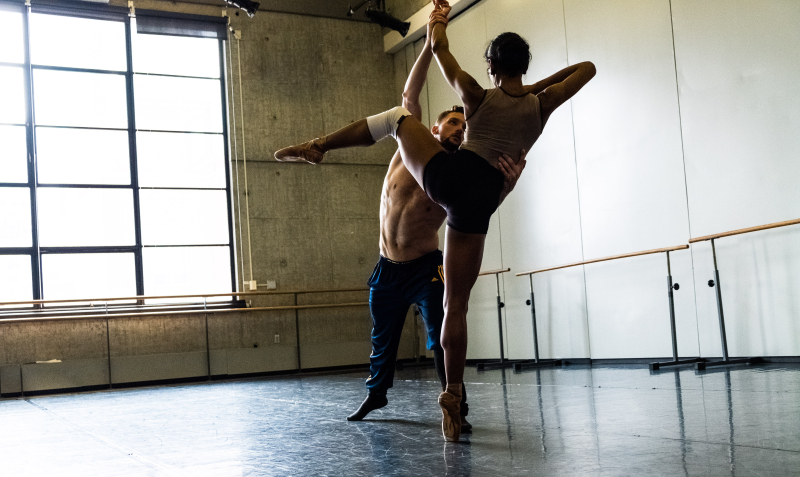
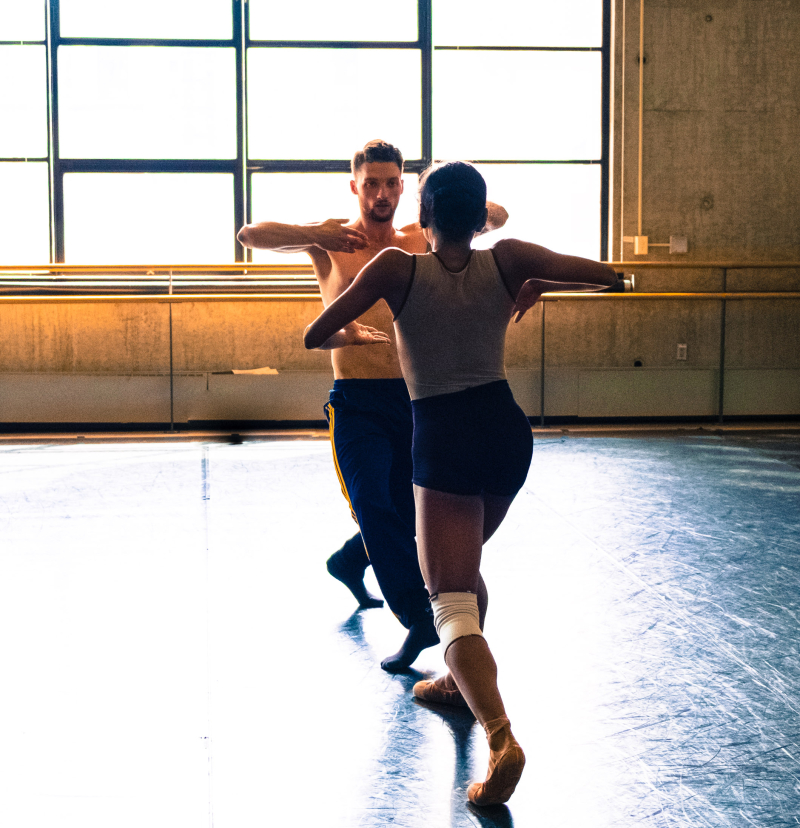
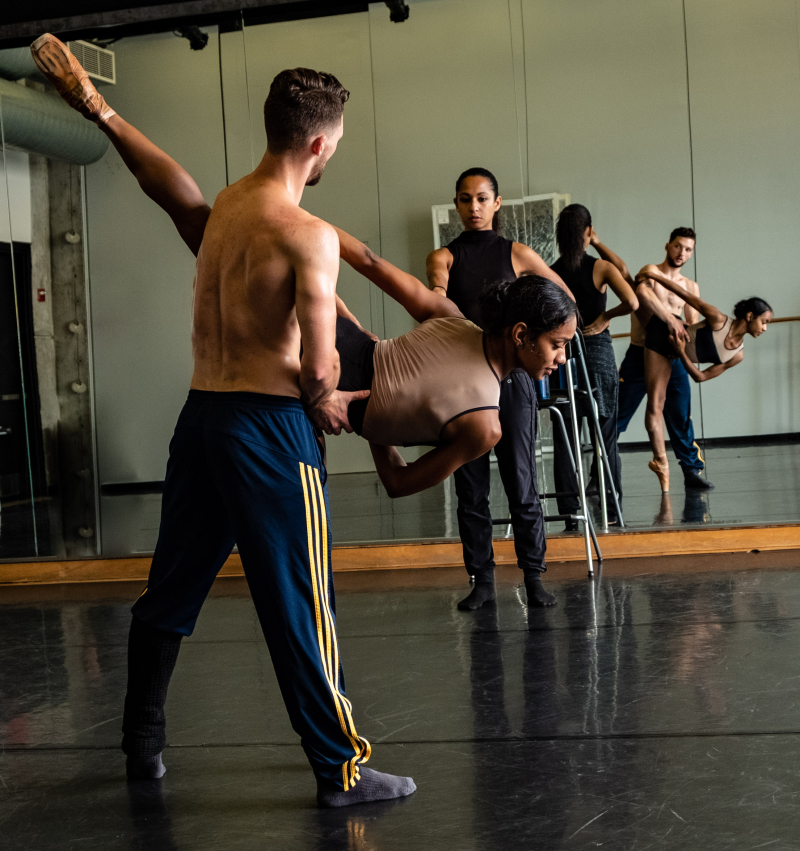
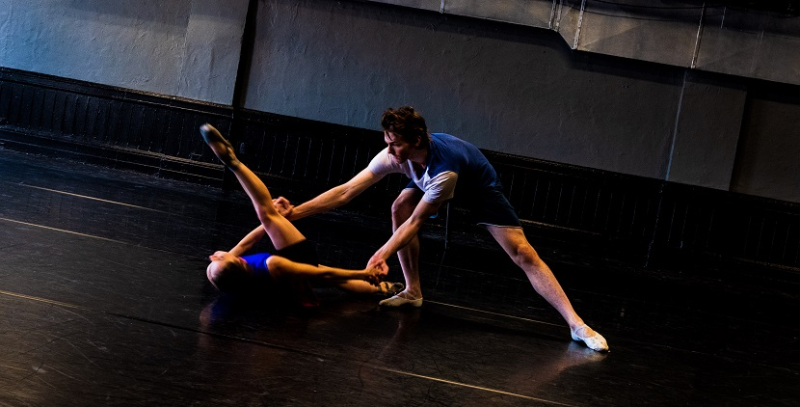
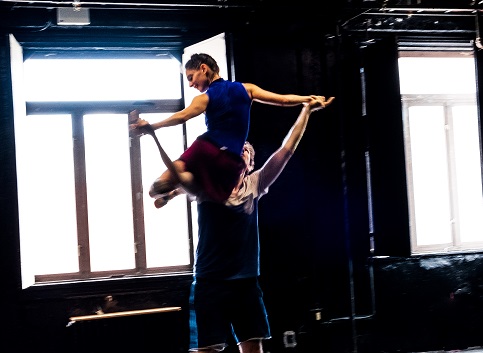
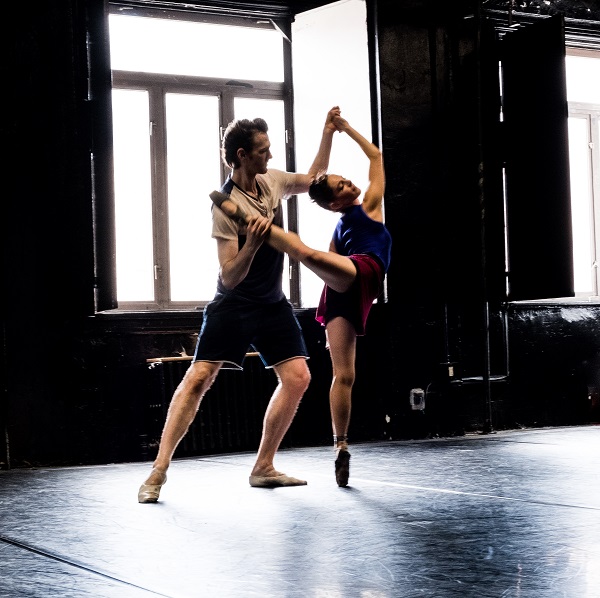
    Tuesday July 24th – Photographer Dmitry Beryozkin and I stopped in at the Baryshinikov Arts Center this afternoon where choreographer Claudia Schreier’s newest creation was in rehearsal. The pas de deux is Claudia’s third commission from the world-renowned Vail Dance Festival: in 2016 she debuted there with SOLITAIRE, and last Summer, TRANQUIL NIGHT, BRIGHT AND INFINITE was presented on the Vail stage.

    Claudia’s new ballet, as yet untitled, it set to a score by Gabriela Lena Frank which is a joint commission by the Vail Festival and Brooklyn Rider. Two charismatic dancers from Ballet Hispanico, Dandara Veiga and Chris Bloom, are performing Claudia’s pas de deux, while the full company of Ballet Hispanico will also be dancing at the Vail Festival in a program that includes their brilliant rendering of CARMEN.maquia, choreographed by Gustavo Ramírez Sansano.

    Dmitry Beryozkin’s images from today’s rehearsal:

    DSCF4322

    DSCF4378

    DSCF4416

    DSCF4464

    DSCF4505

    DSCF4634

    DSCF4682

    DSCF4698

    DSCF4810

    DSCF4822

    DSCF5004

    All photographs by Dmitry Beryozkin.

    ~ Oberon

  • Rehearsal: Two Duets by Cherylyn Lavagnino

    DSCF4129

    Above: Ramona Kelley and Daniel Mantei rehearsing for Cherylyn Lavagnino Dance; photo by Dmitry Beryozkin

    ~ Author: Oberon

    Thursday June 21st, 2018 – Cherylyn Lavagnino Dance are preparing for their annual New York season with performances at the Tisch School of the Arts’ Jack Crystal Theatre on June 27th and 28th, 2018. Details and ticket information here.

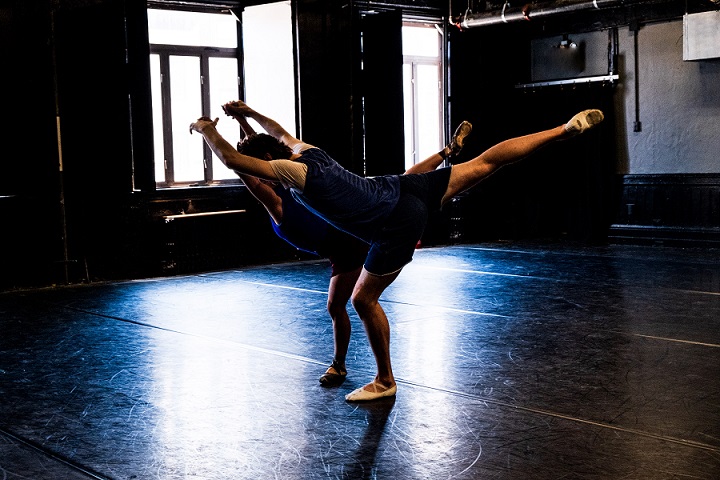
    I had missed Cherylyn’s performances last season due to my prolonged ‘indisposition’; I was all set to attend the performance this month when a family obligation took over. So I was very grateful indeed to be able to go down to the Tisch studios this afternoon watch a rehearsal of two duets from the upcoming program: one from the ballet Kamila, set to the song cycle The Diary of One Who Vanished by Leoš Janáček, and a free-standing duet set to Janis Joplin’s classic rendering of Gershwin’s Summertime. The delightful ballerina Ramona Kelley and former ABT dancer Daniel Mantei were paired in these two distinctively different pas de deux. My friend Dmitry Beryozkin was there to photograph the dancers:

    DSCF3725

    DSCF3736

    DSCF3738

    DSCF3758

    DSCF3767

    DSCF3808

    DSCF3892

    DSCF3906

    DSCF3944

    DSCF3970

    B

    DSCF4024

    DSCF4076

    DSCF4130

    DSCF4149

    DSCF4152

    ~ Oberon

  • BroadwayWorld Review: Lydia Johnson Dance
    DSCF3589

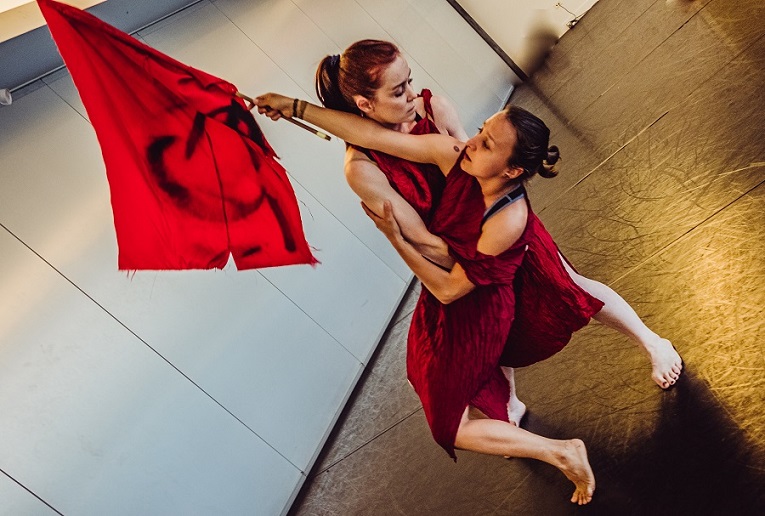
    Above: Lydia Johnson Dance in Undercurrent; photo by Dmitry Beryozkin
    This review by Barnett Serchuk for BroadwayWorld of Lydia Johnson Dance‘s recent program at Ailey Citgroup Theatre reminds me of my own first encounter with Lydia Johnson’s work.

    On a whim, I went to one of Lydia’s studio showings in 2009, knowing nothing about her and with zero expectations. Nine years on, I still think she’s one of the very few truly distinctive choreographers on the New York scene.

    A gallery of Dmitry’s photos from the LJD Ailey show here.