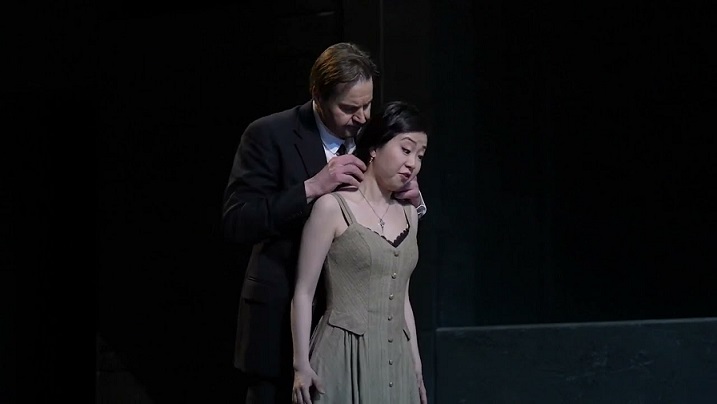
Tag: DON GIOVANNI

  • Teresa Stich-Randall ~ Vier letzte Lieder

    Stich-randall c

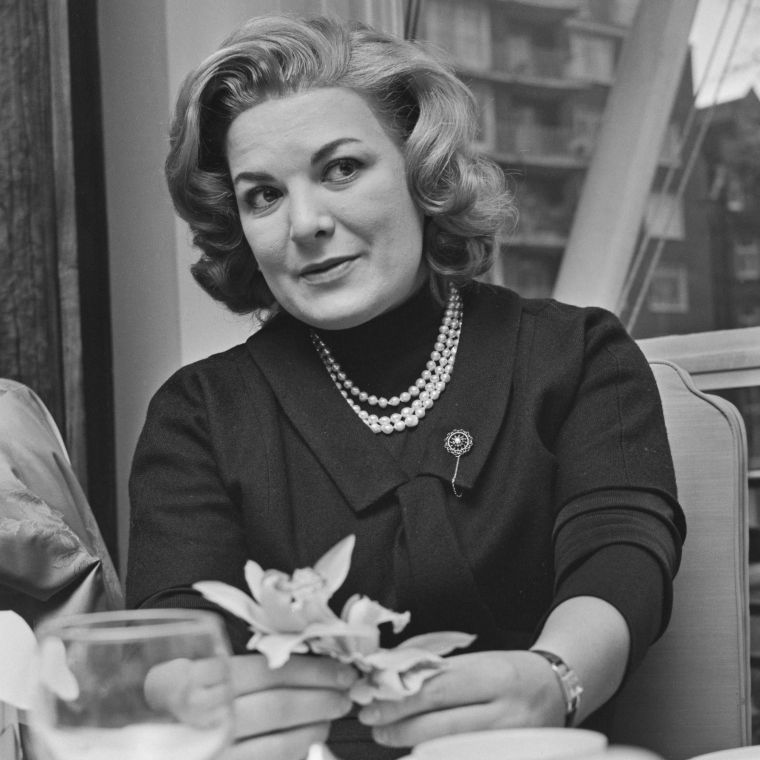
    Teresa Stich-Randall (above) sings Strauss’s Vier letzte Lieder, with the Radio-Symphonieorchester, Vienna, conducted by László Somogyi. The recording dates from June 1964.

    Listen here. 

    In November of 1963, I attended my first-ever performance at the Metropolitan Opera (at the Old Met!). It was DON GIOVANNI, and Ms. Stich-Randall sang Donna Anna.

  • David Rendall Has Passed Away

    Rendall-david don ottavio c

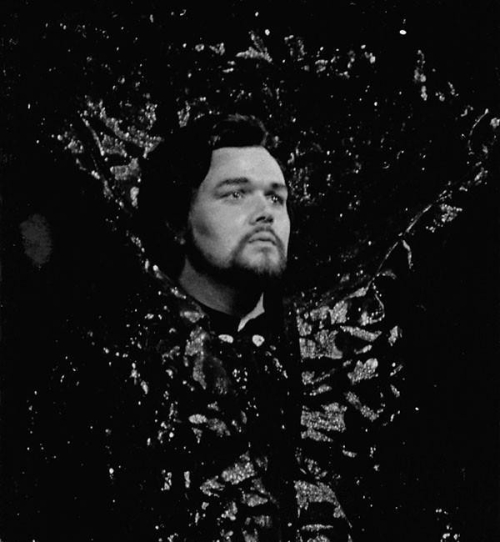
    Above: David Rendall as Don Ottavio in DON GIOVANNI

    It’s sad to learn of the death of British tenor David Rendall, who enjoyed a brilliant international career until an onstage injury forced his premature retirement.

    Read about Mr. Rendall’s rise from his studies at the Royal Academy of Music, London, to his great successes on the world’s foremost opera stages here. He later wrote of his sad demise here

    I had the good fortune to see David Rendall onstage at the Metropolitan Opera House where he sang more that 130 performances in NY City and with the Company on tour, beginning with his 1980 debut as Ernesto in DON PASQUALE. My first chance to hear him came when the Met brought their DON GIOVANNI to Boston. I later saw him – an expert Mozartean – in COSI FAN TUTTE and IDOMENEO, as well as Matteo in Strauss’s ARABELLA. His other Met roles included David in MESTERSINGER, Alfredo in LA TRAVIATA, and Tamino in ZAUBERFLOETE.

    In 1983, David participated in the Met’s 100th anniversary gala, joining such luminaries as Edda Moser and Sesto Bruscantini in an ensemble from Rossini’s ITALIANA IN ALGERI, which brought down the House. Watch it here.

    One of my favorite Rendall recordings is of the English-language production of Donizetti’s MARY STUART, which marked Dame Janet Baker’s farewell to the English National Opera; listen to their lovely duet here.

    And here is the tenor’s “Il mio tesoro” from Mozart’s DON GIOVANNI.

    David Rendall was married to the beloved mezzo-soprano Diana Montague; their son, Huw Montague Rendall, upholds the high musical standards set by his parents in his highly successful career in opera and lieder.

  • 60 Years Ago @ The Old Met

    Old met

    November 27th, 2023 – Sixty years ago this evening, I attended my first Metropolitan Opera performance: DON GIOVANNI, at the Old Met. I was in my fourth year of hardcore opera fandom, tuning in for every Met broadcast on Saturday afternoons, and building my record collection.

    I’d been to some opera performances at the Cincinnati Zoo, at Syracuse, and even in Oswego, NY, just a few miles from home. But The Met was my goal, and on this late Autumn evening, just a few days after the assassination of John F. Kennedy, I finally found myself in the now rather dilapidated Hall that Milton Cross had described so many times over the airwaves; it was like a dream come true.

    Read about my unforgettable experience here.

  • DON GIOVANNI @ The Met

    Mattei fang

    Above: Peter Mattei as Don Giovanni & Ying Fang as Zerlina

    Author: Oberon

    Saturday May 27th, 2023 matinee – The Met’s new DON GIOVANNI is a grey affair. Large grey architectural set pieces loom above the action; from time to time they are moved to form varying spaces as the story unfolds. The costumes are drab and muted, with the only color splash coming at the Don’s party when mannequins are wheeled in, brightly dressed in period gowns. Much of the time the singers are dressed as they might be for a rehearsal. The greyness prevails until the opera’s final sextet, when flowers, potted plants, and vari-colored domestic furnishings suddenly decorate the set.

    Aside from the Don’s killing of the Commendatore with a gun rather than in a duel, there’s nothing radical in the staging. Of course, if the production had been set in the USA, everyone would have been toting an AK-15.

    With so little to distract us visually, focus was on the singing. Adam Plachetka sounded muted in Leporello’s opening lines, but he bloomed vocally with his Catalogue Aria and was thereafter very impressive. Dmitry Belosselskiy was a strongly-sung Commendatore, responding ominously to the Don’s dinner invitation, still wearing the bloody shirt in which he was killed. In powerful voice, Mr. Belosselskiy made me look forward to his upcoming Daland.

    As the peasant couple, Masetto and his Zerlina, Alfred Walker and Ying Fang were superb. Mr. Walker is always a joy to hear, and his excellent singing today turned the oft-neglected character into a leading role. Ying Fang, with one of the most appealing voices on the current operatic scene, was exquisite in both of her arias, and she blended with Peter Mattei’s suavely-phrased singing to make “La ci darem la mano” one of the highlights of the afternoon.

    Ana Maria Martinez was a bit unsettled vocally at first, and I wasn’t sure that Donna Elvira was a role for her; but she convinced me otherwise as the opera progressed. Her “Mi tradi” was fabulously sung: in a delightful musical collaboration with conductor Nathalie Stutzmann, Ms. Martinez made the aria glow. The soprano, looking like an earnest CEO in her fitted forest-green frock and black stilettos, found the perfect mix of determination and frustration in the character.

    Federica Lombardi had a triumph in her third Mozart role at The Met: following her Countess Almaviva and Elettra (IDOMENEO), she sang brilliantly as Donna Anna today, throwing in some embellishments along the way, which Mme. Stutzmann wisely allowed. All afternoon, the Lombardi voice rang clear and true, with free-flowing coloratura, and capping the ensembles brightly. In the great aria “Non mi dir“, Ms. Lombardi was poignantly expressive in her plea for understanding, and then set off the fireworks for the aria’s fast-paced conclusion.  

    Ben Bliss as Don Ottavio gave us some of the most expressive singing of the afternoon, with lovely dynamics in the touching “Dalla sua pace” and a sure command of the dazzling demands of “Il mio tesoro“. Ben’s visible frustration when Donna Anna asked for ‘more time’ after demise of her nemesis, Don Giovanni, was much appreciated by the audience.

    Peter Mattei’s Don Giovanni made a huge impression at The Met in 2009, in another drab production, which I watched with Lisette Oropesa – the first act onscreen at List Hall and the second from a balcony box. We  were both bowled over by his vivid characterization and his mellifluous singing. This afternoon, in a production that casts the Don as a psychopath, Mattei was equally impressive…and the voice is more beautiful and subtle than ever. His “La ci darem la mano” with Ying Fang, his ‘champagne aria’ (taken by Ms. Stutzmann at lightning speed) and his ravishing serenade, “Deh, vieni alla finestra“, were perfect.

    What separated this performance from most everything else I have seen at The Met this season was the conducting: the majority of the operas have been played fast and loud, apparently in an attempt to make things more ‘exciting’. As a result, singers were often made to choose between forcing or being drowned out. As a singer, Ms. Stutzmann knows what to do on the podium; so today, every note and word was clearly audible, and no one seemed to be putting undue pressure on their voice. 

    Moreover, Ms. Stutzmann gave the music a wonderful sense of flow, often moving directly from recitative to aria without pause. There was an especially lovely trio continuo players today: John C. Kelly (fortepiano), Kari Jane Docter (cello), and John Lenti (theorbo and mandolin). It was Mr. Lenti who gave the Mattei serenade its enchanting accompaniment. I cannot say which of the Met Orchestra’s cellists was responsible for the splendid playing in Ms. Martinez’s wonderful “Mi tradi“, nor which clarinetist brought such warmth and clarity to the playing of the downhill scales in Figaro’s “Non piu andrai” as part of the Don’s dinner music.

    And so, I wanted very much to meet Nathalie Stutzmann after the performance. I went down to the stage door – after the enthusiastic ovation during the curtain calls – to find that a large crowd had gathered there. The singers came out and were greeted like rockstars, and they all lingered, chatting up the fans.

    I think all afternoon the scandale was on people’s minds – at least those people who like gossip. During the performance, there had been no hint of any tension between the pit and the podium, although the players who sit nearest the spot from which the conductor enters – and who usually start clapping loudly when Maestro X, Y, or Z first appears – didn’t do that for Ms. Stutzmann today. But the audience soon spotted her and gave her a round of bravas.

    Ar last Ms. Stutzmann came out, and after she had greeted some other fans, it was my turn. I had thought of some non-controversial things to say to her, but my shyness overwhelmed me. She signed my program, and I embraced her, and said: “I love your Alto Rhapsody!” which made her smile. Listen to it here.

    Stutzmann autograph-1jpg

    ~ Oberon

  • Bonaldo Giaiotti Has Passed Away

    Maxresdefault-752x490

    ~ Author: Oberon

    Bonaldo Giaiotti (photo above) was my favorite basso. Though he sang at a time when several wonderful bassos were to be heard at both of the houses at Lincoln Center – Tozzi, Siepi, Hines, Treigle, Ghiaurov, Raimondi, Moll, and Ramey, among others – there was something about Giaiotti’s voice that I simply loved. Even in relatively brief roles like the Commendatore in DON GIOVANNI or Monterone in RIGOLETTO, he always made a distinctive mark.

    Over a span of nearly 30 years – beginning with his Met debut as the High Priest in NABUCCO on opening night, 1960, and concluding with a performance of Don Basilio in BARBIERE DI SIVIGLIA in 1989 – Giaiotti sang more than 400 performances with the Metropolitan Opera Company in New York City and on tour.

    I first saw Giaiotti onstage in what was to become one of his signature roles – Timur in TURANDOT – at the Old Met in 1965. He performed it over 50 times with The Met, and countless times worldwide. How movingly Giaiotti conveyed the character’s heartbreak:

    Bonaldo Giaiotti as Timur in Puccini’s TURANDOT

    In 1964, Giaiotti sang a magnificent Banco in Verdi’s MACBETH on a Texaco/Met broadcast.

    Bonaldo Giaiotti – Come dal ciel precipita ~ MACBETH

    Once the New Met had opened in 1966, I saw Giaiotti often in such roles as Timur, Colline in BOHEME, Ramfis in AIDA, Raimondo in LUCIA DI LAMMERMOOR, and King Henry in LOHENGRIN. He was particularly impressive as Alvise in LA GIOCONDA where he more than held his own amidst such powerhouse co-stars as Tebaldi, Corelli or Tucker, MacNeil, and Cossotto.

    Scanned Section 18-1a

    Roles Giaiotti sang at The Met less frequently – and in which I sadly never saw him – included Mephistopheles in FAUST, Prince Gremin in EUGENE ONEGIN, Philip II in DON CARLO, and Sarastro in ZAUBERFLOETE.

    Here are more samples of Giaiotti’s singing:

    Franco Corelli & Bonaldo Giaiotti – Nume custode e vindice ~ AIDA – Rome 1966

    LOHENGRIN – King Henry’s address & finale Act I – Bonaldo Giaiotti – w Kollo – McIntyre – Lorengar – M Dunn – Met bcast 1976

    Though not of the best sound quality, this aria from BOCCANEGRA shows the basso’s ability to bring down the house:

    BOCCANEGRA aria – Bonaldo Giaiotti – NY 1968

    Would that we had an Italian basso today of Giaiotti’s caliber and versatility.

    ~ Oberon

  • Big Basso Note

    Hqdefault

    Above: basso Roberto Silva as Don Giovanni

    Lots of opera lovers are familiar with recordings of the 1951 Mexico City AIDA because it includes an interpolated high E-flat from Maria Callas at the conclusion of the Triumphal Scene. Despite middling sound-quality, there’s actually quite a lot to sustain interest in the performance as a whole – not least the voice-risking, full-throttle Amneris of Oralia Dominguez. Dominguez was only 26 at the time, and singing her first Amneris; she spends the voice so recklessly, including some cavernous chest-tones, that it’s a wonder she was able to ever sing anything again. But in fact she had a career that lasted into the 1970s, and is best-remembered as Erda in the Karajan RING Cycle recording.

    There’s another impressive voice to be heard in this Mexico City performance: basso Roberto Silva, who sings Ramfis. Silva sustains a powerful note in the phrase “Per tua man diventi ai nemici terror, folgore…morte!” during the Temple Scene. Silva holds his own against the Radames of Mario del Monaco.

    Mario del Monaco & Roberto Silva – Temple Scene ~ AIDA – Mexico City 1951

    I went in search of information about Señor Silva, though I could not find much in the way of biographical detail. He sang in LUCIA DI LAMMERMOOR, RIGOLETTO and PURITANI with Callas during her Mexico City seasons, and there is a listing of him as Geronte in MANON LESCAUT (also at the Palacio de Bellas Artes, in 1951) opposite Clara Petrella. It seems he also had a career as a film actor.

    The only other souvenir I could find of Roberto Silva is this rendering of Colline’s “Coat Aria” from BOHEME. It’s quite nice, actually.

  • Big Basso Note

    Hqdefault

    Above: basso Roberto Silva as Don Giovanni

    Lots of opera lovers are familiar with recordings of the 1951 Mexico City AIDA because it includes an interpolated high E-flat from Maria Callas at the conclusion of the Triumphal Scene. Despite middling sound-quality, there’s actually quite a lot to sustain interest in the performance as a whole – not least the voice-risking, full-throttle Amneris of Oralia Dominguez. Dominguez was only 26 at the time, and singing her first Amneris; she spends the voice so recklessly, including some cavernous chest-tones, that it’s a wonder she was able to ever sing anything again. But in fact she had a career that lasted into the 1970s, and is best-remembered as Erda in the Karajan RING Cycle recording.

    There’s another impressive voice to be heard in this Mexico City performance: basso Roberto Silva, who sings Ramfis. Silva sustains a powerful note in the phrase “Per tua man diventi ai nemici terror, folgore…morte!” during the Temple Scene. Silva holds his own against the Radames of Mario del Monaco.

    Mario del Monaco & Roberto Silva – Temple Scene ~ AIDA – Mexico City 1951

    I went in search of information about Señor Silva, though I could not find much in the way of biographical detail. He sang in LUCIA DI LAMMERMOOR, RIGOLETTO and PURITANI with Callas during her Mexico City seasons, and there is a listing of him as Geronte in MANON LESCAUT (also at the Palacio de Bellas Artes, in 1951) opposite Clara Petrella. It seems he also had a career as a film actor.

    The only other souvenir I could find of Roberto Silva is this rendering of Colline’s “Coat Aria” from BOHEME. It’s quite nice, actually.

  • Teresa Stich-Randall

    T s-r

    Teresa Stich-Randall (above) sang Donna Anna in DON GIOVANNI in the first performance I ever attended at the Old Met, in 1963. It took place only a few days after the assassination of John F Kennedy, but the plans had been made, the hotel booked, and opera tickets paid for, so my parents decided we should go ahead and make the trip to New York City. On the evening following the DON GIOVANNI, we saw FAUST.  

    Teresa Stich-Randall was a native of New Hartford, Connecticut. She studied at Columbia University where, in 1947, she created the role of Gertrude Stein in THE MOTHER OF US ALL by Virgil Thomson.

    Arturo Toscanini ‘discovered’ Stich-Randall, calling her “the find of the century”. He engaged her for a series of performances with his NBC Symphony Orchestra, including the High Priestess in AIDA and Nannetta in FALSTAFF (1950), both of which remain available commercially. She also sang regularly for him in his last years, as a soprano soloist in many choral works.

    She went on to become a beloved star of the Vienna State Opera, where she performed regularly for two decades. In 1963 the Austrian government conferred on Stich-Randall the honorary title of Kammersängerin; she was the first American to be so honored. She was renowned for her Mozart interpretations.

    Today, Stich-Randall is perhaps best-known for her participation as Sophie in the classic 1959 recording of DER ROSENKAVALIER conducted by Herbert von Karajan and featuring Elisabeth Schwarzkopf and Christa Ludwig.

    It was from Stich-Randall’s LP on the Westminster label that I became familiar with the great Mozart soprano arias.

    Teresa Stich-Randall – Non mi dir ~ DON GIOVANNI

    There is a brief post-script to my Stich-Randall story. In 1980, she returned to Connecticut to care for her aging mother. One Sunday morning, I read in the Hartford Courant a small notice that Stich-Randall was giving a recital that afternoon at a church in New Hartford. It was impossible for me to get there, but I sent her a letter and was surprised to receive a charming reply from the soprano. After her mother passed away, Stich-Randall returned to Vienna where she died in 2007.