
On November 13th, 1969, Beverly Sills sang one of her signature roles, Baby Doe in Douglas Moore’s opera THE BALLAD OF BABY DOE, for what I believe was the last time in her career. It was the date of her mother’s birthday, and she had asked her mom what role she would like to have sung for her on her special day; “Baby Doe,” was the answer, and the performance was a sensation from start to finish.
Sills Mania was in full flourish at that time, and as the members of the Snowstorm Crew gathered in the 5th Ring of the New York State Theatre on that November evening, the anticipation was palpable. Beverly’s first entrance drew a round of welcoming applause, and each of Baby Doe’s arias – and especially the the Willow Song – stopped the show.
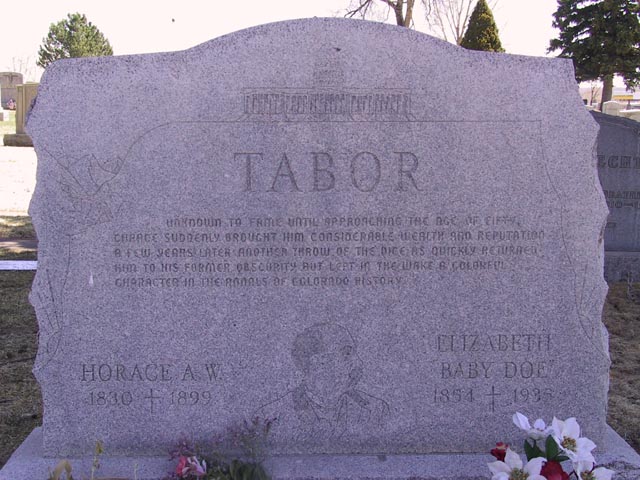
The opera is based on the story of Horace Tabor, who made a fortune in silver mining in Colorado in the 1880s. Tabor owned the Matchless Mine in Leadville, and he and his wife Augusta were leading figures in the community. Horace met and became infatuated with Elizabeth “Baby” Doe, a young divorced woman who was twenty-five years his junior. Baby Doe was shunned by high society, being viewed as a fortune-huntress. Horace Tabor divorced Augusta in 1883 and married Baby Doe. They had two daughters.
In 1893, Tabor lost everything when the United States adopted the gold standard. He was named postmaster of the city of Denver, but his spirit was broken and he died in 1899. On his deathbed, he made Baby Doe promise that she would “always hold on to the Matchless Mine.”
True to her word, Baby Doe lived in a tiny cabin at the entrance to the mine until 1935, when, following a severe snowstorm, her body was found frozen to death on the cabin floor. She was buried next to Horace in the Mt. Olivet Cemetery in Jefferson County, Colorado.
Douglas Moore’s operatic setting of the story (libretto by John Latouche) ends with Horace’s death; cradling his body, Baby Doe sings the gentle lullaby, “Always Thru The Changing of Sun and Shadow”. As the aria progresses, the scenery fades away and snow begins to fall, foreshadowing Baby’s eventual demise.
On that November evening – now nearly a half-century ago – Beverly held the audience in the palm of her hand as she sang this song of dedication and undying love.
The ovation was endless, and our ‘snowstorm’ of paper confetti was massive. After several minutes of applause, we all started singing “Happy birthday, Mrs. Silverman!” I wish I had let the tape run to include that.
 Oberon's Glade