Tag: Ecce Ensemble

  • John Aylward’s ANGELUS

    Klee angelus novus_1920

    Above: Paul Klee’s Angelus Novus (1920)

    A New Focus Recordings release of John Aylward’s Angelus, performed by the Ecce Ensemble, has come my way. In the pre-dawn hours of yet another day of pandemic isolation, I put on my headphones and listened to the 40-minute work; I found it to be an engrossing sonic experience.

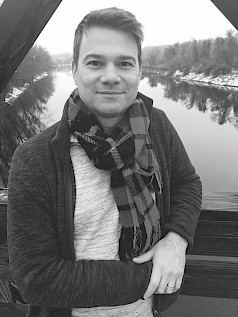
    John aylward

    Above: composer John Aylward

    Among the composer’s sources of inspiration for this work were the Paul Klee painting Angelus Novus, the stories of his mother’s experiences of fleeing Europe during World War II, and the words of great writer-philosophers from which the monodrama’s texts are drawn.

    Adrienne Rich’s “What is Possible” is the first of the work’s ten movements, and also the longest. A setting of the poem by Adrienne Rich, it calls for both spoken and sung passages from the singer. Nina Guo has a wonderfully natural speaking voice, devoid of theatricality or affectation. The sung lines reveal Ms. Guo’s wide range, and her mastery of it. Coloristic writing for the instrumentalists will be a notable feature throughout the entire work; in this first section, the wind soloists dazzle. From this single track omward, the watchword of the enterprise seems to be clarity: it is perfectly recorded.

    For the second track, the composer turns to Walter Benjamin’s “Angelus Novus”, a description of the Klee painting. The music is insectuous, the vocal line sometimes has a melting quality.

    Dream Images“, drawn from Nietzsche, opens with lecture-like spoken words, and an undercurrent of muzzled speech. Ms. Guo’s rhetoric can suddenly transform into flights of song. She speaks of the “…need for untruths…” and goes into a repetitious loop at  “…our eyes glide only over the surface of things…”

    Deft instrumentation sets forth in “The Abstract“, inspired by Schopenhauer’s The World as Will and Representation. The concrete (cello) contrasts with the abstract (oboe), mixing with Ms. Guo’s voice. The singer steps back for the closing lines (“…you are like an actor who has played your part…), spoken in a state of detachment.

    Percussion and voice mesh in the miniature “Supreme Triumph” to a D.H. Lawrence text. This flows directly into “Secret Memory“, from Carl Jung’s Aion: Researches into the Phenomenology of the Self. The oboe is prominent and the voice flies high, with some uncanny sustained tones. The flute then joins the soprano in a kind of cadenza, ending with a wispy swoop.

    This carries us into the seventh movement, Anima, a setting which blends words by the composer and Thomas Mann. As the flute warbles, the vocal line becomes quirky indeed – with clicks, hisses, and shushings. The text morph to German, with more vocal sound effects.

    Plato’s Phaedrus, and phrases from the Catholic Angelus prayer, are sources for “Truth“. with its evocative instrumentation as the singer embarks on a sort of fantastical mad scene. Strings, winds, and percussion swirl along before subsiding to underpin the singer’s chanted prayer.

    Plato holds his place for the ninth movement, the voice in lyrical flights interspersed with fragmented spoken lines. The music becomes intense, with ominous drums and screaming winds, as bells signal a warning before fading to stillness.

    The final movement of Angelus is the most marvelous of all. A brooding prelude for the woodwinds emerges to a setting of excerpts from Weldon Kees’ A Distance from the Sea. The speech/song is pensive and illusive, with Ms. Guo in a reflective lyrical state. “Nothing will be the same…” she sings, in a moment now so strangely timely. “The night comes down…” she speaks, as the music turns soft and hazy, and then vanishes into air.

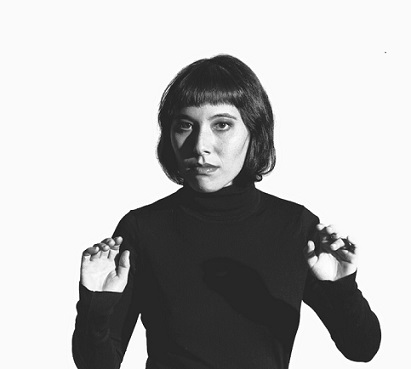
    NinaGuo

    Above: Nina Guo

    Nina Guo’s performance of Angelus is so impressive, and her colleagues from the Ecce Ensemble make the music truly vivid. The players are Emi Ferguson (flutes), Hassan Anderson (oboe), Barret Ham (clarinets), Pala Garcia (violin), John Popham (cello), and Sam Budish (percussion). Jean-Philippe Wurtz conducts.

    The release date is April 24th, 2020. Look for it here, or (digitally) here.

    ~ Oberon

  • John Aylward’s ANGELUS

    Klee angelus novus_1920

    Above: Paul Klee’s Angelus Novus (1920)

    A New Focus Recordings release of John Aylward’s Angelus, performed by the Ecce Ensemble, has come my way. In the pre-dawn hours of yet another day of pandemic isolation, I put on my headphones and listened to the 40-minute work; I found it to be an engrossing sonic experience.

    John aylward

    Above: composer John Aylward

    Among the composer’s sources of inspiration for this work were the Paul Klee painting Angelus Novus, the stories of his mother’s experiences of fleeing Europe during World War II, and the words of great writer-philosophers from which the monodrama’s texts are drawn.

    Adrienne Rich’s “What is Possible” is the first of the work’s ten movements, and also the longest. A setting of the poem by Adrienne Rich, it calls for both spoken and sung passages from the singer. Nina Guo has a wonderfully natural speaking voice, devoid of theatricality or affectation. The sung lines reveal Ms. Guo’s wide range, and her mastery of it. Coloristic writing for the instrumentalists will be a notable feature throughout the entire work; in this first section, the wind soloists dazzle. From this single track omward, the watchword of the enterprise seems to be clarity: it is perfectly recorded.

    For the second track, the composer turns to Walter Benjamin’s “Angelus Novus”, a description of the Klee painting. The music is insectuous, the vocal line sometimes has a melting quality.

    Dream Images“, drawn from Nietzsche, opens with lecture-like spoken words, and an undercurrent of muzzled speech. Ms. Guo’s rhetoric can suddenly transform into flights of song. She speaks of the “…need for untruths…” and goes into a repetitious loop at  “…our eyes glide only over the surface of things…”

    Deft instrumentation sets forth in “The Abstract“, inspired by Schopenhauer’s The World as Will and Representation. The concrete (cello) contrasts with the abstract (oboe), mixing with Ms. Guo’s voice. The singer steps back for the closing lines (“…you are like an actor who has played your part…), spoken in a state of detachment.

    Percussion and voice mesh in the miniature “Supreme Triumph” to a D.H. Lawrence text. This flows directly into “Secret Memory“, from Carl Jung’s Aion: Researches into the Phenomenology of the Self. The oboe is prominent and the voice flies high, with some uncanny sustained tones. The flute then joins the soprano in a kind of cadenza, ending with a wispy swoop.

    This carries us into the seventh movement, Anima, a setting which blends words by the composer and Thomas Mann. As the flute warbles, the vocal line becomes quirky indeed – with clicks, hisses, and shushings. The text morph to German, with more vocal sound effects.

    Plato’s Phaedrus, and phrases from the Catholic Angelus prayer, are sources for “Truth“. with its evocative instrumentation as the singer embarks on a sort of fantastical mad scene. Strings, winds, and percussion swirl along before subsiding to underpin the singer’s chanted prayer.

    Plato holds his place for the ninth movement, the voice in lyrical flights interspersed with fragmented spoken lines. The music becomes intense, with ominous drums and screaming winds, as bells signal a warning before fading to stillness.

    The final movement of Angelus is the most marvelous of all. A brooding prelude for the woodwinds emerges to a setting of excerpts from Weldon Kees’ A Distance from the Sea. The speech/song is pensive and illusive, with Ms. Guo in a reflective lyrical state. “Nothing will be the same…” she sings, in a moment now so strangely timely. “The night comes down…” she speaks, as the music turns soft and hazy, and then vanishes into air.

    NinaGuo

    Above: Nina Guo

    Nina Guo’s performance of Angelus is so impressive, and her colleagues from the Ecce Ensemble make the music truly vivid. The players are Emi Ferguson (flutes), Hassan Anderson (oboe), Barret Ham (clarinets), Pala Garcia (violin), John Popham (cello), and Sam Budish (percussion). Jean-Philippe Wurtz conducts.

    The release date is April 24th, 2020. Look for it here, or (digitally) here.

    ~ Oberon