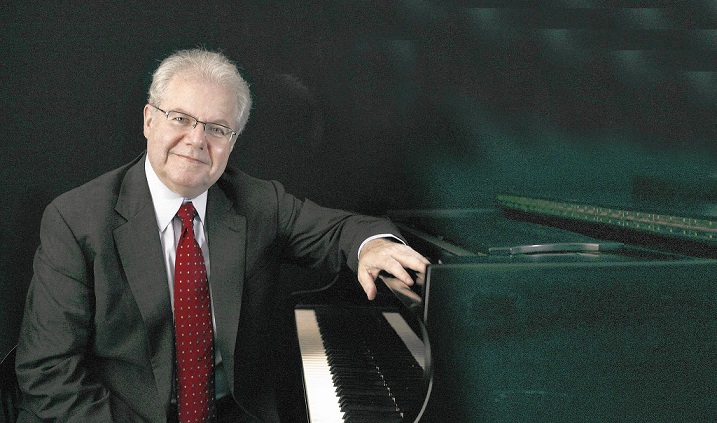
Tag: Emanuel Ax

  • Emanuel Ax|Stéphane Denève @ The NY Phil

    Emanuel-ax

    Above: pianist Emanuel Ax

    ~ Author: Oberon

    Saturday October 26th, 2019 – How wonderful to encounter Emanuel Ax again so soon after his lovely performance of the Schumann piano quintet with the Dover Quartet last week at Zankel Hall. Tonight the great pianist joined The New York Philharmonic for Beethoven’s Piano Concerto #1.

    The announced program looked long on paper, and indeed – after an engrossing first half – there was something of a slump with Albert Roussel’s 3rd symphony. It’s understandable that Maestro Stéphane Denève would want to include it, but somehow it did not quite fit in with the other works: it didn’t hold hold up well in the company of Beethoven and Ravel.

    Jennifer+Higdon

    Above: composer Jennifer Higdon

    Jennifer Higdon’s blue cathedral, composed in 2000 in memory of her brother, opened the evening. Read the composer’s eloquent program note on this work here.

    blue cathedral opens with most ethereal of sounds: barely audible at first, the music slowly seeps into our consciousness. Cello, the plaintive flute, clarinet, piano, and harp bring their colours to bear; the strings are lush and grand, with the high violins set against the deep celli and basses. A massive wave of drums and low brass hits like a tsunami. The marimba, oboe, and Cynthia Phelps’ dusky viola are heard: each solo voice seems to evoke a particular memory of the departed.

    The music then becomes cinematic, with a back-beat dynamic. Brass fanfares lead to epic grandeur before calm sets in. Now the solo voices are heard again – flute, clarinet, oboe – and an especially fine passage for a cello/viola quartet as the music fades to the gentle chiming of a solitary bell.

    In her program note, Ms. Higdon wrote about her use of the clarinet, which was her brother’s instrument. It was in the passages for that instrument, sublimely played by the inimitable Pascual Martínez-Forteza, that Ms. Higdon’s moving tribute to her sibling found its most poignant voice.

    Emanuel Ax, ever a welcome guest at the Philharmonic, was warmly greeted as he took his place at the Steinway. The pianist sat quietly as the musical introduction – at first courtly, then stately – sets the mood. Mr. Ax then began his enchanting performance: crystal-clear arpeggios, subtly modulated, drew us in. Beethoven’s font of melody – both for the pianist and the orchestra – is filled to overflowing. In a long paragraph, the pianist displayed his gifts with nimble downhill scales played pianissimo, and cascades of notes of great delicacy, clarity, and warmth.

    Following a majestic orchestral passage, the long cadenza – which seems almost like a sonata in itself – was impeccably delivered, the audience in a state of rapt attentiveness. One sensed that an ovation might erupt at this point, but Maestro Denève was able to forestall an intrusion by keeping a cautionary hand raised.

    Now came the Largo, featuring one of Beethoven’s most gorgeous themes. For the next several minutes, my companion and I were transfixed by the ongoing dialog between Mr. Ax’s keyboard and Pascual Martínez-Forteza’s clarinet. Two great musicians, trading subtleties: mesmerizing! 

    Mr. Ax immediately commenced the concerto’s concluding Rondo: Allegro, bringing to mind – with its jaunty interjections – the ballet Prism which Helgi Tomasson choreographed to this score for New York City Ballet in 2000. The esteemed pianist continued to dazzle us right to the last note, causing the audience to leap to their collective feet as he took his bows; Mr. Martínez-Forteza was also asked to rise, deservedly so.

    An encore was demanded, and Mr. Ax sustained the ballet connection for me with his Chopin, used by Jerome Robbins in his ballet Dances at a Gathering.

    Stephane_Deneve_01_811x486

    Following the interval, Maestro Stéphane Denève (above) brought us two works by his fellow Frenchmen: Albert Roussel’s Symphony #3 (composed 1929-1930) and Maurice Ravel’s immortal La Valse, which premiered in 1930. 

    The Roussel at first seemed wonderfully refreshing: its jazzy, driven, bustling opening augured well for thorough enjoyment. Yet as the work unfolded, it seemed full of ideas but lacking in coherence. The first, second, and fourth movements each felt overly long, and there was a sense of increased audience restlessness. The piece features a lot of ‘big’ music; rhythmic variety and enticing instrumentation are never lacking. Though poignant, witty, and ebullient by turns, the music slips in one ear and out the other, leaving little lasting impression. Some wonderful solo passages for violin, played beautifully by Frank Huang, were appealing.

    Image

    Above: New York City Ballet’s Marika Anderson in George Balanchine’s La Valse

    “We are dancing on the edge of a volcano…” wrote Maurice Ravel’s in his notes for La Valse. Such a timely concept, as our world these days often seems to be rushing toward its doom. This music, which George Balanchine choreographed for his evocative “death and the maiden” ballet of the same title, has been with me for decades.

    Tonight’s performance, under Maestro Denève’s ardent baton, was everything one can hope for in this marvelous music. The musicians made the most of every opportunity, whether by solo or by section. La Valse again entranced with its dark allure and inevitability. Resistance is futile.

    As we were walking down to the subway, my friend Cherylyn Lavagnino and I both spoke of the effect that the playing of Mssrs Ax and Martínez-Forteza in the Beethoven adagio had on us, and of the consolation of such musical experiences in these dark days. Thank you, gentlemen.

    ~ Oberon
  • Ax/Robertson @ The New York Philharmonic

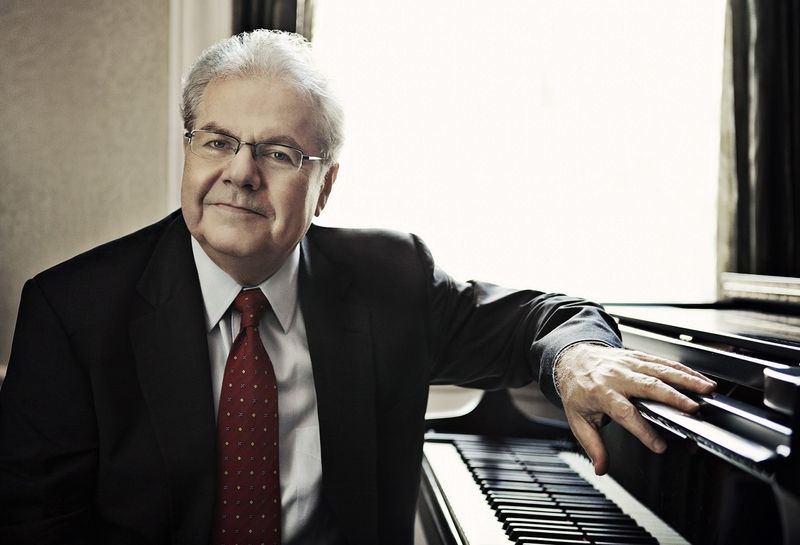
    Emanuel Ax

    Above: Emanuel Ax

    Thursday January 29th, 2015 – The esteemed pianist Emanuel Ax, enormously popular with New York Philharmonic audiences, was warmly cheered tonight after his performance of the Chopin piano concerto #2. David Robertson was on the podium for a programme that proved highly enjoyable and that allowed several of the individual players of the orchestra to shine.

    5377c09f319dd.preview-620

    Above: David Robertson

    As a brief and savorable prelude, the Vocalise of Sergei Rachmaninoff was rendered in full romantic bloom by Mr. Robertson and the orchestra. Originally a wordless composition for soprano, the Vocalise was written in 1915; the composer went on to orchestrate the work which is perhaps his best-known melody, whether performed in the arrangement for soprano and orchestra or for orchestra alone. So many of Rachmaninoff’s best-loved works are in a minor key, giving the music a mood of melancholy and gentle regret. The orchestra played it with distinction; the melodic familiarity of the piece has the poignant effect of encountering an old friend one has not seen for many years.

    Mr. Ax then appeared for the Piano Concerto No. 2 of Frédéric Chopin. In the summer of 1829, the 19-year-old Chopin, recovering from the breaking of an unhappy romantic attachment, sketched out the F-minor concerto and when he returned to Warsaw for the winter season, he performed this new concerto at the National Theatre the following March. The concerto gained Chopin the public exposure and audience acclaim that his numerous private salon performances could not have achieved.

    As the years passed, musicologists began to denigrate the Chopin concertos as being inferior to much of his writing for solo piano. Tonight’s superb performance made an emphatic stand in the concerto’s favor: it’s simply a beautiful piece of music.

    A contemporary account from the concerto’s premiere in 1830 records: “How beautifully (Chopin) plays. What fluency! What evenness!” And the same could be said of Mr. Ax’s performance tonight. In a refined partnership with Maestro Robertson, the pianist let the music flow with grace and charm, allowing us to savour the thematic generosity of Chopin in an illuminating performance. The unfortunate ringing of a phone just as the concerto’s first movement ended prompted a witty exchange between pianist and conductor. But order was immediately restored as Mr. Ax commenced the Larghetto, a movement full of lyricism in which the pianist’s glowing tone captivated the audience. With flourishing agility, the pianist then took wing in the final Allegro vivace. Near the end, trumpet calls herald the concerto’s final rippling cadences; it all ends with Mr. Ax striking a single low note as the orchestra takes the final chord. The audience’s warm expressions of admiration drew Mr. Ax to offer us a Chopin encore, summoning up visions of the Jerome Robbins ballet DANCES AT A GATHERING.

    The Firebird (Suite/1919) – Igor Stravinsky arranged three suites from the full score of The Firebird, in 1911, 1919 and 1945. It is the second of these which is most frequently played today, containing as it does approximately half the music of the complete score. This suite follows the narrative of the original ballet scenario, so familiar to admirers of the Balanchine/Chagall incarnation often seen across the Plaza at New York City Ballet. The atmospheric score – Stravinsky at his most colorful  and melodious – casts a spell of enchantment. It includes themes from two Russian folk songs: one a lyrical melody danced by the captive princesses, and the second the regal anthem which closes the ballet.

    Maestro Robertson and the Philharmonic players reveled in this extraordinary music, with oboist Sherry Skylar particularly impressive in her plaintive theme. The conductor drew forth some ravishing, shimmering piani as well as the lulling tenderness of the Berceuse; and the nightmarish Infernal Dance of  Kastcheï’s ghoulish slaves was given the full, brilliant treatment.

    The Miraculous Mandarin (Suite) is drawn from Bela Bartók’s pantomime-ballet of the same title. The original theatrical setting of the piece (written 1918-1919) was considered too vulgar in its portrayal of lurid sex, violence, and the macabre. After its 1929 premiere at Cologne, it was banned after a single performance. But Bartók, perhaps foreseeing that the ballet would not survive as a stage work, had already arranged the Suite, which we heard tonight in a thoroughly engrossing performance.

    Opening with a big, noisy clatter of sound, the score employs a wide range of instrumentation to ear-tingling effect: piano, flute, harp, xylophone, and celeste all play a part in this sonically intriguing piece. Ms. Skylar’s oboe artistry and Anthony McGill’s remarkable clarinet playing were especially clear and colourful. And a broad, dancing passage with drums near the end served as a reminder of the Suite’s balletic beginnings.

    I at first wondered how the Stravinsky and Bartok would play back-to-back, but the cumulative effect was indeed rewarding: both works have a similarity of texture at certain points, and there’s even some over-lapping of effects – trombone glissandi and frequent interjections of solo winds – which made second half of tonight’s concert every bit as satisfying as the first half.

  • Haydn, Rouse & Gilbert’s Wagner

    Ax

    Above: pianist Emanuel Ax, soloist with the New York Philharmonic this evening

    Friday June 21st, 2013 – The New York Philharmonic‘s current Artist-in-Residence, Emanuel Ax, and Composer-in-Residence, Christopher Rouse, were both featured in the first half of this evening’s programme at Avery Fisher Hall.  After the intermission, the orchestra’s Music Director Alan Gilbert led a performance of his own RING JOURNEY: music drawn from Richard Wagner’s epic RING Cycle. 

    In the Playbill, Maestro Gilbert answers the “…terrible question: who is you favorite composer?” with the name ‘Haydn’. His admiration was evident in the joyous clarity of his shaping of the composer’s Piano Concerto No. 11 in D Major. Emanuel Ax’s playing had a youthful gleam, turning the melodic lines with elegance and the cadenzas with polished perfection, his trills lovingly defined. Pianist, players and conductor meshed their artistry in pure music-making that was deeply satisfying to experience.

    I first heard the music of Christopher Rouse from a Yo-Yo Ma recording of the composer’s Cello Concerto. At the New York City Ballet, Peter Martins has created two ballets to Rouse works: the 2002 INFERNAL MACHINE (seen earlier this year) and the 2006 FRIANDISES.

    In its New York première performances,
    Rouse’s Symphony No. 3 is a tribute to the Prokofiev 2nd symphony, the “symphony of iron and steel” (Prokofiev’s words). The orchestral forces are huge and the opening statements are a cacophonous but lucid fanfare, thunderous and epic. Later, in the more lyrical passages of the work, the composer finds unusual veins of beauty: a passage involving oboe and harp made me think of FIREBIRD. Throughout, the dense sound textures were vividly expressed by the orchestra’s super-human players, and Maestro Gilbert shaped the whole into a persuasive, and gigantic, statement.

    Alan Gilbert’s RING JOURNEY takes its inspiration from Erich Leinsdorf’s earlier arrangement of the Cycle’s immortal themes. RING fanatics (Mr. Gilbert is one, by his own description) draw their life blood from this music, and the standing ovation that greeted the conductor at the end of the evening seemed to me to indicate that people want to hear more of Gilbert’s Wagner.

    Alan Gilbert’s RING JOURNEY, which he rightly describes as a ‘suite’ rather than a ‘fantasy’, commences with the ‘Ride of the Valkyries’ and continues chronologically thru excerpts from WALKURE, SIEGFRIED and GOTTERDAMMERUNG. Gilbert shows a sure and steady hand at maintaining the flow of the music; some of the passages he chose to include are ‘transitional’ in the operatic sense, but they are gorgeous transitions and by exploring them here Gilbert steers clear of a ‘greatest hits’ feeling.

    The overall span of the piece was quite glorious, and the playing was simply superb: a special ‘bravo‘ to Philip Myers who stepped offstage to play Siegfried’s horn call with splendid warmth and amplitude.

    In view of such grandeur and musicality it seems selfish to ask for more; but I’d hoped to hear the Rhinemaidens’ trios, the Entry of the Gods into Valhalla, the Winterstürme theme, the Sword motif, and most especially Brunnhilde’s poignant “Ewig war ich”  – the core melody of the SIEGFRIED Idyll. The answer, dear Maestro Gilbert, is that you must program more of the RING in the next few seasons, especially in view of the fact that The Met can’t deliver it anytime soon.

    Hearing this music so spectacularly played and watching Mr. Gilbert’s loving sculpting of it from the podium, I couldn’t help but wish for voices. As the conductor built the introducton to the GOTTERDAMMERUNG prologue duet with breath-taking clarity and passion, I desperately wanted Christine Goerke or Lise Lindstrom to burst thru the door and launch into Zu neuen Taten!