Tag: Friday June

  • The Crossing: The Book of Never

    The+Crossing +Summer+2024+(credit_+Charles+Grove)+

    Above: The Crossing; photo by Charles Grove

    ~ Author: Lili Tobias

    Friday June 20th, 2025 – The Crossing, conducted by Donald Nally, presented the New York premiere of Aaron Helgeson’s The Book of Never, along with selections from Gavin Bryars’s The Last Days of Immanuel Kant—two adventurous works of music! The program was presented by the Arts and Architecture Conservancy at Saint Peter’s.

    The Last Days of Immanuel Kant began the concert, the text of which is drawn from Thomas DeQuincey’s book of the same title. Bryars set the words true to the rhythms of the original prose, with flowing sentence-shaped phrases. The lush harmonies were full of suspended notes, some resolving and others remaining in a state of lingering uncertainty. But no matter what happened eventually, the result was always beautiful!


    In the program notes for “II. Prologue,” Bryars notes “DeQuincey’s astonishing assumption: ‘I take it for granted that every person of education will acknowledge some interest in the personal history of Immanuel Kant.’ I, for one, do not have any particular interest in Immanuel Kant, but that didn’t detract from my enjoyment of the music at all. Without the historical context, the text could have been about any regular person in their final stages of life. The singers describe mundane activities like recording conversations on scrap paper in order to remember them, difficulty sleeping, visiting a friend’s garden, etc.—all things that are shared by many in the process of aging and dying, no matter if you’re a famous philosopher or ordinary person.


    04+Sam+Gehrke


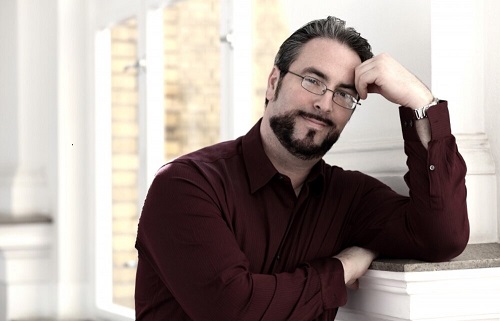
    Above: Aaron Helgeson, photo by Sam Gehrke


    The text for The Book of Never also originates from an unconventional source. Composer Aaron Helgeson sets the fragmented remains of the Novgorod Codex, at the same time weaving in text from a variety of other sources (including Gertrude Stein and the Rolling Stones, to name a few). Themes of exile tie the patchwork of text and personal histories of the authors together, and the powerful vocalizations of The Crossing brought Helgeson’s musical realization to life. All proceeds from this concert were donated to Safe Passage 4 Ukraine, an organization which helps Ukrainians displaced from the war find safety and new homes.


    Helgeson describes the contents of the Novgorod Codex in part as like “the chanting of a vindictive spell,” and the music certainly embodied that. The singers recited words one after the other on the same pitches or oscillated across wide intervals. Textures like this often punctuated more polyphonic sections, inciting a sense of urgency (like the near shouting of “And you bow down” in “III. Burns I’d Like to Forget…”). The harmonies, too, were mysteriously intriguing. Helgeson upended the traditional distinctions of “consonance” and “dissonance” (which are completely relative anyway) with notes and melodies drawn from a collection of hymns associated with the Novgorod Codex. During any moment of silence within the piece, the haunting echoes of dense cluster chords lingered in the air.


    All in all, The Book of Never is true choir music. Not just because it’s written for singers, but because Helgeson achieves an assembly of notes, words, vocal expression, and meaning that only a choir can facilitate. Arranged for any other ensemble, I feel that the music would lose a significant amount of the deep emotional nuance it has in its original form. Many of the movements feature different sequences of words sung nearly simultaneously, the listener’s attention shifting from one phrase to the next and back again but absorbing the meaning of both at the same time.
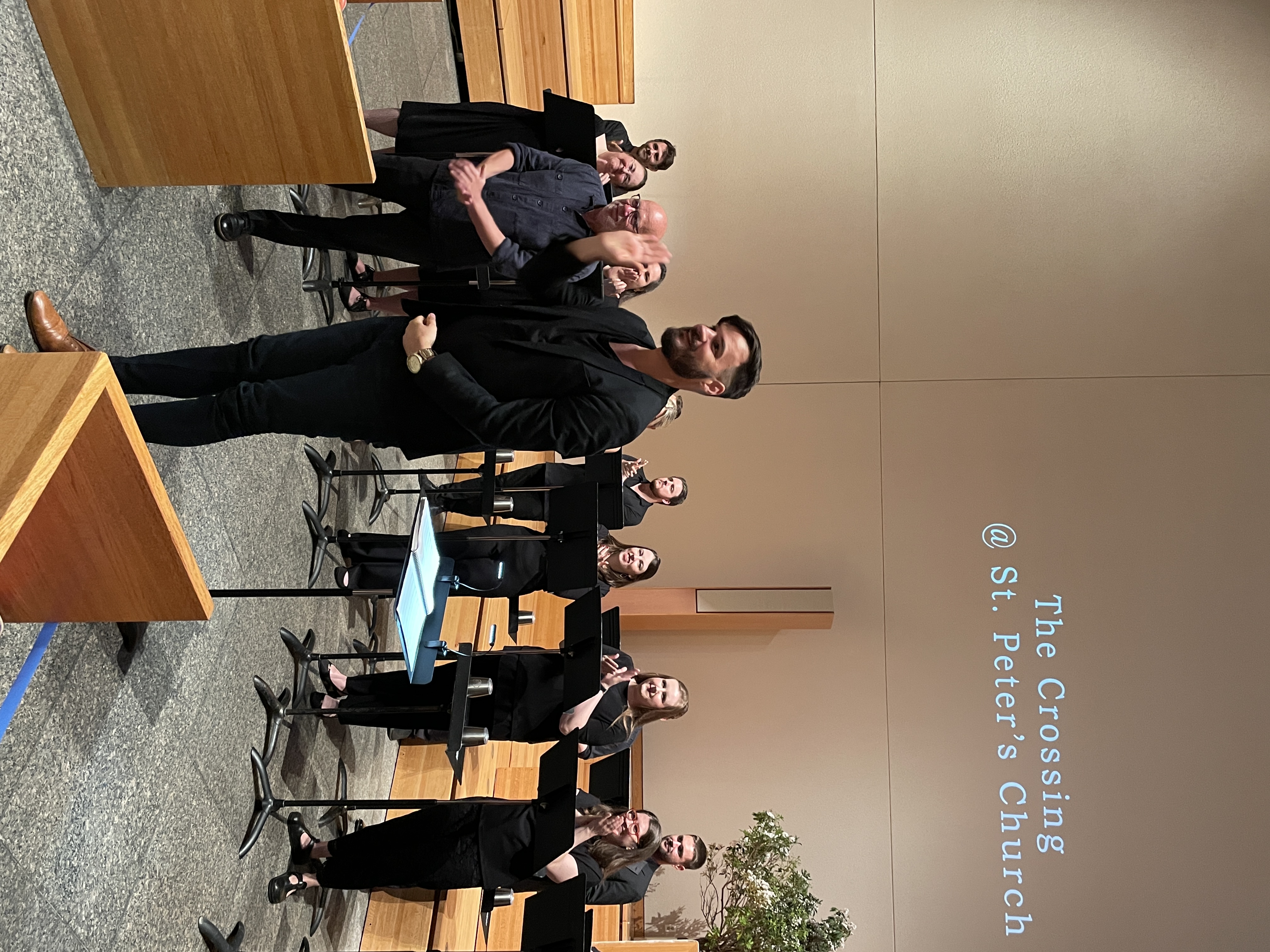
     

    A Helgeson - TBON curtain call


    Above: The Crossing and Aaron Helgeson, photo by Steven Swartz


    The final movement, “VII. Names of Things I Once Believed…,” exhibited this truly non-linear presentation of ideas to the extreme. Half the choir sustained multiple words at once (“all/always,” “why/waiting, “end/ever,” etc.) while the other half chanted longer, more descriptive phrases of resilience amidst suffering and self doubt. The intricate layers of music illuminated the complicated contradictions of existence in a world that does not value everybody’s existence. From start to finish, Helgeson’s innovative choral writing brought The Book of Never to an entirely new dimension of comprehension, and it was an absolutely exhilarating space to inhabit!

    ~ Lili Tobias

  • 2024 Chelsea Music Festival ~ Opening Night

    Lili

    ~ Author: Lili Tobias

    Friday June 21st, 2024 – The opening night concert of the 2024 Chelsea Music Festival was held in by far the most surprising venue I’ve ever been to. It took place in Genesis House, which is a restaurant/car showroom/performance venue associated with the luxury car brand, Genesis. In fact, the audience walked into the building through the showroom, so we were surrounded by new cars as the event staff offered glasses of wine. We then descended down a flight of stairs, through a lounge area, to the performance space. 


    The stage floor was actually a large screen itself, as were the back wall and the ceiling. This concert featured not only music but visual art completely surrounding the musicians as they played. While I thought the visuals were beautiful and intriguing, I didn’t quite see how they were connected to each specific piece. I think both the music and the visual art could have stood on their own just as well as together!


    The concert opened with two pieces by Augusta Read Thomas: Bebop Riddle V and Dancing Stars. Both were very joyful and bouncy! I particularly enjoyed the juxtaposition of staccato and legato moments in Dancing Stars. This piece was primarily staccato throughout, but there were brief moments when more legato phrases rose up and then dissipated. These moments got more expansive as the piece progressed, and culminated in one bright pluck, followed by its echo in the resonance of the piano strings.


    Wooden Bodies, by Tebogo Monnakgotla, was next on the program, performed by the Aizuri Quartet. Beginning with a slow melody in the lowest register of the viola, this motif was then explored by the other instruments in turn. In general, this piece was very fugue-like with all the motifs that got passed around within the quartet. My favorite moment was when the two violins traded off short, choppy phrases, creating a sort of panning effect between them. As a nice contrast to the explorative nature of the previous piece, Augusta Read Thomas’s next piece, Clara’s Ascent, felt calmer and more relaxed. The music stayed slow and legato for most of the time, punctuated by a fun pizzicato solo for the cello near the very end.


    Next was a beautiful string quartet arrangement of Clara Schumann’s song, Die stille lotosblume. Having played the original piano and voice version myself, I really appreciated the liberties Miho Saegusa took in adapting the music for strings. First of all, the vocal melody is traded between string instruments which creates fun contrasts within one performance of the piece. And second, Saegusa added some delicate arpeggios which don’t exist in the piano part. These added interesting variety to the texture which the piano part just doesn’t have, and the half cadence ending left me wanting more!


    To end the first half of the program was the world premiere of Nicky Sohn’s wind quintet, A Night at Birdland. Despite being accompanied by images of birds, this piece has nothing to do with birds, but rather is inspired by Charlie Parker, who is known as “Bird.” It was a really wonderful piece, and WindSync performed it so well. The music traversed many different musical textures, often featuring a consistent bouncy rhythm and really lush chords.


    Beginning the second half of the program were two solo piano pieces, first the theme from the 2022 movie, The Fabelmans, composed by John Williams. Melinda Lee Masur, one of the artistic directors of the festival, performed this piece herself. It was a beautiful progression of a melody through different accompanying textures. Next was Against Time, written and performed by 2024 composer-in-residence Ania Vu. Starting with a single barely-there note, the music evolved into an exploration of different piano textures and techniques: full chords vs single notes, clusters vs octaves, steady pulses vs filigree. I’d love to try out playing this one myself!


    The concert ended with Poulenc’s Sextuor (1931-32, performed impeccably by WindSync and pianist Andrea Lam. After the music, the audience was invited back upstairs to the Genesis House Restaurant for more drinks and canapés. This opening night concert featured such a wide variety of artistic ideas, and I’m sure the rest of the festival will live up to that as there’s a full week of performances ahead—from Bach to jazz to Brazilian forró. Congratulations to the Chelsea Music Festival on their 15th season!


    ~ Lili Tobias
  • Violinist Richard Lin ~ Carnegie Hall Recital

    Richard_lin

    Friday June 24th, 2022 – Richard Lin (above), Gold Medalist at the 2018 International Violin Competition of Indianapolis, in recital at Carnegie Hall, with Thomas Hoppe at the Steinway.

    Earlier this season I heard Mr. Lin in his debut performance with Chamber Music Society of Lincoln Center and was very impressed with his playing. I met Thomas Hoppe many years ago while he was at Juilliard; he has since developed a stellar reputation as a collaborative pianist and teacher.

    The concert fell on a day when a life-altering ruling by the Supreme Court cast a pall over everything…a ruling that bodes ill for my humble desire to live out my remaining days in peace. How did it come to this? My companion for the evening and I were extremely depressed and angry, and we debated skipping the concert; but in the end we found peace – at least for a couple of hours – in the sanctuary of Carnegie Hall and in the timeless beauty of the music, so marvelously played by Mssrs. Lin and Hoppe.

    T.A. Vitali’s Chaconne in G-Minor opened the program; this captivating piece opens with ghostly music from the piano; the violinist then takes up a yearning melody. As the music become  more animated, the combined artistry of the two players makes for a very pleasing sonic experience; they share a gift for dynamic variety and for great clarity, especially in some delicate fiorature. And there is a gorgeous sheen on Mr. Lin’s timbre.

    Richard Strauss’ Violin Sonata in E-flat Major, Op. 18, a chamber work by the composer of my two favorite operas, was an engrossing experience as played by Mssrs. Lin and Hoppe tonight. From its joyous start, the opening Allegro, ma non troppo, was filled with wonderful and subtle passages: with rippling keyboard figurations, exquisite themes in the violin’s high range, moments of dreamy softness…and the occasional touch of drama.

    The central movement brings us a Viennese-style cantabile, possibly a bow to the composer’s ardent love for the soprano Pauline de Ahna, who he had met in the year of the sonata’s composition (1888) and who he would later marry. In fact, Strauss eventually allowed this movement to be published separately. Mr. Hoppe’s perfect playing here entwined with the sweet song of the violin, creating an enchantment of piano/pianissimo music-making of great poetic appeal.  A flurry of agitato may presage the storminess that sometimes developed in the Strauss/de Ahna marriage. The extreme delicacy achieved by the players as the music moved on was a display of their amazing control.

    The sonata’s finale begins with a hushed, almost sombre prelude for the piano; then the music bursts forth in the energetic main theme, which is audibly related to the opening (and closing) passages of the first movement. The music is both emotionally and technically demanding; a sort of downhill piano cadenza leads to the sonata’s thrilling finish. The audience, wonderfully attentive throughout the evening’s first half, called the players back for a bow with persistent applause.

    Thomas+hoppe

    Above: pianist Thomas Hoppe

    The second half of the program was less interesting musically, though impeccably played. Pairing Corigliano with a Igor Frolov’s arrangement of tunes from Gershwin’s Porgy and Bess had the feeling of a pops concert. Both of these pieces place high demands on the players, but the music – while entertaining – is not engaging on a deeper level.

    John Corigliano’s Violin Sonata, written during 1962-63, is a long piece in four movements. Originally entitled Duo, it treats the two instruments as co-partners. Virtuosity is called for, but it seems lacquered on rather than an integral part of the piece. There’s some quirky technical stuff to be dealt with, and traces of blues influence. The third movement, Lento, feels overly long, despite being superbly played, and with a remarkable final sustained note from the violinist. The sonata’s final Allegro is exuberant, full of light and dazzle, but it later calms and overstays its welcome.

    To end his recital, Mr. Lin gave us Igor Frolov’s “Concert Fantasy on Themes from Gershwin’s Porgy and Bess”;  here, one by one, the celebrated Gershwin tunes are rolled out in sterling renditions by Mssrs. Lin and Hoppe: “Bess, You Is My Woman Now”; “My Man’s Gone Now”; “I Got Plenty of Nuthin’”; “Summertime”, and “It Ain’t Necessarily So”. Mr. Lin’s violin soared with distinction it it highest range, and the two players seemed to urge one another on to feats of virtuosity.

    To eager applause, the players returned for two encores:  Debussy’s “Beau soir” was luminously played, and they followed this with the demanding Kreisler showpiece, “Tambourin Chinois“. It seemed a third encore was in the offing as we left the Hall.

    Mr. Lin will be back with Chamber Music Society of Lincoln Center next season, and I look forward to hearing him again.

    ~ Oberon

  • Beatrice Rana|Philadelphia Orchestra @ Carnegie Hall

    Thumbnail_rana_beatrice_1920

    Above: pianist Beatrice Rana

    ~ Author: Ben Weaver

    Friday June 7th, 2019 – Yannick Nézet-Séguin – music director of the Metropolitan Opera – led his other ensemble, The Philadelphia Orchestra – in an exciting Carnegie Hall concert tonight. The all-Russian program opened with a recently discovered curiosity: Stravinsky’s Funeral Song, Op. 5, written for the memorial of his teacher, Nikolai Rimsky-Korsakov, in 1908. The 12 minute work, in which Stravinsky has different sections of the orchestra take turns “laying down its own melody as its wreath against a deep background of tremolo murmurings,” was lost until 2015 when a St. Petersburg Conservatory’s librarian discovered the complete orchestral parts in the mess of the Conservatory’s renovations. Musicologists long lamented the lost manuscript as the link between Stravinsky’s early works and The Firebird. Its discovery revealed not only the links in Stravinsky’s own development, but his links to Rimsky-Korsakov’s late compositional style, which Stravinsky, late in life, tried to downplay.

    Sergei Prokofiev’s popular Piano Concerto No. 3 came next on the program with the exciting pianist Beatrice Rana at the piano. This was my first time hearing Ms. Rana in a live performance, but I have admired several of her recordings for some time. What struck me about her recorded performances – and what was confirmed live – is her deeply felt, yet honest and unaffected musicality. Prokofiev’s “devilishly difficult” (Prokofiev’s own words) writing presented no technical challenge to Rana’s nimble finger work. The often spiky writing can easily become a “pound on the keyboard” type of evening. That is not Rana: her light – but never weak – touch made the pounding Prokofiev requires sound effortless and graceful. Both of those words were also true about the encore: Chopin’s Etude in A-flat major, Op. 25, No. 1 showed off the more lyrical side of Rana’s artistry.

    Thumbnail_young_rachmaninoff2

    Above: the young Sergei Rachmaninoff

    The premiere of Sergei Rachmaninoff’s Symphony No. 1, Op. 13 in 1897 is one of the most famous musical disasters in Western art music. Composer and conductor Alexander Glazunov appears to have been drunk on the podium and unprepared to conduct the difficult score. The reaction from the public and the critics was savage: composer and critic César Cui wrote that the symphony “would have delighted the inhabitants of Hell” and that the “music leaves an evil impression.” The young composer was so devastated by the reception that he quit composing and needed a therapist (and hypnosis) to recover from the trauma. When he fled Russia during the 1917 Revolution, the score of the symphony was lost in the chaos. Interestingly, although the symphony caused him a lot of pain, it appears to have been on Rachmaninoff’s mind for the rest of his life: he quoted its dark opening theme in the first movement of his last work, the Symphonic Dances, in 1940. Since the score of the symphony was lost and no one had heard it in more than 40 years, Rachmaninoff knew the quote would be unknown to anyone but himself. He died in 1943 and two years later orchestral parts of the symphony were discovered after all, in the St. Petersburg Conservatory (again), presumably as everyone returned home after the War. A performance was quickly arranged in Moscow (US premiere was given by The Philadelphia Orchestra and Eugene Ormandy) and finally the public was able to judge this extraordinary composition. We can safely say that César Cui’s deranged opinion was garbage; indeed, history itself has given its verdict on Cui vs. Rachmaninoff’s Symphony No. 1. Cui is nothing but footnote.

    One thing that may have confused so many listeners in 1897 was the dark and violent tone of the work; Rachmaninoff’s vivid quotations of the Dies irae may have upset some sensitive constitutions. But the Dies irae would become a common motif in all of Rachmaninoff’s major orchestral works. In the 1st Symphony, even the haunting slow movement is more sinister than calming. Cui may have been correct that the work “would have delighted the inhabitants of Hell,” except any person of taste would have seen that as a positive. Rachmaninoff’s most famous works, Piano Concerto No. 2 and Symphony No. 2, are steeped in romanticism, their flowing, endless melodies unrolling with shameless abandon. The very different tone of the 1st Symphony, however, reveals fascinating depths.

    There are few orchestras with a stronger personal and professional connection to a major composer than Philadelphia Orchestra’s is to Rachmaninoff. For a few decades Rachmaninoff played with and conducted them regularly, and he chose them when he recorded his own orchestral works. His last composition, the Symphonic Dances, were dedicated to the Philadelphia Orchestra and Eugene Ormandy led the world premiere performance. This is music they have in their blood the way Bayreuth Orchestra has Wagner and the NY Philharmonic has Mahler. With Maestro Nézet-Séguin on the podium, this Carnegie Hall performance of Rachmaninoff’s 1st Symphony was perhaps the most thrilling and hair-raising I’ve ever heard. Nézet-Séguin’s unflagging energy perhaps a taste for the macabre was the perfect approach to this dark and sprawling work. The Philadelphians responded with a fearlessness that shook the concert hall to the rafters. Is César Cui heard this performance, he might have had a heart-attack. 

    Thumbnail_yannick-hans-van-der-woerd

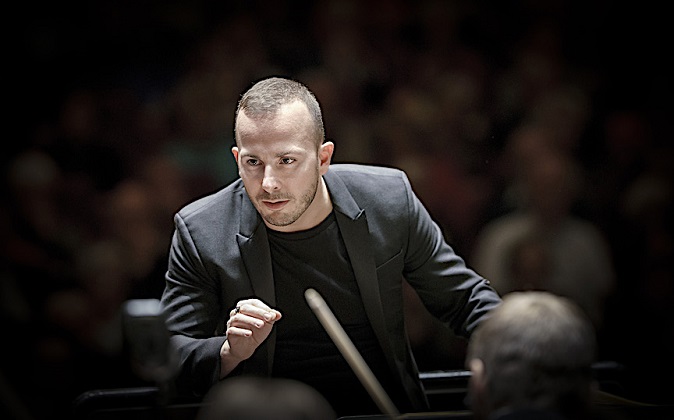
    Maestro Nézet-Séguin (above, in a Hans Van Der Woerd photo) is currently recording Rachmaninoff’s complete piano concertos with Daniil Trifonov and the Philadelphia Orchestra. Based on this coruscating performance of the 1st Symphony, it may be time for this group to record Rachmaninoff’s complete orchestral works. The Concertgebouw seems to do a complete Mahler traversal every few years (though the last one, with Daniele Gatti, was abandoned part-way for stupid reasons). Surely the Philadelphians and Rachmaninoff have earned a similar right? Deutsche Grammophon, are you paying attention?

    ~ Ben Weaver

  • Elīna Garanča ~ MET Orchestra @ Carnegie Hall

    Elina-Garanca

    Above: mezzo-soprano Elīna Garanča

    ~ Author: Oberon

    Friday June 14th, 2019 – This evening, The MET Orchestra paired Mahler’s marvelous Rückert Lieder with Anton Bruckner’s sprawling 7th symphony. Yannick Nézet-Séguin was on the podium, and the soloist for the Mahler was Elīna Garanča.

    As Ms. Garanča, in a strikingly Spring-like white gown, and the conductor made their way center-stage, the mezzo towered over the maestro. M. Nézet-Séguin wore a clingy white shirt that seemed calculated to show off his physique; it looked kind of silly.

    The German Romantic poet Friedrich Rückert (1788-1866) was one of Gustav Mahler’s favorite poets, and he set a number of his poems to music, including the Kindertotenlieder (“Songs on the Death of Children”).

    Mahler composed four of the five Rückert Lieder in 1901, initially to be sung with piano accompaniment;  very soon after, he orchestrated them. The fifth of the Rückert Lieder, “Liebst du um Schönheit?” (‘If you love for beauty…’) was composed a bit later, and orchestrated by Mahler’s publisher. The songs do not constitute a formal song-cycle, nor is there any prescribed order of performing them.

    Ms. Garanča began with “Blicke mir nicht in die Lieder” (“Do not look at my songs…”), in which poet and composer seem to be warning the listener not to be too inquisitive about the song-writing process: it’s the finished product that matters. This light and almost playful song was deliciously voiced by Ms. Garanča, whilst the woodwind players of The MET Orchestra buzzed charmingly about, like busy bees.

    In “Ich atmet’ einen linden Duft” (“I breathed a gentle fragrance…”) the mezzo-soprano brought an intriguing mix of calm and intensity. Her use of dynamics and her lovely sustaining of the vocal line were beautifully supported by the oboe, horn, and flute. The singer’s lower range has a special warmth and glow: rich without seeming over-burdened.

    A change of mood comes with “Um Mitternacht” (“At midnight”) which tells of the poet’s battle with darkness (both in the literal and and the poetic sense) until he finally leaves it all in God’s hands. Ms. Garanča brought profound beauty of tone to the song, giving it an almost operatic dimension. Her use of straight tone at times was beguiling, whilst throughout her expressive, passionate colouring of the words kept us engrossed. It seemed that the conductor allowed a passing trace of vulgarity in some of the wind playing, and he allowed the orchestra to cover the voice in the closing passages of the song.

    Liebst du um Schönheit” (“If you love for beauty…”) was the first Mahler song I ever heard, sung at a 1972 recital by the delectable Frederica von Stade. A few years later, the unique voice of Patricia Brooks gave the song a different feeling. And it’s a song I very much associate with my late friend, the Japanese contralto Makiko Narumi. The words, in translation, could have been the theme song of my long career as a promiscuous romantIc:

    “If you love for beauty,
    Do not love me!
    Love the sun,
    with her golden hair.
    If you love for youth,
    Do not love not me!
    Love the spring,
    Which is young each year.
    If you love for riches,
    Do not love not me!
    Love the mermaid,
    she has many lustrous pearls.
    But If you love for love,
    Then…yes! Love me!
    Love me,
    And I shall always love you.”
     
    Every note and word of Ms. Garanča’s singing of this jewel of a song was simply exquisite; she seemed to savour the joy of having such a fascinating voice with which to allure us. Though once again the orchestra infringed on the voice at times, her perfect rendering of the charming “…o, ja!…” as the song neared its end gave me a shiver of delight.
     
    I’ve never understood why a singer would end this group of songs with anything but “Ich bin der Welt abhanden gekommen” (“I have been lost to the world…”), probably the single most profound lied ever written. The poem tells of the peace achieved by the poet’s withdrawal from the turmoil of the daily life. The MET’s wind players were simply gorgeous here, infusing the music with a tender sense of longing and resignation. Ms. Garanča’s singing was haunting in its range of colour and gradations of vibrato; she drew us into that place of refuge that Rückert and Mahler have created for the soul in search of hermitage: what more can we ask of a singer?
     
    The poem ends: “I live alone in my Heaven…in my love…in my song.” The touching opening theme is heard again from the English horn, fading to a whisper.
     
    CH1605499
     
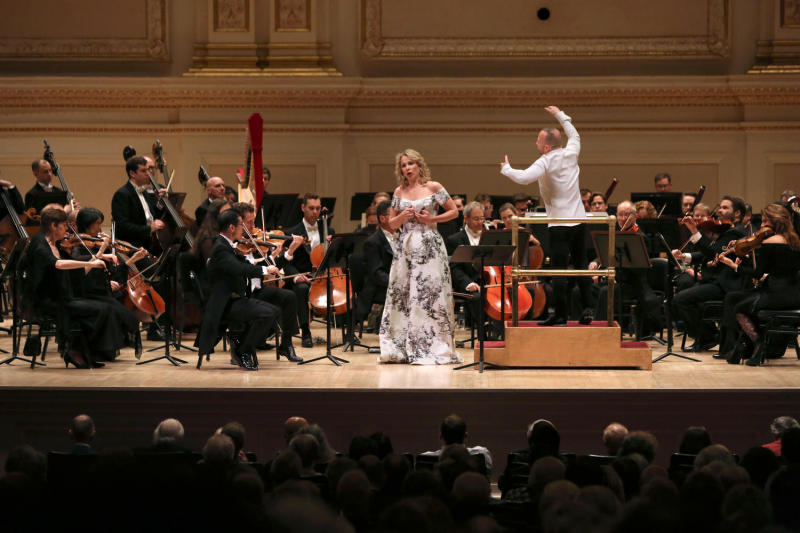
    Above: Ms. Garanča and Maestro Nézet-Séguin performing the Rückert Lieder; photo by Steve Sherman
     
    An over-eager fan rather spoilt the end of the mezzo-soprano’s performance with a very loud “Brava!” before the music had completely faded away. A wave of applause and cheers then filled the august Hall, where so much glorious music has been heard thru the passing decades. Ms. Garanča basked in the glow of a prolonged standing ovation, which her luminous singing so fully deserved.

    Following the interval, Maestro Nézet-Séguin returned for the Bruckner 7th. This was my first live experience of this work, which begins so magically with a string tremolo from which the glorious main theme arises. Throughout most of the first movement, I felt as engaged – and even exalted – as I had expected to feel, since I like Bruckner’s music in general.

    But in the ensuing Adagio, I found the performance drifting away from me. There were some iffy moments from the horns, the music seemed periodically to lose its shape, and the movement began to feel endless. The Scherzo which follows was singularly lacking in wit and sparkle, and while its tranquil – almost wistful – trio section is pleasant enough to hear, pleasant music tends to get boring after a while.

    At last, the Finale is reached; I hoped that Bruckner would take the driver’s seat and careen madly to the finish line. Instead, the music came in fits and starts, seeming to fold in on itself and retreat periodically into modestly attractive wind interludes. At last: a big statement. But this was soon replaced by more dawdling. Frankly, it couldn’t end soon enough. I found myself craving Bizet’s Symphony in C.

    Afterwards, I asked myself why the Bruckner 7th had seemed like such a disappointment this evening. My friend Ben Weaver suggested that perhaps it was the performance, rather than the music, that had let me down. But it’s something deeper.

    In search of answers, I read some on-line articles by music-lovers who stated that Bruckner’s music often eluded them. One common theme in many of these writings was Bruckner’s seeming lack of a sex life: simplistic perhaps, but on the other hand we know that Mozart, Liszt, Wagner, Debussy, Puccini, and Mahler were men of passion, and it comes thru in their music. Bruckner’s passion seems to have been for God, and some writers went so far as to say that Bruckner probably lived and died a virgin. This may account for a feeling of sterility in some of his music, and why it doesn’t reach me. Oddly, reading about Bruckner and looking at some pictures of the man, I began thinking of Mike Pence.

    Speaking of people’s sex lives, in tonight’s Playbill note about The MET Orchestra, the name of James Levine – the man universally credited with turning the opera house’s orchestra into a world-class concert ensemble – is conspicuously absent. This gloss seems so childish, but I suppose in an age when slavery in America and the Holocaust in Europe are being written out of text books, anything is possible.

    ~ Oberon

  • A Report from the Chelsea Music Festival

    Capture

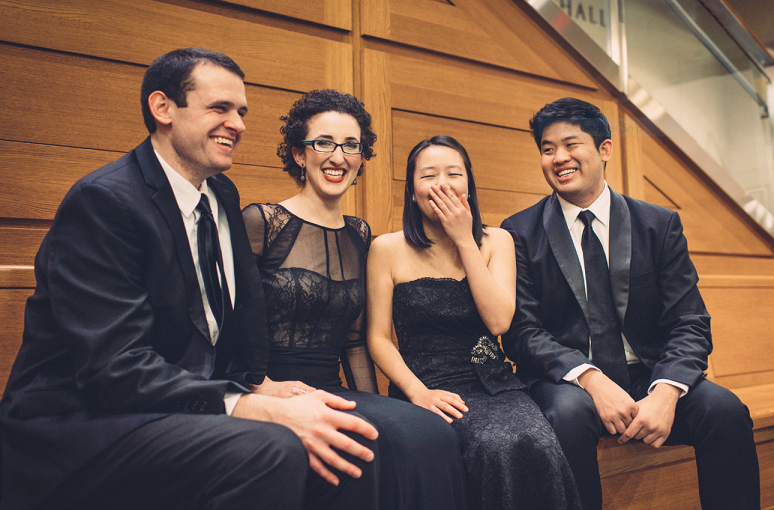
    Above: the players of the Verona Quartet; photo credit ~ Joseph Ong/Brittany Florenz

    Author: Scoresby

    Friday June 16th, 2017 – On a hot sticky night, I went to the penultimate set of events for the Chelsea Music Festival. Hosted in St. Paul’s German Lutheran Church was a lecture by the neuroscientist Dr. Michael Shadlen and a performance by the Verona Quartet. For those who do not know, the Chelsea Music Festival is much more than the name would suggest. Rather than just a few concerts, it brings it together all of the different senses by having food, art, lectures, music and other events focused on one theme hosted in different venues in Chelsea in a whirlwind of eight days. For each of these various disciplines, the festival has a residency – thus no night is the same, and it is a true intellectually stimulating week.

    Unfortunately, due to illness, I only ended up attending the second to last evening. This year’s theme focuses on keeping time. Dr. Shadlen’s lecture was about how humans perceive and anticipate time. His accessible talk first discussed the idea that time grounds the mind. It seems to Dr. Shadlen, time and anticipation help breed consciousness.

    More interestingly, he then gave different demonstrations of sight experiments in chimps. Dr. Shadlen was able to show anticipation thru graphs (and audio) of the various neurons of a chimp reacting. Right before each anticipated event would happen, you could see a crescendo of neural activity until the event took place. The longer it was from the expected time, the more activity. As he put it, this is where “the neuroscience of cognition and aesthetics meet.” Because the brain is constantly anticipating and timing, music stimulates this part of the brain – constantly being thrown off by the various changes in what is anticipated. The implications of his lecture set up a classical performance perfectly.

    While all of the other performances during the week are curated by the festival, here the Verona Quartet (this year’s Ensemble-in-Residence) was playing a program of their own choosing. The opener of the program was Ravel String Quartet in F Major. This young Quartet sounded fantastic throughout the Ravel, the lower strings delivering a beautiful blend of dark colors. The Quartet took a rather tight structural approach, keeping the tension high through the entire first movement. In their hands the piece seemed unstable and nervous, constantly bursting with energy through each phrase. This led to a dramatic outbursts that felt restrained almost right away and I couldn’t help but smile after the lecture about anticipation. The purplish lighting on stage and humid venue made the air seem to be saturated with energy.

    During the pizzicato-ridden second movement, the players made a full use of Ravel’s sound effects. One of my favorite sections was the muted trio during the movement. The Quartet took on a much warmer tone, contrasting the more aggressive tone from earlier. I only wish they had slowed the trio section down a little more; it still felt as structured and nervous as the opening movement. They did a great job of building dynamic range transitioning back into the scherzo. During the third and fourth movements, the group seemed to change sound to thicker, rougher textures. While technically precise, instead of the smooth edges that some groups produce in this piece, the Veronas had a tense edgy sound. It would be great to hear this group play Janacek.

    Seb-460x300

    The other part of the first half was a world premiere by the Composer-in-Residence (and well-known composer) Sebastian Currier (above). His music had been played all week during the festival, and this commission was the capstone event of sorts. The new piece is part of a project of creating six etudes and six lullabies for six different string quartets, this set of two being the second entry of the project. In keeping with the festival theme, the piece is titled Etude: Interactions and Lullaby: Pulsing.

    Through the etude, the quartet plays a theme that seems to keep developing. It is a fast-paced piece that reminded me some of John Adams’s writing, though more tonally adventurous and colorful. As each player’s theme gets offset and displaced, the chords gradually became more dissonant. The music is skittering and spider-like, and the Verona Quartet played it with verve, managing to capture all of the intricate accents. Because of the driving sections in this piece, there is very little silence. At times it sounded like Mr. Currier was making use of a Shepard Tone as everything falls out of sync. Finally, the difficult etude opened up into a muted chorale of sorts that brings the piece to a close, really the restlessness finally settling.

    The lullaby to me felt like a ship that was rocking back and forth, with chords that slowly crescendo and decrescendo, each played by the whole quartet. This contrasted the etude well. As the piece evolves and moves forward, melodies start to emerge as instruments drop out of these larger chords to take on their own sound. Here Mr. Currier is employing a microtonal language so that each chord has completely different texture, timbre, and feeling. The piece builds to a beautiful E-flat chord that ends the piece, sounding much lighter than all the material preceding it. These pieces are great miniatures in the quartet repertoire, and I look forward to hearing the other five sets.

    The lengthy program concluded with the very difficult Beethoven String Quartet in C-sharp minor, Op. 131. This seven-movement piece, played with no breaks, is a great way to conclude a program about measuring time. The first movement opens with an extended fugue, played here with attention and clarity. Similar to in the Ravel, the Quartet seemed be intent on the structure of the piece, infusing it with energy. While it was effective, it felt at times that some of the more delicate sections of this movement were overlooked. Nonetheless, they brought out the counter-melodies clearly. During the second movement, the group had a more folksy sound. They did best in the energetic rhythmic sections. While well-played, the third and fourth movements seemed to lack the structure that they had brought elsewhere. The music here seemed more about the individual movement rather than moving the piece forward.

    Luckily, in the penultimate movement they seemed to regain their focus creating a beautifully sorrowful adagio; particularly lovely were the downward runs near the end of the movement. Throughout, they seemed to use a sweeping dynamic range that paved the way into the dramatic finale. During the last movement, the Quartet did a good job of bringing out the intense counterpoint while still managing to sound lyrical. Watching a quartet coordinate this is always a treat, and here the players seemed to be able to navigate the intricate voicing and virtuosity well, leading to an exciting conclusion. I look forward to hearing this young quartet in the future and seeing how their sound develops, they are certainly formidable performers.

    While an overwhelming evening in many ways I am so glad that the Chelsea Music Festival provides such a diverse and vibrant set of events. It really is a quintessential New York celebration of culture and I look forward to attending again next year.

    ~ Scoresby

  • Kochetkova/Cornejo SWAN LAKE @ ABT

    ABT_Swan_Lake_14_event

    Friday June 26th, 2015 – This evening my 2014-2015 officially ended with a bang when Maria Kochetkova and Herman Cornejo gave the ABT audience a SWAN LAKE to cheer about. The two dancers were recently paired in a very fine performance of BAYADERE and now, having established a lovely rapport, they must be seen in GISELLE, COPPELIA, and ROMEO & JULIET.

    ABT really needs a new SWAN LAKE, and their audiences deserve it. Though at fifteen years of age the production is not old by ballet standards (think of Balanchine’s NUTCRACKER or MIDSUMMER NIGHT’S DREAM), so much of it looks merely random and dutiful rather than dramatic and intriguing. Its main redeeming value is that any incoming pair of principals can step into the classic elements of the white/black/white scenes and feel perfectly at home; it’s the court scenes that really need freshening.

    Tonight in the opening scene we had a superbly-danced pas de trois from Sarah Lane, Skylar Brandt, and Joseph Gorak; all three had ample technique and charm, and Mr. Gorak’s beautifully pointed feet were an added delight. The national dancers in the Black Swan scene are burdened with over-costuming and funny fake moustaches; tonight, only Nicole Graniero (in Hungarian) managed to seize my opera glasses with her vivid performance. Later, as Herman Cornejo was anguishing over which unwanted princess to choose, I wanted to text him and suggest that he grab Nicole and elope to Morocco.

    James Whiteside was wonderfully alluring in the solo where he glamors every woman in the hall (and probably some of the men); yet however well this solo is performed, I always feel Rothbart doesn’t need to be humanized and that the less the character does, the more potent his force seems.

    But all these quibbles vanished in the face of the wonderful telling of the central love story from Ms. Kochetkova and Mr. Cornejo. Having sailed thru some high-flying combinations in the opening scene, it was at the lakeside that Herman’s Siegfried took on the poetic expressiveness that made his performance so compelling. Such a handsome young prince with the cheekbones, the silken mop of hair, the dark eyes filled with wonder – and later with despair. Slowly overcoming her fear of this ardent youth, Ms. Kochetkova surrendered to his tenderness in an adagio filled with haunting romantic nuance. The ballerina’s pin-pointe turns and poised balances wove a spell thru Odette’s music.

    In the Black Swan, the Kochetkova/Cornejo duo simply soared; the detailed courtship and Kochetkova/Odile’s brazen mimicking of the Odette motifs made for a vivid narrative in the adagio. Herman’s solo was a virtuoso show-stopper – igniting a volley of cheers and applause – and in her solo turn, the ballerina displayed her agility and technical command to impressive effect. Then the couple whipped the crowd into fits of rapture in the coda, where Kochetkova’s dazzling speed-of-light fouettés had real sparkle, with Herman taking up the challenge with his own barrage of pirouettes. A roar went up as they struck the final pose.

    In the last scene by the lake, the hapless lovers take final leave of one another; their joint suicide leads to the breaking of the curse and Rothbart’s destruction by the swans. The pink sunrise, with the lovers shown embracing in some afterlife, is a final miscalculation in this production. But as Kochetkova and Cornejo came forward for their bows, nothing else mattered: the audience, pleased as punch, were still screaming as I headed up the aisle.

  • Roschman Dance + SAAKASU

    11270215_10155584728285554_6005642330318231725_o

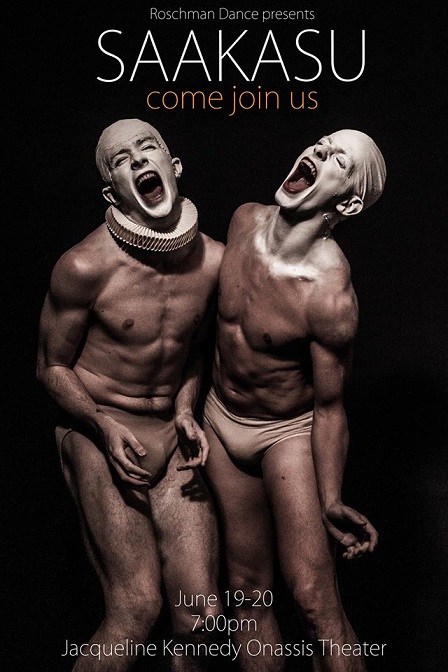
    Friday June 19th, 2015 – I’d never been to the Jacqueline Kennedy Onassis Theatre before. It’s a very nice venue for dance, with a proscenium stage and amphitheater seating, and tonight Roschman Dance (new to me) presented two works there, along with “Saakasu“, choreographed by Omar Roman de Jesus. 

    Roschman Dance’s 2012 work, “Learning To Fold“, opened the evening. Danced to music by Ethel, this piece showed the Roschman dancers to advantage with choreography that looks fresh and spacious. The six white-and-blue clad dancers shared a natural affinity for the sheer joy of movement. Aside from brief moments of reflection, the work is mostly a swirl of activity as the dancers come and go, connecting with one another in fleeting partnerships before sweeping onward. A stylized unison passage to the plucking of strings and a trio for the three women stood out, but for the most part “Learning To Fold” kept up its forward impetus: celebratory dance, performed with sincerity.

    Omar Roman De Jesus, who performs with Parsons Dance, offered  “Saakasu” (‘Circus’ in Japanese); earlier in the week photographer Travis Magee and I had dropped in at Omar’s rehearsal where his Parsons colleagues Ian Spring, Geena Pacareu Rijnsburger, and Eoghan Dillon along with a lively ensemble of young dancers were putting finishing touches on “Saakasu“.

    Seen onstage, with its sexy costuming and dramatic lighting, “Saakasu” makes a vivid impression. It opens with Ian Spring alone onstage. In his seasons with Parsons Dance, Ian has developed from an energetic boy-next-door into a charismatic dancer of the first order: one of New York’s finest. Wearing only a dance belt, a ruffled collar, and powdered hair, Ian takes on the timeless persona of the traveling player: visions of old Japanese theatre, the commedia dell’arte, and the tragic Pagliaccio smearing on his white greasepaint are evoked. 

    The music of a kozmic hurdy-gurdy sets the mood; Ian, in a pool of light, emits a profound scream: his inner animal wants to emerge. Eoghan Dillon and two girls have a stylized trio; more screams, and the full ensemble take the stage with the wary eageress of animals who have escaped their cages. Ian and Zoey Anderson have a sensuous duet to a piano theme, and then the tribe return, stomping their feet and slapping their thighs in a primitive ritual. 

    Ian crosses the stage singing a famous circus song. The music goes big and industrial; he and Geena have a duet. Meanwhile Eoghan has been crawling among the savage dancers and he finally finds a means of escape, though he simply ends up running in place since nightmares rarely allow for escape. 

    The dancers rush about in a circle, leaping. Things slow to near stillness. Debussy’s immortal “Clair de lune” is heard as Ian dances a compelling solo with very subtle images of Nijinsky’s faune woven in. This reverie ends as the ensemble re-enter, stamping their feet. They shimmy, shake, and exalt around Ian, lifting their arms to summon some pagan god. They hit the floor as the music goes pensive, only to rise again and collectively stomp upstage as silence and darkness fall.

    I wasn’t familiar with Omar Roman de Jesus’s choreographic background, but with “Saakasu” he’s really onto something: vivid in its theatricality and demanding of the dancers in terms of both technique and expression, it’s a piece to be seen again. The audience reacted with shouts of enthusiasm. 

    Contrast is a valuable asset in a mixed program of dance and so, after the interval, Sean Roschman’s “Crooked Creek” (a world premiere) was a fine counterpoise to the large-scale and darkly sexy de Jesus work. Set to an ‘Americana’ score, Roschman Dance‘s latest work seems on the surface a simple presentation of young people at a dance in a rural community, maybe in the inter-war years of the 20th century. Yet there is an underlying sense of dread, as if something is not quite right.

    Three couples waltz to an innocent, hummed tune, and then the fiddle summons up a square dance. A woman is abandoned by her partner; she lingers to watch another couple’s duet. Agitated passages follow: a trio of women and an in-sync duet for two girls; always there is a sense of being observed.

    Cascades of fiddling urge the dancers onward: various pairings and shifting solo moments, stillness offset by activity. A buzzing musical motif, and one of the girls collapses as if infected; her sad solo evolves to a trio for the women, and then to a pas de quatre for two couples. The tempo picks up for a duet, then the sound of the cello sets up a solo for one of the women. The dancers rush about as if possessed before collapsing, and the lights go out. But in an postlude, one woman sits up, unsure of what has happened. Her questioning gaze is held as a final darkness falls.

    Seeing a new Company, it’s perhaps unfair to single out a particular dancer: but in the two Roschman works I was especially impressed by Christian Deluna-Zuno, a Mexican guy with a high-flying extension and a handsome stage presence.

  • Herrera/Stearns/Part GISELLE @ ABT

    Paloma-herrera

    Friday June 20, 2014 – With Paloma Herrera’s announced retirement in mind, I wanted to re-visit her in the role of Giselle. ABT graciously provided me with a press seat (next to the lovely Mary Cargill) and despite this being my umpteenth viewing of this production of GISELLE, I truly enjoyed the entire evening.

    ABT could surely use a new production of GISELLE: the current one uses sets created for the film Dancers in 1987 and while it is perfectly serviceable, a fresh rendering would surely be a boon for frequent ballet-goers. The orchestra sounded especially plush tonight under David LaMarche’s baton, and it was refreshing to be at The Met for something that didn’t include a 35-to-40-minute intermission (the intermissions at Gelb’s opera performances are interminable and a real drain on the dramatic impetus of the operas).

    ABT‘s corps of Wilis danced with their usual expertise, though the two waves of applause as the hopping ballerinas cross paths are now more obligatory than a sign of genuine admiration: applause here rather dampens the atmosphere. Still, there’s no denying it’s an impressive moment. Tonight we had stellar casting in the roles of Myrna and Zulma – Misty Copeland and Yuriko Kajiya respectively – and a spectacularly danced, dramatically vivid Myrthe from the imperial Veronika Part.

    Earlier, in Act I, Luciana Paris and Luis Ribagorda danced a spirited Peasant pas de deux, with Luis especially fine in his second solo. Kelly Boyd, as Berthe, was very clear in her mime as she warned her daughter of the perils of dancing too much: a warning Giselles have ignored for decades.

    I was excited to see Sascha Radetsky listed as Hilarion – Sascha too is about to retire – but a pre-curtain announcement advised us Thomas Forster would be doing the role instead. Thomas was excellent – a Hilarion taller than the evening’s Albrecht made for an interesting conflict. Of course for me, I’m always on Hilarion’s side in all of this: Albrecht is a liar and a cheat who simply shrugs off his deceitful behavior when he’s cornered. Nothing really to admire here: he’s only redeemed by Giselle’s steadfast love.    

    I had only seen Ms. Herrera’s Giselle once before, in 2009, on a night when Roberto Bolle danced his first ABT Albrecht. That performance was a veritable Bolle Fan Fest and Paloma’s Giselle, though impressively danced, got somewhat swept away by the enthusiam her partner generated among the fans. So tonight the focus was rightly on the ballerina, and in my view she turned in a beautiful performance in every regard.

    Paloma’s sensitive musicality and her lush technique were very much to be savoured tonight; her Act I solo with super-confident hops on pointe and softly sweeping attitude turns drew cheers from the audience; later, her Mad Scene was marked by moments of stillness where Giselle’s mind seemed to be collapsing inwardly upon itself, her dreams destroyed in the debris of love’s betrayal.

    In the second act, Ms. Herrera and Cory Stearns formed a visually appealing partnership, his elegance of line and fleet-footed vistuosity counter-poised by the ballerina’s poetic lyricism and the inner strength she summons to keep her beloved alive. The poignant last farewell, the presentation of the single blossom that signifies forgiveness and redemption, was beautifully rendered by these two artists.

  • Amanda Selwyn’s IT’S A GAME

    BRI_9061-10-L

    Photo by Brian Krontz; click on the image to enlarge.

    Friday June 28th, 2013 – Amanda Selwyn Dance Theatre presenting IT’S A GAME at New York Live Arts down in Chelsea on Pride Weekend 2013. The atmosphere in the neighborhood was palpable as the gay and lesbian community celebrate the good news handed down from the Supreme Court earlier this week. Amanda’s 50-minute work, inspired by the designs of Alexander McQueen and the magic of Harry Potter, was a decorative diversion on this start-of-summer evening.

    In April, photographer Matt Murphy and I had stopped in at Amanda’s studio while IT’S A GAME was being created. Now the dancework has been dressed (Ana-Alisa Belous designed the fanciful costumes) and superbly lit (Dan Ozminkowski). Music from no fewer than 14 artists comprises the score for the dancing which takes place in three brief ‘acts’, each with several sub-sections.

    Bri_8127-1a

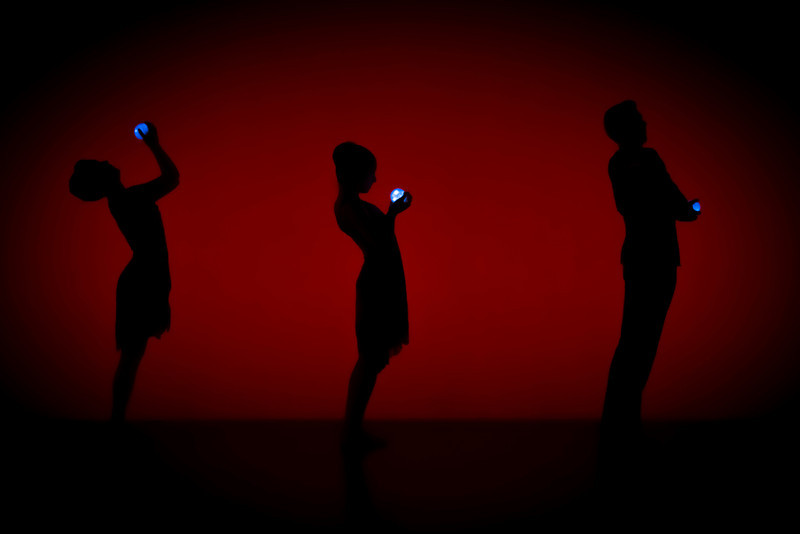
    IT’S A GAME begins with a ritualistic entree of the six dancers, each holding a glowing orb. Emily Pacilio has a beautifully expressive solo danced in a stream of light, set to a soulful Russian-sounding theme. The ensemble weave about the solo dancer, enticing her into the community.

    BRI_9631-14-L

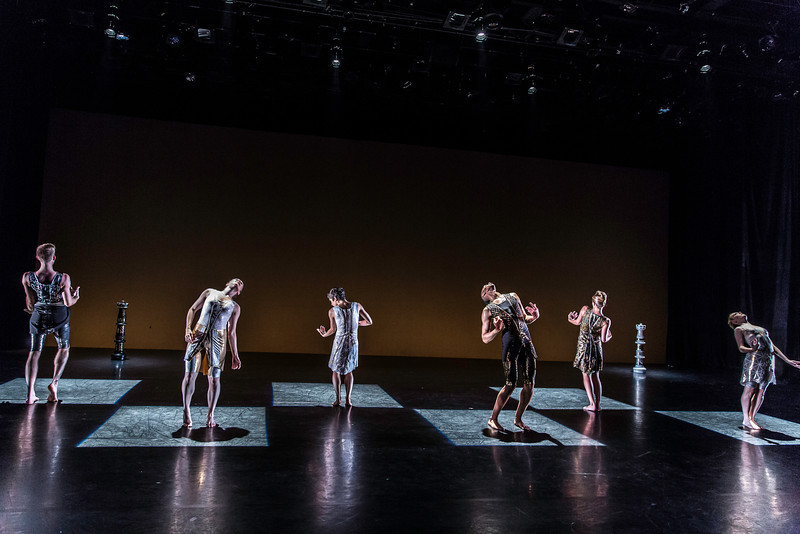
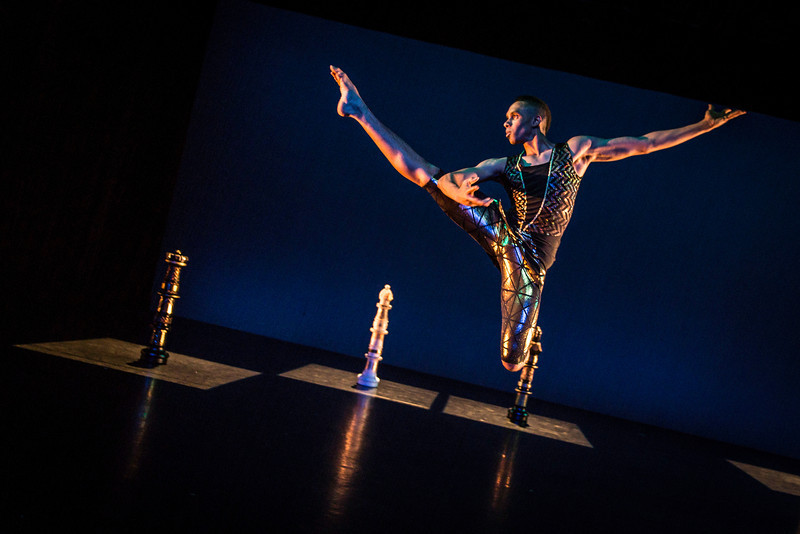
    Then the games begin: large chess pieces are moved across squares of light; later dice and playing cards will be introduced. These props are used as fantasy elements, drawing the dancers into fleeting duets (with some very clever partnering motifs) and playful ensembles. The choreographer’s feel for visual polyphony keeps the focus of the work shifting from dancer to dancer: solo opportunities weave into the mix, and the sense of physicality between the dancers is maintained as the lighting steers our attention from one movement pattern to the next. A rectangular pathway of light surrounds the playing field, the dancers trace their steps around it in one of the evening’s most striking moments.

    The dice are thrown, the cards are dealt…checkmate. The dancers have returned – now in striped beachwear – with their hand-lights, now glowing red. One expects an elaborate, playful finale but instead the work ends on a question-mark, and a sudden plunge into darkness.

    The only slight flaw in the evening was the raising of the house lights
    between the work’s thee sections. This tended to break the spell
    somewhat, with the audience becoming restless and whispery. Better to
    keep things in the dark.

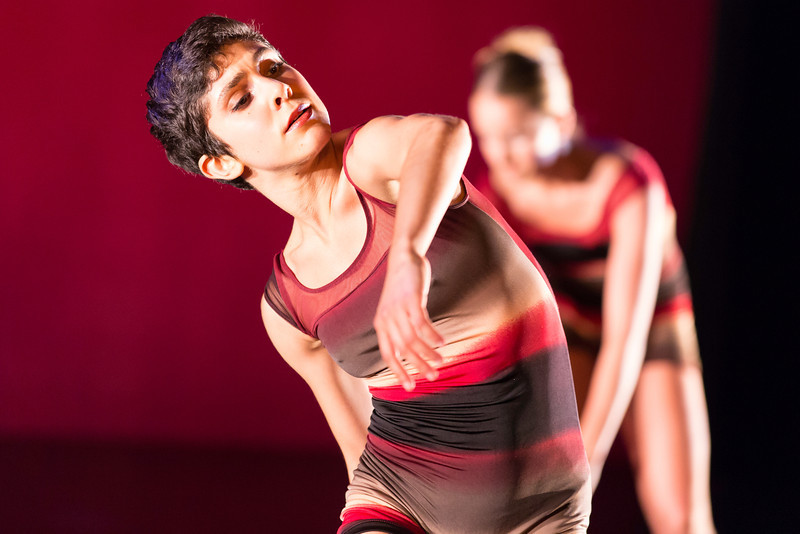
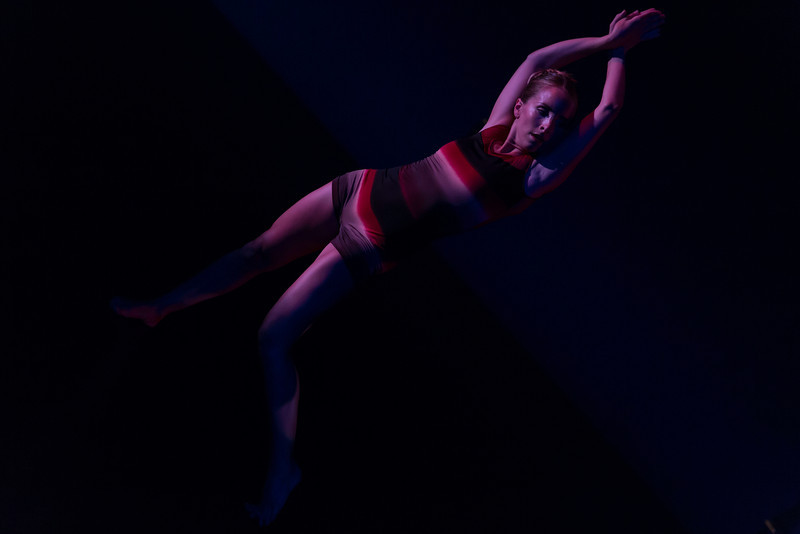
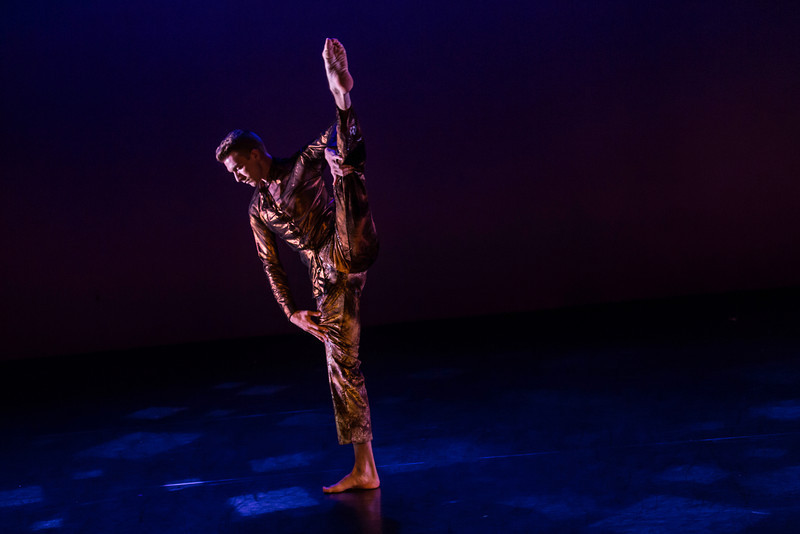
    The dancers showed high commitment to the movement and music: four well-contrasted personalities among the women, and two long-limbed boys with flourishing extensions. Here are some of Brian Krontz’s images from the dress rehearsal:

    BRI_9965-18-L

    Emily Pacilio

    BRI_0204-21-L

    Victor Larue, Torrey McAnena

    BRI_8995-9-L

    Randall Anthony Smith

    BRI_8319-3-L

    Jenny Gillan

    BRI_0780-29-L

    Sarah Buscaino

    BRI_0551-26-L

    Victor Larue

    BRI_8395-4-L

    Emily Pacilio

    BRI_9297-12-L

    Randall Anthony Smith

    BRI_0531-24-L

    BRI_8644-7-L

    BRI_8477-5-L

    Victor Larue

    BRI_9705-15-L

    All photography by Brian Krontz