Tag: Friday March

  • Transfigured Night @ Chamber Music Society

    Arnold_Schonberg_Richard_Gerstl

    Above: portrait of Arnold Schoenberg by Richard Gerstl

    ~ Author: Oberon

    Friday March 18th, 2022 – Whenever Arnold Schoenberg’s Verklärte Nacht (“Transfigured Night”) is being performed in Manhattan, I will try to be there. This evening, it was the closing work on an imaginative program of ‘music of the night’ put together by Chamber Music Society of Lincoln Center.

    Opening the evening was Luigi Boccherini’s Quintet in C-major for Two Violins, Viola, and Two Cellos, G. 324, “La musica notturna delle strade di Madrid”  which was composed in 1780. As my friend Ben Weaver remarked after hearing it tonight: “This music is so ahead of its time…it could have been composed yesterday!” To be sure, it is very inventive work, and there’s so much packed into its 12-minute duration.

    Tonight, this Boccherini gem was performed to perfection by Yura Lee (having exchanged her more usual viola for the violin this evening), violinist Stella Chen, violist Matthew Lipman, and cellists Nicholas Cannellakis and Sinhao He. The best-known section of the work, the Minuet, caused a ripple of recognition to run thru the hall. Elsewhere, plucking and shivering motifs provide accompaniments as the melodies spin out; it ends with a regal section as Retreat is sounded and the guardsmen return to barracks.

    Franz Schubert wrote his Notturno in E-flat major for Piano, Violin, and Cello, D. 897, Op. 148, in 1828. It is sublimely beautiful, and was played tonight by three extraordinary musicians: Yura Lee (violin), Sihao He (cello), and Michael Brown (piano).

    The piano commences a slow waltz, the violin and cello harmonizing. Then roles are reversed: the strings take up a plucking rhythm as the pianist assumes the melody. From gentleness, there comes a rise of passion, with rippling keyboard figurations. The opening melody is repeated, becomes expansive, fades briefly, is revived, and then on to a quiet ending. Throughout the ten-minute work, I greatly enjoyed watching the silent communication between the three players.
    James+Austin+Smith

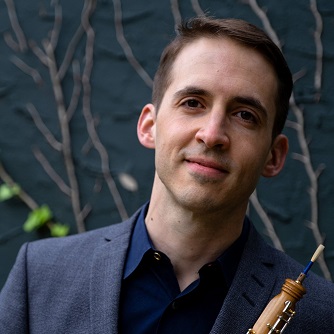
    Above: oboist James Austin Smith

    This evening brought my second hearing of Benjamin Britten’s Phantasy Quartet for Oboe, Violin, Viola, and Cello, Op. 2,  which. was written in 1932 for a competition for single-movement chamber works established in 1905 by Walter Wilson Cobbett,

    When I heard this work in 2013, James Austin Smith was the oboist; and he was back tonight, playing it so clearly and thoughtfully. He was joined by violinist Stella Chen (elegantly gowned in purple and white), violist Hsin-Yun Huang (very chic in a halter top and toreador trousers), and cellist Nicholas Cannellakis. 

    The piece commences with short, dotty cello notes, and then a march develops. The oboe takes up a songful passage. A swift and vibrant allegro is followed by a string trio before the oboist picks up where he left off, and the music marches off into the air as magically as it appeared. Mr. Smith’s delicious, multi-hued playing was – as always – a delight to hear.

    After the interval, the Society’s Executive Director, Suzanne Davidson, gave a brief speech, dedicating the concert to the heroic people of Ukraine. The crowd’s reaction was loud and clear.
    Maxresdefault

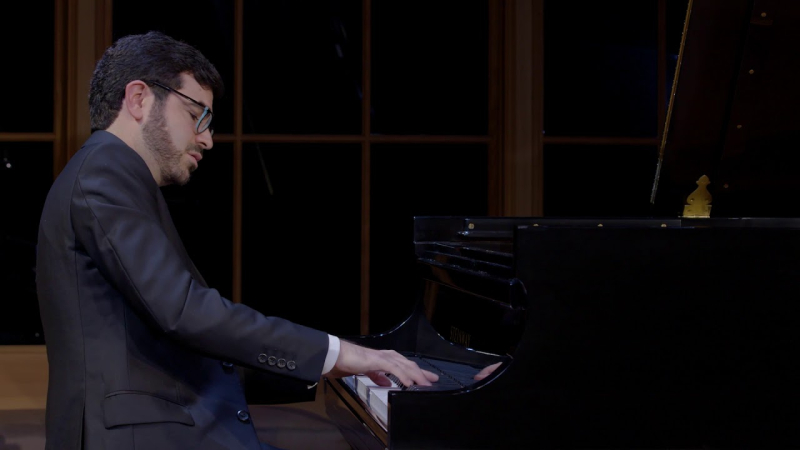
    The program continued as Michael Brown (above) took the stage alone to ravish the ear with his magical playing of two piano works by Claude DebussyLa terrasse des audiences du clair de lune” from Préludes, Book II (1913), and “Clair de lune” from Suite bergamasque (circa 1890; revised in 1905).

    In the first, Mr. Brown’s incredibly hushed pianissimo playing cast a spell of rapture and mystery over us; his control was astounding. As the prélude reached its tranquil end, Mr. Brown kept his hands poised over the keyboard momentarily and then embarked on an intoxicating rendering of the “Clair de lune”.. I found myself wishing that this poignant dream could go on and on… 

    Huang_

    Above: violist Hsin-Yun Huang

    To end this fascinating program, Arnold Schoenberg’s Verklärte Nacht (“Transfigured Night”) was magnificently played by a string sextet of the highest order: Yura Lee and Stella Chen (violins), Hsin-Yun Huang and Matthew Lipman (violas), and Nicholas.Cannellakis and Sinhao He (cellos).

    The composer drew inspiration for this work from a poem by the Austrian poet Richard Dehmel which tells of a man and woman wandering together late into the evening. The woman confesses to her lover that she is pregnant by another man. In the shadowy forest, the man consoles his beloved and, through his forgiveness, her guilt us assuaged. He assures her that he will care for the child as his own. Their love is transfigured through this night of communion they have shared, and they look to the future with hope.

    In its thirty-minute time span, Verklärte Nacht traces the lovers’ journey with incandescent harmonies and haunting melodies that sing of the redemption of forgiveness and the enduring power of love, The music traces the arc of the poem from its first line – “Two people walk through a bare, cold wood;” to its last: “Two people walk on through the high, bright night.” For a die-hard romantic like myself, few other works can compare.

    One of the most wonderful things about this work is the way Schoenberg distributes the musical treasures in his score: each of the six players has ample opportunity to display their tone and artistry as melodies are passed about and harmonies mingle on the air. As the music wends towards its finish, a great flow of lyricism rises up.
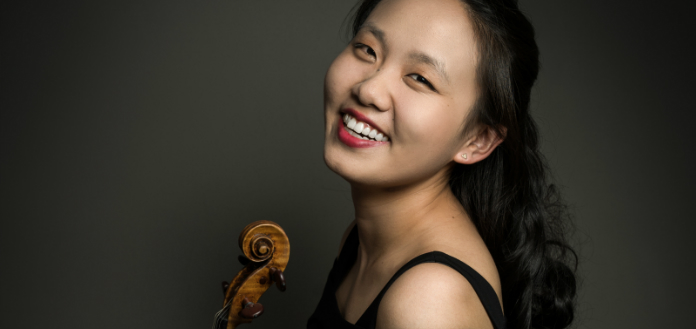
    Stella-Chen-

    Above: violinist Stella Chen

    This evening’s performance was so richly rewarding; the players captured every nuance of this profoundly moving score. At the end, a standing ovation was the only possible audience reaction; onstage, the artists quietly embraced one another during the bows.

    The cumulative effect of Verklärte Nacht tonight was to pull me – at least for a time – out of a deep feeling of world-weariness that has weighed on me in recent weeks, due to the lingering pandemic, the downward spiral of our great democracy, and a war started by a power-mad fiend. Indeed, it has, at times, felt like life is no longer worth living.

    To the musicians who played tonight: please know the great value of your music-making, and what it means to us. You provide a ray of light in an ever-darkening world. . 

    ~ Oberon
  • The ASO Presents Martinů’s JULIETTA

    B martinu

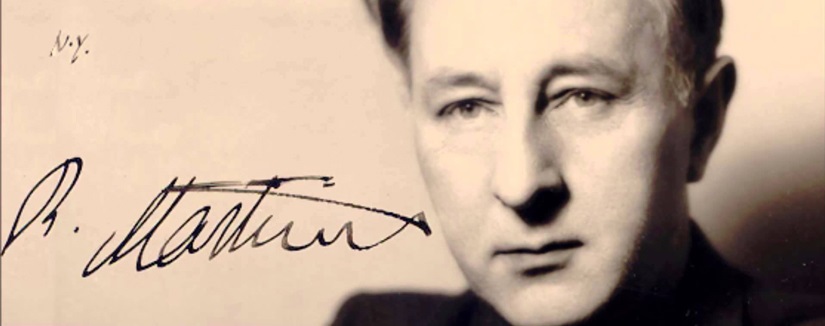
    Above: the composer Bohuslav Martinů

    ~ Author: Oberon

    Friday March 22nd, 2019 – Bohuslav Martinů’s opera JULIETTA in a concert presentation by The American Symphony Orchestra at Carnegie Hall, conducted by Leon Botstein. Based on the French play Juliette, ou La clé des songes (Juliette, or The Key of Dreams) by Georges Neveux, Martinů’s opera explores a world where dreams and reality converge.

    The plot of the opera was once described thus: “Michel Lepik, a bookbinder from Paris, is dreaming. Finding himself in a small seaside town, he sets out to look for a woman, Julietta, he’s absolutely convinced he met there three years before. The only problem is, everyone in the town has lost their memory. After a search, he finally finds her and tries to coax from her memories of their time together. Frustrated, he shoots her. But did it all really happen? Michel finds himself  in the “Central Office for Dreams”, where the nightwatchman tries to persuade him to leave…because, if he stays past the allotted time, he must stay forever.”

    While it was interesting to experience JULIETTA live, not all operas work well in a concert setting. The story is somewhat intriguing in its own right, but it seems to me that it cries out for an imaginative staging: it is not really a strong enough narrative to sustain interest over a three-hour span without some visual context. Beyond the leading roles of Julietta and Michel, the singers each portrayed multiple characters. A booklet with the full text was provided, but it is not easy to watch the stage, read the words, and take notes all at the same time. Also, throughout the performance, the sound of text booklets dropping to the floor was annoying.

    Martinů’s orchestration is sometimes fascinating, but only in the final moments of Act II did the opera draw me in musically. Much of the first act is given over to banter – some of it spoken, in English – and at times it felt more like a play or a Broadway show than an opera; I must say, in truth, it became tiresome after a while. At 10:00 PM, there was an intermission, with another act still to come. Knowing how whimsical the MTA is at night, I decided it was safest to leave Carnegie Hall at the point. Sure enough, I had an ordeal getting home.

    The orchestra played very well under Maestro Botstein’s detailed leadership; the score is strewn with brilliant little instrumental opportunities, which the players eagerly seized upon. Tenor Aaron Blake, slender and lively, impressed in the role of Michel. His music calls for plaintive lyricism but also power and passion. Mr Blake’s voice had the needed beauty of tone as well as the intensity required to give a truly impressive performance. In the title-role, the attractive soprano Sara Jakubiak sang with a warm spinto sound, making me wish the character had more extended passages of song. David Cangelosi, who has been so excellent as Wagner’s Mime and in other highlighted character roles at The Met, was simply superb as the Police Chief.

    Multi-tasking in myriad roles were: the comely young mezzo Rebecca Jo Loeb, the lively and boisterously endearing mezzo Raehann Bryce-Davis, the always-wonderful contralto Tichina Vaughn, Met stalwart and strong-voiced baritone Philip Cokorinos, the fine basso Kevin Burdette – who I heard many times in his Juilliard days – and the inimitable Alfred Walker, a vocal scene-stealer and impressive presence, with ultra-clear diction. A small vocal ensemble from the Bard Festival Chorale (James Bagwell, director) sang from stage right.

    I wish I could feel more enthusiastic about the piece itself; I also wish the ASO would start their performances at 7:00 PM, so as to end before the MTA makes getting home a chore.

    ~ Oberon

  • The ASO Presents Martinů’s JULIETTA

    B martinu

    Above: the composer Bohuslav Martinů

    ~ Author: Oberon

    Friday March 22nd, 2019 – Bohuslav Martinů’s opera JULIETTA in a concert presentation by The American Symphony Orchestra at Carnegie Hall, conducted by Leon Botstein. Based on the French play Juliette, ou La clé des songes (Juliette, or The Key of Dreams) by Georges Neveux, Martinů’s opera explores a world where dreams and reality converge.

    The plot of the opera was once described thus: “Michel Lepik, a bookbinder from Paris, is dreaming. Finding himself in a small seaside town, he sets out to look for a woman, Julietta, he’s absolutely convinced he met there three years before. The only problem is, everyone in the town has lost their memory. After a search, he finally finds her and tries to coax from her memories of their time together. Frustrated, he shoots her. But did it all really happen? Michel finds himself  in the “Central Office for Dreams”, where the nightwatchman tries to persuade him to leave…because, if he stays past the allotted time, he must stay forever.”

    While it was interesting to experience JULIETTA live, not all operas work well in a concert setting. The story is somewhat intriguing in its own right, but it seems to me that it cries out for an imaginative staging: it is not really a strong enough narrative to sustain interest over a three-hour span without some visual context. Beyond the leading roles of Julietta and Michel, the singers each portrayed multiple characters. A booklet with the full text was provided, but it is not easy to watch the stage, read the words, and take notes all at the same time. Also, throughout the performance, the sound of text booklets dropping to the floor was annoying.

    Martinů’s orchestration is sometimes fascinating, but only in the final moments of Act II did the opera draw me in musically. Much of the first act is given over to banter – some of it spoken, in English – and at times it felt more like a play or a Broadway show than an opera; I must say, in truth, it became tiresome after a while. At 10:00 PM, there was an intermission, with another act still to come. Knowing how whimsical the MTA is at night, I decided it was safest to leave Carnegie Hall at the point. Sure enough, I had an ordeal getting home.

    The orchestra played very well under Maestro Botstein’s detailed leadership; the score is strewn with brilliant little instrumental opportunities, which the players eagerly seized upon. Tenor Aaron Blake, slender and lively, impressed in the role of Michel. His music calls for plaintive lyricism but also power and passion. Mr Blake’s voice had the needed beauty of tone as well as the intensity required to give a truly impressive performance. In the title-role, the attractive soprano Sara Jakubiak sang with a warm spinto sound, making me wish the character had more extended passages of song. David Cangelosi, who has been so excellent as Wagner’s Mime and in other highlighted character roles at The Met, was simply superb as the Police Chief.

    Multi-tasking in myriad roles were: the comely young mezzo Rebecca Jo Loeb, the lively and boisterously endearing mezzo Raehann Bryce-Davis, the always-wonderful contralto Tichina Vaughn, Met stalwart and strong-voiced baritone Philip Cokorinos, the fine basso Kevin Burdette – who I heard many times in his Juilliard days – and the inimitable Alfred Walker, a vocal scene-stealer and impressive presence, with ultra-clear diction. A small vocal ensemble from the Bard Festival Chorale (James Bagwell, director) sang from stage right.

    I wish I could feel more enthusiastic about the piece itself; I also wish the ASO would start their performances at 7:00 PM, so as to end before the MTA makes getting home a chore.

    ~ Oberon

  • Lifits @ Weill Hall

    ~ Author: Scoresby

    Friday March 23rd, 2018 – It is always a pleasure going to Carnegie Hall’s Distinctive Debuts series to hear new young musicians. This evening had the Uzbeckistani-German pianist Michail Lifits performing a short and somewhat eclectic program. The evening began with the last piano sonata that Schubert published in his lifetime: Piano Sonata in G major, D 894. Interestingly, this work was Schumann’s favorite Schubert piece. It is an unusual for younger musicians to program this work as it is one of Schubert’s most understated. Typically I am wary of hearing this piece played, as it can sound utterly repetitive in the wrong hands. Mr. Lifits proved otherwise, providing one of the most probing performances I’ve heard of the piece.

    The work commences with a serene chord pattern that serves as the base for the entire first movement. Mr. Lifits used a quiet and refined style of playing. There wasn’t much pedal; however, all of the voices were even. His tempo was quicker than some, but this only emphasized the song like quality of the music. After each restatement of this main theme, Mr. Lifits would slightly alter his voicing, throwing a different shade of color to this chord pattern. Over the course of the few minutes leading up to the dramatic downward scale that launches the piece forward, Mr. Lifits hand began to focus on clarifying the lower notes and murky inner-voices. Thus, with the tension set, he launched into that fateful downward scale creating one of the most dramatic moments of the evening. His sensitivity in dynamics let that moment feel like an awakening of sorts, after all the quiet lead up.  

    Screenshot 2018-03-25 at 2.35.22 PM

    Above: Pianist Michail Lifits, Photo Credit: Felix Broede

    After finally moving into this broader dynamic range, Mr. Lifits took full advantage. Through the first movement there are beautiful lieder-like sections. Here the piano had a softer sound, the melody in the right hand sounding like a singer playfully skirting atop a charming accompaniment. Each time the downward motif was repeated, Mr. Lifits increased the drama by adding slightly louder dynamics propelling the music forward.  

    In the main repeated chords, the lower basses gradually came into its own melancholy identity. Mr. Lifits wistful playing made this tinge become apparent through all the gracefulness above it. Finally, after transforming the almost repetitious theme for the last time the first movement came to delicate close. The audience was so enthused that they gave him a loud clap before letting him begin the second movement. I’ve never heard such a creative performance of that movement, that let each chord shine while at the same time pushing the music forward.  

    Mr. Lifits took a slightly faster approach for the second movement than one typically hears, which just increased the song-like quality inherent in this music. In the second minor theme that takes over this was particularly present. Despite some smudges in some of the scales and some technical issues, as a whole the second and third movements were still lovely.  

    Not pausing between any of the movements (perhaps out of fear that the audience would clap again, a good problem to have), he took a naïve jolly tempo for the last movement. Enjoying each ornamentation in the right hand and letting the music pop. I couldn’t but think that Schumann must have been inspired by this in his own Carnival. Regardless, I look forward to listening to Mr. Lifits’ Schubert CD (which includes this sonata). According to his biography he is recording an entire cycle of Schubert’s music and I look forward to hearing it all. 

    In the second half of the concert, there was a transition from the serene to the circus. First was the Shostakovich 24 Preludes, Op. 34 performed in succession without a break with Shostakovich Prelude and Fugue in D minor, Op. 87, No. 24. The Preludes are an earlier set of pieces which are classic Shostakovich joke-type pieces. While there are some serious moments, they are a study in comical miniatures for the most part. While I enjoy hearing a few of these, hearing all of them in succession was a little much for my taste (even as a devout Shostakovich lover).  

    Nonetheless, Mr. Lifits gave as good of a performance as one can expect, emphasizing the humorous sections of these pieces. In the second movement which is a burlesque sort of waltz, Mr. Lifits indulged in its off-kilter quality. He played up the various extreme dynamic changes in the wild moments. In the eighth movements riffs on jazzy themes, the piano here sounded like in a cabaret. The best part of the second half was the organ-like prelude and fugue. Mr. Lifits managed to coax all of the difficult voicing out of the fugue to create an intricate web of layers.  

    After such a well-played concert, Mr. Lifits offered Rachmaninoff’s showy arrangement of Kreisler’s Liebesleidwhich seemed inappropriate after all that came before. As a panacea to the Rachmaninoff, Mr. Lifits finished the concert with a second encore of Chopin’s posthumous Nocturne in C-sharp Minor which he played as well as the Schubert.

    ~ Scoresby

  • Celebrating Michael Trusnovec @ Paul Taylor

    PTDC-yellow-3

    Above: Michael Trusnovec

    ~ Author: Oberon

    Friday March 23rd, 2018 – This evening, at Mr. B’s House, we celebrated Michael Trusnovec’s 20th anniversary with the Paul Taylor Dance Company. Michael, one of the greatest dancers of our time, danced in all three works on tonight’s program. No one who has ever experienced a Michael Trusnovec performance needs to be told about his classically handsome face, his to-die-for physique, his complete command of every role he’s cast in, his peerless partnering skills, his musicality, his generosity of spirit, and his humble grace in acknowledging big ovations. All of this was wonderfully in evidence tonight. To be a star in an all-star Company, and to dance night after night the works of a master choreographer: what more could a dancer ask?

    The three ballets on offer tonight were strongly contrasted in music, movement, and style. The program showed off the vast range of the Taylor dancers, and their priceless gift for keeping the Taylor masterworks ever-fresh whilst being ready, willing, and able to tackle new choreography and make it their own. 

    PT Half Life

    Above: from Doug Varone’s HALF LIFE, a Paul B Goode photo

    Doug Varone’s HALF LIFE, set to a score by Julia Wolfe, with lighting by James Ingalls and costumes designed by Liz Prince, opened the evening. This ballet premiered earlier this season. It begins with Eran Bugge and George Smallwood dancing in-sync, in silence, on a bare stage with over-head fluorescent lighting. Then the music begins: vibrant and driven, it propels the dancers into a veritable whirlwind of motion and commotion. Fear seems to be the driving force behind all this activity as they dash about, full of apprehension, making fleeting contact with one another before rushing off in another direction. Terror has descended upon them as they push and pull, fall and rise, entangle and break free, twist, turn, and fling themselves about the space. Periodically, a dancer will raise his arm towards heaven, imploring god’s intervention. Like billions of prayers down the centuries, these remain unanswered.

    The fluorescent lights have turned to a toxic, lurid yellow as they begin to descend, flattening the space as the dancers run away, hopefully to a fallout shelter. The lights sputter out.

    HALF LIFE might be viewed as a ballet for the new nuclear age that threatens us now as today’s world leaders seem to be moving towards a “my bomb’s bigger than your bomb” mentality. While Mr. Varone’s choreography – so relentless, filled with an almost random dynamism – is exciting to behold in and of itself, watching the dancers thru my strong opera glasses added another whole dimension: their intense facial expressions, the fear and wariness in their eyes, and their desperation to communicate with one another brought the panic and dread of these uncertain times into sharp focus. HALF LIFE isn’t just a bunch of people rushing about with manic energy, but a commentary on the human condition as our planet experiences a second Age of Anxiety.

    There were countless passages in which to focus on the individual dancers; clad in simple off-the-rack style clothing, they all look beautiful, even in their distress. The men – Mr. Trusnovec, Robert Kleinendorst, Sean Mahoney, Michael Novak, Mr. Smallwood, Lee Duveneck, and Alex Clayton – flung themselves into fast-paced moves and tricky, split-second partnering. Yet my opera glasses were continually lured by the women: Michelle Fleet, Parisa Khobdeh, Eran Bugge, Laura Halzack, and Heather McGinley. Ms. McGinley, the Company’s knockout redhead, danced up a storm. They all did, in fact.

    There was a gigantic roar of applause as the curtain fell, and as pairs of dancers stepped forward during the bows, screams of epic proportion filled the hall: all so eminently deserved. At a time when so much new choreography seems simply to be going thru the motions, Mr. Varone – richly abetted by Ms. Wolfe’s tumultuous score – gives us an unnervingly timely piece. The dancers took it and ran with it. Thrilling! 

    Eventide-4

    Above: Parisa Khobdeh and Michael Trusnovec in EVENTIDE, a Paul B Goode photo

    EVENTIDE, one of Taylor’s most lyrical works, unfolds before a backdrop of hazy trees on a late-Summer afternoon in the English countryside. The Ralph Vaughan Williams score brought forth idyllic playing from the Orchestra of St Luke’s and violist David Cerutti.

    The ensemble dance a graceful and courtly Prelude, then individual couples appear in a series of duets. In the first, Parisa Khobdeh and Michael Trusnovec summon feelings of slightly hesitant tenderness; it finishes with Ms. Khobdeh perched on Mr. Trusnovec’s shoulder. There’s a bit of playfulness in the second duet, with Jamie Rae Walker and Sean Mahoney clearly attracted to one another but not quite sure of how to express it. I really like their partnership.

    In a gorgeous, adagio/pas de quatre Heather McGinley and Michael Novak simply radiate gentle romance, Ms. McGinley’s eyes sweetly downcast so as not to be blinded by the handsomeness of her cavalier, whilst Mr. Novak shows a quiet pride at having such a distinctive beauty as Ms. McGinley on his arm. It’s a duet of mutual admiration and reassurance.

    Deep and heartfelt emotion seems to fill the air as Laura Halzack and James Samson danced together in sublime harmony, casting tender looks into one another’s eyes; a moment when Laura simply touched James’s cheek was just unbearably lovely. This stage has been home to some very charismatic partnerships – Suzanne and Peter, Wendy and Jock – but few have moved me as much as watching Laura and James together this season. 

    A shadow falls over the meadow as Eran Bugge enters, wary but oddly hopeful: she’s being pursued by a quietly predatory Robert Kleinendorst, and as their duet ends, Robert leaves Eran on her own…a very significant moment, as she is both safe but perhaps also just a bit sorry. Together, Eran and Rob told this story so expressively.

    Heather McGinley and Michael Novak bring a sense of open-hearted richness to their second duet. It’s a long pas de deux, but with these two dancing it could have been twice as long and remained thoroughly mesmerizing. Finally Ms. Khobdeh and Mr. Trusnovec re-appear in a poignant pas de deux, finding solace in their romance: elegant and sustaining dance, awash with fond devotion.

    EVENTIDE concludes with an extended promenade for the entire cast. As ever, this ballet left me musing on my own romantic choices over the years, filled with notions of what might have been.

    CLOVEN KINGDOM is a ballet I never tire of seeing. It was given a magical glow tonight, with everyone incredibly finding an extra iota of energy, commitment, and inspiration in honor of their colleague, Mr. Trusnovec. 

    Michelle Fleet, Jamie Rae Walker, Eran Bugge, and Parisa Khobdeh ease thru high-toned samba sways one minute, and then they’re flipping cartwheels the next. I just loved watching them thru my trusty binocs. Laura Halzack and Christina Lynch Markham are bound together by some mythic spell: we don’t quite know what their story is, but I never tire of trying to figure it out. Madelyn Ho periodically flashes across the stage in pursuit of Heather McGinley, who remains confidently self-absorbed as she carries on with her jetés

    Tonight, Mr. Trusnovec had Mssrs. Samson, Apuzzo, and Smallwood as his fellow tuxedoed teammates for the men’s pas de quatre that’s at the epicenter of this cloven kingdom. Their fearless athleticism and bizarre rituals underscore the Spinoza quote that always accompanies this ballet’s listing in the Playbill: “Man is a social animal.” 

    A whooping ovation greeted the first CLOVEN KINGDOM curtain call, a full-cast bow. Then the curtain rose again with Mr. Trusnovec alone onstage, clutching a huge bunch of flowers. Massive applause and cheers: the audience simply went crazy as Michael’s fellow dancers pelted him with bouquets from the wings.

    Of Michael Trusnovec, Robert Gottlieb wrote in the New York Observer: “He’s the greatest male dancer we’ve had in America since Mikhail Baryshnikov, with whom he shares an immense range and a selfless devotion to his art. Trusnovec never demands your attention, but he always has it.” I couldn’t agree more.

    ~ Oberon

  • Ian Spencer Bell: Poet and Dancer

    12799298_10206186818733498_6040095322399417585_n

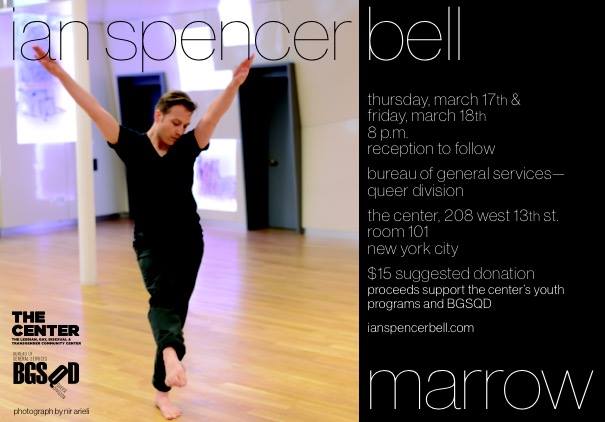
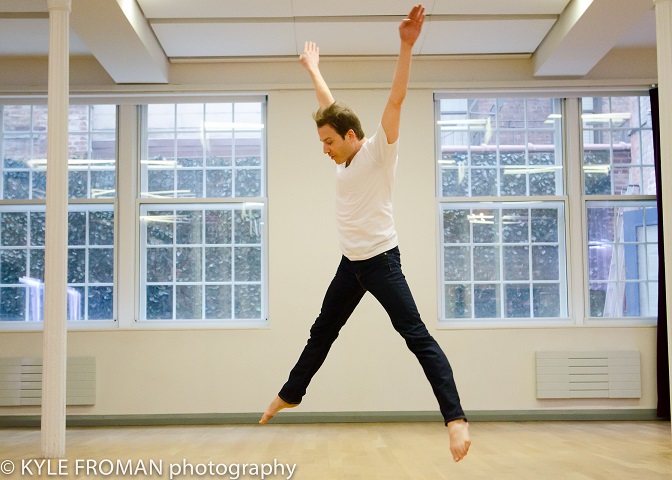
    Friday March 18th, 2016 – There are only a handful of true originals on the Gotham dance scene these days, and Ian Spencer Bell is one of them. In the past, his very sophisticated choreography of small ensemble pieces has always intrigued me; more recently, Ian has been exploring his two passions – dance and poetry – simultaneously in unique solo presentations. 

    Tonight at the Lesbian, Gay, Bisexual & Transgender Community Center on 13th Street, Ian performed his newest work, MARROW, in the intimate yet airy space of the recently-renovated Room 210. It was in the same setting, last June, that Ian’s double bill of GEOGRAPHY SOLOS and HOLLER made such a distinctive impression.

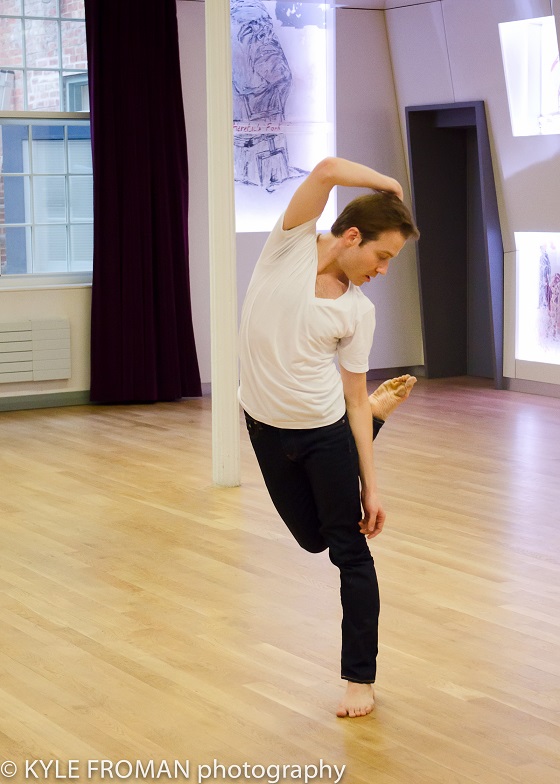
    An attentive and wonderfully silent audience seemed mesmerized this evening by Ian’s every word and move. Lithe and beautiful to behold, Ian dances with a rather gentle physicality; but the choreography can also take on a sharper aspect when the narrative gets more intense. 

    _KCF9145-2

    His poem tonight drew on his experiences as a Southern boy, a youth who was different from everyone else. How many times has this story been told??…and yet, rarely with the same poignancy as in Ian’s words and dancing.

    Waiting for the performance to start, we were listening to Ode to Billie Joe; thus was the setting for what we were about to witness already evoked. Beginning with a story about swarms of bees which attacked his home (“I’m allergic, and alone.”), Ian went on to describe a dream of men climbing out of manholes. (Yes, physical laborers have always created fantasies for gay boys…) As Ian spoke, his body spoke also – in rapid turns, or simple walking, with expansive port de bras; the sweeping motion of a foot; plunges to the floor where he cowered or lazed.

    Confidences and local gossip become part of the story, as does an incident of Ian’s mother falling into a hole on their property while tending horses. This left her with a permanent injury. Meanwhile, his siblings and step-father play out their expected roles: “Boys don’t act like that!” his step-dad yelled, uncomprehendingly. “I wanted my step-father to die,” was young Ian’s thought in response.

    _KCF9035-2

    From repose to restlessness, the dancing moves on: a harrowing episode where his step-father attempts to strangle him is the work’s most dramatic moment; but even the more mundane aspects of daily life – as of waiting in the checkout line at a local store to buy supplies for “making a funeral wreath” – take on an unusual resonance in Ian’s words.

    _KCF8670-2

    In the end, our stories of growing up gay are mostly all the same – a theme-and-variations setting of what it’s like to be different. What’s sad is that, apparently, so little progress was made in the years separating my experience from Ian’s.

    Waiting in the Center’s lobby for the performance to begin, I watched the hordes of young people coming and going. They have found a community and a haven here: such lovely kids, unbounded diversity. And while I am certain they are dealing with many of the same problems that have beset us all, they have resources now that we did not have…and they have each other.

    I had no one to turn to, and nothing to reassure me; I was alone, thinking – as I so often did in those first harrowing years of self-discovery – that I was the only one.

    Thus it is deeply moving to have Ian telling our story, and in such an imaginative and compelling way. 

    (Note: this article is now updated with new photos by Kyle Froman)

  • TAKE Dance: THERE AND HERE

    Safe_image.php

    Friday March 27th, 2015 – Takehiro Ueyama’s TAKE Dance celebrating their tenth anniversary with an evening-long work entitled THERE AND HERE, presented at the Schimmel Center. For this special occasion, guest artists Miki Orihara, Amy Young, Nana Tsuda, and Orion Duckstein joined the members of Take’s company, and Take himself appeared in an enigmatic role. Take talks about influences and inspiration here.

    Composer Kato Hideki performed his mystical score live, perched on high in the shadows at the rear of the stage. The music feels improvisational, giving the dancers a soundscape in which their individual expressiveness can be sustained. Hideki’s score has an other-worldly quality, with the sounds of wind blowing, resonant drumming, and a sustained motif of perpetual sonic beeps, which seems like a signal from another world that is trying to reach us.

    For indeed THERE AND HERE straddles two worlds: the world of the living and the unknown world of the afterlife. The performing space, open to the riggings on the sides, is a patch of desert – the sands of time – with a small mound to one side. Pieces of broken altar-rock are scattered in the space, indicating it as a once-sacred setting for some lost or forgotten tribe.

    Darkness has settled over the land, yet a spirit (Nana Tsuda) slowly awakens to sombre, eerily ominous music. Over time various wanderers come into the space, moving in a stylized manner; at times they seem almost like sleepwalkers. Fleeting connections between dancers – all but Take clad in red, unisex overalls – maintain the sense of mystery. Much of the choreography is slow-paced and ritualistic; from time to time there are bursts of activity and ensemble passages where the dancers seem increasingly absorbed into the landscape. The stones are piled, cast down, walked or sat upon; and sand sometimes falls from the sky or is sprinkled in handfuls by the participants. 

    In this purgatorial setting, there were numerous passages which seized our imagination: Jill Echo quietly seeks to re-build the shattered altar; John Eirich and Nana Tsuda rushing about like flying birds and go scampering up the hill; a combative duet for John and Brynt Beitman; an inventively-choreograhed pas de deux duet for Amy Young and Orion Duckstein. Brynt has a solo, observed by the others seated on the rocks. A vivid swaying motif is danced to drummed rhythms; Gina Ianni’s impressive solo (later joined by John Eirich) and a wild duet for Marie Zvosec and Kile Hotchkiss followed by solos for Kile and Brynt show off the members of Take’s company to distinct advantage.

    The girls fling themselves into the arms of the waiting boys, then all the dancers collapse in a domino effect. As the others perform gestural sequences, Orion is isolated and is perhaps being judged. Amy Young appears as a living statue; to intense music she sifts the sands. In a moment of exquisite beauty, Miki Orihara walks along a pathway of stone blocks – so simple yet so effective.

    At last Take – a priestly figure all in black – returns, and the restless spirits at last sink into rest on the desolate Earth.

  • Schubert & Schnittke @ CMS

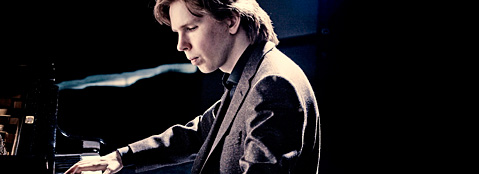
    JuhoPohjonen

    Above: Juho Pohjonen

    Friday March 20th, 2015 – Three outstanding artists joined forces this evening at Alice Tully Hall as Chamber Music Society of Lincoln Center presented yet another outstanding programme in their Intimate Expressions series.  Pianist Juho Pohjonen joined violinist Benjamin Beilman for Schubert and cellist Jan Vogler for Schnittke; then all three musicians concluded the performance with Schubert’s trio #1 in B-flat major.

    Despite a late-Winter snowfall and chilling winds, a large audience filled Tully Hall, and it was in a marvelous state of silent anticipation that the listeners opened their hearts and minds to the extraordinary music coming from the stage. This state of mutual communication, where the players can’t help but be aware of the spell they are casting over the Hall, is one of the great pleasures of Chamber Music Society‘s presentations.

    The level of artistry today was extraordinarily high. When Benjamin Beilman and Juho Pojhonen walked onstage we were struck by their youthful appearance and a trace of shyness as they acknowledged the welcoming applause. But as soon as they began to play, their surety of technique and depth of musicality drew us in to their compelling delivery of the opening Schubert. 

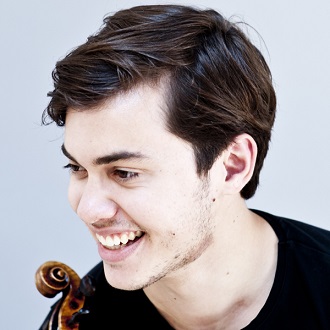
    Benjamin_beilman_artistpage

    Above: Benjamin Beilman

    The Schubert Fantasy in C-major (1827) is a long work in seven inter-connected movements and it places extraordinary demands on the violinist while also requiring a pianist who is far more than an accompanist, but rather a partner in expressiveness.

    The extraordinary delicacy of Mr. Pohjonen’s opening measures showed us at once that we were in the presence of a master of dynamic control; the silken seamlessness of his playing was ideally taken up by Mr. Beilman in his opening lyrical flight. As the sonata progresses, the violin’s poignant theme of longing shifts to a dynamic dancelike passage. In a set of variations, Mr. Beilman showed his skill in alternate plucking and bowing, as well as in flourishes of fast fiorature and rolling cascades of melody. A rapturous theme for violin and piano has a heart-rending quality, and soon we return to the still calm of the work’s opening statements. The gallantly graceful pace of the finale lulls into a last evocative slow passage before a dash to the finish. The audience embraced the two young paragons with warm enthusiasm for their savorable performance.

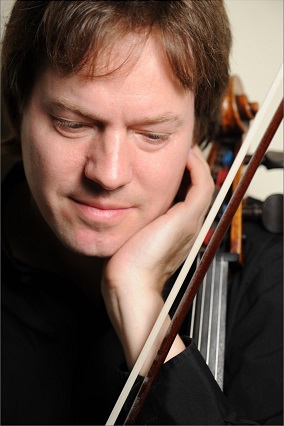
    29782

    Above: Jan Vogler

    Jan Vogler was making his CMS debut today, and a welcome event it was: he took on the the daunting combination of angularity and soulfulness that make the Schnittke sonata so remarkable, and again Mr. Pojhonen at the Steinway was an ideal accomplice.

    Commencing with a rather ominous cello theme, this sonata often has a dreamlike (even nightmarish) sense of mystery. The cellist at one point slithers up and down a snakelike scale passage with a creepiness that evokes thoughts of the eerie prelude to Klytemnestra’s murder in Strauss’s ELEKTRA. In fact, the Schnittke might be said to echo the Strauss opera in its mixture of violence and unexpected flashes of  lyricism. 

    I scrawled several brief notes, not wanting to take my eyes off our intrepid players: “march-like piano”, “rambunctious cello”, “bizarre waltz”, “restless quest”…and then suddenly Mr. Pohjonen lays into the lowest notes of the keyboard to produce a violent sonic boom. He then immediately swirls upward to the highest range, whilst Mr. Vogler takes up a desolate theme. The cello goes to the depths – and such resonant depths – interrupted by an aching/annoying 2-note motif before ending up on a very sustained tone. A brief, mysterious plucked passage before settling back into the deep while the piano creates a soft cloud of starshine in the highest range.

    Let’s have Mr. Vogler back for the second Schnittke sonata, at the earliest opportunity.

    After the interval, the three gentlemen set to a performance of Schubert’s Trio in B flat major, immediately establishing the kind of congenial rapport that makes a great piece of music even greater.

    The trio was probably written in 1827; the original autograph score is lost. It is in four movements, and I can’t imagine a more pleasing rendition than tonight’s with its fusion of the three voices constantly sending those delightful little chills up the spine. The nostalgic theme that opens the Andante expanded into a vivid emotional experience with playing that was subtle and full of nuance. The three gentlemen were in a playful mood for the witty and sparkling Scherzo – with its lovely surprise of a slower interlude – and then moved on to the sprightly dance of the final Rondo, which includes an unusual ‘fluttery’ motif.

    In this trio, the three players showed both graceful dexterity and a mutual desire to draw forth each thread of melody for our delight. Both in programming and in the choice of artists, Chamber Music Society sets the highest standard. I entered Alice Tully Hall tonight with great expectations, only to find they were not simply met, but surpassed. Incredibly, that seems to be the norm here at CMS.

    The Repertory:

    The Participating Artists: Juho Pohjonen (piano); Benjamin Beilman (violin); Jan Vogler (cello)

  • Matthew Westerby’s SWAN LAKE FANTASY

    Photo

    Above: Gierre Godley and Kristin Licata in SWAN LAKE FANTASY; photo by Dylan Baker

    Friday March 28, 2014 – Matthew Westerby’s SWAN LAKE FANTASY was premiered tonight at the Hudson Guild Theater. In addition, two recent works choreographed by Matthew Westerby were performed.

    LIFELINE is an ensemble work danced to music of Lusine ICL and Jonsi & Alex. An air of mystery pervades the space: moveable spotlights surround the dance floor and are variously pushed about by the dancers to illuminate their colleagues. A solo commencing in silence is danced by Kayla Farrish; as the music seeps into our consciousness, she is joined by Dylan Baker and Gierre Godley. This evolves to a duet for Kayla and Gierre; Gierre’s fluent movement and emotional investment made a hypnotic impression all evening. The other women – Dina-Verley Christophe, Nicole Kadar, Alessandra Larson and Kristin Licata – appear in quiet rites: their blue frocks have a somewhat Isadora Duncan/Grecian tunic look. There’s a lyrical duet passage for Alessandra and Gierre – two dancers I particularly admire – and the community join together as a hymn-like theme rises up. The piece ends as it began, with Kayla alone in the fading light.

    DUET X, with music by Ben Frost and Daniel Bjarnason, is handsomely danced by Dylan Baker and Matthew Westerby. These two slender boys are onstage as the spotlights – now focused on high – begin to glow and a gentle fog fills the air. To a misterioso opening theme, they advance towards us, moving in sync with stylized, winged gestures but without physical contact. They dance in tandem or echo one another’s moves. Repeating the opening synchronized phrase, they again advance but now Matthew places his hand on Dylan’s shoulder. A sense of intimacy and trust develops as they fall back onto one another, but this becomes something of a conflict as Matthew tends to manipulate Dylan. They back off in a state of seeming rejection, but the duet ends tenderly with Matthew cradling Dylan in his arms.

    During the intermission, pianist Matei Vargas warmed up onstage for the SWAN LAKE FANTASY. Composer Matt Van Brink had this to say about his vision of the Tchaikovsky score:  “Making an arrangement of a great piece of music means breaking it apart, inspecting the pieces and from them creating something new again…in the piano world, there is already a unique genre of “arrangement”: the transcription, a flexible term ranging from faithful adaptations to fantastic interpolations. I enjoy solving musical puzzles, so when Matei Varga approached me to create this work for him, I liked the idea of not only making the arrangement, but doing it in such a way that it fits into the canon of piano transcriptions…by presenting the themes and dances in a new, perhaps surprising order, an entirely new story emerges out of the old one.”

    Matthew Westerby’s SWAN LAKE FANTASY is just that: a fantasy. There’s no literal re-telling of the story, nor are the roles specifically assigned to individual dancers. In his opening solo – beautifully expressed to the music of the White Swan adagio – the black-clad Matthew might be Odette or he might be the Prince. Dina-Verley Christophe, dancing in a pre-maternal state of grace, assumes the classic floor pose of the Swan Queen as Dylan Baker hovers about her, re-arranging her limbs, shoulders and neck into variations on an iconic theme. The four cygnets – all in black – appear but contrary to expectations they do not dance in linked formations but rather they move freely about the space. We hear themes from the Russian and Hungarian dances as Gierre Godley gives us some expansive moves. The swans and the would-be-brides meet in a confuson of music and movement; a male pas de trois celebrates while the swans kneel en reverence to the pianist.

    Suddenly a jazz-inflected passage interferes; the dancers then pair off for a promenade as the music turns grandiose. Alessandra and Gierre dance together and then the Rothbart theme is heard for a pas de six transporting us at last to the final lakeside setting where Alessandra Larson evokes Odette’s despair in a lyrical solo. The ensemble rush in and go thru a series of big lifts before turning upstage to greet the dawn with a final ecstatic salute.

    This rush of music and movement may sound a bit random as I’ve described it, but thanks to the persuasive dancing and to Mr. Varga’s effortless dexterity at the keyboard, this fantasy took on a dreamlike quality. And in dreams, anything can happen.

  • Martha Graham @ City Center 2014 #2

    6a00d8341c4e3853ef017d416357b9970c-800wi

    Above: Katherine Crockett, photo by Matthew Murphy

    Friday March 21st, 2014 – Gods and goddesses never leave us, but they do sometimes move from one sphere to another, the better to bring light to the entire universe. Tonight at City Center I watched two of the great Graham dancers of our day – Katherine Crockett and Maurizio Nardi – in their final performances as members of the Martha Graham Dance Company. (Maurizio actually bids farewell on Saturday evening, but I am unable to be there). Both of them – I hope – will come back as guests in future Graham seasons; or perhaps we will see them in different contexts in the months ahead.

    This evening’s performance was brilliant in every regard: the Company danced to perfection and the two contrasting Graham works framed an Andonis Foniadakis creation to which the word ‘gorgeous’ can be most aptly applied.

    Ms. Crockett, as Clytemnestra in a one-act distillation of the 1958 Graham classic, was beyond the beyond. To be tall, shapely of limb, and fair of face is all well and good, and to put these gifts at the service of art and music with such total conviction is Katherine Crockett’s great achievement. Her performance was so clear of focus and so striking in every step and gesture and expression that it seemed impossible that we might be seeing her in this role for the last time. Katherine has always seemed to me to be the incarnation of an ancient goddess, alive and speaking to us today of the luminous vitality of the feminine spirit. As the audience and her fellow dancers hailed her with flowers and waves of applause at her curtain calls, she seemed to have attained iconic status. And yet, we were to see her again in a subtle encore, wafting across the stage in an angelic white gown in MAPLE LEAF RAG, the evening’s closing work.

    CLYTEMNESTRA, to a musical score by Halim El Dahm with sets by Isamu Noguchi and costumes by Ms. Graham and Helen McGehee, affords many solo-character opportunities for the Graham dancers and so we are able to bask in the power and poetry of the individual personalities in this fascinating Company.  Starting at curtain-rise, Lloyd Knight as the Messenger of Death set the tone for the whole work with his natural armor of musculature set off in a flowing royal-purple skirt. Martha Graham unabashedly admired the male form, and a veritable parade of masculine marvels strode before us: Ben Schultz as the towering King Hades – armed and epically dangerous – and Abdiel Jacobsen with a handsome mixture of vulnerability and resolve as Orestes (Abdiel is having quite a season!); Maurizio Nardi’s drunken lout of an Agisthes was personified by his slender strength and Hollywood cheekbones, and Lorenzo Pagano – already a valuable asset to the Company – gave a powerful rendering of the Night Watchman’s solo. As the hapless Agamemnon, Tadej Brdnik was perfect – and, after his character’s death, Tadej reappears in high platform shoes and the ballet becomes a ghost story.

    The women are equally superb, with the calculating urgency of Electra brought vividly to life by that impeccable Graham priestess, Blakeley White-McGuire. Natasha Diamond Walker (Helen of Troy), Mariya Dashkina Maddux (Iphigenia), PeiJu Chien-Pott (Cassandra) and Xiaochuan Xie (Athena) were distinctive as these mythic females, and the blessed assurance of their dancing and of their commitment augur well for the future of the Company.

    Andonis echo for graham fotochristopher jones

    Above: rehearsal image from Andonis Foniadakis’ ECHO, photo by Christopher Jones

    In their quest to bring new choreography into the Graham repertoire, the Company have struck gold with Andonis Foniadakis’ ECHO. Drawing inspiration from the ancient tale of Narcissus and Echo, this work fits like a glove into the Company’s scheme of things, where myth, magic and mystery are their daily bread.

    Andonis, who in 2008 brought his mind-blowing solo version of RITE OF SPRING – danced by the divine Joanna Toumpakari – to Joyce SoHo, is now becoming more widely known here in Gotham (his ballet GLORY will be seen the The Joyce this coming week, performed by Ballet du Grand Theatre Geneve…details here). 

    ECHO opens in silence in a foggy landscape with a shallow circular pool. It is here that the beautiful Narcissus is held captive by his own reflection. Andonis uses two of the Graham company’s handsomest men to personify the self-obsessed youth: Lloyd Mayor and Lorenzo Pagano. They are clad in long sheer skirts and the theme of self-infatuation is embodied in their constant embracing and intimate partnering. They are all but inseparable.

    As the rapture of Julien Tarride’s musical score takes wing, we meet the lovely and lonely Echo, danced with flowing grace by PeiJu Chien-Pott – a dancer who this season has emerged at a stellar level. The dance swirls forward on waves of lyricism, with a time-evoking gamelan theme of particular appeal. Angelic voices from another cosmos permeate the atmosphere as the ensemble of dancers, hair down and skirts drifting as they fly swiftly about the space, come and go from the dark recesses of the stage. Tadej Brdnik, Mariya Dashkina Maddux, Lloyd Knight, Xiaochuan Xie and Ying Xin are all to be savored, and a duet passage for Natasha Diamond Walker and Ben Schultz suggested a partnership to be cultivated.

    ECHO rightfully received a sustained ovation, both for the dancers and the choreographer. 

    News_27721_2

    Above: Maurizio Nardi

    Having my last look – for now – at Maurizio Nardi in the evening’s closing work, MAPLE LEAF RAG; Maurizio was one of the first Graham male dancers to seize my imagination when I began following the Company a few years ago. One of my regrets is never having seen him in the Graham solo LUCIFER which he has danced at galas. Perhaps an opportunity may still come. His immediate future I believe is wrapped up with Key West Modern Dance. I like to imagine him under a palm tree, sipping a cool drink after teaching class. Bon voyage, Maurizio!!

    I’d never seen MAPLE LEAF RAG and it is, in a word, adorable. Adorable in two ways really: first for its wit and sparkle and second for its gentle pandering to admirers of the male physique: all the Graham hunks spend the whole ballet shirtless, in tights.

    The stage is dominated by what appears to be a fusion between a ballet barre and a balance beam. The dancers will use this in myriad ways during the ballet. All wearing pastels, the eighteen dancers romp about the space to Scott Joplin tunes. Ying Xin and Lloyd Knight, in canary-yellow, are birds of a feather in their quirky, animated pas de deux. Periodically Katherine Crockett wafts across the stage, a tongue-in-cheek representation of Graham spoofing herself. Stylized Graham movement takes on a charming vibrancy here and the piece, just long enough to dazzle us without wearing out its welcome, is a great way to end the evening.

    During the curtain calls, Tadej Brdnik came striding out in his Agamemnon platforms and stopped the applause to ask that we donate to Dancers Responding to AIDS on our way out. I would do anything Tadej asked of me, and so I gave them – literally – my last dollar.

    So, a vastly pleasing evening in every regard with my lovely companion Roberto Villanueva, and so nice to run into Ian Spencer Bell. My thanks to Janet Eilber, Denise Vale, Andonis Foniadakis, Janet Stapleton, and all of the Graham dancers, and a champagne toast to Katherine and Maurizio. And a million roses for Martha.