Tag: Friday November

  • Batiashvili/Mäkelä/Royal Concertgebouw

    Batiashvili

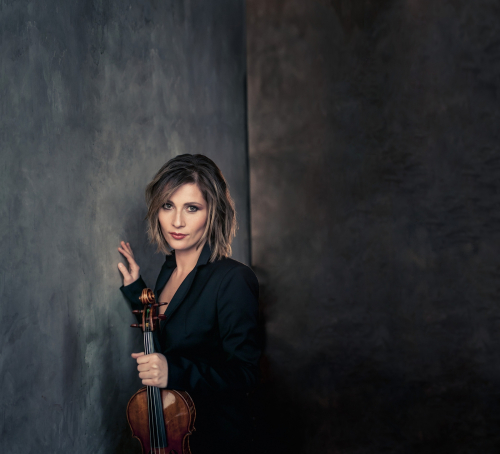
    Above: Lisa Batiashvili, photo by Sammy Hart/DG

    ~ Author: Oberon

    Friday November 22nd, 2024 – Tonight at Carnegie Hall, the Royal Concertgebouw Orchestra opened their program with the US premiere of Body Cosmic by the orchestra’s composer-in-residence, Ellen Reid. One of my all-time favorite musicians, Lisa Batiashvili, then offered Prokofiev’s Violin Concerto No. 2. Following the interval, the Concertgebouw’s Chief Conductor Designate Klaus Mäkelä led a seemingly endless performance of Rachmaninoff’s 2nd Symphony.

    Annoyances put us in a bad mood as we waited for the concert to begin: the Hall was freezing cold, and the start time ran late. Then came the silly tradition of the musicians making an entrance, obliging the audience to applaud as they leisurely took their places. Most people don’t get applause just for showing up at their job. After the music started, a squirmy (but silent) little girl next to us had a squeaky seat that made a metallic grinding noise every time she moved, whilst the young man behind us kept kicking the backs of our seats (he must have been man-spreading to cover so much territory). At last the house lights dimmed, and the conductor took the podium.

    The US premiere of Ms. Reid’s Body Cosmic was indeed what – back in the days of smoke and wine – we’d have called kozmic. The piece has a magical start, with rising passages lifting us out of the ordinary world into an airy, buzzy higher place. Is that a vibraphone I hear?

    A key player in the work is the Concertgebouw’s harpist, though I cannot tell you which of the orchestra’s two principals was playing since my view of her was blocked by her harp. Meshing with the flutes, the harp evokes a drifting feeling. The concertmaster – or ‘leader’ as he is listed in the Playbill – Vesko Eshkenazi, has much to do in this 15 minute piece, and his sound has a luminosity that delights the ear. Likewise, the trumpet soloist is really impressive, though again their are two possibilities listed in the roster.

    The music becomes increasingly rich in texture; it’s beautiful in an other-worldly sense. Muted trombones sigh, and then things get a bit jumbled. The violins, on a sustained high tone, clear the air. The harp again makes heavenly sounds, as distant chimes are heard. Flutes and high violins have a counter-poise in the deep basses (the Concertgebouw’s basses are particularly impressive). The music comes to a full stop.

    A violin phrase sets the second movement on its way; did someone whistle? The flutes trill and shimmer, with the concertmaster playing agitato; the basses and celli plumb the depths. The music turns fluttery, and then brass fanfares sound. A continuous beat signals a sonic build-up; with large-scale brass passages, things turn epic, only to fade as the harp sounds and the flutes resume their trilling. The world seems to sway, the trumpeter trills. A march-like beat springs up and then speeds up, evoking a sense of urgency. Following a sudden stop, a massive chord sounds: thunderous drums seem to announce a massive finish, but Body Cosmic ends with a solitary note from the violin. 

    I can’t begin to tell you how absorbing and ear-pleasing this music was: so much going on, and all of it perfectly crafted and fantastically played. The composer, who was awarded the 2019 Pulitzer Prize in Music for her opera, p r i s m, looked positively dishy in her unique blue and white frock – which featured a leggy mini-skirt and a charming train – when she was called onto the stage for a bow. She was greeted by both the audience and the players themselves with fervent applause. Ben Weaver, who is with me – and who is often resistant to “new music” – admitted that he’d enjoyed it. 

    Ms. Batiashvili then took the stage, having stepped out of the pages of Vogue in her stunning black gown: the very picture of elegance. Back in the days when Alan Gilbert was in charge of the NY Phil, Lisa appeared there often; she and the Maestro had a very special rapport, and I recalled how much I always loved to watch their interaction…almost like partners in a dance. Ms. Batiashvili sounds as gorgeous as she looks; her timbre has a particular fragrance, something no other violinist of my experience can quite capture.

    The Prokofiev concerto opens with the soloist playing alone: a hushed lament. The ensemble joins, taking up the theme. As the music becomes more animated, the violin sails thru fast figurations over the beating accompaniment of the basses. The music slows, and a fresh mood is then established, rather jaunty, with the soloist busily employed with reams of notes or with lyrical motifs, whilst unison basses and celli add a darker colour. Fanfares sound, and with Ms. Batiashvili playing at high-speed, everything breezes along…and then the music stalls. The low strings get things back on track, carrying the movement to a quirky finish.

    The Andante assai is a gracious slow dance; it has a dotty start as the familiar theme sounds over plucking strings. Ms. Batiashvili was mesmerizing here, her control and phrasing so enticing: both her presence and her playing tell of her innate grace and loveliness. This theme then repeats itself, now with the feel of a swaying rubato, and here Lisa is just plain magical. A sort of da capo finds the orchestra taking up the theme and the violin playing rhythm.

    In Prokofiev’s final Allegro ben marcato, Ms. Batiashvili dazzled us with with her virtuosity. Introducing fresh colours to the music, the composer adds castanets, the triangle, and the snare drum to his sonic delights. In a fascinating passage, Lisa’s slithering scales are underscored by the bass drum and double bass before we are swept along into the finale.

    Having put us under her spell for a half-hour, Ms. Batiashvili responded to our heartfelt applause with a Bach encore (I’ll have the details of the piece soon, hopefully…and some photos, too!) and then she was called back for a final bow, the musicians joining the audience in homage to this sublime artist.

    Update: Lisa’s encore was J. S. Bach’s Chorale Prelude on “Ich ruf’ zu dir, Herr Jesu Christ” (arranged for Violin and Strings by Anders Hillborg).

    Following a drawn-out interval, the Rachmaninoff 2nd made its deep start with the strings and horns sounding darkly gorgeous. I was taking notes, thoroughly engaged in the music. But after a while, things began to wear thin. The playing was simply grand – the solo voices among the orchestra all marvelous – and so is the music…so why am I losing my focus? By the time the big, ultra-familiar cinematic theme of the Adagio commenced, I was getting restless. It all seemed like too much of a good thing. The final movement was a succession of ‘finales’ which turn out to be culs de sac, forcing the players back to the main road, seeking an exit.

    After nearly an hour, the symphony ended to an enormous ovation and everyone in the Hall immediately leapt to their feet. My sidekick Ben Weaver and I hastened out into the rain. Ben was actually angry about the way the Rachmaninoff was done; he blamed the conductor. Then he told me that the composer had realized the work was too long and had later sanctioned cuts; tonight we’d heard the original, which is what made the music – which has a richness of themes and of orchestration that would normally thrill me (and it did, for the first quarter-hour) – feel like overkill to me. Often a composer’s second thoughts are more congenial to the ear than his original concept.

    ~ Oberon
  • Tormis/Britten/Prokofiev @ The NY Phil

    ALENA-BAEVA-c-Andrej-Grilc

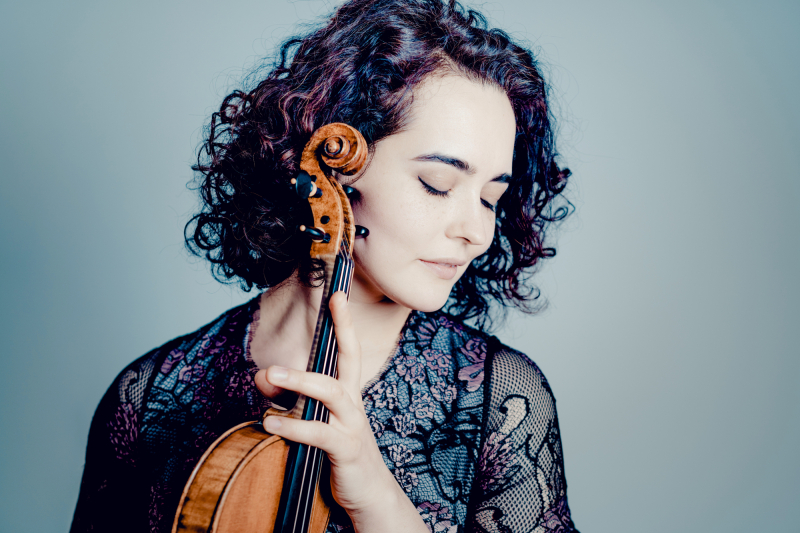
    Above: violinist Alena Baeva, photo by Andrej Grilc

    Author: Ben Weaver

    Friday November 17th, 2023 – Maestro Paavo Järvi returned to the New York Philharmonic’s David Geffen Hall for concerts featuring less familiar works by two of 20th Century’s greatest composers: Benjamin Britten and Sergei Prokofiev.

    Benjamin Britten’s Violin Concerto, Op. 15 – the only work he composed in that genre – was written in 1938-39, soon after Britten heard the world premiere performance of Alban Berg’s Violin Concerto in 1936. Indeed, the soloist who premiered Berg’s work, Antonio Brosa, would premiere Britten’s Concerto in 1940 conducted by Sir John Barbirolli, and do so with the New York Philharmonic in NYC. (In another bit of trivia, Britten composed some of the concerto while staying with Aaron Copland.) Britten revised the composition as late as 1965 (when he heard that Jascha Heifetz was considering performing it, though Heifetz would supposedly go on to declare the work “unplayable”), and it was this final edition that violinist Alena Baeva performed in these concerts. (It’s playable after all.)

    Opening with a series of timpani strokes can only evoke Beethoven’s Violin Concerto from more than a century earlier. The violin enters with a lament in the instrument’s highest registers – something Britten does often in the concerto. The second half of the first movement is taken over by a sort of a march, a persistent distant thumping, which reminded me of the villagers hunting Peter Grimes in Britten’s opera, composed a few years later.

    Ms. Baeva, in her New York Philharmonic debut, makes a rather small and tinny sound that struggled to make an impression in the concerto’s dramatic moments. To Maestro Järvi’s credit, he kept the orchestra under control, so as not to cover the soloist altogether. But in the more intimate parts, Ms. Baeva was a deeply moving narrator, which makes me want to hear her in a chamber music setting. In the extended cadenza that concludes the second movement, Ms. Baeva was mesmerizing and dazzling. The final movement is a series of variations in the form of a passacaglia, and it concludes with a lament (movement is marked Andante lento), and here Ms. Baeva’s lyrical side was wonderfully moving.

    Sergei Prokofiev’s Symphony No. 6 in E-flat minor, Op. 111 lives – unfairly – in the shadow of his more famous Fifth. Composed in 1945-47, and premiered later that year by Evgeny Mravinsky and the Leningrad Philharmonic, it is a magnificent work that never drags despite its roughly 45-minute run time.

    The Sixth’s fortunes changed over the years. Despite an acclaimed premiere in 1947, it was soon condemned by all the usual Stalinist suspects and disappeared from Soviet concert halls until the 1960s. (It was more popular in the West; Leopold Stokowski first conducted it with the NY Philharmonic in 1949). One of the complaints against the work was that it was not cheerful enough to inspire the Soviet people. Which is perhaps fair enough, but Prokofiev was not trying to cheer anyone up with this particular symphony. It opens darkly in the low strings before moving on to more lyrical themes. The second movement is the most emotional part of the symphony, woodwinds shrieking in agony. And the third movement is the most cheerful of the three, but not cheerful enough to appease Stalin.

    The Sixth sounds to me like the most mature of Prokofiev’s work. It never disintegrates into circus music, which – no matter how ironically – can on occasion be tiresome. Paavo Järvi certainly has this music in his bones and the NY Philharmonic delivered a stupendous performance. I ended up taking almost no notes as the music played because I was so hypnotized by what we heard. This is the sort of music the New York Philharmonic plays as well as anyone, and better than most. 

    Also included on the program was an unknown to most of us Overture No. 2 by the Estonian composer Veljo Tormis. Composed in 1958-59 it is a thrilling, expertly crafted work. Its highly dramatic, driven, almost cinematic opening (it would fit many movie chases beautifully), gives way to a lovely, if brief, cello solo (Patric Jee as the principal cellist in this performance). The middle section of the overture is reduced to a wonderful chamber-scale (just three violins at one point) before the breathless opening section returns. The work ends with three chords, long pauses between each one. Frequently, an audience will applaud prematurely, and certainly with an unfamiliar composition such as this, the risks were high. And yet – the silence held, Paavo Järvi controlling not just the orchestra, but, however briefly, the audience as well.

    Which brings me to a brief point about audience behavior and etiquette; we all know that both have degraded seriously over the years. At this performance, sitting just an empty seat away myself and my companion, a young woman played Candy Crush on her phone the entire evening. She was there with two friends, who seemed more interested in the music than she was…but they did not ask her to stop. I am reminded how, some years ago, the actor and playwright Wallace Shawn got in trouble at a Carnegie Hall concert for yelling at another audience member for behaving badly. Perhaps we should have been celebrating Mr. Shawn instead.

    ~ Ben Weaver

  • Trifonov’s Scriabin @ The NY Philharmonic

    14c1e62d63f40ab53a8f7836fb151aeb.jpg.w=262

    Above: pianist Daniil Trifonov

    ~ Author: Oberon

    Friday November 29th, 2019 – The New York Philharmonic‘s Artist-in-Residence, Daniil Trifonov, performing the Scriabin piano concerto on a program with Tchaikovsky’s 5th symphony. The Philharmonic’s Music Director, Jaap van Zweden, was on the podium.

    This long-awaited performance was somewhat compromised for me due to a health issue my spouse was experiencing. I at first decided to skip the concert and let my friend Ben Weaver write about it, but after much discussion, I went to Geffen Hall for the Scriabin and left at intermission, asking Ben to let me know how the Tchaikovsky went.

    This was my first experience of the Scriabin concerto live, and Mr. Trifonov was absolutely spectacular from first note to last. After a brief elegiac orchestral statement, a pensive solo introduces the pianist. The music offers contrasting moods, which Mr. Trifonov and the Philharmonic artists savoured. Playing rippling figurations, Mr. Trifonov evoked a feeling of ecstatic glow; the music then turned cinematic.

    Splendid solo moments from Richard Deane (horn) and Pascual Martínez-Forteza (clarinet) added to the radiance of the performance. Playing in the Steinway’s very highest register, Mr. Trifonov gave the music “toy piano” feeling, which soon found a counter-balance in the Philharmonic’s plush-toned basses. The movement ends grandly.

    The quiet opening of the poetic Andante was marred by the inevitable cellphone ringing. There’s quite a long, lovely passage for strings before the pianist joins in. A solo from Mr. Forteza finds Mr. Trifonov adding a descant-like, bejeweled line. The mood shifts from lively to doleful, the basses and celli in a tutti passage of velvety depth.

    At times, the solo piano line seems to meander (over caressive strings) before finding focus in a wistful theme, to which Mr. Trifinov brought his trademark expressive feel for nuance. A pristine, sustained trill – a Trifonov delight – marked the Andante’s calm finish.

    The pianist then immediately launched the final Allegro moderato, wherein a romantic piano theme as well as phrases for horn and clarinet at times created a feeling of tender longing. 

    Suddenly there’s a full stop. The music then resumes, with piano, clarinet, and horn all actively engaged. Now there’s a bit of a letdown: the composer seems to be searching for the right ending. He finds it in an unexpected drumroll, and a sustained chord from the piano.

    Basking in an enormous flood of applause, the tall pianist made us wait for his reappearance, and then wait still longer for his dreamy, introspective encore.

    Quote
     
    Tchaikovsky’s 5th symphony won the enthusiasm of audiences right from its premiere performance in 1888. But the critics were less impressed, and this caused Tchaikovsky – upon hearing the piece in Prague a bit later – to question whether the 5th was as fine as he’d originally hoped it was. He eventually managed to banish his misgivings.
     
    The symphony’s second movement – steeped in Romanticism – shares its melodic birthright with the Vision Scene from the composer’s SLEEPING BEAUTY. I had been really looking forward to hearing this in the theater again, but that will have to wait until another time.
     
    Meanwhile, Ben Weaver has sent me a brief note, stating that “…the 5th was really good. The horn solo (I assume it was played by Richard Deane) was one of the best I’ve ever heard. And Anthony McGill impressed in the clarinet solo. Maestro van Zweden took the music at a nice clip, but never rushed it. Big, exciting climaxes! The orchestra played it as well as anyone I’ve heard.” [Coming from Ben, that’s high praise indeed!]
     
    Ben ended his message with: “The audience went nuts.” That made me really sorry to have missed it.

    ~ Oberon

  • Trifonov’s Scriabin @ The NY Philharmonic

    14c1e62d63f40ab53a8f7836fb151aeb.jpg.w=262

    Above: pianist Daniil Trifonov

    ~ Author: Oberon

    Friday November 29th, 2019 – The New York Philharmonic‘s Artist-in-Residence, Daniil Trifonov, performing the Scriabin piano concerto on a program with Tchaikovsky’s 5th symphony. The Philharmonic’s Music Director, Jaap van Zweden, was on the podium.

    This long-awaited performance was somewhat compromised for me due to a health issue my spouse was experiencing. I at first decided to skip the concert and let my friend Ben Weaver write about it, but after much discussion, I went to Geffen Hall for the Scriabin and left at intermission, asking Ben to let me know how the Tchaikovsky went.

    This was my first experience of the Scriabin concerto live, and Mr. Trifonov was absolutely spectacular from first note to last. After a brief elegiac orchestral statement, a pensive solo introduces the pianist. The music offers contrasting moods, which Mr. Trifonov and the Philharmonic artists savoured. Playing rippling figurations, Mr. Trifonov evoked a feeling of ecstatic glow; the music then turned cinematic.

    Splendid solo moments from Richard Deane (horn) and Pascual Martínez-Forteza (clarinet) added to the radiance of the performance. Playing in the Steinway’s very highest register, Mr. Trifonov gave the music “toy piano” feeling, which soon found a counter-balance in the Philharmonic’s plush-toned basses. The movement ends grandly.

    The quiet opening of the poetic Andante was marred by the inevitable cellphone ringing. There’s quite a long, lovely passage for strings before the pianist joins in. A solo from Mr. Forteza finds Mr. Trifonov adding a descant-like, bejeweled line. The mood shifts from lively to doleful, the basses and celli in a tutti passage of velvety depth.

    At times, the solo piano line seems to meander (over caressive strings) before finding focus in a wistful theme, to which Mr. Trifinov brought his trademark expressive feel for nuance. A pristine, sustained trill – a Trifonov delight – marked the Andante’s calm finish.

    The pianist then immediately launched the final Allegro moderato, wherein a romantic piano theme as well as phrases for horn and clarinet at times created a feeling of tender longing. 

    Suddenly there’s a full stop. The music then resumes, with piano, clarinet, and horn all actively engaged. Now there’s a bit of a letdown: the composer seems to be searching for the right ending. He finds it in an unexpected drumroll, and a sustained chord from the piano.

    Basking in an enormous flood of applause, the tall pianist made us wait for his reappearance, and then wait still longer for his dreamy, introspective encore.

    Quote
     
    Tchaikovsky’s 5th symphony won the enthusiasm of audiences right from its premiere performance in 1888. But the critics were less impressed, and this caused Tchaikovsky – upon hearing the piece in Prague a bit later – to question whether the 5th was as fine as he’d originally hoped it was. He eventually managed to banish his misgivings.
     
    The symphony’s second movement – steeped in Romanticism – shares its melodic birthright with the Vision Scene from the composer’s SLEEPING BEAUTY. I had been really looking forward to hearing this in the theater again, but that will have to wait until another time.
     
    Meanwhile, Ben Weaver has sent me a brief note, stating that “…the 5th was really good. The horn solo (I assume it was played by Richard Deane) was one of the best I’ve ever heard. And Anthony McGill impressed in the clarinet solo. Maestro van Zweden took the music at a nice clip, but never rushed it. Big, exciting climaxes! The orchestra played it as well as anyone I’ve heard.” [Coming from Ben, that’s high praise indeed!]
     
    Ben ended his message with: “The audience went nuts.” That made me really sorry to have missed it.

    ~ Oberon
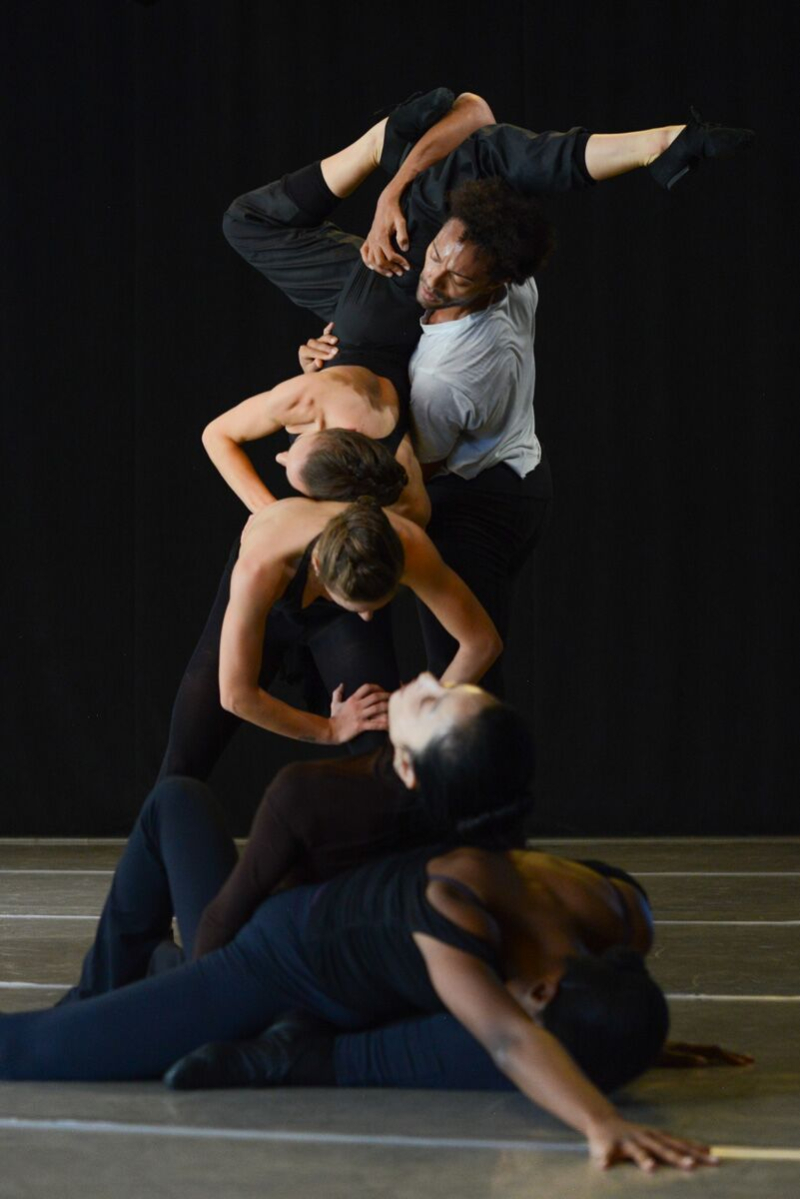
  • Lubovitch’s LEGEND OF TEN @ Martha Graham

    SA3_9126_preview

    Above: Abdiel Cedric Jacobsen and Anne Souder of the Martha Graham Dance Company; photo by Nir Arieli

    ~ Author: Oberon

    Friday November 17th, 2017 – The renowned choreographer Lar Lubovitch will celebrate the 50th anniversary of his Company in the coming Spring when the Lar Lubovitch Dance Company will perform two programs at the Joyce Theater from April 17th through April 22nd, 2018. Joining in the celebration, the dancers of the Martha Graham Dance Company will perform the Lubovitch masterpiece LEGEND OF TEN, set to Johannes Brahms’s Piano Quintet in F minor; the Lubovitch Company premiered this work in 2010.

    This afternoon, photographer Nir Arieli and I stopped by at the Graham Studios at Westbeth to watch a rehearsal of LEGEND OF TEN. The Graham dancers are the crème de la crème of the dance world: in their combination of athleticism and artistry, they have few rivals. On top of that, they’re all really nice people. So any chance to be in their presence has a special meaning for me.

    I’ve seen LEGEND OF TEN three times in the past, danced by the Lubovitch Company. Yet today, I was struck afresh by its power and beauty. Taking wing on the Brahms score, LEGEND sends the dancers swirling thru dynamic movement that melds ballet motifs with elements of folk dance.

    In the course of today’s rehearsal, Mr. Lubovitch did quite a bit of dancing himself as he demonstrated for the Graham dancers. Assisting Mr. Lubovitch was Kate Skarpetowska – an estimable choreographer in her own right who has danced with the Lubovitch Company and is intimately familiar with his work.

    Here’s a gallery of Nir Arieli’s images from this afternoon:

    SA3_8351_preview

    From left: Ben Schultz, Anne O’Donnell, Kate Skarpetowska, So Young An, Leslie Andrea Williams, Lorenzo Pagano

    SA3_8409_preview

    Abdiel Cedric Jacobsen, Anne Souder, and Kate Skarpetowska

    SA3_8470_preview

    Watching a film of LEGEND with Mr. Lubovitch

    SA3_8477_preview

    SA3_8546_preview

    Lar Lubovitch coaching Abdiel and Anne Souder in a duet passage

    SA3_8568_preview

    Anne Souder and Anne O’Donnell

    SA3_8832_preview

    Leslie Andrea Williams

    SA3_8896_preview

    So Young An

    SA3_9155_preview

    Lorenzo Pagano

    SA3_8804_preview

    Ari Mayzick, Anne O’Donnell

    SA3_9348_preview

    Abdiel Cedric Jacobsen

    SA3_9481_preview

    Ecstatic moment

    SA3_8990_preview

    Abdiel with Anne Souder: pas de deux…continued below

    SA3_9101_preview

    SA3_9110_preview

    SA3_9111_preview

    SA3_9125_preview

    SA3_9139_preview

    SA3_9142_preview

    SA3_9144_preview

    Ensemble: Ari, Ben, Lorenzo, Laurel Dalley Smith, Leslie

    SA3_9180_preview

    Leslie Andrea Williams

    SA3_9337_preview

    Abdiel and Anne Souder

    SA3_9492_preview

    Leslie Andrea Williams

    SA3_9505_preview

    Many thanks to Denise Vale of the Graham Company for helping to arrange today’s studio visit, and also to Janet Eilber, publicist Janet Stapleton, to Mr. Lubovitch and Ms. Skarpetowska for letting us eavesdrop on their process, and – of course – to the phenomenal dancers. And although they weren’t dancing today, it was great to catch up briefly with Ying Xin and The Lloyds: Knight and Mayor.

    All photos by Nir Arieli.

    ~ Oberon

  • Nikolaj Znaider|Iván Fischer|NY Phil

    Znaider_0

    Friday November 25th, 2016 – Tonight, Nikolaj Znaider (above) played the Beethoven violin concerto with The New York Philharmonic under the baton of Iván Fischer; the second half of the program was given over to the Dvořák 8th symphony.

    The first thing we noticed when entering the hall tonight was the configuration of the orchestra, most especially the welcome addition of risers for the wind players, and the basses (they were on the highest platform). This is something I have always wished to see at Philharmonic performances: up til this evening, it was nearly impossible to determine who was playing solo wind passages during a symphony. Now there’s a better opportunity to watch people like Robert Langevin, Liang Wang, and Anthony McGill: to savor them as individuals and not just as sounds emanating from behind 2 rows of string players and 3 of music stands. It’s unclear whether the risers are going to continue to be in regular use now or whether it’s just something Maestro Fischer asked for. But this set-up really enhanced my enjoyment of the evening, especially given Mr. Langevin’s prominence in the Dvořák: how wonderful to not only hear his magic flute but to actually watch the magician at work. 

    Nikolaj Znaider is one of those many musicians whose discs I used to hear being played when I worked at Tower Records; at that time, I was still very much immersed in opera and ballet, and I rarely focused on symphonic or chamber music. So now I am making up for lost time, and hearing Mr. Znaider perform live tonight for the first time was genuinely enjoyable.

    The violinist is very tall, with courtly manners to the fore as he kissed the hands of violinists Sheryl Staples and Michelle Kim after his triumphant performance of the Beethoven.

    The music begins with five soft beats on the kettledrum; this leads to a rather long opening ‘prelude’, commencing in the winds and flowing onward to the violins. Mr. Znaider’s entrance really pricked up my ears, for his timbre is quite striking. My first thought was that his sound had a trace of astringency, a piquant tartness that gives it a particular appeal. As the concerto progressed, his playing took on a silvery aspect. Clarity of articulation and a mastery of dynamics are among Znaider’s most appealing gifts, and – greatly needed in the Beethoven – the control and tonal sheen he displayed in the highest range is really impressive. He also showed off a deliciously shimmering trill. 

    High, plaintive themes are poignantly set forth, whilst there is a flowing naturalness in his scale passages. Using the Kreisler cadenzas, Mr. Znaider arrived at one of his most compelling moments: a series of trills on various pitches, honed down in the end to a whisper. I must mention here, too, the expressive playing from Kim Laskowski’s bassoon.

    Displaying a full range of degrees of piano/pianissimo playing, made Mr. Znaider’s performance in the playing of the Larghetto was truly captivating. Again, roses for Ms. Laskowski – in fact, there was page after page of lovely playing from all the Philharmonic artists under Maestro Fischer’s gentle baton. As Mr. Znaider spun out a long melodic line over plucked strings, his superb control of pianissimo nuances was outstanding.

    As the final Rondo: Allegro rolls forward, we are are treated to further adventures as Mr. Znaider continues to explore a vast dynamic range; conductor and ensemble are with him every step of the way, with the brilliant conclusion prompting an immediate and fervent response from the audience. The violinist seemed genuinely pleased with the warm reception, his hand-to-heart gesture sending the affection back to the cheering crowd whilst the musicians onstage applauded him vigorously. A subtly played Bach encore, offered up with captivating delicacy and grace, drew the audience even deeper into Znaider’s artistry.

    Fischer_ivan foto_marco_borggreve

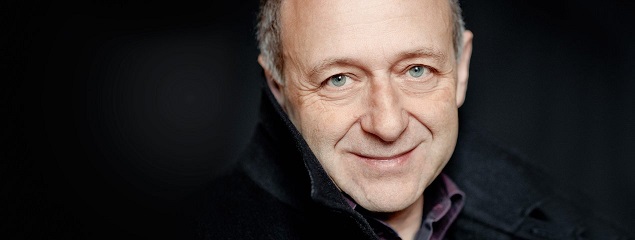
    Above: Iván Fischer, in a Marco Borggreve portrait

    The Dvořák 8th symphony abounds in folkish themes and ‘nature’ sounds that summon up visions of the Czech countryside, and I truly enjoyed Maestro Fischer’s interpretation in every regard. Robert Langevin’s flute solo early on was a limpid delight, and soon oboist Liang Wang and clarinetist Anthony McGill were piping up with sweetly evocative birdcalls. Phil Myers’ signature “big horn” sound was at its most congenial tonight, and the cellos sounded warmly lyrical.

    The symphony’s most familiar theme comes in the Adagio as flute and oboe entwine and then send the melody forward to tonight’s concertmaster Sheryl Staples who shapes the phrases with silken assurance. Things turn rousing; the proverbial “big theme” embraces us. Trumpets sound, and then things recede to a gracious clarinet duo which eventually fades away.

    An amiable waltz looms up in the Allegro graziosa, and Liang Wang’s oboe leads off some brief wind passages that move from voice to voice. An expansive song emerges, then the waltz re-bounds. An unusual coda concludes the movement.

    Trumpet fanfares introduce the symphony’s finale; a handsome cello tutti leads to a proud dance and Mr. Langevin’s flute replies to the cellos with a variation on their theme. The other wind soloists have their final say before a grand acceleration speeds the symphony to its end. The audience seemed really taken with the entire concert, and the applause was generous and sincere.

    To me, it was a perfect evening; my friend Dmitry was less enthusiastic, having some issues with tempi in the Beethoven and transitions in the Dvořák. His familiarity with the symphonic and chamber repertoire vastly surpasses my own, for he was immersed in the Mahler symphonies and Beethoven quartets while the first half-century of my musical ‘career’ was almost exclusively devoted to opera. But for all that, tonight’s concert was an unalloyed pleasure for me and left me in a really good mood.


  • Recital: Ben Bliss @ Weill Hall

    BenBliss180

    Friday November 18th, 2016 – I first encountered tenor Ben Bliss (above) while he was in the Lindemann Young Artist Development Program at The Met; he was making his Met debut as Vogelgesang in MEISTERSINGER and he stood out for three reasons: tallest man onstage, youngest of the Masters, and a voice of distinctive clarity. 

    Since then, I have enjoyed listening to several of Mr. Bliss’s YouTube offerings which display a voice capable of incredible beauty (especially in the upper range), a deep sense of poetry in his use of dynamics, and very impressive breath control.

    This evening’s program commenced with four songs by Richard Strauss; my initial feeling was that Mr. Bliss was over-singing a bit, and that the piano (even with the lid down) was sometimes too loud. As the songs progressed, the tenor and his pianist Lachlan Glen achieved a more congenial blend, and in “Morgen“, the sensitivity of both artists found truly rewarding expressiveness in a breath-taking performance.

    Turning to the French repertoire, Mr. Bliss chose songs from Lili Boulanger‘s “Clarières dans le ciel”; the composer, who died tragically young, left behind a brief catalog of work of which these mélodies hold a particular appeal. Mssrs. Bliss and Glen savoured the perfume of this music in a performance filled with spine-tingling dynamic modulations. The opening “Un poète disait” served to display the tenor’s marvelously heady tones, with an absolutely gorgeous final phrase. Remarkably sustained singing illuminated “Nous nous aimerons tant“, its dreamy quality interrupted by a “noisy” piano interlude. Mr. Bliss managed a fine mix of passion and refinement in “Vous m’avez regardé avec toute votre âme“, where Mr. Glen’s playing was particularly lovely. The pianist’s rippling motif set the mood for the concluding “Les lilas qui avaient fleuri” and the tenor here displayed an intrinsic sense of vocal nuance, with seductively floated upper tones and a final sustained note that was sheer heaven.

    Tosti’s “Marechiare” closed the rather brief first half of the program; Mr. Bliss’s voice is not really Italianate in sound, but in this outgoing celebration of a passionate infatuation, he and Mr. Glen took an almost militant stance in favor of romance. I would have liked to have heard some of Tosti’s more caressive tunes from Mr. Bliss, but that will have to wait for another opportunity.

    Returning after the interval, the tenor had changed to a white sport coat (no pink carnation, though) for an all-English-language second half. Mr. Bliss described how he came to find the two John Gruen songs – “Spring is like a perhaps hand” and “Lady will you come with me into” – which were never published. With the aid of the composer’s daughter, the manuscripts were located and copies given to the tenor. Musically whimsical, the songs border on cuteness; Mssrs. Bliss and Glen made them perfectly palatable.

    Big singing marked Lowell Liebermann’s “The Arrow and The Song” (“I shot an arrow into the air…”): an emphatic and almost grandiose setting. Ned Rorem’s haunting setting of “Stopping by Woods on a Snowy Evening” beautifully evokes the quietude of the Winter landscape, and was lovingly sung. Does Theodore Chanler’s “I rise when you enter” have a sexual connotation? It seemed so this evening.

    A tenor of Mr. Bliss’s vocal weight and range is of course going to be singing a lot of Britten. Over the years I have come to feel that the composer’s works are best represented by British singers as they seem most persuasive when sung with what we Americans refer to as a “British accent”. That said, Mr. Bliss did very well by the extroverted “The Children and Sir Nameless” whilst Mr. Glen’s introduction to “The Last Rose of Summer” was poetic indeed; as the song progresses, the familiar melody takes on a fresh feeling thru harmonic alterations. Mr. Bliss here again demonstrated his astonishing control in the upper range of his voice.

    The final Britten offering, “The Choirmaster’s Burial“, is a touching narrative on the love of music and on a life dedicated to it. Singer and pianist were at their most moving here.

    The final three numbers on the printed program – songs associated with Nat King Cole, Frank Sinatra, and Ray Charles – are pieces Mr. Bliss grew up with. While I know them well, and can even sing two of the three, they are rather outside my musical sphere. But my companion of the evening is a huge devotee of Sinatra and Charles, and she felt that Mr. Bliss’s singing – for all his efforts to the contrary – was too cultivated, and that the rendition of Ray Charles’s “Hallelujah I love Her So” was all wrong. 

    A very well-known mezzo who was in the vanguard of the crossover phenomenon once asked me why I was put off by her crossover efforts; I replied that thousands of people can sing these Broadway and cabaret numbers to fine effect, but that there are only a half-dozen great Mélisandes in the world. She understood my point, but said she and her audiences took a lot of enjoyment from her less ‘haughty’ recordings. Then I asked her how she would feel if Barbra Streisand decided to sing Idamante; she giggled and rolled her eyes. 

    At any rate, Ben Bliss was called out for two encores tonight: a sweet “Una furtiva lagrima” and that song with the catchy lyrics from WEST SIDE STORY: “Maria…”

    In December I’ll be seeing Ben Bliss as Tamino at The Met and while I wish it wasn’t the pared-down “family” version, I’m really looking forward to it.

  • An Evening @ New Chamber Ballet

    11229387_10153700794988571_1643682530134201836_o

    Friday November 20th, 2015 – Miro Magloire’s New Chamber Ballet presenting works by Miro and resident choreographer Constantine Baecher in a nicely-mixed programme of new and olde music – expertly played – and danced by Miro’s uniquely talented band of ballerinas. In the intimate setting of the City Center Studios, there’s a sense of immediacy – both of the music and the dancing – that no other dance company in Gotham can quite match.

    In his most recent works, Miro’s choreography has been daring in its exploration of female partnering. Tonight’s concert opened with the premiere of a full version of Gravity, excerpted earlier this season and which I’d seen in a formative rehearsal.

    First off, a salute to violinist Doori Na for his impressive rendering of “Six Pieces for Violin” by Friedrich Cerha. The venerable Austrian composer, soon to celebrate his 90th birthday, is currently in the news locally as The Met is offering a new production of Alban Berg’s LULU which Mr. Cerha completed upon Berg’s death.

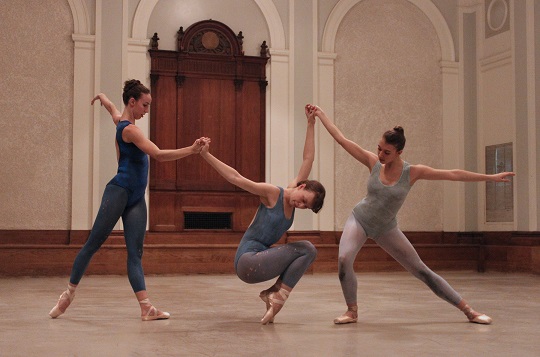
    Gravity was danced tonight by Elisabeth Brown, Traci Finch, and NCB’s newest member Cassidy Hall. The dancers alternate between posing and partnering: a duet for Elizabeth and Traci is observed by Cassidy, who then inserts herself into the dance. Elizabeth’s solo comes as the music falls silent; she then dances with Cassidy in a duet where Elizabeth, at full stretch, is nearly parallel to the floor in displaying a superb line.

    IMG_8922-edited-sm

    The dancers then polish off the ballet with a trio (Traci, Elizabeth and Cassidy, above). 

    More images from Gravity, photographed by Amber Neff:

    IMG_8883-edited-sm

    Cassidy Hall and Traci Finch

    IMG_8906-edited-sm

    Elizabeth Brown and Cassidy Hall

    Someone once wrote of Aristotle Onassis: “He was not the first man to want both his wife and his mistress.”  That very notion was the starting point of The Other Woman, Miro’s ‘classic triangle’ ballet set to a classic score: Bach’s B-minor violin sonata. 

    An en travesti Sarah Atkins, wearing a jaunty fedora, faces the age-old dilemma of the married man as he vacillates between his wife and his lover. Elizabeth Brown and Holly Curran offer contrasting attractions of face, form, and personality; in this very theatrical piece, their dancing is urgent and nuanced. The rival women confront one another while Sarah dances a space-filling solo. In the end it seems no real decision has been reached, and it feels like more chapters are yet to come before this story ends.

    Doori Na and pianist Taka Kigawa played the Bach so attractively, and moments later Taka returned play Beat Furrer’s ‘Voicelessness. The snow has no voice’ for Miro’s second premiere of the evening: Voicelessness. Taka’s playing was marvelous right from the murmuring start of the piece; he was able to sustain a pianissimo misterioso atmosphere throughout with great control. This was punctuated with the occasional emphatic high staccato.

    IMG_8328-edited-sm

    In this duet the two dancers – Amber Neff and Cassidy Hall, (above) – perform extremely demanding and intensely intimate feats of partnering. The two girls, abetted by Taka Kigawa’s keyboard, sustained the tension of the work most impressively.

    IMG_8354-edited-sm

    Above: Amber Neff and Cassidy Hall in Voicelessness

     
    More images from Voicelessness; these photos are by Sarah Thea who also designed the costumes for four of the five works seen tonight:
     
    IMG_8170-edited-sm
     
    Amber Neff, Cassidy Hall
     
    IMG_8201-edited-sm

    Amber Neff and Cassidy Hall
     
    Following the interval, Richard Carrick’s score ‘In flow’ for solo violin provided another showcase for Doori Na as Miro’s Friction unfolded. The ballet opens in silence before Doori’s violin sounds hesitantly; the angular, sinuous music includes an alarming forte ‘scrunch’ at one point. Dancers Holly Curran and Amber Neff moved thru the intricate partnering motifs with total assurance and dealt with the technical demands Miro makes on them with cool confidence.
     
    The evening closed with Constantine Baecher’s lively and very original ballet, Mozart Trio, set to excerpts from the composer’s piano sonatas played with genial clarity by Taka Kigawa.
     
    In this ballet about beginnings and endings, the dancers speak: they speak not only of where they are and what they are doing at the moment, but also – more cosmically – of where they are in their lives.
     
    Traci Finch narrates solos by Elizabeth Brown and Sarah Atkins in turn, describing their dancing and giving us bytes of biography. In the second movement, Sarah’s solo takes an autobiographical approach (“I’m in the middle!” she calls out – of her dance, of her career, of her life?). The third movement is an abstracted trio for all three dancers, full of energy and wit, until they reach the self-declared “end of the end!”
     
    New Chamber Ballet‘s next performances are set for February 26th and 27th, 2016. More details will be forthcoming as the dates draw nigh.

  • Columbia Ballet Collaborative @ MMAC

    L1280914

    Above: Audrey Crabtree-Hannigan of Columbia Ballet Collaborative; she appeared tonight in works by Dan Pahl and Donna Salgado

    Friday November 22, 2013 – Columbia Ballet Collaborative danced for a packed house at Manhattan Movement and Arts Center tonight; extra rows of chairs were set out to accomodate an over-flow crowd which included many dancers and choreographers. Enthusiasm ran high for the six new works which were offered: well-contrasted pieces in a well-lit production and featuring an energetic ensemble of dancers, many of whom appeared in more than one ballet.

    Claudia Schreier’s Harmonic opened the evening: yet another success for this choreographer who has an instinctive gift for movement and musicality. Her pas de quatre, to vividly danceable music by Douwe Eisenga, was well-danced by John Poppe, Rebecca Green, Sarah Silverblatt-Buser and Claire Wampler, each of whom has a solo passage woven into the fast-paced ensemble; John partners each of the girls in turn. Strong individual performances and good eye contact between the dancers held our focus, with excellent use of space and interesting patterns evolving in this seamless dancework. I have a feeling we’ll be seeing this piece again.

    Dan Pahl set his new work The Sum of Its Parts to music by The Shanghai Restoration Project. The score opens like a giant machine, progressing to elements of rock, electric fiddle, and club music. Six girls filled the space with so much energy that they seemed like a dozen dancers: some really fine individual work here. Wearing metallic silver tops, the girls look like contemporary Valkyries with a suggestive sway in their movement. Two chairs are sat in, danced on and vaulted over; there’s quite a bit of floor-work and it’s very well integrated into the ballet’s overall structure.

    6a00d8341c4e3853ef019afffd9bfa970d-800wi

    Above: Rebecca Walden danced in ballets by Ja’ Malik and Richard Isaac

    Ja’ Malik created an on-pointe ballet to Philip Glass’s exciting four-part suite ‘Company’; the ballet is entitled Brief Company. Ja’ makes excellent use of the classic ballet vocabulary in a contemporary setting and his dancers met all the demands of Ja’s choreography with both energy and artistry. Rebecca Walden opens the ballet in a beautiful solo passage; clad in pale aquamarine, she then begins to circle the stage in silence. In the darkness she comes upon the prone body of a man: guest dancer Joshua Henry. He rises as if from deep sleep and they dance a duet with complex partering motifs. Mr. Henry, tall and powerful of physique, was a good match for the impassioned Ms. Walden. Four girls form an integrated ensemble around the central couple. Mr. Henry’s expressive solo is danced in a patch of light, and then the ballet seemed poised to end in an agitated ensemble movement; but instead Ja’  interestingly clears the stage, leaving Ms. Walden to circle the space, resuming her silent, questing walk as darkness falls. Ja’s ballet elicited a whooping ovation from the crowd.

    Richard Isaac has created a contemporary ‘white ballet’ with its title Night Music drawn from Mozart’s immortal ‘Eine Kleine Nachtmusik’. The piece has a formal feeling, the dancers stepping out of a line-up to perform solos in the opening passage which is set to an Alexander Rastakov Mozart-hommage. As the lights blaze up, a spacious quartet ensues, danced to the Nachtmusik proper. After a structured walkabout the dancers re-group in a row before erupting into movement again. An especially intriguing segment finds Rebecca Walden being manipulated like a doll by her fellow dancers (Dan Pahl, Delaney Wing and Ms. Silverblatt-Buser).   

    L1280636

    Above: Rebecca Green appeared in new works by Devin Alberda and Claudia Schreier

    A relentess pulsing rhythm marks the opening of Devin Alberda’s pas de trois entitled Sissy Fists, the title a play on ‘Sisyphus’ but loaded with other implications. To music by Anna Meredith, two tall boys – John Poppe and Taylor Minich, in sleek body tights – are joined by Rebecca Green, dancing on pointe. The boys seem to be bonding but Ms. Green tends to intervene. Tension and traces of levity thread thru this dancework; as the music turns ominous, the boys’ mutual partnering becomes more fervent. The choreography’s dynamics reflect the music; there’s a darkening quality that I really like. It’s a ballet I want to see again.

    The evening’s largest piece, A Portrait of Growth, is an all-female ensemble work by Donna Salgado to music by the husband-and-wife duo Houses, is the programe’s finale. Exploring the development of self-identity, this dancework seems especially suited to a college-based company. The ten girls break from unison passages to individual expression; solos danced by Audrey Crabtree-Hannigan, Julia Davis-Porada and Melissa Kaufman-Gomez draw us to their distinctiveness. And there is a line-up from which each girl momentarily steps forward in a brief phrase with a personal hue. The ballet reflects a period of time when life seems fulls of promise and possibility.

  • Pivotal Works at Joyce SoHo

    Fanny ara

    Above: Fanny Ara

    Friday November 16, 2012 – The Vilcek Prize for Creative Promise this year honors foreign-born dance professionals working in the USA. The current winner is Michel Kouakou from the Ivory Coast; he will have his own evening at Joyce SoHo on November 17th, which unfortunately I cannot attend. Tonight the four “runners-up” presented their work at the Mercer Street venue.

    Any day that we fall in love is a good day; it doesn’t matter whether the object of our adoration is a boy from far away whose face we saw on a website or a dancer or singer who moves and touches us with their beauty and talent. My newest love is Fanny Ara, a gorgeous Flamenco artist who opened the evening with a pair of resplendant solos that literally made my heart race. Her first solo Romance was a slow and very personal contemporary ‘echo’ of the Flamenco style: I immediately fell under her spell – so alluring, so poised and self-confident, even in the dance’s most reflective nuances. Then a vivid pure Flamenco solo, Soler, in which the captivating expressive qualities of Fanny’s upper body, arms and hands – even her neck – mesmerized us while her footwork dazzled both the eye and the ear. Guitarist Jason MacGuire provided fabulously colorful playing in both works, joined in Soler by the vocalist Jose Cortes, whose slightly raspy quality had its own sexual edge. In the course of her 15-minute performance, Fanny Ara soared into the upper-most echelon of dance artists I have witnessed over the years.

    My friend Tom and I enthused over Fanny’s dancing while the stagehands took up the special flooring. Tom was just as thrilled by what we’d seen as I was.

    Two works by the Vietnamese-born choreographer Thang Dao followed: a large ensemble piece called S.O.S. is danced to a dynamic pop/rock song (Life Is A Pigsty by Morrissey) and a more refined, narrative work LENORE inspired by Edgar Allen Poe. In both pieces, Thang Dao showed fine craftsmanship and musicality. In S.O.S. there was a restless energy and much fast-paced partnering, with solo passages woven in. The dancers – and I am always happy to find dancers I know on any stage (Chris Bloom, Aaron Atkins and Virgina Horne were among Thang Dao’s ensemble) – kept the eye darting about the space, trying to take it all in. In the more aptly poetic LENORE, a mirage-like tracery of Bartok underpinned Basil Rathbone’s reading of The Raven, the poet in his white nightshirt is haunted by a trio of ravens and the endless intoning of ‘the word that was spoken’: Nevermore.
    DSC_0300

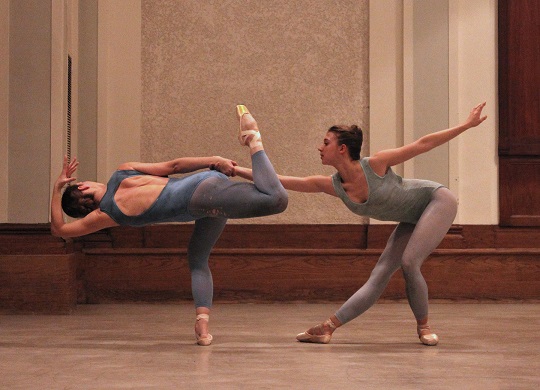
    From Scandanavia, the cool beauty of Pontus Lidberg (above, Nir Arieli photo) seemed the external masque of a man with a secret passion. From his WITHIN (Laybrinth Within) Pontus danced the opening solo which we’d just seen a few days ago when MORPHOSES premiered the dance/film masterpiece at the bigger Joyce. This visual poem evolves into a filmed passage of Pontus in a forest or standing on a lonely beach. The solo works well as a free-standing evocation of the longer work. And it’s a tremendous pleasure to watch Pontus Lidberg dance.

    Of the evening’s final work, a deadly dull and painfully protracted food fight, I’m not naming names. It simply reminded me of a conversation that Woody Allen has with his wife in the film CRIMES AND MISDEMEANORS. Urged to abandon his pathetic aspirations as a documentary film-maker, Woody reminds his wife: “Hey, I won Honorable Mention at that film competition last year!” to which she coolly replies: “Everyone who entered won Honorable Mention!”