Tag: Friday September

  • van Zweden’s Bruckner 8th @ The NY Phil

    JaapVanZweden

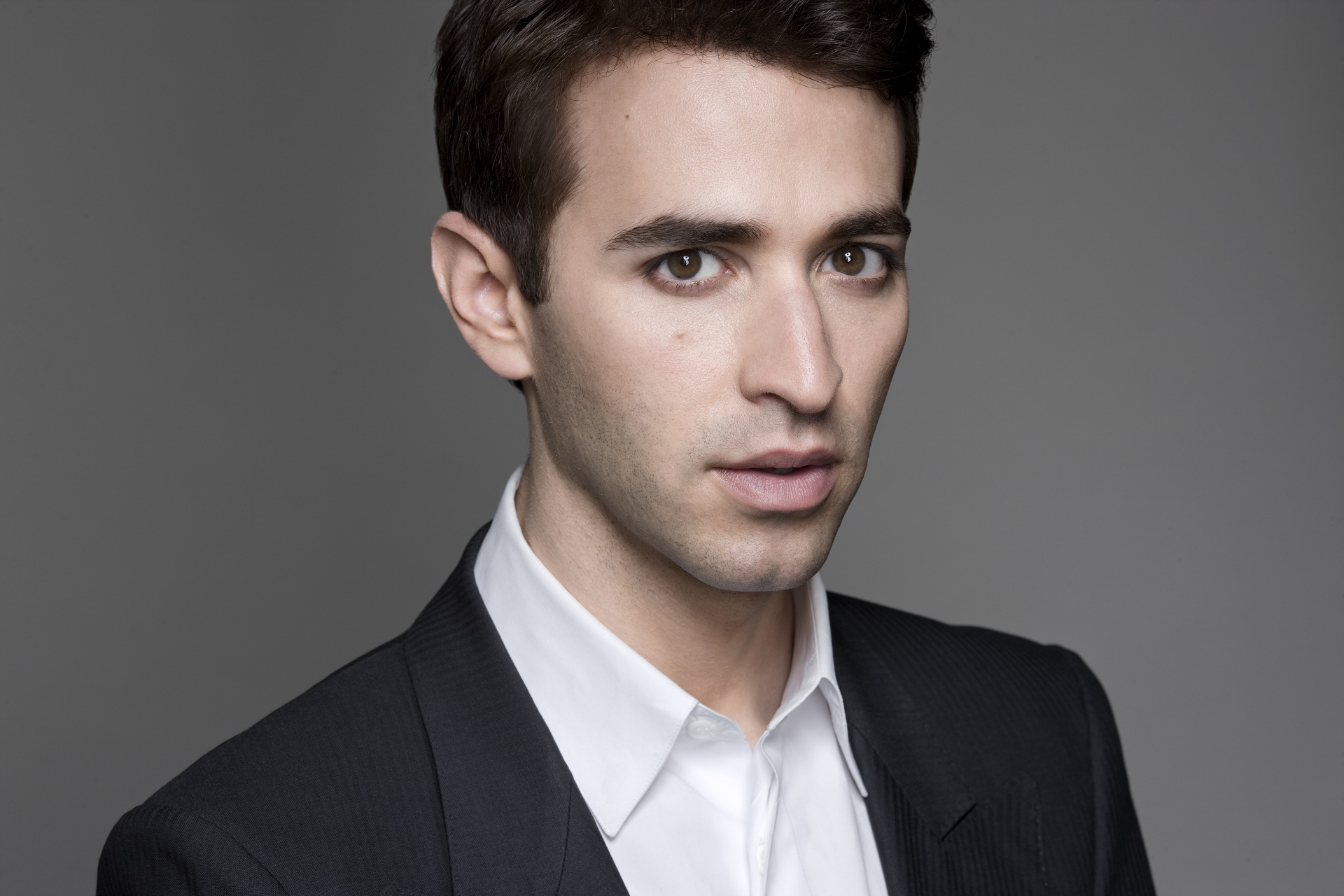
    Above: Jaap van Zweden, Musical Director of The New York Philharmonic

    ~ Author: Oberon

    Friday September 28th, 2018 – This evening was our first opportunity to hear Jaap van Zweden lead The New York Philharmonic since he officially took up the position of Musical Director. My friend Ben Weaver and I splurged and bought tickets to this concert because Bruckner is always on our must-hear list. In 2014, I had my first live encounter with the composer’s 8th in this very hall, under Alan Gilbert’s baton. It was a revelation.

    Tonight, Jaap van Zweden offered Conrad Tao’s Everything Must Go as a prelude to the Bruckner 8th. Does this massive symphony need a prelude? No. As with many ‘new’ works we’ve encountered over the past few seasons, Everything Must Go is expertly crafted but it sounds like so much else: by turns spare and noisy, with frequent percussive bangs and pops, this eleven-minute piece (it felt longer) passed by without providing any sense of the composer’s individual voice. Perhaps hearing more of Mr. Tao’s work – music not yoked to an existing masterpiece that employs the same orchestral forces – will lead us to discover who he is.

    Since there was no pause between the Tao and the Bruckner, the audience’s response to Everything Must Go could not be gauged. I wonder if the young composer took a bow at the end; we had headed out as the applause commenced.

    For the first two movements of the Bruckner, I was enthralled. The orchestra sounded truly superb, and Maestro van Zweden held sway with a perfect sense of the music’s architecture. It was a tremendous relief and balm to emerge from the day’s madness (the Kavanaugh hearings) into Bruckner’s vibrant world.

    The Philharmonic musicians offered rich tone and marvelous colours, the brass sounding grand and the violins singing lyrically in their big theme. The music has a Wagnerian sense of the monumental, and a ceaseless melodic flow. Among the solo moments, Sherry Sylar’s oboe stood out. At one point there’s an almost direct quote from Tchaikovsky’s SLEEPING BEAUTY. During a respite/interlude, softer themes mingle before a splendid onslaught from the brass turns grandiose. The movement ends on a murmur.

    The Scherzo has as its main and oft-repeated theme a churning 5-note figure that has worked its way into the soundtrack for GAME OF THRONES. As the movement progresses, the harp makes a lovely effect, as do the entwining voices of solo woodwinds. Textures modify seamlessly, sustaining our pleasure.

    A deep sense of longing suffuses the opening of the Adagio, with its rising passion. Again the harp glimmers magically. The rise and fall of great waves of sound bring passages of almost unbearable beauty; there’s a spectacular build-up to music of searing passion which evaporates into soft halo of solo winds. As the music re-builds, a Tchaikovskian glory permeates. It seems, though, that Bruckner cannot quite decide how to end this epic movement.

    Pulsing, march-like, and majestic, the Finale leads us onward. A big swaying rhythm from the timpani leads into a huge tsunami of sound. The work began to feel like a series of climaxes, though, and traces of brass fatigue started to crop up. The Maestro and the musicians were engulfed by gales of applause and cheers at the end. 

    I’m probably in a minority in feeling that Alan Gilbert’s 2014 rendering of the Bruckner 8th with the Philharmonic reached me on a deeper level, as well as being more exhilarating. “Well, it was faster!”, Ben Weaver would say. À chacun son goût…

    ~ Oberon

  • van Zweden’s Bruckner 8th @ The NY Phil

    JaapVanZweden

    Above: Jaap van Zweden, Musical Director of The New York Philharmonic

    ~ Author: Oberon

    Friday September 28th, 2018 – This evening was our first opportunity to hear Jaap van Zweden lead The New York Philharmonic since he officially took up the position of Musical Director. My friend Ben Weaver and I splurged and bought tickets to this concert because Bruckner is always on our must-hear list. In 2014, I had my first live encounter with the composer’s 8th in this very hall, under Alan Gilbert’s baton. It was a revelation.

    Tonight, Jaap van Zweden offered Conrad Tao’s Everything Must Go as a prelude to the Bruckner 8th. Does this massive symphony need a prelude? No. As with many ‘new’ works we’ve encountered over the past few seasons, Everything Must Go is expertly crafted but it sounds like so much else: by turns spare and noisy, with frequent percussive bangs and pops, this eleven-minute piece (it felt longer) passed by without providing any sense of the composer’s individual voice. Perhaps hearing more of Mr. Tao’s work – music not yoked to an existing masterpiece that employs the same orchestral forces – will lead us to discover who he is.

    Since there was no pause between the Tao and the Bruckner, the audience’s response to Everything Must Go could not be gauged. I wonder if the young composer took a bow at the end; we had headed out as the applause commenced.

    For the first two movements of the Bruckner, I was enthralled. The orchestra sounded truly superb, and Maestro van Zweden held sway with a perfect sense of the music’s architecture. It was a tremendous relief and balm to emerge from the day’s madness (the Kavanaugh hearings) into Bruckner’s vibrant world.

    The Philharmonic musicians offered rich tone and marvelous colours, the brass sounding grand and the violins singing lyrically in their big theme. The music has a Wagnerian sense of the monumental, and a ceaseless melodic flow. Among the solo moments, Sherry Sylar’s oboe stood out. At one point there’s an almost direct quote from Tchaikovsky’s SLEEPING BEAUTY. During a respite/interlude, softer themes mingle before a splendid onslaught from the brass turns grandiose. The movement ends on a murmur.

    The Scherzo has as its main and oft-repeated theme a churning 5-note figure that has worked its way into the soundtrack for GAME OF THRONES. As the movement progresses, the harp makes a lovely effect, as do the entwining voices of solo woodwinds. Textures modify seamlessly, sustaining our pleasure.

    A deep sense of longing suffuses the opening of the Adagio, with its rising passion. Again the harp glimmers magically. The rise and fall of great waves of sound bring passages of almost unbearable beauty; there’s a spectacular build-up to music of searing passion which evaporates into soft halo of solo winds. As the music re-builds, a Tchaikovskian glory permeates. It seems, though, that Bruckner cannot quite decide how to end this epic movement.

    Pulsing, march-like, and majestic, the Finale leads us onward. A big swaying rhythm from the timpani leads into a huge tsunami of sound. The work began to feel like a series of climaxes, though, and traces of brass fatigue started to crop up. The Maestro and the musicians were engulfed by gales of applause and cheers at the end. 

    I’m probably in a minority in feeling that Alan Gilbert’s 2014 rendering of the Bruckner 8th with the Philharmonic reached me on a deeper level, as well as being more exhilarating. “Well, it was faster!”, Ben Weaver would say. À chacun son goût…

    ~ Oberon

  • New Chamber Ballet: From Bach to Beat

    21122624_10155646992488571_4600347794179842337_o

    Above: Elizabeth Brown of New Chamber Ballet

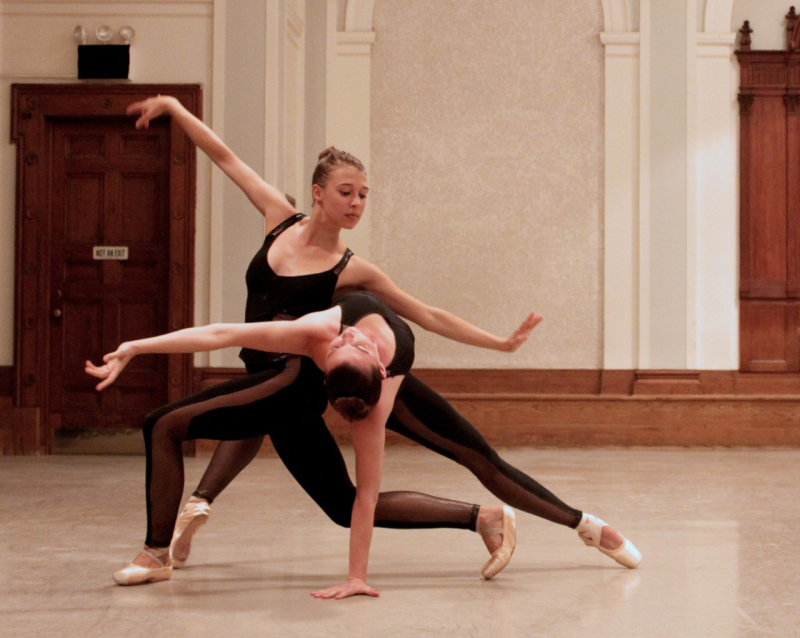
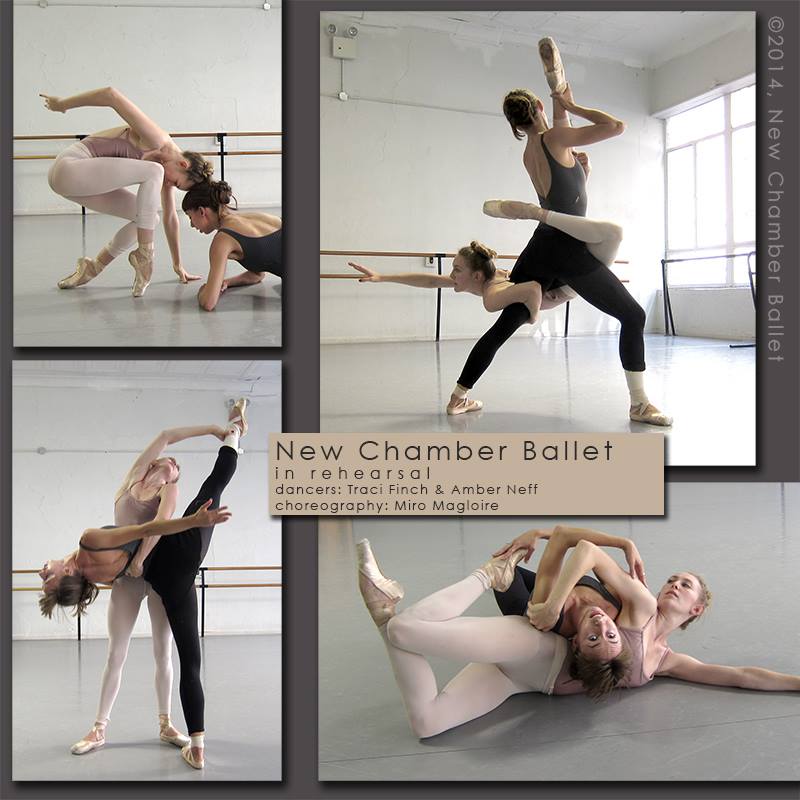
    Friday September 22nd, 2017 – Kicking off their 2017-2018 season, Miro Magloire’s New Chamber Ballet offered an evening of five ballets choreographed by Miro to music by J S Bach, W A Mozart, Luciano Berio, Beat Furrer, and the choreographer himself. Pianist Melody Fader and violinist Doori Na performed these stylistically varied scores to perfection: their playing illuminated the evening in a very special way. Miro’s five ballerinas – Sarah Atkins, Elizabeth Brown, Kristine Butler, Traci Finch, and Amber Neff – rose to every challenge the choreographer handed them, from brisk allegro combinations to extremes of partnering.

    Miro has recently altered the seating configuration for his City Center Studio presentations: the audience now sit on all four borders of the performing space, with the piano in a permanent place at the far end of the hall. This worked exceptionally well. I chose a seat right next to the musicians which proved wonderfully congenial. 

    The revival of Lace provided a stunning showcase for violinist Doori Na: his playing of Luciano Berio’s Sequenza VIII was simply spine-tinglingly sensational. To revel in the exceptional clarity of Doori’s playing – the music’s fleet edginess, intensity, and wide dynamic range all captured to perfection – made for a perfect start to the evening. The choreography creates a sense of ritual as the three ballerinas – Sarah Atkins, Elizabeth Brown, and Traci Finch – seem to personify priestesses in the service of some ancient, long-forgotten goddess. Each dancer has solo passages while the other two sit or kneel, striking poses of reverence or ecstasy. The contrast between agitation and reverence creates an engrossing atmosphere.

    Pianist Melody Fader brought a hypnotic, quiet radiance to the music of Beat Furrer for Voicelessness, a duet inspired by a poem of Sylvia Plath’s and danced by Kristine Butler and Amber Neff. Melody’s control of the music’s piano/pianissimo gradations was so atmospheric. The two dancers moved with intense assurance thru some very demanding partnering sequences; in this and other recent ballets, Miro has created a new mode of same-sex partnering.

    The revival of 104 Fahrenheit, to Magloire’s own score, made me stop to think: have I seen any other  ballets choreographed by their composer before? I can’t think of any. The ballet begins languidly, with Melody Fader again setting the mood with her refined playing. Traci Finch has the first solo passage: a danced agitato with cunning pauses. Kristine Butler’s slower solo reflects the sense of stillness in the music. Skittering motifs from the piano signal Elizabeth Brown’s space-filling solo, a vividly-danced montage of athleticism and repose in which the dancer’s hands create their own visual poetry. Throughout, Melody Fader’s inspired playing gave wing to the exceptional dancing.

    The world premiere of a new duet to music from Johann Sebastian Bach’s Well-Tempered Clavier has a simple working title for now: Bach. Commissioned by longtime friends of New Chamber Ballet, Leslie and Richard Curtis, the duet is lovely as it stands; but Miro already has plans to enlarge on it.

    Wearing Sarah Thea’s frothy pastel frocks, Amber Neff and Kristine Butler drew inspiration from Melody Fader’s spot-on playing of the Bach prelude and fugue #14 in F-sharp minor. The two dancers move from joyous bounciness thru some stretchy give-and-take partnering, and lovely, ecstatic back-bends. It’ll be interesting to see how Miro develops this piece, and whether additional dancers might be included.   

    Amity is set to Mozart’s violin sonata in C Major K.296, and what a wonderful performance of that piece we heard this evening from Melody Fader and Doori Na. Sitting so close to these music-makers, I could really feel their resonance – Doori’s lower register had a nice contralto depth – while Melody’s choice of tempos seemed perfect.

    6a00d8341c4e3853ef01b8d28b748f970c-800wi

    Above: Amity dress rehearsal image by Nir Arieli.

    Wearing Sarah Thea’s gossamer-gold costumes, dancers Sarah Atkins, Kristine Butler, Traci Finch, and Amber Neff affirmed the sense of joy in dancing to Mozart’s music with airy grace. From time to time, Miro has them fall to the floor: an unexpected move that at first seemed accidental. These little touches occur frequently throughout Miro’s choreography, and they keep things fresh.

  • …And All That Djazz @ NCB

    14199168_10154473099603571_6069759855082671756_n

    Friday September 16th, 2016A sold-out house this evening as Miro Magloire’s New Chamber Ballet presented their season-opening program. At a time when I am covering far less dance than in the past, Miro’s work – his choreography, his musical choices, and the dancers and musicians who bring the ballets to life – continues to draw me to his performances and rehearsals. Tonight’s program was one of the finest I have experienced at New Chamber Ballet: wonderfully diverse in the music presented, expertly danced by a quintet of distinctive ballerinas, and played by a violinist and pianist who seem to thrive on the stylistic range and technical challenges of the music Miro selects.

    Variety is the spice of life, and it is also – from a musical point of view – an essential element in putting together an evening of dance. Miro will sometimes provoke New Chamber Ballet‘s faithful followers with the thorniness of a score he has decided on; inevitably, his rightness of judgment wins out. These contemporary pieces are counter-balanced by more ‘accessible’ music – tonight, Tartini and Ravel – thus turning the evening into a audio roller coaster. We are along for the ride, which can be quite exhilarating, and the NCB musicians make it all so rewarding. 

    Opening the evening was a trio, Silk, which premiered in 2006. Doori Na’s playing of the Sonata VII for solo violin by Giuseppe Tartini was stunningly virtuosic. The violinist had a long evening ahead of him, playing in all four works; in the Tartini, he poised himself at a very high level of technique and artistry, and then incredibly soared upward from there. The Ravel that ended the evening was – to use a 60s phrase – mind-blowing.

    In Silk, the three dancers – Elizabeth Brown,Traci Finch, and Cassidy Hall – appear in Candice Thompson’s ice-blue, skirted leotards. They commence with slow ‘plastique’ port de bras and poses that might have been inspired by a Grecian urn. A sense of calm pervades their unison trio. There’s a silence as things are re-set for a charming, light-filled allegro.

    Striking poses in unison, the girls commence an andante which features a simply gorgeous Tartini melody, superbly intoned by Doori. Cassidy Hall has a long solo, danced beautifully, while Traci and Elizabeth stand back-to-back, swaying gently, and curling their hands in a subtly expressive motif. 

    Elizabeth and Cassidy sit in a stylized pose as Traci dances an impressive solo with lots of intricate pointe work and a sense of urgency. In a striking passage, Traci balances on both pointes as her upper body sways and angles itself off-kilter. Doori hones his tone down to a thread before it goes deep: this music is so demanding!

    Elizabeth Brown, a dancer of unique qualities, has solo passages laced into a spacious trio; as the pace of the music slows and then revs up again, Elizabeth executes lyrical turns and unusual, quirky footwork. The three girls dance in unison, with fast moves to slow music. Silk goes on to a sprightly conclusion.

    Thumbnail_IMG_0872_edited_sm

    Above: Cassidy Hall and Sarah Atkins in Upon My Wings; photo by Amber Neff

    In the first of the evening’s two premieres, Upon My Wings, Doori Na again made a vivid impression in the music of Reiko Fueting: tanz.tanz was composed for solo violin as an homage to Bach’s famous Chaconne. This ballet, originally entitled Tanz Tanz, was commissioned by the Columbia Ballet Collaborative, where it premiered in 2014.  For his own company, Miro has distilled the dancing to a duet for Sarah Atkins and Cassidy Hall.

    Skittering sounds from Doori’s violin find the two dancers balancing against one another’s bodies. They kneel and sway. The choreography features the intimate and physically taxing same-sex partnering that Miro has been exploring of late: for example, Sarah being rotated by Cassidy in an off-center balance.

    The violin stutters and buzzes, and Doori shows his mastery with some ultra-soft playing, so subtle and shining. The girls echo one another in turns as the music goes Bachian; the ballet ends in silence.

    Yellow-Rose-Red-Blue, the evening’s second premiere, marks Miro’s third collaboration with composer Michel Galante; the work is made possible by a grant from the O’Donnell-Green Music and Dance Foundation. 

    Thumbnail_IMG_0970_edited_sm

    Above: Amber Neff, Cassidy Hall, and Traci Finch in Yellow-Rose-Red-Blue; photo courtesy of New Chamber Ballet

    The ballet’s title derives from the colours of Sarah Thea’s stylish and usual costumes: mock-turtle-neck designs with long, gossamer slit-skirts. These elegant frocks add to the airy feeling of the space-filling choreography. Pianist Melody Fader joins Doori Na to play Galante’s very demanding score.

    As Amber Neff and Cassidy Hall engage in more of Miro’s intense partnering, the music is almost immediately fiendish: deep piano and growling violin. Things turn waltzy, and the girls pair off and circle the stage in a movement motif that is half-waltz and half-galop. The music continues to engage us: somehow, Doori is able to produce a deep, gritty sound as if he was drawing his bow across sandpaper. The dancers gather in a circle, raising their arms in a reverential gesture.

    Amber and Cassidy, standing back-to-back, wrap one another en attitude, and bend apart. The four dancers form a chorus line; the music grows agitated, and the girls rush off into a space-filling chase-about. Their paths cross; poses are struck while the others dance on. They re-form the celebratory circle, reaching for heaven. In an allegro rush, the dancers conjure up a galloping pace, drawing from a repeated note on Melody’s keyboard. 

    Yellow-Rose-Red-Blue: it’s complicated, both musically and choreographically. It will take further viewings to delve into its riches, and I feel certain we’ll be seeing it again soon. Tonight’s premiere certainly was provocative, and I look forward to this ballet’s future evolution. 

    Concluding the evening was Djazz. Set to Maurice Ravel’s sonata #2 for violin and piano, the ballet was commissioned by Leslie and Richard Curtis. Here designer Sarah Thea had the three dancers – Sarah Atkins, Traci Finch, and Amber Neff – in dark-coloured leotards to which long fringes have been attached. This gave the girls a “flapper” look which meshed well with Ravel’s jazz-tinted score; when doing fast turns, the fringe flared out, giving an added air of animation.

    Sarah Atkins leads off the dancing, soon joined by Traci Finch and Amber Neff; their contrasting personalities are engaging. Miro’s choreography here again calls for tricky partnering, as well as jazz-inspired swaying and sauntering. At the end of the first movement, the dancers wilt; at the end of the second, they sleep. In the finale, the dancing becomes very animated, with high-kicking extensions on display and brisk steps woven into the pulsating music.

    In the Ravel, the musical achievement of Doori Na and Melody Fader was extraordinary; I can honestly say I’ve never heard this piece played better. It’s such incredible music: rhythmically captivating, veering from assertive to misterioso, and rich in irony. Doori and Melody were rightly cheered by the full house as the evening drew to its close.

    Dancers: Sarah Atkins, Elizabeth Brown, Traci Finch, Cassidy Hall, and Amber Neff
    Musicians: Melody Fader, piano & Doori Na, violin

  • …And All That Djazz @ NCB

    14199168_10154473099603571_6069759855082671756_n

    Friday September 16th, 2016A sold-out house this evening as Miro Magloire’s New Chamber Ballet presented their season-opening program. At a time when I am covering far less dance than in the past, Miro’s work – his choreography, his musical choices, and the dancers and musicians who bring the ballets to life – continues to draw me to his performances and rehearsals. Tonight’s program was one of the finest I have experienced at New Chamber Ballet: wonderfully diverse in the music presented, expertly danced by a quintet of distinctive ballerinas, and played by a violinist and pianist who seem to thrive on the stylistic range and technical challenges of the music Miro selects.

    Variety is the spice of life, and it is also – from a musical point of view – an essential element in putting together an evening of dance. Miro will sometimes provoke New Chamber Ballet‘s faithful followers with the thorniness of a score he has decided on; inevitably, his rightness of judgment wins out. These contemporary pieces are counter-balanced by more ‘accessible’ music – tonight, Tartini and Ravel – thus turning the evening into a audio roller coaster. We are along for the ride, which can be quite exhilarating, and the NCB musicians make it all so rewarding. 

    Opening the evening was a trio, Silk, which premiered in 2006. Doori Na’s playing of the Sonata VII for solo violin by Giuseppe Tartini was stunningly virtuosic. The violinist had a long evening ahead of him, playing in all four works; in the Tartini, he poised himself at a very high level of technique and artistry, and then incredibly soared upward from there. The Ravel that ended the evening was – to use a 60s phrase – mind-blowing.

    In Silk, the three dancers – Elizabeth Brown,Traci Finch, and Cassidy Hall – appear in Candice Thompson’s ice-blue, skirted leotards. They commence with slow ‘plastique’ port de bras and poses that might have been inspired by a Grecian urn. A sense of calm pervades their unison trio. There’s a silence as things are re-set for a charming, light-filled allegro.

    Striking poses in unison, the girls commence an andante which features a simply gorgeous Tartini melody, superbly intoned by Doori. Cassidy Hall has a long solo, danced beautifully, while Traci and Elizabeth stand back-to-back, swaying gently, and curling their hands in a subtly expressive motif. 

    Elizabeth and Cassidy sit in a stylized pose as Traci dances an impressive solo with lots of intricate pointe work and a sense of urgency. In a striking passage, Traci balances on both pointes as her upper body sways and angles itself off-kilter. Doori hones his tone down to a thread before it goes deep: this music is so demanding!

    Elizabeth Brown, a dancer of unique qualities, has solo passages laced into a spacious trio; as the pace of the music slows and then revs up again, Elizabeth executes lyrical turns and unusual, quirky footwork. The three girls dance in unison, with fast moves to slow music. Silk goes on to a sprightly conclusion.

    Thumbnail_IMG_0872_edited_sm

    Above: Cassidy Hall and Sarah Atkins in Upon My Wings; photo by Amber Neff

    In the first of the evening’s two premieres, Upon My Wings, Doori Na again made a vivid impression in the music of Reiko Fueting: tanz.tanz was composed for solo violin as an homage to Bach’s famous Chaconne. This ballet, originally entitled Tanz Tanz, was commissioned by the Columbia Ballet Collaborative, where it premiered in 2014.  For his own company, Miro has distilled the dancing to a duet for Sarah Atkins and Cassidy Hall.

    Skittering sounds from Doori’s violin find the two dancers balancing against one another’s bodies. They kneel and sway. The choreography features the intimate and physically taxing same-sex partnering that Miro has been exploring of late: for example, Sarah being rotated by Cassidy in an off-center balance.

    The violin stutters and buzzes, and Doori shows his mastery with some ultra-soft playing, so subtle and shining. The girls echo one another in turns as the music goes Bachian; the ballet ends in silence.

    Yellow-Rose-Red-Blue, the evening’s second premiere, marks Miro’s third collaboration with composer Michel Galante; the work is made possible by a grant from the O’Donnell-Green Music and Dance Foundation. 

    Thumbnail_IMG_0970_edited_sm

    Above: Amber Neff, Cassidy Hall, and Traci Finch in Yellow-Rose-Red-Blue; photo courtesy of New Chamber Ballet

    The ballet’s title derives from the colours of Sarah Thea’s stylish and usual costumes: mock-turtle-neck designs with long, gossamer slit-skirts. These elegant frocks add to the airy feeling of the space-filling choreography. Pianist Melody Fader joins Doori Na to play Galante’s very demanding score.

    As Amber Neff and Cassidy Hall engage in more of Miro’s intense partnering, the music is almost immediately fiendish: deep piano and growling violin. Things turn waltzy, and the girls pair off and circle the stage in a movement motif that is half-waltz and half-galop. The music continues to engage us: somehow, Doori is able to produce a deep, gritty sound as if he was drawing his bow across sandpaper. The dancers gather in a circle, raising their arms in a reverential gesture.

    Amber and Cassidy, standing back-to-back, wrap one another en attitude, and bend apart. The four dancers form a chorus line; the music grows agitated, and the girls rush off into a space-filling chase-about. Their paths cross; poses are struck while the others dance on. They re-form the celebratory circle, reaching for heaven. In an allegro rush, the dancers conjure up a galloping pace, drawing from a repeated note on Melody’s keyboard. 

    Yellow-Rose-Red-Blue: it’s complicated, both musically and choreographically. It will take further viewings to delve into its riches, and I feel certain we’ll be seeing it again soon. Tonight’s premiere certainly was provocative, and I look forward to this ballet’s future evolution. 

    Concluding the evening was Djazz. Set to Maurice Ravel’s sonata #2 for violin and piano, the ballet was commissioned by Leslie and Richard Curtis. Here designer Sarah Thea had the three dancers – Sarah Atkins, Traci Finch, and Amber Neff – in dark-coloured leotards to which long fringes have been attached. This gave the girls a “flapper” look which meshed well with Ravel’s jazz-tinted score; when doing fast turns, the fringe flared out, giving an added air of animation.

    Sarah Atkins leads off the dancing, soon joined by Traci Finch and Amber Neff; their contrasting personalities are engaging. Miro’s choreography here again calls for tricky partnering, as well as jazz-inspired swaying and sauntering. At the end of the first movement, the dancers wilt; at the end of the second, they sleep. In the finale, the dancing becomes very animated, with high-kicking extensions on display and brisk steps woven into the pulsating music.

    In the Ravel, the musical achievement of Doori Na and Melody Fader was extraordinary; I can honestly say I’ve never heard this piece played better. It’s such incredible music: rhythmically captivating, veering from assertive to misterioso, and rich in irony. Doori and Melody were rightly cheered by the full house as the evening drew to its close.

    Dancers: Sarah Atkins, Elizabeth Brown, Traci Finch, Cassidy Hall, and Amber Neff
    Musicians: Melody Fader, piano & Doori Na, violin

  • NY Philharmonic Welcomes A New Concertmaster

    Frank-huang

    Above: Frank Huang

    Friday September 25th, 2015 – The New York Philharmonic‘s opening concert of the subscription season introduced us to the orchestra’s new concertmaster, Frank Huang. We’d actually seen Mr. Huang playing – unannounced – at a couple of concerts last season; but now it’s official, and the Philharmonic faithful gave the violinist a warm welcome. 

    The program opened with LA Variations, a 1996 work by the Philharmonic’s new Marie-Josée Kravis composer-in-residence, Esa-Pekka Salonen. Salonen’s violin concerto, to which Peter Martins set his 2010 ballet MIRAGE and which the Philharmonic performed in 2013 – is to me one of the outstanding musical works of the 21st century to date. And so I was very curious to hear the composer’s much earlier work this evening.

    Mr. Salonen appeared onstage prior to the playing of the Variations and made an overly-long, rambling speech about how the work was a turning point in his musical thinking. As he talked on and on, audience members around us seemed increasingly restless, and a few dozed off. At last he ambled offstage and Masetro Gilbert took the podium and – as it should – the music spoke for itself.

    LA Variations is a work of consummate craftsmanship and has many very appealing passages; early on, some of the textures reminded me – oddly enough – of the Sea Interludes from Britten’s Peter Grimes. Later there are some big tutti passages that evoke a restless, rocking feeling. At the very end, there was a tantalizing ‘calling card’ from Frank Huang in an entrancing solo passage that whetted the appetite for the Strauss to come.

    LA Variations seemed to show – as he indicated in his speech – the composer’s turning away from the rather sterile musical language in which he had been ingrained (he frequently mentioned Pierre Boulez in this regard), and the planting of the first seeds in his own musical garden; works like the Violin Concerto show us how that garden has bloomed and thrived in the years since Salonen’s 1996 self-discovery.

    Following the interval, we experienced an incandescent performance of Richard Strauss’s Ein Heldenleben (A Hero’s Life), which dates from 1898.

    In December 2013, my friend Dmitry and I experienced a superb rendering of this work played by the Philhamonic under the baton of a conductor me greatly admired: Rafael Frühbeck de Burgos; alas, just six months after that vibrant evening, the venerable Maestro passed away.

    Tonight’s performance found Maestro Gilbert and the Philharmonic artists at their luminous best. It was an uplifting and wonderfully satisfying traversal of this impressive, melodically rich score. Maestro Gilbert favored a forward impetus to the music – very exhilarating – yet also provided the necessary passages of reverie.

    The musical themes continually sound like previews of Strauss’s operas to come – most especially of Rosenkavalier and Frau ohne Schatten, both of which lay many years in the future. The Philharmonic musicians seemed to relish every moment of the score, whether in the big ensemble moments or the many solo opportunities which the composer provides. Philip Myers and his fellow hornsmen were having a grand night of it, as were the trumpeters in their offstage calls. The principal wind players  shone with evocative lustre in their solos. 

    Ein Heldenleben provided an ideal showcase for Frank Huang as he embarked on his Philharmonic journey: in this Strauss work with its marvelous passages for violin solo, Mr Huang’s tone was ravishing and his style so cordial and elegant, always imparting an emotional resonance. I cannot wait for his concerto debut with the orchestra, which I hope will come soon.

    And so, the Summer of my discontent has passed: the season has begun and I look forward to many nights of music and dance to elevate the spirit.

  • Table of Silence 2015

    L1620137

    Above: Christina Ilisije

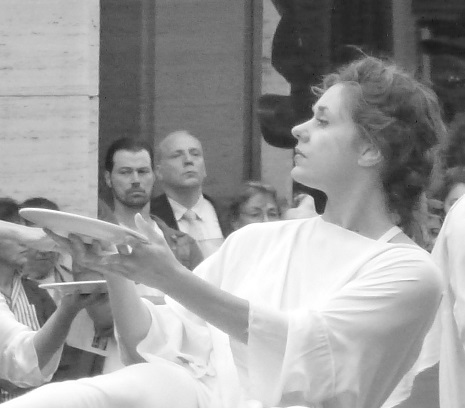
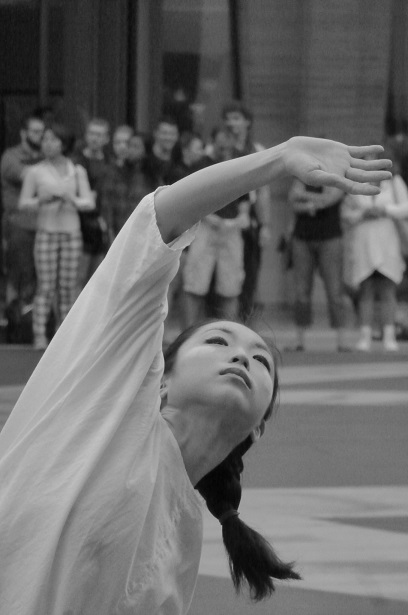
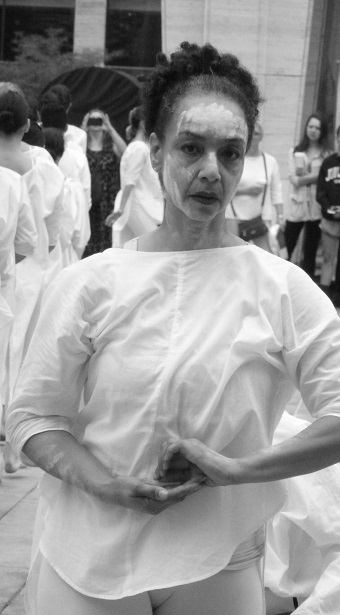
    Friday September 11th, 2015 – Table of Silence, choreographer Jacqulyn Buglisi’s commemoration of the events of September 11th, 2001 – and her gift of peace to the world – was performed this morning at Lincoln Center.

    This year the Table of Silence seemed particularly moving for some reason; I cannot quite put my finger on it. Perhaps is is simply that, as time goes by, life becomes more and more precious to us. It was a morning to think of great friendships, including some that have been cast asunder. It was also a day to celebrate those we hold most dear, among them the one I almost lost; his recovery was nothing less than a miracle.

    So despite the memories of that awful event fourteen years ago, on this day what I was feeling was mostly gratitude: for the people, the music, the dance, the beauty of the natural world, and the simple pleasures that fill my life…all of which – I have come to realize – we cannot take for granted.

    “Let us live each day to the fullest, and never miss a chance to let those dearest to us know of our love for them.”

    The sky was overcast for today’s Table of Silence, but I took lots of photos. Here are a few, despite a lack of clarity:

    L1610916

    L1610924

    L1610950

    L1610958

    L1610997

    L1610959

    L1620105

    Kenny Corrigan

    L1620074

    Lloyd Knight

    L1620110

    Abdiel Cedric Jacobsen

    There’s a Facebook album of images from today’s performance here.

  • 10th Anniversary @ New Chamber Ballet

    Miro ncb rehearsal

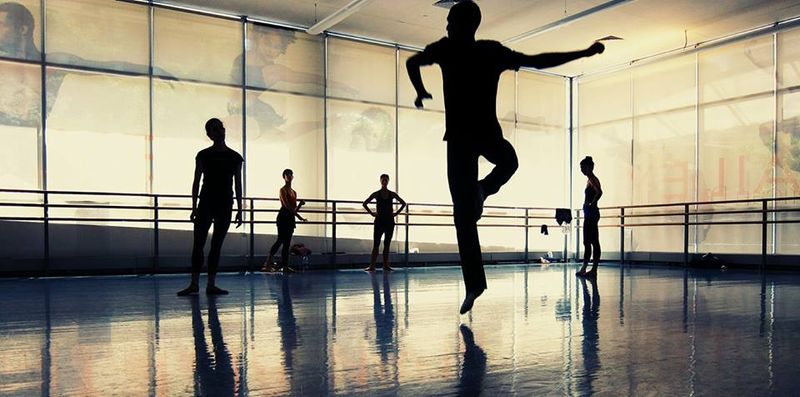
    Above: New Chamber Ballet company class; photo by Amber Neff

    Friday September 19th, 2014 – Miro Magloire’s New Chamber Ballet have inaugurated their tenth anniversary season with a programme featuring three Miro Magloire premieres and a work by NCB resident choreographer Constantine Baecher’s “Happy Dance Of The Wild Skeletons” (to music of John Cage), as well as Miro’s intriguing “Tilting and Leaning“, set to piano music by Pierre Boulez.

    Over the past decade, New Chamber Ballet have carved out a special niche for themselves in the Gotham dance world. Their “up-close-and-personal” concerts – always danced to live music – have drawn ever-expanding audiences, and tonight they played to a standing-room-only crowd.

    Much praise is due pianist Melody Fader and violinist Doori Na who perform the often complex scores that Miro likes to use with a high level of musicality. Exceptional tonight was their performance of Mauricio Kagel’s ‘Klangwölfe’ for the ballet RAW.

    In recent seasons Miro has presented narrative works: domestic dramas about ghosts, sibling rivalries, or mysterious letters. This evening’s three new works are more abstract though of course certain themes might be implied. The first ballet is aptly titled FAST FORWARD; danced to Beethoven’s ‘Rondo for Violin and Piano’, the work has three ballerinas – Sarah Atkins, Holly Curran, and Traci Finch – rushing about the space in speedy (even risky) combinations. The breathless quality of the movement is a fine response to the zesty drive of the Beethoven as played by Doori and Melody.

    Miro020-3289003989-O

    Above: Sarah Artkins in Miro’s TILTING/LEANING; photo by Adam Jason

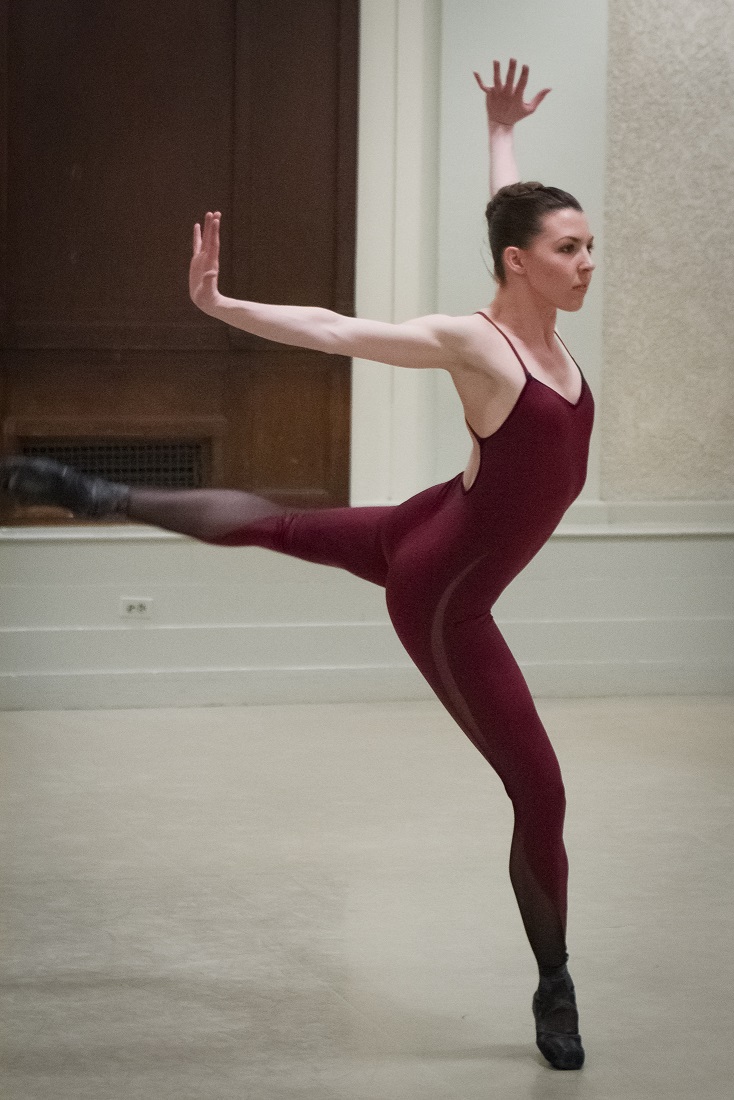
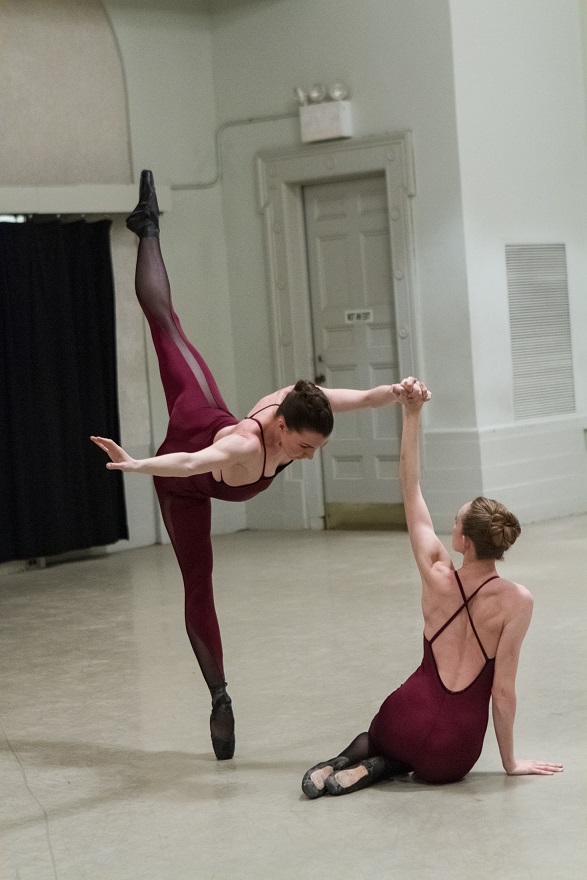
    Melody Fader took in stride the demands of Pierre Boulez’s ‘Notations’ which accompanies last season’s intriguing duet TILTING/LEANING. Dressed in Sarah Thea Swafford’s sleek wine-coloured body tights, dancers Sarah Atkins, Traci Finch, and Amber Neff go from intense to playful and back again in choreography where they balance against one another in unique and quirky shapes.

    Miro052-3289006317-O

    Supported arabesques are a signature motif in TILTING/LEANING (Sarah and Amber above, in an Adam Jason photo). At the end Sarah and Amber appear to ‘fold’ Traci into an improbable little bundle. This ballet rewards repeated viewings with its resonant nuances.

    L1480519

    For Holly Curran (rehearsal image, above), Miro has created an unusual tour de force solo entitled IN THE COLD. While Melody Fader spins out some Satie at the piano, Holly appears alternately shell-shocked, frantic, or trembling with the chills. Repetitive, compulsive moves give way to a spacious manège of leaps; the dancer periodically assumes a potent arabesque or pauses to rearrange herself before contemplating her next move. The solo, which choreographically rather plays against the expected responses to the Satie melodies, was excellently mastered by dancer and pianist.

    10486513_10152694171488571_8874687051716580051_n

    Above: rehearsal images from Miro’s new duet RAW

    Miro’s meshing of music and movement created yet another fresh vision with RAW. Introducing the work, Miro spoke affectionately of the German-Argentine composer Mauricio Kagel who was Miro’s composition teacher. The choreographer pays homage to his musical mentor with one of his most inspired works to date: RAW is such a fascinating piece that when it ended I immediately wanted to see (and hear) it again.

    Doori Na – his strings muted – and Melody Fader evoked a misterioso atmosphere: Doori showed great control as he spun out a thread of sound, and Melody later drew forth a shimmering, high-lying theme from the keyboard. Dancers Traci Finch and Amber Neff are literally entwined much of the time in this duet; their handling of the strenuous partnering motifs, including lifts and intimate bondings, gave the ballet a captivating intensity. An aggressive passage eventually leads to serene, almost worshipful images as Amber leans against the piano and Traci kneels at her feet. RAW seems to veer from sensuous to sterile to pensive, and it is perhaps Miro’s most intimate creation to date.

    To end the evening, Miro invited the viewers to circle the dancefloor, the better to watch Constantine Baecher’s impetuous romp of a duet, HAPPY DANCE OF THE WILD SKELETONS. Melody Fader plays John Cage’s ‘Bacchanale’ on a prepared piano as dancers Traci Finch and Amber Neff – in girlish playsuits and bobbi-sox – indulge in playful, slap-happy hijinx. Their hair comes down at the end, as they revel in the sheer joy of being silly.

    Happy anniversary, Miro!

    The Company’s next performances will be on November 21st and 22nd. 2014. Visit their website here.

  • TAKE Dance: Dark Mourning

    555594_10151919266405929_1933576248_n

    Above photo by ‘M’ Apisak Vithyanond; Elise Drew and Kile Hotchkiss in the foreground

    Friday September 27th, 2013 – TAKE Dance presented the premiere of Takehiro Ueyama’s DARK MOURNING at Symphony Space tonight. The programme further featured a new duet entitled A BAITED SOUL created by Kazuko Hirabayashi and danced by Jill Echo and Take Ueyama, and a revival of Take’s FLIGHT which was created in 2010.

    I’ve been following TAKE Dance since 2008, when my friend Sophie Bromberg first mentioned the Company to me. Take was one of the first to bring dance bloggers into the fold, and he has often shared his creative process with me. In May 2011, Take’s evening-length SALARYMAN seemed to have attained a peak – both theatrical and choreographic – for the Company. Tonight, watching DARK MOURNING, I felt that Take has surpassed himself yet again. This somber new work, in which movement, music, and silence are meshed into a cogent whole, expresses both the terror and tranquiity of death, and presents a haunting view of bereavement.

    To the tolling of bells, a black-clad dancers appear as shuffling mourners moving across the darkening landscape. We are reminded at first of Take’s 2009 creation FOOTSTEPS IN THE SNOW; but DARK MOURNING takes a very different path. Take’s musical choice of the Kronos Quartet’s Lachrymae Antiquae gives DARK MOURNING a timeless sprituality. In structuring the work, silences are as profound as the Renaissance-inspired music.

    Alternating ensemble passages – marked by fluid movement – with four solos, Take presents his dancers at their most compelling. Kile Hotchkiss, appearing nearly nude in a pool of dazzling white light – a sharp contrast to the prevailing gloom – appears as a fallen angel, his long limbs and expressive hands simply spellbinding. In a long black gown, Kristen Arnold evokes images of Martha Graham with her expansive gestures of mourning and supplication. John Eirich, showing his customary disdain for personal safety, gives a restless athleticism to his bold gymnastic combinations. And Gina Ianni ended the work as a broken spirit, her blonde vulnerability succumbing at last to the inevitable. Lynda Senisi, Elise Drew (now dancing with Limon) and Brynt Beitman completed the cast for this impressive new creation, a work which I hope to experience again soon.

    Take Ueyama and Jill Echo performed the Hirabayashi duet, A BAITED SOUL, which was inspired by a Japanese ghost story. To the lonely sound of a flute, the two dancers appear in ritualistic moves in a state of courtly wariness that evolves into tempestuous conflict. Smoke wafts across the space, and Jill carries a decorative rose-hued parasol, sometimes hiding behind it. The back curtain is opened as Take begins a long, physically demanding solo to the sound of chant. As the voice becomes distorted the dancer’s movements suggest he is trapped in a spirit world. It was of course wonderful to see Jill and Take dancing together, and Anthony Aiu as a mysterious black-clad attendant also made his mark here.

    In a work inspired by flocks of birds banking or racing across the Roman sky, the revival of FLIGHT has taken on a new visual dimension: the costumes have been changed, so that the dancers who – at the premiere – appeared as brown-clad starlings, now look like doves in their gossamer white trousers and shirts.

    Barry Wizoreck, a former Paul Taylor dancer, appears in FLIGHT‘s opening solo which Take had originally danced himself. Projections of swarming birds appear, and the dancer casts a shadow as he moves in a state of quiet wonder. A quartet of dancers – Gina Ianni, Elise Drew, John Eirich and Kile Hotchkiss – dance the second movement, sometimes in unison and sometimes perched in their arrested trajectories; John Eirich again erupts with a dazzling combination. In a dynamic, turbulent build-up, more doves appear. Dancing to Philip Glass’s Meetings Along the Edge, the large ensemble moves fast while the quartet moves slowly: a striking justaposition. Barry Wizoreck reappears, wandering cautiously among the fluttering doves as he scatters white feathers on the ground.

    The performance was well-attended and well-applauded; among the audience were four beloved Taylor women from different generations: Linda Kent, Karla Wolfangle, Rachel Berman and Amy Young.

    Performers:
    Kristen Arnold, Brynt Beitman, Jill Echo, Elise Drew, John
    Eirich, Kile Hotchkiss, Gina Ianni, Lynda Senisi, Marie Zvosec &
    Take Ueyama with Jesse Dunham, Jamison Goodnight, Jillian Hollis, Lauren
    Elise Kravitz, Anthony Aiu and Barry Wizoreck (Guest Artist)

    Music by Philip Glass, Ana Milosavljevic, Kronos Quartet,
    Terry Riley, Aleksandra Vrebalov, Houzan Yamamoto

    Lighting Design: Lauren Parrish
    Costume Design: Jesse Dunham, Elena Comendador

  • Baroque Collaboration @ The Players Club

    6a00d8341c4e3853ef0148c873b581970c-800wi

    Above: Jared Angle, in a Henry Leutwyler portrait.

    Friday September 28, 2012 – In a unique mingling of dance and song, New York City Ballet principal dancer Jared Angle and countertenor Anthony Roth Costanzo met up in the salon at the Players Club for a Baroque feast. Jared’s NYCB colleague Troy Schumacher (who is also the founder of Satellite Ballet) choreographed the Vivaldi piece in which Jared danced. At the harpsichord, the remarkable Bradley Brookshire made marvelous music all evening. The programme was presented as part of the Salon/Sanctuary Concerts series.

    Costanzo

    Above: Anthony Roth Costanzo, whose singing of Handel, Purcell and Vivaldi showed a delicious timbre, breath control of enviable security, and coloratura that left the listener astounded. For all the magic of his virtuoso vocalism, it was in the sustained poetry of the slow passages that the slender and agile young singer was at his most ingratiating. Tapering the phrases with staggering dynamic command, the voice spoke to us of a time when the great castrati brought audiences to the point of madness. If one or two highest notes seemed slightly strained, it hardly mattered. This was fabulous vocalism, and all the more fascinating for the engaging use of eyes and hands with which Anthony mesmerized his listeners.

    Bradley_2007_Headshot

    Bradley Brookshire (above) played solo works by Bach and Scarlatti, his scale passages rippling off the keyboard with fantastical velocity and precision. A master of timing and of coaxing colours out of his instrument, Bradley even made the silences speak. His musical rapport with the countertenor was a complete delight to experience.

    It was in the Vivaldi cantata Qual per ignoto calle that the artistry of the evening’s three participants converged. Clad in black tights and a simple grey shirt, Jared Angle stepped into the space where he encountered the bare-footed counter-tenor. Troy Schumacher’s choreography drew the singer into the dance, his lithe frame very much at ease with the movement. Jared circled Anthony like an unseen spirit, a guardian angel. Using his wonderfully expressive hands to poetic effect, Jared moved with consummate grace, sometimes lifting the singer and cradling him with consoling tenderness. There were passages where Jared displayed hs vituosity in leaps and turns, but he always returned to keeping watch over his charge. Bathed in the golden light of this antique salon, Jared’s face took on an other-worldly beauty. The duet hovered on the brink of unspoken romance – inevitable when two handsome men meet in an intimate setting – but the purity of the spell was never broken.