Tag: Geffen Hall

  • Julia Fischer|Philippe Jordan @ The NY Phil

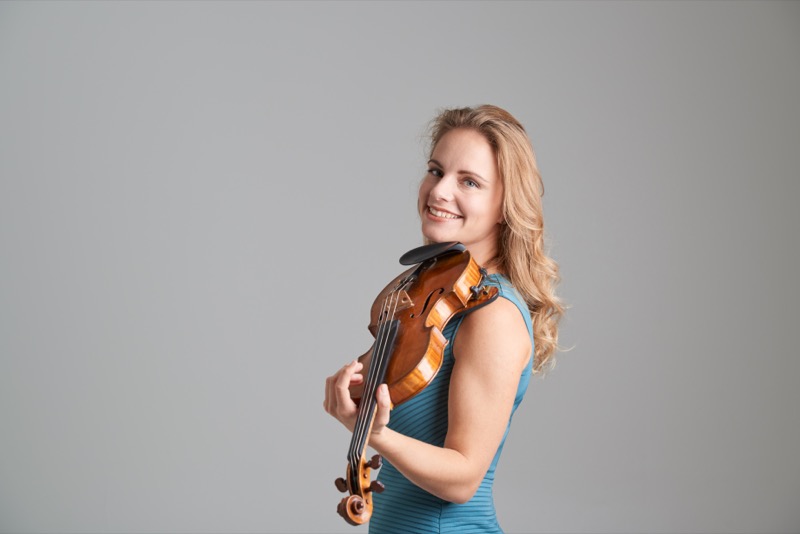
    Fischer_J

    Above: violinist Julia Fischer

    ~ Author: Oberon

    Wednesday October 30th, 2019 – Philippe Jordan was on the podium at Geffen Hall this evening as The New York Philharmonic presented their program of Prokofiev, Mendelssohn, and Beethoven: an ideal mix, in my opinion. The comely and compelling violinist Julia Fischer was the guest soloist for Mendelssohn’s violin concerto, the orchestra’s stellar woodwind soloists were all present and accounted for, and the entire evening had a special glow about it.

    Prokofiev’s Symphony No. 1, Classical, strikes me as a perfect piece of music. At a running time of just 15 minutes, the symphony is a compact delight, abounding in rhythmic variety and appealing themes. The opening Allegro con brio is in the traditional sonata form, but the composer keeps throwing us curve balls: witty bits crop up out of nowhere. Maestro Jordan and the Philharmonic artists seemed truly to enjoy playing this music, which, in the flashing leaps and zesty grace notes of the second theme made me smile to myself.

    A gentle melody on high for the violins is the key feature of the Larghetto, with pizzicati, treading basses, and colourful bassoons all part of the composer’s scheme. The Gavotte makes me think of the composer’s ROMEO AND JULIET, while the ebullient finale sounded wonderfully clear and alive. Throughout, flautist Robert Langevin, clarinetists Anthony McGill and Pascual Martínez-Forteza, oboist Sherry Sylar, bassoonist Judith LeClair, and their woodwind-section colleagues charmed the ear with their polished playing; when Maestro Jordan asked them to stand for a bow, the audience responded warmly.

    Violinist Julia Fischer then joined the orchestra for Mendelssohn’s Violin Concerto in E-minor. This was my first opportunity to hear Ms. Fischer playing live; she sounded marvelous and looked fetching is a deep grey gown shot thru with glimmering silver. There’s shining silver in her sleek tone as well.

    The first movement’s marking of Allegro molto appassionato derives from the composer’s premonition of writing “…[A concerto] in E-minor running through my head, the beginning of which gives me no peace.” With splendid support from the orchestra, Ms. Fischer displayed her expressive gifts, lovely feeling for dynamics, and exquisite control of pianissimo. In the cadenza, her soft playing in the stratosphere was remarkable; this she followed with a rocking motif as the ensemble take up the theme. The music becomes very animated as the Allegro moves to its finish.

    A sustained bassoon tone carries the music directly into the Andante wherein the glowing melody is given a tender, haunting quality as Ms. Fischer’s playing moves serenely from piano to pianissimo: simply breathtaking

    Following a brief interlude, the violinist embarks on festoons of fiorature – played with sparkling surety – in the concerto’s concluding movement. Passages of Mendessohnian ‘faerie music’ are heard, and then Ms. Fischer revels in the rapid-bowing of the effervescent finale. With the final note of the concerto still hanging on the air, the audience unleashed a tumultuous applause, and everyone stood up to cheer. Ms. Fischer and Maestro Jordan are clearly simpatico, and their performance was thrilling. The crowd clearly wanted an encore, but none was forthcoming.

    Philippe-jordan

    Above: Maestro Philippe Jordan

    The concluding work, Beethoven’s 7th symphony, was magnificently shaped by the Maestro, who dips and bends into the music, eliciting splendid playing from the orchestra. This symphony has a dance-like sense of forward momentum upon which Mssr Jordan built his interpretation. His pacing – on the fast side – was so vital, and the textures of the music so lovingly layered, with the wind soloists again producing magical effects. 

    Swept along by the music, I put away my pen and indulged myself in forty minutes of pure selfish enjoyment. One small and intriguing motif in this symphony that always captures my imagination is a seeming “preview” of six-note passage from the Grail knights’ march in Wagner’s PARSIFAL music. Did Wagner openly borrow this from Beethoven, or is it a subconscious association? Either way, it played over and over in my mind during the train ride home. 

    This has so far been a particularly impressive and satisfying season for classical music here in Gotham, and tonight’s concert was yet another edifying experience.

    ~ Oberon
  • Shostakovich ~ Beethoven @ The NY Philharmonic

    Mdd-wn-main

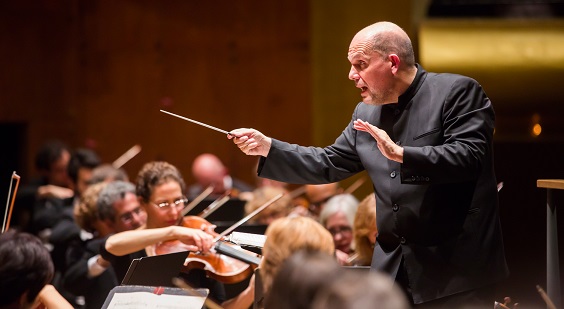
    Above: Maestro Jaap van Zweden; photo by Chris Lee

    ~ Author: Oberon

    Wednesday May 22nd, 2019 – As their 2018-2019 season winds down, The New York Philharmonic offered a well-contrasted pairing of works tonight at Geffen Hall: Shostakovich’s Chamber Symphony and Beethoven’s 3rd symphony: the Eroica. The Philharmonic musicians were on top form, and the orchestra’s Music Director, Jaap van Zweden, led a performance that ended with an enthusiastic ovation.

    For all the concert’s musical excellence, extraneous factors made the evening something of a trial. The lobby at Geffen Hall during the half-hour leading up to the performance’s start time has lately become weirdly chaotic: it has the feeling of an airport, with staff folks yelling at you to go here or there, and long, snaking lines between the velvet ropes to pass thru the “non-invasive” scanner only to be wanded once you’ve gotten the green light. It’s quite stressful, and hardly conducive to the state of mind one hopes to be in when a concert starts: calm, focused, receptive.

    The opening minutes of the Shostakovich featured a chorus of coughers from the audience; the woman next to us coughed throughout the concert while the fellow in front of us nearly busted a lung with one coughing fit: I actually thought he might pass out. Aside from ruining the music, germs are being spread. If you are sick, be courteous enough stay home.

    But the performance of the Shostakovich Chamber Symphony was simply thrilling. This work is an arrangement of the composer’s 1960 String Quartet No. 8, Op. 110, by Rudolf Barshai, a renowned violist and conductor who founded the Moscow Chamber Orchestra in 1956. Barshai’s transcription honors the original instrumentation: it’s set for large string ensemble. And it’s simply magnificent to hear.

    The symphony is in five movements, played without pause. From a somber start emerges a soft, sorrowing violin melody (beautifully played by concertmaster Frank Huang). Six basses bring a sense of grandeur to the music, which is richly layered. Suddenly, a sizzling energy flares up: the basses dig in, with swirling violins and slashing celli, as the music becomes a huge dance. For a spell, violins and violas compete; then the music comes to a sudden halt.

    The violas set the pace for a waltz, played by the violins, which later slows down and fades away. A dirge-like passage is followed by a poignant lament. Carter Brey’s cello sings to us in its highest range, a song which Mr. Huang’s violin takes up. The music meanders a bit, ebbing and flowing, before a magical fading finish.

    This work, and the Philharmonic’s playing of it, was one of the highlights of the season for me. Mssrs. Huang and Brey were enthusiastically applauded as they rose for a bow. I was surprised to read that this was The Philharmonic’s premiere performance of this symphony.

    I must admit that I don’t find Beethoven’s Eroica all that interesting. Its initial theme:

    Images

    …reminds me of a simple melodic scrap I wrote for a compulsory exercise in music theory class in high school. We hear it repeatedly in the symphony’s Allegro con brio, and to me it’s tiresome.

    Sherry Sylar’s oboe solos and some warm-toned horn playing captured my interest in the Adagio assai, but I don’t think Beethoven’s idea of a funeral march shows much imagination. It feels aimless, missing the weighted grief of Chopin’s or the epic grandeur of Wagner’s (and for wit, there’s always Gounod). The hunting horns in the Scherzo again reminded me of high school, where I struggled to be a proficient horn player, but without success. Ms. Sylar and clarinetist Anthony McGill illuminated their solo bits in the Finale, but I found my mind wandering. 

    Whenever a musical work that is highly regarded by many fails to reach me, it makes me feel deficient. What am I not getting? So it was interesting to read in the program notes that Beethoven’s 3rd was not initially regarded as a masterpiece, but seemed instead overly long and lacking a sense of unity.

    Still feeling that the Eroica has eluded me, I went to a classical music chat room to see if anyone else felt as I do about this symphony. Among the many posts heaping praise on Beethoven’s 3rd, someone wrote: “I would never deny the power and genius of the Eroica, but I never want to sit through it again.”

    Anna_rabinova

    The evening honored musicians who are retiring from The Philharmonic this season. One who I will especially miss is violinist Anna Rabinova (above), whose dedicated artistry I have come to know thru her appearances at the Philharmonic Ensembles concerts at Merkin Hall. I hope she’ll continue to be part of the City’s musical scene in the coming years.

    ~ Oberon

  • Batiashvili|Tchaikovsky|NY Philharmonic

    Batiashvili - gilbert

    Saturday September 24th, 2016 – Lisa Batiashvili‘s appearances with The New York Philharmonic are always red-letter events; the mutual admiration society that the luminous violinist has formed with Maestro Alan Gilbert invariably results in something very special, and tonight their entente cordiale produced a magnificent rendering of the Tchaikovsky violin concerto.

    When I arrived at Geffen Hall, the atmosphere was already abuzz: “Sold Out” signs were just being posted, and a long line of music-lovers hoping for returns was forming. A packed house always creates its own sense of excitement, and when the ever-elegant Ms. Batiashvili strode onto the stage in a stunning black gown with a bejeweled bodice, the welcome was wonderfully warm. Forty minutes later, the violinist was basking in an epic full-house ovation.

    It was another female violinist, Maud Powell, who helped popularize the Tchaikovsky concerto – a concerto at first thought by some to be unplayable. Ms. Powell played the New York premiere of the piece in 1889 with the New York Symphony (which merged with the Philharmonic in 1928); tonight, Lisa Batiashvili carried the banner to new heights.

    In the concerto’s opening movement, Ms. Batiashvili combined passionate lyricism with subtle turns of phrase; her coloratura was fleet and fluent, her shaping of phrases so innately appealing. When Alan Gilbert’s full orchestra entered for the big tutti passage, visions of the grandeur of the Romanov court were evoked. Ms. Batiashvili’s cadenza sounded a bit modern (“…to old-fashioned ears…”, as Mrs. Manson Mingott would say) and her playing of it most impressive: superb control of dynamics and a stunningly sustained double trill which led to a poignant restoration of melody. After treating us to some sizzling fireworks, the violinist sailed graciously into an affecting theme before ascending to some very delicate high-register passages and thence to the movement’s final flourishes.

    Playing with a melancholy pianissimo, Ms. Batiashvili created a very poetic atmosphere of sadness as the Canzonetta/Andante began. Her tone became incredibly soft, with a lovely sheen to it, while the audience held their collective breath to savour every moment of it.

    There’s a direct path into the concerto’s finale, which commences with an intense invitation to the dance, followed by a playful second theme. Relishing these shifts of mood, Ms. Batiashvili sounded gorgeous in a deep-lyric interlude and brilliant in some decorative filigree that followed. On to the final sprint, where the fiery glow of the violinist’s passionate playing swept all before her, igniting an ovation and delighted cries of “Brava!” as the entire audience rose to acknowledge Ms. Batiashvili’s truly thrilling performance.

    Lisa was called out for a solo bow – huge din of cheers and thunderous applause – then returned again with Maestro Gilbert, who signaled the wind soloists (who had made such distinctive impressions in the final movement) to rise. The mutual affection of violinist and conductor was movingly evidenced as they embraced and walked off together. But still the ovation would not subside, and the radiant soloist re-appeared for another solo bow, with her onstage colleagues joining the tribute and the audience getting gleefully boisterous. 

    During the course of the concerto, the marvelous rapport between Ms. Batiashvili and Maestro Gilbert was as endearing to the eye as their playing to the ear: as the music wove its spell, they seemed engaged in a pas de deux which swayed on the ebb and flow of Tchaikovsky’s balletic score. Bravi!!

    Enjoy a bit of Lisa’s playing here.

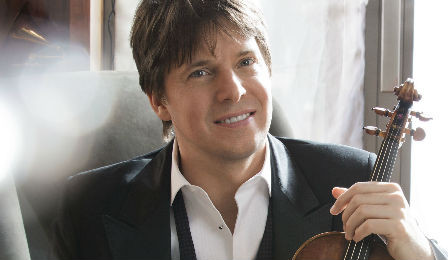
  • Joshua Bell @ Mostly Mozart

    Joshua-Bell

    Above: violinist Joshua Bell

    Wednesday August 17th, 2016 – Geffen Hall was packed to the rafters for Mostly Mozart tonight: all the stage seats were taken, and there was a line for ticket returns: could it have had something to do with Joshua Bell being the scheduled soloist?  Mr. Bell certainly impressed in his performance of Mozart’s 4th violin concerto, and the program overall was highly enjoyable.

    Any hearing of Felix Mendelssohn’s overture to A Midsummer Night’s Dream is bound to summon up visions of Balanchine’s enchanted forest – it’s quite amazing, in fact, when you think of the amount of narrative and dancing Mr. B was able to fit into this 12-minute overture, without ever for a moment seeming over-busy. The Mostly Mozart Orchestra coped well with the brisk tempi set by the youthful-looking conductor, Matthew Halls, and it was so much sheer fun to hear these familiar themes played live again. I must mention Jon Manasse’s lovingly-phrased clarinet solo.

    Joshua Bell then appeared to a warm greeting from the crowd. In this rendering of the Mozart violin concerto #4 in D-major, the violinist and the conductor formed a steady rapport. Unobtrusively using a score, Mr. Bell launched the solo line in the stratosphere and went on to play the Allegro vivace‘s capricious music with easy aplomb. There’s a lot of high-velocity coloratura in play here, and it culminates with a florid, witty cadenza of Mr. Bell’s own design.

    On a high, sweetly sustained note, Mr. Bell lures us into the Andante cantabile; the melody eventually dips into a lower range where his playing a balm to the ear. An elegant ‘interlude’ has a different sort of appeal; then the main theme recurs, before the violinist ascends to another high-lying cadenza. 

    After an elegant start, the Rondeau turns sprightly – a delicate mini-cadenza teases us and then there’s another more extended cadenza. The soloist joins the massed violins in a sort of chorale, and Mr. Bell continues to seize opportunities for yet two more cadenzas, the first having an ironic buzzing quality.

    As ever, Mr. Bell’s physically engaged playing is as enjoyable to watch as to hear. The random smudged note here or there was nothing to deter from the ongoing sweep of his music-making, and though I agreed with my companion that the cadenzas sometimes seemed rather too ‘modern’, they gave the performance an individuality that was refreshing in its own right.

    Beethoven’s overture to Coriolan, Op. 62, was the composer’s first opportunity to write for the stage, and his success has kept the overture in the repertory. Originally conceived as a prelude to the play of the same title by the composer’s friend Heinrich Joseph von Collin – a theatrical success in Vienna in 1802 – the overture didn’t appear until 1807, when the play’s popularity had waned. It seems that only one performance of the play with Beethoven’s overture took place: on April 17th, 1807. After that, the eight-minute overture went on to thrive as a concert number.

    This evening’s performance was finely-wrought by Maestro Halls, and most attractively played. The contrasting themes of anger and tenderness express the theme of the play: the betrayal of his duty as a Roman general by Coriolanus, and his mother’s entreaties to abandon his plan to lead the enemy forces in an attack on Rome. Her pleading is effective: Coriolanus abandons his scheme and faces his punishment.

    A warm and appealing performance of Beethoven’s “little” symphony – the 8th – concluded the evening on an optimistic note. The last time I heard this symphony performed live was in December 2013 when the Spanish conductor Rafael Frühbeck de Burgos, then in his 80th year, led the New York Philharmonic in the work and left my friend Dmitry and I with wonderful memories of the highly-respected Maestro, who passed away in June 2014. We still speak of that Philharmonic concert with special affection. 

    Timed at around twenty-five minutes, this four-movement symphony flies by: there’s no adagio to make us stop and ponder, but rather a charming and often witty flow of themes with the congeniality of dance rhythms ever-ready to buoy the spirit.

    A lively podium presence, Maestro Halls was well in his element here, and the musicians seemed fully engaged in this music which successfully blends elegance with folkish gaiety. The horns sounded plush, and again Mr. Manasse made his mark: an outstanding musician.