Tag: George Balanchine

  • Farewells: Gonzalo Garcia

    Apollo-Garcia jpg

    Above: Gonzalo Garcia in George Balanchine’s immortal APOLLO

    Sunday February 27th, 2022 matinee – Gonzalo Garcia, one of the handsomest men ever to grace the ballet stages of the world, bade farewell to the New York City Ballet this afternoon.

    Gonzalo, a native of Zaragoza, Spain, won the Prix de Lausanne in 1995 at the age of 15 – the youngest dancer to win that coveted prize. He joined San Francisco Ballet in 1998 at the age of 18, and at 22 he became a principal dancer there.

    In 2007, Gonzalo made a great leap from one coast to the other, leaving San Francisco Ballet to join New York City Ballet. Since then, he has performed many roles for us here; among them, I have especially loved his Apollo, Oberon in MIDSUMMER NIGHT’S DREAM, the Princes in the Peter Martins productions of SWAN LAKE and SLEEPING BEAUTY, Franz in COPPELIA, the principal male roles in BALLO DELLA REGINA, RUBIES, and BAISER DE LA FEE, the leads in Jerome Robbins’ OPUS 19/THE DREAMER, DANCES AT A GATHERING, and GLASS PIECES, in Christopher Wheeldon’s POLYPHONIA and LES CARILLONS, and Alexei Ratmansky’s CONCERTO DSCH. Most recently, I greatly enjoyed seeing Gonzalo in Justin Peck’s ROTUNDA, an excerpt from which he danced at his farewell gala.

    Some wonderful Gonzalo Garcia partnerships:

    Gonzalo scheller beauty

    Above: Gonzalo Garcia and Ana Sophia Scheller in SLEEPING BEAUTY; photo by Paul Kolnik

    Gg & starling rubies kolnik

    Above: Gonzalo with Sterling Hyltin in RUBIES; photo by Paul Kolnik

    Other dances tiler baiano

    Above: Gonzalo with Tiler Peck in OTHER DANCES; photo by Erin Baiano

    Megan f gg nutcracker

    Above: with Megan Fairchild in NUTCRACKER

    When time has allowed, Gonzalo has danced as a guest artist:

    Gg guesting strs &stripes

    …in STARS AND STRIPES at a gala in Italy

    Gg guesting giselle madrid

    …and, in Madrid, as Albrecht in GISELLE
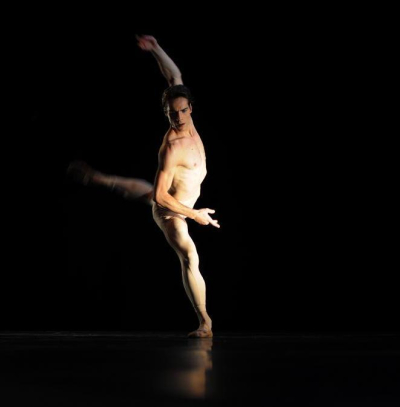
    Gg morphoses kokyat

    Closer to home: dancing with MORPHOSES in Central Park 2009; photo by Kokyat

    Gg

    And in this charming film, Gonzalo shows us how he kept in shape at home during the pandemic.

    ““““““““““““““““““““““““““““““““““““““““““““““

    For his farewell performance at New York City Ballet, Gonzalo danced works by Balanchine, Robbins, and Justin Peck. The program was book-ended by ballets set to two of Sergei Prokofiev’s most fascinating scores: the Violin Sonata #1 in D-major sets the stage for my favorite Jerome Robbins ballet – OPUS 19/THE DREAMER – and PRODIGAL SON, which marked the only time George Balanchine used Prokofiev’s music. In between, a studio film of Gonzalo working on a solo from Justin Peck’s ROTUNDA (to a fine Nico Muhly score) was followed by a live performance of part of the ballet, with its cast of twelve. Andrews Sill was on the podium, and Kurt Nikkanen’s playing of the violin concerto was simply spectacular. How meaningful it was today to hear the scores of Prokofiev, a son of the Ukraine.

    During the interval, I loved running into Carlos Lopez, Charles Askegard, David Fernandez, and Wendy Whelan.

    Gonzalo was alone onstage as the curtain rose on OPUS 19, and the audience greeted him with a warm round of applause. His opening solo as the restless dreamer was hypnotically beautiful…his arms and hands are so expressive. For this occasion, two ballerinas took turns dancing with Gonzalo: first, Sterling Hyltin skimmed about the space with an airy lightness before their sublime pas de deux. Tiler Peck then appeared for the allegro passages, and then Sterling returned; it was Tiler who ended the ballet, resting her head on Gonzalo’s palm. The corps danced splendidly, and the three principals exchanged embraces of mutual affection during the curtain calls.  

    The filmed excerpt from ROTUNDA gave us an up-close view of the danseur at work, whilst the soundtrack included accolades from Gonzalo’s colleagues and his own words about what it means to be a dancer. The live performance went brilliantly, Gonzalo sharing some moments with another of his frequent partners, the spirited Megan Fairchild. The ballet ends with Gonzalo rushing forward into a sudden blackout.

    The distinctive setting for PRODIGAL SON was created in 1929 by painter Georges Rouault. This poignant ballet tells of a young man who leaves his home and his gentle family to find excitement in the wide world; seduced, beaten, and abandoned, he returns home in shame and abject misery only to be enfolded in his father’s loving arms. Gonzalo, looking youthfully handsome, danced the role with the verve and commitment of a spirited teenager. His degradation and downfall were poignantly portrayed, and the moment where he creeps into his father’s forgiving embrace was extraordinarily moving.

    Sara Mearns was the deceitful Siren. Harrison Coll and Lars Nelson excelled in their dancing “duel”, and Mary Elizabeth Sell and Jenelle Manzi were lovely as the sisters. Arron Sanz made a profound impression as the father.

    The gala ended with a massive ovation which Gonzalo accepted with humility and great joy, pounding his heart with his hand to express his love for us. His colleagues came out one by one, presenting flowers and hugs: they all seemed genuinely sincere. Then Gonzalo’s husband came out, and they shared a kiss, to the audience’s great delight. And so, Gonzalo finished his dancing career while still at peak form, truly one of the finest – and best-loved – dancers I’ve had the pleasure to watch.

    ~ Oberon

  • ABT Studio Company @ The Joyce

    57605248_10157352309708319_238433348500848640_n

    ~ Author: Oberon

    Thursday April 25th, 2019 – The American Ballet Theatre Studio Company has three evenings at The Joyce this week; I went on the second night for a program in which a pair of well-beloved pas de deux book-ended four new (or very recent) works.

    Tarantella, George Balanchine’s Neapolitan duet set to music by Louis Moreau Gottschalk, opened the evening. When the dancers made their entrance, my first thought was that they were too tall for this ballet. They executed all the steps and went thru the motions well enough, but their dancing didn’t sparkle, and the feeling of imminent sex was missing. Perhaps it’s been toned down for the MeToo crowd.

    Neon by Claudia Schreier, having its New York premiere, is set to music by Marc Mellits. The dancers, wearing black belted in teal, look sleek and dashing. At curtain rise, two men stand in a pool of light, one behind the other, their arms in sweeping arcs seeming to depict the hands of a clock. Then the dance erupts to the propulsive Mellits music. The sometimes complex partnering motifs Ms. Schreier demands of her dancers are smoothly executed; this is a choreographer who likes to set challenges for her dancers, then rehearse them astutely so they end up looking well-polished.

    Neon’s first movement ends with all eight dancers in a circle, taking up the rotating arm gestures of the work’s opening moments. A series of departures clears the stage for a men’s trio in which the women eventually join. Sub-groups come and go, enhanced by excellent lighting. The ballet’s third section opens with a striking overheard lift, the couple commencing a luminous pas de deux, wherein Ms. Schreier’s choice of music pays off handsomely. The concluding movement, alive with musical agitation, displays the choreographer’s trademark surety of structure into which a sense of contemporary poetry has been woven.

    As with every Schreier work I have seen to date, Neon ended with the audience whooping up a storm. The choreographers should have been given a bow after their respective ballets tonight, so we could properly show our appreciation.

    Overture by Ethan Stiefel is a ballet that mixes – in perfect measure – gorgeousness with wit. In choosing Beethoven’s Egmont overture, Mr. Stiefel is already halfway down the road to success. And a success it was, in every respect: from the stunning opening tableau with the dancers classically arranged in silhouette, Overture is a pleasure to watch…and to hear. 

    The dancers are prettily costumed in traditional ballet style, but soon we notice contemporary touches – each man has one bare arm. The dancing also mixes old with new: a Romantic atmosphere has been established, and the choreography abounds in classic vocabulary and time-honored partnering themes; but modern modes crop up – a shoulder-shrugging motif and some quirky port de bras keep the ballet vivid. The dancers excelled here, taking their cues from the Beethoven score and bringing touches of tongue-in-cheek charm to their dancing. Overture is a winner on all counts.

    Returning to my seat after the intermission, I found the curtain already up. Soon a lone dancer ambled onto the stage and began chatting us up. The performance of Pliant by Stefanie Batten Bland, he told us, had already started…and we were to be part of it. Dancers moved up and down the aisles, supposedly ‘interviewing’ audience members. Since they did not have hand mikes, the rest of us were not privy to these conversations, so we sat there twiddling our thumbs. 

    Finally the dancers hauled themselves up onto the stage and, to nondescript music, they struck poses and did a bit of dancing (nothing strenuous). While this was going on, I was thinking that I could have been home doing my ironing, whilst one of my fellow writers seated nearby fell deeply asleep. Pliant is exactly the kind of clever, now-for-something-different “ballet” that has dampened my enthusiasm for dance in recent years. 

    Gemma Bond’s Interchangeable Text was a perfect restorative. Some people think Philip Glass has been done to death in the dance world; I disagree, and I’m glad Gemma shares my feeling that it’s ideal music for dancing. Her ballet, impeccably danced by four couples, had the benefit of atmospheric lighting.

    Interchangeable Text opens with a male dancer alone in a pool of light; the music comes from the “romantic” Glass catalog. Soon it begins to pulse, and the dance takes off. Ms. Bond shows off her gift for making classic ballet combinations look fresh. Through ever-shifting patterns, the eight dancers are fully-engaged, the music being their springboard. A chain of pas de deux commences, each couple in turn having their chance to shine. The ballet ends as it began, with the man isolated in the glowing circle.

    The Don QuixoteWedding Suite’ brought the evening to an end; danced with fine technique, lively spirit, and a dash of allure à lEspagnole by Chloe Misseldine and Joseph Markey, this gave the hardcore classical ballet fans in the audience something to cheer about. The two ‘bridesmaid’ solos were woven in, and though they were not named in this evening’s cast list, I believe the dancers were Leah Baylin and Kanon Kimura, who were dancing these solos on the other two nights.

    The ABT Studio Company has always been a place to spot stars of the future: it’s where I first saw David Hallberg dancing! Tonight, one dancer who often caught my eye was Melvin Lawovi, a native of Toulouse. It did not surprise me to read that Mr. Lawovi is the recipient of The David Hallberg Scholarship.

    ~ Oberon

  • NYCB: Opening Night|Winter Season 2015

    Balanchine-Stravinsky-1965

    Above: George Balanchine and Igor Stravinsky

    Update: Happy Birthday Mr. B ~ January 22nd!

    Tuesday January 20th, 2015 – An all-Balanchine evening to open the New York City Ballet‘s Winter 2015 season. In the days leading up to the performance there were several changes to the originally-announced casting, and it all turned out very well. Clothilde Otranto was on the podium to bring us the three contrasting scores, and the spirit of Balanchine hovered overall. 

    SERENADE received a performance aglow with lyricism; having recently heard the score played at Carnegie Hall, I was again thinking how Balanchine’s choreography is so intrinsically linked to the music: when you hear it played anywhere you immediately see the dance.

    Sterling Hyltin graced the enchanting melodies with her unique mixture of sophistication and impetousity; I wonder what perfume Mr. B would have chosen for her? There was a wonderful chemistry between Sterling and Robert Fairchild, especially in the passage where he pursues her around the stage: she draws him onward, elusive but always looking back to gently reassure him. This was just one of many such nuanced moments in their partnership tonight. As the ballet seems to take a darker turn, Sterling’s vulnerability came into play…so movingly. During the intermission, we sought superlatives to describe this ballerina’s performance: yet none seemed to suffice, really. So we simply basked in her beautiful glow.

    Erica Pereira could celebrate her birthday a day early with a new role: the Russian Girl, to which she initially brought an airy charm; as the ballet progressed, Erica found deeper hues of feminine resonance in her role. She was especially lovely in the opening of the third movement, dancing with the her four sisterly demi-solistes (Mlles. Adams, Dronova, Mann, and Sell) and later, her lustrous black hair flowing free, Erica rushed into Ask LaCour’s waiting arms with a sense of urgent grace.

    Teresa Reichlen, after swirling thru her elegant pirouettes earlier on, drew sighs of admiration for her sustained supported arabesque in the final movement, always a heart-filling moment. She danced radiantly, whetting the appetite for her upcoming debut in CHACONNE.

    Throughout the ballet, the corps ballerinas provided so many moments to savour, both as individuals and in the ensemble passages which Mr. B wove for them with such an imaginative sense of visual poetry. I wanted to throw roses onstage for all of them.

    AGON tonight was a triumph, with a powerful performance of the central pas de deux by Maria Kowroski and Amar Ramasar. At their charismatic finest, these two dancers displayed the amazing stretch, uncanny pliability, and dynamic counter-balances that Mr. B demands of them. Their bold physicality clearly captivated the crowd who wouldn’t stop applauding until Maria and Amar had bowed three times.

    Andrew Veyette’s wonderfully strong and supple dancing and his brazen high kick put a personal stamp on his solo. The masculine vigor of his presence held our focus whenever he was onstage. Likewise, Megan LeCrone made an excellent impression with her poised, steady balance and authoritative movement. Demi-solistes get to shine in AGON and tonight we had Lauren King, Ashley Laracey, Devin Alberda, and Daniel Applebaum all on peak, opening-night form. The quirky Stravinsky score continues to prick up our ears, no matter how many times we’ve heard it.

    That bountiful ballerina, Ashley Bouder, took command of the opening movement of SYMPHONY IN C. Dancing with her emblematic generosity, technical dazzle, and a touch of playful rubato, she not only illuminated the Allegro Vivo but continued to dance with outstanding clarity and musicality in the ballet’s demanding finale. Chase Finlay kept pace with her and was a handsome-as-ever cavalier. Particular pleasure was derived from watching the two ballerina demis in this opening movement: Claire Kretzschmar and Meagan Mann. They have a lot to do and they did it brillliantly.

    Sara Mearns, dancing with velvety sumptuousness and her own particular mystique, was partnered with gallant grace by Jared Angle. They made the Adagio – one of the wonders of Balanchine’s world – as breath-taking as it should be, with a slow, gorgeous melt into the final pose. Their artistry and lyrical poise made this duet a bulwark of beauty in a darkening world. 

    Further illumination came as Lauren Lovette and Gonzalo Garcia filled the space with swirling vibrancy in the Allegro Vivace. They are a marvelous match-up: a fetching ballerina and a prince of a cavalier. Let’s see them together again soon: so many possibilities.

    Brittany Pollack opened the finale with some sparkling combinations, soon joined by the fascinating Adrian Danchig-Waring, a man who mixes classicism and dynamic strength in perfect measure. The stage then filled with all my beloved NYCB dancers and the evening swept on to its imperial conclusion.

    A word of praise for all the demi-solistes in the Bizet; their role in this ballet is so much more than decorative. So thanks to all: Meagan and Claire (already noted for their excellence), Andrew Scordato, Joshua Thew, Jenelle Manzi, Sarah Villwock, Lars Nelson, Devin Alberda, Mary Elizabeth Sell, Gretchen Smith, Peter Walker, Daniel Applebaum, Alina Dronova, Ralph Ippolito, Troy Schumacher and Kristen Segin (who had also made her mark in SERENADE)…and indeed to everyone who made this a grand night for dancing.

  • Boston Ballet @ Lincoln Center

    10492224_10152189404857607_7335500118768821092_n

    Friday June 27th, 2014 – Boston Ballet have been celebrating their 50th season with performances at Lincoln Center this week. Tonight’s programme looked so tantalizing on paper, and it turned out to be a magnificent evening overall: Vaslav Nijinsky’s Afternoon of a Faun, George Balanchine’s Symphony in Three Movements, Jorma Elo’s Plan to B and Jiří Kylián’s Bella Figura were all superbly danced by the Boston troupe.

    When visiting companies bring Balanchine to New York, I sometimes wonder if it’s a good idea. Can’t you bring us something we don’t see all the time? But understandably, other companies are proud of their Balanchine and want to show off their abilities. Boston Ballet did a great job with The Master’s Symphony in Three Movements, even bringing their own orchestra to play the score. And Boston Ballet has strong Balanchine ties: he became Artistic Advisor to the Company in 1963, gifting them with more than seventeen of his ballets as a gesture of support.

    Curtain up, and I immediately found Shelby Elsbree in the diagonal. The ballet surges forward, with delightful performances by Misa Kuranaga and Jeffrey Curio – the high-bouncing couple – and Rie Ichikawa and Bradley Schlagheck. In the ballet’s central pas de deux, Lia Curio and Lasha Khozashvili excelled. The audience, fortified by a contigent of Bostonians, gave liberal and much-deserved applause to the dancers.

    Boston Ballet had brought their production of Vaslav Nijinsky’s Afternoon of a Faun to Fall for Dance in 2009 and I was mesmerized by it. Seeing the Leon Bakst backdrop and costumes again this evening provided a tangible link to the history of ballet and to that scandalous night over a century ago when Faun set Paris on its collective ear. Tonight, Altan Dugaraa embodied the exotic beauty of the Faun, his mystique and his longings, and Erica Cornejo was the Nymph, miming with stylized perfection. So grateful to have had another opportunity to see this production.

    In 2006, I experienced Jorma Elo’s work for the first time at the New York City Ballet’s premiere of Slice to Sharp. Slice received the longest ovation of any new work I’ve encountered at the ballet over the years: endless curtain calls and a state of euphoria among the crowd. Boston Ballet‘s performance of Mr. Elo’s Plan to B had something of the same a dynamic pungency about it. Illuminated by a large glowing screen stage right, six dancers reveled in fantastical choreographic patterns, flinging themselves into off-kilter leaps and flying across the stage, arms whirling like windmills in a tornado. Dusty Button, Whitney Jensen, Bo Busby, Jeffrey Cirio, John Law, and Sabi Varga danced thrillingly and were deservedly cheered for their jaw-dropping virtuosity.

    Alas, I am afraid Jiří Kylián’s Bella Figura was not really to my liking. Returning from the intermission, we find the dancers already onstage…warming up? Or is it a choreographed passage to start the ballet? Either way, it’s pretentious. Purgatorial and several minutes too long, the Bella Figura seemed to be more about the staging than anything else: black curtains endlessly re-arranged, a complex lighting scheme, flaming braziers bringing a taste of Hell to the stage, dancers coming and going almost randomly. The dancing was of course remarkable, and there are some very attractive passages, most especially when the topless dancers in long red skirts dance in unison. But it seemed to go on and on.

  • Bountiful Balanchine @ New York City Ballet

    6a00e3982574bd8833013487f8adad970c-800wi

    Above: New York City Ballet principal ballerina Ashley Bouder in a Matt Murphy portrait

    Friday May 24th, 2013 – A panoramic vision of George Balanchine’s choreographic artistry was on display this evening at New York City Ballet: an iconic classic, a quirky and mysterious series of danced vignettes, a spirited showpiece pas de deux, and a masterwork set in a luminous Chagall decor.

    It must be a memorable landmark in a NYCB ballerina’s career to be cast in one of the principal roles in SERENADE. Sterling Hyltin, who recently took on the Russian Girl, was tonight making her debut as the Waltz Girl. Sterling has her own brand of youthful elegance and sophistication as well as the mature depth of artistry to bring something very personal to this role. As the inherent drama of the ballet evolved, Sterling’s sure sense of the music and her nuanced conveyance of its romantic beauty made a poetic impression, enhanced by the angelic fall of her hair. 

    Jared Angle was a perfect cavalier for Sterling in their Waltz, and his airy solo passage was beautifully crafted. Megan LeCrone’s unique persona and wonderfully fluid movement continually found inspiration in the Tchaikovsky score, and Adrian Danchig-Waring was again a marvel of physique and presence.

    I’ve seen Megan Fairchild as the Russian Girl many times and I felt that tonight she surpassed her own high standards in the role; every phrase had a serene quality and in matters of expressiveness she found the exact hues in her dancing to enhance the lyrical glow of the music. It was a very pleasing interpretation in terms of both technique and artistry.    

    C35663-8_Ivesiana_Laraceyrr

    Above: newly-promoted to soloist, Ashley Laracey – one of the Company’s most distinctive dancers – in IVESIANA; photo by Paul Kolnik. The opening section of this ballet, entitled In Central Park, commences with a convergence of almost zombie-like women wandering the park at night. Ms. Laracey, in virginal white, moves among them – a blind girl feeling her way in the darkness. She encounters the broodingly handsome Zachary Catazaro and falls prey to his sexual desire, but it’s all very subtly manifested.

    6a00d8341c4e3853ef017eeafd0416970d-800wi

    Above: Anthony Huxley and Janie Taylor in The Unanswered Question from IVESIANA; photo by Paul Kolnik. In this duet, the barefoot ballerina is borne aloft by unseen carriers while the desperate young man pursues her in vain. I’m reminded of a similar Balanchine duet, PORTE ET SOUPIR, in which the female character appears ever beyond reach. The two ballets end differently, but the mystery and allure evoked are provocative in both works. Anthony Huxley, beautifully vulnerable, gives a charismatic youthfulness to the questing boy and his thwarted desires, while the divine Janie Taylor, wrapped in an enigma, entrances with her pale skin and iconic hair. 

    In a sudden snap-out-of-it burst of reality, Teresa Reichlen and Amar Ramasar appear in a vaudeville-like duet. Playful and unromantic, they trade solo passages before shaking hands and going their separate ways. Confident and super-attractive, Tess and Amar give IVESIANA its only bright spot, for the ballet ends in deep twilight with the corps now walking about on their knees, downcast and anonymous.

    The programme then did a volte face and gave us Balanchine at his most witty and entertaining with TARANTELLA, a virtuoso courting duet with a Neopolitan flair. Daniel Ulbricht gave a dynamic and high-flying performance, the crowd with him every step of the way as he leapt and swirled about the stage in uncanny combinations. Not to be outdone, the charming Erica Pereira brought a delicate but spicy air to her performance: her fancy footwork matched Daniel’s, and she showed off some very pretty attitude turns. As the pas de deux sails forward, the zils started to fly off from Daniel’s tambourine causing much mirth in the audience. The two dancers swept offstage after Daniel’s victorious kiss, then returned to an avalanche of applause. They were called out four times by the delighted crowd.

    It’s not often we see a fourth curtain call after a ballet at NYCB, but it happened a second time tonight as Ashley Bouder delivered a brilliant Firebird to end the evening. Ashley’s boundless technique is matched by her insightful dramatic interpretation, filled with subtle detail and highly personal musicality. She created a vibrant and magical atmosphere, topped off by a striking manege of full-stretched jetes. But then she also summoned up the gentle rapture needed in the whispering bourees of the Berceuse. Fortunate ballet-goers to have experienced two superb Firebirds – Ashley’s and Maria Kowroski’s – in a single week. They are as different as two birds of a feather could be, yet each seems perfect.

    Justin Peck was the wide-eyed and courtly Prince and Gwyneth Muller the willowy, enchanting Princess. Blessings on my lovely girls in the Dance of the Captive Maidens. Conductor Leif Bjaland and the NYCB players gave a jewel-like rendering of this fascinating Stravinsky score.  

    SERENADE: Hyltin, M. Fairchild, LeCrone, J. Angle, Danchig-Waring  [Guest Conductor: Bjaland]
    IVESIANA: Laracey, Catazaro, Taylor, Huxley, Reichlen, Ramasar  [Conductor: Sill]
    TARANTELLA: Pereira, Ulbricht  [Conductor: Sill, Solo Piano: Chelton]
    FIREBIRD: Bouder, J. Peck, Muller, Scordato  [Guest Conductor: Bjaland]

  • NYCB Tchaikovsky Festival 2013 #4

    Tchaikovsky 3

    Tuesday January 22, 2013 – Where better to be on January 22nd than in the house that Philip Johnson built for George Balanchine? Today we celebrate the great choreographer’s birthday and New York City Ballet saluted their founding father with a beautiful evening of Balanchine ballets set to the music of Tchaikovsky.

    Conductor Gerry Cornelius and the NYCB musicians mined all the melodic gold to be found in these three marvel-filled Tchaikovsky scores. Six principal ballerinas appeared (including our newest two) along with four of the Company’s most impressive and unique cavaliers; two handsome boys from the corps de ballet assumed major roles, and two girls who should be soloists led the ensemble passages in SWAN LAKE.

    No one who was there will ever forget the performance of Peter Martins’ SWAN LAKE in 2006 in which Sara Mearns – then a young unknown from the corps de balletstepped into the role of Odette/Odile and took her first leap to stardom. Tonight she re-created her Odette in the Balanchine setting and danced radiantly and with a quiet intensity that was enhanced by the nobly responsive presence of Jared Angle as her cavalier. Both the partnering and the poetry of this pairing made the familiar ballet seem fresh and ever-resonant. Megan LeCrone leading the Pas de Neuf has her own brand of magic – a truly intriguing dancer – while Lauren King, always a pleasure to watch, seemed particularly ravishing tonight as she embraced the full-bodied lyricism of the Valse Bluette. Scanning the ranks of the black-clad corps de ballet, faces and forms both familiar and new to me continually seized my imagination.

    Megan Fairchild’s plush technique finds a perfect expression in ALLEGRO BRILLANTE; she begins in a rather serious mode but as the ballet sweeps onward her smile illuminates the stage just as her silky-smooth pirouettes illuminate the music. Amar Ramasar’s space-filling dance, his deft partnering and sheer magnetism all add up to a top-notch performance in this ballet. The ensemble of King, Laracey, LeCrone, Gretchen Smith, Laurent, Peiffer, Tworzyanski and Andrew Scordato (stepping in unannounced) added nicely to this charming classic-style ballet all underscored by Elaine Chelton’s playing from the pit.

    Rebecca Krohn appeared in the haunted ballroom of TCHAIKOVSKY SUITE #3 to dance the Elegie, which has over the years become one of my great favorites among all of Balanchine’s works. Bare-footed and beauteous, Rebecca seemed so Farrellesque to me tonight. Zachary Catazaro, his pale and handsome face recalling the great matinee-idols of the silver screen era, made a wonderful impression as the lonely lover who momentarily finds his ideal. As Rebecca wafted her gorgeous gown and hair thru the music, Zachary was an ardent dream-cavalier; yet when the moment of their parting came his downcast expression of resignation was so moving: his fingers brushed the spot on his face where her hand had caressed him – did her perfume linger there? – and then he looked at his hands which had held his beloved and which were now empty. A frisson swept thru me at that moment.

    In the Valse Melanconique, Abi Stafford looked so angel-like and lovely with her hair down and clad in diaphanous white; as she swept about the ballroom amidst the bevy of beautiful corps ballerinas, Abi constantly kept us aware of the pulsing nuances of the waltz tempo. Justin Peck was excellent in the cavalier role here. And it’s always a real pleasure to see Faye Arthurs onstage.

    Beauty and brilliance combine in Ana Sophia Scheller’s superb dancing of the Scherzo; she brings a touch of prima ballerina elegance to everything she does and she puts her own gracious signature on every ballet in which she appears. Viva Ana!! Antonio Carmena’s vivid leaps and the handsome polish of his dancing matched up so well with the remarkable Scheller as they flew about the space in high style.

    Costume note: could we get rid of the blouse-like Pagliaccio tops for the men in this ballet’s first three movements?

    Ashley Bouder whipped up a delicious frosting for this evening’s Balanchine birthday cake with her brilliant dancing in Theme and Variations. In total contrast to her wonderfully lyrical performance of SERENADE‘s Russian Girl last week, here was Bouder in full ballerina tutu-and-tiara mode and dancing with regal aplomb. Andrew Veyette’s dynamic series of stupefying air turns won the crowd’s cheers, and his partnering was strong and sincere. The demi-solistes Mlles. Hankes, Sell, Muller and Pollack were finely shown-off by their handsome cavaliers: Devin Alberda (welcome back), Cameron Dieck, Daniel Applebaum and David Prottas. 

    In recent seasons they’ve taken away the lyre and re-branded the Company
    (like cattle?), changed the name on the theater’s facade, carved aisles
    in the seating where Balanchine/Johnson wanted none, arranged an
    alienating ticket-pricing scheme, scattered the faithful of the 4th Ring
    Society, put butt-ugly furniture on the wonderful wide-open space of
    the Promenade – where they have also (currently) piled up a useless
    tower of mediocre MoMA PS-1-type artwork – and all for what? But it
    doesn’t matter in the end because all that really matters is the dancers
    and the dance, the music and the movement. And in those essential
    elements, the Company stays strong.

    There was no Balanchine Birthday Vodka Toast this year but I’d rather be intoxicated by the dancers than by any beverage that might be served up. Happy Birthday Mr. B !!

    SWAN LAKE: Mearns, J. Angle, LeCrone, King, Dieck

    ALLEGRO BRILLANTE: M. Fairchild, Ramasar

    TCHAIKOVSKY SUITE NO. 3: ELEGIE: Krohn, Catazaro; WALTZ: A. Stafford, J. Peck; SCHERZO: Scheller, Carmena; THEME & VARIATIONS: Bouder, Veyette

  • UNION JACK @ NYC Ballet

    UnionJack

    Tuesday September 27, 2011 – When I think of my ‘top 25’ ballets by George Balanchine, UNION JACK is not on the list. I like to see it once in a while (mainly because you get to see so many dancers we love all in one fell swoop) but it doesn’t compare to things like SERENADE, FOUR TEMPERAMENTS or SYMPHONY IN C mainly because the musical score is just a melange of sea shanties, British naval themes and folk tunes strung together with filler by Hershy Kay. But it suits Balanchine’s purposes well for this ballet, inspired by the military tattoo he saw in Edinburgh, Scotland.

    Tonight, serving as the second half of a programme which opened with the new OCEAN’S KINGDOM, UNION JACK seemed like the most fantastic bloody masterpiece ever made. A lineup of superstar principal dancers led the various regiments onto the stage in Balanchine’s superbly crafted processional in which seemingly every available corps de ballet member and most of the soloists are pressed into kilts to fill the stage.

    One after another, beloved dancers marched into view: Joaquin de Luz, Charles Askegard, Abi Stafford, Jared Angle, Janie Taylor, Wendy Whelan and Maria Kowroski. Corny as it may sound, I simply loved seeing them all onstage together: these are people who have given me so many fantastic nights of dancing over the years. I love them both as artists and as personalities. As they stepped out in the ensuing solos and duets, the lingering gloom induced by OCEAN’S KINGDOM vanished. We were back with our Company and all seemed right with the world again.

    Later, Mr. and Mrs. Andrew Veyette appeared in the dance hall interlude as the Pearly King and his Queen. They were sweet, silly and sly…and meanwhile they both danced very well too.

    In the final segment, super-soloists Adam Hendrickson and Sean Suozzi joined Wendy Whelan for some loose-limbed high-jinx. Joaquin flirted with Abi and Janie and the three of them whisked about the stage with efffortless comic bravura. Jared and Chuck looked terrific, and then Mrs. Harvey (aka Maria K) came strutting along the quarterdeck as a high-kicking Wren.

    UNION JACK might not be the greatest Balanchine ballet but as an antidote to the evening’s earlier offering it was sheer perfection. Several people around me stood up to cheer at the end as the NYCB all-stars came before the curtain to bow.