Tag: Gil Shaham

  • Shaham|Sokhiev @ The New York Philharmonic

    43631700_10158224011972293_9087441948343533568_n

    Above: violinist Gil Shaham and conductor Tugan Sokhiev, photo by Chris Lee/NY Philharmonic

    ~ Author: Oberon

    Thursday October 25th, 2018 – An all-Russian evening at The New York Philharmonic. Tugan Sokhiev, Music Director of Orchestre National du Capitole de Toulouse, was making his Philharmonic debut on the podium, with Gil Shaham as violin soloist.

    Alexander Borodin composed In the Steppes of Central Asia to honor Tsar Alexander II on the 25th anniversary of his coronation. The eight-minute work has an ethereal start, from which emerges a plaintive clarinet solo played by Pascual Martínez-Forteza; this artist’s sumptuous tone was a joy to hear throughout the evening. Maestro Sokhiev held sway over the music, which was gorgeously played – especially by the celli. Solos for English Horn and flute, a rich passage for the horns, and the violins in a tutti of cinematic sweep kept the ear constantly allured. The music becomes majestic, worthy of a venerable Tsar.

    As the work progressed, I was very much put in mind of the composer’s opera Prince Igor, and found myself wondering where Peter Gelb’s expensive poppy field might be languishing.

    Mr. Shaham then joined the orchestra for Prokofiev’s Violin Concerto No. 1. This work was choreographed by Jerome Robbins in 1979; the ballet, Opus 19/The Dreamer, is by far my favorite from the Robbins catalog, and is frequently performed by the New York City Ballet.  It’s always wonderful to experience music I’ve come to know at the ballet in its original concert setting, and it goes without saying that the choreography danced in my mind during Mr. Shaham’s marvelous performance.

    Prokofiev’s knack for blending lyricism and irony was a continual source of pleasure in tonight’s performance by Mssrs. Shaham and Sokhiev. The concerto’s haunting opening, with the shining, silver – almost astringent – sound of Mr. Shaham’s violin draws us into a dreamlike state. Everything is magical, with the violas pulsing as the soloist engages in shimmering fiorature. The music becomes driven, only to meld into a slow cadenza. Then a chill sets in, with the flute shimmering. Mr. Shaham, returning to the original melody, lets the sound vanish into thin air.

    In the ensuing Scherzo, the music abounds in sarcasm; Mr. Shaham met all the technical demands with impetuous energy, including some really gritty playing. This is such amazing music to experience, right up to its sudden end.

    The the work’s final movement commences with a moderate-tempo, march-like theme, first played by the bassoon, and later by the brass.  Mr. Shaham’s playing of the songful melodies Prokofiev gifts him was luxuriantly modulated. His tone taking on a nocturnal iridescence, the violinist made the concerto’s final moments pure heaven.

    Mr. Shaham played a 30-second delight of an encore his announcement of which I could not hear. It was witty little treat, but a cellphone interjection at the start was not welcome.

    Sokhiev-8-crdit-Patrice-Nin-1024x680

    Above: Maestro Tugan Sokhiev, photo by Patrice Nin

    I last heard Tchaikovsky’s Symphony No. 4 played by the Philharmonic in 2016 in at performance that impressed and even thrilled me sonically, without reaching me on a spiritual level. Tonight, Maestro Sokhiev achieved that last distinction in a performance of soaring lyricism and searing passion, played splendidly by the orchestra. Perhaps it is true that it takes a conductor with a Russian soul to find the deepest resonances of Russian music.

    Tchaikovsky’s fourth symphony grew out of a highly emotional period of the composer’s life. After a disastrous attempt at marriage, he suffered from writer’s block whilst also struggling with depression and pondering his sexuality. He finished the symphony in 1877 and it was premiered in 1888.  The the opening bars of music stand as a metaphor for Fate; in Tchaikovsky’s own words: “…the fatal power which prevents one from attaining the goal of happiness”.

    This evening’s performance was thrilling in every way. From the splendid opening and straight thru to the end, the orchestra were on peak form. The depth of sound from the ensemble – and the numerous solo passages that frequently sing forth – constantly impressed, and the Maestro had everything under fingertip control. From the grandest imperial passages to the uncanny delicacy of the more restrained moments, his mastery of colour and balance seemed ideal. My companion for the evening, Ben Weaver, who knows this music inside out, was very taken with Sokhiev’s pacing ,which made the symphony seem fresh to him.

    The Philharmonic’s soloists produced an endless flow of enchanting playing: Mr. Forteza and his colleagues – Robert Langevin (flute), Sherry Sylar (oboe), and Judith LeClair (bassoon) – seized upon the generous melodic gifts which Tchaikovsky lavished upon them. The horns were plush, the trumpets and trombones commanding in their fanfares. The timpanist was a marvel of velvet touch is the waltzy passage of the first movement, and in the ‘interlude’ of the otherwise Allegro finale, the triangle sounded with a pristine glimmer.

    There seemed to be a particular sheen on the string playing tonight, and they made the pizzicati of the Scherzo dazzlingly alive. Watching Maestro Sokhiev cue them and entice their keen manipulation of the dynamic range during this captivating movement was a treat in itself.

    In recent days, the feeling that we are poised now of the edge of an abyss makes music, poetry, art, and Nature seem more vivid and essential than ever. A beautiful face among the crowd tonight captured my imagination, but filled me with apprehension that such innocence may soon be swept away in a tide of hatred.

    ~ Oberon
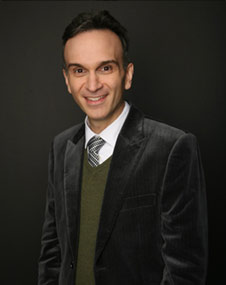
  • Shaham|Langrée @ Mostly Mozart

    Gil-left-1

    Above: Violinist Gil Shaham

    ~ Author: Scoresby

    Friday August 18th, 2017 – After a month of recovering from an illness, I was happy to be able hear live music performed by the Mostly Mozart Festival Orchestra in David Geffen Hall led by its music director Louis Langrée with guest violinist Gil Shaham. A month is the longest I’ve gone without hearing live music in years, so it felt like the ultimate psychological panacea to attend. While I have regularly attended the chamber music performances, A Little Night Music, and contemporary music concerts, I hadn’t heard the Festival Orchestra since 2014.  I was glad to be able to attend the penultimate Festival Orchestra concert of the season.

    Louis-Langrée

    Above: Louis Langrée 

    The first piece on the program was the bubbly Prokofiev Symphony No. 1 in D major (“Classical”). The only other time I have heard this piece played live was, coincidentally, also the last time I heard the Festival Orchestra. This evening Mr. Langrée led a taut, lean performance. During the dance-like opening movement, the strings sounded bouncy and light. The low woodwinds provided a warm sheen, even in the most ominous undercurrents of the piece. Mr. Langrée’s sense of balance allowed the bassoon’s counterpoint to easily pop. While certainly an energetic account, none of the structural detailing was missed.

    During the Larghetto, the bassoons and clarinets took the spotlight, providing entertainment combined with artistry. For those who haven’t been to Mostly Mozart before, the stage of David Geffen is modified to allow riser seating in the back of the orchestra by moving up the stage to what would be the first few rows of the hall. This pushes the orchestra significantly closer to audience and creates a much more intimate environment.

    Mr. Langrée takes full advantage of this intimacy by using far quieter dynamics than could ever be used during the normal season’s setup – it feels as if the orchestra is thrust into the audience. The orchestral detailing in the second movement was superb through even the quietest of moments. While this makes the music sound more nuanced and detailed, it feels as if the noises from the crowd are too. Throughout the performance I heard many more pings of hearing aids, coughs, and wrappers of food than I hear during the regular season. However, I am happy to take that trade-off if it makes the music-making substantially more interesting as it did here. In the third and fourth movements, the orchestra kept its momentum and finished to a crowd that roared, obviously excited over the energy of the musicians.

    The second piece on the program was Mozart Symphony No. 25 G minor, K. 183 (one of few Mozart symphonies in the minor key). I’ve never been the biggest fan of the piece, but it was still a pleasure to hear it live in such an intimate space. While at times I felt the orchestra sounded a little muddy through the first movement, every time there was a canonic section Mr. Langrée confidently led transparent and thoughtful introductions for each instrument.

    These structured sections sounded just as buoyant as the Prokofiev. While a welcome change in dynamics, some of the rhythms and accents in the Andante felt over-accentuated to my ear.  Nonetheless, one could hear every instrument clearly singing its line. The trio of the third movement brought another warm passage with the bright woodwinds followed by an incisive final movement.

    After the intermission, the crowd seemed to be buzzing to hear the final piece on the program: the Tchaikovsky Violin Concerto in D major played by violinist Gil Shaham. I’ve never been a fan of this piece, but here it was played in a refreshing way that would make want to listen again. Mr. Shaham took an understated approach to the first movement (at least as much as is possible for a virtuosic warhorse), languishing in the phrasing of lines.

    Again, because of the setup of the lean orchestra and intimacy of the venue, there was no need to play loud. Thus he was able to bring a supple legato phrasing that never sounded harsh. After a measured performance of the cadenza by Mr. Shaham, the principal flautist Jasmine Choi gave one of the clearest and mellowest solos I’ve heard for that section of the piece. Mr. Shaham seemed more effective in the second movement, managing to illicit a rounder, ghostly tone during the introduction. The orchestra responded, with the clarinet’s extensive accompaniment matching the misty mood.

    Throughout the piece Mr. Shaham seemed to play for the musicians rather than for the audience – the whole experience seemed have more of a chamber music feel than that of a virtuosic concerto. The orchestral musicians and Mr. Langrée were smiling from start to finish and it was a joy to watch them exchange phrases with Mr. Shaham. While perhaps not the most technical or dazzling performance of this piece, witnessing and feeling that rare warmth between the artists is something that can only be experienced in a live performance.

    During the final movement, Mr. Shaham dispatched the technical sections with ease and the crowd gave him a roaring ovation. He played as an encore the third movement of the third E-major Bach Partita. While charming, to me the highlight of the concert was witnessing intimate collaborative music-making that is rare to see in an orchestra.

    ~ Scoresby