Tag: Giulio Caccini

  • Cantanti Project’s EURIDICE: Gallery

    Euridice by Cantanti @ NYC_Rush Selects-web_16

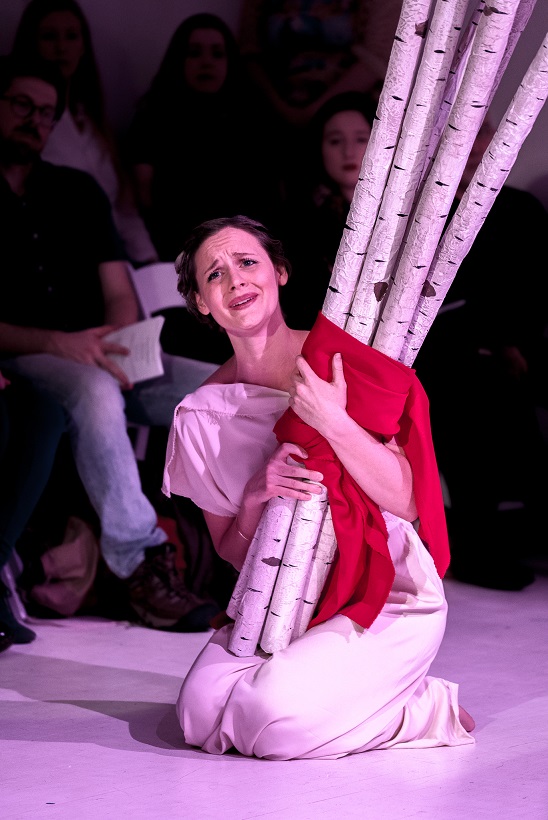
    A gallery of images from the Cantanti Project‘s recent production of Giulio Caccini’s EURIDICE. The photos are by Lucas Godlewski of LGod Photography. Read about the performance here, and about a rehearsal that I got to watch here.  

    Often referred to as “the first opera”, Caccini’s EURIDICE is a take on the classic story of Orfeo, the mythic singer who descends to the Underworld to rescue his beloved Euridice. Caccini gives us a happy ending: a triumph of love over death.

    Euridice by Cantanti @ NYC_Rush Selects-web_1

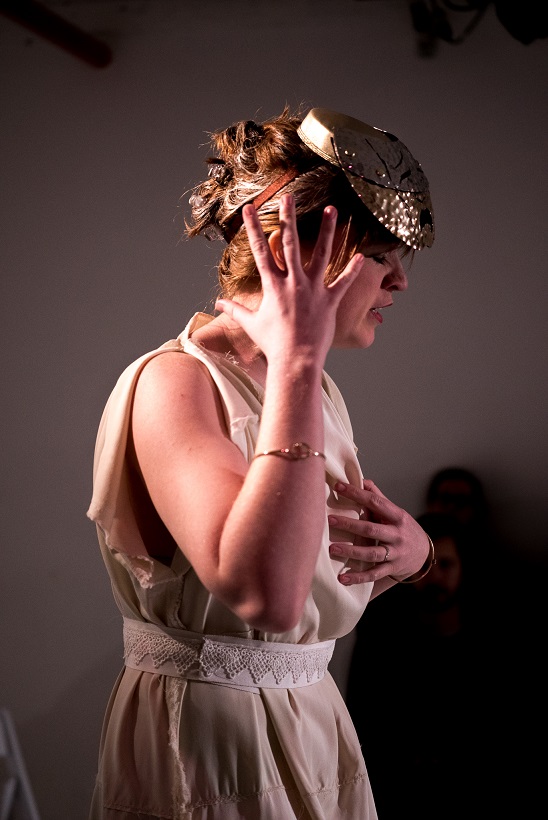
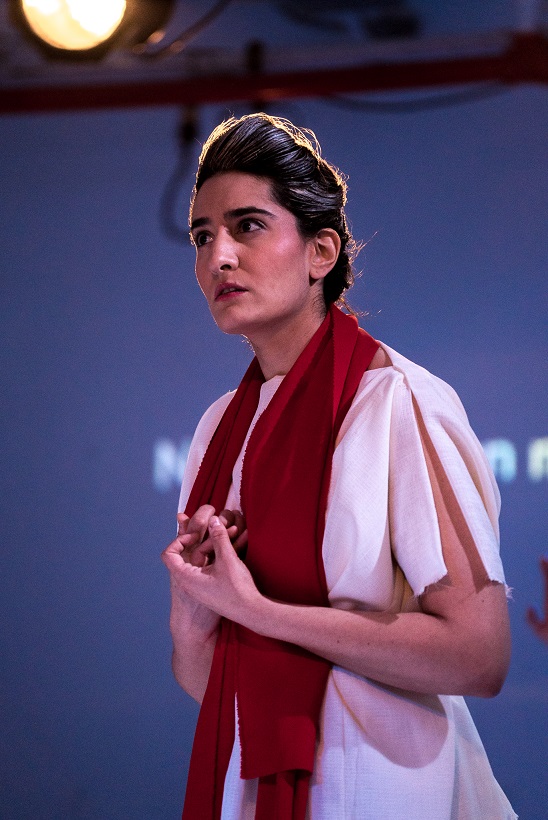
    La Tragedia: Fiona Gillespie Jackson

    Euridice by Cantanti @ NYC_Rush Selects-web_2

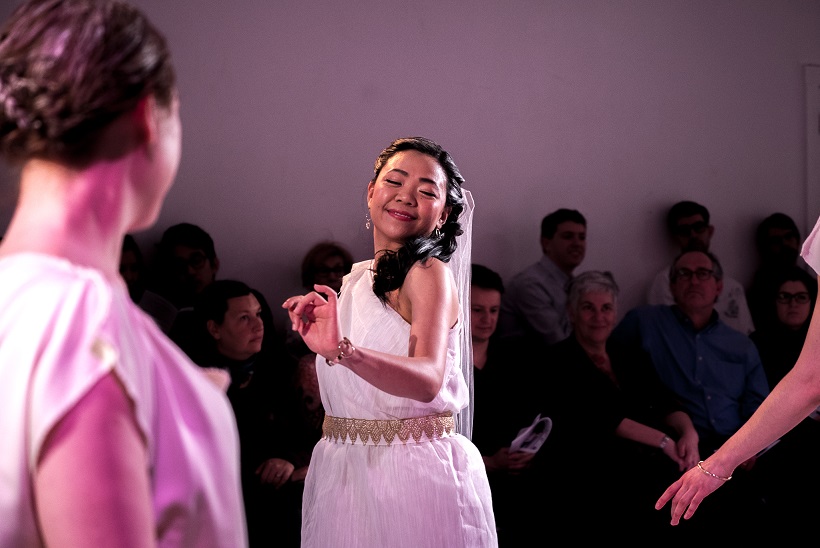
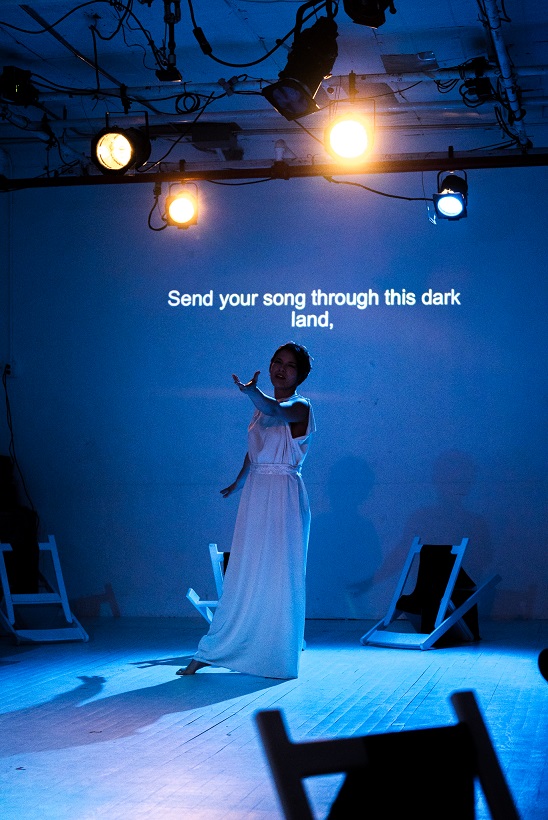
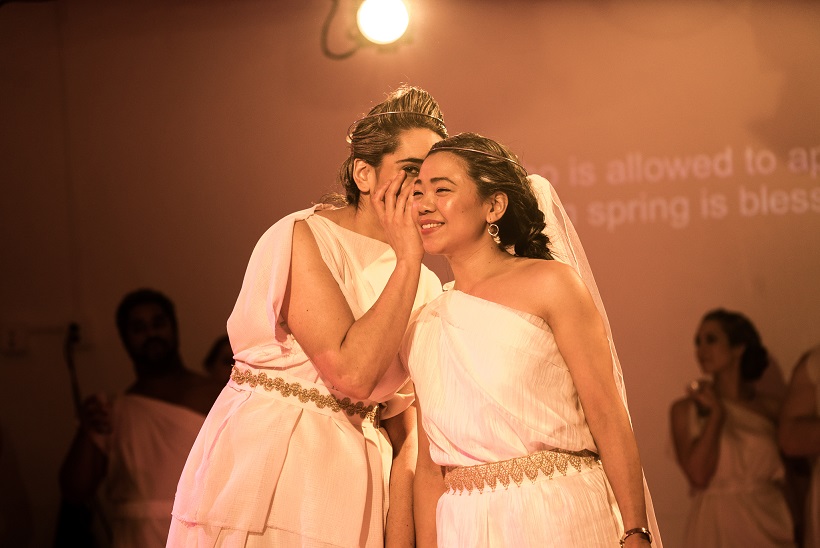
    Euridice as bride-to-be: Joyce Yin

    Euridice by Cantanti @ NYC_Rush Selects-web_3

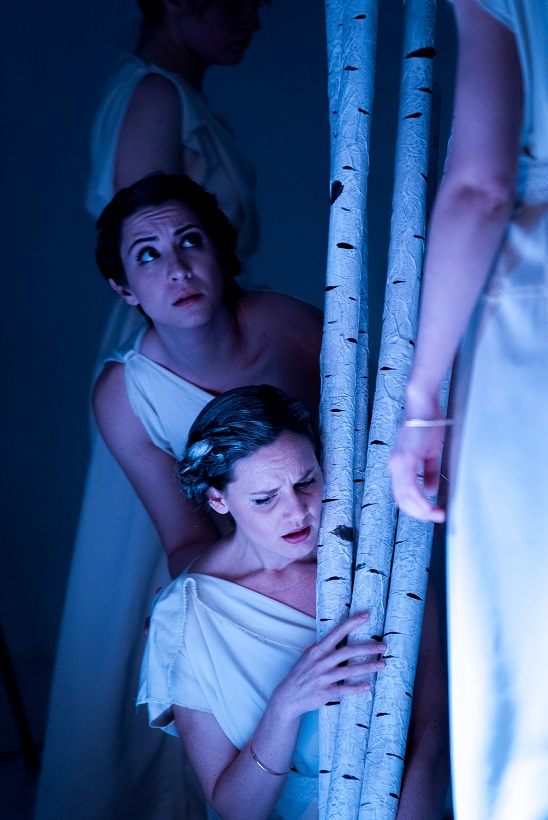
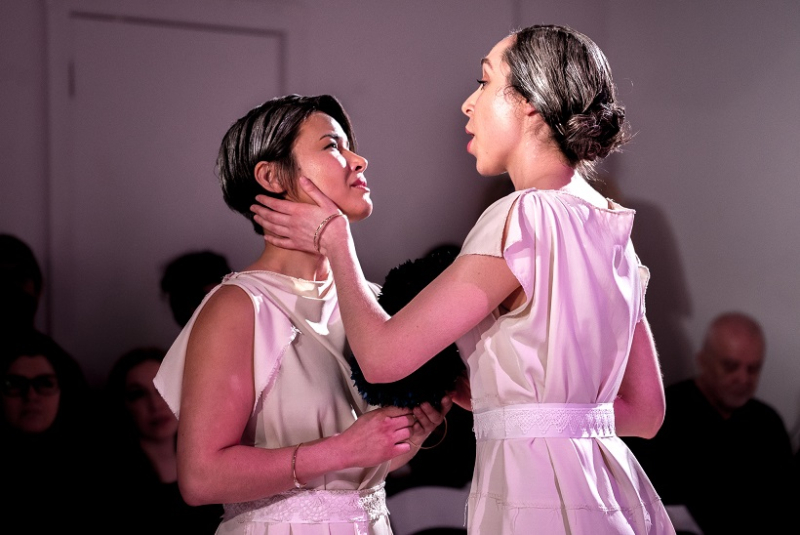
    Nymphs: Brittany Fowler, Sara Lin Yoder

    Euridice by Cantanti @ NYC_Rush Selects-web_5

    Tom Corbeil

    Euridice by Cantanti @ NYC_Rush Selects-web_7

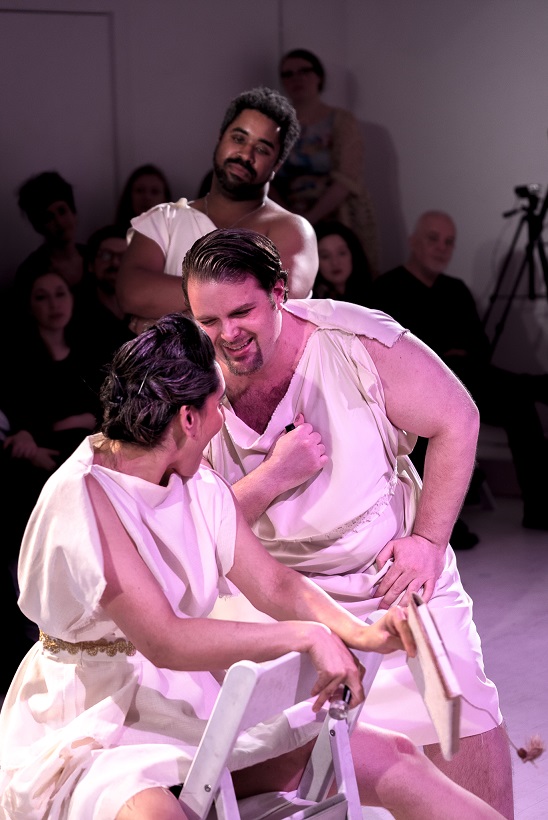
    Bachelors cavort before the story turns dark: Aumna Iqbal, Michael Celentano, Marques Hollie

    Euridice by Cantanti @ NYC_Rush Selects-web_8

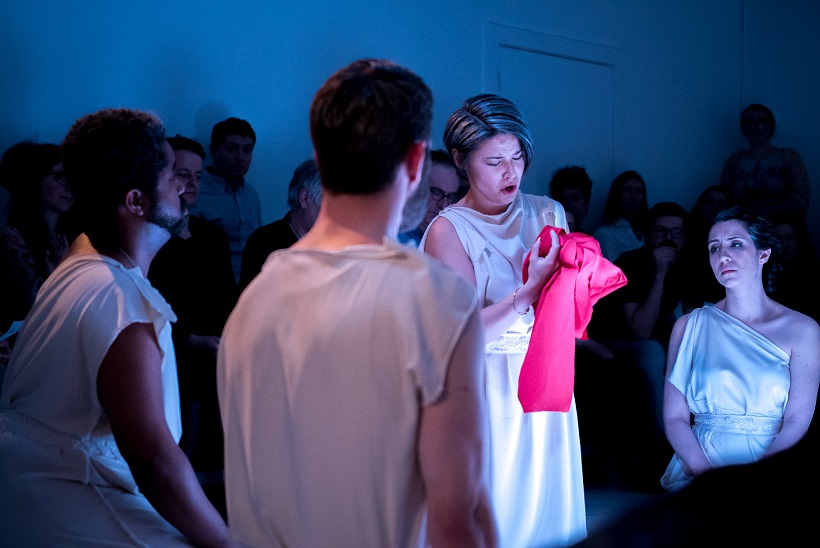
    Dafne (Elyse Kakacek) brings news of Euridice’s death

    Euridice by Cantanti @ NYC_Rush Selects-web_11

    Daniela DiPasquale and Elyse Kakacek

    Euridice by Cantanti @ NYC_Rush Selects-web_14

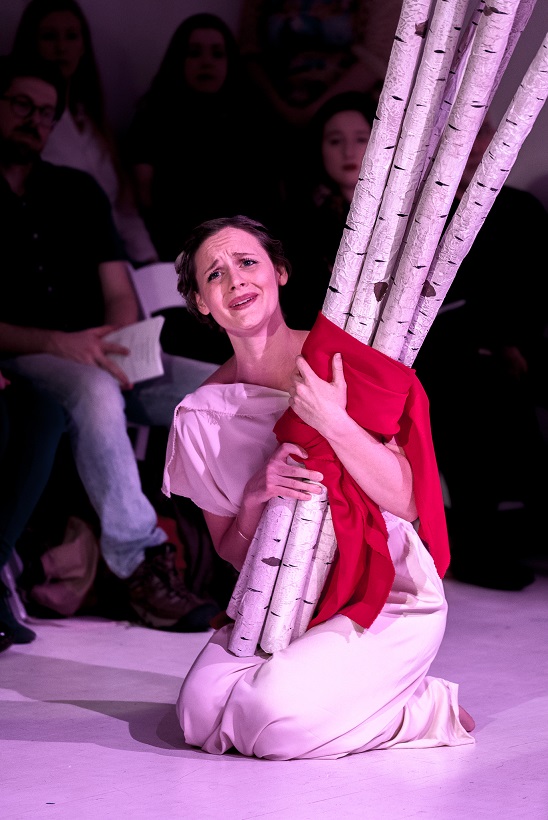
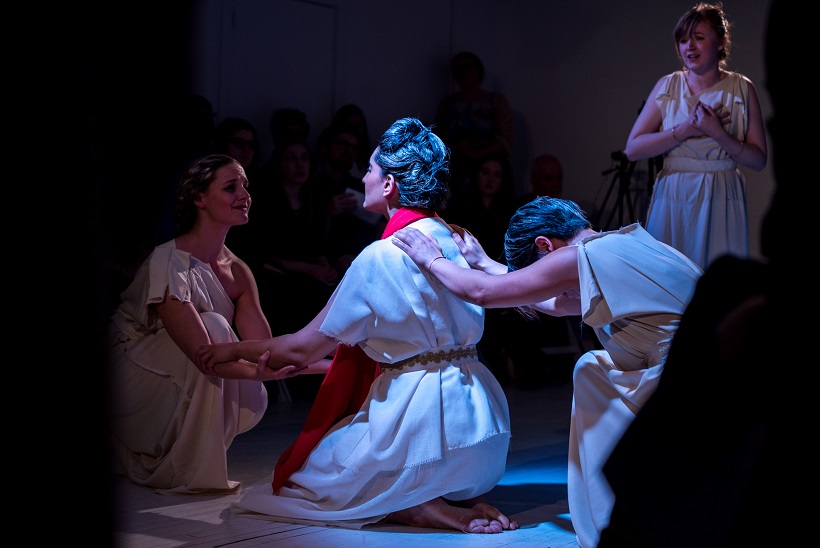
    Lamenting the death of Euridice: Marques Hollie, Tom Corbeil, Brittany Fowler, Sara Lin Yoder

    Euridice by Cantanti @ NYC_Rush Selects-web_15

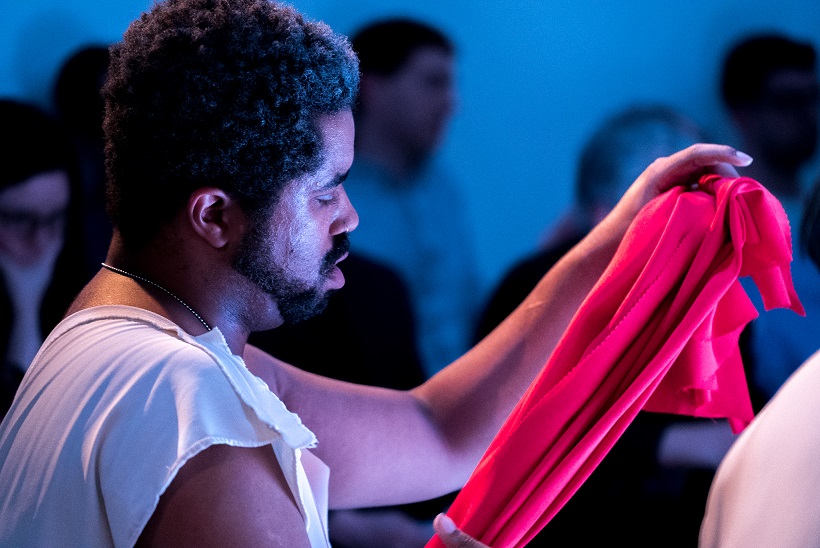
    Marques Hollie

    Euridice by Cantanti @ NYC_Rush Selects-web_18

    Laura Mitchell (Arcetro) with Fiona Gillespie Jackson

    Euridice by Cantanti @ NYC_Rush Selects-web_22

    Urging Orfeo to seek Euridice in the Underworld: Elyse Kakacek, Aumna Iqbal, Brittany Fowler, Fiona Gillespie Jackson

    Euridice by Cantanti @ NYC_Rush Selects-web_24

    Brittany Fowler as Venere

    Euridice by Cantanti @ NYC_Rush Selects-web_40_preview

    Lydia Dahling as Prosperina

    Euridice by Cantanti @ NYC_Rush Selects-web_25

    Aumna Iqbal as Orfeo

    Euridice by Cantanti @ NYC_Rush Selects-web_29

    Friends reunited

    Euridice by Cantanti @ NYC_Rush Selects-web_31

    Lovers reunited: Aumna Iqbal and Joyce Yin

    All photos by Lucas Godlewski/LGod Photography.

  • Cantanti Project’s EURIDICE: Gallery

    Euridice by Cantanti @ NYC_Rush Selects-web_16

    A gallery of images from the Cantanti Project‘s recent production of Giulio Caccini’s EURIDICE. The photos are by Lucas Godlewski of LGod Photography. Read about the performance here, and about a rehearsal that I got to watch here.  

    Often referred to as “the first opera”, Caccini’s EURIDICE is a take on the classic story of Orfeo, the mythic singer who descends to the Underworld to rescue his beloved Euridice. Caccini gives us a happy ending: a triumph of love over death.

    Euridice by Cantanti @ NYC_Rush Selects-web_1

    La Tragedia: Fiona Gillespie Jackson

    Euridice by Cantanti @ NYC_Rush Selects-web_2

    Euridice as bride-to-be: Joyce Yin

    Euridice by Cantanti @ NYC_Rush Selects-web_3

    Nymphs: Brittany Fowler, Sara Lin Yoder

    Euridice by Cantanti @ NYC_Rush Selects-web_5

    Tom Corbeil

    Euridice by Cantanti @ NYC_Rush Selects-web_7

    Bachelors cavort before the story turns dark: Aumna Iqbal, Michael Celentano, Marques Hollie

    Euridice by Cantanti @ NYC_Rush Selects-web_8

    Dafne (Elyse Kakacek) brings news of Euridice’s death

    Euridice by Cantanti @ NYC_Rush Selects-web_11

    Daniela DiPasquale and Elyse Kakacek

    Euridice by Cantanti @ NYC_Rush Selects-web_14

    Lamenting the death of Euridice: Marques Hollie, Tom Corbeil, Brittany Fowler, Sara Lin Yoder

    Euridice by Cantanti @ NYC_Rush Selects-web_15

    Marques Hollie

    Euridice by Cantanti @ NYC_Rush Selects-web_18

    Laura Mitchell (Arcetro) with Fiona Gillespie Jackson

    Euridice by Cantanti @ NYC_Rush Selects-web_22

    Urging Orfeo to seek Euridice in the Underworld: Elyse Kakacek, Aumna Iqbal, Brittany Fowler, Fiona Gillespie Jackson

    Euridice by Cantanti @ NYC_Rush Selects-web_24

    Brittany Fowler as Venere

    Euridice by Cantanti @ NYC_Rush Selects-web_40_preview

    Lydia Dahling as Prosperina

    Euridice by Cantanti @ NYC_Rush Selects-web_25

    Aumna Iqbal as Orfeo

    Euridice by Cantanti @ NYC_Rush Selects-web_29

    Friends reunited

    Euridice by Cantanti @ NYC_Rush Selects-web_31

    Lovers reunited: Aumna Iqbal and Joyce Yin

    All photos by Lucas Godlewski/LGod Photography.

  • Cantanti Project: Caccini’s EURIDICE

    Caccini
    ~ Author: Oberon

    Friday February 23rd, 2018 – Taking us back to the very beginnings of opera – back to where it all began – the Cantanti Project bring us a rare opportunity to experience Giulio Caccini’s EURIDICE. Last Autumn, when I first read of these performances, I knew I would want to be there.

    In 1600, Jacopo Peri had written an opera to Ottavio Rinuccini’s libretto based on the story of Orfeo and Euridice; but Peri’s opera has not yet been published when Giulio Caccini took up the same libretto, and his setting of it was performed at the Pitti Palace, Florence, on December 5, 1602. Thus Caccini’s EURIDICE is often referred to as ‘the first opera’.

    Joyce Yin, soprano and Artistic Director of the Cantanti Project, kindly arranged for me to watch a rehearsal of EURIDICE a week prior to the performances. This was a great introduction to the opera, and provided me with an opportunity to get a handle on who’s who in the cast.

    The performance took place in the ‘white box’ studio of the Alchemical Studios on West 14th Street. This long and rather narrow space was well-utilized, with seating along the walls on either side, the musicians of Dorian Baroque tucked into one corner, and the singers making the most of the central playing area.

    Director Bea Goodwin’s savvy – and often touching – stage direction told the story clearly, with elements of dance woven in and all the characters vividly drawn. Stylized gestural language was beautifully rendered, especially in the scene where Orfeo pleads with Pluto to restore Euridice to life. Alexandria Hoffman’s simple and elegant Grecian-tunic costuming – all white – and the lighting design by Michael Celentano and Emma Clarkson enhanced the performance at every turn. The audience – wonderfully silent and attentive – were clearly taken with the entire presentation.

    Let me first praise the excellent quartet of musicians whose contribution to the performance’s success was vital. Dylan Sauerwald – conducting from the harpsichord – was joined by Paul Holmes Morton (theorbo), John Mark Rozendaal (viola da gamba), and Christa Patton (harp). Their instruments are beautiful, and beautifully played, giving a timeless feeling to the music. Caccini’s EURIDICE may be four centuries old, but tonight is seemed fresh and new.

    Aside from Orfeo and Euridice, the cast all do double-duty; each singer has an assigned name-role whilst doubling as nymphs and shepherds. Where to begin with the singers? At the beginning: as La Tragedia, Fiona Gillespie Jackson’s sweet, clear soprano drew us in to the story and the musical style with her lovely rendering of the Prologue. Her words – and the assignment of this music to a melodious soprano rather than a darker contralto – foretell a happy ending, despite intervening trials and sorrows.

    Joyce Yin’s lyrical and well-projected soprano, and the youthful joy of her portrayal, were just right for Euridice. At times called upon to dance, Ms. Yin took that in stride as well. Her radiant happiness a being reunited with Orfeo was lovely to behold. As Orfeo, the tall and slender Aumna Iqbal combined authoritative acting with a distinctive voice; she was thoroughly at home in the recitativo style, shading her words and colouring the tone with impressive command. As a relaxed bridegroom-to-be, Orfeo at first carouses with friends and makes a ribald reference to his wedding night. Then, Ms. Iqbal consummately caught the character’s descent from light-heartedness to despair when news of his Euridice’s demise arrives.

    As Dafne, the bearer of those sad tidings, soprano Elyse Kakacek excelled. Her vocalism combined clarity of tone with depth of feeling, and her facial expressions told of the grief her message cost her. An intrinsic sense of hesitancy in her presentation made clear her reluctance to tell the tale of Euridice’s fate. Later, though, as his friends urged Orfeo to seek his beloved in Hades, Mr. Kakacek circled the space in authentic dance moves, exhorting everyone to optimism and the hope of a happy resolution. 

    As Venere, goddess of Love, Brittany Fowler’s striking presence and commanding singing made her the perfect advocate for Orfeo at Pluto’s court. Tall and austere, Tom Corbeil as Pluto seemed thoroughly implacable at first, his singing powerful and his stature intimidating. Lydia Dahling, as Prosperina, surprisingly takes Orfeo’s side in the debate, her singing warm of tone yet urgent. Michael Celentano and Marques Hollie, with contrasting tenor voices, are Charon and Radamanto in this key scene, wherein Ms. Iqbal was superb. These are the opera’s most powerful moments, with Orfeo supplicating himself before Pluto to beg for Euridice’s return. The characters’ varying gestures of supplication, implacability, and intercession were done with authority: engrossing staging, very well-played.

    Mr. Hollie’s power and wide-range were utilized when – as Amyntas – he sought to reassure his friends that Orfeo had indeed been successful in his bid to regain his beloved and that the couple would soon appear among them again. Mr. Celentano’s lyrical sound was pleasing to hear in his interjections as the story moved to its resolution.  

    Two singers who particularly intrigued me were Laura Mitchell (Arcetro) and Sarah Lin Yoder (Nymph). Ms. Mitchell’s attractive singing was made the more ingratiating thru her lovely use of piano and her nuanced delivery of the words. Ms. Yoder, a unique beauty, displayed a voice of natural power and expressiveness.  

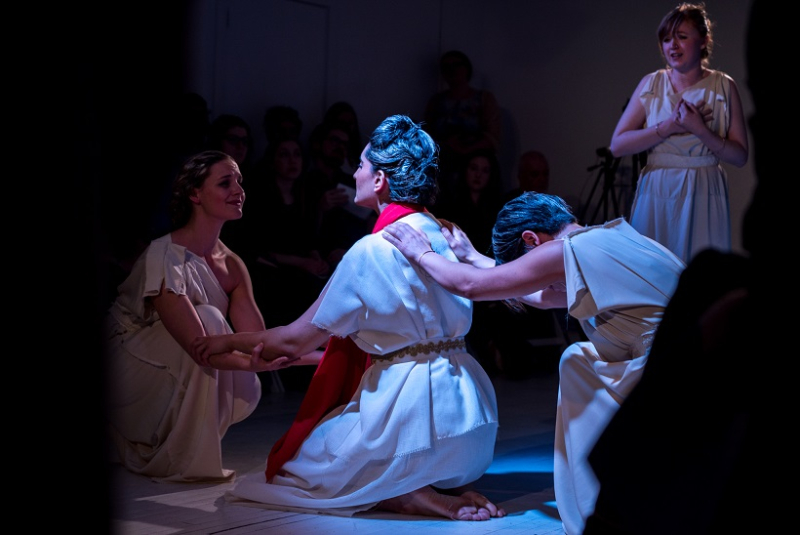
    Aside from the scene in the Underworld, another vignette in the opera which made a particularly strong impression on me occurred as the assembled nymphs and shepherds knelt in a circle to mourn Euridice’s death. Handsomely lit, this passage calls for finely-harmonized ensemble singing interspersed with solo lines. The blend of voices was really enchanting, both here and at the opera’s happy end. 

    ~ Oberon
  • Cantanti Project: Caccini’s EURIDICE

    Caccini
    ~ Author: Oberon

    Friday February 23rd, 2018 – Taking us back to the very beginnings of opera – back to where it all began – the Cantanti Project bring us a rare opportunity to experience Giulio Caccini’s EURIDICE. Last Autumn, when I first read of these performances, I knew I would want to be there.

    In 1600, Jacopo Peri had written an opera to Ottavio Rinuccini’s libretto based on the story of Orfeo and Euridice; but Peri’s opera has not yet been published when Giulio Caccini took up the same libretto, and his setting of it was performed at the Pitti Palace, Florence, on December 5, 1602. Thus Caccini’s EURIDICE is often referred to as ‘the first opera’.

    Joyce Yin, soprano and Artistic Director of the Cantanti Project, kindly arranged for me to watch a rehearsal of EURIDICE a week prior to the performances. This was a great introduction to the opera, and provided me with an opportunity to get a handle on who’s who in the cast.

    The performance took place in the ‘white box’ studio of the Alchemical Studios on West 14th Street. This long and rather narrow space was well-utilized, with seating along the walls on either side, the musicians of Dorian Baroque tucked into one corner, and the singers making the most of the central playing area.

    Director Bea Goodwin’s savvy – and often touching – stage direction told the story clearly, with elements of dance woven in and all the characters vividly drawn. Stylized gestural language was beautifully rendered, especially in the scene where Orfeo pleads with Pluto to restore Euridice to life. Alexandria Hoffman’s simple and elegant Grecian-tunic costuming – all white – and the lighting design by Michael Celentano and Emma Clarkson enhanced the performance at every turn. The audience – wonderfully silent and attentive – were clearly taken with the entire presentation.

    Let me first praise the excellent quartet of musicians whose contribution to the performance’s success was vital. Dylan Sauerwald – conducting from the harpsichord – was joined by Paul Holmes Morton (theorbo), John Mark Rozendaal (viola da gamba), and Christa Patton (harp). Their instruments are beautiful, and beautifully played, giving a timeless feeling to the music. Caccini’s EURIDICE may be four centuries old, but tonight is seemed fresh and new.

    Aside from Orfeo and Euridice, the cast all do double-duty; each singer has an assigned name-role whilst doubling as nymphs and shepherds. Where to begin with the singers? At the beginning: as La Tragedia, Fiona Gillespie Jackson’s sweet, clear soprano drew us in to the story and the musical style with her lovely rendering of the Prologue. Her words – and the assignment of this music to a melodious soprano rather than a darker contralto – foretell a happy ending, despite intervening trials and sorrows.

    Joyce Yin’s lyrical and well-projected soprano, and the youthful joy of her portrayal, were just right for Euridice. At times called upon to dance, Ms. Yin took that in stride as well. Her radiant happiness a being reunited with Orfeo was lovely to behold. As Orfeo, the tall and slender Aumna Iqbal combined authoritative acting with a distinctive voice; she was thoroughly at home in the recitativo style, shading her words and colouring the tone with impressive command. As a relaxed bridegroom-to-be, Orfeo at first carouses with friends and makes a ribald reference to his wedding night. Then, Ms. Iqbal consummately caught the character’s descent from light-heartedness to despair when news of his Euridice’s demise arrives.

    As Dafne, the bearer of those sad tidings, soprano Elyse Kakacek excelled. Her vocalism combined clarity of tone with depth of feeling, and her facial expressions told of the grief her message cost her. An intrinsic sense of hesitancy in her presentation made clear her reluctance to tell the tale of Euridice’s fate. Later, though, as his friends urged Orfeo to seek his beloved in Hades, Mr. Kakacek circled the space in authentic dance moves, exhorting everyone to optimism and the hope of a happy resolution. 

    As Venere, goddess of Love, Brittany Fowler’s striking presence and commanding singing made her the perfect advocate for Orfeo at Pluto’s court. Tall and austere, Tom Corbeil as Pluto seemed thoroughly implacable at first, his singing powerful and his stature intimidating. Lydia Dahling, as Prosperina, surprisingly takes Orfeo’s side in the debate, her singing warm of tone yet urgent. Michael Celentano and Marques Hollie, with contrasting tenor voices, are Charon and Radamanto in this key scene, wherein Ms. Iqbal was superb. These are the opera’s most powerful moments, with Orfeo supplicating himself before Pluto to beg for Euridice’s return. The characters’ varying gestures of supplication, implacability, and intercession were done with authority: engrossing staging, very well-played.

    Mr. Hollie’s power and wide-range were utilized when – as Amyntas – he sought to reassure his friends that Orfeo had indeed been successful in his bid to regain his beloved and that the couple would soon appear among them again. Mr. Celentano’s lyrical sound was pleasing to hear in his interjections as the story moved to its resolution.  

    Two singers who particularly intrigued me were Laura Mitchell (Arcetro) and Sarah Lin Yoder (Nymph). Ms. Mitchell’s attractive singing was made the more ingratiating thru her lovely use of piano and her nuanced delivery of the words. Ms. Yoder, a unique beauty, displayed a voice of natural power and expressiveness.  

    Aside from the scene in the Underworld, another vignette in the opera which made a particularly strong impression on me occurred as the assembled nymphs and shepherds knelt in a circle to mourn Euridice’s death. Handsomely lit, this passage calls for finely-harmonized ensemble singing interspersed with solo lines. The blend of voices was really enchanting, both here and at the opera’s happy end. 

    ~ Oberon