Tag: Helgi Tomasson

  • Evgeny Kissin ~ Beethoven Piano Concerto #1

    Snapshot kissin

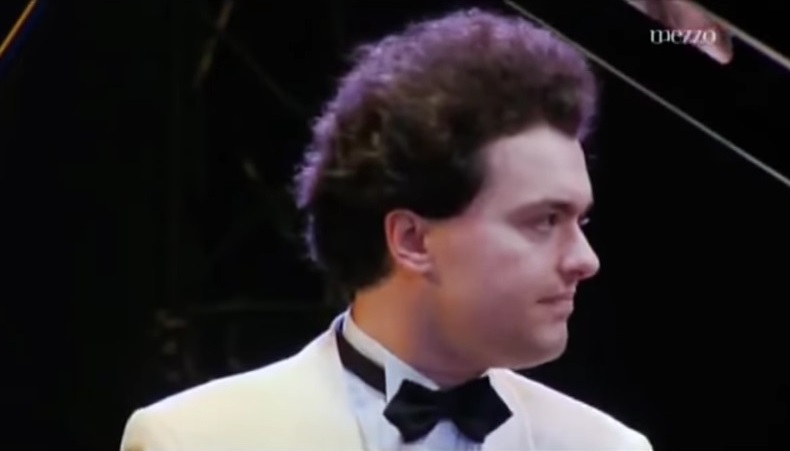
    Evgeny Kissin (above) plays Beethoven’s Piano Concerto #1 in a 2007 performance with the Verbier Festival Orchestra conducted by Esa-Pekka Salonen.

    Watch and listen here.

    I first fell in love with this concerto when Helgi Tomasson set his ballet PRISM to it for the New York City Ballet in 2000.

  • Barnatan|Honeck @ The NY Philharmonic

    Barnatan_16-500x500

    Thursday February 16th, 2017 –  Beethoven’s 1st piano concerto, with soloist Inon Barnatan (above), and Mahler’s 1st symphony were paired in tonight’s New York Philharmonic performance under the baton of Manfred Honeck.

    Beethoven’s 1st piano concerto was used by choreographer Helgi Tomasson in 2000 for his gorgeous ballet PRISM, originally danced by Maria (‘Legs’) Kowroski and Charles Askegard at New York City Ballet: that’s how I fell in love with this particular concerto. Throughout the third movement tonight, I was recalling Benjamin Millepied’s virtuoso performance of Tomasson’s demanding choreography.

    Israeli pianist Inon Barnatan, currently the first Artist-in-Association of the New York Philharmonic, has thrilled me in the past with his playing both with the Philharmonic and in frequent appearances with Chamber Music Society of Lincoln Center. And I don’t use the word ‘thrilled’ lightly. 

    Mr. Barnatan’s playing of the Beethoven this evening was remarkable as much for its subtlety as for its brio. Maintaining a sense of elegance even in the most whirlwind passages, the pianist had ideal support from Maestro Honeck and the artists of the Philharmonic. The cascading fiorature which sound soon after the soloist’s entrance were crystal-clear; with Mr. Barnatan relishing some delicious nuances of phrase along the way, we reached the elaborate cadenza where the pianist demonstrated peerless dexterity, suffusing his technique with a sense of magic.

    From the pianissimo opening of the Largo, Mr. Barnatan’s control and expressiveness created a lovely sense of reverie. He found an ideal colleague in Pascual Martinez Forteza, whose serenely singing clarinet sustained the atmosphere ideally. Maestro Honeck and the orchestra framed the soloist with playing of refined tenderness; the Largo left us with a warm after-glow.  

    The concluding Rondo: Allegro is one of the most purely enjoyable finales in all the piano concerto literature. Good humor abounds, the music is expansive, and a jaunty – almost jazzy – minor key foray adds a dash of the unexpected. Mr. Barnatan was at full-sail here, carrying the audience along on an exuberant ride and winning himself a tumult of applause and cheers. He favored us with a brisk and immaculately-played Beethoven encore, and had to bow yet again before the audience would let him go. 

    Inon Barnatan has, in the past two or three years, become a ‘red-letter’ artist for me – meaning that his appearances here in New York City will always be key dates in my concert-planning. His Gaspard de la Nuit at CMS last season was a true revelation, and tonight’s Beethoven served to re-affirm him as a major force among today’s music-makers. 

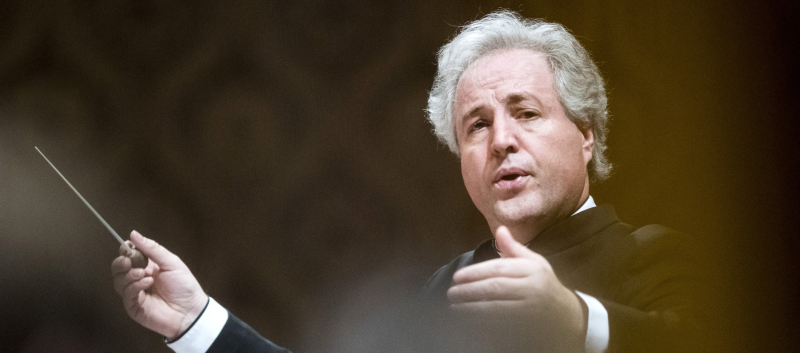
    Manfred-honeck-header

    Maestro Honeck (above) returned to the podium following the interval for the Mahler 1st. In the course of the symphony’s 50-minute span, the Maestro showed himself to be a marvelous Mahler conductor. The huge orchestra played splendidly for him, and the evening ended with yet another resounding ovation.

    From the ultra-soft opening moments of the first symphony, which Mahler described as sounds of nature, not music!”, this evening’s performance drew us in. The offstage trumpet calls seem to issue from a fairy-tale castle deep in a mysterious forest. The Philharmonic’s wind soloists – Robert Langevin, Philip Myers, and Liang Wang among them – seized upon prominent moments: Mr. Wang in fact was a key element in our pure enjoyment of the entire symphony. The pace picks up, and a melody from the composer’s Wayfarer songs shines forth; the music gets quite grand, the horns opulent, the trumpets ringing out, and so on to a triumphant climax.

    The symphony’s second movement, a folkish dance, also finds the horns and trumpets adding to the exuberance. After a false ending, a brief horn transition sends us into a waltzy phase, with winds and strings lilting us along. Then the movement’s initial dance theme returns, accelerates, and rushes to a joyful finish.

    The solemn timpani signals the ‘funeral music’ of the third movement; a doleful round on the tune of “Frère Jacques” ensues, but perhaps this is tongue-in-cheek Mahler. Mr. Wang’s oboe again lures the ear, and a Wayfarer song is heard before a return to the movement’s gloomy opening atmosphere. The unusual intrusion of a brief gypsy-dance motif melts away, and the funeral cortege slowly vanishes into the mist.

    Maestro Honeck took only the briefest of pauses before signaling the dramatic start of the finale. A march, a lyrical theme, a romance that grows passionate: Mahler sends everything our way. After several shifts of mood, it begins to feel like the composer is not quite sure how he wants his symphony to end. Various motifs are heard again, and at last Mahler finds his finish with a celebratory hymn, the horn players rising to blaze forth resoundingly.

  • San Francisco Ballet @ Lincoln Center

     86a4391427c16a88026b98851ca7d934

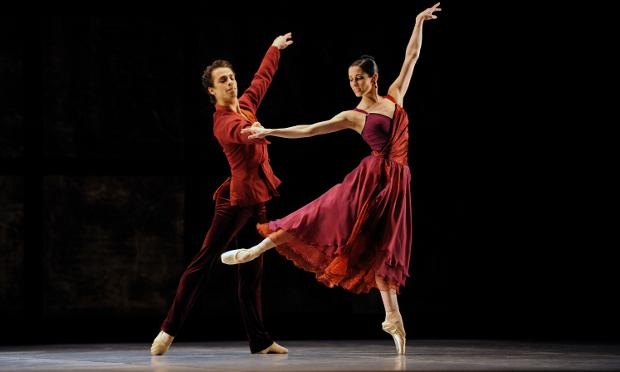
    Above: San Francisco Ballet‘s Vitor Luiz and Vanessa Zahorian in Helgi Tomasson’s TRIO; photo © Erik Tomasson

    Saturday October 19th, 2013 (evening) – Welcoming back to New York City one of the world’s greatest ballet companies: San Francisco Ballet!  I had hoped to attend both of the Company’s programs during their first week at Lincoln Center, but things didn’t turn out that way. When the Company were last here in 2008, I went to see everything they offered, and I fell in love with all the dancers. Fortunately tonight I was able to see many of those beautiful dancers again, though I missed some other favorites – like Lorena Feijoo and Taras Domitro. I very much admired the Company’s programming, bringing works to New York City that we’ve not seen before. 
    Triotomassonsfb

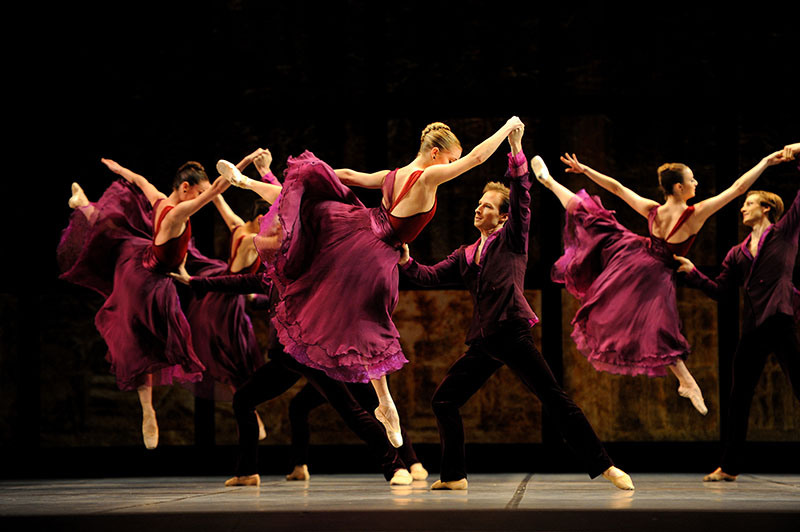
    Above: the Company in Helgi Tomasson’s TRIO; photo © Erik Tomasson

    Helgi Tomasson’s TRIO, which opened the performance, is a four-movement work in the Romantic style danced before an antique/Renaissance backdrop (by Alexander V Nichols). Mark Zappone’s costumes, in shades of wine and dusty Autumn flame, set the dancers off beautifully. Tomasson’s ballets always please the ear as well as the eye: TRIO is danced to Tchaikovsky’s richly melodic Souvenir de Florence.

    After a striking entrée where the ballerina is held aloft, the gorgeously elegant, the dark-haired Vanessa Zahorian swirls thru lovely supported pirouettes and covers the space beautifully with her joyous dance; her cavalier, Vitor Luiz, shows off some unusual flourishes in his combinations. Their duet, backed by the ensemble, is filled with demanding partnering motifs; they gave a wonderful performance, setting the tone for the entire evening.
    Et-trio-sarah-van-patten-tiit-helimets-skip_1000

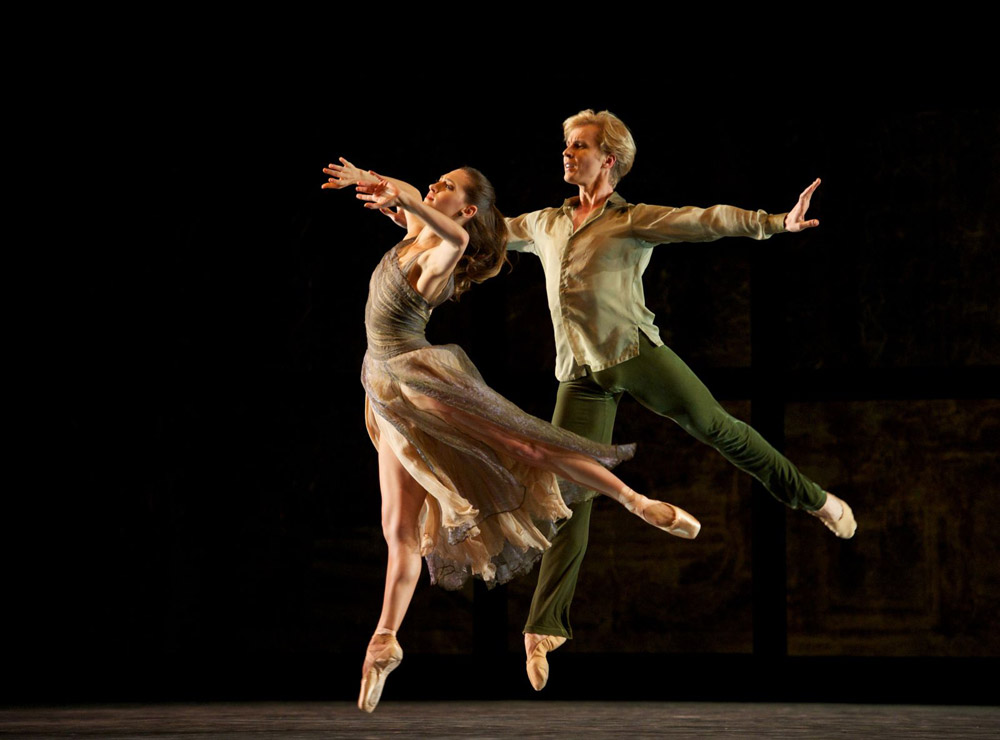
    Above: Sarah Van Patten and Tiit Helimets in TRIO; photo © Erik Tomasson

    New York City has Wendy Whelan and San Francisco has Sarah Van Patten: I feel these two dancers might be sisters under the skin. Ms. Van Patten’s striking presence and passionate physicality transcend the steps and music. In the adagio of TRIO she appears first in a sensual duet with the marvelous Tiit Helimets; we are basking in their expressive perfection when the charismatic Anthony Spaulding suddenly appears, making his own claim to the ballerina. The trio’s passions and tensions ebb and flow thru their pas de trois, a finely-crafted dance drama.

    Maria Kochetkova, a petite ballerina with who radiates enormous charm and technical authority, dazzled the audience with her ebullient dancing; she and her vividly handsome partner Davit Karapetyan led the ballet’s third and fourth movements which range from classic partnering à la Russe to some stylized motifs that maintained the ballet’s freshness.

    Among the ensemble, soloist Hansuke Yamamoto made an outstanding impression. This Tomasson ballet made me crave a revival of his 2000 Beethoven work for New York City Ballet: PRISM

    Martin West
    conducted the Tchaikovsky score for TRIO and also had the baton for the evening’s second work: Christopher Wheeldon’s GHOSTS set to music by C F Kip Winger.
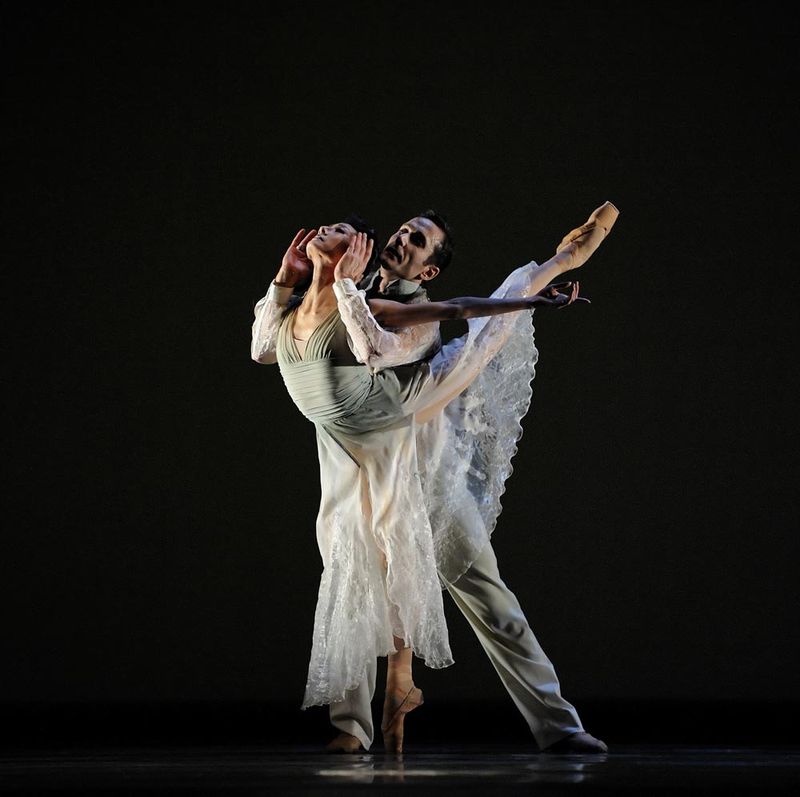
    Et-ghosts-yuan-yuan-tan-damian-smith_1000

    Above: Yuan Yuan Tan and Damian Smith in Wheeldon’s GHOSTS. Photo © Erik Tomasson.

    Christopher Wheeldon’s GHOSTS, which premiered in 2010, is performed by an ensemble of dancers in gossamer white beneath the pallid glow of a full moon. CF Kip Winger’s score has a cinematic feel, with passages of Romantic styling mingled with quirky, more angular effects.

    Christopher Wheeldon (who was on the Promenade this evening during the intermission) describes GHOSTS as a “mass gathering of souls … creating only atmosphere, not story.” The ballet’s marriage of music and mood evoke a dreamworld in which the dancers move with sonnambulistic grace, often falling to the floor only to rise again in a restless quest for some elusive sense of closure.

    The ravishing Yuan Yuan Tan and her superb partner Damian Smith perform an ethereal pas de deux; Seeing Yuan Yuan Tan onstage again reminded me of a very special hour Kokyat and I spent in Jessica Lang’s studio two years ago when the ballerina was rehearsing with Clifton Brown for an appearance at Fall for Dance.

    Et-ghosts-sofiane-sylve-leg-reach_1000

    Sofiane Sylve (above in a © Erik Tomasson photo) is a more restless spirit: the beauteous ballerina is still
    missed here at Lincoln Center where she danced as a principal at New
    York City Ballet from 2003 – 2007. Sylve in GHOSTS casts a spell in her pas de trois
    with Mr. Helimets and Shane Wuerthner.

    Soloist Clara Blanco, a
    particular favorite of mine during the Company’s last New York visit in
    2008, stood out among the ensemble…I couldn’t take my eyes off her.
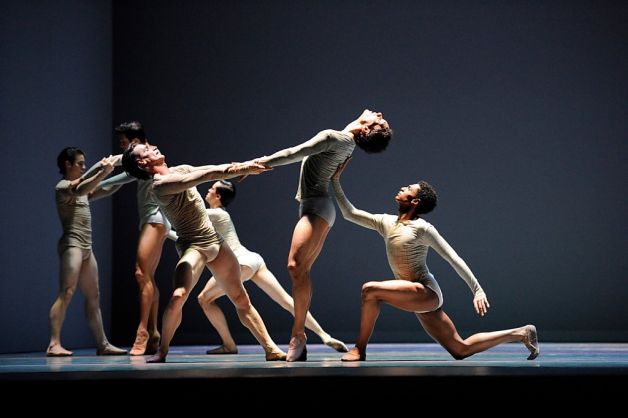
    628x471

    Above: from Wayne MacGregor’s BORDERLANDS, photo © Erik Tomasson

    BORDERLANDS, a 2013 Wayne McGregor ballet, has a strong contemporary feel and demands great stamina and focus from a dozen of the Company’s generously talented dancers. Set in an enormous bare-walled enclosure, the stage is first bathed in steely-grey light; this will shift to Autumnal gold for the central pas de deux and then to vivid neon blue as the ballet moves to its end. The dancers wear shorts, displaying their leggy allure. They often stand or kneel around the edges of the space to observe their fellow-dancers.

    In this austere, stylized ballet the music of Joel Cadbury and Paul Stoney ranges from the kozmic and other-worldly thru a cinematic/romance to a rock-like statement and a final anthem. The dancers move with athletic intensity; the choreographic and partnering demands are strenuous and the dancers come and go throughout the work: their relationships uncharted, sometimes mechanical and always mystifying.

    The San Francisco dancers threw themselves with complusive energy into this unusual movement style: particularly excellent work from Frances Chung and Mlles. Sylve, Van Patten and Kochetkova, and from the ever-fascinating Mr. Spaulding.
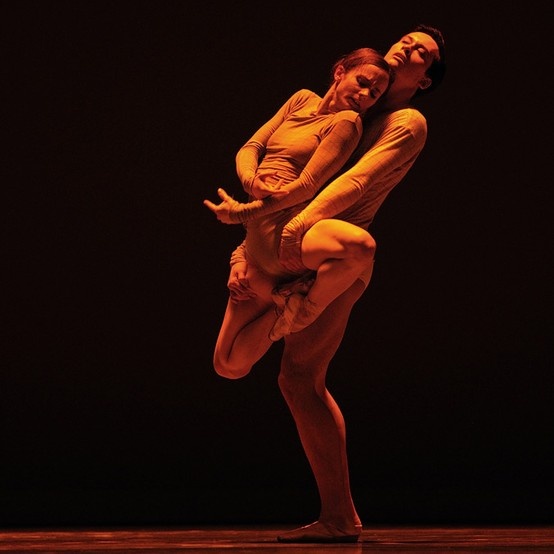
    62c310f6f199abfcc0bb3adf35da96a9

    Above: Maria Kochetkova and Lonnie Weeks in McGregor’s BORDERLANDS. Photo © Erik Tomasson

    All photos in this article are copyright: Erik Tomasson.

    Repertoire and dancers: Saturday evening, October 19th, 2013:

    Trio
    Choreographer: Helgi Tomasson
    Composer: Peter Ilyich Tchaikovsky
    Conductor: Martin West

    Vanessa Zahorian, Vitor Luiz
    Sarah Van Patten, Tiit Helimets
    Anthony Spaulding
    Maria Kochetkova, Davit Karapetyan

    Ghosts
    Choreographer: Christopher Wheeldon
    Composer: C.F. Kip Winger
    Conductor: Martin West

    Yuan Yuan Tan, Damian Smith
    Sofiane Sylve, Tiit Helimets, Shane Wuerthner

    Borderlands
    Choreographer: Wayne McGregor
    Composer: Joel Cadbury and Paul Stoney
    Conductor: Martin West

    Maria Kochetkova, Jaime Garcia Castilla
    Sarah Van Patten, Pascal Molat

    Frances Chung, Carlos Quenedit
    Sofiane Sylve, Anthony Spaulding
    Koto Ishihara, Lonnie Weeks
    Elizabeth Powell, Francisco Mungamba
  • Balanchine/Stravinsky @ NYC Ballet

    Igor stravinsky

    Thursday September 27, 2012 – The third programme in the New York City Ballet‘s 2012 Stravinsky festival included the first ballet that I ever saw the Company perform: BAISER DE LA FEE. This work of pure enchantment holds a special place in my heart and while the memory of Patricia McBride and Helgi Tomasson dancing the ballet’s principal roles on that first night roles stays strong in the memory, I was particulary keen to see tonight’s pairing of Tiler Peck and Gonzalo Garcia making their BAISER debuts.

    But first a zesty appetizer: SCHERZO A LA RUSSE was performed by students from SAB. It’s always fun to see, with it’s unfinished sentence at the end.

    BAISER with its intoxicating score (conducted by Jayce Ogren, who at the end of the evening gave us a delicious reading of FIREBIRD) always weaves its dreamy spell. And under that spell, Tiler Peck and Gonzalo Garcia danced superbly: Tiler’s pirouettes so swift, soft and fair, and Gonzalo brushing the floor with his fingertiips in his mysterious solo. Their artistry, individually and in unison, is thoroughly satisfying to experience. As the melody of ‘None but the lonely heart’ pulses in the orchestra, the dream ends – or does it go on? – as the lovers back away from one another, eyes heavenward. Alina Dronova and Faye Arthurs were very agile and lovely in their demi-soliste roles.

    DANSES CONCERTANTES with its fussy Eugene Berman costumes, old fashioned ‘flats’ setting and entr’acte curtain, has a music hall flavour. It seems a bit dated, and the score – perfectly pleasant – is unmemorable in the long run. Brilliant dancing from Megan Fairchild, Andrew Veyette and a dozen premiere corps dancers (forming four colour-coded  pas de trois) showed the ballet to its best advantage, but tonight it seemed longish and very much of a theatrical era that has vanished.

    Firebird_2

    But FIREBIRD seemed like solid gold tonight, with its glowing score – Stravinsky’s most marvelous, in my view – and its ever-entrancing Chagall designs. For me this is a ballet that never ages. Teresa Reichlen is an elegant vision in her fiery tutu, and with her fluttering gestures, her lovely stretched-out leaps and the gentle hush of her Berceuse, she was perfect. Ask LaCour and Savannah Lowery as the prince and princess were likewise impressive. And to the gorgeous melodies of their ensemble, a dozen fetching ballerinas in their Chagall peasant-gowns wove a particularly enchanting spell: Anderson, Arthurs, Brown, Hankes, King, Laracey, LeCrone, Mann, Pazcoguin, Pollack, Smith and Wellington – a fine corps-watchers opportunity. If the girls take the whole thing a bit tongue-in-cheek, that actually makes it all the more fun. Thank you, my beauties.

    SCHERZO À LA RUSSE: Students from the School of American Ballet

    DIVERTIMENTO FROM ‘LE BAISER DE LA FÉE’: *T. Peck, *Garcia, Arthurs, Dronova

    DANSES CONCERTANTES: M. Fairchild, Veyette

    FIREBIRD: Reichlen, la Cour, Lowery, Scordato