Tag: Inon Barnatan

  • From Mendelssohn @ Chamber Music Society

    Barnatan-8-gallery

    Above: pianist Inon Barnatan, photographed by Marco Borggreve

    ~ Author: Oberon

    Sunday April 28th, 2019 – Music by Felix Mendelssohn, and by three composers he inspired, was on offer by Chamber Music Society of Lincoln Center at Alice Tully Hall this evening. The Society drew together an international ensemble of extraordinary musicians for a program of mostly familiar works, with a Schumann gem – a piece I’d never heard, nor even heard of – thrown into the mix for good measure. 
    5ae1bc9352939

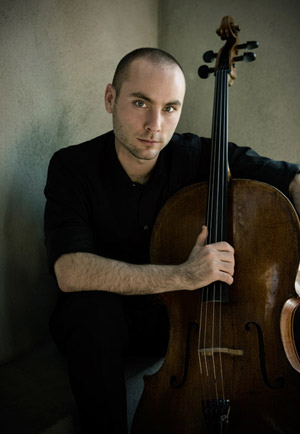
    The Swedish cellist Jakob Koranyi (above in a Lisa-Marie Mazzucco photo) and Israeli pianist Inon Barnatan opened the concert with Mendelssohn’s Lied ohne Worte in D-major, Op. 109. The musicians proved to be an ideal pairing: they both play from the heart. This is a song sung by the cello, with a bittersweet melody, and an interlude that is passionate and then animated, before leading back to theme. The cellist ranges from a ravishingly sustained and tapered high note to – soon after – a plunge to the depths; the music ends with a rising phrase. A packed house called the two gentlemen back for a bow. The evening was off to a wonderful start.

    Robert Schumann’s Märchenerzählungen (‘Fairy Tales‘) for Clarinet, Viola, and Piano, Op. 132, was one of the composer’s last completed works. It was written in 1853, just five months before his attempted suicide and his subsequent confinement in a mental institution, where he died in 1856 at the age of 46. 
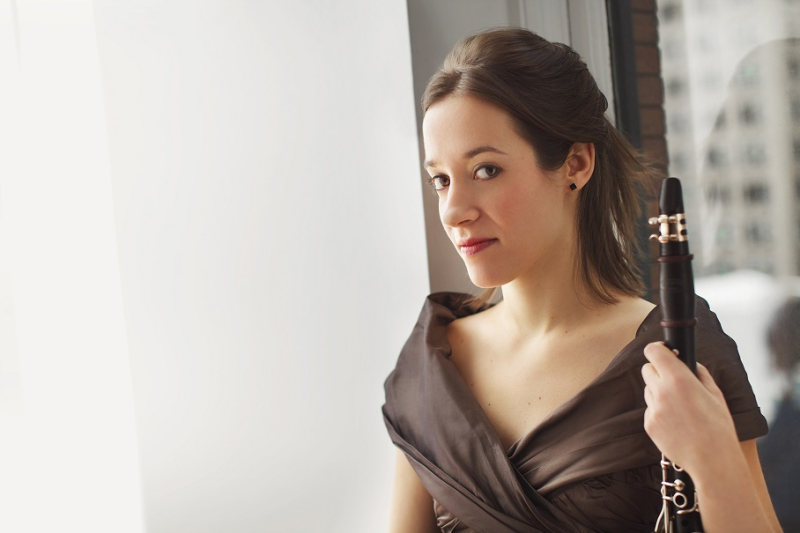
    Romie_Formal_2

    Märchenerzählungen brought forth the excellent Canadian clarinetist Romie DeGuise-Langlois (above); living as we do in a time when a number of superb clarinetists have thriving careers, it’s always a special pleasure for me to hear Romie, with her colorful tone and abundant technique. She was joined by violist Paul Neubauer and Mr. Barnatan for the four miniatures that comprise Märchenerzählungen

    The entwining of the mezzo-soprano-ranged voices of clarinet and viola was intriguing to hear: in the first movement, the music veers from playful to songful with lightness of mood, and Romie’s dynamic range – and her very pretty trill – were beautifully evident.

    An almost march-like pace commences the second movement, with blithely harmonized duetting from the clarinet and viola. An ensuing darkish mood felt a bit tongue-in-cheek: was Schumann toying with us?

    Mssrs. Neubauer and Barnatan open the third movement with sublime softness, joined soon by the clarinet. A wistfully exquisite blend of the three instruments – with immaculate turns of phrase – became achingly beautiful in its freely flowing lyricism. The movement’s sustained ending was very touching.

    In the final movement, clarinet and viola converse, then are heard as a duo. A charming interlude, with lightly etched motifs from Mr. Barnatan at the Steinway, shifts onward to a gallant finish. The only fault I could find with this Schumann work was that it’s too short: I wanted to hear more from Ms. DeGuise-Langlois.

    Paul-neubauer-by-tristan-cook

    Paul Neubauer (above, in a Tristan Cook photo) returned immediately with Mr. Barnatan for a lustrous performance of Johannes Brahms’ Sonata in E-flat major for Viola and Piano, Op. 120, No. 2, composed in 1894. The opening Allegro amabile brings us a sweet and subtle song, followed by a passionate passage from the pianist. Things then settle into a rather pensive state, both players delighting us with their dynamic palette and their feeling for the ebb and flow of the themes. A Romantic atmosphere, with the music soft and lovely, carries us thru a change of mood.

    In the second movement, Appassionato, the urgent passion of the opening statement subsides, but an underlying restlessness lingers. A hymn-like theme for solo piano lets us savour Mr. Barnatan’s artistry; joining in, Mr. Neubauer’s viola carries the melody to the instrument’s depths. In a sudden upswing, the music turns waltzy…and then finds a cool, darkish ending.

    The sonata’s final movement has a simple theme; the music is slow, with an air of Bach about it. A charming dance variation crops up, playful in its quirky swiftness, which is eventually becalmed. The work ends with a multi-faceted coda. Mssrs. Neubauer and Barnatan were rightly hailed for their warm-hearted performance. 

    Following the interval, Mr. Barnatan had the stage to himself for “Juin – Barcarolle” from Tchaikovsky’s Les saisons for Piano, Op. 37b.  This is echt-Tchaikovsky, with Mr. Barnatan relishing each note of the theme, which is thoughtful, and almost somber. Following a brief animation, descending notes bring us back to the melody. The music takes on a sort of shimmer, and then goes deep before rising to a soft, fading finish.

    Cho-Liang Lin

    Above: violinist Cho-Liang Lin, photo by K C Alfred

    The evening ended with a glorious performance of the Mendelssohn Trio No. 2 in C-minor for Piano, Violin, and Cello, Op. 66, in which Mssrs. Koranyi and Barnatan were joined by master violinist Cho-Liang Lin. The two Mendelssohn piano trios were the first chamber works to seize my attention, back at a time when I listened almost exclusively to opera.

    The passion – and the abundant lyric detail – of the music was served to perfection by Mssrs. Lin, Koranyi, and Barnatan. Their performance had a polish and glow that somehow made the music sound even more gorgeous to me than it ever has. It would be hard to imagine anything more moving – and thrilling – to me on a personal level than experiencing this music (which essentially opened up a new world for me when I heard it by chance on the radio…oh!, so many years ago) played with such lustre and vitality as it was tonight. A sublime, poignant experience; all my emotions were in play.

    It meant so much to me to be hearing this performance, as offered by the Chamber Music Society where – in the past few years, thanks to their generous welcome – I have had the opportunity to explore the vast chamber music repertoire, played by the great artists of our time. I became quite emotional as the trio of musicians produced one glorious passage after another tonight. And, in fact, the entire audience seemed to have fallen under a spell of enchantment. 

    The bows were not even off the strings when the applause commenced, the audience expressing their fervent delight with the performance – and their admiration for the musicians – in a spontaneous, full-house standing ovation. The players took a second bow as shouts of ‘bravo!‘ rang thru the hall. 

     ~ Oberon

  • Weilerstein|Barnatan @ Zankel Hall

    Barnatan and Weilerstein Photo by Paul Stewart

    Above: Inon Barnatan and Alisa Weilerstein, photo by Paul Stewart

    ~ Author: Scoresby

    Tuesday October 17th,  2017 – In Carnegie’s Zankel Hall, cellist Alisa Weilerstein and pianist Inon Barnatan gave a probing recital exploring a variety of repertoire. I noticed on my way into the building that the performance sold out, the crowd was buzzing with energy before the performance. While I have heard both of these instrumentals as soloists with orchestras before, I had never heard either in recital. Recently the duo has been touring and recording together, so it was easy to see their fluency with each other’s playing.

    The performance began with Mendelssohn Cello Sonata No. 2 in D Major, Op. 58. Immediately striking about the jubilant opening was the amount of restraint that both artists have. Instead, they focused on creating color, mood, and structure rather than the usual busty opening. Particularly satisfying was the clear, crisp phrasing during the recapitulation. Clearly both musicians have technical mastery of their instruments. The second movement begins with an impish scherzo that mixes cello pizzicato with staccato notes on the piano. Here, they both managed to capture the darker coloring well, particularly with Ms. Weilerstein’s dry sound. The music then has a contrasting romantic second theme. 

    Rolling choral-like arpeggios at the start of the third movement were the highlight of this piece. Mr. Barnatan took his time savoring each of these chords, capturing the happiness tinged with nostalgia. It is a pleasure to hear a duo where the instrumentalists have equal command of their instruments. In the fast-paced final movement the interplay between the two musicians was fun to hear, one picking up a scale the other had just finished zipping back and forth. They gave a fast, structured account through the chords.

    Rostropovich_Britten

    Above, from the archives: Rostropovich and Britten

    One of the reasons I was interested in this particular performance was to hear Britten Cello Sonata in C Major, Op. 65. While I know the cello suites, I hadn’t heard this particular piece before. This was the first of a few pieces written for Rostropovich (all within Britten’s later period). It was a pleasure to hear this for the first time, especially with Ms. Weilerstein’s edgier sound. The first movement, “Dialogo: Allegro” is aptly named. It beings almost like an argument between the two instruments, each cutting each other off with jazzy syncopated rhythms. The theme seems both anxious and wistful at the same time. Ms. Weilerstein seemed to emphasize a drier scratchy sound over lyricism, which worked well to contrast Mr. Barnatan’s softer staccato chords. 

    The second movement is a sinewy display of pizzicato for the cello. It is quiet, fast, and virtuosic for both instruments. Both players performed with verve, it was particularly satisfying hearing the quiet bite they both added. The third movement fully flushes out the misty nostalgia of the first movement, bringing the piece to its emotional climax. Ms. Weilerstein captures the dark colours of this movement well, really letting the lower registers shine and letting her sound expand. Her playing is striking because unlike many cellists, she has a pin-point sound that usually feels dry and craggy – it was fabulous hearing her let the cello resonate in this movement. The fourth movement contains many delicious cello shrieks and other effects, the players making the mood restless again. The final fifth movement is a relentless trudge to the end and had the audience give an enthusiastic ovation. I must say that after hearing this very convincing performance, the piece has become one of my favorites for cello and piano.

    S Mackey - Copy

    Above: composer Steven Mackey

    Steven Mackey’s compositions are always a pleasure to hear, he has a creative way of using instruments that makes listening to his works live particularly enjoyable. There are always effects that recordings can’t quite capture, and it is fun to be able to see how they are produced. Through Your Fingers, which had its world premiere with this performance and was co-commissioned by Carnegie Hall, is a one-movement piece that is divided into four distinct sections. I wonder if Mr. Mackey was aware that this piece would be paired with the Britten because stylistically they worked quite well with one before the intermission and one directly after. Mr. Mackey’s piece seems to wander between a few different moods/themes – none of them reach their conclusion, instead continuously switching and developing.

    The first section is slow and lyrical, while the second becomes more agitated with interesting shifting rhythms. I couldn’t help but picture a primordial environment when listening, particularly with the high harmonic theme with the cello. Some of Mr. Mackey’s scales in the piano part reminded me of Ginastera. I can’t imagine a more committed performance of this piece, Mr. Barnatan letting the piano oscillate between a more percussive bass and sweet melodic scales with Ms. Weilerstein embracing all of the extended cello techniques. Both led the piece into its passionate climax, capturing both the wild side of the music while still feeling grounded and precise. 

    While I wouldn’t remove any of the pieces on the program, the second half felt very long coming in at over an hour. The final piece on the program was the classic Rachmaninoff Cello Sonata in G Minor, Op. 19. It was finely played, Mr. Barnatan having a colorful palette and Ms. Weilerstein with her clarity and transparent sound. Mr. Barnatan played the piano part with a Chopin-esque lyricism, never letting the many large chords becoming overwrought. As an encore, they offered the third movement of the Chopin Cello Sonata. Both artists seemed more relaxed after the large program, letting the music flow and letting themselves get swept up a little. The crowd seemed deservedly enthusiastic at the close. 

    ~ Scoresby

  • Barnatan|Honeck @ The NY Philharmonic

    Barnatan_16-500x500

    Thursday February 16th, 2017 –  Beethoven’s 1st piano concerto, with soloist Inon Barnatan (above), and Mahler’s 1st symphony were paired in tonight’s New York Philharmonic performance under the baton of Manfred Honeck.

    Beethoven’s 1st piano concerto was used by choreographer Helgi Tomasson in 2000 for his gorgeous ballet PRISM, originally danced by Maria (‘Legs’) Kowroski and Charles Askegard at New York City Ballet: that’s how I fell in love with this particular concerto. Throughout the third movement tonight, I was recalling Benjamin Millepied’s virtuoso performance of Tomasson’s demanding choreography.

    Israeli pianist Inon Barnatan, currently the first Artist-in-Association of the New York Philharmonic, has thrilled me in the past with his playing both with the Philharmonic and in frequent appearances with Chamber Music Society of Lincoln Center. And I don’t use the word ‘thrilled’ lightly. 

    Mr. Barnatan’s playing of the Beethoven this evening was remarkable as much for its subtlety as for its brio. Maintaining a sense of elegance even in the most whirlwind passages, the pianist had ideal support from Maestro Honeck and the artists of the Philharmonic. The cascading fiorature which sound soon after the soloist’s entrance were crystal-clear; with Mr. Barnatan relishing some delicious nuances of phrase along the way, we reached the elaborate cadenza where the pianist demonstrated peerless dexterity, suffusing his technique with a sense of magic.

    From the pianissimo opening of the Largo, Mr. Barnatan’s control and expressiveness created a lovely sense of reverie. He found an ideal colleague in Pascual Martinez Forteza, whose serenely singing clarinet sustained the atmosphere ideally. Maestro Honeck and the orchestra framed the soloist with playing of refined tenderness; the Largo left us with a warm after-glow.  

    The concluding Rondo: Allegro is one of the most purely enjoyable finales in all the piano concerto literature. Good humor abounds, the music is expansive, and a jaunty – almost jazzy – minor key foray adds a dash of the unexpected. Mr. Barnatan was at full-sail here, carrying the audience along on an exuberant ride and winning himself a tumult of applause and cheers. He favored us with a brisk and immaculately-played Beethoven encore, and had to bow yet again before the audience would let him go. 

    Inon Barnatan has, in the past two or three years, become a ‘red-letter’ artist for me – meaning that his appearances here in New York City will always be key dates in my concert-planning. His Gaspard de la Nuit at CMS last season was a true revelation, and tonight’s Beethoven served to re-affirm him as a major force among today’s music-makers. 

    Manfred-honeck-header

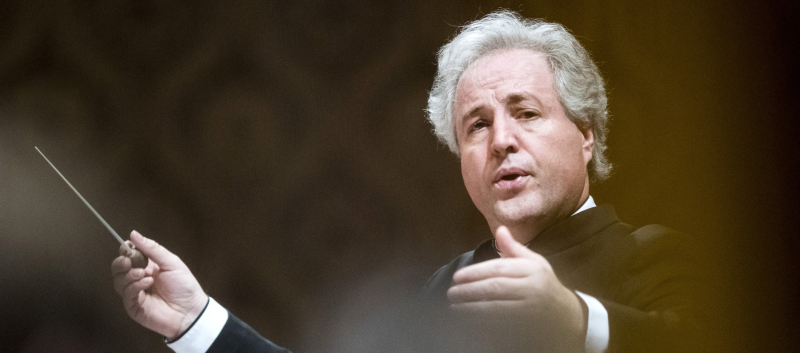
    Maestro Honeck (above) returned to the podium following the interval for the Mahler 1st. In the course of the symphony’s 50-minute span, the Maestro showed himself to be a marvelous Mahler conductor. The huge orchestra played splendidly for him, and the evening ended with yet another resounding ovation.

    From the ultra-soft opening moments of the first symphony, which Mahler described as sounds of nature, not music!”, this evening’s performance drew us in. The offstage trumpet calls seem to issue from a fairy-tale castle deep in a mysterious forest. The Philharmonic’s wind soloists – Robert Langevin, Philip Myers, and Liang Wang among them – seized upon prominent moments: Mr. Wang in fact was a key element in our pure enjoyment of the entire symphony. The pace picks up, and a melody from the composer’s Wayfarer songs shines forth; the music gets quite grand, the horns opulent, the trumpets ringing out, and so on to a triumphant climax.

    The symphony’s second movement, a folkish dance, also finds the horns and trumpets adding to the exuberance. After a false ending, a brief horn transition sends us into a waltzy phase, with winds and strings lilting us along. Then the movement’s initial dance theme returns, accelerates, and rushes to a joyful finish.

    The solemn timpani signals the ‘funeral music’ of the third movement; a doleful round on the tune of “Frère Jacques” ensues, but perhaps this is tongue-in-cheek Mahler. Mr. Wang’s oboe again lures the ear, and a Wayfarer song is heard before a return to the movement’s gloomy opening atmosphere. The unusual intrusion of a brief gypsy-dance motif melts away, and the funeral cortege slowly vanishes into the mist.

    Maestro Honeck took only the briefest of pauses before signaling the dramatic start of the finale. A march, a lyrical theme, a romance that grows passionate: Mahler sends everything our way. After several shifts of mood, it begins to feel like the composer is not quite sure how he wants his symphony to end. Various motifs are heard again, and at last Mahler finds his finish with a celebratory hymn, the horn players rising to blaze forth resoundingly.

  • Clarinet Trios @ Chamber Music Society

    Clarinettrios

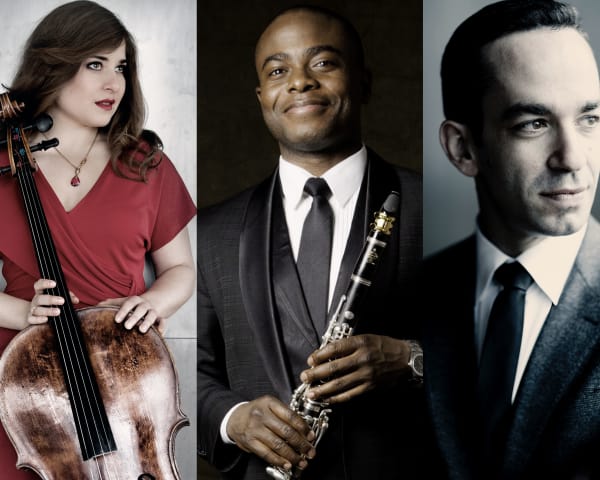
    Tuesday January 24th, 2017 – Cellist Alisa Weilerstein, clarinetist Anthony McGill, and pianist Inon Barnatan sharing the Alice Tully Hall stage in a program of piano trios presented by Chamber Music Society of Lincoln Center. Beloved works by Beethoven and Brahms book-ended the New York premiere of Short Stories for Clarinet, Cello, and Piano by Joseph Hallman. The presence of three such superb artists on the program signaled this as a red-letter event in the current season; I’d been looking forward to this evening for months, and it truly surpassed expectations.

    The three artists took the stage, Ms. Weilerstein in a beautiful deep violet gown, and launched the Beethoven Trio for Clarinet, Cello, and Piano, opus 11; it quickly became evident that we were in for a night of exceptional music-making. In this particular work, exuberance and delicacy alternate in perfect measure, and the three players relished both the propulsive passages and – most enticingly – those moments when nuance is all.

    One of Beethoven’s early masterpieces, this clarinet trio shows the influence of Haydn and Mozart; but once can clearly sense that Beethoven is already finding his own voice. The writing for the three instruments is often conversational, and how lovingly our three musicians this evening spoke to one another.

    The opening Allegro con brio is alive with rhythmic delights, including a touch of syncopated witticism. Mr. Barnatan’s scintillating agility was a constant attraction, and it was a great pleasure to watch the  communication between the three players.

    Ms. Weilerstein opened the Adagio with a cello theme; her heartfelt playing took this simple, straight-forward melody to the heights. She and Mr. McGill duetted tenderly, both playing with great subtlety. The music becomes achingly gorgeous.

    Good humor abounds in the Theme and variations setting of the finale: drawing on an aria wildly popular at the time, “Pria ch’io l’impegno” (“Before I begin, I must eat”) from Joseph Weigl’s opera L’AMOR MARINARO, Beethoven sets up bravura hurdles for the three musicians, all of them joyously over-leapt by our intrepid trio. Mr. Barnatan revels in the cascading piano passages, peaking in a perfect cadenza which ends with king-sized trills. Meanwhile Ms. Weilerstein and Mr. McGill seem to finish each other’s sentences, indulging in an amiable game of “Anything you can play, I can play finer!” Again, the sense of camaraderie, and of the players’ anticipation of the sheer pleasure of playing the next phrase, kept the audience visually engaged.

    Short Stories, the new Hallman work, is a five-movement trio; it might also be called Scenes from a Relationship. One doesn’t, however, need any narrative reference to enjoy this purely as a musical experience, for Mr. Hallman is an excellent craftsman, and a colorist as well. The composer was sitting just a seat away from us; I can only imagine how delighted he must have been to hear his music being played by three such paragons…a veritable dream come true.

    The opening movement, the Break-up, gets off to a stuttering start. The cello shivers before going deep and mournful, whilst the clarinet comments on her predicament. Then they switch roles, like a therapist taking over the couch from his patient. They play in unison, and things turn temporarily witty. But the music ends in the depths.

    familial memories at a funeral opens with Mr. McGill’s clarinet in a whispering, misterioso mood. After briefly perking up, a pensive quality develops with a repeated two-note motif for the piano. The clarinetist’s astounding breath-control and his sustained beauty of tone throughout the dynamic range keep the audience mesmerized.

    back-and-white noir: hardboiled with a heart of gold is the whimsical title of the third story. It begins agitato, developing an off-kilter rhythm. Mr. Barnatan sweeps up to the high register, while the clarinet and cello play a droopy duo. Ms. Weilerstein then descends to her velvety deep range. The music ebbs and flows, both rhythmically and tonally, as the composer explores the coloristic possibilities of the three instruments.

    regret is for the weak is a title that hits home. Mr. Hallman here sets up an eerie, hesitant start. The clarinet percolates briefly, then settles into a very quiet mood whilst the cellist plucks; later, the cello trembles while the piano sounds softly. We seem to be in a moody memory, with Mr. Barnatan drawing forth fleeting surges of melody. Ms. Weilerstein and Mr. McGill sing sadly before the pianist dips down to a punctuating low note.

    In the path of the curve, Mr. Barnatan sometimes reaches inside the piano to manipulate the sound. The music here is very quiet, until the clarinet starts warbling. Fluttering and swirling motifs sneak in, then the music seems to run down and the cello again deepens. The piece ends in a sustained quietude.  

    The only slight reservation I had about Short Stories was that the final movement is perhaps a bit too drawn out; my companion felt the same way. It was unfortunate that, during the work’s quiet closing moments, a cellphone went off directly behind us. At the same time, someone in the from row had a violent coughing fit. Such unfortunate timing. Yet despite these distractions, the Short Stories each cast their own spell, and they were spectacularly played.

    Following the interval, the Brahms trio (opus 114) found the three artists on the heavenly heights of tonal and technical perfection, their playing so generous and emotive. From Ms. Weilerstein’s sublime playing of the yearning opening theme, thru the plaintive entry of Mr. McGill’s clarinet and the ever-expressive beauty Mr. Barnatan drew from keyboard, the music took on an impassioned glow. In my scrawled notes, the word “gorgeous’ appears over a dozen times.

    Mr. McGill’s spellbinding playing of the sweetly serene theme that opens the Adagio was a magical passage, taken up by the soulful spirituality of Ms. Weilerstein’s cello. The luminous qualities of clarinet and cello are set in high relief by the profound tranquillity evoked by Mr. Barnatan. A long-lined clarinet solo leaves one grasping for adjectives to describe the McGill sound, and his ardent tapering of line. One wanted this meditation by the three players to linger on and on.

    A questioning clarinet passage and more marvelous phrasing from Mr. Barnatan set up the waltz-like grace of the Andantino.  After a brief diversion, we dance on towards the movement’s end; unexpectedly, Brahms tucks in a calming coda to make a lovely finish.

    Restraint is cast aside as the trio dig into the concluding Allegro. A tinge of gypsy colour weaves thru this music. Ms. Weilerstein takes up a melody which she passes to Mr. McGill; then they harmonize. Things speed up. “More cello passion!” was my last dashed-off remark; the Brahms sailed on to its joyous conclusion, and the three stellar artists were greeted with immediate shouts of approval. They took a double curtain call, delighting the crowd.

    A thought that recurred to me frequently during the evening was: if Mozart had met McGill, Amadeus would have written DIE ZAUBERKLARINETTE.

    • Beethoven Trio in B-flat major for Clarinet, Cello, and Piano, Op. 11 (1797)
    • Hallman Short Stories for Clarinet, Cello, and Piano (CMS Co-Commission) (New York premiere) (2016)
    • Brahms Trio in A minor for Clarinet, Cello, and Piano, Op. 114 (1891)

  • Britten & Mozart @ The NY Phil

    Inon barnatan

    Above: pianist Inon Barnatan

    Friday October 30th, 2015 matinee – Still recovering from the flu that forced me to miss some scheduled events, I went to The Philharmonic this afternoon knowing I might not make it thru the entire program. But I was very keen to hear Britten’s Sinfonia da Requiema work that is rarely doneand to hear pianist Inon Barnatan – the Philharmonic’s artist-in-association this season – playing Mozart’s Piano Concerto No. 23. At intermission I would decide about staying on for the Beethoven 5th.

    Last season conductor Jaap van Zweden impressed in a pair of NY Philharmonic concerts that included a magnificent Shostakovich 8th. This afternoon’s performance resoundingly re-affirmed all the positive elements in the conductor’s realm of thought and expression. He is business-like and devoid of theatricality, favoring instead a deeply probing approach to the music. Yet this is not detached, by-the-book music-making, for his interpretations seem flooded with emotion.

    The Britten Sinfonia da Requiem was written in 1940 while the composer and his partner Peter Pears were living in Brooklyn. Having left England as a conscientious objector, Britten accepted a commission (from the Japanese, ironically) and set about creating a work – drawing on Latin texts from the Mass for the Dead – that would commemorate the deaths of his parents and also serve as a pacifist’s response to the horrors of war.

    The Sinfonia is a magnificent piece, and I wish it would be performed more often so that music-lovers could become better acquainted with it. The work calls for a huge orchestra, including massed phalanxes of violins, violas, cellos, and double basses as well as a large brass contingent and doubled winds, with alto sax, bass clarinet, two harps, and piano adding unexpected hues to the sonic palette. 

    For the opening Lacrymosa, an initial boom! gives way to brooding; the violas lament and there is an unsettling heartbeat motif. Rampant horns herald a series of ominous chords and doom-ladened drumstrokes. In the Dies Irae which follows, the flutes and horns stutter; the strings take up a brisk, galloping figuration. The heraldic trumpets and the magnificent horns ring forth, and the saxophone brings in an unusual colour. The music becomes almost zany before dwindling to nothing as the work evolves into the final Requiem Aeternum. Harp and winds intone a gentle hymn, taken up by the pensive horns. Bassoon and bass clarinet lead us to an uplifting violin theme, tinged with sadness. The music builds to a huge hymn-like passage and then suddenly reverts to softness: plucked strings over sustained clarinet tones that simply fade into thin air. 

    The performance was utterly mesmerizing: absolutely gorgeous playing from everyone and all crafted into a splendid whole by Maestro van Zweden. For a passing moment I wondered how it might have been had Britten used a chorus in his Sinfonia, but then I realized he was right in keeping the words unspoken and letting the instruments sing.

    The Hall’s wonderfully efficient stagehands then reconfigured the seating and rolled the Steinway into place. Watching and waiting, I felt the contentment of being connected to great music played by great musicians: a feeling that deepened in the ensuing Mozart. 

    For Mr. Barnatan is nothing less than a wizard of the keyboard, and in this performance of the Piano Concerto No. 23, allied with Maestro van Zweden and cushioned by the genial Philharmonic strings and winds, was indeed magical. The pianist’s control over a vast dynamic range and the sheer fluency of his technique made an excellent impression from the moment he began to play. Mr. Barnatan chose to play the cadenza as Mozart set it in the score; it’s rather brief – as cadenzas go – but very appealing.

    The pianist now drew us deeper and deeper into the music with the poetic delicacy of his playing of the Adagio. His solo passages were luminous, and there was lovely support from the wind soloists. A spellbinding sense of dolorous quietude was summoned forth, and a passage of very simple piano statements over plucked strings was most effective.

    Then Inon launched a barrage of coloratura to introduce the Allegro assai. Here his playing became ever more magical as he wove a spell of soft enchantment: the finesse of swirl after swirl of delicate notes played at high speed. Called back twice to warm applause, the pianist had clearly cast a spell over the Hall, and I cannot wait to hear him again…could we have the Schumann perhaps?? 

    By now there was no question of leaving – sore throat be damned! and I hadn’t coughed once – and so I was treated to a Beethoven 5th far more beneficial than any medicine. 

    The Beethoven symphonies don’t always send me, but the 5th truly did today, for Maestro van Zweden and the Philharmonic artists simply soared thru it, with a real sense of the music blooming. I gave up taking notes;  aside from the scrawl “…deep resonance of sound!!…” my program page is simply covered with names and exclamation point: “Liang Wang!”…”Langevin!”…”LeClair!”…”McGill”…”the trumpets!”…”Carter Brey!”…and “Philip Myers!!!” 

    As the plush and regal themes of the third movement sailed forth, I felt yet again the thrill of being connected to music on such an elemental and immediate level. A quote from Robert Schumann in the Playbill so well captured what I experienced today listening to the Beethoven (well, to the entire program, really!) today: “This symphony invariably wields its power over people of every age like those great phenomena of nature that fill us with fear and admiration at all times, no matter how frequently we may experience them.”  

    Jaap-van-Zweden-c-Marco-Borggreve-XL

    Above: Jaap van Zweden in a Marco Borrgreve portrait

    A final word about Jaap van Zweden: in the three concerts he’s conducted here that I have experienced, he has shown a mastery of a variety of musical styles and a real affinity for making the familiar seem fresh. After the Beethoven 5th today, the audience gave him an especially appreciative ovation, laced with bravos. Coming out for a second curtain call, the Maestro signaled for the players to stand, but they all shook their heads and left him with a solo bow…and then they joined in the applause, tapping their bows and stamping their feet. It was a lovely moment. In their search for a new Music Director, The Philharmonic may have found their man.   

  • Britten & Mozart @ The NY Phil

    Inon barnatan

    Above: pianist Inon Barnatan

    Friday October 30th, 2015 matinee – Still recovering from the flu that forced me to miss some scheduled events, I went to The Philharmonic this afternoon knowing I might not make it thru the entire program. But I was very keen to hear Britten’s Sinfonia da Requiema work that is rarely doneand to hear pianist Inon Barnatan – the Philharmonic’s artist-in-association this season – playing Mozart’s Piano Concerto No. 23. At intermission I would decide about staying on for the Beethoven 5th.

    Last season conductor Jaap van Zweden impressed in a pair of NY Philharmonic concerts that included a magnificent Shostakovich 8th. This afternoon’s performance resoundingly re-affirmed all the positive elements in the conductor’s realm of thought and expression. He is business-like and devoid of theatricality, favoring instead a deeply probing approach to the music. Yet this is not detached, by-the-book music-making, for his interpretations seem flooded with emotion.

    The Britten Sinfonia da Requiem was written in 1940 while the composer and his partner Peter Pears were living in Brooklyn. Having left England as a conscientious objector, Britten accepted a commission (from the Japanese, ironically) and set about creating a work – drawing on Latin texts from the Mass for the Dead – that would commemorate the deaths of his parents and also serve as a pacifist’s response to the horrors of war.

    The Sinfonia is a magnificent piece, and I wish it would be performed more often so that music-lovers could become better acquainted with it. The work calls for a huge orchestra, including massed phalanxes of violins, violas, cellos, and double basses as well as a large brass contingent and doubled winds, with alto sax, bass clarinet, two harps, and piano adding unexpected hues to the sonic palette. 

    For the opening Lacrymosa, an initial boom! gives way to brooding; the violas lament and there is an unsettling heartbeat motif. Rampant horns herald a series of ominous chords and doom-ladened drumstrokes. In the Dies Irae which follows, the flutes and horns stutter; the strings take up a brisk, galloping figuration. The heraldic trumpets and the magnificent horns ring forth, and the saxophone brings in an unusual colour. The music becomes almost zany before dwindling to nothing as the work evolves into the final Requiem Aeternum. Harp and winds intone a gentle hymn, taken up by the pensive horns. Bassoon and bass clarinet lead us to an uplifting violin theme, tinged with sadness. The music builds to a huge hymn-like passage and then suddenly reverts to softness: plucked strings over sustained clarinet tones that simply fade into thin air. 

    The performance was utterly mesmerizing: absolutely gorgeous playing from everyone and all crafted into a splendid whole by Maestro van Zweden. For a passing moment I wondered how it might have been had Britten used a chorus in his Sinfonia, but then I realized he was right in keeping the words unspoken and letting the instruments sing.

    The Hall’s wonderfully efficient stagehands then reconfigured the seating and rolled the Steinway into place. Watching and waiting, I felt the contentment of being connected to great music played by great musicians: a feeling that deepened in the ensuing Mozart. 

    For Mr. Barnatan is nothing less than a wizard of the keyboard, and in this performance of the Piano Concerto No. 23, allied with Maestro van Zweden and cushioned by the genial Philharmonic strings and winds, was indeed magical. The pianist’s control over a vast dynamic range and the sheer fluency of his technique made an excellent impression from the moment he began to play. Mr. Barnatan chose to play the cadenza as Mozart set it in the score; it’s rather brief – as cadenzas go – but very appealing.

    The pianist now drew us deeper and deeper into the music with the poetic delicacy of his playing of the Adagio. His solo passages were luminous, and there was lovely support from the wind soloists. A spellbinding sense of dolorous quietude was summoned forth, and a passage of very simple piano statements over plucked strings was most effective.

    Then Inon launched a barrage of coloratura to introduce the Allegro assai. Here his playing became ever more magical as he wove a spell of soft enchantment: the finesse of swirl after swirl of delicate notes played at high speed. Called back twice to warm applause, the pianist had clearly cast a spell over the Hall, and I cannot wait to hear him again…could we have the Schumann perhaps?? 

    By now there was no question of leaving – sore throat be damned! and I hadn’t coughed once – and so I was treated to a Beethoven 5th far more beneficial than any medicine. 

    The Beethoven symphonies don’t always send me, but the 5th truly did today, for Maestro van Zweden and the Philharmonic artists simply soared thru it, with a real sense of the music blooming. I gave up taking notes;  aside from the scrawl “…deep resonance of sound!!…” my program page is simply covered with names and exclamation point: “Liang Wang!”…”Langevin!”…”LeClair!”…”McGill”…”the trumpets!”…”Carter Brey!”…and “Philip Myers!!!” 

    As the plush and regal themes of the third movement sailed forth, I felt yet again the thrill of being connected to music on such an elemental and immediate level. A quote from Robert Schumann in the Playbill so well captured what I experienced today listening to the Beethoven (well, to the entire program, really!) today: “This symphony invariably wields its power over people of every age like those great phenomena of nature that fill us with fear and admiration at all times, no matter how frequently we may experience them.”  

    Jaap-van-Zweden-c-Marco-Borggreve-XL

    Above: Jaap van Zweden in a Marco Borrgreve portrait

    A final word about Jaap van Zweden: in the three concerts he’s conducted here that I have experienced, he has shown a mastery of a variety of musical styles and a real affinity for making the familiar seem fresh. After the Beethoven 5th today, the audience gave him an especially appreciative ovation, laced with bravos. Coming out for a second curtain call, the Maestro signaled for the players to stand, but they all shook their heads and left him with a solo bow…and then they joined in the applause, tapping their bows and stamping their feet. It was a lovely moment. In their search for a new Music Director, The Philharmonic may have found their man.