Tag: James Ehnes

  • James Ehnes ~ The London Philharmonic

    Thumbnail_16373_1

    Above: violinist James Ehnes and conductor Edward Gardner, photo from Twitter @ IntermusicaLtd

    ~ Author: Ben Weaver

    Monday April 15th, 2018 – The London Philharmonic’s second New York City concert, a part of Lincoln Center’s Great Performers series, featured some old favorites on the program. Opening with Beethoven’s great and brooding Egmont Overture (why the complete incidental music is so rarely performed is a mystery to me; the work is full of great music!) Today we have gotten quite used to Beethoven performances by reduced ensembles, even when performed by major orchestras the number of players is typically reduced to be closer to an orchestra size Beethoven would have recognized. Not so with this performance of Egmont. Maestro Edward Gardner chose the full London Philharmonic ensemble – and why not, since they all crossed an ocean? The result was a big-boned, massive sound and Gardner’s driven, dramatic reading made for on thrilling start to the concert.

    Violinist James Ehnes then joined the orchestra for Sibelius’ magnificent and never tired Violin Concerto. There is no real introduction to the work: out of the shimmering violins rises the soloist. Ehnes’ beautiful tone, perfect pitch, and deeply-felt playing kept the audience in thrall. Ehnes doesn’t make a huge sound, but the musicality and dedication he brings to every note are second to none among his generation of violinists. Here Edward Gardner was a superb accompanist: he kept the orchestra in the background, letting his soloist shine. The audience’s reaction was predictably ecstatic, allowing Ehnes to play two contrasting encores: Ysaë’s blazing Sonata No. 3 and Bach’s wistful, gentle Largo from Violin Sonata No. 3.

    Mahler’s Symphony No. 1 received a thrilling performance after the intermission. In the first movement, the slow build from hushed strings that open the work to the “full blast of Mahler” was nicely shaped and paced by Gardner. The sudden return of the opening drone had a sinister glow to it, but horns chased away the clouds and the lovely second theme, a pastorale, returned. The rustic swing of the second movement was taken quite fast, though Gardner knew to slow down for the waltz, played lovingly by the orchestra.

    Here some mannerisms from Gardner began to make themselves obvious. Draggy slow parts and extra fast faster sections became the signature of the rest of the performance. Gardner softened the edges of the third movement with its halting funeral march and the child-like melody mocking it. The final movement reinforced Maestro Gardner’s extreme tempos and I don’t think his choices worked. The slow sections began to drag and the Symphony began to lose shape. The hyper-emphasized big moments (already big in Mahler) at the expense of everything else felt contrived. But the London Philharmonic was superb (special praise for the outstanding brass section in the Mahler). It is a great ensemble, I’d go so far as to say LPO is a better orchestra, with its warmer and more versatile sound, than their big cousin, the London Symphony. 

    One curiosity about the concert is there were an awful lot of things being dropped by audience members throughout the evening. At least it wasn’t constant cell-phones, I suppose.

    ~ Ben Weaver

  • Ehnes/Denève: All-Prokofiev @ The NY Phil

    James ehnes

    Above: violinist James Ehnes

    ~ Author: Oberon

    Thursday January 25th, 2018 – A composer we love, an orchestra we love, a violinist we love, a conductor we love: my friend Dmitry and I had a great time at The New York Philharmonic tonight.

    For this all-Prokofiev concert, The Love for Three Oranges Suite proved an imaginative opener. I’ve seen this opera only once, in Maurice Sendak’s clever 1985 production for New York City Opera, and enjoyed it immensely. It was wonderful to encounter this music again, especially in Stéphane Denève’s witty and wonder-filled interpretation.

    The suite is in six movements, starting with Ridiculous Fellows which opens big and then gets subtle; the music is filled with a sense of irony, as is the entire opera. The Infernal Scene –  a card-game played by Tchelio and Fata Morgana – sounds ominous and develops a churning feeling. Fanfares herald the famous March, which begins softly and soon struts boldly. The xylophone and muted trumpets add a toy-like sound, and the winds play over pulsing violins; this March is droll, almost tipsy. Limpid fluting from Yoobin Son delights in the Scherzo, and there’s a really lovely viola passage for Cynthia Phelps. The violins and horns play in unison. The suite ends with Flight, an allegro with an agitated air. Maestro Denève was perfectly in his element for this coloristic music, and he gallantly drew Ms. Phelps to her feet for a solo bow, graciously kissing her hand.

    James Ehnes’s playing of the Prokofiev Violin Concerto No. 1 was truly ravishing. This concerto has become very familiar to me over time in Jerome Robbins’s balletic setting, Opus 19/The Dreamer, for New York City Ballet; it’s my favorite of all Robbins ballets.

    The music commences with a soft shivering tingle, and the violinist takes up a plaintive melody. Mr. Ehnes plays with an innate sense of rhythmic surety and delicious subtlety of dynamics. The music is dreamlike (hence the title of the Robbins ballet) with the soloist playing over soft tremolos from the violas. From this shimmering atmosphere, the flute sings while the violinist plays in his highest range. Really luminous.

    The Scherzo was taken at super speed, giving the music a wild quality. Mr. Ehnes’s superbly scrappy attacks propel things forward; the music buzzes and the violin slithers. The last movement commences with Judith LeClair’s bassoon theme, into which the solo violin insinuates itself in a melodic rise. Liang Wang’s oboe enchants, and the music grows ethereal, with an atmosphere of swooning beauty. Prokofiev brings in the high harp, and the violinst plays gliding scales. A series of delicate, jewel-like trills in the stratosphere display Mr. Ehnes’s clarity and control; the concerto ends in an iridescent glow.

    Mr. Ehnes’s sustaining of the intriguingly glistening atmosphere of the final movement held the audience under his spell; a warm ovation ensued, and Maestro Denève seated himself among the players as the violinist offered a heartfelt Bach encore. Called back for yet another bow, Mr. Ehnes was hailed by all the Philharmonic string players tapping their bows in unison: a lovely gesture of musical congeniality.

    Deneve_Stephane_PC_GenevieveCaron_e_300_preview

    Above: Stéphane Denève, in a Genevieve Caron portrait

    Selections from Romeo and Juliet completed the program. Myself, I think Cinderella is the more interesting of Prokofiev’s two full-length ballet scores. But audiences never seem to tire of the familiar tunes of the composer’s setting of the Shakespeare classic, and there was much brilliant playing in this evening’s presentation; it’s music Maestro Maestro Denève clearly savours.

    This cinematic score impresses from the start, where a violent opening gives way to tender delicacy. Prokofiev’s orchestration provides one delight after another; the solo clarinet, saxophone, and harp each summon up unique emotions, while a passage for flute and celeste and another for unison basses and celli are particularly ear-catching. The tender dawn music as the ‘balcony scene’ ends puts a lump in the throat every time. Although I could not glimpse all the solo players, special kudos to Liang Wang, Robert Langevin (flute), and Pascual Martinez Fortenza (clarinet). Artists of this calibre add so much to every New York Philharmonic concert.

    We had greatly enjoyed our first encounter with Stéphane Denève’s conducting in 2015, when he made his Philharmonic debut in a program we still talk about. I hope he will return often in future seasons.

    This evening, the orchestra welcomed the Zarin Mehta Fellows: ten young musicians from the Music Academy of the West who have spent a week in New York City participating in an immersive program covering all aspects of the life of an orchestral player. One can only imagine their excitement at being onstage and playing with the wonderful artists of the Philharmonic.

    ~ Oberon

  • Beethoven & Bruckner @ The NY Phil

    JamesEhnes_Filter630x310

    Above: James Ehnes, violinist, performing with The New York Philharmonic tonight

    Wednesday January 27th, 2016 – The New York Philharmonic playing masterworks by Beethoven and Bruckner under Juanjo Mena’s baton, with James Ehnes the featured soloist. 

    The Philharmonic’s been the talk of the town this week with the announcement of the appointment of Jaap van Zweden as the orchestra’s next music director; read more about the good news here.

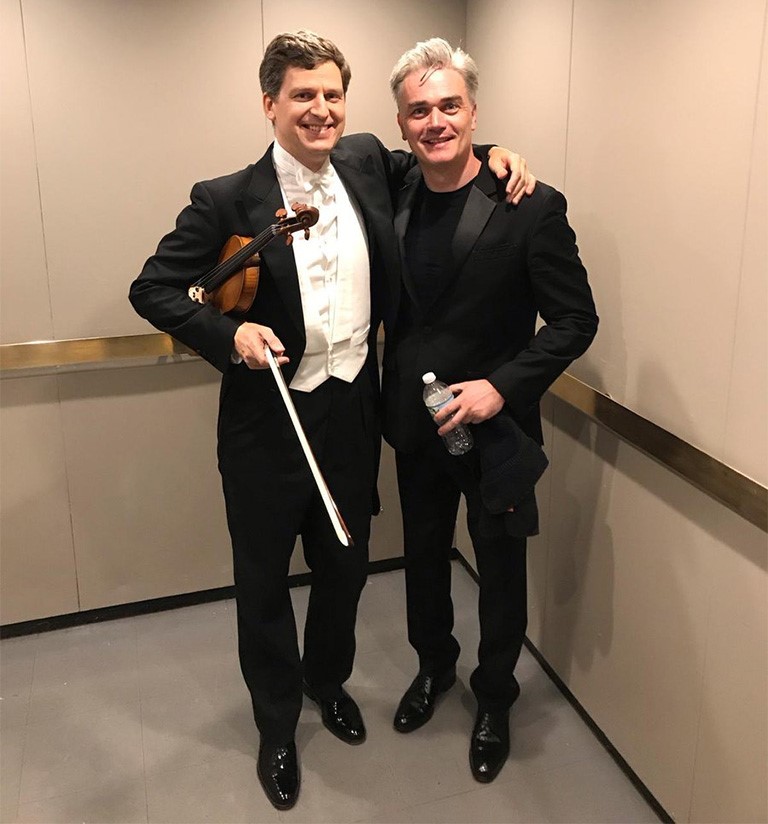
    Tonight, Mr. Ehnes played the Beethoven violin concerto with silken tone and technical aplomb, evoking an atmosphere of hushed attentiveness in the hall and finishing to a prolonged ovation with a triple “curtain call” and with the artists of the Philharmonic joining in the applause. The tall violinist is as congenial to watch as to hear, and he and Maestro Mena formed an elegant musical affinity as the concerto progressed, sharing a warm embrace at the end.

    Beethoven’s violin concerto was written and first performed in 1806 and – after it’s premiere performance by Franz Clement, the 26-year-old principal violinist and conductor at the Theater an der Wien in Vienna – it took years for the concerto to catch on. That first performance must have been something of a nightmare: Beethoven completed the work just two days before the premiere, and the surviving autograph score is a mess of crossings-out, over-writings, and alternative ‘versions’. The soloist, having had no time to learn and rehearse the long and complex work, had to use the score for the premiere; for much of the time he was virtually sight-reading. One reviewer wrote: “Beethoven could put his undoubtedly great talents to better uses”.

    Prior to publishing the work, Beethoven modified and clarified it following the 1806 premiere. The concerto finally began to work its way into the standard repertoire after a highly-praised performance in London in 1844, conducted by Felix Mendelssohn and played by the 12-year-old prodigy Joseph Joachim. It comes down to us as one of the greatest works of the violin concerto genre.

    James Ehnes gave a lovingly detailed performance; a series of high trills in the opening movement were dazzlingly clear, and his dynamic control throughout was simply exquisite. Maestro Mena sculpted the opening passages of the central Larghetto to perfection, the violinist then joining in with playing of sweetly sustained lyricism. The ‘Kreisler’ cadenzas were spun off with serene virtuosity. At every moment – whether playing fast or slow – Mr. Ehnes maintained an enchanting sheen on his tone. Thus the audience’s grateful show of the enthusiasm at the end was eminently deserved.

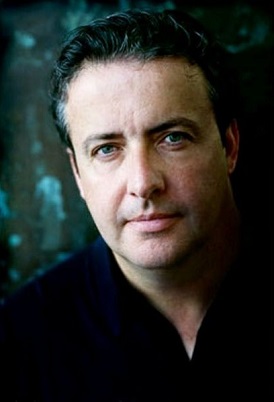
    J Mena

    Following the interval, Maestro Mena (above) and the Philharmonic musicians gave a thoroughly impressive performance of Bruckner’s 6th symphony. It’s always pleasing to have Sheryl Staples in the concertmaster’s chair, and to have Cynthia Phelps and Carter Brey leading their sections with such committed artistry. I often wish that the wind players could be seated on risers so we could better savour their individual performances: passages of wind chorale in the Bruckner were beautifully blended.

    The orchestra were at their finest in the compelling themes of the symphony’s Adagio. Both here and in the opening Majestoso, Maestro Mena was deeply involved in drawing forth the inner voices to give a full range of colour to each gorgeous passage. 

    In the third movement, a Scherzo, it seems to me that Bruckner’s imagination flags ever so slightly. The concluding movement – wonderfully played – felt over-long, almost as if the composer was unsure of how he wanted the piece to end. This ‘finale’ was not publicly performed until 1899, three years after Bruckner’s death; perhaps he would have tailored it more concisely if he’d been able to judge the effect in an actual concert performance. We’ll never know. Yet overall, the sonorous grandeur of the 6th makes a vivid impression.

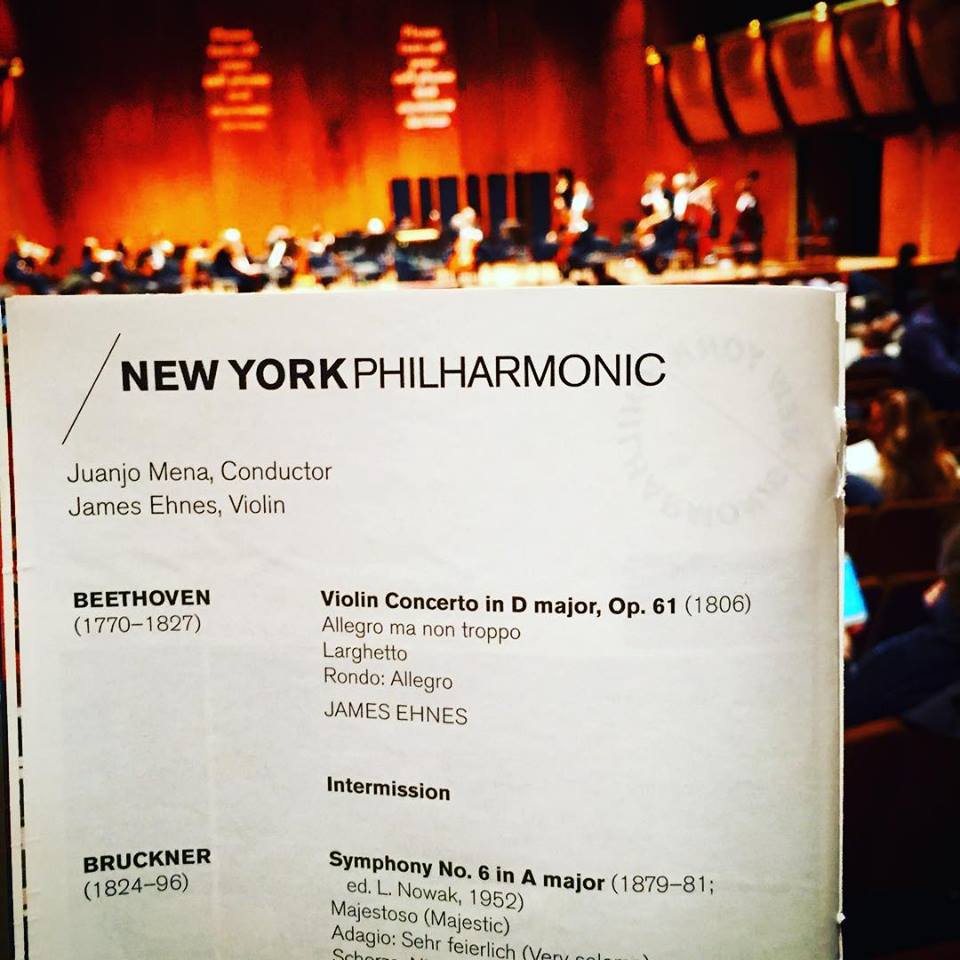
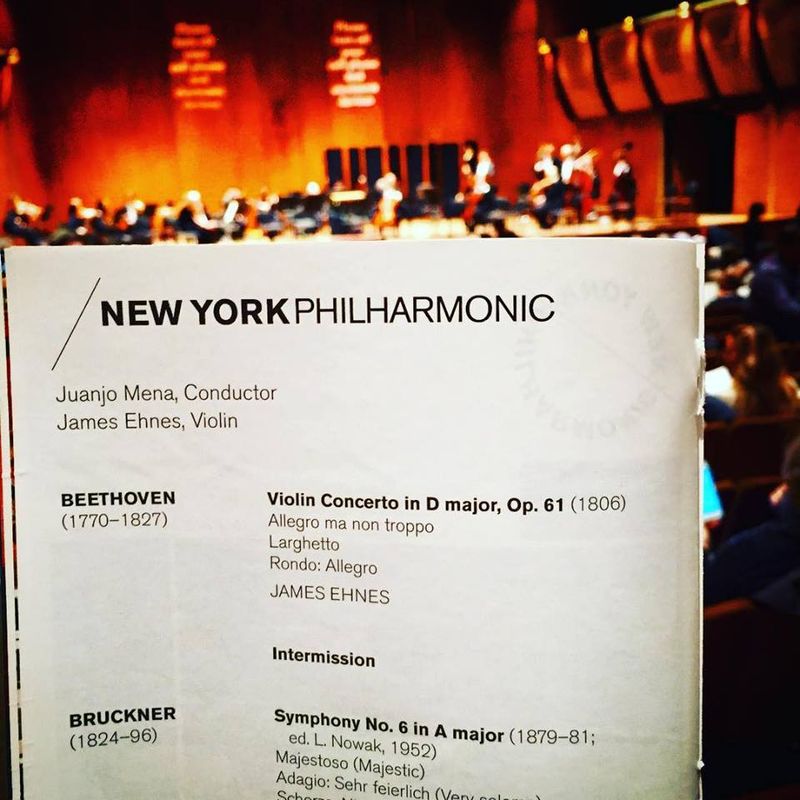
    12573839_10153865541004761_6934836395217370131_n

    Pre-concert photo by my friend Dmitry.

  • Beethoven & Bruckner @ The NY Phil

    JamesEhnes_Filter630x310

    Above: James Ehnes, violinist, performing with The New York Philharmonic tonight

    Wednesday January 27th, 2016 – The New York Philharmonic playing masterworks by Beethoven and Bruckner under Juanjo Mena’s baton, with James Ehnes the featured soloist. 

    The Philharmonic’s been the talk of the town this week with the announcement of the appointment of Jaap van Zweden as the orchestra’s next music director; read more about the good news here.

    Tonight, Mr. Ehnes played the Beethoven violin concerto with silken tone and technical aplomb, evoking an atmosphere of hushed attentiveness in the hall and finishing to a prolonged ovation with a triple “curtain call” and with the artists of the Philharmonic joining in the applause. The tall violinist is as congenial to watch as to hear, and he and Maestro Mena formed an elegant musical affinity as the concerto progressed, sharing a warm embrace at the end.

    Beethoven’s violin concerto was written and first performed in 1806 and – after it’s premiere performance by Franz Clement, the 26-year-old principal violinist and conductor at the Theater an der Wien in Vienna – it took years for the concerto to catch on. That first performance must have been something of a nightmare: Beethoven completed the work just two days before the premiere, and the surviving autograph score is a mess of crossings-out, over-writings, and alternative ‘versions’. The soloist, having had no time to learn and rehearse the long and complex work, had to use the score for the premiere; for much of the time he was virtually sight-reading. One reviewer wrote: “Beethoven could put his undoubtedly great talents to better uses”.

    Prior to publishing the work, Beethoven modified and clarified it following the 1806 premiere. The concerto finally began to work its way into the standard repertoire after a highly-praised performance in London in 1844, conducted by Felix Mendelssohn and played by the 12-year-old prodigy Joseph Joachim. It comes down to us as one of the greatest works of the violin concerto genre.

    James Ehnes gave a lovingly detailed performance; a series of high trills in the opening movement were dazzlingly clear, and his dynamic control throughout was simply exquisite. Maestro Mena sculpted the opening passages of the central Larghetto to perfection, the violinist then joining in with playing of sweetly sustained lyricism. The ‘Kreisler’ cadenzas were spun off with serene virtuosity. At every moment – whether playing fast or slow – Mr. Ehnes maintained an enchanting sheen on his tone. Thus the audience’s grateful show of the enthusiasm at the end was eminently deserved.

    J Mena

    Following the interval, Maestro Mena (above) and the Philharmonic musicians gave a thoroughly impressive performance of Bruckner’s 6th symphony. It’s always pleasing to have Sheryl Staples in the concertmaster’s chair, and to have Cynthia Phelps and Carter Brey leading their sections with such committed artistry. I often wish that the wind players could be seated on risers so we could better savour their individual performances: passages of wind chorale in the Bruckner were beautifully blended.

    The orchestra were at their finest in the compelling themes of the symphony’s Adagio. Both here and in the opening Majestoso, Maestro Mena was deeply involved in drawing forth the inner voices to give a full range of colour to each gorgeous passage. 

    In the third movement, a Scherzo, it seems to me that Bruckner’s imagination flags ever so slightly. The concluding movement – wonderfully played – felt over-long, almost as if the composer was unsure of how he wanted the piece to end. This ‘finale’ was not publicly performed until 1899, three years after Bruckner’s death; perhaps he would have tailored it more concisely if he’d been able to judge the effect in an actual concert performance. We’ll never know. Yet overall, the sonorous grandeur of the 6th makes a vivid impression.

    12573839_10153865541004761_6934836395217370131_n

    Pre-concert photo by my friend Dmitry.