Tag: James Levine

  • Anja Silja Celebrates Her 85th Birthday

    Silja5

    Anja Silja celebrated her 85th birthday on April 18th, 2025. She had made her operatic debut 70 years earlier, as Rosina in BARBIERE DI SIVIGLIA. In 1980, I saw her in a riveting performance of Alban Berg’s WOZZECK at The Met, with Jose van Dam in the title-role and James Levine on the podium. The production was issued on DVD and is very much worth watching…if you can find it.

    Read Bruce Duffie’s 1996 interview with the German diva here.

  • Donner Summons the Mists

    donner

    Dwayne Croft as Donner summons the mists as Wagner’s DAS RHEINGOLD draws to its finish. I vividly recall how thrilling this was in the House as the baritone strode up the inclined stage and deployed his powerful voice into the great cavern of The Met.

    The performance dates from 2010 and is conducted by James Levine.

    Watch and listen here: https://www.youtube.com/watch?v=bBETnbgm6sE

  • Montserrat Caballé Sings Verdi

    Montserrat

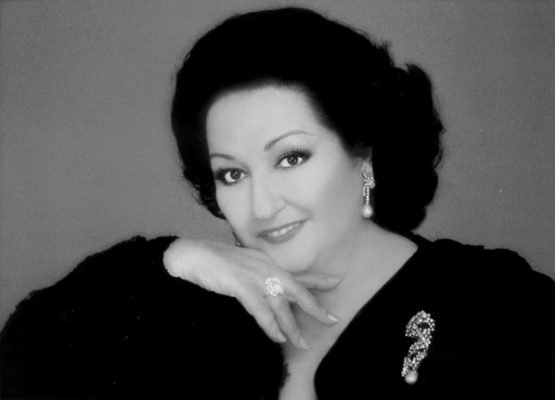
    Montserrat Caballé sings arias from Verdi’s LA FORZA DEL DESTINO and DON CARLO.

    Her “Pace, pace mio dio” is from a 1981 telecast, conducted by James Levine. Watch and listen here.

    The “Non pianger, mia compagna” is from a complete performance of DON CARLO at Orange in 1984. Watch and listen here.

  • Troyanos & Domingo ~ duet from NORMA

    Snapshot pd tt jl 2

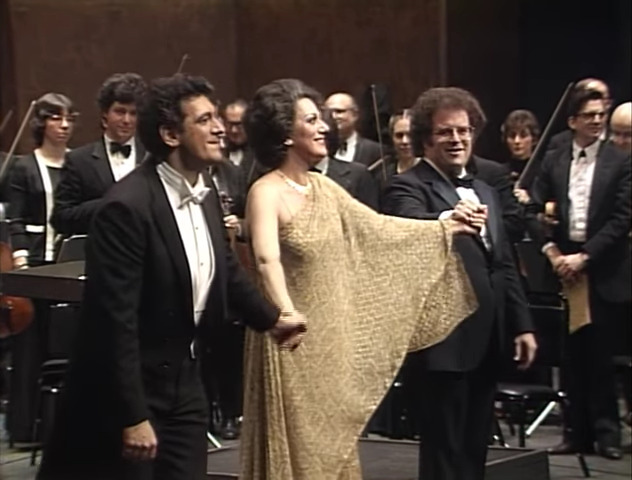
    Tatiana Troyanos and Placido Domingo sing the Pollione/Adalgisa duet from Act I of Bellini’s NORMA at a 1982 gala concert at The Met. James Levine conducts.

    Watch and listen here.

  • Troyanos & Domingo ~ duet from NORMA

    Snapshot pd tt jl 2

    Tatiana Troyanos and Placido Domingo sing the Pollione/Adalgisa duet from Act I of Bellini’s NORMA at a 1982 gala concert at The Met. James Levine conducts.

    Watch and listen here.

  • A Memorable ROSENKAVALIER

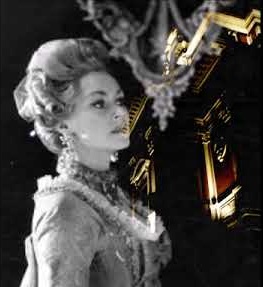
    E_Soderstrom_Grevinnan

    [Reviving this article, which has been updated with some audio clips]

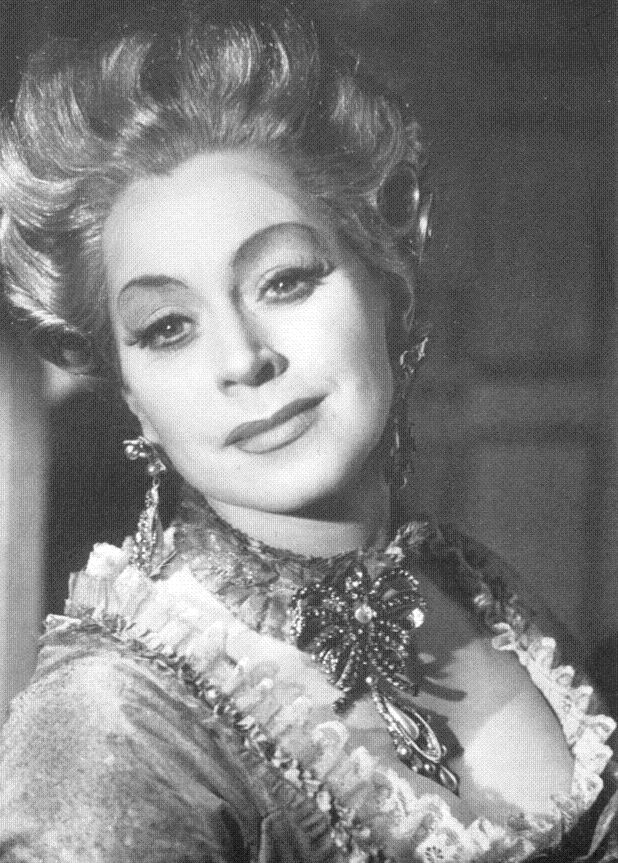
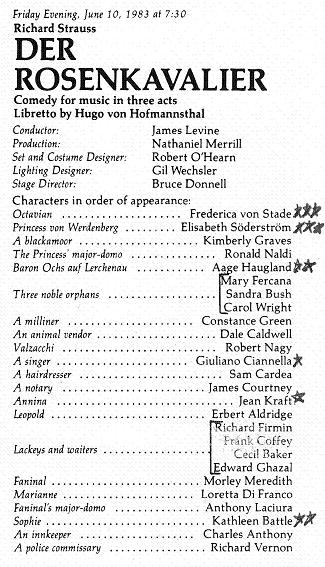
    In 1983, the Metropolitan Opera took DER ROSENKAVALIER on their annual Spring tour. James Levine was the conductor and the stellar cast was led by Elisabeth Söderström (above) as the Marschallin, Frederica von Stade as Octavian, Kathleen Battle as Sophie, and Aage Haugland as Baron Ochs. Interestingly, this particular alignment of stars never performed the Strauss opera at The Met. It was given in six cities on the tour, culminating with this performance…

    IMG
    …in Boston, which I was lucky enough to attend. Unfortunately one of my most vivid memories of the evening was the presence of some people sitting about six rows behind me who talked throughout the performance. Even though I had sprung for an orchestra seat – the better to concentrate on the array of vocal talent onstage – these people served notice that sitting in expensive seats doesn’t make you classy. They were continuously being shushed by people around them (as annoying as their talking, actually) and the usher came to admonish them at one point. Apparently they had some sort of clout that kept them from being ejected; at any rate, they spoiled a great performance. I’m sure they are all dead now, and good riddance.

    Despite this major distraction, the performance was extremely moving and superbly sung. Maestro Levine, whose 1976 ROSENKAVALIER broadcast had seemed sluggish and thick-textured orchestrally, was now fully in his element with the Strauss score. The towering Aage Haugland – a great favorite of mine during his Met career – was a grand Baron Ochs, and Miss Battle was a shimmering-voiced Sophie.

    It was the vocal and theatrical chemistry between Elisabeth Söderström and Frederica von Stade that gave this ROSENKAVALIER its unique appeal. Their older women/younger man romance was brilliantly portrayed, while their distinctive vocal timbres served their respective characters to perfection. By this point in time, the Söderström voice was an expressive rather than opulent instrument, but she truly knew her way around this music and her singing was so meshed with the character’s moods – it was simply all of a piece. In the monolog, she poked fun at herself as “die alte frau, die alte Marschallin“, sung with a crackly old-lady sound. Telling Octavian that he will soon tire of their romance, she seized von Stade by the shoulders, trying to shake some sense into him. The Söderström Marschallin was an unforgettable mixture of dignity, bitterness, and nostalgia: a woman who watches something cherishable slipping thru her fingers and finds the courage to let it go.

    Frederica von Stade, with her immaculately tailored sound, was boyish and impetuous in behavior. and her vocalism was always elegant and wonderfully personal. Other Octavians – Ludwig (my first!), Baltsa, Troyanos – have sung this music in grander style but no other Octavian of my experience has quite captured the coltish confusion of a boy on the brink of manhood who has a loving heart and a tender, noble young spirit…which von Stade showed us so memorably.

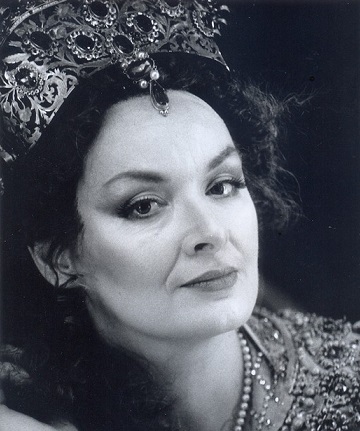
      Battle-Soderstrom

    While the Söderström/Battle/von Stade collaboration was never heard in a complete public performance of ROSENKAVALIER here in New York City, the three women did perform the opera’s Act III trio at the Met’s 100th anniversary gala. The day-long celebration was telecast live; I attended the matinee portion and can attest to the palpable atmosphere in the house as the three women sang this magical Strauss creation. You can listen to them here, with Levine on the podium.

    For years, I assumed this film clip was the only extant souvenir of this unforgettable convergence of voices – though I am sure someone recorded it someplace along the tour’s path – but recently my friend Ben Weaver surprised me with recordings of the first and third acts in very good sound from a rehearsal at the Met just before the tour commenced. Someone there had the presence of mind to realize that this was a rarity in the making and that Ms. Söderström’s Marschallin was a jewel worth preserving; and so this valuable sound document has come down to me, some thirty years after the event.

    Elisabeth Söderström – monolog from ROSENKAVALIER~Act I – Levine cond – Met stage rehearsal 1983

    Flicka octavian

    Frederica von Stade (above) regrettably never sang a complete Octavian at The Met – though she did sing a gorgeous Rose Presentation duet with Judith Blegen on the same gala programme as the filmed clip above.

    E S

    In 1987, Elisabeth Söderström made her ‘first’ Met farewell singing the Marschallin on a Saturday matinee which was broadcast. That was a very moving experience, yet it has always been the Boston performance that’s stayed so clearly in my mind. The magic of the Söderström Marschallin is so perfectly distilled in the closing moments of Act I, where her ‘silberne rosen‘ takes on a ghostly patina of lyrical regret and resignation.

    Elisabeth Söderström – Die silberne rose – 1st Met farewell 2~21~87

    ~ Oberon

  • Nadine Denize as Geneviève

    16283512

    Currently enjoying my re-discovery of mezzo-soprano Nadine Denize, I was recalling the only time I saw her onstage: as Geneviève in Debussy’s PELLÉAS ET MÉLISANDE at The Met in October 2000.

    This was my diary entry, written the morning after the performance:

    “The Met’s PELLÉAS was a tremendous evening, the gorgeous score played with great clarity and haunting beauty by The Met orchestra. This is one of James Levine’s best operas, and he wove the marvelous sound-tapestry with superb control. The production is exceptionally atmospheric: the slow, timeless world of Allemonde is ever in shadow; unanswered questions hang over the hyper-civilized, stifling palace like a brooding cloud.

    In an outstanding cast, Dwayne Croft as Pelléas gave an outstanding performance: the warmth of his darkish sound seeped into the music, producing long stretches of incredible vocal beauty. Susanne Mentzer was not an innocent Mélisande but a young woman whose experiences have left her dazed and shell-shocked…an engrossing interpretation, exquisitely sung…so full of lyricism and vulnerability.

    It was thrilling to see José van Dam on the Met stage again. He is one of our greatest singers, and his Golaud is perfection in its sheer naturalness of vocalism and austere, haunted presence. In the unaccompanied plea to his wife for forgiveness in the opera’s final scene, the house was held enraptured as van Dam sustained a gossamer pianissimo welling up from the depths of his soul.

    As Geneviève, Nadine Denize’s wine-coloured contralto and splendid diction made her ‘letter scene’ a vocal highlight of the evening. Her dignified presence in the opera’s final scene was so moving. Sheer vocal magnificence made Robert Lloyd’s Arkel the anchor of the evening musically, his moving portrayal of the old king culminating in his wistful acceptance of Mélisande’s death and his silent departure from the bed-chamber.

    Alfred Walker sang well as the Physician, and James Danner did a fine job as Yniold. The singing all evening flowed over the orchestra with speech-like ease and natural, un-theatrical simplicity. A great evening!

    Nadine Denize – Pelléas et Mélisande ~ Voici ce qu’il écrit à son frère Pelléas

  • @ My Met Score Desk: NABUCCO

    J levine

    Above: James Levine

    Tuesday December 27th, 2016 – Listening to James Levine conduct tonight’s ‘alternate cast’ performance of Verdi’s NABUCCO at The Met was something of a revelation. The venerable Maestro was greeted by a sustained roar of cheers and applause when he was spot-lighted in the pit at the start of the evening. Within moments, he and the Met musicians had set the music blazing off the page.

    The score seemed remarkably fresh…and important: one could understand immediately why this opera sent Verdi’s star on its immortal trajectory. A great sense of passion and propulsion prevailed, but the more solemn passages also rang true. Chorus and orchestra were on high form, and the opera swept forward vividly. For all the sense of urgency that Maestro Levine brought to the music, there were also wonderfully detailed moments, most notably the ‘busy’ wind playing that bubbles under the melodic line of the quintet “S’appresan gl’istanti“. Taking things into overdrive, the Maestro propelled the big ensemble/finale of Act II to an exhilarating finish.

    Following a marvelous rendering of the overture – which highlights several themes to be heard later in the opera – the chorus drew us in to the plight of the Israelites; particularly moving was the passage for female voices over a rolling harp line.

    As Zaccaria, bass Dmitry Belosselskiy’s commanding voice immediately set the tone for an evening of big-scale, unstinting singing. Although his lowest notes were not firmly settled (he even left one out), the imposing voice rang grandly into the hall – I began to think what a Wotan/Wanderer he might be.

    I’ll go to hear any singer who tackles the role of Abigaille in Verdi’s NABUCCO. Tonight, the Russian soprano Tatiana Melnychenko took on this fearsome music in her Met debut; it’s her only scheduled Met performance of the season. In looking at her bio, it seems Ms. Melnychenko is making an international career by performing two roles: Abigaille and Lady Macbeth; she has already sung the former at Verona, Montreal, Barcelona, Covent Garden, and Liege. After two acts as Abigaille, I thought she’d be interesting to hear as Tosca, Minnie, Maddalena di Coigny, or Gioconda.

    The soprano seemed a bit tentative at first: the voice showing some unsteadiness and a hesitancy to sing in full chest-voice. Soon, though, she got matters in hand, and in the trio with Fenena and Ismaele, Ms. Melnychenko did some nice – even pretty – soft singing. Nancy Fabiola Herrera, and Adam Diegel played the couple who wouldn’t let opposing religious viewpoints stand in the way of their love. The tenor sang passionately in his ungrateful role whilst Ms. Herrera brought Mediterranean warmth to her vocalism, with strong dramatic accents and a nice dynamic mix. 

    Željko Lučić can be a very frustrating singer to listen to: the instrument is impressive, he can thunder forth or sustain a piano line, and his vocalism is imbued with an innate emotional quality; but so often, he wanders off pitch and that negates all the enjoyable aspects of his work. Tonight was one of his best performances in my experience, and while passing notes went slightly awry, the overall effect of his singing made a powerful impact.

    All voices heretofore mentioned were in play during the dramatic moments where Ismaele saves Fenena from execution, Nabucco subjugates the Israelites, and their temple is set aflame; with Levine spurring them on, the first act ended excitingly.

    We then move on to the great test-piece for soprano. Abigaille’s discovery of the fact that she is in truth a slave rather than a princess is expressed in a passionate recitative spanning two octaves; the soprano dealt with this quite well, with touch of wildness here and there, and some good soft, reflective phrases thrown in. She scaled down her big, somewhat unwieldy voice to make a pleasing effect in the reflective cavatinaAnch’io dischiuso un giorno“. Forewarned by the High Priest of Baal – sung by the young Serbian basso Sava Vemić with smouldering tone – of Fenena’s treachery in betraying her faith, Ms. Melnychenko then tackled the great cabalettaSalgo già del trono aurato“, throwing in some insinuating piano phrases amid the eager, full-throttle expressions of her anticipated seizing of the throne. She handled the demands of this treacherous music successfully, if not with the total élan of Elena Souliotis on the classic Decca recording. Melnychenko spit out the words “…l’umile schiava” with venomous irony. The top C’s were approached from slightly below, but then tonalized, and she sustained the final one to round-off the scena with overall positive marks.

    Levine led the atmospheric prelude to the second scene of Act II with evident love for the music; the cellos sounded wonderful. In the great recitative “Vieni, O Levita” and the ensuing invocation “Tu sul labbro“, Mr. Belosselskiy rolled out the tone in powerful, well-modulated phrases. The voice seems now more geared to the upper than the lower range, but he did sustain the concluding low-G to fine effect. People started applauding during the quiet postlude, spoiling the moment. 

    Abigaille rushes in, demanding that Fenena give up the crown; Ms. Herrera lashes out with a big retort: “Pria morirò…!” (“I’d sooner die!”). Suddenly Nabucco appears (he was rumored to be dead) and cries “Dal capo mio la prendi!” (“You’ll have to take the crown from my head!”).

    Nabucco Lucic

    Mr. Lučić (above) was so commanding here, and throughout the quintet that follows; his proclamation of himself as “god” (with thunderbolts greeting his blasphemy) and his truly affecting soft singing in his ‘mad scene’ maintained a very high level of dramatic vocalism. Ms. Melnychenko sustained the act’s final A-flat securely.

    I’d only planned to be there for the first half tonight; the excitement of the performance almost persuaded me to stay on, but the thought of a 40-minute intermission short-circuited that idea. On the 7th of January, I’ll be at the final NABUCCO of the season and will surely stay to the end of that matinee performance.

    It’s to James Levine that true credit and thanks must go for serving up this exciting performance, reminding us yet again of Verdi’s monumental place in the pantheon of operatic composers. The conductor not only gave the music great vitality but showed a keen attention to the needs of the singers. When Ms. Melnychenko seemed to want to slow down the pace in her cavatina, the conductor skillfully nudged her along, preventing the impetus from stalling.

    The House was nearly full, and indeed two of the three remaining NABUCCO performances are sold out. In recent seasons, it’s been the big, Met-sized productions that seem to be drawing crowds: TURANDOT, BOHEME, AIDA, and now NABUCCO. There’s definitely something to be said for the atmosphere that develops when The Met is packed.

  • At Home With Wagner

     Richard_wagner2

    Thanks to my friend Dmitry, I’ve added some exciting Wagner performances to my CD collection over the past few weeks: parts of two historic RING Cycles, a 1976 Met broadcast of LOHENGRIN conducted by James Levine (I was there!), and a surprisingly thrilling Act I of WALKURE from Hamburg 2008, conducted by Simone Young.

    Keilberth

    Chronologically the earliest of these acquisitions – the WALKURE, third Act of SIEGFRIED, and GOTTERDAMMERUNG – come (in surprisingly good sound) from the 1953 Bayreuth Festival. These are conducted by Josef Keilberth (above) who shared the RING podium duties with Clemens Krauss at the ’53 festival. The Krauss Cycle has been isssued commercially and is considered legendary; Keilberth’s 1955 Cycle is also available (from Testament) but this ’53 Keilberth seems a real rarity, at least here in the USA (I’ve seen import copies selling for $300+, while Dmitry and I found it at Opera Depot for considerably less).

    Dmitry gave me the GOTTERDAMMERUNG first and it’s a tremendous performance; this prompted me to ask for more and I’m really pleased with what I’m hearing. Keilberth is grand but never ponderous; his Twilight of the Gods unfurls like a magnificent sonic banner. The maestro has a powerhouse cast to work with.

    Martha-Modl

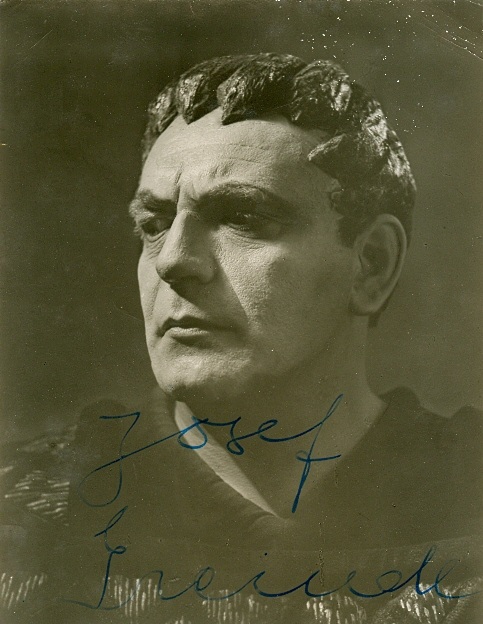
    I’ve never ‘gotten’ Martha Modl (above) until very recently, but she’s teriffic here as Brunnhilde. Her voice production reminds me somewhat of Irene Dalis’s. Modl’s flaming intensity and the colour and vitality of her singing are something to hear. Wolfgang Windgassen meets the huge demands of Siegfried with tireless power and is a good match for the soprano in terms of vocal generosity. A splendid Hagen from the Josef Greindl bristles with black-hearted malevolence, and in the most thrilling rendering of the role of Gunther that I’ve ever experienced, Hermann Uhde is overwhelming. With her rather odd tmbre, Natalie Hinsch-Grondahl nevertheless makes a mark as Gutrune. Ira Malaniuk’s superb singing as Waltraute makes me wish her long scene was even longer, and the mezzo is also a distinguished Second Norn in the prologue where she is joined by Maria von Ilosvay and then-soprano Regina Resnik.
    6186

    Back-tracking, I then took up the WALKURE from the same 1953 Keilberth RING and was again impressed by the immediacy of the sound. Herr Greindl (above) is again in cavernous voice, this time as Hunding. Regina Resnik and Ramon Vinay are the strong-voiced Walsung twins, though neither attain the heights that others have in this passionate music. The tenor’s baritonal sound  is sturdy but not particularly poetic and at one point the prompter gets involved, feeding him lines word for word. Miss Resnik gets lost at one point and her highest notes show a very slight sense of discomfort; her decision to switch to mezzo was a brilliant move and sustained her career for many years. In spite of these minor misgivings, Resnik and Vinay keep the temperature of the drama high, and Keilberth steers us thru the first act with true surety of hand.

    Hotter

    Hans Hotter (above) opens the second act grandly, and this performance shows why his Wotan was considered a revelation. Both in terms of godlike vocal heft and wonderfully nuanced shaping of the text, Hotter’s monolog is a masterpiece. Martha Modl flashes thru a spirited Ho-Jo-To-Ho though surprisingly later in the act, after the annunciation of death, she seems to tire a bit as she assures Siegmund she’ll protect him in the coming battle. Ira Malaniuk is a particularly fine Fricka; she doesn’t wheedle or whine but deals from the strength of her rightness. She is vocally so pleasing to experience, the registers even and the timbre filled with feminine dignity. Resnik and Vinay are effective here as the desperate lovers, seeking escape…waching over his sleeping sister-bride, Vinay finds the tenderness of the character. Resnik lets out a blood-curdling scream when Hunding strikes Siegmund dead. Hotter’s contemptuously whispered dismissal of Hunding followed by his towering rage as he sets out to punish Brunnhilde end the act with a veritable bang.

    In the Ride of the Valkyries, the sopranos swoop upward at will, not always in unison. Resnik handles the great scene of Sieglinde’s blessing of Brunnhilde quite exctingly; Hotter storms in and rages at his daughters who finally flee in terror. And then, starting with Brunnhilde’s ‘War es so schmalich’ the performance becomes something else altogether.

    Modl finds the magic that made her GOTTERDAMMERUNG so spell-binding, and Hotter is simply magnificent. The sound quality is pretty remarkable and the two singers give a performance that ranks wth my greatest experiences in 50+ years of listening to opera. Modl begins Brunnhilde’s self-defense with colours of deep despair, slowly gaining self-confidence. When she courageously tells her father that Sieglinde now keeps the sword Nothung, Hotter thunderoulsy reminds her “The sword that I shattered!!” Hotter outlines the punishment Brunnhilde will face; her pleading with him not to humiliate her is in vain. But Modl’s last desperate and gloriously sung passage finally wins the day; Hotter opens the floodgates and hs entire final scene is both vocally thrilling and wrenchingly expressive of a father’s longing and grief. Adjectives become superfluous on hearing this kind of vocalism.

    The third act of SIEGFRIED from this cycle is very exciting, commencing with Hotter’s majestic summons of Erda. As the act proceeds, it seems the great bass-baritone’s voice was recorded in a rather odd, somewhat echo-chamber acoustic. It doesn’t deter from his performance in the least, but it’s not quite as pleasing to listen to as the WALKURE. Maria von Ilosvay is a firm-toned and not overly weighty Erda; like her colleague Ira Malaniuk, Ilosvay seems largely to have been forgotten these days, which is a shame, It’s a wonderful voice. Windgassen arrives for his confrontation with his grandfather in fine vocal fettle; the two long-standing colleagues play up the dark humour of their banter at first, but after Siegfried puts Wotan in his place by breaking the spear, the once-powerful god slinks away in shame. Windgassen manages to hold his own against the fresh-voiced Modl, awakening as Brunnhilde and singing with remarkable intensity: despite her successful but less-than-blooming forays to the high-Cs, Modl’s voice is both maternal and seductive, with an unsettlling sexual sorcery in her timbre that makes it utterly distinctive.

    Overall this Keilberth cycle is fascinating in so many ways and seems to have caught the singers mostly at their peaks. I suppose I’ll want to eventually have the RHEINGOLD also. 

    ~~~~~~~~~~~~~~~~~~~~~~~~~~~~~~~~~~~~~~~~~~~~~~~~~~~~~~~~~~~~~~~~~~~~~~~~~~~~~~~~~~~~~~~~~~~
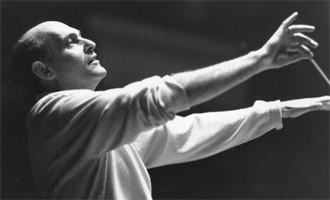
    Solti-conducting3

    From London’s Royal Opera House comes a RING Cycle conducted by Sir Georg Solti (above), from which the WALKURE (in very good sound) makes a strong impression, notably in the radiant singing of Dame Gwyneth Jones as Sieglinde. Apart from Ernst Kozub as Siegmund, the principals are all from the Royal Opera “home team”. Mr. Kozub is bright-voiced and steady, and Dame Gwyneth – just coming into fame – is already showing signs of the great Wagnerienne she was to become. Michael Langdon’s powerful Hunding anchors the first act, excitingly led by Solti.

    Amy Shuard is a bit uneven as Brunnhilde though overall she makes a positive impression; a bit of flatness here and there – most notable in the early pages of the Todesverkundigung – is offset by her bright Battle Cry and her moving singing of the opera’s final scene. Josephine Veasey starts off as a rather ladylike Fricka, but she soon works herself into a fine fettle of self-righteous indignation and casts off vivid dramatic sparks, her vocalism fervent and secure.   
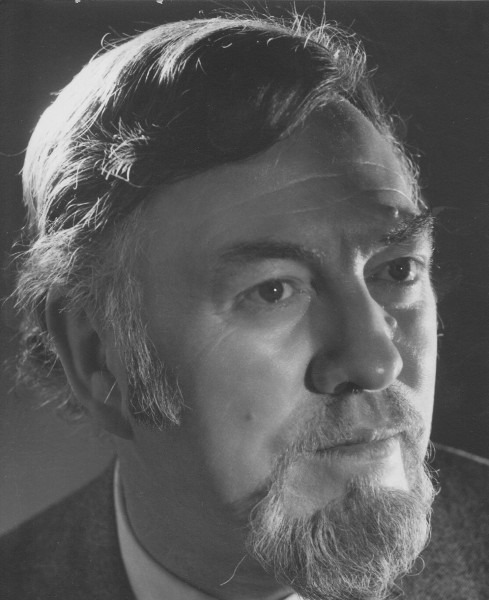
    347

    It is especially gratifying to hear David Ward (above) as Wotan. I still vividly recall hearing him as The Dutchman on a Met broadcast in 1965 opposite Leonie Rysanek. I love his Wotan here for its humanity. Ward is more a lyrical than a thunderous singer, and his bass-oriented sound give him a solid springboard thru the music. His monolog is intense and personal, with a miraculous reflective piano on “Das ende!” while his choked whisper of “Geh!” as he dispenses with Hunding at the close of Act II is breath-taking. Ms. Shuard is at her best as she joins Mr. Ward for the opera’s final scene: their exchanges have an intimate feel, dynamically subtle and with deep undercurrents of heartache. Pleading to be spared dishonor, Ms. Shuard’s feminine urgency spurs the bass-baritone on to a wonderful outpouring in “Leb wohl, du kunhes, herrliches Kind!”. Later, Mr. Ward’s great tenderness as he quietly kisses Brunnhilde’s godhood away is so moving. Sir Georg, on the podium, cuts a majestic path thru this glorious score.

    ~~~~~~~~~~~~~~~~~~~~~~~~~~~~~~~~~~~~~~~~~~~~~~~~~~~~~~~~~~~~~~~~~~~~~~~~~~~~~~~~~~~~~~~~~~~

    The 1976 series of LOHENGRINs at The Met marked Maestro Levine’s first experiences of conducting this opera in the House; he moulds the great arcs of music, from the ethereal to the thunderous, with grandeur; and his violins underline the great confrontation between Elsa and Ortrud with furiously driven playing.
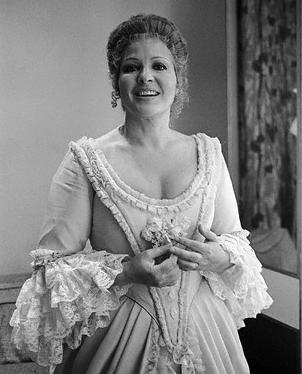
    Pl

    Pilar Lorengar (above) was a rapt, visionary Elsa, and her silvery and utterly feminine sound projected clearly into the great hall, cresting the ensembles radiantly. Rene Kollo in his debut role as Lohengrin (he sang only one other role at The Met: Bacchus in ARIADNE AUF NAXOS) sounded splendid in the House (yes, I was there!) though the recording shows some chinks in the vocal armor which the unforgiving mikes pick up. Still, it’s an impressive rendering of the music, especially his poetic ‘In fernam land’. Mignon Dunn sings with thrilling passion as Ortrud, meeting all the demands of what is essentially a dramatc soprano role. In the house, Mignon was made a tremendous impact with her acting, especially her raging discomfort at having to carry Elsa’s train during the bridal procession. Unable to contain her bitter fury, she breaks free and lashes out at her virginal rival in a confrontation that brought the performance to the boiling point. Donald McIntyre’s powerful Telramund and Allan Monk’s sturdy Herald make strong impressions, and Bonaldo Giaiotti (a great favorite of mine, presently celebrating his 80th birthday) is a splendid-sounding King Henry.

    Metropolitan Opera House
    December 4, 1976 Matinee Broadcast

    LOHENGRIN
    Wagner

    Lohengrin...............Rene Kollo
    Elsa....................Pilar Lorengar
    Ortrud..................Mignon Dunn
    Telramund...............Donald McIntyre
    King Heinrich...........Bonaldo Giaiotti
    Herald..................Allan Monk
    Gottfried...............Rex James
    Noble...................Robert Goodloe
    Noble...................Andrea Velis
    Noble...................Philip Booth
    Noble...................Charles Anthony

    Conductor...............James Levine

    ~~~~~~~~~~~~~~~~~~~~~~~~~~~~~~~~~~~~~~~~~~~~~~~~~~~~~~~~~~~~~~~~~~~~~~~~~~~~~~~~~~~~~~~~~~~
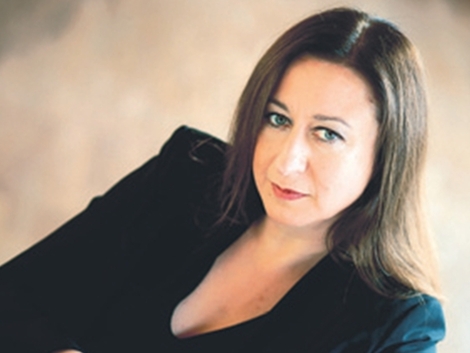
    Young

    The single act of the Hamburg WALKURE literally knocked me for a loop on first hearing; I’d never given Simone Young (above) much thought as a conductor, but from now on I’ll need to. She makes this thrice-familiar music sound incredibly fresh and alive. Her trio of singers, while perhaps unlikely to go into the history books alongside such names as Lehmann, Melchior, Rysanek or Vickers, are superbly tuned into both the music and the words. Following Young’s lead, they seem to give a feeling of music that is newly-discovered. Yvonne Naef’s Fricka and Waltraute at The Met in 2009 RING Cycles (the last performances of he “Levine” RING) were especially memorable in my view. There was some talk of her possibly taking on the Brunnhildes at one point, but she was probably wise to resist (exciting as the prospect would have been). Here she is a vivid Sieglinde, her middle voice and parlando so persuasive – the role lies right in her comfort range – and her top rings out excitingly. The sound of Stuart Skelton’s voice may not be intrinsically beautiful, but he is a strong and verbally alert singer, bringing some imaginative colours to his music. His cries of “Walse! Walse!” are steady and sustained, and he shows a sense ofSiegmund’s poetic side, long-buried in the hardships the Volsung has faced in his life. Mikhail Petrenko is a more lyrical Hunding than we usually hear; he sings well and fits finely into Young’s vision of the act. There are many felicitous passages in the conductor’s scheme of things, with a particular ‘lift’ of the tempo after Sieglinde concludes “Der manner sippe” that really took my breath away.

    After a lapse of ten days, I played this WALKURE Act I again just to be sure it was as good as I thought it was. It’s even better on second hearing, with some really fine playing from the individual instrumentalists. The singers and conductor make this very familiar music feel startlingly vivid. What more could we ask?