Tag: Johannes Brahms

  • Lioba Braun ~ Alto Rhapsody

    Lioba Braun

    Lioba Braun sings Johannes Brahms’ Alto Rhapsody, with Helmuth Rilling conducting the Radio-Sinfonieorchester Stuttgart des SWR.

    Listen here.

    German mezzo-soprano Lioba Braun was born in 1957. Based at the Nationaltheater Mannheim, she has appeared at the major opera houses and festivals of Europe. She became internationally known after singing Brangäne at the Bayreuth Festival in 1994, and she performed the soprano role of Isolde onstage for the first time in 2012.

  • Lucia Valentini-Terrani sings Brahms

    Terrani

    While best-remembered as an interpreter of the great Rossini mezzo-soprano roles, Lucia Valentini-Terrani here shows another facet of her artistry, singing Johannes Brahms’ Alto Rhapsody. Peter Maag conducts.

    Lucia Valentini-Terrani – Brahms ~ Alto Rhapsody – Peter Maag cond – RAI 1979

    Valentini-Terrani, born in Padua, sang at all the major Italian opera houses, as well as at Paris, Moscow, Buenos Aires, Chicago, and Washington DC. She debuted at The Met as Isabella in L’ITALIANA IN ALGERI in 1974, and had a huge success at Covent Garden in 1976 in LA CENERENTOLA. Beyond Rossini, her repertoire extended to such diverse roles as Eboli, Carmen, Charlotte in WERTHER, and Jocasta in OEDIPUS REX

    Diagnosed with leukemia in 1996, Lucia Valentini-Terrani passed away in 1998 at the age of 51.

  • Arensky & Brahms @ Chamber Music Society

    Bella2

    Above: violinist Bella Hristova, photographed by Lisa-Marie Mazzucco

    Author: Oberon

    Tuesday March 28th, 2023 – Works by Anton Arensky and Johannes Brahms were on the bill at Chamber Music Society of Lincoln Center this evening as violinist Bella Hristova, cellist Dmitri Atapine, and pianists Wu Qian and Wu Han teamed up for some magical music-making.

    The concert commenced with Arensky’s Six Children’s Pieces for Piano, Four Hands, Op. 34, composed in 1894. These charming miniatures found our two pianists side by side at the Steinway, with Wu Han presiding over the upper octaves and Wu Qian the lower.

    To give the pieces their English titles, we start with Fairy Tale which begins in the minor key, has a folkish feeling, and then becomes quite dramatic. Wu Han plays a series of decorative trills as the music ranges from hesitant to animated. Then, Wu Qian plays the familiar two-note birdcall that signals the delightful Cuckoo bird is nearby. This is a sprightly little piece with a subtle finish. The mood changes for Tears, which has the feel of a lament, with a deep bass line supporting a hymn-like melody. The ending is very quiet.

    Rippling motifs underscore the lovely Waltz, which gets quite bouncy. A passing reverie turns expansive before fading away, as if the dance was continuing in another room. Cradle Song appropriately has a slow, rocking feeling; the melody is that of a gentle lullaby. The concluding Fugue on a Russian Theme is tuneful and jovial. The music turns grand, and the two pianists have a grand time playing it.
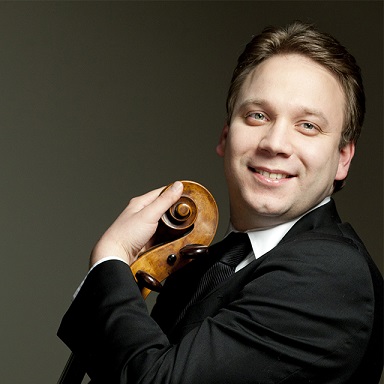
    Dmitri-atapine

    Listening to Bella Hristova and Dmitri Atapine (above), joined by Wu Qian, play the Arensky Trio No. 1 in D -minor for Piano, Violin, and Cello, Op. 32, makes one wonder why we don’t hear more of this composer’s gorgeous music. He wrote copiously for solo piano, and numerous chamber works as well. And why cannot we hear more of his large orchestral works – which include two symphonies – or his choral pieces?  He also wrote three operas, which must be wonderful to experience.

    At any rate, we must be thankful for any opportunity to hear the music of this pupil of Tchaikovsky, especially when it as a luminously played as this evening. The introductory theme of the opening Allegro moderato, first played by Ms. Hristova and then taken up by Mr. Atapine, is hauntingly beautiful. These virtuosos bring such richness of timbre to everything they play, and this trio – a veritable font of melody – affords them so many opportunities.

    It is restless, passionate music, interrupted by a Springlike interlude in which Wu Qian spins lovely swirling passages from the Steinway. Now a sense of drama takes hold; the opening theme recurs, played – if it’s possible to imagine – even more thrillingly. There is a coda full of lyrical grace before the movement ends quietly.

    The ensuing Scherzo opens with an odd, stuttering quality. There are crisp plucking and jaunty melodies to be savoured, whilst at the keyboard Wu Qian offers cascades of notes decorated with lively trills. Now a swaying feeling takes over, and the music gets grand. After a brief hesitation, the stuttering resumes and the Scherzo comes to its whimsical finish.

    The evocative Elegia is the heart of the trio: Mr. Atapine opens with a pensive theme, then the string voices entwine as Wi Qian introduces poetic phrases from the keyboard. The music seems to evoke the memory of a lost love as the gently rocking strings sound over the quiet rapture evoked by the pianist. Ms. Hristova in her high range, the pianist pulsing quietly, and Mr. Atapine plucking ever so gently give the music an ethereal quality. Ms. Hristova takes up an autumnal melody as Mr. Atapine’s deep resonance sounds and the music fades away on a sustained chord.

    A reverential silence filled the hall, and then the agitated drama of the final Allegro non troppo sprang up. Things cool off, melodic phrases are exchanged, but then restlessness builds and the music becomes impassioned. From a sudden silence, Wu Qian’s shimmering notes are heard as the strings sing softly. The music ascends, and becomes reflective with the poignant violin and the soulful cello sounding. Then, out of the blue, a bustling rush to the finish line springs up. 

    The music of Johannes Brahms took the limelight after the interval: our two pianists returned for selections from the composer’s Hungarian Dances for Piano, Four Hands; Wu Qian was now playing the upper range and Wu Han the lower. These delightful pieces were written between 1868 and 1880, and they are chock full of rhythmic and melodic variety, spiced with a dose of paprika. The two women seemed to be having a blast playing them, much to the audience’s delight.

    Bringing the evening to its close, Wu Han, Ms. Hristova, and Mr. Atapine illuminated the Brahms Trio in C-major Op. 87, with sumptuous playing.

    In the opening Allegro, a unison theme for violin and cello develops int something big ad thrilling. When cal finally settles in, a sense of yearning is felt. The textures created by the three players are rich indeed, each displaying alluring tone that meshes into a persuasive whole. Epic grandeur develops as we relish Wu Han’s superbly polished playing, which takes the movement to a royal finish.

    Unison strings again herald the Andante con moto: a theme with five variations. The music takes on a gypsy air, reflecting Brahms’ interest in Hungarian music, which began in his youth. Here the blend achieved by our three artists was nothing short of remarkable, continually drawing me in to the music, which reaches a touching, quiet ending.

    In the brisk Scherzo, I sensed a Mendelssohnian enchantment. Lush melodies sprang up, and there’s a songful outpouring before a feeling of Puck lurking about returned at the music’s sudden stop.

    From its opening agitato, the concluding Allegro giocoso brings an abundance of delicious melodic and rhythmical treats, and the Mendelssohn mood continued to be felt. The musicians were warmly cheered as they took their bows, and I simply must mention Ms. Hristova’s bejeweled shoes, which added an extra sparkle to an already brilliant evening.

    ~ Oberon
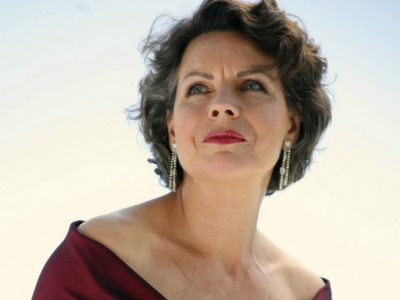
  • Elīna Garanča ~ Alto Rhapsody

    Alto rhapsody

    Elīna Garanča sings Johannes Brahms’ Alto Rhapsody with Christian Thielemann conducting. The performance took place at the Salzburg Festival on July 30th, 2022.

    Watch and listen here.

  • Gubanova/Muti ~ Alto Rhapsody

    Snapshot gubanova

    Ekaterina Gubanova sings Johannes Brahms’ Alto Rhapsody in a performance from the 2012 Ravenna Festival; Riccardo Muti conducts.

    Watch and listen here.

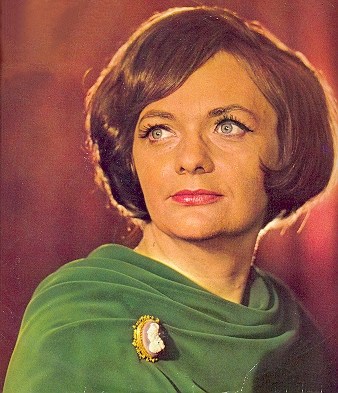
  • Annelies Burmeister ~ Alto Rhapsody

    Burmeister-Annelies-03

    Annelies Burmeister (above) sings Johannes Brahms’ Alto Rhapsody with the Leipzig Radio Symphony and Choir, conducted by Heinz Bongartz.

    Listen here.

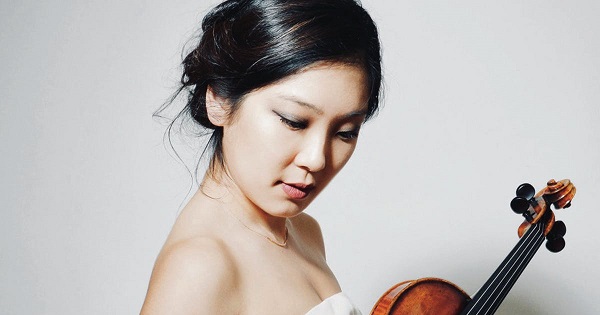
  • Grace Park/Joseph Liccardo @ Merkin Hall

    Park-grace

    Tuesday April 26th, 2022 matinee – Violinist Grace Park (above) with pianist Joseph Liccardo in a matinee recital at Merkin Hall. Ms. Park, a elegant beauty, looked chic in flowing white trousers and a fitted white halter-top; she strode onto the stage with the dapper Mr. Liccardo, and they opened their program brilliantly with the Scherzo from Johannes Brahms’ FAE Sonata; this movement was composed as part of a welcoming musical gift created to honor the great violinist Joseph Joachim’s arrival at Düsseldorf. The title FAE Sonata refers to Joachim’s motto: “Frei, aber einsam” (‘Free, but lonely’).

    The Brahms Scherzo made for a perfect introductory piece: it goes thru many changes of mood, from flashy, to sentimental, to passionate. Although there were moments when the piano seemed too loud, Ms. Park and Mr. Liccardo were perfectly in sync, and they brought us delicious subtleties along the way.

    With the blend of voice and piano now perfectly aligned, music of Clara Schumann came next. Written in 1853, these brief works were among the last pieces that Clara ever wrote. After Robert’s death in 1856, she composed almost nothing more herself, instead keeping Robert’s music alive through her touring, and the editing of his works.

    With the blend of voice and piano now perfectly aligned, these Clara Schumann gems glowed. The opening Andante molto had the feeling of an exquisite dream, with the players displaying beautiful phrasing and a keen sense for dynamic variety. A sadness arises with the second Romance, Allegretto Mit zatern vortage, though things turn lighter in time; throughout, the alternating currents of mood were deftly illuminated by the players. The final Romance, Leiderschuaftlich, is the most enchanting, with its flow of violin melody over rolling arpeggios from the keyboard. Ms. Park’s tone was at its sweetest here, with finely-etched trills and staccati, whilst Mr. Liccardo’s playing flourished.

    A change in program brought us Leoš Janáček’s Violin Sonata rather that the originally-announced Mozart KV 454. Composed in 1914, when the world was poised on the edge of war.

    From its passionate con moto start, the first movement is quite dramatic. The violin and piano seem to converse as they pass thru various musical moods: ironic, suspenseful, to a longing lyricism, and a calm finish, The ensuing Ballada brings forth shimmering figurations from the piano and a sustained, poetic theme from the violin. I loved watching Ms. Park’s expressions as the music seemed to draw forth her deepest feelings. Mr. Liccardo’s glistening passages met with Ms. Park’s ascending line for a radiant high ending.

    The following movement, a sort of scherzo – opens with the piano trilling and the violinist slashing the strings; a folk-like dancing song rises up. The sonata moves on, thru staccati and trills that give a restless feeling, to a searing passage from the violin. Near the end, the piano seems dreamy and the violin rather anxious.

    Composer Chris Rogerson introduced his Lullabye, No Bad Dreams, composed in 2009. Drawing upon his childhood fears of bedtime, he wrote a work that tells of a calming ritual his parents devised as they tucked him in for the night. The lullabye has Mr. Liccardo’s piano in the high range whilst Ms. Park’s line is sustained. Suddenly the music turns brisk – not ready for sleep yet – and develops an unusual grandness that speaks of passion and longing. Following a slow fade, there is a fitful agitation – which the composer indicates might be the result of having eaten too many sweets during the day. Sleep comes at last, with Ms. Park sustaining a long, high note. Musicians and composer were well-applauded for this musical memento of childhood; it certainly brought forth memories for me.

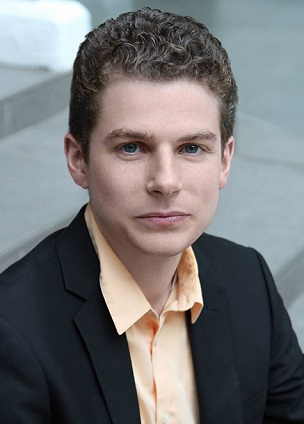
    Joseph_Liccardi_500

    Above: pianist Joseph Liccardo

    From J S Bach, we heard the Sonata for Violin and Harpsichord in E-major. This was most impressively played, commencing with a lovely, sustained Adagio, followed by the light and graceful Allegro, which features much animation from the piano. The heart of the sonata – and of the afternoon – came with the achingly beautiful Adagio ma non tanto; as played by Ms. Park and Mr. Liccardo, it felt like a bit of Heaven on Earth…something we so desperately need in these bleak times. In the concluding Allegro, our two musicians regaled us with their dazzling virtuosity, eliciting prolonged applause

    To conclude the program, we heard Schubert’s Rondo Brilliante in B-minor, which opens with contrasting passages that build to the emergence of the Rondo proper. This technically demanding piece was marvelously played by Ms. Park and Mr. Liccardo, but it also seemed endless; the same themes are repeated again and again, with several indications that the end was near only to have the music take another detour. After a while, I found my mind wandering. But eventually the Schubert came to an end, and the musicians were enthusiastically – and deservedly – cheered.

    ~ Oberon

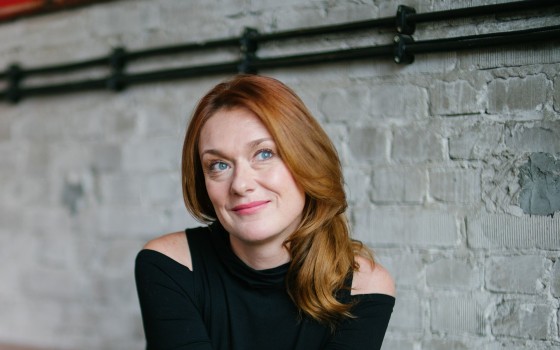
  • Brahms Viola Songs ~ Kožená/Grosz/Rattle

    Magdalena_kozena

    Mezzo-soprano Magdalena Kožená (above), violist Amihai Grosz, and pianist Sir Simon Rattle perform Johannes Brahms’ Zwei Gesänge für eine Altstimme, Viola, und Klavier for Arte TV’s Hope@Home series, in April, 2020.

    Watch and listen here.

  • Miro Magloire’s NOCTURNE

    IMG_3202-sm

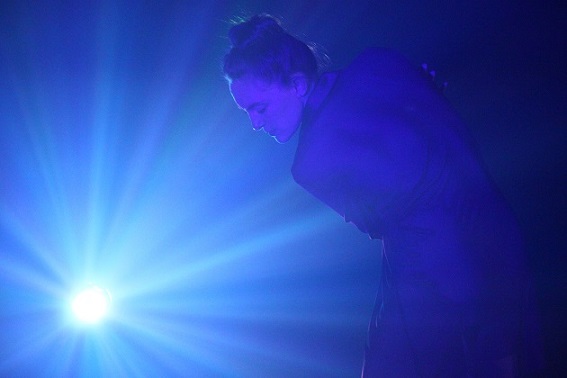
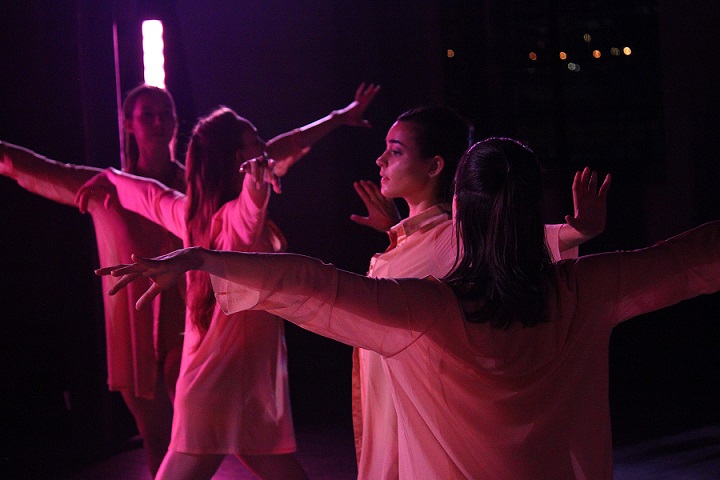
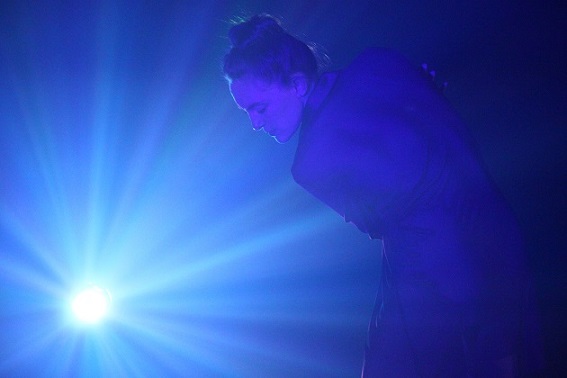
    Miro Magloire’s New Chamber Ballet have released NOCTURNE, a filmed ballet choreographed by Miro to the first and second movements of Johannes Brahms’ violin sonata No 1, opus 78. The dancers are Anabel Alpert, Megan Foley, Amber Neff, and Rachele Perla, and the score is performed by Doori Na (violin) and Sean Kennard (piano). Costumes are by Sarah Thea, assisted by Lauren Carmen. NOCTURNE was shot at Please Space, Brooklyn.

    The film was directed by Emily Kikta and shot by Peter Walker; Emily and Peter, members of New York City Ballet, have together formed KW Creative. As dancers, they have a unique gift for capturing dance on film. After watching the ballet, be sure to watch the interview with Emily and Peter further down the link:

    Watch NOCTURNE here.

    Anyone who has ever attended a New Chamber Ballet performance knows that Miro always takes you as close to dance as you can possibly get; but with NOCTURNE, KW Creative will make you feel like you are dancing yourself. The brilliant camera work brings you right into the action, much as the film ‘Backstage at the Kirov’ makes you feel like a fifth cygnet. And, as music and dance are equally essential to New Chamber Ballet‘s artistic credo, I can enthusiastically heap praise on the excellent rendering of the Brahms score by Doori Na and Sean Kennard.

    IMG_4358-sm

    The eerily atmospheric setting of Please Space after dark lends an air of mystery to NOCTURNE. The ballet evokes a feeling of urban Wilis carrying on with their nightly rituals. And, as with GISELLE, the coming dawn signals the end of their mystic rites. Amber Neff (above), who had opened NOCTURNE emerging hesitantly to dance in the sacred space, returns to her safe haven. The ballet has a timeless feeling; one could imagine these sylphs gathering to dance each night at moonrise for ages to come.

    Still photos by Miro.

  • Miro Magloire’s NOCTURNE

    IMG_3202-sm

    Miro Magloire’s New Chamber Ballet have released NOCTURNE, a filmed ballet choreographed by Miro to the first and second movements of Johannes Brahms’ violin sonata No 1, opus 78. The dancers are Anabel Alpert, Megan Foley, Amber Neff, and Rachele Perla, and the score is performed by Doori Na (violin) and Sean Kennard (piano). Costumes are by Sarah Thea, assisted by Lauren Carmen. NOCTURNE was shot at Please Space, Brooklyn.

    The film was directed by Emily Kikta and shot by Peter Walker; Emily and Peter, members of New York City Ballet, have together formed KW Creative. As dancers, they have a unique gift for capturing dance on film. After watching the ballet, be sure to watch the interview with Emily and Peter further down the link:

    Watch NOCTURNE here.

    Anyone who has ever attended a New Chamber Ballet performance knows that Miro always takes you as close to dance as you can possibly get; but with NOCTURNE, KW Creative will make you feel like you are dancing yourself. The brilliant camera work brings you right into the action, much as the film ‘Backstage at the Kirov’ makes you feel like a fifth cygnet. And, as music and dance are equally essential to New Chamber Ballet‘s artistic credo, I can enthusiastically heap praise on the excellent rendering of the Brahms score by Doori Na and Sean Kennard.

    IMG_4358-sm

    The eerily atmospheric setting of Please Space after dark lends an air of mystery to NOCTURNE. The ballet evokes a feeling of urban Wilis carrying on with their nightly rituals. And, as with GISELLE, the coming dawn signals the end of their mystic rites. Amber Neff (above), who had opened NOCTURNE emerging hesitantly to dance in the sacred space, returns to her safe haven. The ballet has a timeless feeling; one could imagine these sylphs gathering to dance each night at moonrise for ages to come.

    Still photos by Miro.